
Click the photo to view the full-size version
| Name | 35th Street Overpass Atchison, Topeka & Santa Fe Railway Bridge #235.0A |
| Built By | Atchison, Topeka & Santa Fe Railway |
| Currently Owned By | BNSF Railway |
| Superstructure Contractor | Missouri Valley Bridge & Iron Company of Leavenworth, Kansas (Truss Span) Unknown (Girder Span) |
| Substructure Contractor | Unknown |
| Length | 621 Feet Total, 255 Foot Main Span |
| Width | 2 Tracks (20 Feet) |
| Height Above Ground | 30 Feet (Estimated) |
| Superstructure Design | Whipple Through Truss, Through Plate Girder and Timber Pile Trestle |
| Substructure Design | Concrete and Timber Pile |
| Date Fabricated | 1888 (Truss Span) c. 1890 (Girder Span) |
| Date Erected | 1930 |
| Original Locations | Bridge #3D; I&M Canal Bridge; Chicago, Illinois (Truss Span) Unknown (Girder Span) |
| Traffic Count | 20 Vehicles/Day (Estimated) |
| Current Status | Open to Automobile Traffic |
| Atchison, Topeka & Santa Fe Railway Bridge Number | 235.0A |
| Significance | High Significance |
| Documentation Date | 6/16/2016 |
In 1873, the Chicago, Pekin & Southwestern Railway (CP&SW) began construction on 52 miles of new railroad, extending from Pekin to Pekin Junction, Illinois and from Eureka, Illinois to Ancona, Illinois. At the same time, the Chicago & Illinois River Railroad (C&IR) began construction on a 28 mile spur from Coal City, Illinois to Streator, Illinois, but work was soon ceased. The CP&SW purchased the incomplete line from Gorman to Streator, and connected it to Ancona. The CP&SW was purchased by the Chicago, St. Louis & Western Railroad in 1881, which constructed an additional 60 miles into Chicago, opening in 1884. The railroad was reorganized into the Chicago & St. Louis Railway (C&StL) in 1886. By the mid-1880s, the Atchison, Topeka & Santa Fe Railway (ATSF) was contemplating on extending their network from Kansas City, Missouri to Chicago, where the railroad could interchange with other large railroads. In 1887, the Chicago, California & Santa Fe Railway (CC&SF) began construction on 350 miles of new railroad, extending from Ancona to Sugar Creek Junction, near Kansas City. Work would be completed in 1888. The portion of the line from Ancona to Chicago would be reconstructed at this time to meet new standards.
The new line featured the most direct railroad route between the two cities, crossing the Mississippi River at Fort Madison, Iowa; and the Missouri River at Sibley, Iowa. The new line was leased to the ATSF in 1888, and fully absorbed into the ATSF in 1900. The line immediately became a core line for the ATSF, serving as part of the principal mainline (Chicago to Los Angeles) for the ATSF. During the first decade of the 20th Century, the Kansas City to Chicago line was extensively rebuilt for double track use. Due to dwindling traffic, the route from Ancona to Pekin was abandoned in 1983 and 1984. In 1996, the ATSF was merged into Burlington Northern Railroad to form BNSF Railway. Today, BNSF operates this line as the Chillicothe Subdivision and the Marceline Subdivision. The line continues to be one of the heaviest used railroad routes in the Midwest.
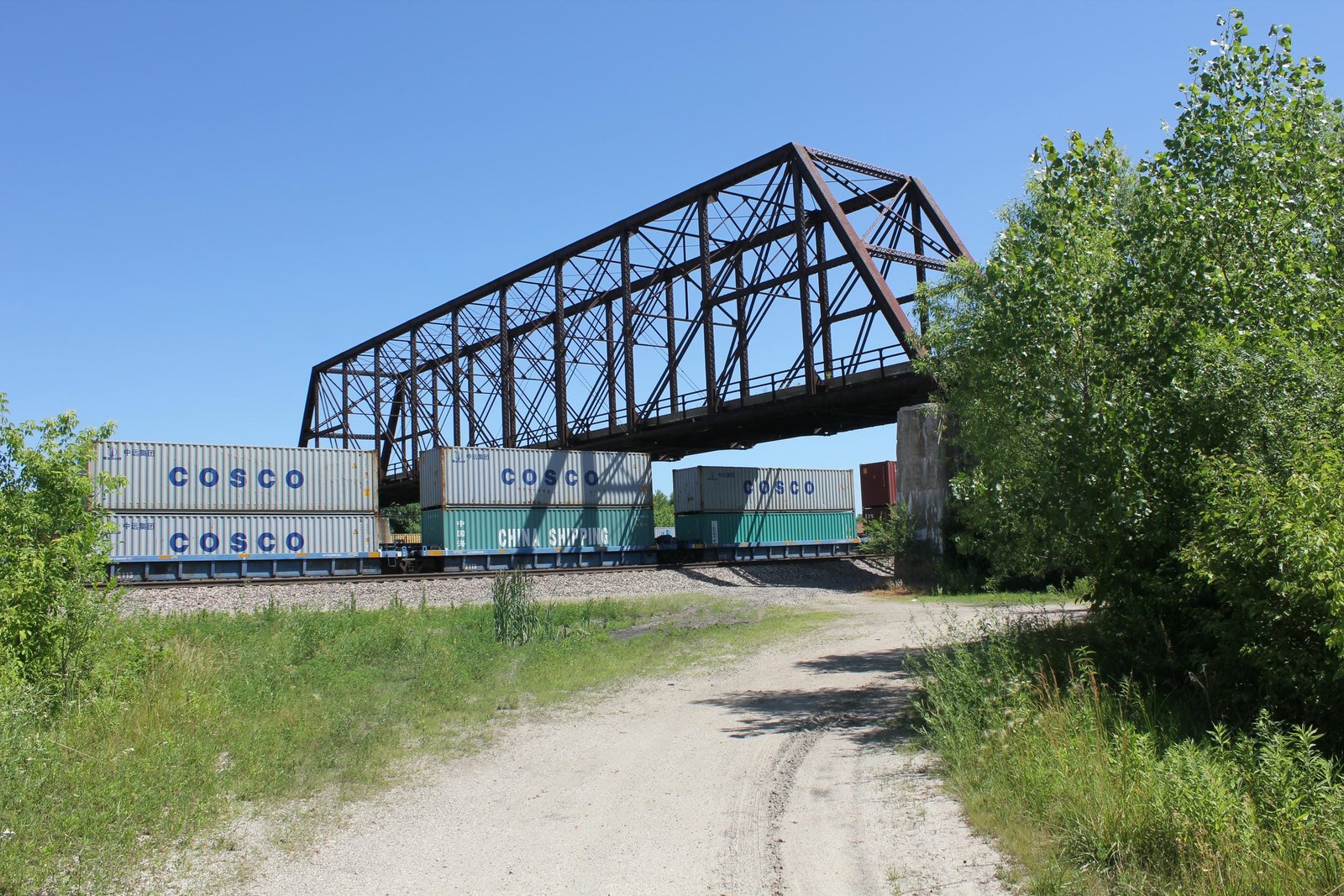
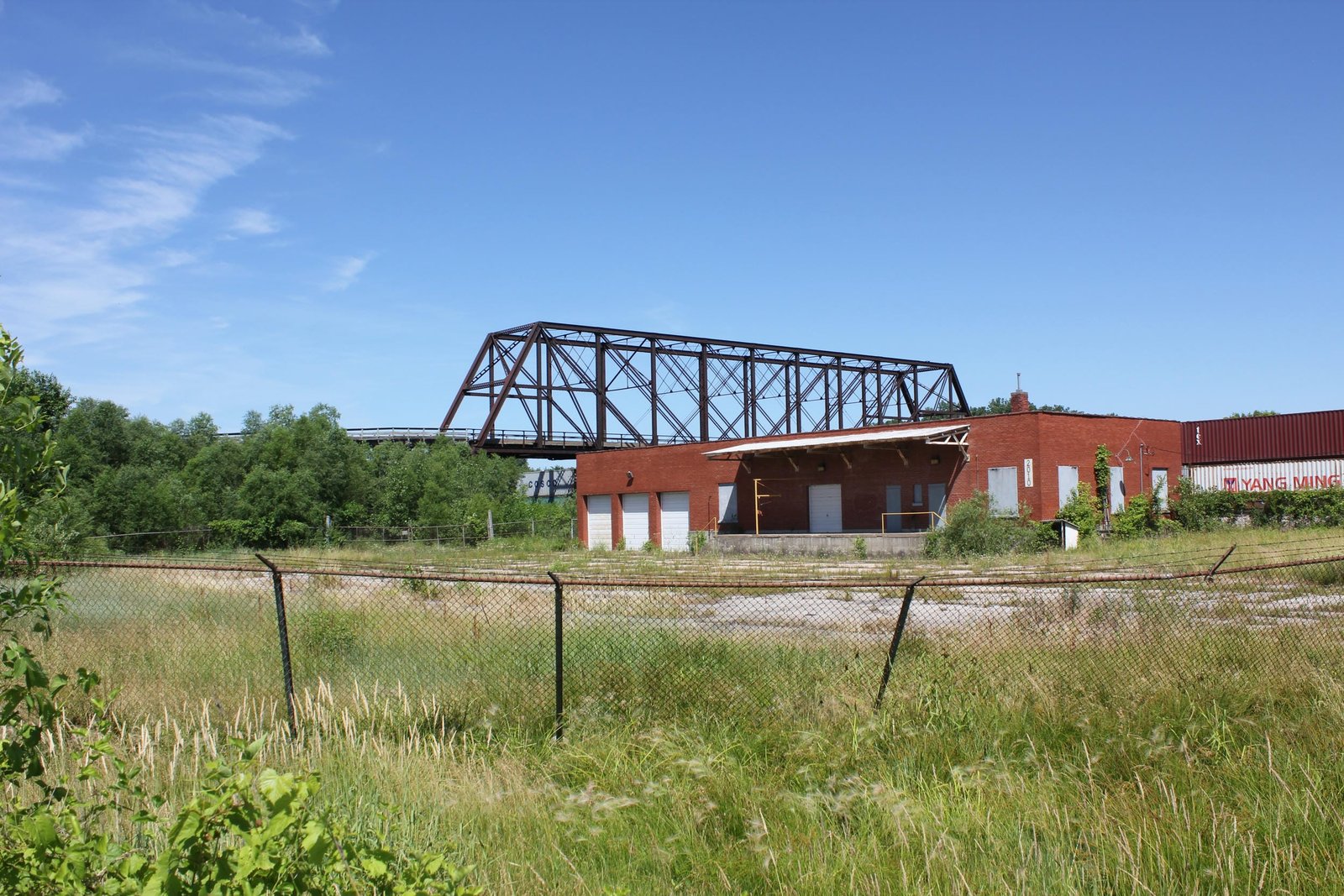
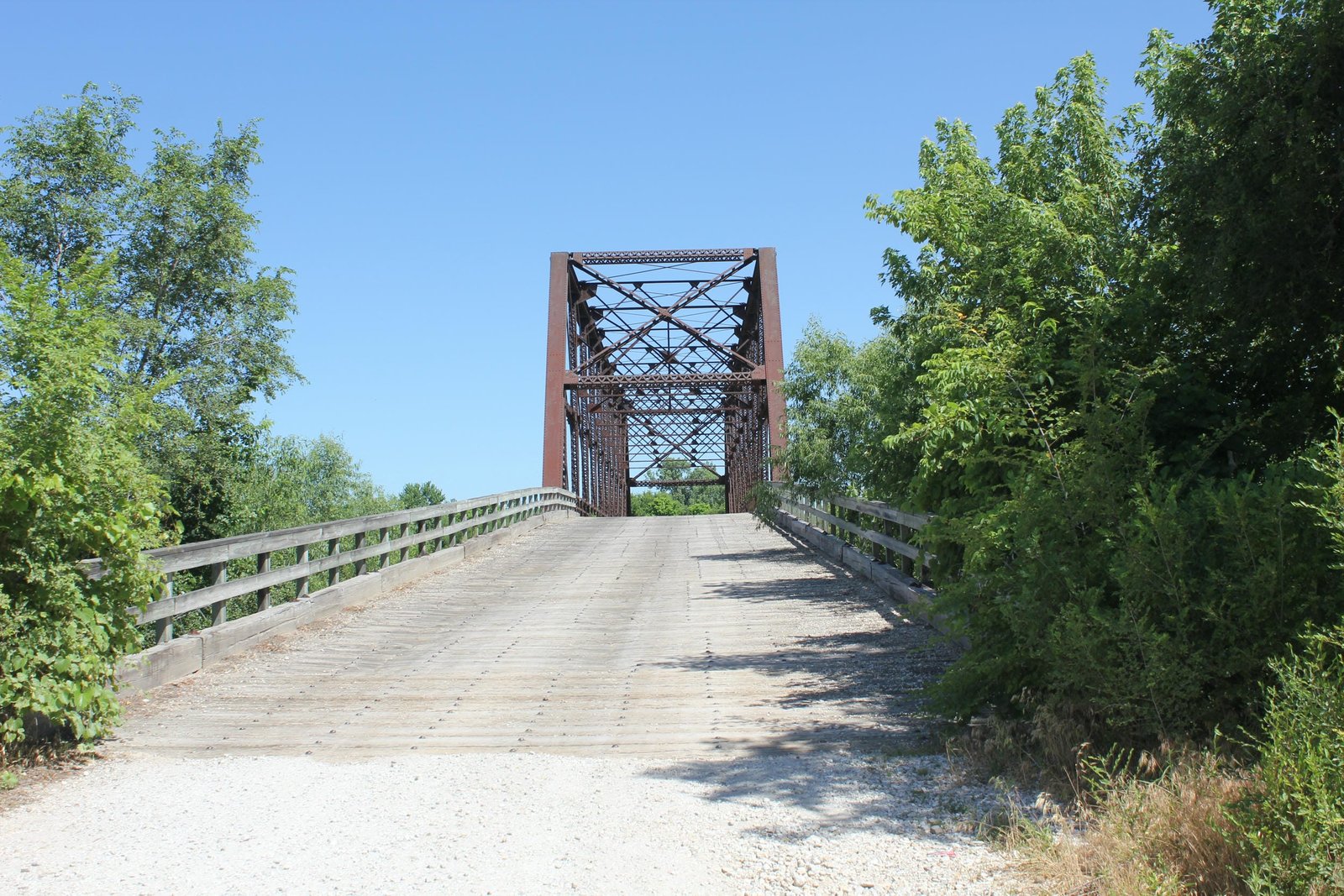
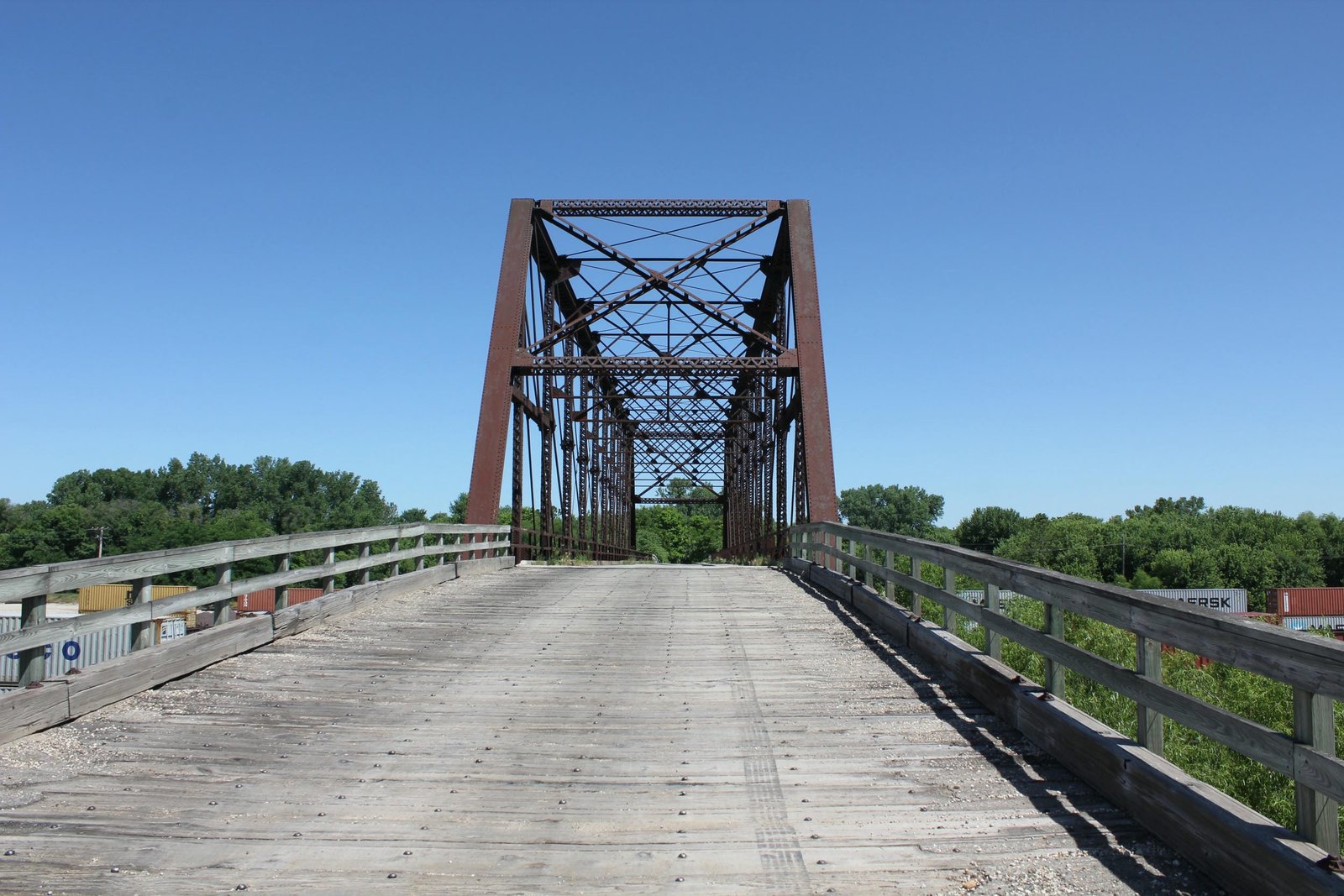
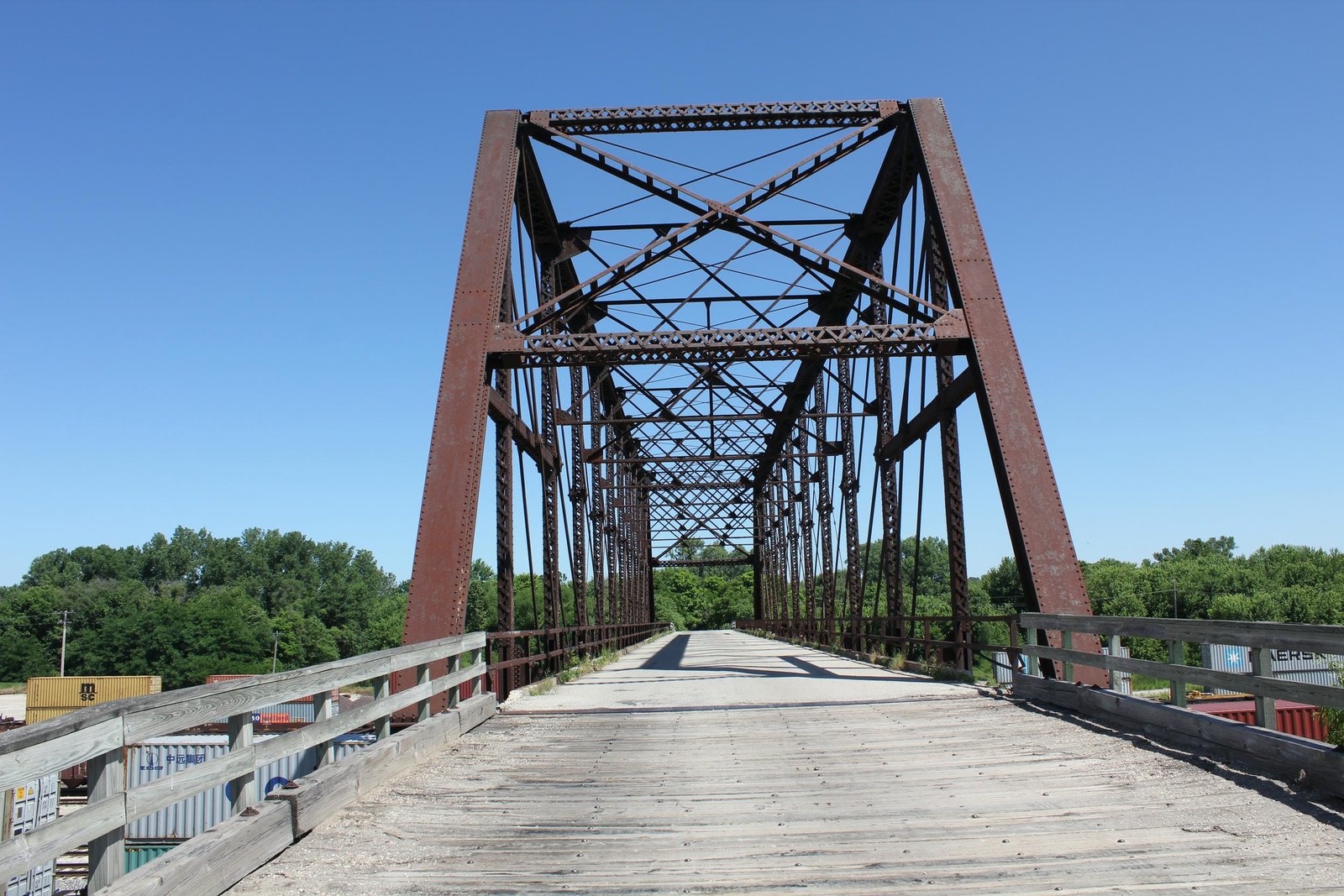
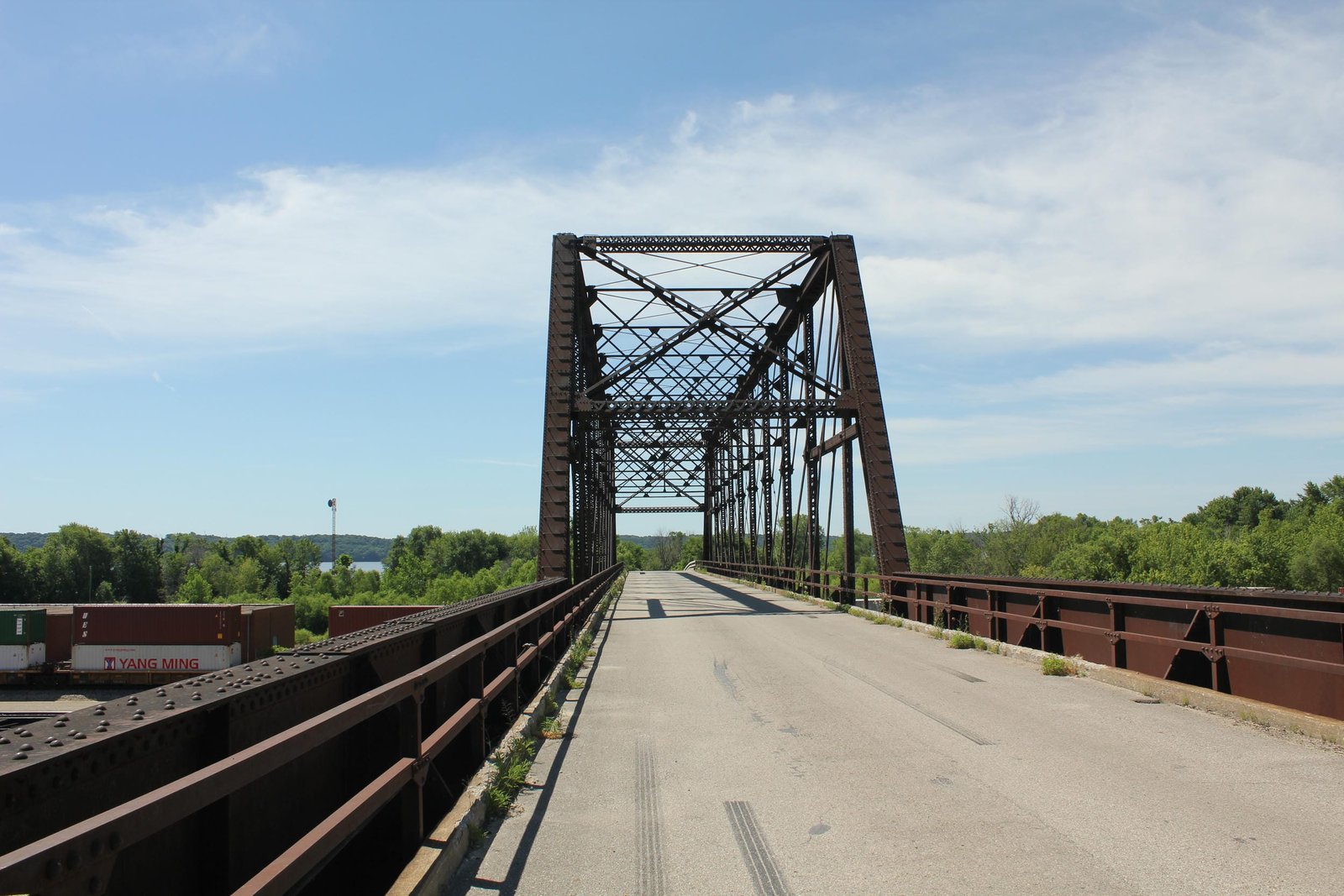
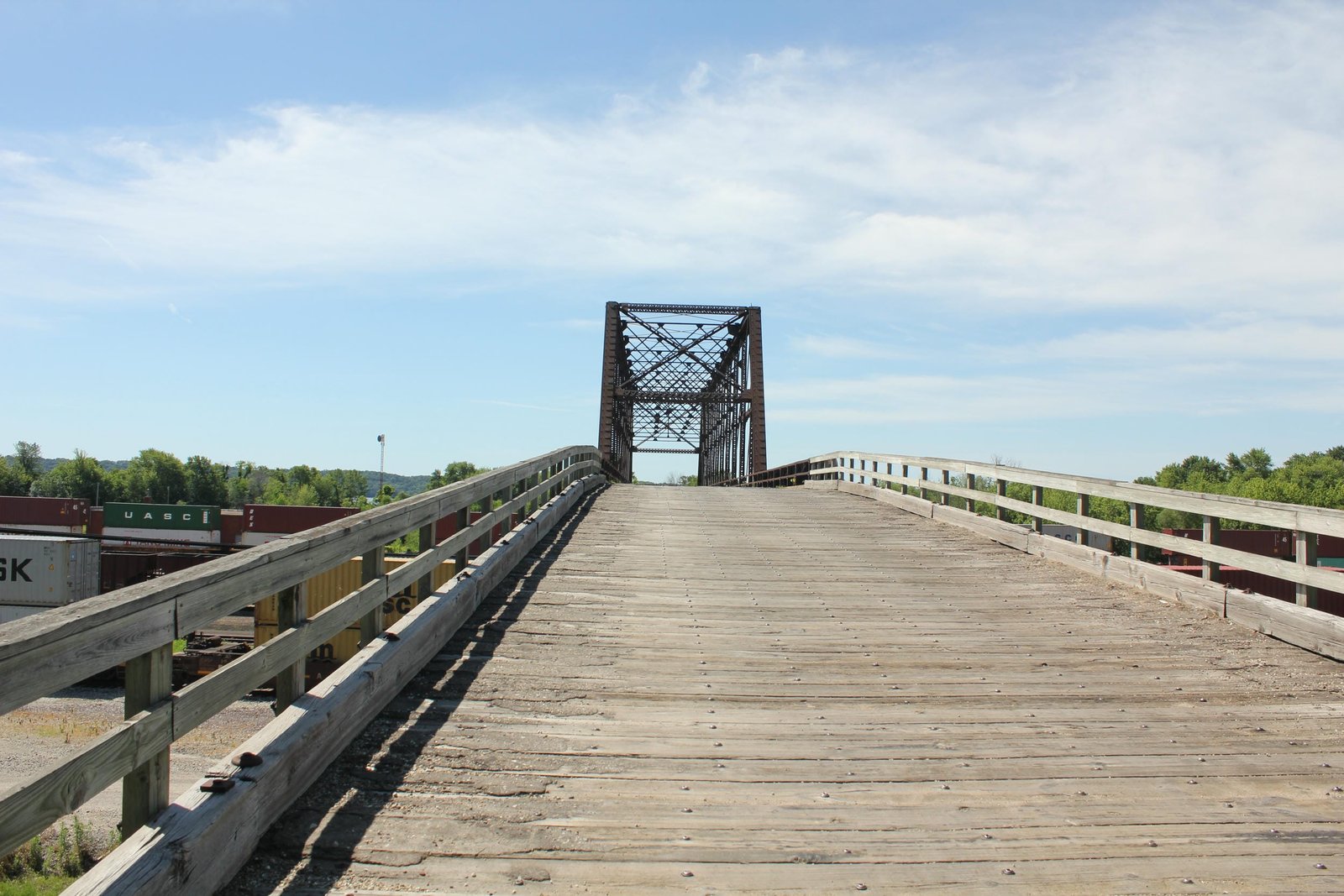
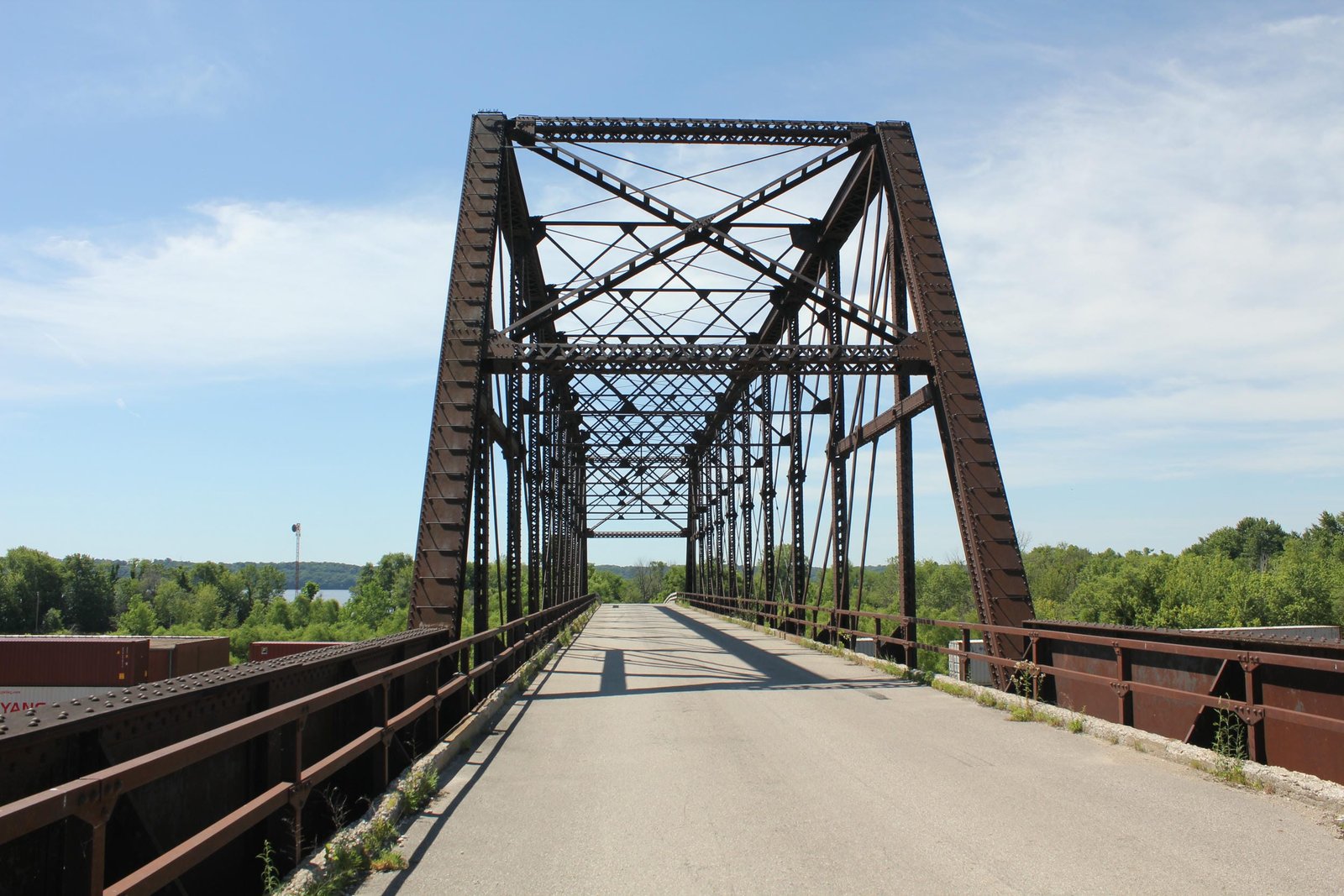
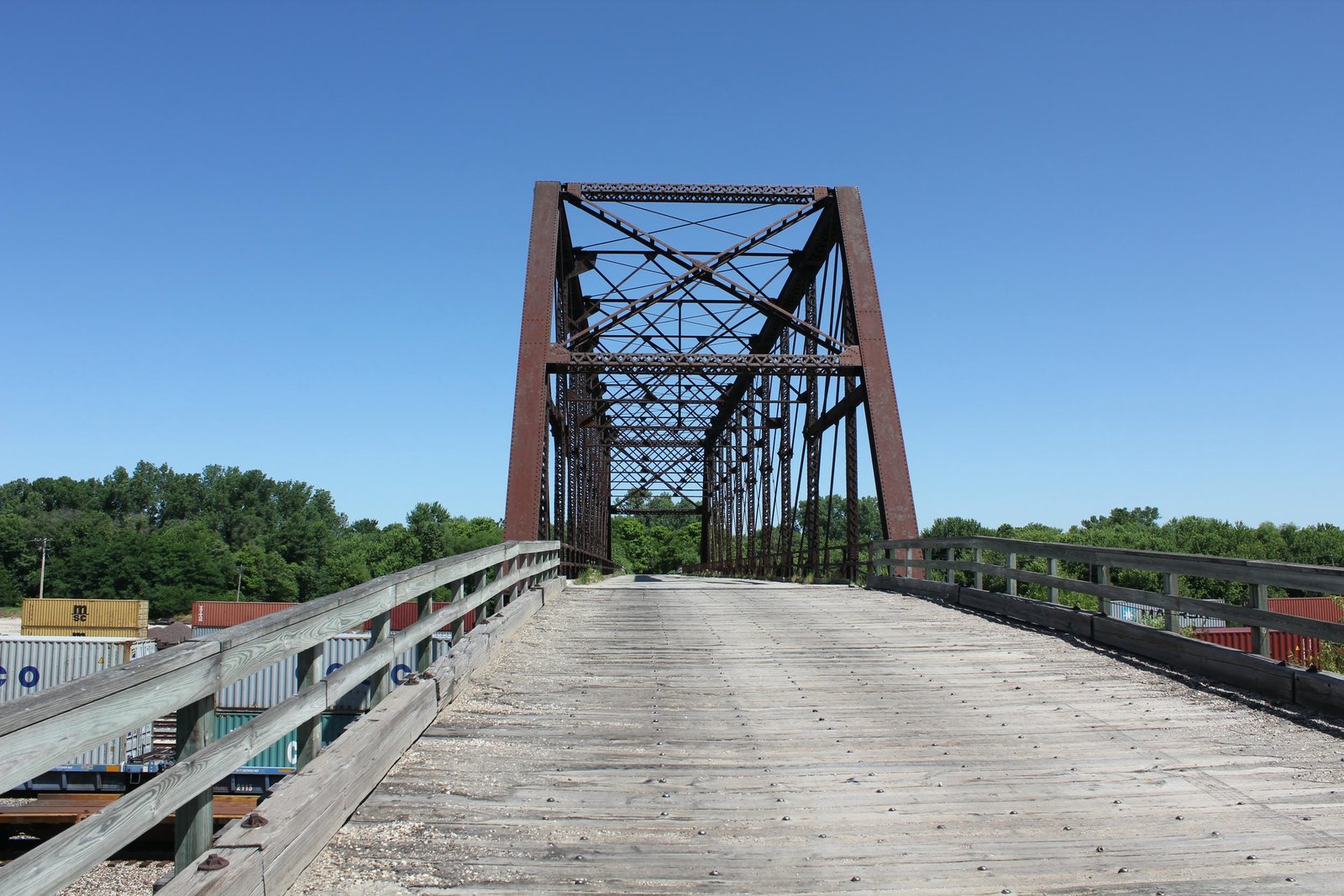
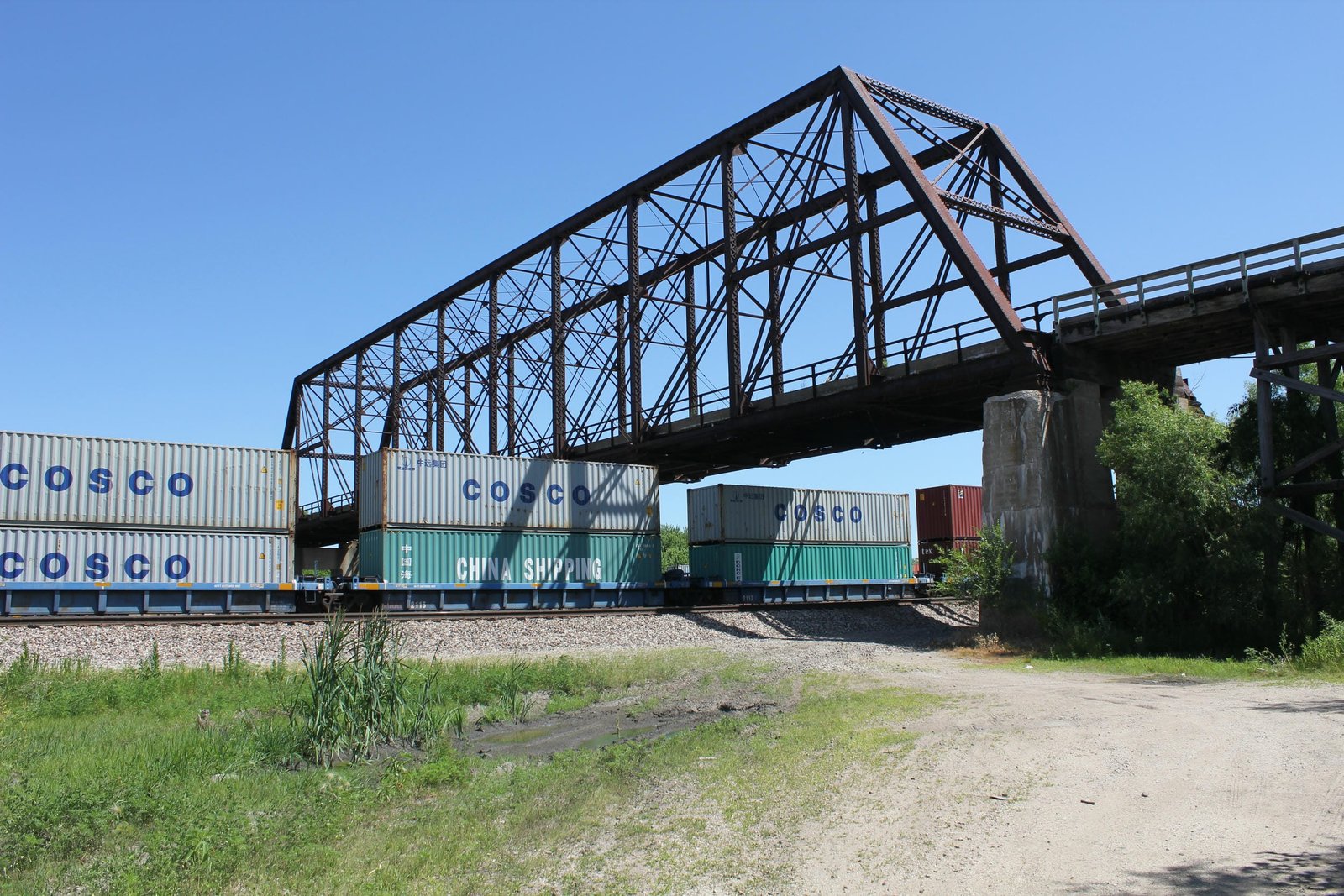
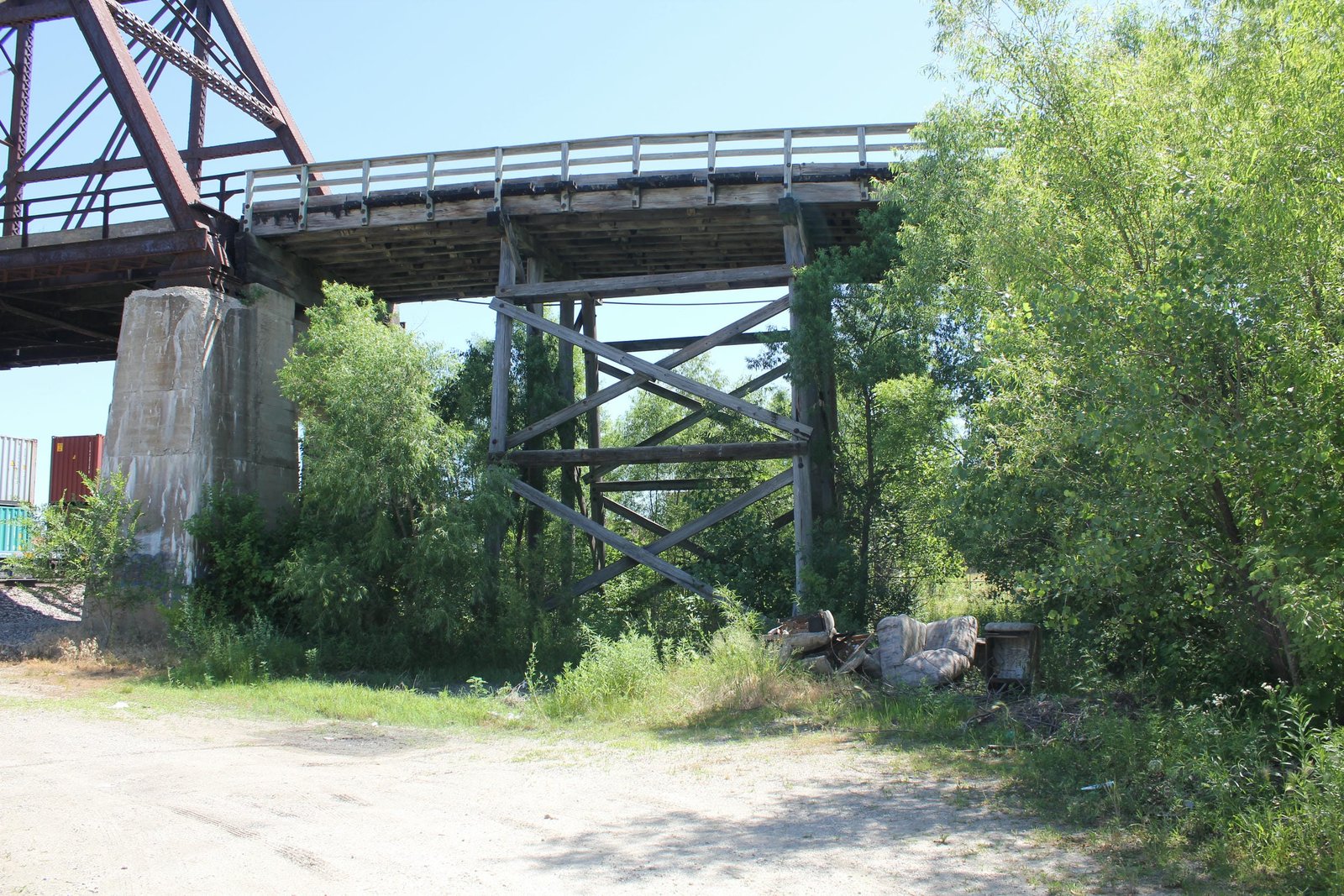
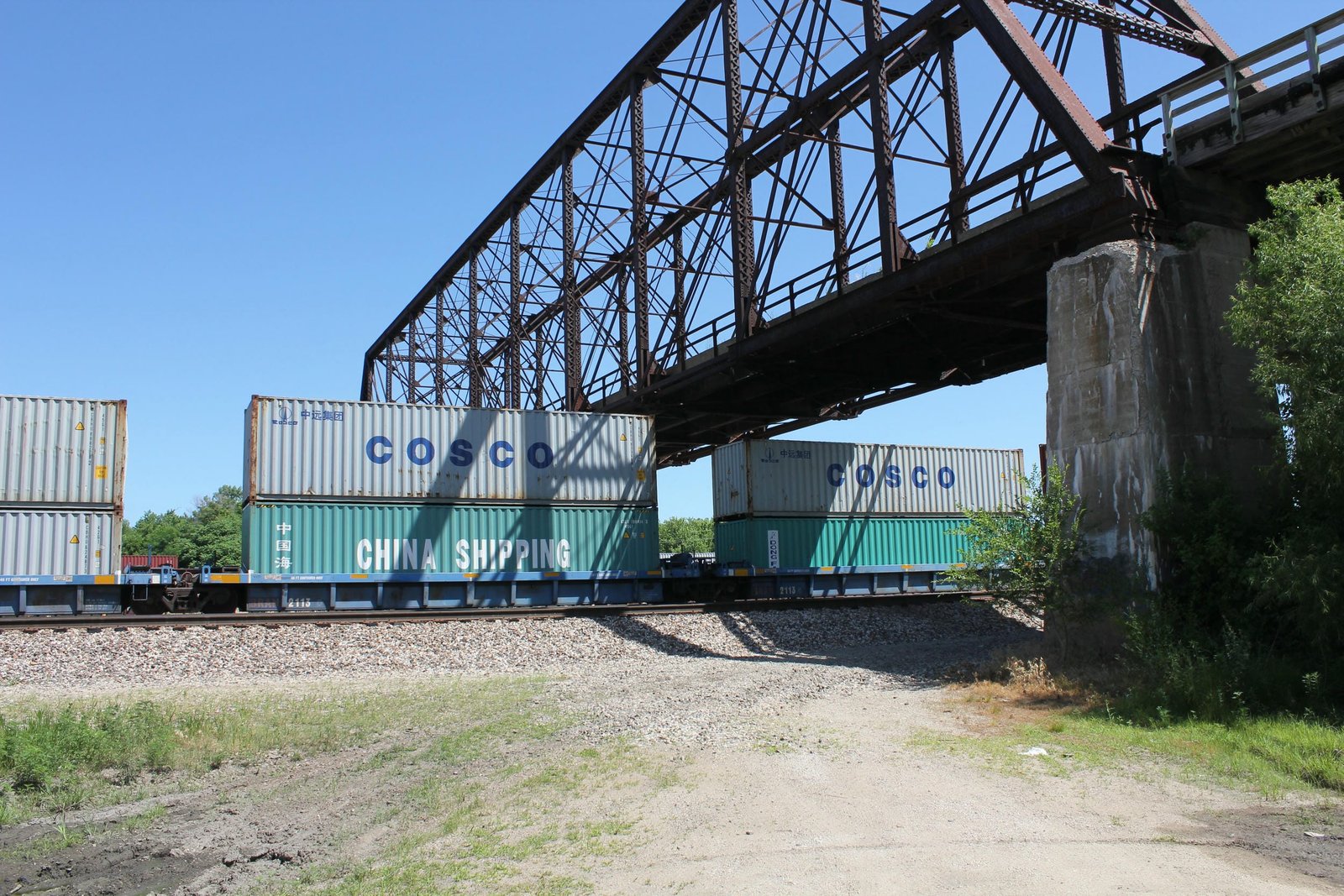
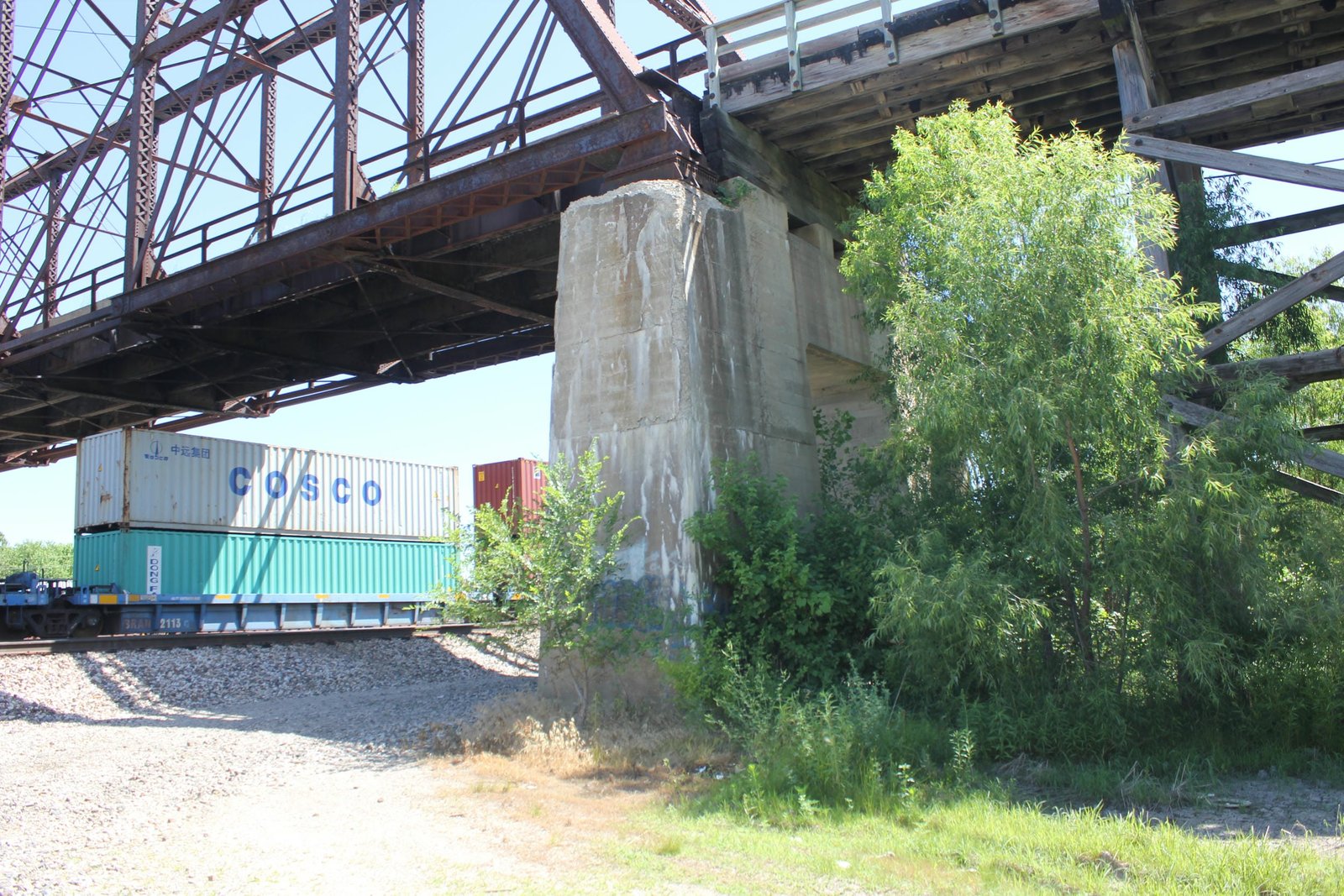
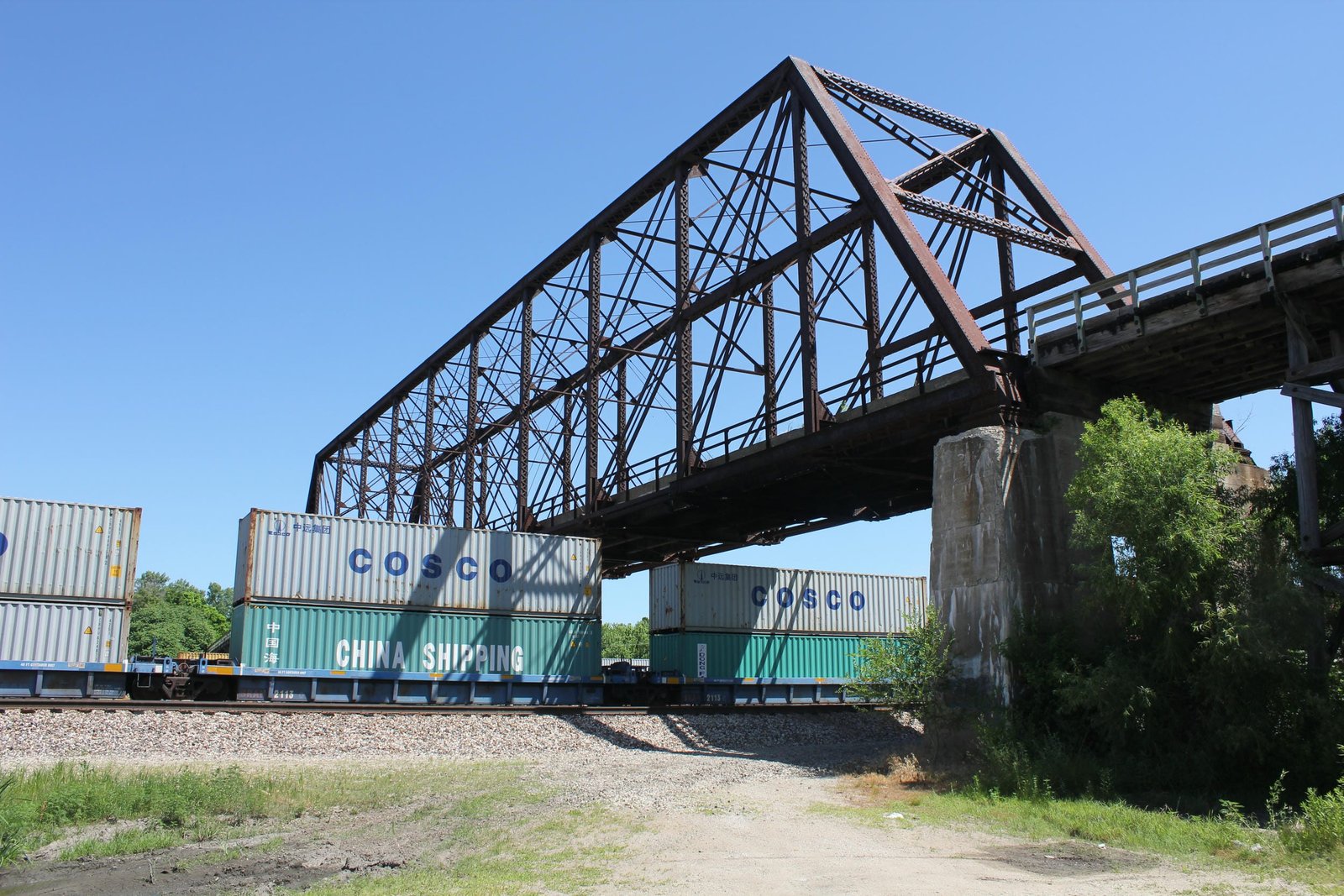
Located on the southwest side of Fort Madison, this unique Whipple through truss bridge carries 35th Street over a BNSF Railway (former Atchison, Topeka & Santa Fe Railway) yard. When the Santa Fe constructed a new line between Kansas City, Missouri and Chicago, Illinois, Fort Madison was located at the approximate halfway point. As the line grew in importance, a shop facility was developed on the outskirts of the city. Known as Shopton, this facility was greatly expanded in 1930. To provide safe passage over the sprawling yards, an overpass would be constructed to carry 35th Street the same year. Instead of constructing a new concrete and steel bridge, it was decided to reuse secondhand double track railroad spans from other locations. Currently, the bridge consists of a 255-foot, 11-panel, pin-connected Whipple through truss span, approached by an 80-foot through plate girder span on the north end. Both ends are approached by lengthy timber pile trestle approaches, which form ramps to the main metal portions of the bridge. The bridge is set onto concrete piers and timber pile bents. It does not appear that either of the metal spans were significant altered upon relocation here, and almost all of the material in both spans appears to be original.
The Whipple truss span was originally fabricated in 1888 by the Missouri Valley Bridge & Iron Company for use across the Illinois & Michigan Canal near Damen Avenue in Chicago, Illinois. This firm reportedly had the contract for many of the iron bridges along the Santa Fe extension to Chicago. When the Santa Fe originally reached Chicago, the I&M Canal was an important waterway, allowing for commercial traffic between Lake Michigan and the Illinois River. By the late 1920s, commercial traffic over the waterway had largely ceased, and Chicago proposed to fill the canal to reclaim the land. Between 1929 and 1930, the canal was filled, and the truss span became available for reuse. The through plate girder span was fabricated in approximately 1890 by an unknown contractor for use at an unknown location. It is possible that this span was reused from another location along the Kansas City to Chicago line, and was fabricated around the same time as the truss. It is unclear if the concrete piers were constructed by railroad company forces or by an unknown contractor. It is believed that the timber portions of the bridge were constructed by railroad company forces.
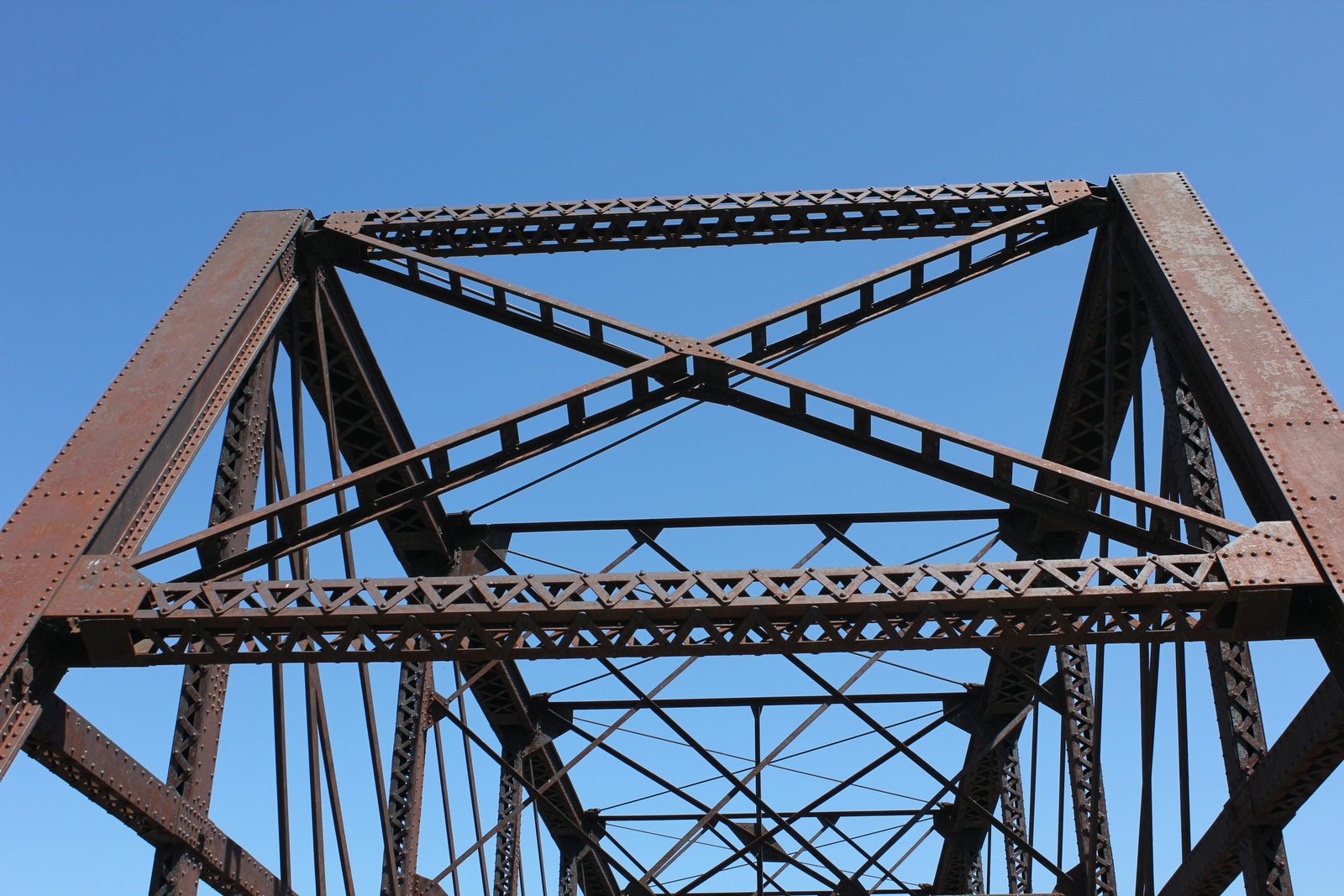
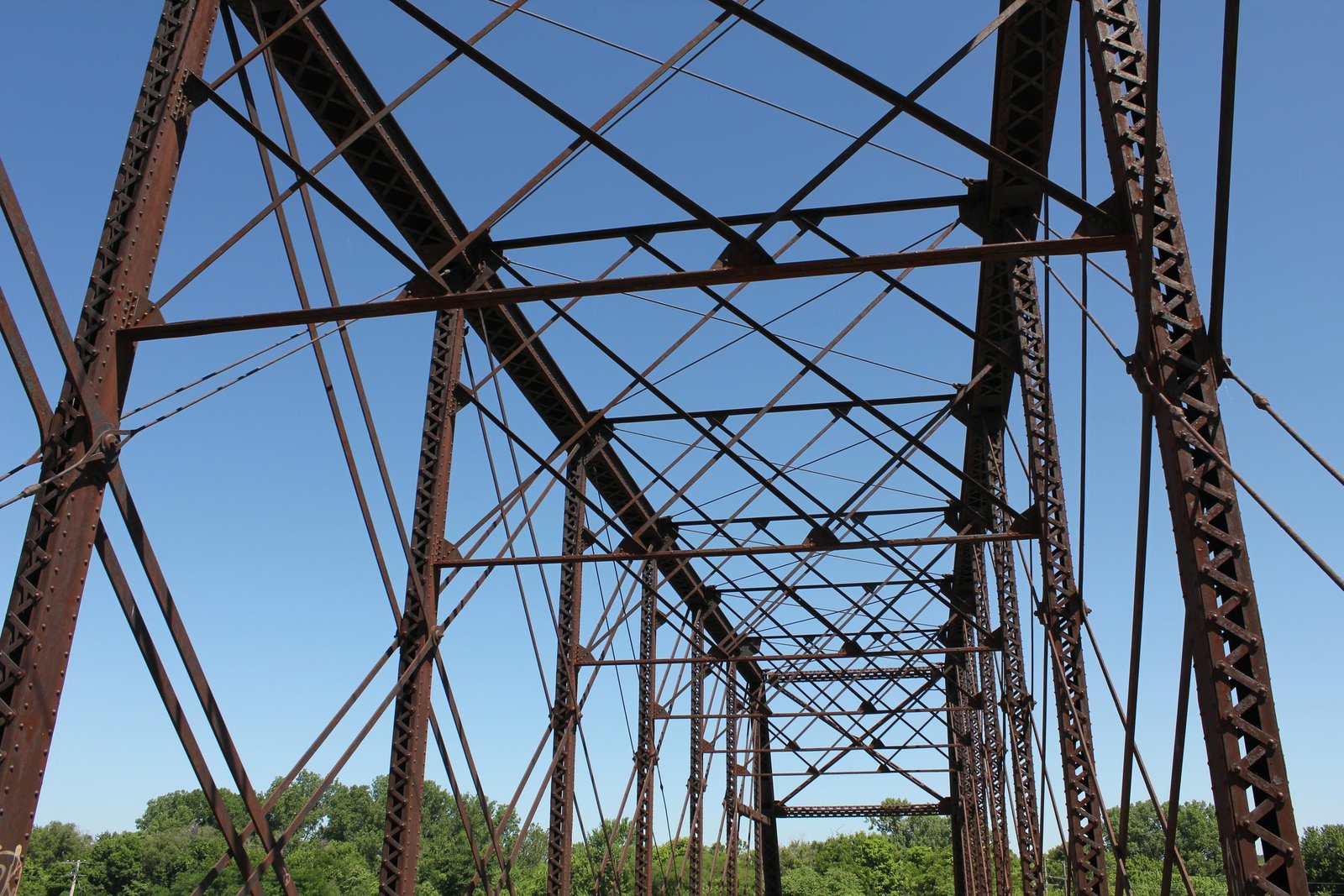
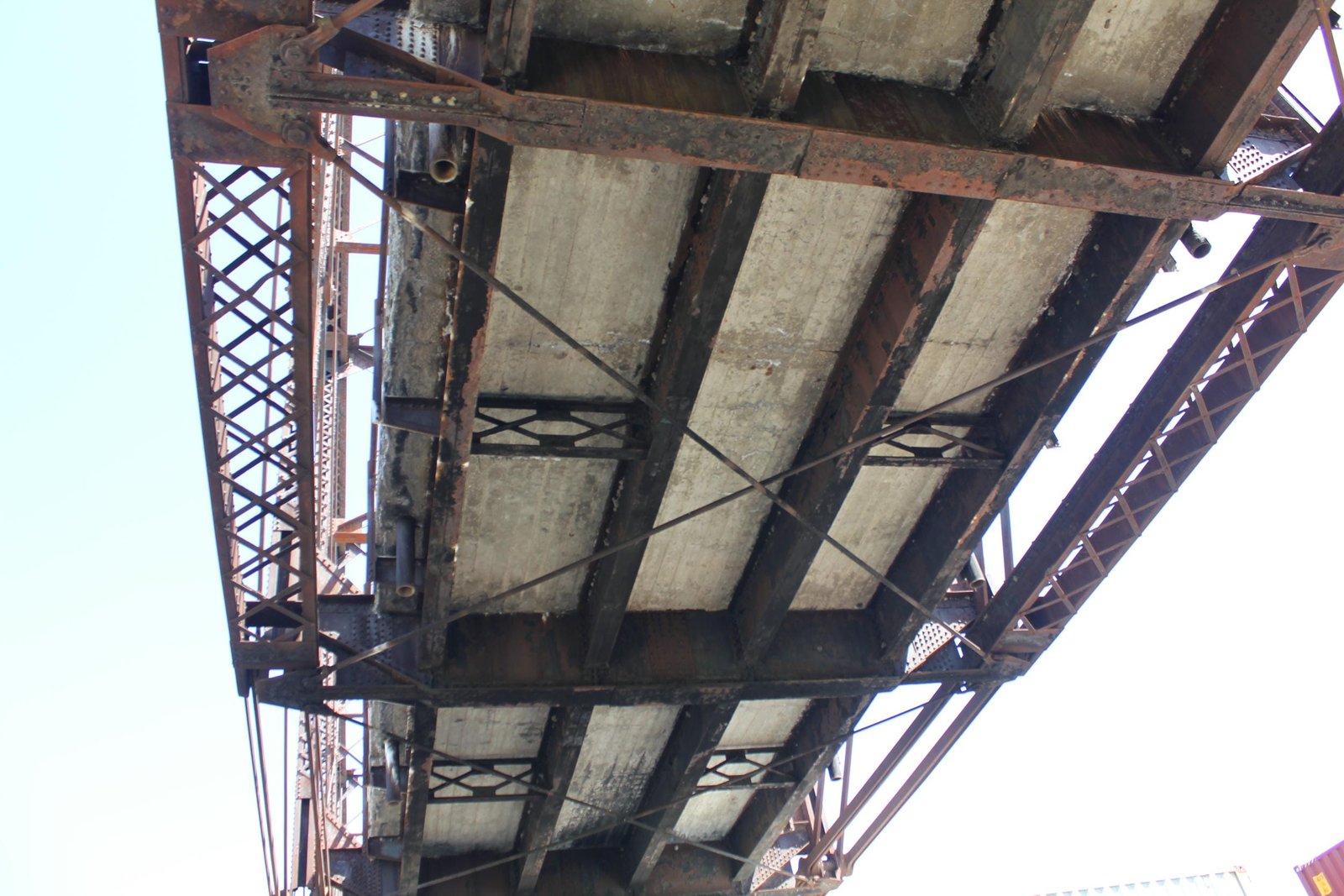
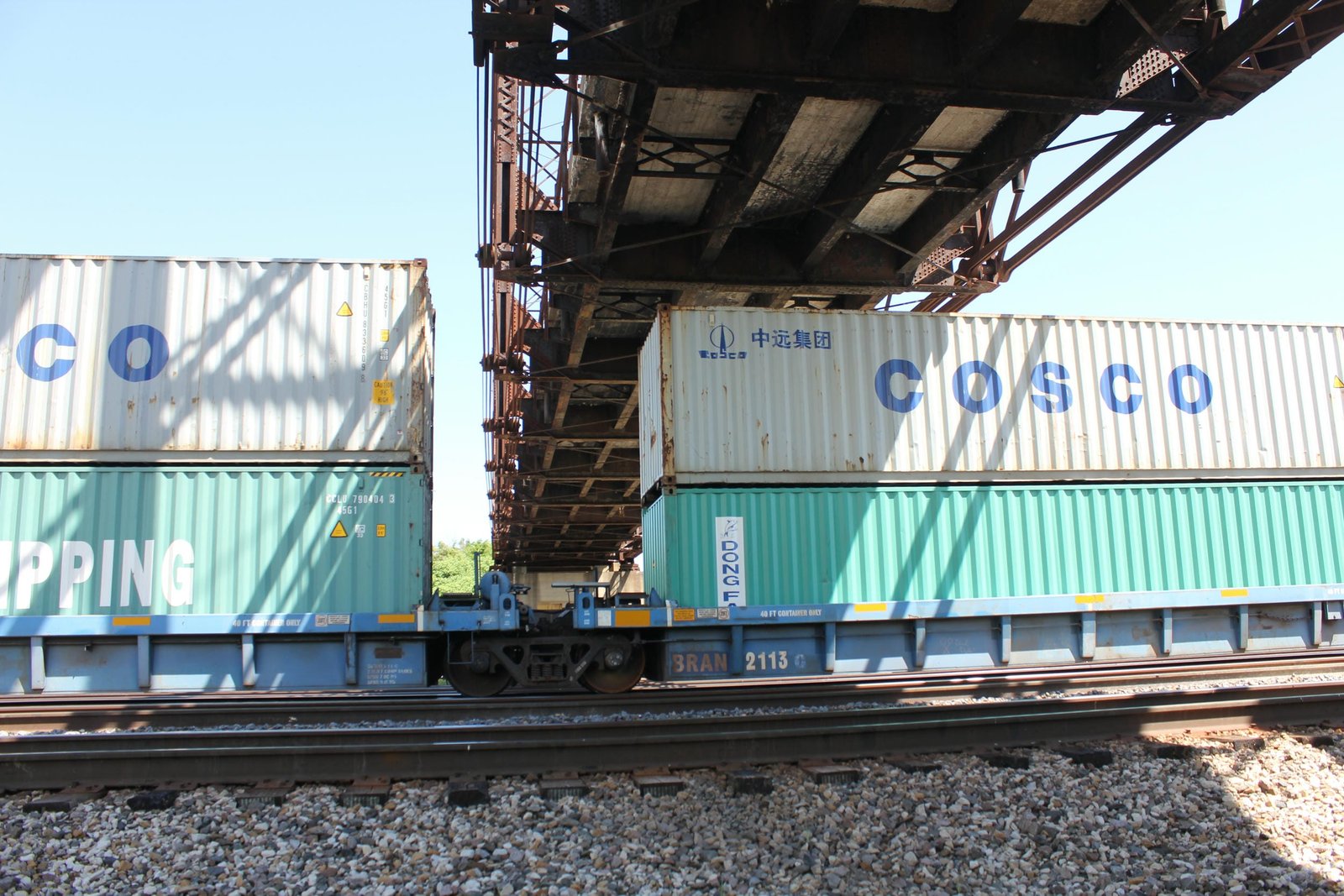
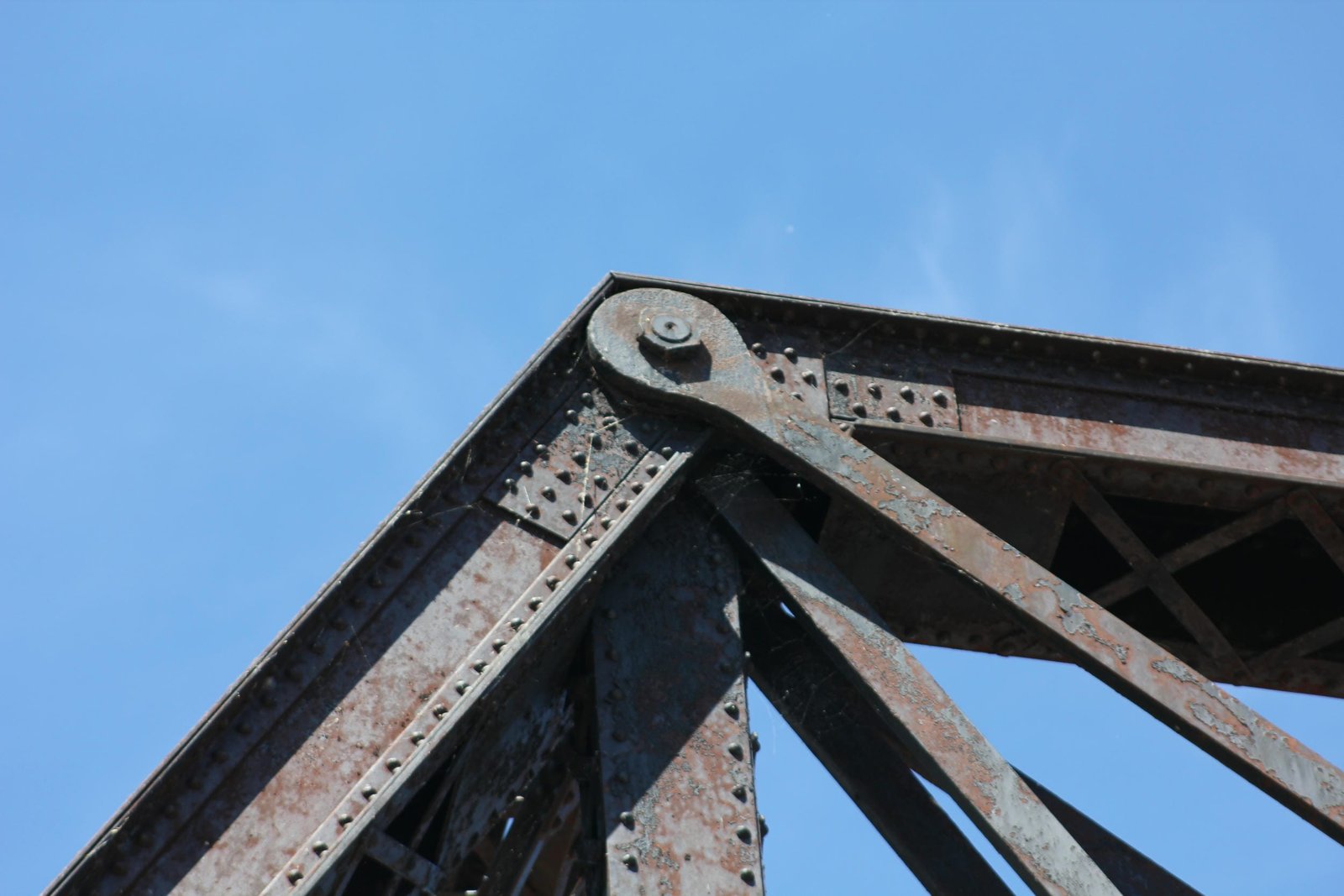
The truss span follows an unusual design, which is extremely tall and uses heavily built-up members and a double track floor. It is believed this span was fabricated from wrought iron, based on its age. The top chord and endposts both consist of heavily built-up beams, composed of two U-shaped channels connected by X-lacing on the bottom and solid plates on top. The bottom chord is composed of two different designs, with an X-laced beam at the outer two panels and eyebars at the center panels. The vertical members are composed exclusively of V-laced beams, and a mid-level longitudinal beam is present at the outer two panels at each end. This beam is also composed of a V-laced beam, and is connected by pins at the vertical members and endposts. All main diagonal members are composed of eyebars, which are arranged into one set of two throughout. In addition, counters are present at panels #4, #5, #7 and #8. These counters are formed from light iron rods, which are looped both at the ends and at the center. The floor system uses a standard double track design, with heavy plate girder floorbeams and two smaller stringers per track. The floorbeams use a unique design, with flares at the end and an inner plate which connects to the bottom chord. In addition, the stringers are braced mid-panel by X-lacing. The lower lateral bracing is formed by rods, which use a clevis design at the end and are pinned to plates at the lower connections. The upper lateral bracing uses a similar design, and is connected at plates on the top chord. The portal bracing uses a unique X-frame design, with two V-laced beams and unusual built-up cross beams. Unique to this bridge, the top V-laced beam is pinned to the joint between the endpost and top chord, while the bottom beam is riveted to the endposts. The sway bracing is composed of a light lattice design, formed from L-shaped bars.
The girder span follows a standard design, and consists of two plate girders and a double track floor. It appears this span may have been part of a multiple span structure, as one end uses a square design and one end uses a rounded design. Both the stringers and floorbeams are relatively light, and are composed of simple stringers. Double track girder spans were relatively unusual for the 19th Century, and it is unlikely that a viable bridge span from the 20th Century would have been reused as part of an overpass. It is unclear if this span was fabricated from steel or iron. The piers use a unique design, with two large columns connected by a transverse concrete beam at the top. The approach spans follow a standard design, with several parallel stringers supported by timber bents. At several locations, the bents are braced with longitudinal and lateral bracings to form towers. When the metal spans were installed here, a concrete deck was added to the spans, while the timber portions of the overpass use a wooden deck. Metal railings have been added to the metal spans, while the wooden approaches use a typical wooden railing.
Whipple trusses are relatively uncommon through the United States, and were primarily used for long spans at major bridges. Whipple truss spans were popular for railroad use in the 1860s and 1870s, before gradually declining in popularity during the 1880s. Also known as a "double intersection Pratt", this type of span was patented by Squire Whipple in 1847. Whipple trusses gained popularity with railroads seeking to construct longer spans of more durable materials. The main drawback of the design was the large amount of material required and the ambiguous stress distributions. As advancements were made in material development, other designs, such as the Pennsylvania and the Baltimore design were innovated, which became the preferred designs for long spans. Having been fabricated in 1888, this span is a relatively late example of a Whipple truss designed for railroad use. It is also notable for having been constructed for two tracks and designed for significant loading. Since the initial construction, the bridge has seen no significant alterations. Today, the bridge is sparingly used by vehicles. Overall, the bridge appears to be in fair condition, with no critical defects noted. The author has ranked this bridge as being highly significant, due to the design, size, history and builder. This bridge is among the most unique bridges in southeast Iowa, and would be worthy of long-term preservation and nomination to the National Register of Historic Places.
Citations
| Fabrication date (truss span), erection date and relocation history (truss span) | Atchison, Topeka & Santa Fe Railway Bridge Records; Part of Railroad & Heritage Museum Fred M. and Dale M. Springer Archive; Temple, Texas |
| Builder (truss span) | The Sunday Inter Ocean (Chicago, Illinois); March 11, 1888 |
| Railroad History Citation | ICC Valuation Information, Compiled by Richard S. Steele |