
Click the photo to view the full-size version
| Name | Dinkey Bridge Fort Dodge, Des Moines & Southern Railroad Bridge #A8 |
| Built By | Fort Dodge, Des Moines & Southern Railroad |
| Currently Owned By | Union Pacific Railroad |
| Superstructure Contractor | Pittsburgh-Des Moines Steel Co. of Pittsbugh, Pennsylvania |
| Length | 242 Feet Total, 50 Foot Main Spans |
| Width | 1 Track |
| Height Above Ground | 15 Feet (Estimated) |
| Superstructure Design | Steel Stringer |
| Substructure Design | Steel Pile |
| Date Built | 1940 |
| Date Removed | August 2010 |
| Traffic Count | 0 Trains/Day (Bridge has been Removed) |
| Current Status | Removed but not replaced |
| Fort Dodge, Des Moines & Southern Railroad Bridge Number | A8 |
| Significance | Moderate Significance |
| Documentation Date | 7/22/2012 |
In the late 19th and early 20th Centuries, electric interurban railways became popular throughout the United States, particularly in suburban and rural areas. In rural areas, the interurban represented a reliable form of transportation, independent of the steam railroads. Unlike other interurbans in the United States, the Fort Dodge, Des Moines and Southern Railroad (FDDM&S) began as a series of small coal hauling railroads in central Iowa. In 1876, the Crooked Creek Railroad (CCR) constructed a short narrow gauge line, extending from the Dubuque & Sioux City Railroad (Illinois Central Railroad) mainline east of Fort Dodge, Iowa to coal mines near Lehigh, Iowa. In 1886, the Webster City & Southwestern Railroad (WC&SW) constructed a 14-mile line between the CCR near Lehigh and Webster City, Iowa, and the CCR was standard gauged at this time. The WC&SW purchased by the CCR in 1890 to streamline operations. In 1893, the Boone Valley Coal & Railway Company (BVCRC) constructed a short line, extending from Fraser, Iowa to the Minneapolis & St. Louis Railway west of Fraser. The owners of the BVCRC charted the Marshalltown & Dakota Railway (M&D) in 1899 to further expand the coal line. A segment between Fraser and Gowrie, Iowa was completed that year. The railroad was renamed the Newton & Northwestern (N&NW) in 1902. A large segment between Newton, Iowa and Rockwell City, Iowa (using the Fraser to Gowrie line); as well as a branch to Colfax, Iowa were opened in 1905. The railroad was sold to new owners in 1905, and renamed the Fort Dodge, Des Moines and Southern Railroad (FDDM&S).
After the FDDM&S was formed, the new owners realized the potential In 1906, the FDDM&S purchased the Ames & College Street Railway (A&C); and constructed a new mainline into Ames. The A&C had been constructed between 1890 and 1891 to connect downtown Ames to the Iowa State University campus. Electrified lines were opened between Des Moines and Midvale, Iowa and between Boxholm, Iowa and Fort Dodge in 1907. In 1911, the Midvale to Newton line was abandoned, rendering much of the system electrified. Also in 1911, a segment of the line near Ankeny, Iowa was relocated to be roughly parallel to the existing Chicago & North Western Railway (C&NW) line and better serve interchange partners. The original line south of Ankeny was abandoned the next year. In 1916, the CCR was formally purchased by the FDDM&S. A short segment between Fort Dodge and Brushy, Iowa was opened in 1917 to serve gypsum mines in the area. The FDDM&S was successful during the early 20th Century, due to its many steam railroad interchange partners and focus on both passenger service and freight. In 1930, the FDDM&S entered receivership, and reemerged as the Fort Dodge, Des Moines & Southern Railway (FDDM&S) in 1942.
By the mid-20th Century, operations over the railroad were beginning to slow down. In 1954, the FDDM&S fell under control of the Des Moines & Central Iowa Railway (DCI), and in 1955 passenger service ended and the line was converted to diesel locomotives. In 1962, the lines towards Lehigh were abandoned. In 1965, the Gowrie to Rockwell City segment and the Ames branch were abandoned. In 1968, the FDDM&S and DCI were acquired by the C&NW. The C&NW operated parallel tracks at many points, rendering the FDDM&S lines excess. The Boxholm to Gowrie segment was abandoned in 1972, and the Webster City branch was abandoned in 1979. In 1983, the C&NW sought to abandon the remainder of the line, except for a short segment on the north side of Des Moines. A 12-mile section between Boone and Fraser Junction was sold to a private group in 1983, and the Boone & Scenic Valley Railroad (B&SV) was formed to begin tourist operations over the line. In 1995, the C&NW was purchased by Union Pacific Railroad (UP). Today, the B&SV continues to be a major attraction as a tourist railroad, and operates the segment between Boone and Fraser Junction. UP still owns segments on the north side of Des Moines and east side of Fort Dodge. The remainder of the line has been abandoned and largely reverted to adjacent property owners.
A collection of photographs of this bridge were taken by Bradley Grefe and can be found here.
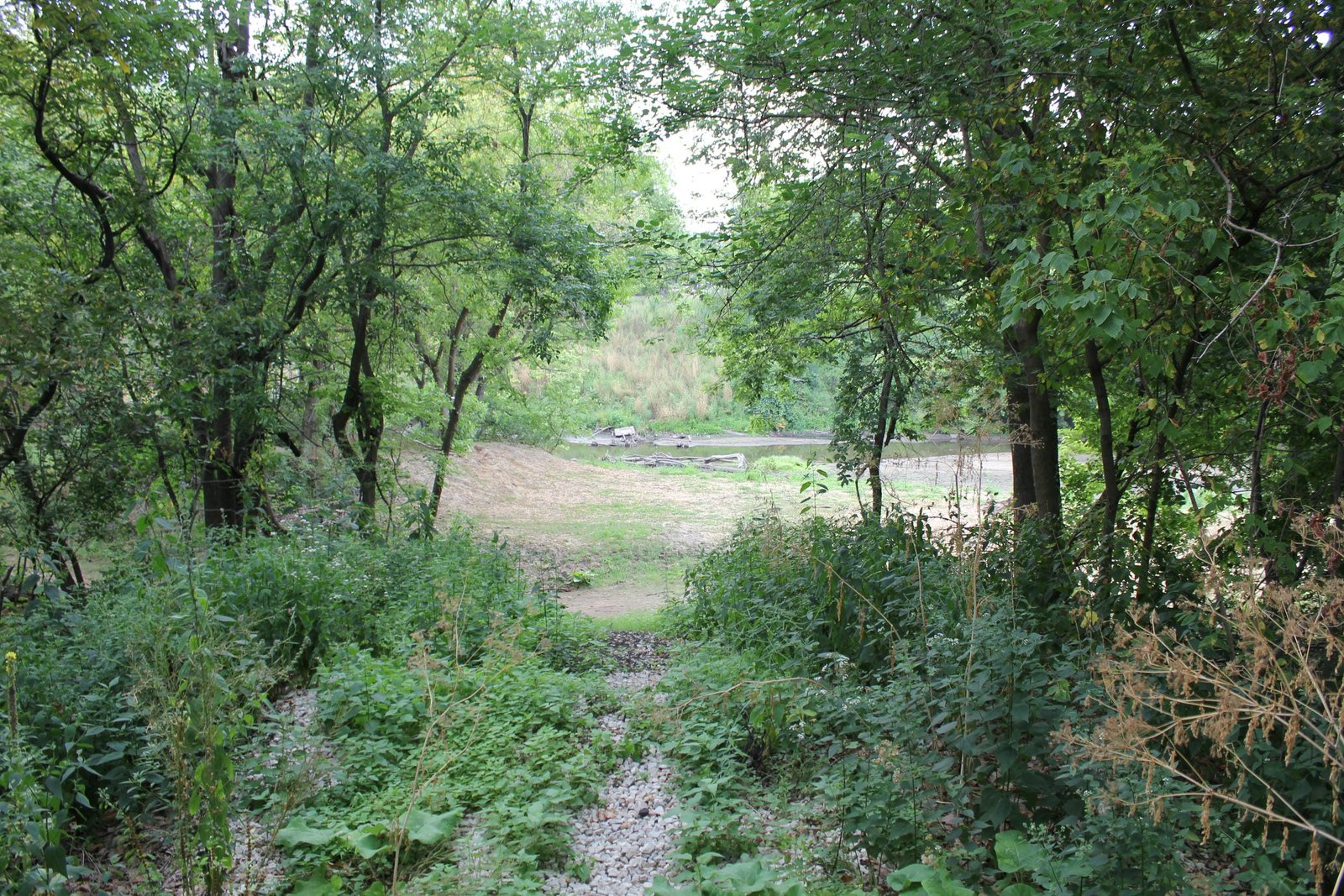
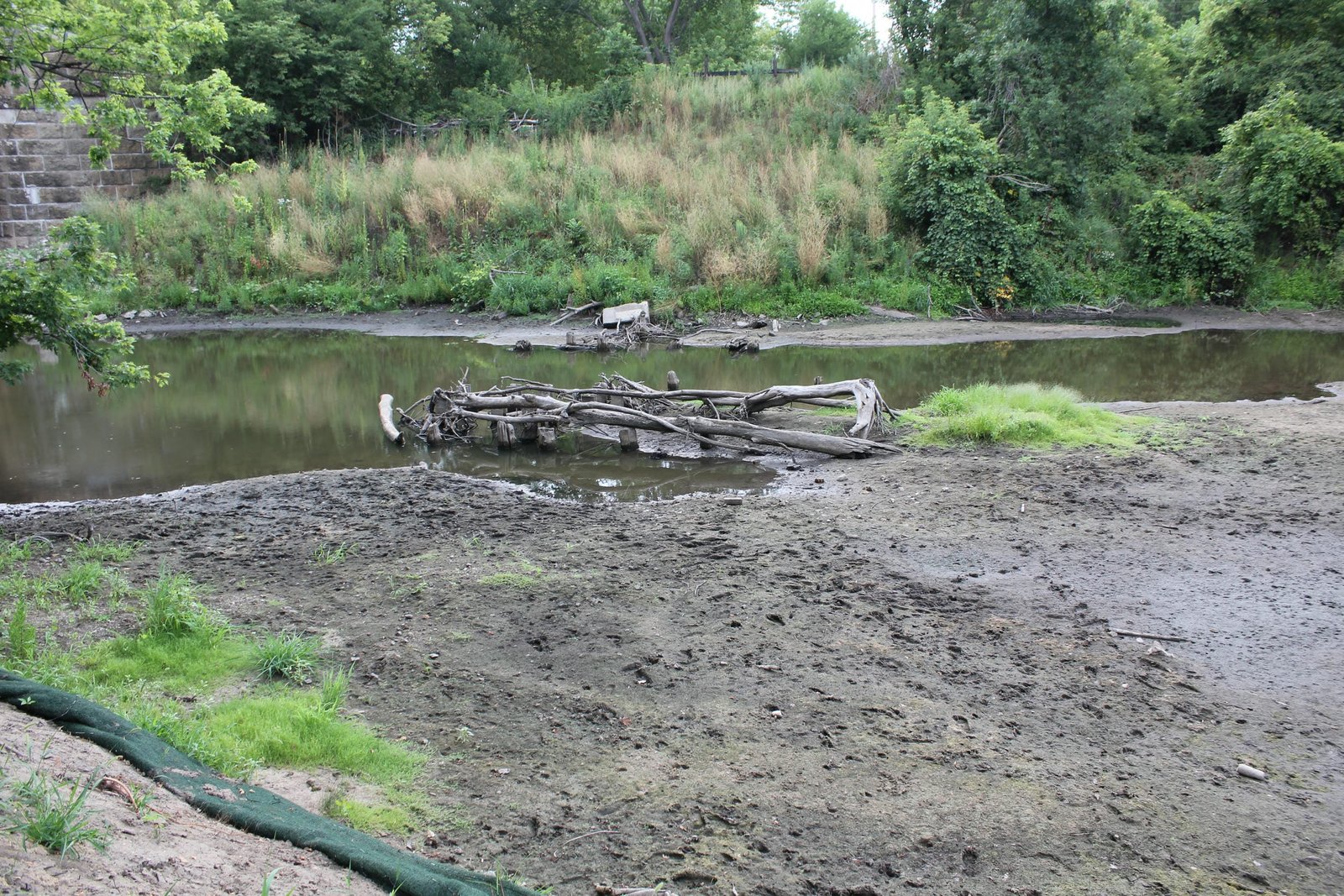
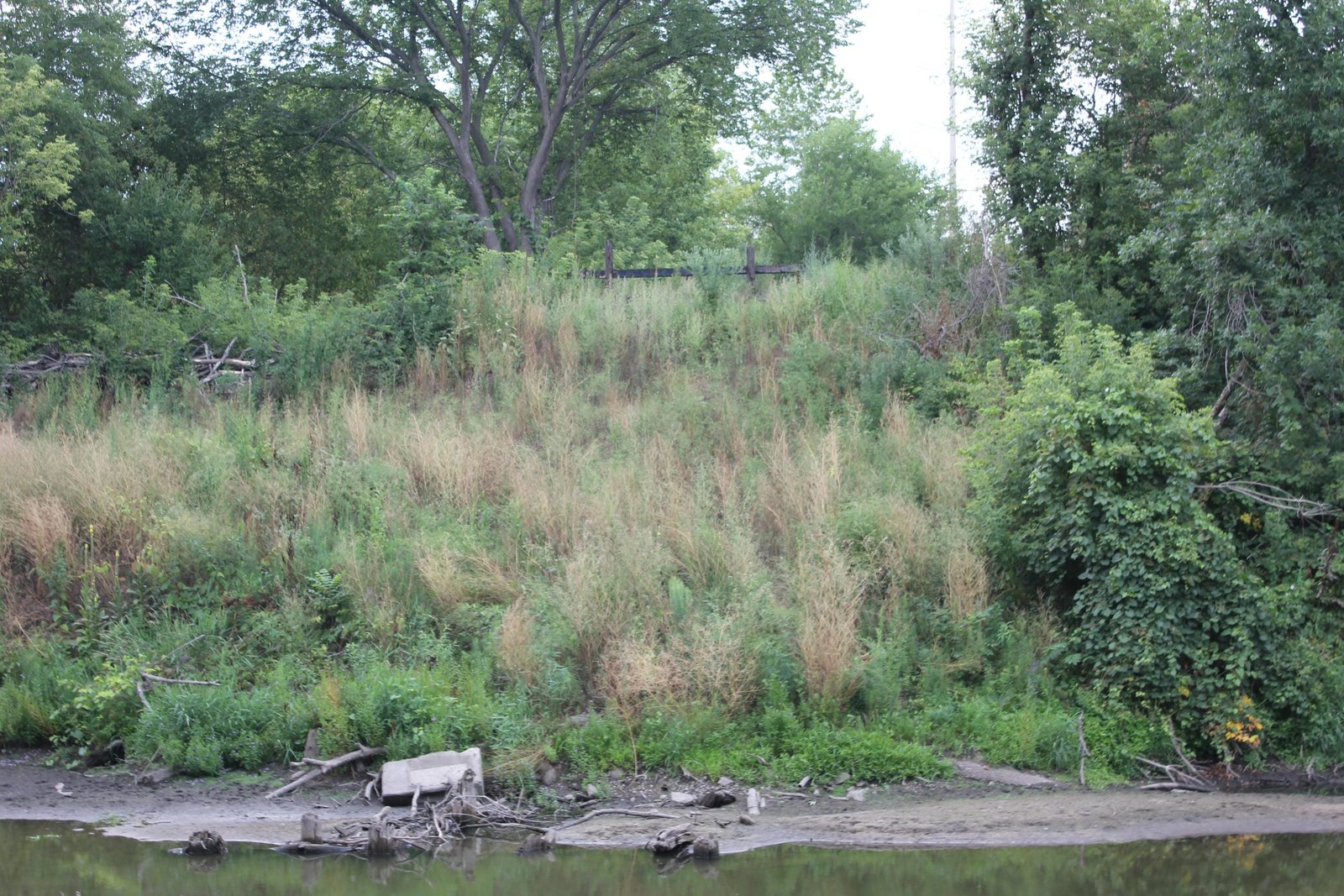
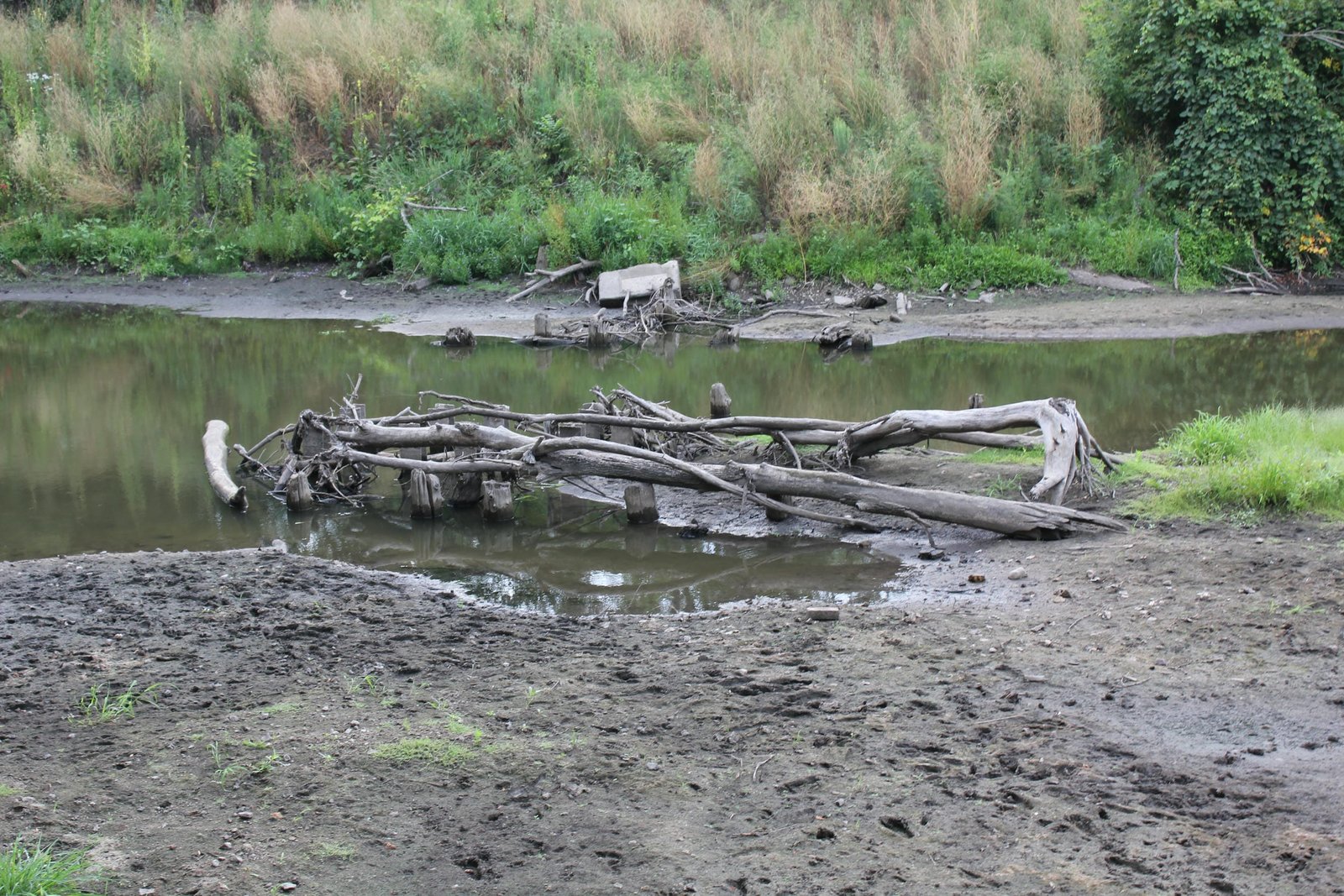
Once located immediately downstream of the former Chicago & North Western Railway bridge, this steel stringer bridge once carried a Fort Dodge, Des Moines & Southern Railroad line across Ioway Creek (formerly Squaw Creek). The first bridge at this location consisted of a timber pile trestle bridge, first constructed in 1891 and rebuilt a couple of times in the early 20th Century. While the bridge was suitable for lightweight interurban cars, it caused issues with flooding and debris catching in the closely spaced bents. While passenger service was replaced by busses in 1929, the line was retained to bring goods to the Iowa State University campus. In 1940, the bridge was replaced with a heavier steel stringer bridge, possibly in connection to research being conducted at Iowa State University during the time. In the early 1940s, Ames was instrumental to the Manhattan Project, which developed the United States nuclear weapons for use in World War II. It is known that the FDDM&S line was used to ship weapons grade uranium to the campus, indicating this bridge was likely part of that effort. The only significant alteration to the bridge came in 1965, when the steel piers were strengthened by placing additional piles.
The bridge consisted of four 50-foot and one 42-foot steel stringers, set onto steel pile substructures. Each span consisted of four shallow beams, arranged into two sets of two. The piers were composed of steel H-piles, each with eight piles arranged into two sets of four. These piers were connected by steel blocking on top and a transverse beam, which created a continuous steel stringer span. Pittsburgh-Des Moines Steel Company fabricated the steel for the bridge, while railroad company forces likely erected the structure. Steel stringer spans were popular for railroad use, as they were durable and easy to construct. The line between Ames and the campus was reportedly abandoned in 1965, although it is believed that the bridge may have been retained for occasional use to serve the Iowa State University power plant into the 1980s. Since the 1960s, the City of Ames had made several inquiries about using the bridge for pedestrian traffic. A proposal in the mid-1960s requested that a pedestrian deck be added to the bridge while it was still occasionally used, and was denied by the railroad. Further proposals were made in the early 2000s after the bridge had been abandoned. Union Pacific Railroad, then the owner of the bridge, decided to remove the structure in 2010 to prevent pedestrians from using the abandoned structure. The bridge was removed by Mike's Excavating of Madrid, Iowa in August 2010. At the time of removal, the bridge was in fair to good condition, and would have been an excellent addition to the Ames trail system. The author has ranked this bridge as being moderately significant, due to its historic connection to the Manhattan Project.
Citations
| Build date and builder (superstructure) | Chicago & North Western Railway Drawing Collection at the Chicago & North Western Historical Society Archives |
| Railroad History Citation | ICC Valuation Information, Compiled by Richard S. Steele |