
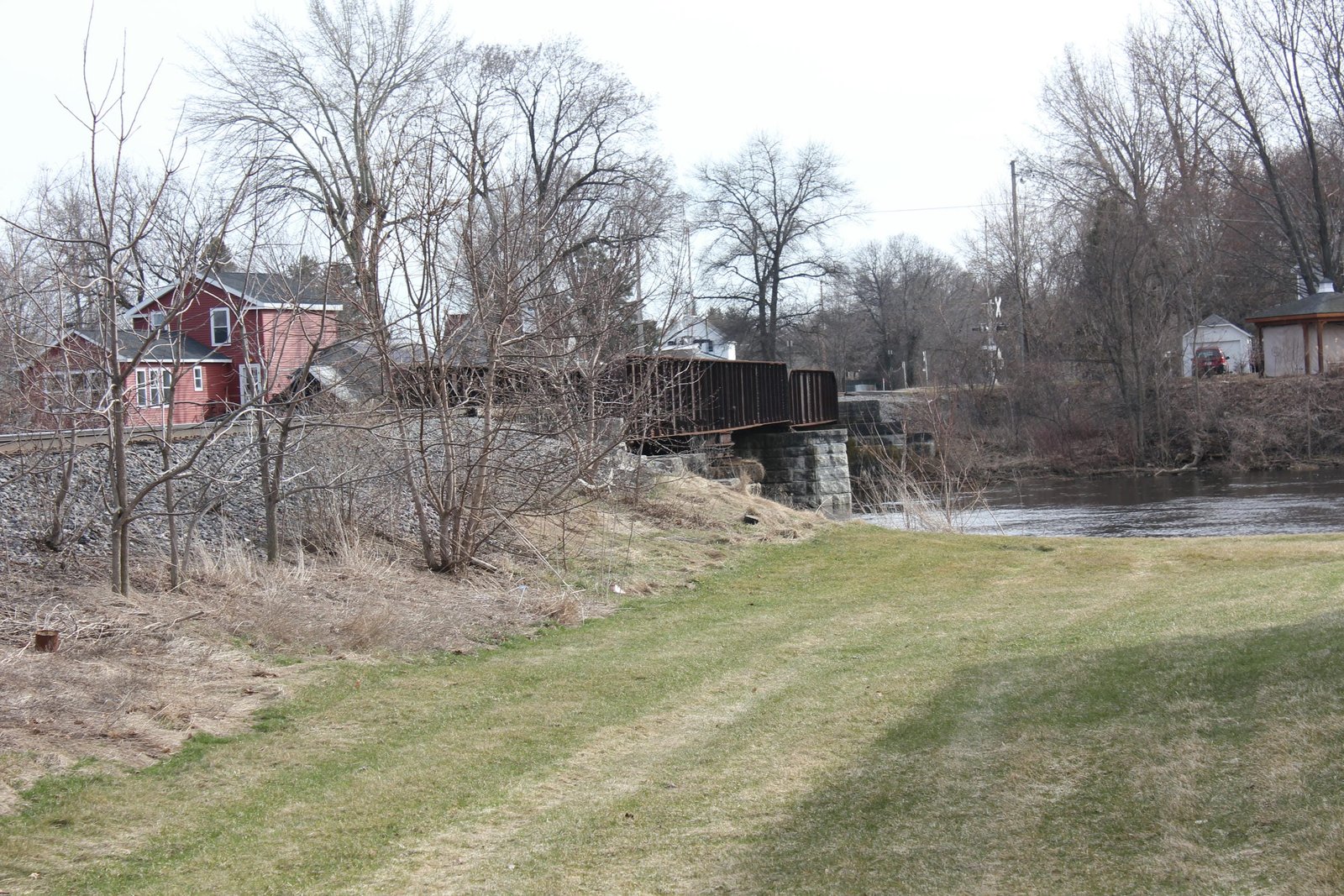
Click the photo to view the full-size version
| Name | CN Oconto River Bridge Chicago & North Western Railway Bridge #57 |
| Built By | Chicago & North Western Railway |
| Currently Owned By | Canadian National Railway |
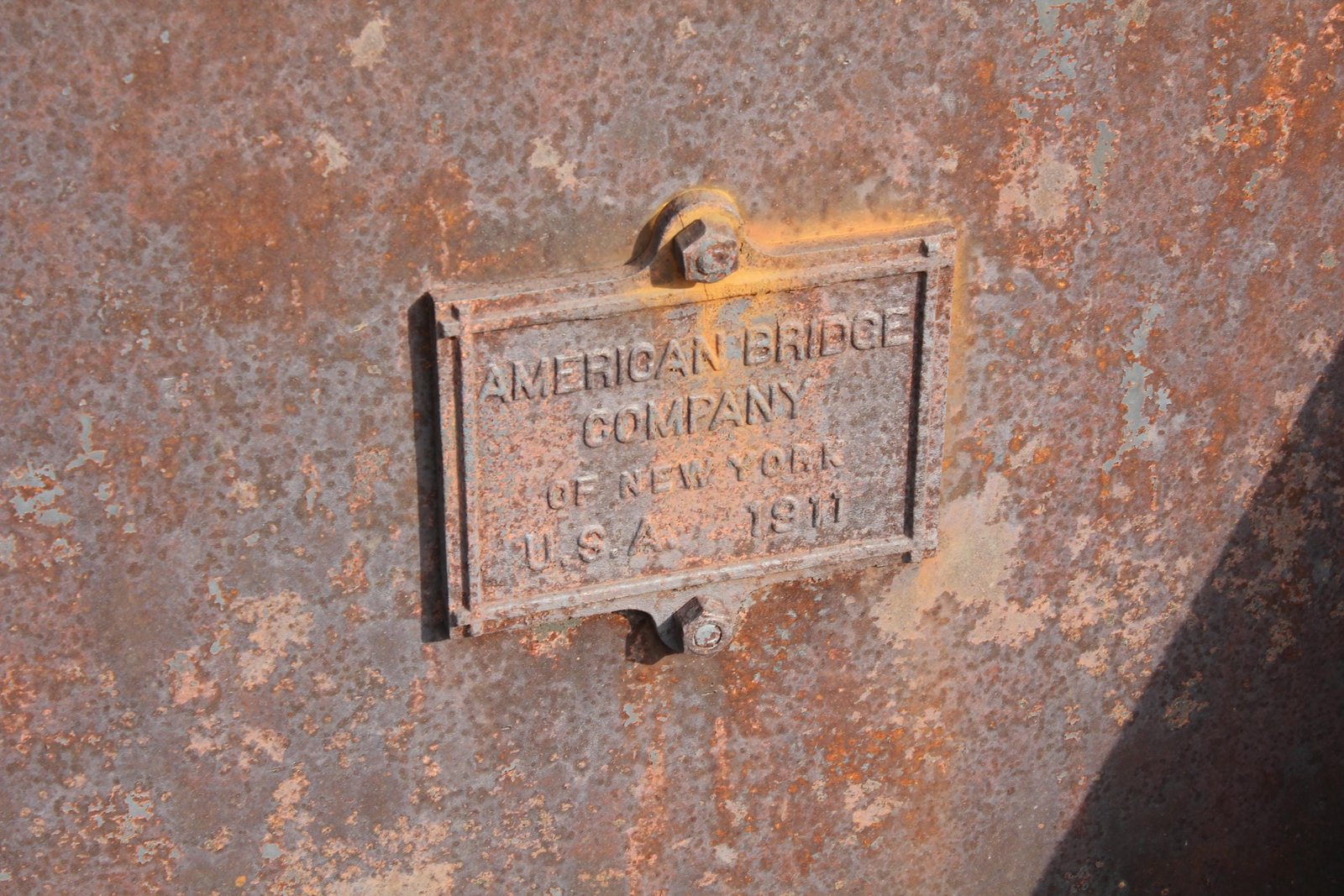
| Superstructure Contractor | American Bridge Company of New York (Lassig Plant) (Main Span) American Bridge Company of New York (Gary Plant) (Approach Spans) |
| Substructure Contractor | Unknown (Piers) Unknown (Abutments) |
| Length | 204 Feet Total, 113 Foot Main Span |
| Width | 1 Track |
| Height Above Ground | 15 Feet (Estimated) |
| Superstructure Design | Through Plate Girder Swing Span, Through Plate Girder and Steel Stringer |
| Substructure Design | Stone Masonry |
| Date Built | 1904, Approaches Added 1912 |
| Traffic Count | 5 Trains/Day (Estimated) |
| Current Status | In Use |
| Chicago & North Western Railway Bridge Number | 57 |
| Canadian National Railway Bridge Number | 57 |
| Significance | Moderate Significance |
| Documentation Date | 3/29/2016 |
In 1864, the Peninsula Railroad of Michigan (PRM) constructed 62 miles of new railroad, extending from Escanaba, Michigan to Negauee, Michigan. The PRM had originally been charted to connect the iron mines of the Upper Peninsula of Michigan to Lake Michigan at Escanaba. After completion of the line, the PRM would be purchased by William B. Ogden, and consolidated into the Chicago & North Western Railway (C&NW). This segment of line was originally disconnected with the rest of the C&NW system, which was beginning to expand in Wisconsin. A 5 mile extension to Ishpeming, Michigan was constructed in 1870 by the C&NW. In 1870, the C&NW constructed an additional 50 miles of railroad, extending from the end of the existing mainline at Green Bay, Wisconsin to Marinette, Wisconsin, on the Michigan border. The following year, a bridge would be constructed over the Menominee River, and an additional 64 miles of railroad constructed to Escanaba. This line soon became a major mainline for the C&NW, allowing the shipment of iron ore from the Upper Peninsula and allowing the construction of branch lines. North of Escanaba, numerous branch lines would be constructed to serve the mines of the area.
By the early 20th Century, the C&NW had constructed and acquired a large railroad network throughout the Midwest, making it one of the premiere railroads of the area. Throughout the first half of the 20th Century, this line remained critical for the C&NW, as it provided connections to a number of lines throughout northeast Wisconsin and the Upper Peninsula of Michigan. The line served a variety of industries, hosted passenger trains and was heavily used for hauling iron ore. The C&NW was acquired by Union Pacific Railroad (UP) in 1995. UP soon began to sell or abandon excess tracks acquired from the C&NW. The line from Green Bay to Ishpeming and the remaining mine branches were sold to a subsidiary of Wisconsin Central, Ltd. (WC). In 2001, WC was purchased by Canadian National Railway (CN), and became the American subsidiary of the railroad. Today, CN continues to operate the line between Green Bay and Gladstone, Michigan as the Marinette Subdivision, and the Gladstone to Ishpeming segment as the Ore Subdivision.
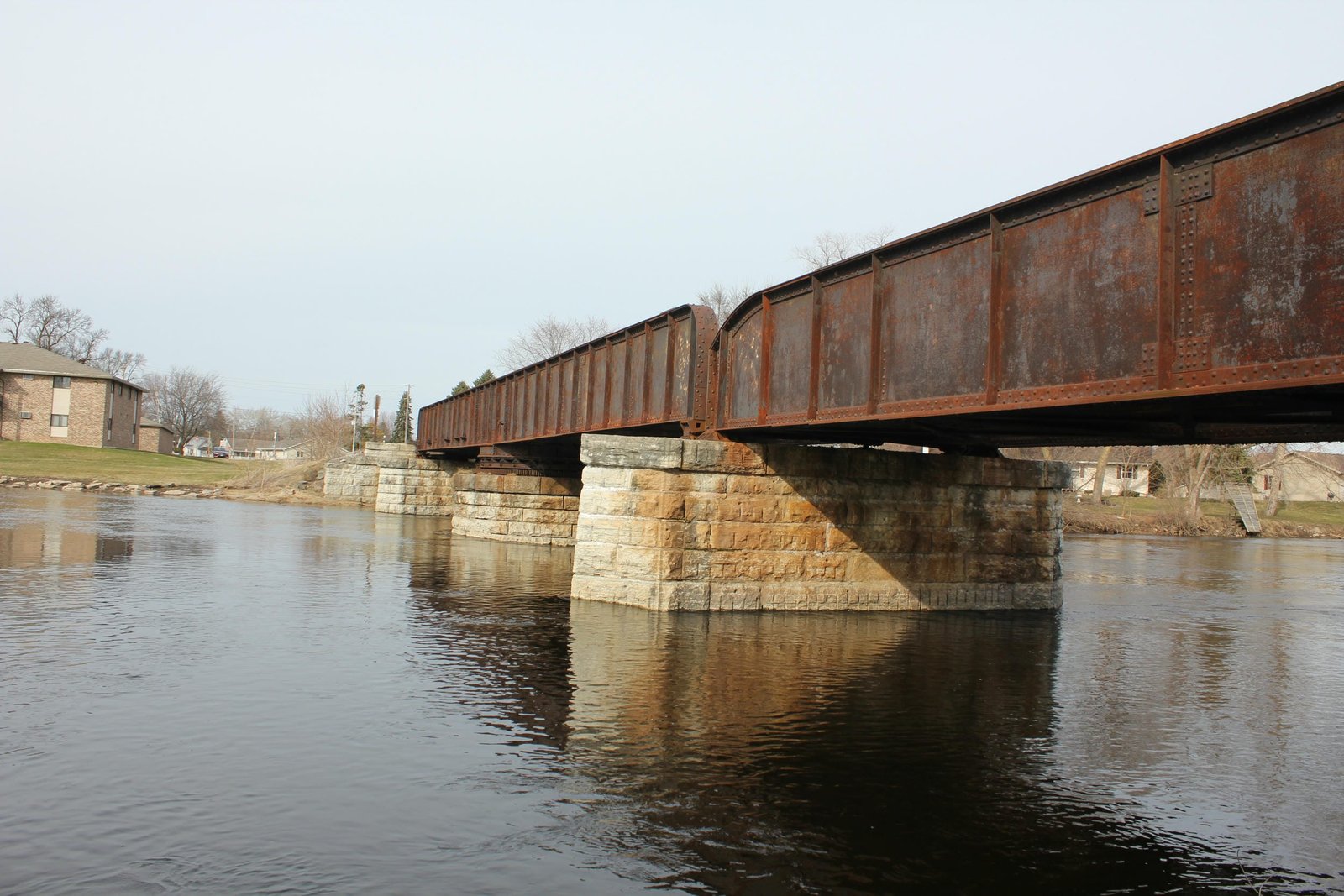
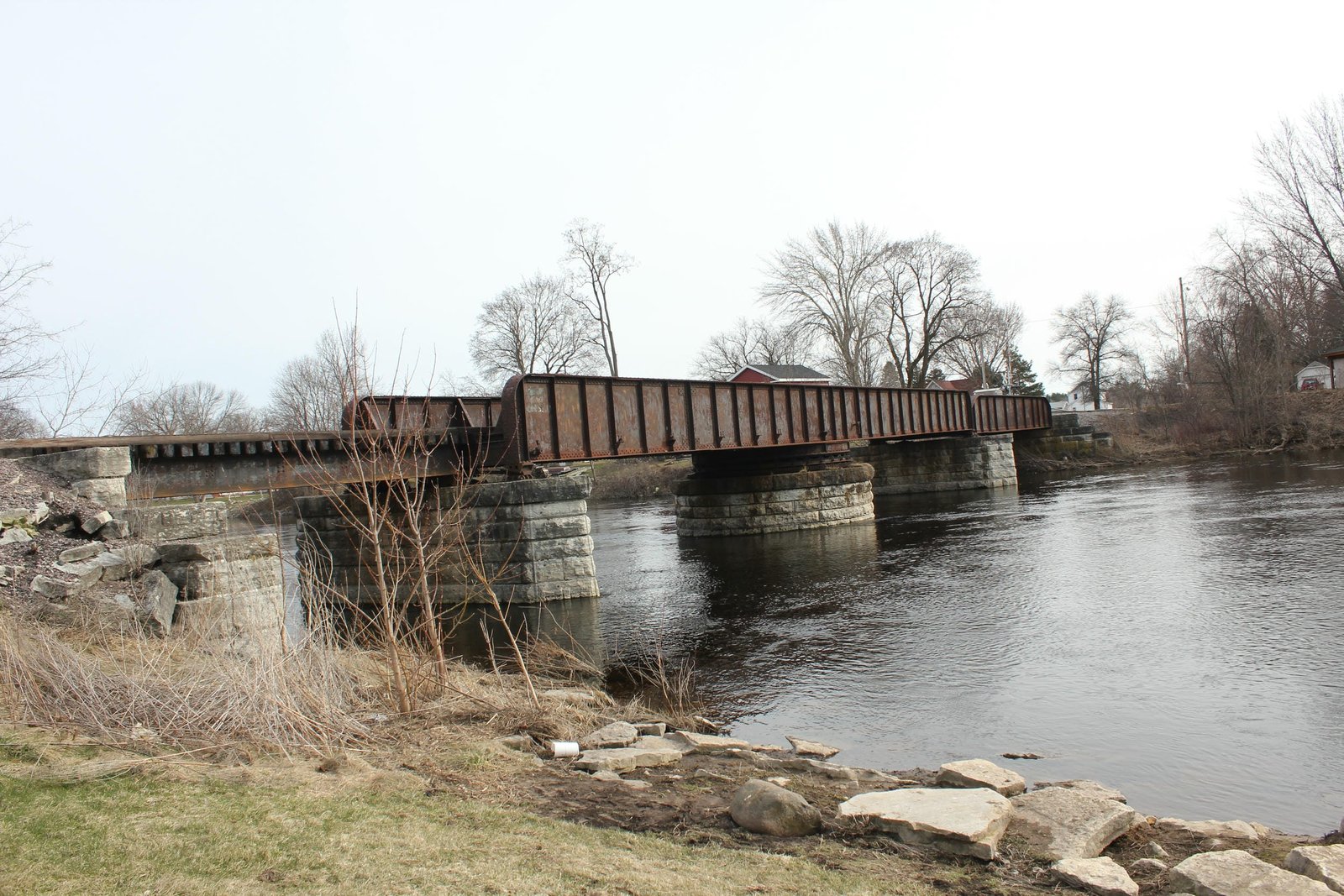
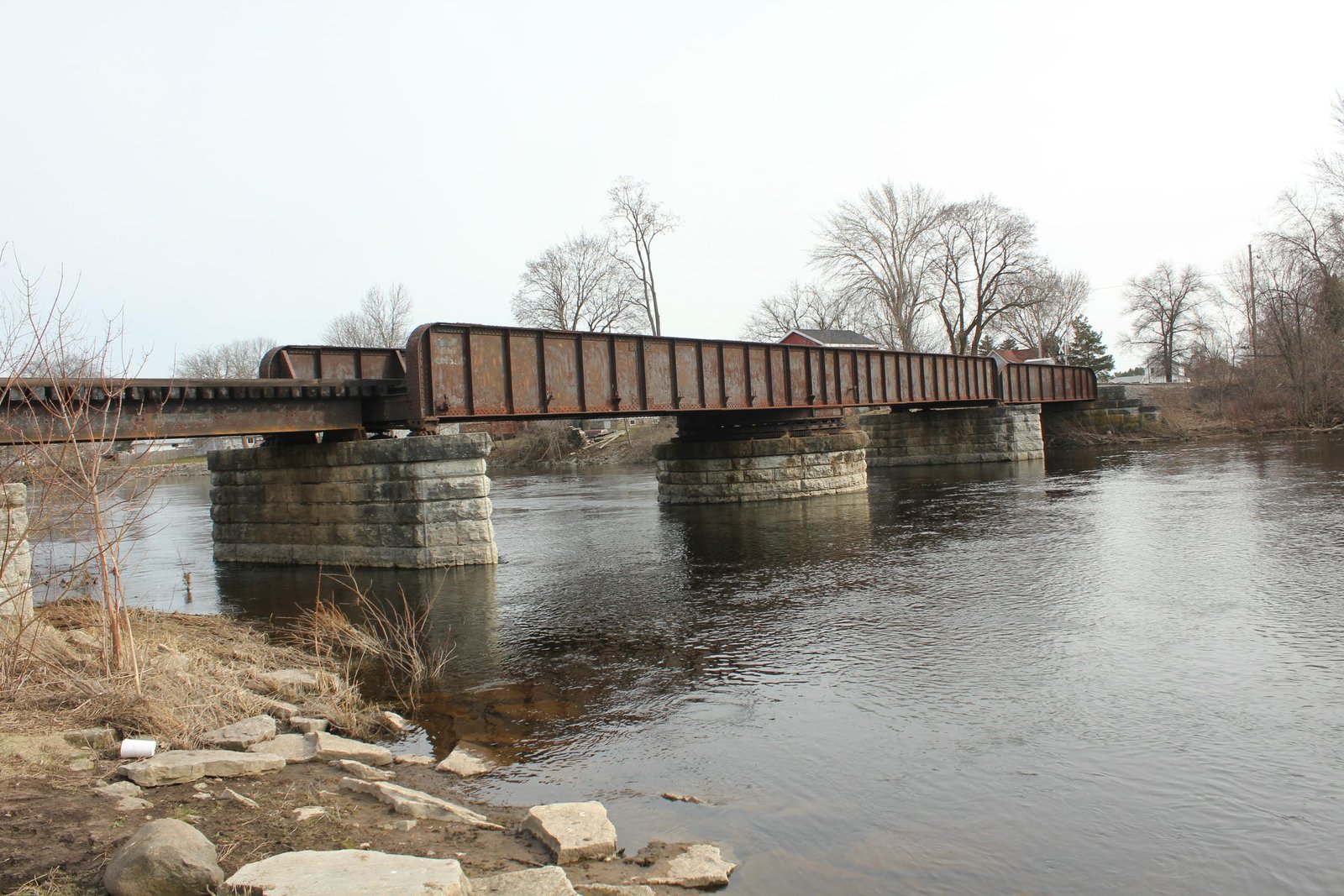
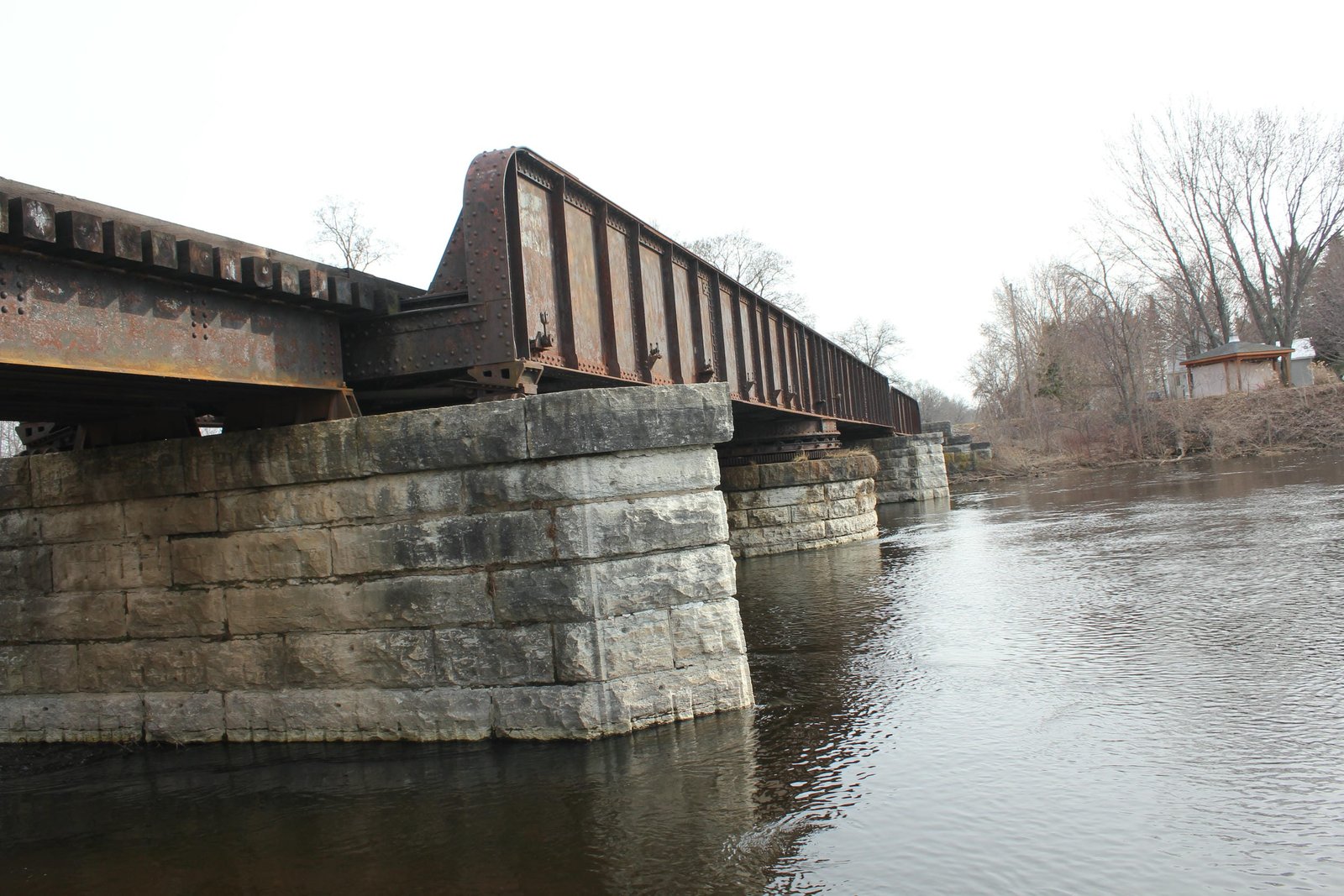
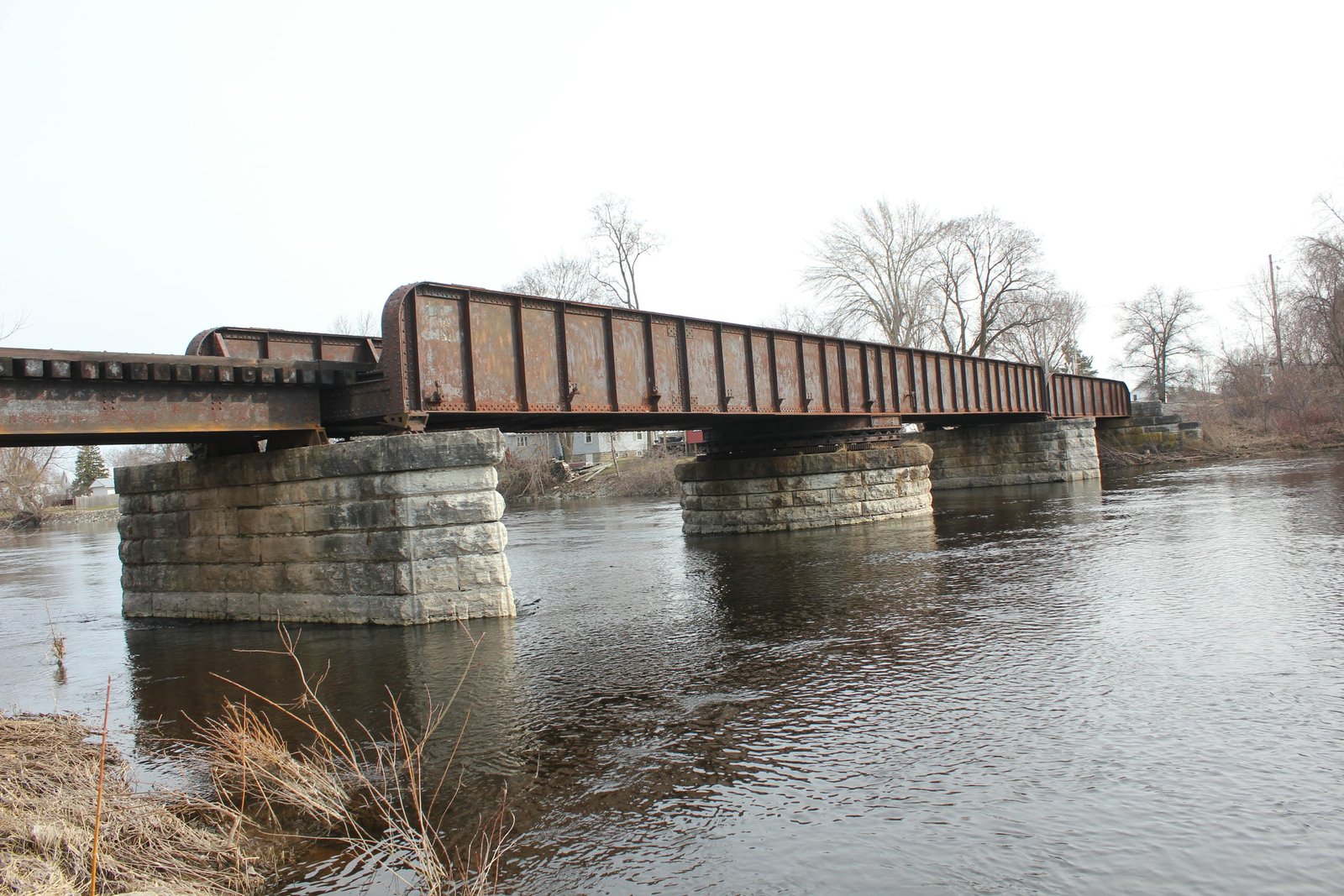
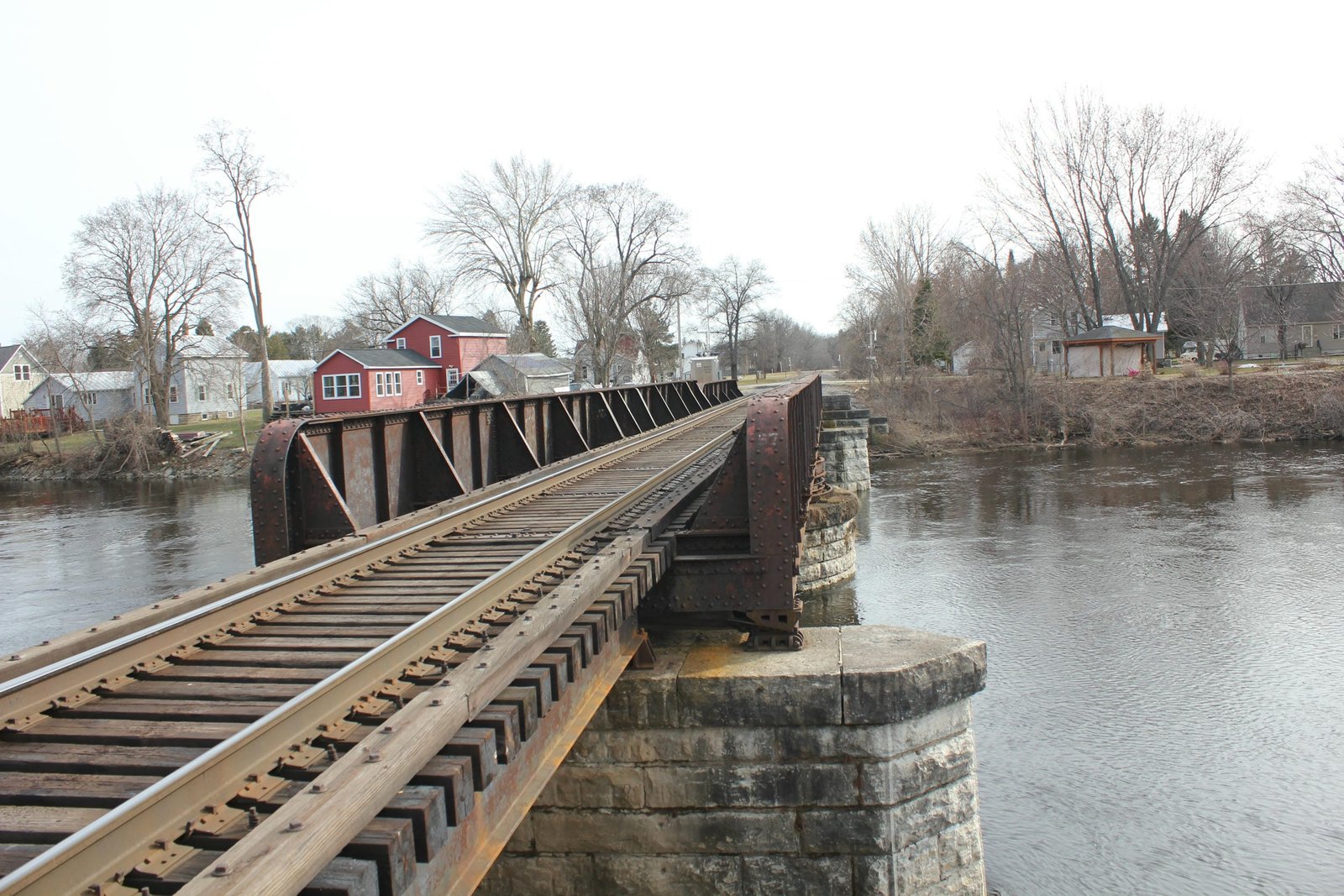
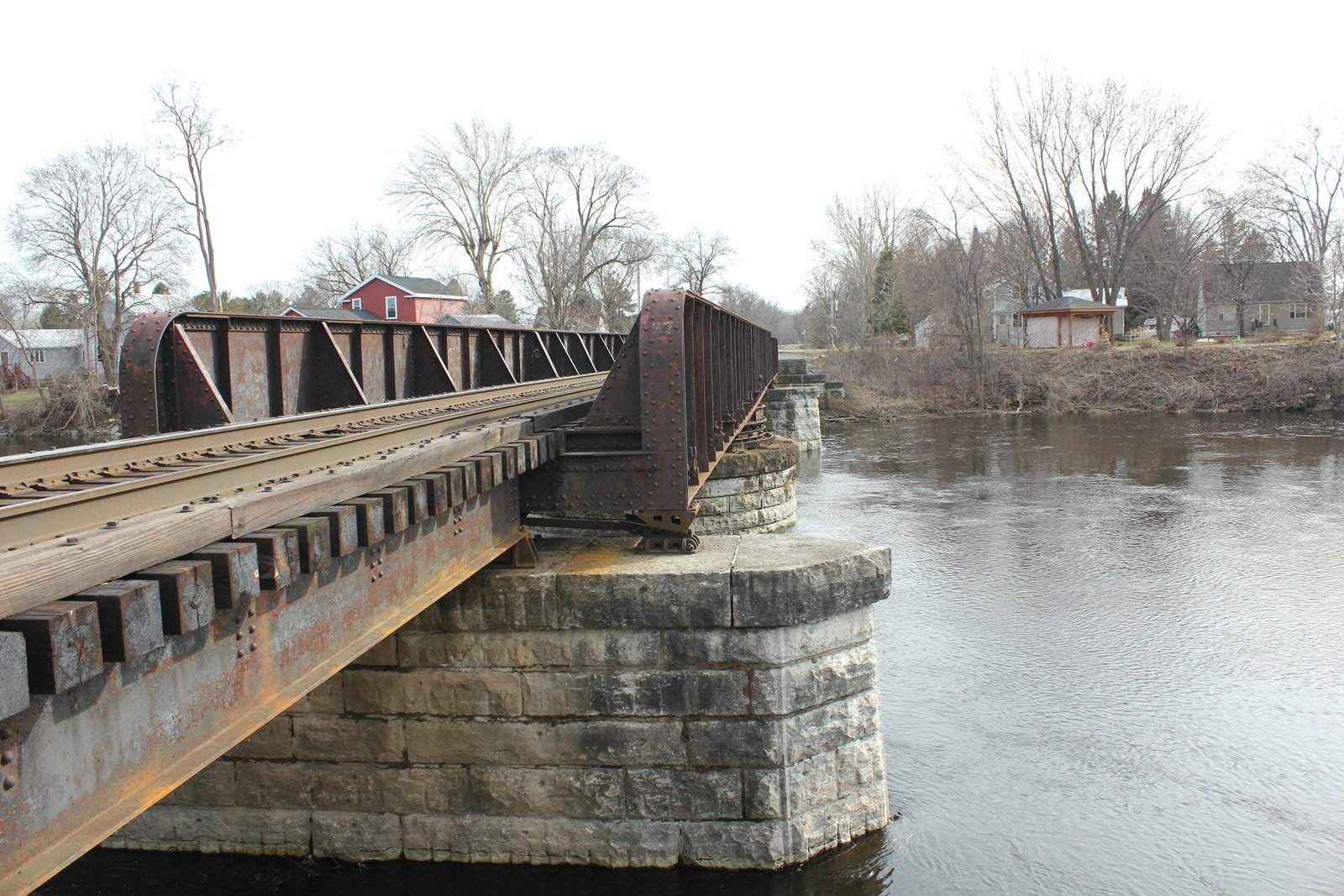
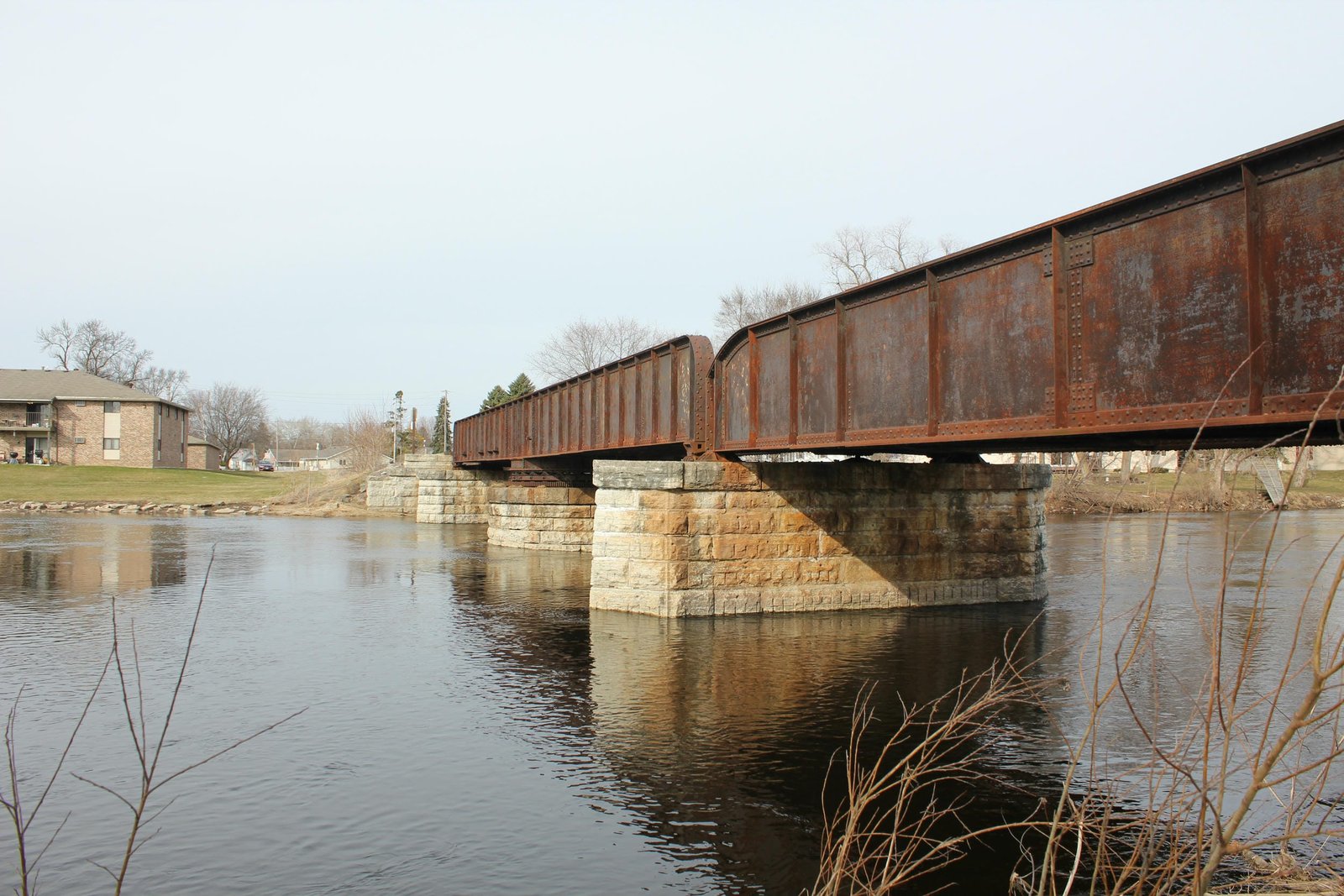
Located in Oconto, this unique through plate girder swing span carries the former Chicago & North Western Railway mainline over the Oconto River. In the 19th and early 20th Century, the Oconto River was considered a navigable waterway as far inland as Oconto Falls. The first bridge at this location likely consisted of a wooden truss swing bridge, constructed when the line was first built. In 1879, the bridge was reconstructed with a 113-foot iron bowstring truss swing span, approached by timber pile trestle spans on both end. Bowstring truss spans were uncommon for railroad use, as they were often too light to reliably serve heavy railroad engines. The bridge was again renewed in 1896, when the south approach was rebuilt with a 54-foot combination Howe pony truss span, set onto timber pile piers. In the first years of the 20th Century, the C&NW invested significant capital into this line, replacing aging timber and iron bridges with stone and steel structures. Plans were developed for a new steel swing span in late 1903, and a new through plate girder swing span was installed on stone substructures in 1904. Initially, the bridge retained the combination truss span on the south end and the timber pile trestle spans on the north end. In 1912, the bridge was again rebuilt, and a through plate girder span was installed on the south end and a steel stringer span installed on the north end, giving the bridge its present configuration. At this time, stone abutments were also constructed on both ends of the bridge.
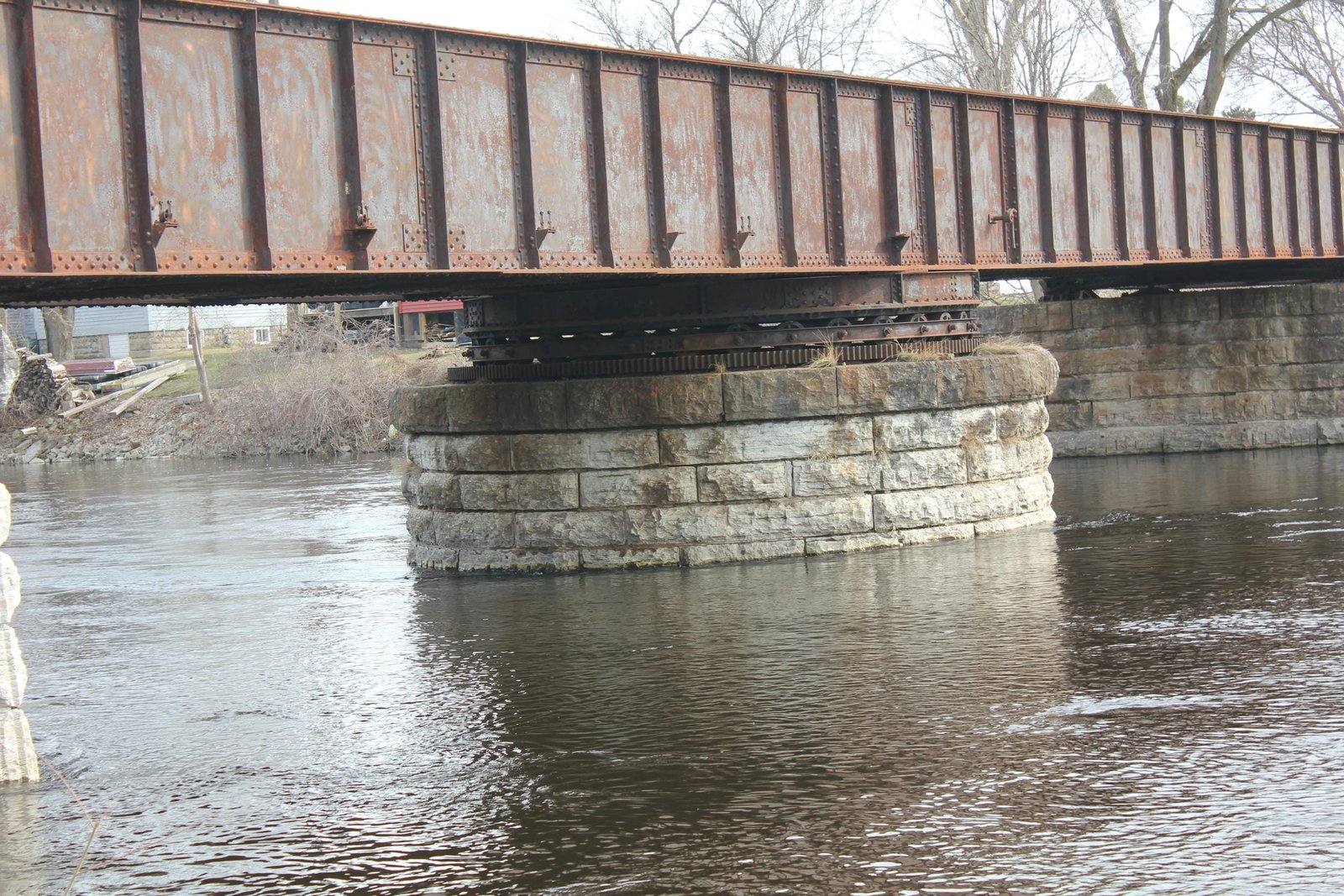
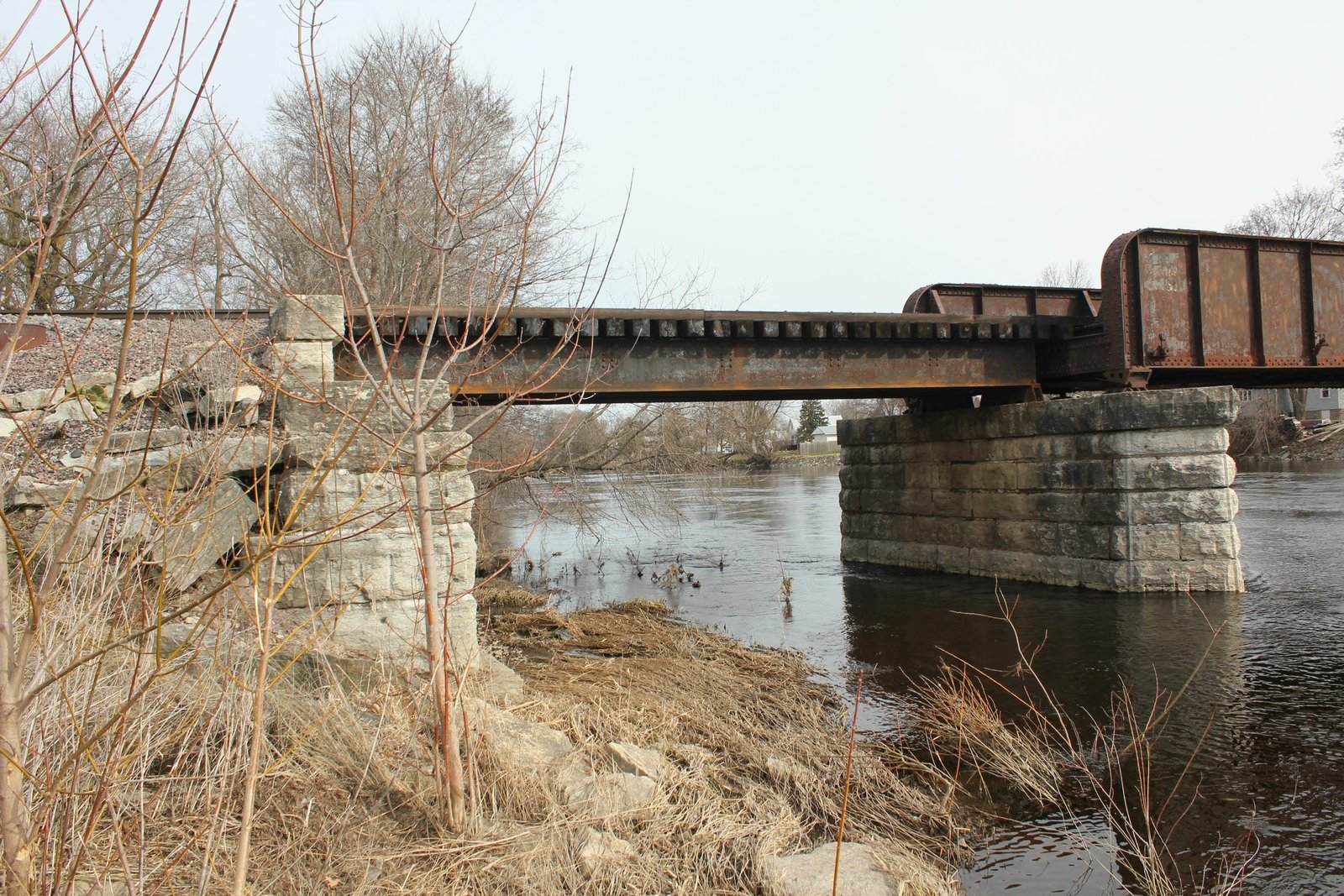
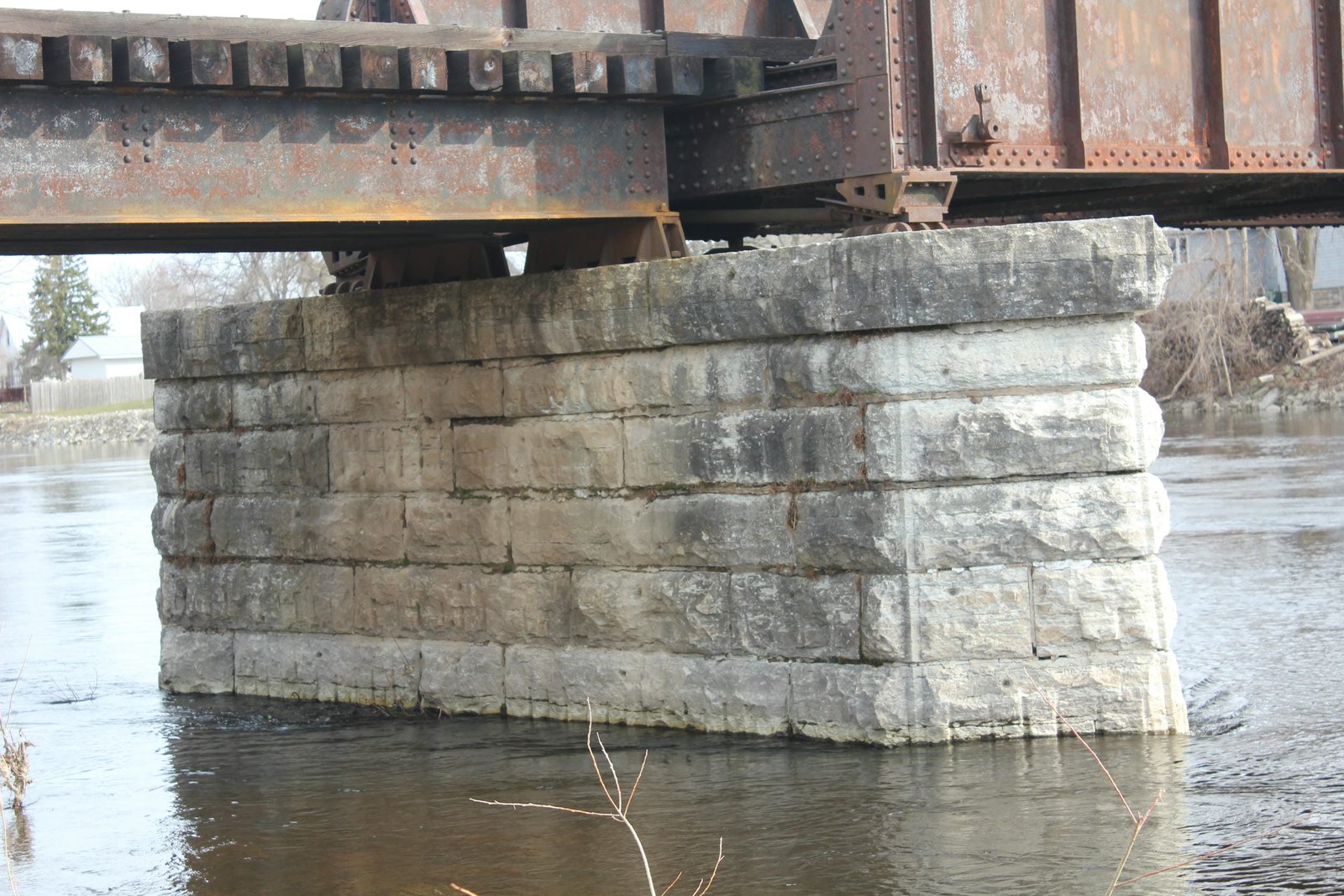
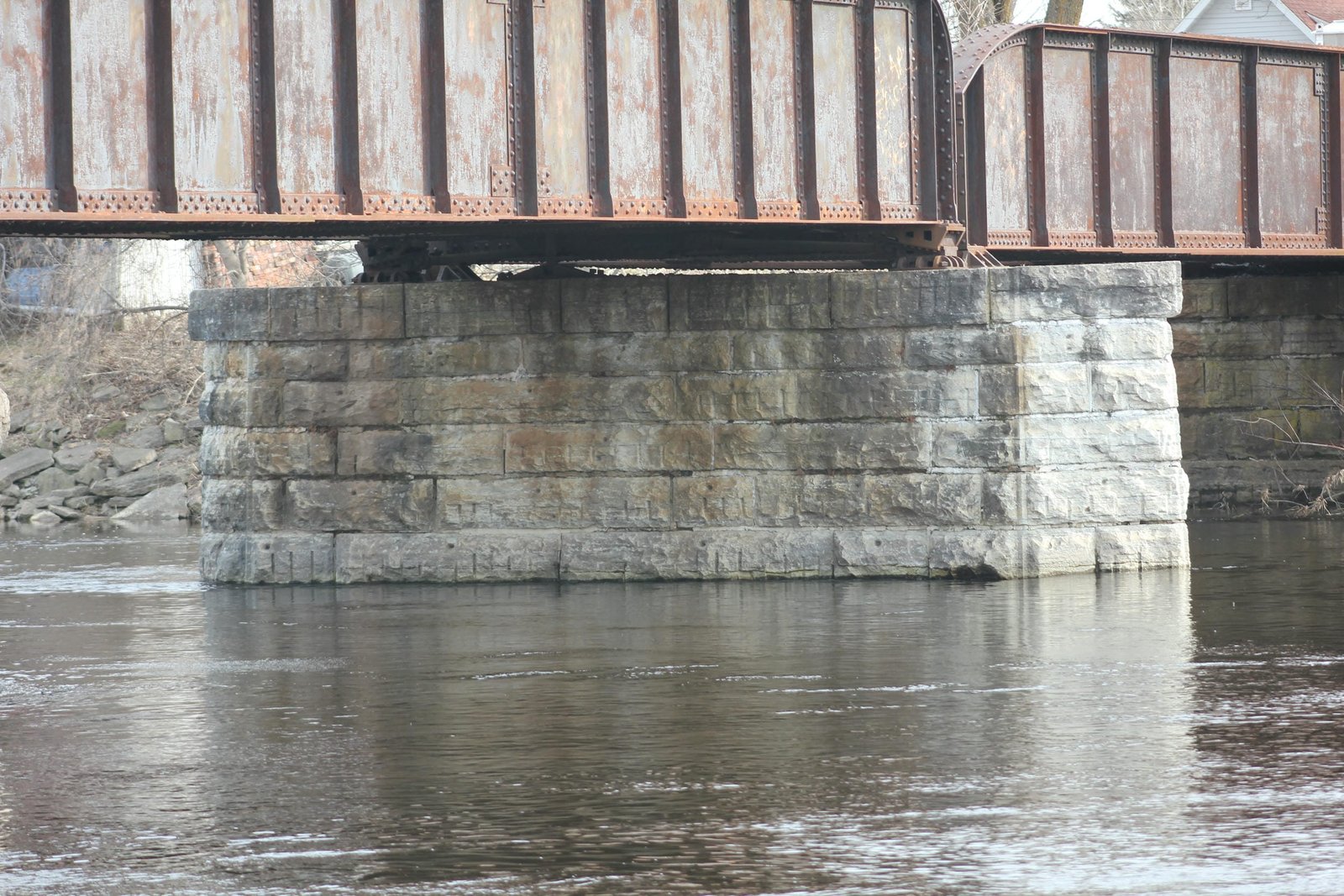
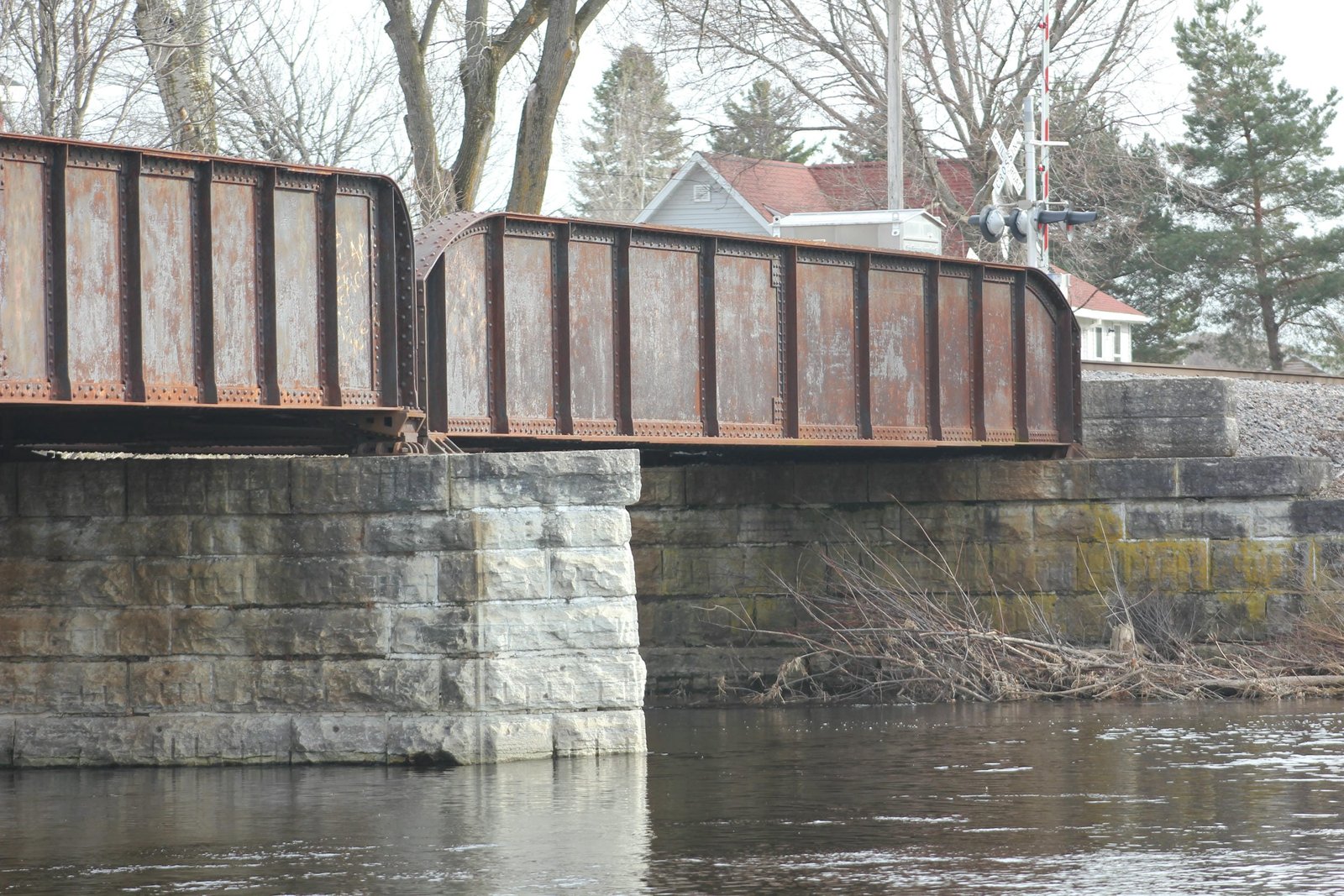
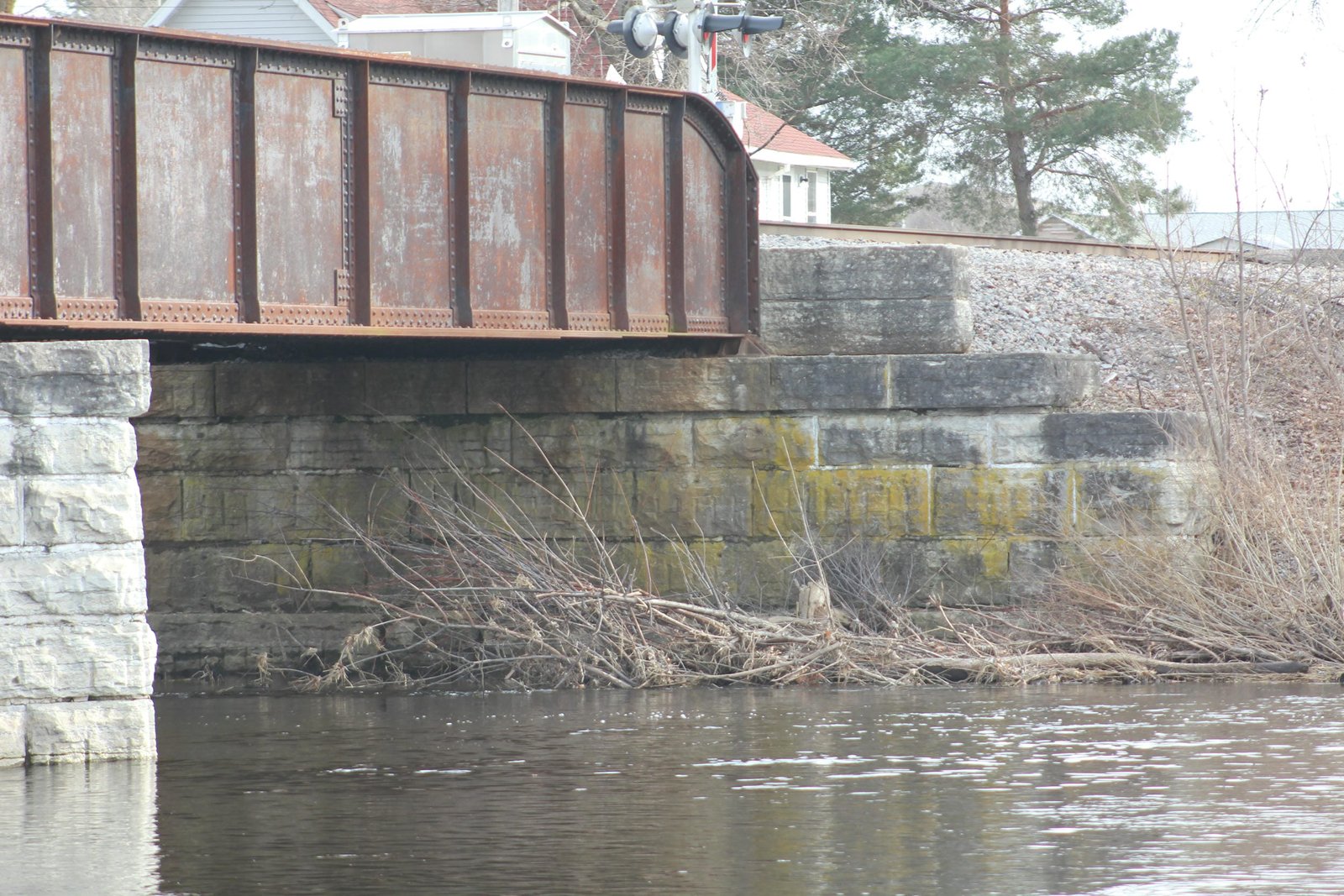
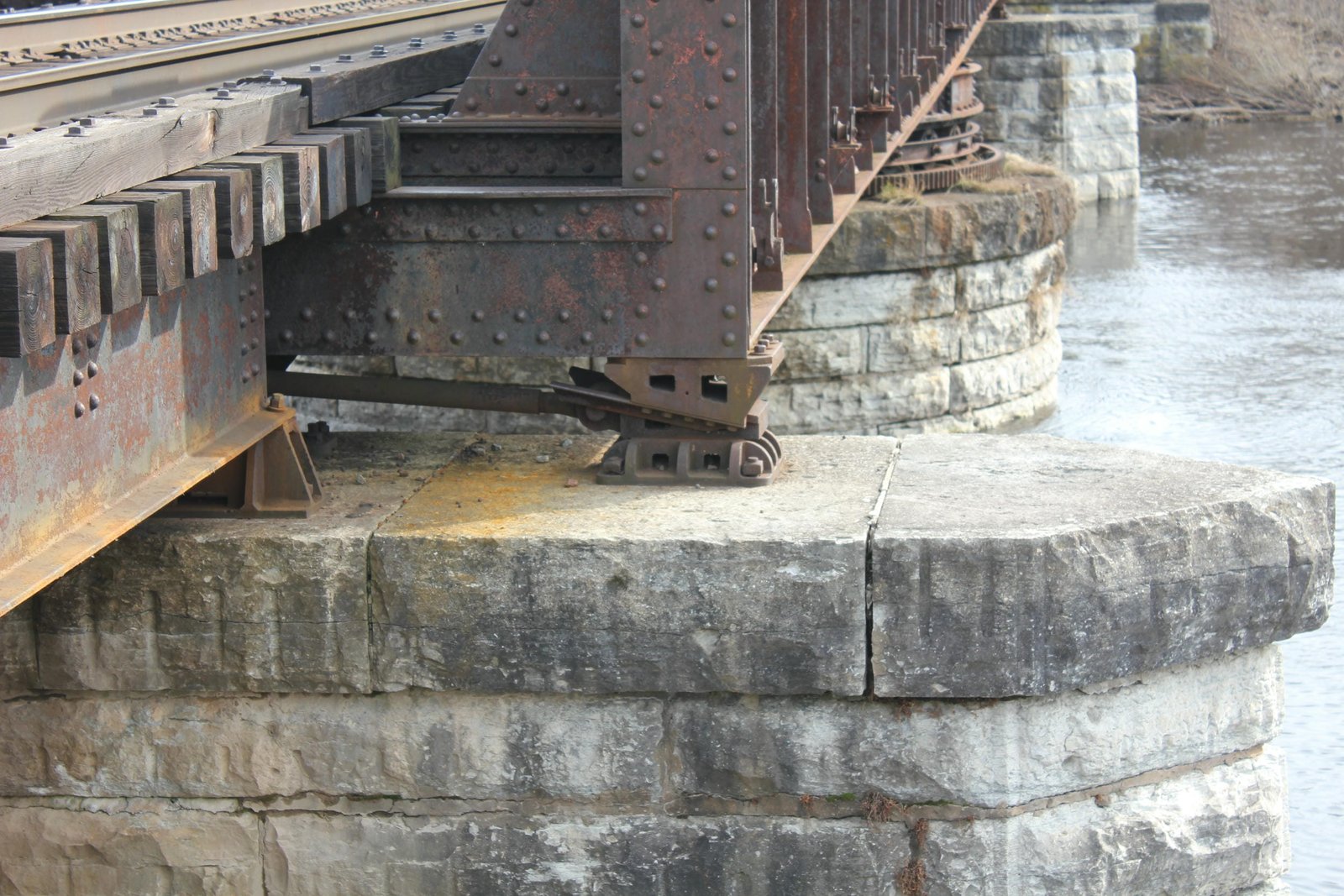
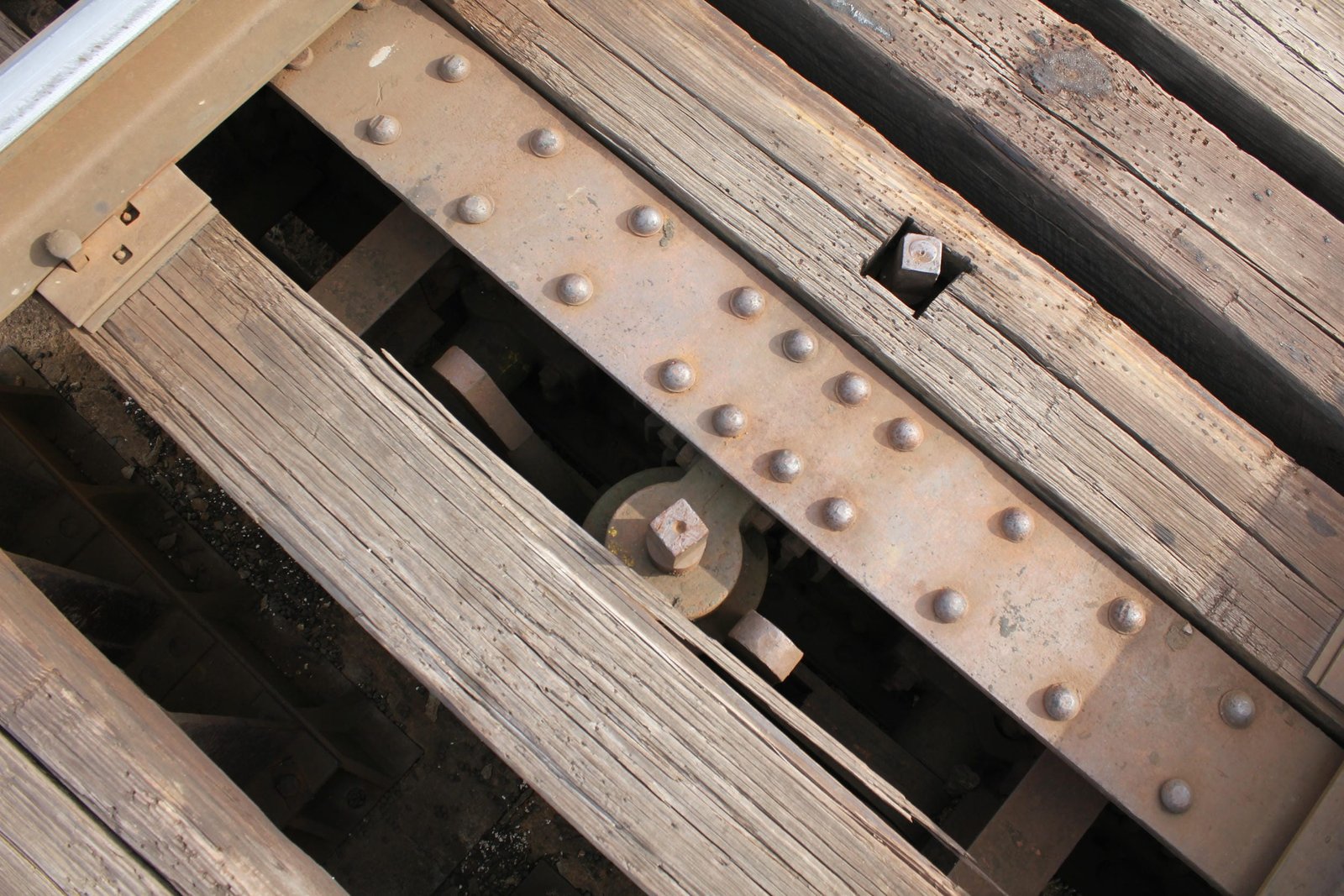
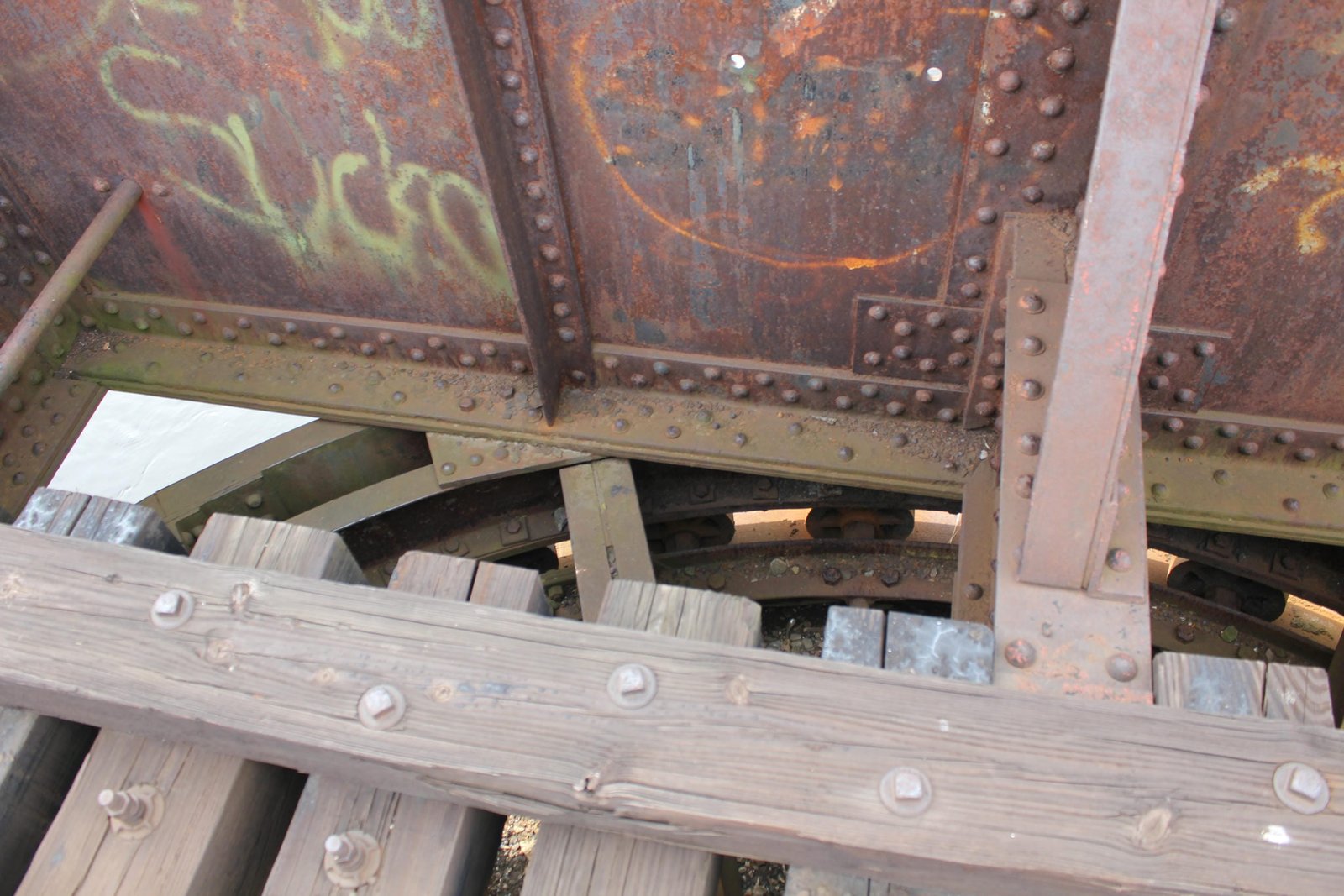
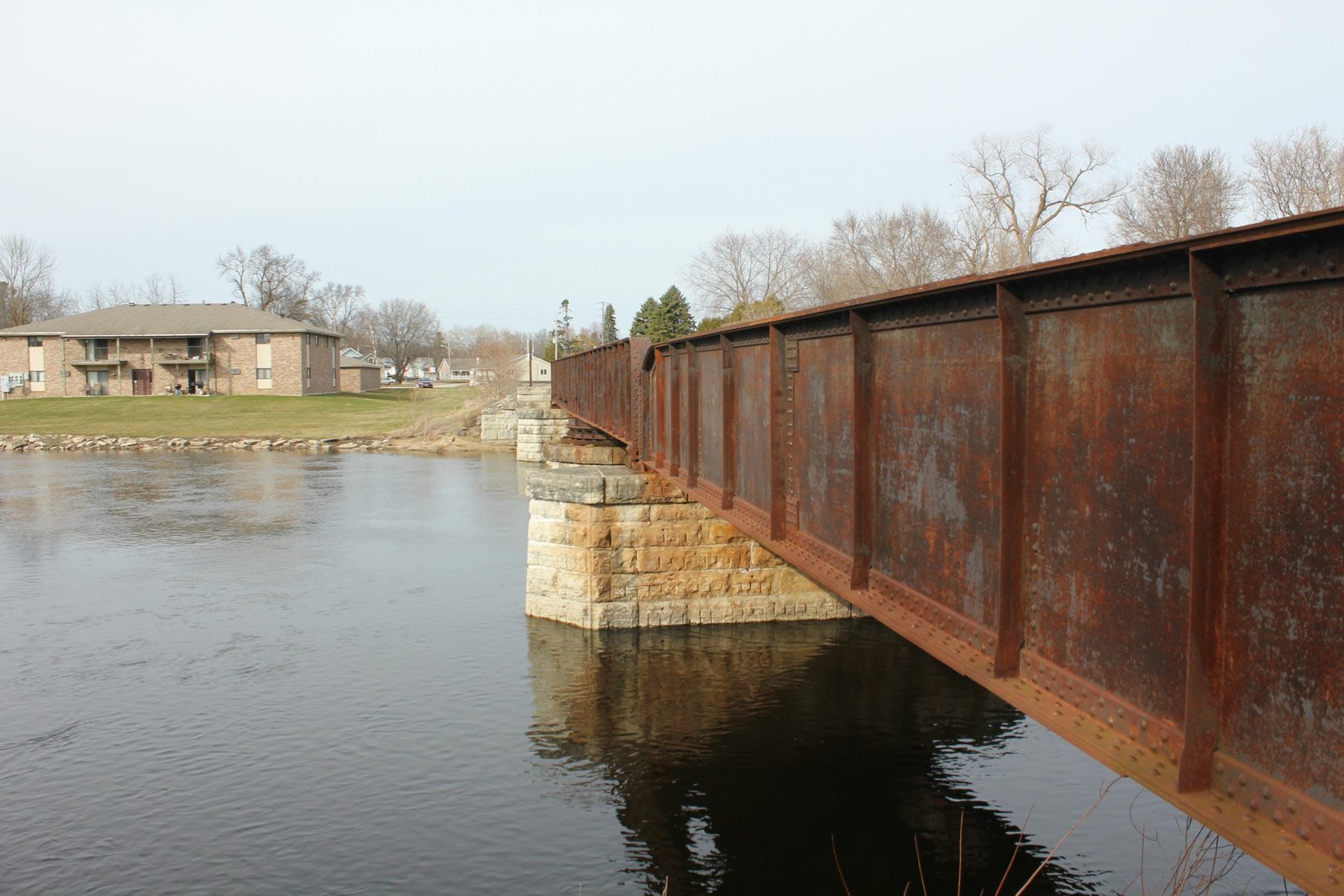
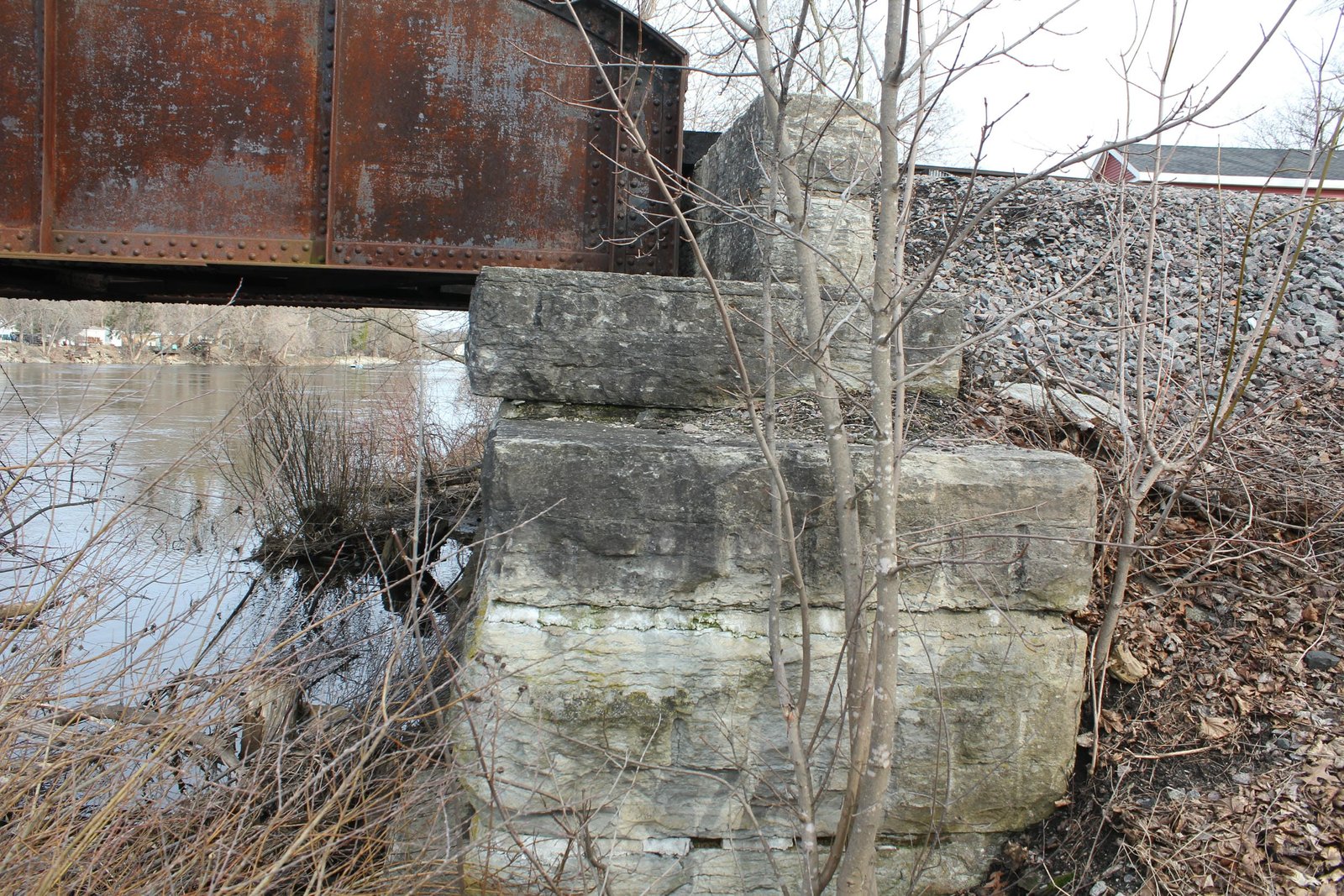
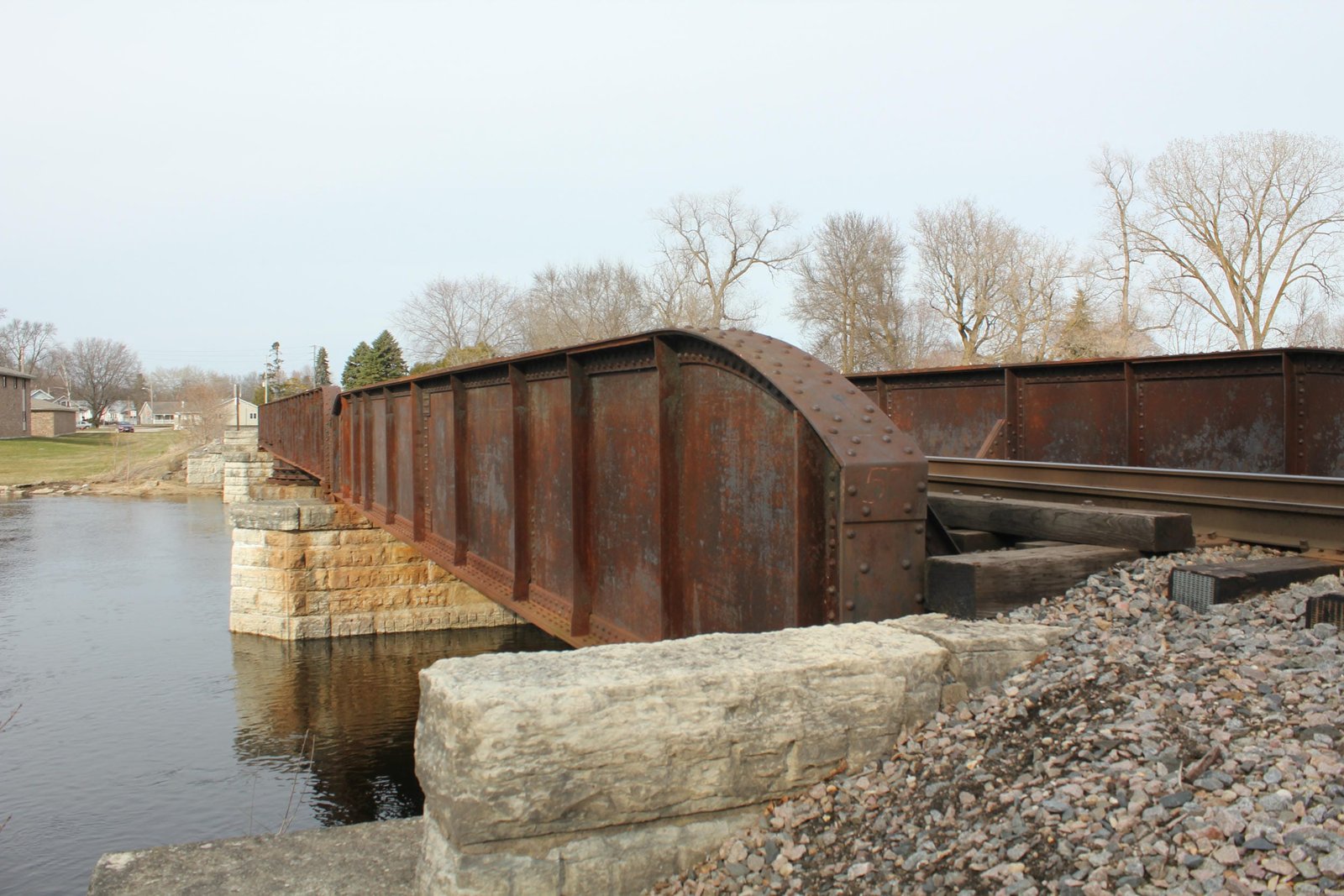
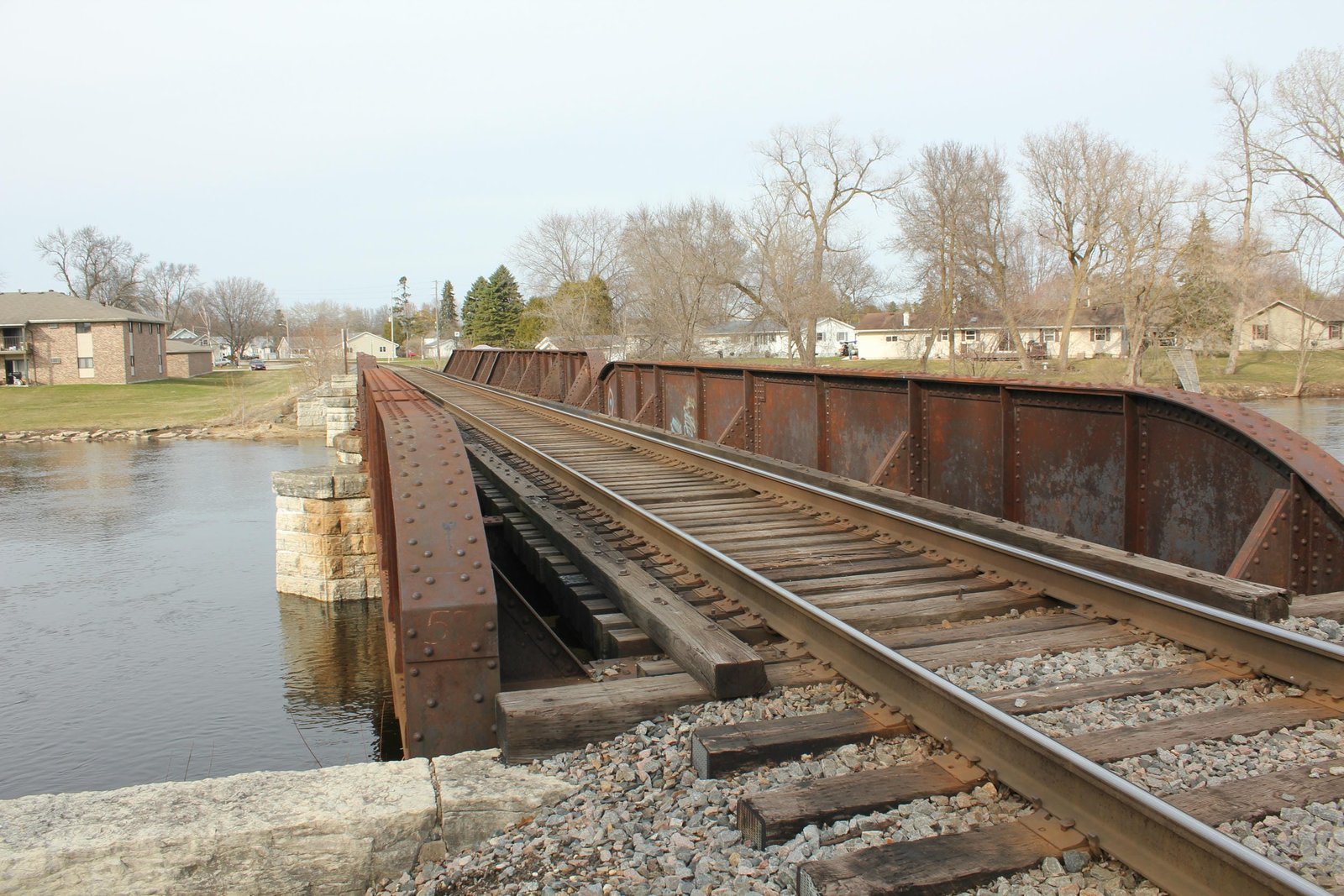
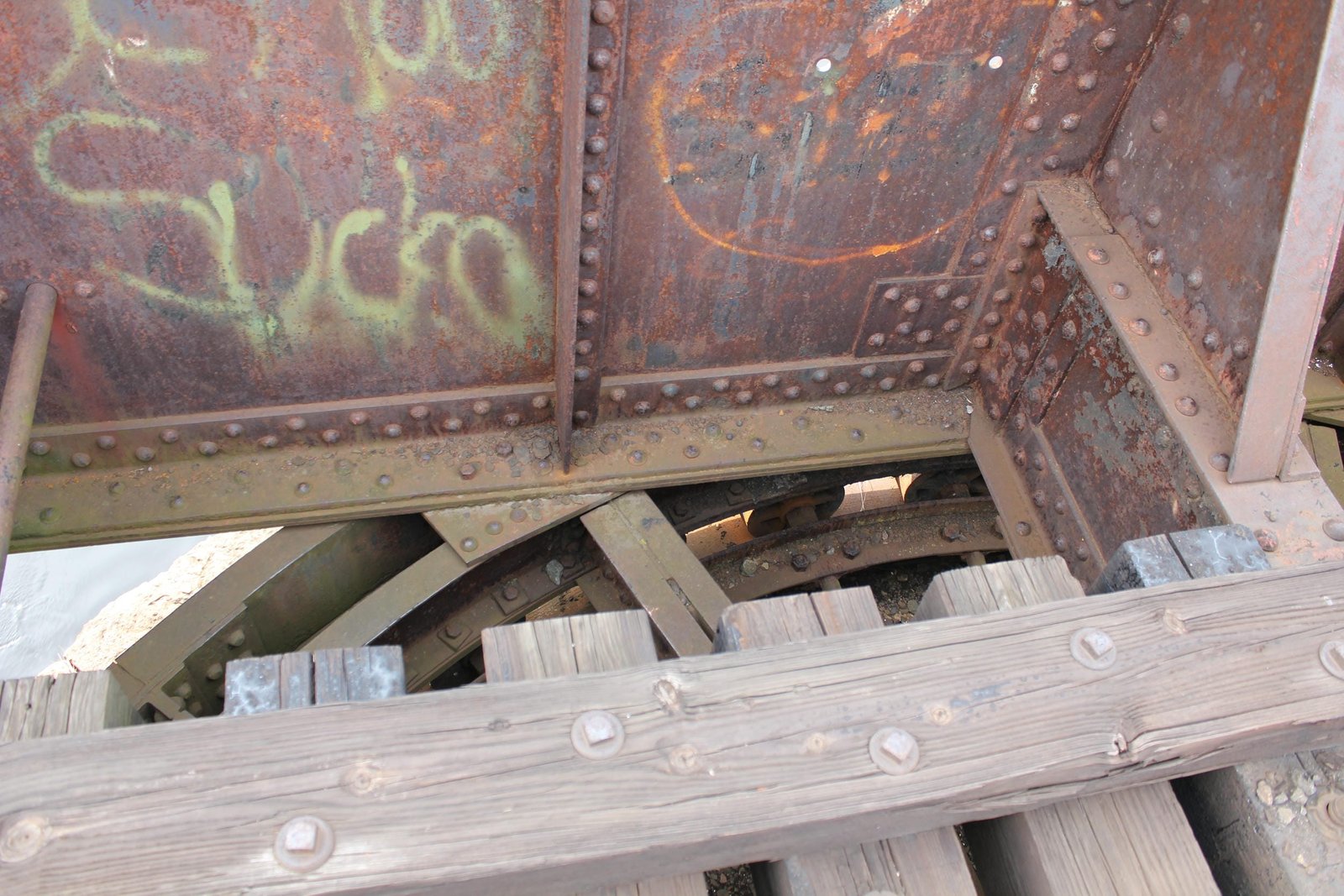
Currently, the bridge consists of a 113-foot, single track rim-bearing through plate girder swing span, approached by a 60-foot through plate girder span on the south end and a 31-foot steel stringer span on the north end. The entire bridge is set onto stone substructures. The through plate girder span is one of two identical spans fabricated for the C&NW in 1904, with the other located at Duck Creek, Wisconsin. These spans both use a variation of a standard heavy through plate girder design, with massive girders, curved girder ends and a traditionally composed floor. The swing span uses a rim-bearing design, where the superstructure is placed onto a metal drum, which rotates on a roller nest set onto a geared track. The drum was turned by a gear system, which used the geared track to turn. The ends of the spans were lifted by a standard wedge-style block, which was controlled by an external metal rod placed onto small rollers. The swing span was operated by using a T-shaped key, which turned the gear system and activated the wedge end lifts. The south approach uses a typical design for the era, with heavy girders, a standard floor and rounded and tapered girder ends. The north approach also uses a standard design, with six shallow beams arranged into two sets of three. Typical of swing spans, the center pier consists of a round design, while the approach piers use a diamond shaped design. Both abutments use a standard design, with stepped wing walls extending perpendicularly from the structure. Stone for the substructures consists of a white limestone, likely quarried at the Duck Creek Quarry. This quarry supplied high quality limestone for bridges and buildings throughout much of the eastern portion of the C&NW system. American Bridge Company fabricated the swing span at their Lassig Plant in Chicago, while the approach span was fabricated by the American Bridge Company at the Gary, Indiana plant. The substructures were also constructed by unknown contractors. Through plate girder spans were commonly used by railroads, as they were durable and easy to construct. These spans were also ideal for small swing spans, as they were simple to design. Since the initial construction, the bridge has seen no significant alterations. While the original rods controlling the end lifts have been removed, it appears the original wedges remain intact. Overall, the bridge appears to be in fair to good condition, with no significant deterioration noted. The author has ranked this bridge as being moderately significant, due to the swing design.
Citations
| Build date and builder (main span superstructure) | Chicago & North Western Railway Drawing Collection at the Chicago & North Western Historical Society Archives |
| Build date and builder (approach superstructure) | Chicago & North Western Railway Valuation Notes at the Chicago & North Western Historical Society Archives |
| Railroad History Citation | ICC Valuation Information, Compiled by Richard S. Steele |