
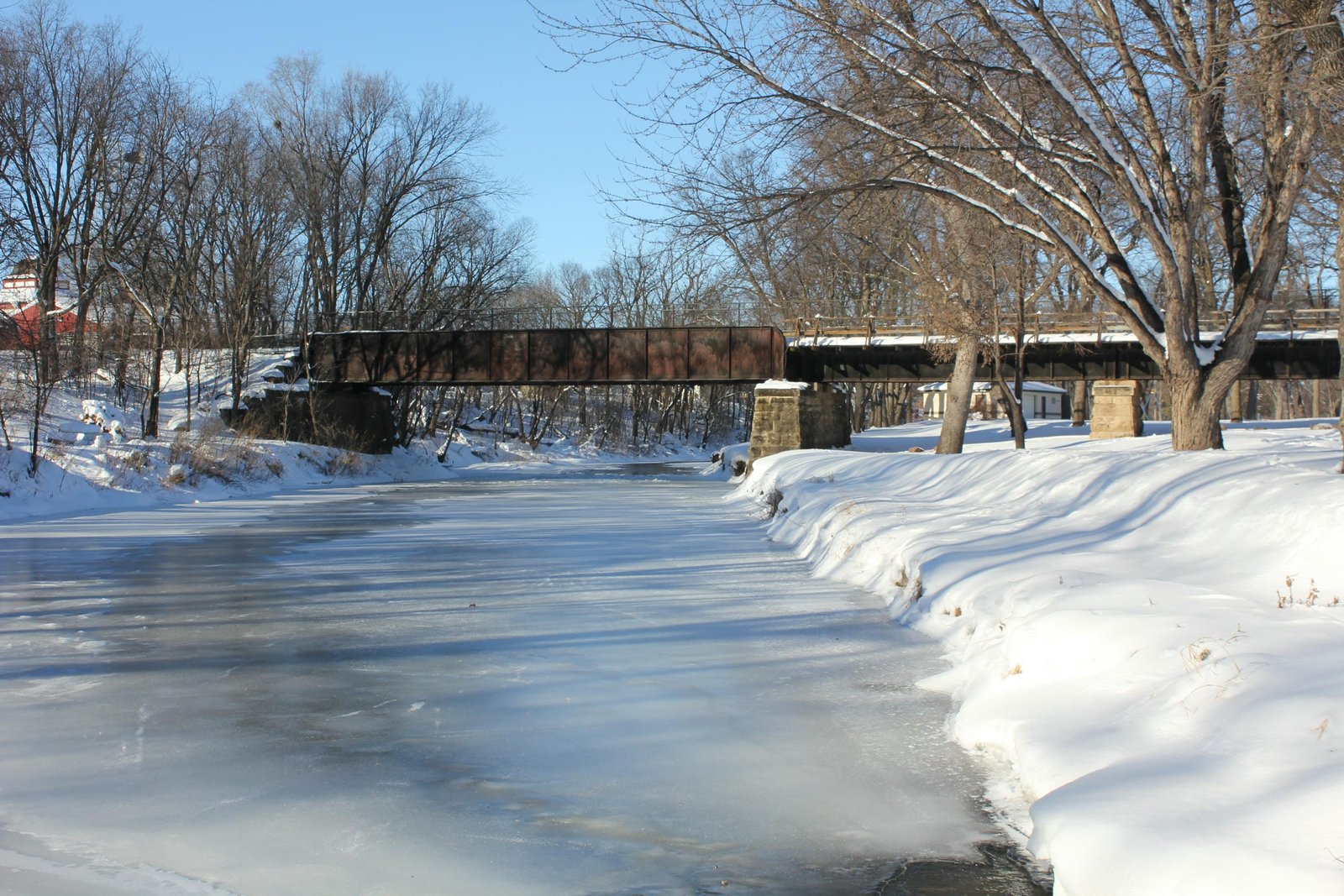
Click the photo to view the full-size version
| Name | Rock Rapids Trail Bridge Chicago, Rock Island & Pacific Railroad Bridge #2834 |
| Built By | Burlington, Cedar Rapids & Northern Railway |
| Currently Owned By | City of Rock Rapids |
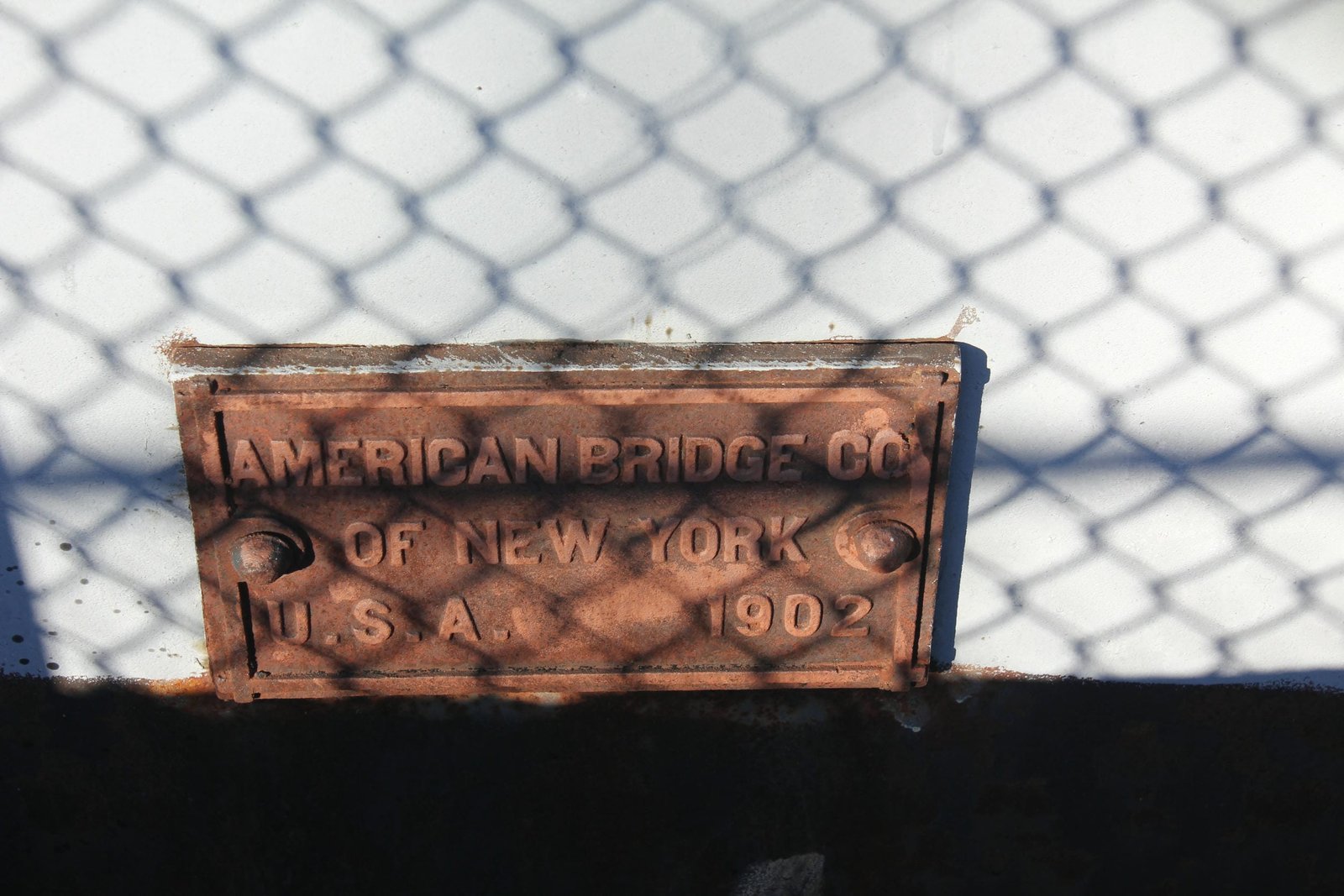
| Superstructure Contractor | American Bridge Company of New York (Spans #2 and #3) Unknown (Spans #1 and #4 Through #10) |
| Substructure Contractor | Unknown (Abutments and Piers #1 and #3 Through #9) Railroad Company Forces (Pier #2) |
| Length | 544 Feet Total, 80 Foot Largest Span |
| Width | 1 Track |
| Height Above Ground | 20 Feet (Estimated) |
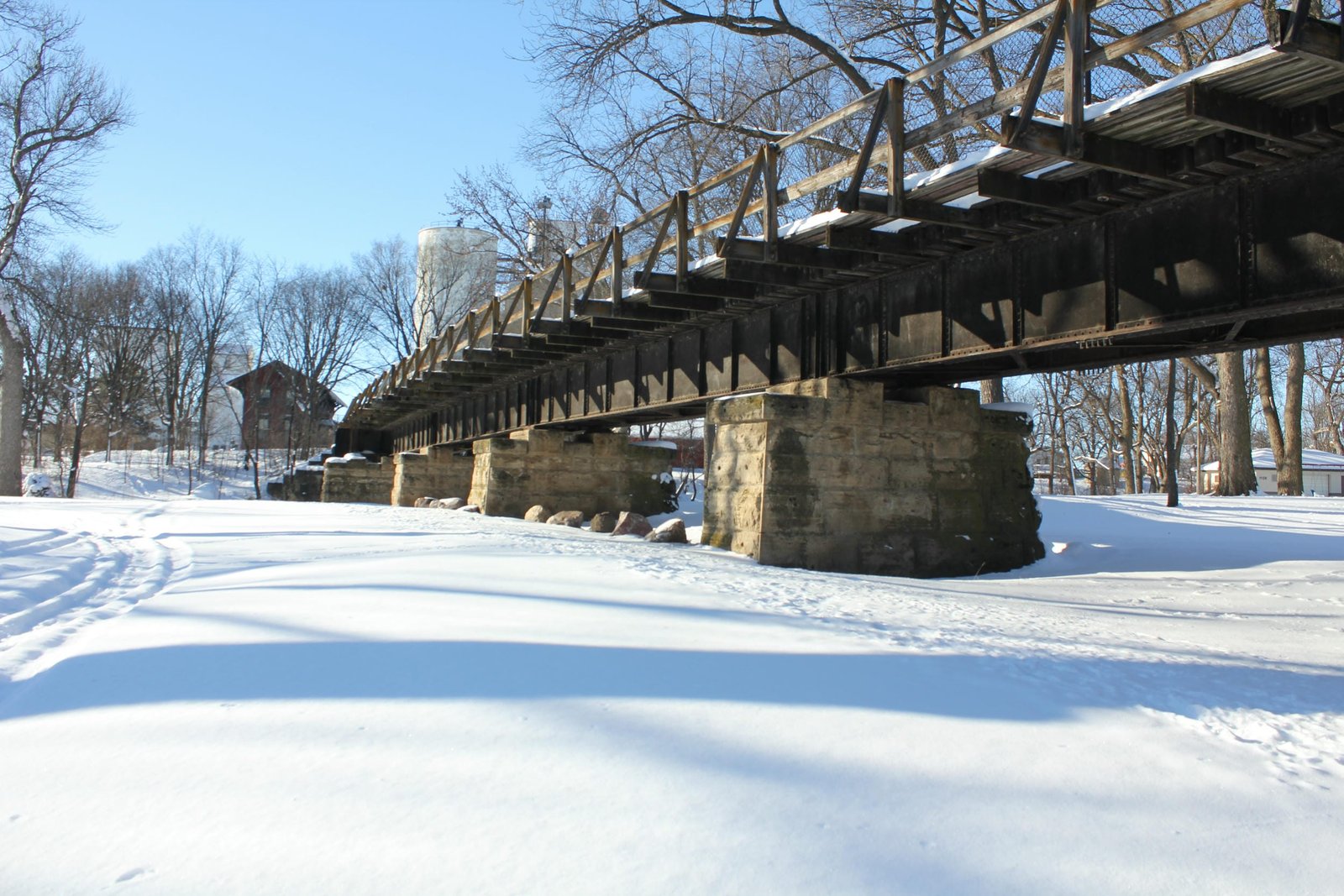
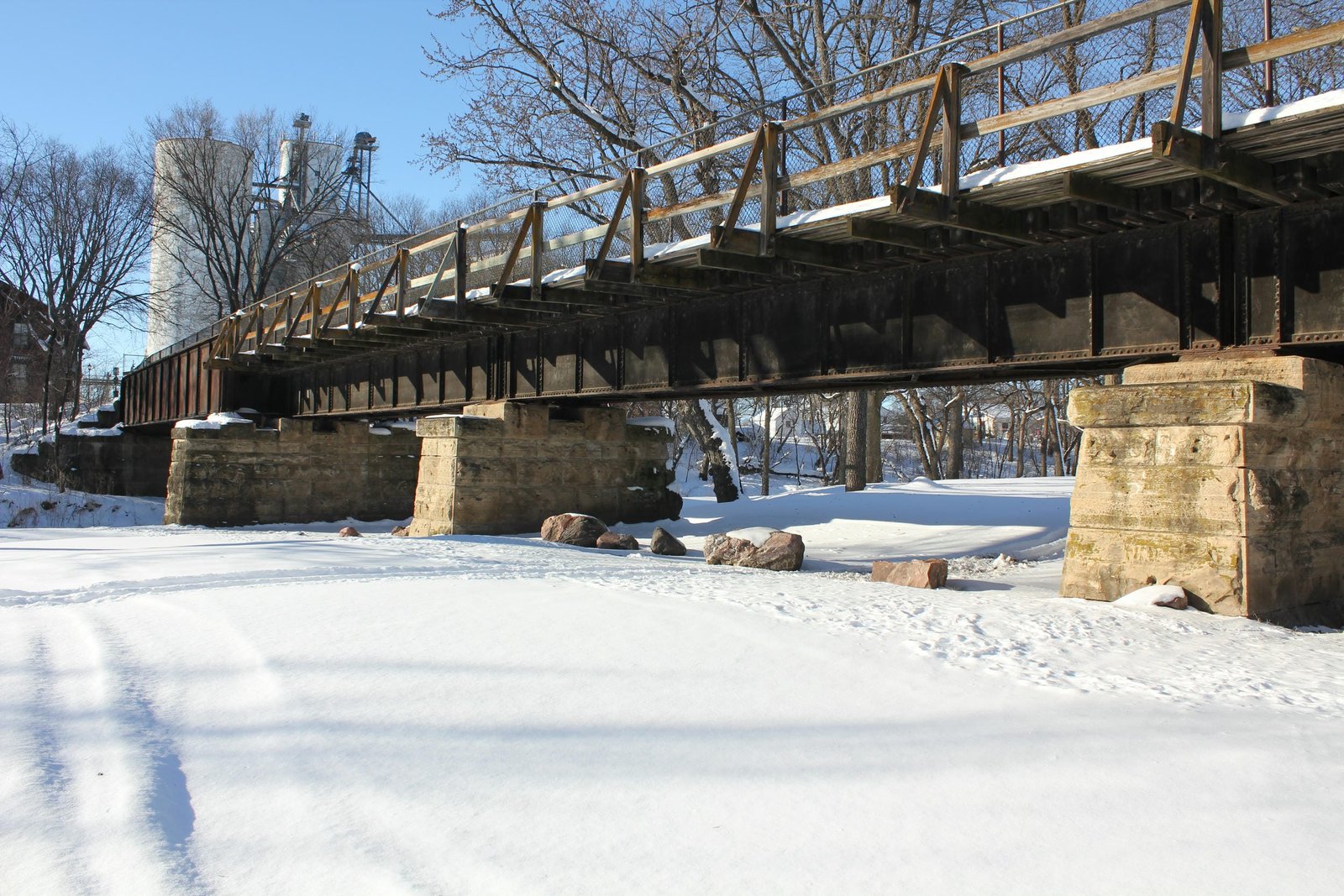
| Superstructure Design | Through Plate Girder and Deck Plate Girder |
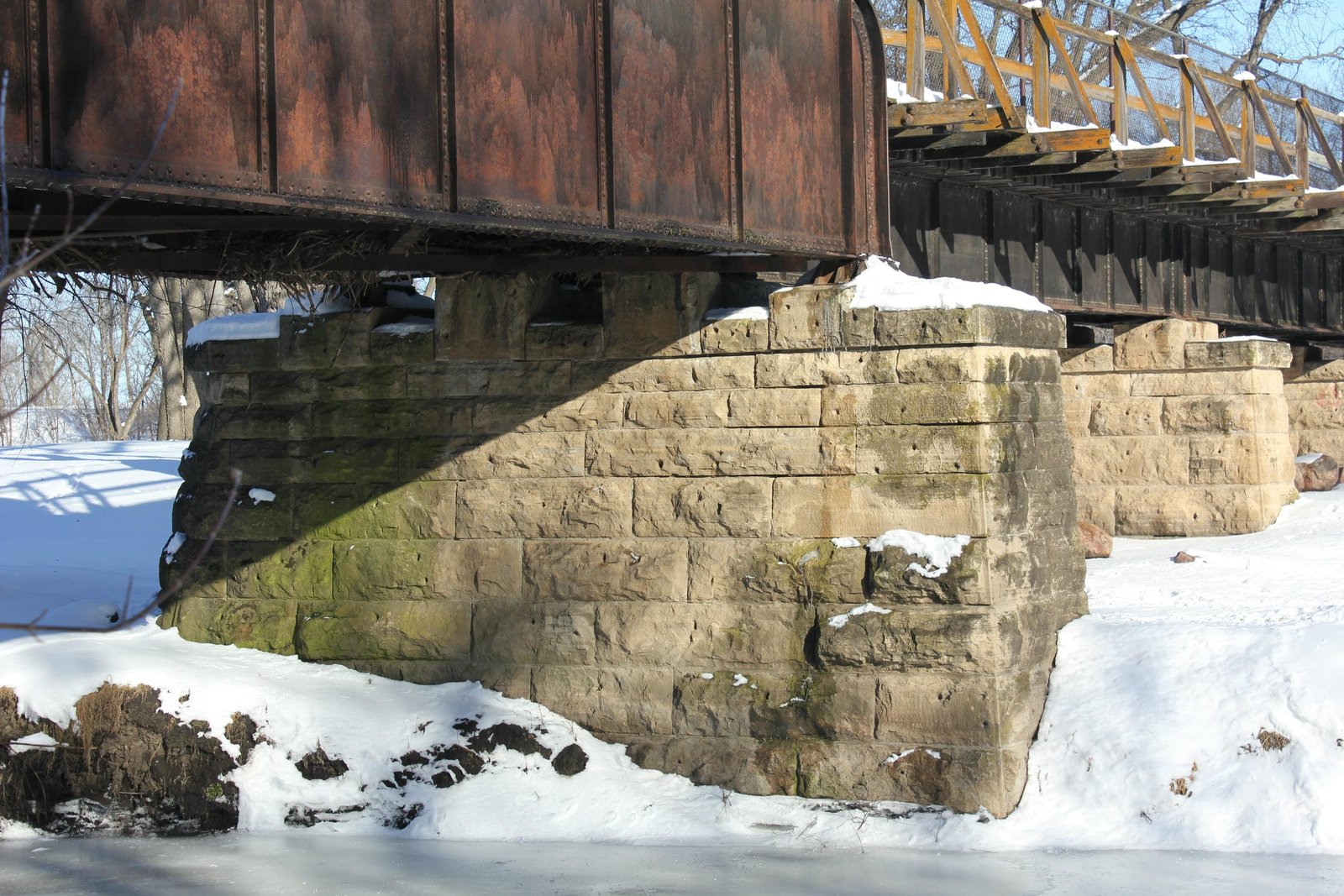
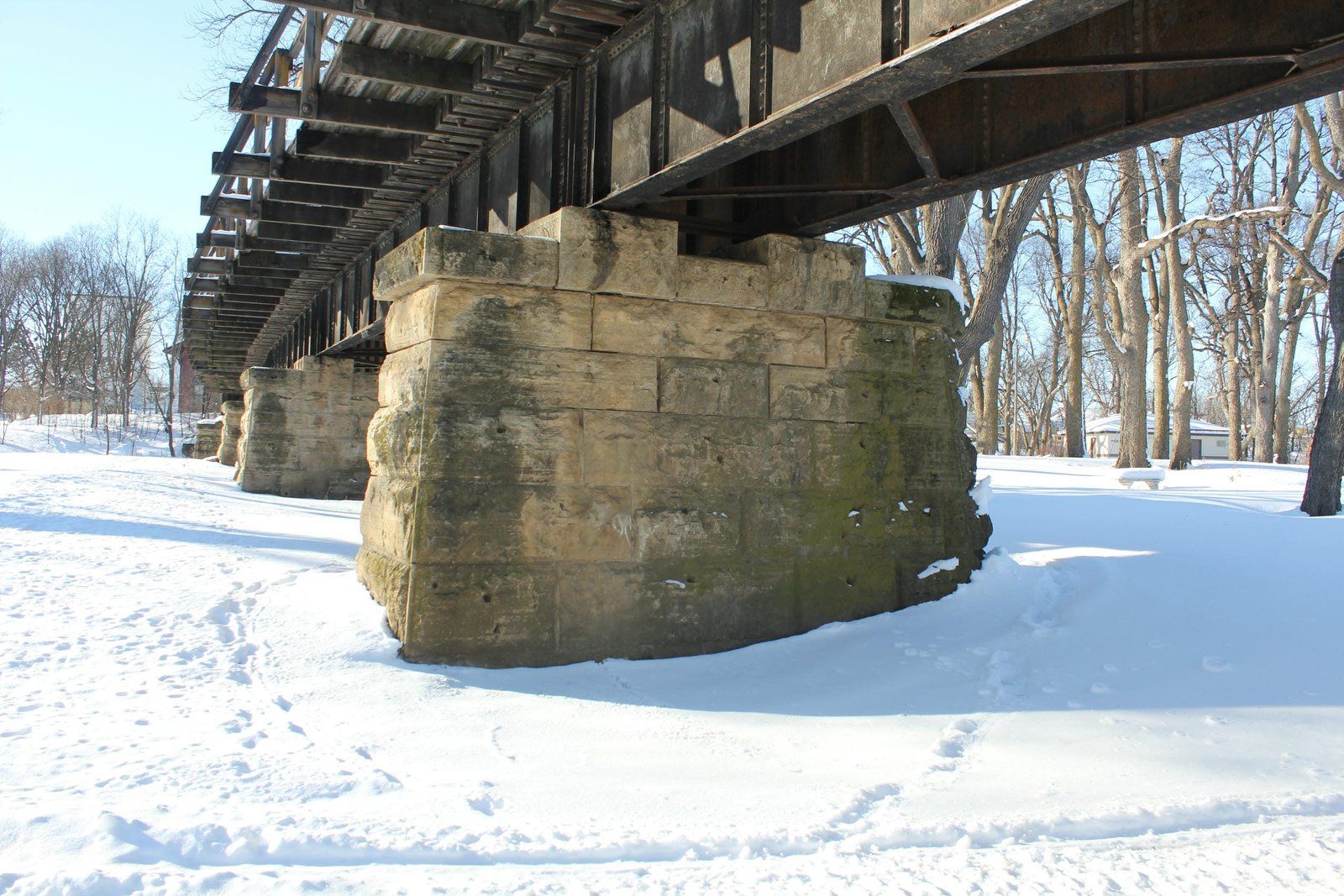
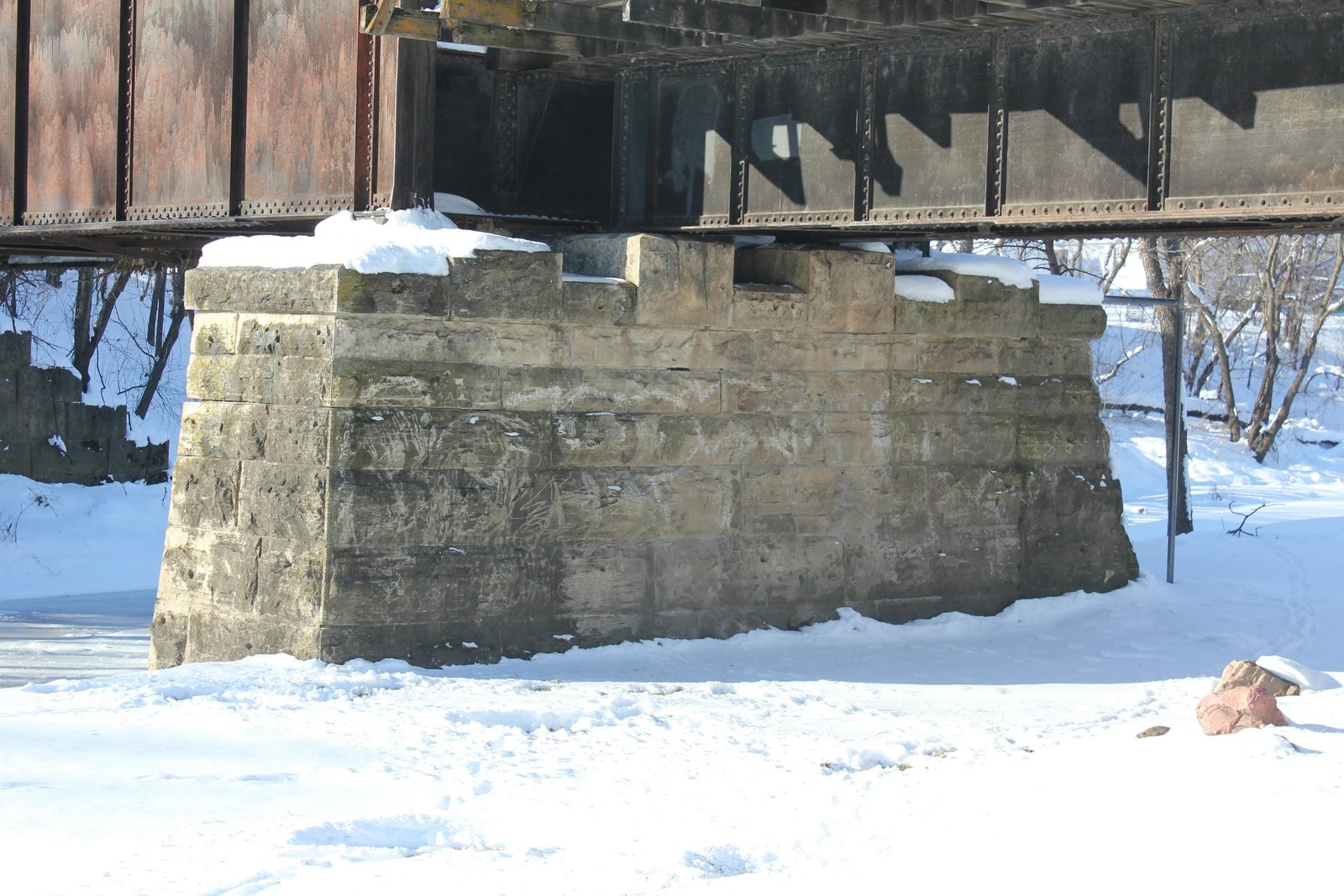
| Substructure Design | Stone Masonry and Concrete |
| Date Built | 1898 (Span #10) 1900 (Span #1 and #4 Through #9) 1902 (Spans #2 and #3) |
| Traffic Count | 0 Trains/Day (Bridge is Open to Pedestrian Traffic) |
| Current Status | Open to Pedestrian Traffic |
| Chicago, Rock Island & Pacific Railroad Bridge Number | 2834 |
| Significance | Local Significance |
| Documentation Date | 1/1/2016 |
In 1886, the Cedar Rapids, Iowa Falls & Northwestern Railway (CRIF&NW) constructed 42-mile branch line, extending from Ellsworth, Minnesota, through Rock Rapids, Iowa, to Sioux Falls, South Dakota. By 1888, the CRIF&NW was leased by the Burlington, Cedar Rapids & Northern Railway (BCR&N), which operated a modest railroad network throughout eastern and northern Iowa. This line provided a growing BCR&N network with access to terminals and interchange at Sioux Falls. The CRIF&NW was outright purchased by the BCR&N in May 1902. The BCR&N was in turn purchased by the Chicago, Rock Island & Pacific Railway (Rock Island) in June 1903. The Rock Island operated a large railroad network through the central United States, serving diverse industries.
The Rock Island struggled financially throughout much of its history, experiencing repeated bankruptcies and chronic instability. After World War II, the Rock Island struggled to survive, proposing mergers and deferring maintenance on their routes. The railroad reorganized as the Chicago, Rock Island & Pacific Railroad in 1948. The segment between Rock Rapids and Sioux Falls would be abandoned in 1972. By the mid-1970s, the railroad was in serious decline. The railroad secured loans to eliminate slow orders, acquired new equipment, and attempted to restore profitability. In 1977, the remainder of the line was abandoned in an effort to eliminate poorly preforming branch lines. Today, much of the right-of-way has been converted to farm fields. However, sections in Rock Rapids and Sioux Falls have been converted to trail use.
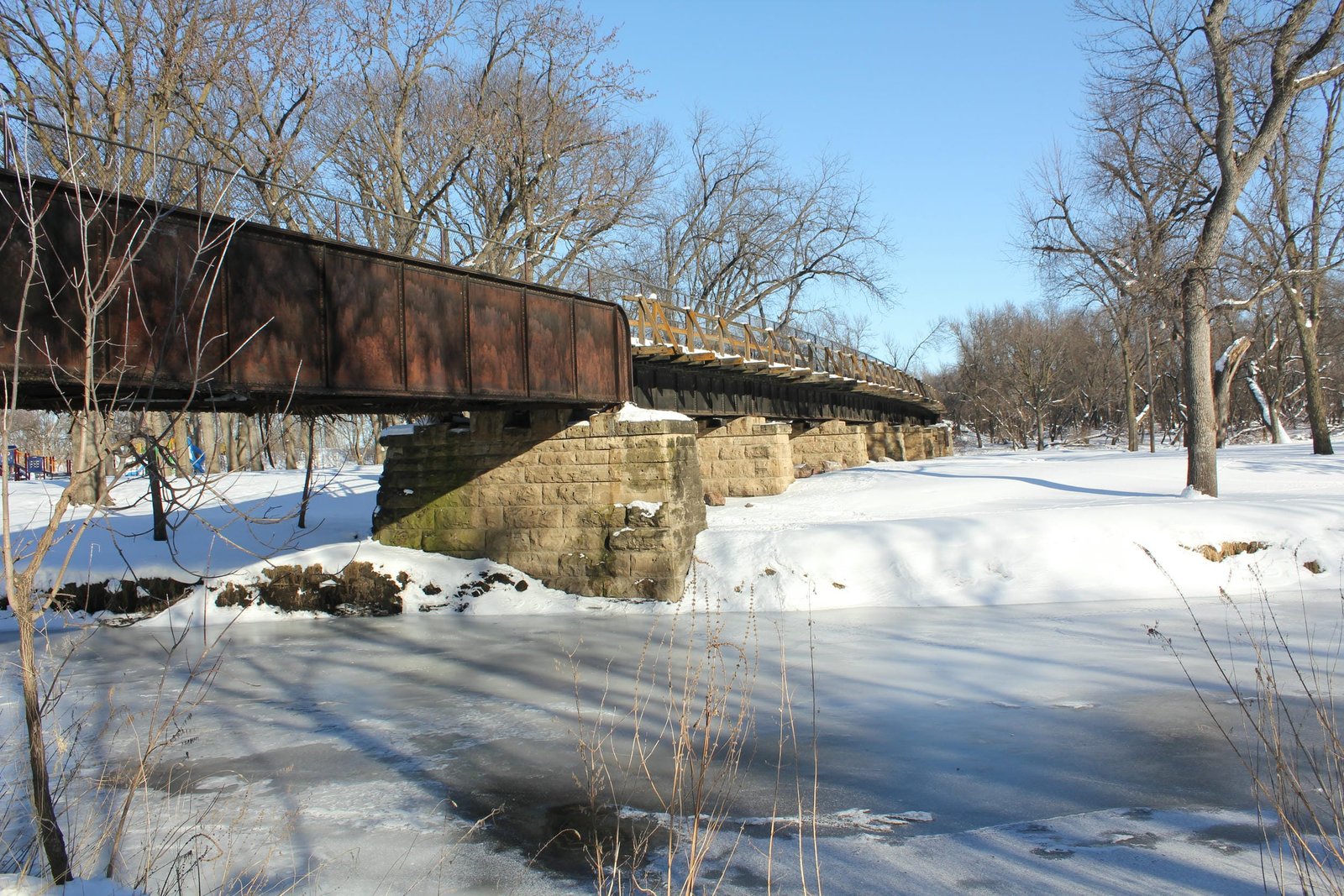
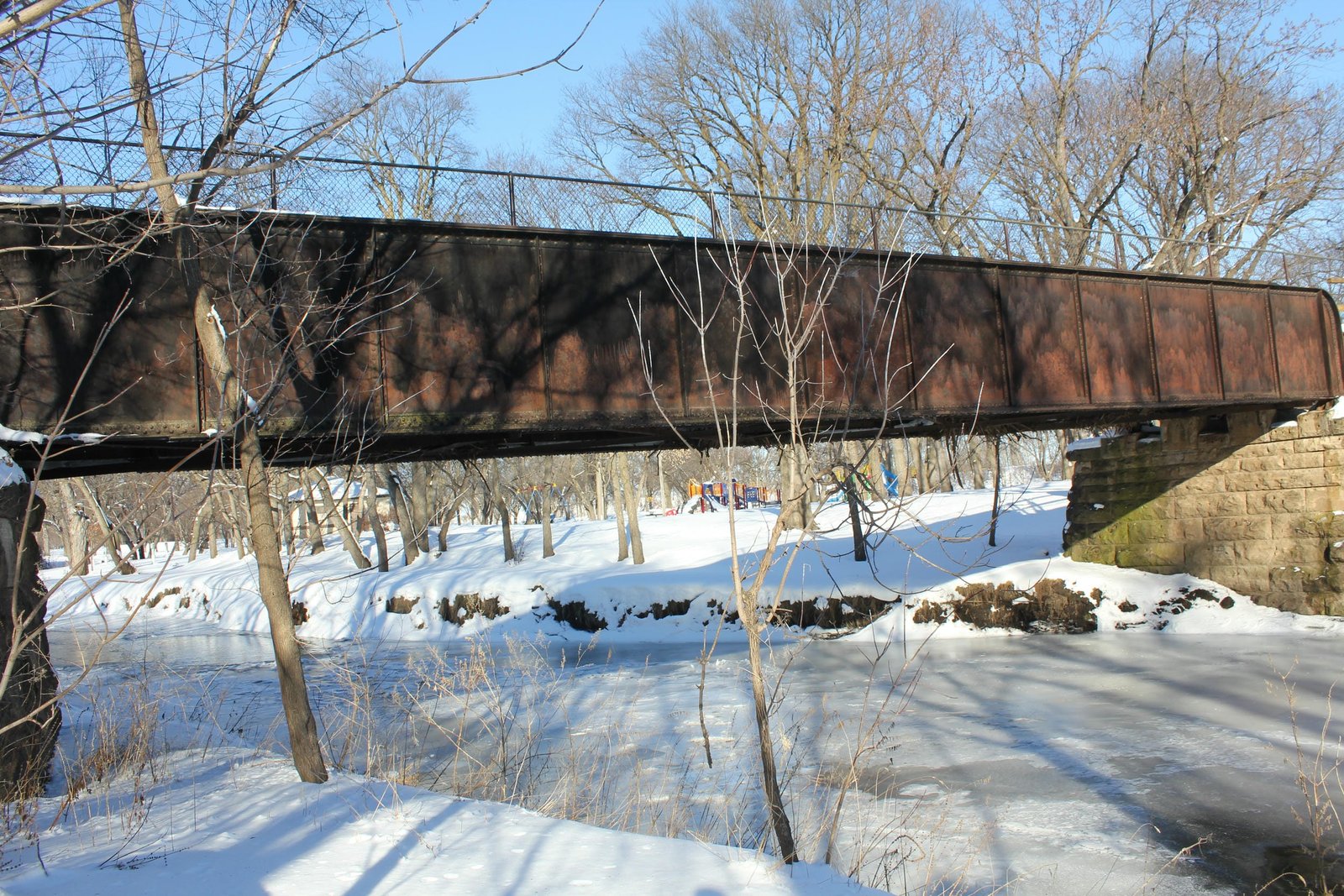
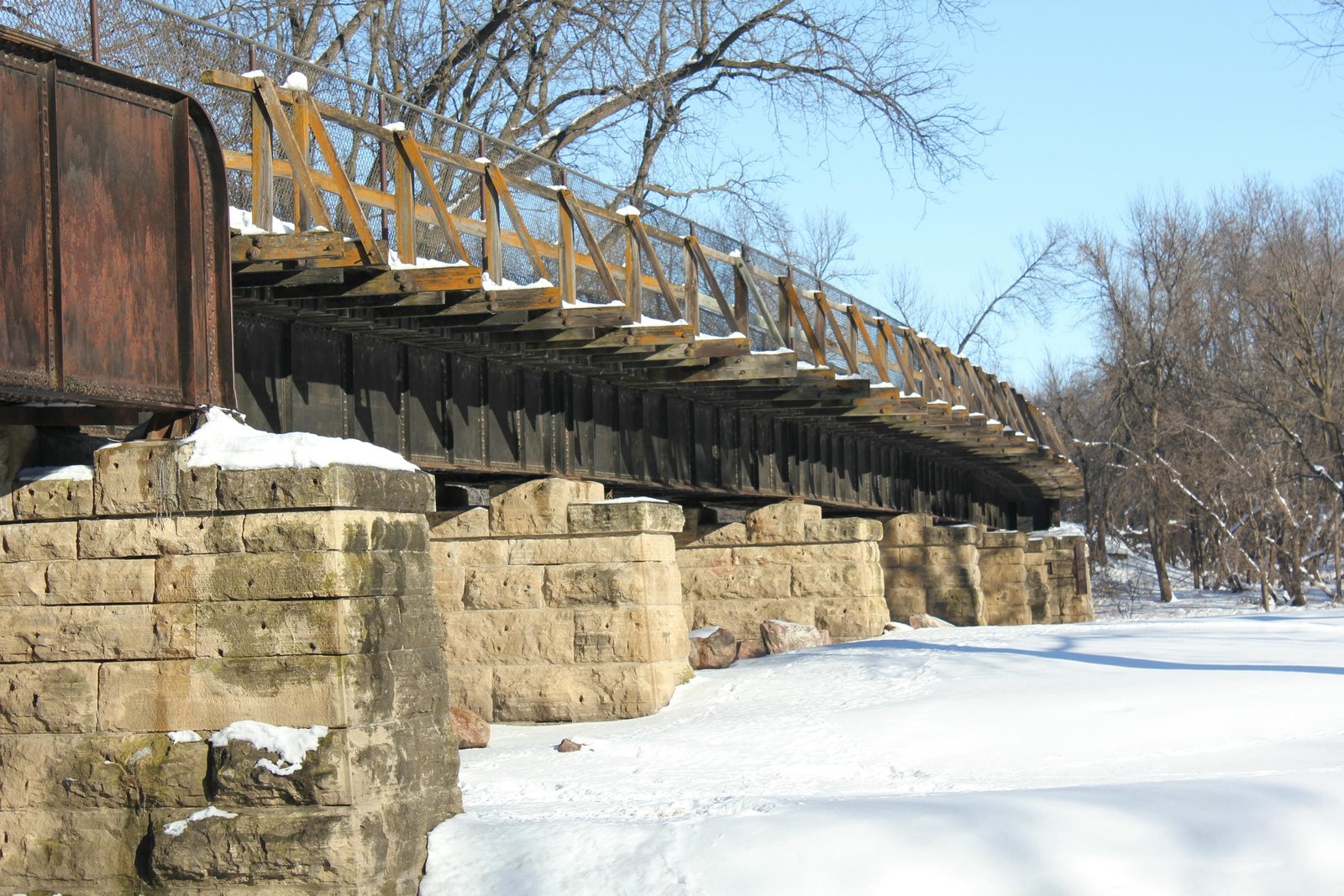
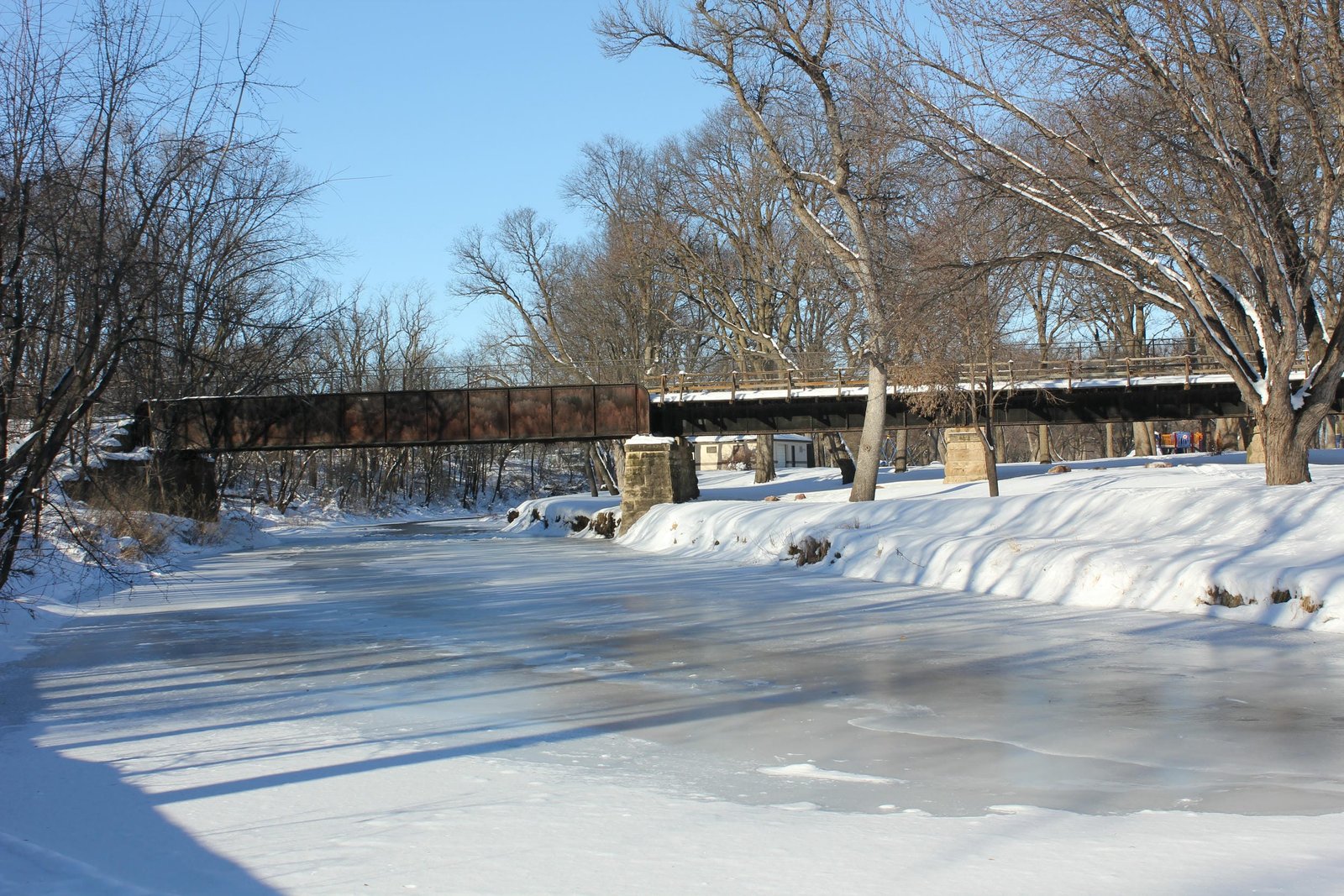
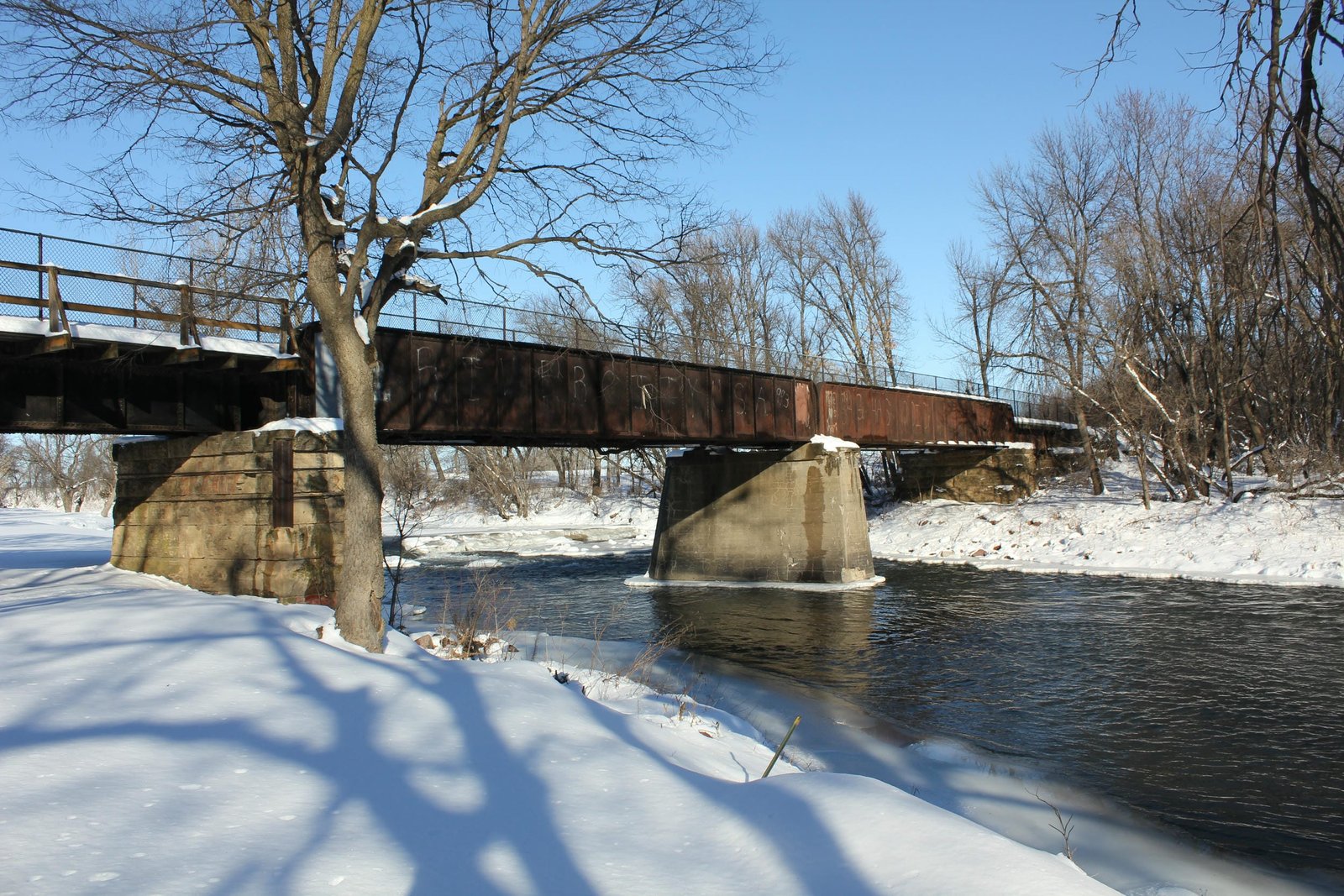
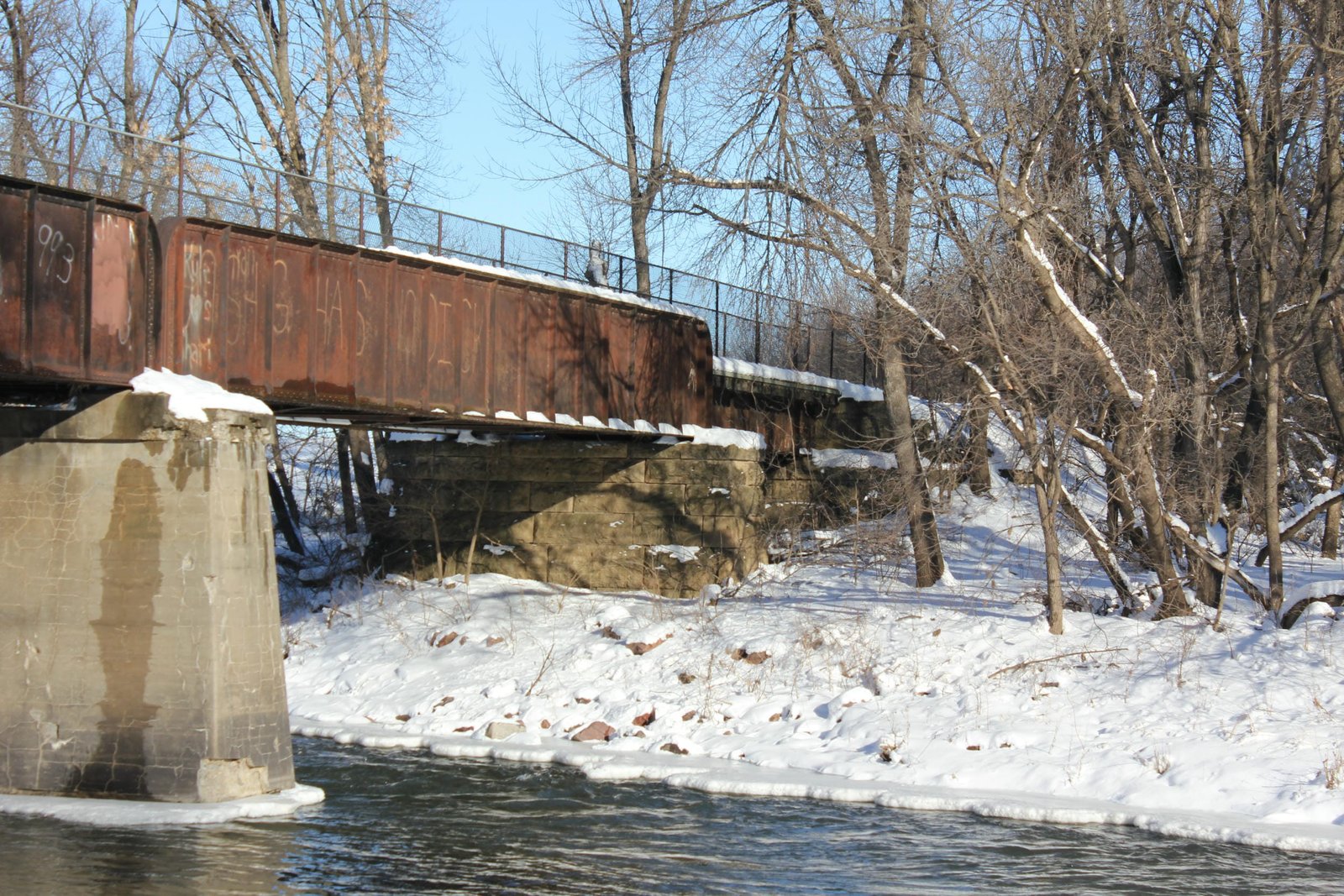
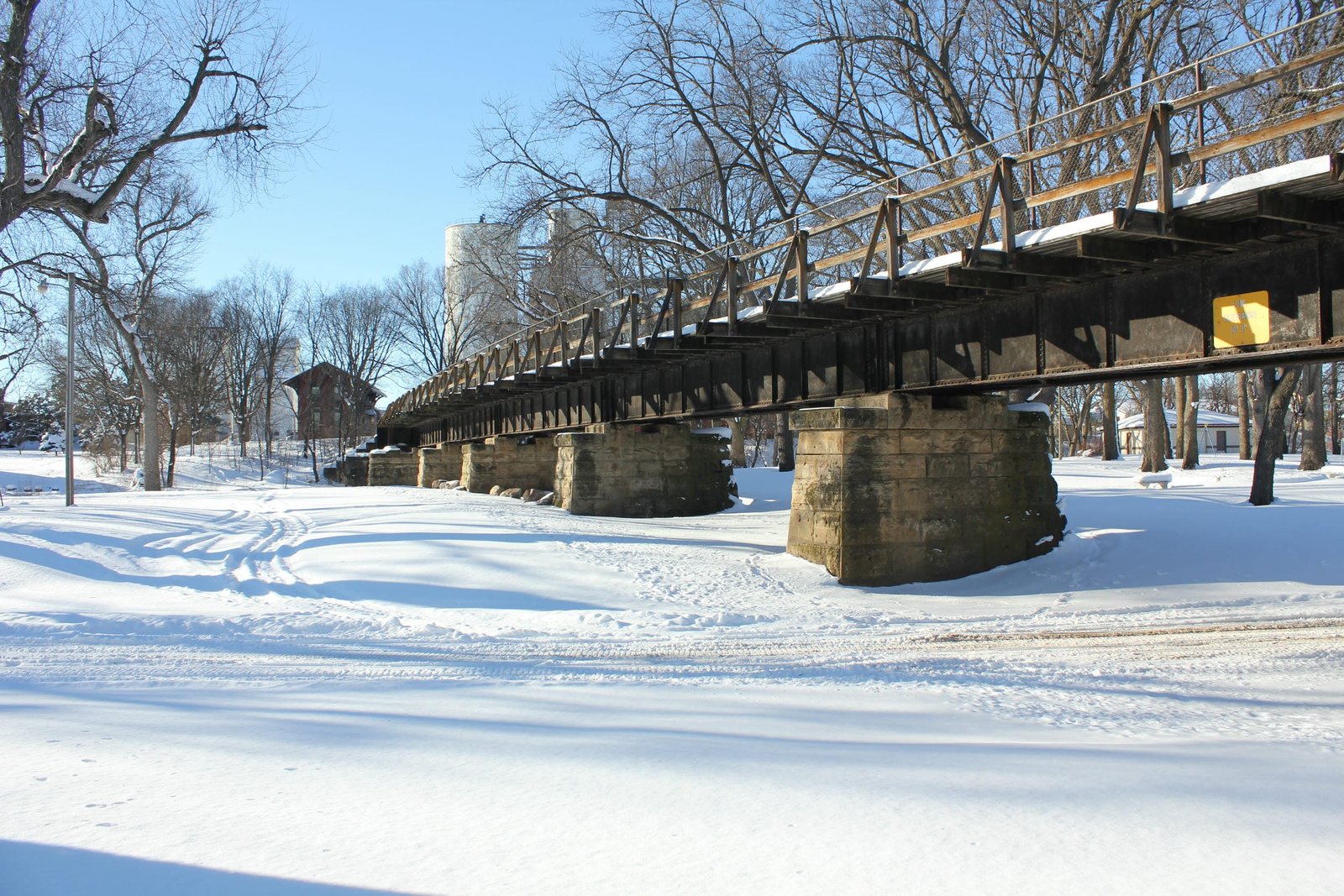
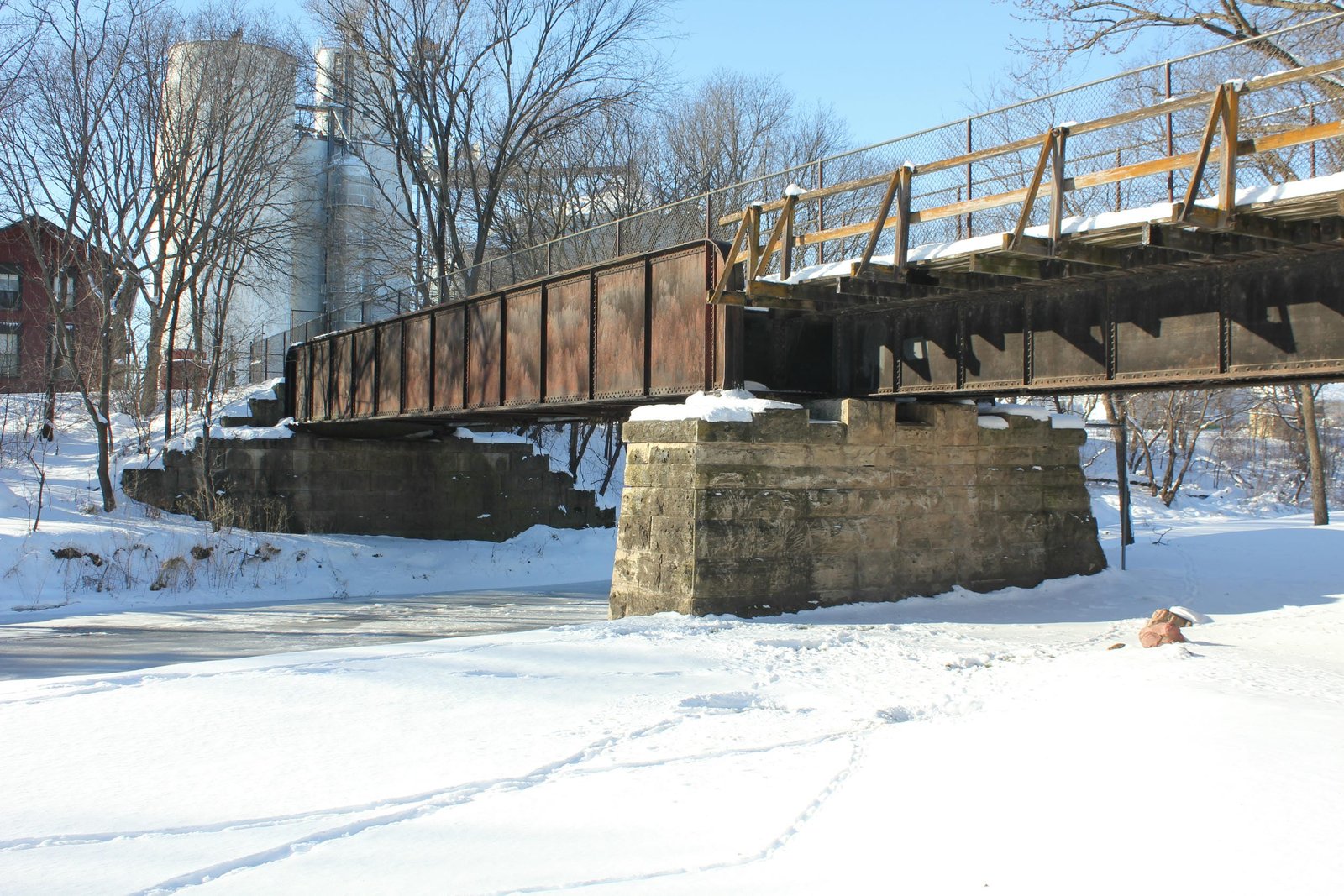
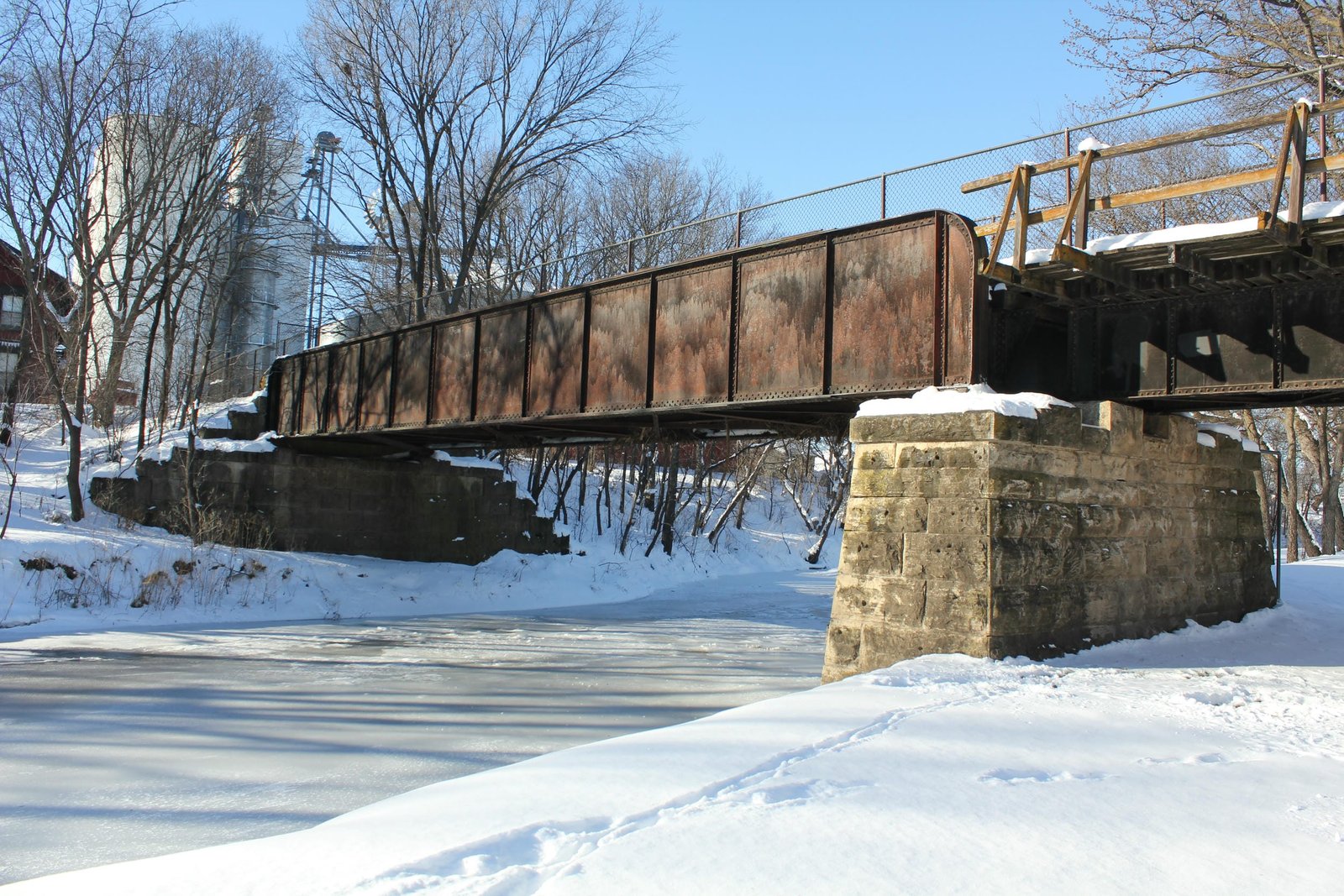
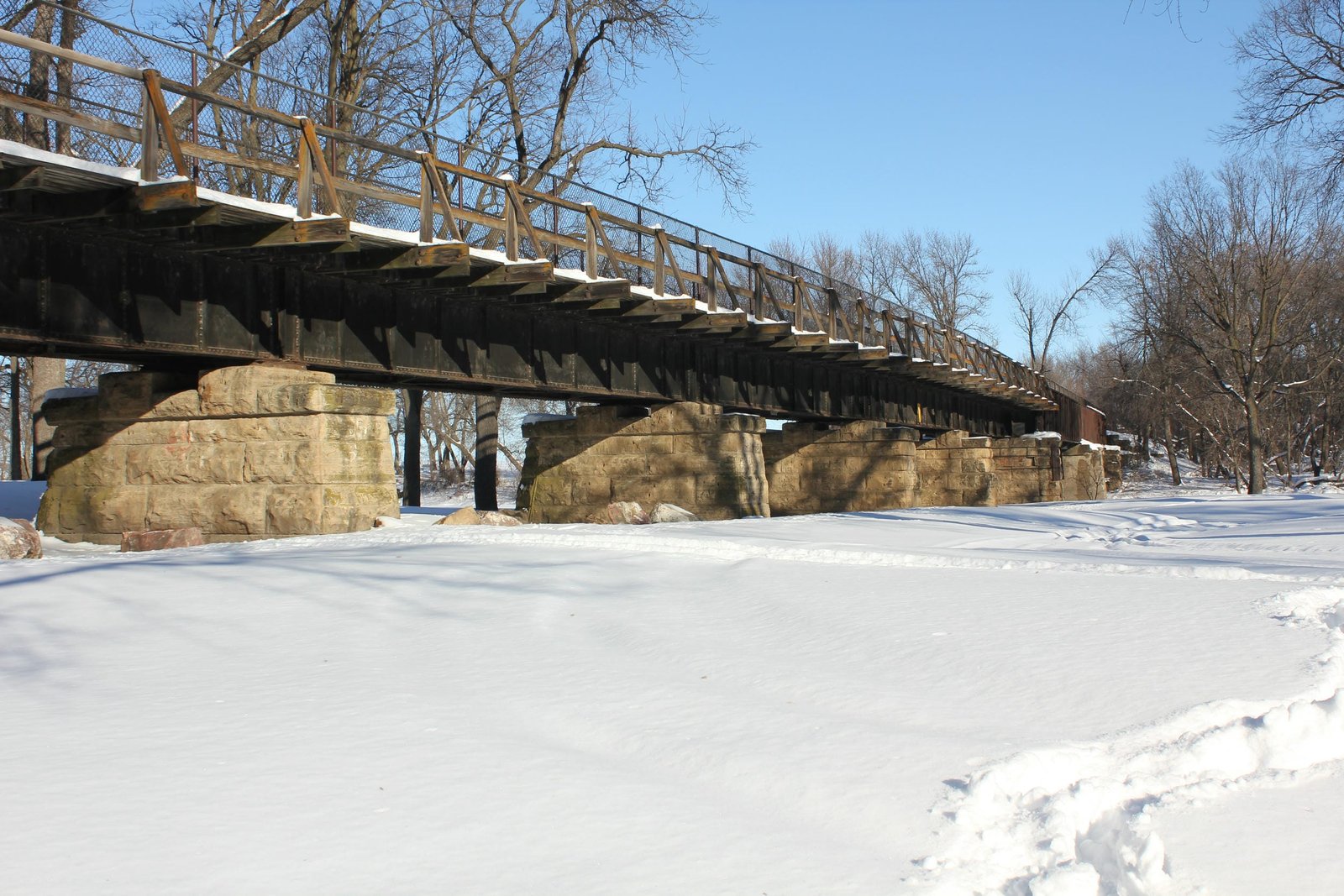
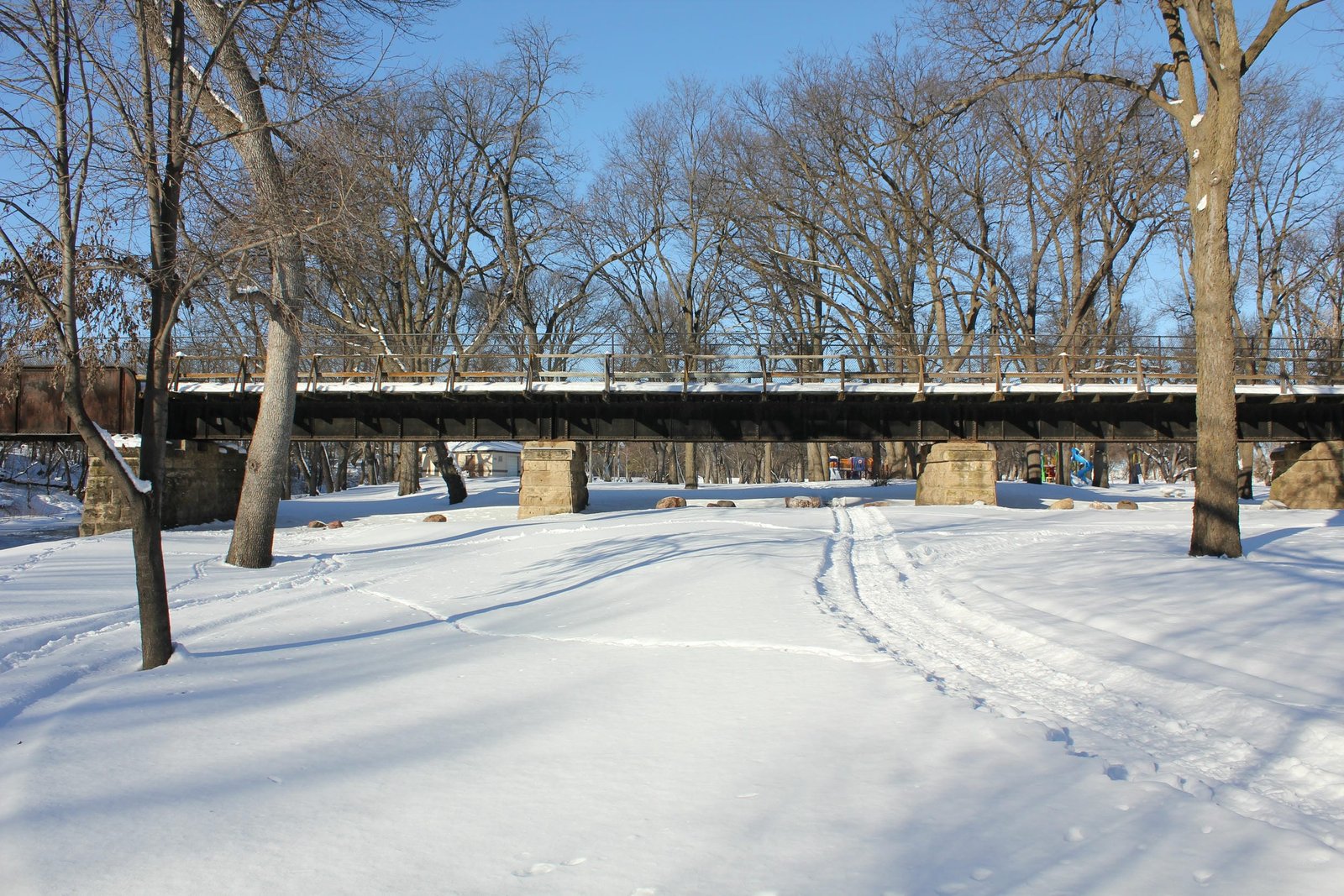
Located in Rock Rapids, this attractive plate girder bridge carries the former Rock Island Sioux Falls Branch over the Rock River. At this location, the Rock River splits into two distinct channels, forming an island. The first bridge at this location consisted of a timber bridge, with the channel spans constructed of combination Howe through truss spans and the approaches and island spans consisting of timber pile trestle spans. In the late 1890s and early 1900s, the Rock Island made significant improvements to this line, replacing timber bridges with steel, stone and concrete structures. The original timber bridge was replaced in sections over a four year period, likely to minimize disruptions to railroad traffic. In 1898, a new stone west abutment, west pier (pier #9) and through girder span (span #10) were constructed across the west channel of the river. In the summer of 1899, a new east abutment and several stone piers (piers #1 and #3 through #8) were constructed in preparation for installing steel spans. Due to delays in production, the seven deck girder spans (span #1 and #4 through #9) were not installed until 1900. The final section to be replaced was across the east channel, where a concrete pier (pier #2) was constructed in 1902 and the two through plate girder spans (spans #2 and #3) were installed in early 1903, giving the bridge its present configuration.
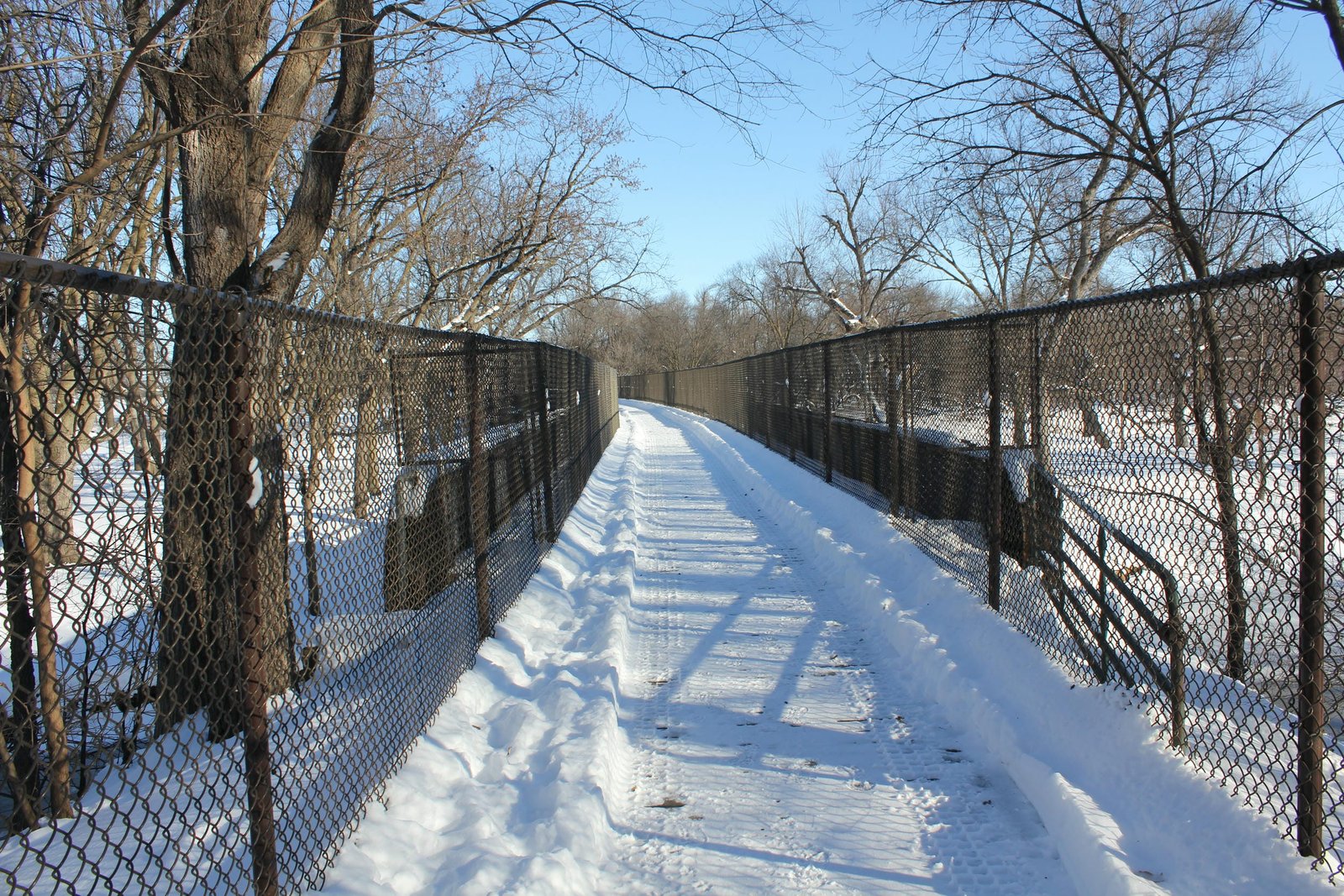
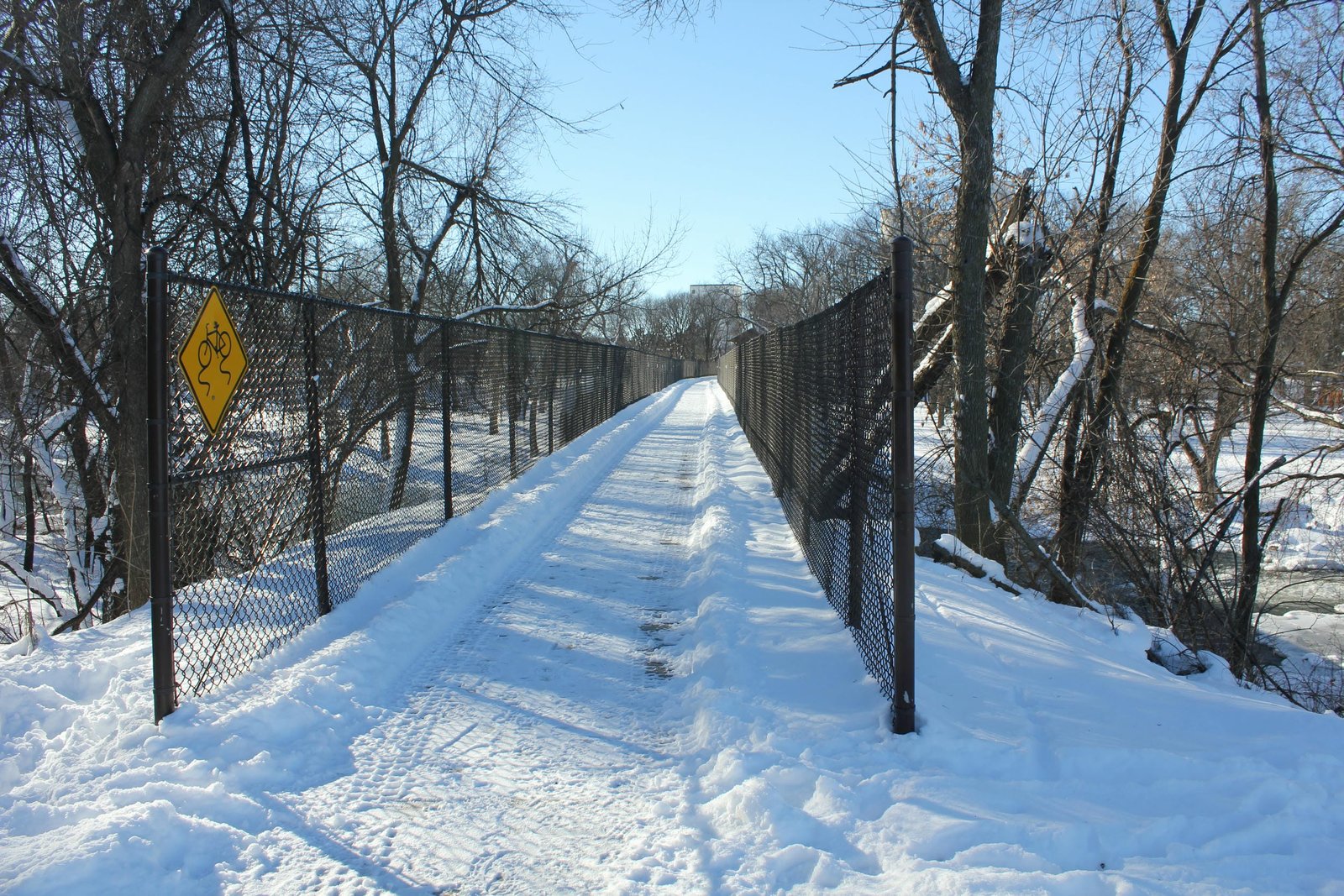
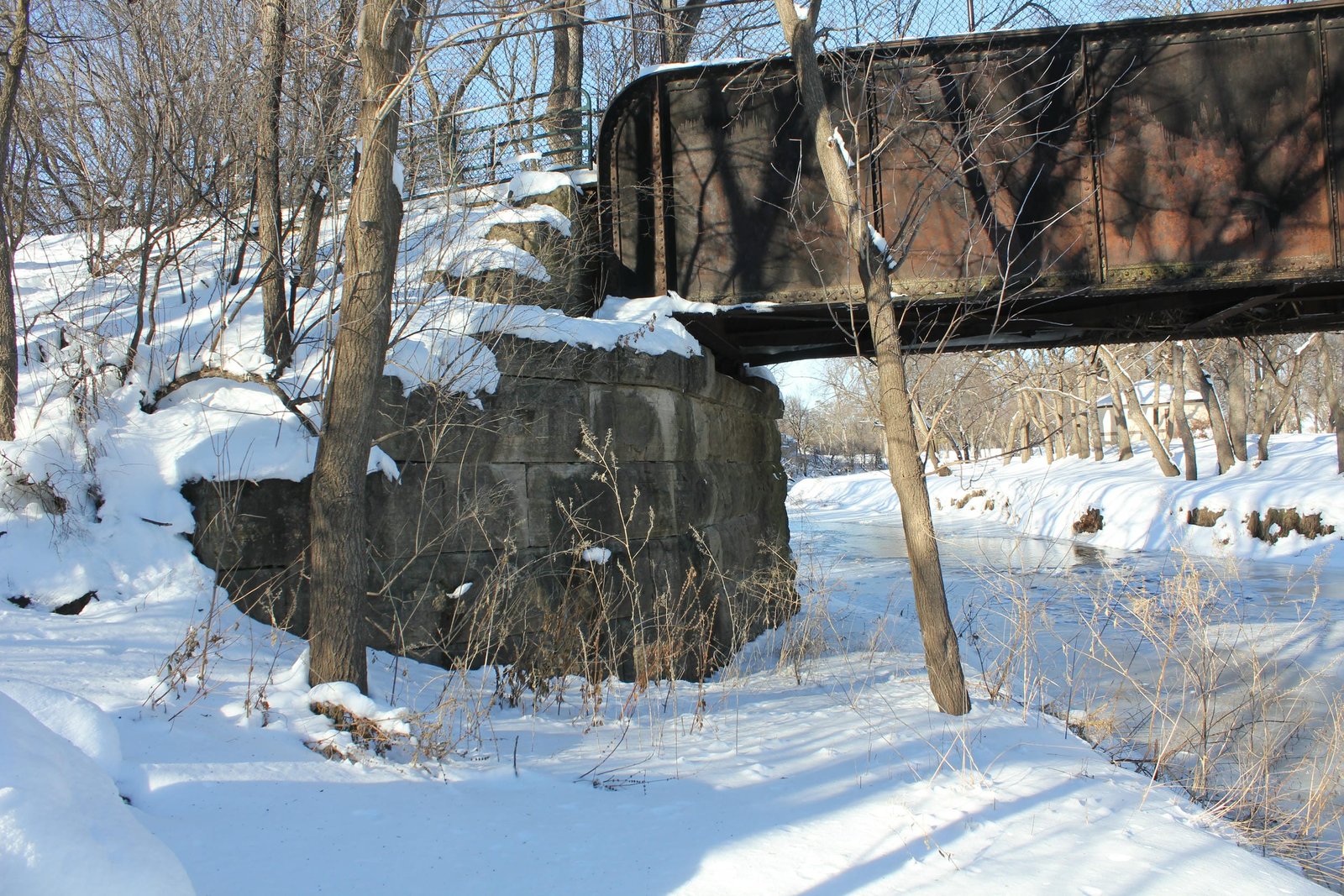
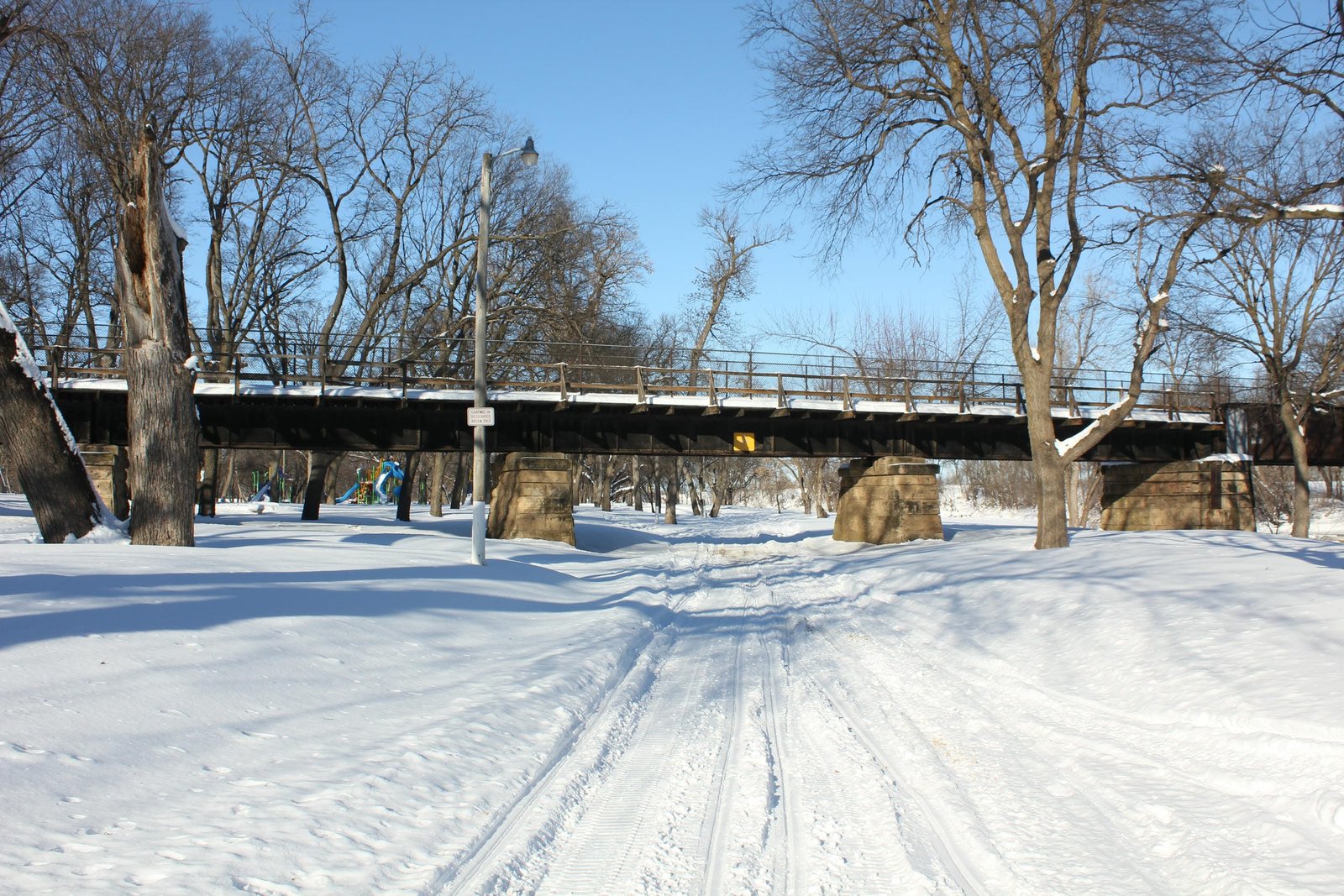
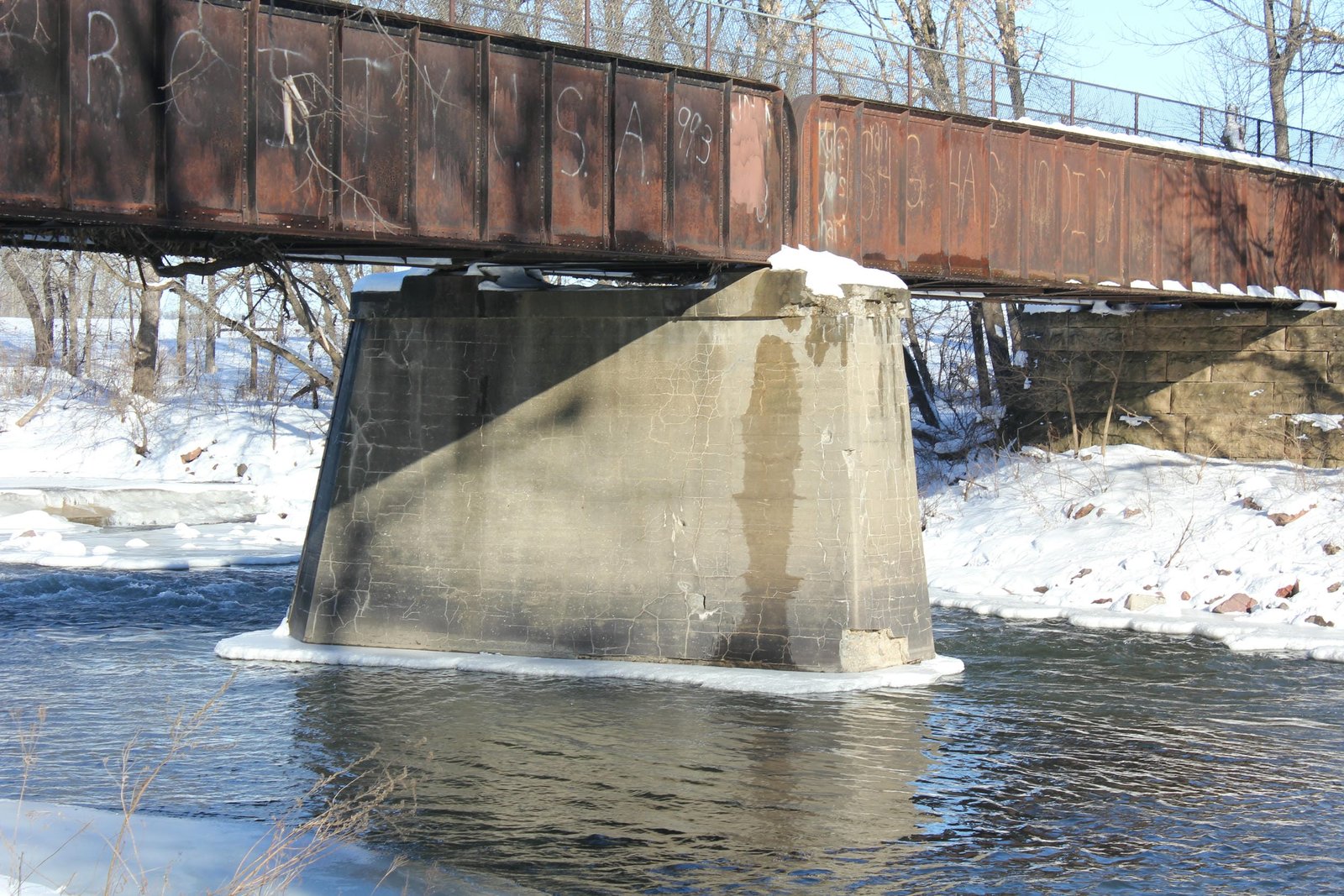
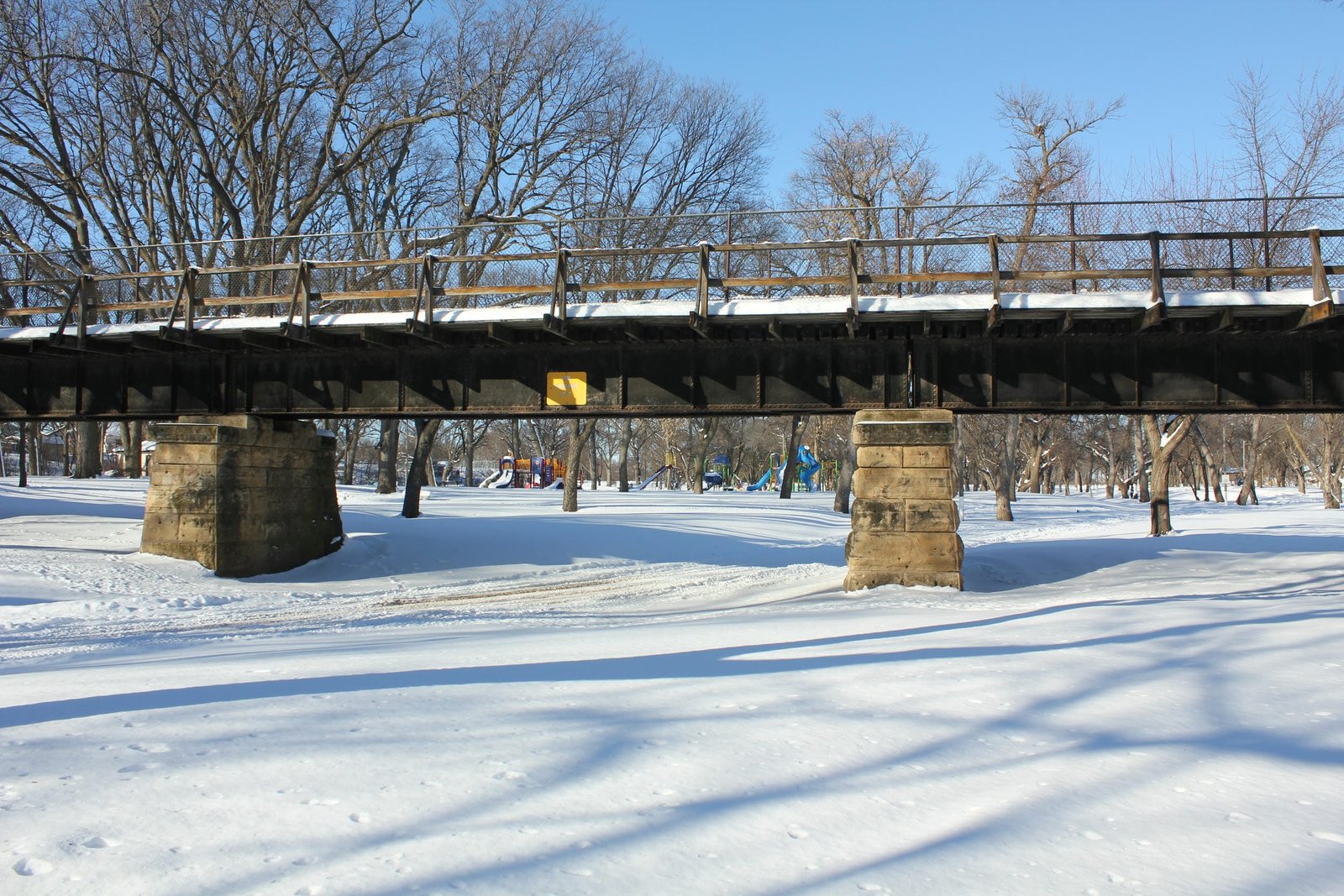
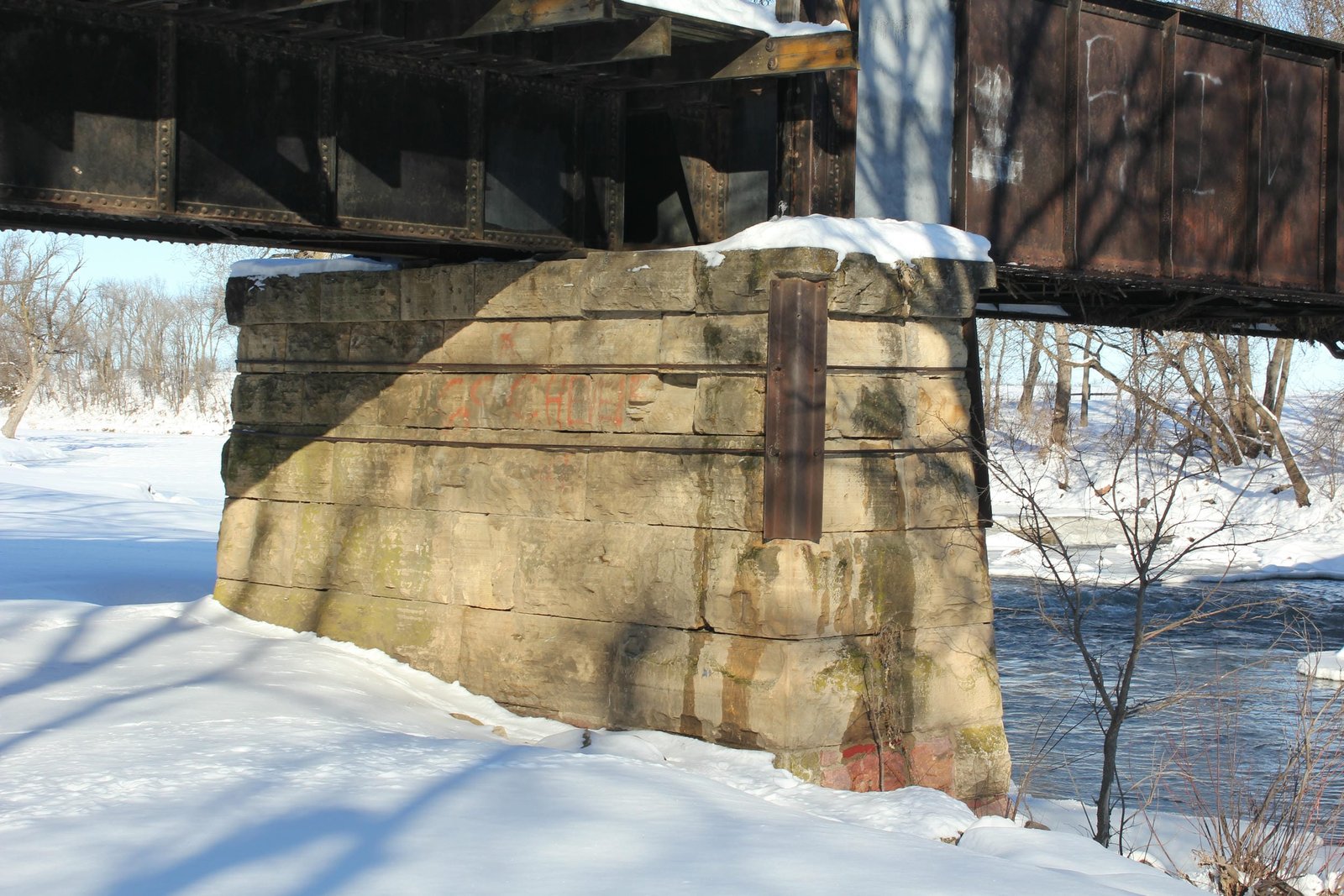
Currently, the bridge consists of a 44-foot deck plate girder span (span #1), two 78-foot through plate girder spans (spans #2 and #3), six 44-foot deck plate girder spans (spans #4 through #9) and an 80-foot through plate girder span (span #10). The superstructure is supported on stone substructures, with the exception of pier #2, which is constructed of concrete. Unique to this bridge, the structure is set on a 3.7-degree curve. All three through girder spans are similar, consisting of heavy plate girders, a standard floor and rounded girder ends. The deck plate girder spans also follow a standard design, and consist of two modest sized girders. The substructures also follow a standard design, with rectangular piers and abutments with stepped wing walls. Stone for the substructures was likely quarried at the Cedar Valley, Iowa quarry; which supplied all stone for the BCR&N. American Bridge Company fabricated spans #2 and #3, while unknown contractor(s) fabricated the remaining spans. Pier #2 was constructed by railroad company forces, while it is unclear if the remaining substructures were constructed by company forces or under contract. Girder spans were commonly used by railroads, as they were durable and easy to construct. Since 1902, the bridge has seen no significant alterations. Today, the bridge is used as part of a trail and is listed on the National Register of Historic Places, along with the depot at the west end of the bridge. A wooden deck and handrails have been added to the bridge. Overall, the bridge appears to be in fair to good condition, with no significant deterioration noted. The author has ranked this bridge as being locally significant, due to the common design.
Citations
| Build date and builder (spans #2 and #3) | American Bridge Company plaque |
| Build date (span #10) | Lyon County Reporter; March 10, 1898 |
| Build date (spans #1 and #4 through #9) | The Reporter; September 28, 1899 |
| Railroad History Citation | ICC Valuation Information, Compiled by Richard S. Steele |