
Click the photo to view the full-size version
| Name | RI E. Branch West Nishnabotna River Bridge Chicago, Rock Island & Pacific Railroad Bridge #23 |
| Built By | Chicago, Rock Island & Pacific Railway |
| Currently Owned By | Private Owner |
| Superstructure Contractor | Lassig Bridge & Iron Works of Chicago, Illinois |
| Length | 254 Feet Total, 110 Foot Main Span |
| Width | 1 Track |
| Height Above Ground | 20 Feet (Estimated) |
| Superstructure Design | Quadrangular Lattice Through Truss and Timber Pile Trestle |
| Substructure Design | Timber Pile |
| Date Built | c. 1910 Using a Span Fabricated c. 1885 |
| Original Location | Unknown |
| Traffic Count | 0 Trains/Day (Bridge is Abandoned) |
| Current Status | Abandoned, Used As a Field Access |
| Chicago, Rock Island & Pacific Railroad Bridge Number | 23 |
| Significance | Regional Significance |
| Documentation Date | 10/17/2015 |
In 1880, the Avoca, Macedonia & South Western Railroad (AM&SW) constructed an 18-mile railroad line, extending from Avoca, Iowa to Carson, Iowa. Prior to completion, the AM&SW was consolidated into the Chicago, Rock Island & Pacific Railway (Rock Island). At Avoca, the line connected to the existing Rock Island mainline. The Rock Island was a large railroad, which had constructed and acquired a large railroad network throughout the central United States. This line served as a short branch line, serving industries in Hancock, Oakland and Carson. The Rock Island struggled financially throughout much of its history, experiencing repeated bankruptcies and chronic instability. After World War II, the Rock Island struggled to survive, proposing mergers and deferring maintenance on their routes. The railroad reorganized as the Chicago, Rock Island & Pacific Railroad in 1948. In 1953, the Rock Island realigned their existing mainline to intersect this route at Hancock. The same year, a section of line between Oakland and Carson was abandoned.
By the mid-1970s, the railroad was in serious decline. The railroad secured loans to eliminate slow orders, acquired new equipment, and attempted to restore profitability. Several sections of this line had fallen into serious disrepair, hampering the Rock Islands ability to maintain efficient operations. In 1978, the railroad came close to profit, but creditors were lobbying for a complete shutdown of the Rock Island. During the fall of 1979, a strike crippled the railroad. The segment of this line between Hancock and Avoca was abandoned in December 1979. By January of 1980, the entire system was ordered to be shut down and liquidated. Many of the lines and equipment were scrapped. Profitable sections of railroad were prepared for sale. In November 1981, the Iowa Railroad Company (IARR) began operations over the former Rock Island mainline in western Iowa. In June 1982, the IARR entered into a two-year lease for the entire Rock Island mainline between Bureau, Illinois and Council Bluffs, Iowa; including a portion of this line from Hancock to Oakland. In 1983, concerns had grown over the ability of the IARR to provide reliable service to shippers along the line, and several industries came together to form Heartland Rail Corporation, which purchased the line between Bureau and Council Bluffs and the branch lines from the Rock Island trustees. Iowa Interstate Railroad (IAIS) was chosen to operate the line, and began operations in late 1984. IAIS abandoned a segment near Oakland in 2013. Today, IAIS continues to operate a short segment of this line in Hancock to serve a grain elevator. The remainder of the line has largely reverted to adjacent property owners and has been converted to farm fields.
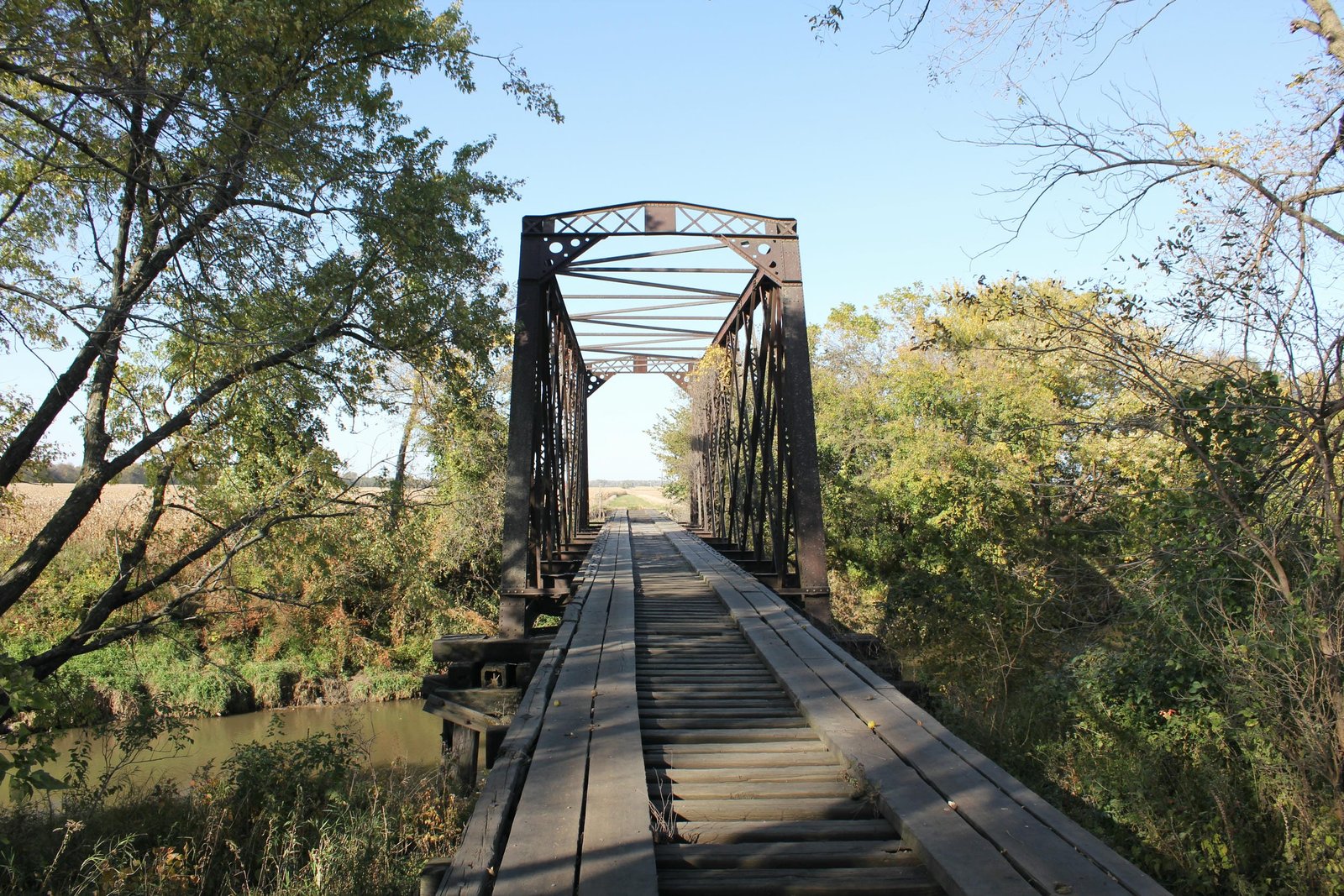
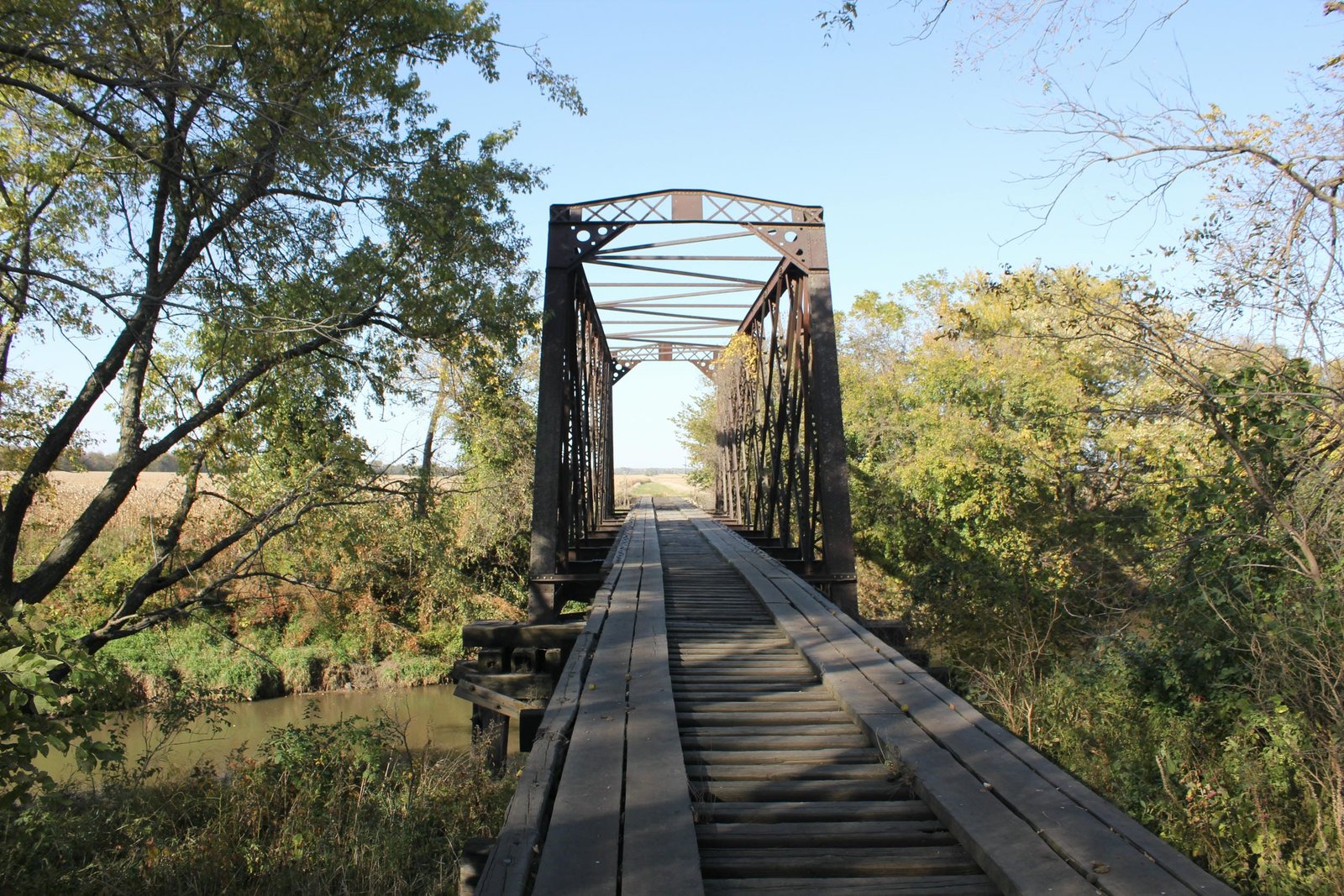
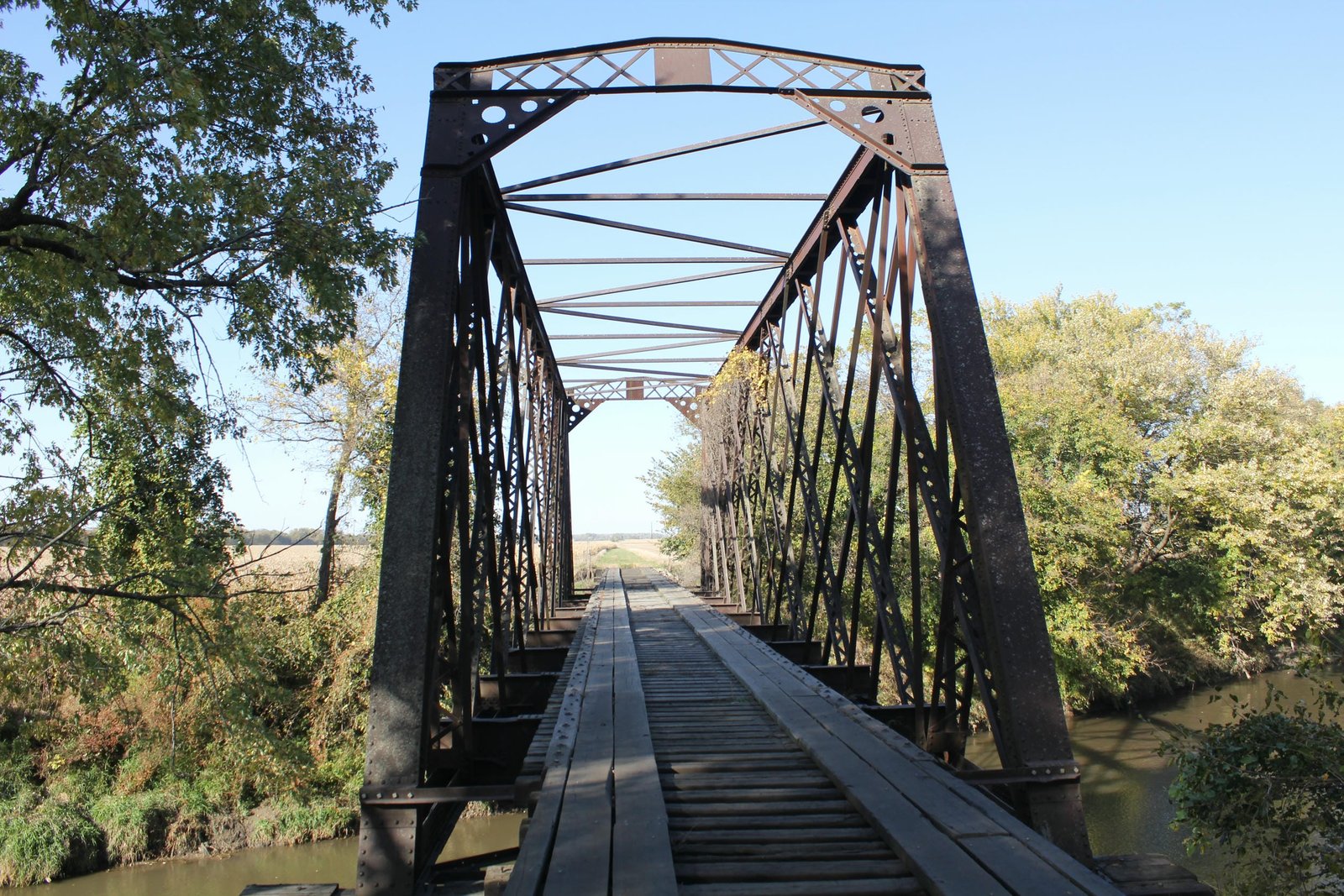
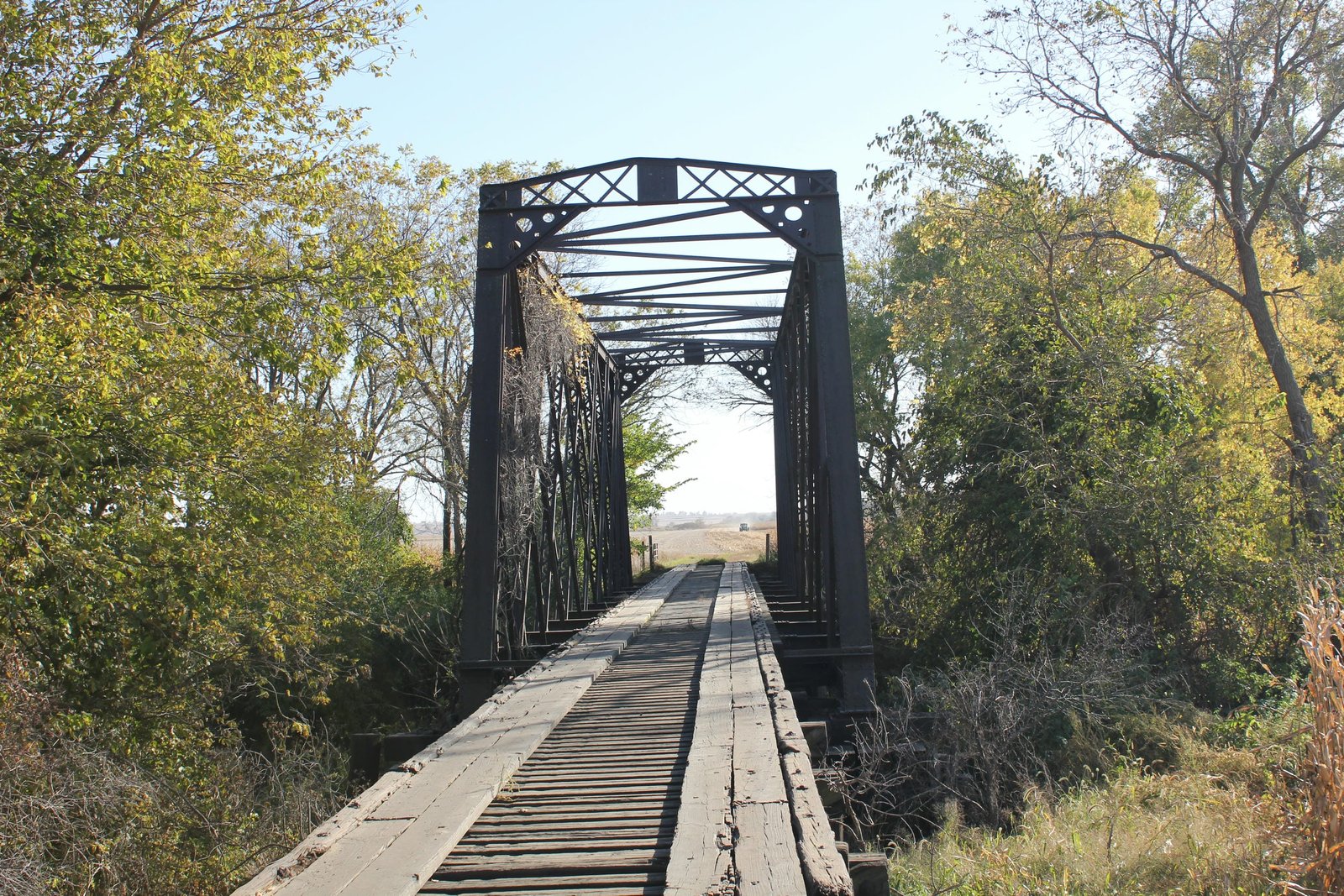
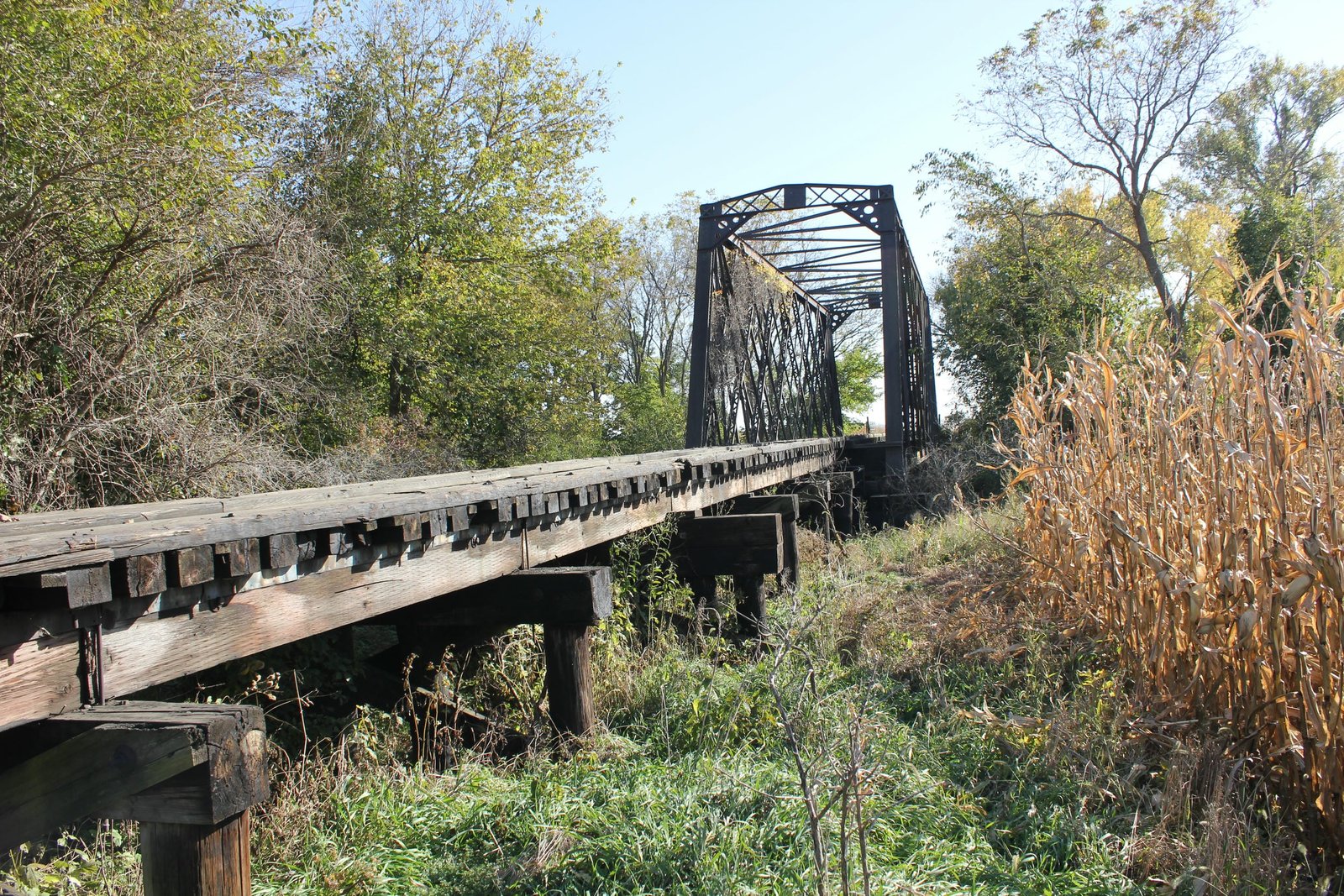
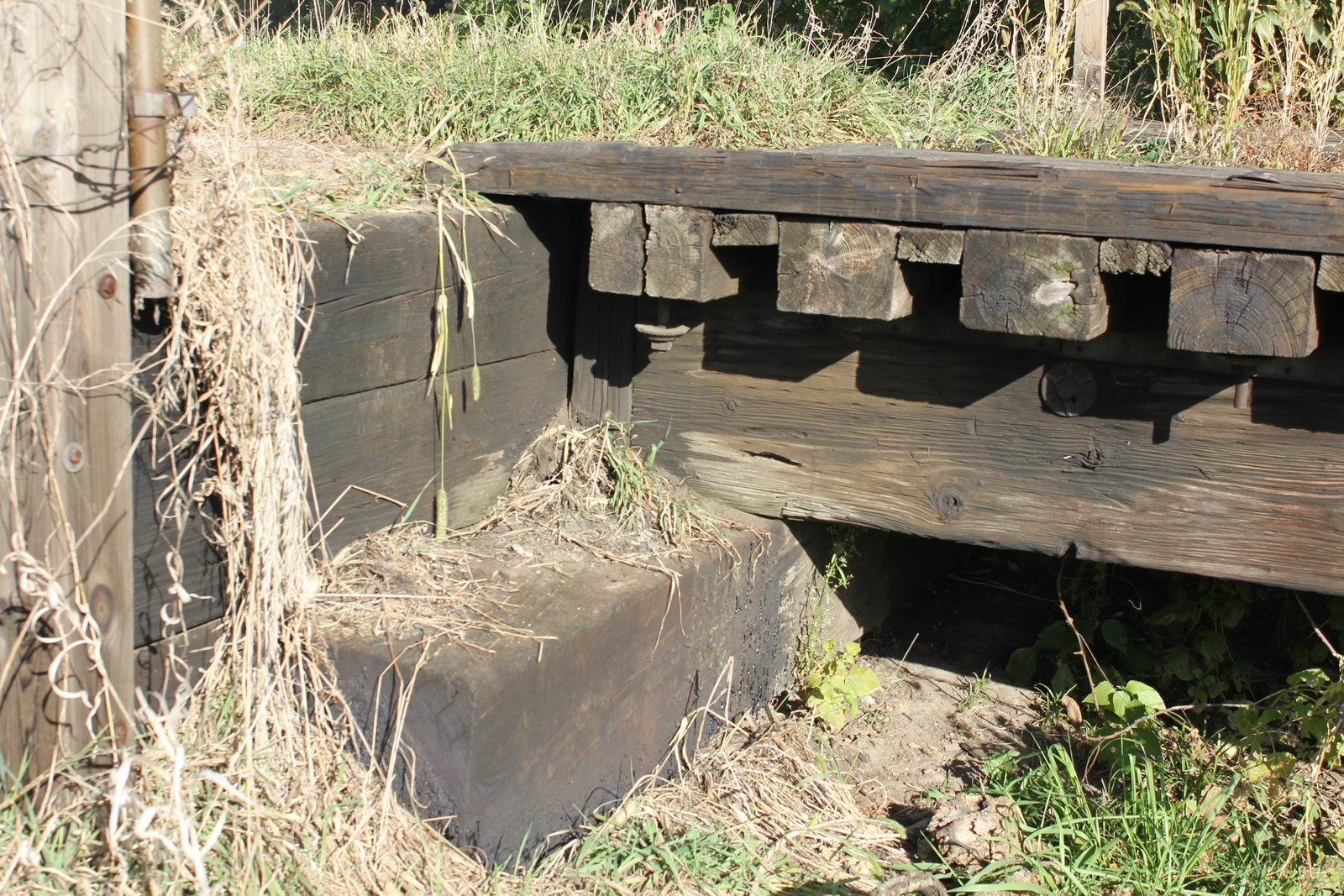
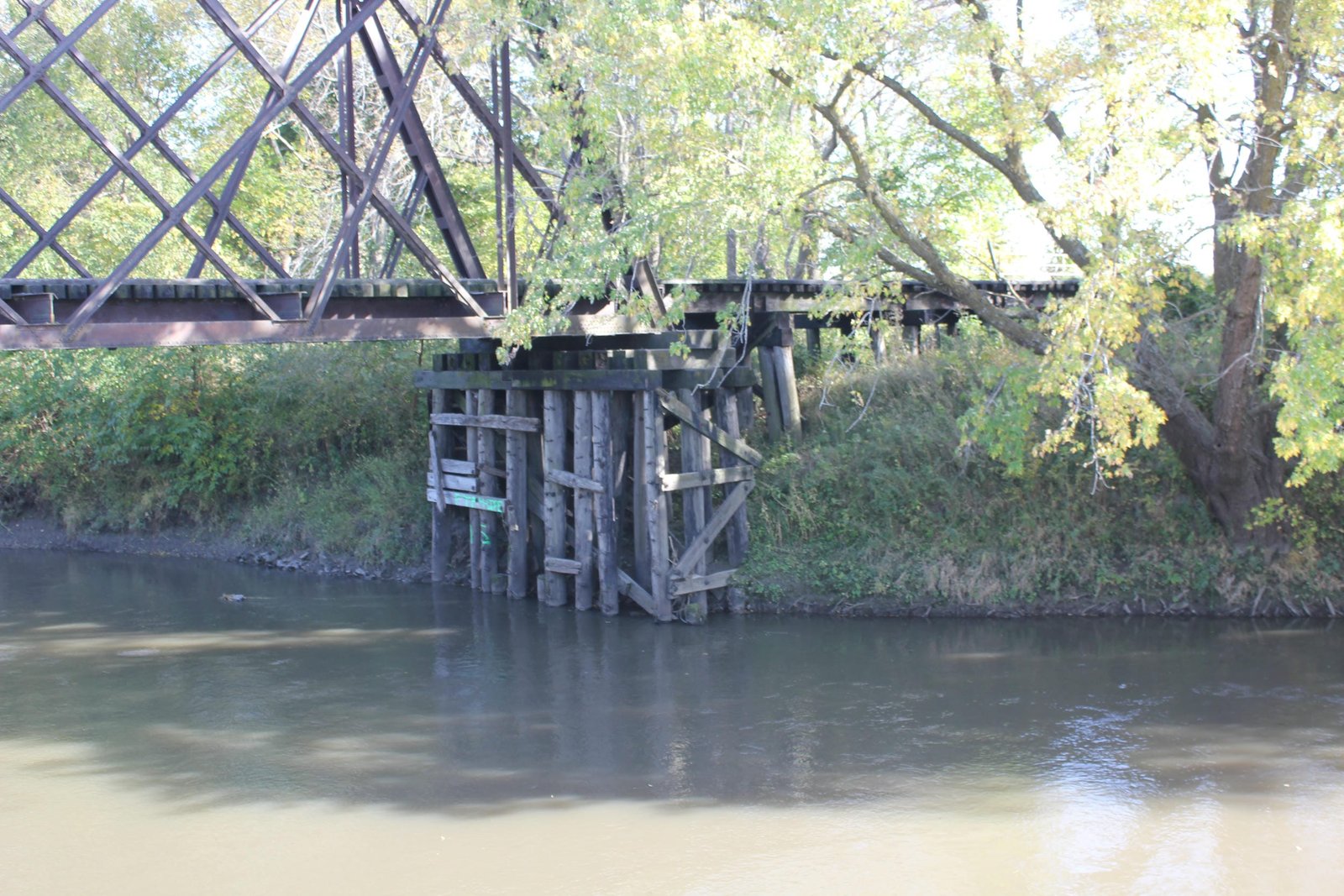
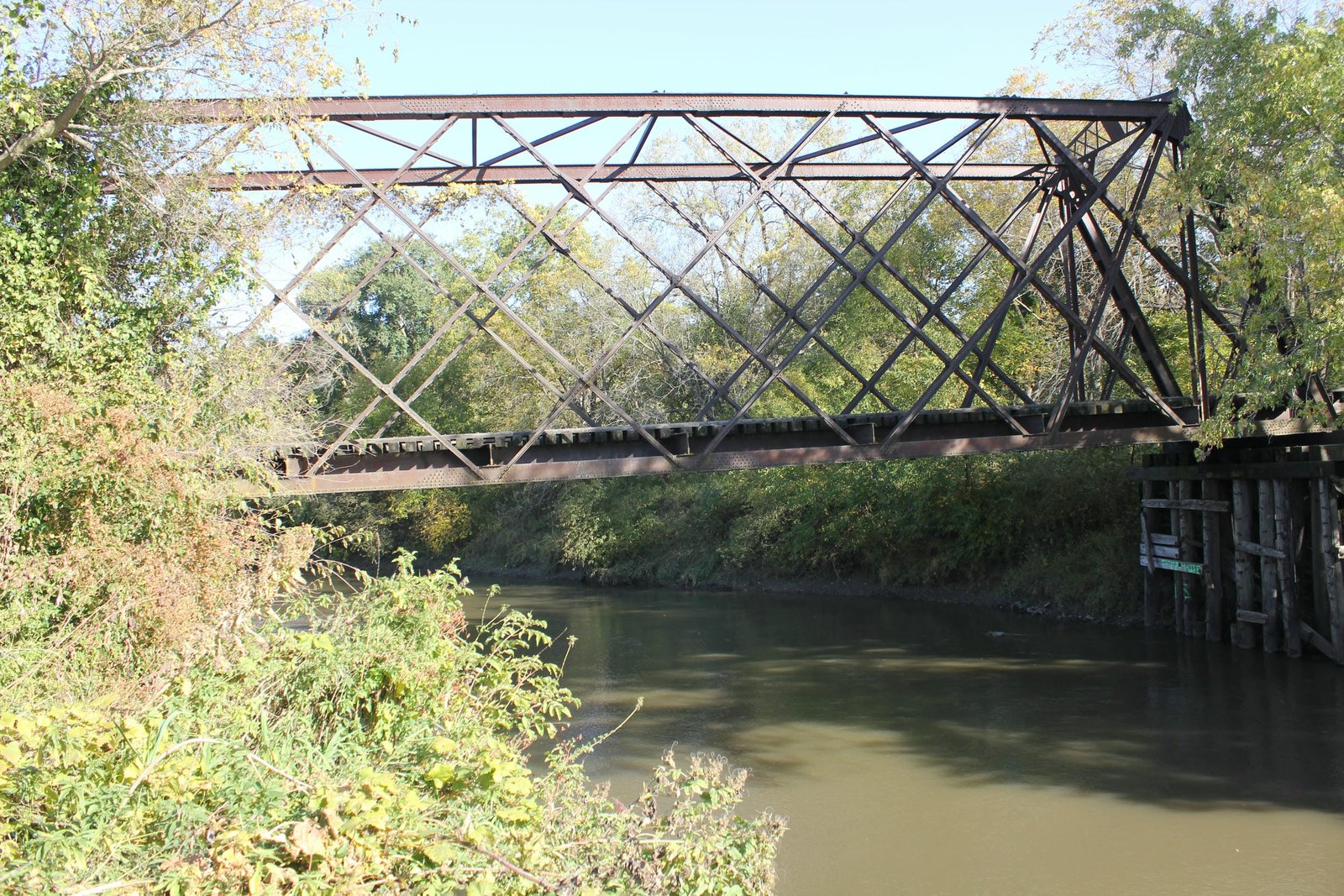
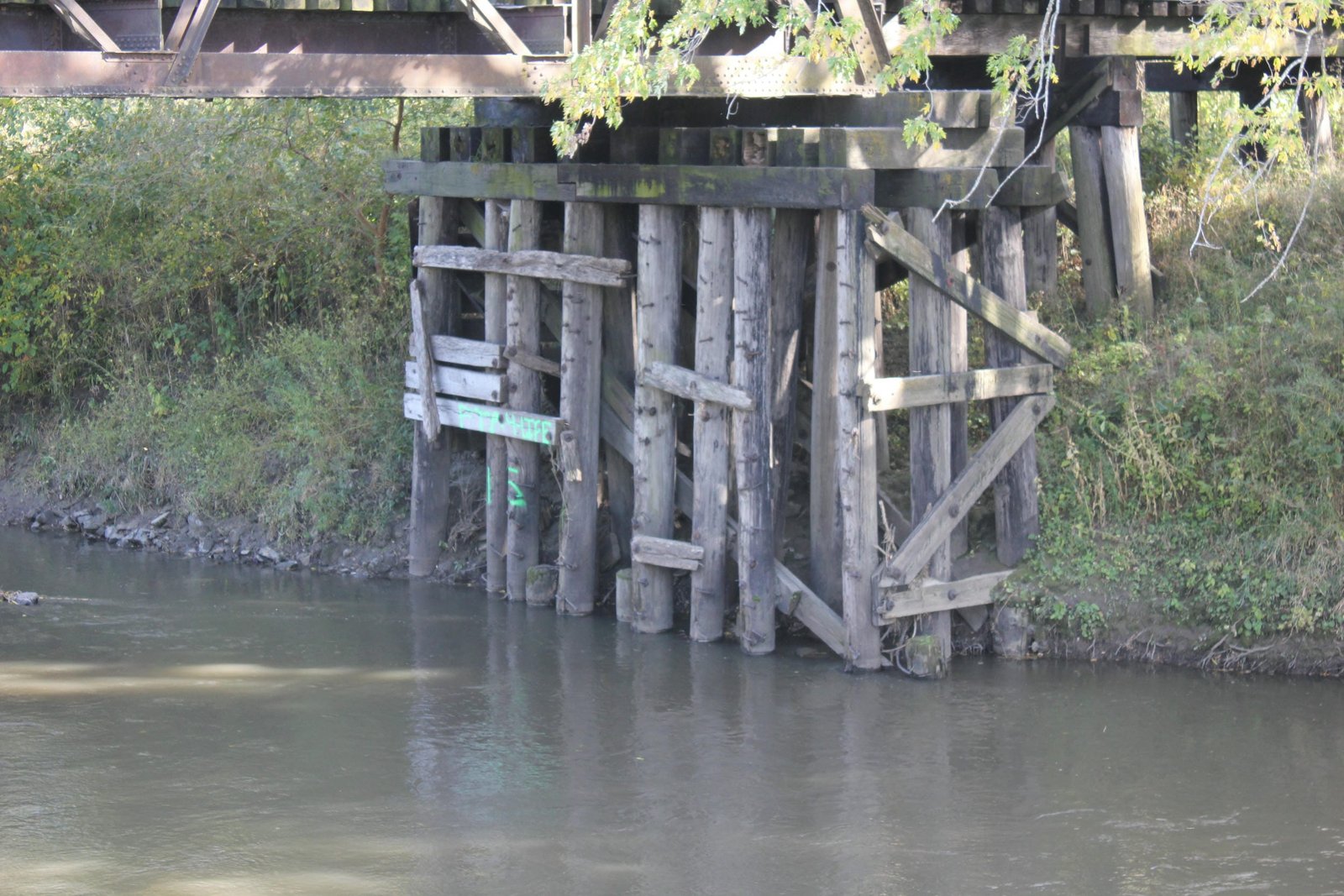
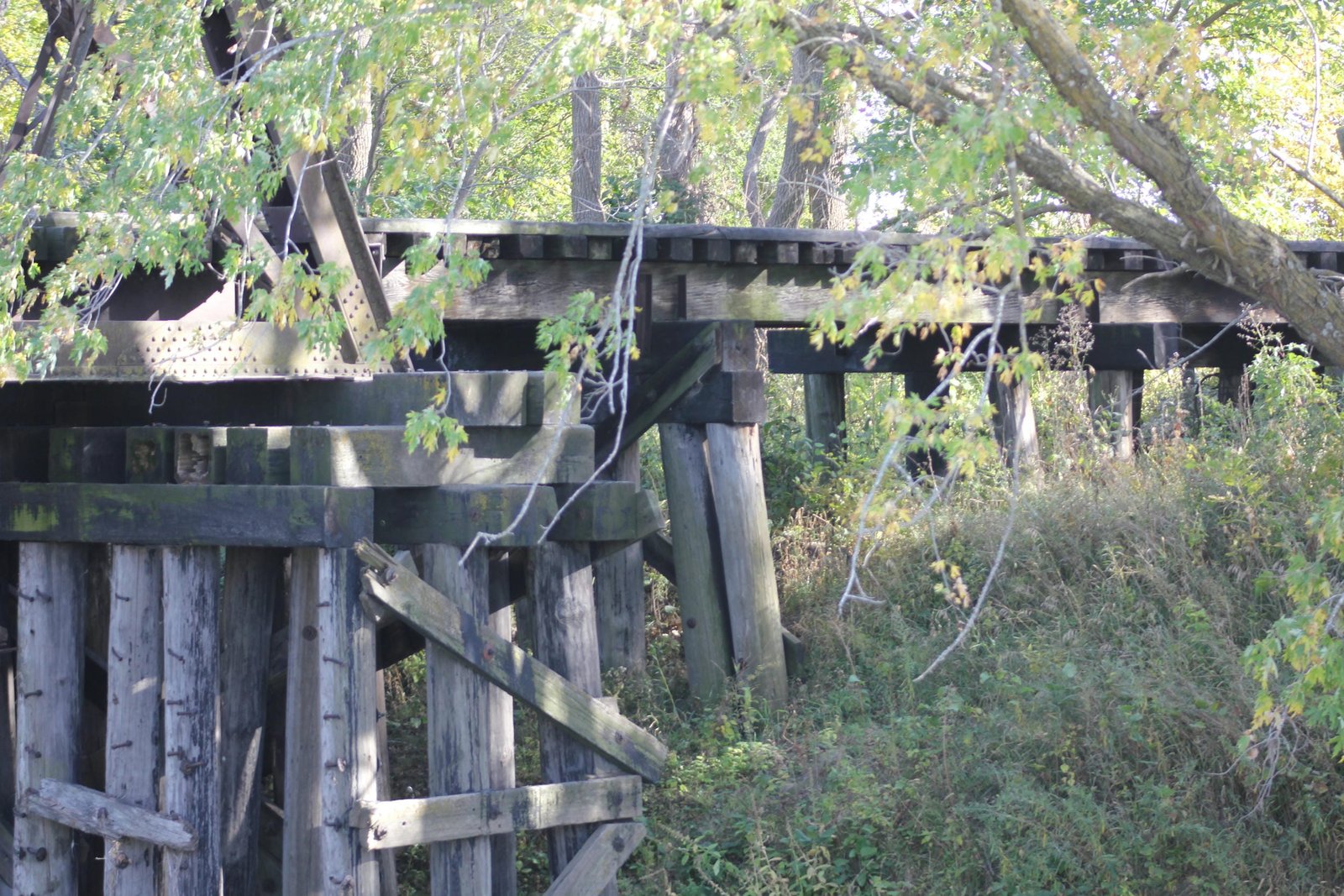
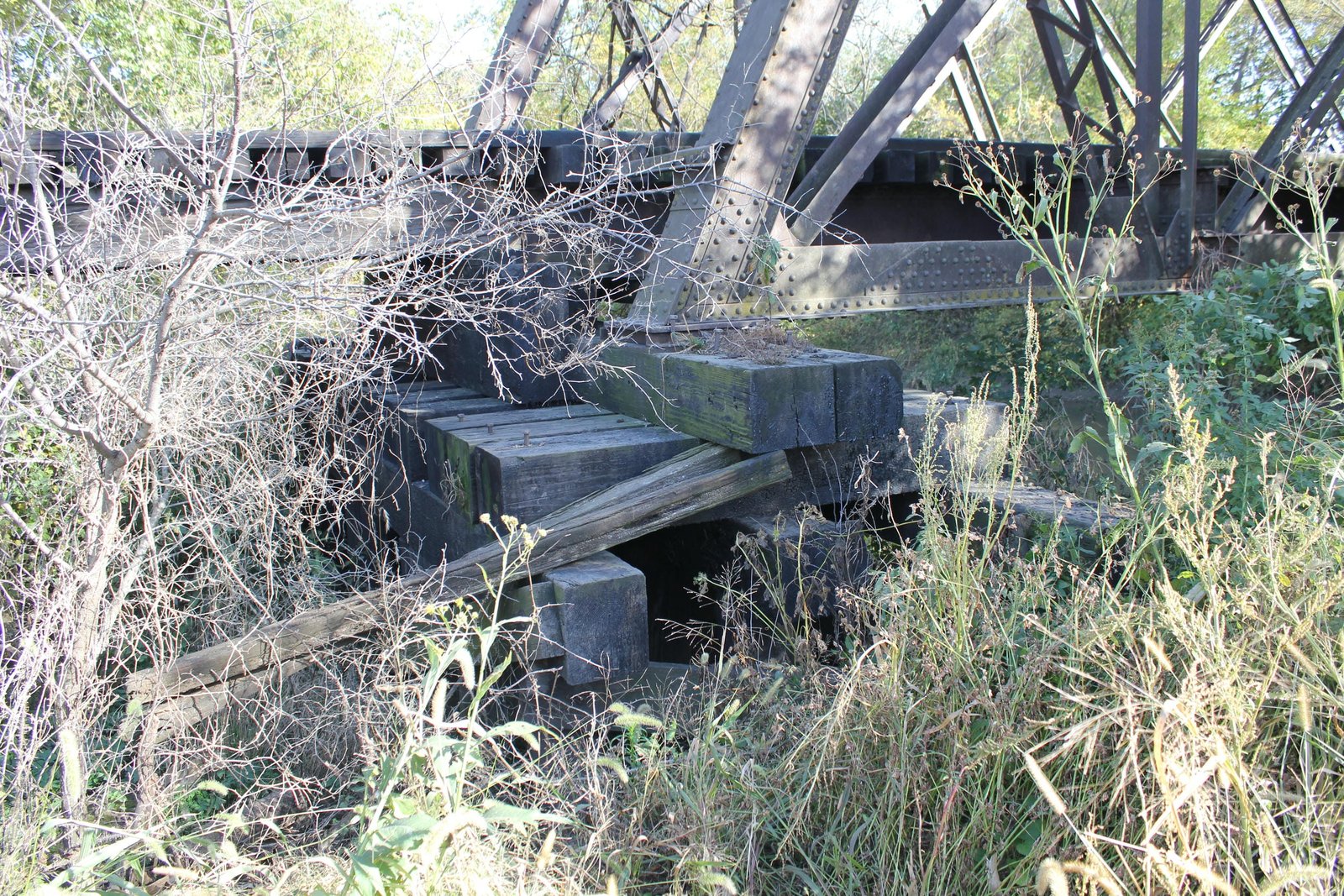
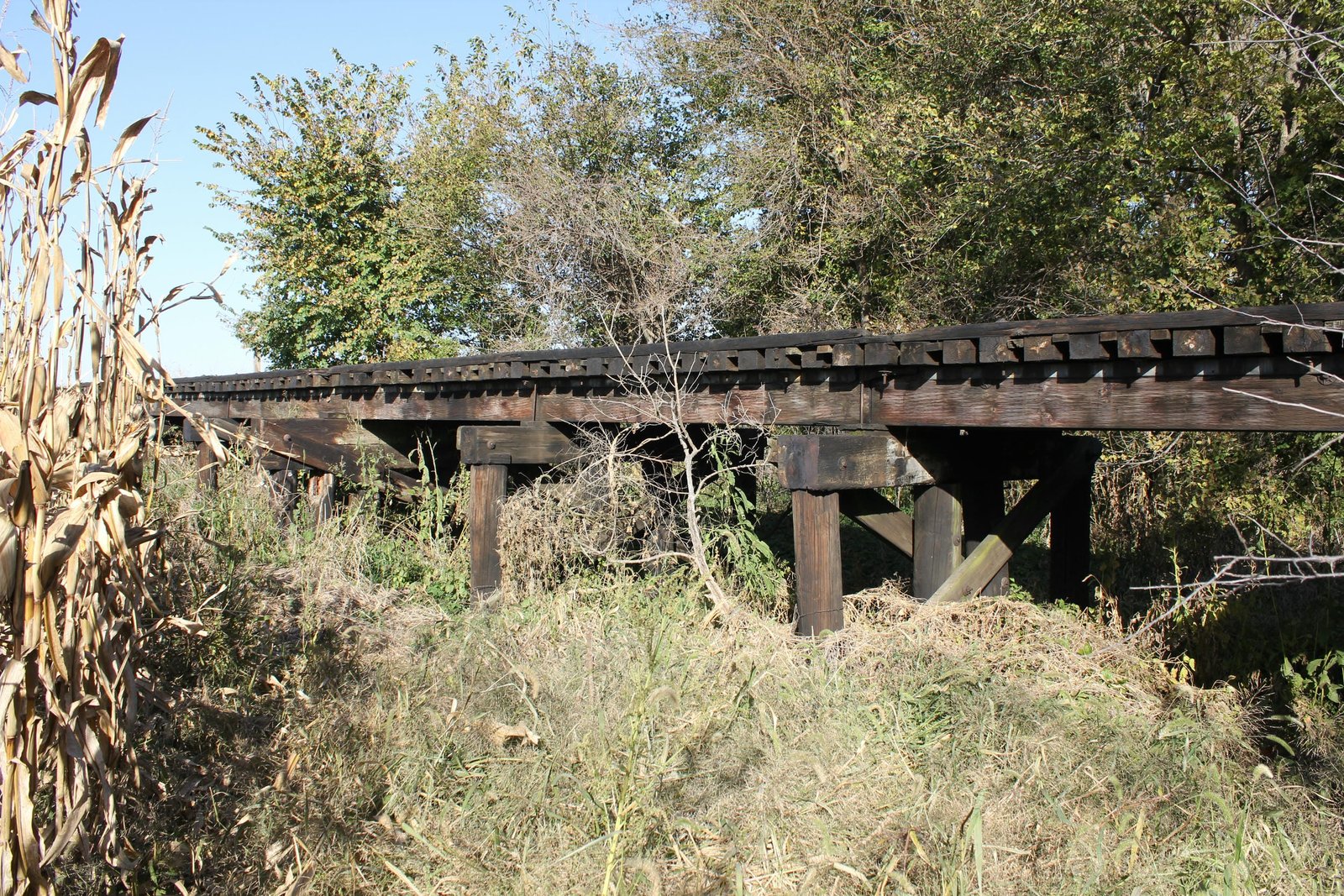
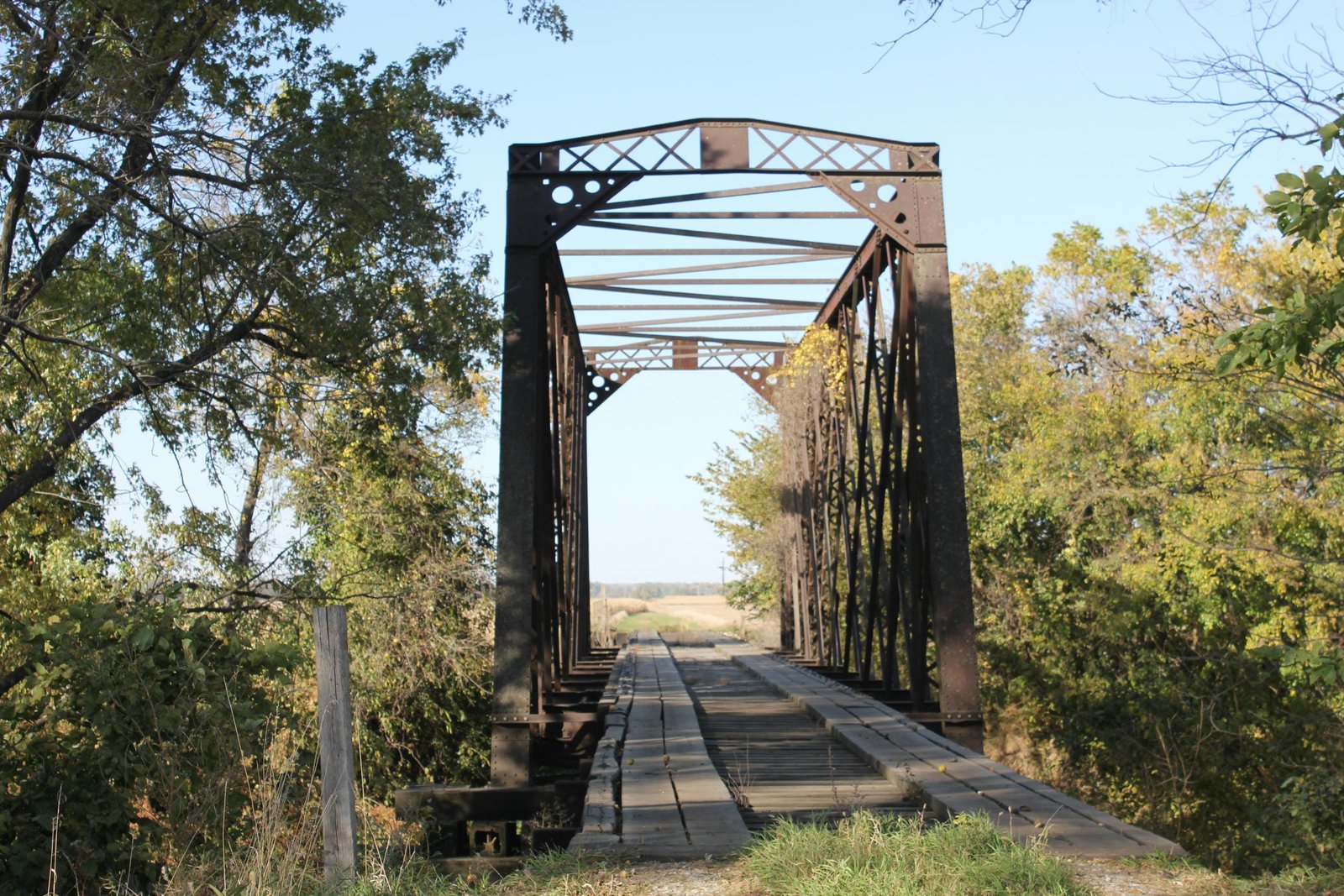
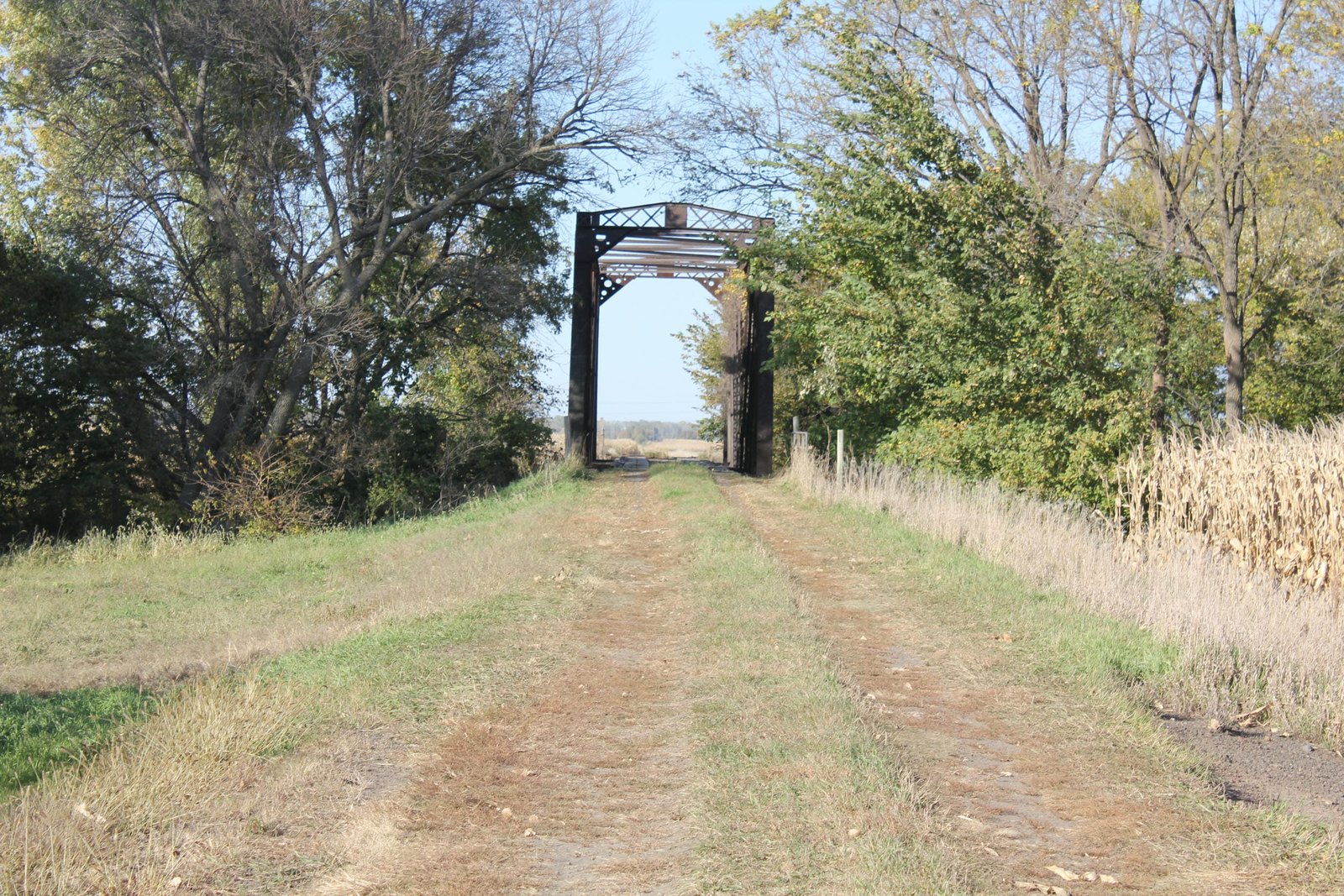
Located south of Avoca, this through truss bridge carries a former Chicago, Rock Island & Pacific Railway (Rock Island) branch over the East Branch West Nishnabotna River. Little is known about the history of this bridge. The first bridge at this location was likely a timber pile trestle, constructed when the line was first built. It is unclear if the bridge was later rebuilt with a timber truss bridge. In approximately 1910, the bridge was reconstructed with a secondhand iron through truss span, giving the bridge its present configuration. Currently, the bridge consists of a 110-foot, riveted quadrangular lattice through truss span, set onto timber pile piers. The south end is approached by four timber pile trestle spans, while the north end is approached by seven timber pile trestle spans. The truss span was originally fabricated in approximately 1885 for use at an unknown location, before being reused here. It is possible that the truss was reused from Perlee, Iowa; where a 110-foot truss span was erected in 1885 and replaced in the early 20th Century. In Rock Island annual reports, this was the only span of this size noted to have been constructed. An unknown contractor fabricated the truss span, while the timber components were constructed by railroad company forces. While unclear, it is possible that the truss was fabricated by Lassig Bridge & Iron Works, which fabricated many lattice trusses for Midwest railroads.
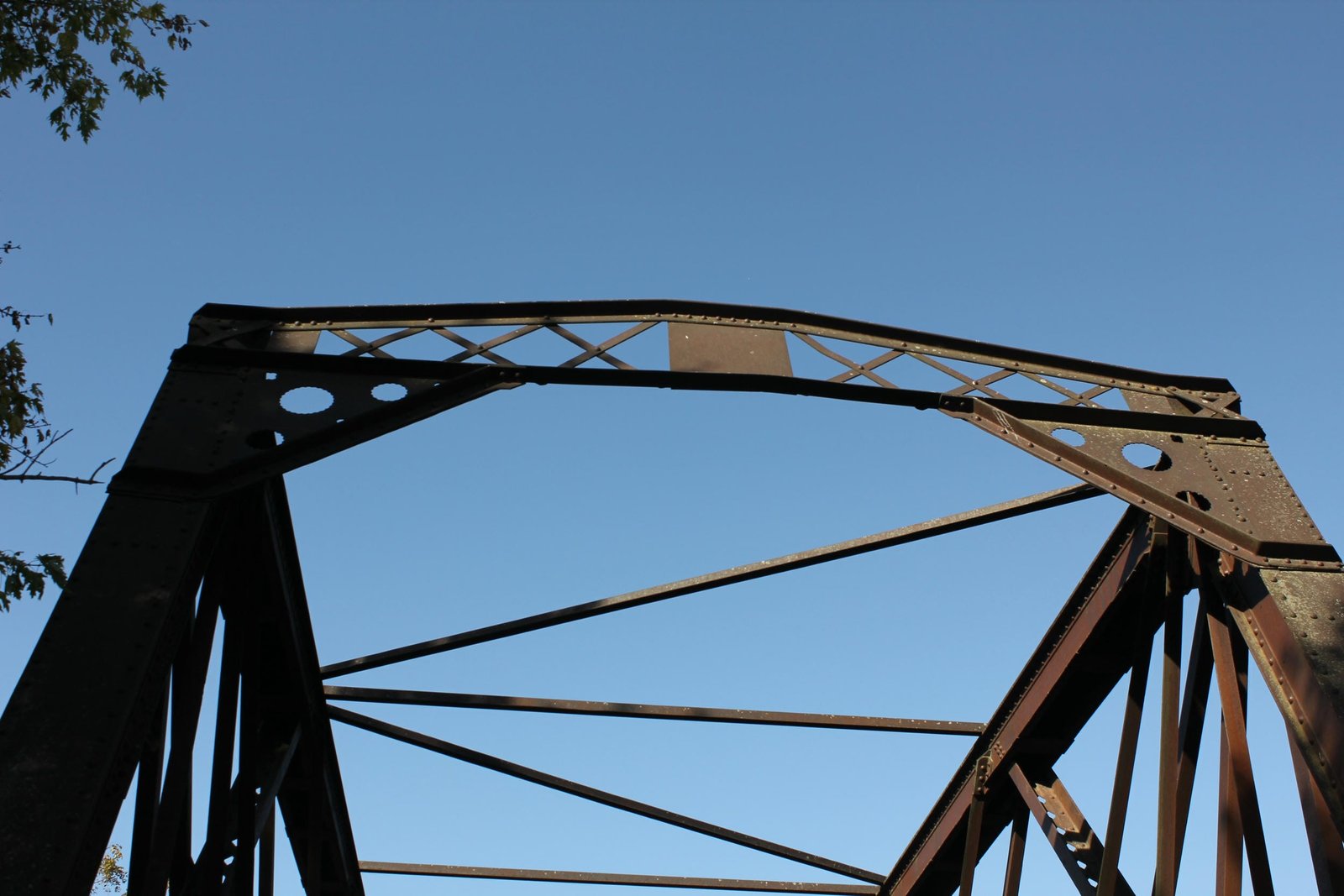
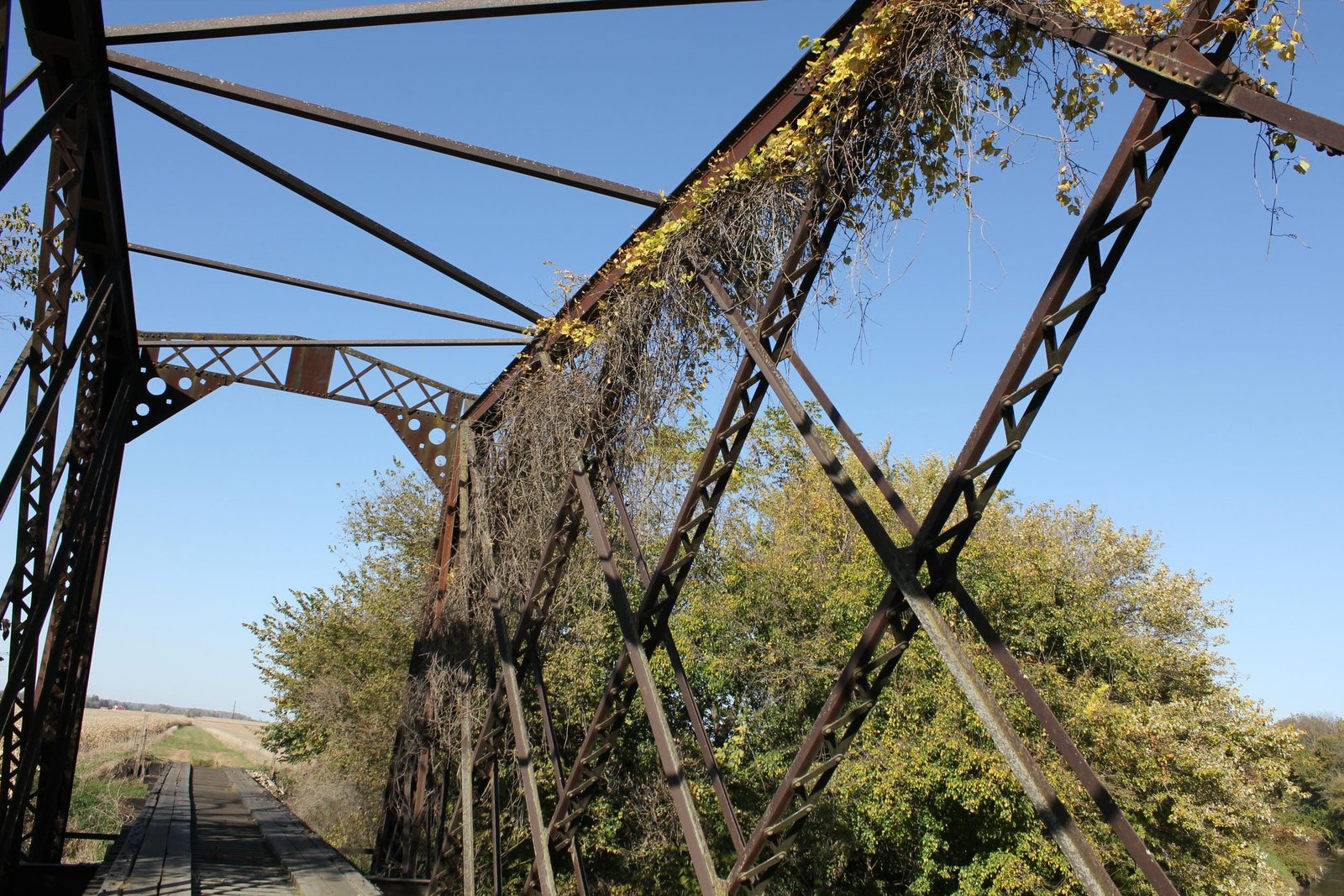
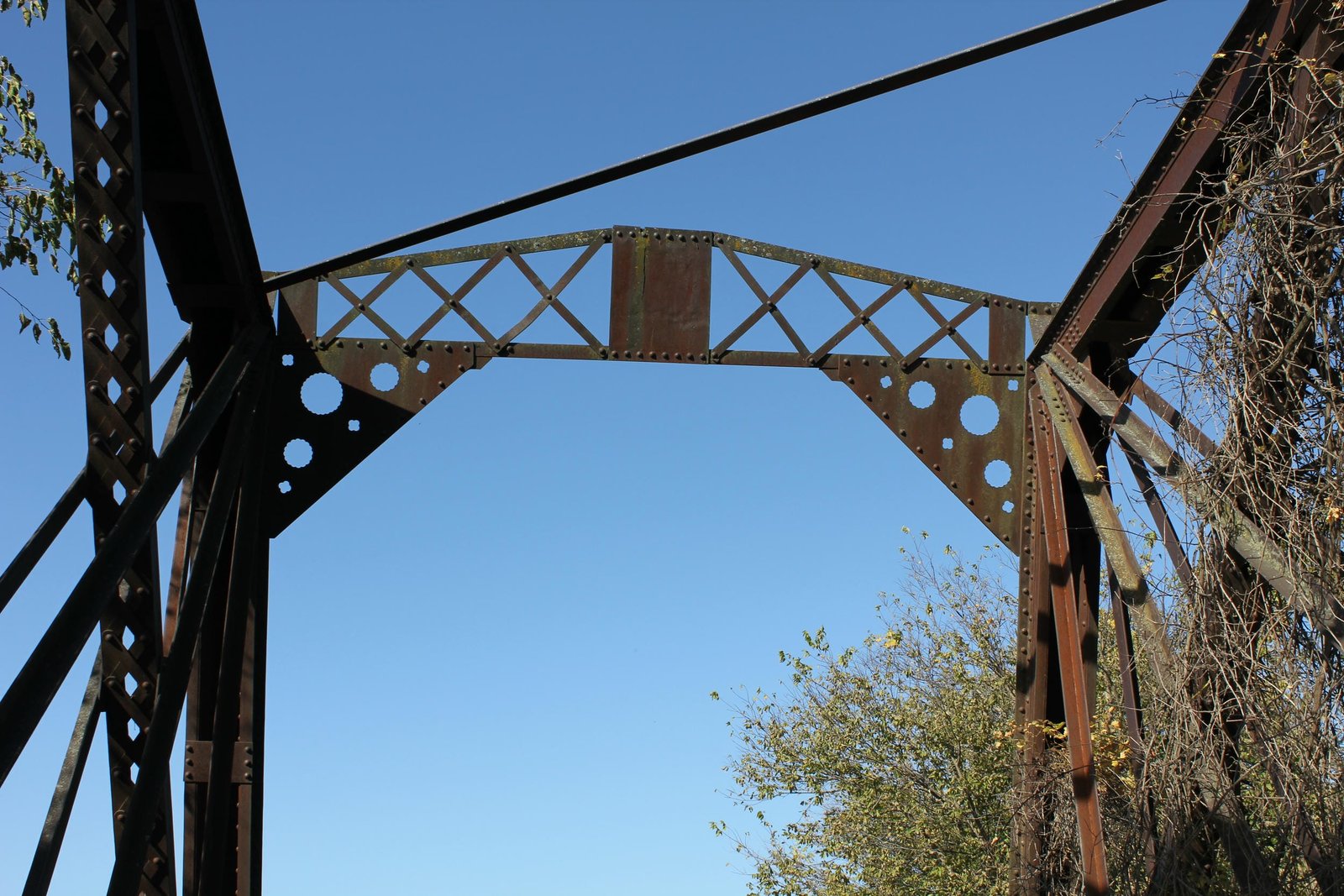
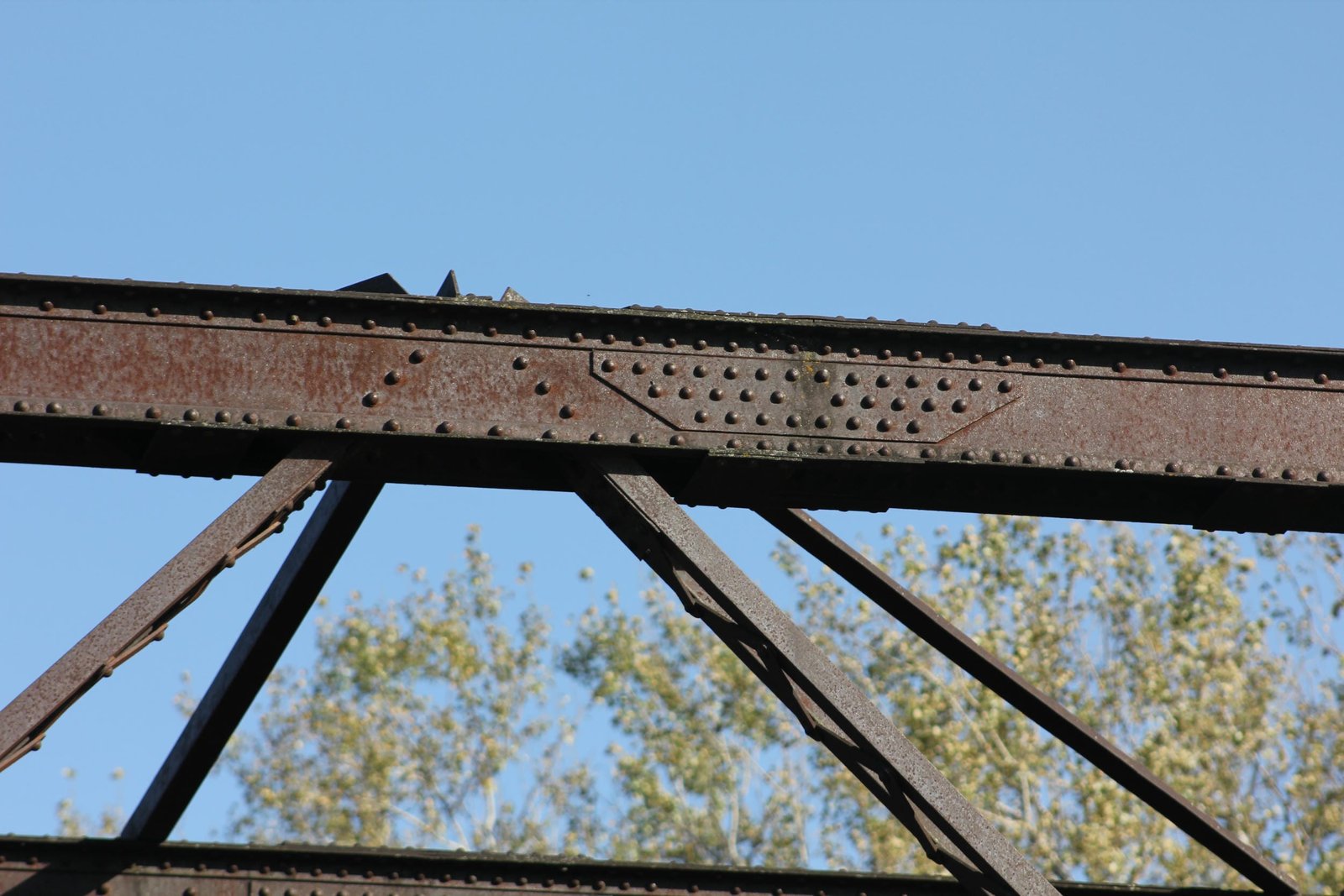
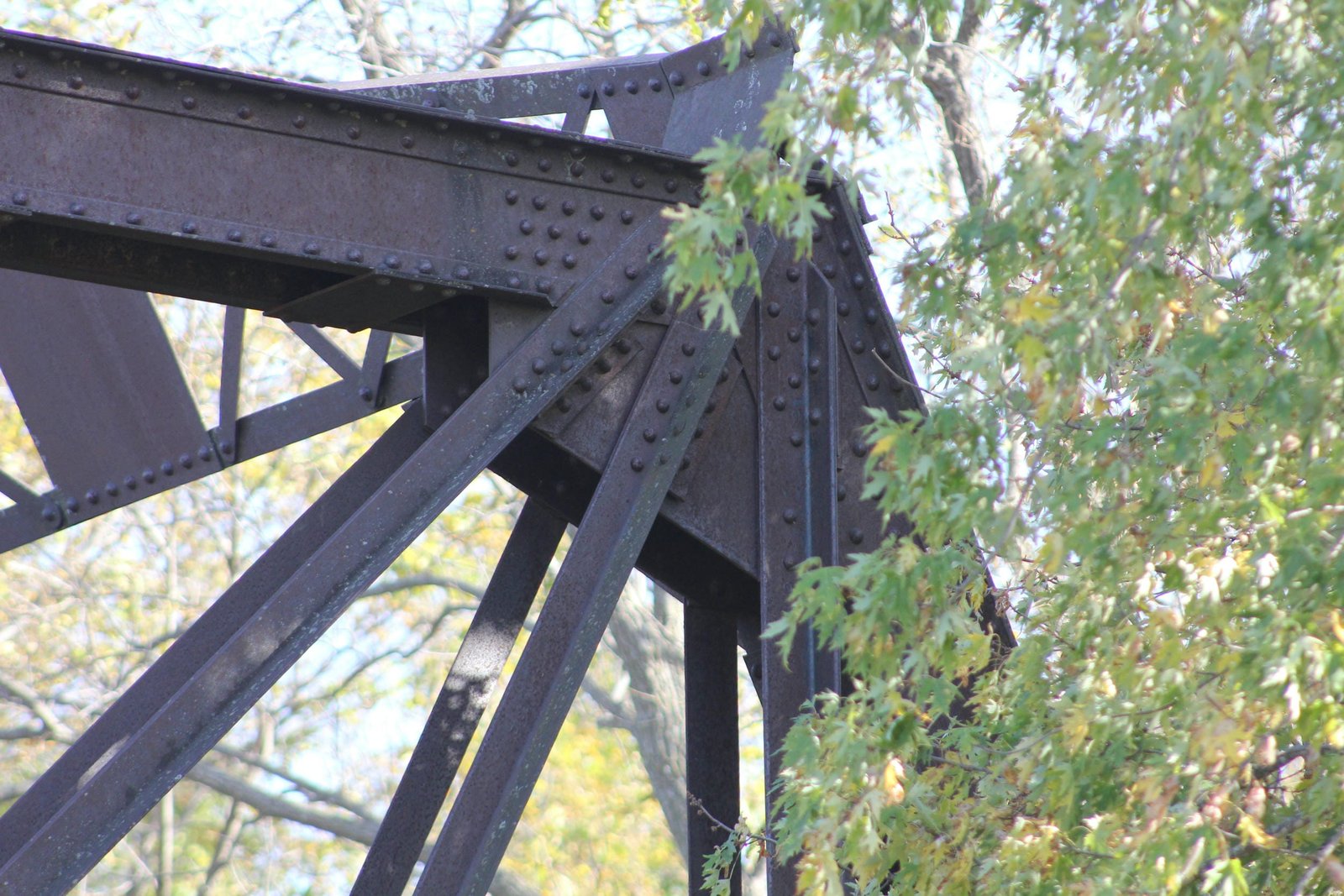
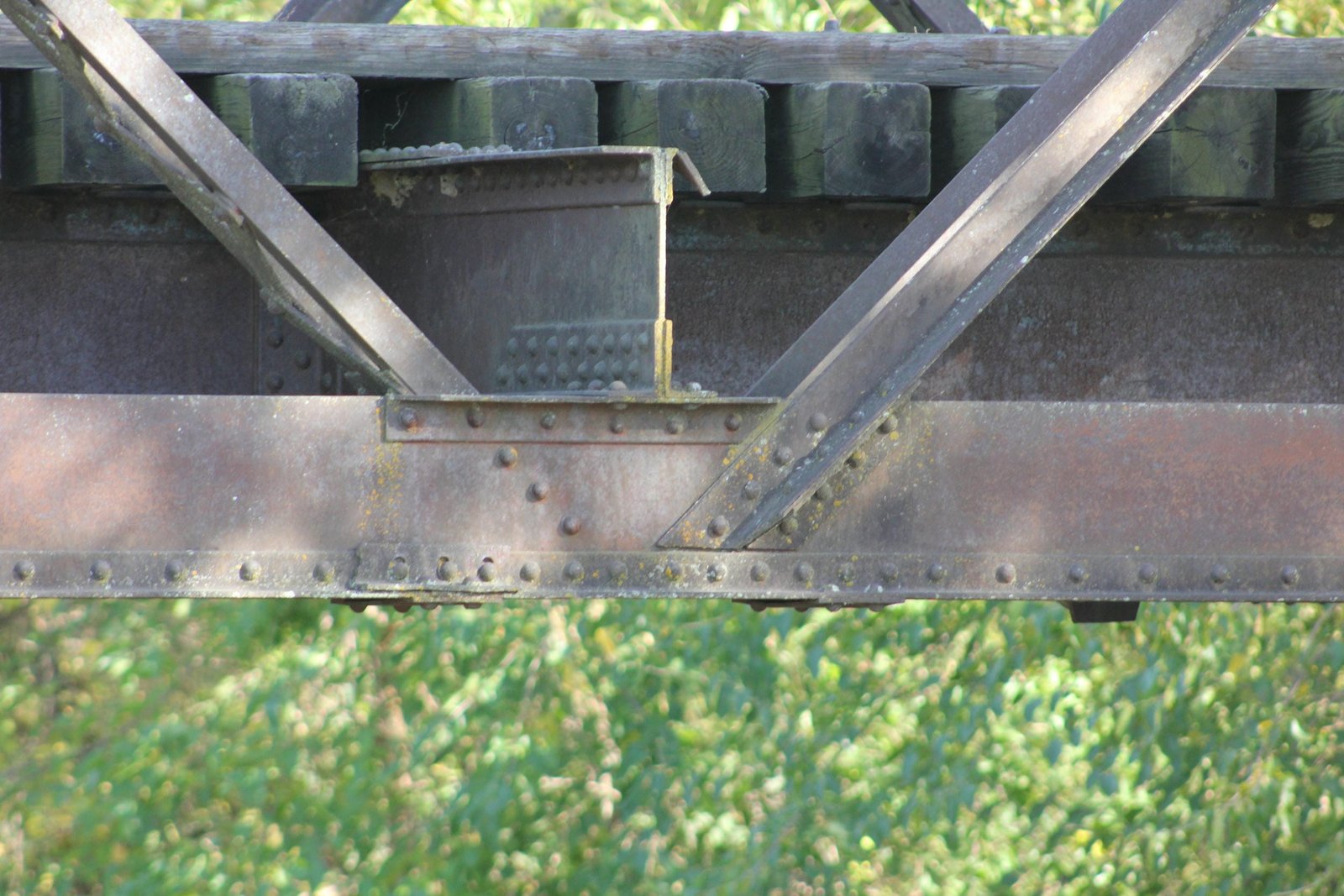
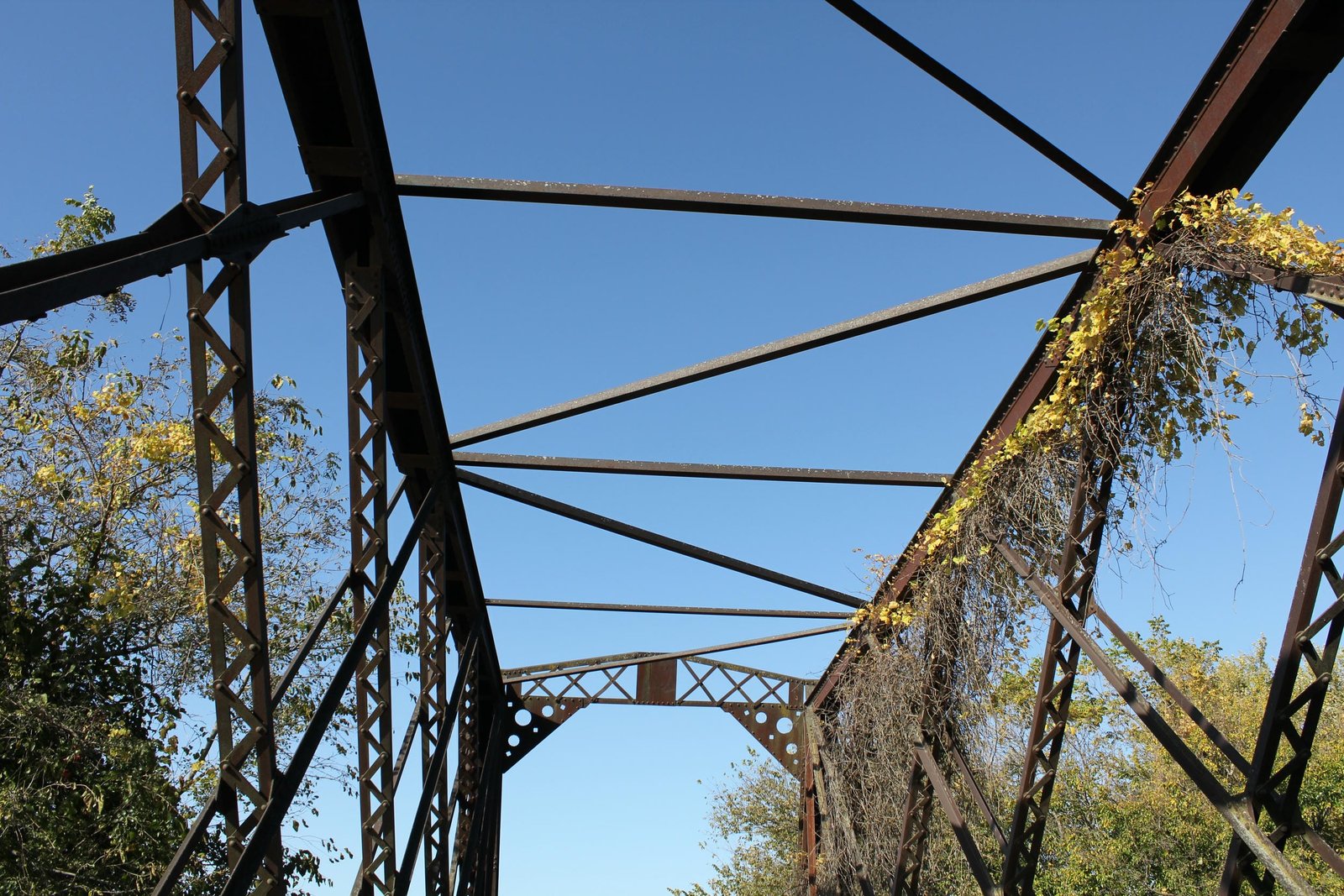
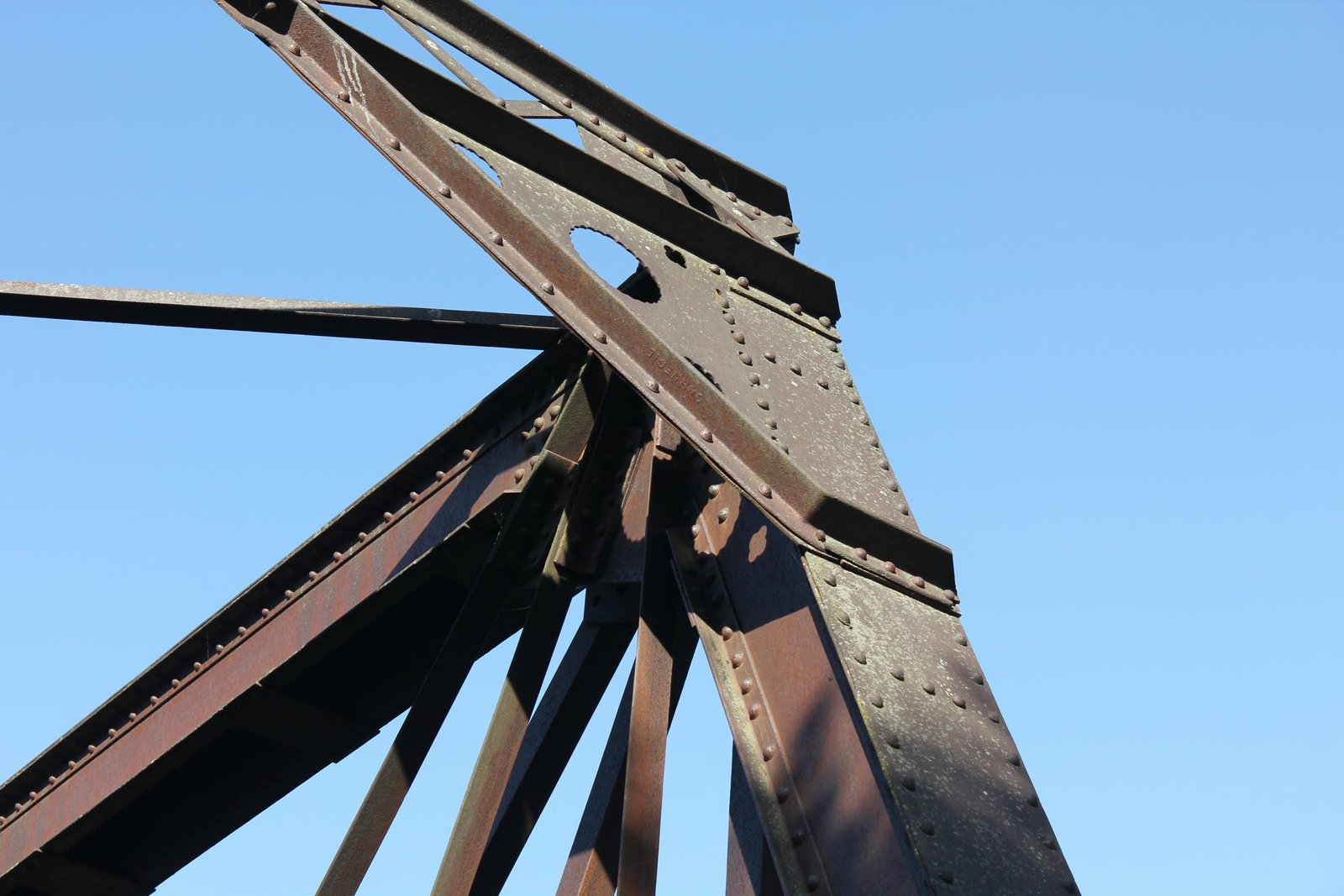
The truss span follows a standard design for mid-1880s lattice truss spans, with light members, a standard floor and a decorative portal bracing. The top chord and endposts are both constructed out of built-up beams, which use two channels connected by thin plates on the bottom and a solid plate on the top. The bottom chord is constructed using two T-shaped plates, which are connected by short plates throughout. The diagonal members consist of two different designs, with standard L-shaped bars for the tension members and built-up beams consisting of two L-shaped bars connected by V-lacing for the compression members. The floor system consists of plate girder floorbeams, which are set above the bottom chord and deck is carried by light I-beam stringers. The portal bracing uses a typical lattice pedimented design and solid triangular heel bracings with flower-shaped cutouts. Unlike later spans, the portal bracing is constructed using only plates and thin bars. Both the upper and lower lateral bracing are constructed using iron bars. The timber pile piers and approaches follow a standard design, with round piers and standard stringers.
The quadrangular lattice through truss design is relatively uncommon throughout the United States. However, a few railroads preferred the design, such as the Chicago, Rock Island & Pacific Railway (Rock Island), the Chicago & North Western Railway (C&NW) and the Chicago, St. Paul, Minneapolis & Omaha Railway (Omaha Road). The Rock Island began using the design in the early 1880s as an alternative to iron pin-connected spans. Spans constructed in the 1880s and 1890s used lightly built-up members and a decorative pedimented portal bracing. At the turn of the 20th Century, the Rock Island constructed a handful of significantly heavier trusses of this design, before switching to more traditional single intersection designs. The main detraction of the design was its statically indeterminate nature, although the design performed well in case of a derailment. Railroads often reused steel and iron spans, as it provided a cost effective way to build bridges without requiring large amounts of new material. Since the initial construction, the bridge has seen no significant alterations. After abandonment, the bridge and adjacent right-of-way was reverted to a private owner. Additional planks were added above the ties to allow for farm equipment to pass over the bridge, and the bridge now connects two farm fields. Overall, the bridge appears to be in fair condition, with minor deterioration to the truss or timber components noted. The author has ranked the bridge as being regionally significant, due to the truss design and age.
Citations
| Railroad History Citation | ICC Valuation Information, Compiled by Richard S. Steele |