


Click the photo to view the full-size version
| Name | CN Trempealeau River Bridge #9 Green Bay & Western Railroad Bridge #S-415 |
| Built By | Green Bay & Western Railroad |
| Currently Owned By | Canadian National Railway |
| Superstructure Contractor | Wisconsin Bridge & Iron Company of North Milwaukee, Wisconsin (Presumed) |
| Substructure Contractor | Unknown (Original Construction) Unknown (Additional Piers) |
| Length | 214 Feet Total, 103 Foot Spans |
| Width | 1 Track |
| Height Above Ground | 15 Feet (Estimated) |
| Superstructure Design | Parker Pony Truss |
| Substructure Design | Stone Masonry and Steel Cylinder |
| Date Built | 1898, Reinforced c. 1950 |
| Traffic Count | 0 Trains/Day (Bridge is Out of Service) |
| Current Status | Out of Service |
| Green Bay & Western Railroad Bridge Number | S-415 |
| Canadian National Railway Bridge Number | 203.7 |
| Significance | Regional Significance |
| Documentation Date | 8/12/2015 |
In 1866, a charter was granted to the Green Bay & Lake Pepin Railway (GB&LP) to construct a line between Green Bay, Wisconsin and the Mississippi River. Construction on the line began in 1869, and initially progressed slowly. In January 1872, the first 40 miles were completed between Green Bay and New London, Wisconsin. An additional 172 miles to East Winona, Wisconsin was completed by the end of 1873. The GB&LP changed its name to the Green Bay and Minnesota Railroad (GB&M) after completion of the line. Initially, the intent was to connect with the Winona & St. Peter Railroad (W&StP), which had constructed a line across southern Minnesota. After the W&StP fell under control of the Chicago & North Western Railway (C&NW), these goals were dashed. The GB&P was acquired by the Green Bay, Winona & St. Paul Railroad (GBW&StP) in 1881. In 1891, the Winona Bridge Railway constructed a new bridge across the Mississippi River at Winona, connecting with the end of the GBW&StP tracks at East Winona. The bridge company was jointly organized by the GBW&StP and the Chicago, Burlington & Quincy Railroad. In 1896, the GBW&StP was acquired by the Green Bay & Western Railway (GB&W).
The GB&W was an independent railroad, operating a connection between Lake Michigan and the Mississippi River. Car ferries were constructed to connect to the Ann Arbor Railroad (AA) at Frankfort, Michigan and to the Pere Marquette Railway (PM) at Ludington, Michigan. The railroad mainly served local traffic through the early 20th Century, and connected with most major railroads operating in Wisconsin. By the mid-20th Century, the railroad was in decline, and new management took it over and revitalized the railroad into a "bridge line". As part of the revitalization, the car ferries gained importance, as it provided the eastern railroads with a suitable bypass of the congested railroad network in Chicago. As traffic declined in the late 20th Century, the railroad began to fall into disrepair. The bridge across the Mississippi River was abandoned in 1984, and was burned and removed in 1989. The GB&W was purchased by Wisconsin Central, Ltd. (WC) in 1993.
A segment between Scandinavia, Wisconsin and Plover, Wisconsin was abandoned in 1994. An additional segmenent between Manawa, Wisconsin and Scandinavia was abandoned in 2000, and a segment between Green Bay and New London was abandoned in 2001. These segments were sold to the Wisconsin Department of Natural Resources for trail use. WC was purchased by the Canadian National Railway (CN) in 2001, and became the American subsidiary of CN. In 2021, CN sold the remaining segments in Green Bay and from New London to Manawa to the Fox Valley & Lake Superior Rail System (FOXY). Today, FOXY continues to operate those two segments. CN continues to operate the Plover to East Winona segment, although the line between Arcadia, Wisconsin and East Winona is out of service. The segment between Green Bay and New London is currently part of the Newton Blackmour State Trail, while the segment between Anawa and Plover is part of the Tomorrow River State Trail.
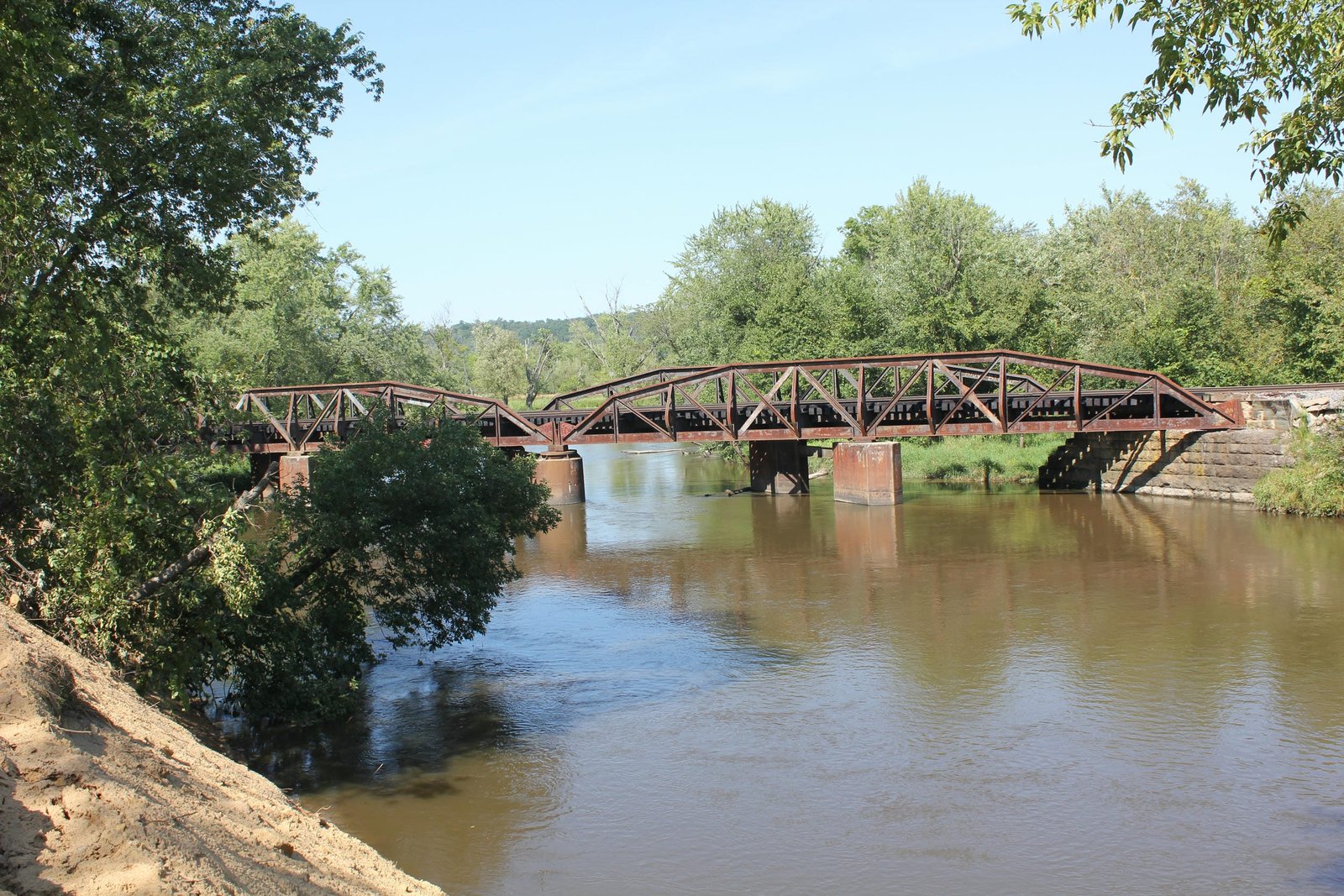
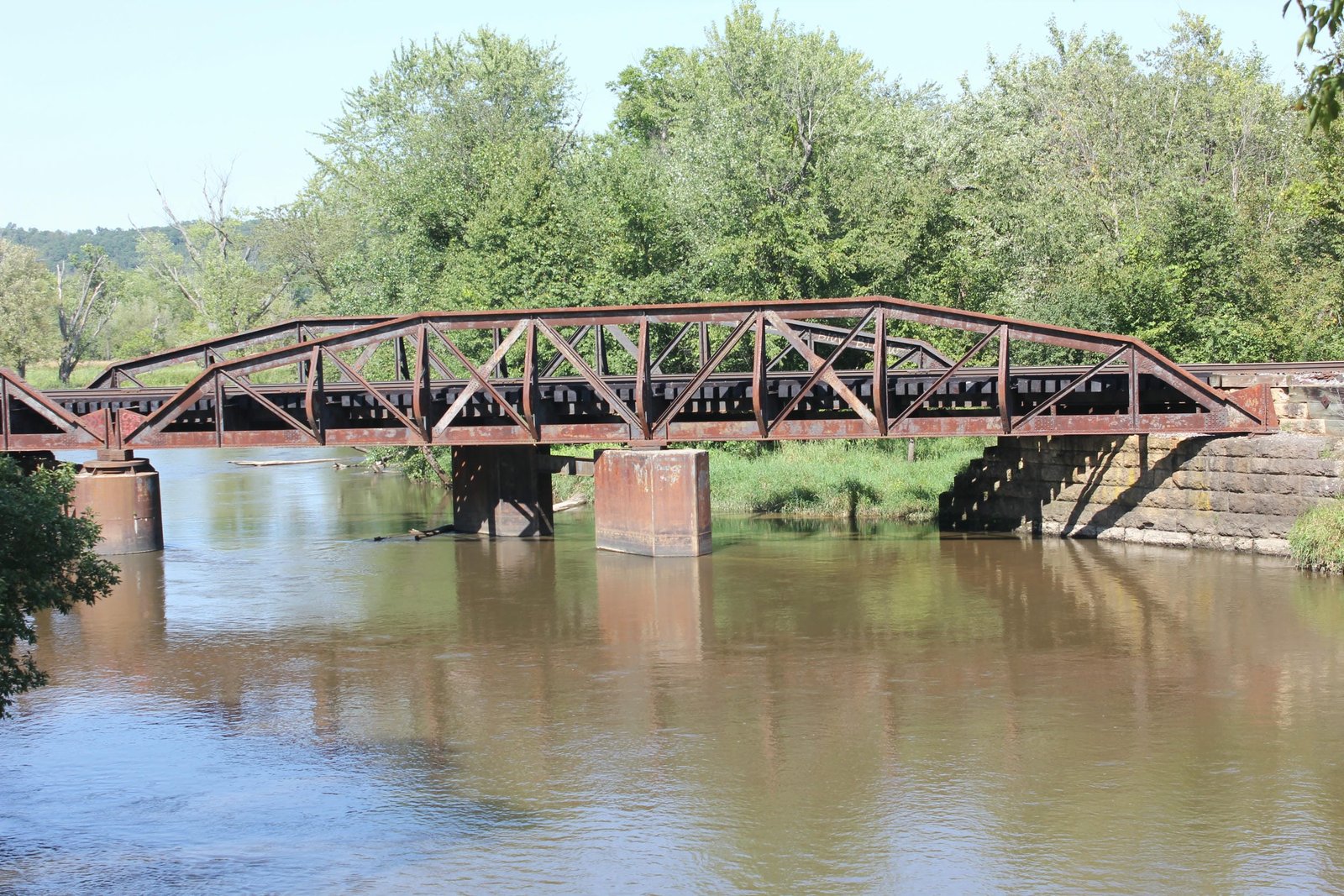
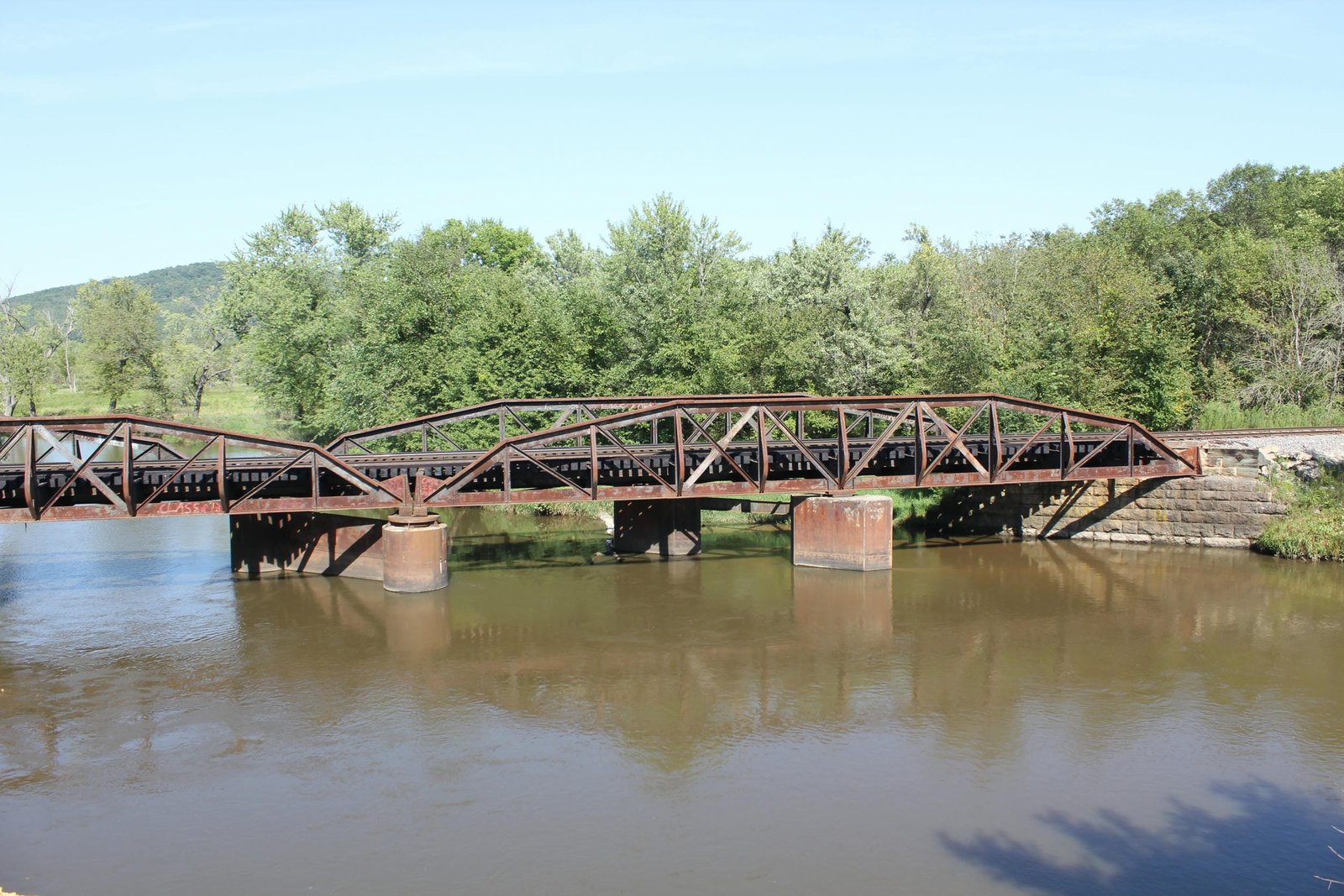
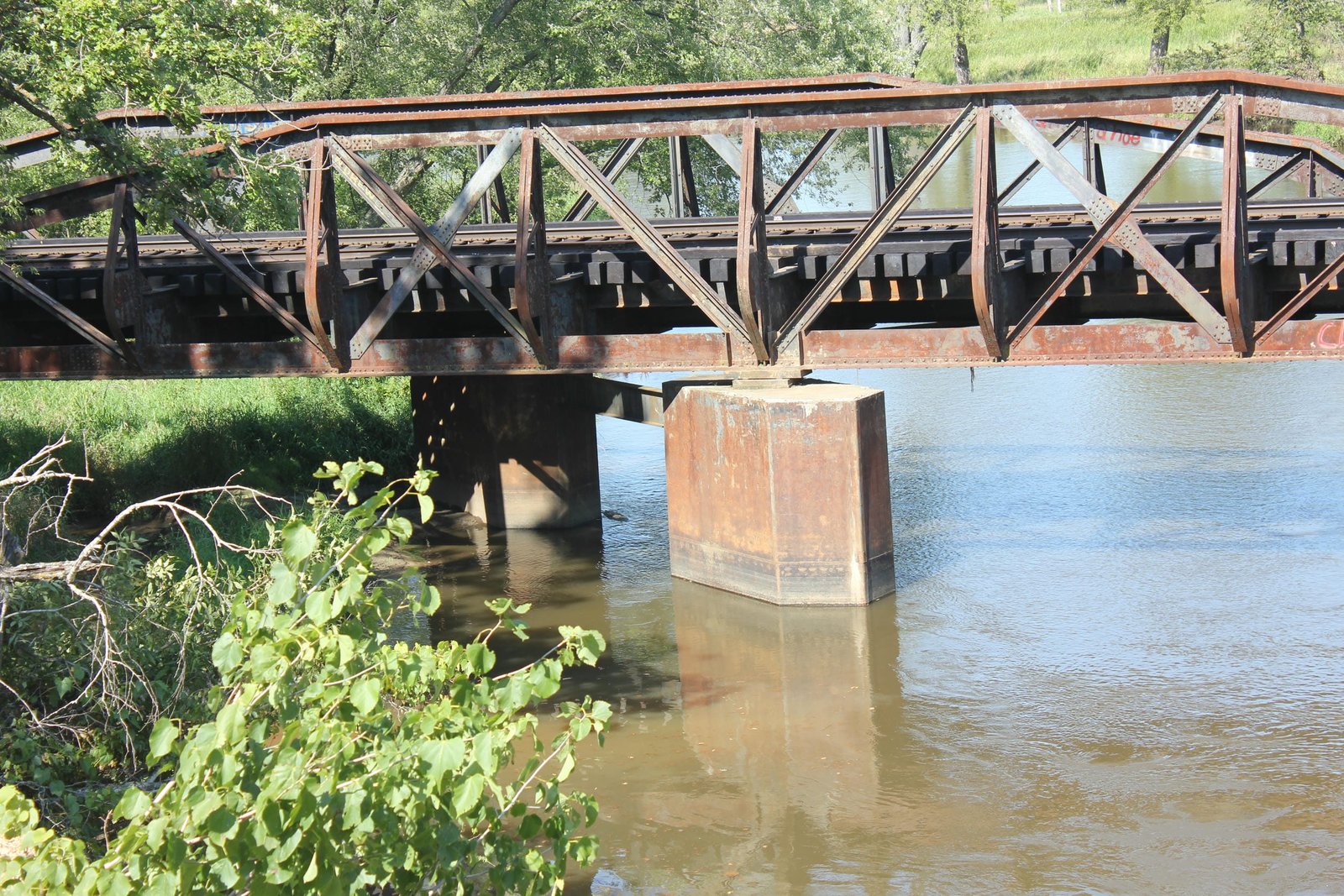
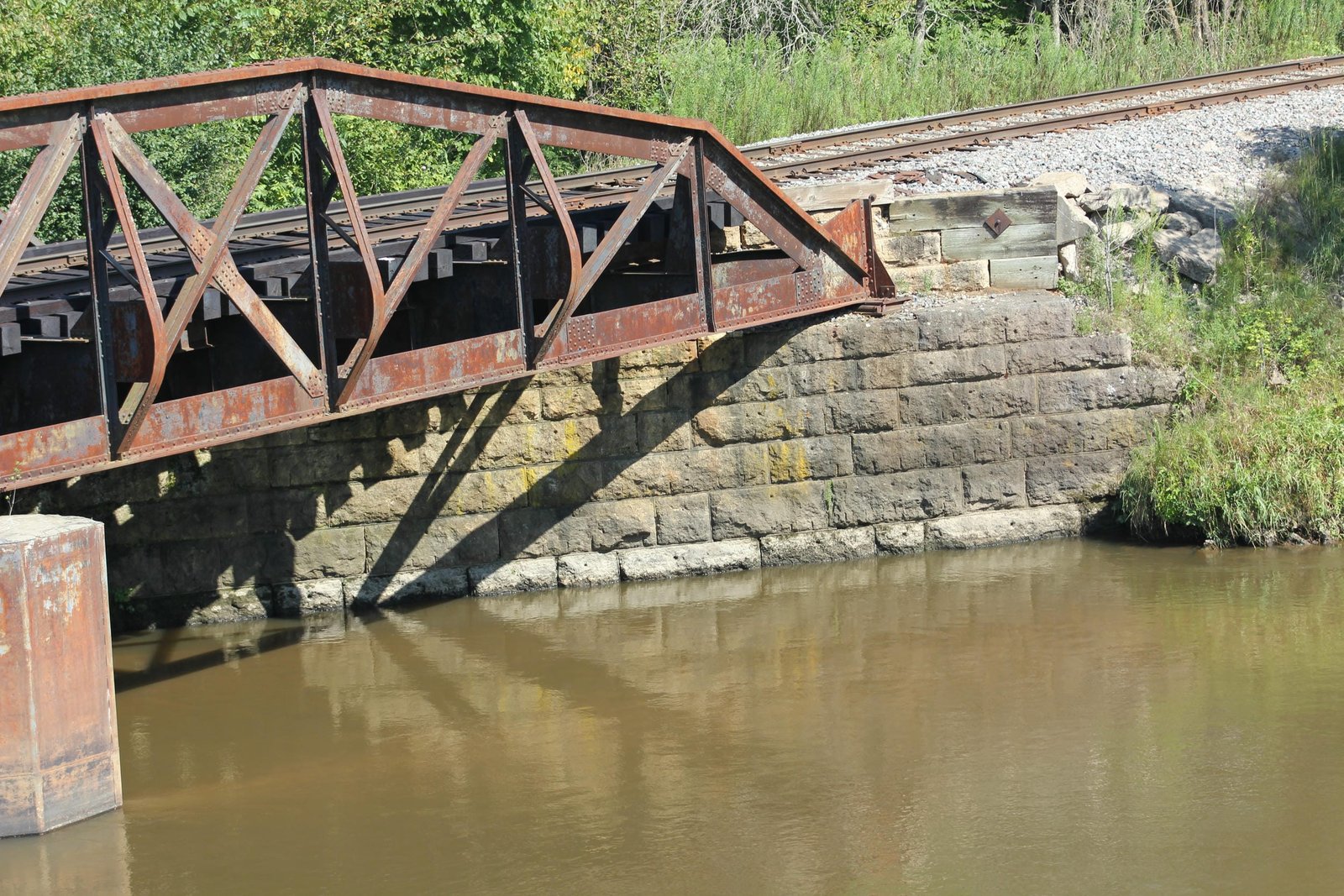
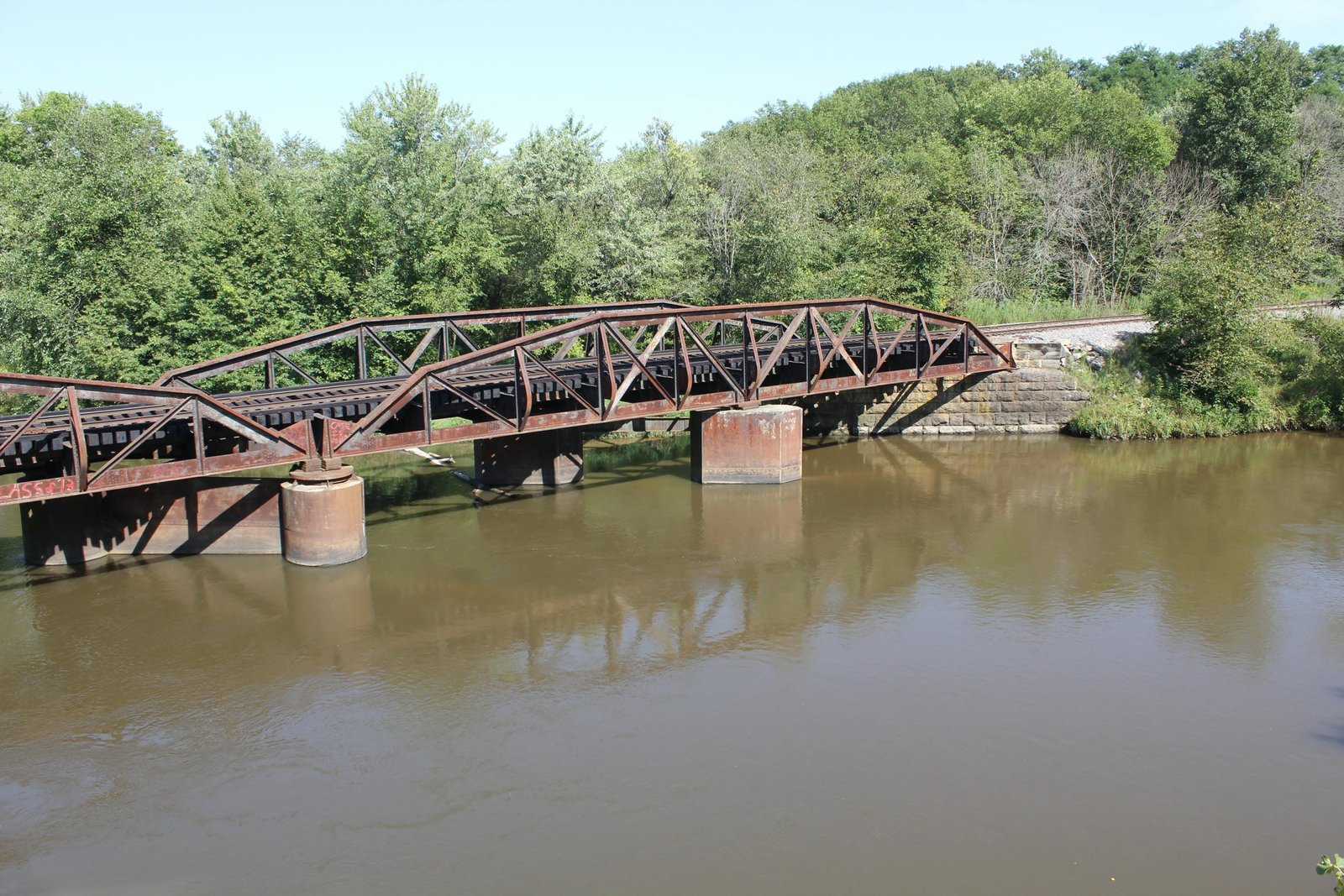
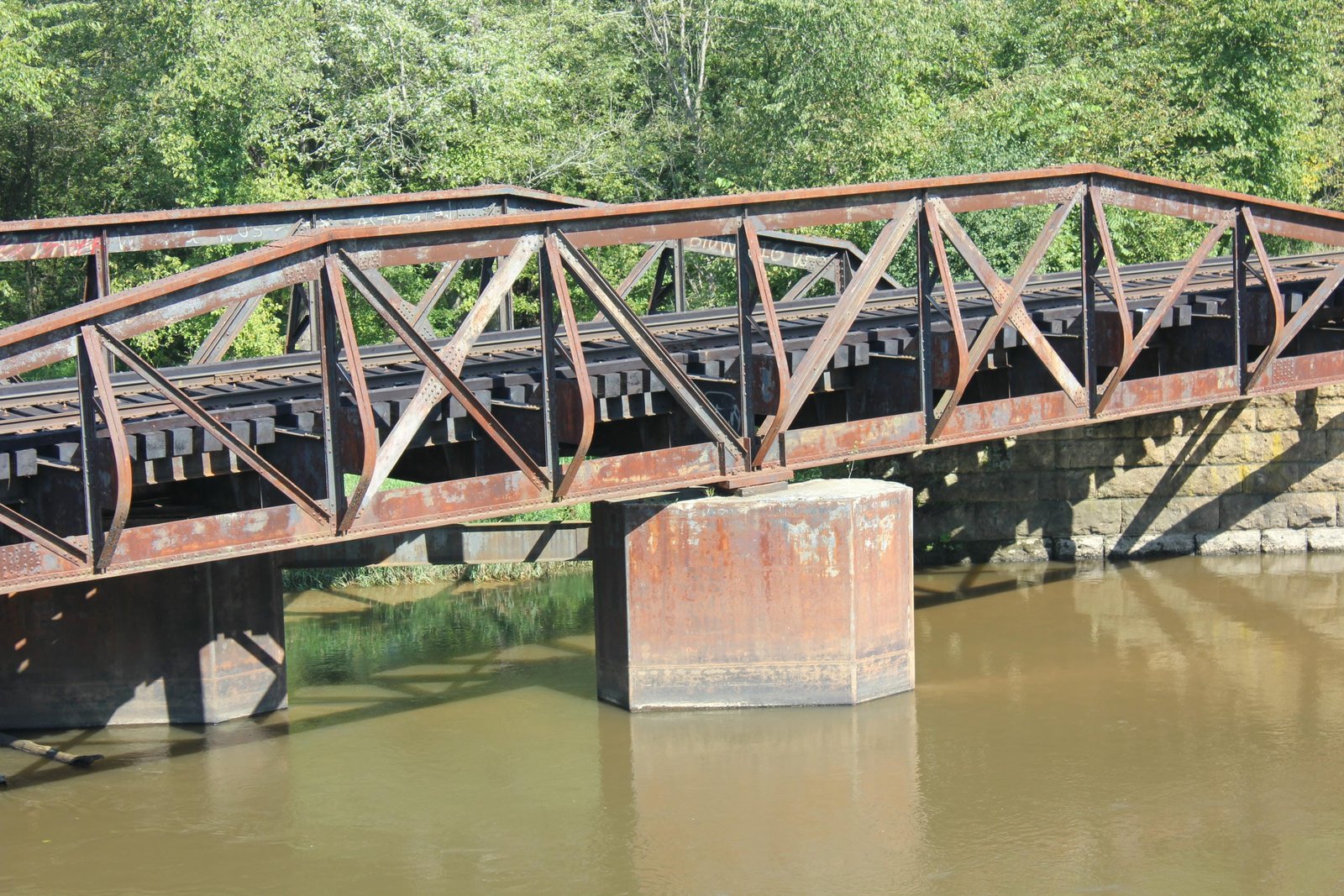
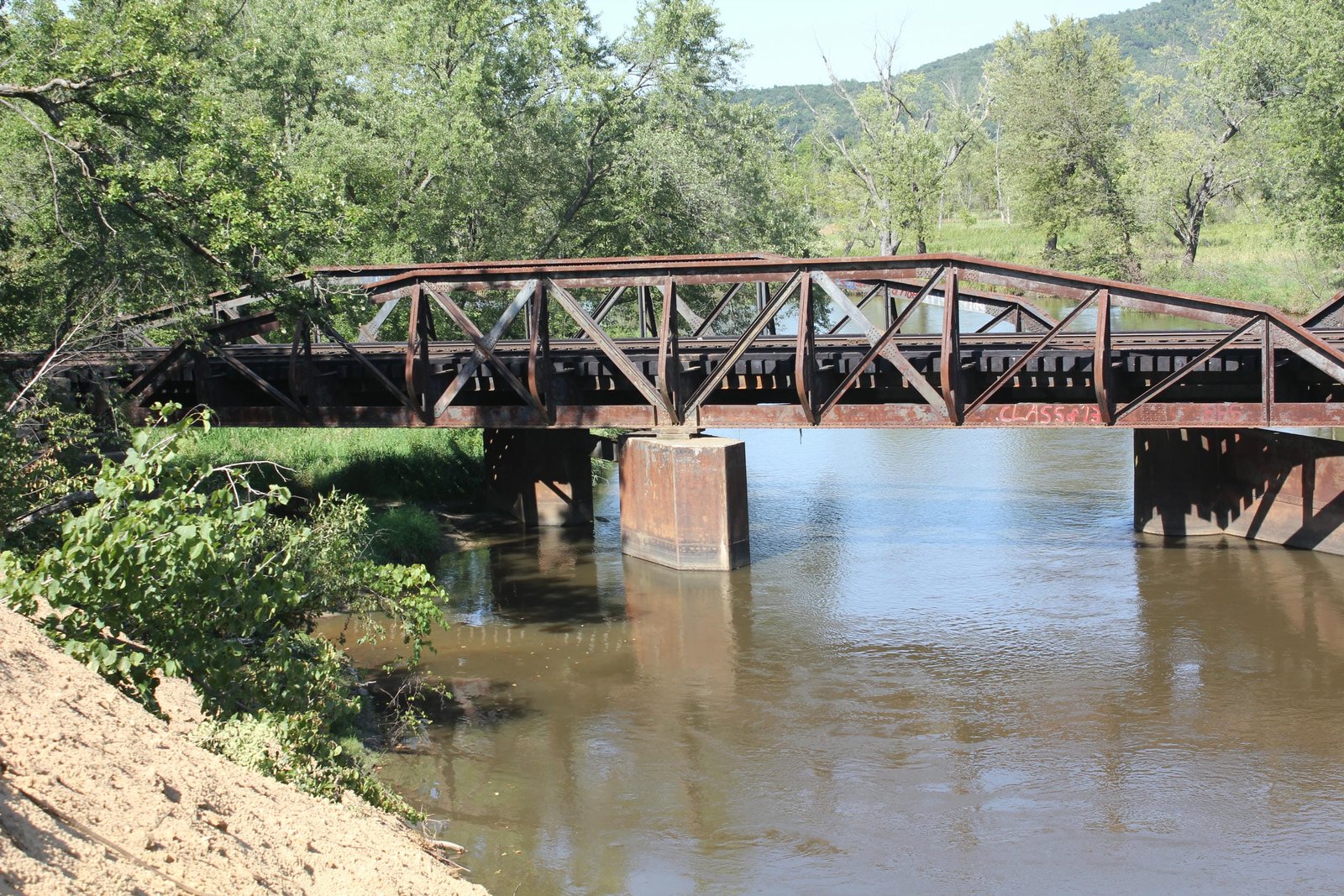
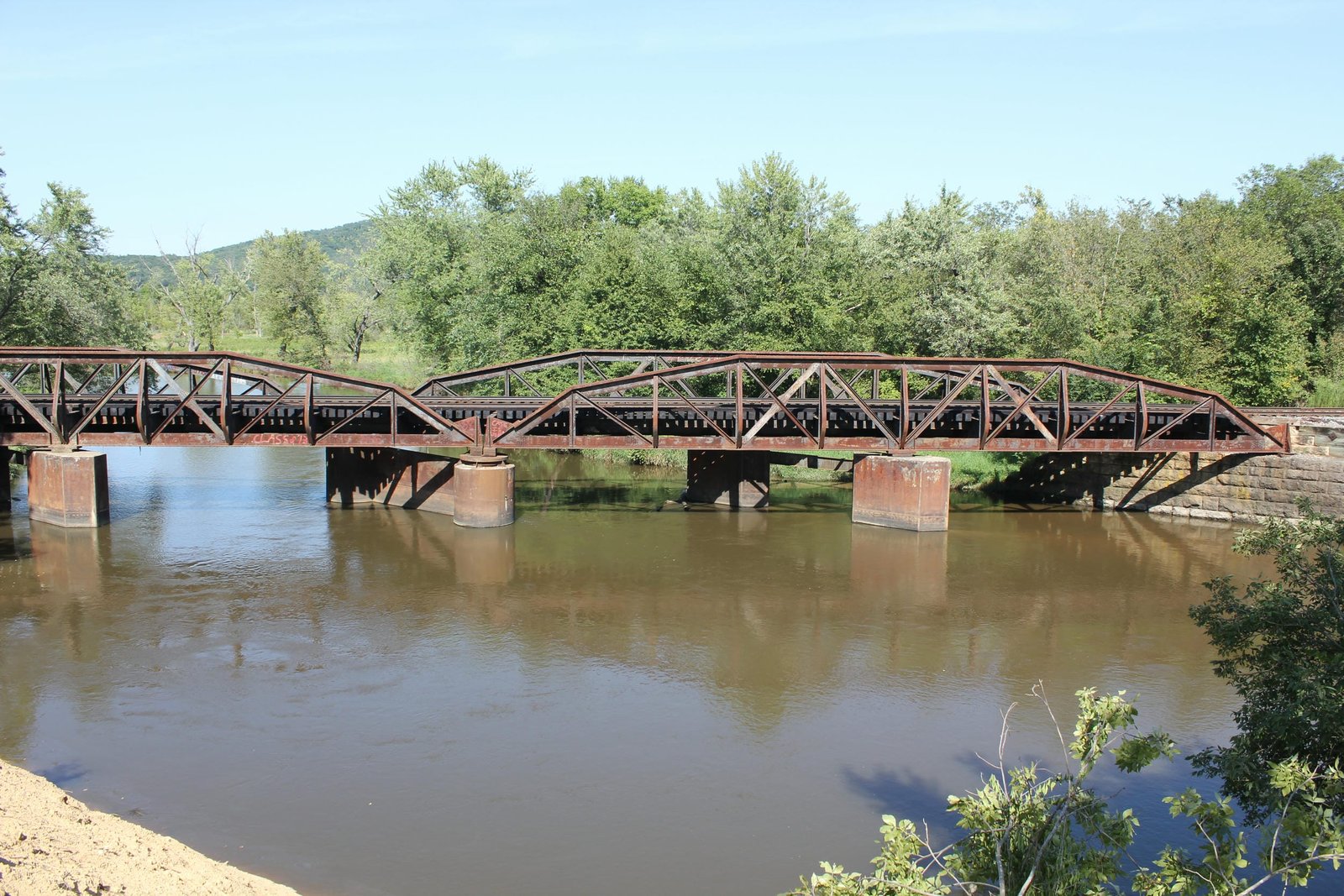
Located north of Dodge, this unique pony truss bridge is the ninth crossing of the former Green Bay & Western Railroad across the Trempealeau River. The previous bridge at this location was likely a wooden truss or timber pile trestle. During the late 1890s, the GB&W invested significant capital into this line, replacing timber bridges with new steel, stone and concrete structures. The present bridge at this location was constructed in 1898, and was reinforced with additional piers in approximately 1950. The bridge consists of two skewed 103-foot, 10-panel, riveted Parker pony truss spans, set onto stone abutments and steel cylinder piers. The superstructure is believed to have been fabricated by the Wisconsin Bridge & Iron Works, while an unknown contractor constructed the initial substructures. It is believed that an additional contractor constructed the additional sets of piers. A similar truss bridge was constructed over the Yellow River near Dexterville the same year.
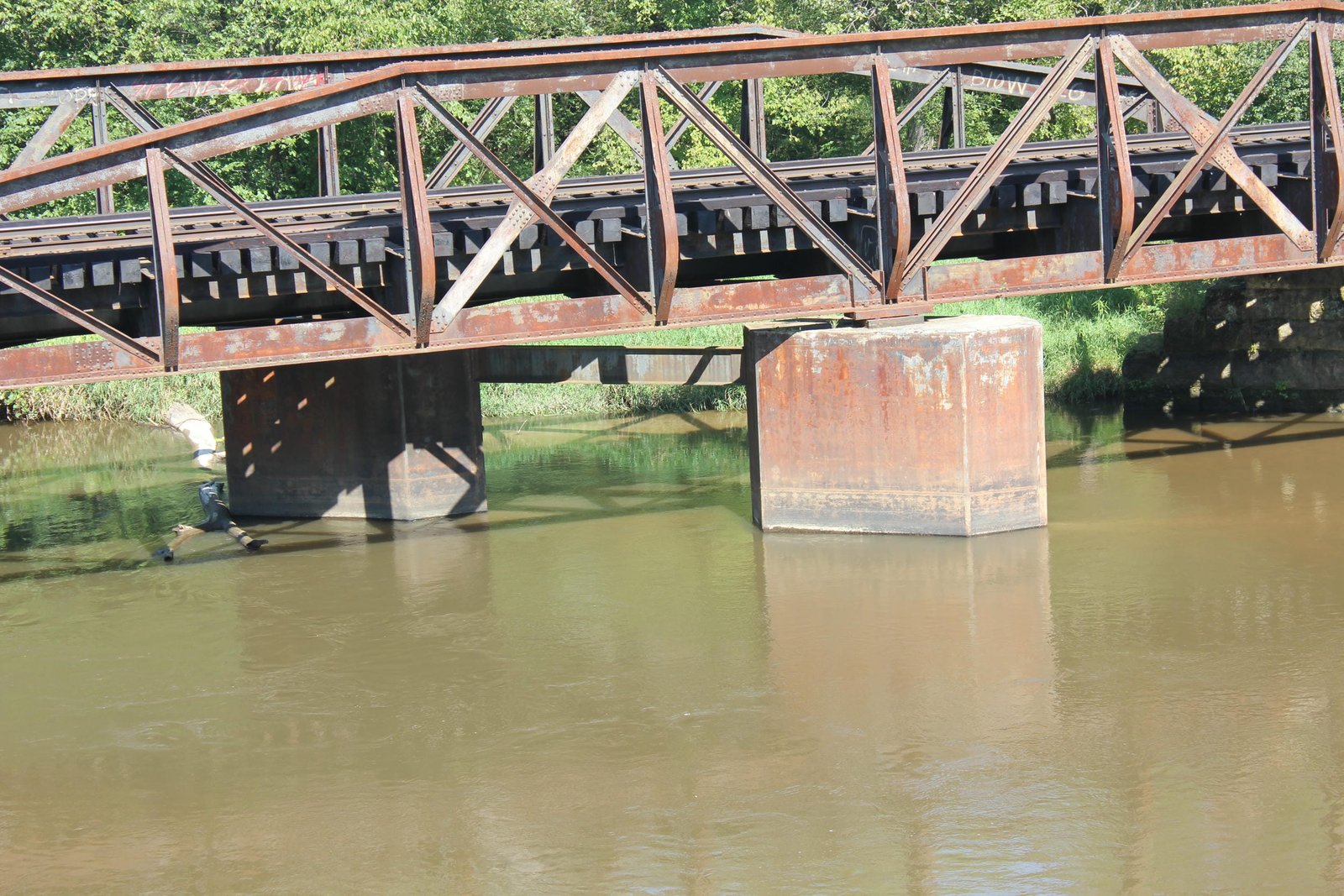
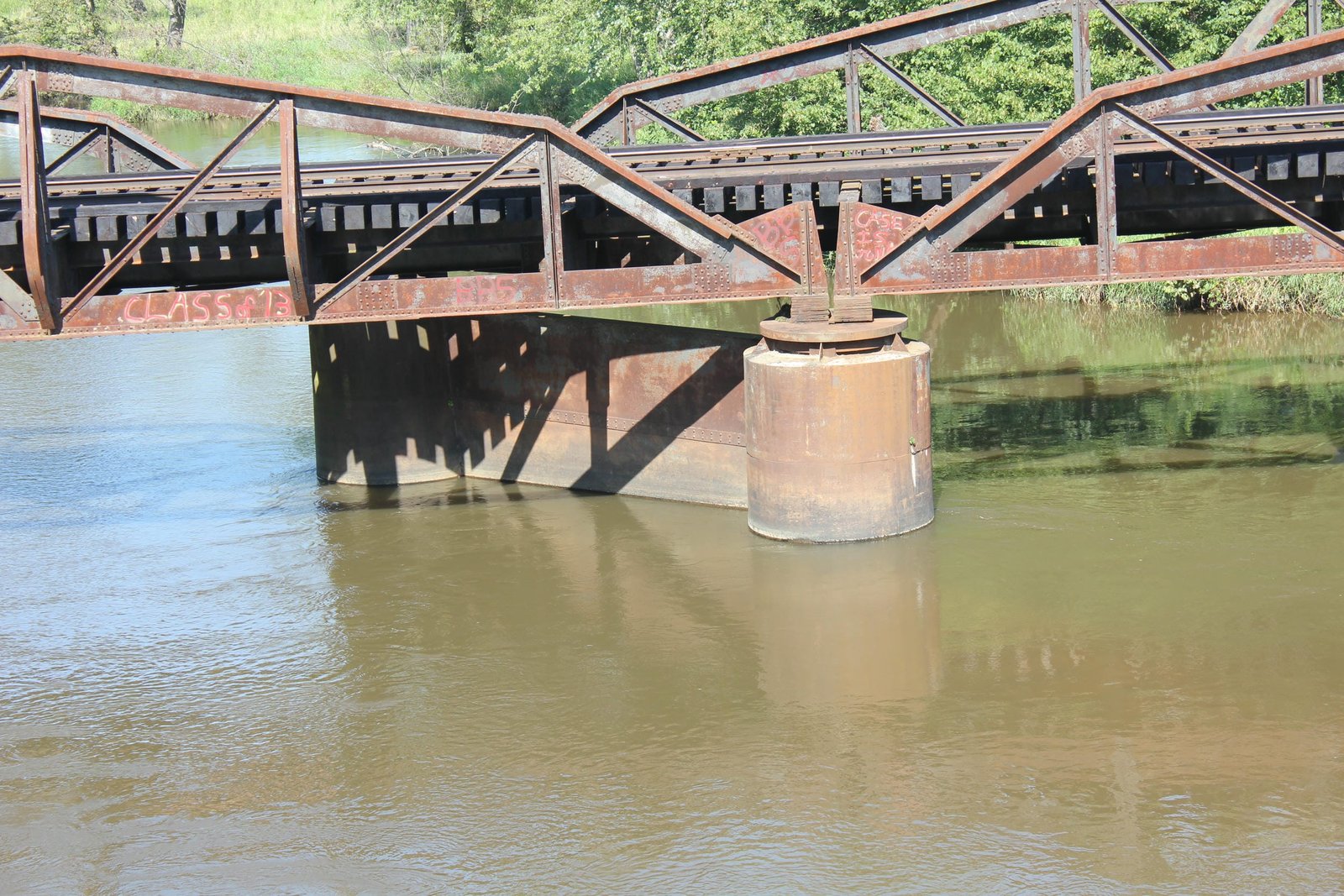
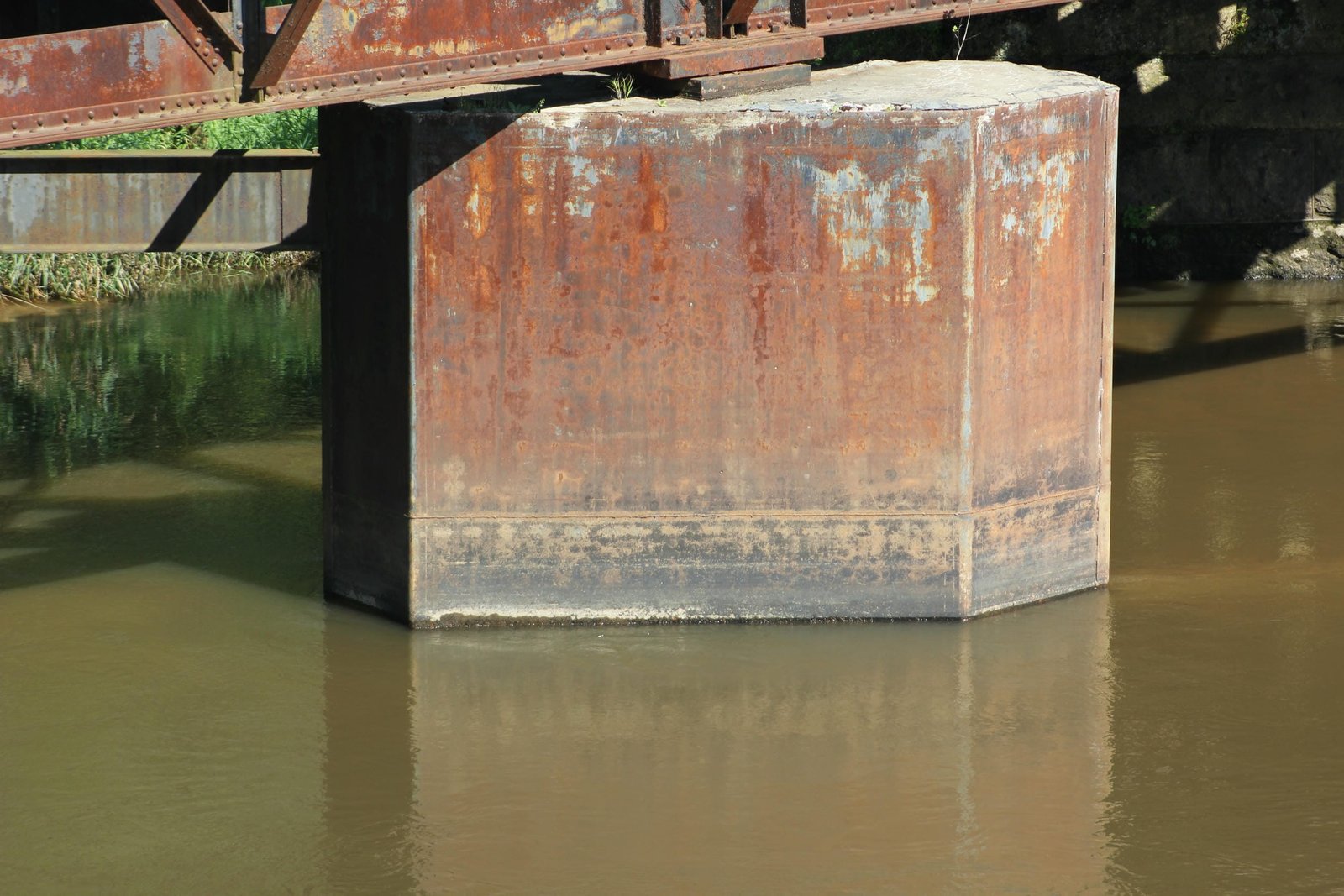
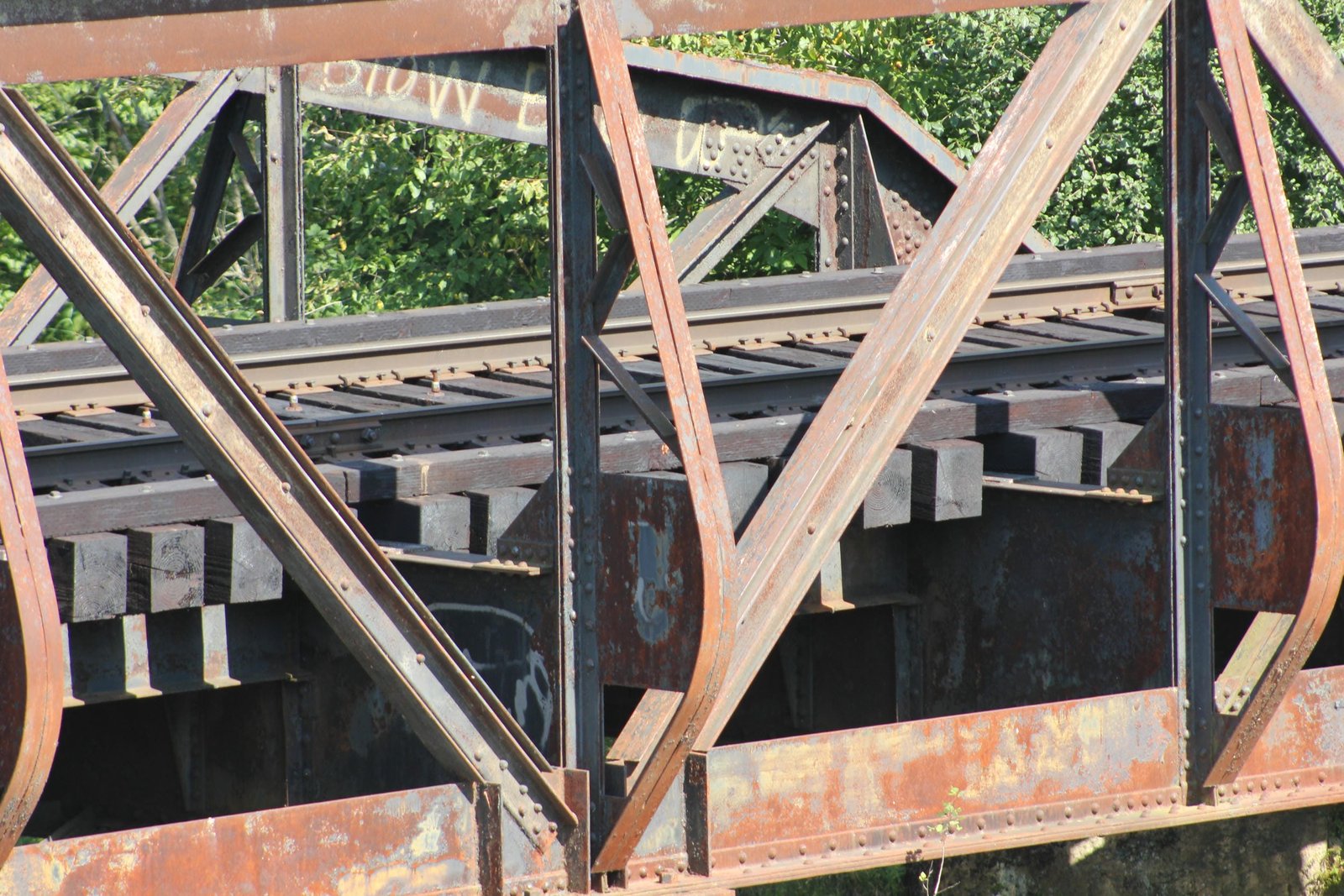
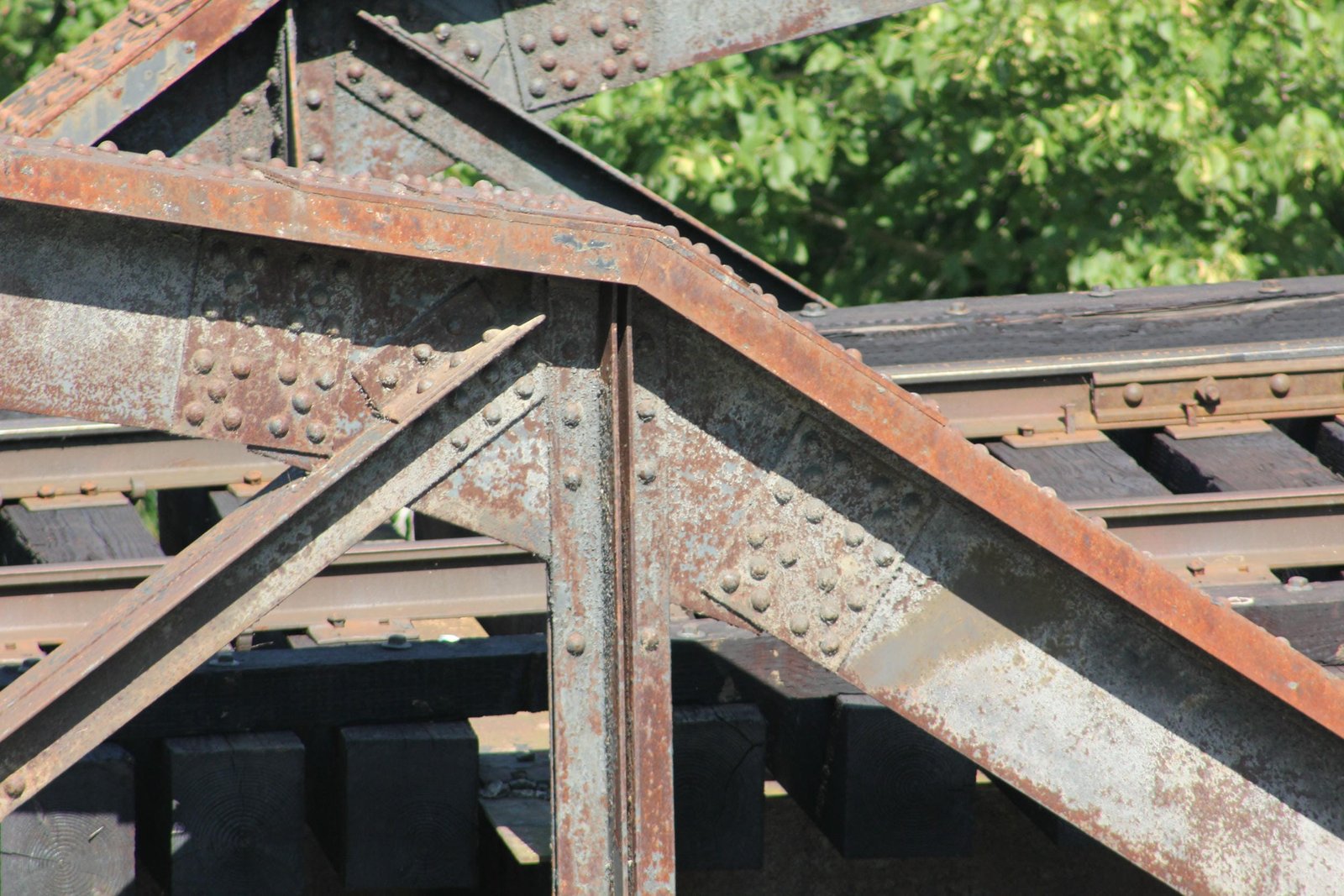
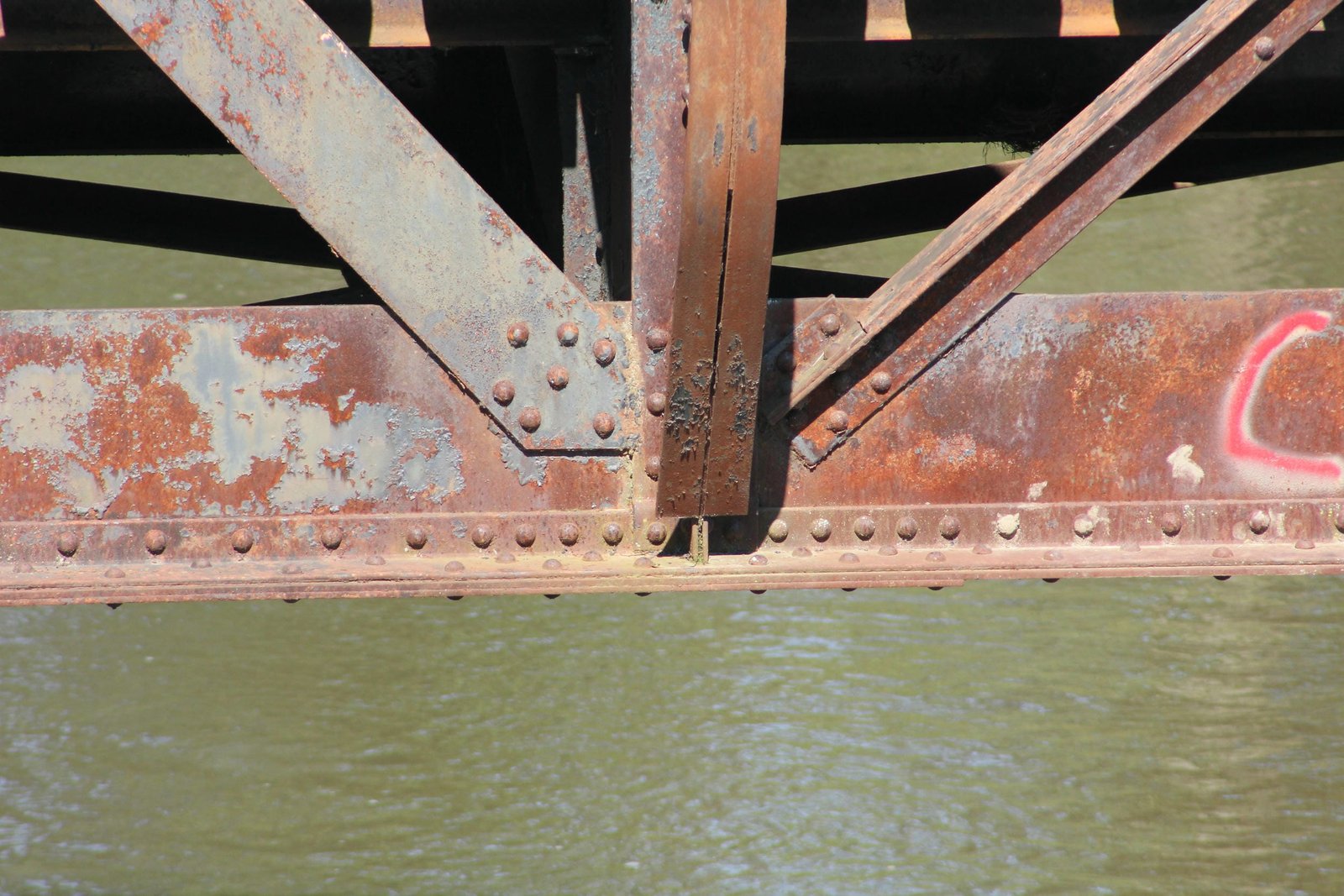
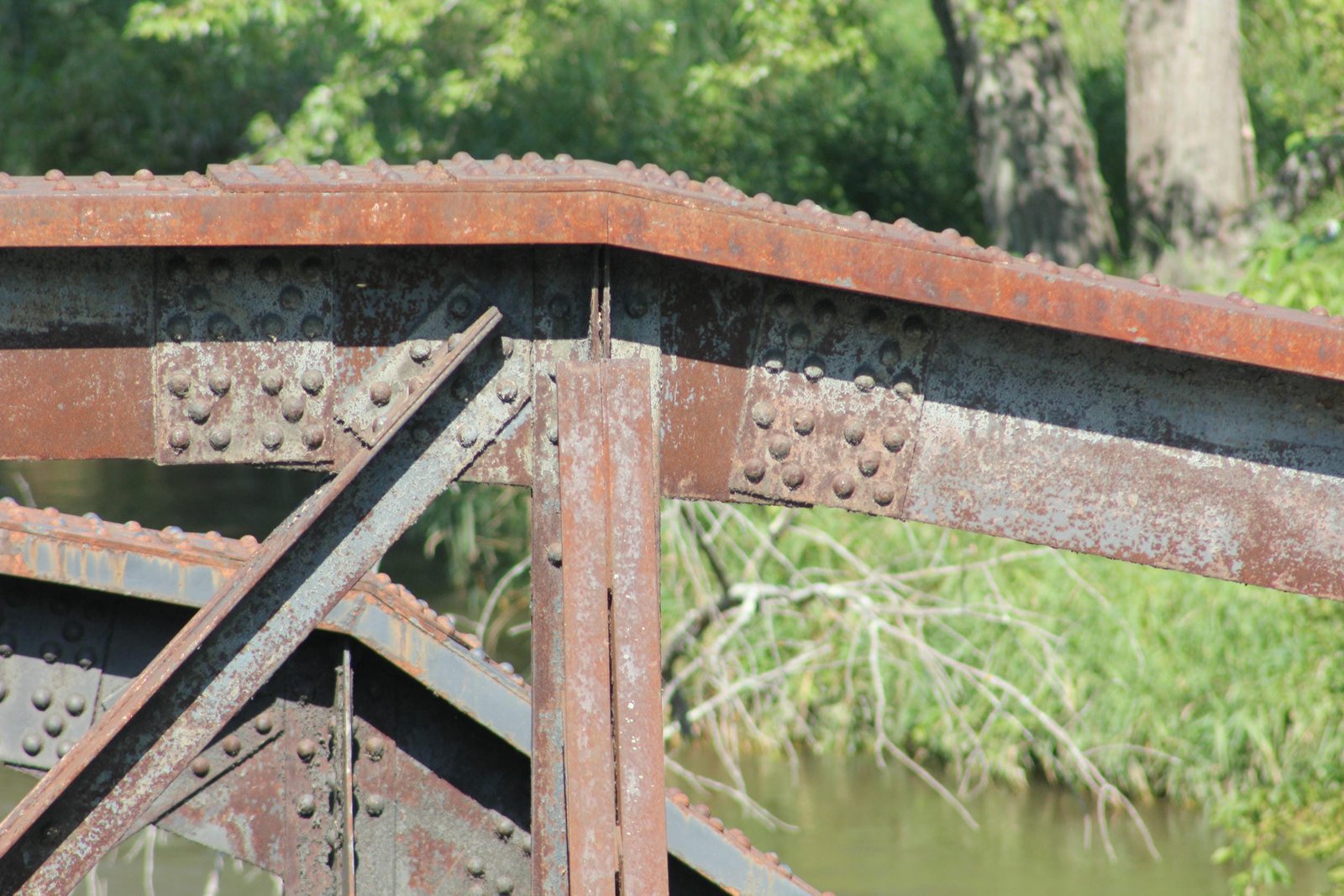
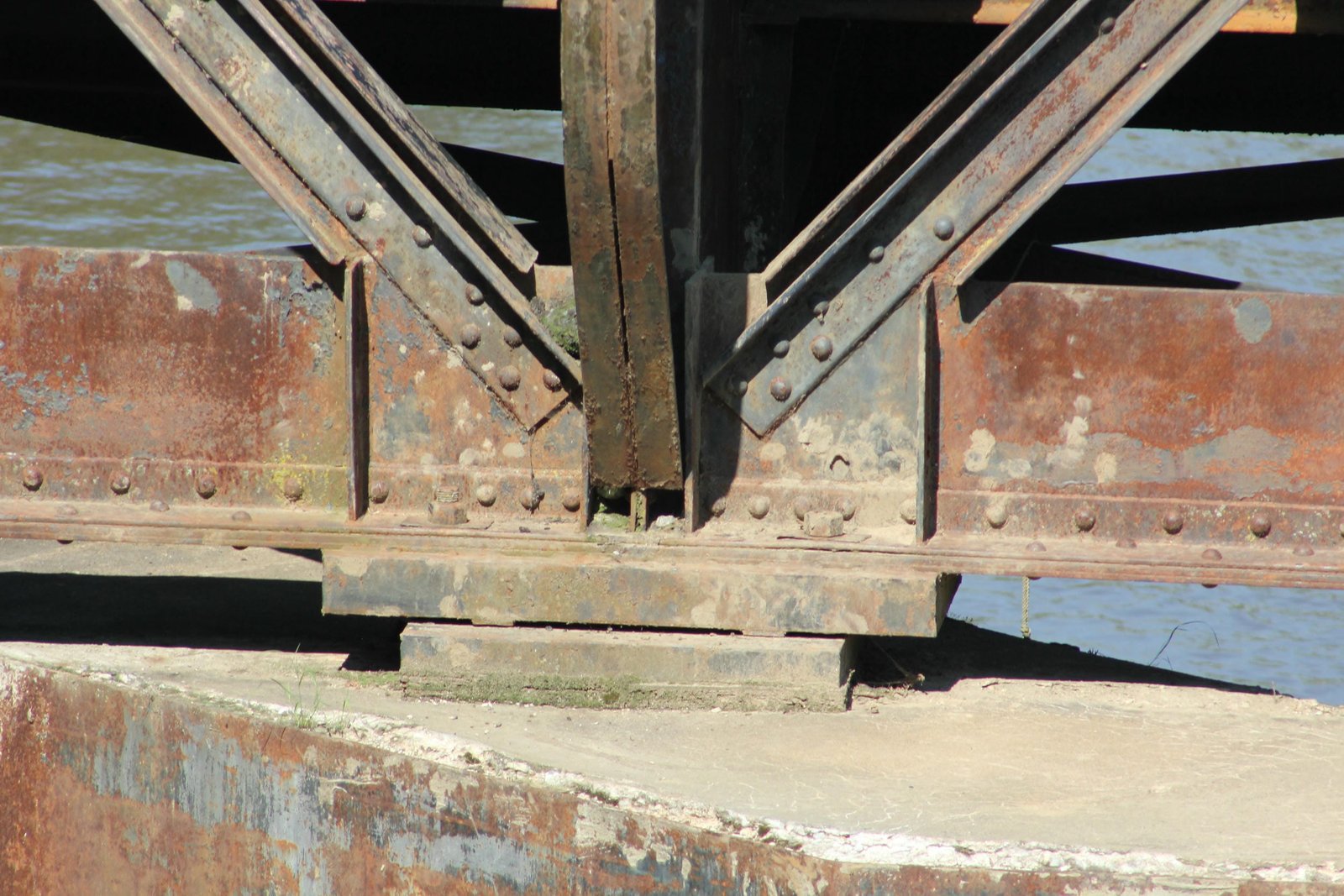
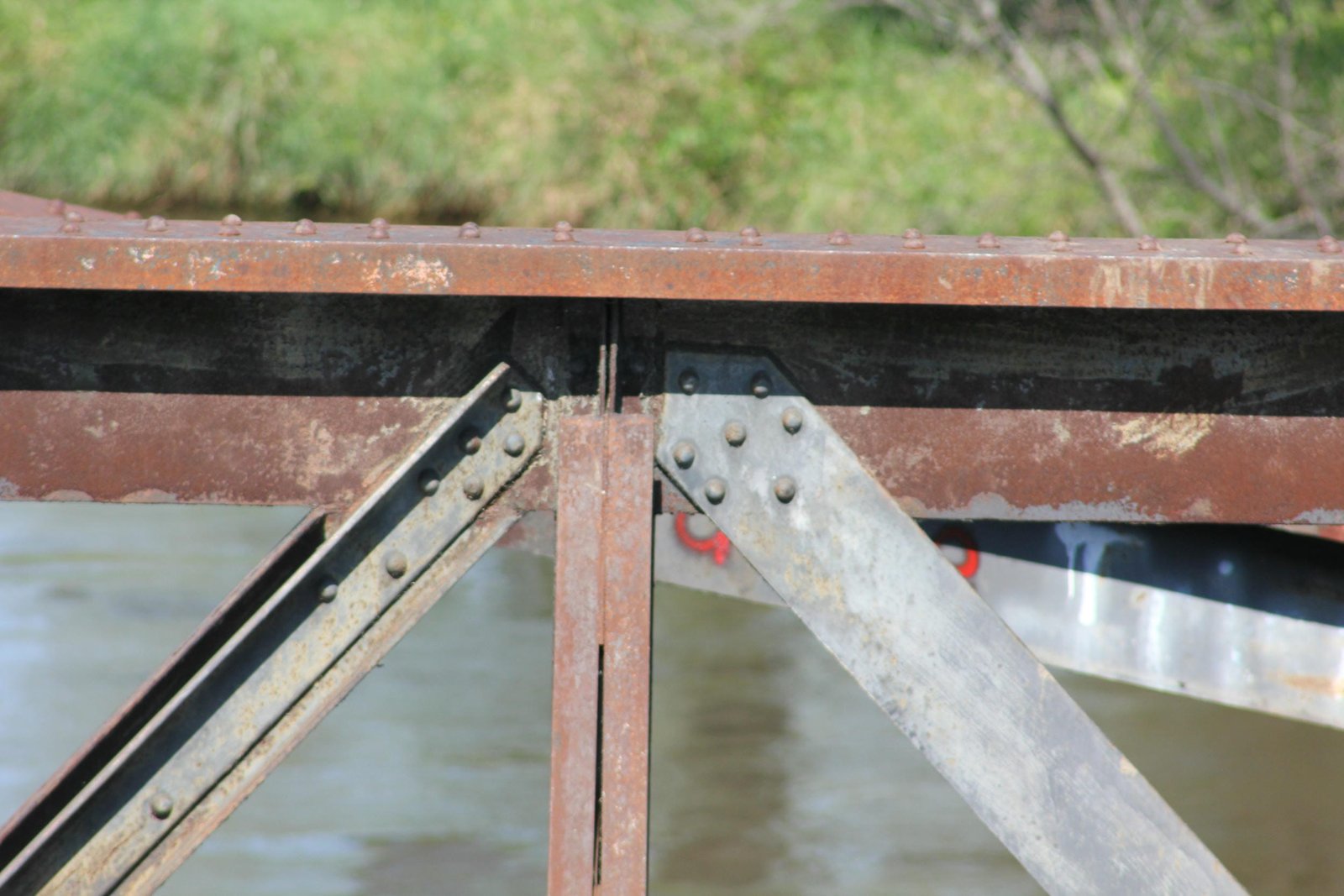
The truss spans are heavily skewed, and set onto a curve. The endpost and top and bottom chords of the truss consist of a "T" shaped steel channel, which is riveted together. The diagonal members consist of steel bars, and the vertical members consist of a curved built-up beam. Unique to this bridge, the vertical member is connected to the top of the floorbeams, and also wraps around the front of the floorbeam. This style of bridge uses a polygonal top chord, with the outer panels sloped steeper than the next two panels inside, and the center four panels are horizontal. The floor is traditionally composed, with floorbeams at the panel points and two stringers per span. Some minor repairs have been made to the steel. The abutments use a typical stone design, while the center pier uses two steel cylinders, filled with concrete and connected by a plate. Stone for the abutments was quarried at an unknown location. The additional piers consist of hexagonal concrete filled steel caissons, connected by steel beams.
Parker pony truss spans were developed for railroad use in the 1890s, and were occasionally used by a number of railroad companies. While most truss spans of this design were heavily constructed, the spans on this bridge are relatively lightly constructed. The GB&W considered this type of span a "lattice girder", a design which most railroads considered to be lighter than typical trusses. It is believed that the spans were fabricated by the Wisconsin Bridge & Iron Works, which had contracts for constructing most GB&W bridges between the late 1890s and the late 1920s. It is believed that this company developed the design for the truss spans, which appear to be extremely unique. Overall, the bridge appears to be in fair to good condition, with no significant deterioration noted. Currently, the bridge is out of service and its future is uncertain. The author has ranked this bridge as being regionally significant, due to the unique design and age.
Citations
| Build date | Green Bay & Western Railroad Valuation Engineering Field Notes at the National Archives |
| Builder | Presumed based on builders of other Green Bay & Western Railroad bridges |
| Railroad History Citation | ICC Valuation Information, Compiled by Richard S. Steele |