
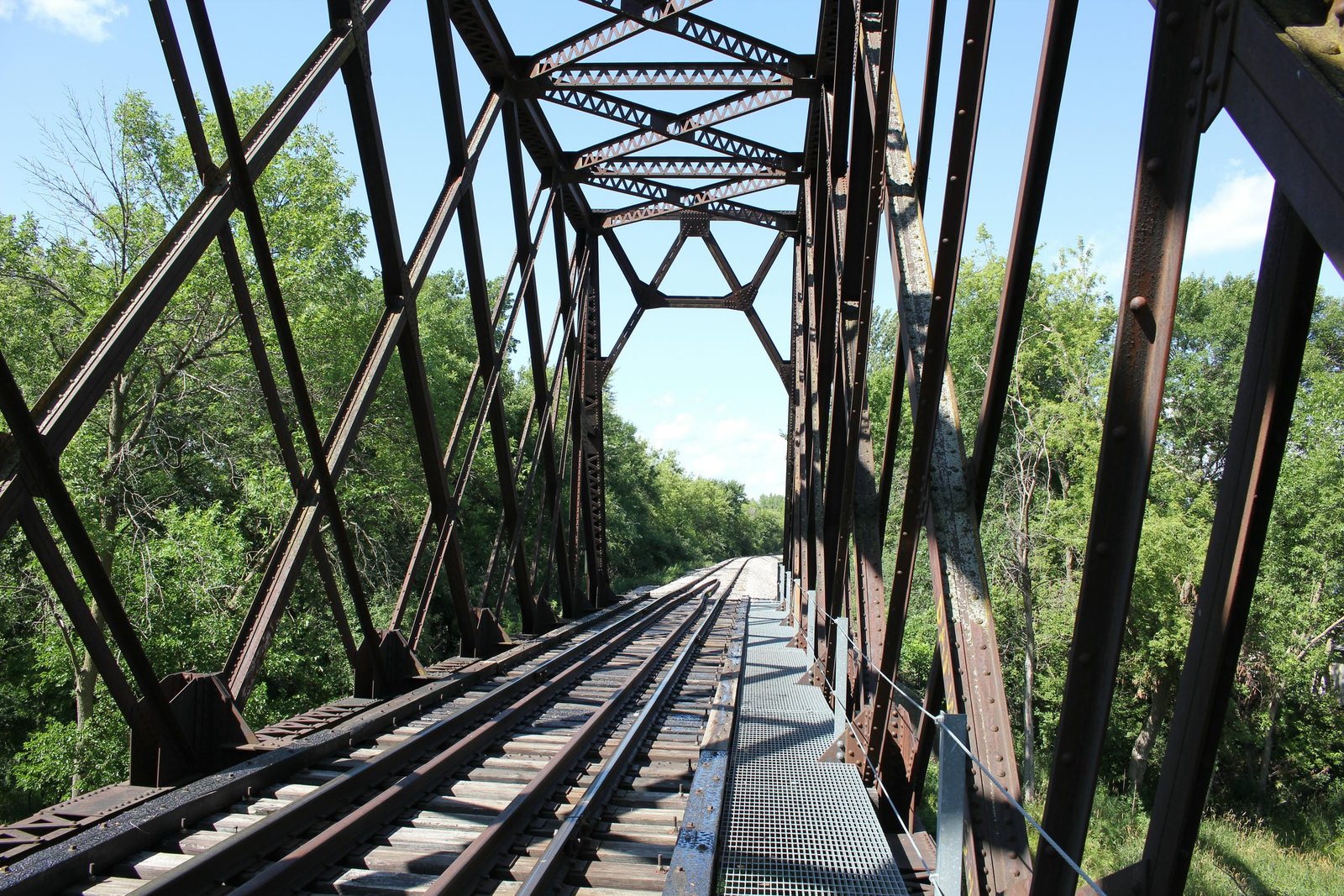
Click the photo to view the full-size version
| Name | Algona Railroad Crossing Chicago & North Western Railway Bridge #794 |
| Built By | Chicago & North Western Railway |
| Currently Owned By | Union Pacific Railroad |
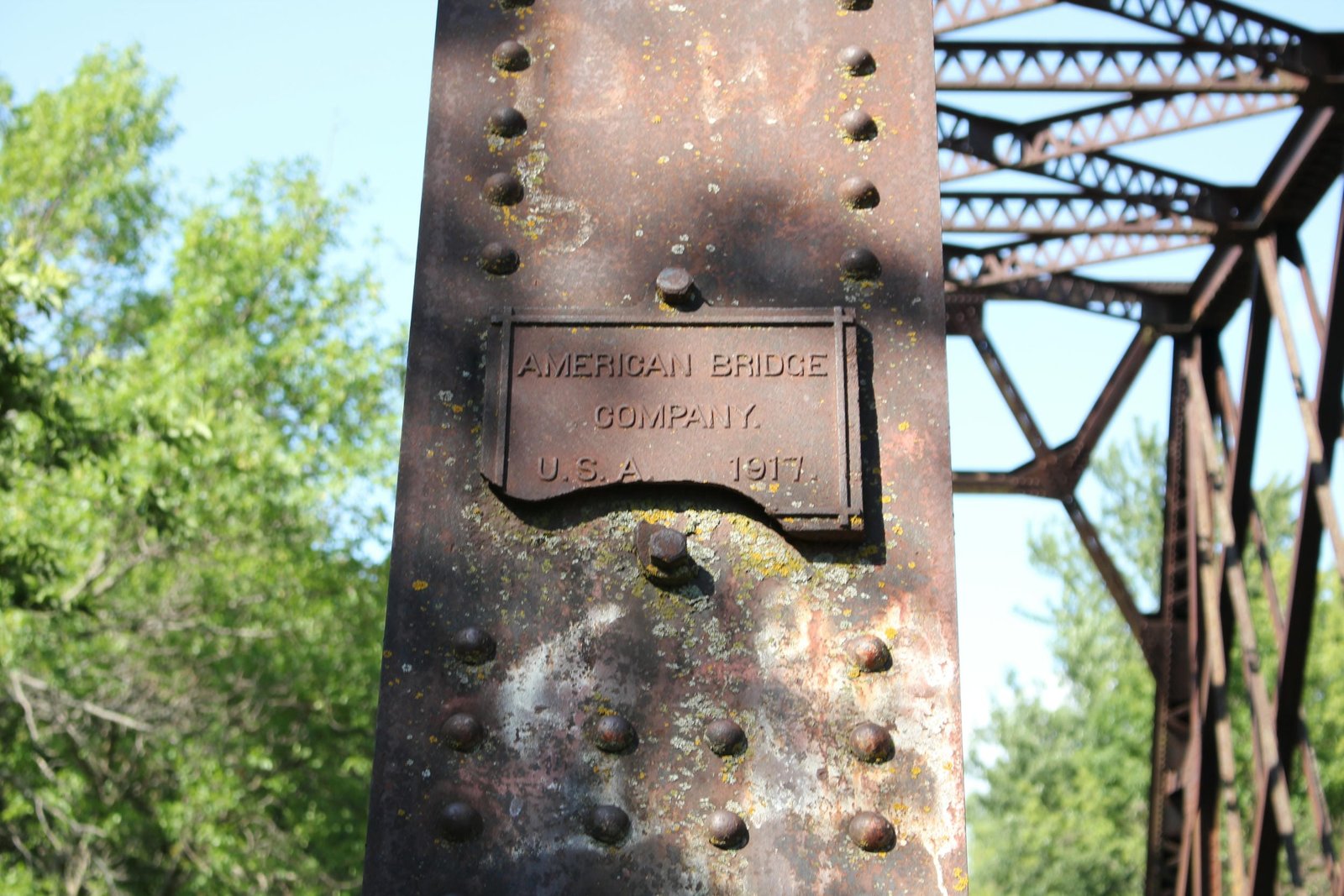
| Superstructure Contractor | American Bridge Company of New York |
| Substructure Contractor | Unknown |
| Length | 120 Feet Total |
| Width | 1 Track |
| Height Above Ground | 25 Feet (Estimated) |
| Superstructure Design | Quadrangular Lattice Through Truss |
| Substructure Design | Concrete |
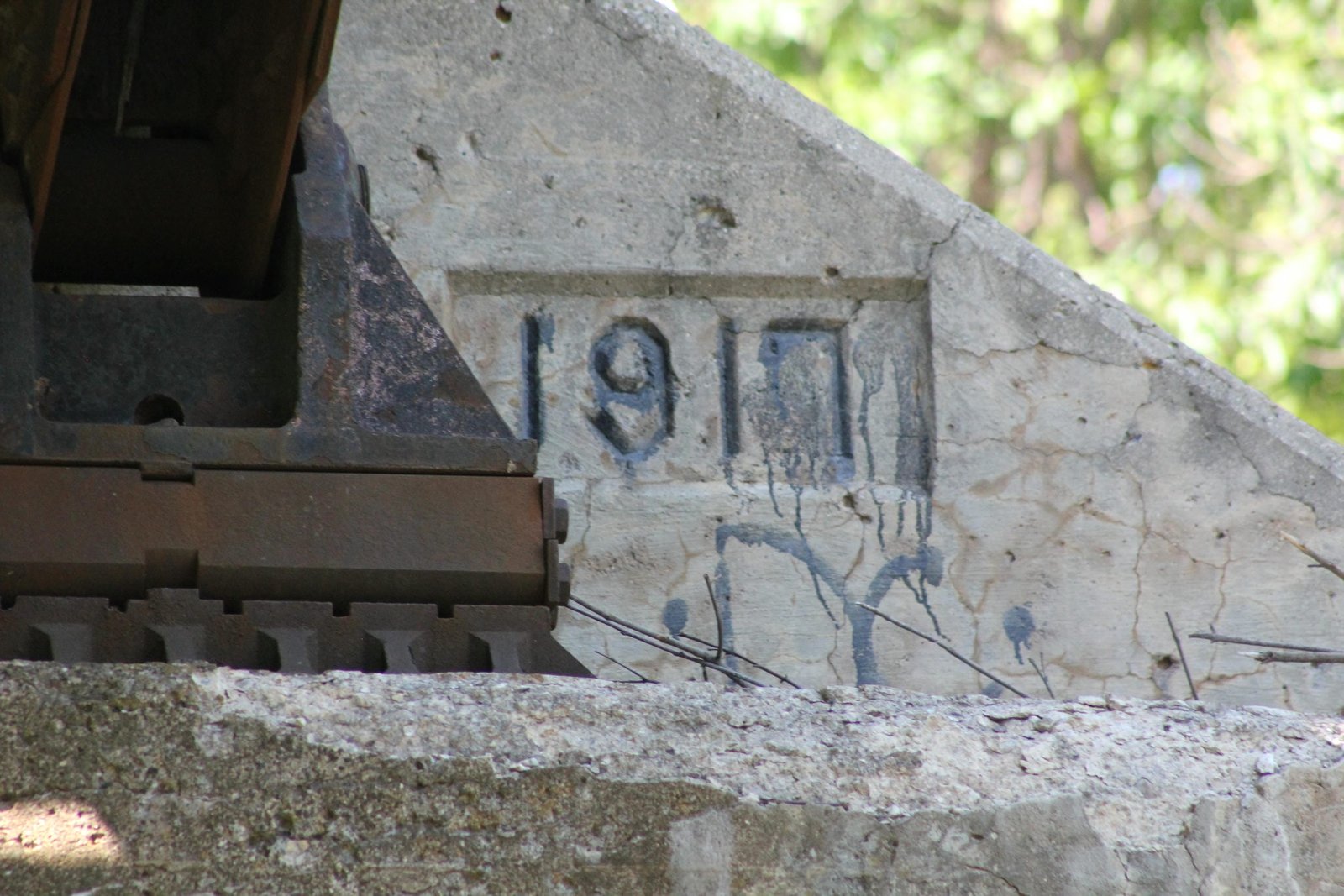
| Date Built | 1917 |
| Traffic Count | 1 Train/Day (Estimated) |
| Current Status | In Use |
| Chicago & North Western Railway Bridge Number | 794 |
| Union Pacific Railroad Bridge Number | 84.78 |
| Significance | Moderate Significance |
| Documentation Date | 8/12/2013; 7/7/2017 |
In 1872, the Toledo and Northwestern Railway (T&NW) completed a 3-mile railroad line, extending from Tama, Iowa to Toledo, Iowa. At Tama, the line connected to the existing Chicago & North Western Railway (C&NW) mainline. In 1879, the C&NW leased the property of the T&NW and funded further expansions in northern Iowa. In 1880, the T&NW completed an additional 83 miles from Toledo to Jewell Junction, Iowa. The following year, an additional 14 miles were completed to Webster City, Iowa; followed by 66 additional miles completed northwards to Elmore, Minnesota in 1882. At Elmore, the line would connect to an existing branch line of the Chicago, St. Paul, Minneapolis & Omaha Railway (Omaha Road). In the early 1880s, the T&NW constructed a respectable railroad network in northern Iowa, eventually reaching both South Dakota and Minnesota. In 1890, the T&NW was sold to the C&NW. This line served as a secondary line for the C&NW, providing connections to branch lines in northern Iowa and a connection to the leased Omaha Road at Elmore. During the early 20th Century, the C&NW invested significant capital into this line, replacing timber bridges with stone and steel structures, and upgrading other buildings.
By the early 20th Century, the C&NW had developed into a significant midwest railroad network, with lines radiating north and west from Chicago. In particular, the C&NW developed dozens of secondary and branch lines in Iowa to serve agricultural industries and small towns. This line remained an important secondary route for the C&NW through much of the 20th Century, providing a connection between lines in Minnesota to the principal mainline across Iowa. In 1968, two segments of this line were abandoned; including between Eldora Junction, Iowa and Lawn Hill, Iowa and between Ledyard, Iowa and Elmore. A segment between Conrad, Iowa and Eldora Junction was abandoned in 1976. A short segment between Bancroft, Iowa and Ledyard was abandoned in 1978. In 1981, the C&NW purchased the St. Paul to Kansas City "Spine Line" from the bankrupt Chicago, Rock Island & Pacific Railroad (Rock Island). This line paralleled the Rock Island for much of its length, and the Rock Island was a better constructed route. As a result, portions of this line quickly became excess for the C&NW.
Following the purchase of the Rock Island line, redundant sections of this line were quickly abandoned. In 1981, two additional segments were abandoned between Tama and Gladbrook, Iowa and between Lawn Hill and Ellsworth, Iowa. A segment between Gladbrook and Conrad was abandoned in 1983. The segment between Burt, Iowa and Bancroft would be abandoned in 1985. The remainder of the line between Ellsworth and Burt was kept intact to serve various agricultural industries and connect to remaining C&NW-owned branch lines. In 1995, the C&NW was purchased by Union Pacific Railroad (UP). A short segment from Ellsworth to Jewell was abandoned in 2006. Today, UP operates the Jewell to Burt segment as the Jewell Subdivision, which provides access to several branch lines serving northern Iowa. A short portion between Ellsworth and Jewell has been reused as the JewEllsworth Trail, while the remainder of the line has been abandoned. Much of the abandoned segments have reverted to adjacent property owners, and been repurposed for farm fields.
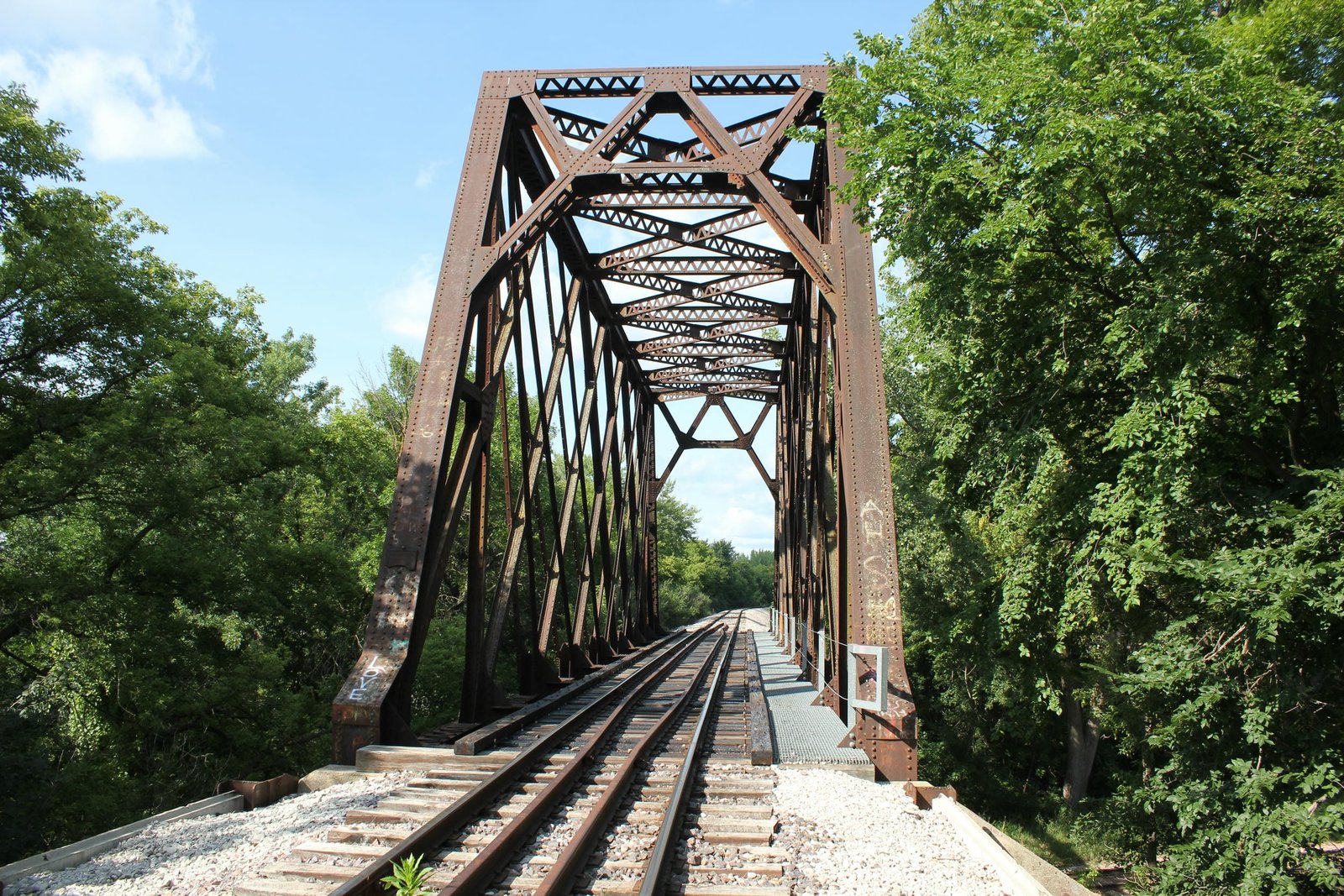
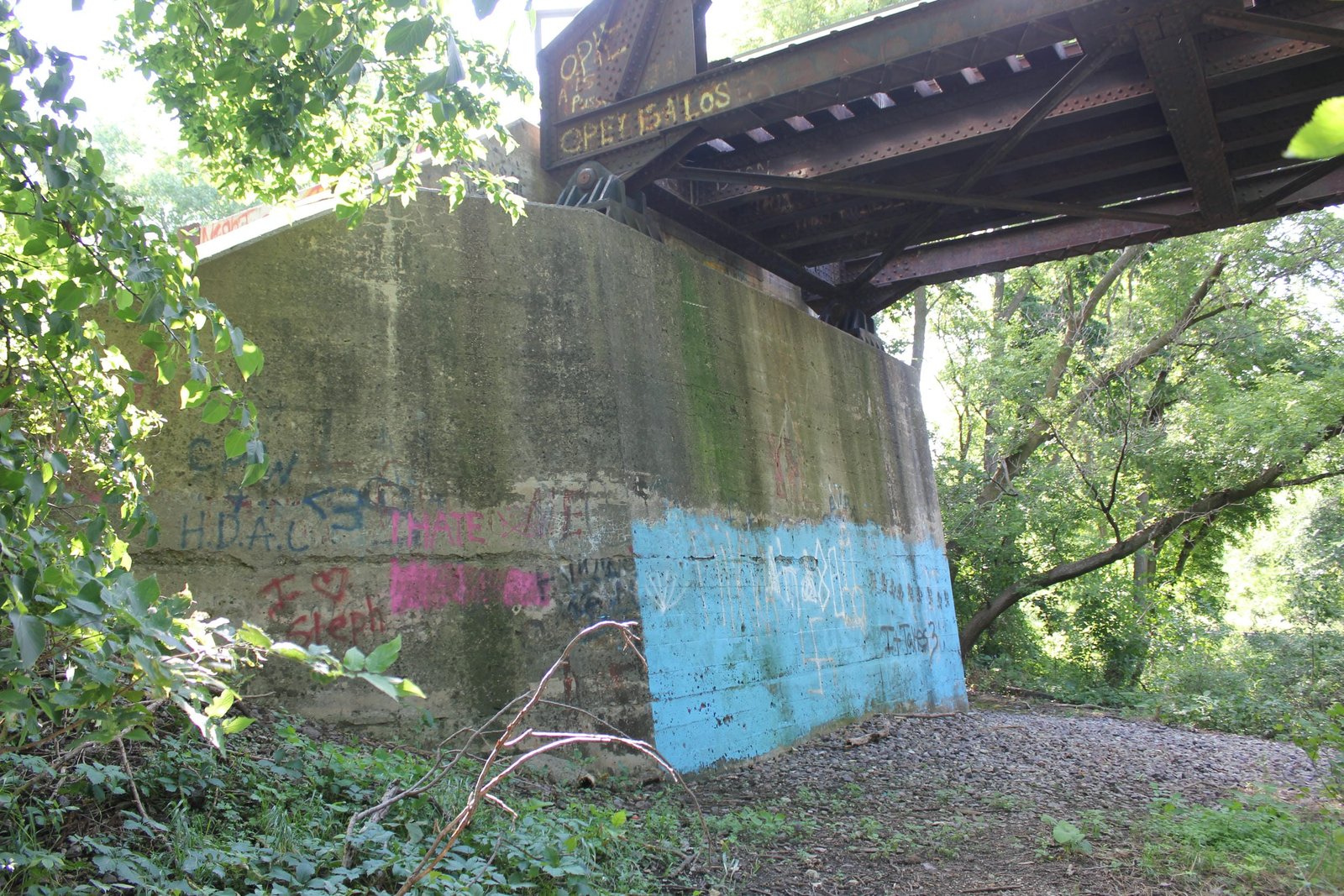
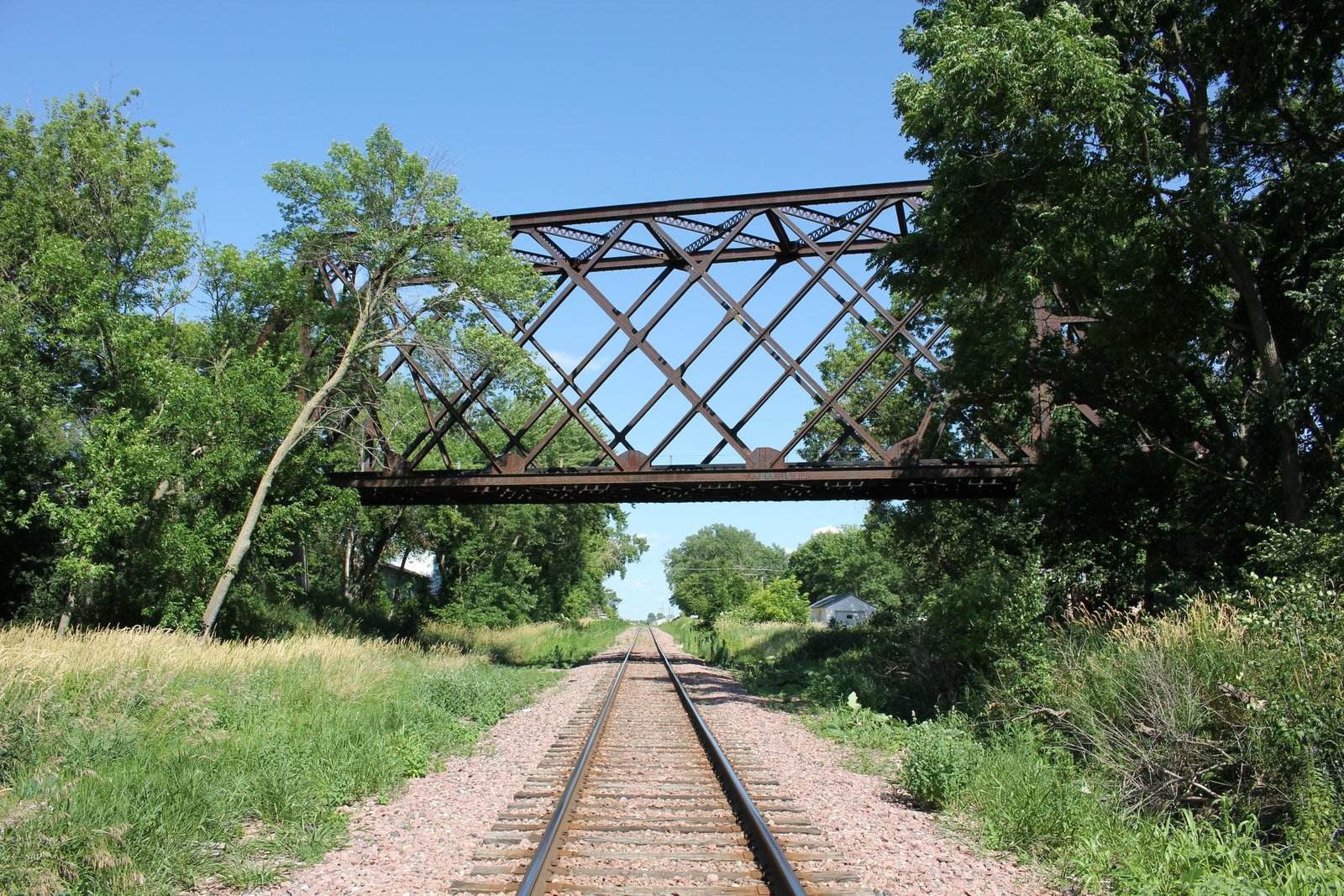
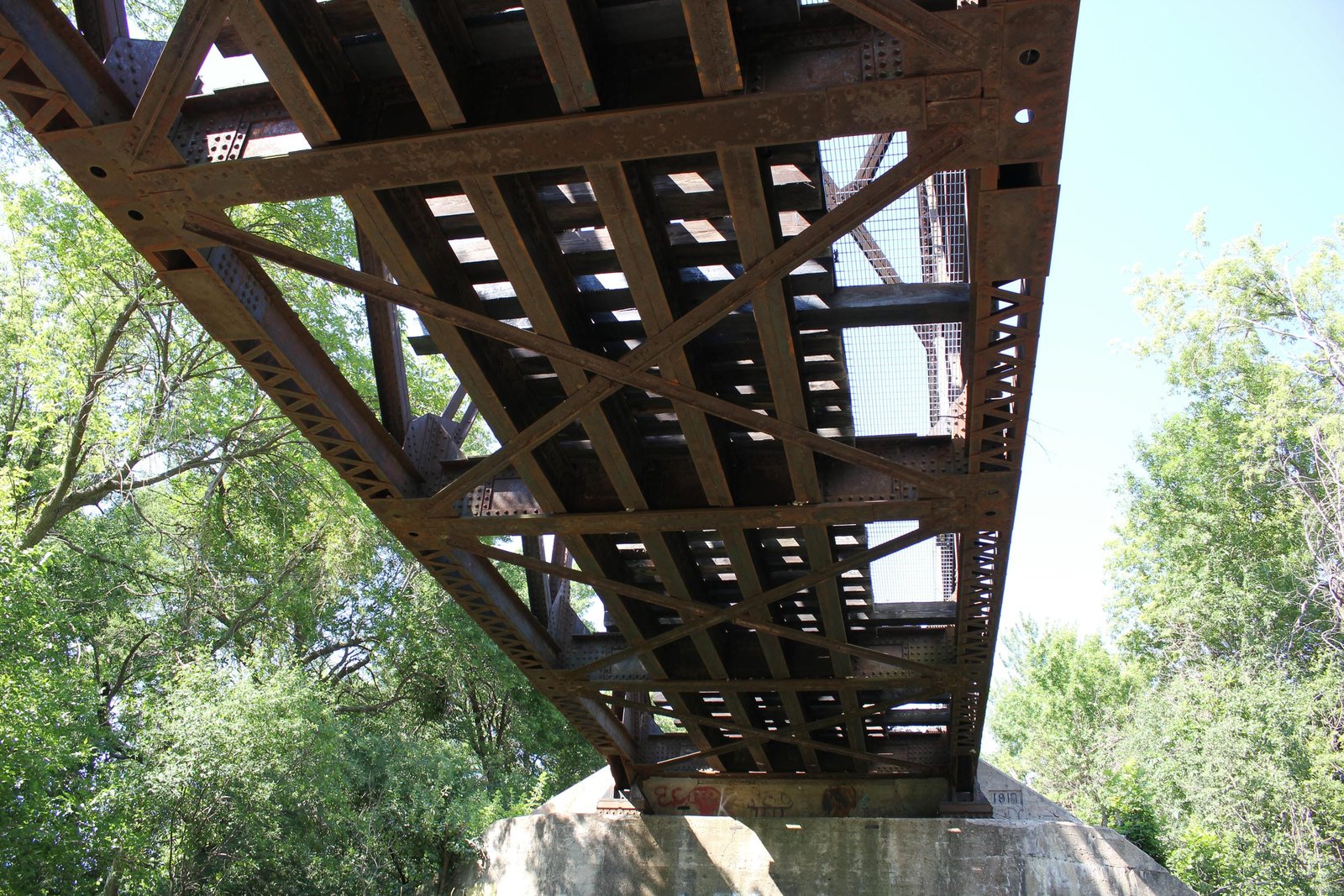
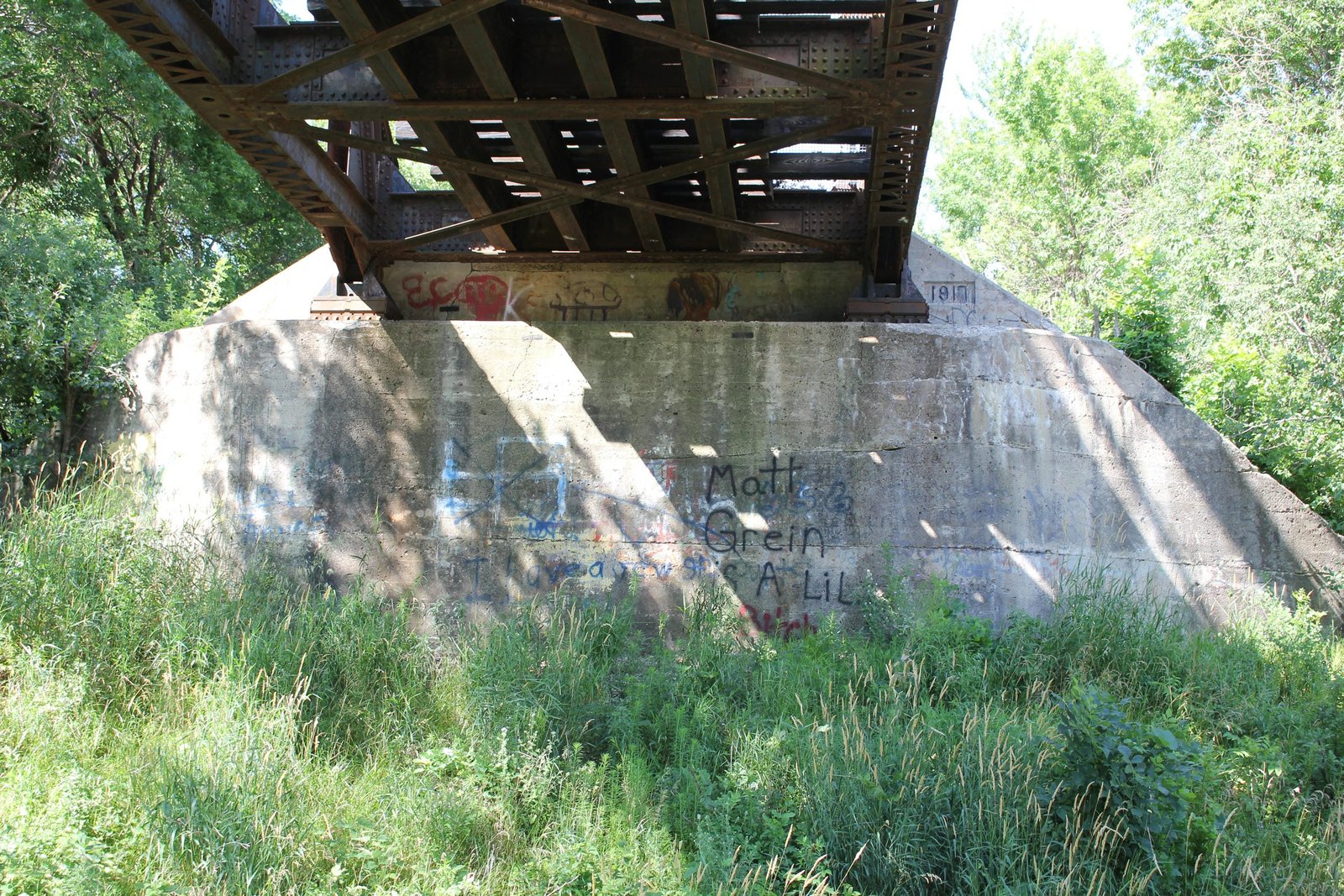
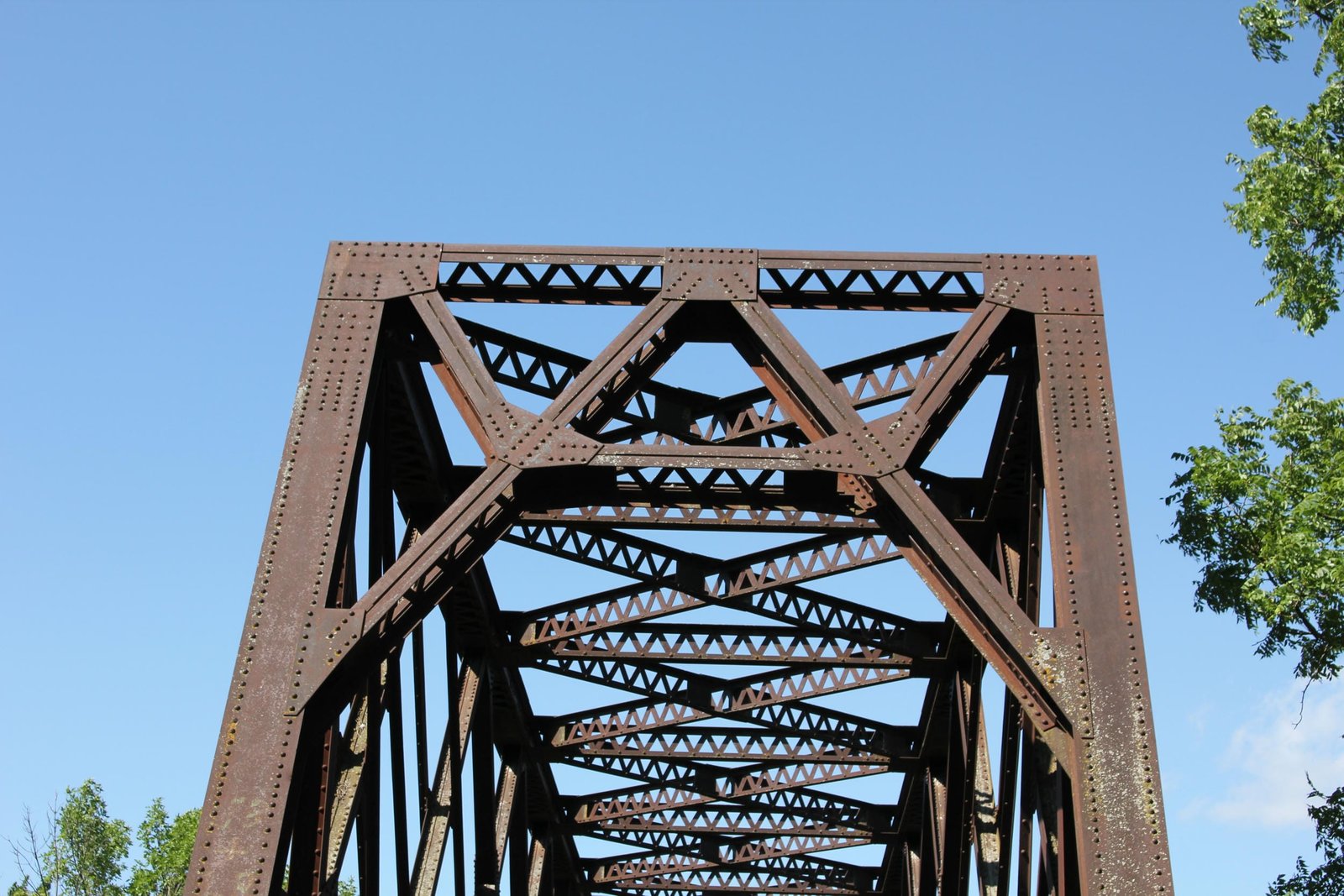
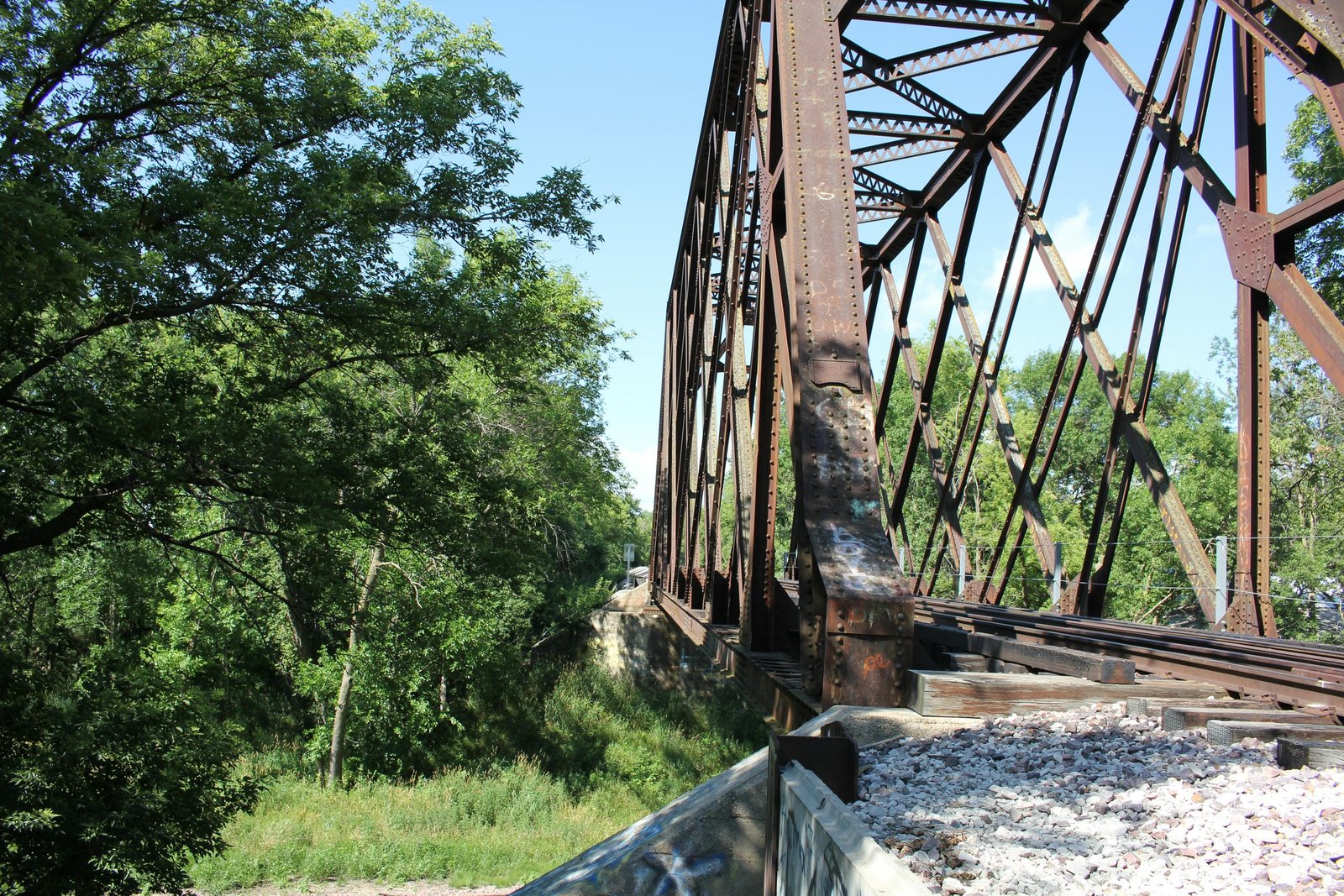
Located in Algona, this quadrangular lattice through truss bridge carries a former Chicago & North Western Railway line over a former Chicago, Milwaukee, St. Paul & Pacific Railroad (Milwaukee Road) line. The first bridge at this location likely consisted of a timber pile trestle, with a short beam or girder span crossing the Milwaukee Road tracks. This bridge is not believed to have been replaced as part of the first improvement program for this line, which saw several timber bridges replaced with steel and stone structures between 1900 and 1905. In the late 1910s, the C&NW began a second major improvement program along this line, replacing several remaining timber bridges with steel and concrete structures. The present structure was constructed in 1917. Currently, the bridge consists of a 120-foot riveted quadrangular lattice through truss span, set onto concrete abutments. American Bridge Company fabricated the superstructure, while an unknown contractor constructed the concrete abutments.
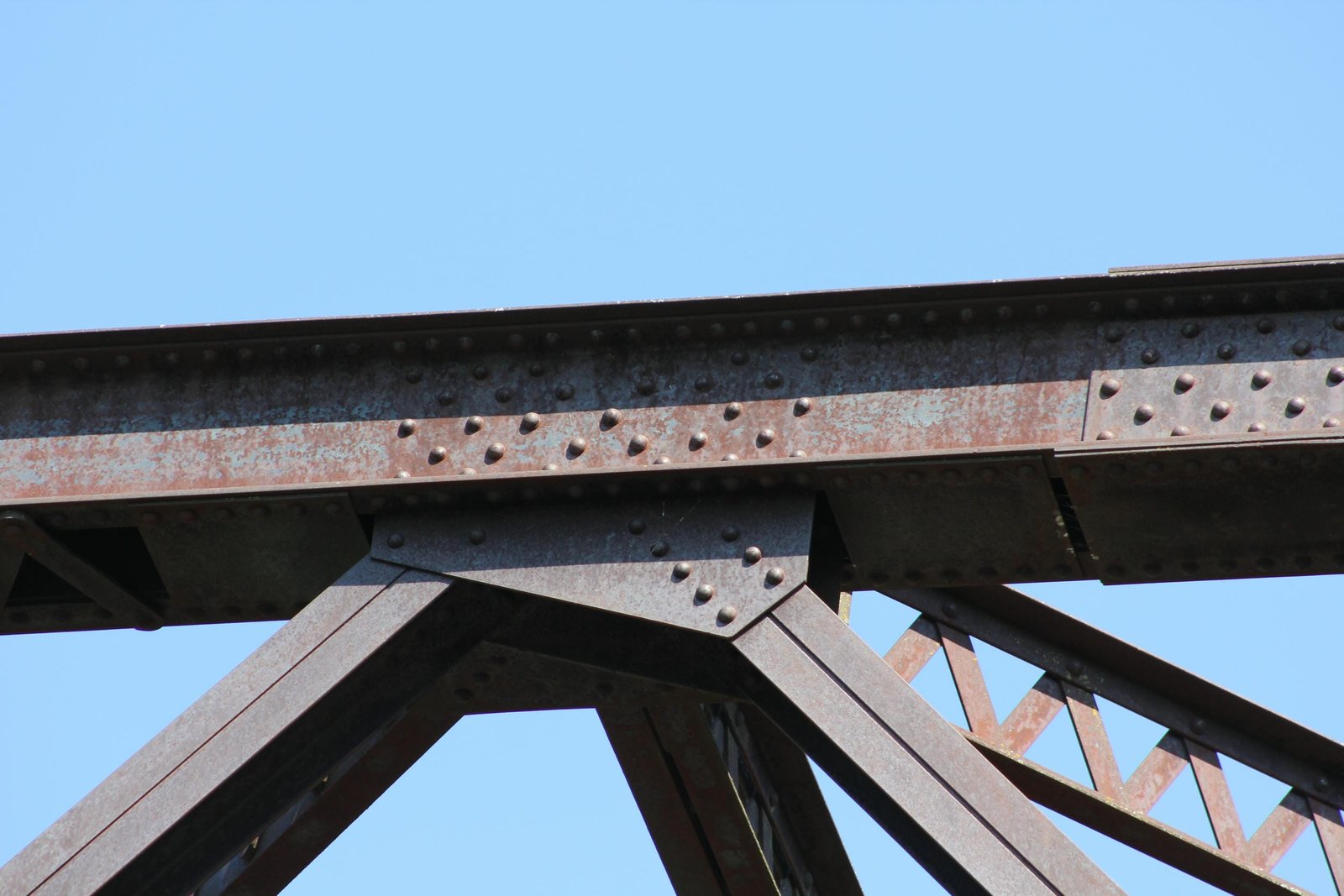
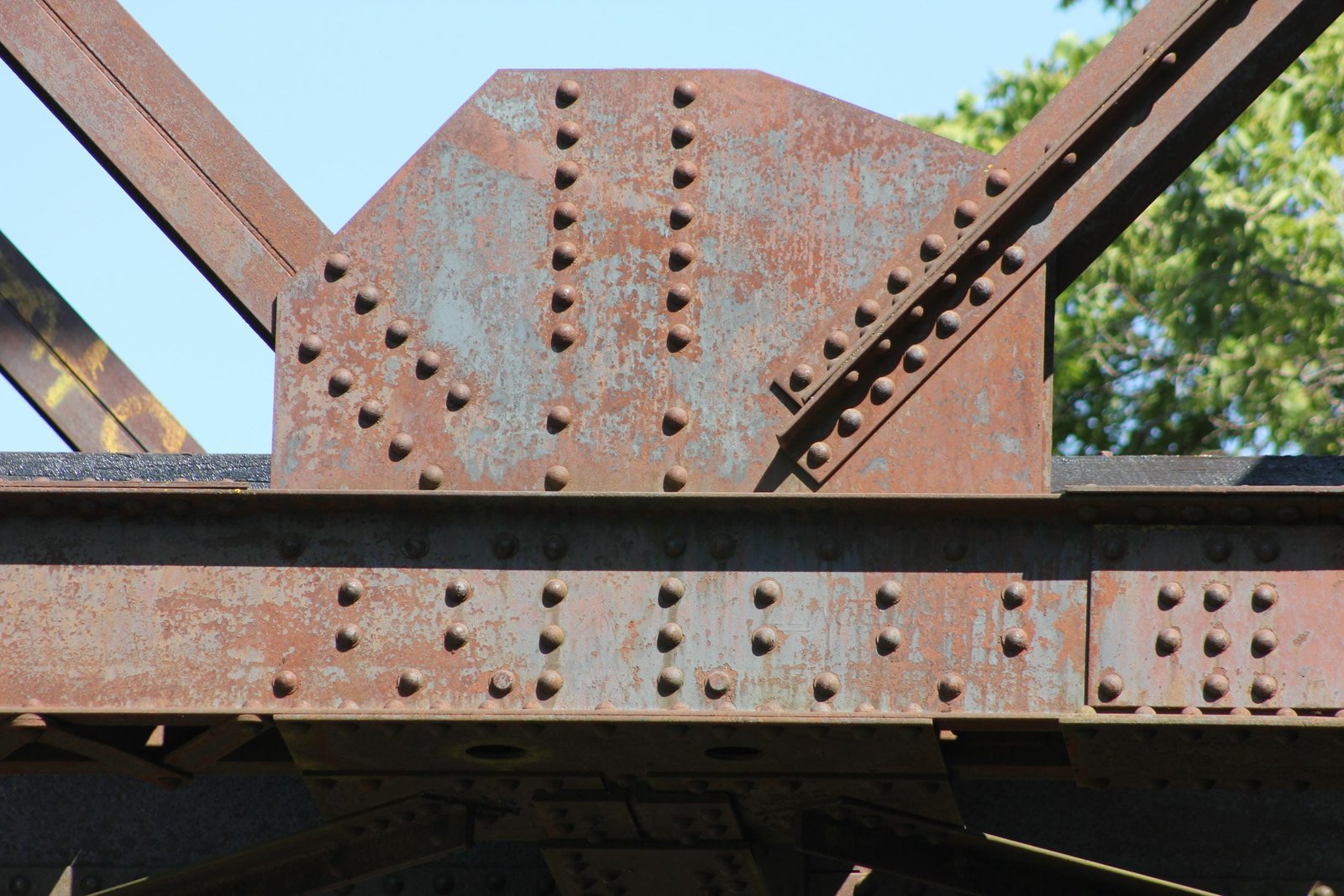
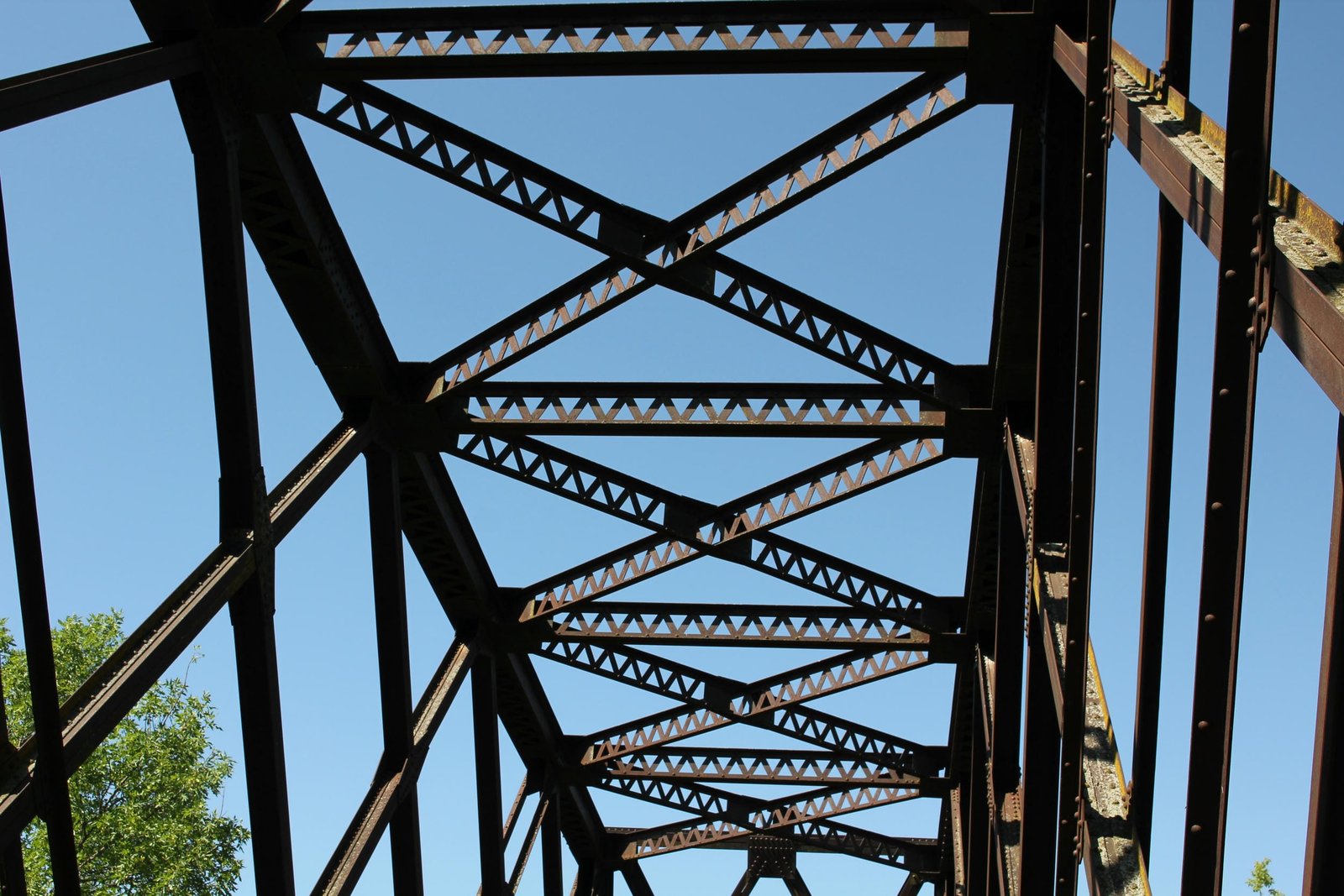
The truss span is heavily constructed, using large built-up members, a standard floor and a utilitarian portal bracing. The endposts are comprised of heavy beams, which use a solid plate on the outside and heavy V-lacing on the inside. Solid plates are used to connect the channels where the portal bracing meets the endpost. The top chord is composed of two U-shaped channels, connected by a tight V-lacing on the bottom and a solid plate on the top. The bottom chord uses a similar design, with V-lacing on both sides and circular cutouts at the connection points to allow water to drain, an improvement over earlier designs. The compression members consist of solid beams, while the tension members consist of L-shaped steel bars. Unique to this span, the floor system is heavily constructed, using plate girder floorbeams and four stringers, which are set equidistant underneath the tracks. This shallow design was likely chosen to maximize clearance underneath. The lower lateral bracing is constructed of heavy L-shaped bars. The portal bracing consists of a standard A-frame design, constructed of heavy V-laced beams. The sway bracing and upper lateral bracing also are composed of V-laced beams. The abutments follow a standard design, with sloped wing walls extending diagonally from the bridge.
This type of truss design is relatively uncommon throughout the United States. However, a few railroads preferred the design, such as the Chicago, Rock Island & Pacific Railway (Rock Island), the Chicago & North Western Railway (C&NW) and the Omaha Road. Spans constructed in the late 1870s and early 1880s for the C&NW featured an arched and pedimented lattice portal bracing, light sway bracing and laced members. The second generation was nearly exclusively constructed by Lassig Bridge & Iron Works between 1884 and 1900, and featured heavier members and a pedimented portal bracing. While the design fell out of favor for the Rock Island and Omaha Road around the turn of the 20th Century, the design remained popular with the C&NW into the 1920s. 19th Century versions of this design were primarily constructed out of iron, while 20th Century versions of this design used much heavier members and were constructed of steel. The C&NW preferred this design, as it was both strong and demonstrated great resilience in case of a derailment. Since the initial construction, the bridge has seen no significant alterations. Today, the bridge sees occasional use to serve a large grain elevator north of Burt. Overall, the bridge appears to be in fair to good condition, with no significant deterioration noted. The author has ranked this bridge as being moderately significant, due to the truss design.
Citations
| Build date and builder (superstructure) | American Bridge Company plaque |
| Railroad History Citation | ICC Valuation Information, Compiled by Richard S. Steele |