
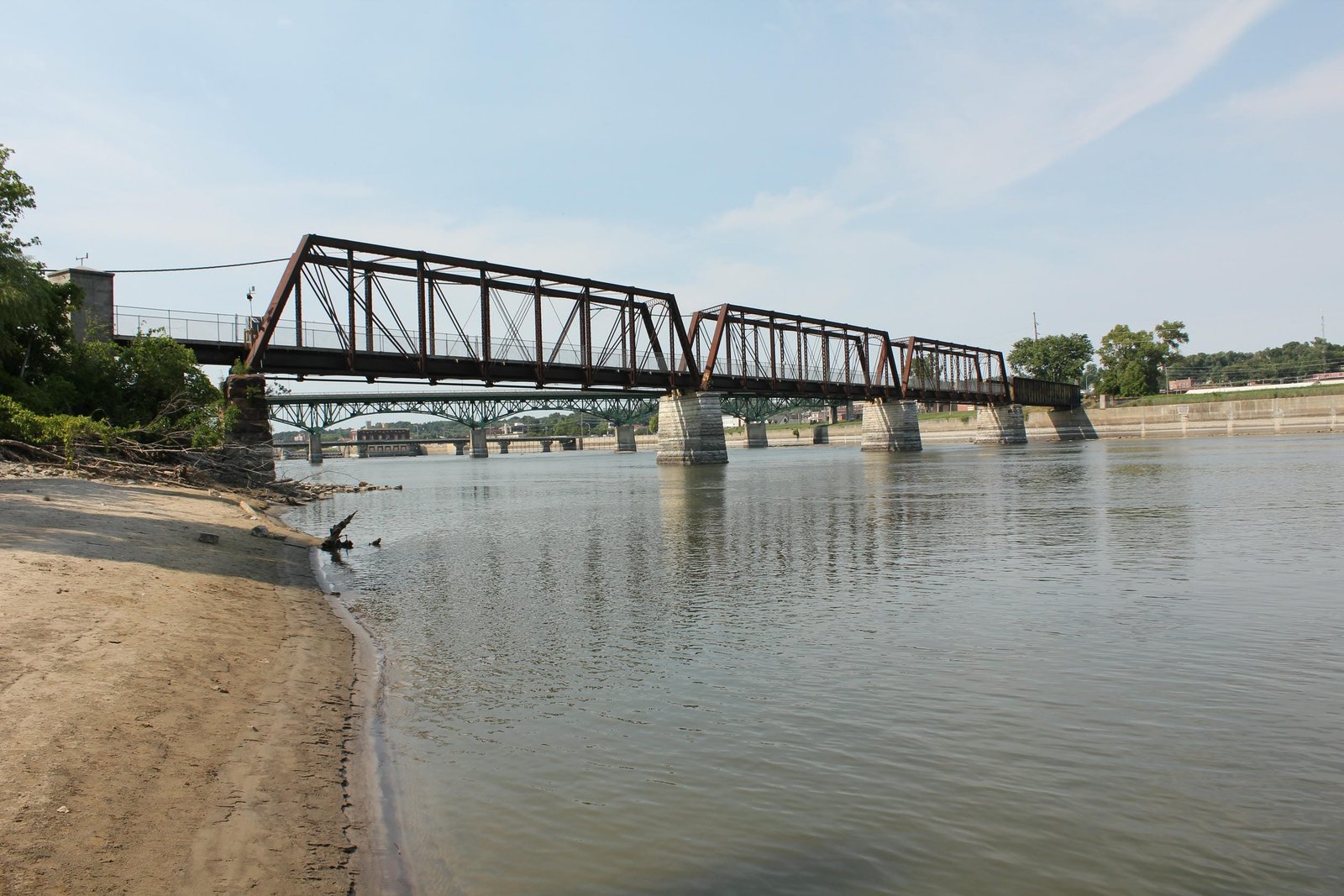
Click the photo to view the full-size version
| Name | Ottumwa Wabash Bridge Wabash Railroad Bridge #2224B |
| Built By | Wabash Railway |
| Currently Owned By | Wapello County |
| Superstructure Contractor | Detroit Bridge & Iron Works of Detroit, Michigan (Truss Spans) American Bridge Company of New York (North Span) Unknown (Steel Stringer Span) |
| Substructure Contractor | Unknown |
| Length | 760 Feet Total, 158 Foot Main Spans |
| Width | 1 Track |
| Height Above Ground | 20 Feet (Estimated) |
| Superstructure Design | Pratt Through Truss, Through Plate Girder, Steel Stringer and Timber Stringer |
| Substructure Design | Stone Masonry and Concrete |
| Date Built | 1888 (Truss Spans) c. 1930 (Steel Stringer Span) 1975 (North Span) 2023 (South Approach) |
| Traffic Count | 0 Trains/Day (Bridge is Open to Pedestrian Traffic) |
| Current Status | Open to Pedestrian Traffic |
| Wabash Railroad Bridge Number | 2224B |
| Significance | Regional Significance |
| Documentation Date | 8/11/2013; 3/21/2020 |
In 1851, the North Missouri Railroad (NM) began building a line from St. Louis, Missouri to Moberly, Missouri. The line reached the Missouri River opposite St. Charles in 1855, and reached Macon, Missouri in 1859. During the American Civil War, work on the railroad was halted. Work continued north in 1865 and by 1868, the line was extended an additional 65 miles to Coatsville, Missouri; located on the Iowa border. Between 1869 and 1870, the St. Louis and Cedar Rapids Railway (StL&CR) constructed an additional 43 miles from Coatsville to Ottumwa, Iowa. In 1872, the NM became part of the St. Louis, Kansas City and Northern Railway (StLKC&N). The Stl&CR became part of the St. Louis, Ottumwa and Cedar Rapids Railway (in 1875. In 1879, the StLKC&N became part of the Wabash, St. Louis and Pacific Railway (WStL&P). In 1887, the StLO&CR became part of the Wabash Western Railway (WW), and the Moberly to Coatsville segment was sold to the WW at this time. In 1889, the WW was consolidated into the Wabash Railroad Company. The Wabash was reorganized as the Wabash Railway in 1915.
The Wabash would become a respected railroad network in the Midwest, with a principal mainline connecting Detroit with Kansas City. While the Wabash was a smaller railroad, it also operated a number of branch lines to serve other railroad hubs in the Midwest. One of these branches served Des Moines, Iowa; and the southern portion of this line was important for connecting to that branch. Ottumwa was not a significant railroad hub, but access to Ottumwa allowed the Wabash to interchange with several railroads and serve industries in the town. The Wabash was controlled by the Pennsylvania from 1931 through the early 1960s. In 1964, the railroad was acquired by the Norfolk and Western Railway (N&W), which operated a sizable network of railroads in the eastern United States. In 1982, the N&W was merged with the Southern Railway to form Norfolk Southern Railway (NS). The segment between Moulton, Iowa and Ottumwa was abandoned in 1982. In 1993, the remainder of the line between Moberly and Moulton was abandoned. Today, much of the line has reverted to adjacent property owners, and been converted to farm fields.
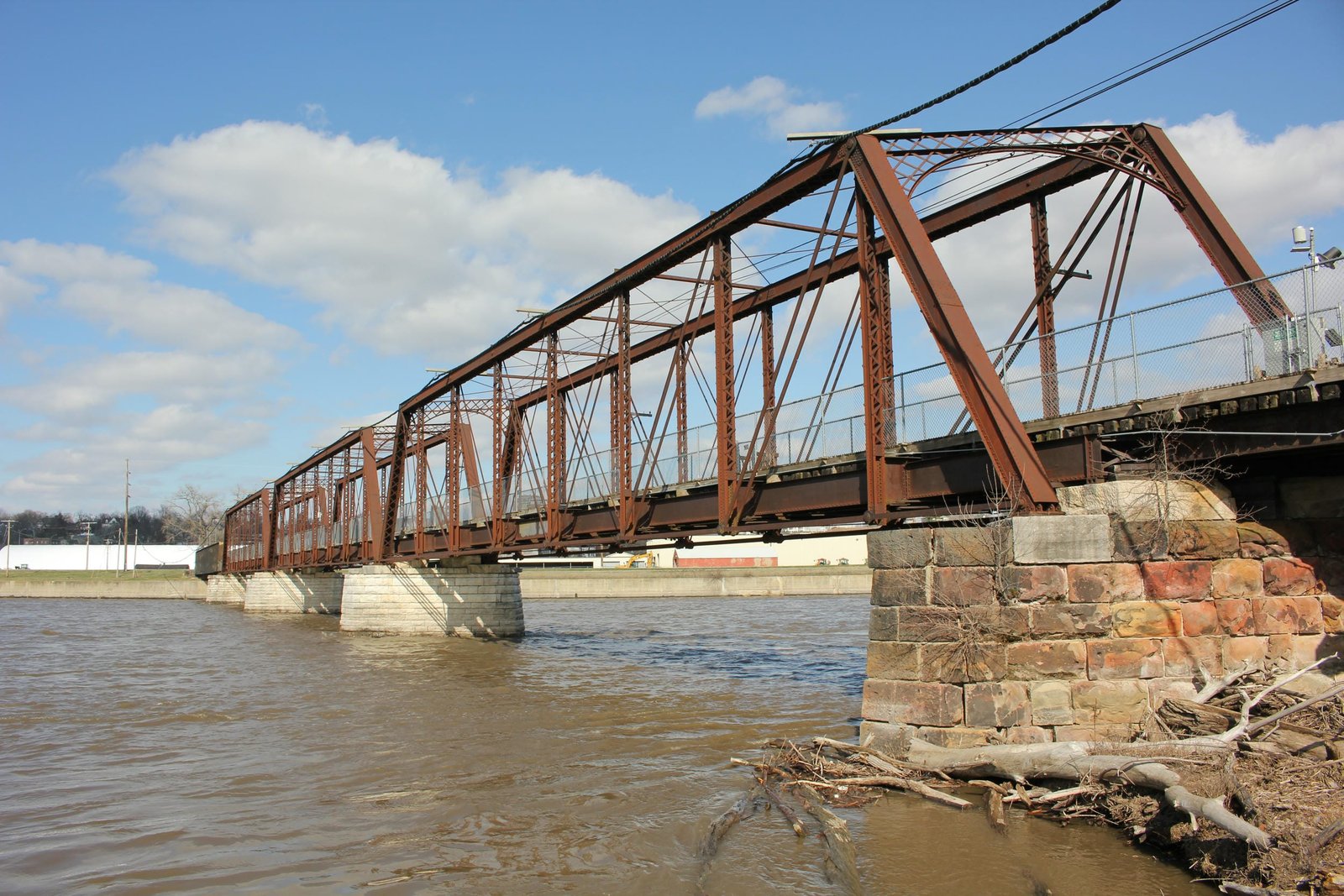
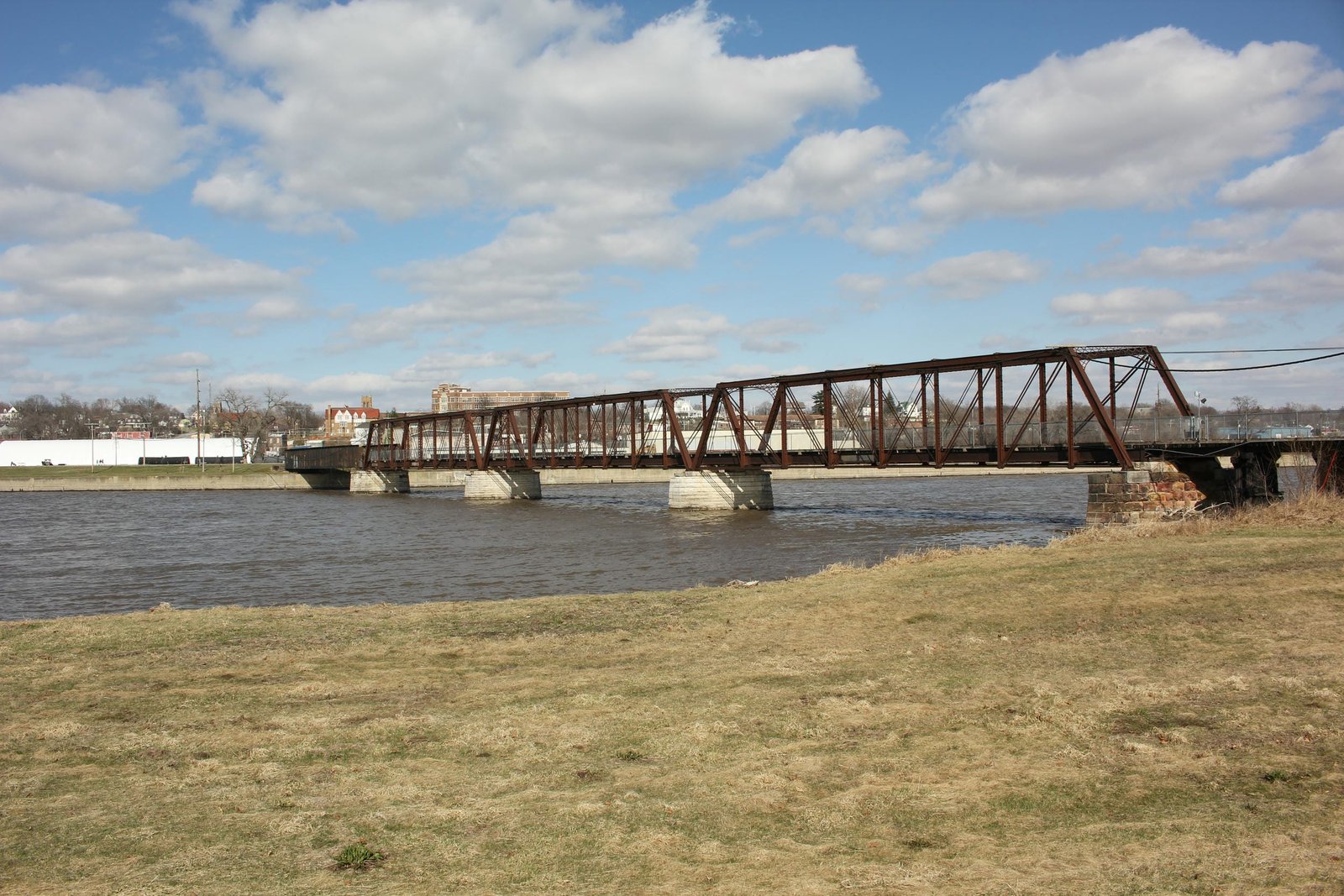
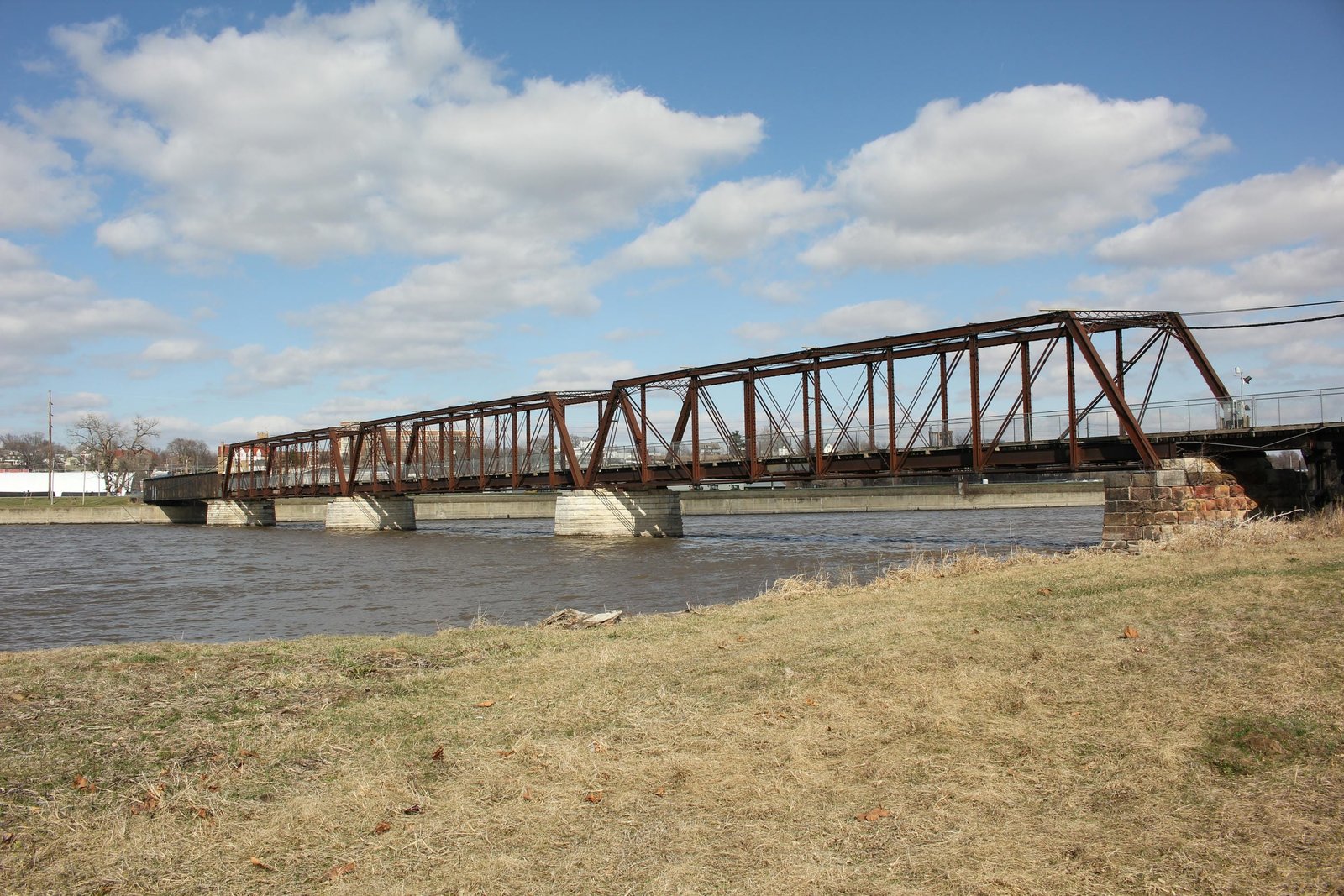
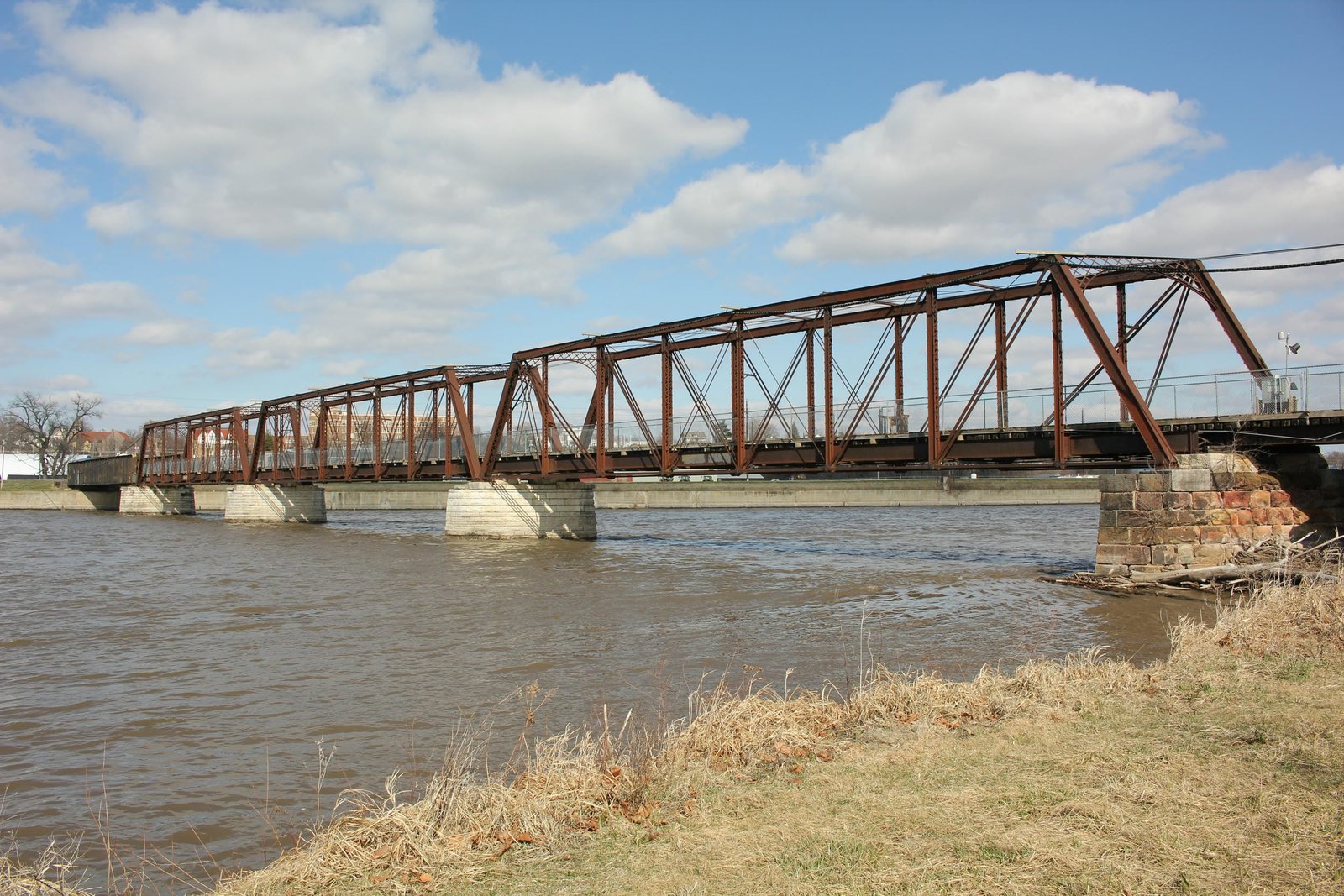
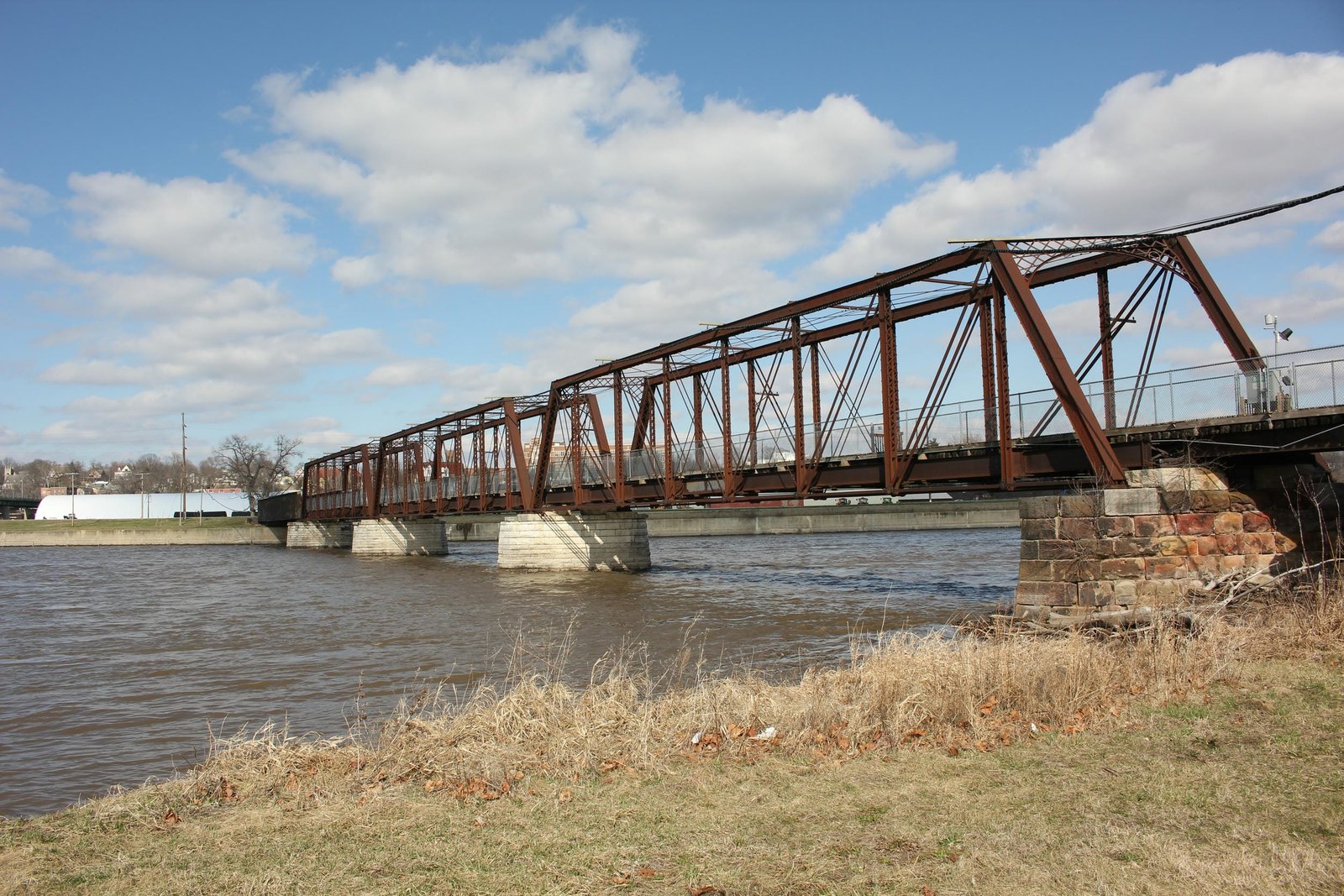
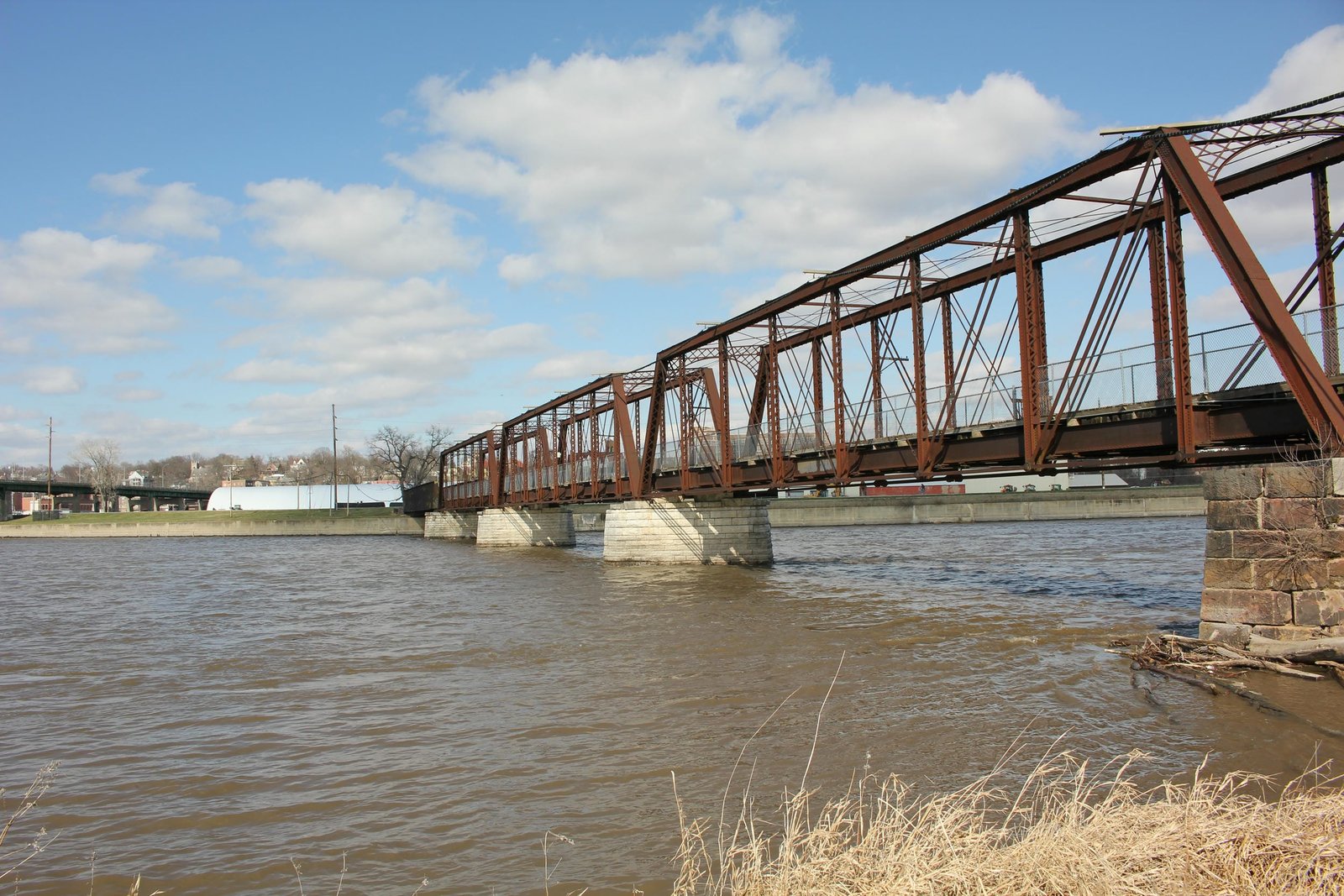
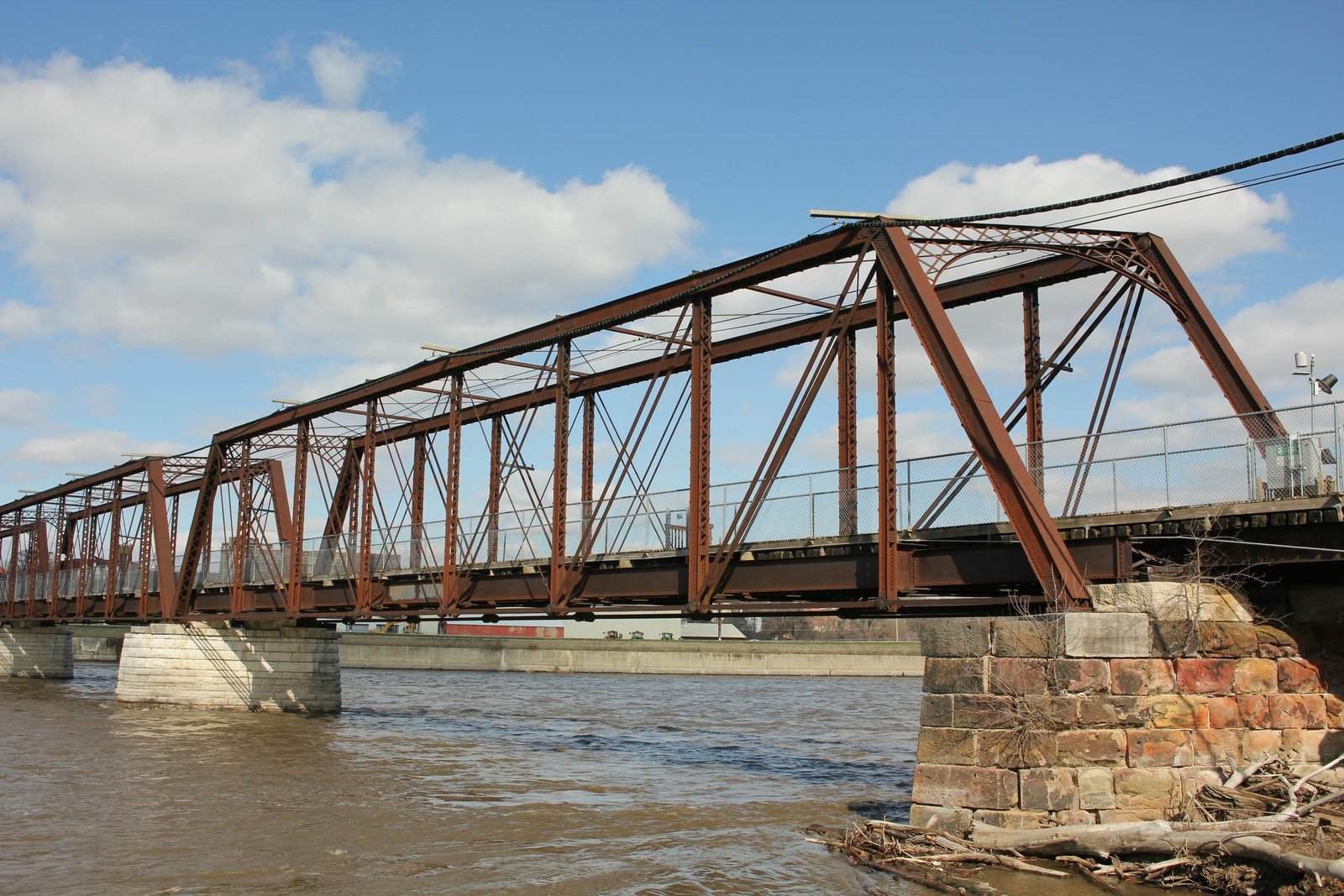
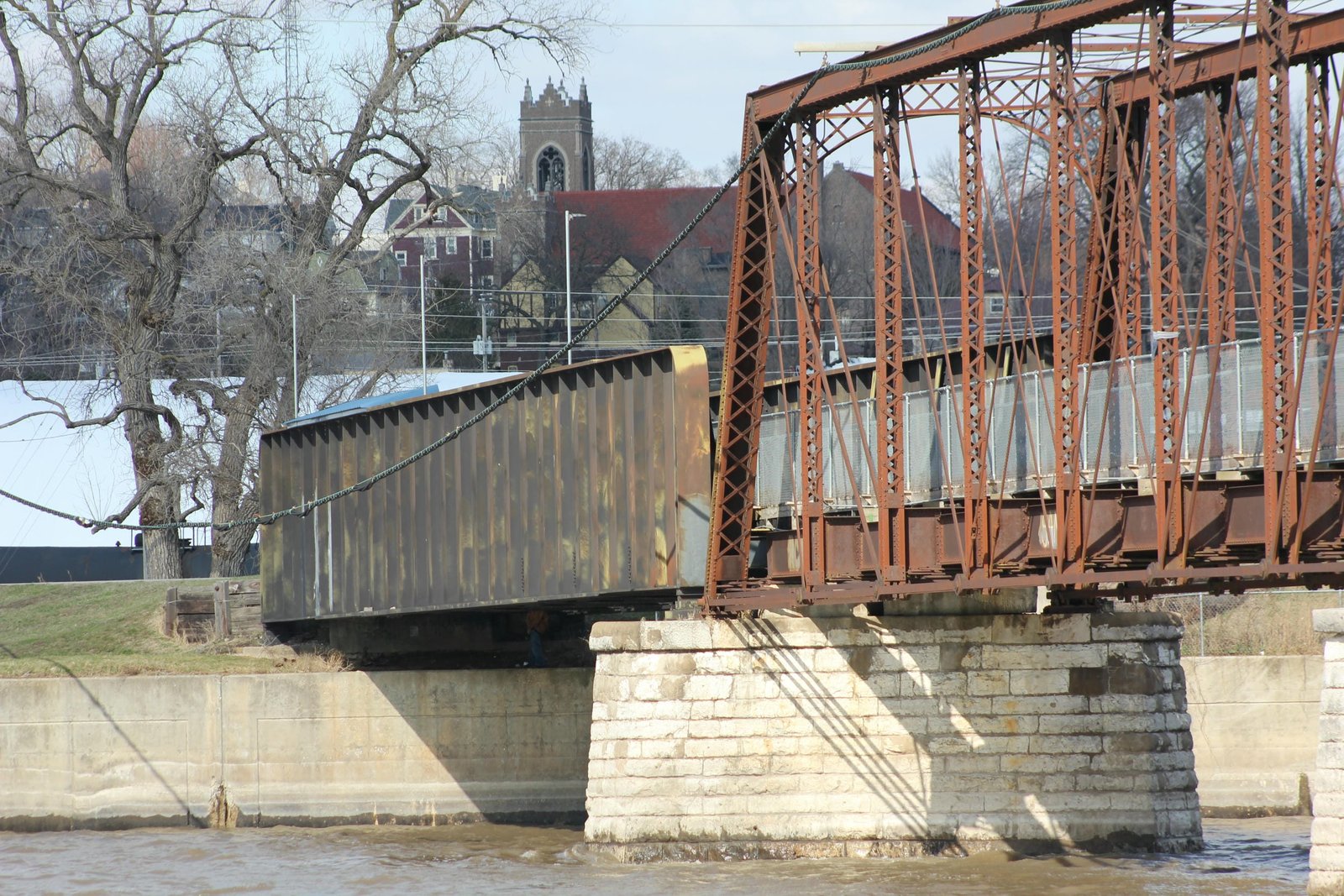
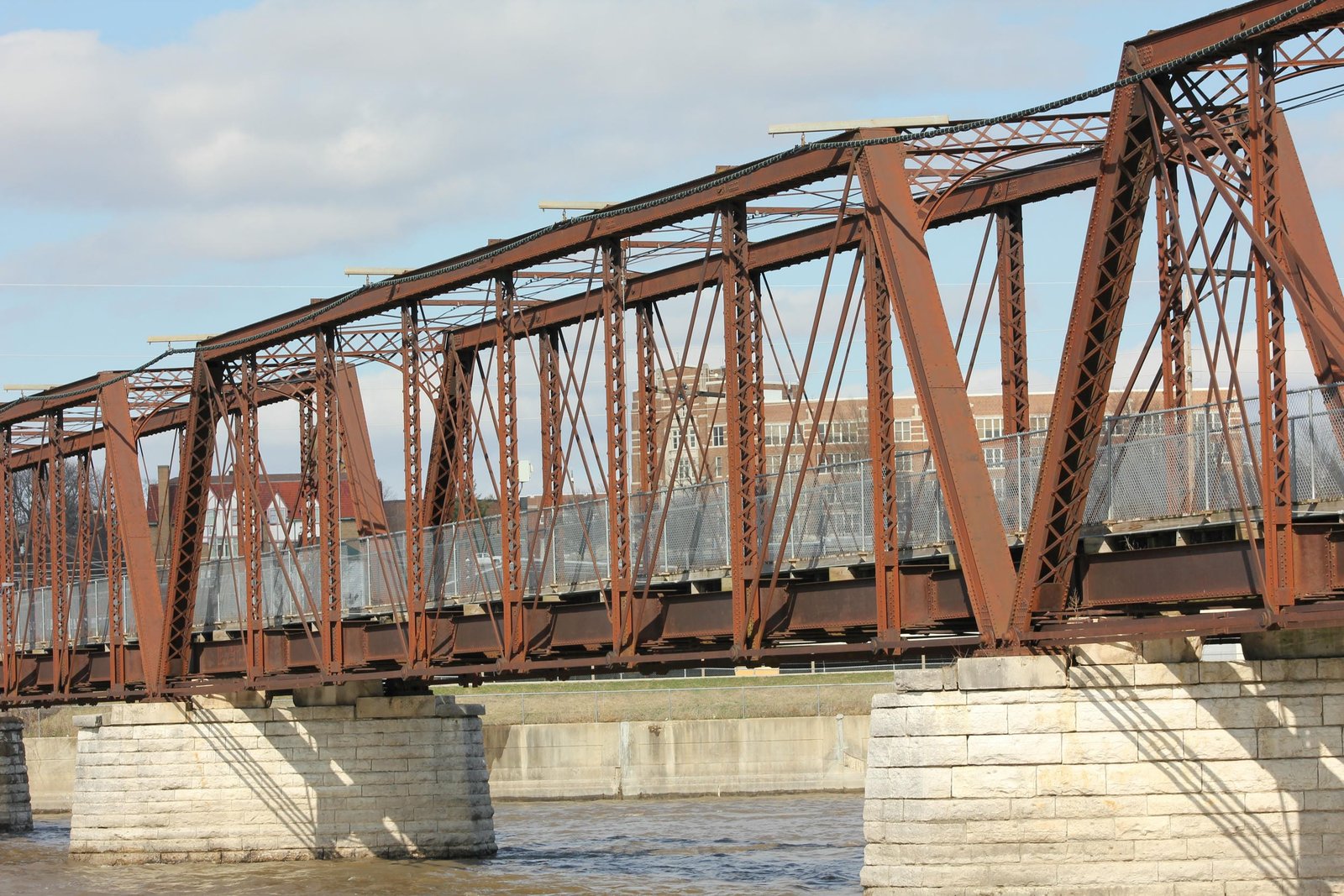
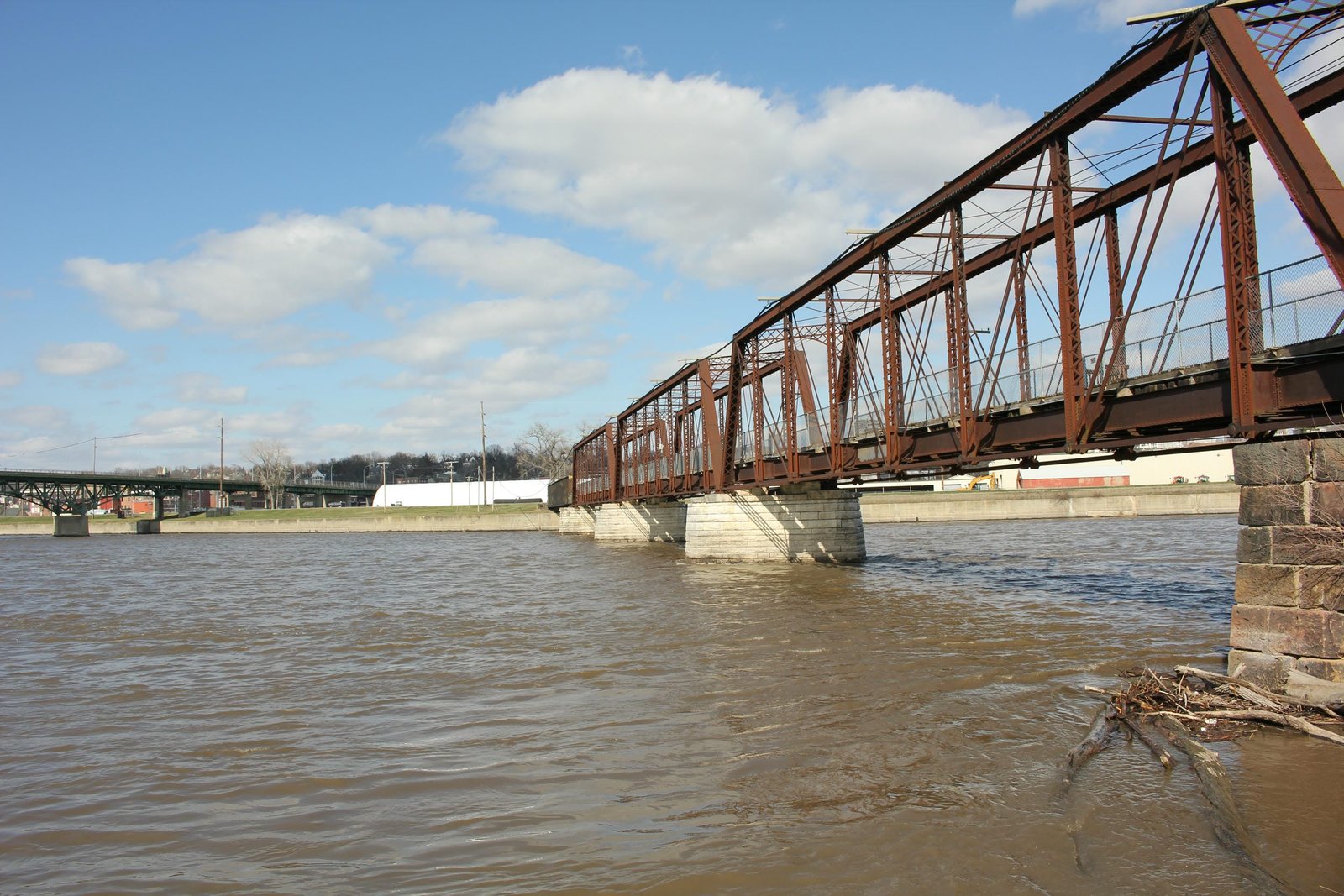
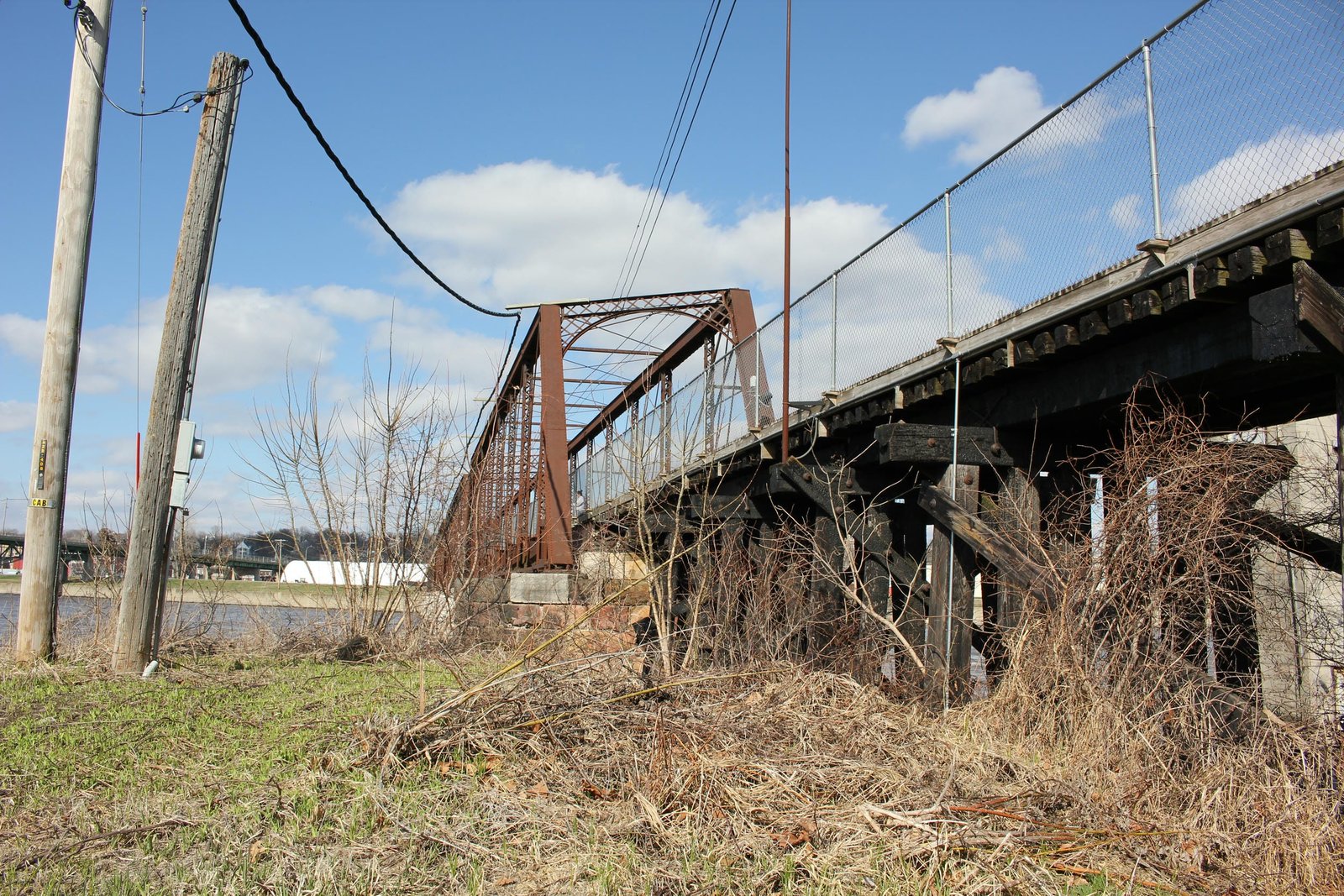
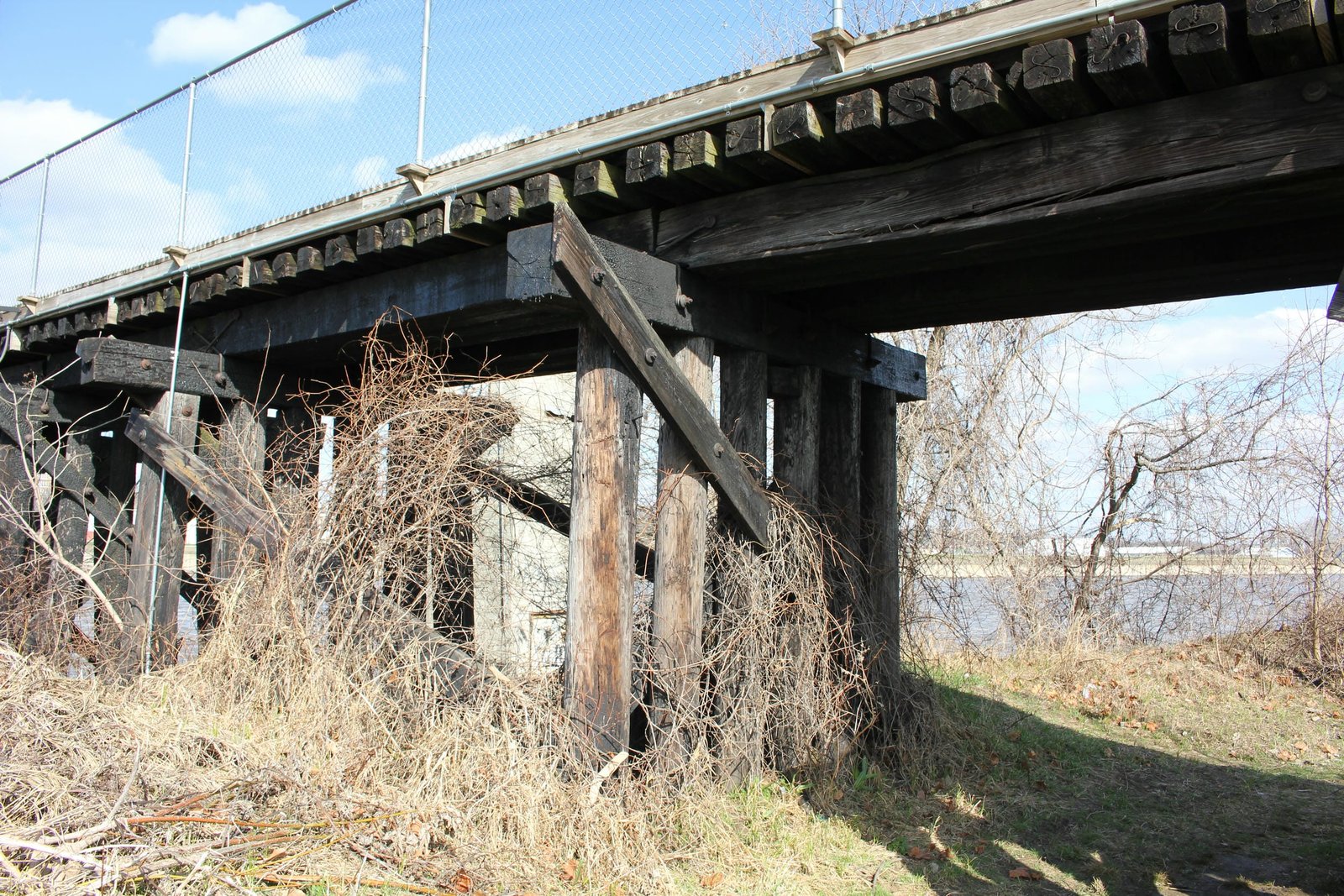
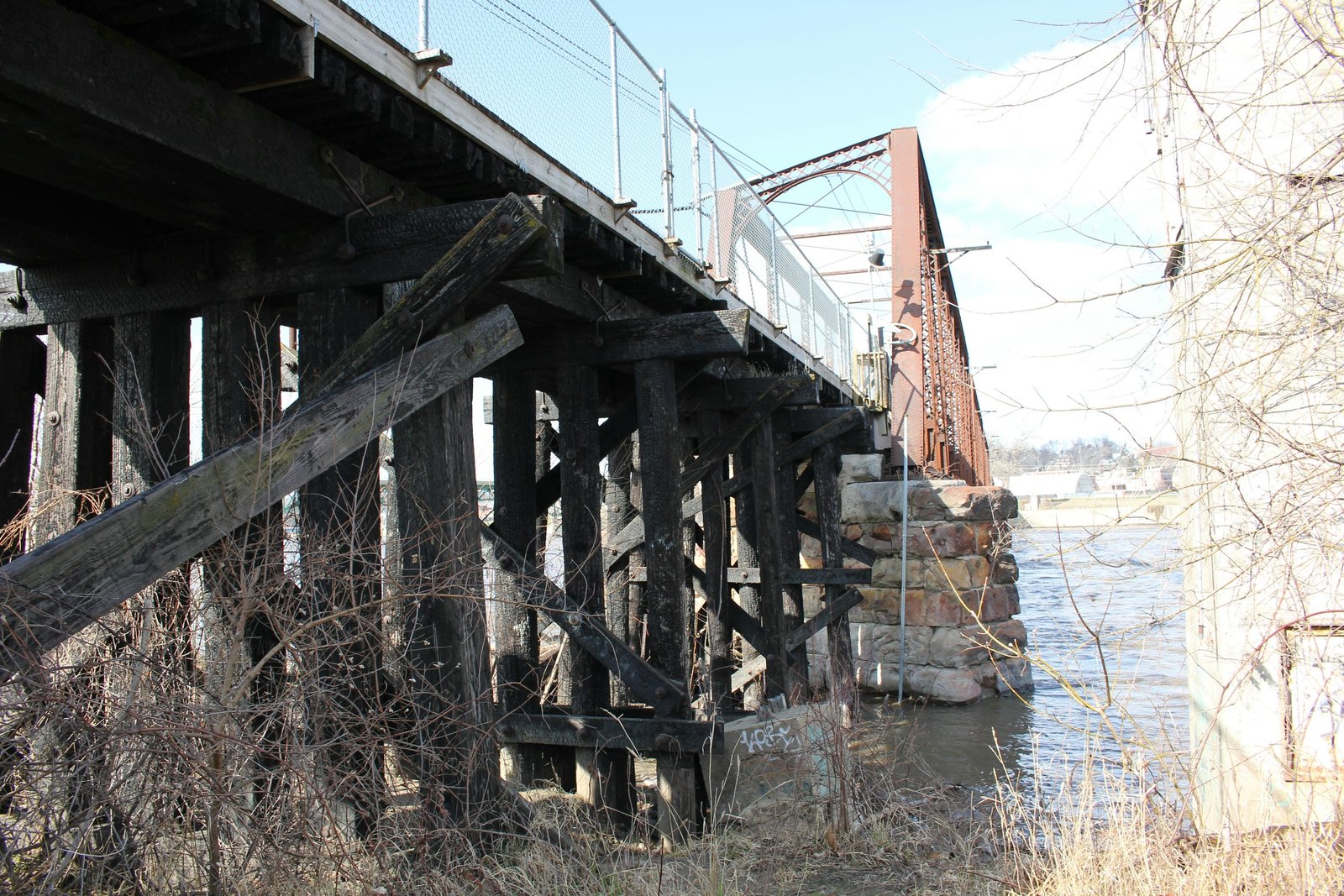
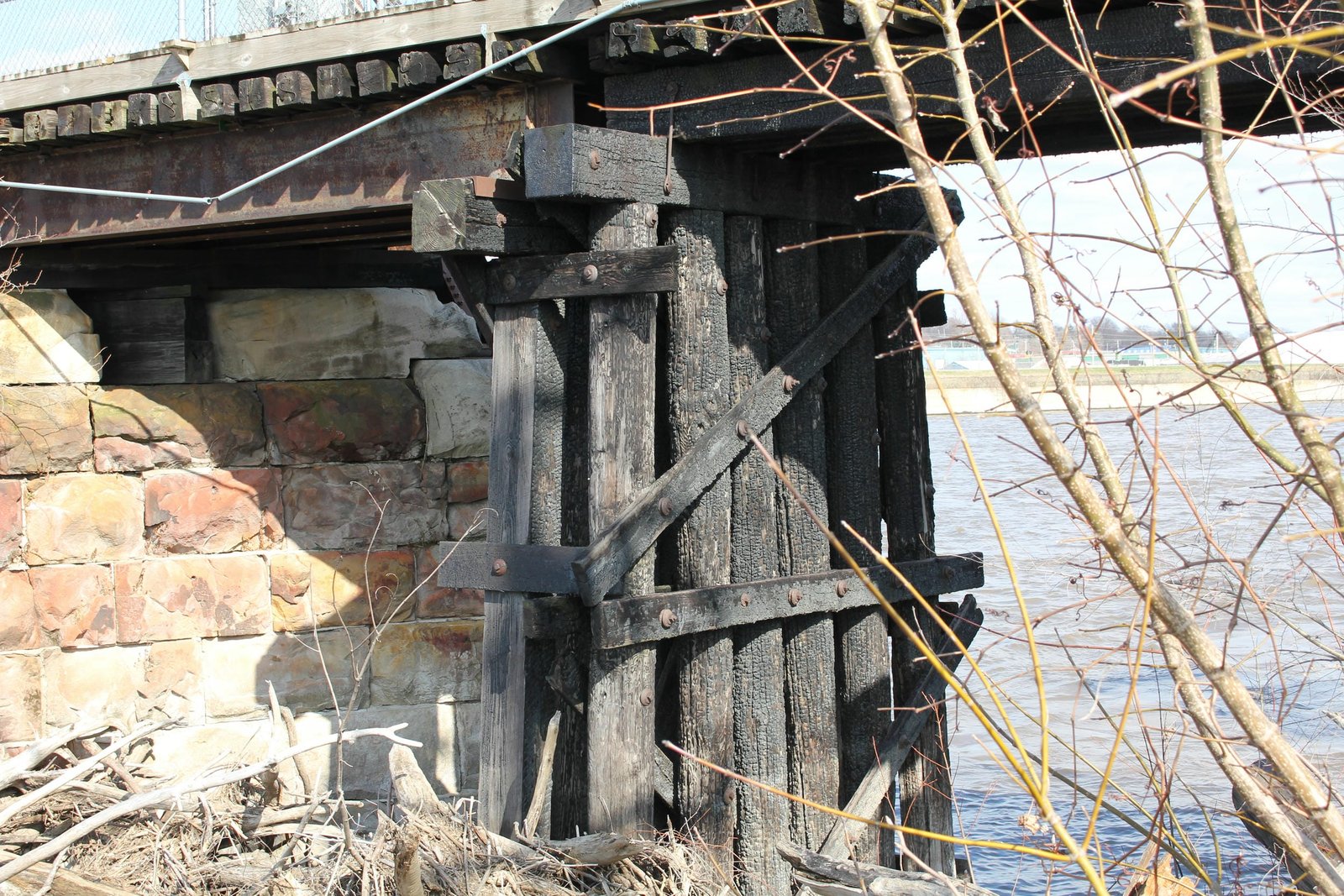
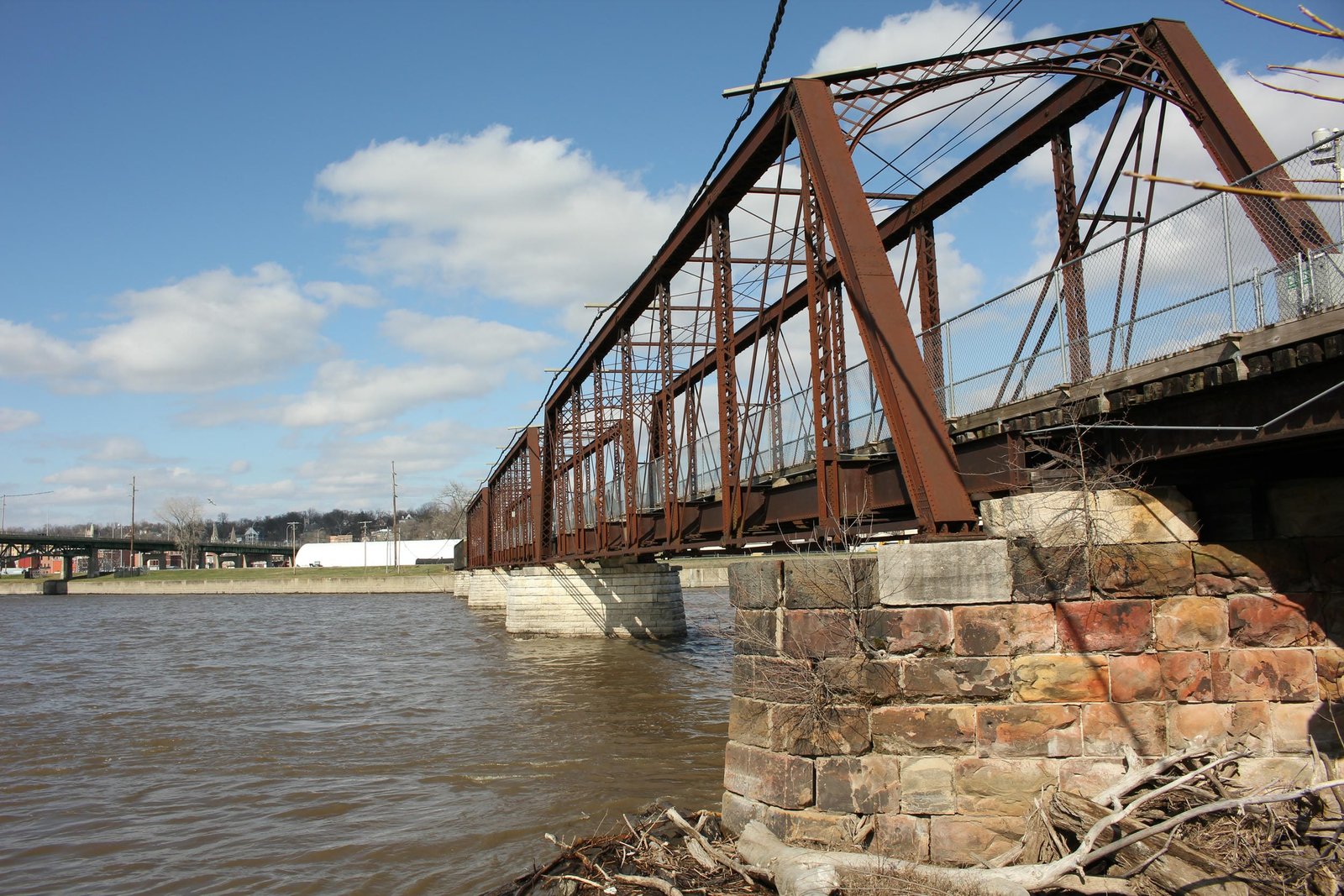
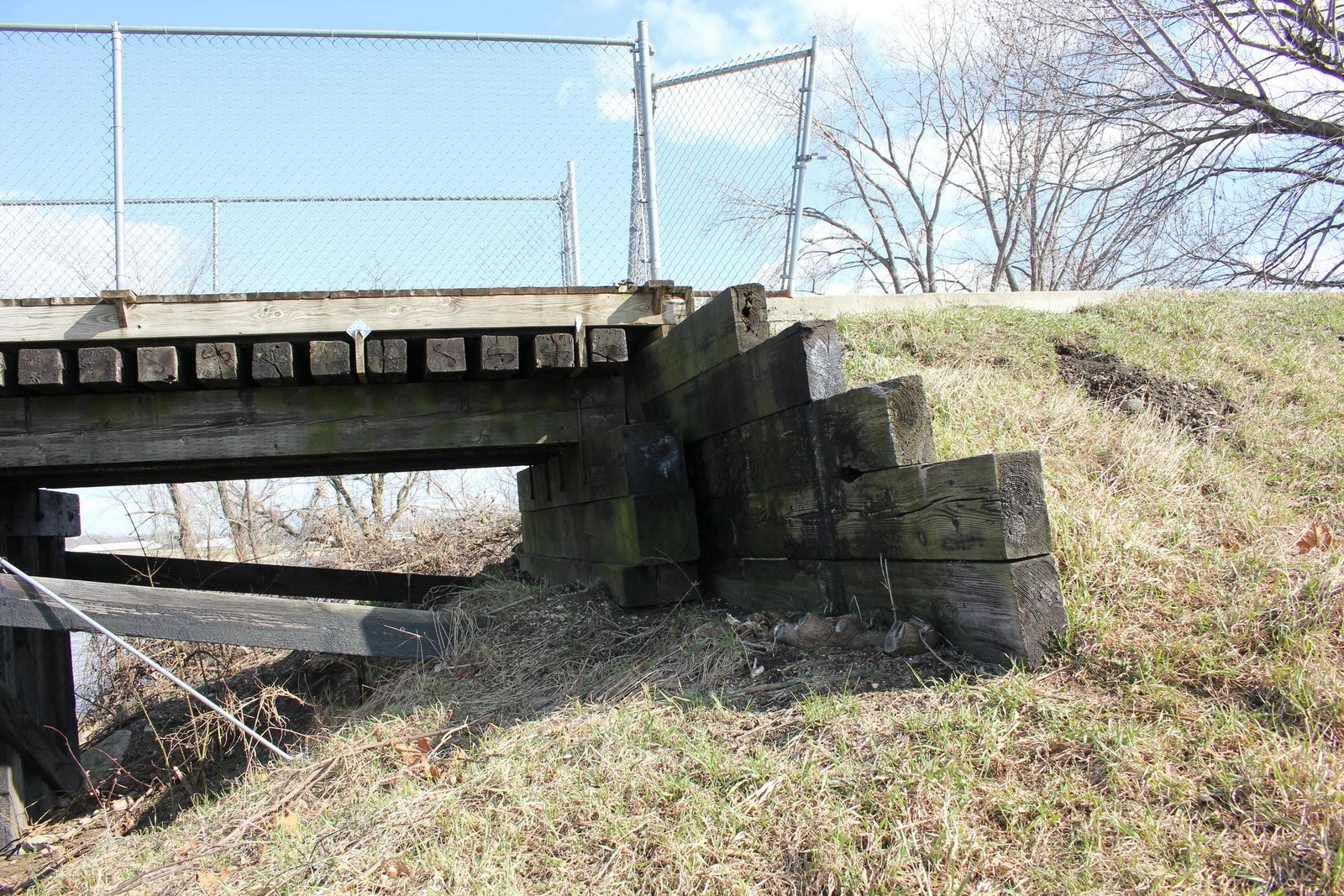
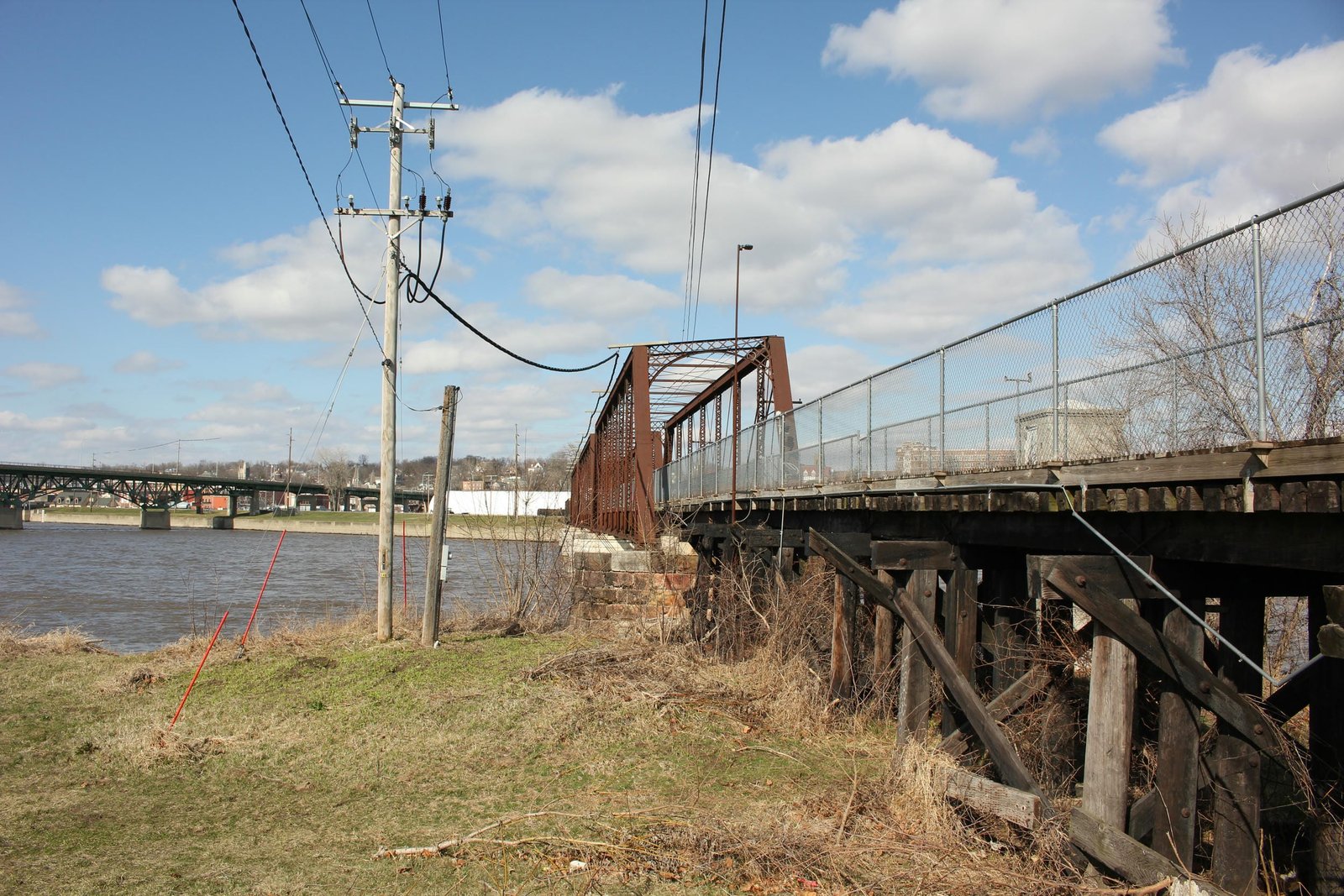
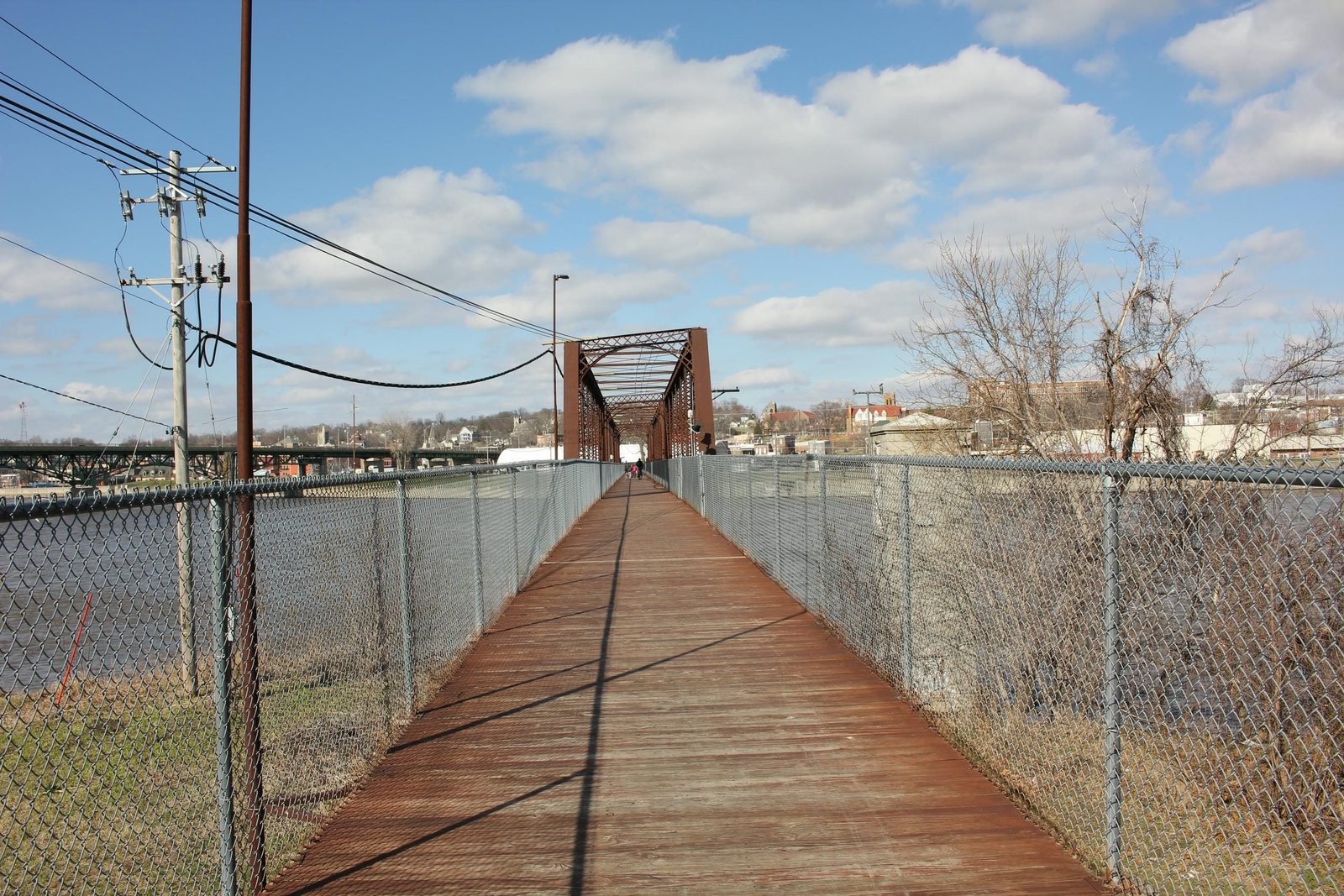
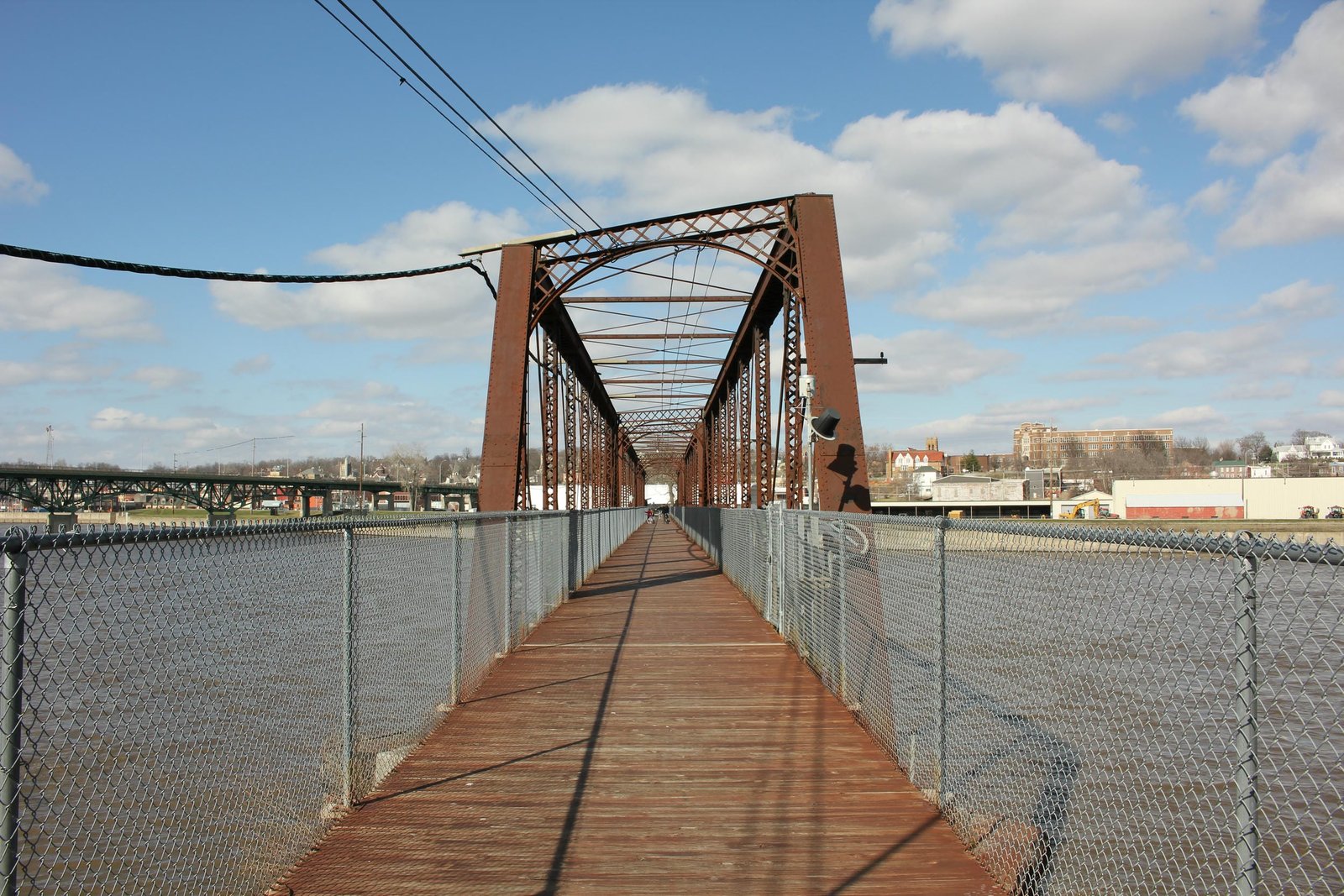
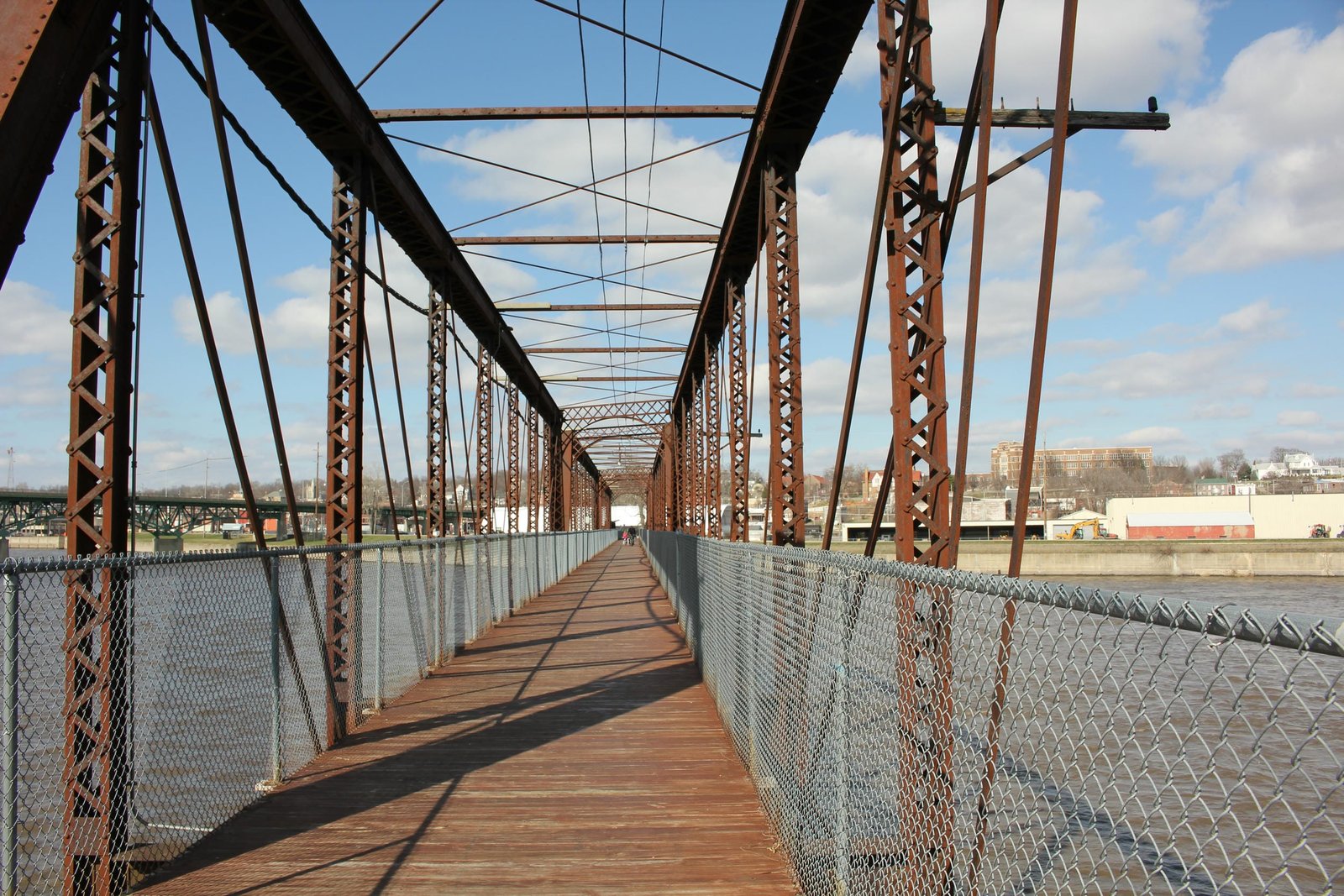
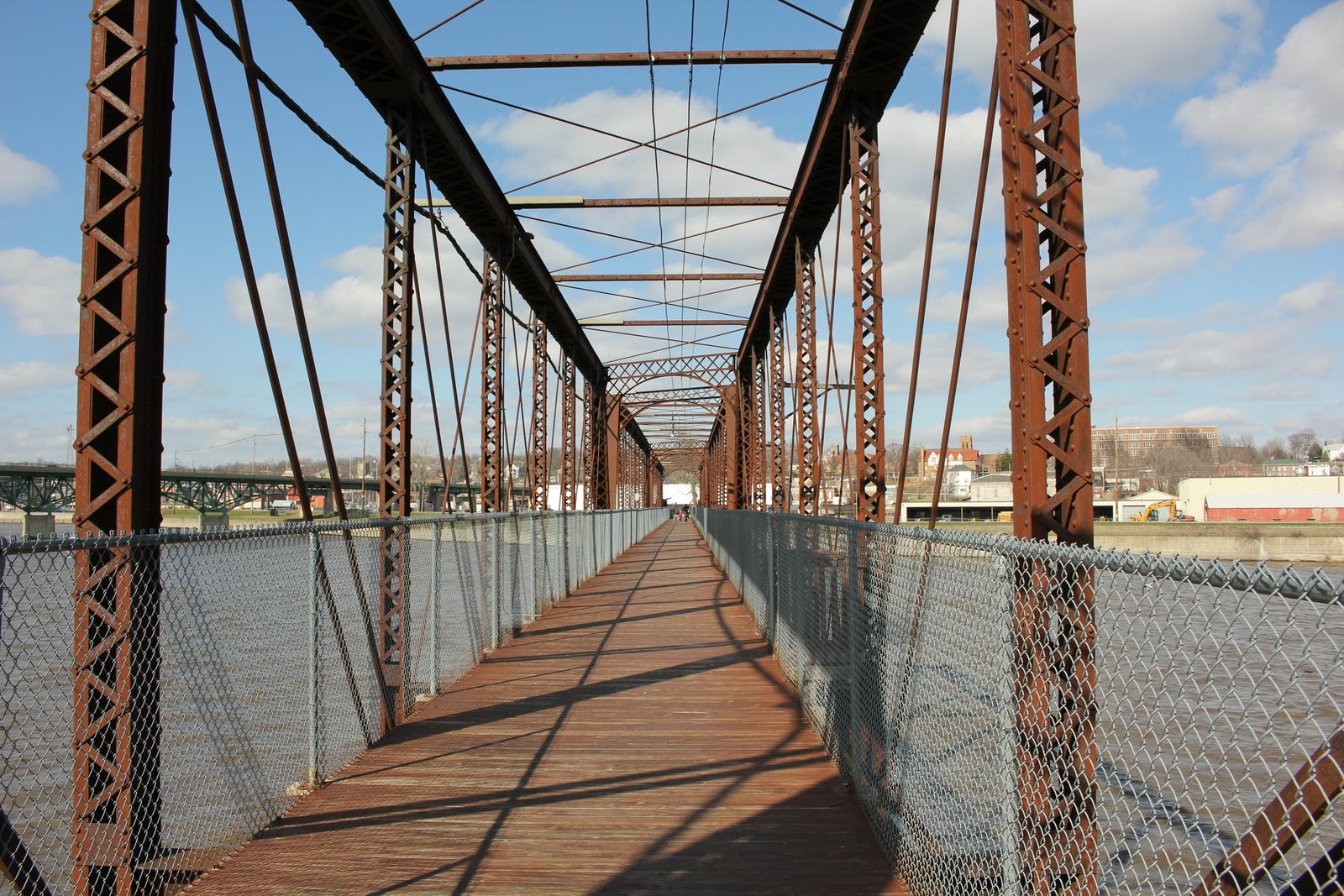
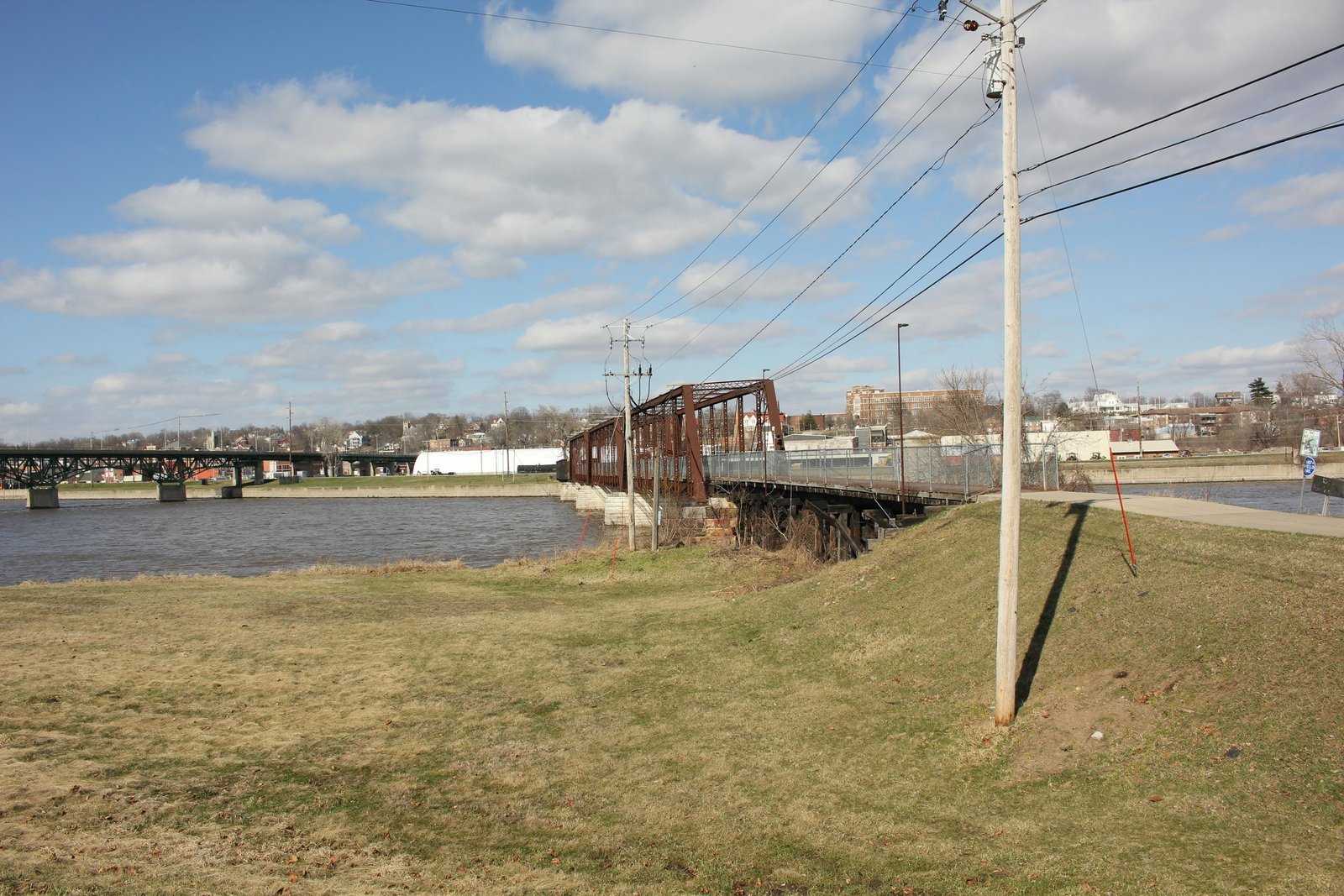
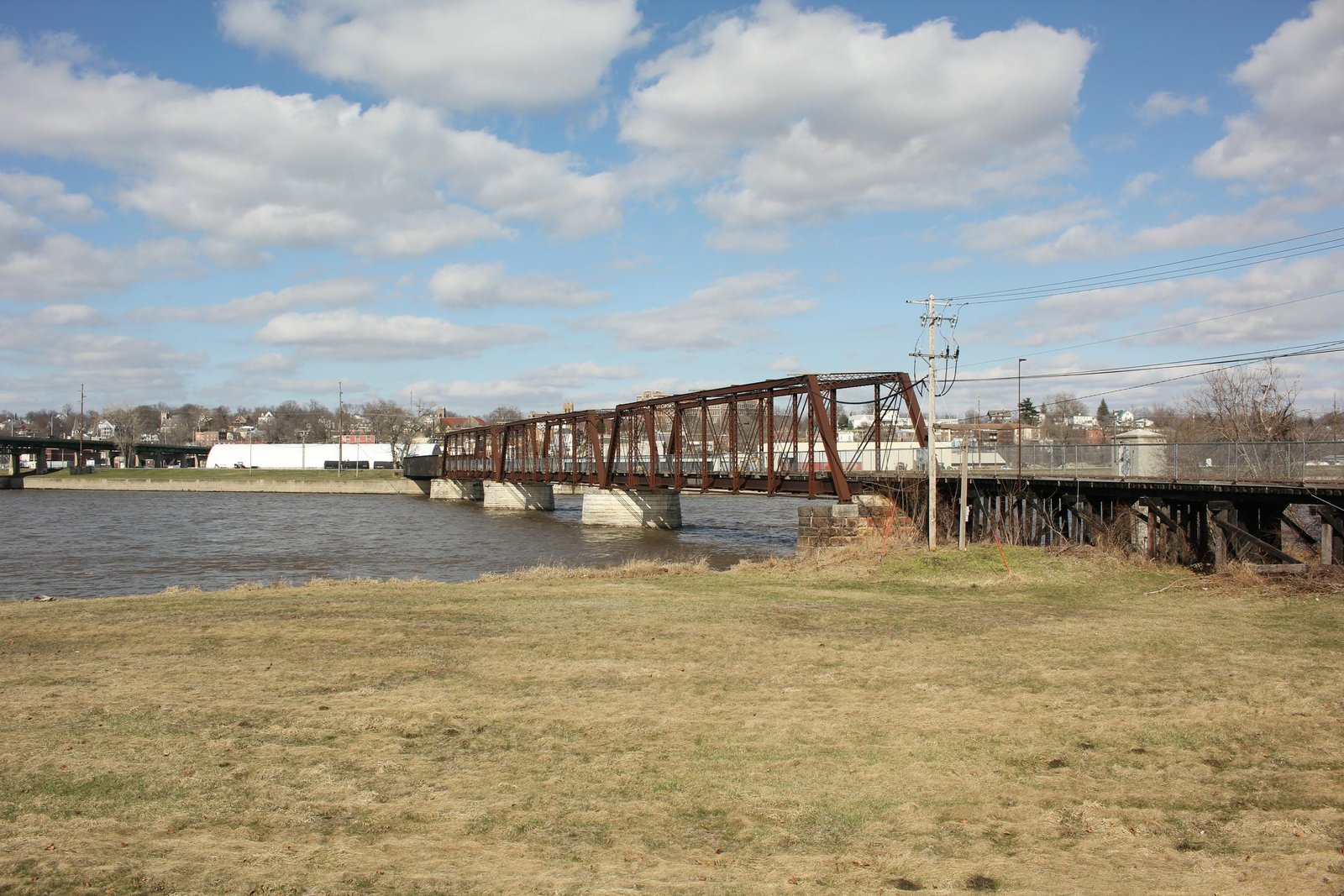
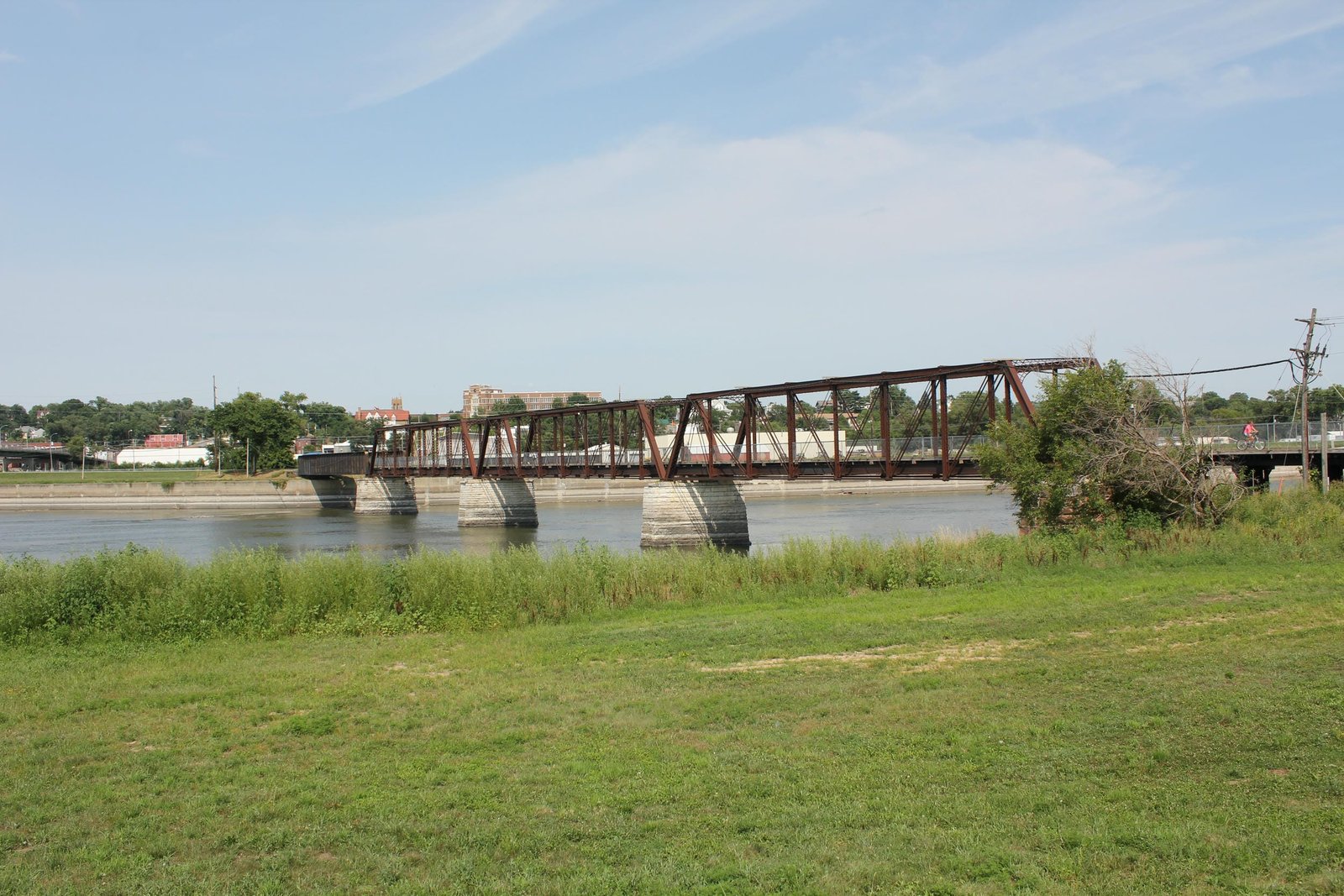
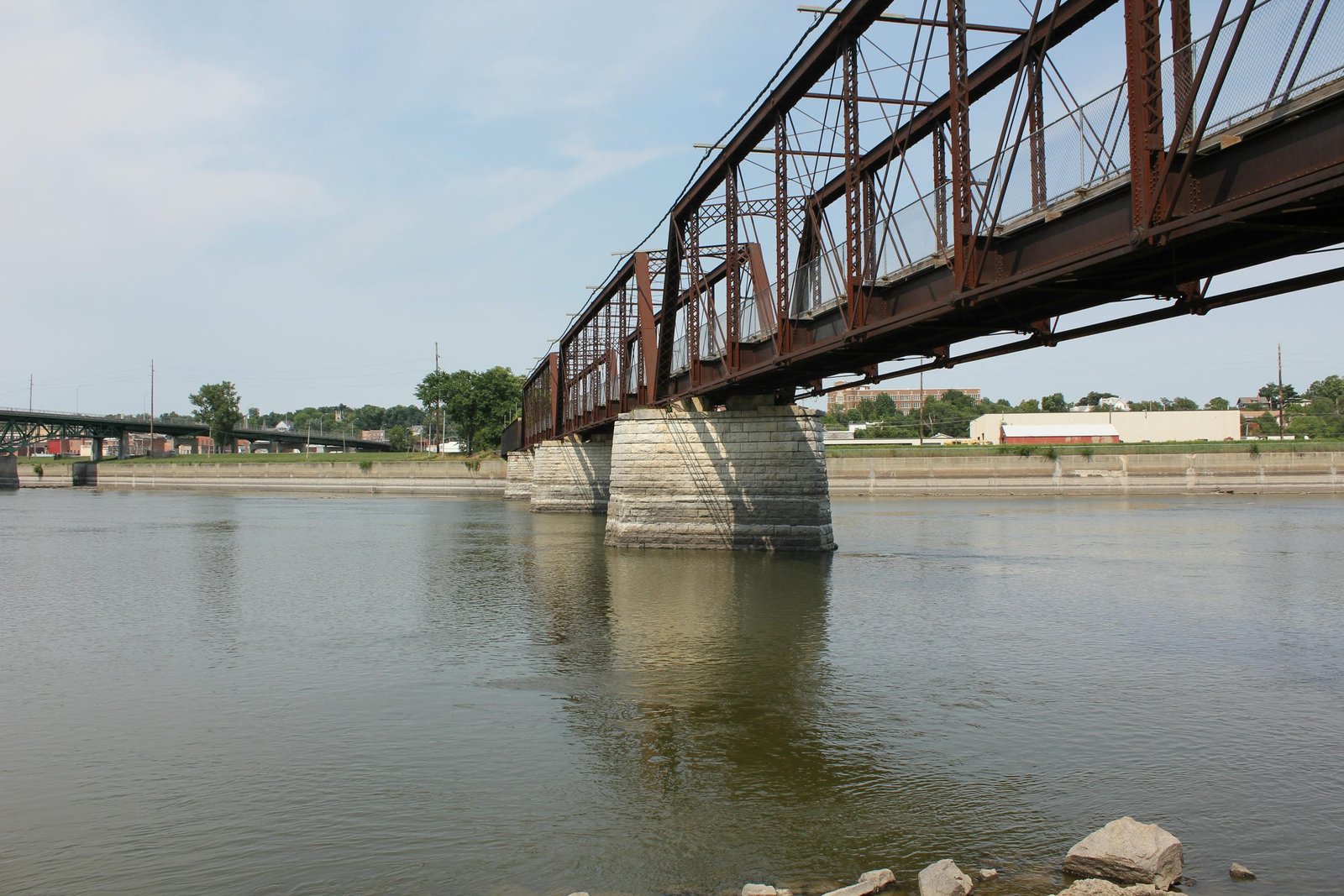
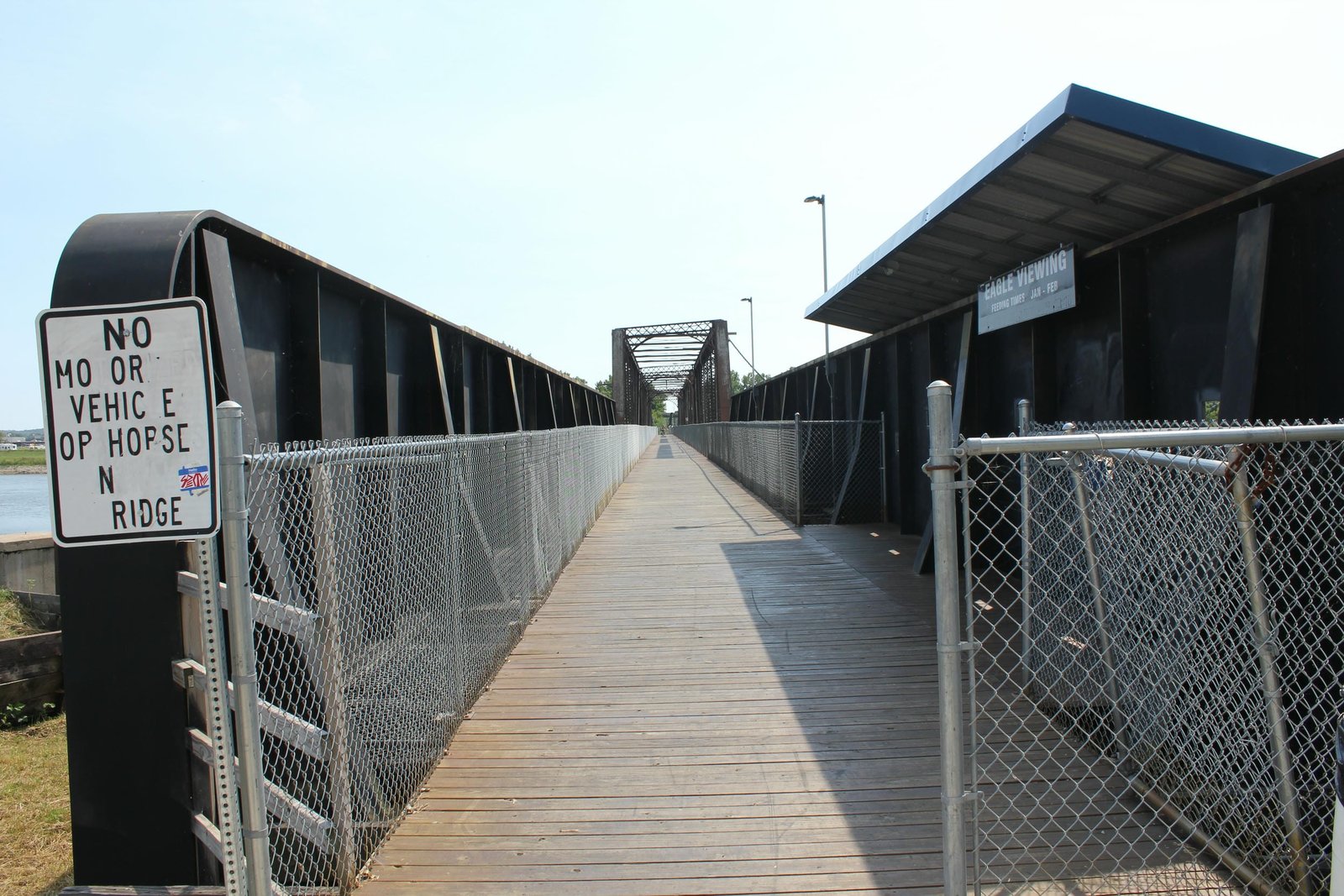
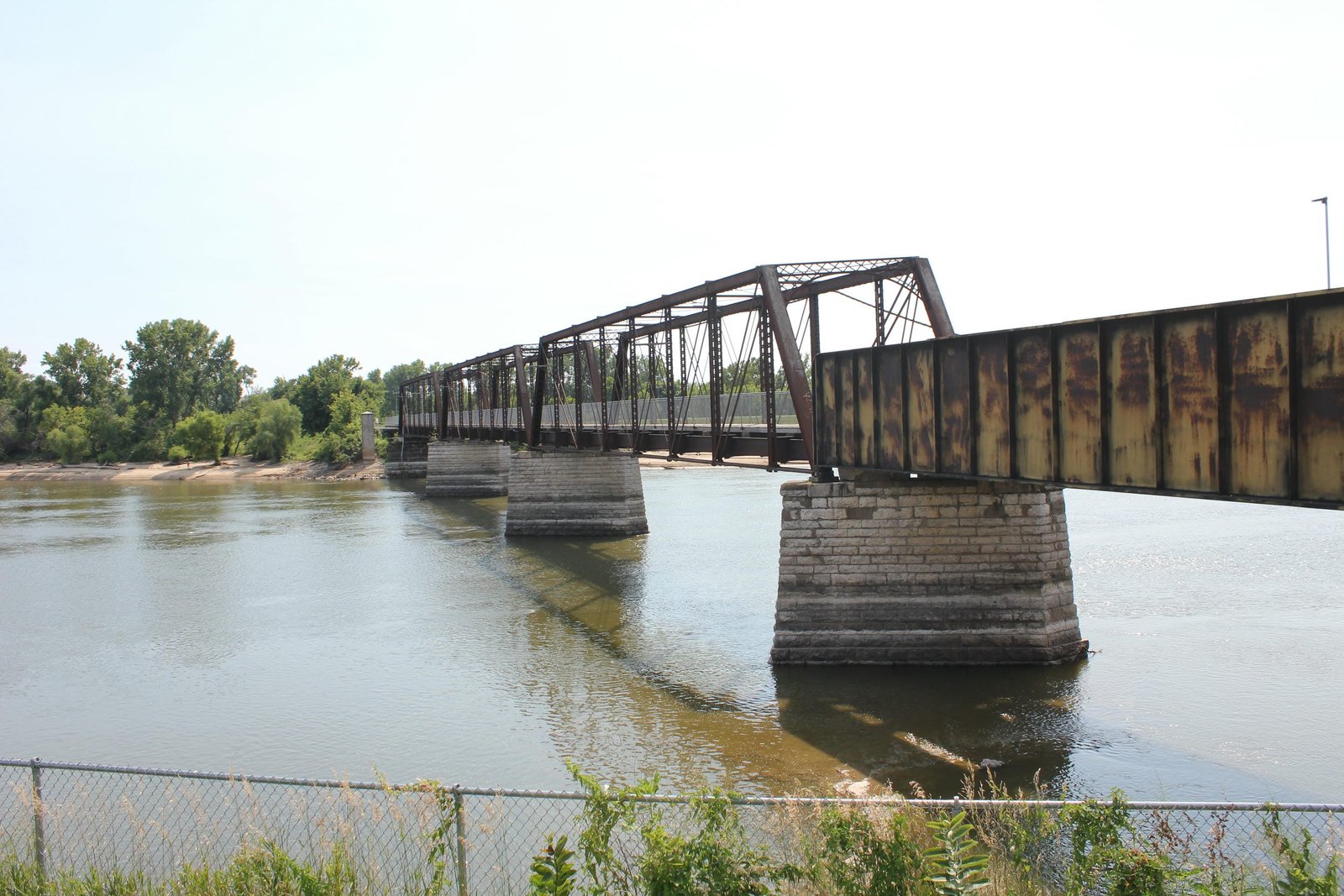
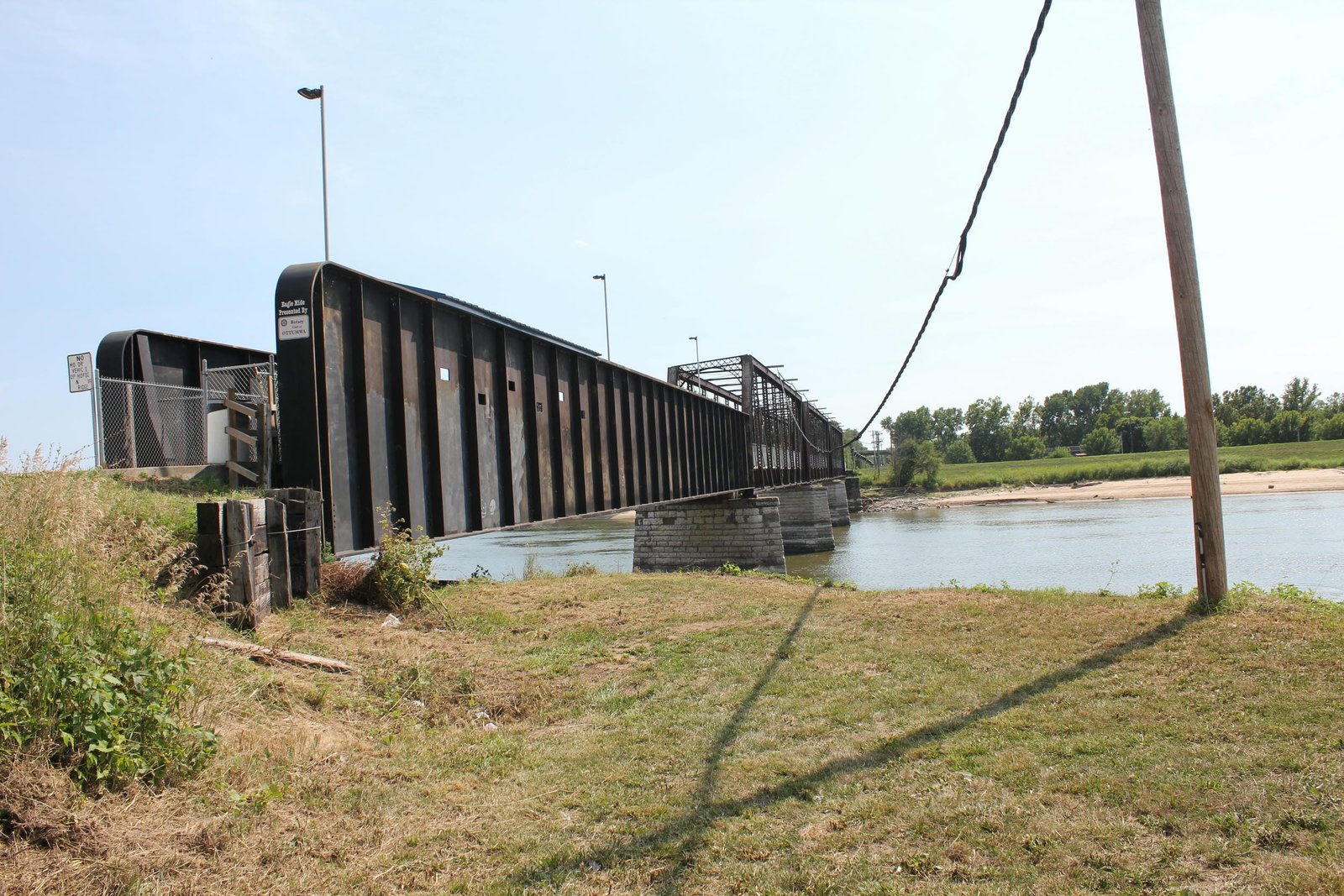
Located in Ottumwa, this iconic through truss bridge carries a former Wabash Railroad branch line over the Des Moines River. The first bridge at this location was likely a timber pile trestle bridge, constructed when the line was first built. In 1879, the bridge was rebuilt with a more substantial structure, consisting of four 160-foot combination Howe through truss spans, believed to have been set onto timber pile piers. This bridge was reportedly built by the Clinton Bridge Company of Clinton, Iowa. By the late 1880s, it was desired to reconstruct the bridge with an iron span, set onto stone piers. Work on the new bridge commenced in June 1888, and was completed later that year. Initially, the bridge consisted of four iron through truss spans, set onto stone substructures and approached by timber pile trestle spans at the south end. In approximately 1930, a short steel stringer span was added to the south approach. The biggest alteration to the bridge came early in the morning on February 13, 1973; when a train derailed on the north span of the bridge, destroying the span. It took until October of that year to clean up the wreckage, and it was unclear if the bridge would be rebuilt. Later in 1973, the Board of Directors for the N&W authorized rebuilding the bridge, and a new through plate girder span was installed in January 1975. After the bridge was abandoned, the structure sat abandoned as Wapello County mulled it's future. In 2007, the bridge faced demolition, but community efforts raised funds to convert the bridge to a pedestrian crossing. Arson damaged the bridge in 2008, 2021 and again in 2022. After the 2022 arson, the south approach was reconstructed with modern pedestrian spans, giving the bridge its present configuration.
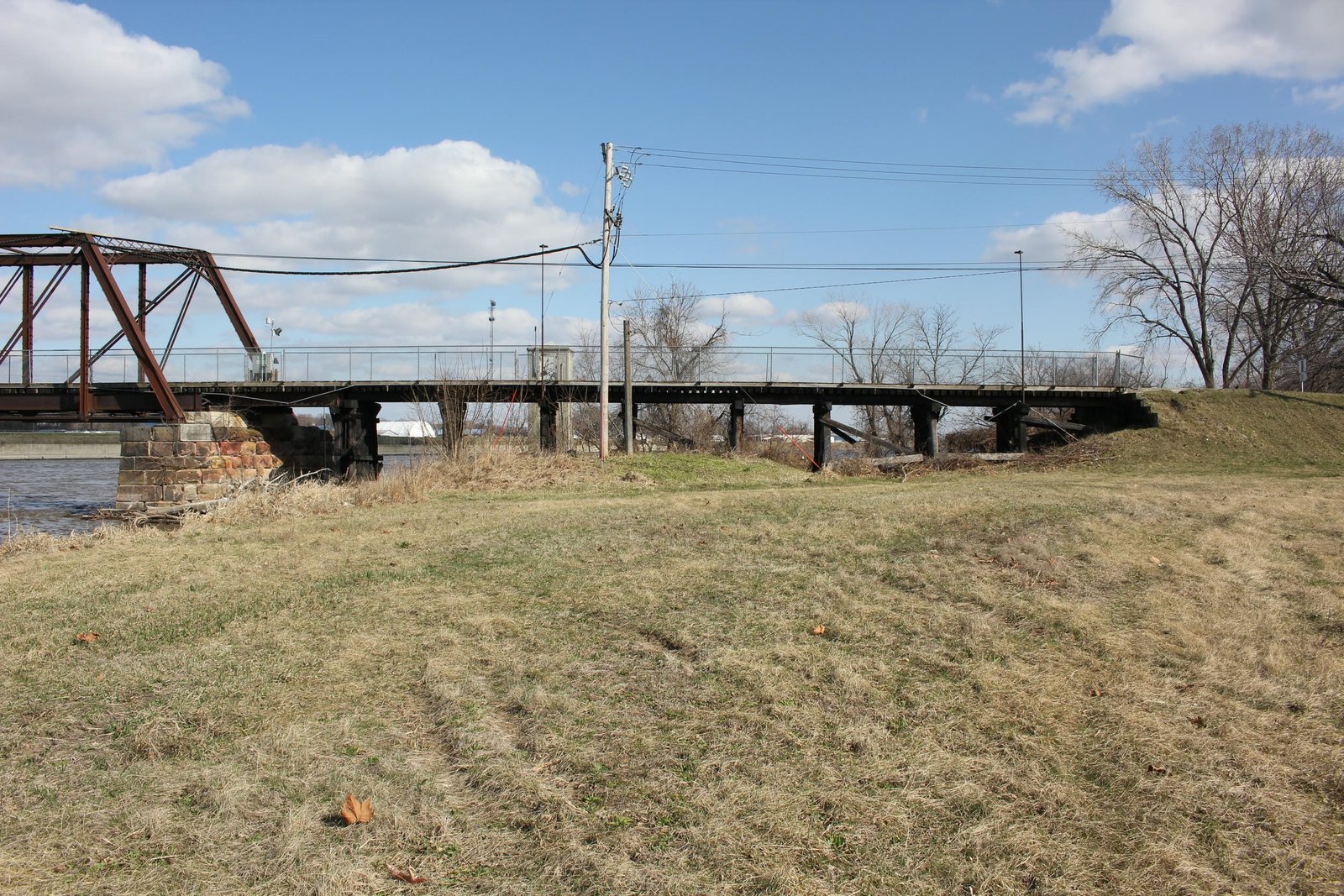
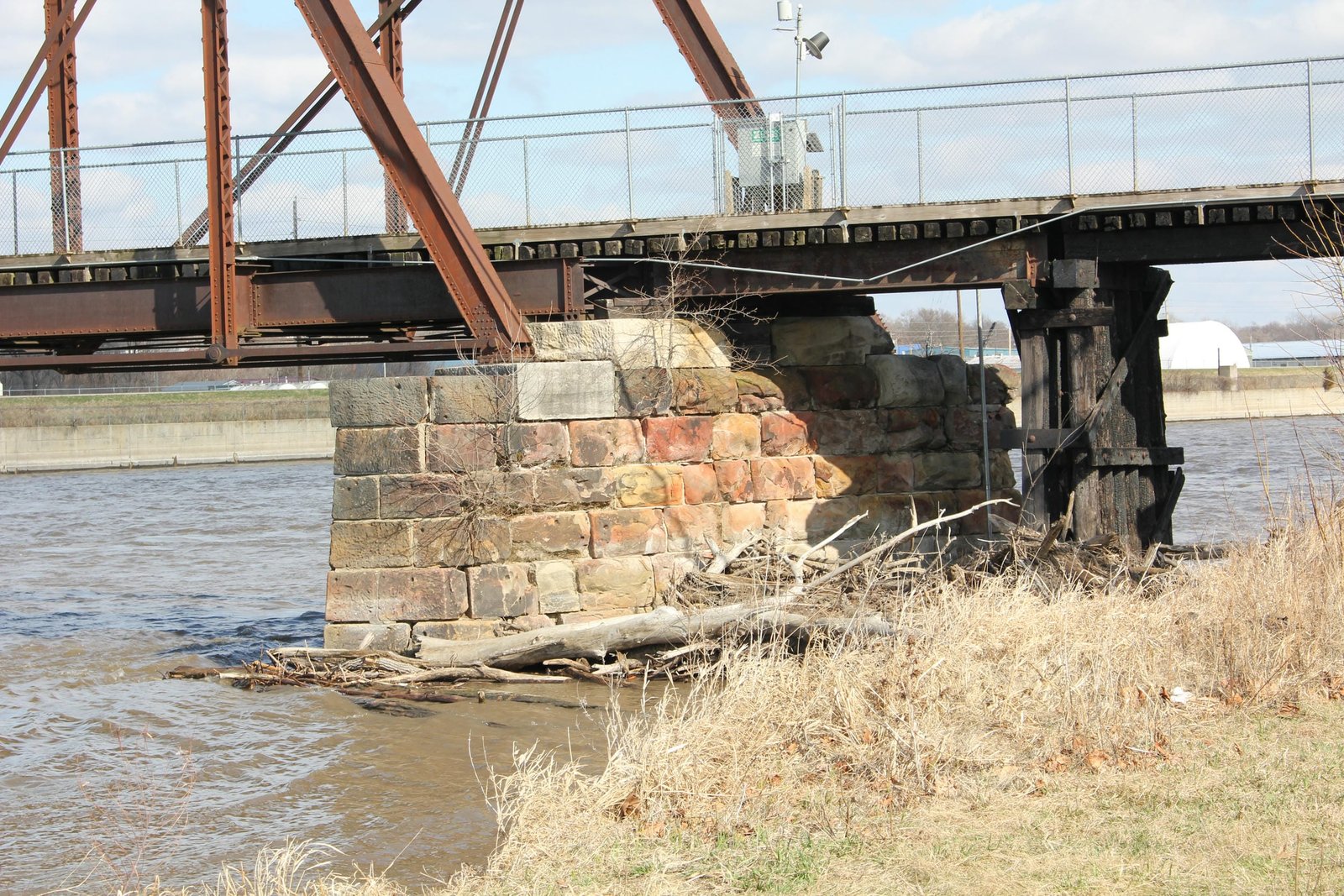
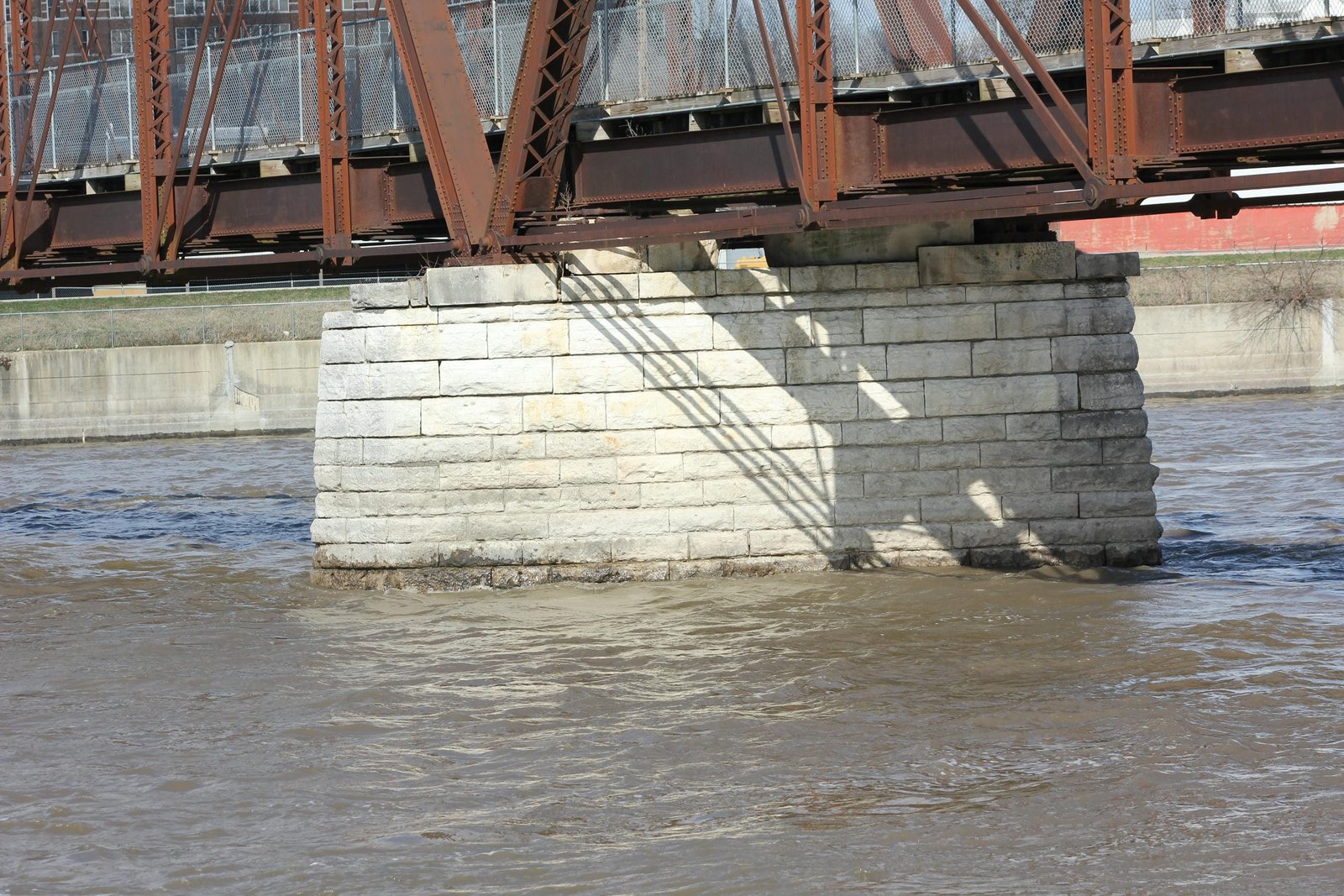
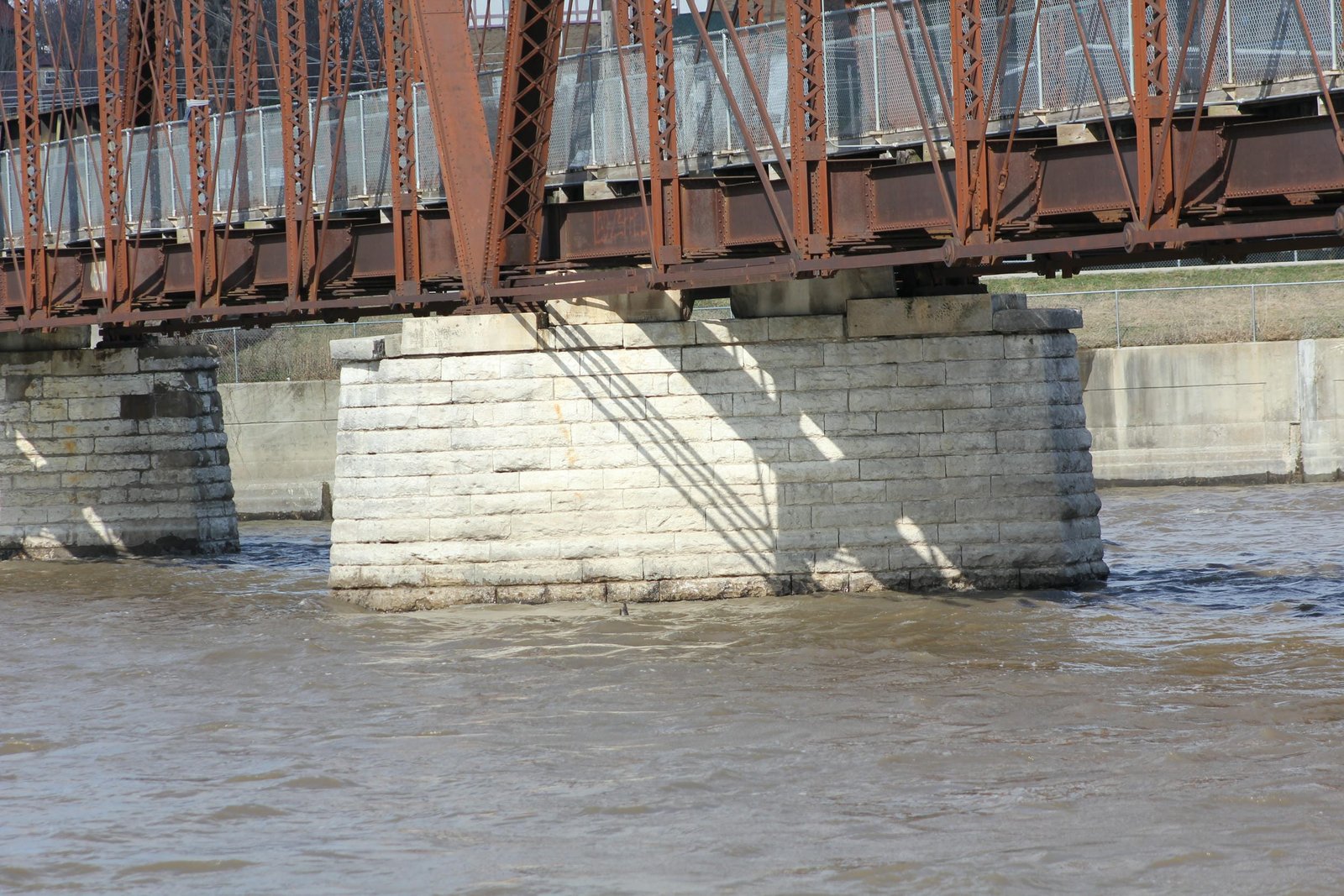
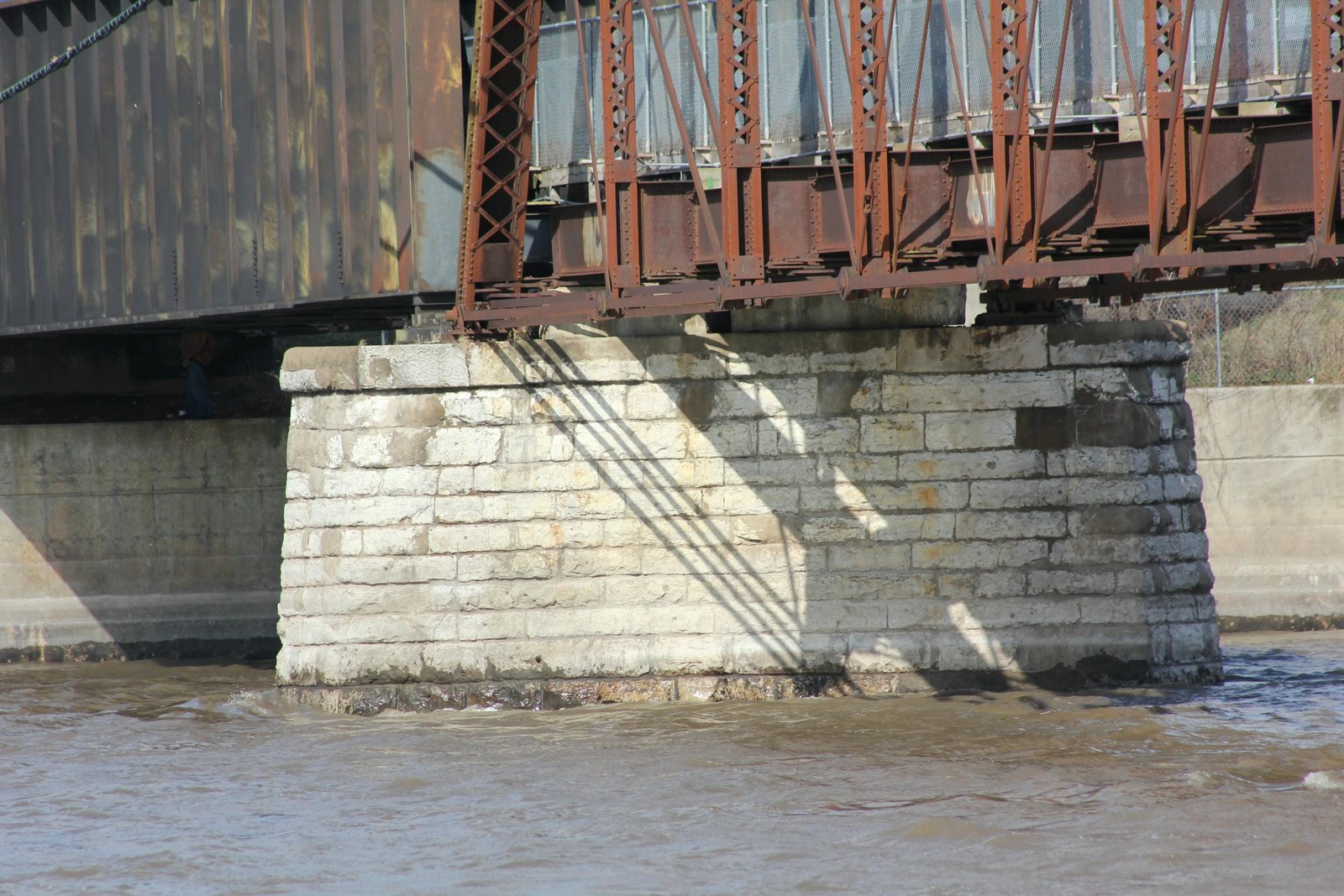
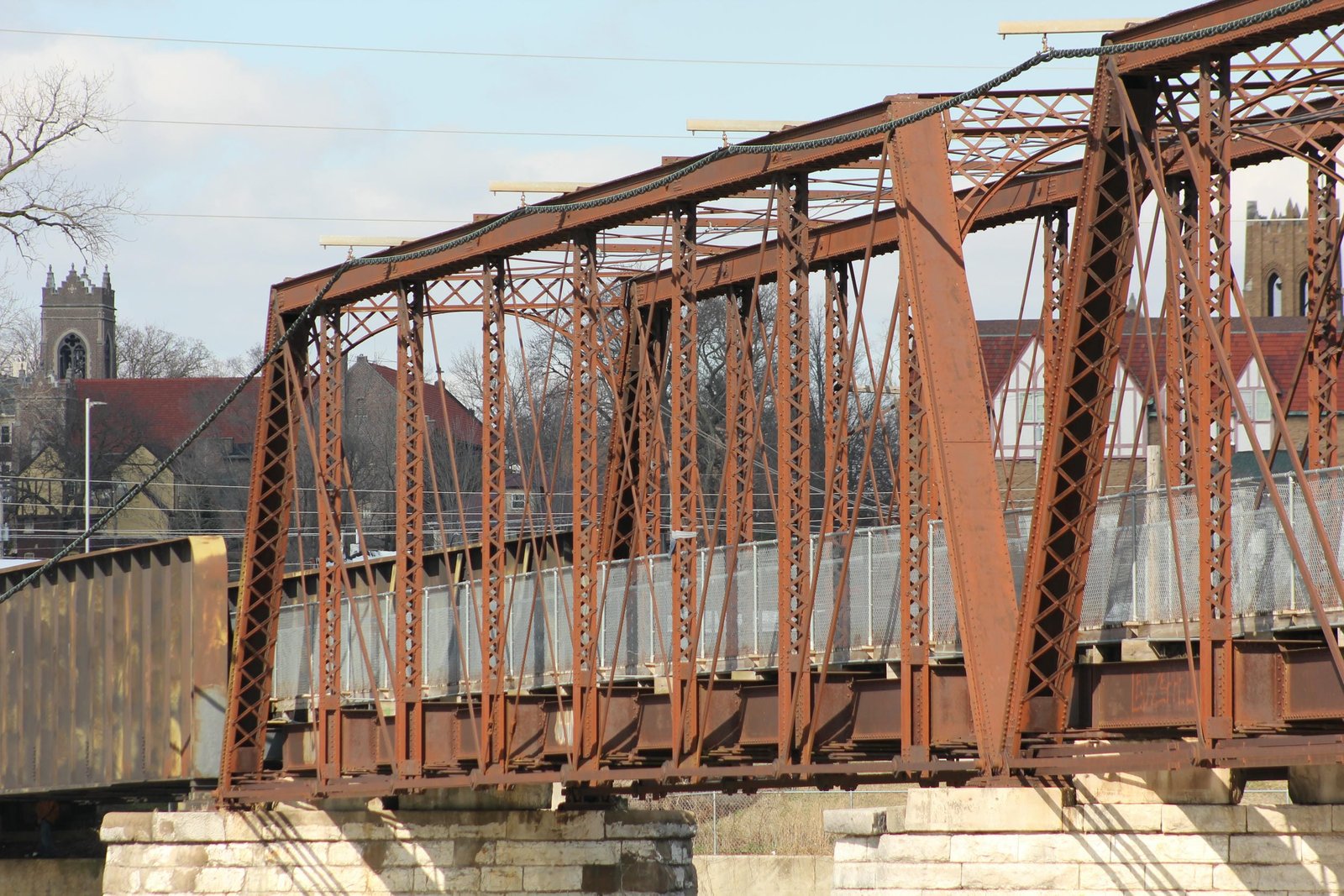
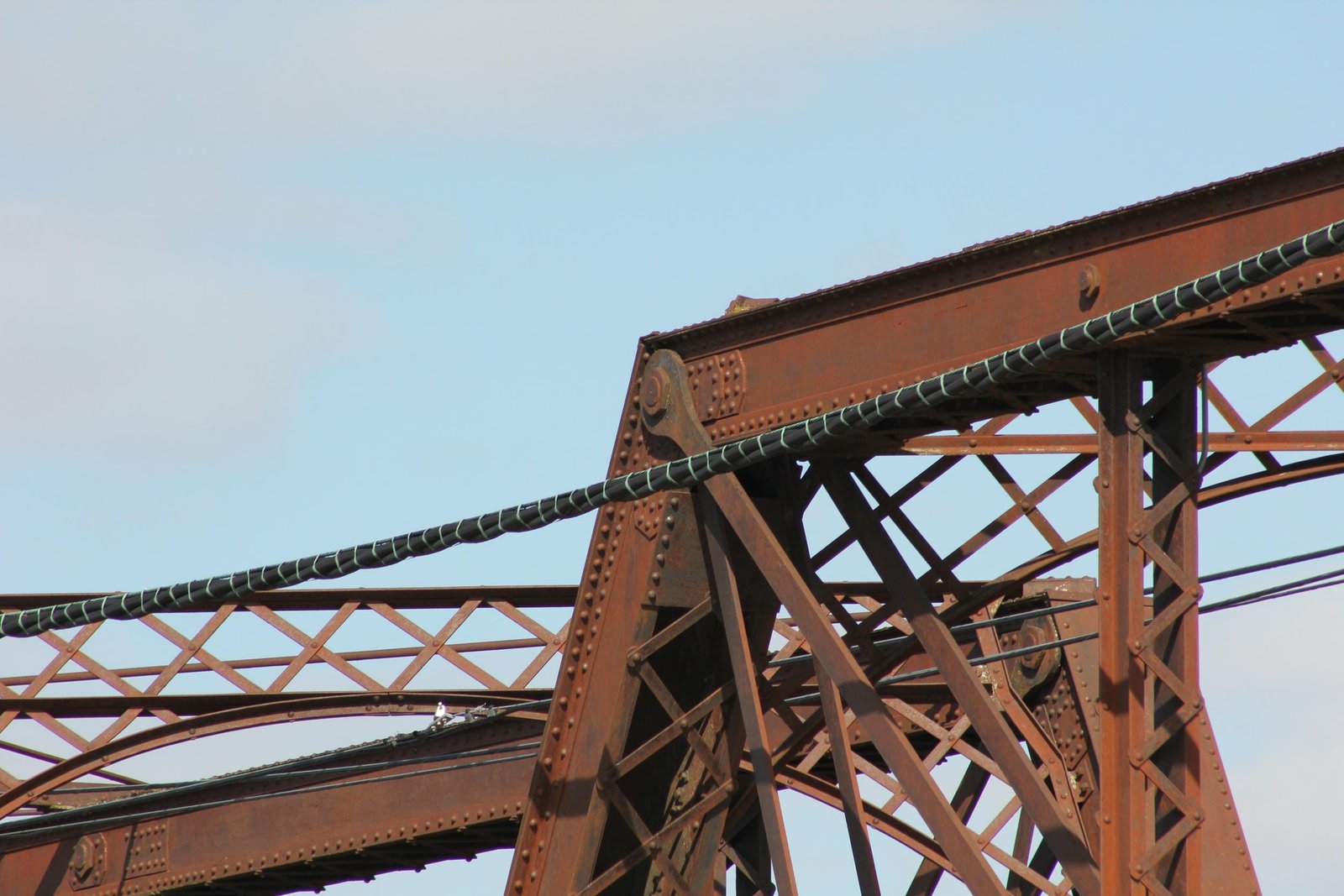
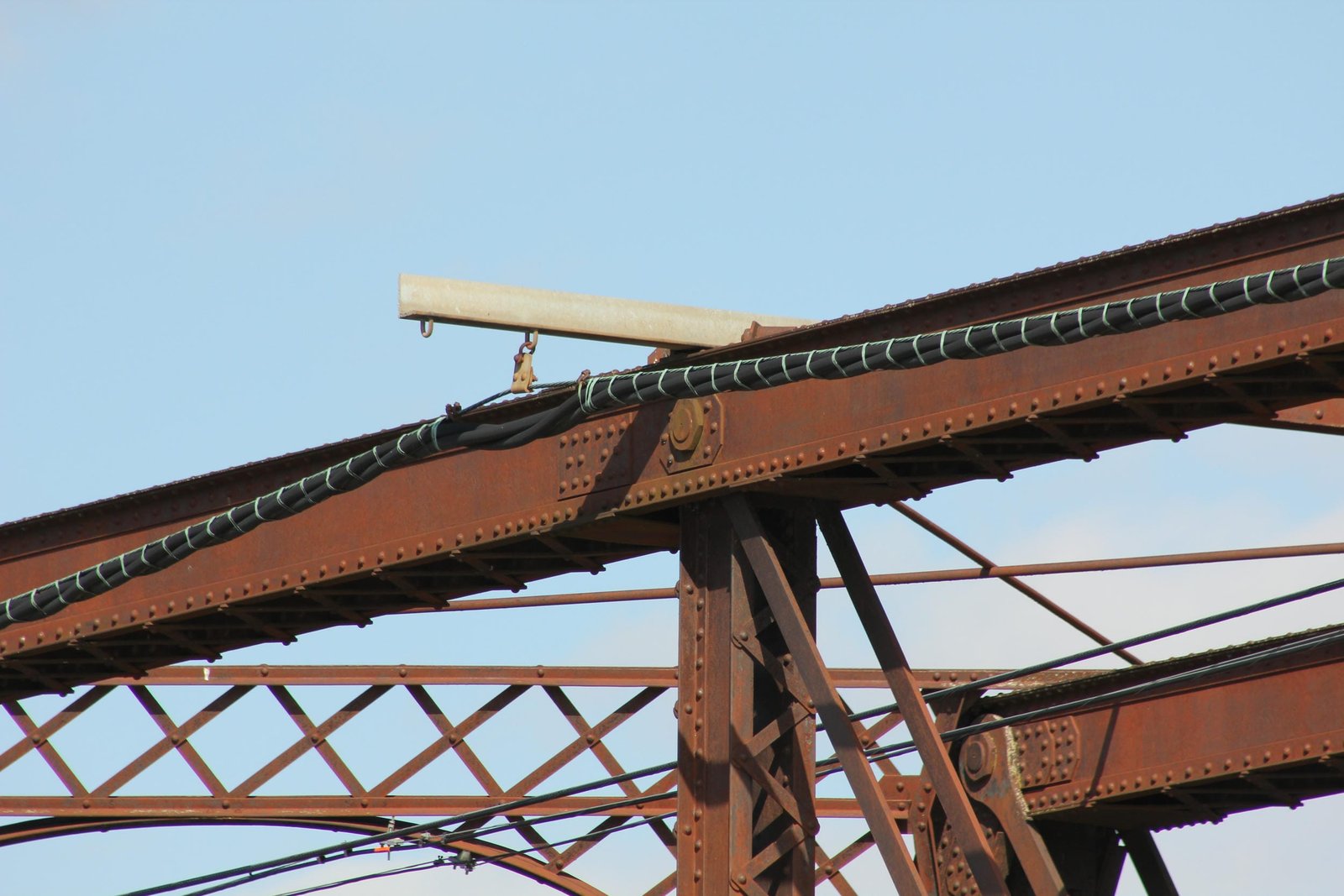
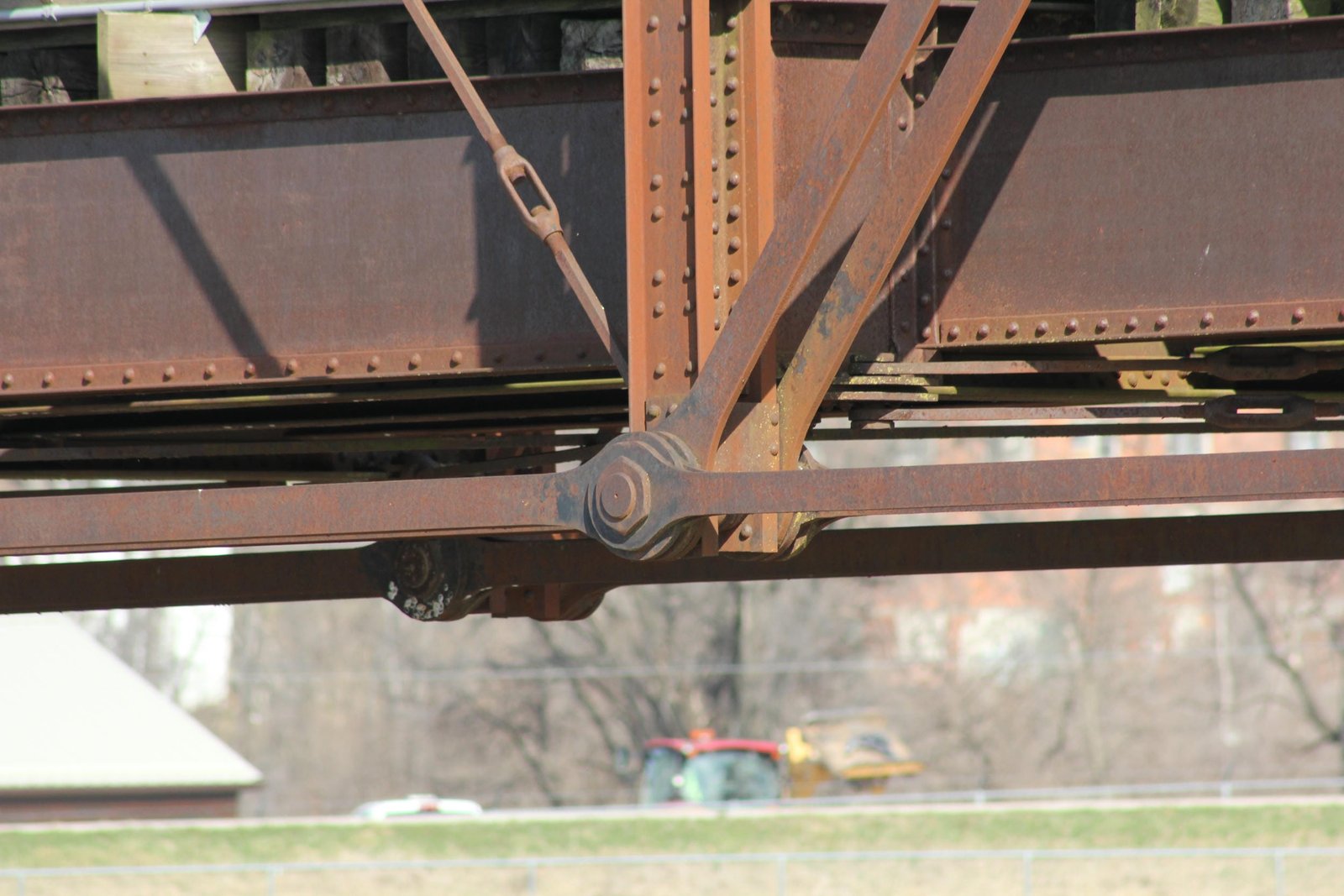
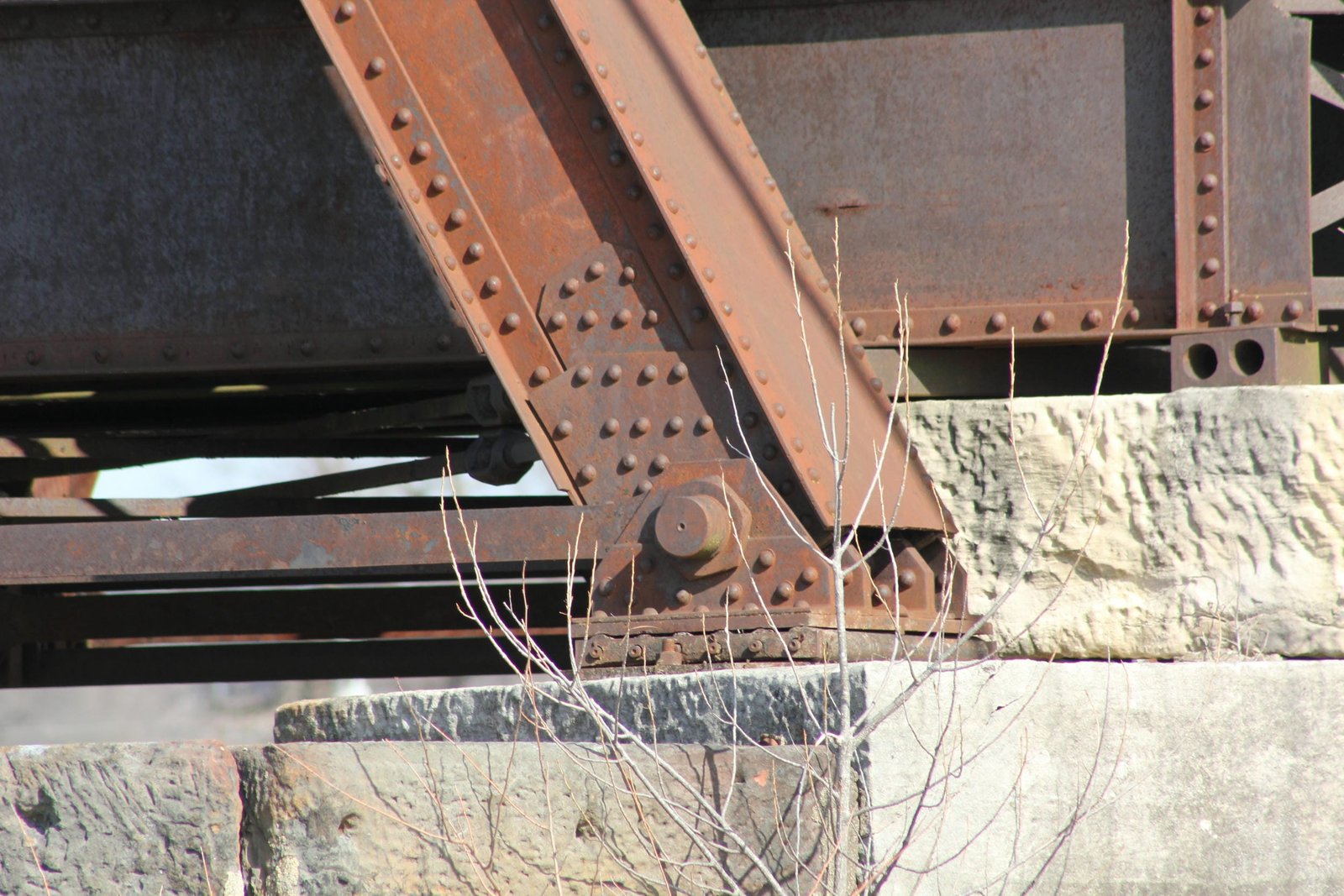
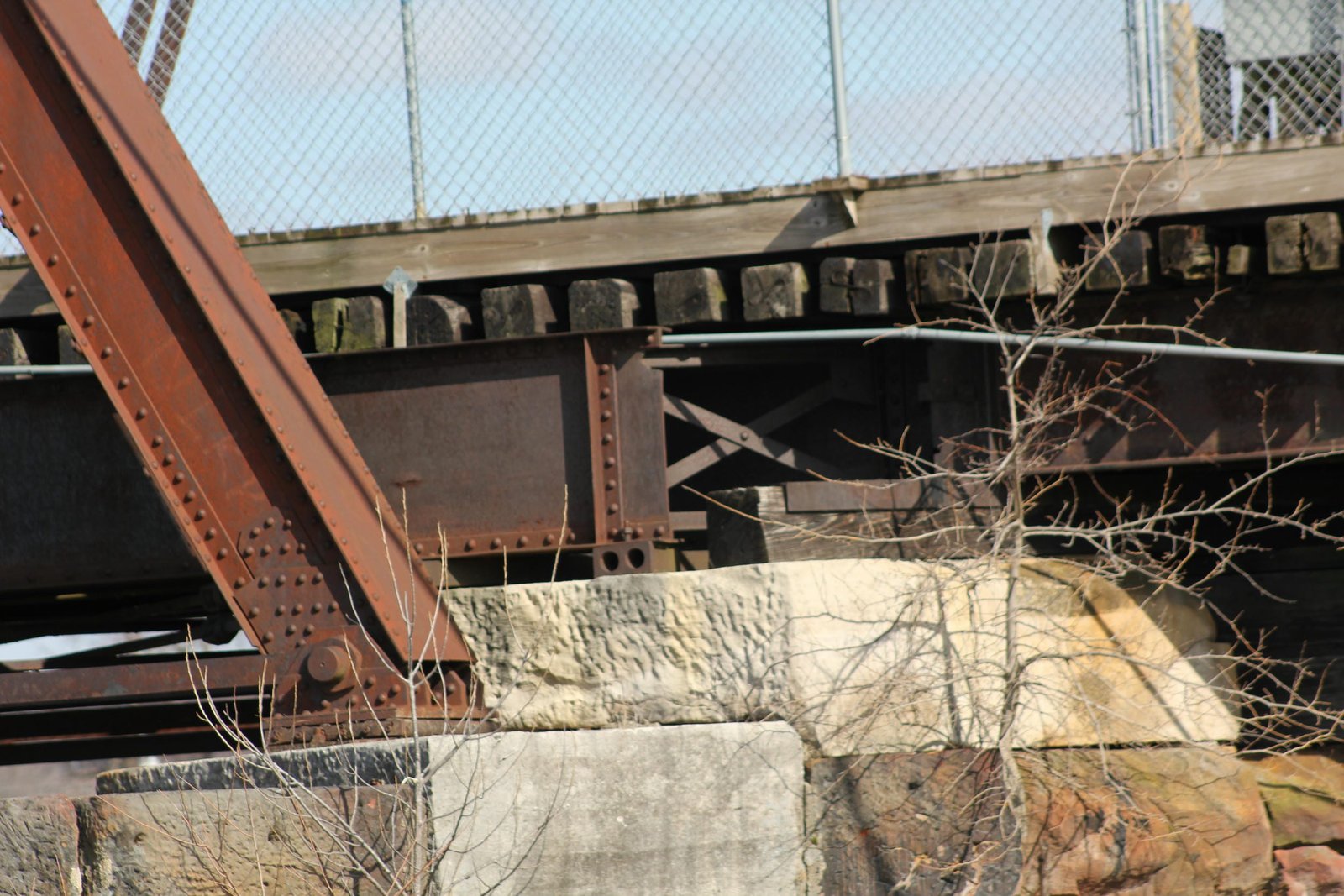
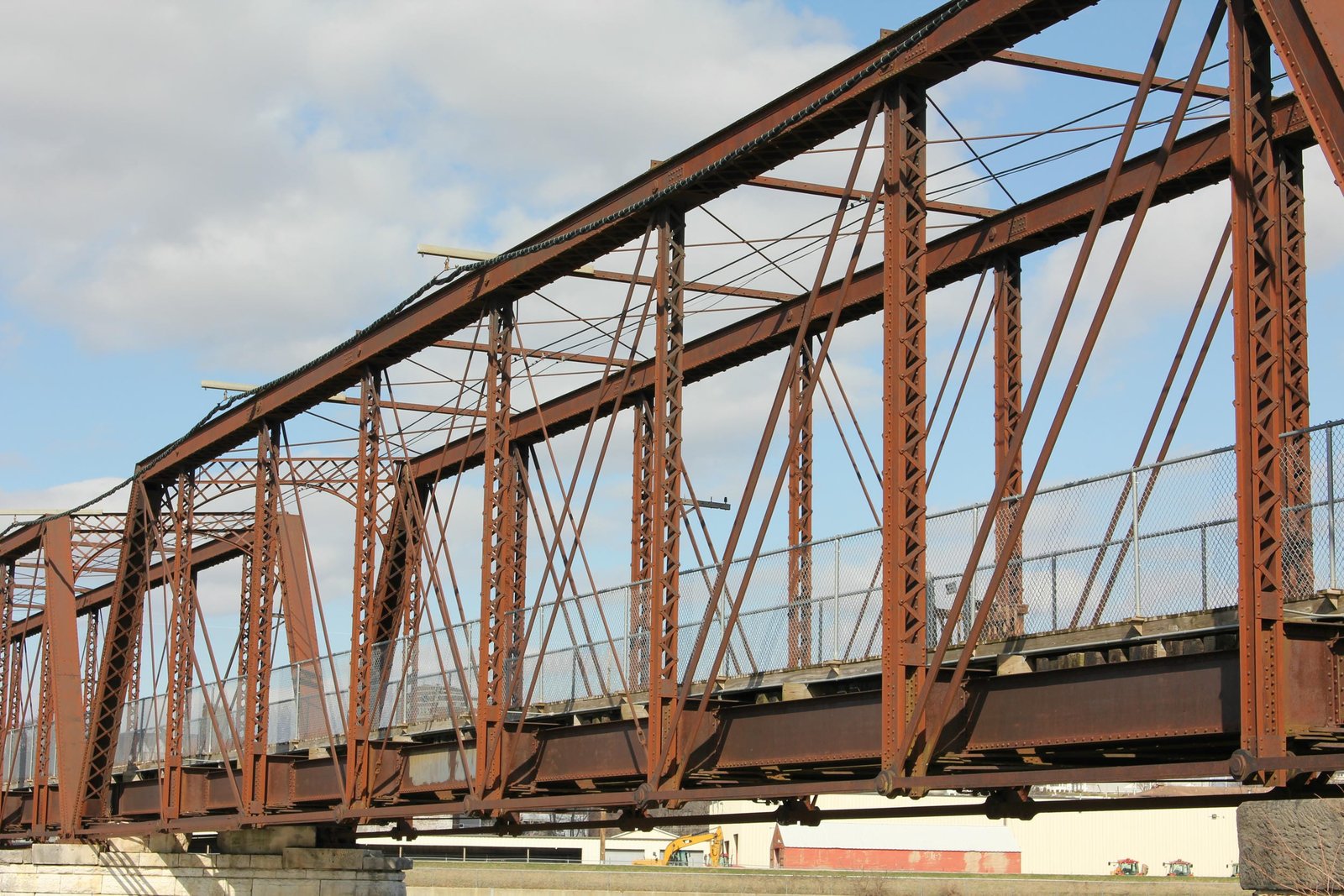
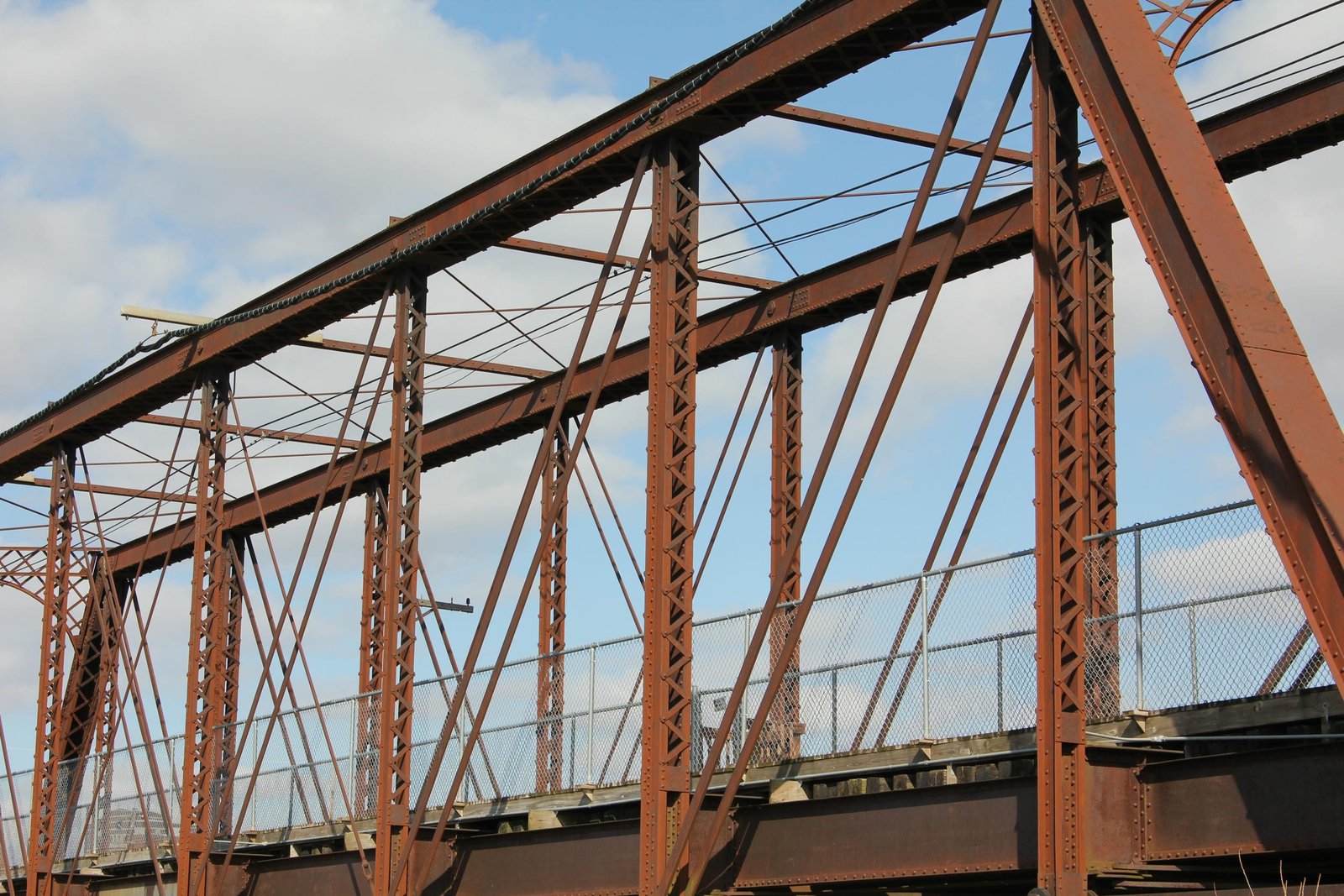
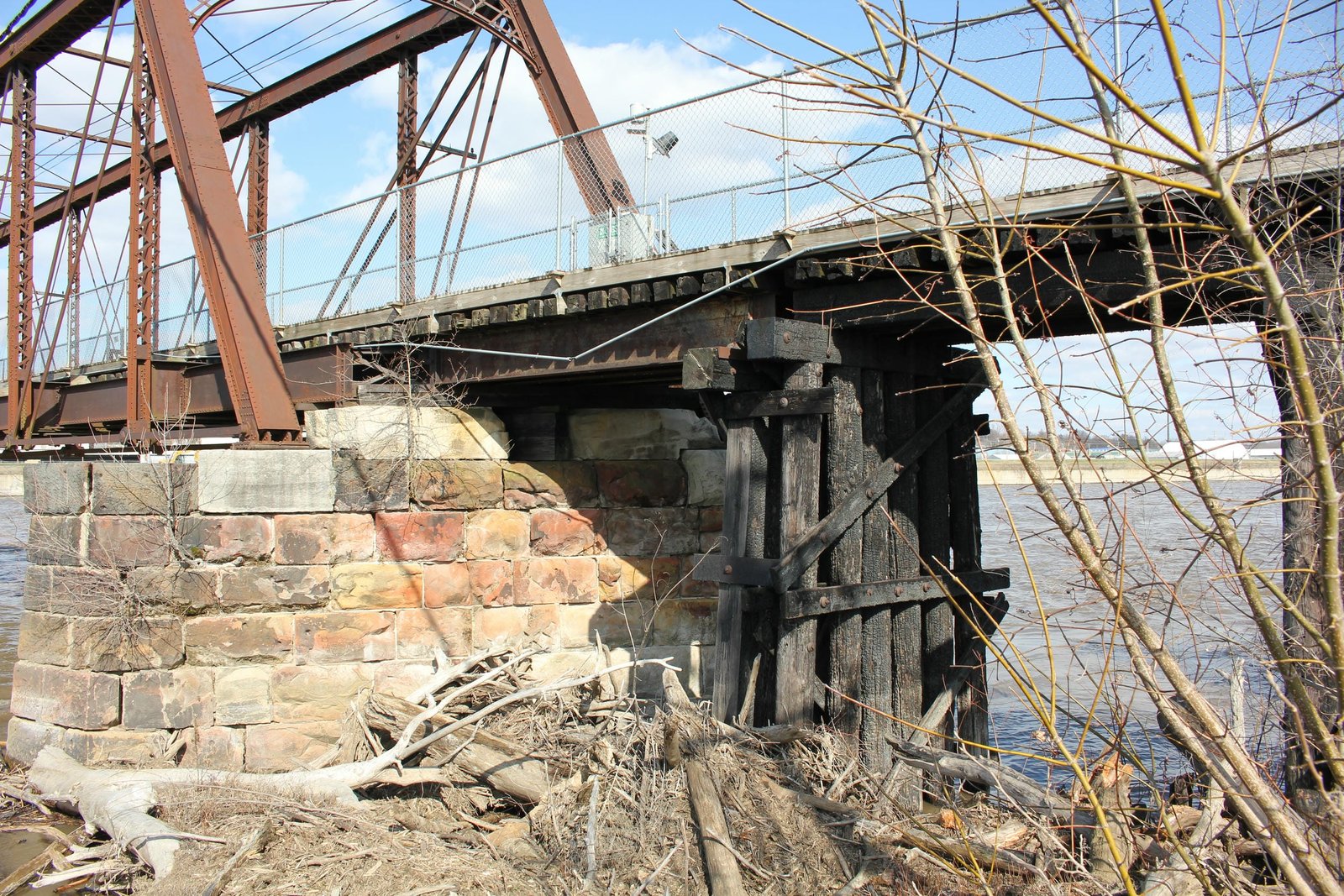
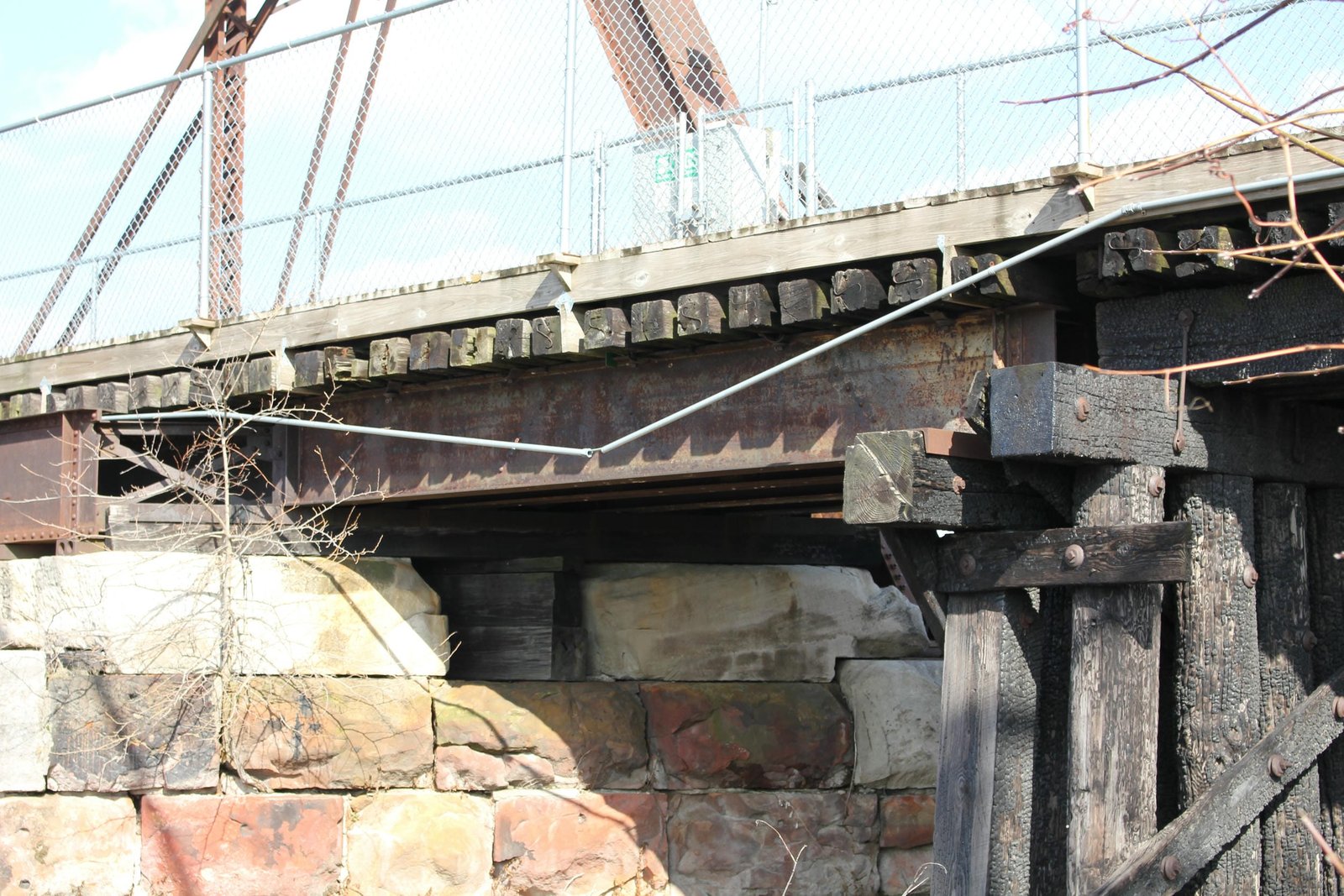
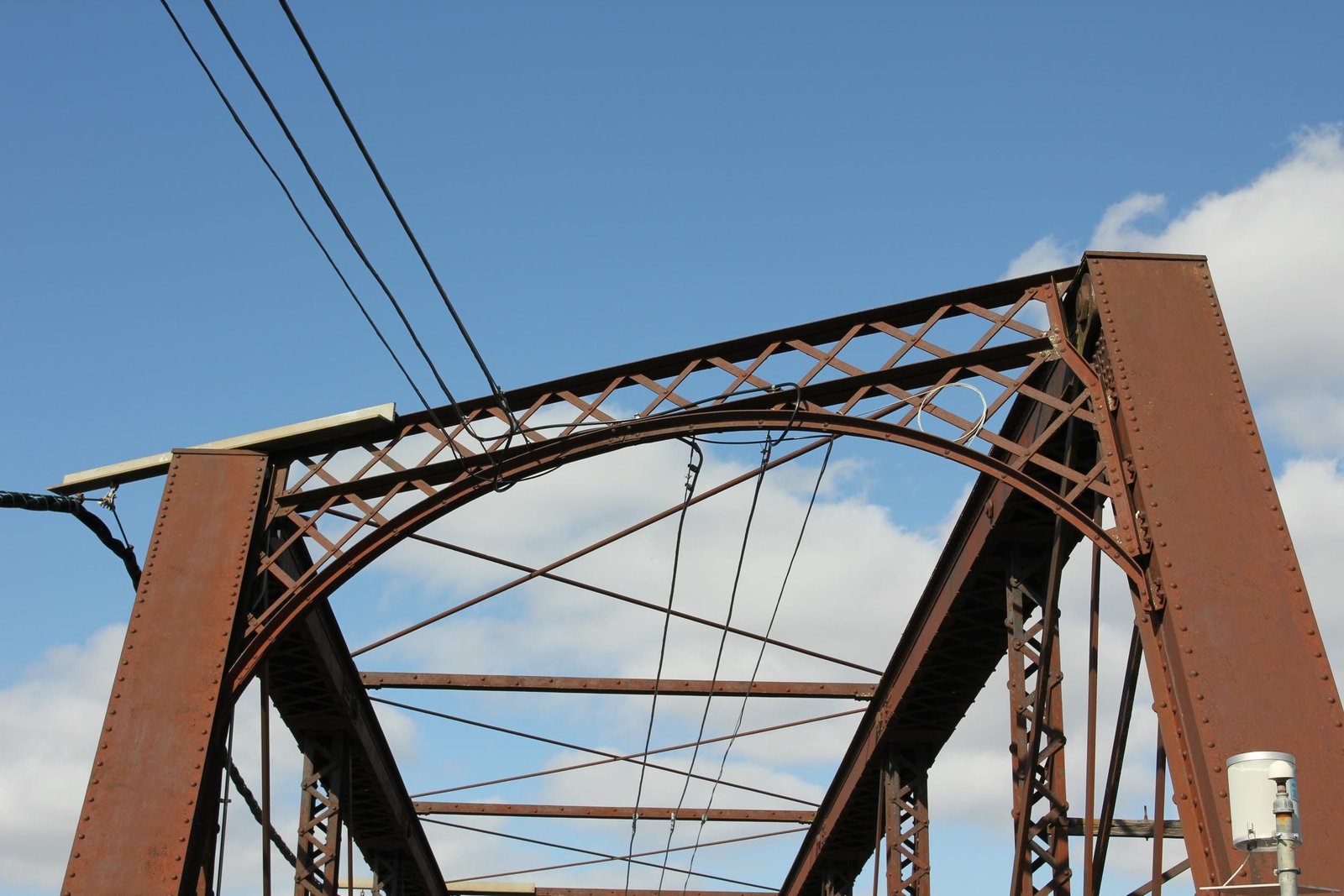
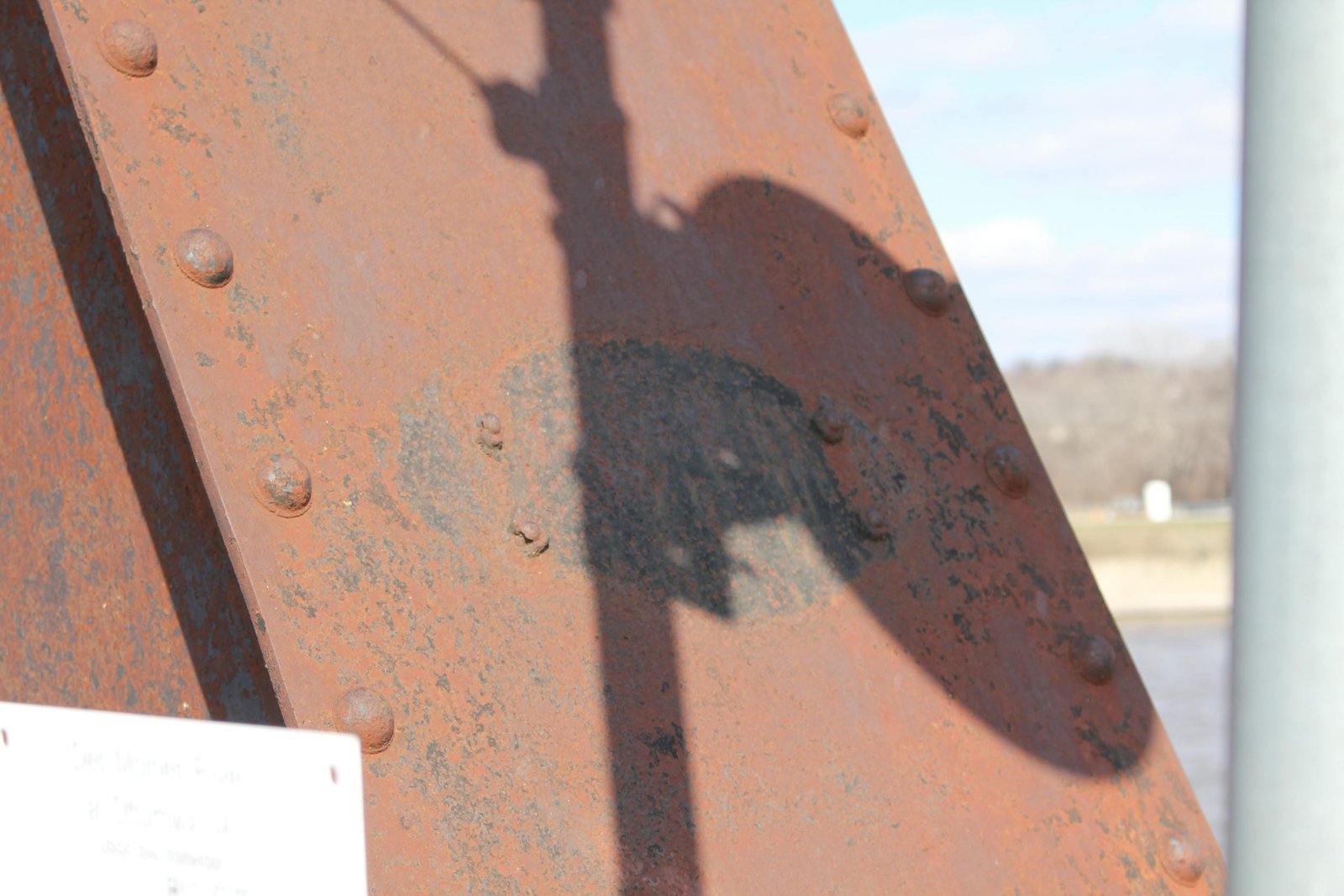
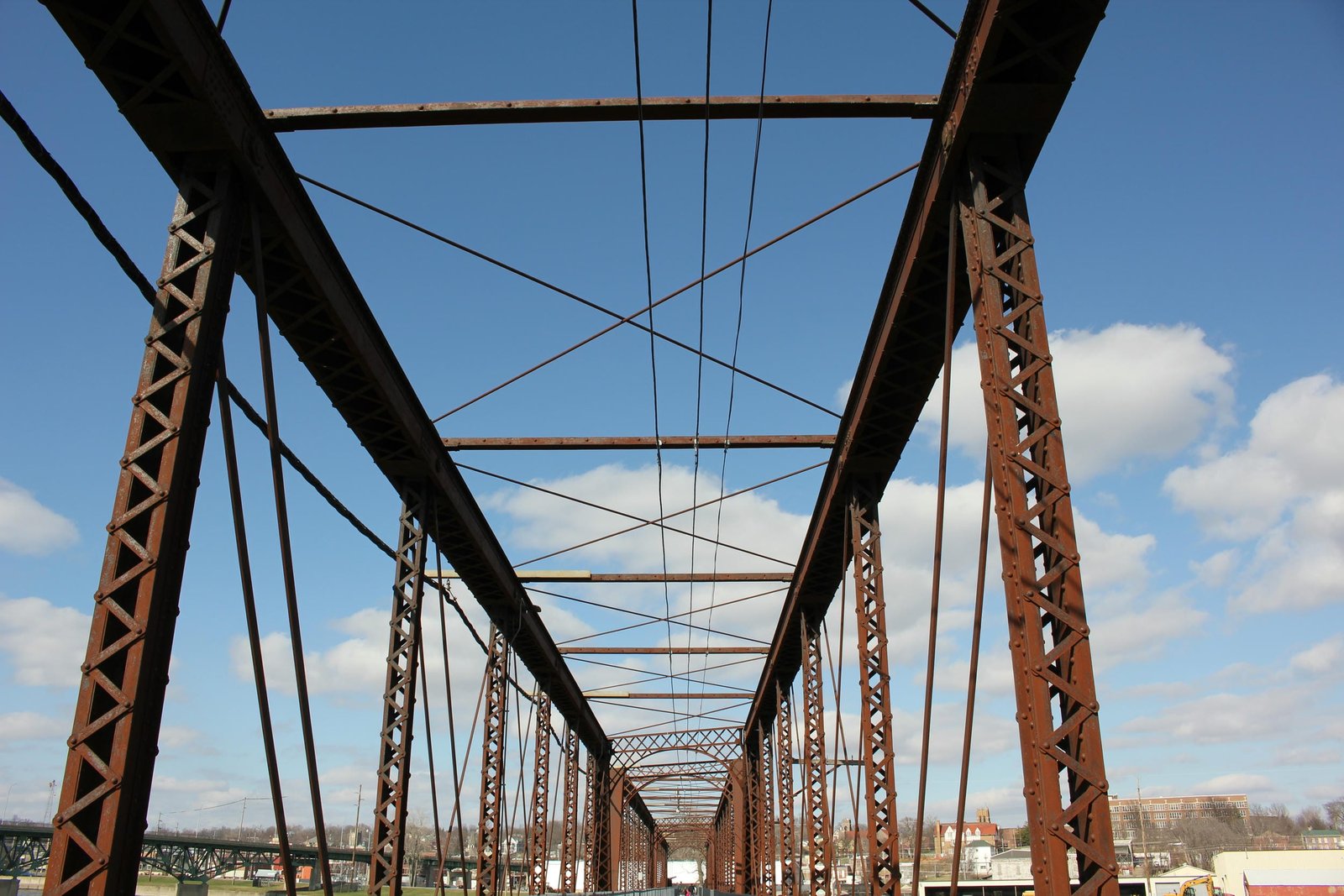
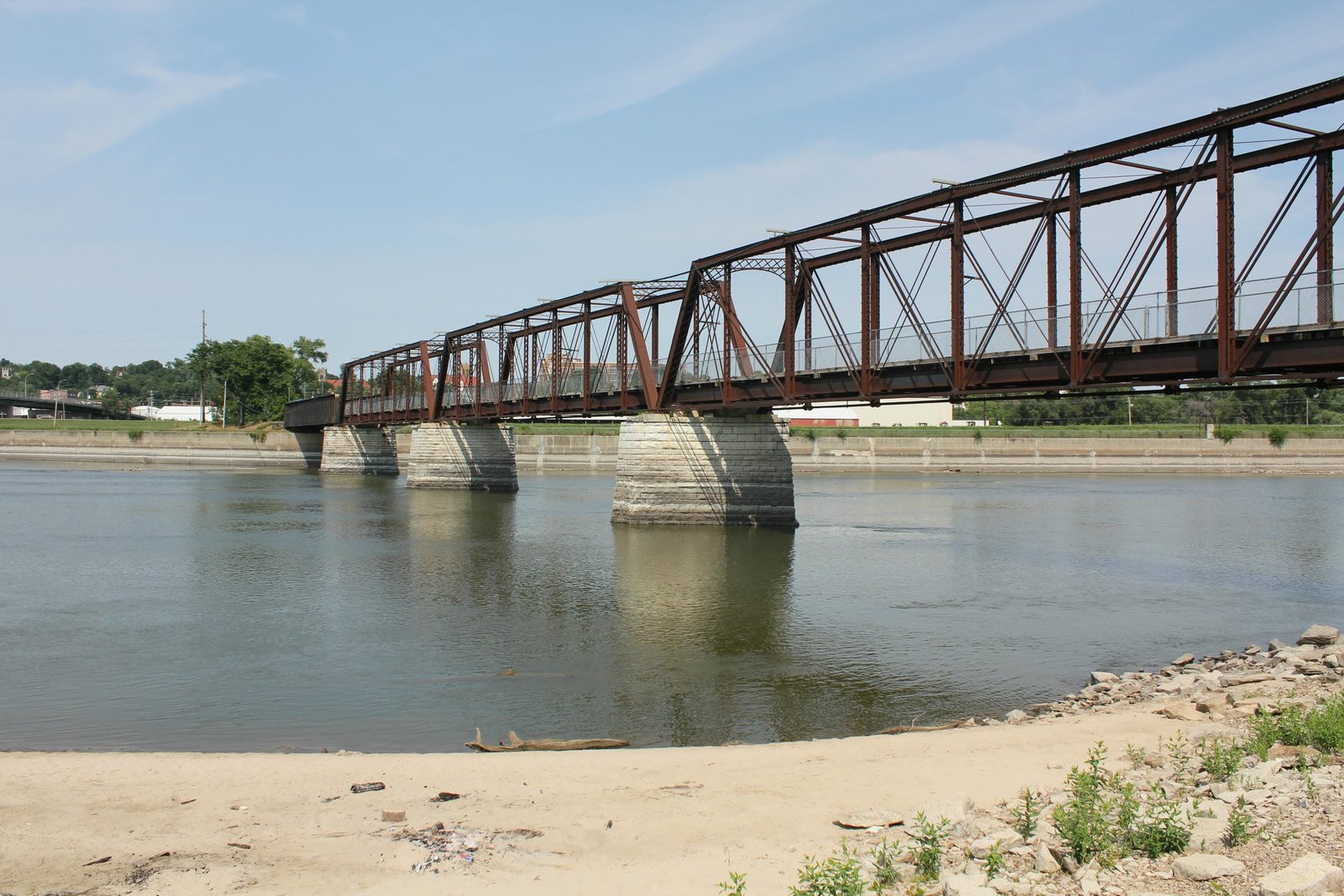
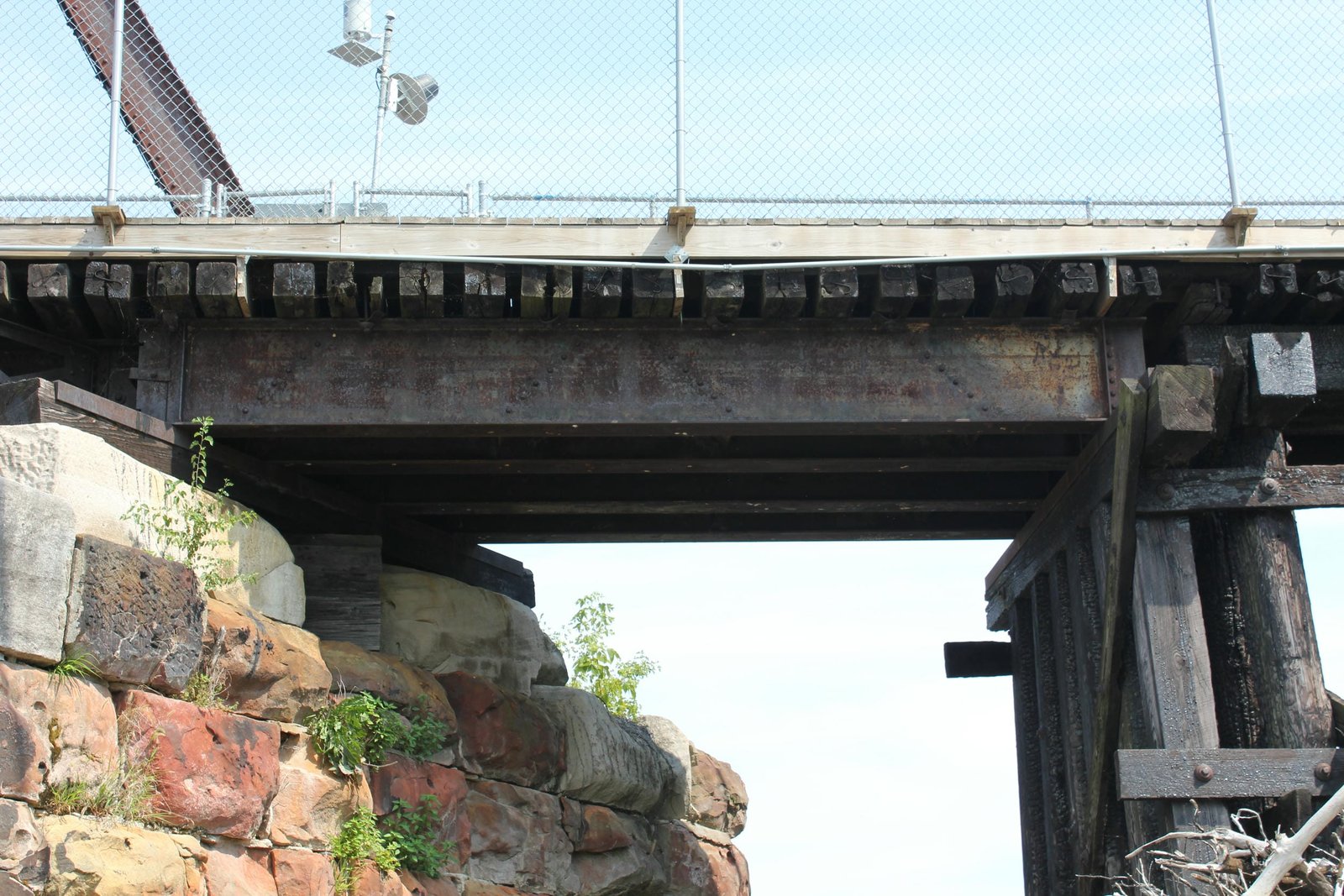
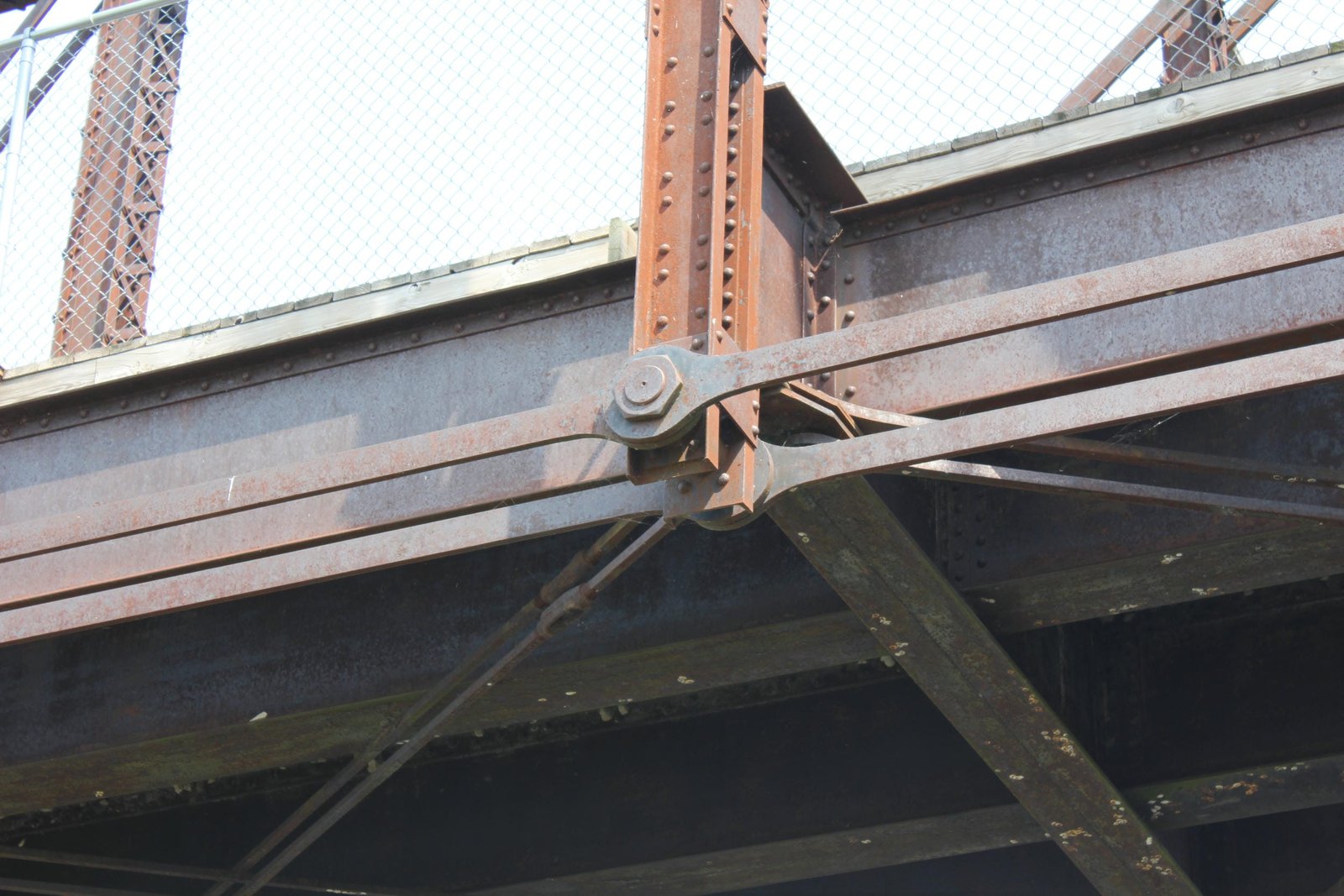
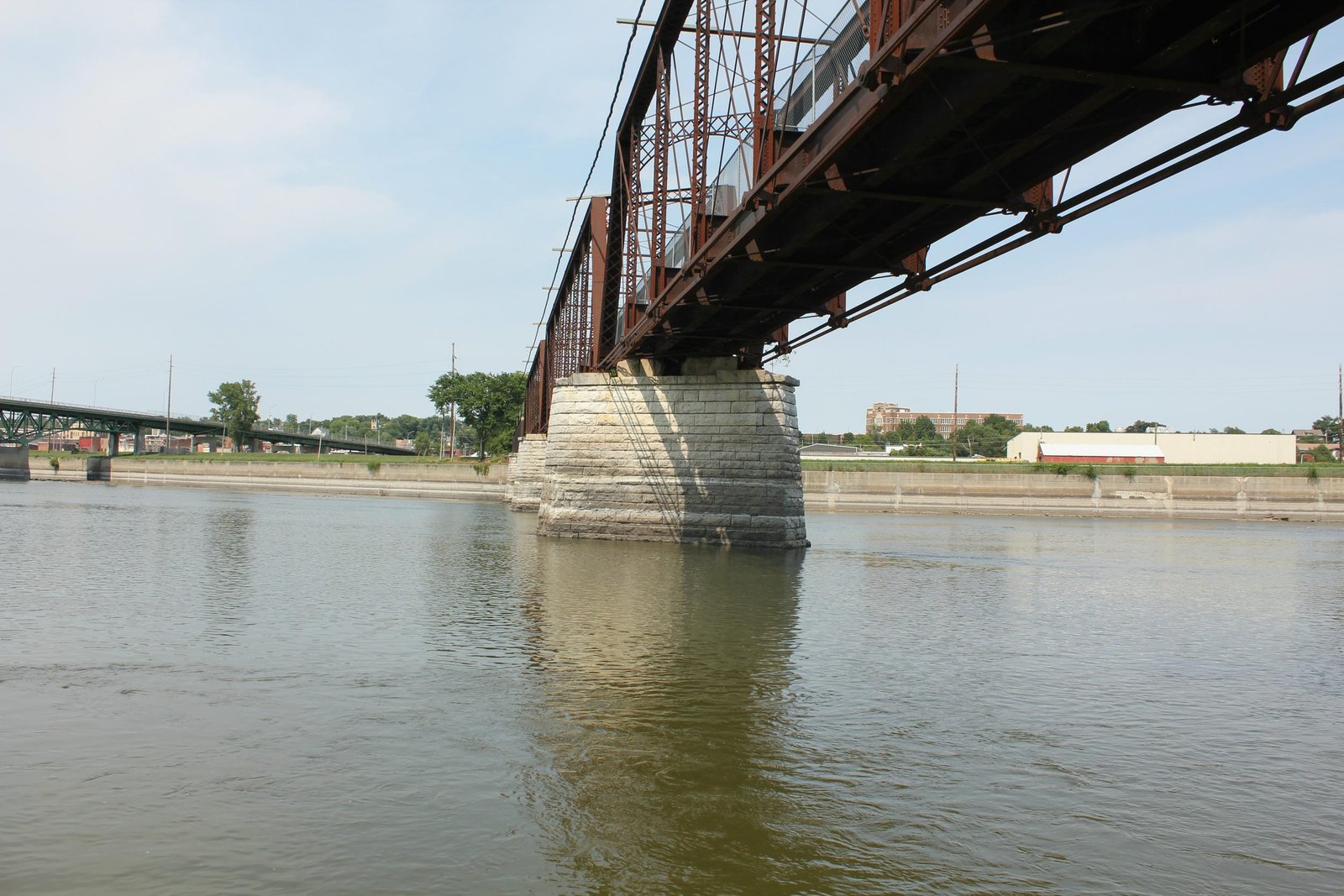
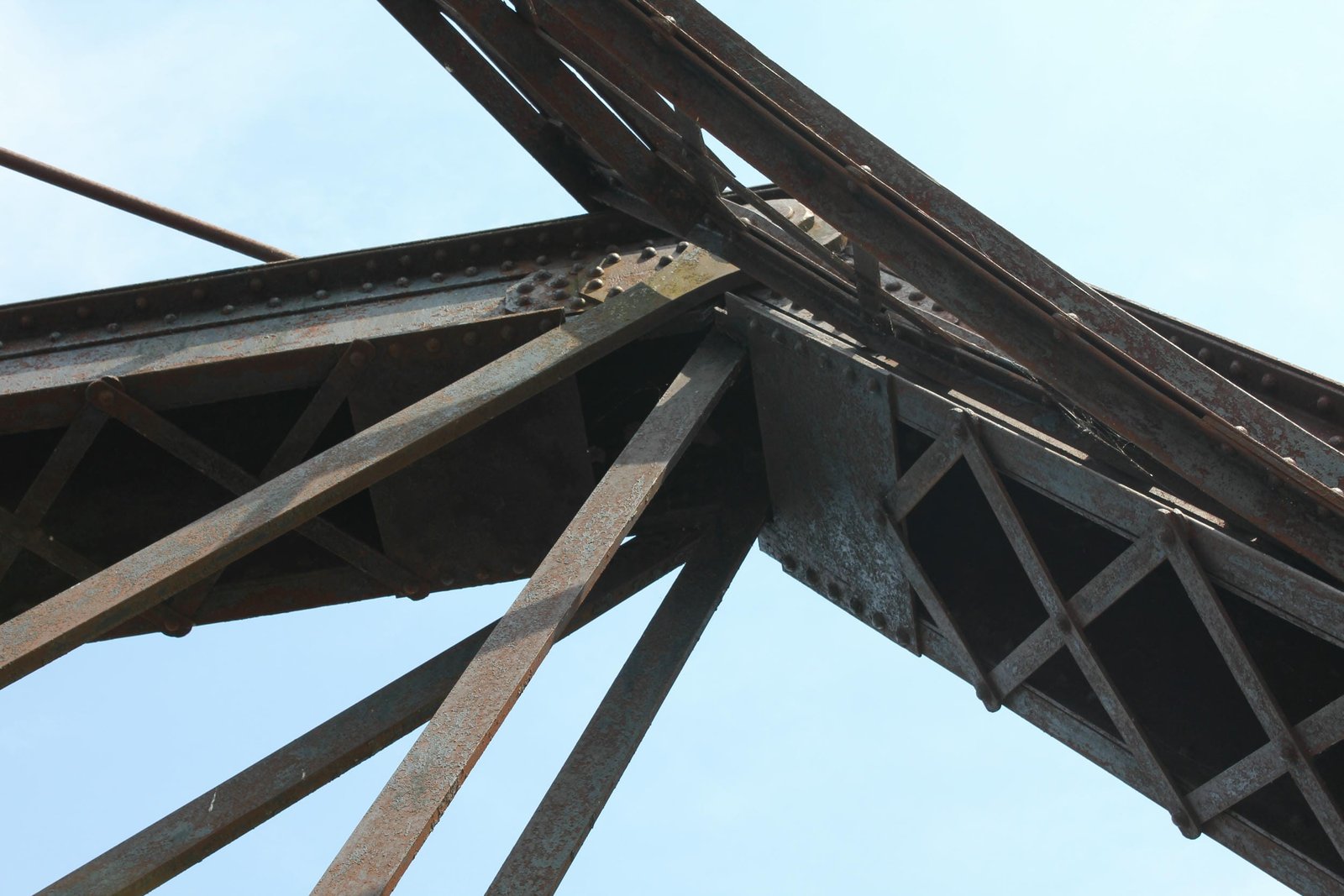
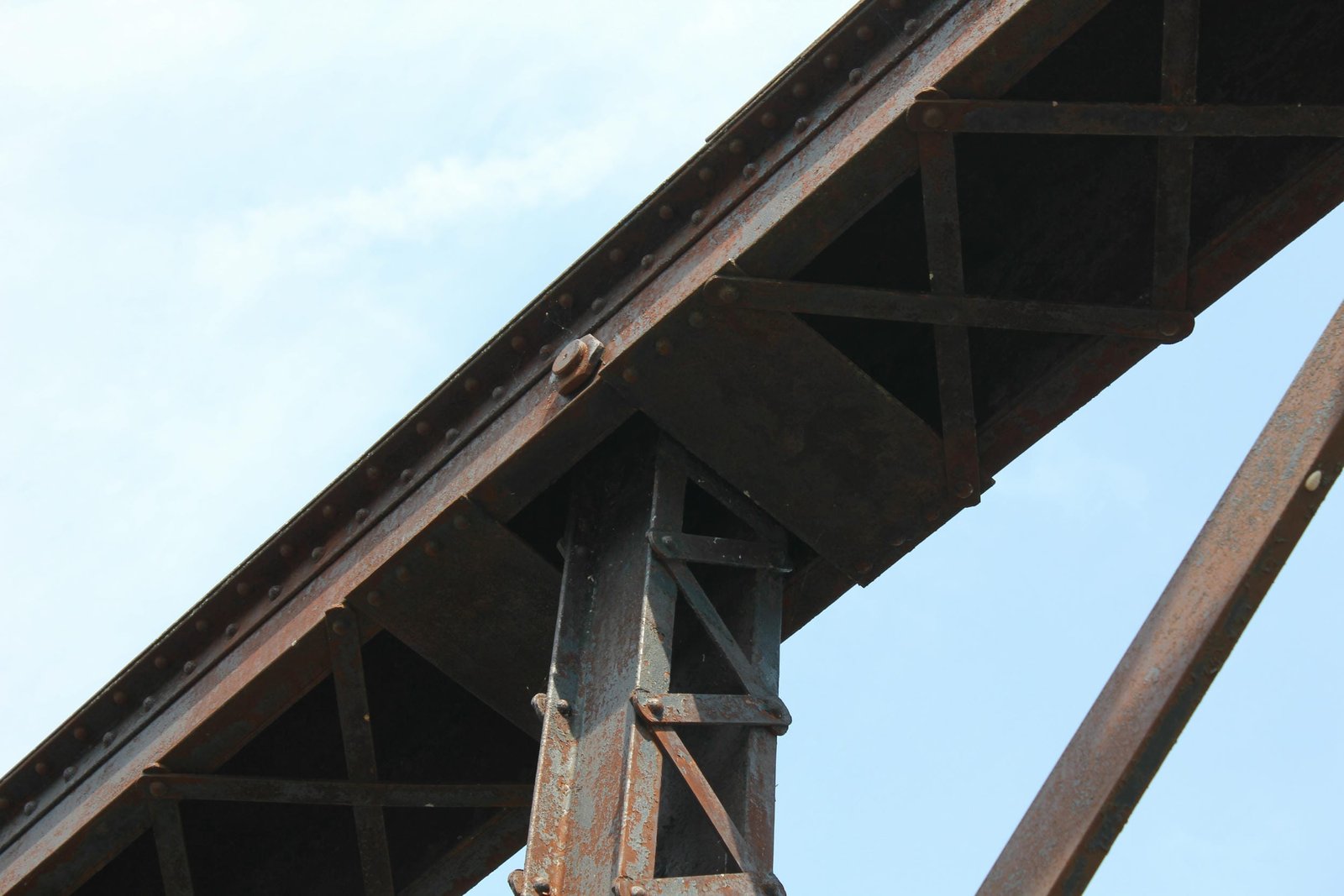
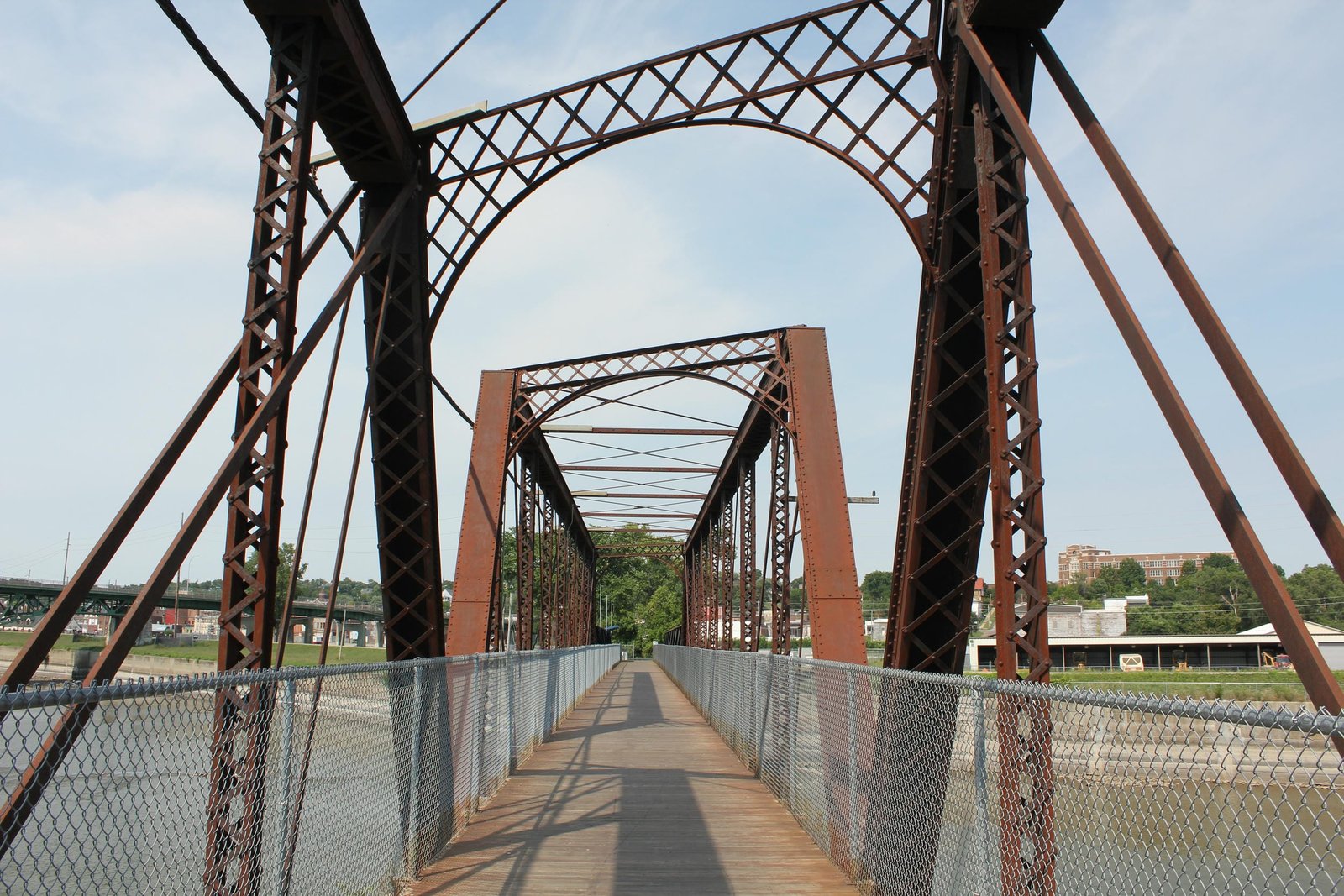
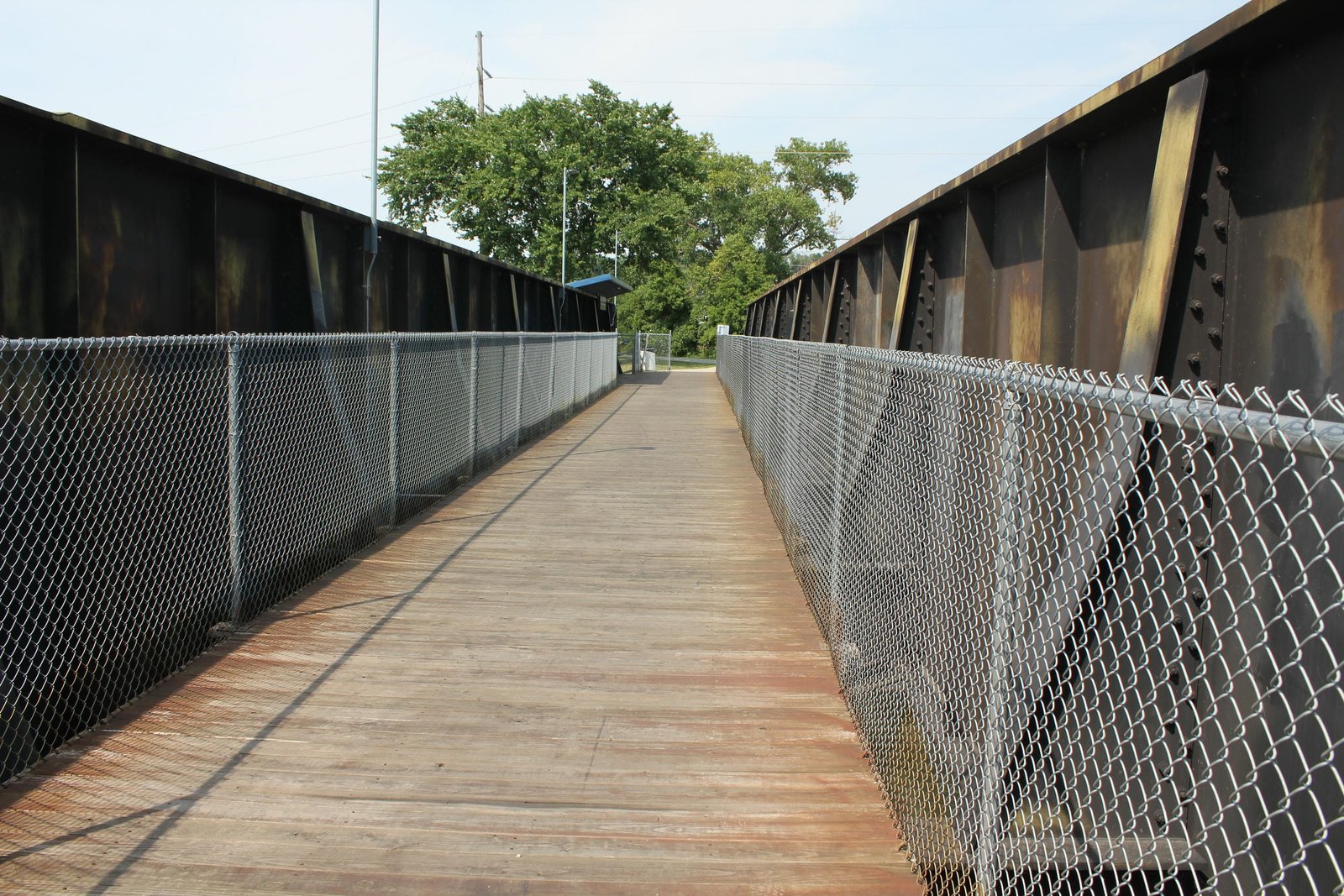
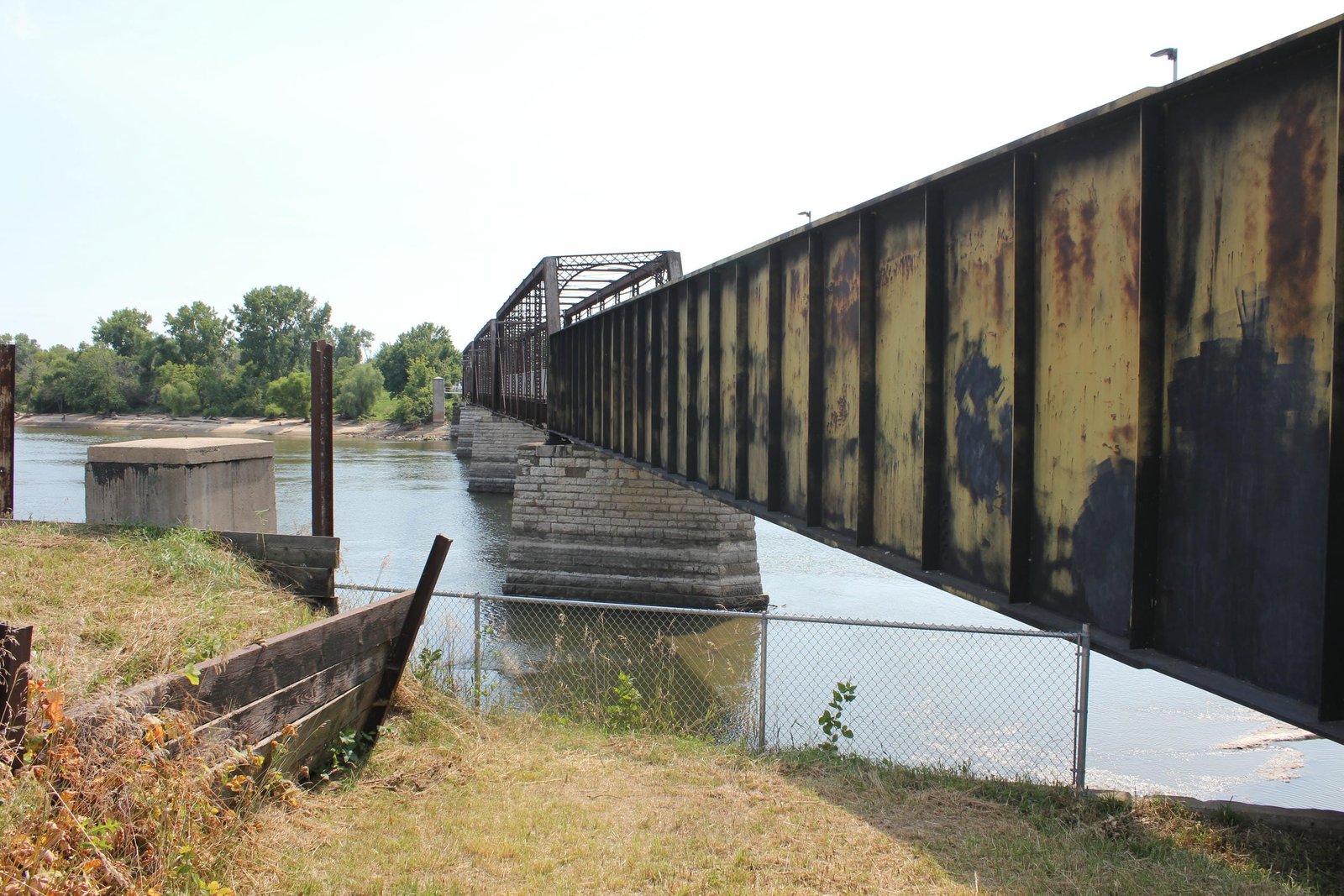
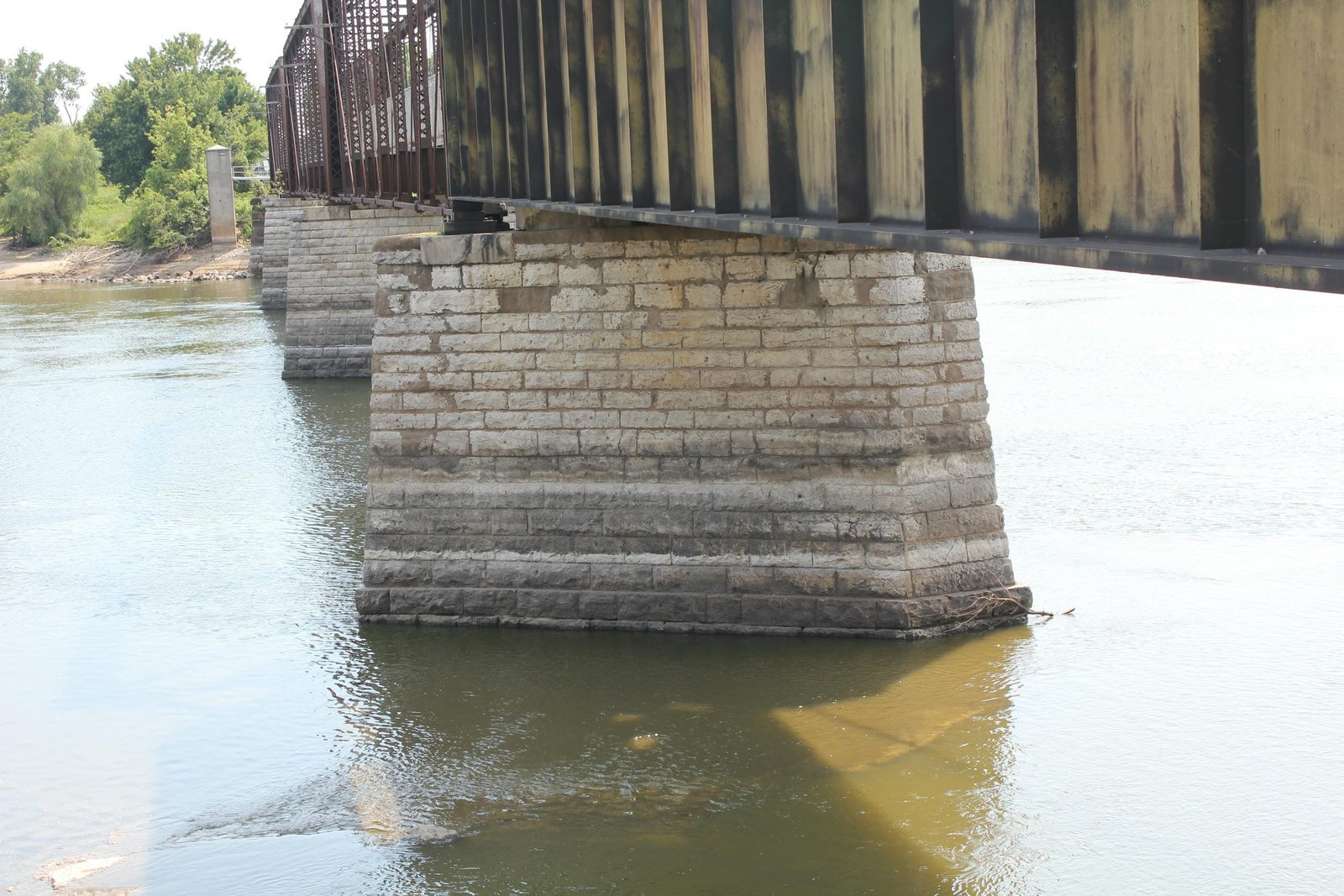
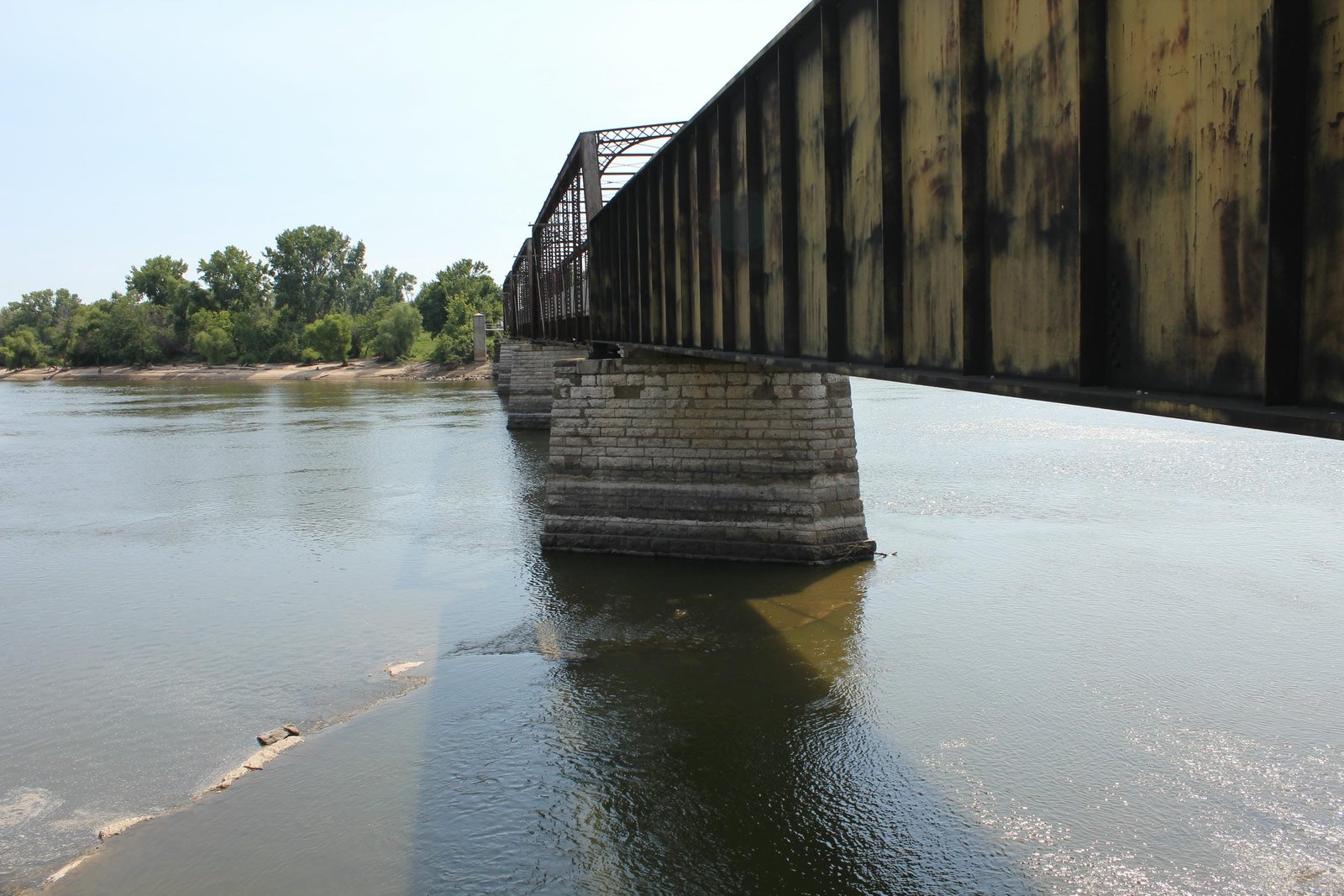
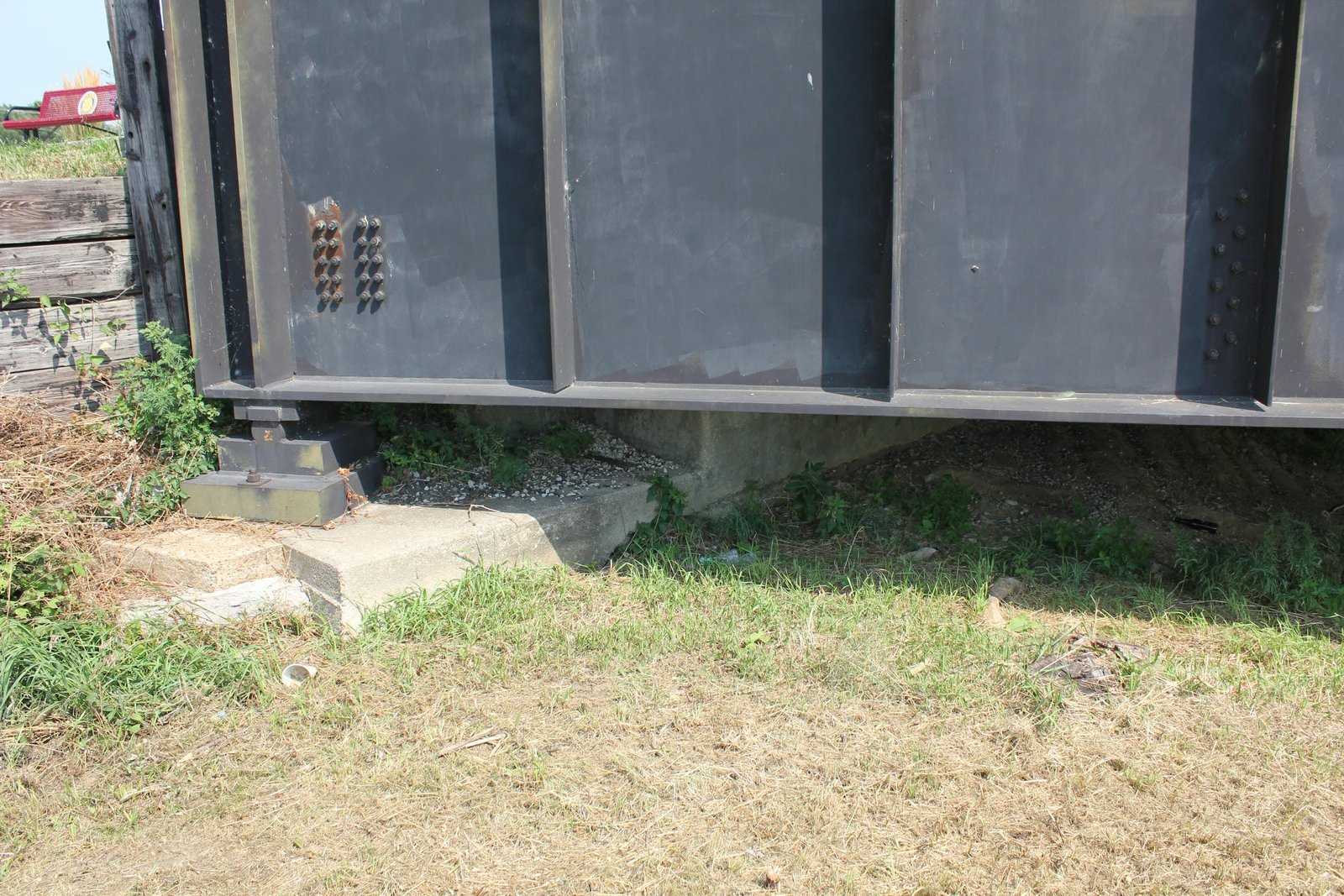
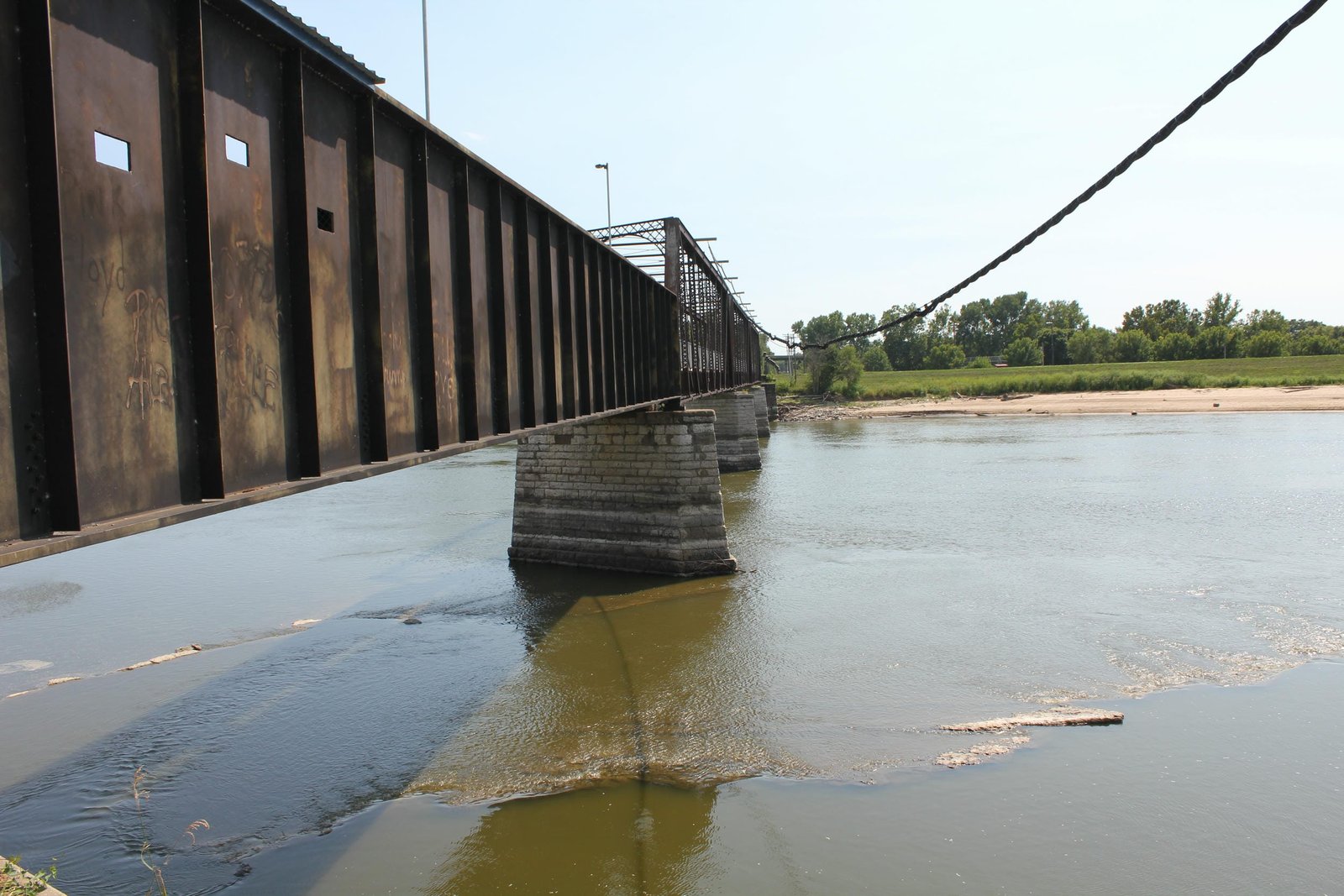
Currently, the bridge consists of three iron 158-foot, 9-panel, pin-connected Pratt through truss spans, approached by a 158-foot through plate girder span on the north end. The south end is approached by a 20-foot steel stringer span and several modern timber beam spans, which replaced the original timber pile trestle approach. The steel spans are set onto stone substructures, while the south approach is set onto concrete substructures. In addition, the bridge is set at a heavy 35-degree skew. Typical of truss bridges from this era, the truss spans are constructed of light built-up members, a standard floor and decorative portal bracing. The top chords and endposts are composed of built-up beams, consisting of two U-shaped channels connected by X-lacing on the bottom and a solid plate on the top. The bottom chord is composed exclusively of eyebars, which are arranged into one set of two for all panels. The vertical members consist of V-laced beams, which have an additional tie plate riveted to the base to connect to the bottom chord. All diagonal members are composed of eyebars, which are also arranged with one set of two per panel. The main tension members are formed from heavy iron bars, while the counters are constructed using thin iron rods. The floor system follows a typical design for the era, with heavy plate girder floorbeams and four standard stringers. Unique to this bridge, there are no end floorbeams, and the stringers are instead braced with an "X" formed from two L-shaped bars between each stringer. The floorbeams are connected to the vertical members by use of rivets. The lower lateral bracing is constructed using square iron bars, which are looped on the ends and pinned into the bottom flange of the floorbeams. Also unique to this bridge, two bars are used for each portion of the lower lateral bracing. The upper lateral bracing is composed of iron rods, which are pinned to the top chord. The portal bracing consists of an attractive arched lattice design, while the sway bracing consists of standard square bars. The north span uses a standard design for the era, and is composed of two massive plate girders, with rounded girder ends and a standard floor. The south approach stringer span uses a standard Wabash design, with four shallow beams spaced equally. The piers all use a standard rectangular shape, which is angled on the upstream and downstream noses. Piers #2, #3 and #4 and the north abutment all consist of a white limestone cut into blocks of various sizes, while the south pier (pier #1) consists of a multi-colored sandstone. It is unclear where these stones were quarried, and if they were built at different times.
Several notable contractors were involved in constructing the bridge. Detroit Bridge & Iron Works fabricated the truss spans, while the north span was fabricated by the American Bridge Company (then a division of United States Steel). An unknown contractor fabricated the short stringer span, and an additional unknown contractor constructed the substructure. Pratt trusses were arguably the most popular railroad truss bridge design during the second half of the 19th Century. This design provided strength, simplicity, economy and was relatively easy to design and construct. During the late 1880s, the Wabash worked extensively with Detroit Bridge & Iron Works to fabricate iron spans for various bridges on its system. Many of these bridges used similar features, such as decorative portals and light members. A notable feature of the bridge is the funding mechanism for converting the bridge to trail use. While most similar projects require some level of government funding, this bridge was rehabilitated using only grants and private donations. Since the initial construction, the bridge has seen numerous alterations, including the replacement of the north span in 1975, the replacement of much of the south approach in 2023 and various concrete repairs to the stone piers. Today, the bridge has a wooden deck and fencing, and is a popular pedestrian bridge in the area. Overall, the bridge appears to be in fair to good condition, with some minor defects noted in the stone piers. The author has ranked this bridge as being regionally significant, due to the age and truss design.
Citations
| Build date and builder (truss spans superstructure) | Bridge Plans; Courtesy of James Holzmeier |
| Builder and build date (north span superstructure) | Ottumwa Courier; January 31, 1975 |
| Railroad History Citation | ICC Valuation Information, Compiled by Richard S. Steele |