
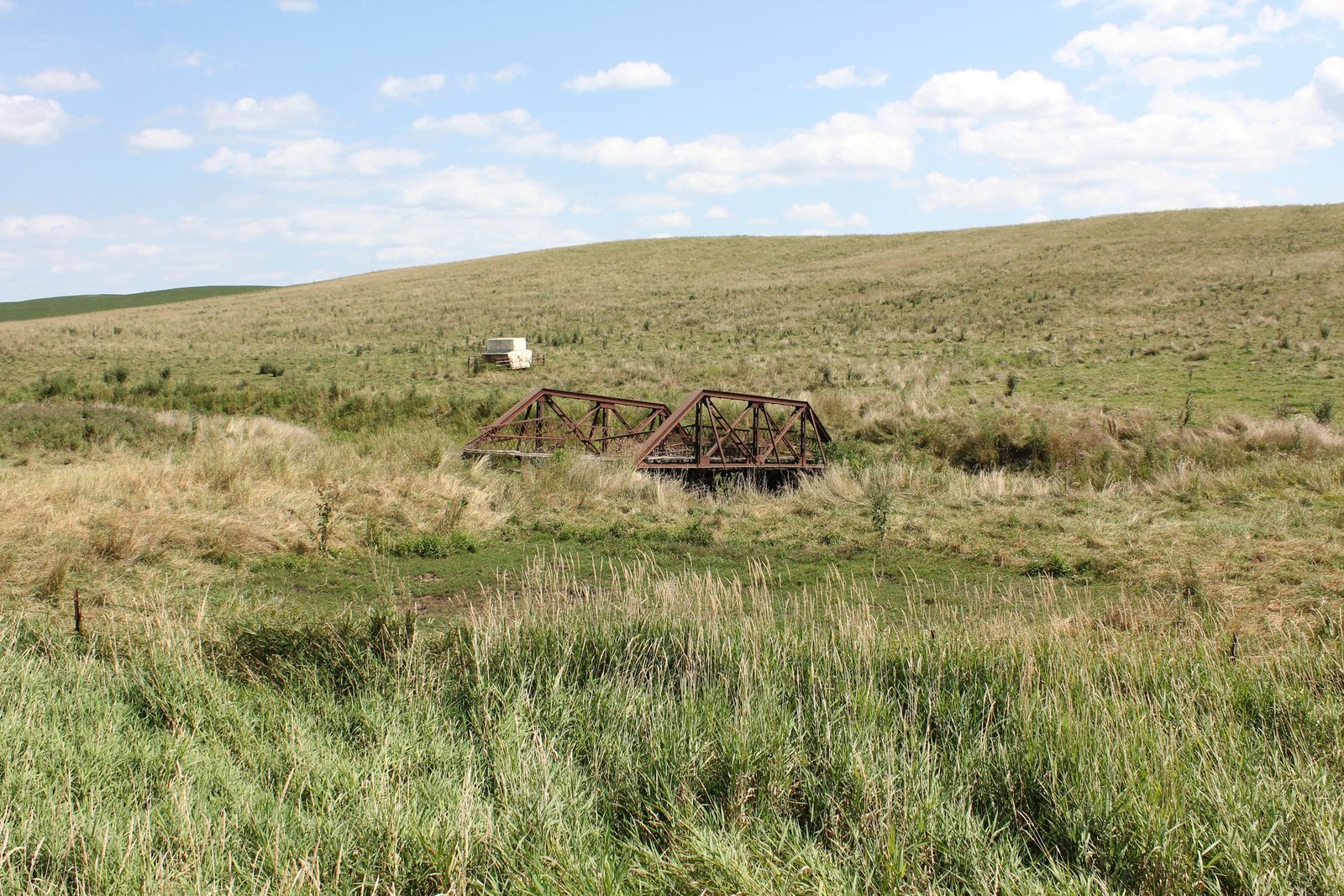
Click the photo to view the full-size version
| Name | UP 77th Street Drive Bridge Chicago & North Western Railway Bridge #334 |
| Built By | Chicago & North Western Railway |
| Currently Owned By | Union Pacific Railroad |
| Superstructure Contractor | American Bridge Company of New York |
| Substructure Contractor | Elmer J.C. Bealer of Cedar Valley, Iowa Unknown (Abutment Repairs) |
| Length | 37 Feet Total |
| Width | 2 Tracks |
| Height Above Ground | 12 Feet (Estimated) |
| Superstructure Design | Through Plate Girder |
| Substructure Design | Stone Masonry Concrete |
| Date Built | 1905 |
| Traffic Count | 50 Trains/Day (Estimated) |
| Current Status | In Use |
| Chicago & North Western Railway Bridge Number | 334 |
| Union Pacific Railroad Bridge Number | 113.10 |
| Significance | Local Significance |
| Documentation Date | 8/10/2013 |
In 1856, the Chicago, Iowa & Nebraska Rail Road (CI&N) began construction on a new mainline across Iowa, connecting an existing Galena & Chicago Union Railroad (G&CU) line at Fulton, Illinois to the Missouri River. To establish construction, a temporary ferry was installed across the Mississippi River at Clinton in 1856. In 1857, the first 44 miles were completed to Wheatland, Iowa. The following year, 20 miles were completed to Lisbon, Iowa; and in 1859, an addition 17 miles were completed to Cedar Rapids, Iowa. In 1861, the Cedar Rapids & Missouri River Railroad (CR&MR) constructed an additional 41 miles to Chelsea, Iowa; followed by 29 miles to Marshalltown, Iowa in 1862. After pausing in 1863, an additional 29 miles were completed to Nevada, Iowa in 1864, followed by 23 additional miles to Boone, Iowa in 1865. In 1864, both the CI&N and CR&MR were leased by the Chicago & North Western Railway (C&NW). In 1867, the line continued west from Boone, reaching the Missouri River at Council Bluffs, Iowa in 1867.
During the second half of the 19th Century, the C&NW had constructed and acquired a large amount of trackage throughout the Midwest. This line formed a principal mainline for the C&NW, connecting western railroads at Omaha to the railroad hub of Chicago. In 1884, the C&IN and CM&MR were formally acquired by the C&NW. In 1887, the Linn County Railway (LC) constructed a 6-mile cutoff, bypassing Cedar Rapids to the south between Otis, Iowa and Beverly, Iowa. At the end of the year, the LC was formally acquired by the C&NW. During the late 19th Century, several other improvements were made to this line. Between 1890 and 1891, a second track was constructed between Clinton and Lowden, Iowa; and between Libson and the Cedar River bridge. Between 1893 and 1894, a second track was constructed between Lowden and Lisbon. A second track was added to the original mainline through Cedar Rapids in 1898, and between 1898 and 1899, a second track was constructed between the Cedar River bridge and the west side of Marshalltown. In 1901, a second track was completed between Marshalltown and Boone, and new facilities were constructed at Boone. Throughout the 20th Century, the Cedar River bridge remained a gauntlet structure, severely hindering efficient operations.
By the 20th Century, the C&NW was operating an extensive railroad network, which radiated north and west from Chicago. This line served as the backbone of the C&NW, connecting transcontinental freight and passengers at Omaha to Chicago. Known as the Overland Route, this line became one of the most significant railroad routes in the United States. This route saw continuous upgrades during the 20th Century, including significant bridge, rail, tie and signal upgrades. In 1995, the C&NW was purchased by Union Pacific Railroad (UP). In 2002, UP constructed a second track at the Cedar River bridge, eliminating a single track bottleneck in the network. Today, this line remains vital to UP and is still well maintained. The Clinton to Boone segment is known as the Clinton Subdivision, and remains a heavily used double track mainline.
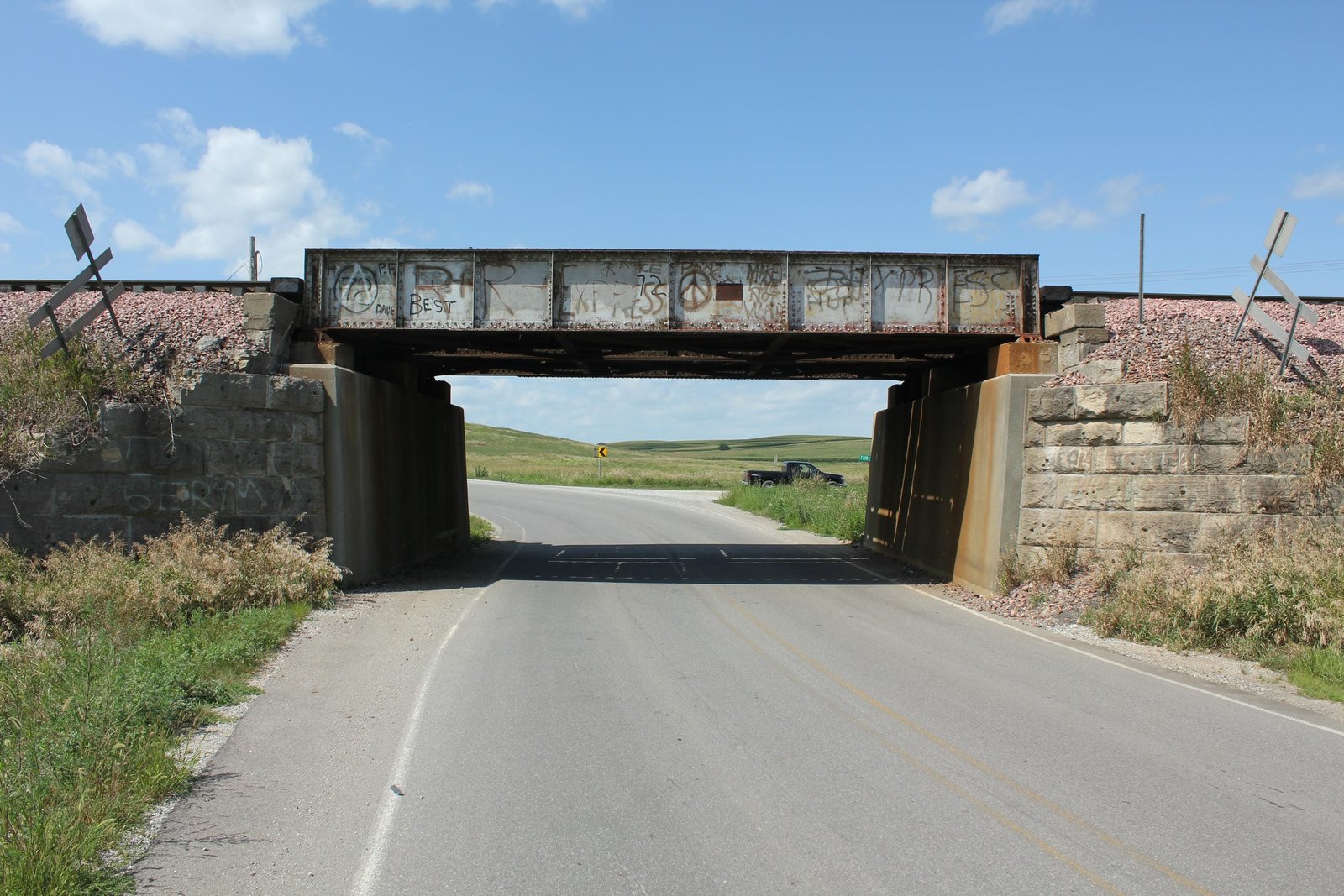
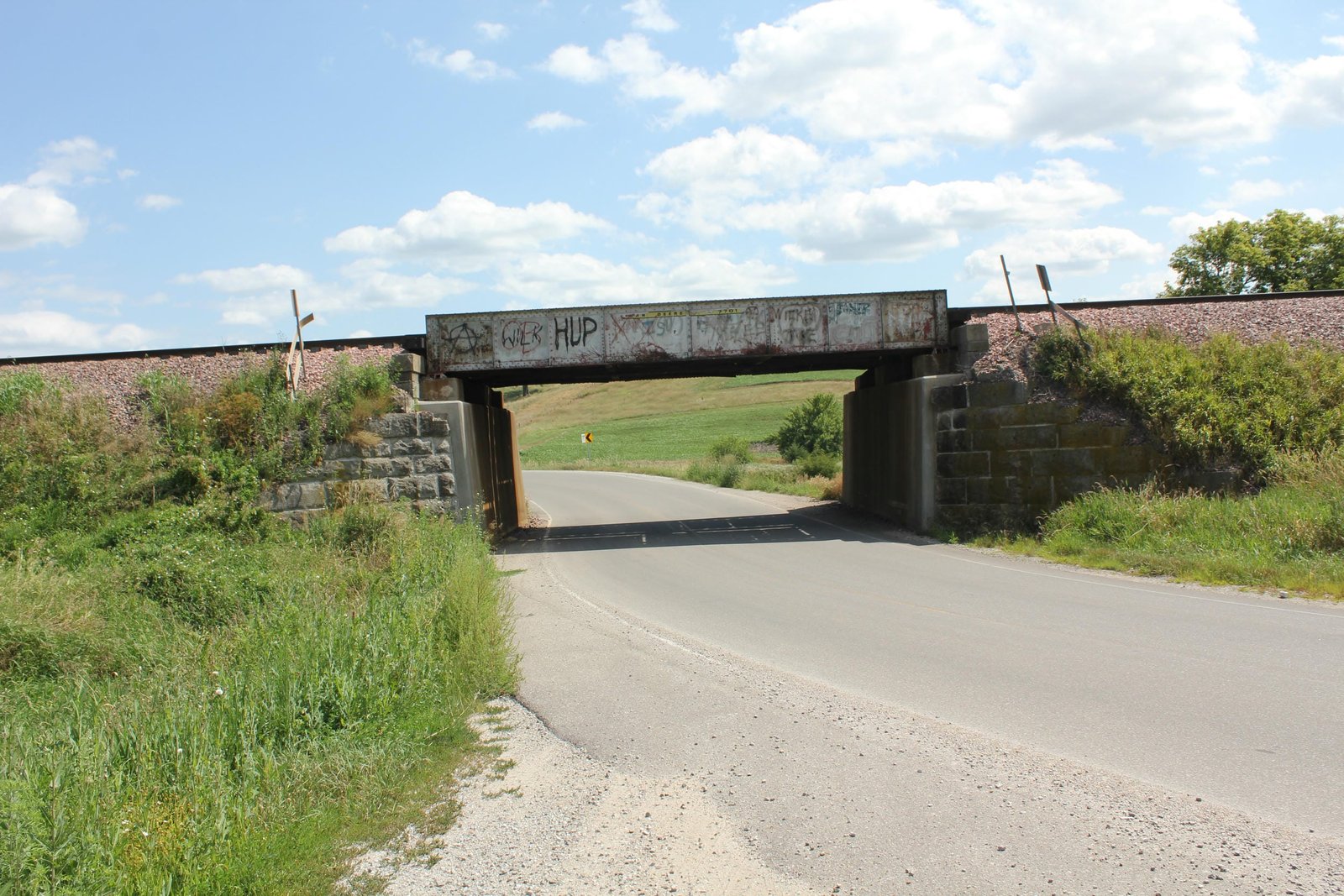
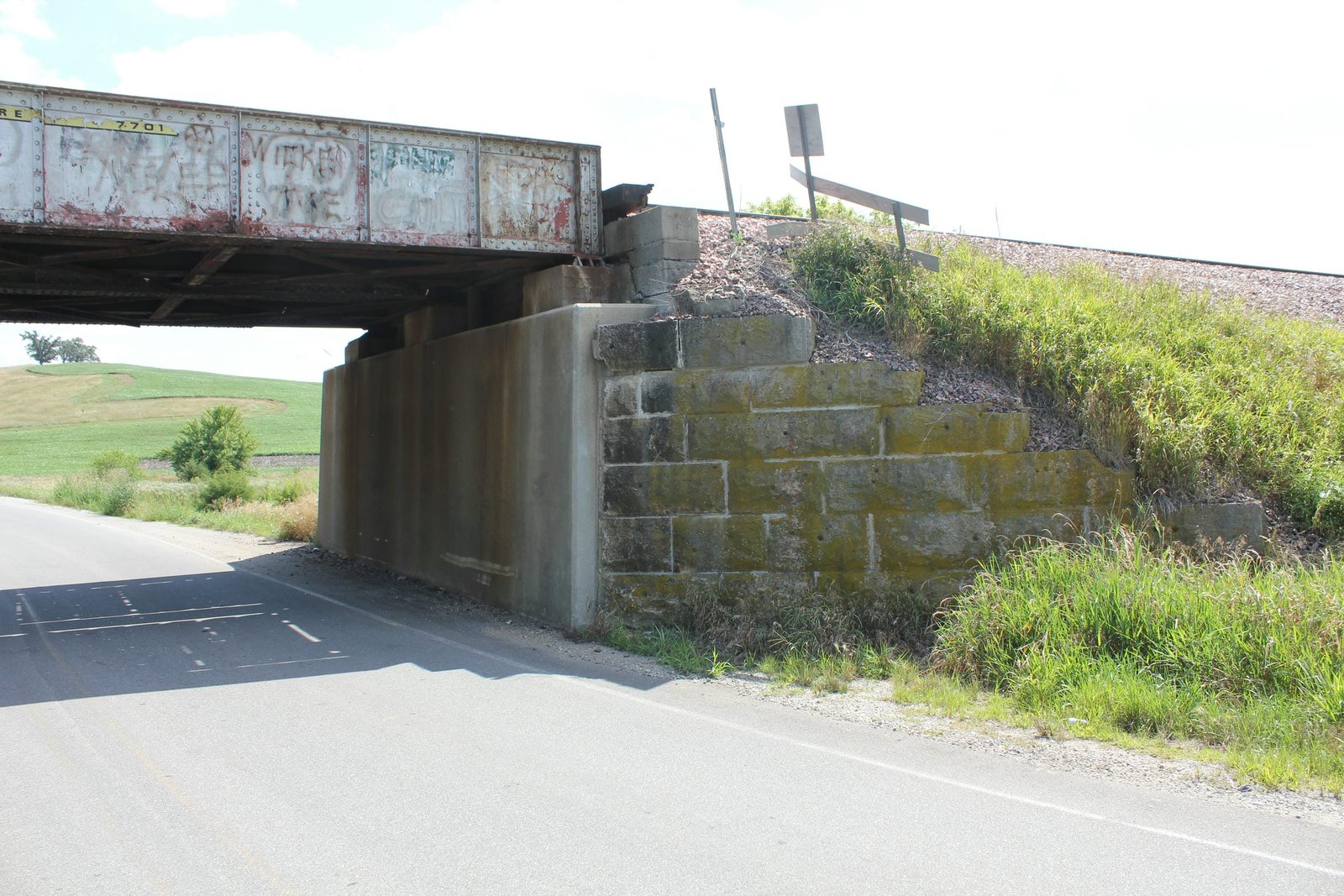
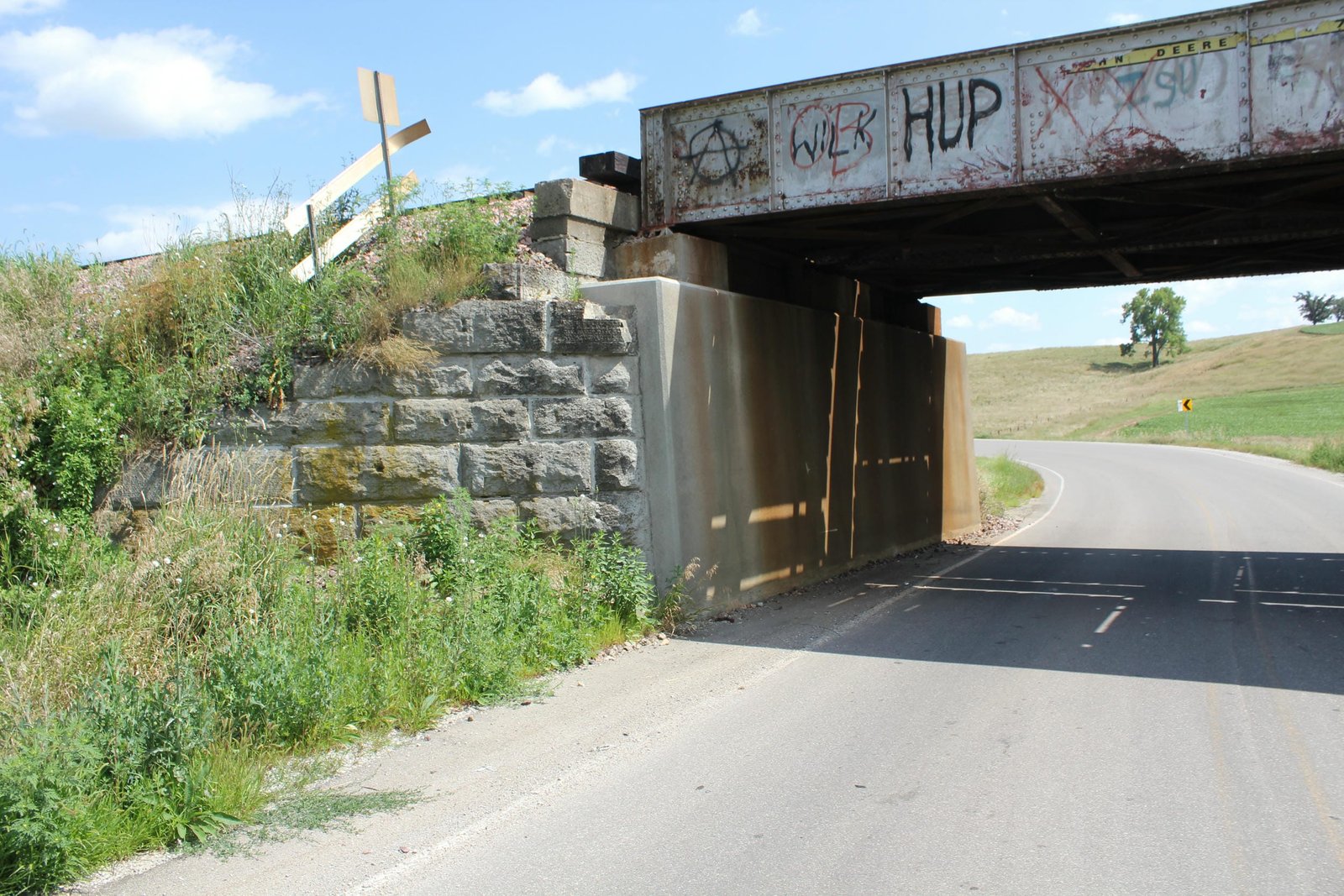
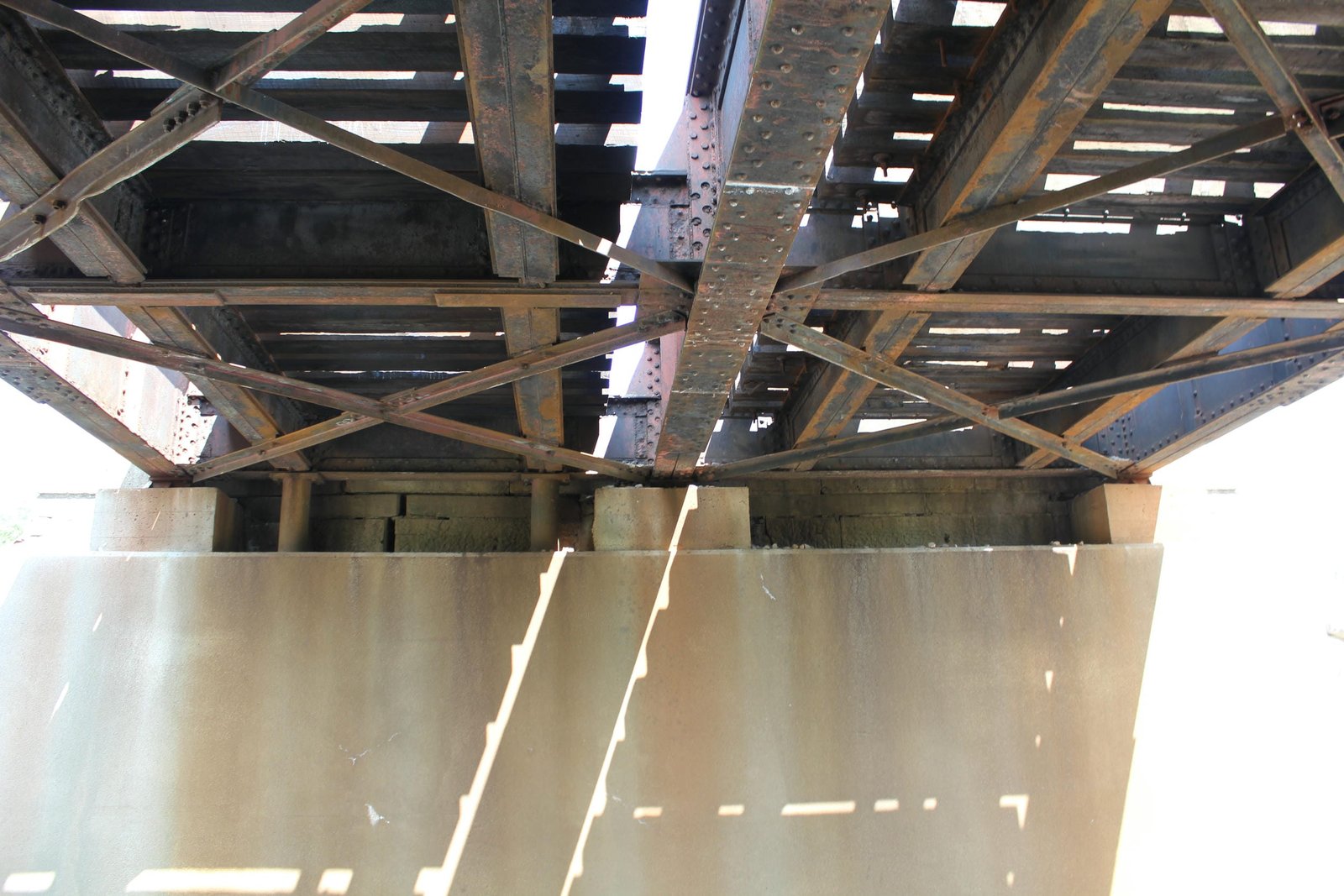
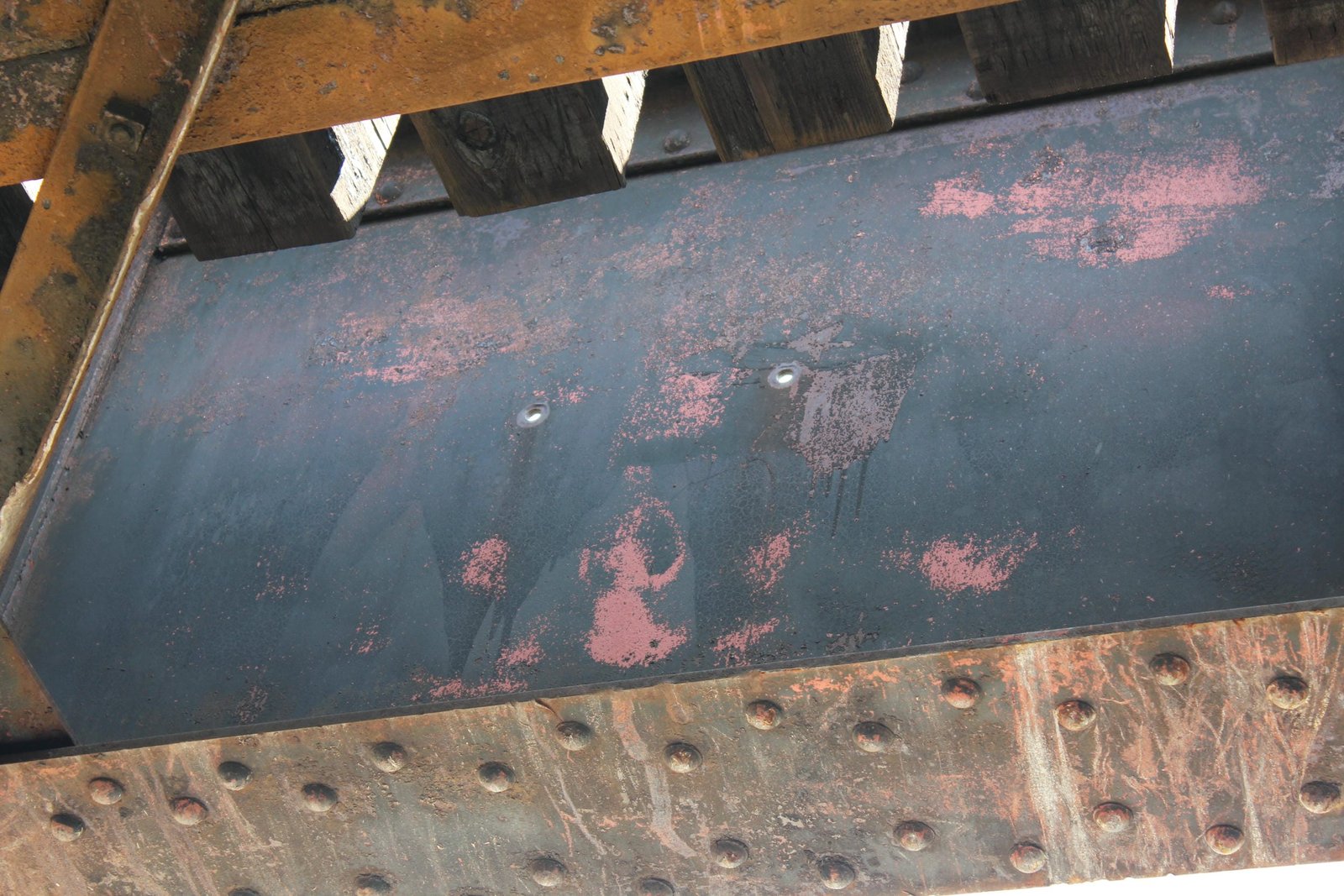
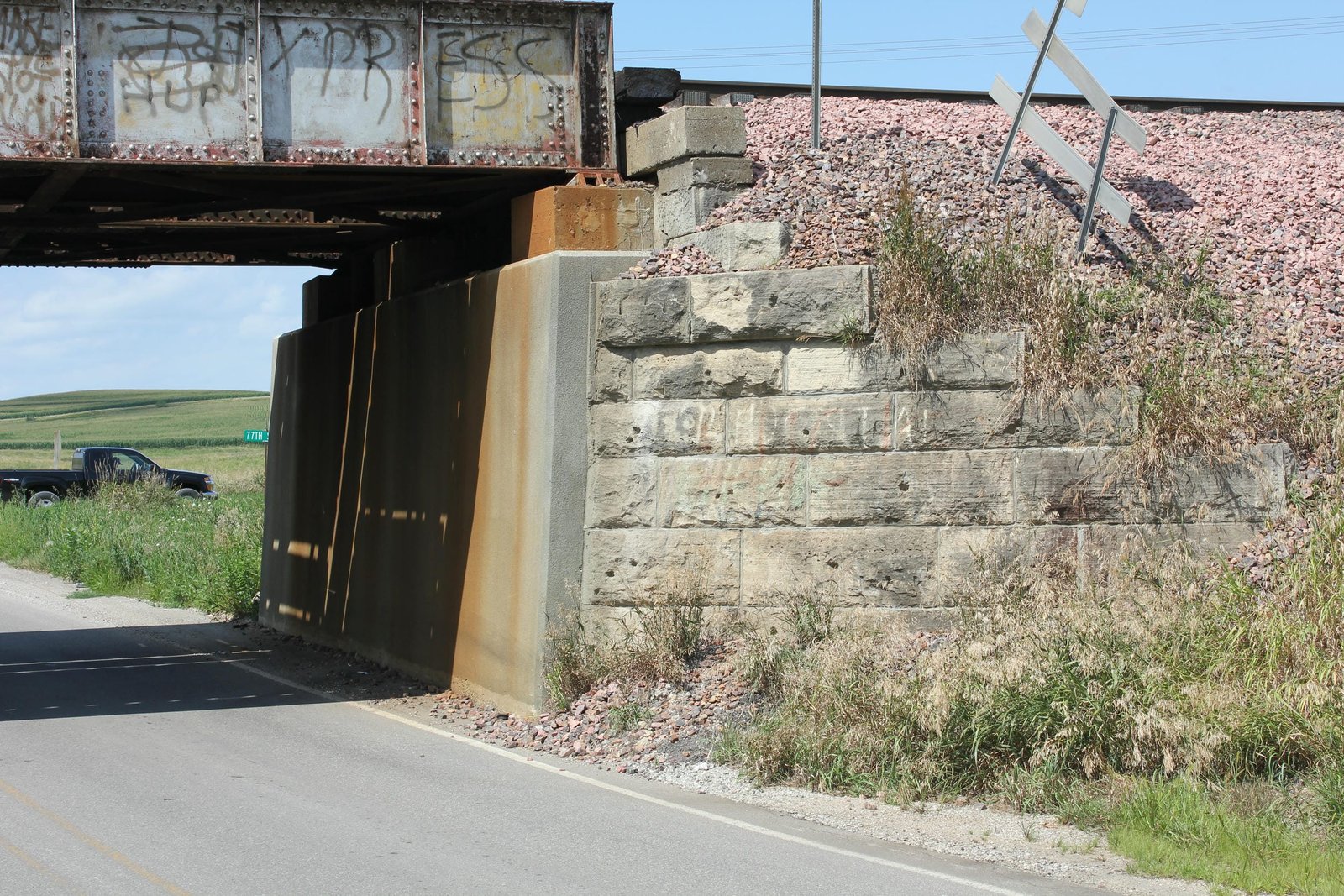
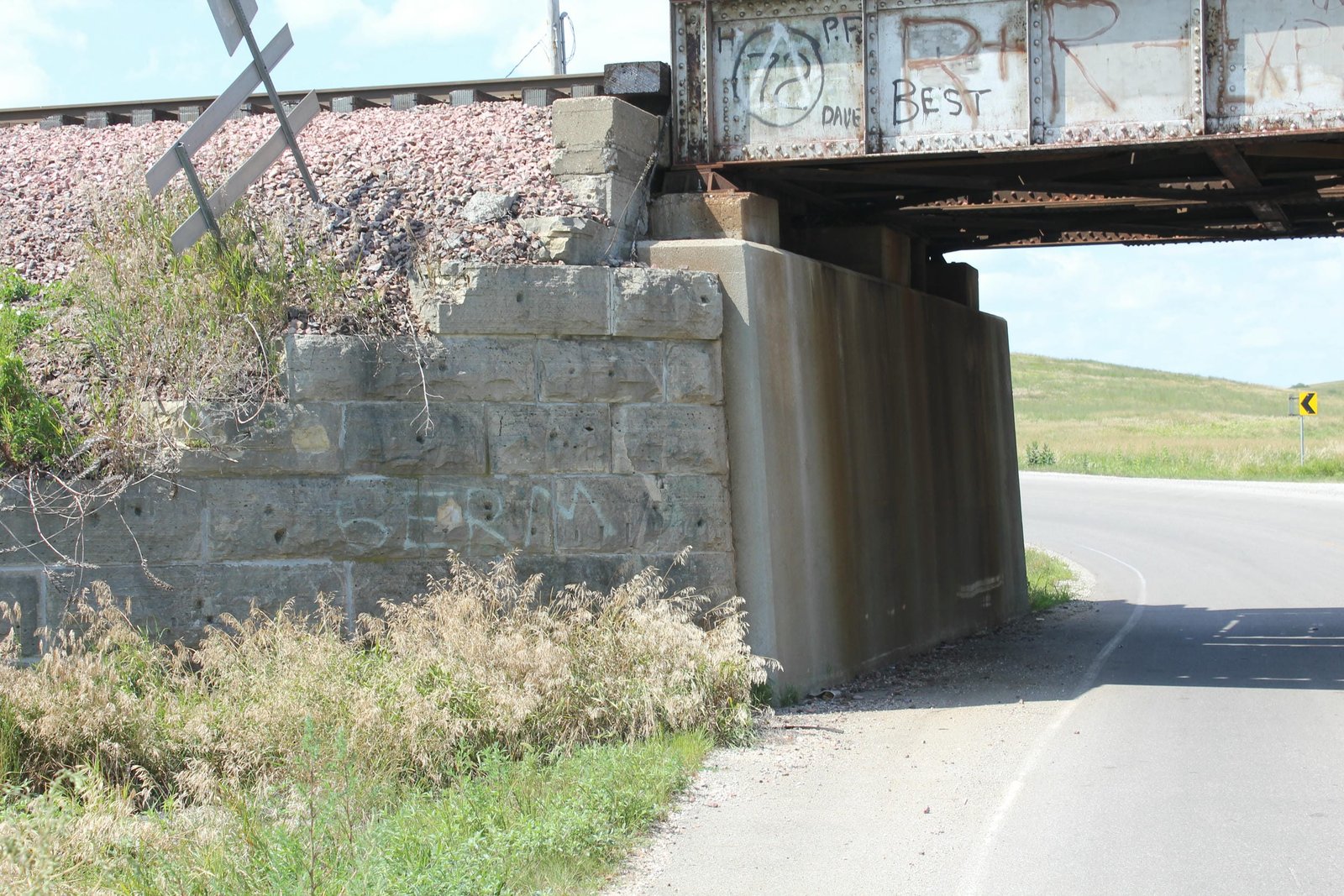
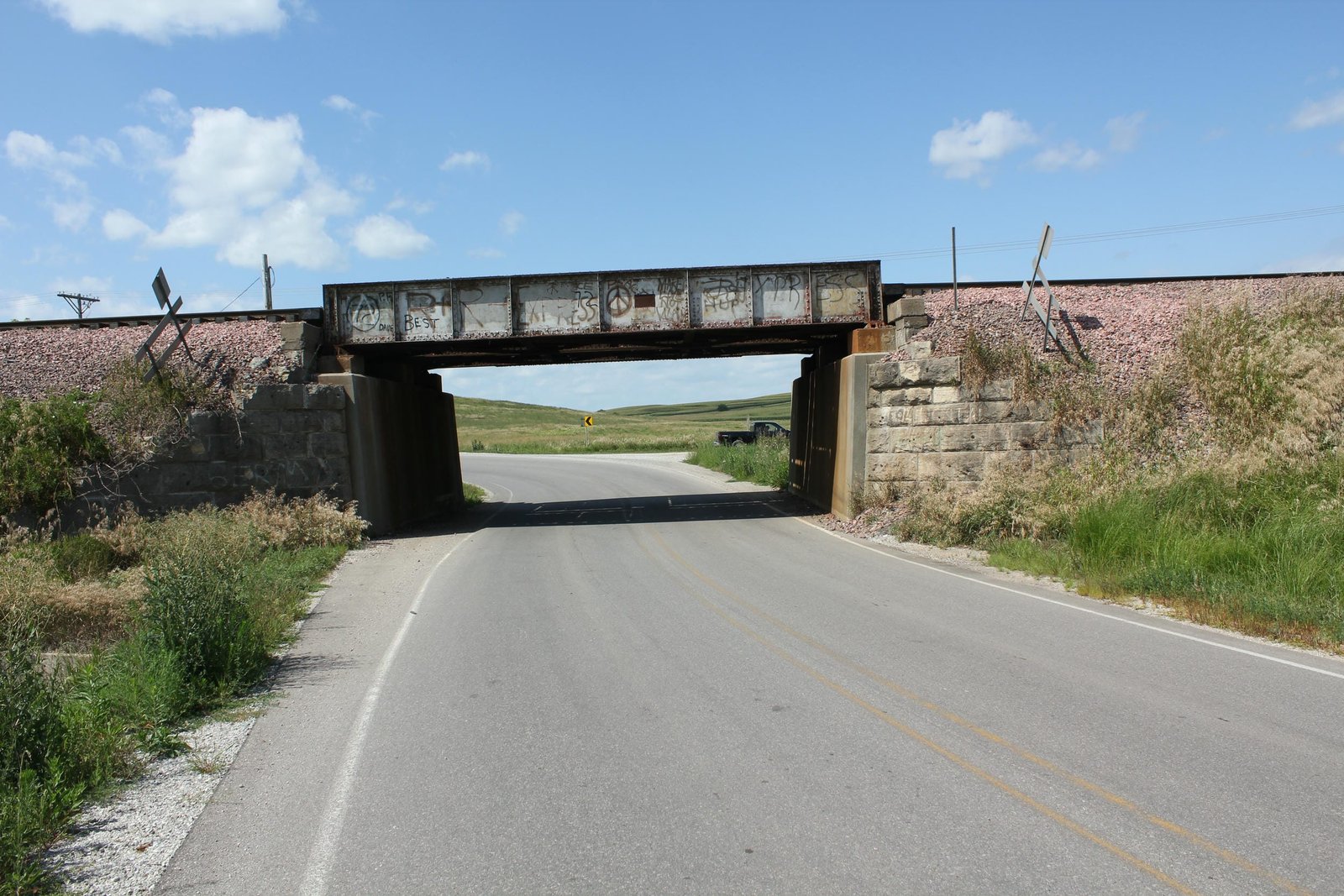
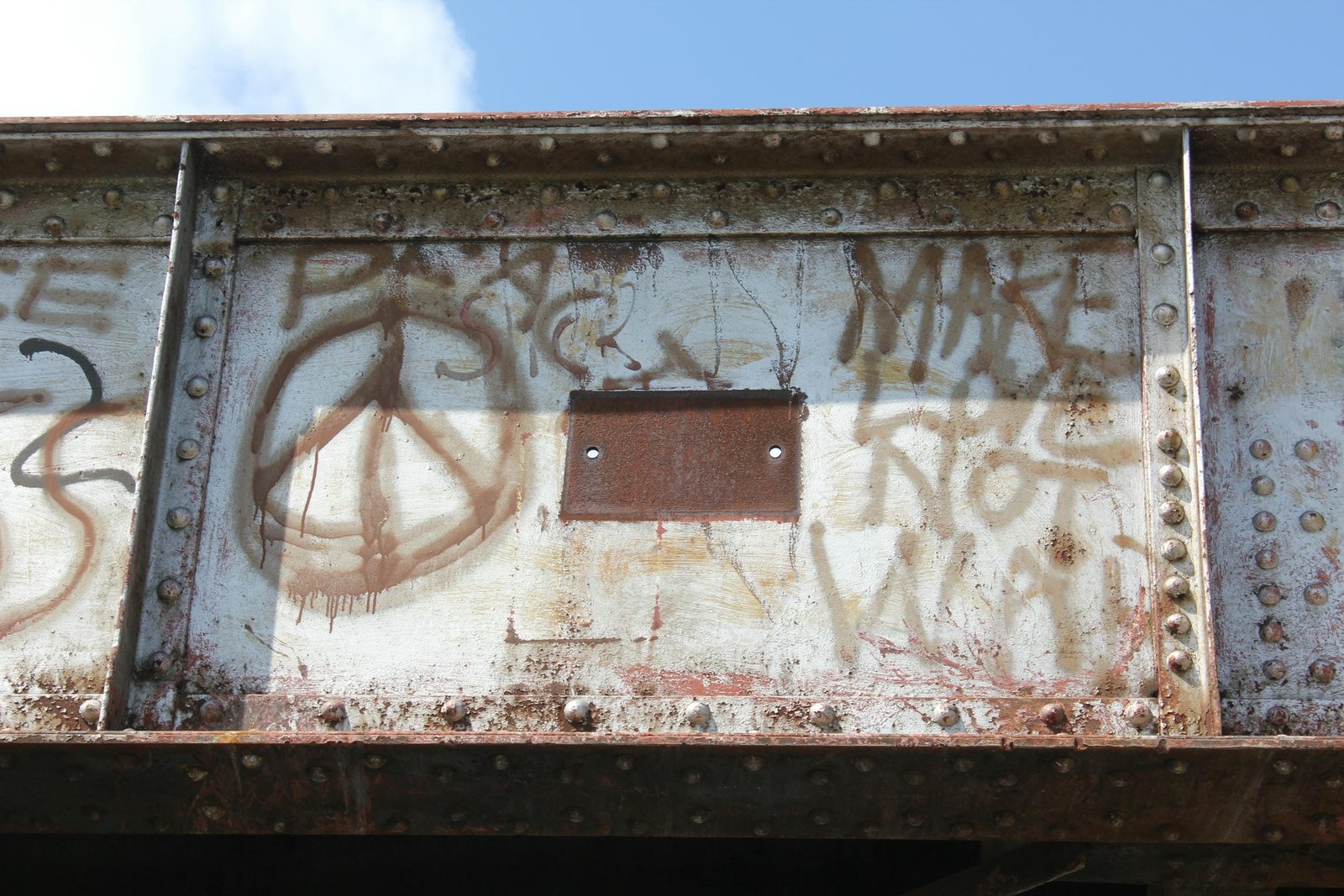
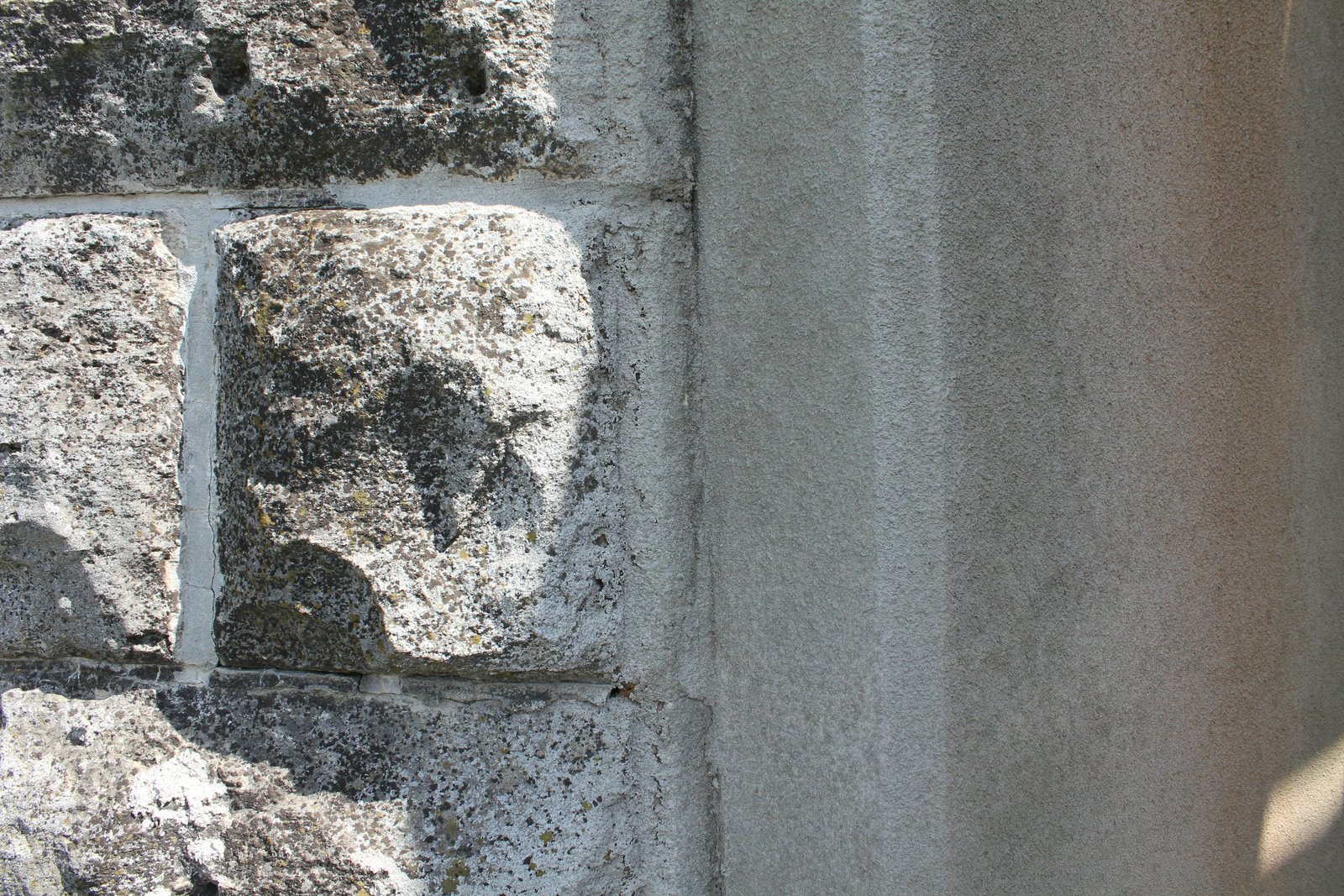
Located between Luzerne and Belle Plaine, this through plate girder bridge carries a former Chicago & North Western Railway mainline over County Road E68 (77th Street Drive). Originally, a grade crossing existed at this location. It is believed this roadway was originally part of the Lincoln Highway, a cross-country travel route which roughly followed present-day US Highway 30 in Iowa. In 1904, the Benton County Board of Supervisors began working with the C&NW to construct an underpass at this location to improve safety at the crossing. An agreement was reached in early 1905, and the bridge was constructed that year. Currently, the bridge consists of a 37-foot double track through plate girder span, set onto stone abutments. The superstructure follows a standard design, with three light plate girders and a standard floor system. The abutments use a standard design, with stepped wing walls which extend diagonally from the bridge. The faces of the abutments were encased in concrete in approximately 1935. Stone for the abutments consists of a tan limestone, quarried at Cedar Valley, Iowa. American Bridge Company fabricated the superstructure, while the substructure was constructed by Elmer J.C. Bealer. It is unclear if the concrete alterations were completed by railroad company forces or by an unknown contractor. E.J.C. Bealer was a prolific quarry owner and contractor based in Cedar Valley, who was heavily involved with the BCR&N and the Rock Island. In 1905, he was reportedly awarded a contract for several projects along the C&NW mainline. Through plate girder spans were popular for railroad use, as they were durable and easy to construct. Since the initial construction, the bridge has seen several alterations, including the encasement of the abutments with concrete and minor steel repairs. Today, the bridge remains in use as part of a Union Pacific Railroad mainline. Overall, the bridge appears to be in fair to good condition, with no significant deterioration noted. The author has ranked the bridge as being locally significant, due to the common design.
Citations
| Build date and builder (superstructure) | Chicago & North Western Railway Drawing Collection at the Chicago & North Western Historical Society Archives |
| Builder (substructure) | Every Other Daily Union; April 25, 1905 |
| Railroad History Citation | ICC Valuation Information, Compiled by Richard S. Steele |