
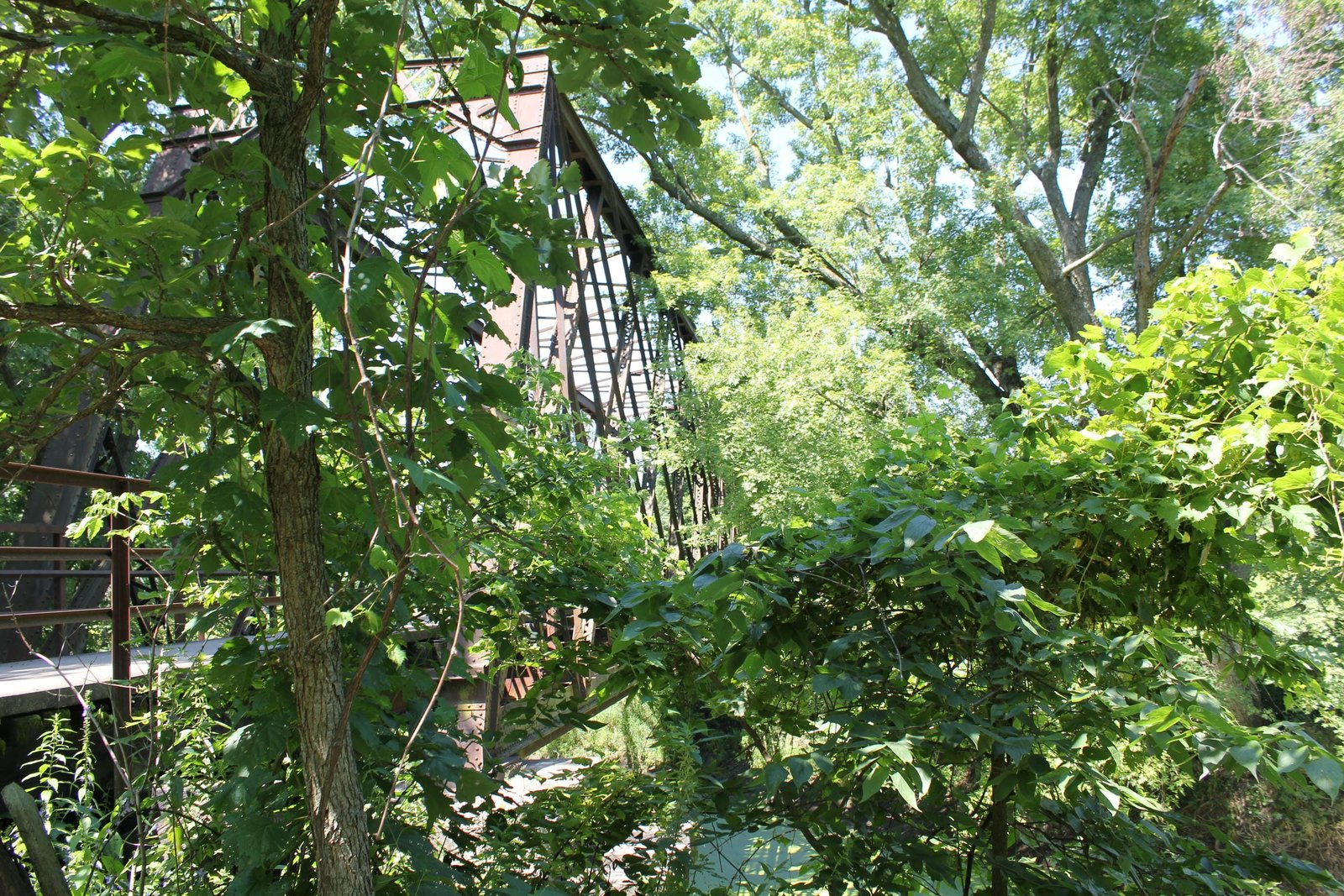
Click the photo to view the full-size version
| Name | Kewash Trail - W. Fork Crooked Creek Bridge Chicago, Rock Island & Pacific Railroad Bridge #2517 |
| Built By | Chicago, Rock Island & Pacific Railway |
| Currently Owned By | Washington County Conservation Board |
| Superstructure Contractor | Lassig Bridge & Iron Works of Chicago, Illinois |
| Substructure Contractor | Unknown |
| Length | 228 Feet Total, 127 Foot Main Span |
| Width | 1 Track |
| Height Above Ground | 15 Feet (Estimated) |
| Superstructure Design | Quadrangular Lattice Through Truss and Timber Pile Trestle |
| Substructure Design | Stone Masonry and Timber Pile |
| Date Built | 1889; East Pier Reconstructed 1943 |
| Traffic Count | 0 Trains/Day (Bridge is Open to Pedestrian Traffic) |
| Current Status | Open to Pedestrian Traffic |
| 2517 | |
| Significance | Regional Significance |
| Documentation Date | 8/10/2013 |
In 1872, the Chicago, Rock Island & Pacific Railroad (Rock Island) constructed a 28-mile railroad line, extending from an existing railroad at Washington, Iowa to Signourney, Iowa. The line was extended another 25 miles in 1875, reaching Oskaloosa, Iowa. The following year, an additional 25 miles were constructed to Knoxville, Iowa. In 1880, the railroad was reorganized as the Chicago, Rock Island & Pacific Railway (Rock Island). This line formed a secondary route for the Rock Island, roughly paralleling the existing mainline between Iowa City, Iowa and Des Moines, Iowa. This line also provided access to coal fields located in south central Iowa. The Rock Island struggled financially throughout much of its history, experiencing repeated bankruptcies and chronic instability. In 1938, the segment between Oskaloosa and Knoxville was abandoned. After World War II, the Rock Island struggled to survive, proposing mergers and deferring maintenance on their routes. The railroad reorganized as the Chicago, Rock Island & Pacific Railroad in 1948.
Another section of this line between Keota and Oskaloosa was abandoned in 1967. By the mid-1970s, the railroad was in serious decline. The railroad secured loans to eliminate slow orders, acquired new equipment, and attempted to restore profitability. Several sections of this line had fallen into serious disrepair, hampering the Rock Islands ability to maintain efficient operations. In 1978, the railroad came close to profit, but creditors were lobbying for a complete shutdown of the Rock Island. During the fall of 1979, a strike crippled the railroad, and by January of 1980, the entire system was ordered to be shut down and liquidated. Many of the lines and equipment were scrapped. Profitable sections of railroad were prepared for sale. In 1983, the Kewash Railroad (KWTR) purchased the remaining segment Washington to Keota, before ultimately abandoning it in 1988. Today, much of this line is abandoned and has been converted to farm fields. A short segment between Washington and Keota has been reused as part of the Kewash Trail.
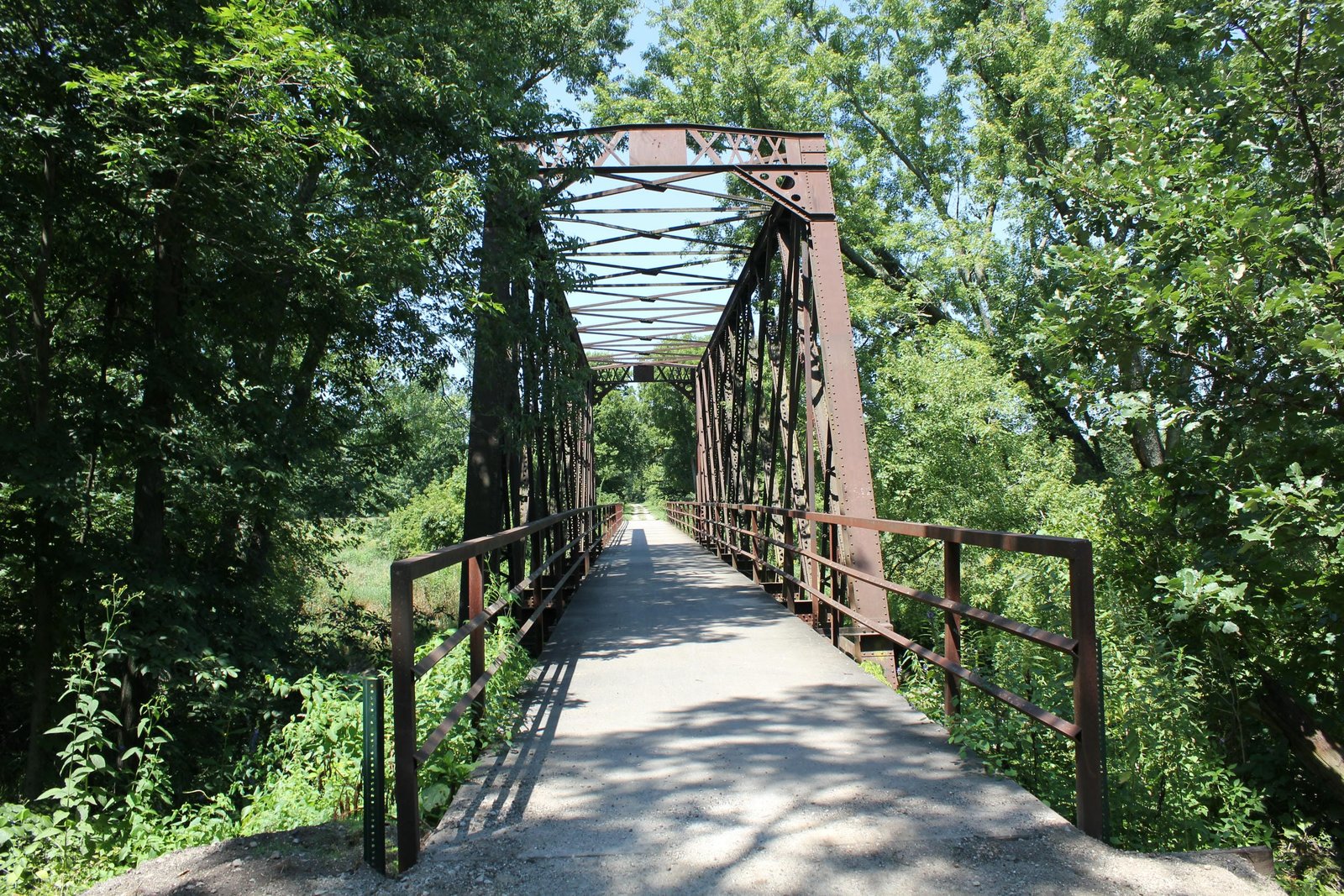
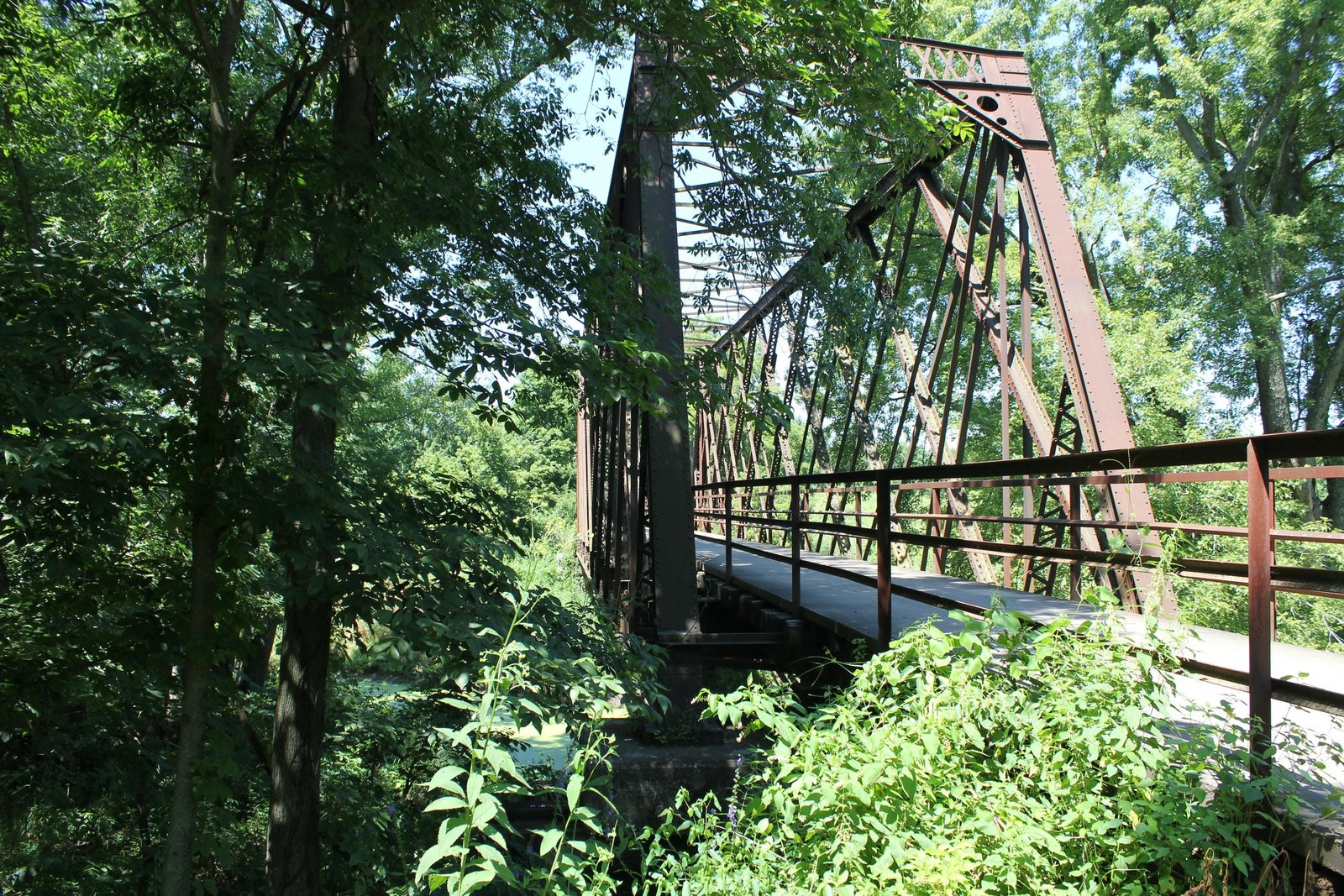
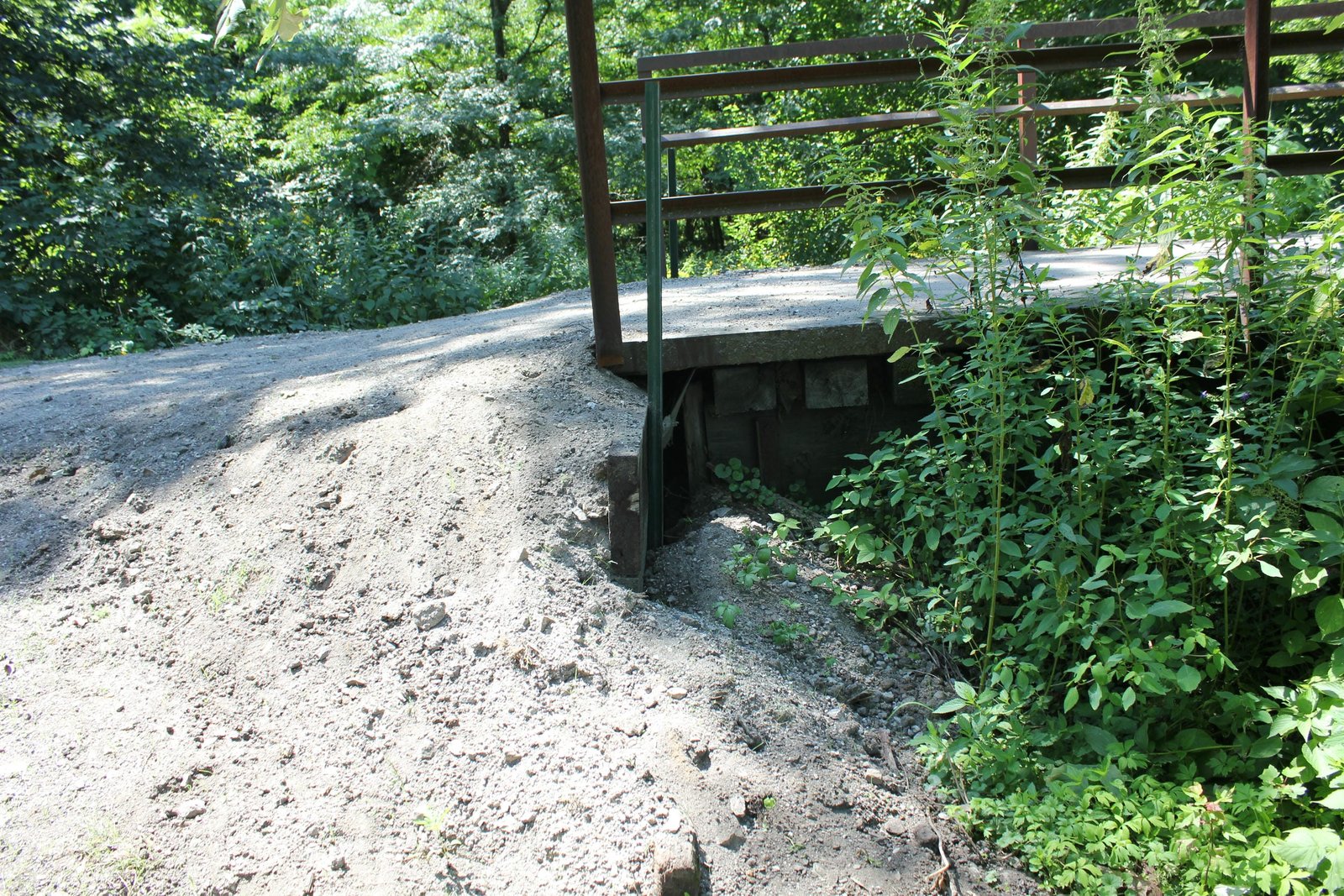
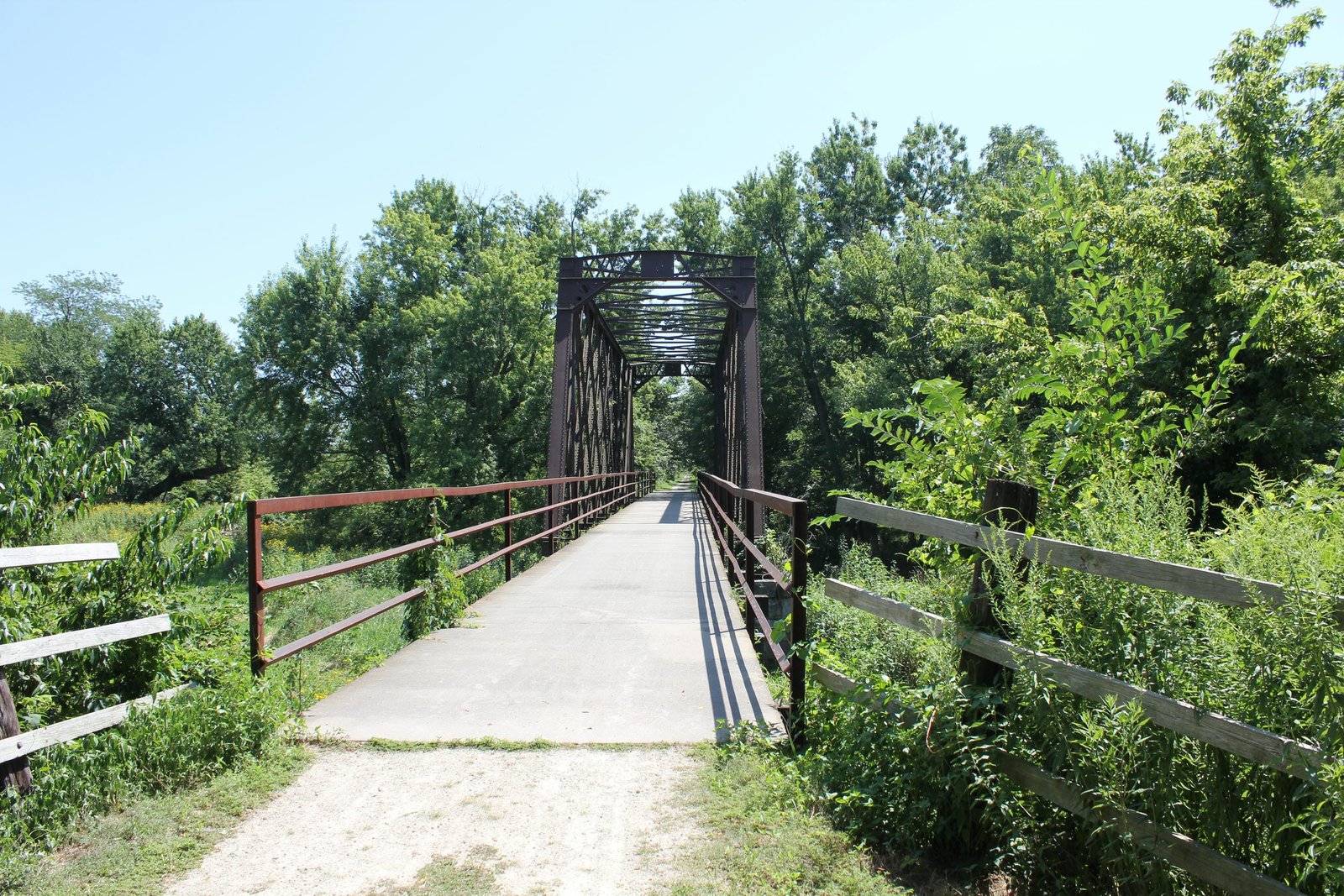
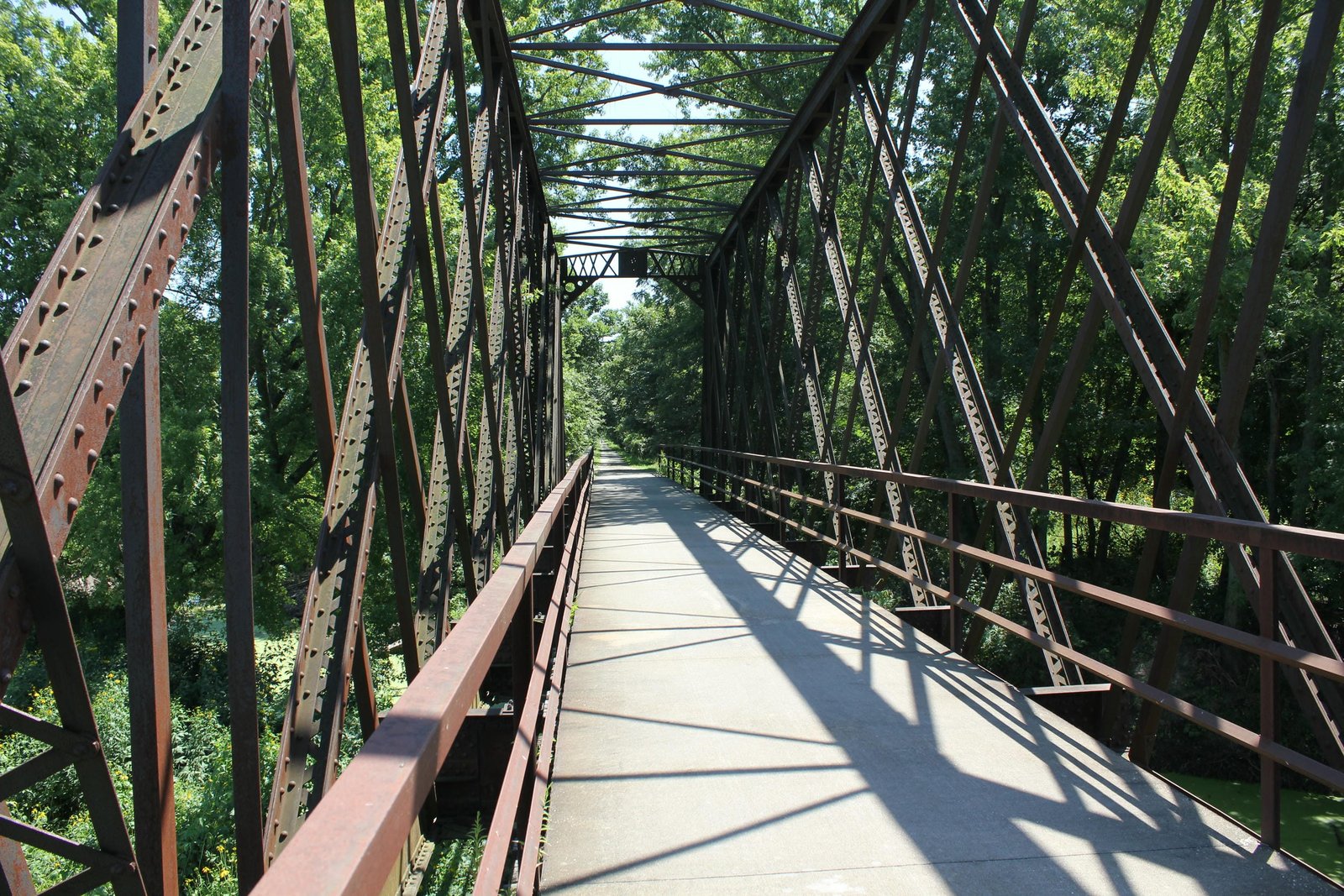
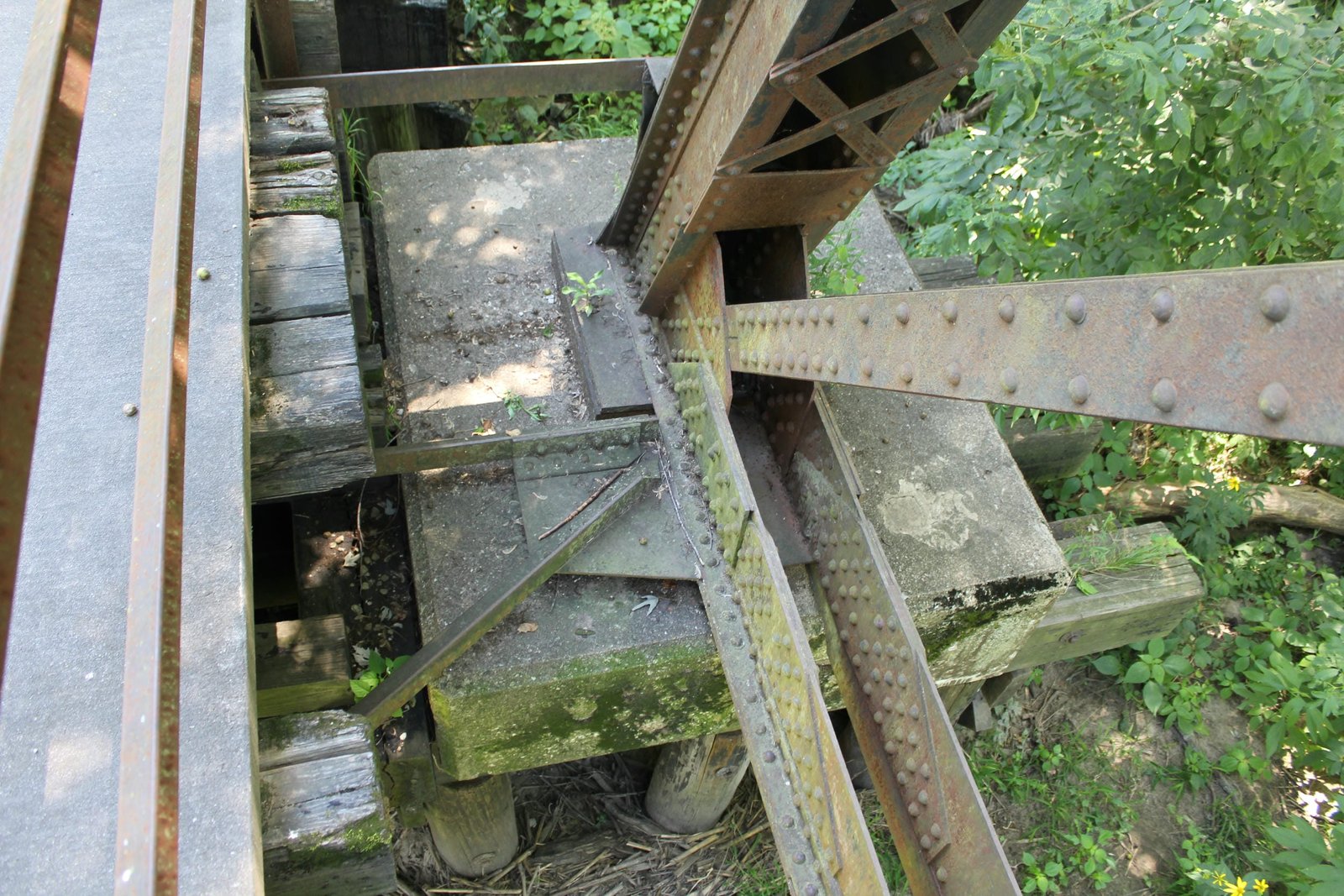
Located between Washington and West Chester, this attractive through truss bridge carries a former Chicago, Rock Island & Pacific Railroad (Rock Island) branch line over West Fork Crooked Creek. The first bridge at this location was likely a timber pile trestle, constructed when the line was first built. Throughout the 1880s and continuing into the 1890s, the Rock Island sought to upgrade many of their aging timber bridges with permanent iron and stone structures. In late 1888, work was started on a new bridge, and was completed in 1889. Initially, the bridge consisted of a through truss span, set onto stone piers and approached by timber pile trestle spans. In 1943, the east pier was replaced by a new timber pile pier for unknown reasons, giving the bridge its present configuration. Currently, the bridge consists of a 127-foot, riveted quadrangular lattice through truss span, set onto one stone pier and one concrete capped timber pile pier. The bridge is approached by two timber pile trestle spans on the east end and five timber pile trestle spans on the west end. It is believed that Lassig Bridge & Iron Works fabricated the truss span, while the stone pier was constructed by an unknown contractor. The timber portions of the bridge are believed to have been constructed by railroad company forces.
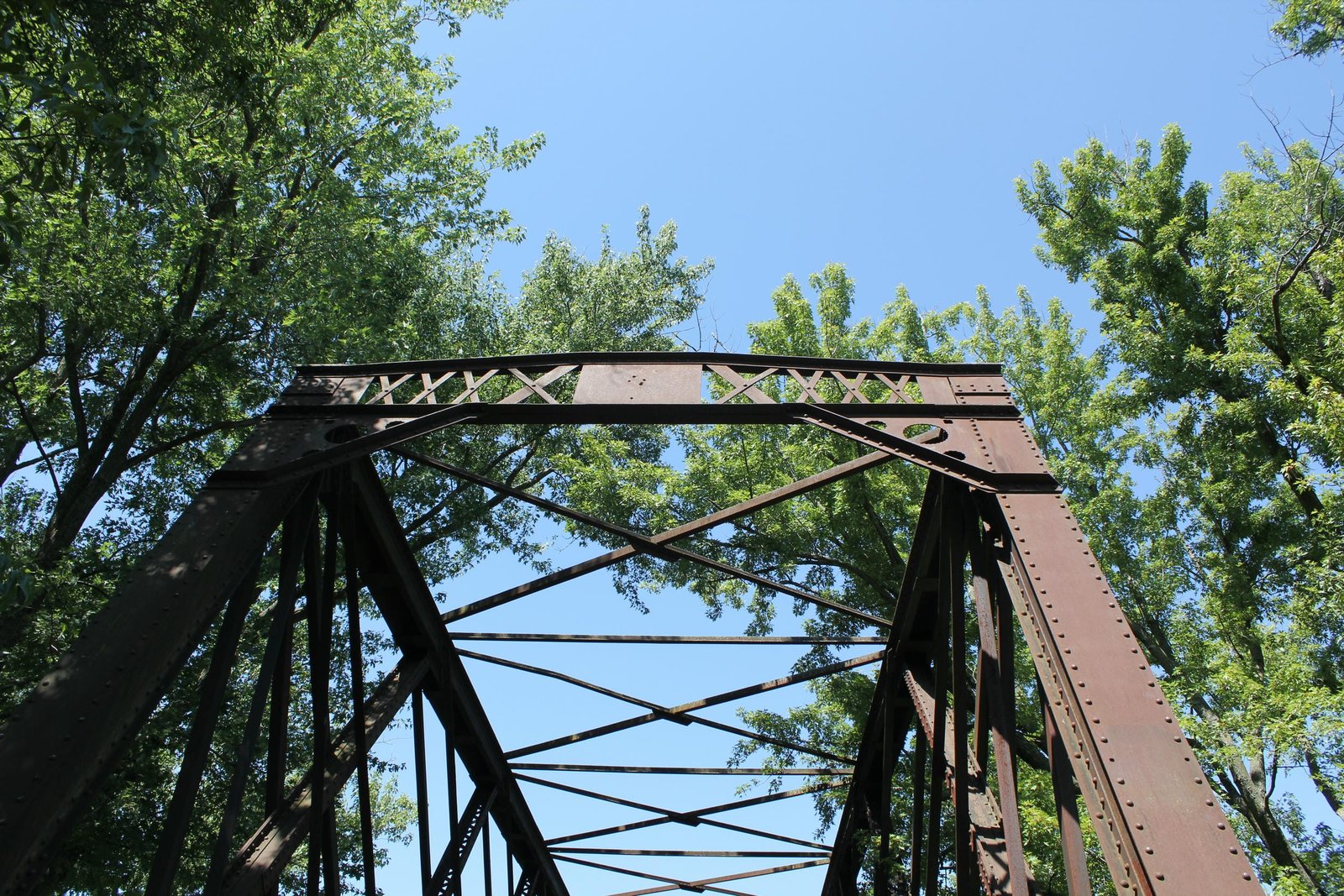
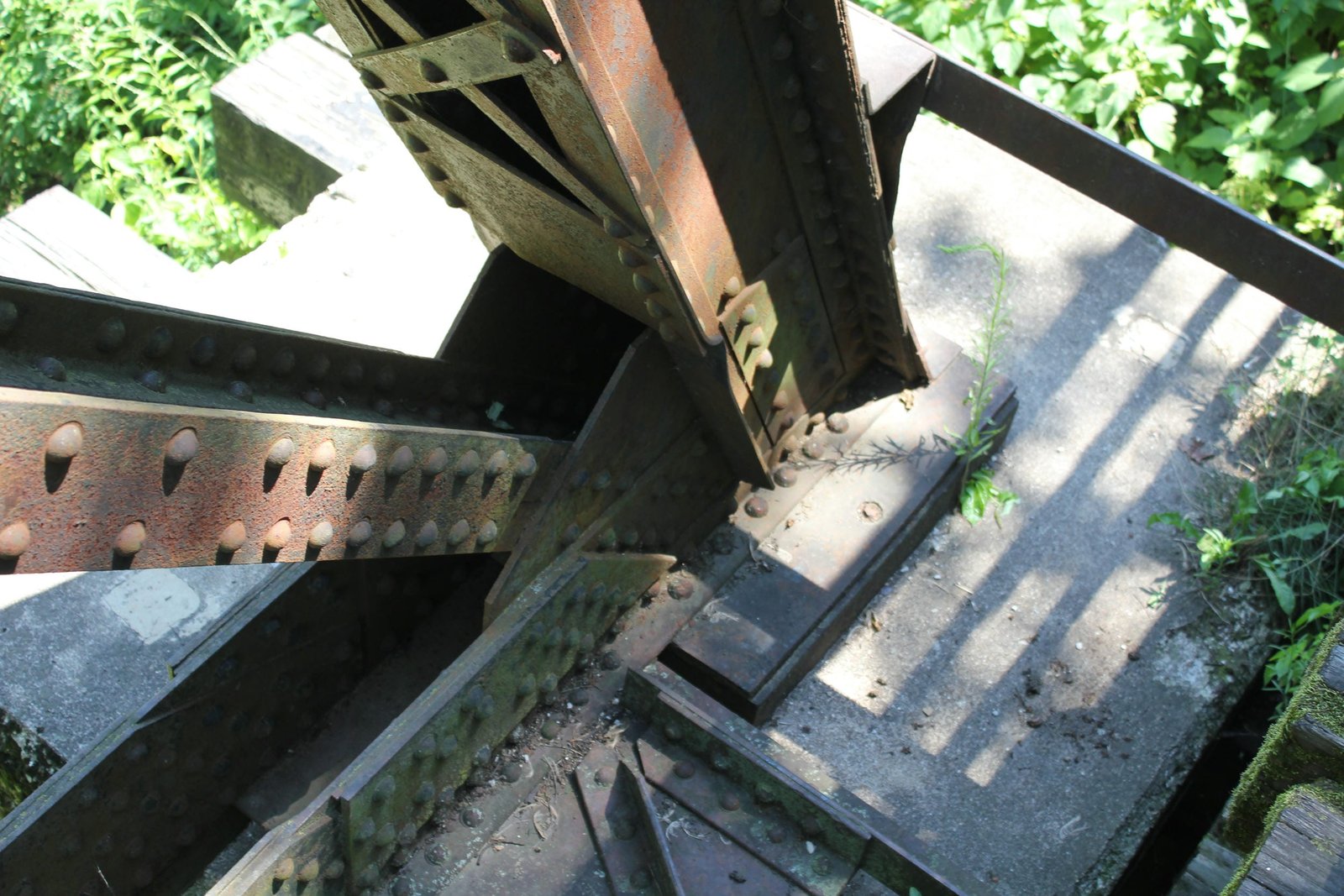
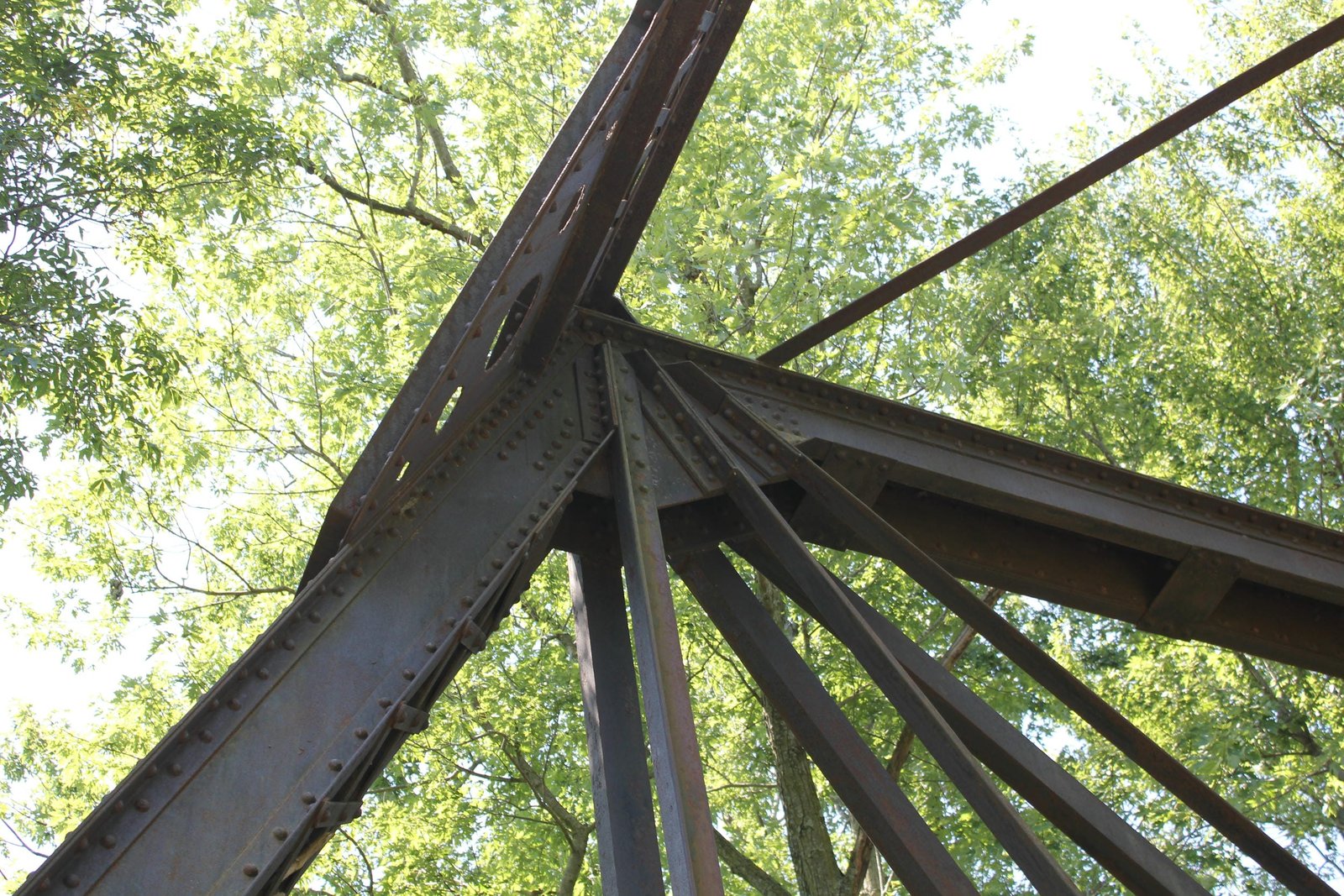
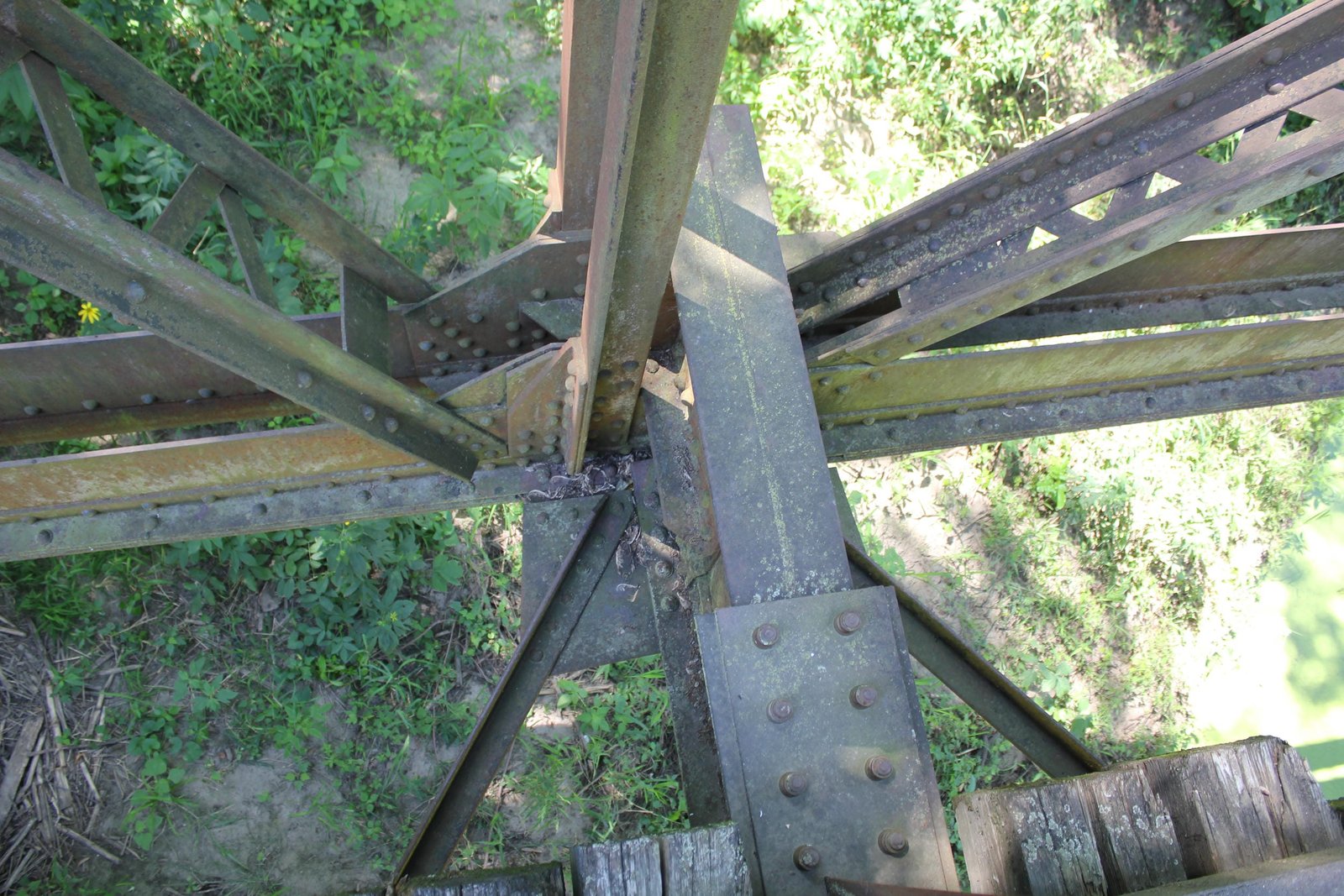
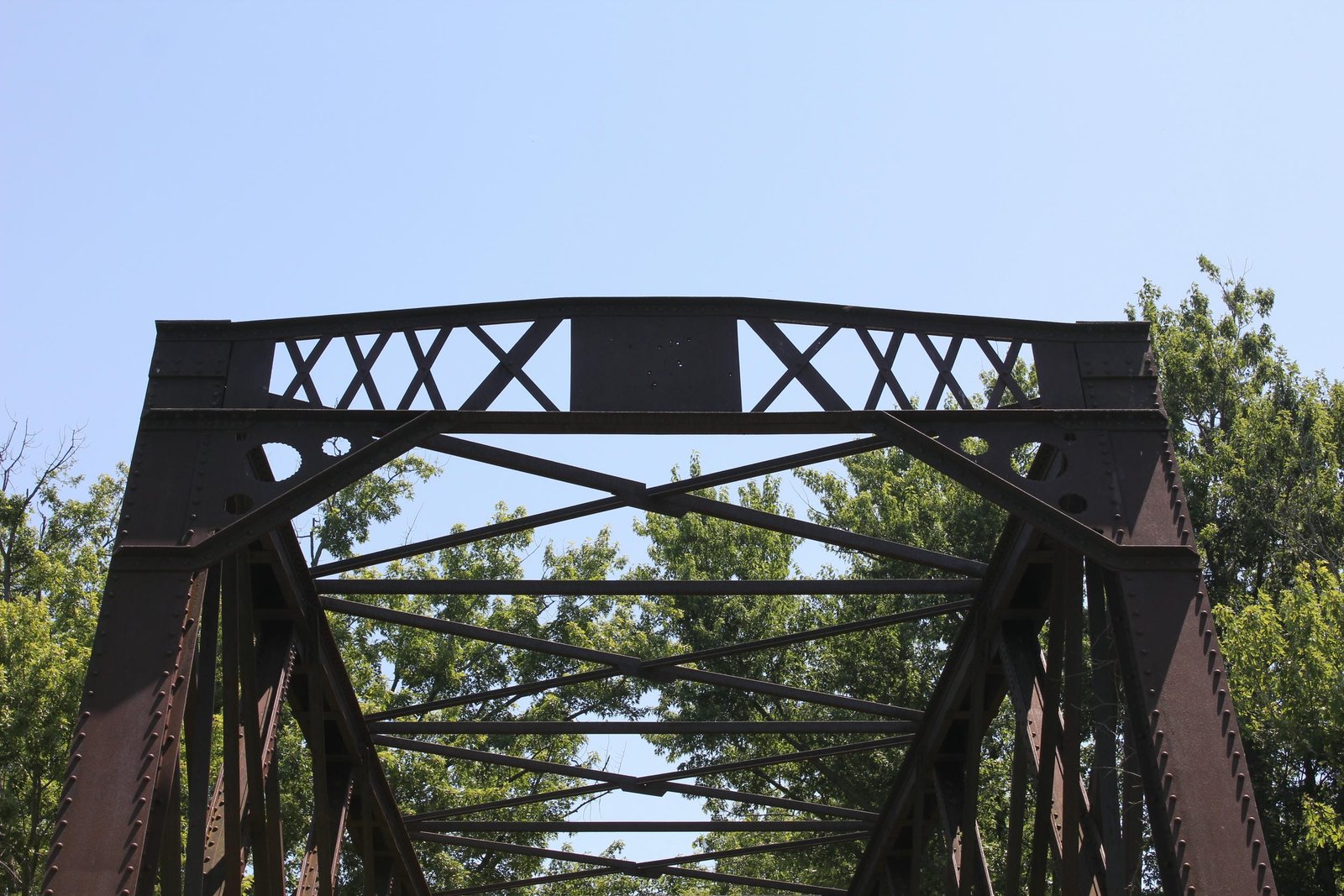
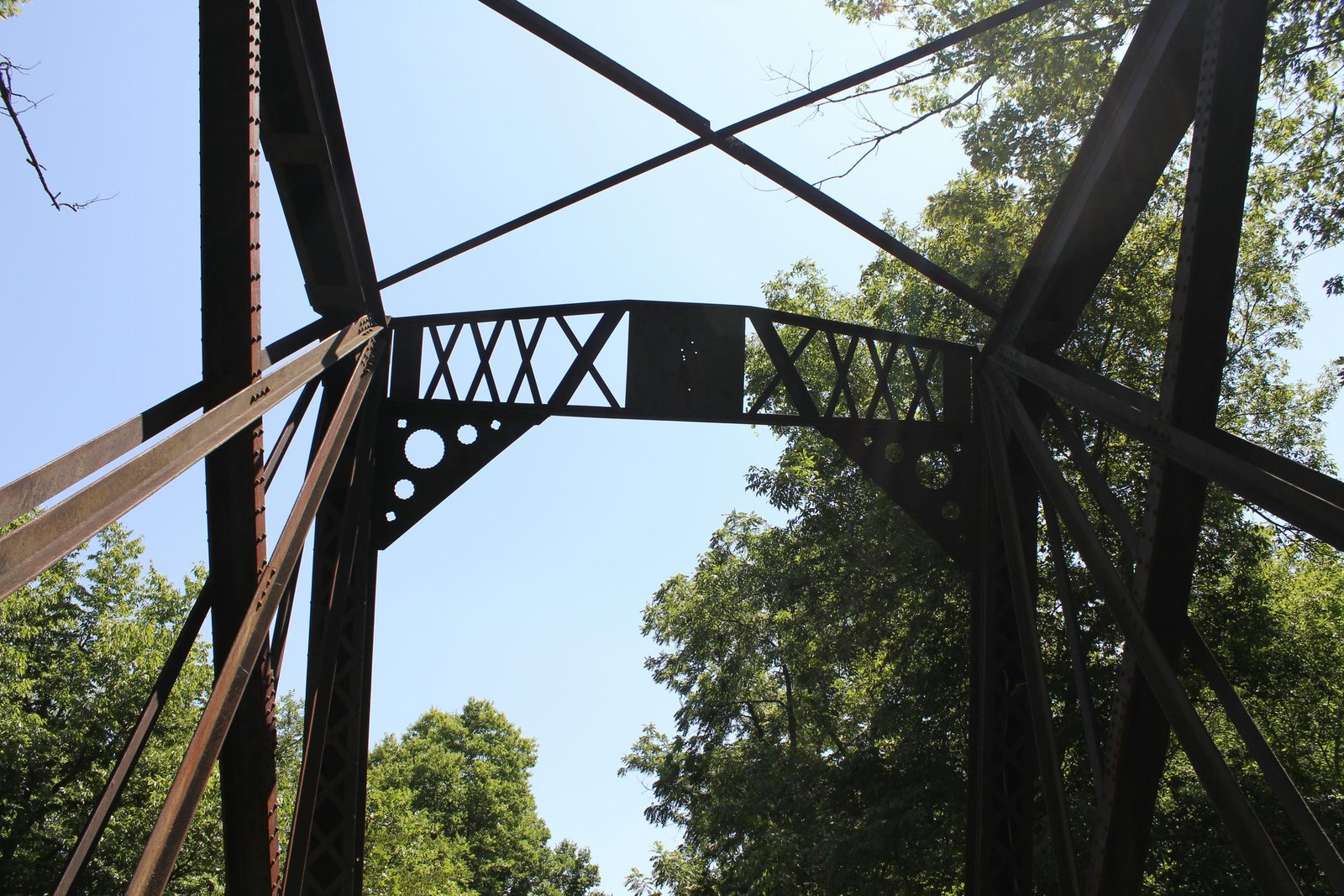
The truss span follows a standard design used by the Rock Island and fabricated by Lassig Bridge & Iron Works, with built-up members, a standard floor and decorative portal bracing. It is believed that the truss is fabricated from wrought iron, a typical bridge material for the era. The top chord is composed of a built-up beam, constructed from two U-shaped channels joined by a solid plate on the top and widely spaced metal strips on the bottom. The endpost also uses a built-up design, consisting of two channels connected with a solid plate on the exterior and X-lacing on the interior. The bottom chord is lightly constructed, consisting of two parallel T-shaped plates and no bracing. Typical of lattice truss spans from this era, the diagonal members are formed from a of different designs. The outermost compression members use solid beams, while the inner compression members consist of two different styles of V-laced bars. All of the tension members consist of L-shaped bars, and a V-laced crash bar is present at the ends of the truss. The floor system is traditionally composed, consisting of two light stringers and shallow plate girder floorbeams, which are set onto the top chord. Both the lower lateral bracing and upper lateral bracing are composed of light L-shaped bars. The portal bracing follows a standard Lassig design, with a pedimented lattice beam and a solid plate in the center. At the corners, the portal bracing is connected to the endposts by triangular plates with decorative cutouts. Also typical of these types of trusses, the sway bracing is constructed of simple square bars, set above the top chord. The stone pier uses a standard rectangular design, and appears to be constructed from a tan limestone quarried at an unknown location. The east pier is constructed using two rows of timber piles and concrete slab caps, a somewhat unusual design.
The quadrangular lattice through truss design is relatively uncommon throughout the United States. However, a few railroads preferred the design, such as the Chicago, Rock Island & Pacific Railway (Rock Island), the Chicago & North Western Railway (C&NW) and the Chicago, St. Paul, Minneapolis & Omaha Railway (Omaha Road). The Rock Island began using the design in the early 1880s as an alternative to iron pin-connected spans. Spans constructed in the 1880s and 1890s used lightly built-up members and a decorative pedimented portal bracing. At the turn of the 20th Century, the Rock Island constructed a handful of significantly heavier trusses of this design, before switching to more traditional single intersection designs. The main detraction of the design was its statically indeterminate nature, although the design performed well in case of a derailment. Since the initial construction, the bridge has seen no significant alterations. After abandonment, the was reused as part of the Kewash Trail. Metal railings and a concrete deck were added to the structure as part of the reuse. Today, the bridge remains one of the major highlights of the trail. Overall, the bridge appears to be in fair condition, with minor deterioration to the truss or timber components noted. With minor rehabilitation of the truss and timber components, this bridge should safely serve pedestrian traffic for years to come. The author has ranked the bridge as being regionally significant, due to the truss design and age.
Citations
| Build date | Ninth Annual Report of the Chicago, Rock Island & Pacific Railway Company |
| Builder (superstructure) | Based on identical spans |
| Railroad History Citation | ICC Valuation Information, Compiled by Richard S. Steele |