
Click the photo to view the full-size version
| Name | Czech Village Railroad Bridge Chicago, Rock Island & Pacific Railroad Bridge #962 |
| Built By | Chicago, Rock Island & Pacific Railway |
| Currently Owned By | City of Cedar Rapids |
| Superstructure Contractor | American Bridge Company of New York |
| Substructure Contractor | Cedar Rapids Construction Company of Cedar Rapids, Iowa |
| Length | 630 Feet Total, 90 Foot Spans |
| Width | 1 Track |
| Height Above Ground | 15 Feet (Estimated) |
| Superstructure Design | Deck Plate Girder |
| Substructure Design | Concrete |
| Date Built | 1922 |
| Date Removed | 2008 (Spans #1-#4) 2023 (Remainder of Bridge) |
| Traffic Count | 0 Trains/Day (Bridge has been Replaced) |
| Current Status | Replaced by a new bridge |
| Burlington, Cedar Rapids & Northern Railway Bridge Number | 119 |
| Chicago, Rock Island & Pacific Railroad Bridge Number | 962 |
| Significance | Local Significance |
| Documentation Date | 8/10/2013 |
In 1870, the Burlington, Cedar Rapids & Minnesota Railway (BCR&M) began construction on a new railroad line, constructing 41 miles from Burlington, Iowa north to Columbus Junction, Iowa. The following year, the railroad was completed an additional 116 miles through Cedar Rapids, Iowa to Waterloo, Iowa. In 1872, an additional 64 miles was completed to Plymouth, Iowa. Work on the line resumed in 1877, when the Burlington, Cedar Rapids & Northern Railway (BCR&N) completed an additional 5 miles to Manly, Iowa. In 1878, the BCR&M became part of the BCR&N, completing a diagonal mainline from far southeast Iowa to north central Iowa. By the 1880s, the BCR&N had become an important railroad in Iowa, connecting towns and cities in southeast Iowa to northern Iowa. This line formed the principal mainline of the company, allowing for the construction of many additional branch lines. By the turn of the 20th Century, the BCR&N operated over 1,000 miles of track throughout Iowa, connecting both small towns and large cities. This line also served the basis of a northern extension to St. Paul, Minnesota; which was constructed between 1900 and 1901. In June 1903, the BCR&N was acquired by the Chicago, Rock Island & Pacific Railway (Rock Island), which operated a large railroad network through the central United States. By acquiring the BCR&N, the Rock Island greatly expanded its service area, reaching major hubs such as St. Paul and Sioux Falls, South Dakota.
The Rock Island struggled financially throughout much of its history, experiencing repeated bankruptcies and chronic instability. After World War II, the Rock Island struggled to survive, proposing mergers and deferring maintenance on their routes. The railroad reorganized as the Chicago, Rock Island & Pacific Railroad in 1948. Despite the financial troubles, the Rock Island continued to use this route as a mainline, connecting to major agricultural areas in northern Iowa. By the mid-1970s, the railroad was in serious decline. The railroad secured loans to eliminate slow orders, acquired new equipment, and attempted to restore profitability. In 1978, the railroad came close to profit, but creditors were lobbying for a complete shutdown of the Rock Island. During the fall of 1979, a strike crippled the railroad, and by January of 1980, the entire system was ordered to be shut down and liquidated. Many of the lines and equipment were scrapped. Profitable sections of railroad were prepared for sale. In 1981, a group of grain elevators along the route formed a short line railroad to operate over the bankrupt line.
In 1981 and 1982, the railroad was rehabilitated for use, and the route reopened for service. In 1984, the Iowa Northern Railway (IANR) purchased the line. A derailment near Burlington in 1985 caused the abandonment of much of the line south of Cedar Rapids, with only a small segment at Columbus Junction being sold to the Soo Line, which was controlled by Canadian Pacific Railway (CP) that year. In the late 20th Century, the IANR became a profitable railroad, serving a variety of agricultural industries between Cedar Rapids and Manly. A short segment of the line in Waterloo was abandoned in 1988, as the IANR had acquired trackage rights on a different line. In 1994, IANR was sold to Iron Road Railways (IRR), a holding company. In 1997, CP would sell the line segment to I&M Rail Link, which was later purchased by the Dakota, Minnesota & Eastern Railroad (DM&E) subsidiary Iowa, Chicago & Eastern Railroad (IC&E). After the bankruptcy of the IRR in 2003, the IANR was purchased by a former director of IRR, and grew considerably into a significant regional railroad.
The DM&E/IC&E were purchased by Canadian Pacific in 2008, and the line at Columbus Junction abandoned shortly after due to a bridge collapse during the 2008 floods. In 2025, the IANR was purchased by Canadian National Railway (CN), which already operated a significant railroad network in northern Iowa. This was considered a somewhat unusual example of a large class-one railroad purchasing a short line with the intention of further growing business. At the time of purchase, the IANR not only owned the Cedar Rapids to Manly mainline, but also operated branch lines to Oelwein and Forest City. Today, CN operates the Cedar Rapids Subdivision between Cedar Rapids and Waterloo; and the Manly Subdivision between Waterloo and Manly. South of Cedar Rapids, portions of the line have become part of the Hoover Nature Trail, while other sections are outright abandoned.
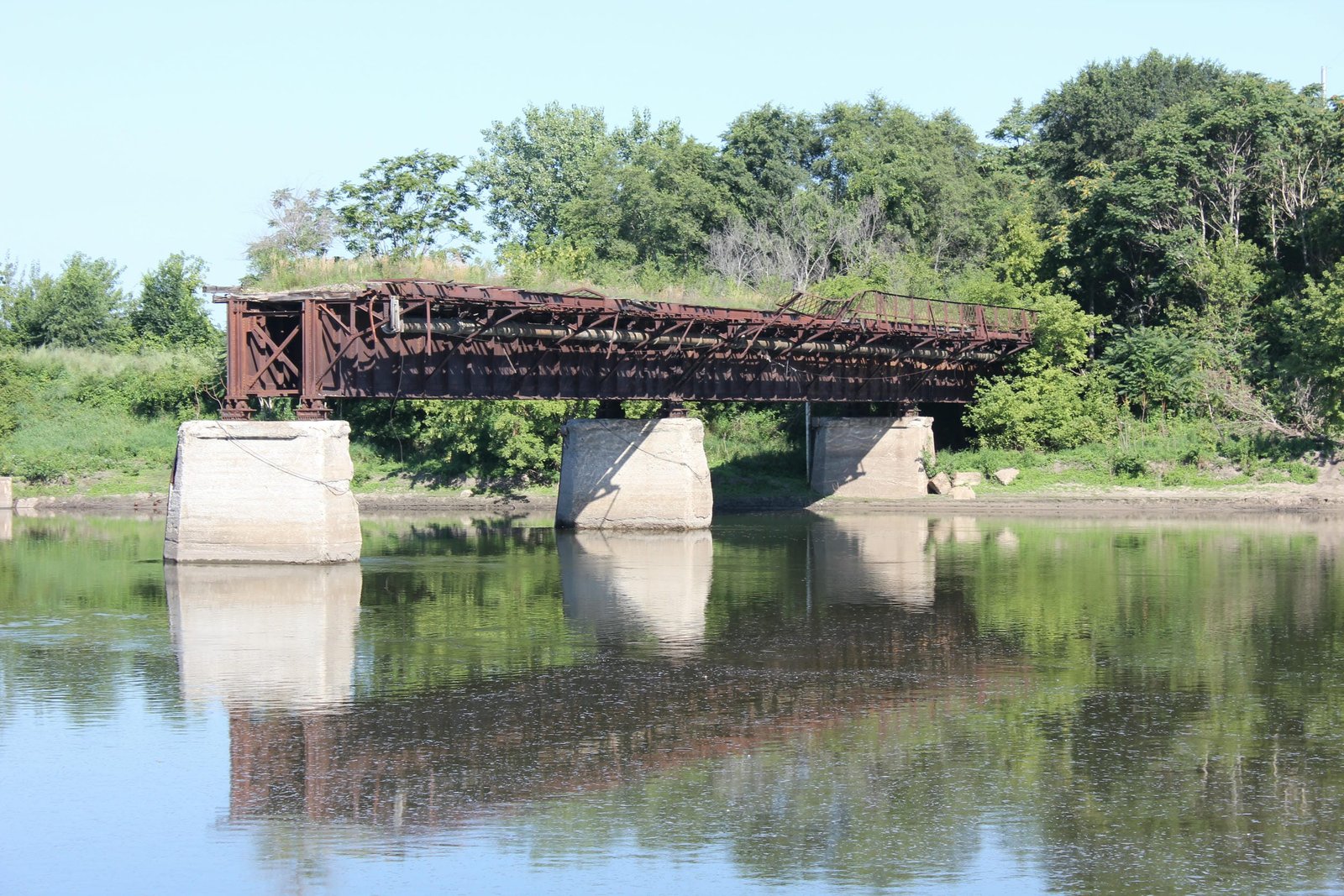
Located in Cedar Rapids, this deck plate girder bridge once carried a former Chicago, Rock Island & Pacific Railroad (Rock Island) mainline over the Cedar River near the Czech Village Neighborhood of Cedar Rapids. The first bridge at this location consisted of a three 177-foot wooden Howe through truss spans, set onto stone substructures. In 1878, the bridge was replaced with three 177-foot combination Fink through truss spans, reusing the original stone substructures. Combination trusses were popular for railroad use in the mid to late 19th Century, as they were economical and relatively durable. These spans used iron tension members and wooden tension members to provide greater strength. Photos of the combination trusses seem to show some unusual variation of a Pratt and Warren design, with an iron bottom chord, wooden endposts and top chords and V-laced iron compression members at the center of the structure. An additional wooden tension member, approximately the size of the endpost, appeared at the second and second to last panels. The BCR&N constructed a number of combination Fink trusses during the late 1870s and early 1880s, which was unusually late for the use of Fink trusses. It is unclear if these spans followed the Fink patented design, or if it was another sub-style designed by Albert Fink. By the 1890s, the combination bridge was no longer suitable for traffic, and it was decided to replace the bridge with a steel through truss. In 1894, the bridge was reconstructed with three 177-foot, 7-panel, pin-connected Parker through truss spans, which reused the original stone substructures. These spans were fabricated by the Union Bridge Company of Athens, Pennsylvania and were nearly identical to spans at a bridge across the Iowa River at Columbus Junction, Iowa. By the early 1920s, the truss spans had significantly deteriorated and various members were beginning to crack. In 1922, the bridge was replaced with a new deck plate girder bridge, set onto new substructures. It is believed that the 1894-era trusses were scrapped upon replacement.
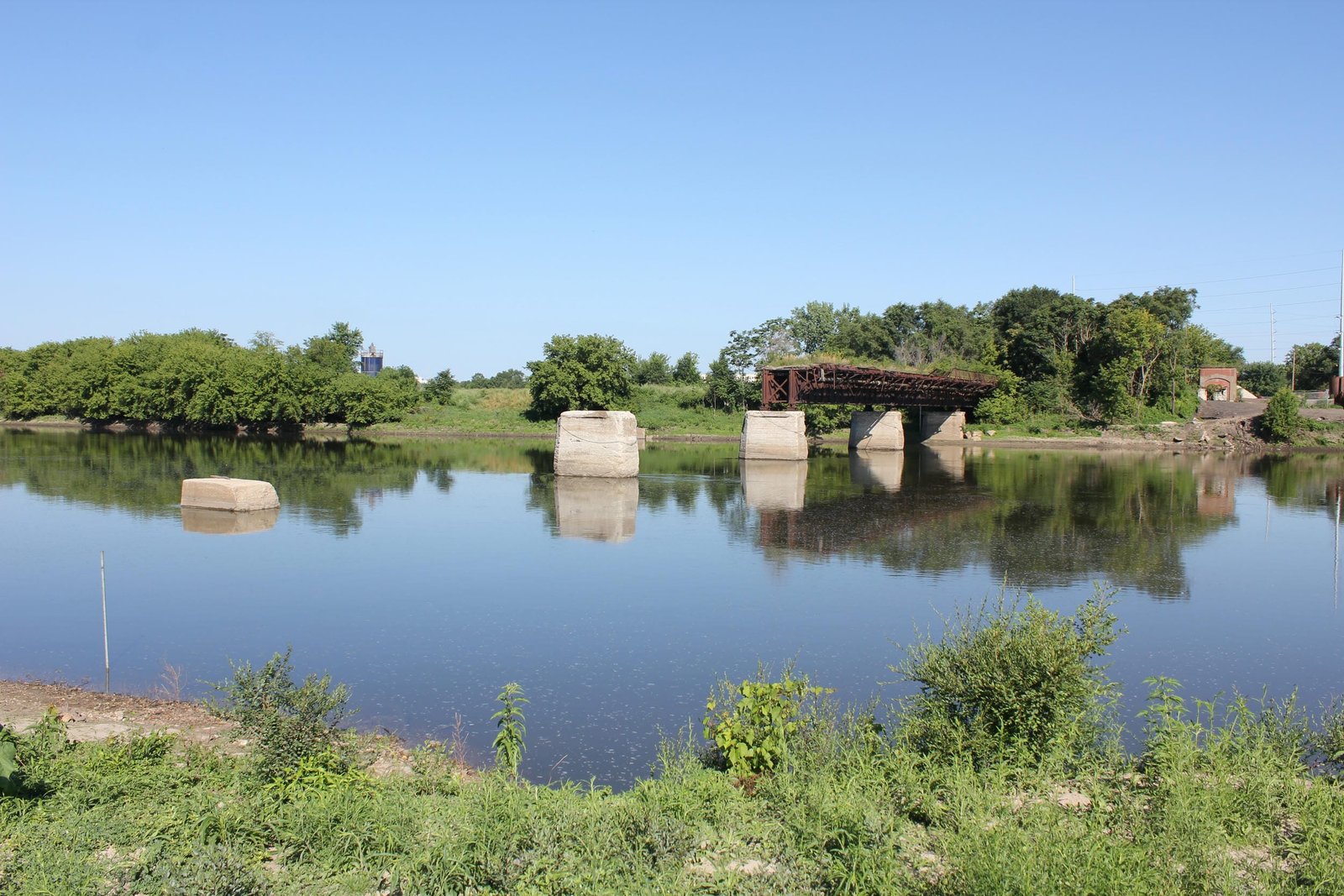
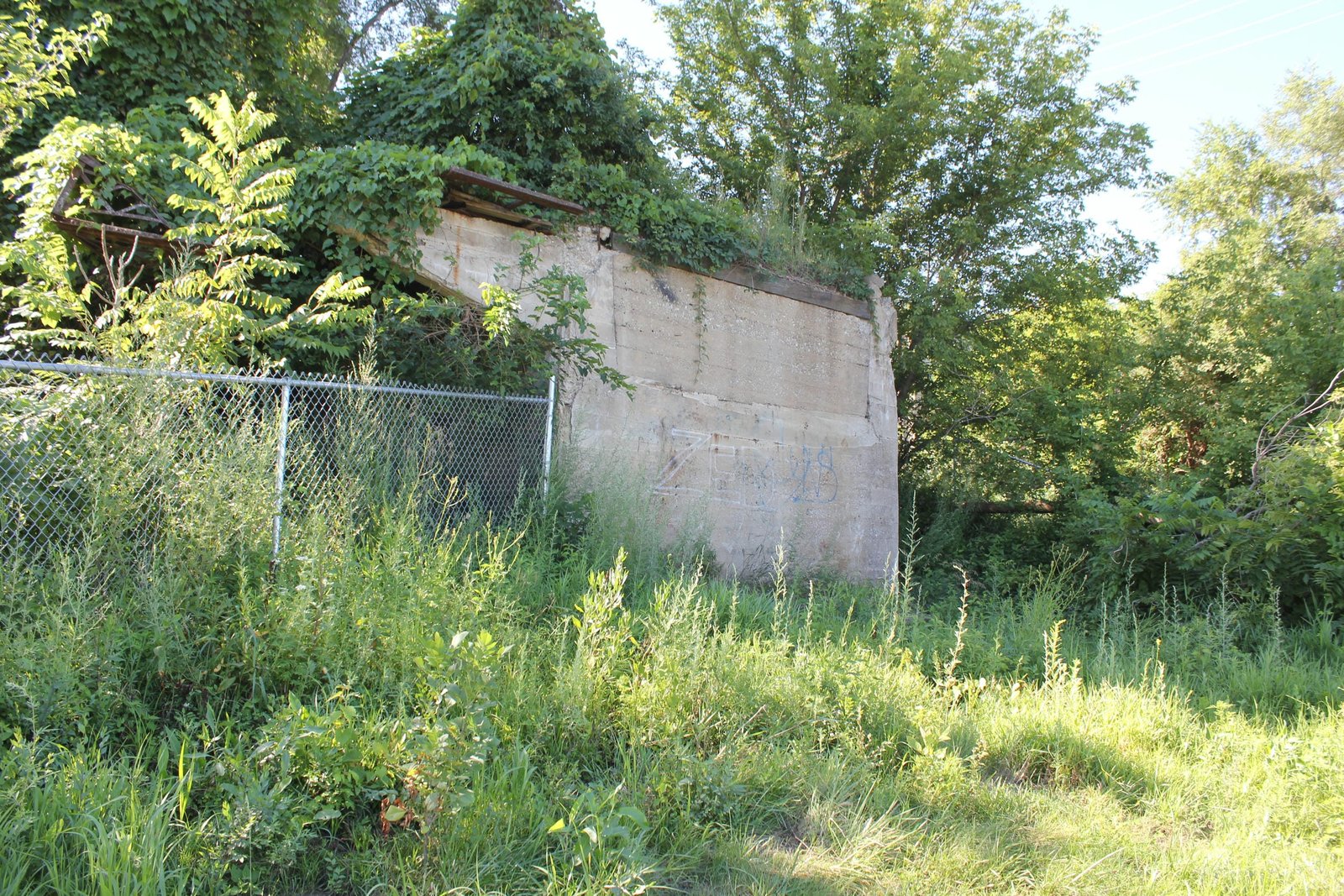
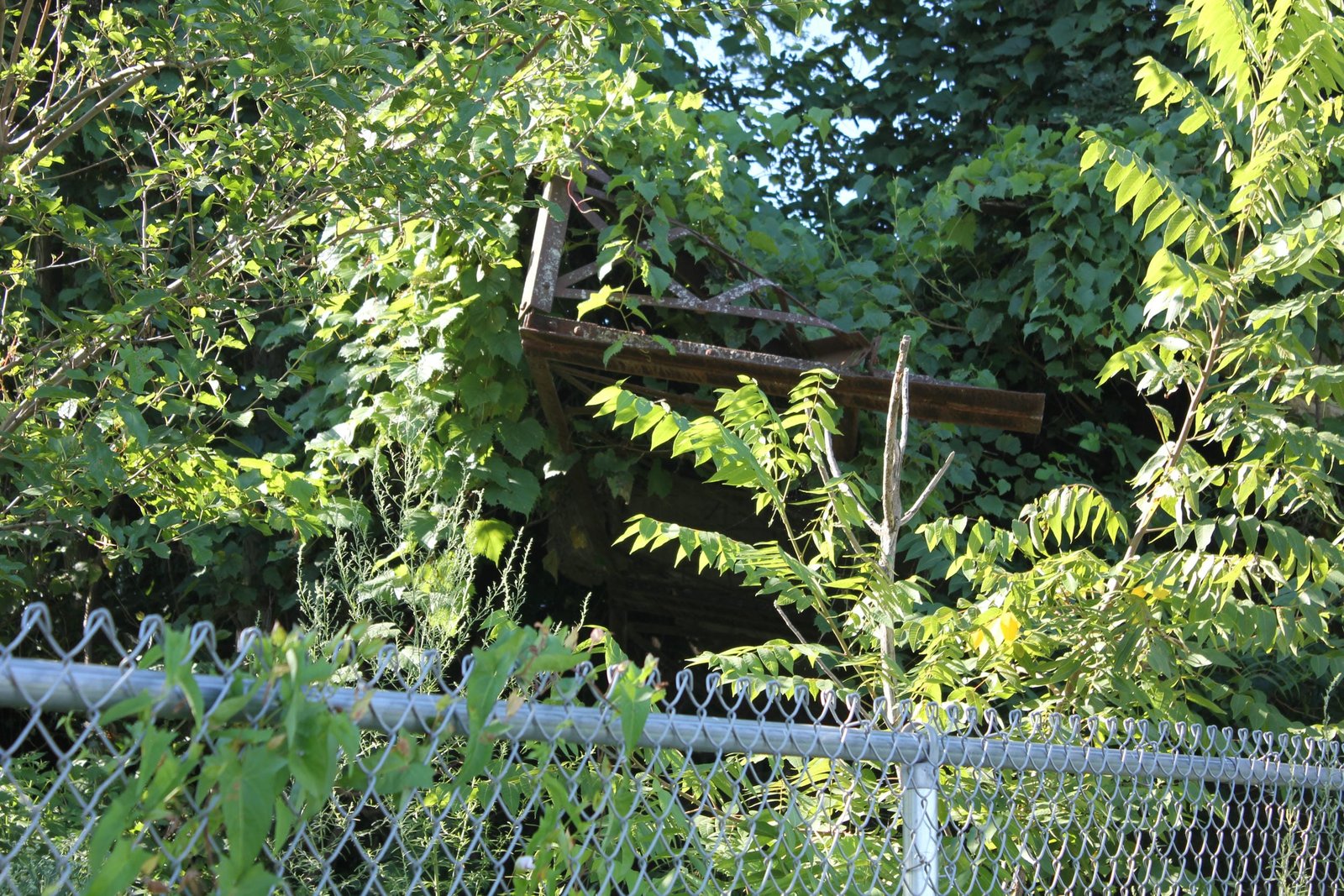
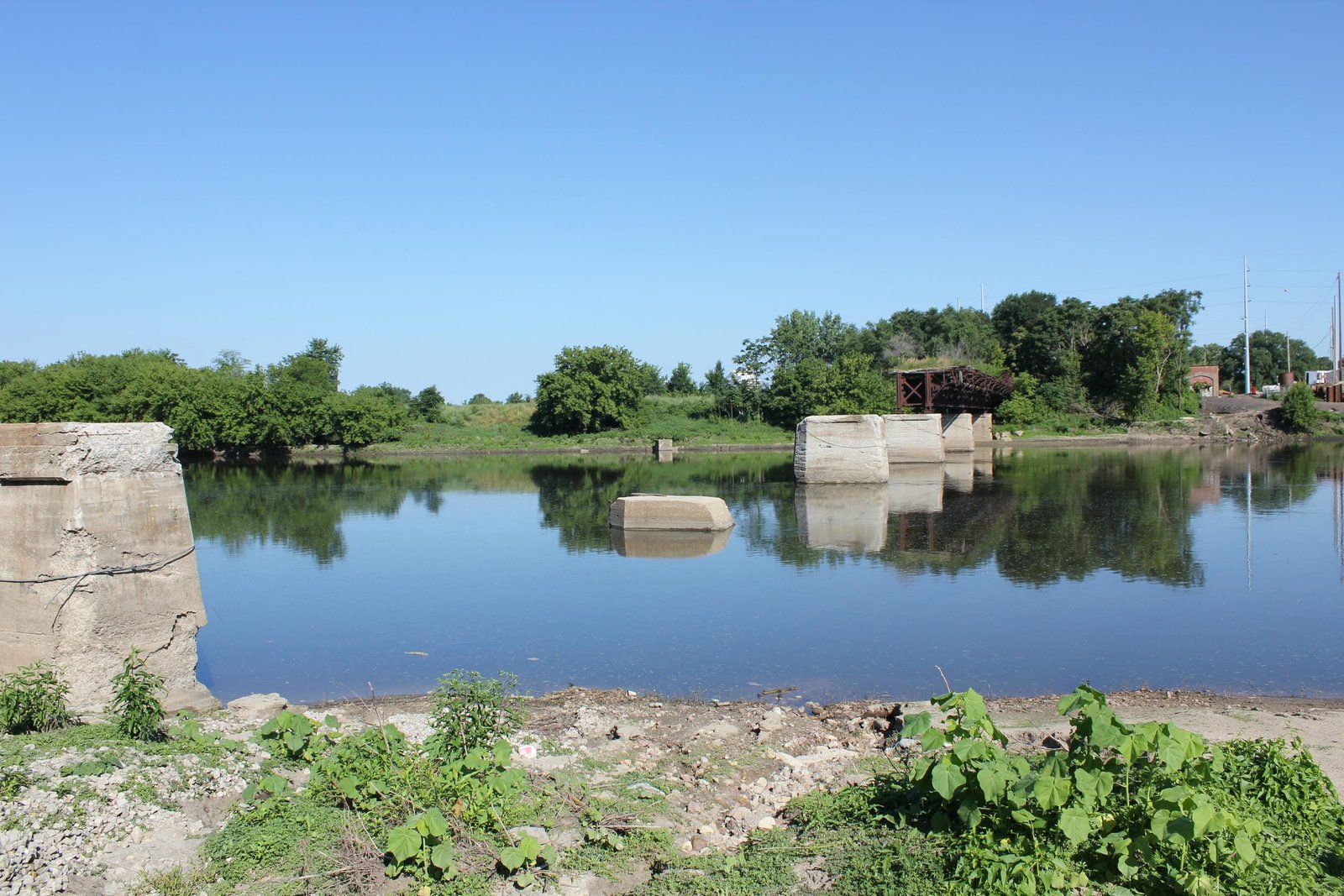
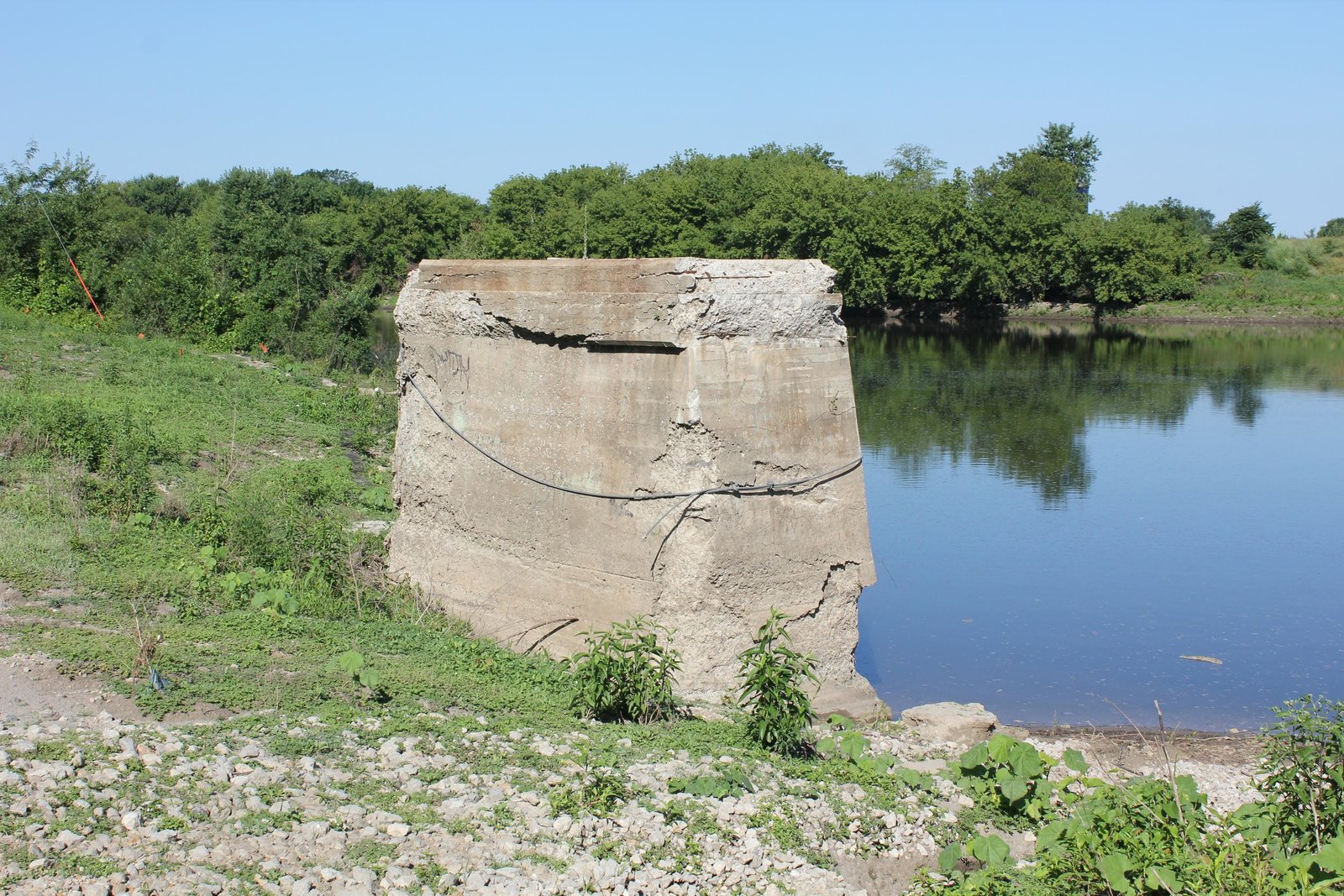
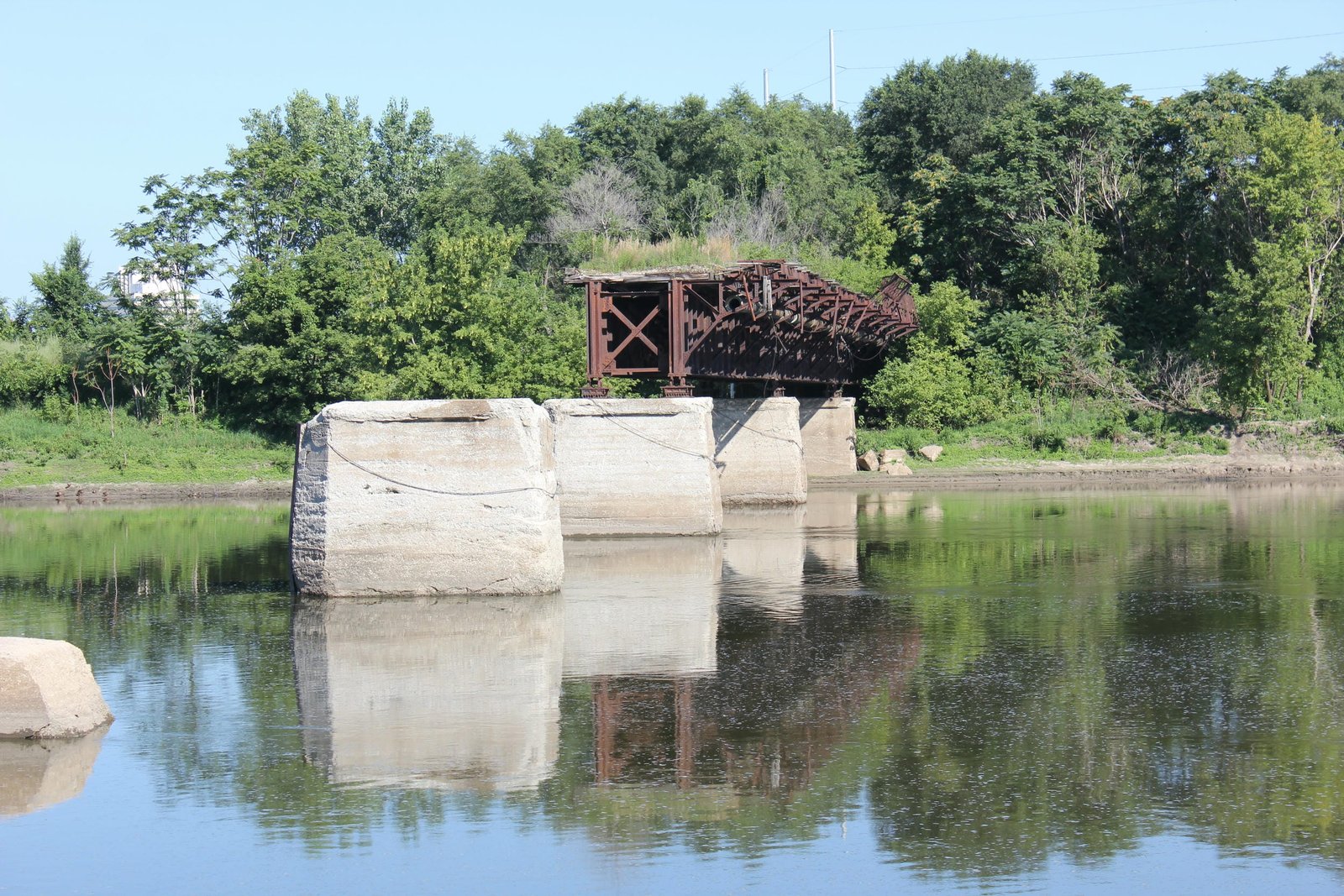
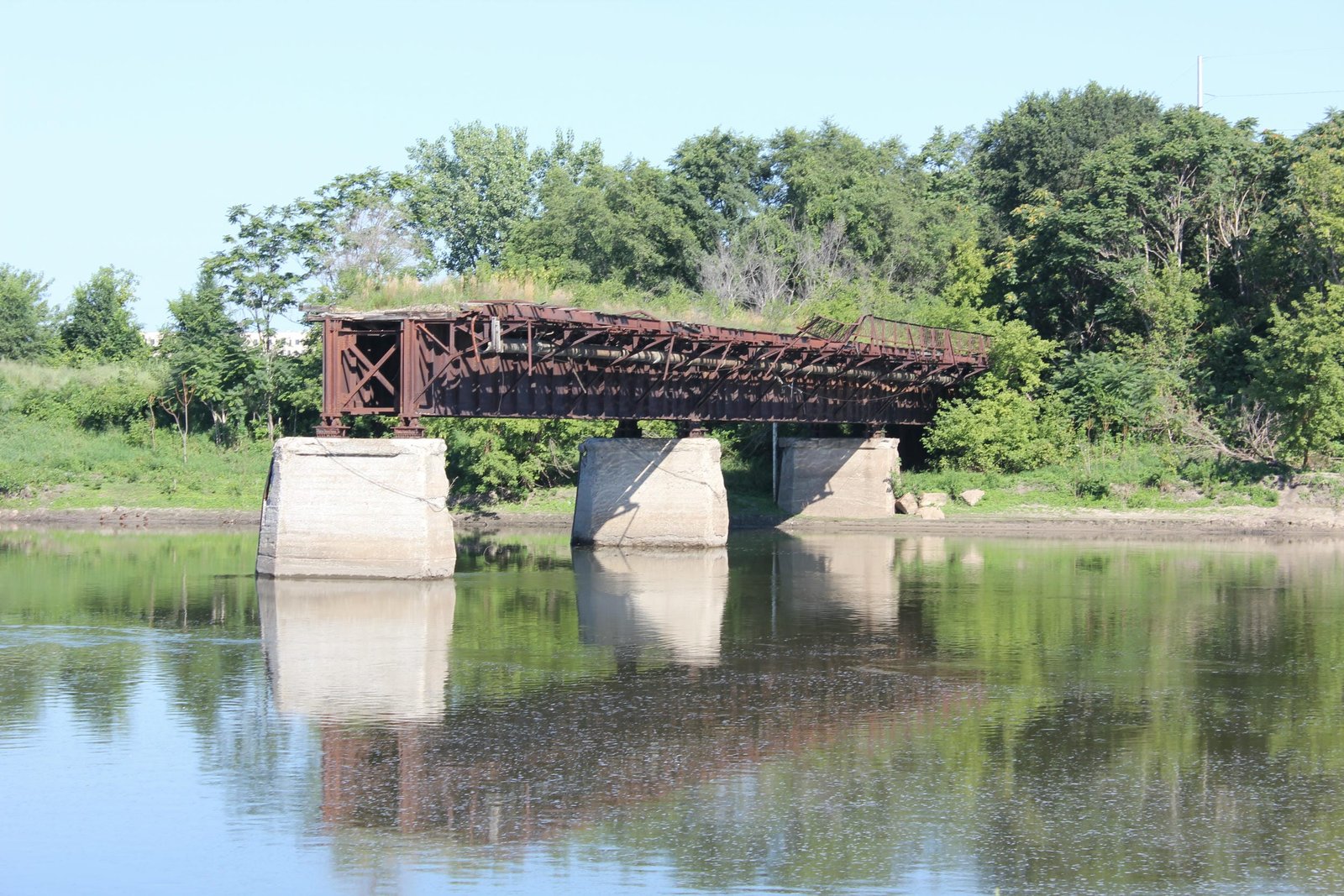
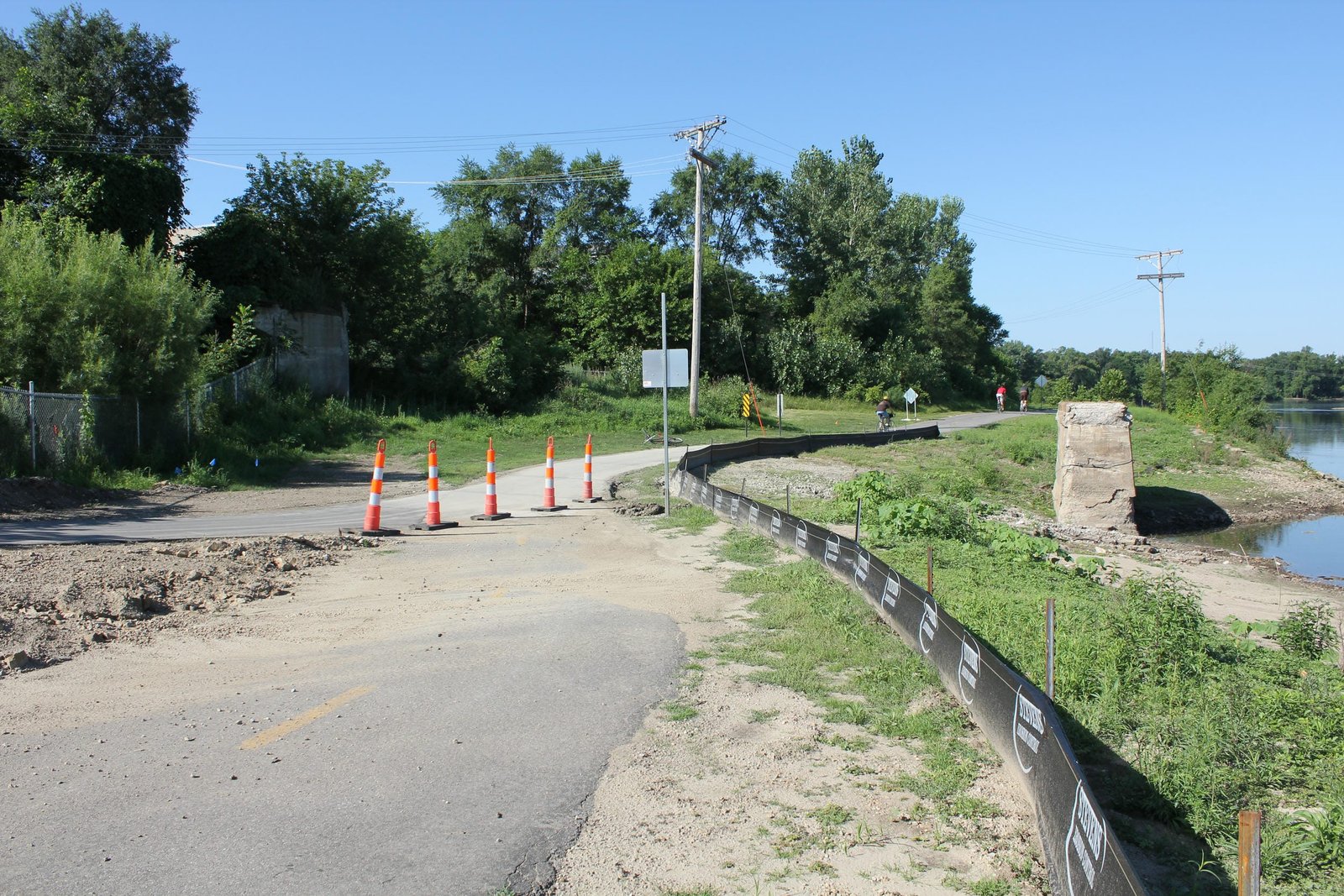
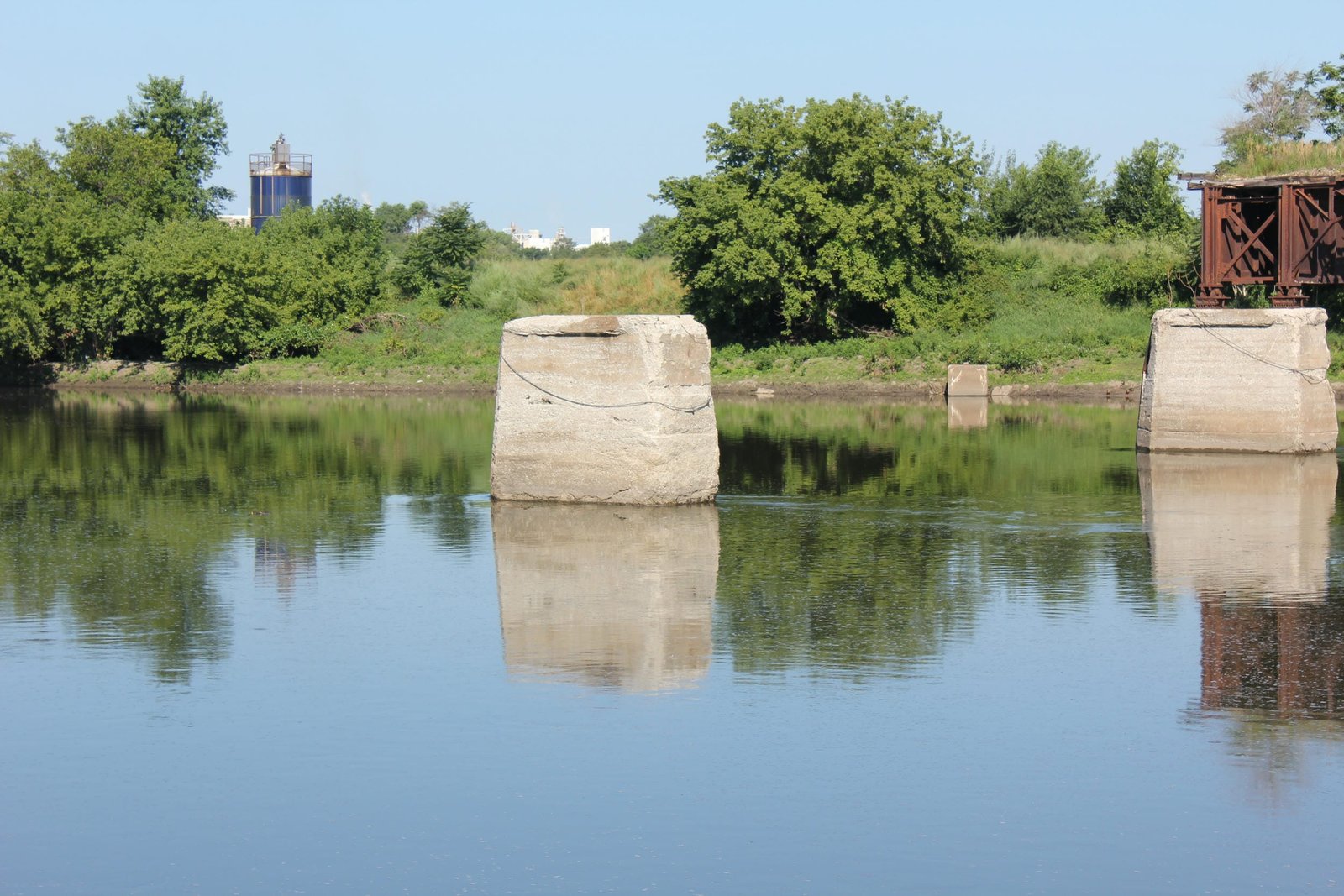
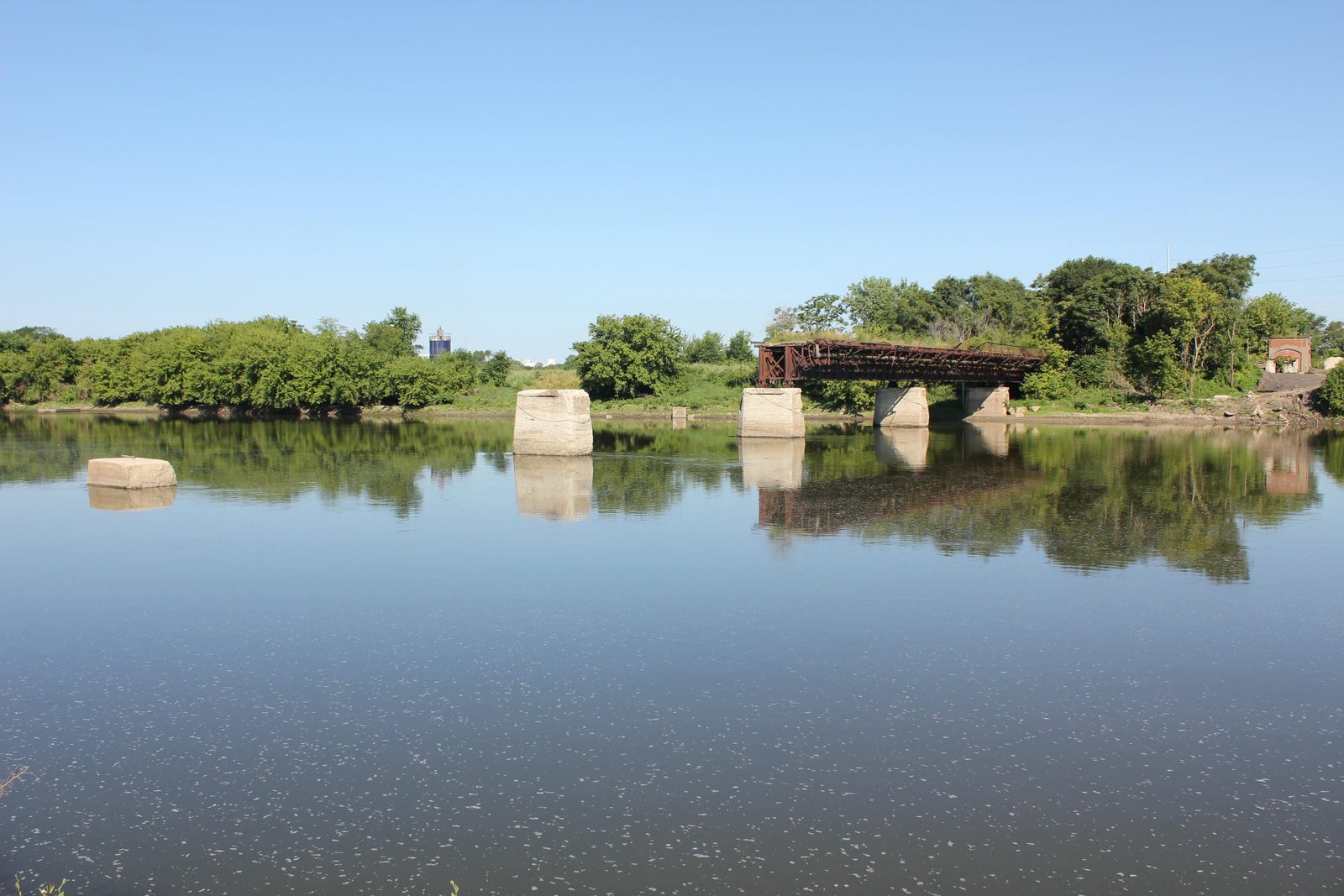
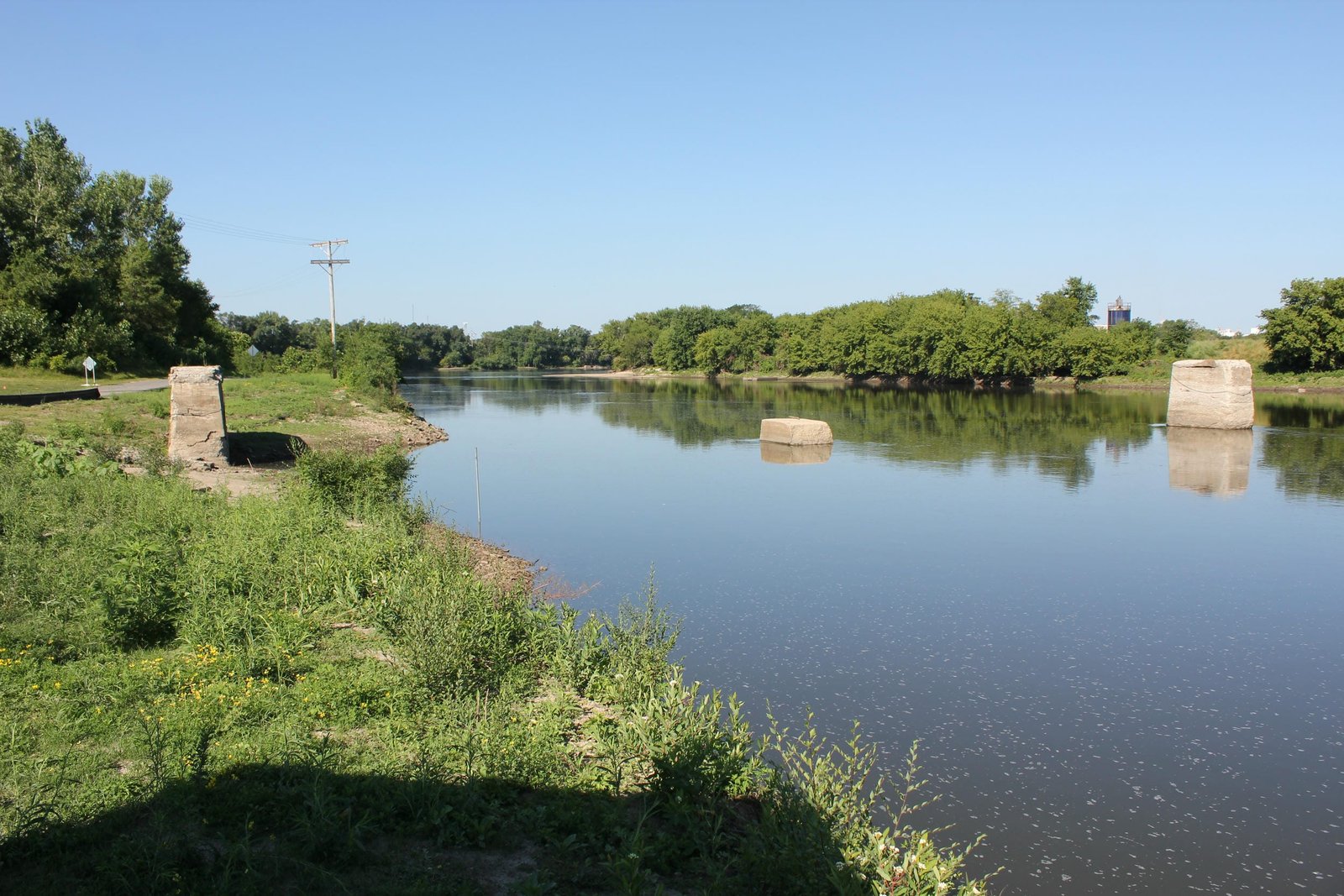
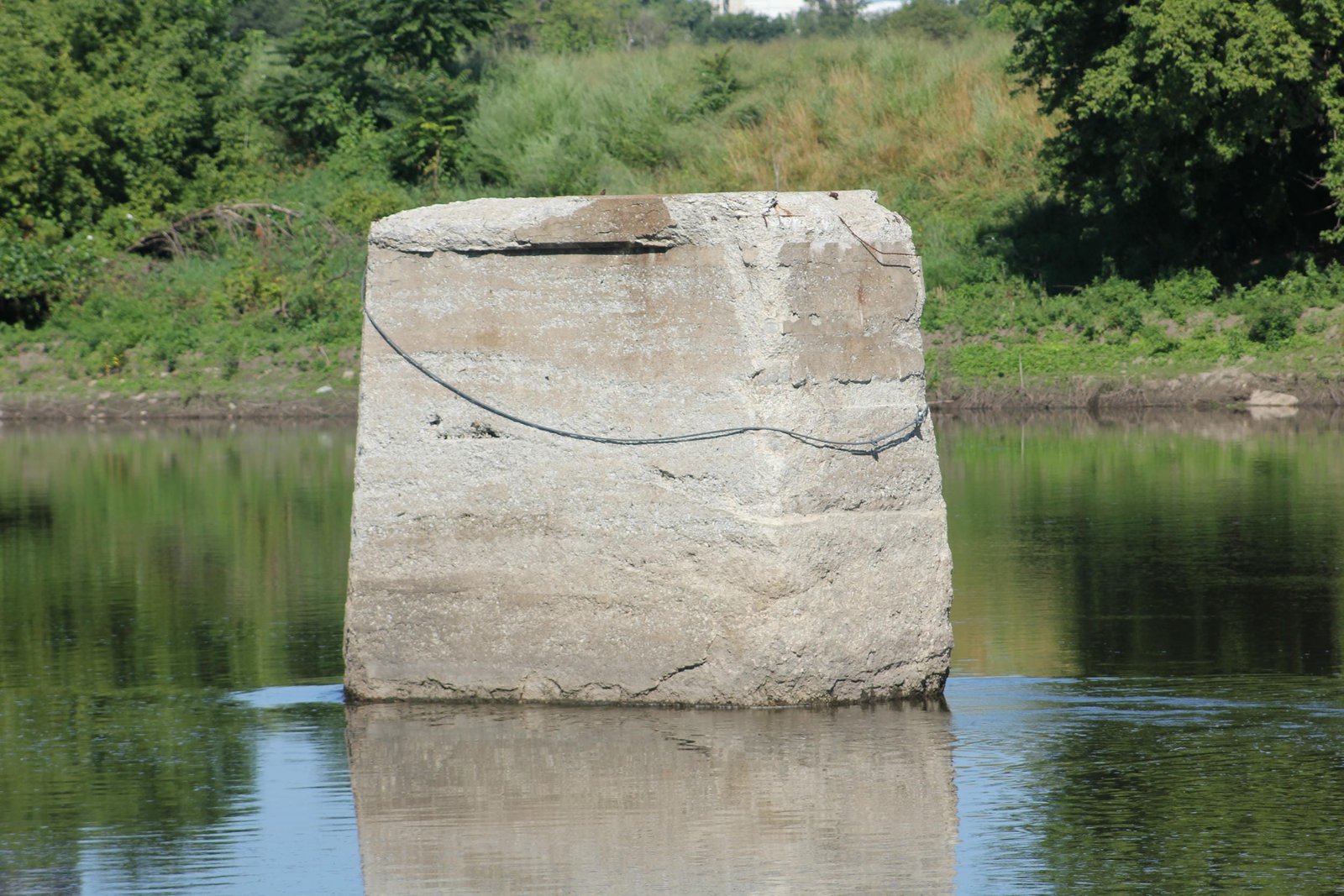
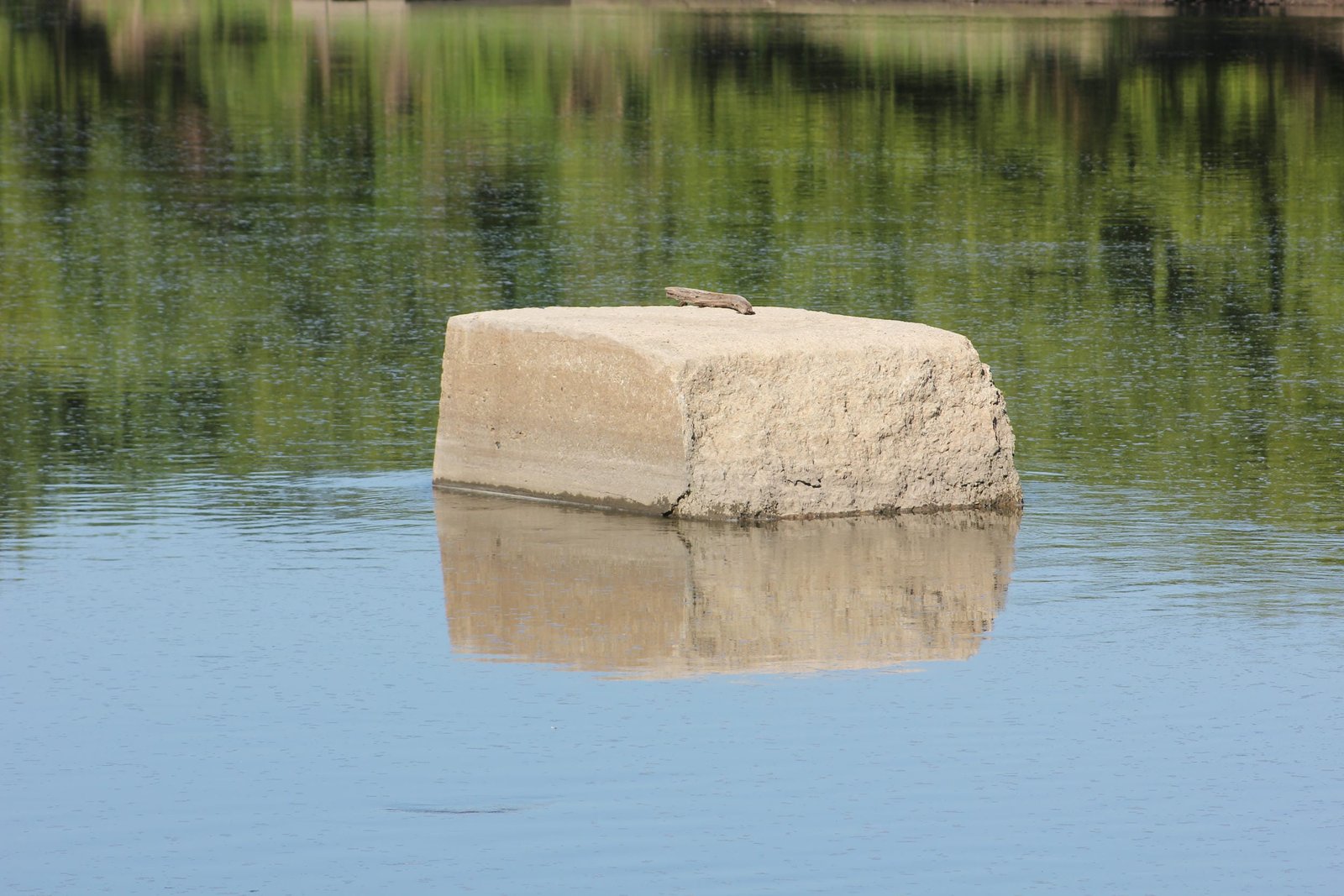
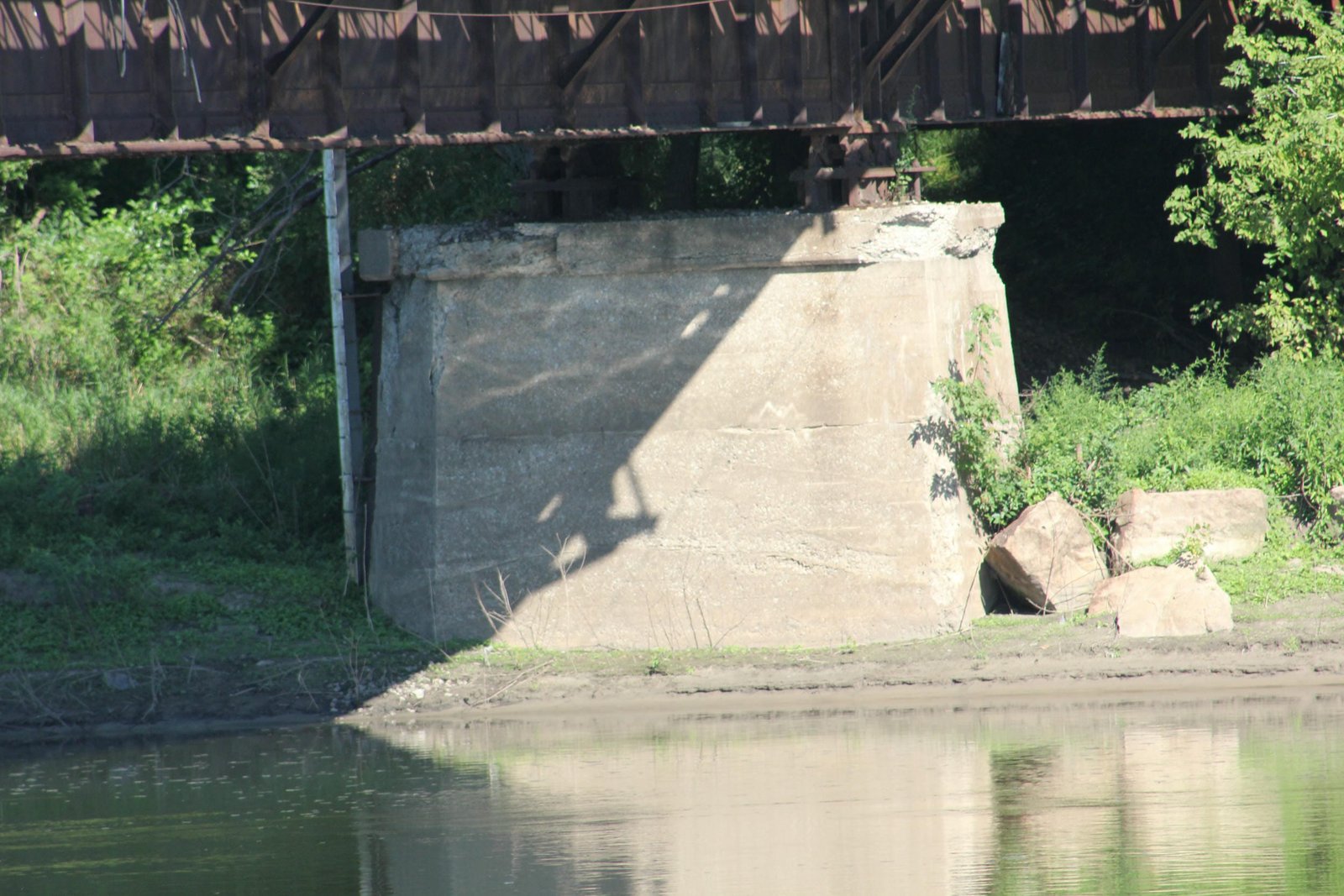
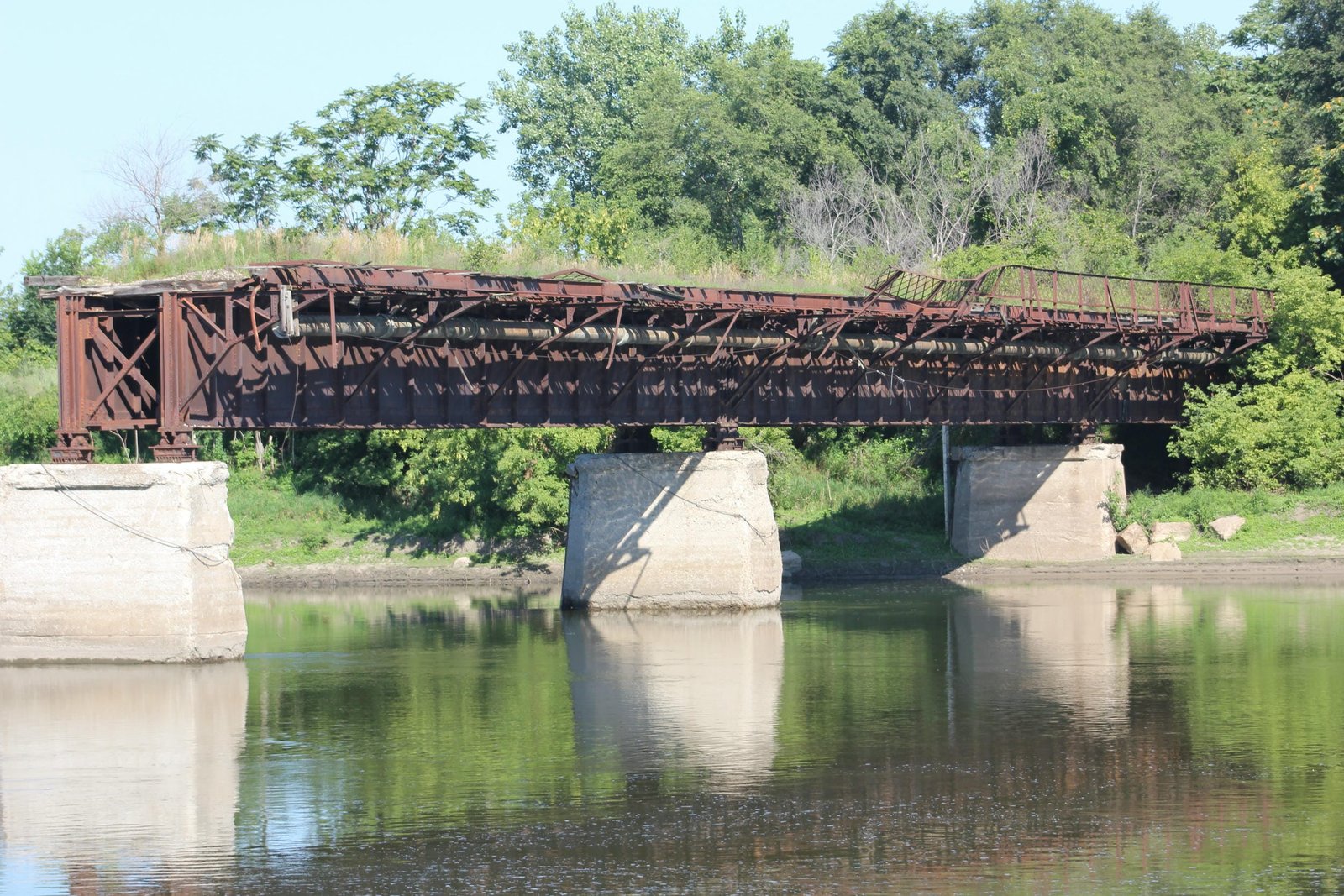
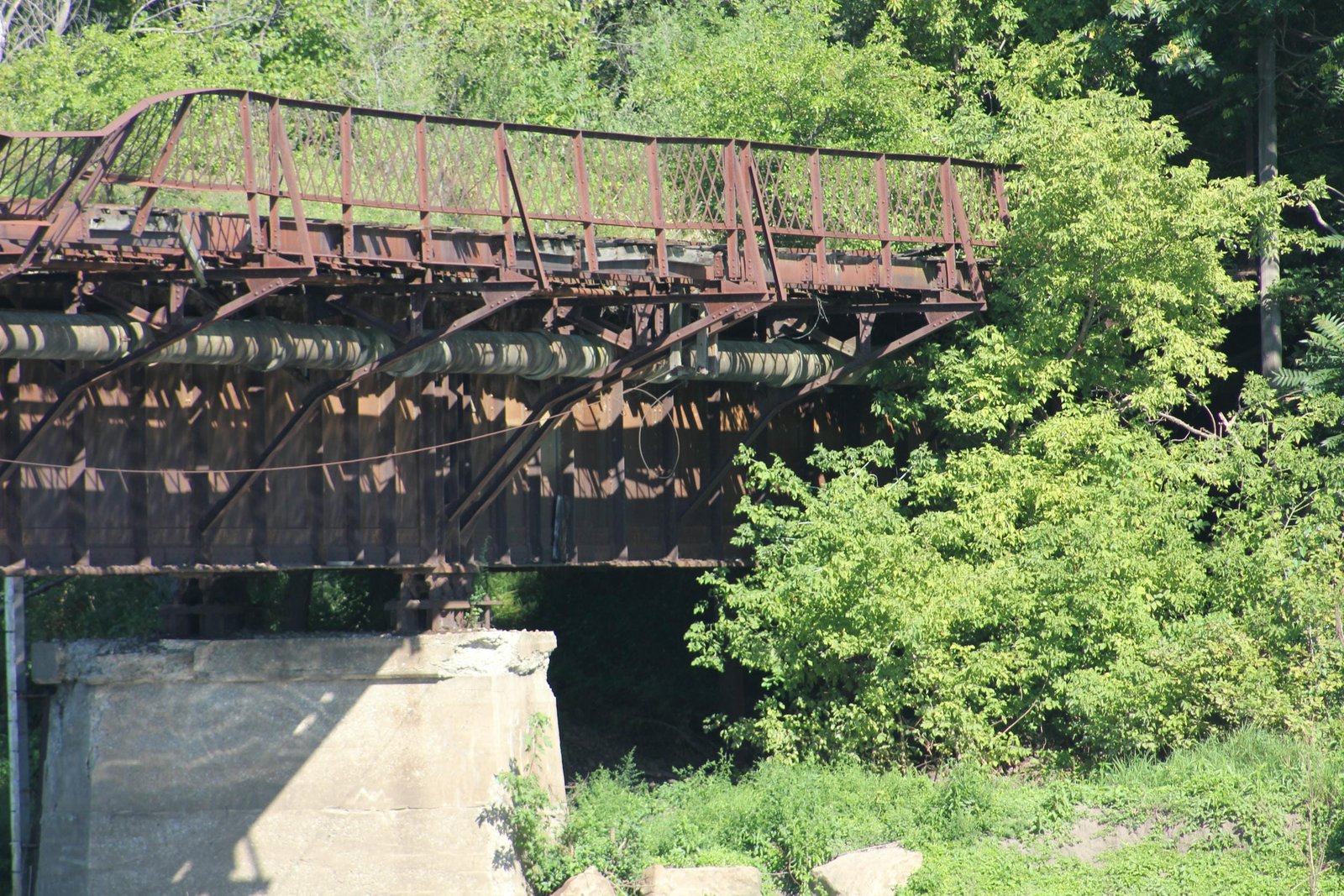
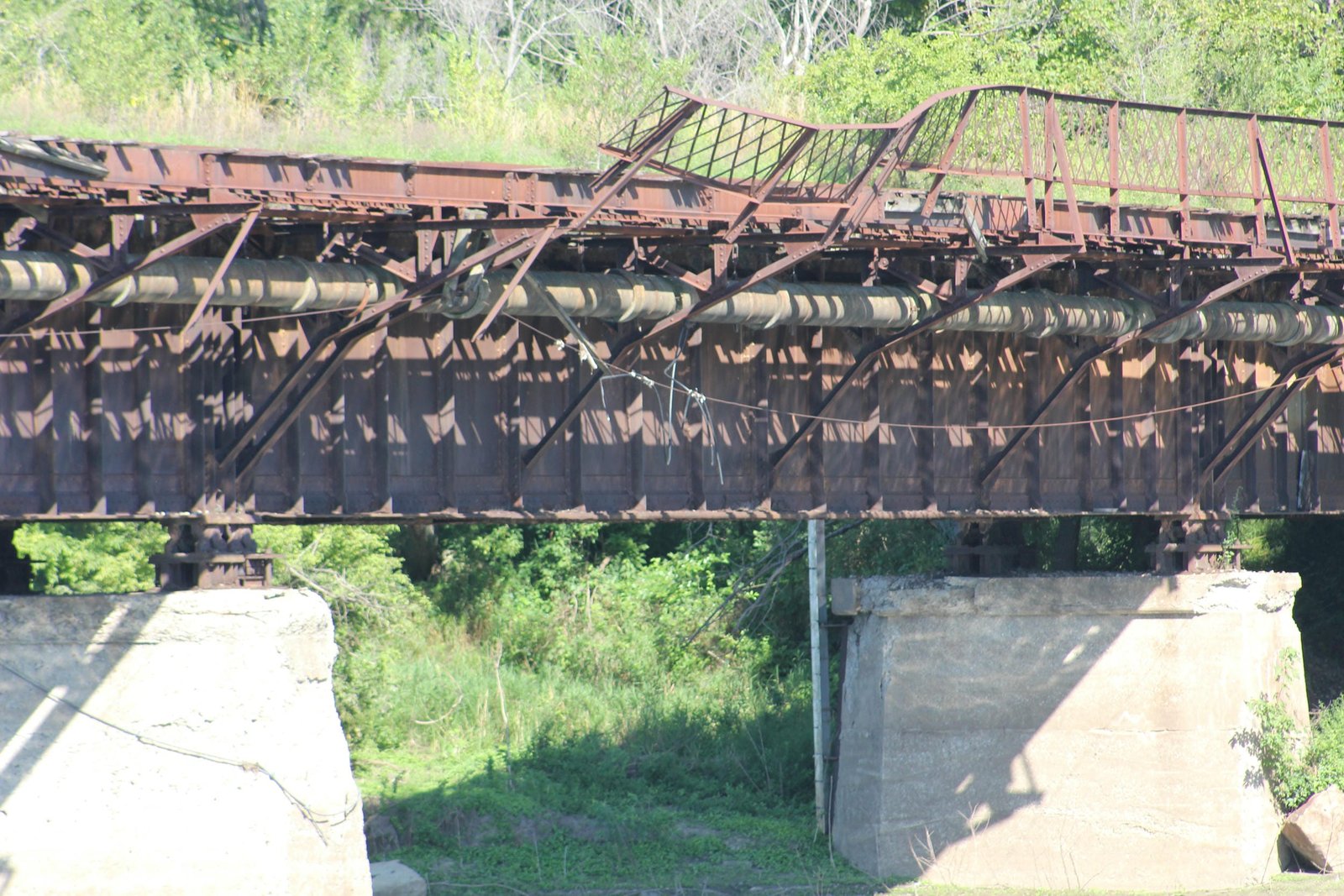
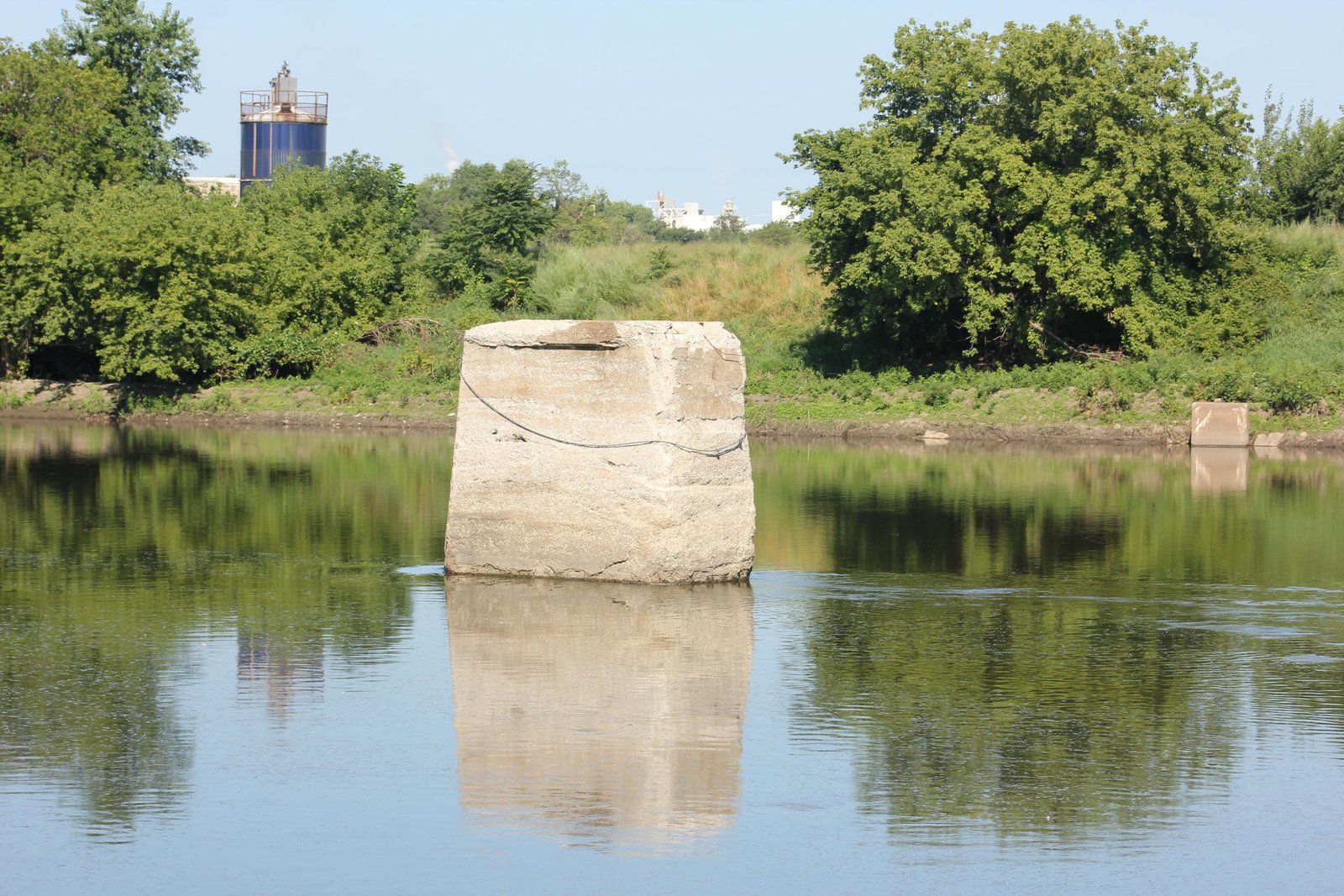
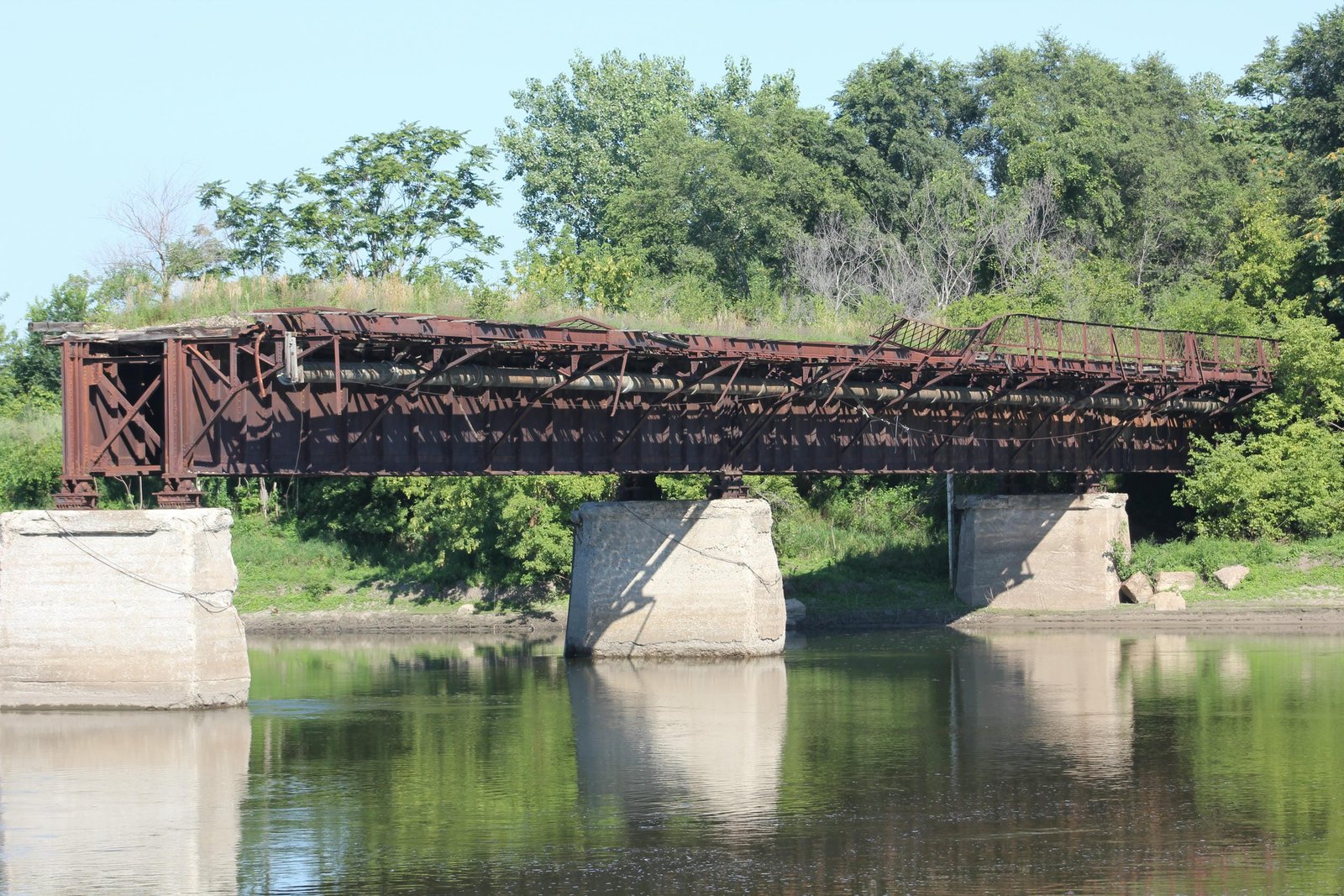
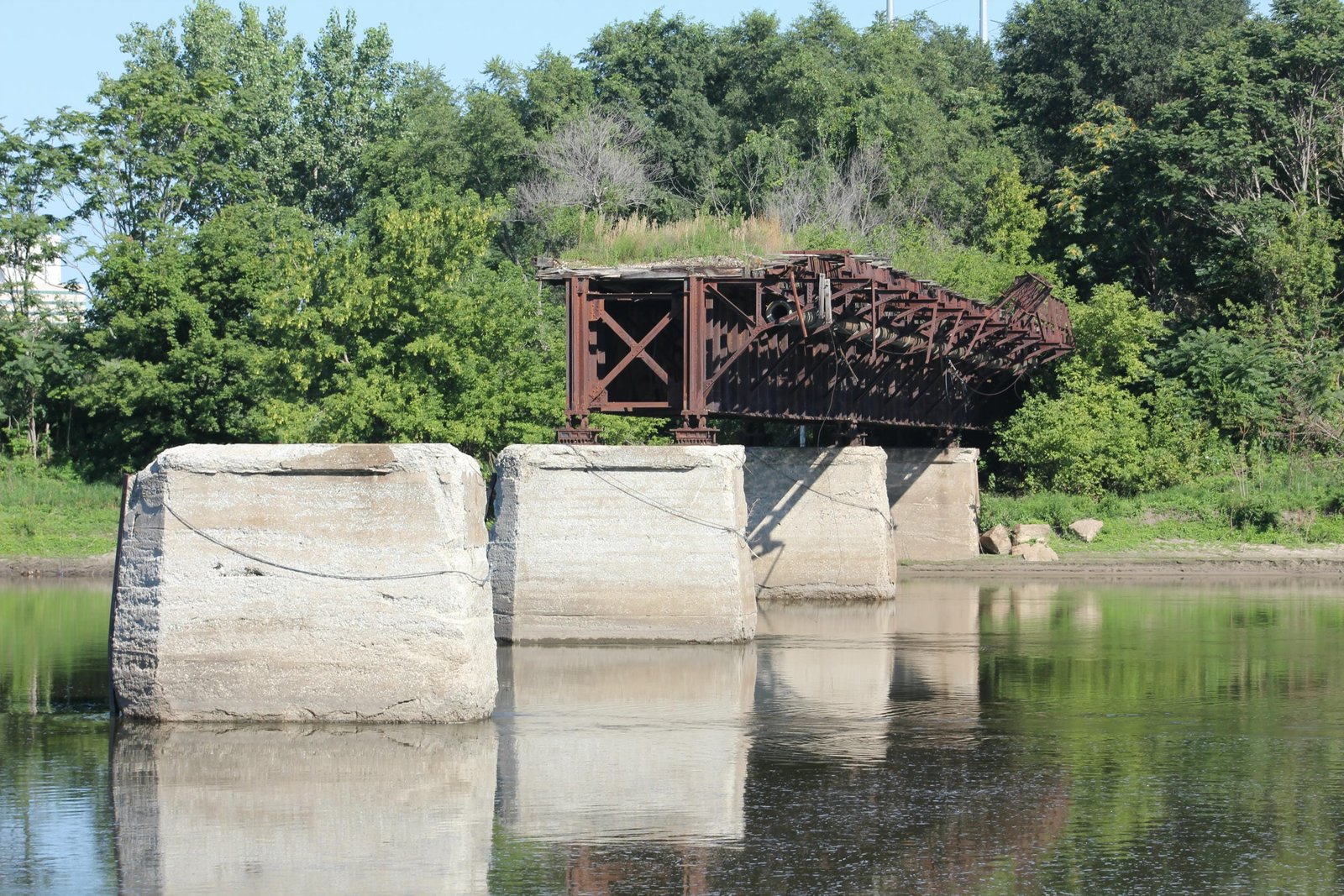
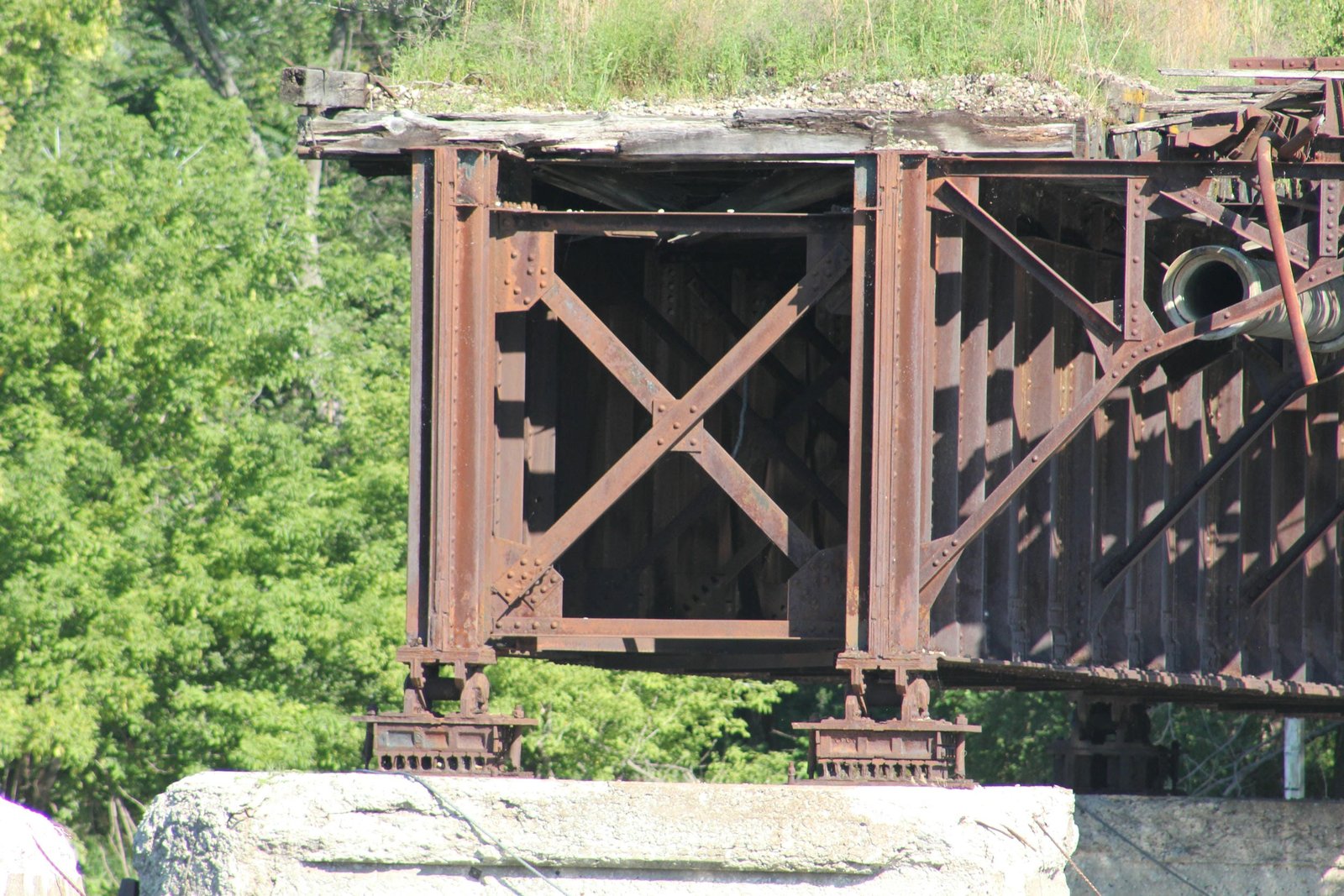
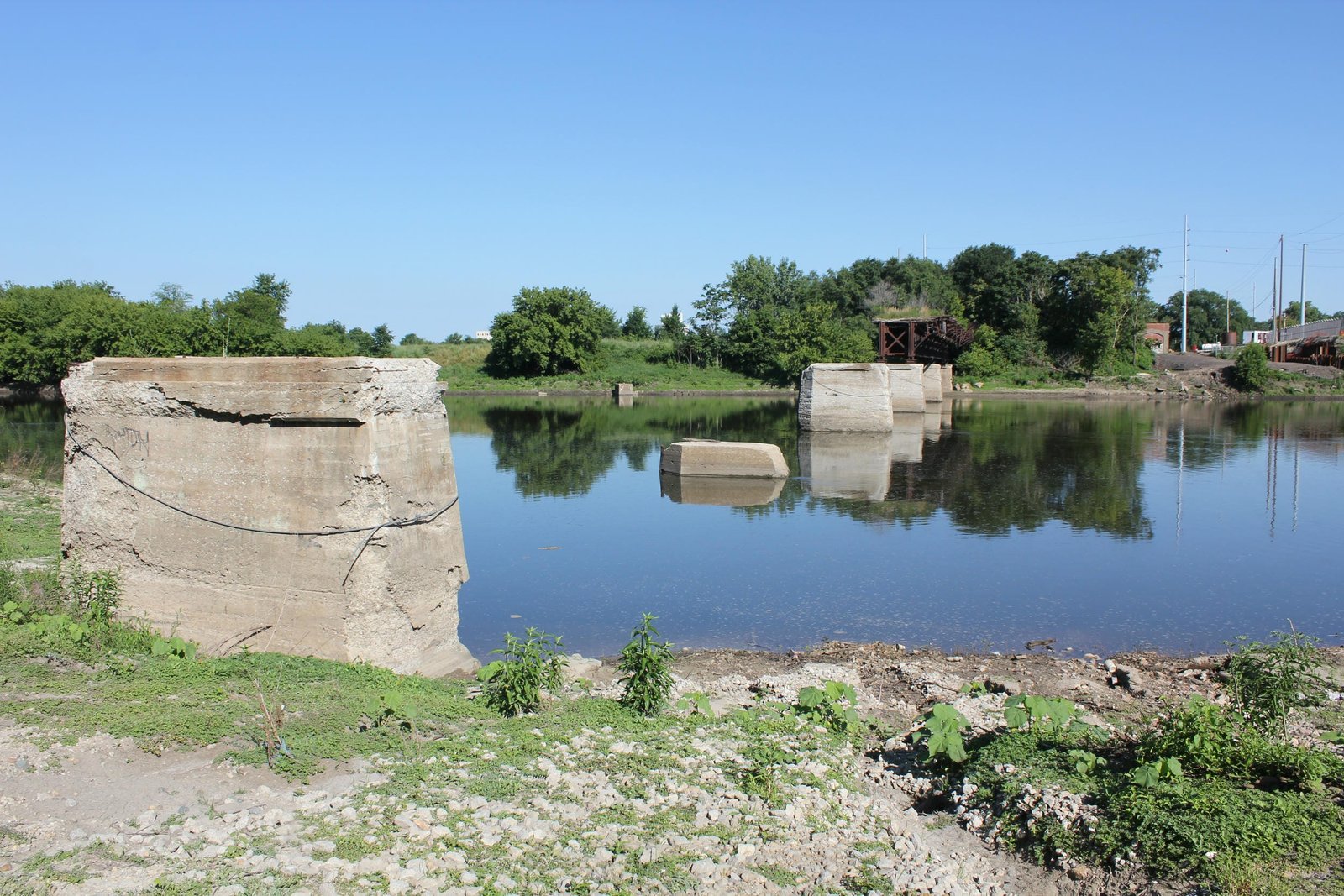
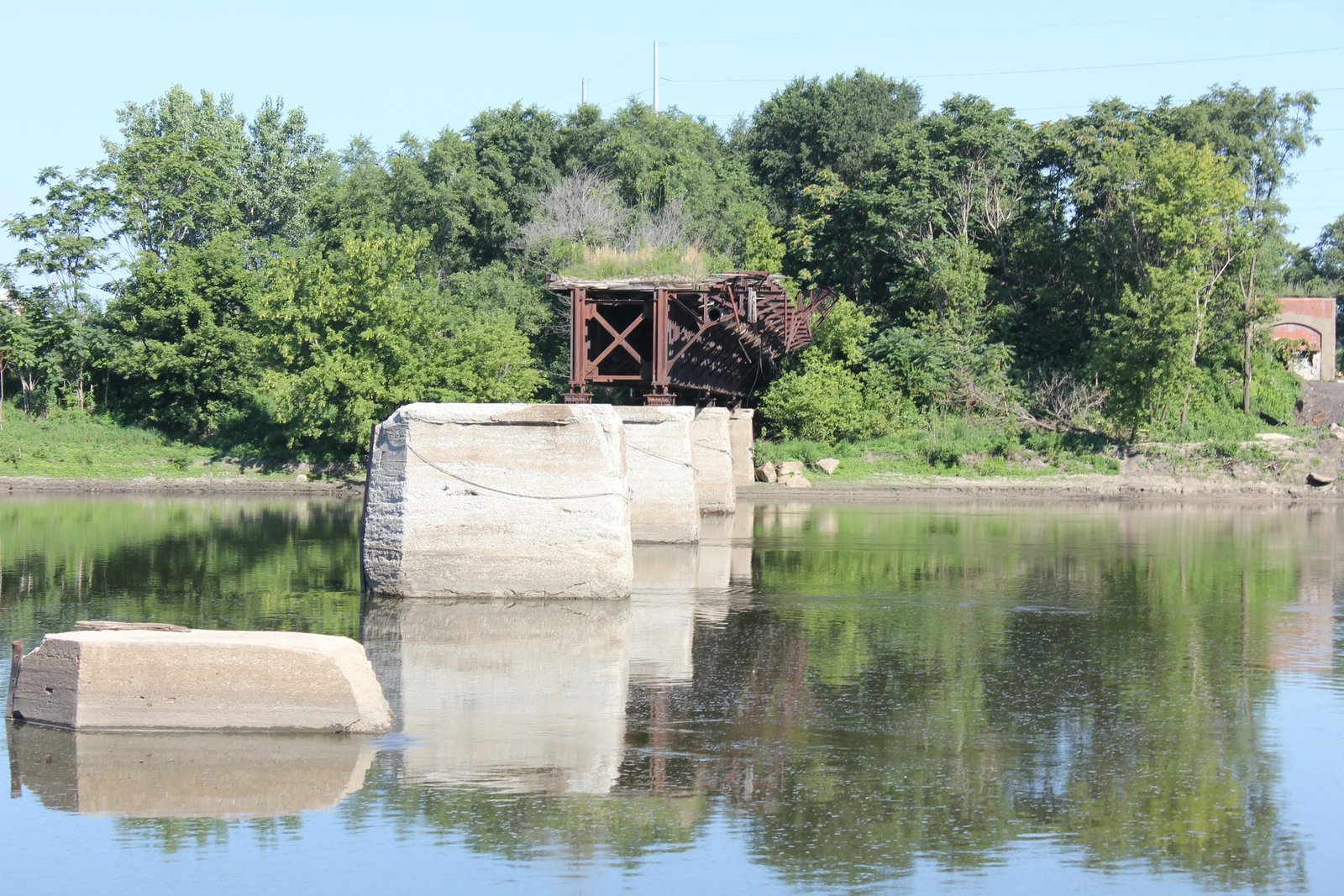
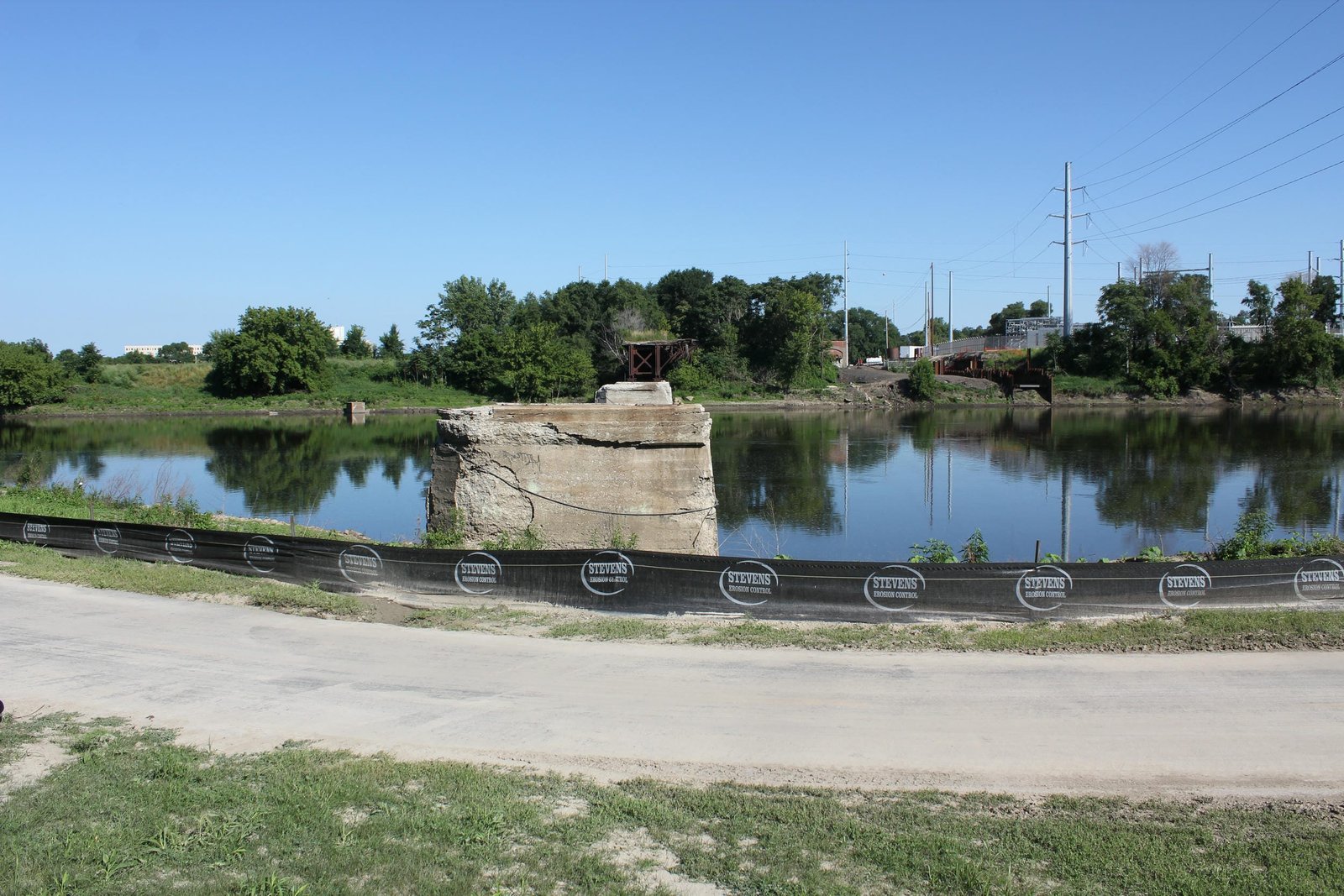
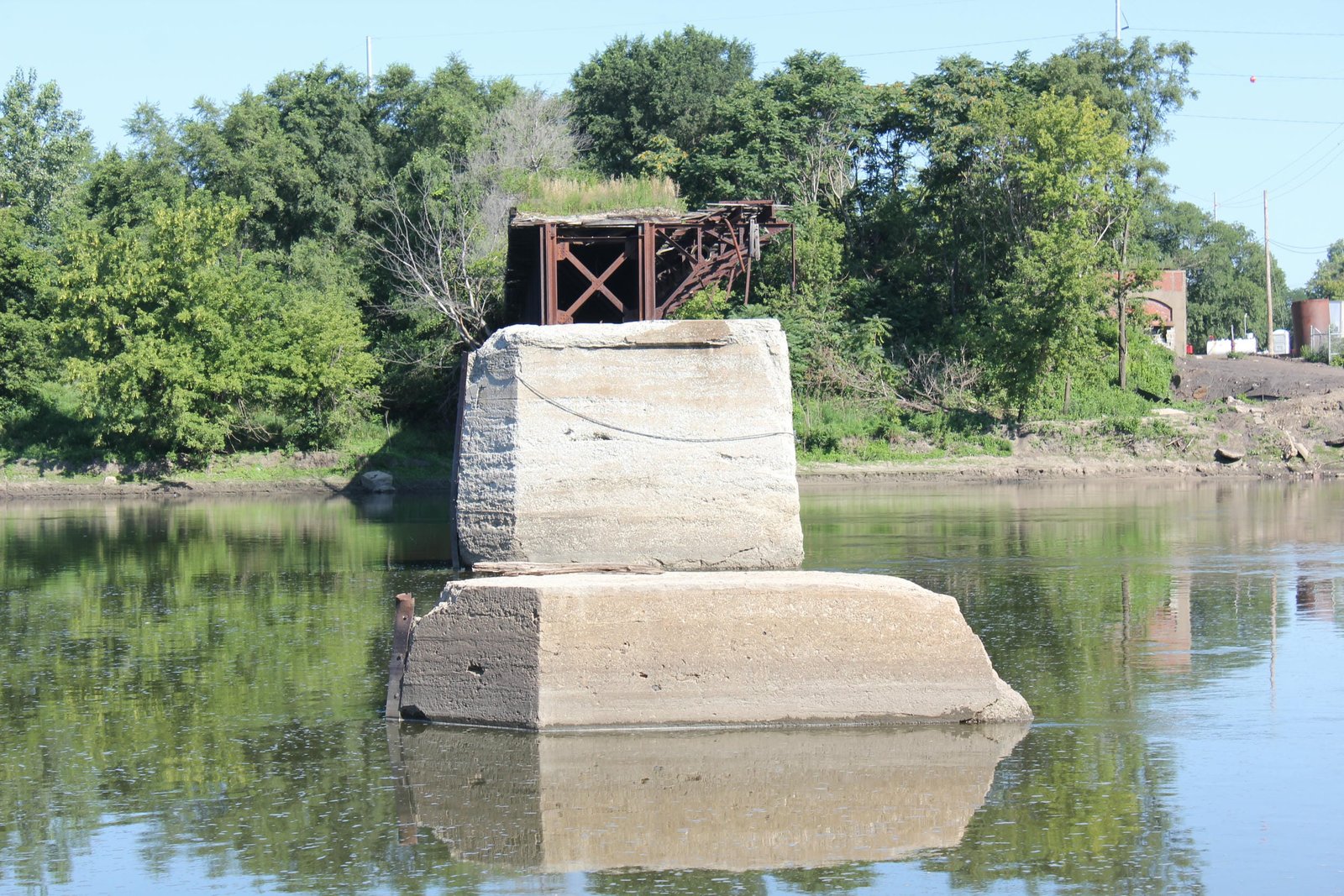
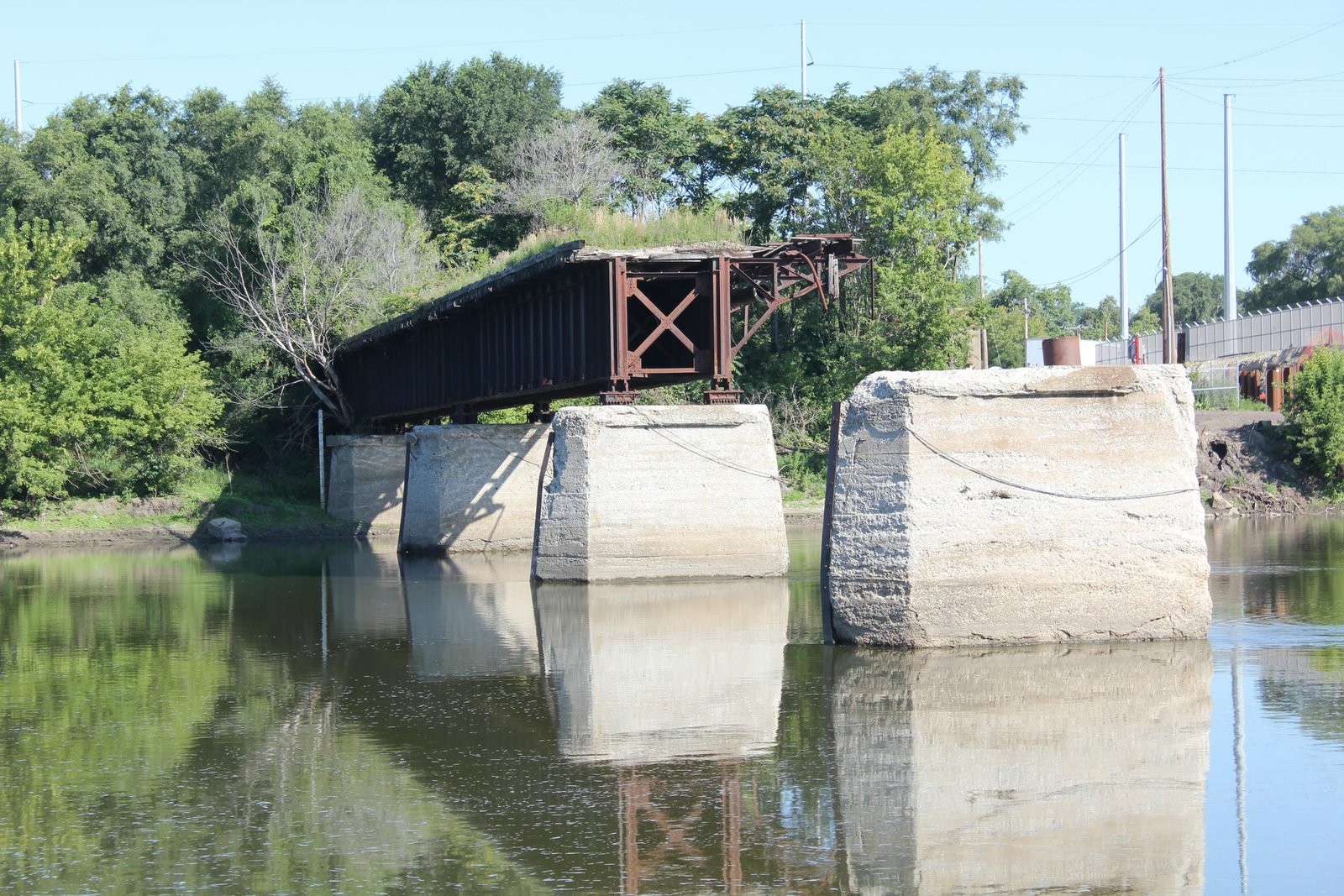
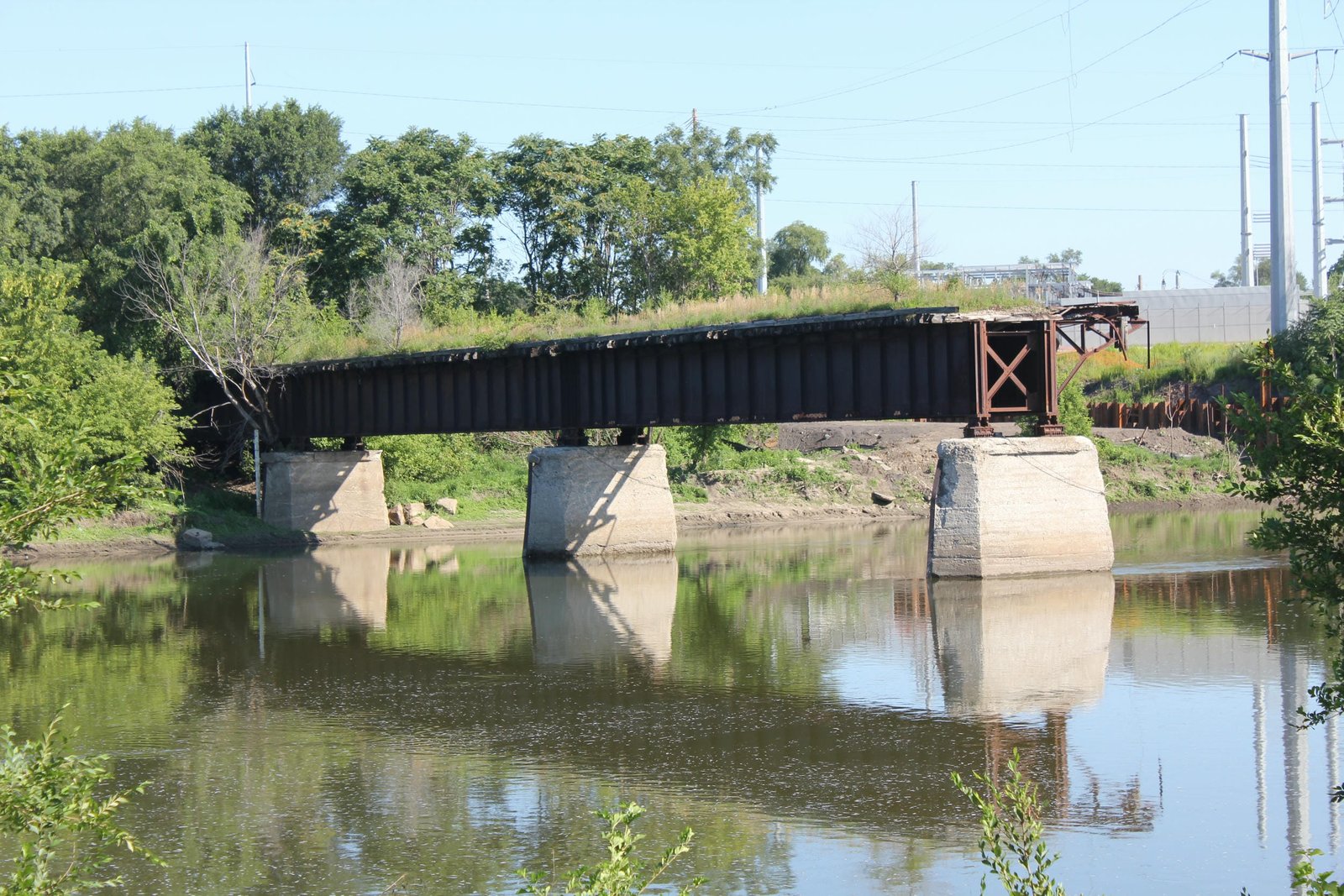
The bridge consisted of seven 90-foot deck plate girder spans, set onto concrete piers and abutments. In addition, a walkway was attached to the downstream side of the bridge to allow the public to safely cross the Cedar River. The superstructure followed a standard design for the era, with two heavy plate girders per span and a ballast deck constructed of creosoted timber. The piers all used a standard rectangular design with slightly angled upstream noses. Both abutments used a U-shaped design with no wing walls present. American Bridge Company fabricated the superstructure, while the Cedar Rapids Construction Company constructed the substructure. Both firms worked extensively with the Rock Island to construct bridges in the first half of the 20th Century. Deck plate girder spans were popular for railroad use, as they were durable and easy to construct. After the bridge was abandoned, it sat unused with an uncertain future. Historic flooding in 2008 destroyed the southern four spans, which were removed and scrapped after the flood. The remaining bridge sat abandoned until 2023, when it was removed in advance of a pedestrian bridge project. A portion of the superstructure was reportedly salvaged for future use as part of interpretive signage around the pedestrian bridge. The pedestrian bridge is scheduled to open in 2027. After the 1922 construction, the bridge had seen no significant alterations. At the time of removal, the bridge was in poor condition, with much of the walkway and deck completely destroyed. In addition, pier #2 appears to have been significantly damaged during the 2008 flood. The author has ranked this bridge as being locally significant, due to the common design.
Citations
| Builders and build date | Railway Review; January 14, 1922 |
| Railroad History Citation | ICC Valuation Information, Compiled by Richard S. Steele |