

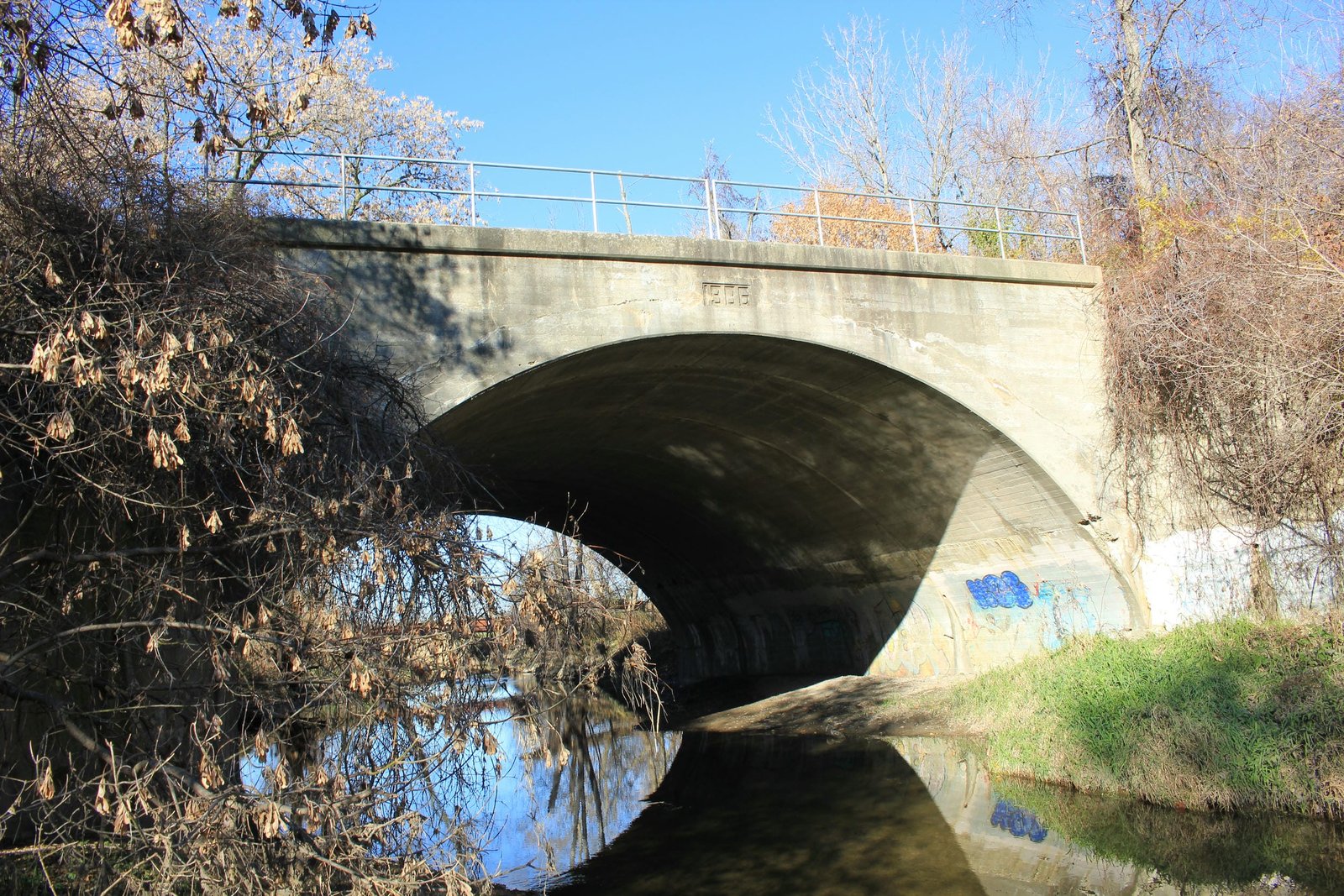
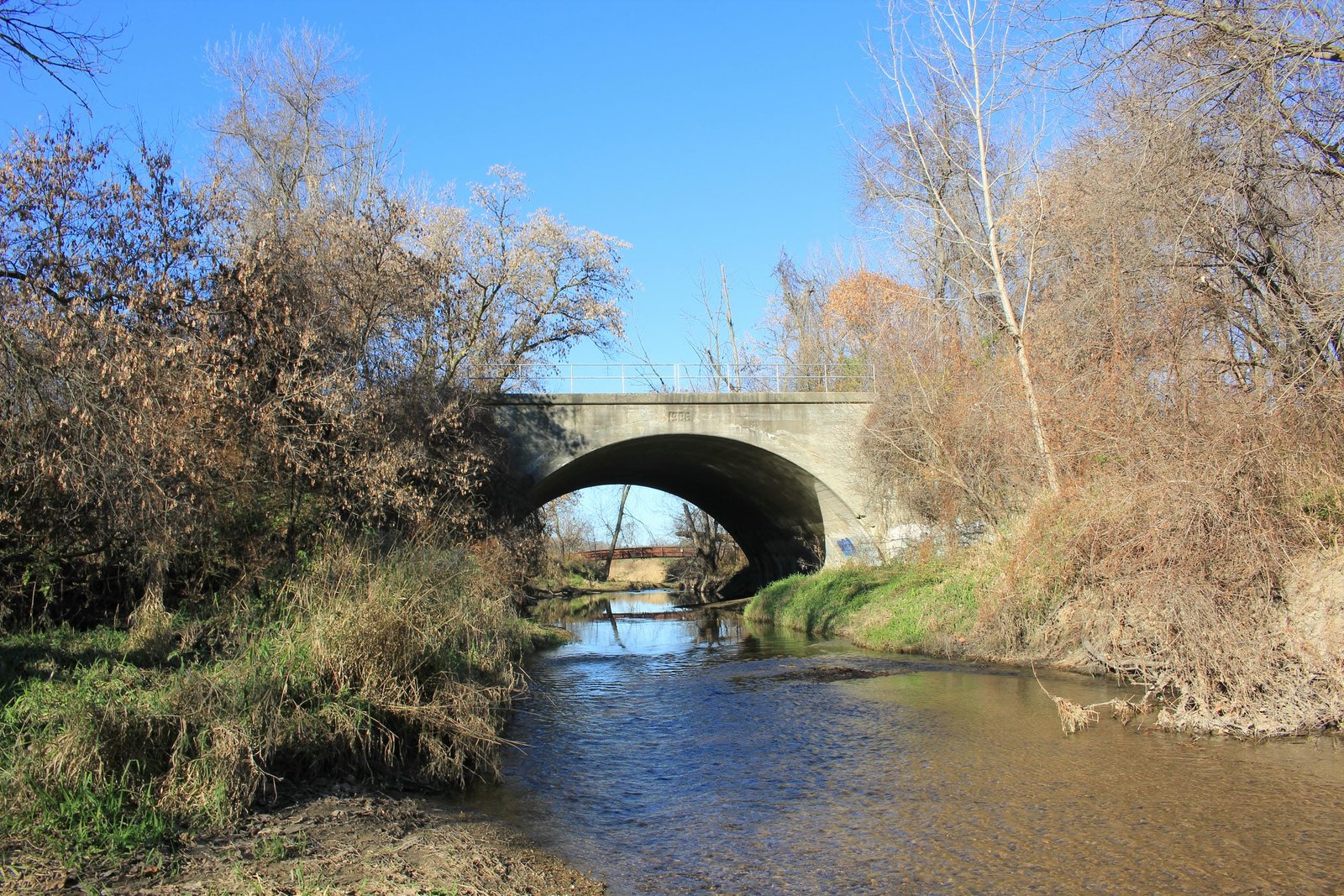
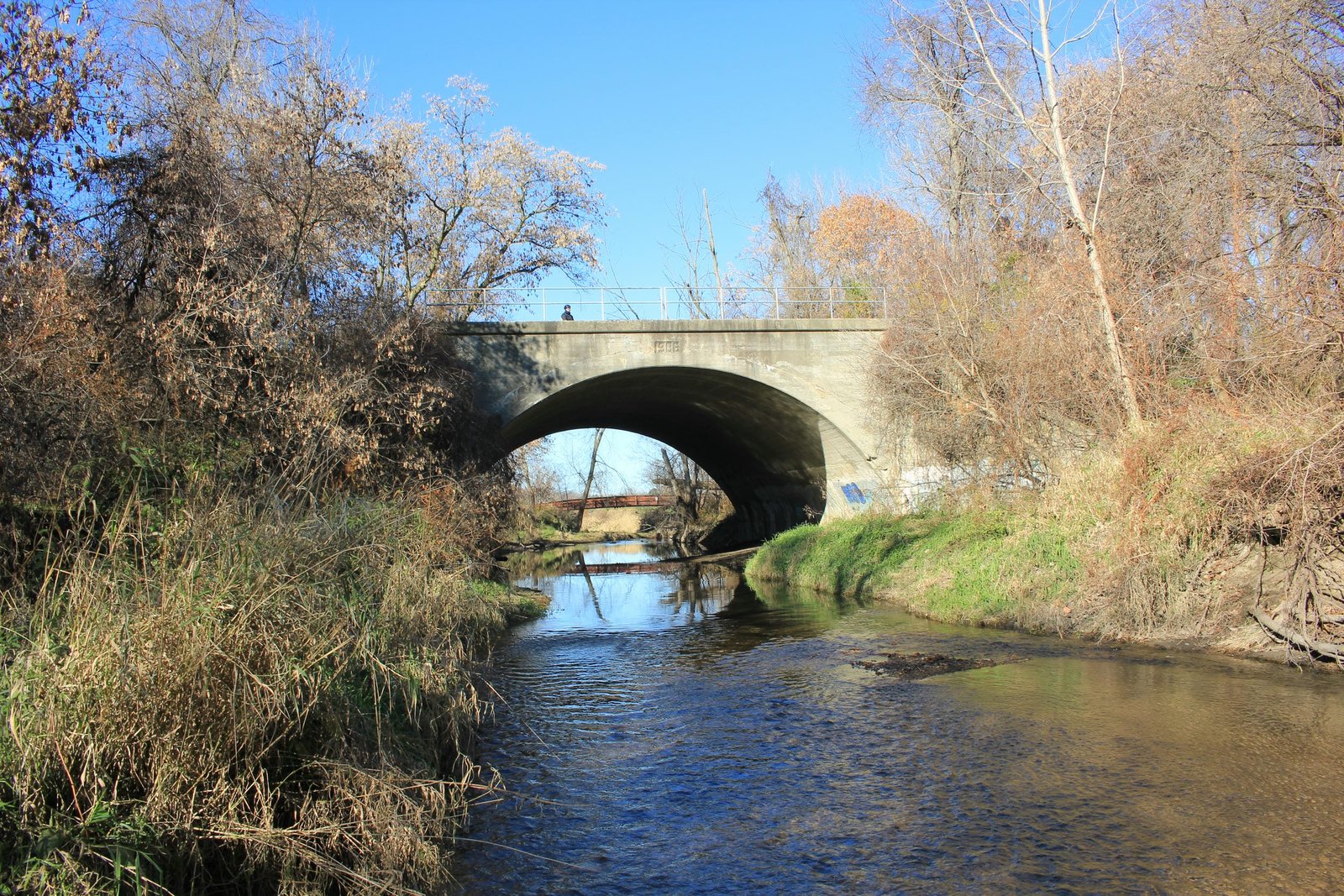
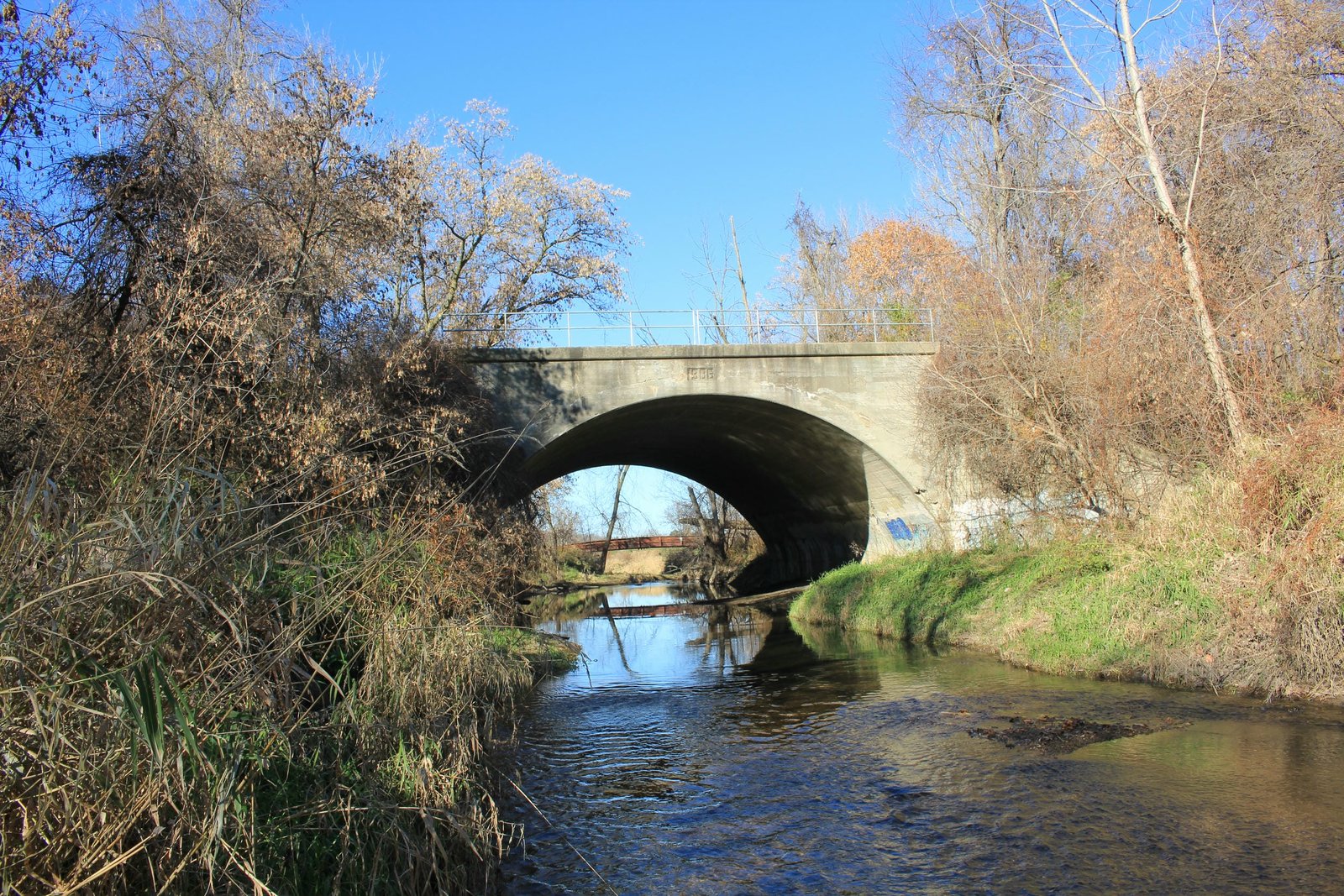
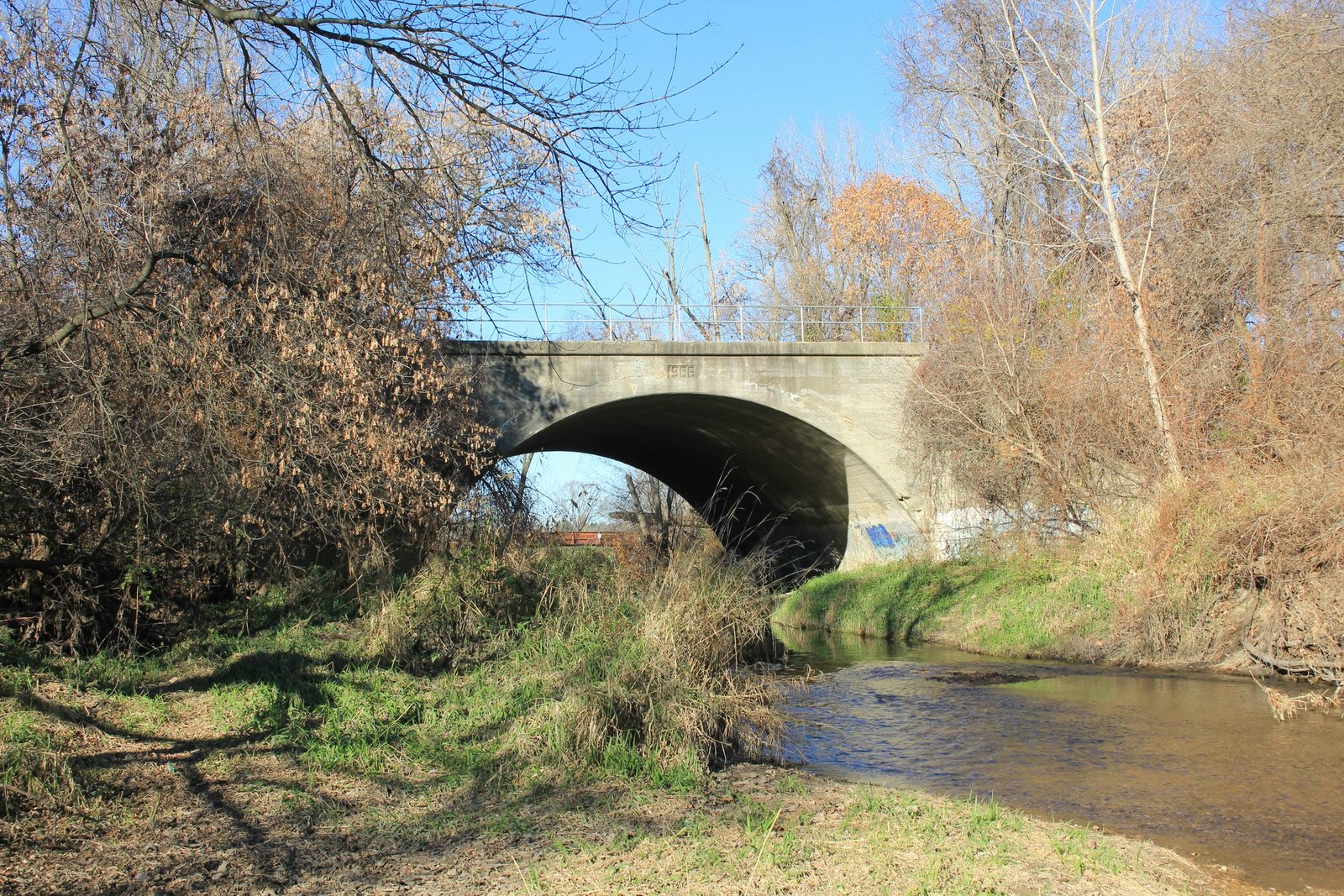
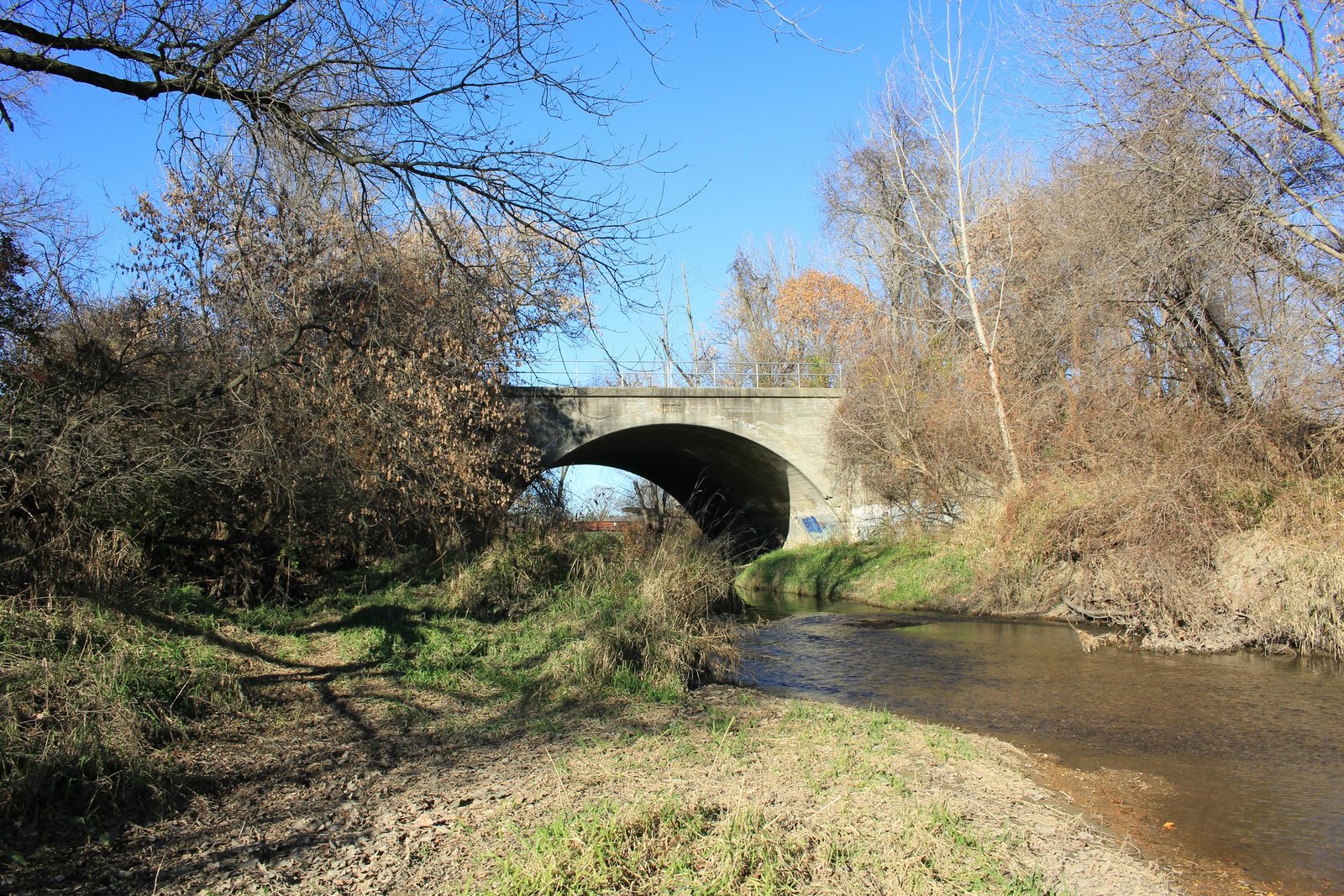
Click the photo to view the full-size version
| Name | Kenosha County Bike Trail - Pike River Bridge |
| Built By | Chicago & Milwaukee Electric Railway |
| Currently Owned By | Kenosha County |
| Superstructure Contractor | Republic Construction Company of Chicago, Illinois |
| Length | 45 Feet Total |
| Width | 4 Tracks (70 Feet) |
| Height Above Ground | 20 Feet (Estimated) |
| Superstructure Design | Concrete Arch |
| Substructure Design | Concrete |
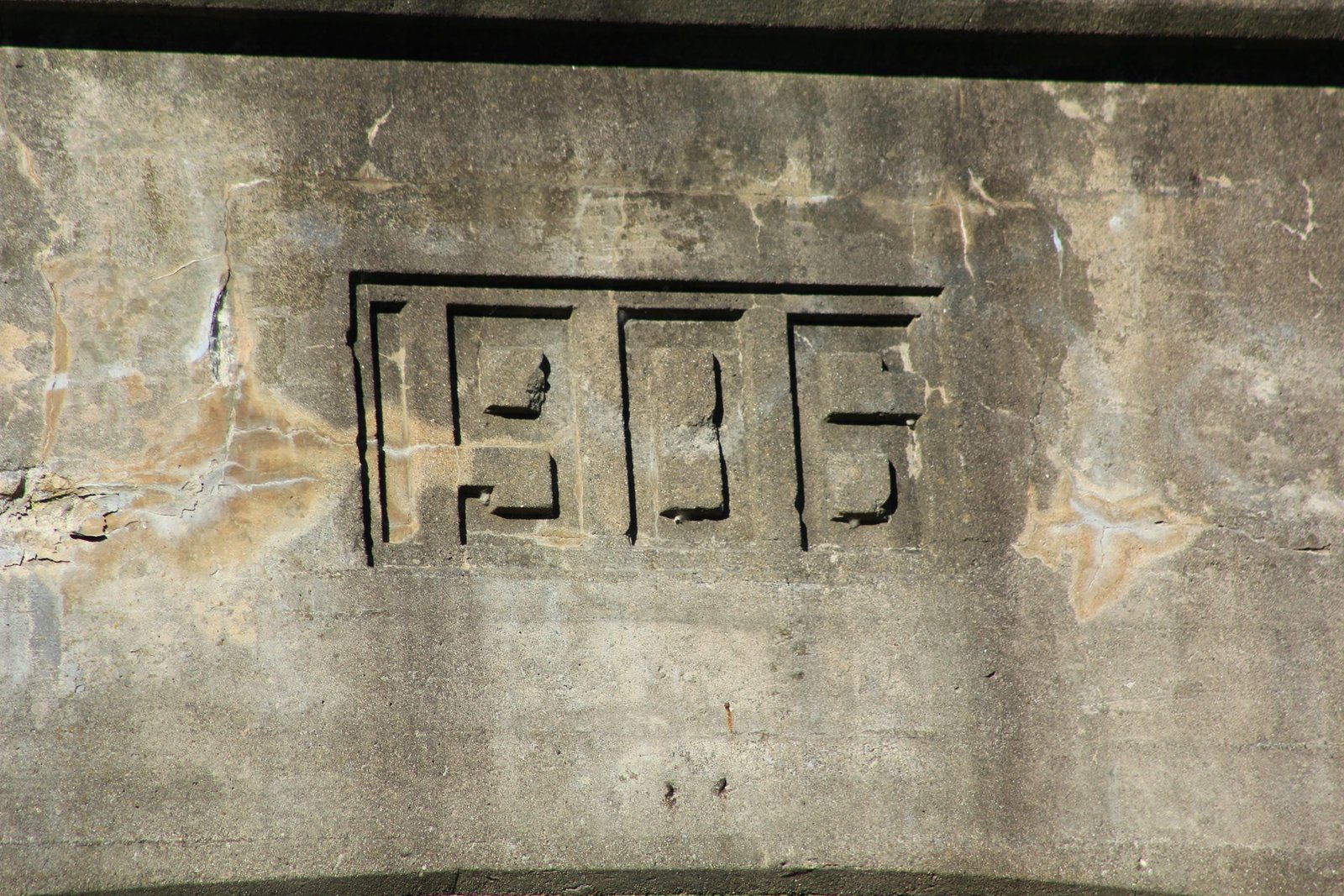
| Date Built | 1906 |
| Traffic Count | 0 Trains/Day (Bridge is Open to Pedestrian Traffic) |
| Current Status | Open to Pedestrian Traffic |
| Significance | Moderate Significance |
| Documentation Date | 11/19/2023 |
In 1891, the Waukegan & North Shore Rapid Transit Company (W&NSRT) constructed a seven mile streetcar system through Waukegan and north Chicago. The line was reorganized as the Chicago & Milwaukee Electric Railway Company (C&ME) in 1898, and the line extended to Highland Park that year. An additional 10 mile extension was completed in 1899, reaching Evanston. At Evanston, passengers could transfer to a steam railroad operated by the Chicago, Milwaukee & St. Paul Railway to reach Chicago. Between North Chicago and Evanston, the line mainly paralleled the Chicago & North Western Railway mainline. Between 1902 and 1904, the Libertyville Division was completed between Lake Bluff and Libertyville, and the branch extended further to Mundelein in 1905. Construction on an extension to Zion was completed in 1905, followed by an extension to Racine, Wisconsin in 1906 and to Milwaukee, Wisconsin in 1908. During the initial construction, much of the route was constructed with two tracks. Later arrangements were made for the C&ME to operate on the Milwaukee Road line into Chicago.
In 1916, the C&ME was acquired by the Chicago, North Shore & Milwaukee Railway (CNS&M). The CNS&M had acquired a moderate sized electric railroad system, connecting several major cities along Lake Michigan. This line became the Lake Shore Route, and was the mainline of the CNS&M until the Skokie Valley Route was completed in the mid-1920s. After financial difficulties in the 1930s, the railroad was modernized in the 1940s. During the late 1940s and early 1950s, the electric railroads began to decline, particularly due to the advent of the personal automobile. Bus service slowly began to replace the railroad service, and the lines would be abandoned in 1955. Today, much of the Shore Line Route and the Libertyville Division is now utilized by a trail.
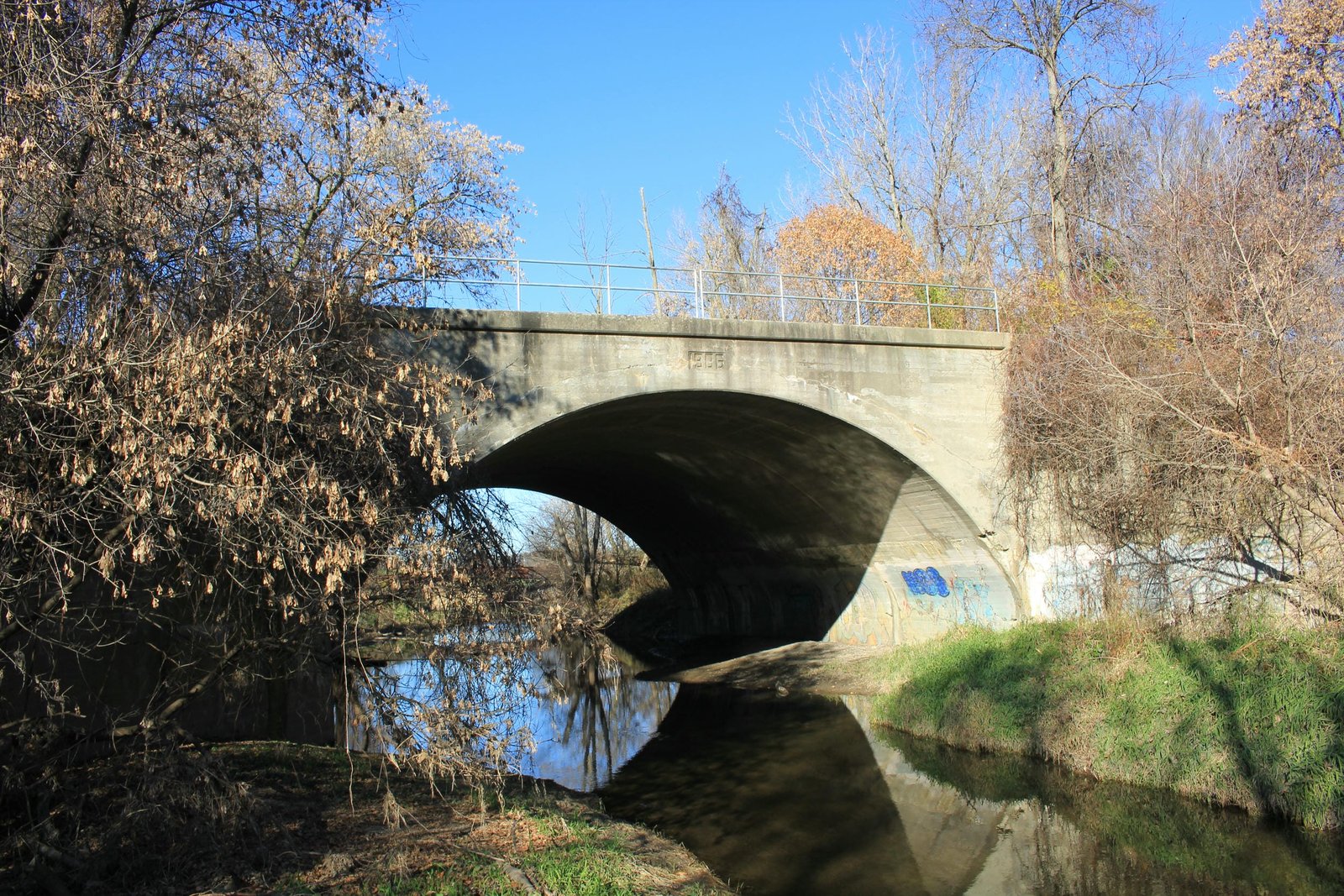
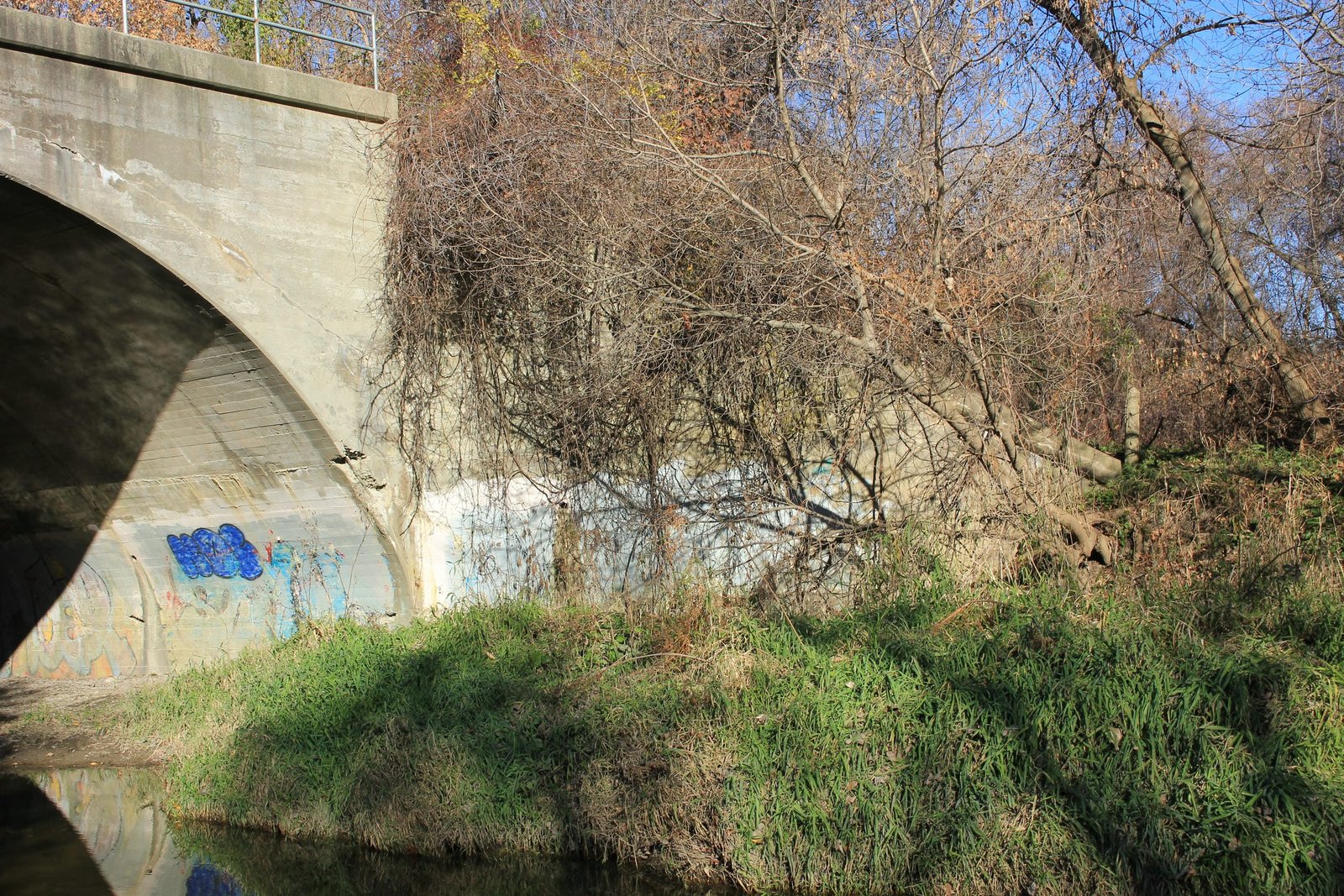
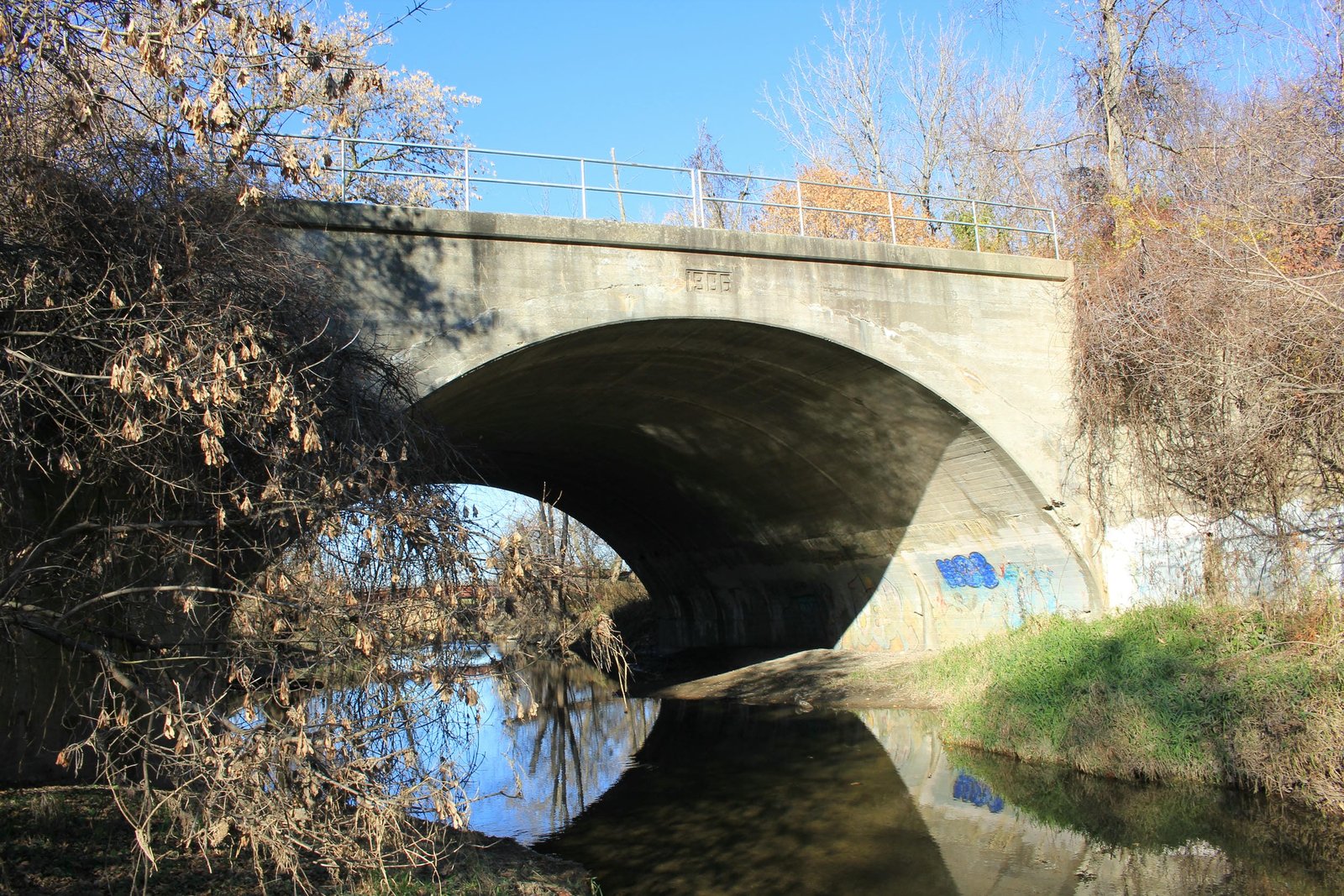
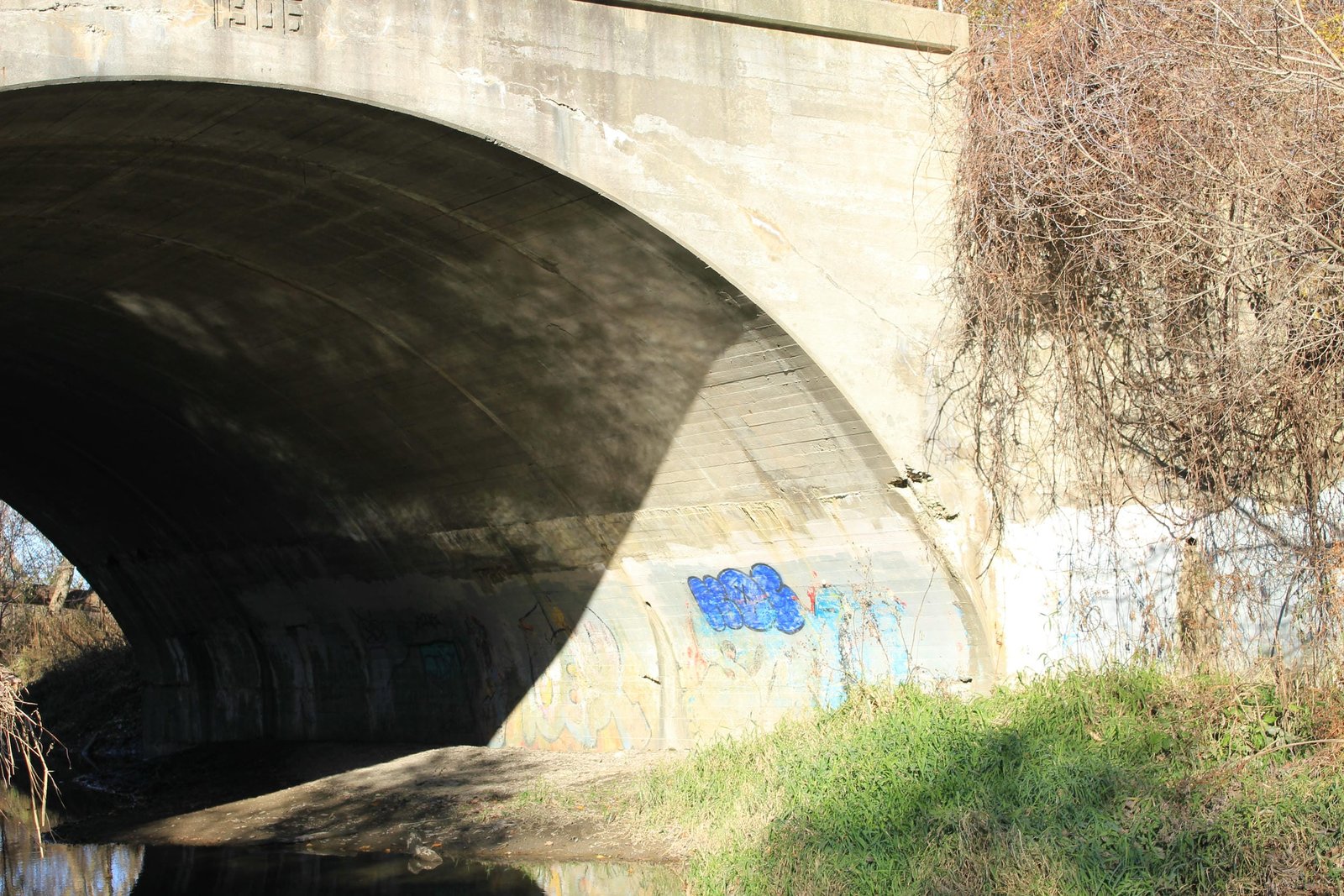
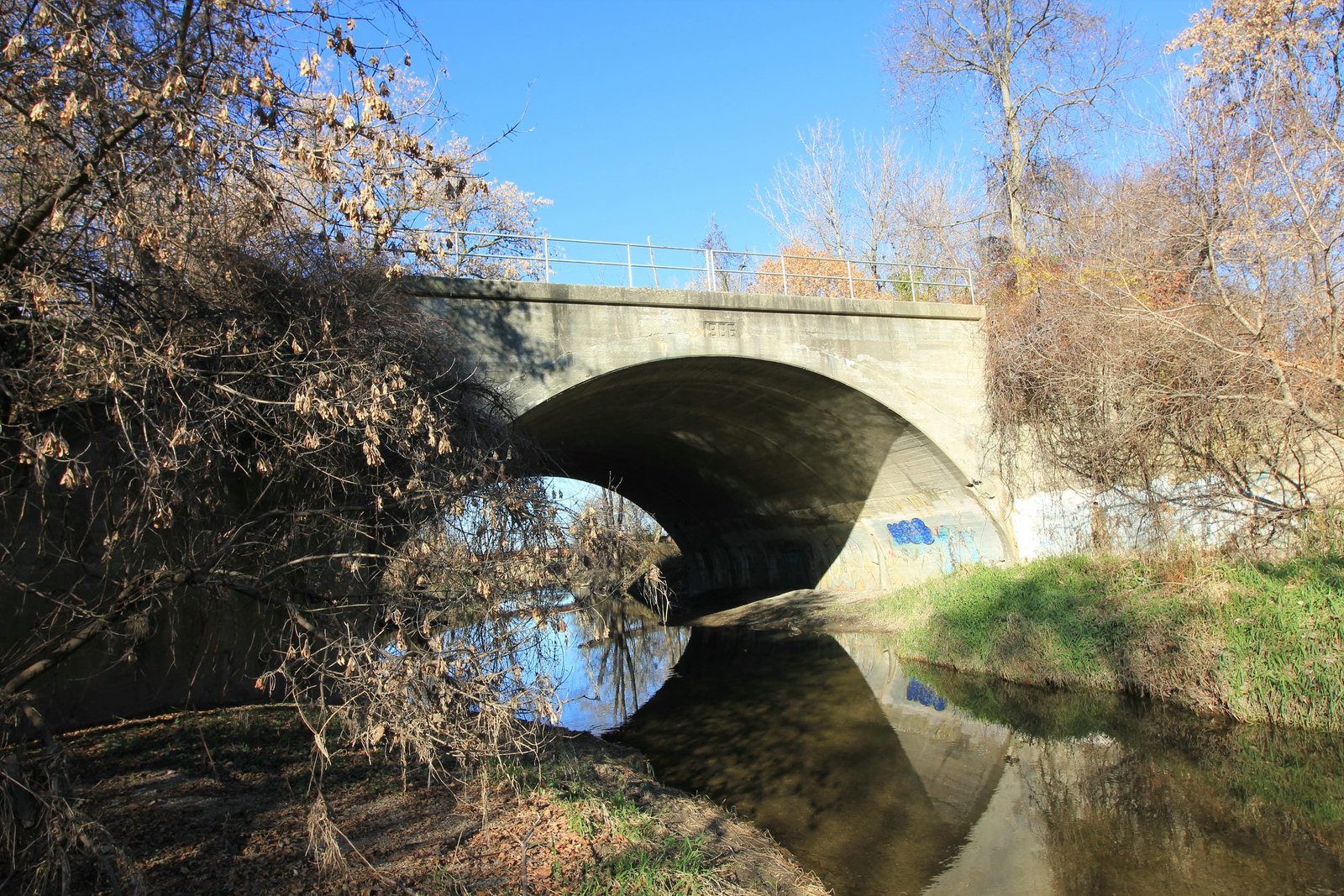
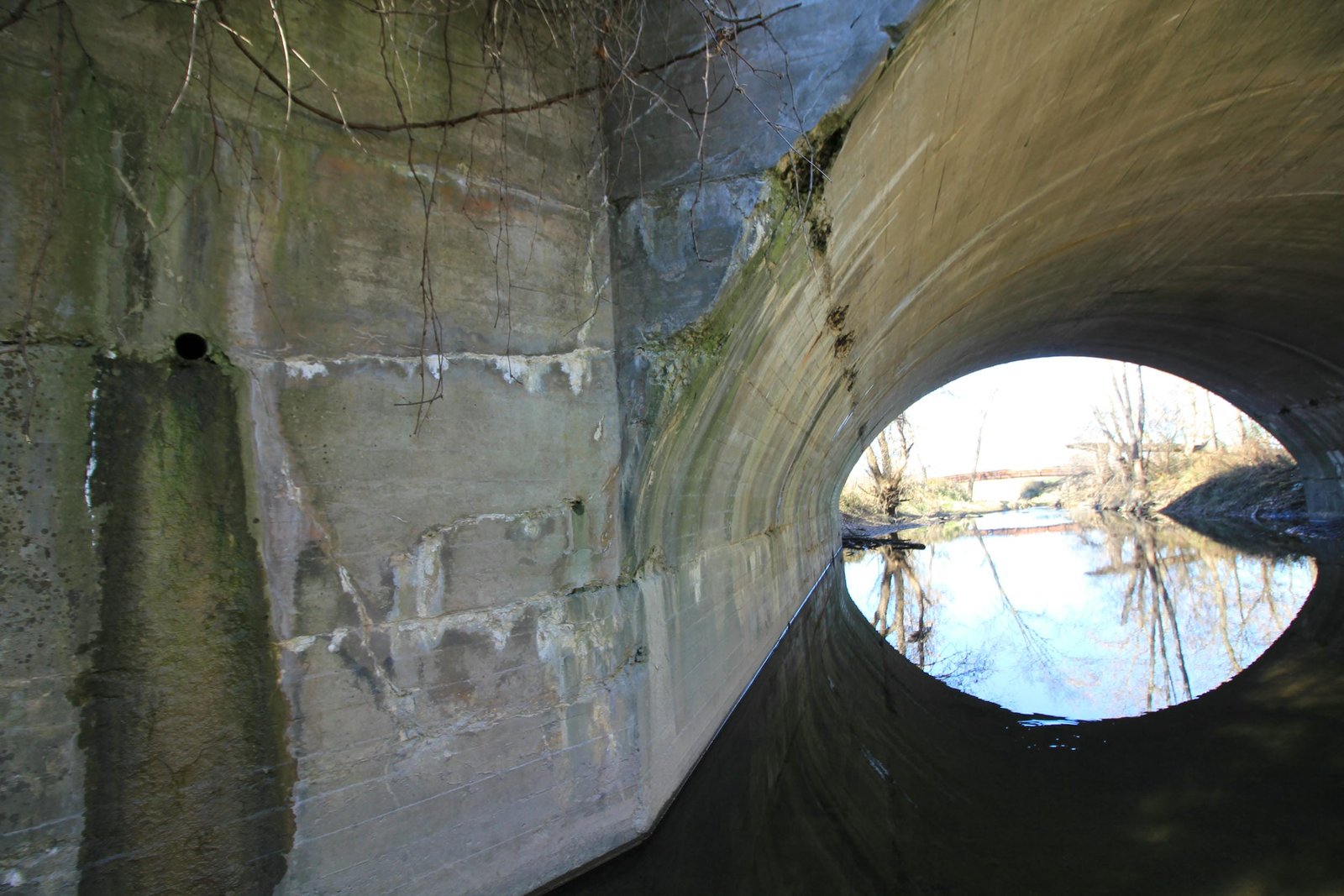
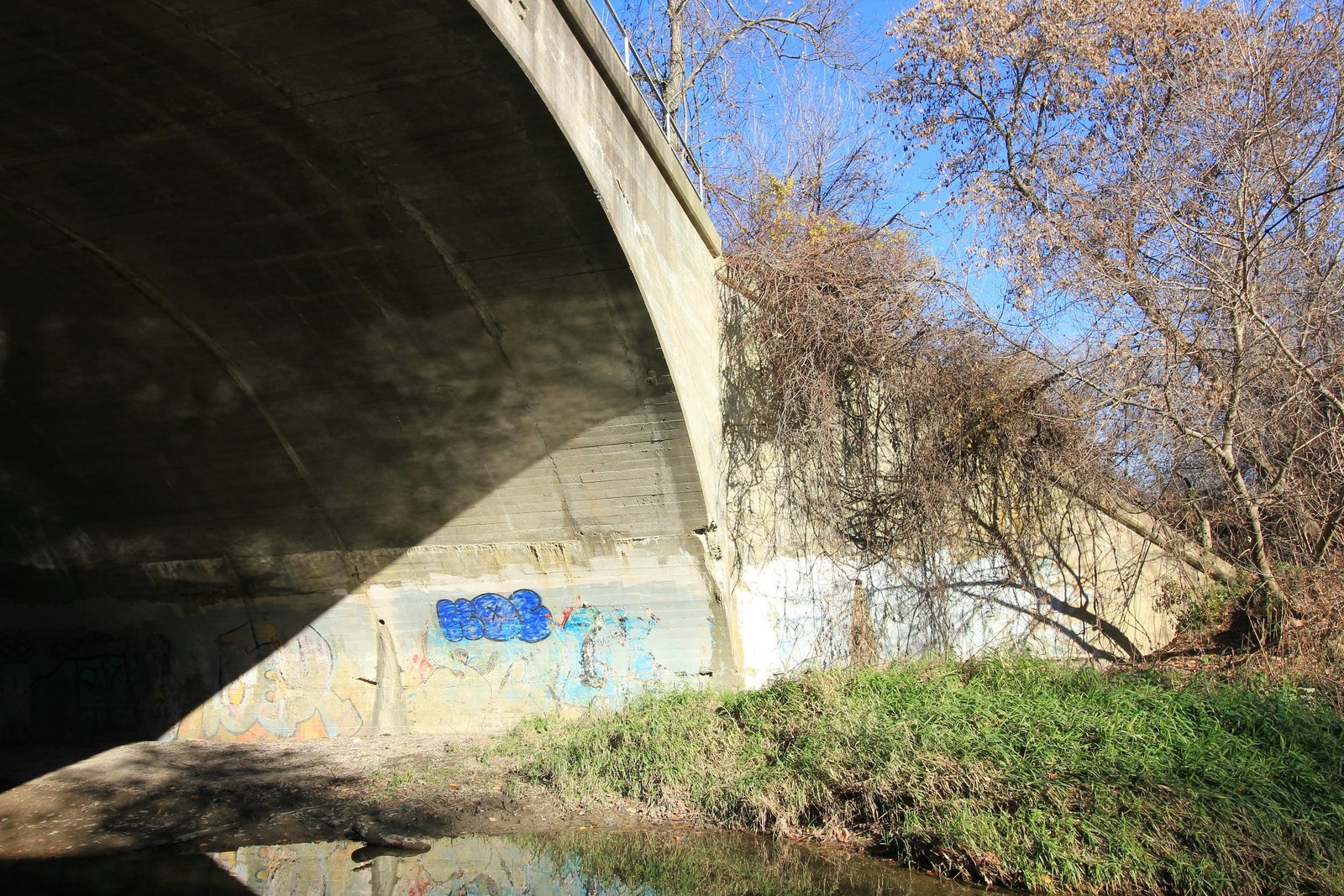
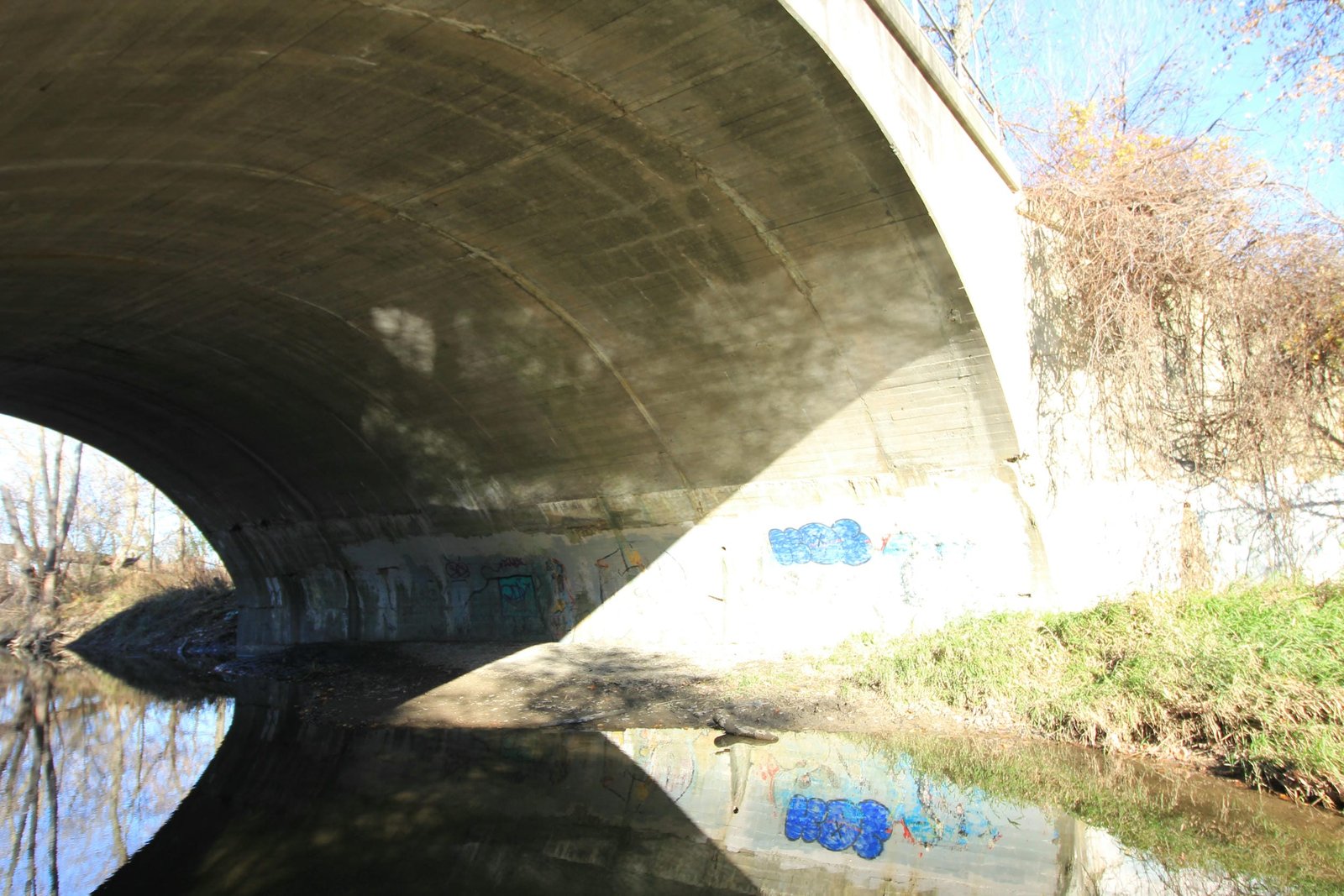
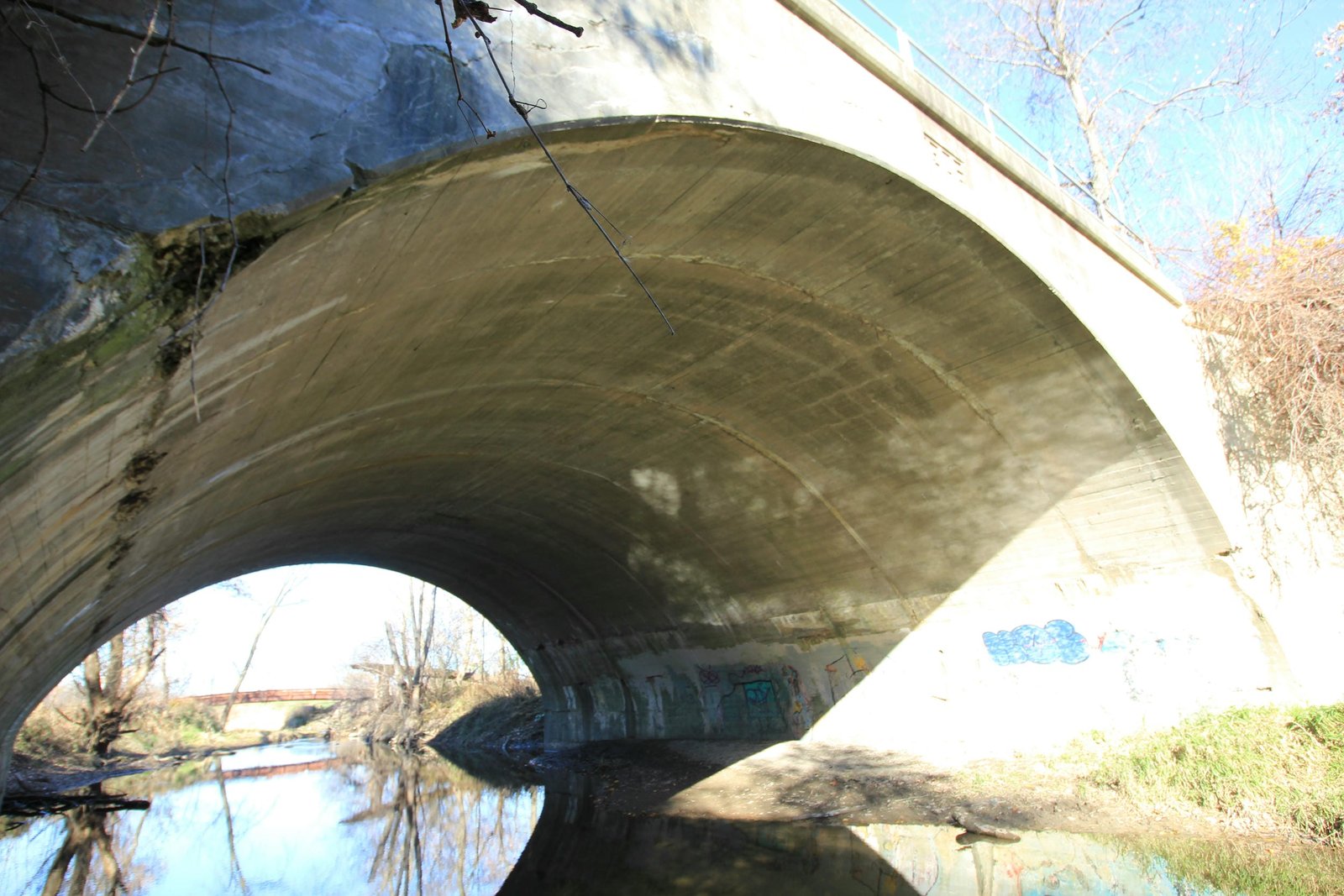
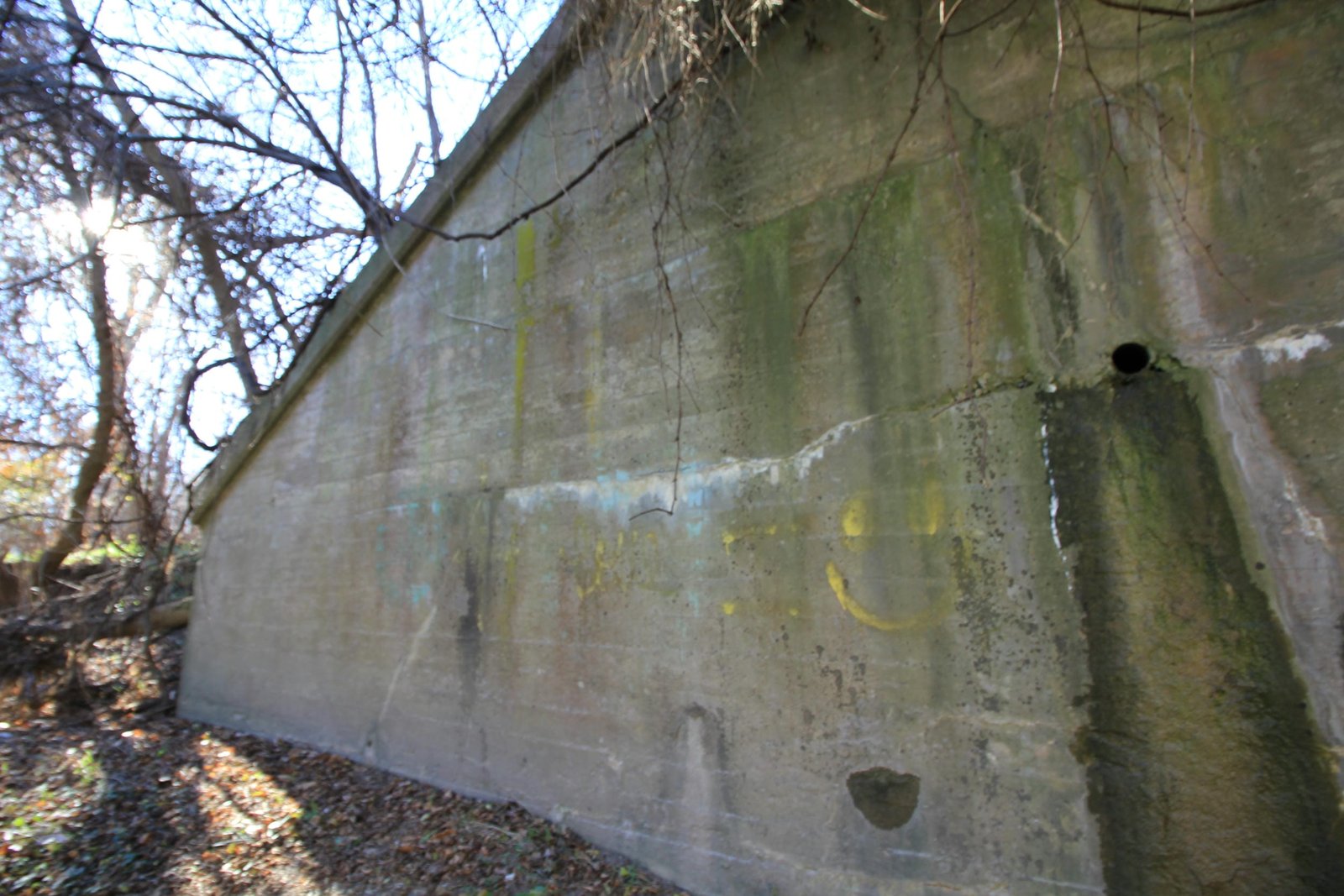
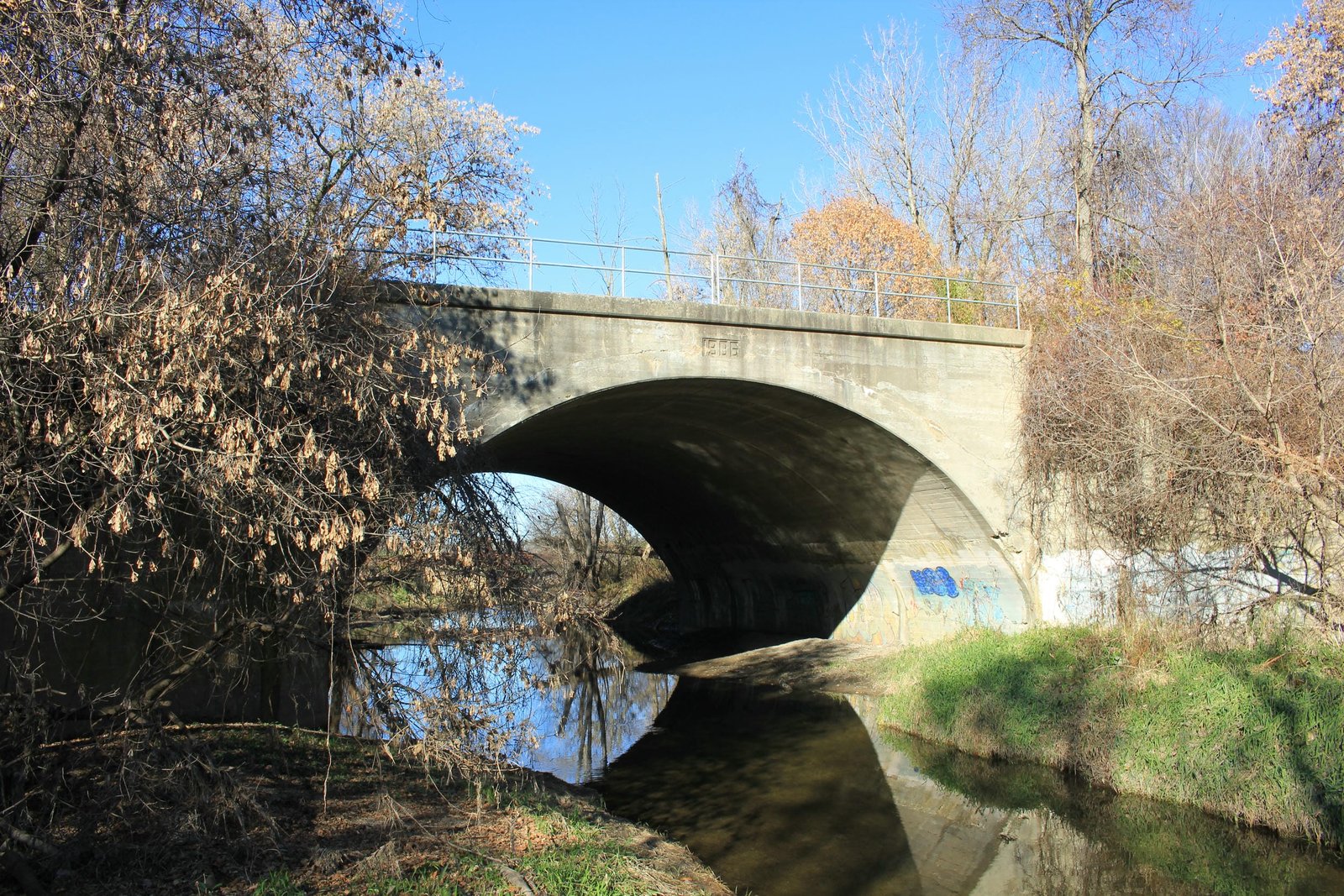
Located north of Kenosha, this large concrete arch bridge carries the former Chicago, North Shore & Milwaukee Railway across the Pike River. Built in 1906 during the construction of the Racine Extension, the bridge consists of a large 45-foot concrete arch span, set onto concrete substructures and constructed wide enough for 4 tracks (70 feet). The superstructure uses a large semicircular arch, with a main arch ring cast separately from the spanrel walls and substructures. The substructures use a standard design, with sloped wing walls extending from the bridge at a diagonal. Republic Construction Company constructed the bridge. This firm was owned by A.G. Frost, the owner of the interurban as well. Oftentimes, interurbans were constructed by companies that were affiliated with the owner. Concrete arch bridges were popular for interurban railroads, as they were durable, cost effective and easy to construct. Since the initial construction, the bridge has seen no significant alterations. Today, metal railings have been added to the headwalls and the bridge carries the Kenosha County Bike Trail. Overall, the bridge appears to be in good condition, with very little deterioration noted considering the age. The author has ranked this bridge as being moderately significant, due to the large size.
Citations
| Build date | Date stamp |
| Builder | Orders of the Illinois Public Utility Commission; Volume 4 |
| Railroad History Citation | ICC Valuation Information, Compiled by Richard S. Steele |