




Click the photo to view the full-size version
| Name | WSOR Bridge #B-197 Chicago, Milwaukee & St. Paul Railway Bridge #B-197 |
| Built By | Chicago, Milwaukee & St. Paul Railway |
| Currently Owned By | State of Wisconsin (Operated by Wisconsin & Southern Railroad) |
| Superstructure Contractor | Unknown |
| Length | 8 Feet Total |
| Width | 1 Track (26 Feet) |
| Height Above Ground | 5 Feet (Estimated) |
| Superstructure Design | Stone Arch Culvert |
| Substructure Design | Stone Masonry |
| Date Built | 1875 |
| Chicago, Milwaukee & St. Paul Railway Bridge Number | B-197 |
| Wisconsin & Southern Railroad Bridge Number | B-197 |
| Significance | Local Significance |
| Documentation Date | 10/22/2023 |
In 1850, the Milwaukee & Mississippi Rail Road (M&M) began construction on a new railroad line, with the intention of connecting Lake Michigan at Milwaukee with the Mississippi River. The first 20 miles between Milwaukee and Waukesha opened in 1851, running through the Menomonee River, Underwood Creek and Fox River valleys. In Milwaukee, this line followed the south side of the Menomonee River. An additional 42 miles to Milton, Wisconsin was constructed between 1852, and an additional 18 miles of railroad was constructed to Stoughton, Wisconsin in 1853. In 1854, an additional 15 miles was constructed between Stoughton and Madison. By 1856, an additional 86 miles of railroad had been completed between Madison and Boscobel. The following year, an additional 30 miles would be complete to Prairie du Chien, Wisconsin; located on the Mississippi River. The M&M was acquired by the Milwaukee and Prairie du Chien Railway (M&PdC) in 1861, which was sold to the Milwaukee & St. Paul Railway (M&StP) in 1867. In 1874, the M&StP changed its name to the Chicago, Milwaukee & St. Paul Railway (Milwaukee Road), and a pontoon bridge would be constructed across the Mississippi River to reach McGregor, Iowa.
This line served as a secondary route for the Milwaukee Road, giving a more direct connection between Milwaukee and the lines in Iowa. The route also allowed for the construction of numerous branch lines, including branches to Janesville, Wisconsin; Sauk City, Wisconsin and Richland Center, Wisconsin. By the 20th Century, the Milwaukee Road had become a prominent railroad in the United States, operating an expansive network of railroad lines, primarily in the Midwest. The Milwaukee Road was often in financial trouble, especially after the costly Pacific Extension was completed in 1909. In 1925, the company declared bankruptcy, and reorganized as the Chicago, Milwaukee, St. Paul and Pacific Railroad in 1928. Throughout the 20th Century, conditions on the Milwaukee Road continued to deteriorate. This line began to fall into disrepair, and was downgraded to a branch line. The pontoon bridge was dismantled in 1961, severing the connection to Iowa.
The railroad again entered bankruptcy in 1977, and was forced to liquidate unprofitable lines. The line from Waukesha to Prairie du Chien was sold to the State of Wisconsin in 1980, which leased it to the Wisconsin Western Railroad (WIWR) in 1982. The WIWR was short lived, and became part of the Wisconsin & Calumet Railroad (WICT) in 1985. By 1985, a suitor for the Milwaukee Road was being sought, and the Soo Line Railroad, controlled by Canadian Pacific Railway (CP) purchased the Milwaukee Road in 1986. The Soo Line continued to operate a short segment of this line between Brookfield and Waukesha until the early 1990s, when it was abandoned. In 1993, the WICT was acquired by the Wisconsin Southern Railroad (WSOR), and was formally merged in 1997. Since WSOR began operations of the line, significant upgrades have been made to the line, significantly improving service. Today, WSOR continues to operate the Waukesha to Milton segment as the Waukesha Subdivision; the Milton to Madison segment as part of the Madison Subdivision, and the Madison to Prairie du Chien segment as the Prairie Subdivision. A short segment of the former railroad between Brookfield and Waukesha has been reused as part of a trail.
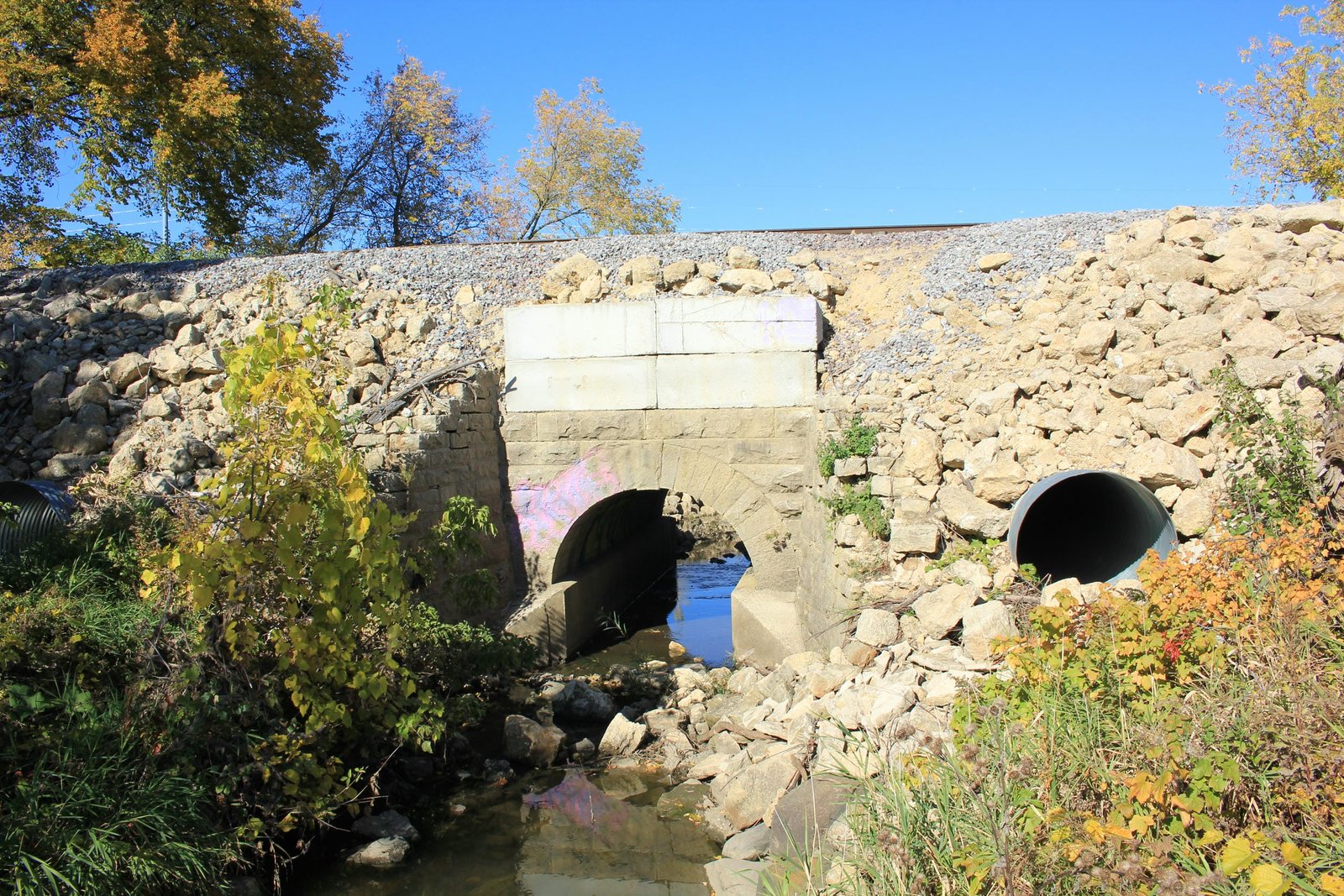
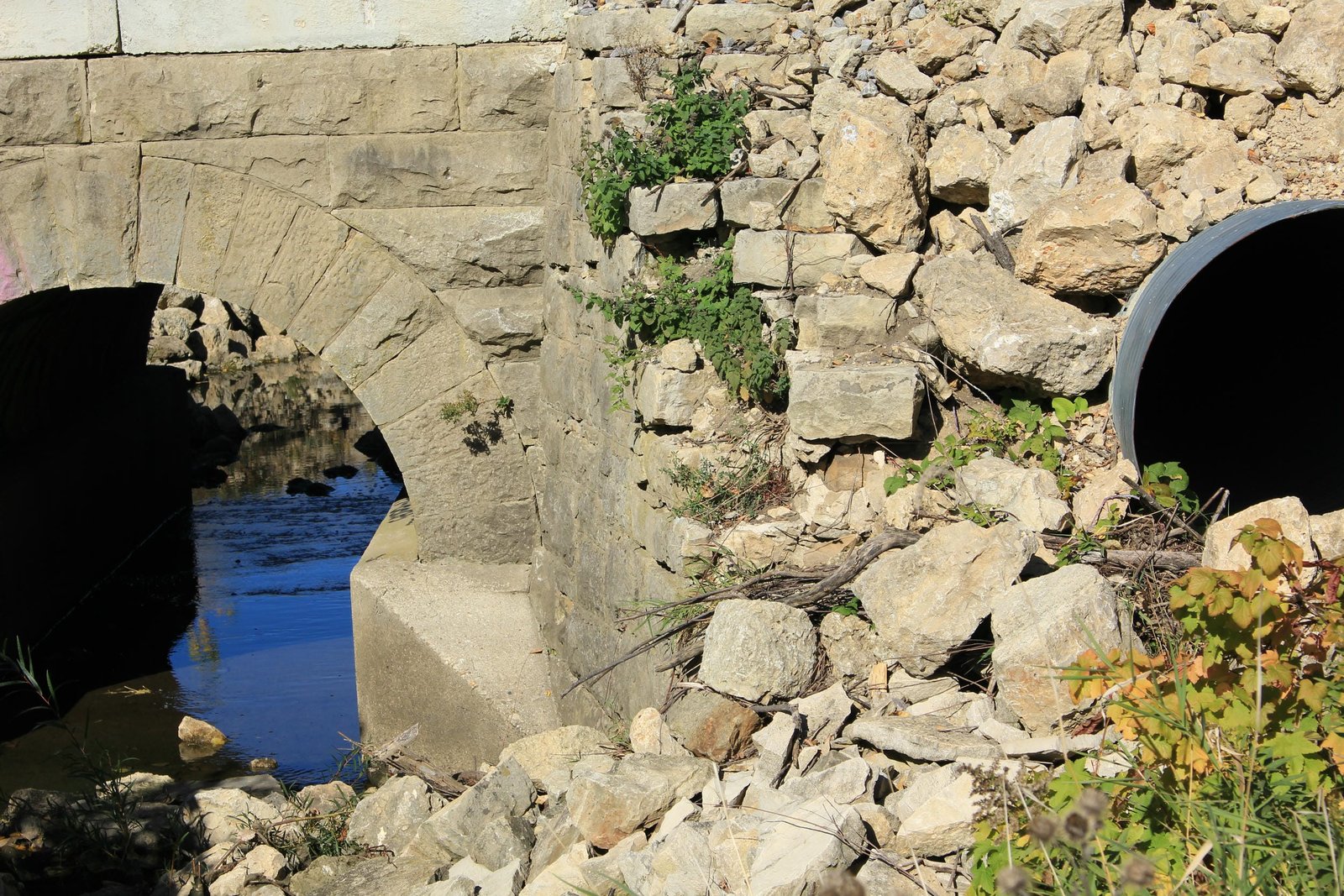
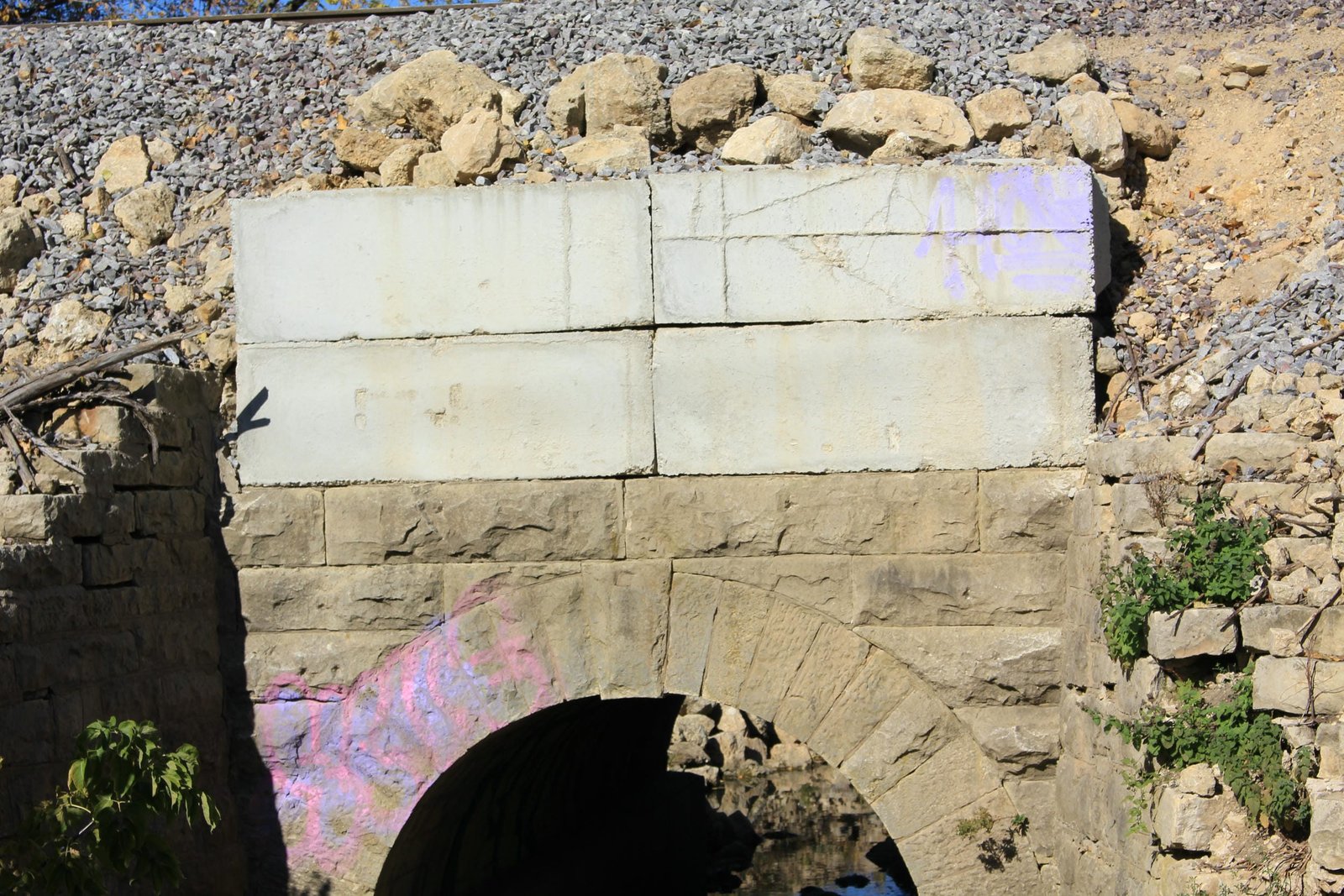
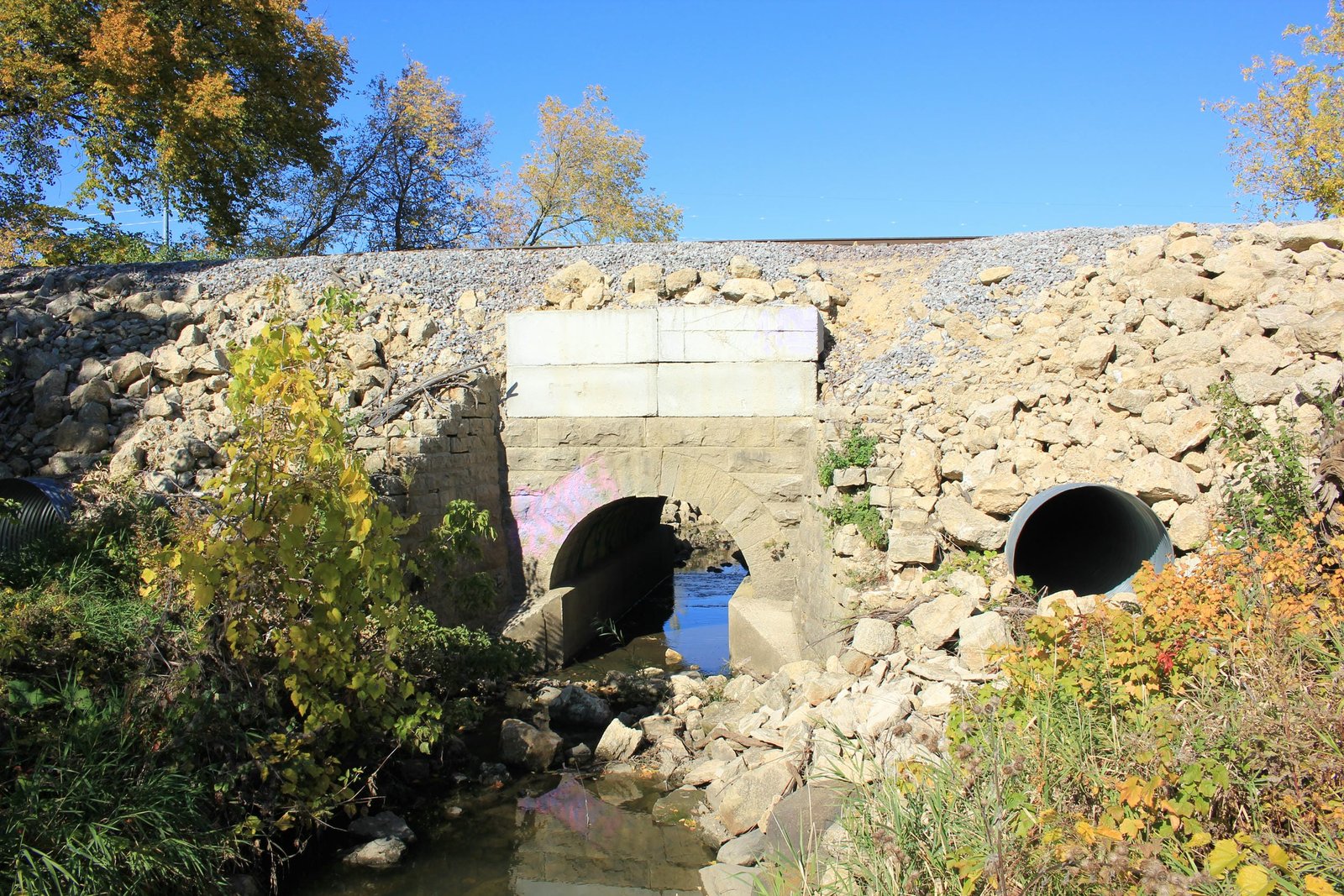
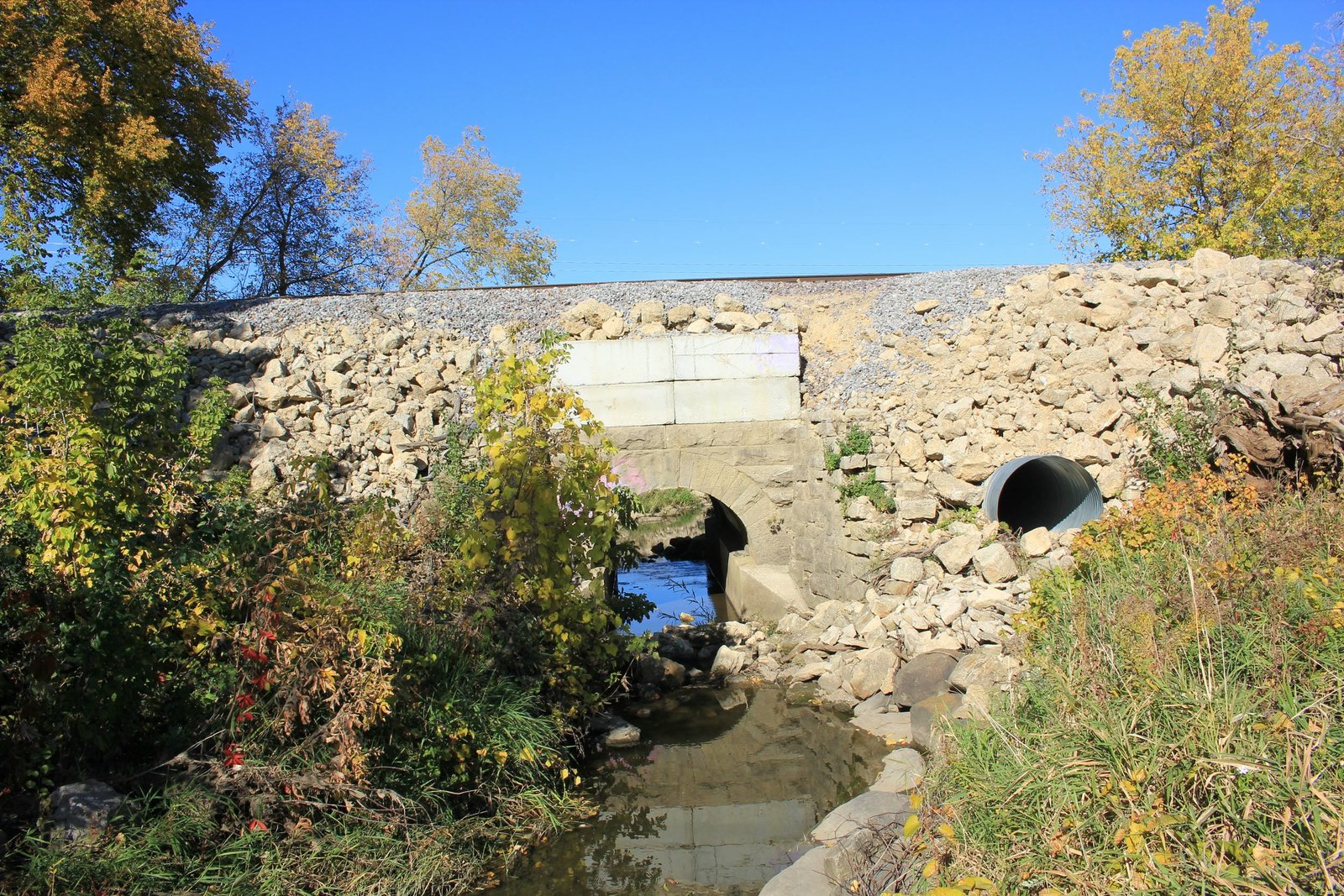
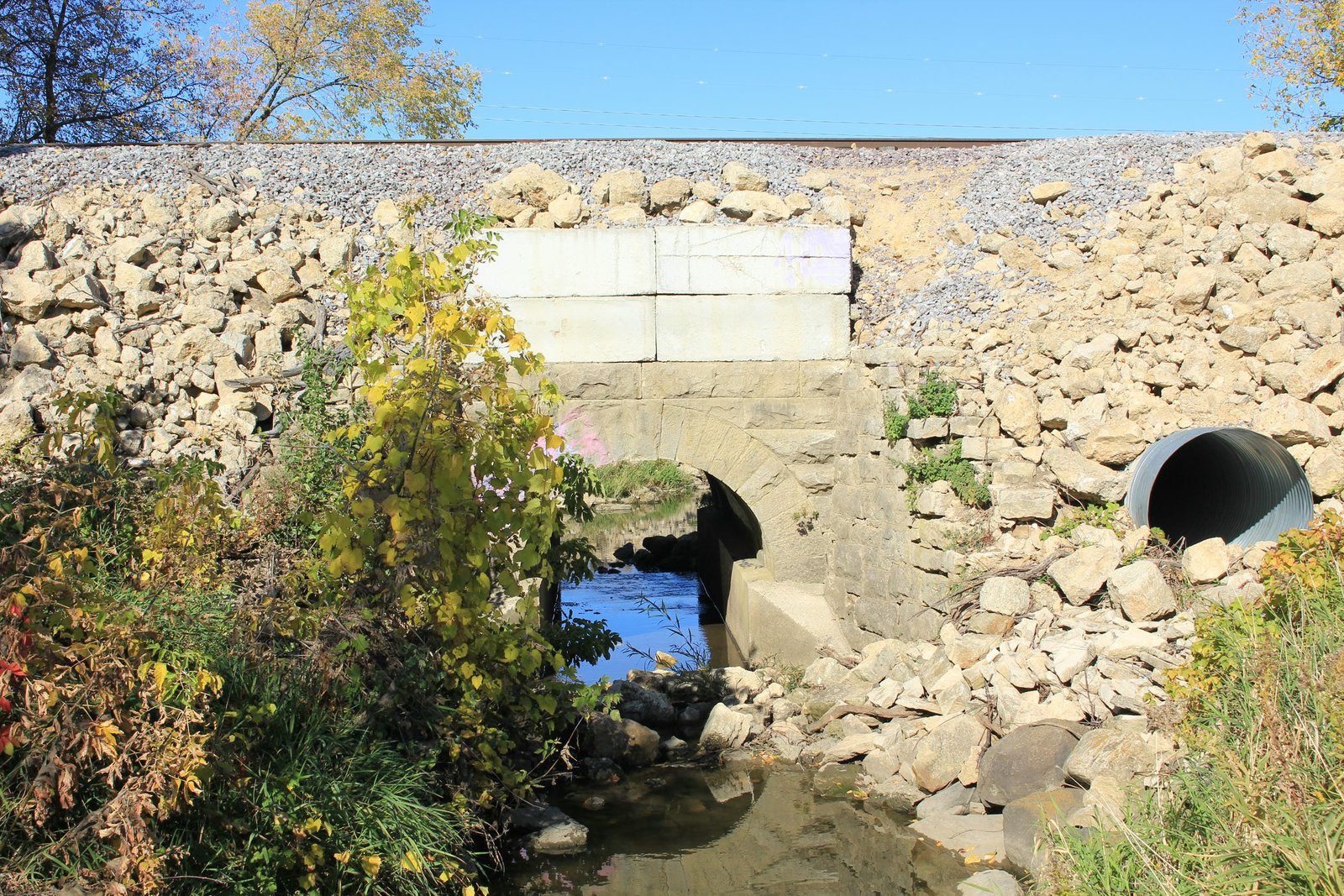
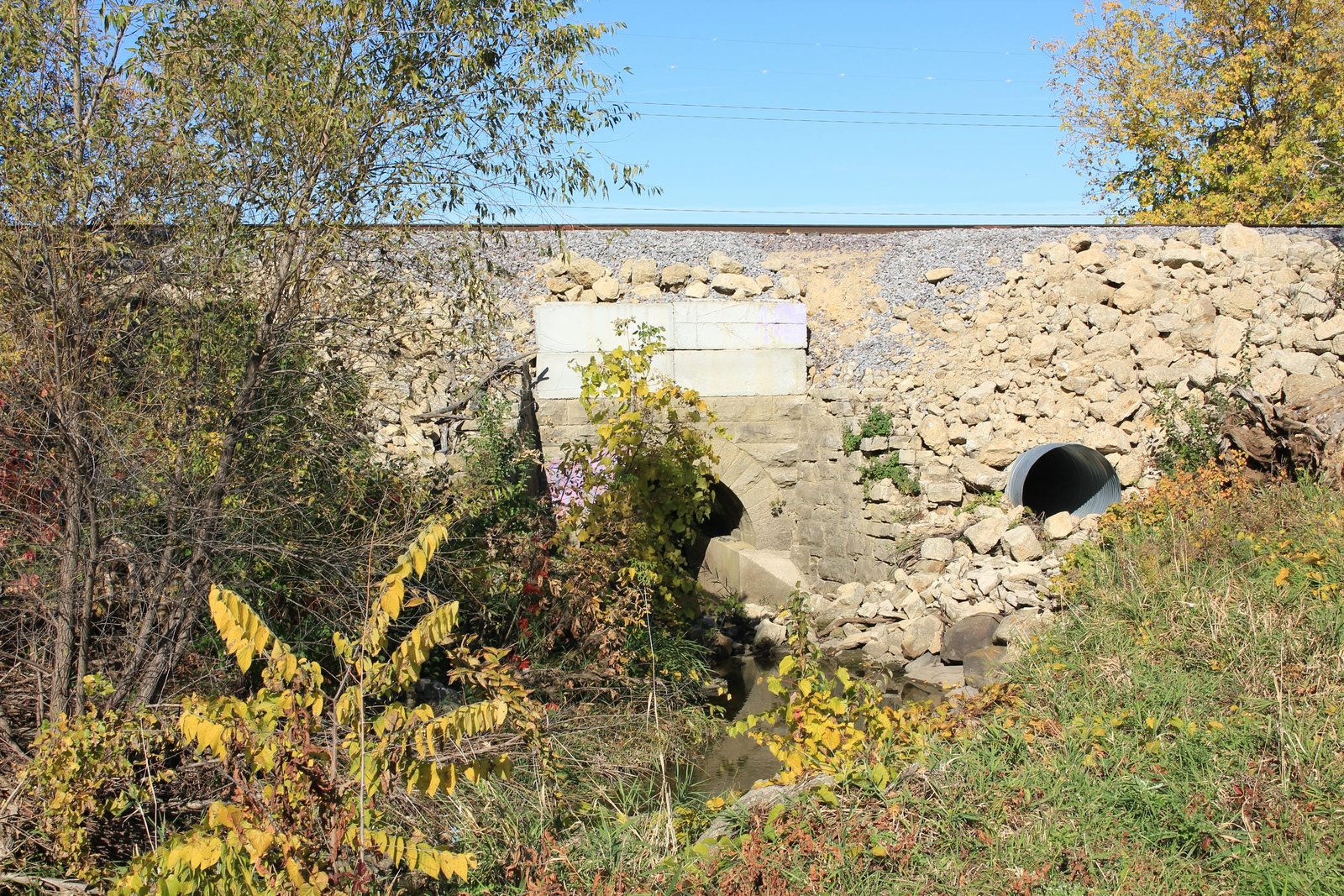
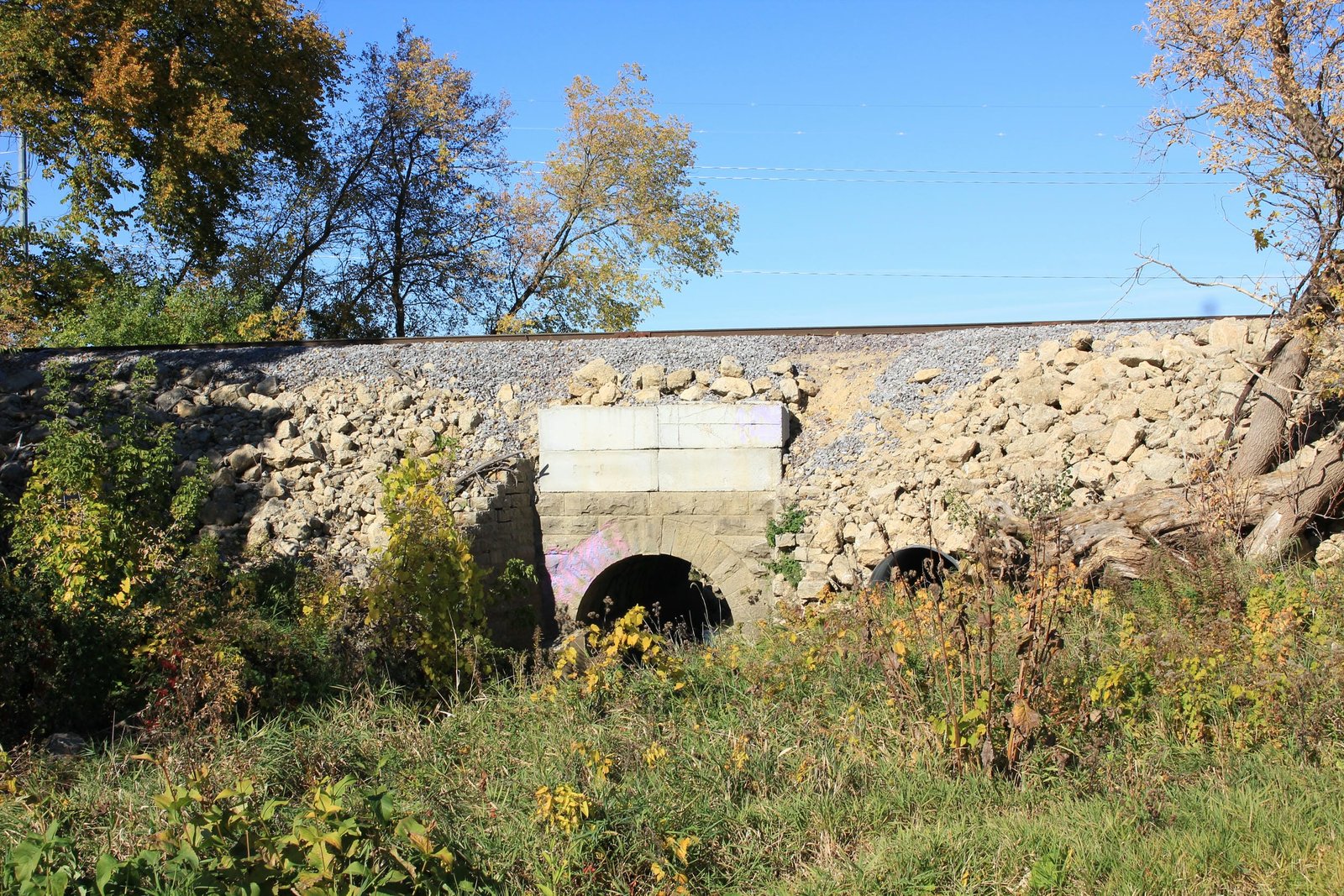
Located in Middleton, this small stone arch culvert carries a former Chicago, Milwaukee, St. Paul & Pacific Railroad (Milwaukee Road) line over an unnamed creek alongside US Highway 14. The first bridge at this location was likely a small timber pile trestle, constructed when the line was first built. After the railroad reorganized as the Milwaukee Road, a number of significant improvements were made to the line. These improvements included replacing timber bridges with iron, and constructing stone culverts in place of small timber trestles. The present culvert was constructed in 1875. Currently, the structure consists of an 8-foot by 7-foot stone arch culvert, constructed at a width of 26 feet. The structure uses a typical design, with a semicircular cut stone arch and wing walls which extend diagonally from the structure. The stone has a yellowish color, and was quarried at an unknown location. It is currently unknown if the structure was built by an unknown contractor or by railroad company forces. Stone arch culverts were commonly used by railroads in the 19th Century, as they were durable and easy to construct. Since the initial construction, this culvert has seen few alterations. The south headwall was replaced in 2018, and an additional corrugated metal pipe culvert installed east of the structure at that time. Overall, the culvert appears to be in good condition, with very minor cracking to the stone noted. The author has ranked this culvert as being locally significant, due to the common design and small size. The 1875 build date places this culvert among the oldest known single-span stone arches in Wisconsin.
Citations
| Build date | Milwaukee Road Bridge Index, located at the Milwaukee Road Archives at the Milwaukee Public Library |
| Railroad History Citation | ICC Valuation Information, Compiled by Richard S. Steele |