











Click the photo to view the full-size version
| Name | New Kate Shelley High Bridge |
| Built By | Union Pacific Railroad |
| Currently Owned By | Union Pacific Railroad |
| Superstructure Contractor | Bennett Industries of Peotone, Illinois (North Track 110-Foot Spans) Paxton-Vierling Steel Company of Omaha, Nebraska |
| Substructure Contractor | OCCI, Inc. of Fulton, Missouri |
| Design Engineer | HDR, Inc. of Omaha, Nebraska |
| Length | 2,813 Feet, 110 Foot Main Spans |
| Width | 2 Tracks |
| Height Above Ground | 190 Feet |
| Superstructure Design | Deck Plate Girder and Concrete Modular Girder |
| Substructure Design | Concrete and Steel Pile |
| Date Built | 2009, Reusing Spans Fabricated 1973 |
| Original Location (North Track 110-Foot Spans) | Chicago, Milwaukee, St. Paul & Pacific Railroad Bridge #Z-1154; Madrid, Iowa |
| Traffic Count | 50 Trains/Day (Estimated) |
| Current Status | In Use |
| Union Pacific Railroad Bridge Number | 207.42 |
| Significance | Moderate Significance |
| Documentation Date | 7/22/2012; 3/26/2013; 10/17/2017 |
In 1867, the Cedar Rapids & Missouri River Railroad (CR&MR) continued constructing a mainline westward from Boone, Iowa. In the late 1850s and early 1860s, the CR&MR had participated in constructing a line from Clinton, Iowa to Boone. The CR&MR was leased by the Chicago & North Western Railway (C&NW), which was seeking a route connecting Chicago to the Missouri River. In 1867, an impressive 150 miles were constructed between Boone, Iowa and Council Bluffs, Iowa, completing a connection between Chicago and the Missouri River. The line also allowed for a short spur from Missouri Valley, Iowa to the Missouri River opposite of Blair, Nebraska. This spur would eventually be extended across the Missouri River and into Nebraska. Between 1869 and 1872, Union Pacific Railroad (UP) constructed a bridge across the Missouri River between Council Bluffs and Omaha, Nebraska; and the C&NW obtained trackage rights over the bridge to reach Omaha. During the second half of the 19th Century, the C&NW had constructed and acquired a large amount of trackage throughout the Midwest. In 1884, the CR&MR was formally purchased by the C&NW; and this line quickly became a core asset of the C&NW system.
By the late 19th Century, traffic over this line had increased to the point significant upgrades were required. In 1893, a 5-mile section of railroad was relocated west of Jefferson, Iowa to improve grades and eliminate curves. One of the most significant barriers to efficient operation over this line was the Des Moines River Valley between Boone and Ogden, Iowa. The original route crossed the Des Moines River at Moingona, which was approached by winding and steep approaches on each bank. In 1899, C&NW subsidiary Boone County Railway (BCR) began construction on a more direct route between Boone and Ogden, Iowa; including a massive viaduct across the Des Moines River. The BCR was consolidated into the C&NW in 1900, and the new cutoff was completed in May 1901. The new alignment shortened the route by 3 miles, cut grades in half and only required two small curves. The original mainline through Moingona was maintained as an emergency backup and to serve industries in the area. Between 1901 and 1902, a second track was also constructed between Ogden and Council Bluffs, including a 5-mile realignment near Arcadia, Iowa. The double tracking of this line provided the C&NW with a well constructed double track mainline between Chicago and Council Bluffs.
By the 20th Century, the C&NW was operating an extensive railroad network, which radiated north and west from Chicago. The original mainline into Moingona was abandoned in 1930. This line served as the backbone of the C&NW, connecting transcontinental freight and passengers at Omaha to Chicago. Known as the Overland Route, this line became one of the most significant railroad routes in the United States. This route saw continuous upgrades during the 20th Century, including significant bridge, rail, tie and signal upgrades. In 1995, the C&NW was purchased by UP, which provided UP with a mainline into the railroad hub of Chicago. Into the 21st Century, the line has seen continuous upgrades, and remains one of the most significant railroad lines in the United States. Today, UP operates this line as the Boone Subdivision between Boone and Missouri Valley; and the Omaha Subdivision between Missouri Valley and Council Bluffs.
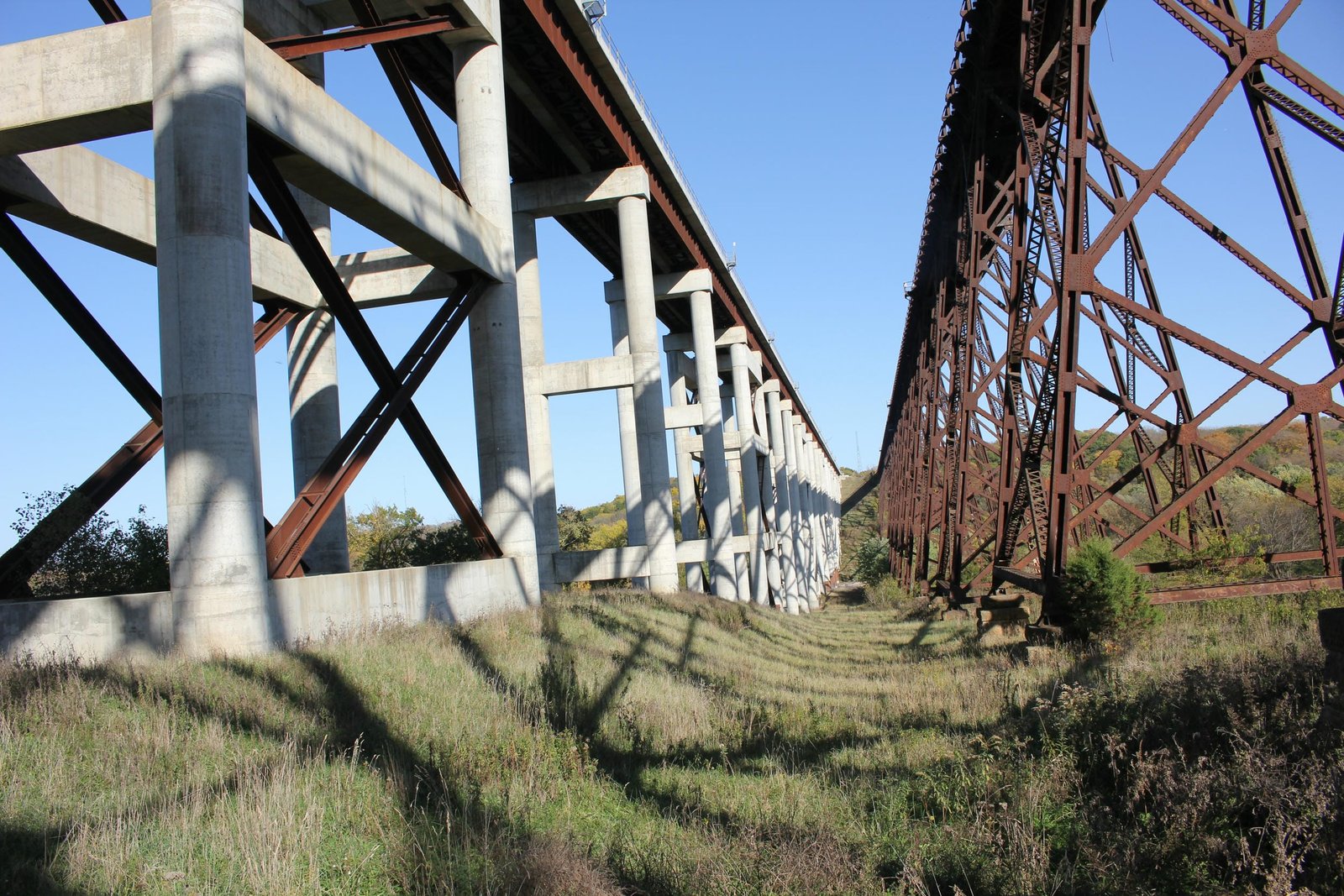
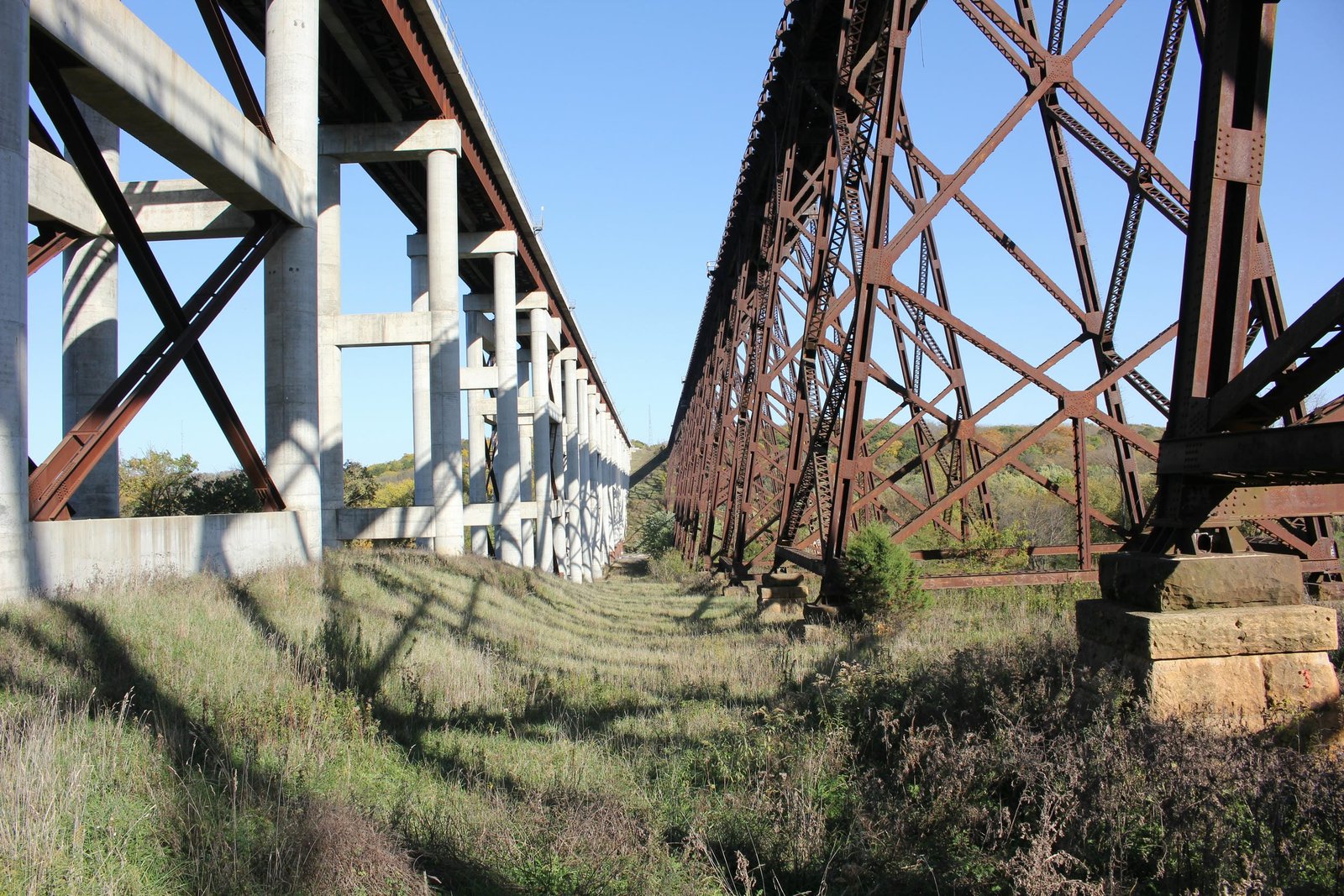
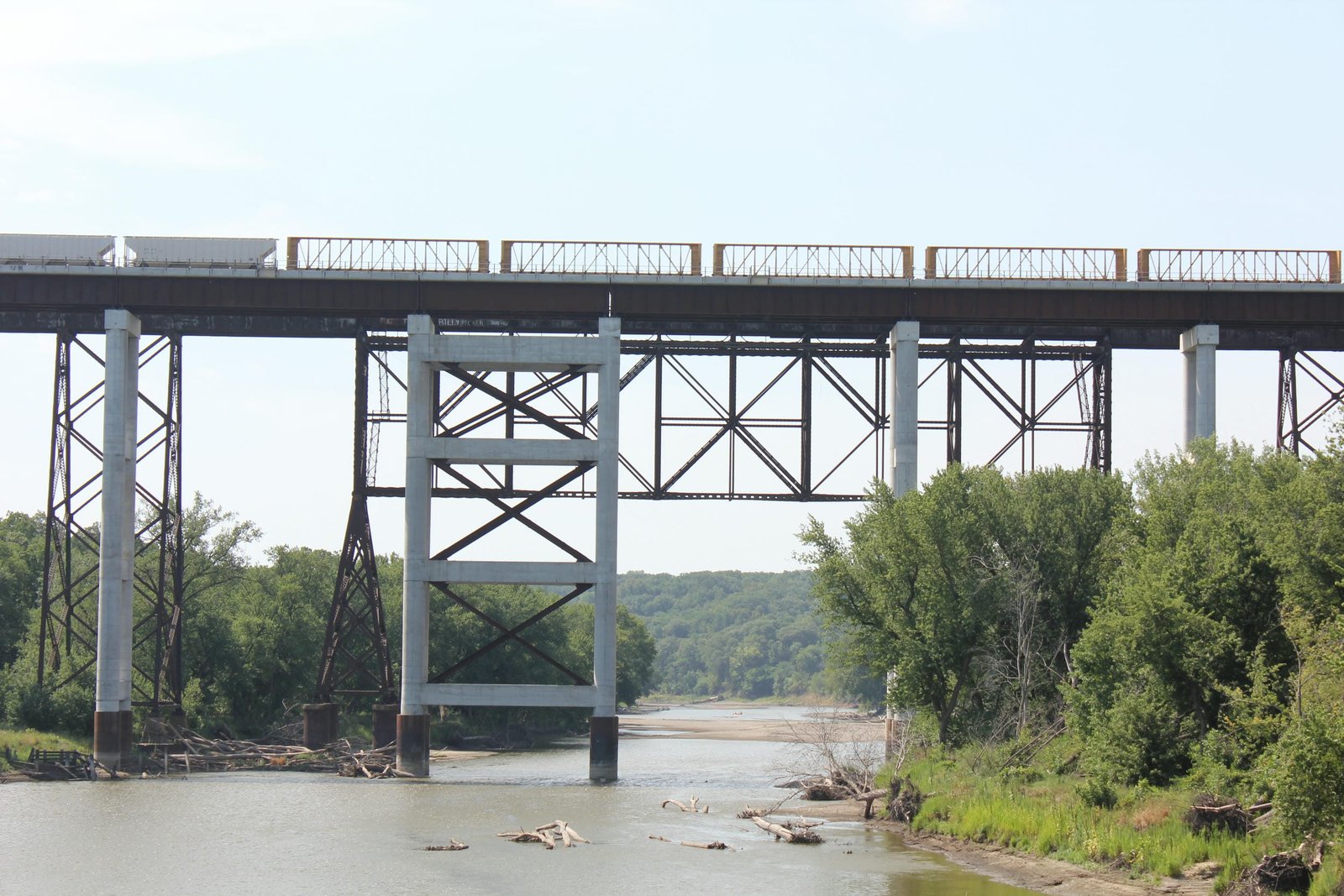
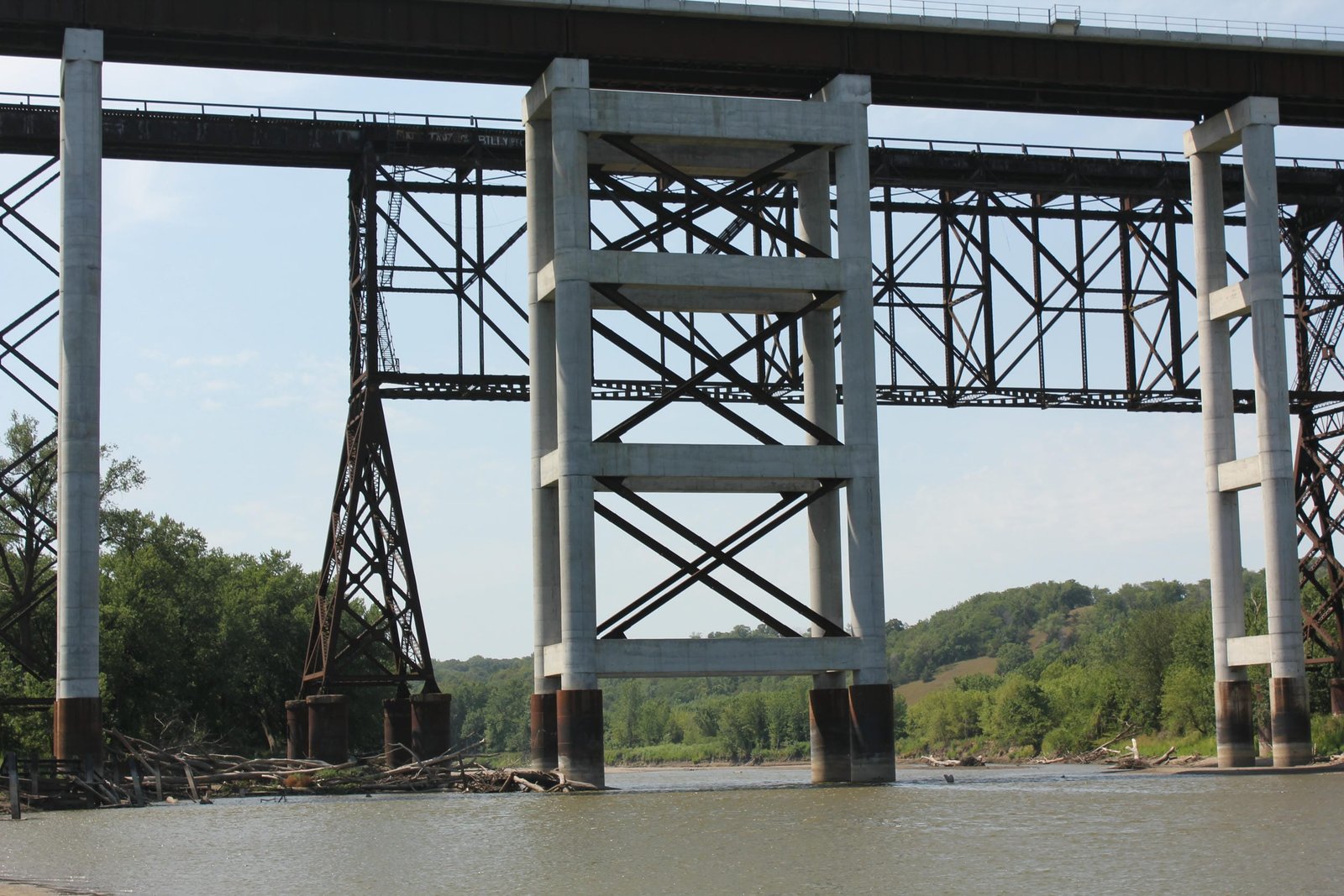
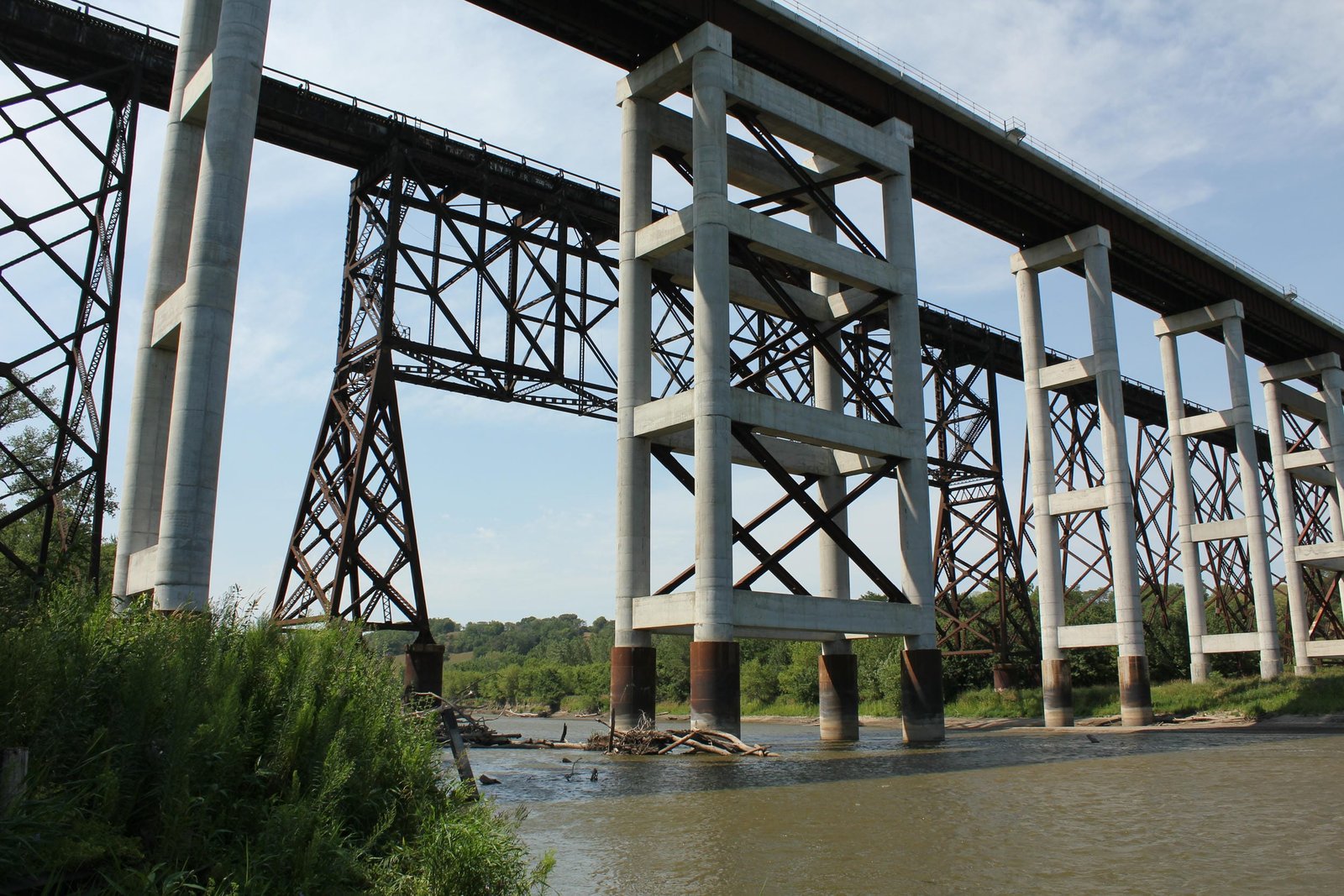
Located between Boone and Ogden, this large deck plate girder viaduct was constructed to carry the Union Pacific Railroad mainline over the Des Moines River and Juneberry Road. Between 1899 and 1901, the Chicago & North Western Railway constructed a tall steel viaduct over the Des Moines River at this location to eliminate an inferior route through Moingona. The viaduct was named the Kate Shelley Bridge, in honor of a heroine from Moingona who saved a train from plunging through a failed trestle in July 1881. The original double track viaduct remained in heavy use through the 20th Century. By the 1950s, the viaduct was reportedly only capable of carrying one train at a time. Several repairs were made to the original viaduct, including a significant strengthening of the center span in 2001. By the early 21st Century, it had become clear that the original viaduct was no longer a feasible long term solution. Union Pacific Railroad, which acquired the C&NW in 1995, began planning a replacement viaduct to improve operations on the busy line. In 2004, UP salvaged 23 deck plate girder spans from a former Milwaukee Road bridge across the Des Moines River at Madrid, Iowa. These spans were trucked to Boone, and stacked in the yard for future reuse.
Omaha, Nebraska based engineering firm HDR, Inc. was chosen to design a new bridge located just north of the original viaduct. Earthwork for the new bridge began in November 2006, and consisted of clearing trees and grading space for a second set of tracks on either side of the river. In March 2007, construction on concrete shafts began, with work on the substructures progressing through 2008. The first steel spans were set on the concrete substructures in September 2008. On August 20, 2009; the new bridge opened to traffic. The old viaduct was left intact and disconnected from the tracks on either end. The new viaduct was designed for two trains to operate at a maximum of 70 MPH, which had not been possible on the old viaduct since the mid-20th Century. 56 shafts were required, with some reaching 100 feet deep, to construct the concrete piers. 1,554 tons of reinforcing steel bars, 632 tons of I-beams and steel bracing and 28,000 cubic yards of concrete were used in the new substructures. 4600 tons of structural steel were used for the superstructure. The entire project required 552,000 cubic yards of soil and the total cost of the project exceeded $50,000,000. The bridge was named the New Kate Shelley Bridge, also in honor of Kate Shelley.
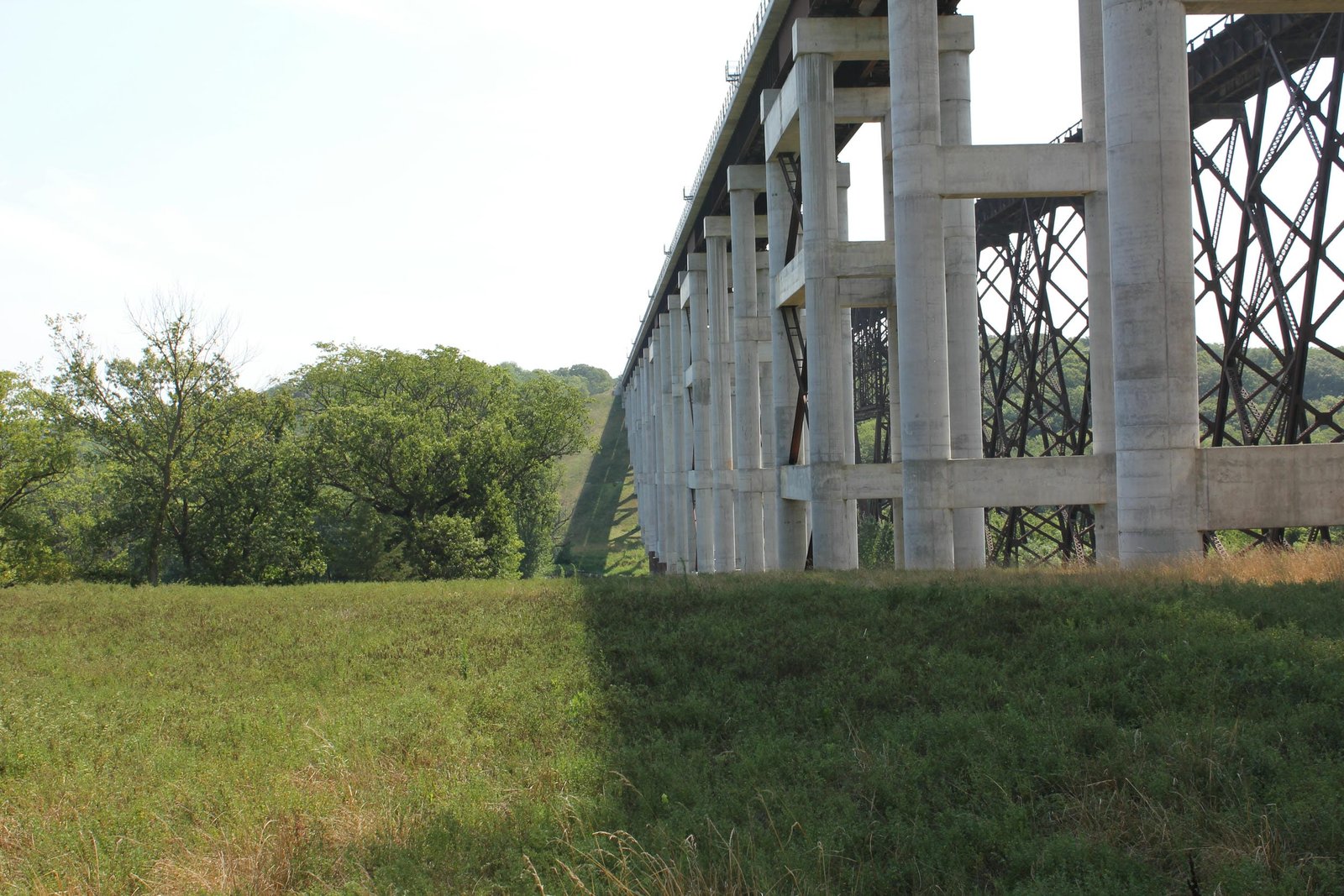
The viaduct consists of twenty double track 110-foot deck plate girder spans and six 70-foot deck plate girder spans. The east end is approached by three 30-foot concrete modular girder spans, while the west end is approached by three 30-foot and one 12-foot concrete modular girder spans. The substructures are mainly constructed of concrete, with the exception of the approaches, which use steel piles. All deck plate girder spans use a weathered steel, with the 110-foot spans using extensive ribbing throughout the sides and the shorter 70-foot spans having smooth sides. All twenty of the north track 110-foot girders and three of the south track 110-foot girders were reused from Madrid, Iowa. These spans had originally been fabricated in 1973 as part of a project to construct a new bridge for the Milwaukee Road mainline across the Des Moines River. The original bridge at that location consisted of a tall steel deck truss and deck girder viaduct, which would have quickly deteriorated underneath the waters of the newly impounded Saylorville Lake. The remaining seventeen 110-foot spans and all 70-foot spans were fabricated in 2008-09. The approach spans use a standard concrete modular box girder design, typical for modern railroad bridges. A concrete ballast deck covers the entire bridge. The main bents are formed using two concrete columns, which are connected by transverse beams at the bases and intervals throughout. These columns were constructed by using drilled shafts. Five towers are created by connecting two bents with longitudinal concrete beams at the bases, tops and at intervals throughout. At the ends of the main spans, concrete wall type piers are used, and the approach spans are set onto typical steel pile and concrete cap bents.
HDR, Inc. was chosen to complete the design and construction engineering for the bridge. OCCI, Inc. was awarded the contract for constructing the substructures and erecting the steel spans. The 1973-era deck girder spans had been fabricated by Bennett Industries, which used steel produced by the Bethlehem Steel Company of Bethlehem, Pennsylvania. The remaining deck girder spans were fabricated by the Paxton-Vierling Steel Company. Railroads often reused steel spans, as it provided a cost effective way to construct bridges without requiring large amounts of new material. While this practice was mainly used in the late 19th and 20th Centuries, many railroads continue to reuse spans were feasible. Deck plate girder spans were commonly used by railroads, as they were durable and easy to construct. Since the initial construction, the bridge has seen no significant alterations, and remains in regular use. Overall, the bridge appears to be in good condition, with no deterioration noted. The author has ranked this bridge as being moderately significant, due to the magnitude of the structure.
Citations
| Build date and builder (superstructure) | Paxton-Vierling Steel Company plaque |
| Builder (substructure) and engineer | Railway Track & Structures; September 7, 2007 |
| Builders and fabrication date (reused 110-foot spans) | Bulletin of the American Railway Engineering Association; Volume 75 |
| Railroad History Citation | ICC Valuation Information, Compiled by Richard S. Steele |