
Click the photo to view the full-size version
| Name | Devils Hollow Railroad Crossing Chicago & North Western Railway Bridge #535 |
| Built By | Chicago & North Western Railway |
| Currently Owned By | Union Pacific Railroad |
| Superstructure Contractor | Unknown (East Span) American Bridge Company of New York (West Span) |
| Superbstructure Contractor | Unknown (1889 Work) Widell Company of Mankato, Minnesota (1900 Work) |
| Length | 137 Feet Total, 68 Foot Spans |
| Width | 2 Tracks |
| Height Above Ground | 40 Feet (Estimated) |
| Superstructure Design | Deck Plate Girder and Through Plate Girder |
| Substructure Design | Stone Masonry |
| Date Built | 1900 (East Span) and 1902 (West Span) |
| Traffic Count | 50 Trains/Day (Estimated) |
| Current Status | In Use |
| Chicago & North Western Railway Bridge Number | 535 |
| Union Pacific Railroad Bridge Number | 177.38 |
| Significance | Local Significance |
| Documentation Date | 7/22/2012; 10/7/2016; 1/9/2022 |
In 1856, the Chicago, Iowa & Nebraska Rail Road (CI&N) began construction on a new mainline across Iowa, connecting an existing Galena & Chicago Union Railroad (G&CU) line at Fulton, Illinois to the Missouri River. To establish construction, a temporary ferry was installed across the Mississippi River at Clinton in 1856. In 1857, the first 44 miles were completed to Wheatland, Iowa. The following year, 20 miles were completed to Lisbon, Iowa; and in 1859, an addition 17 miles were completed to Cedar Rapids, Iowa. In 1861, the Cedar Rapids & Missouri River Railroad (CR&MR) constructed an additional 41 miles to Chelsea, Iowa; followed by 29 miles to Marshalltown, Iowa in 1862. After pausing in 1863, an additional 29 miles were completed to Nevada, Iowa in 1864, followed by 23 additional miles to Boone, Iowa in 1865. In 1864, both the CI&N and CR&MR were leased by the Chicago & North Western Railway (C&NW). In 1867, the line continued west from Boone, reaching the Missouri River at Council Bluffs, Iowa in 1867.
During the second half of the 19th Century, the C&NW had constructed and acquired a large amount of trackage throughout the Midwest. This line formed a principal mainline for the C&NW, connecting western railroads at Omaha to the railroad hub of Chicago. In 1884, the C&IN and CM&MR were formally acquired by the C&NW. In 1887, the Linn County Railway (LC) constructed a 6-mile cutoff, bypassing Cedar Rapids to the south between Otis, Iowa and Beverly, Iowa. At the end of the year, the LC was formally acquired by the C&NW. During the late 19th Century, several other improvements were made to this line. Between 1890 and 1891, a second track was constructed between Clinton and Lowden, Iowa; and between Libson and the Cedar River bridge. Between 1893 and 1894, a second track was constructed between Lowden and Lisbon. A second track was added to the original mainline through Cedar Rapids in 1898, and between 1898 and 1899, a second track was constructed between the Cedar River bridge and the west side of Marshalltown. In 1901, a second track was completed between Marshalltown and Boone, and new facilities were constructed at Boone. Throughout the 20th Century, the Cedar River bridge remained a gauntlet structure, severely hindering efficient operations.
By the 20th Century, the C&NW was operating an extensive railroad network, which radiated north and west from Chicago. This line served as the backbone of the C&NW, connecting transcontinental freight and passengers at Omaha to Chicago. Known as the Overland Route, this line became one of the most significant railroad routes in the United States. This route saw continuous upgrades during the 20th Century, including significant bridge, rail, tie and signal upgrades. In 1995, the C&NW was purchased by Union Pacific Railroad (UP). In 2002, UP constructed a second track at the Cedar River bridge, eliminating a single track bottleneck in the network. Today, this line remains vital to UP and is still well maintained. The Clinton to Boone segment is known as the Clinton Subdivision, and remains a heavily used double track mainline.
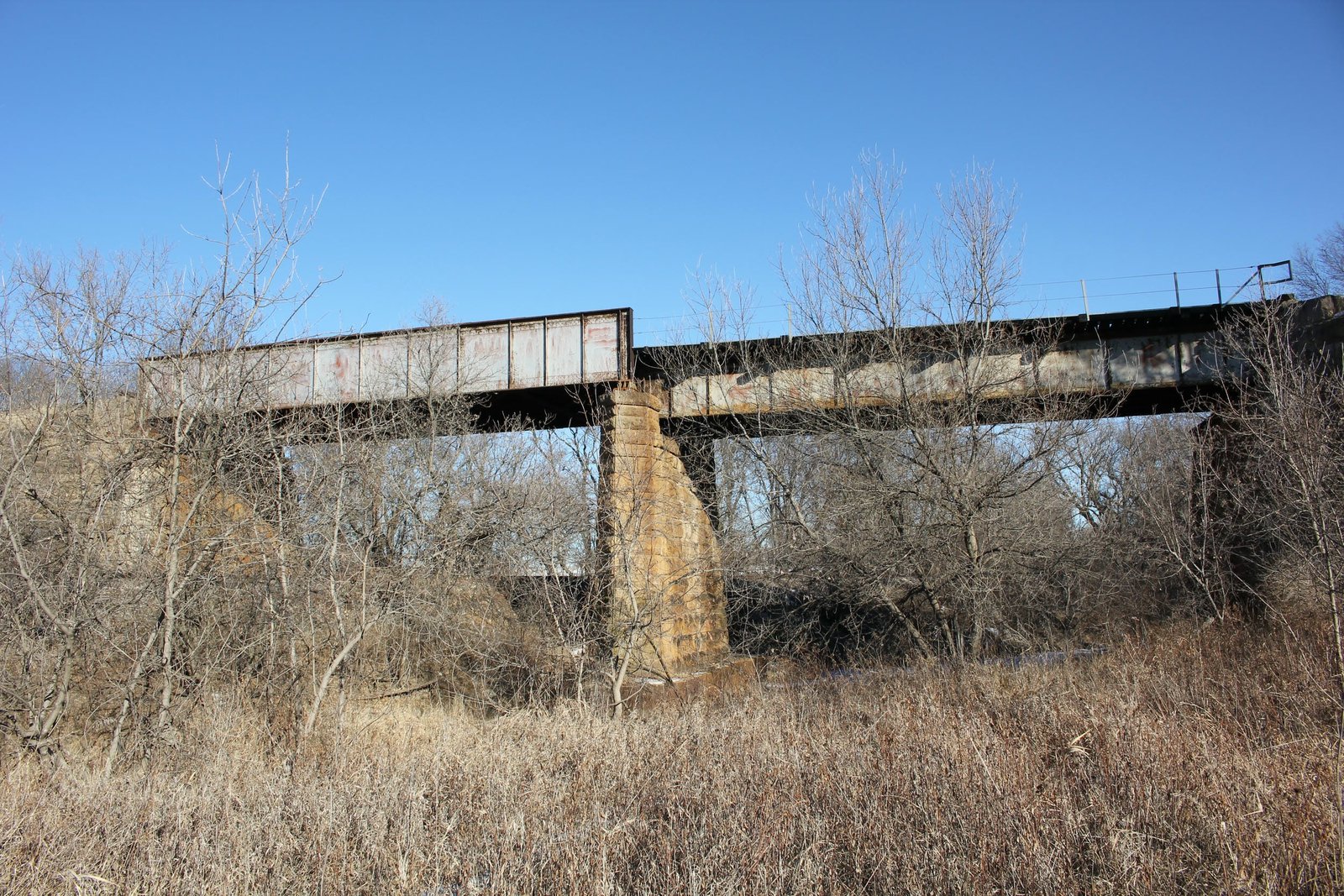
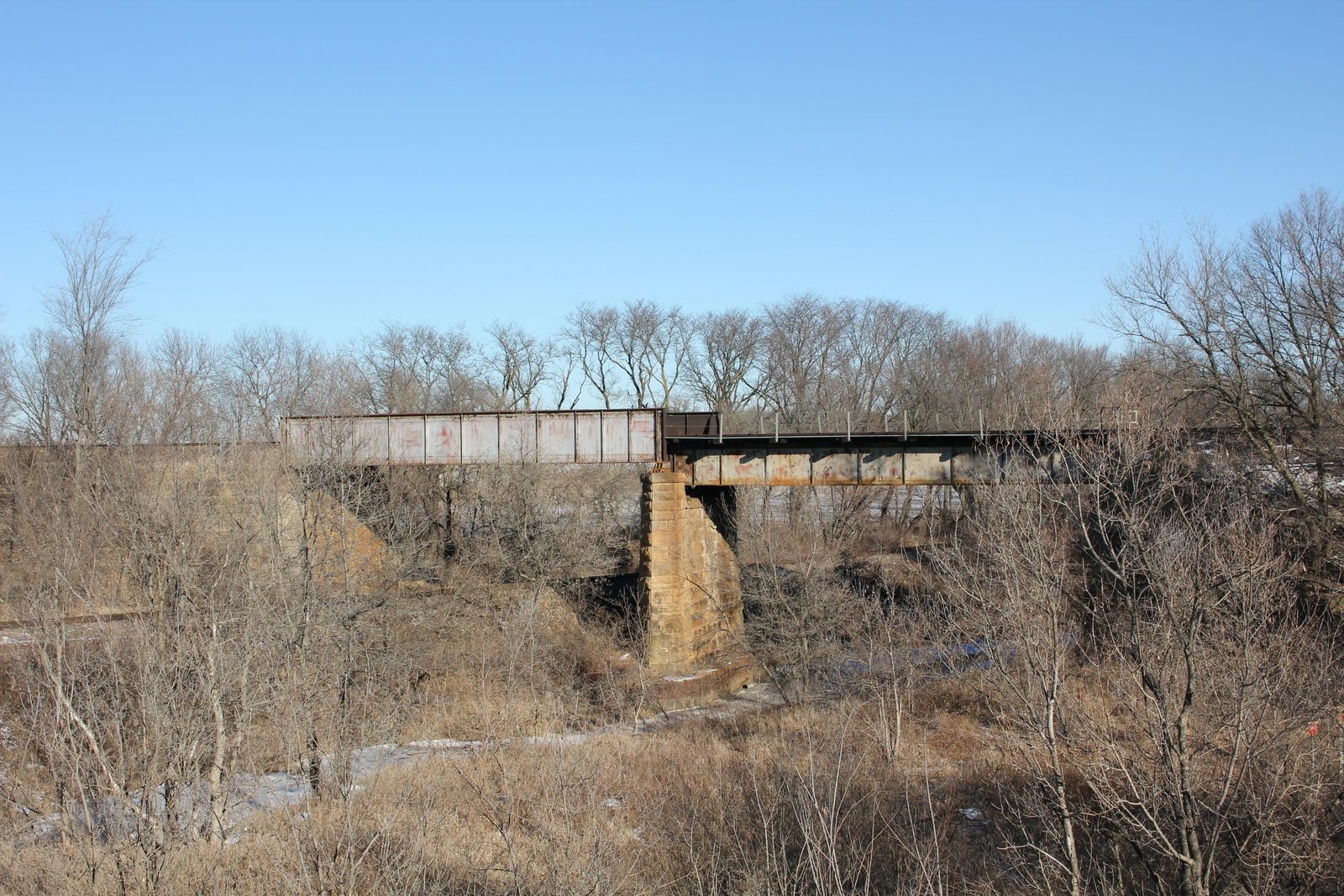
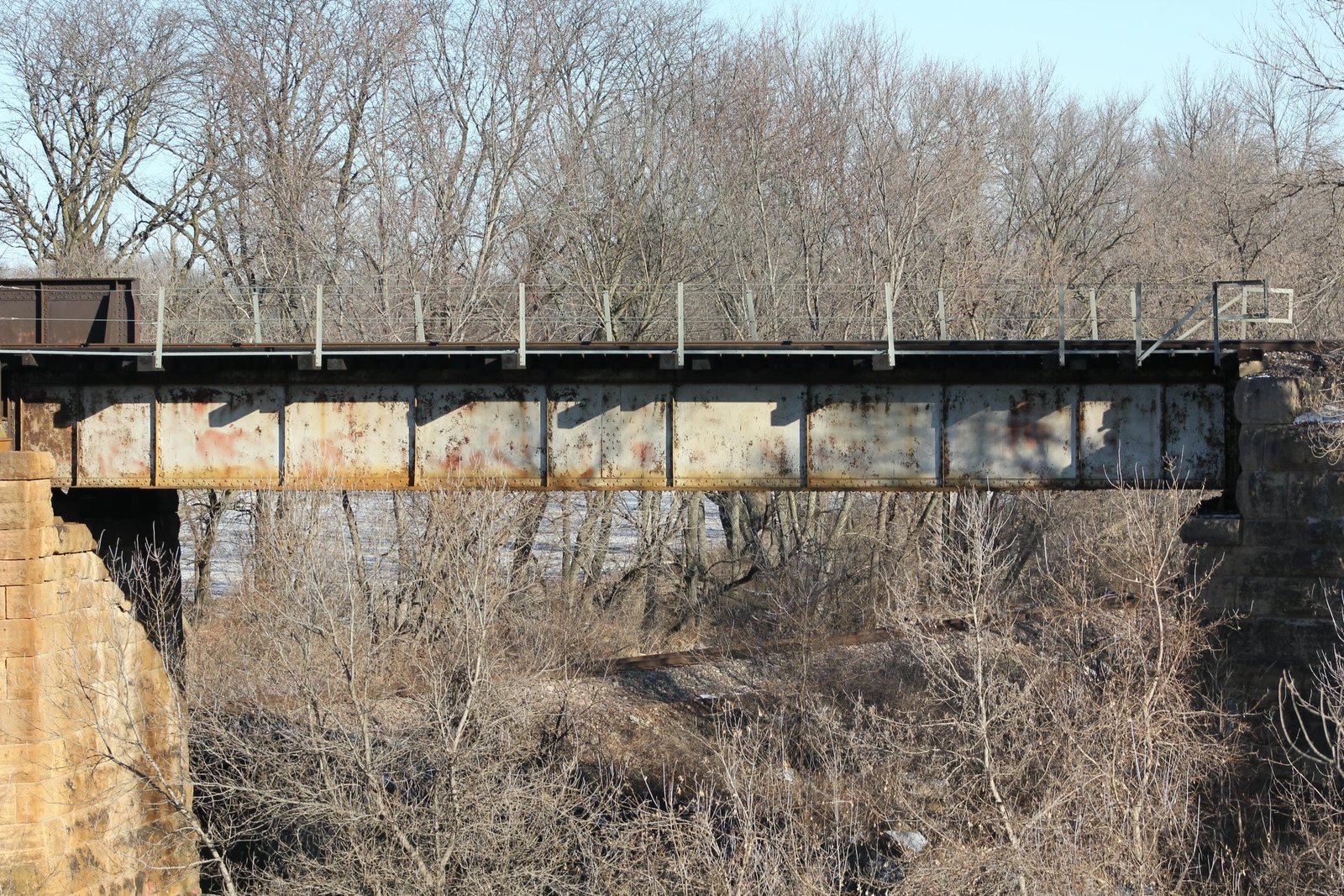
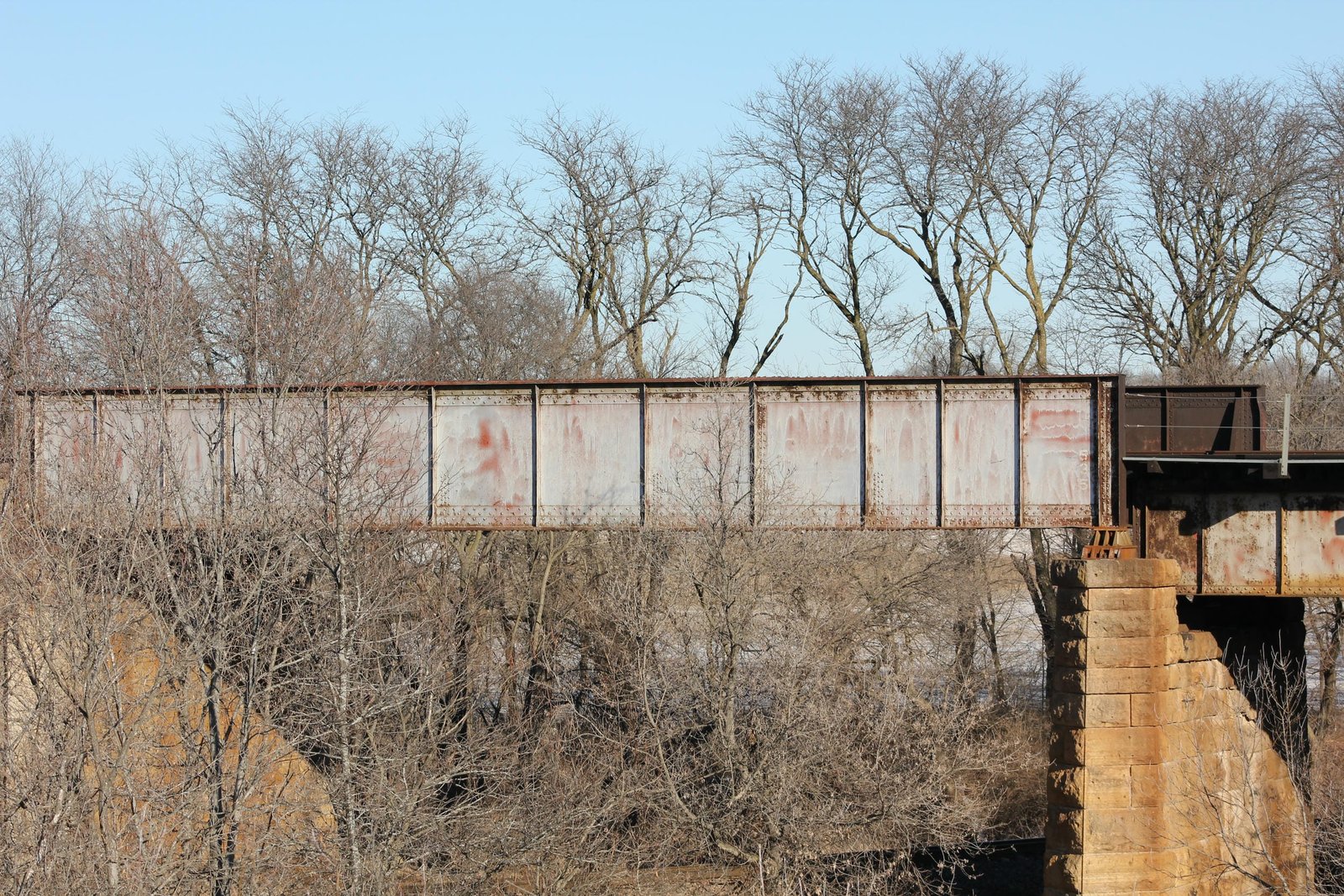
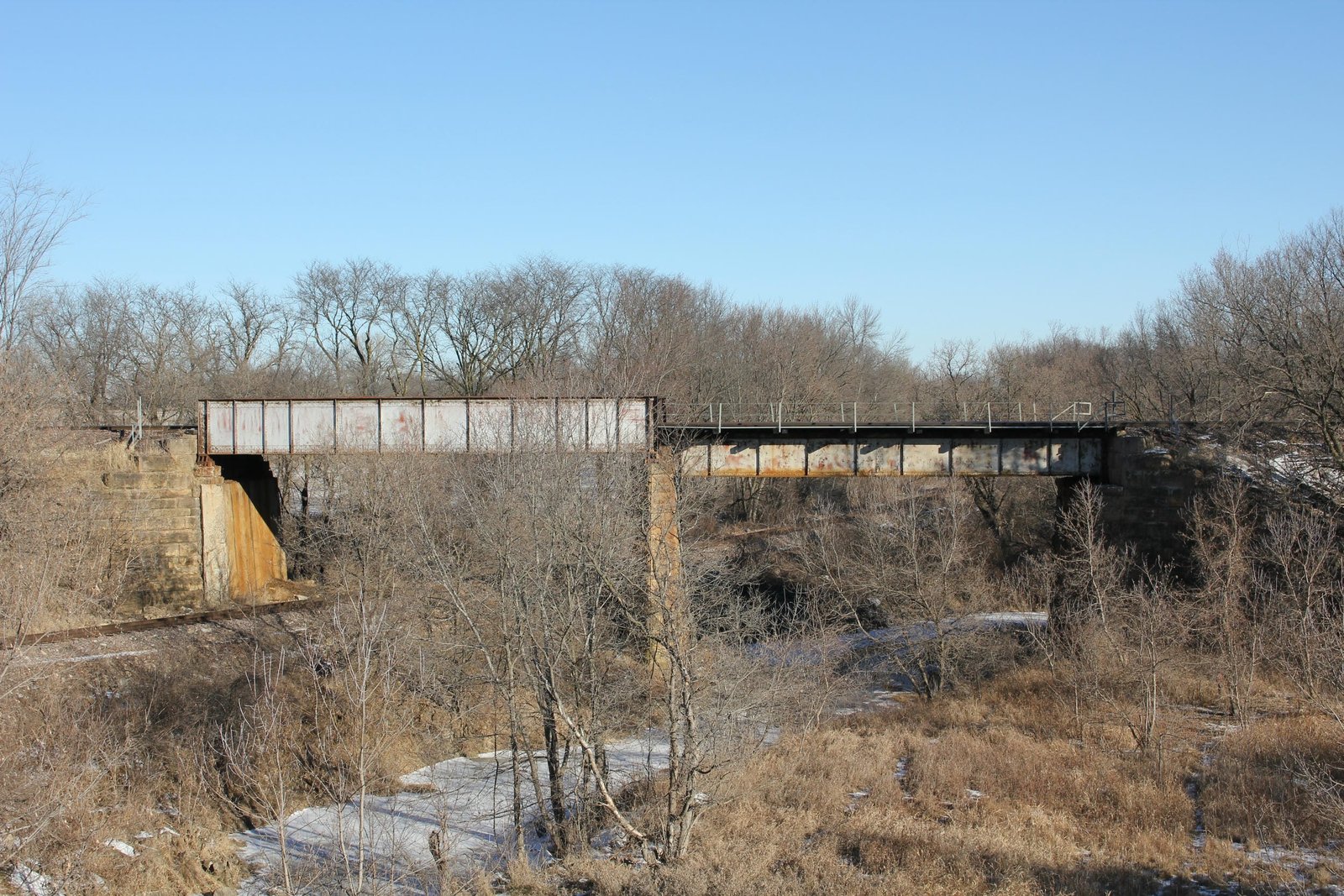
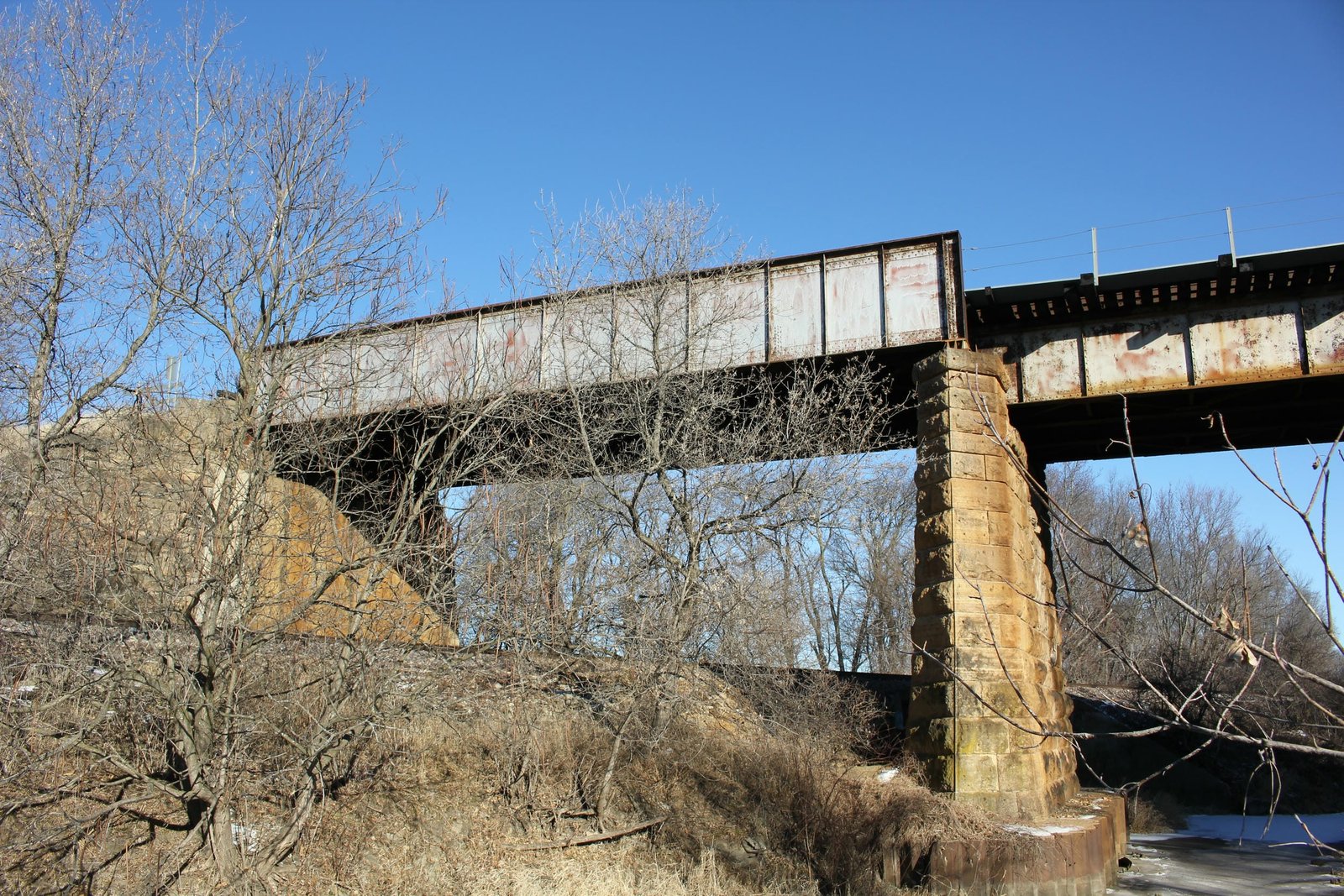
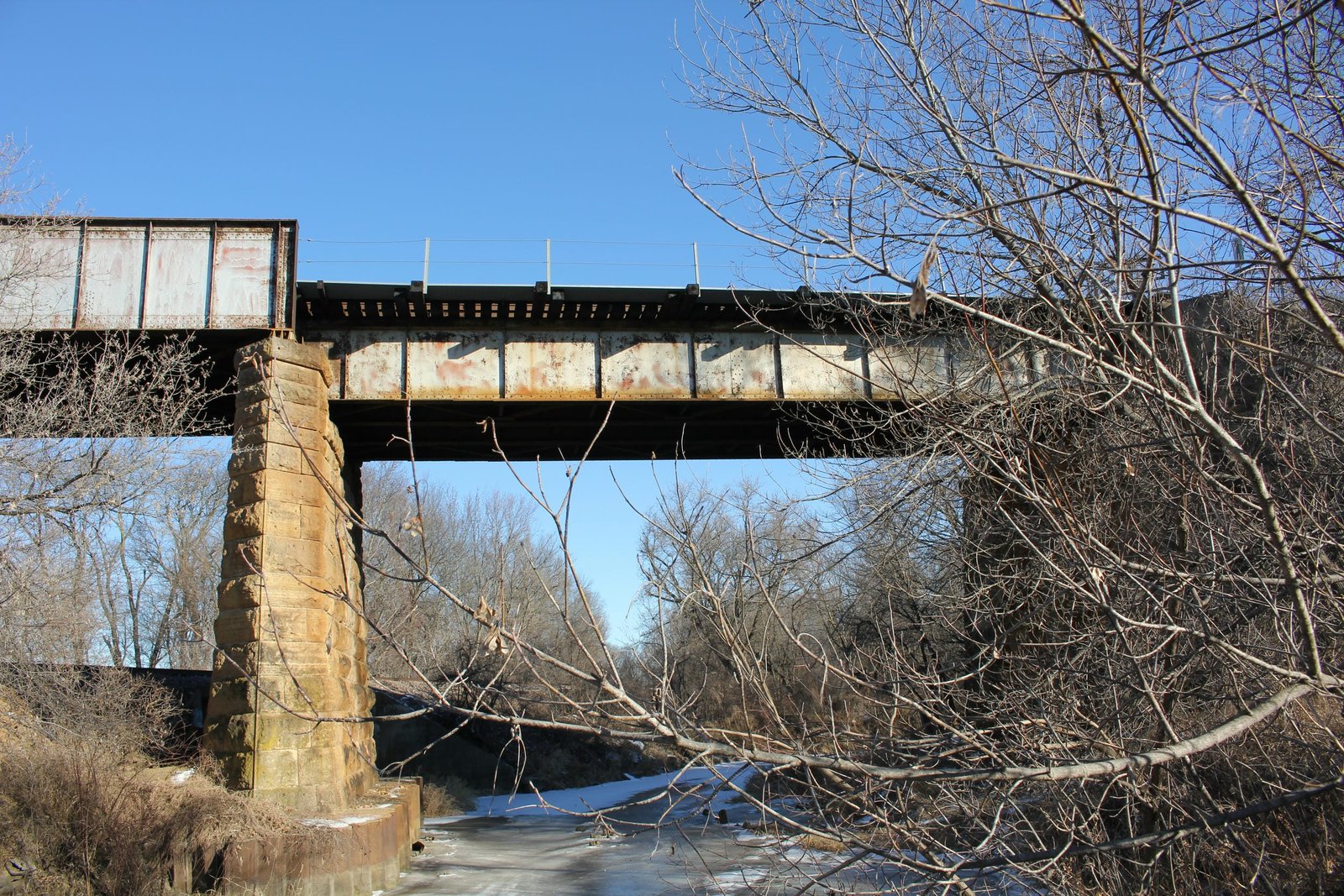
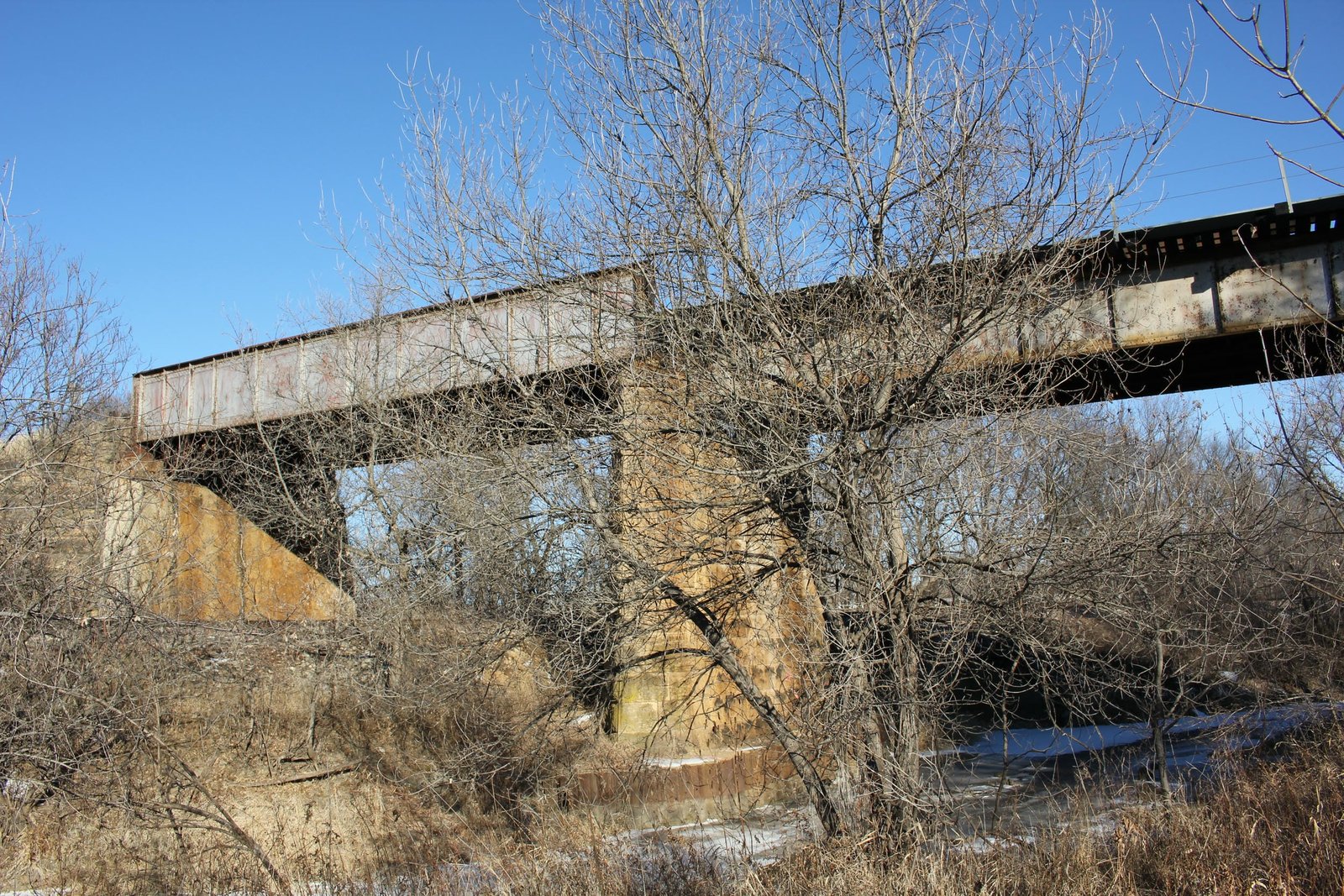
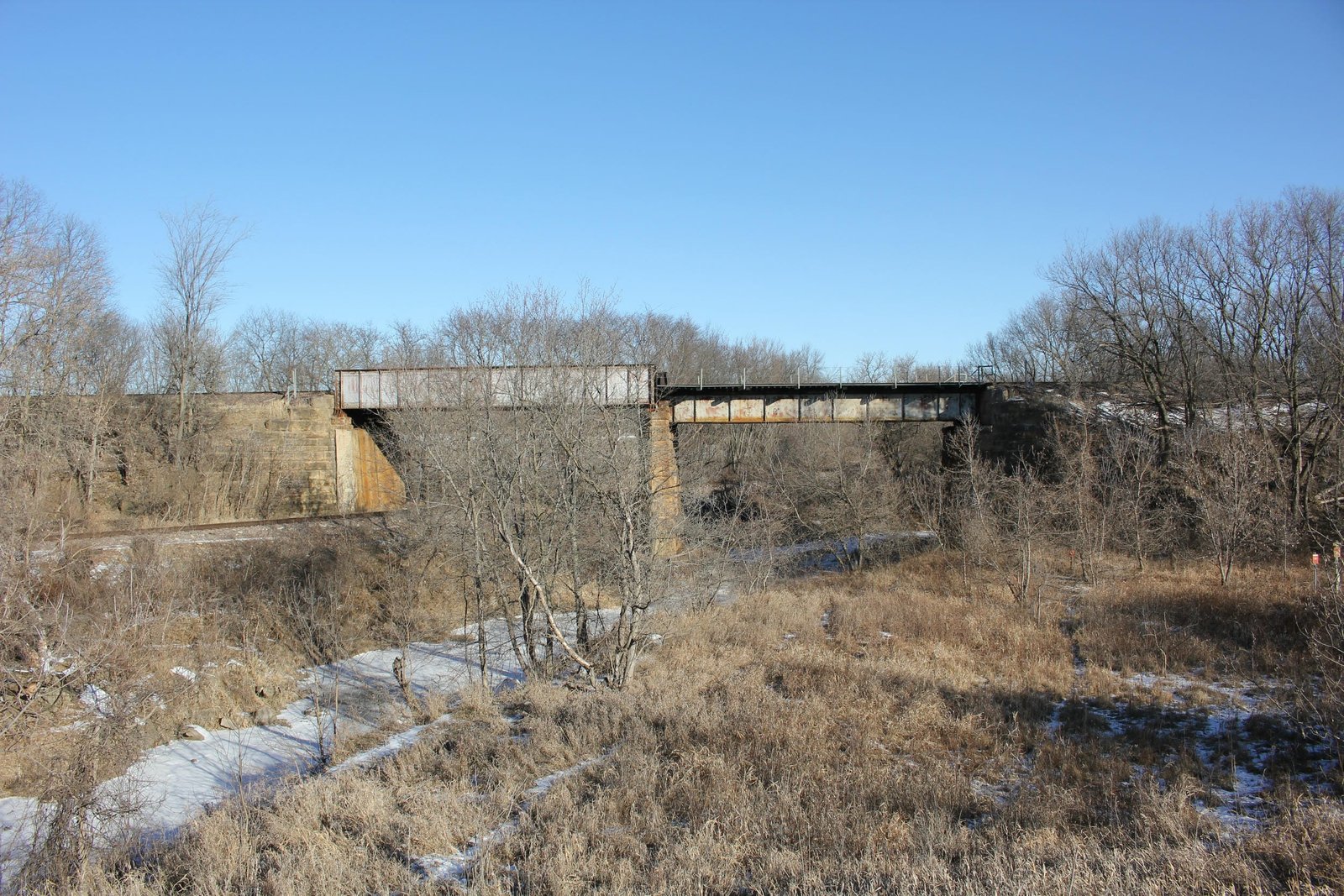
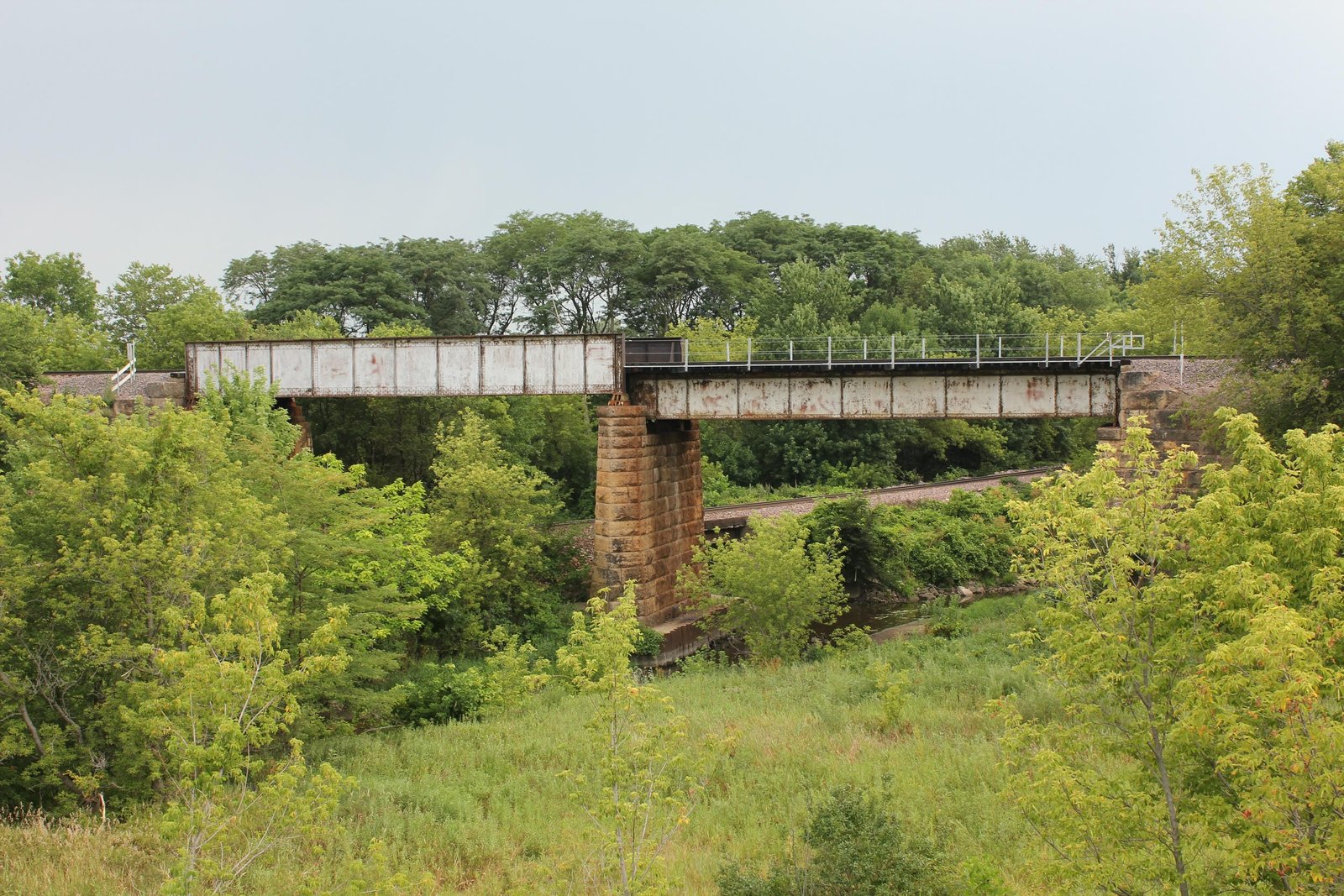
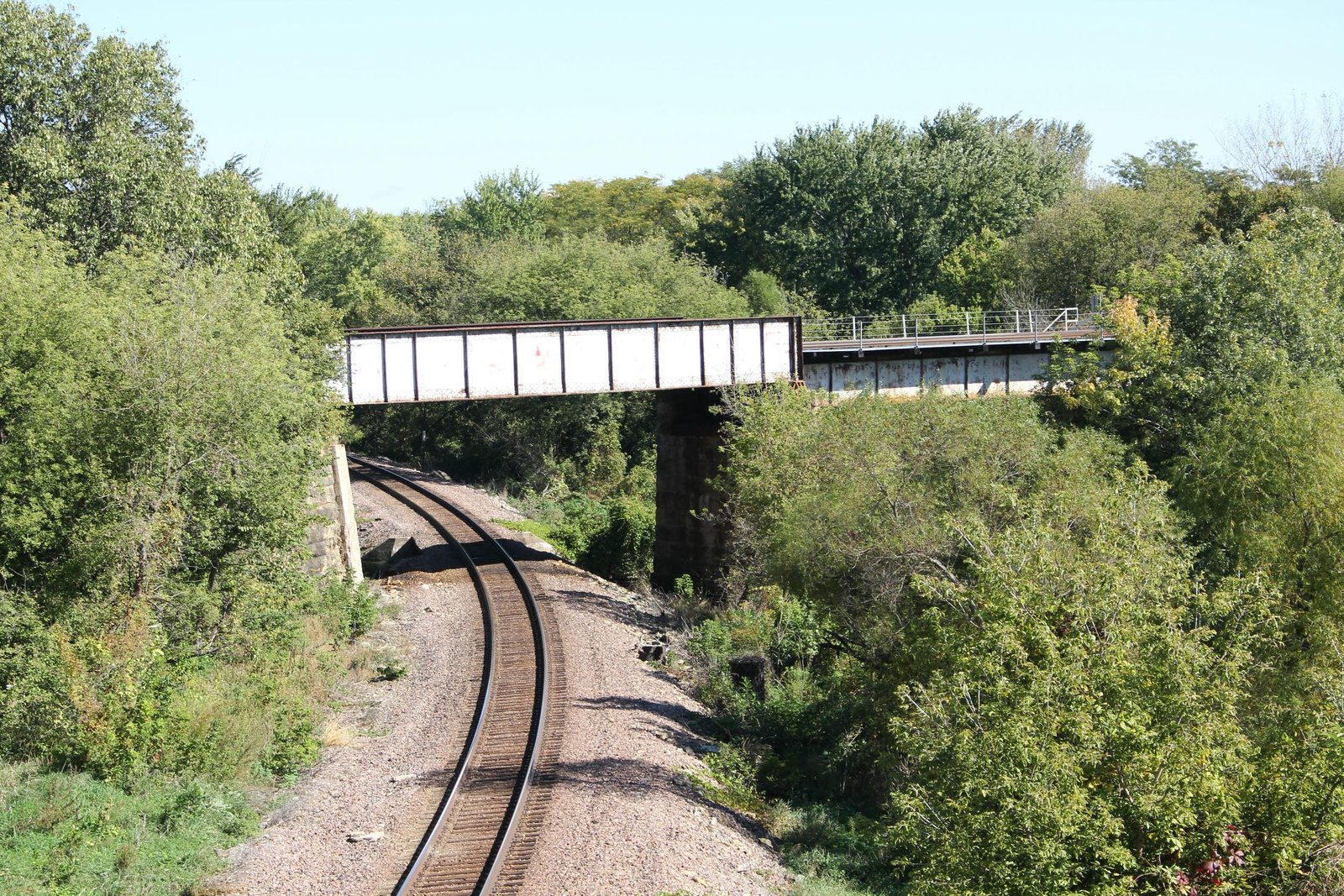
Located east of Nevada, this through and deck plate girder bridge carries a former Chicago & North Western Railway mainline over East Indian Creek and the Union Pacific Railroad Mason City Subdivision (former Chicago, Rock Island & Pacific Railway). The first bridge at this location consisted of a timber pile trestle, constructed when the line was first built. As this line became a critical mainline for the C&NW, timber bridges were gradually replaced with stone, iron and steel structures. In 1889, the timber bridge was replaced by two iron girder spans, set onto new stone substructures. It is believed that these spans were deck plate girder spans. In 1900, the C&NW double tracked the line at this location, extending the stone substructures south and installing two double track deck plate girder spans. The previous spans were likely reused at an unknown location. In 1901, the Des Moines, Iowa Falls & Northern Railway (predecessor of the Rock Island) began construction of a line between Des Moines, Iowa and Iowa Falls, Iowa and needed to cross the C&NW near Nevada. It was decided that the new railroad would cross under the west end of this bridge, and the deck girder spans were replaced with a through girder span in 1902. It is believed that the 1900-era west span was reused elsewhere, possibly near Beaver, Iowa; where two bridges use identical girders to the east span.
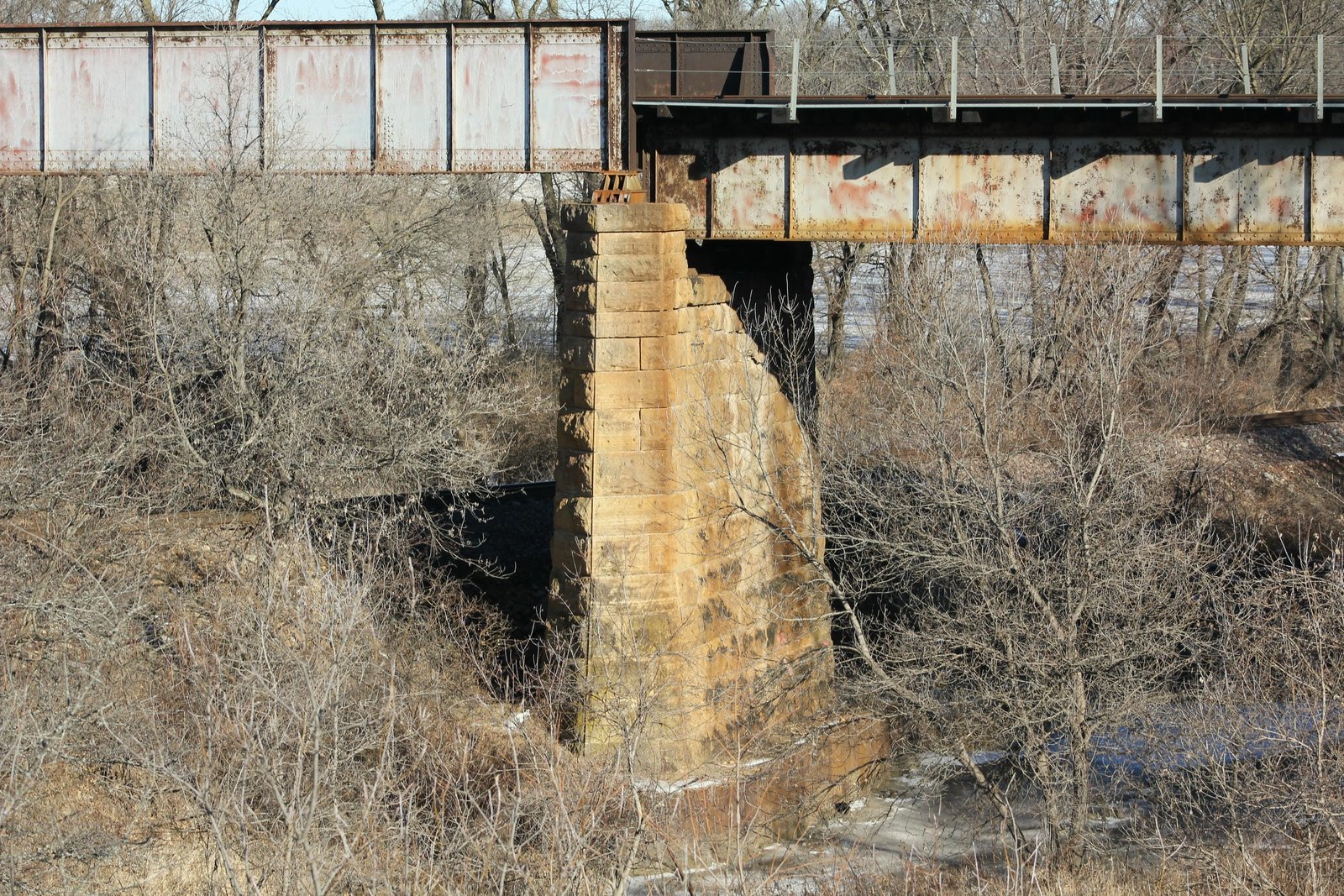
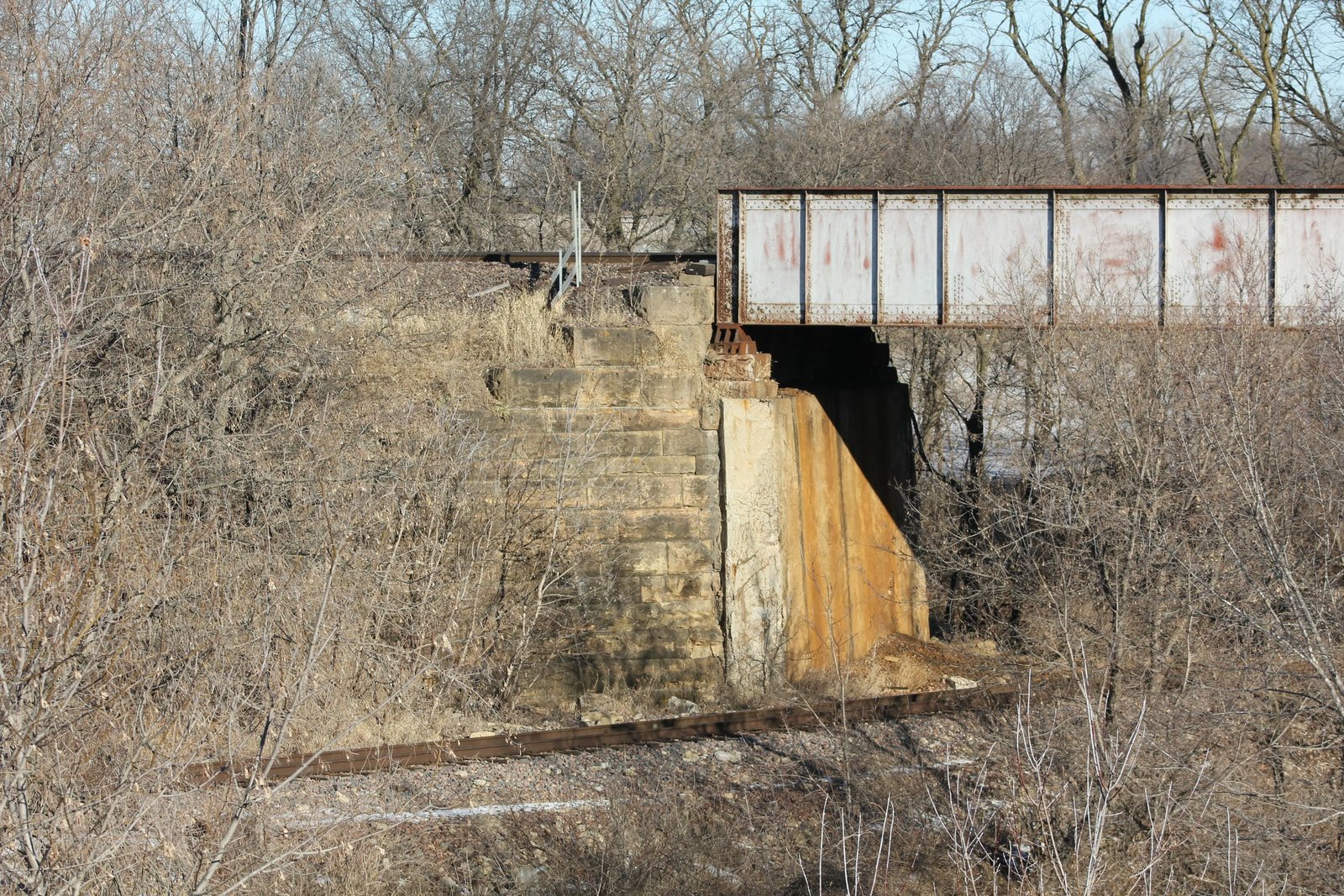
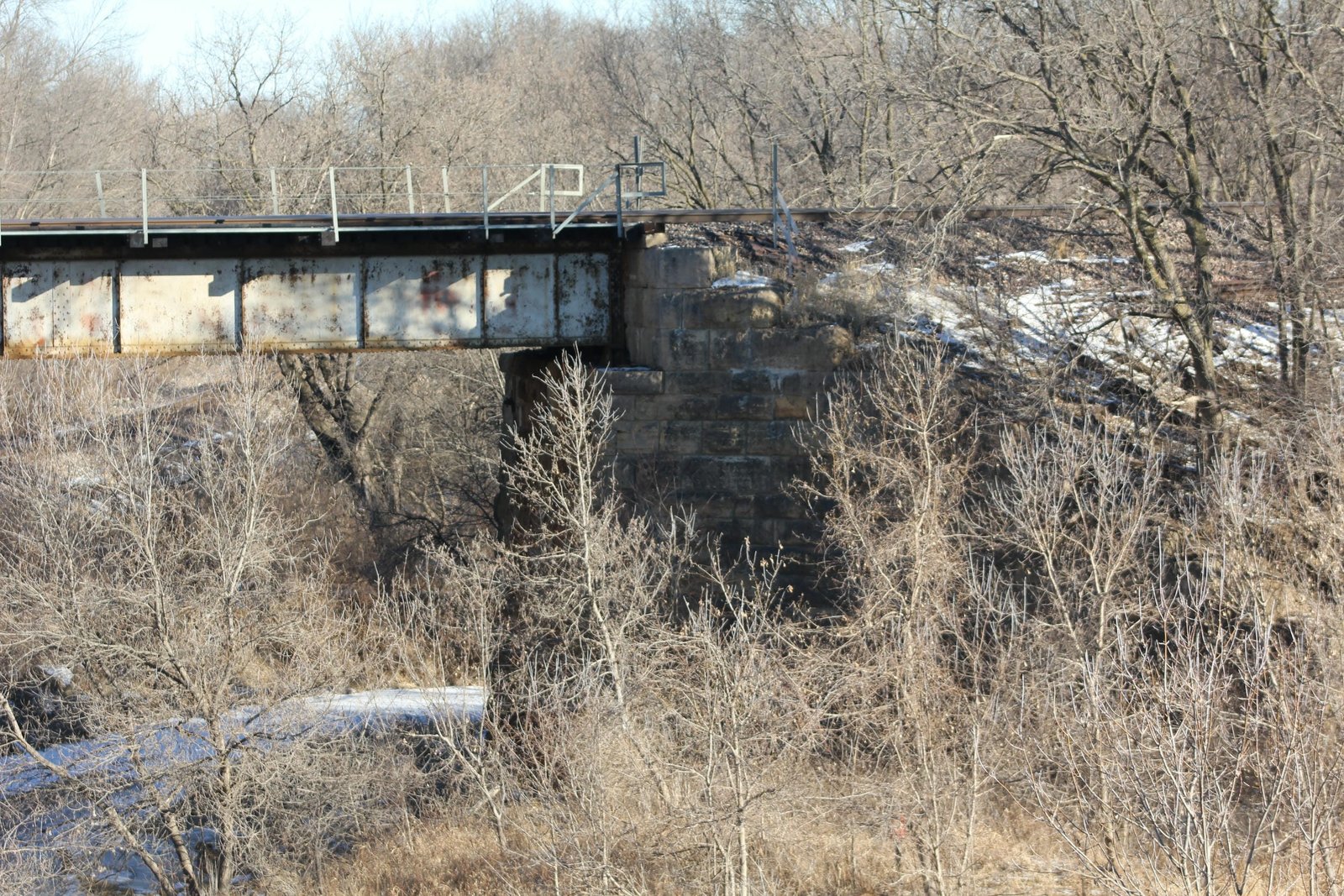
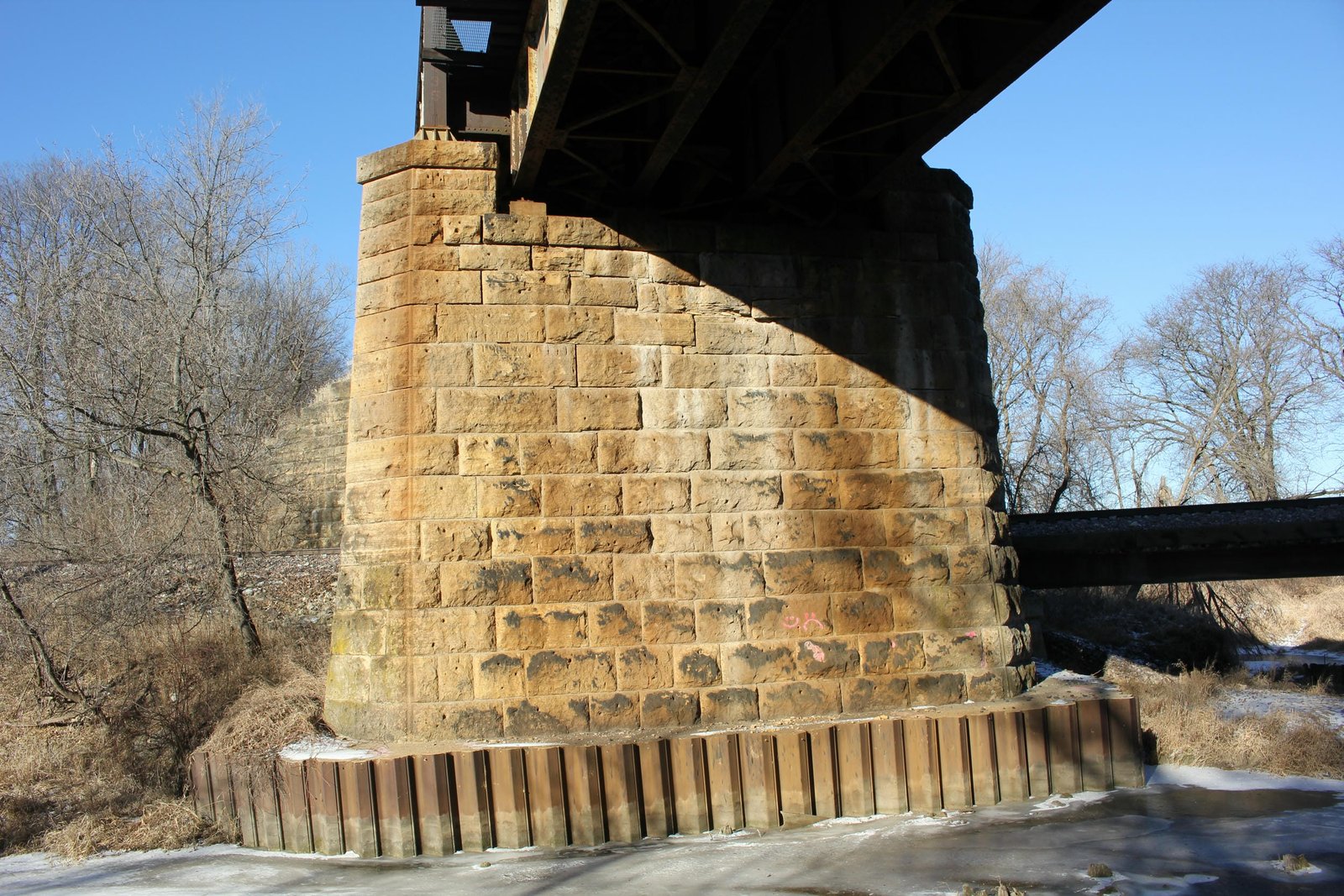
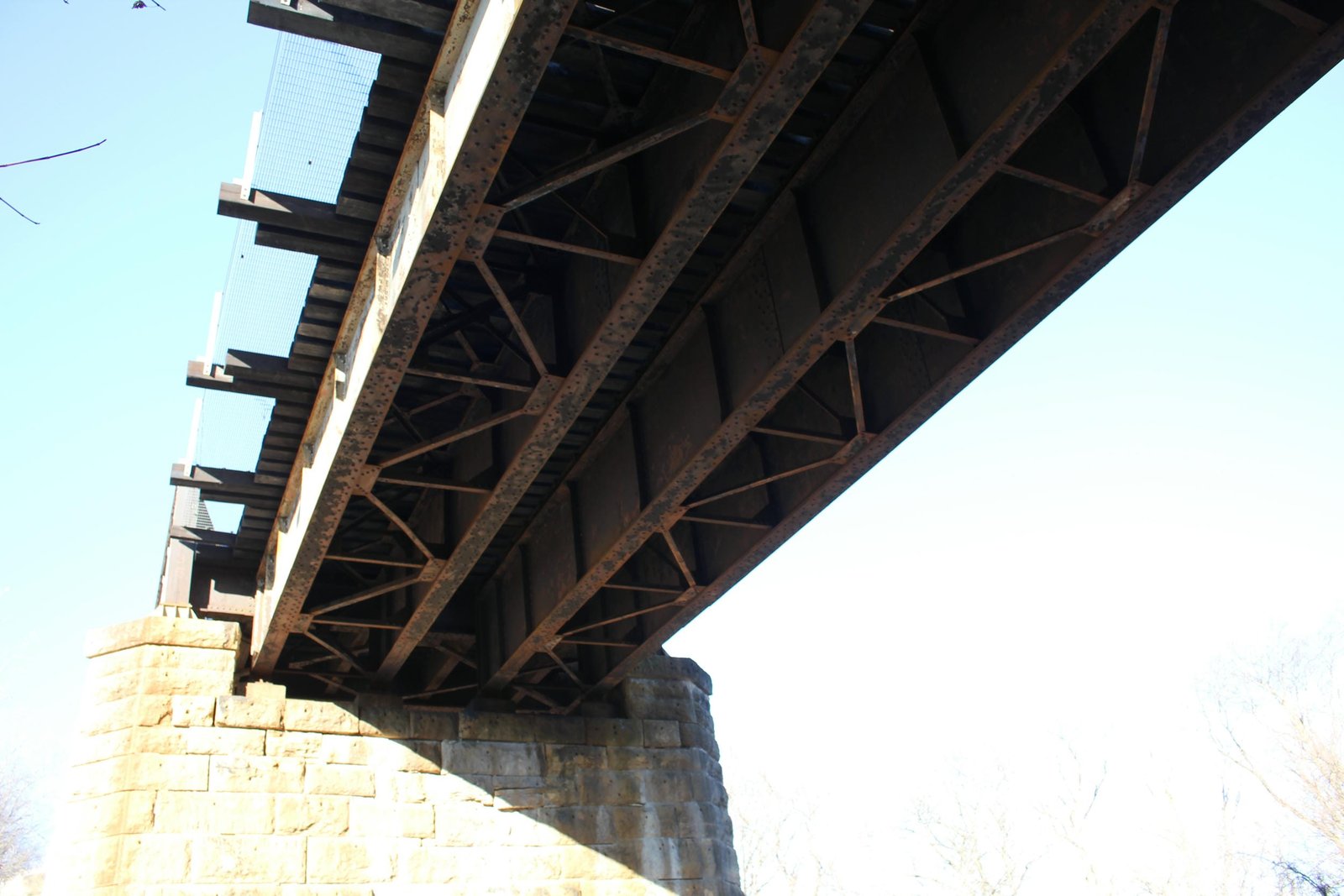
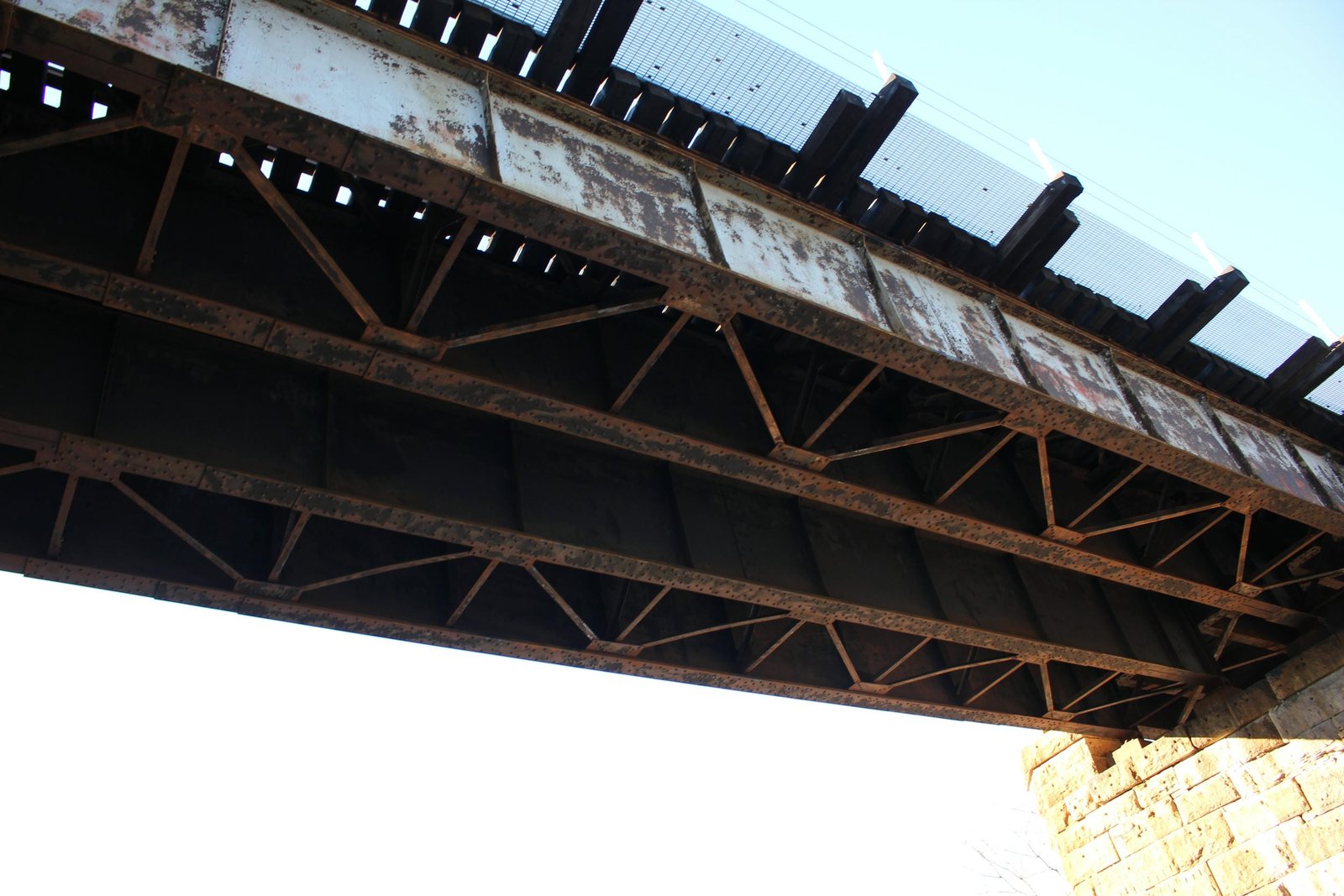
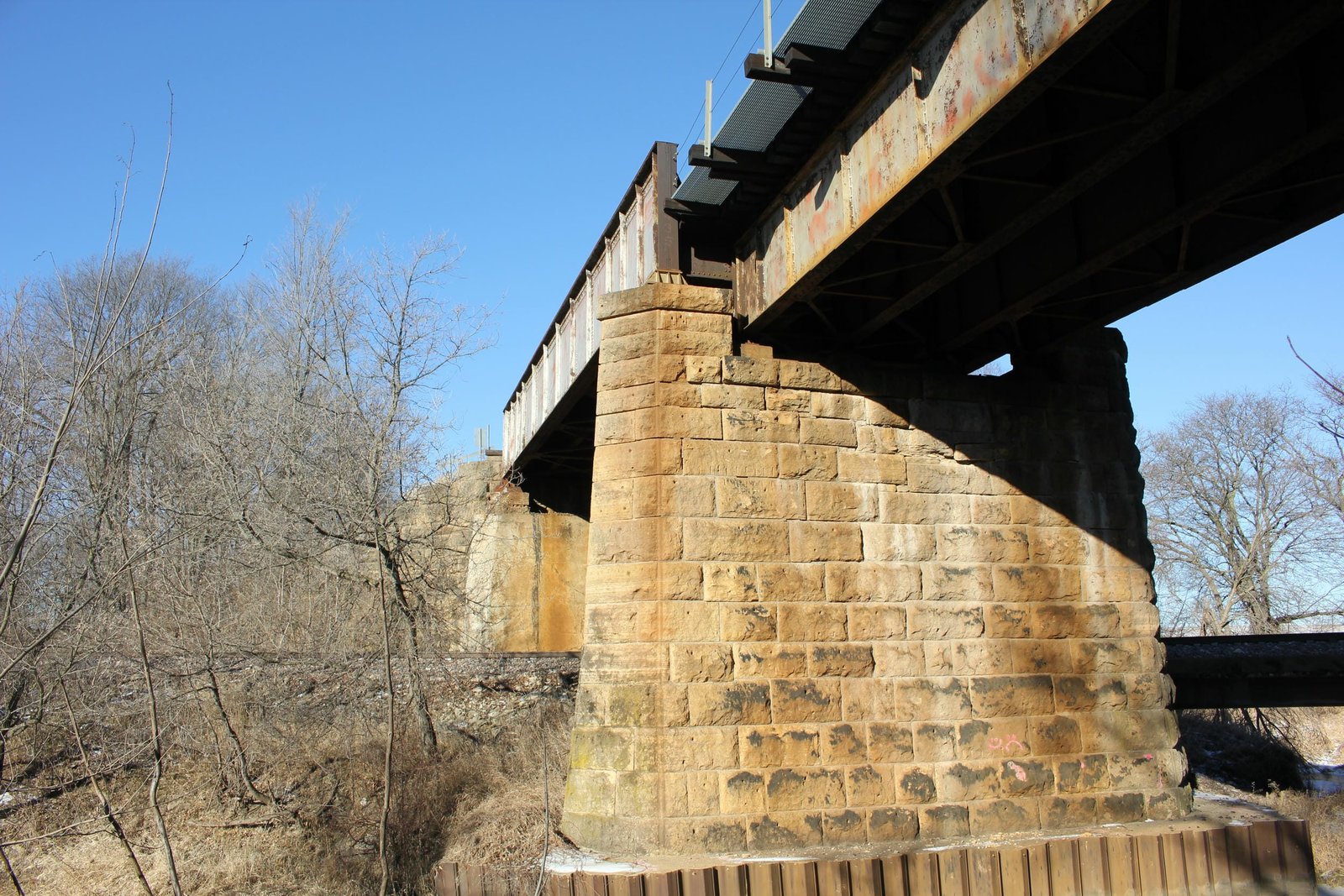
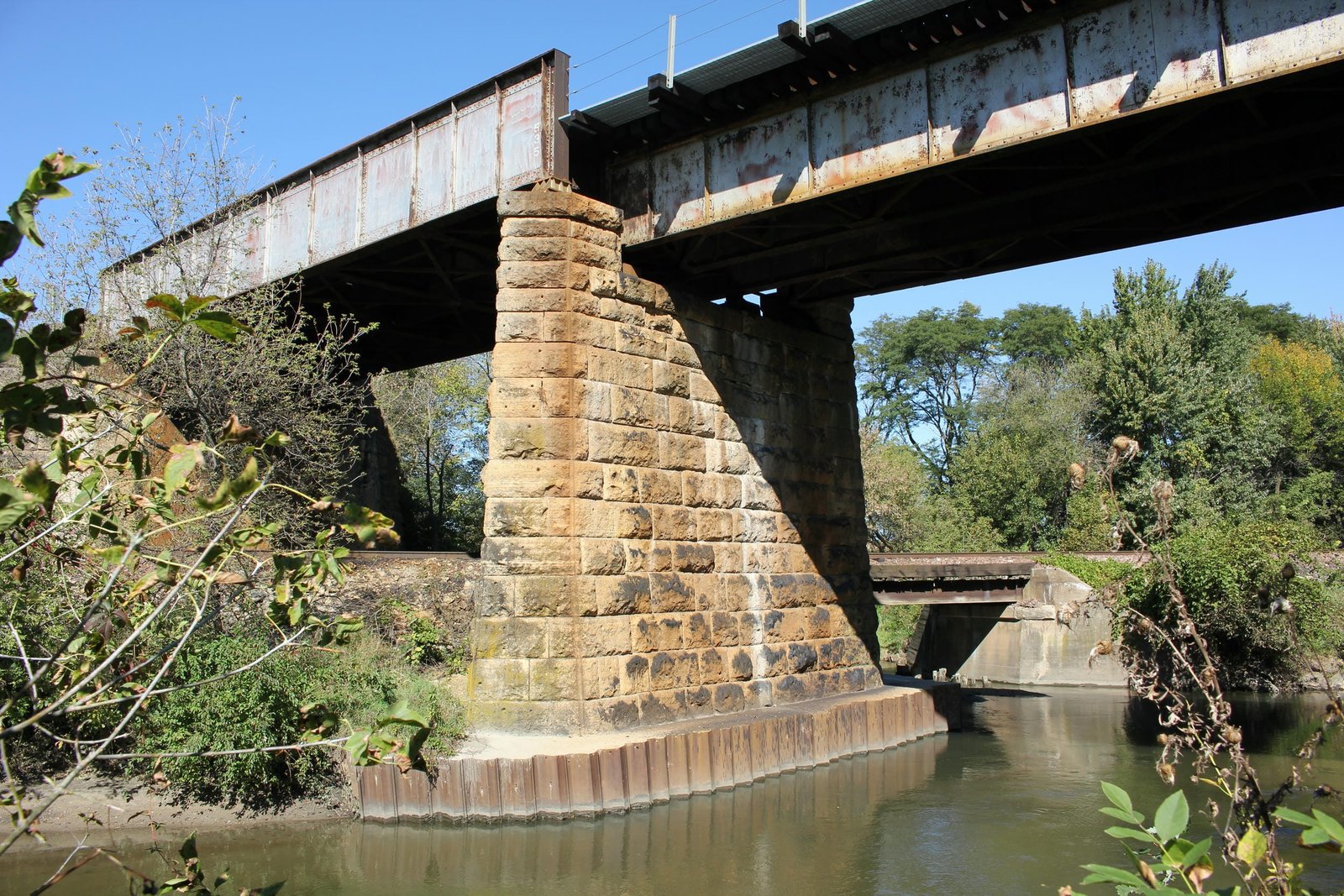
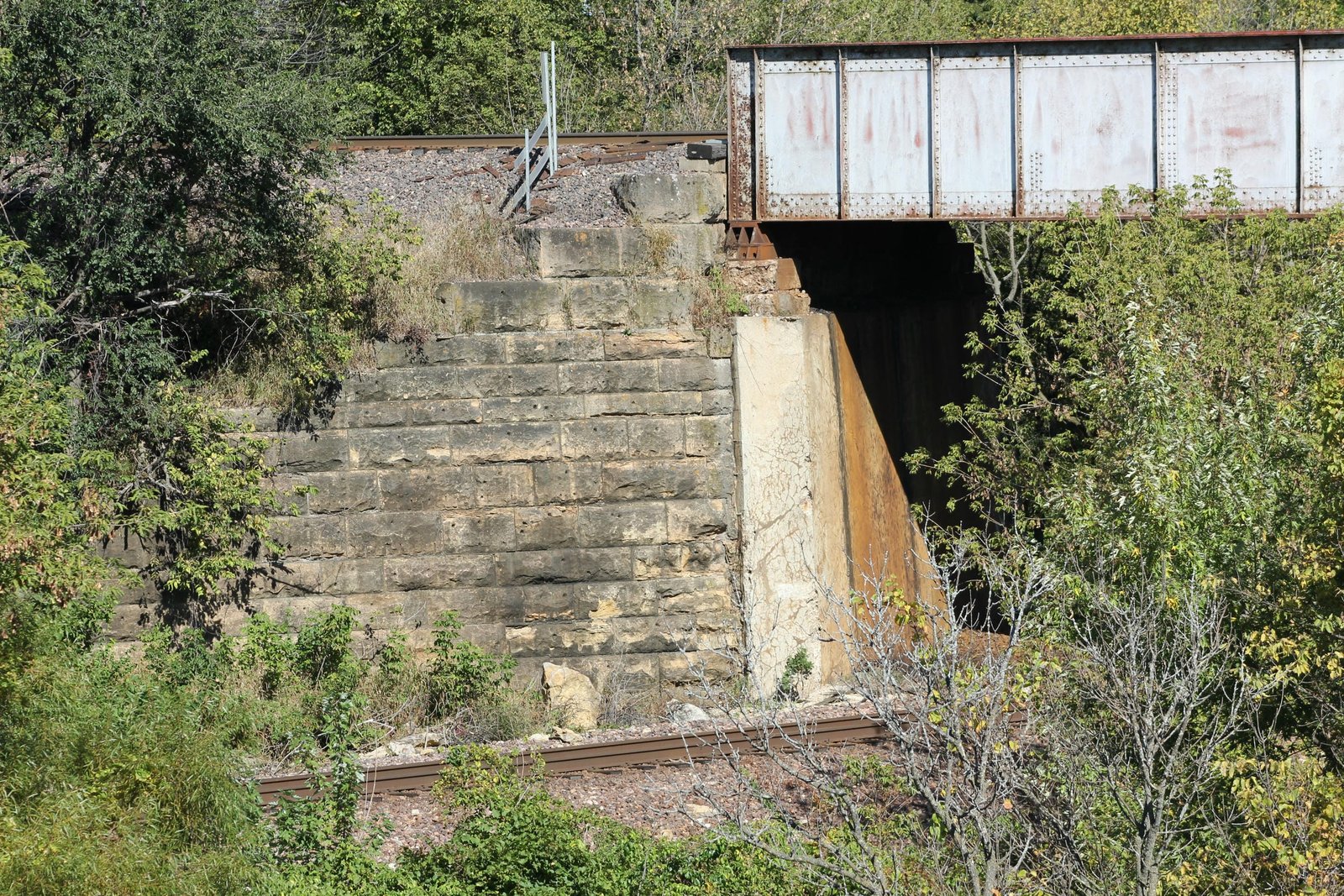
Currently, the bridge consists of a 68-foot deck plate girder east span and a 68-foot through plate girder west span, set onto stone substructures. The deck girder uses a standard design, with two heavy girders per track and an open deck. The through girder also uses a standard design, with two heavy girders, square girder ends and a standard floor. Both abutments use a standard design with stepped wing walls, and the pier consists of a diamond shaped structure with a notch for the deck girder span. Stone for the substructures consists of a yellow limestone, likely quarried at Mankato, Minnesota. An unknown contractor fabricated the deck girder span, while the American Bridge Company fabricated the through girder span. An unknown contractor constructed the north portion of the substructures, while it is believed that the Widell Company constructed the south portion of the substructures. The Widell Company had a large contract for stonework required for double tracking the Iowa Division between 1898 and 1902. While it is confirmed this firm worked on other sections of the line, it is likely that they also constructed bridges and culverts along this section. Through and deck girder spans were popular for railroad use, as they were durable and easy to construct. Since the initial construction, the only major alteration to the bridge came in 1964, when the abutments were repaired with concrete. Additional repairs were made with sheet piling at the base of the pier in the 1990s or early 2000s. Today, the bridge remains in regular use. Overall, the bridge appears to be in fair to good condition, with no significant deterioration noted. The author has ranked the bridge as being locally significant, due to the common design.
Citations
| Build dates | Chicago & North Western Railway Valuation Notes at the Chicago & North Western Historical Society Archives |
| Builder (1900 substructure) | The Improvement Bulletin; November 18, 1899 |
| Builder (west span superstructure) | Chicago & North Western Railway Drawing Collection at the Chicago & North Western Historical Society Archives |
| Railroad History Citation | ICC Valuation Information, Compiled by Richard S. Steele |