
Click the photo to view the full-size version
| Name | CN Lancaster Brook Bridge Chicago & North Western Railway Bridge #6 |
| Built By | Chicago & North Western Railway |
| Currently Owned By | Canadian National Railway |
| Superstructure Contractor | Unknown |
| Substructure Contractor | Unknown |
| Length | 50 Feet Total |
| Width | 1 Track |
| Height Above Ground | 5 Feet (Estimated) |
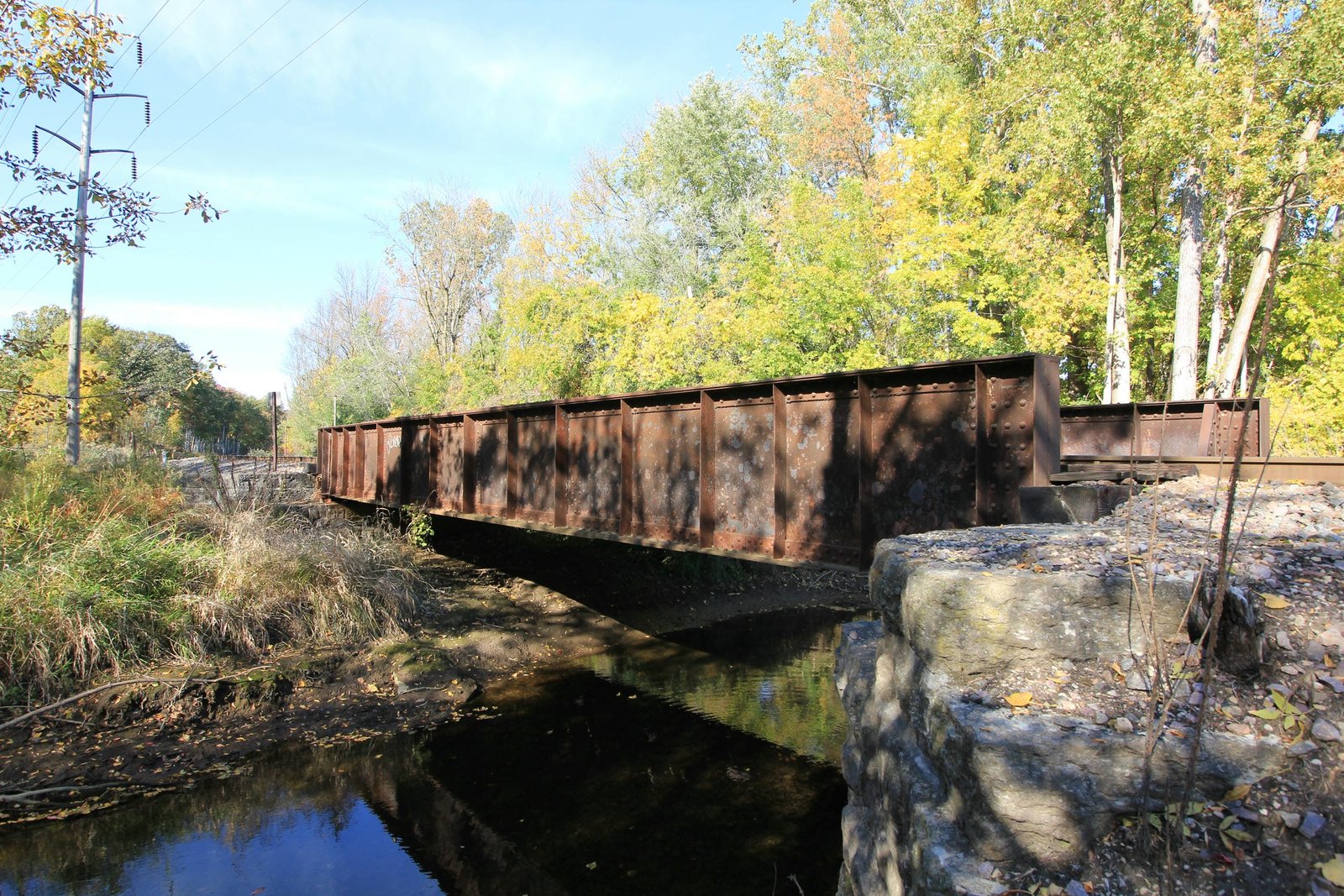
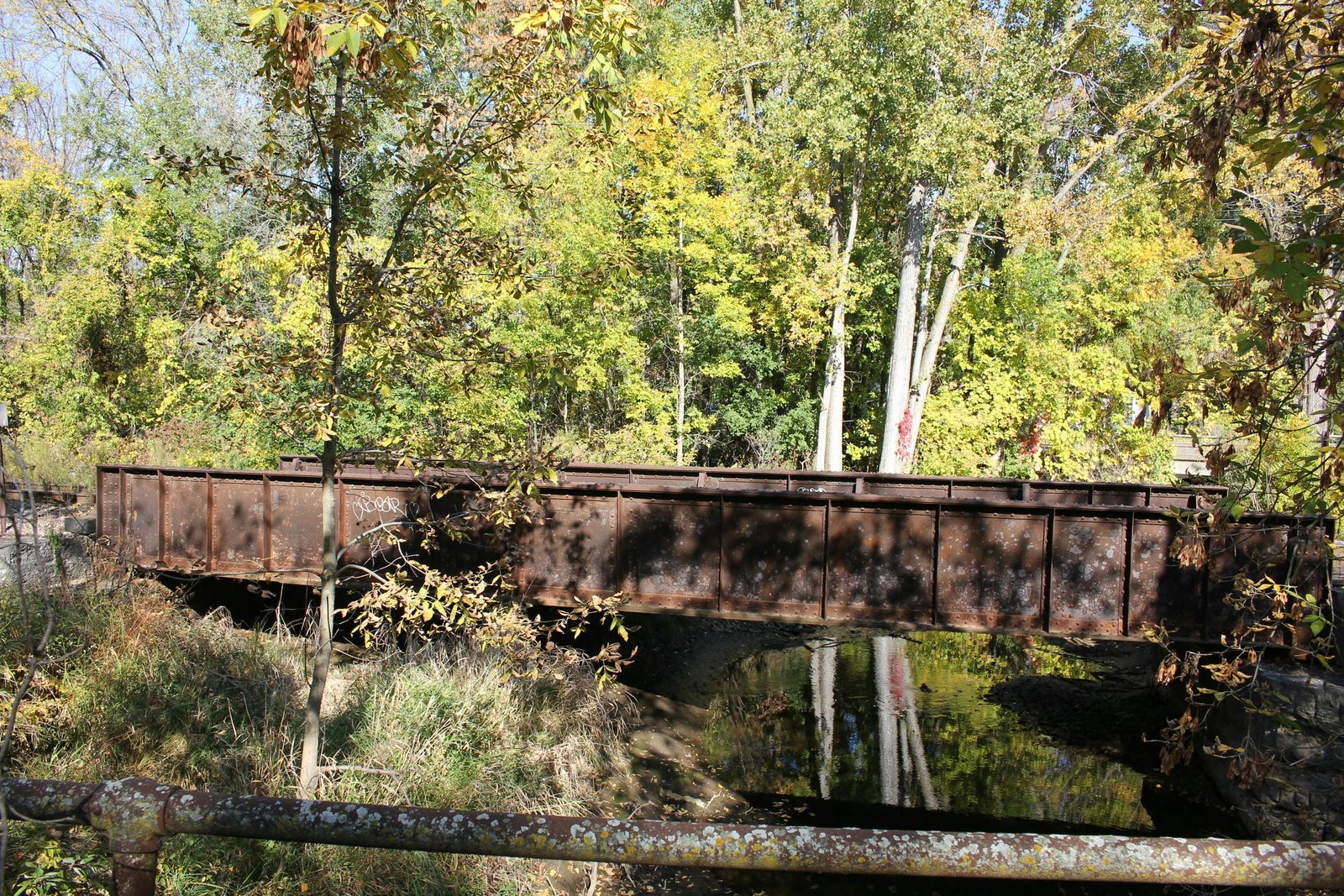
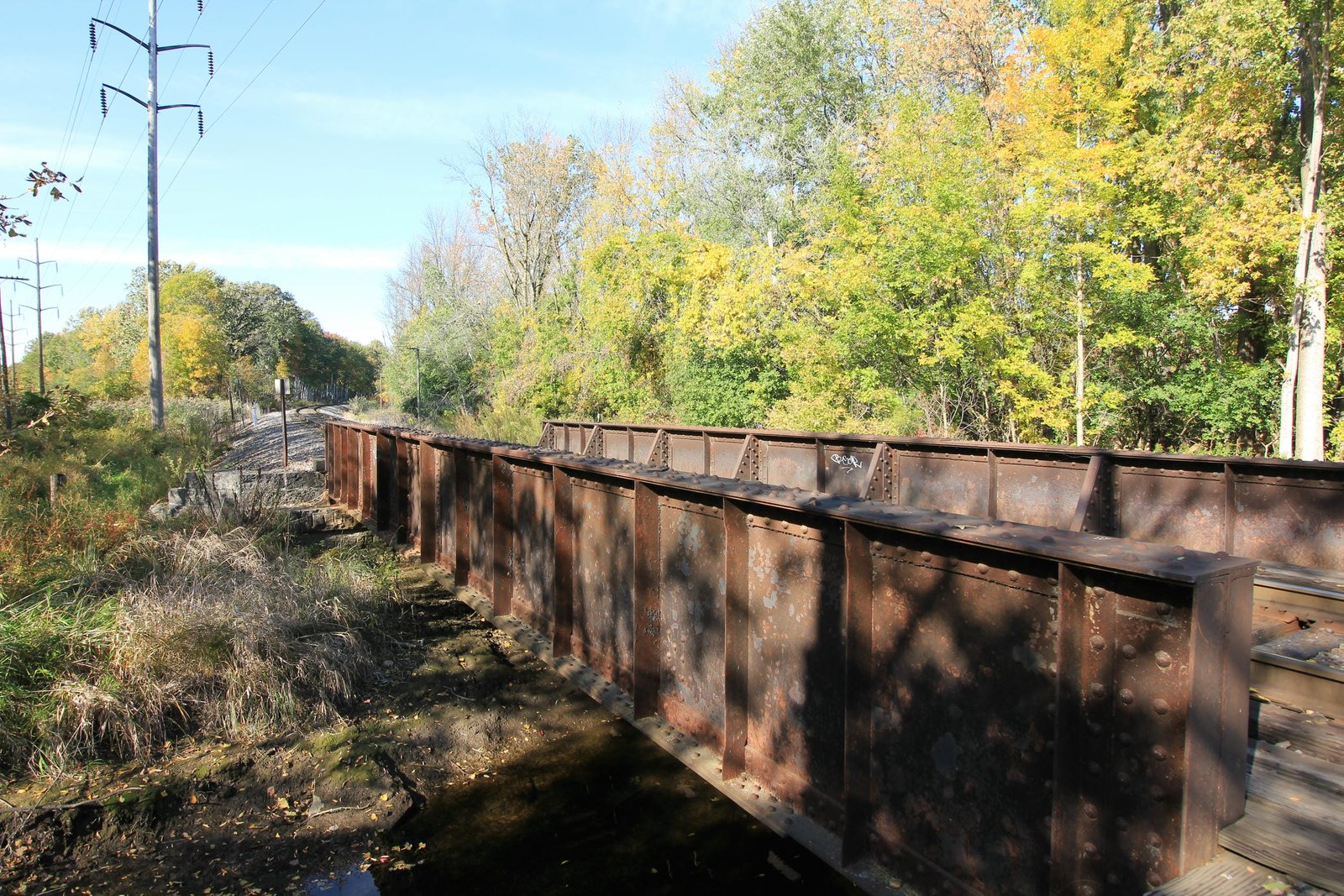
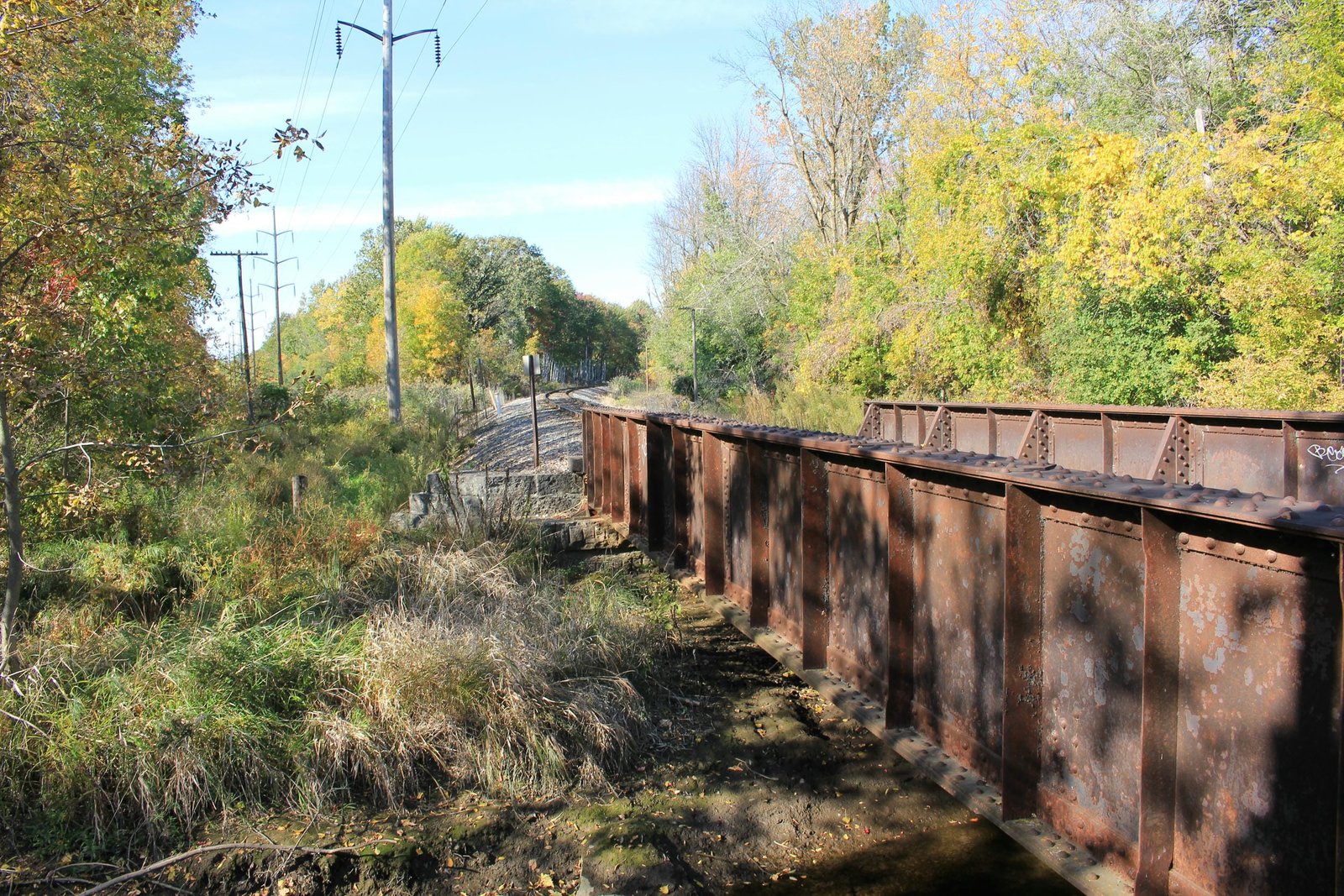
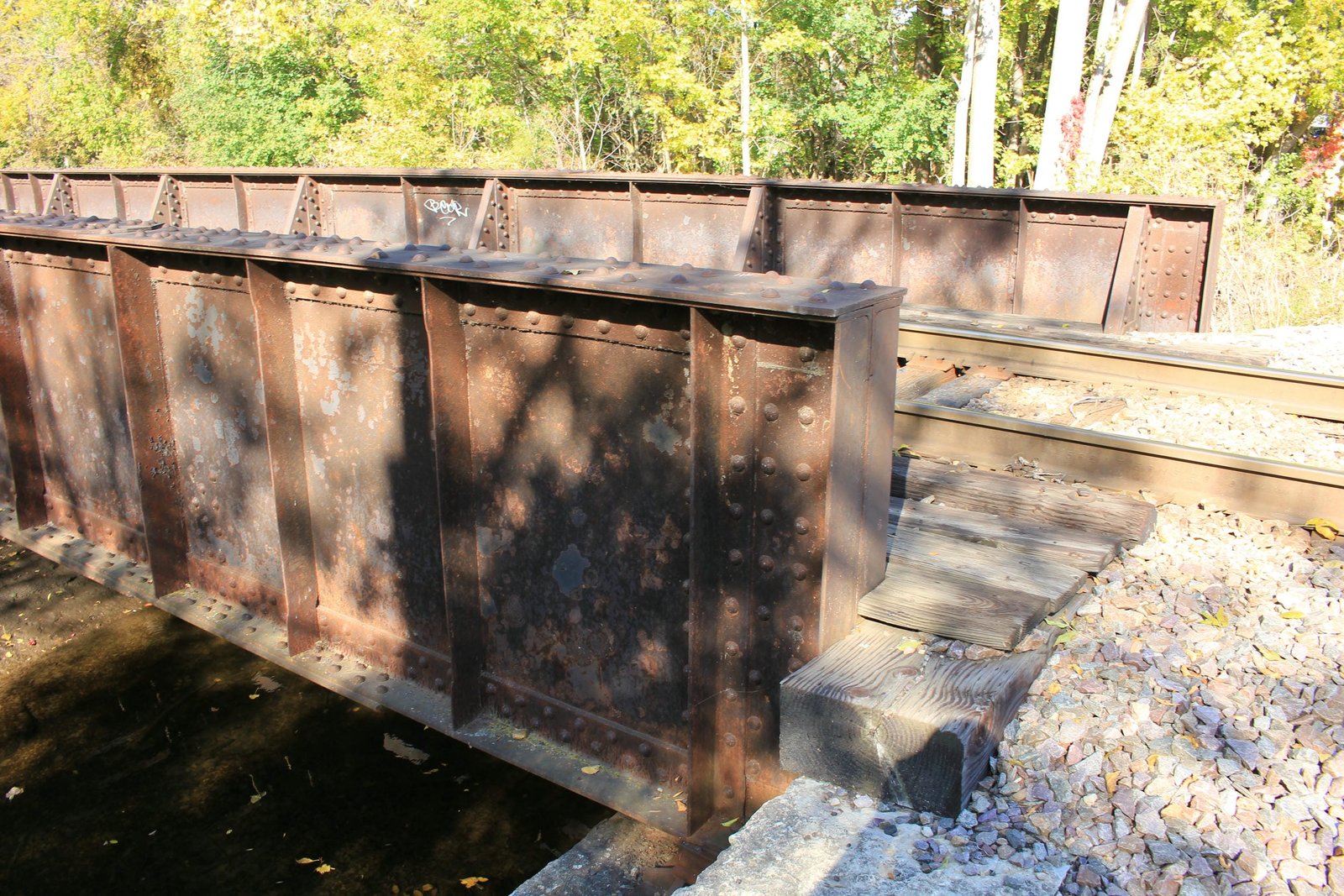
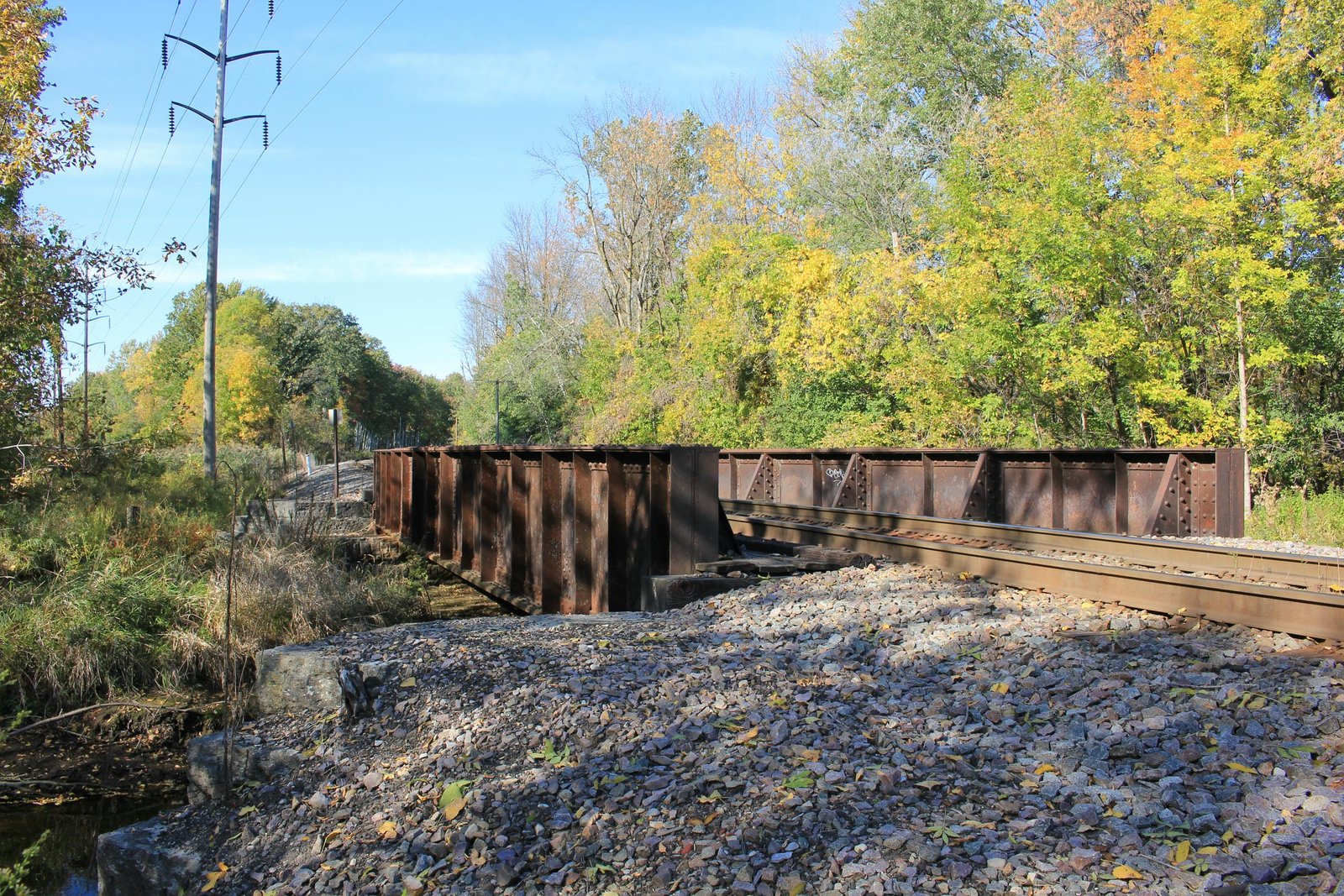
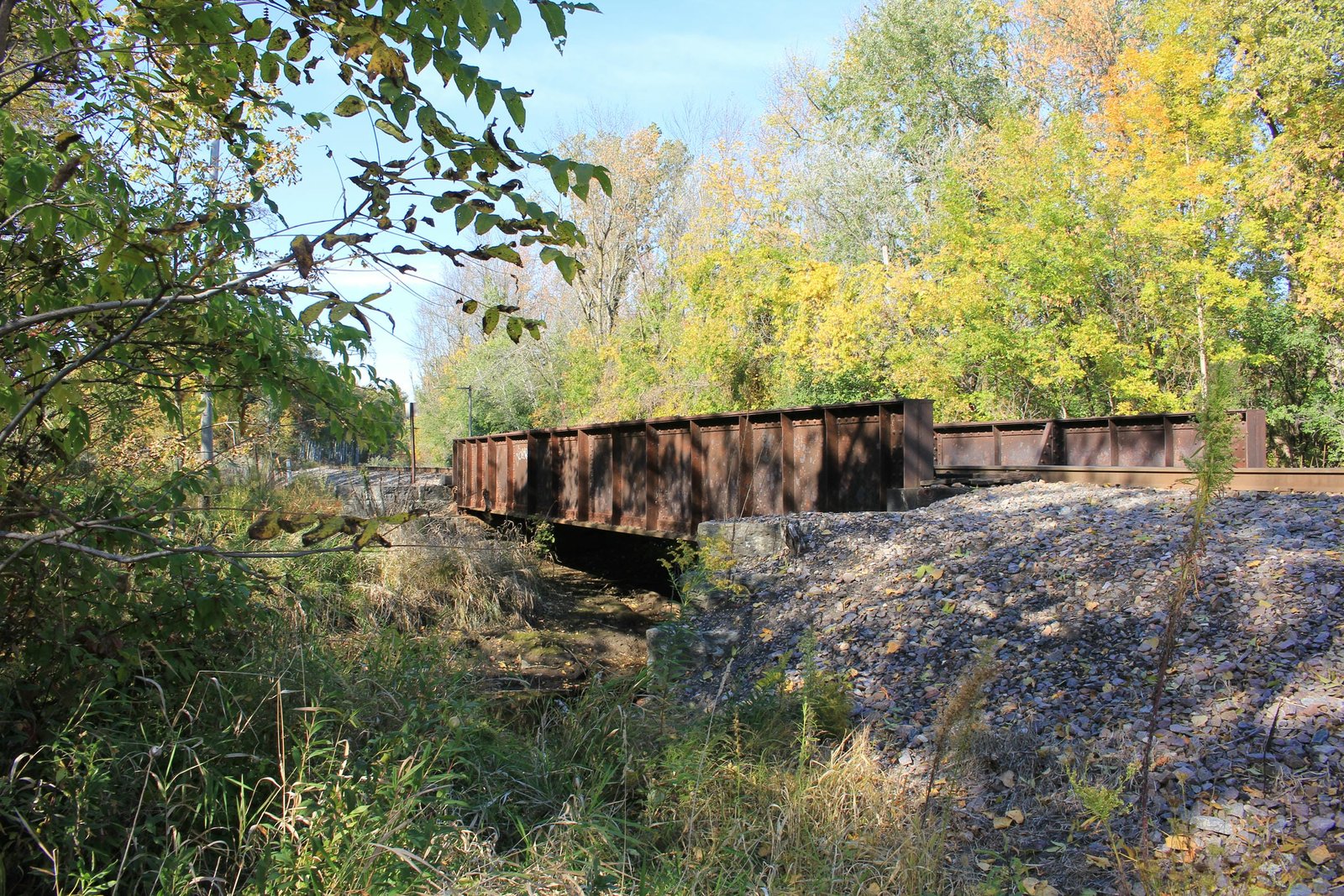
| Superstructure Design | Through Plate Girder |
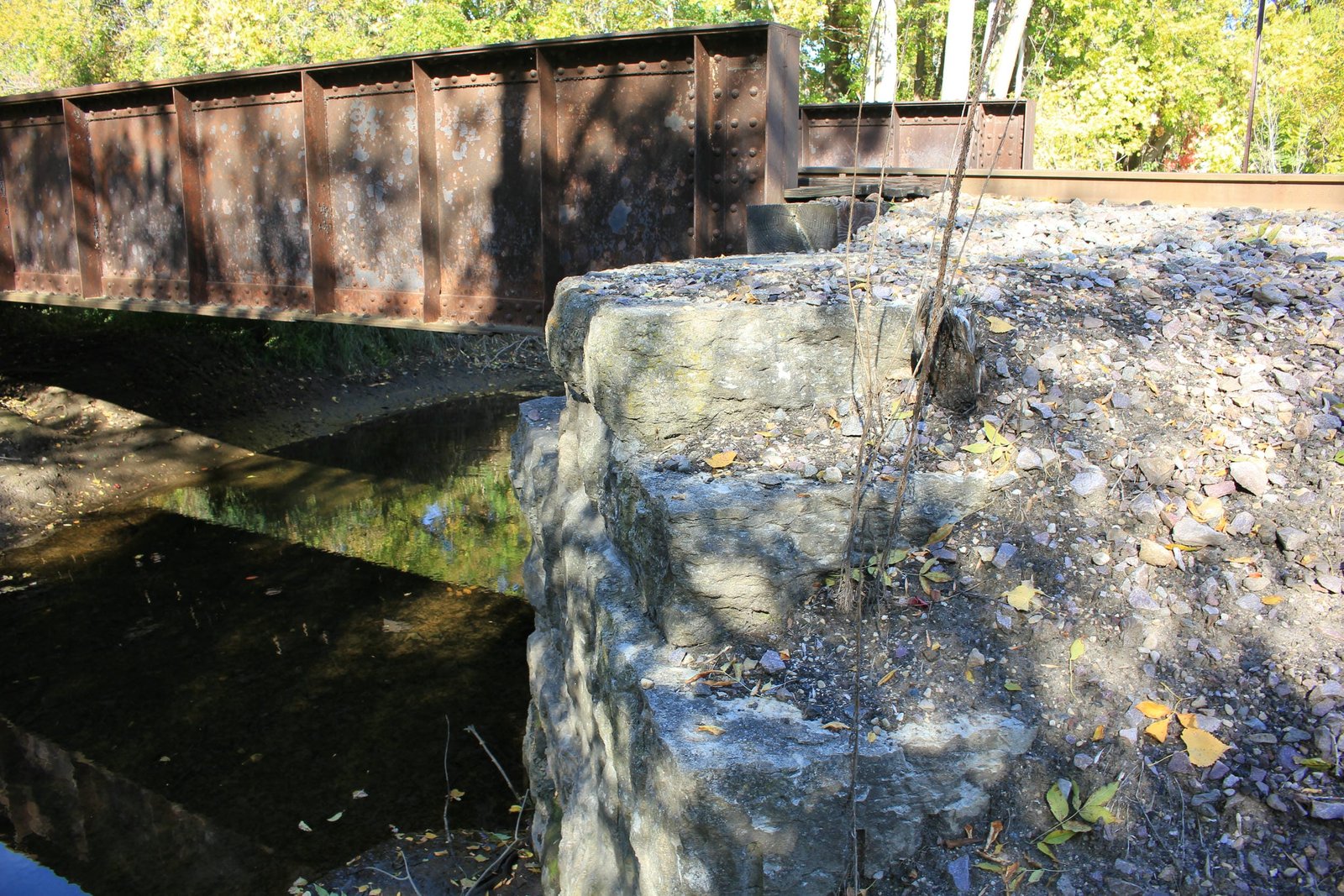
| Substructure Design | Stone Masonry |
| Date Built | c. 1905 |
| Traffic Count | 5 Trains/Day (Estimated) |
| Current Status | In Use |
| Chicago & North Western Railway Bridge Number | 6 |
| Canadian National Railway Bridge Number | 6 |
| Significance | Local Significance |
| Documentation Date | 10/8/2022 |
In 1864, the Peninsula Railroad of Michigan (PRM) constructed 62 miles of new railroad, extending from Escanaba, Michigan to Negauee, Michigan. The PRM had originally been charted to connect the iron mines of the Upper Peninsula of Michigan to Lake Michigan at Escanaba. After completion of the line, the PRM would be purchased by William B. Ogden, and consolidated into the Chicago & North Western Railway (C&NW). This segment of line was originally disconnected with the rest of the C&NW system, which was beginning to expand in Wisconsin. A 5 mile extension to Ishpeming, Michigan was constructed in 1870 by the C&NW. In 1870, the C&NW constructed an additional 50 miles of railroad, extending from the end of the existing mainline at Green Bay, Wisconsin to Marinette, Wisconsin, on the Michigan border. The following year, a bridge would be constructed over the Menominee River, and an additional 64 miles of railroad constructed to Escanaba. This line soon became a major mainline for the C&NW, allowing the shipment of iron ore from the Upper Peninsula and allowing the construction of branch lines. North of Escanaba, numerous branch lines would be constructed to serve the mines of the area.
By the early 20th Century, the C&NW had constructed and acquired a large railroad network throughout the Midwest, making it one of the premiere railroads of the area. Throughout the first half of the 20th Century, this line remained critical for the C&NW, as it provided connections to a number of lines throughout northeast Wisconsin and the Upper Peninsula of Michigan. The line served a variety of industries, hosted passenger trains and was heavily used for hauling iron ore. The C&NW was acquired by Union Pacific Railroad (UP) in 1995. UP soon began to sell or abandon excess tracks acquired from the C&NW. The line from Green Bay to Ishpeming and the remaining mine branches were sold to a subsidiary of Wisconsin Central, Ltd. (WC). In 2001, WC was purchased by Canadian National Railway (CN), and became the American subsidiary of the railroad. Today, CN continues to operate the line between Green Bay and Gladstone, Michigan as the Marinette Subdivision, and the Gladstone to Ishpeming segment as the Ore Subdivision.
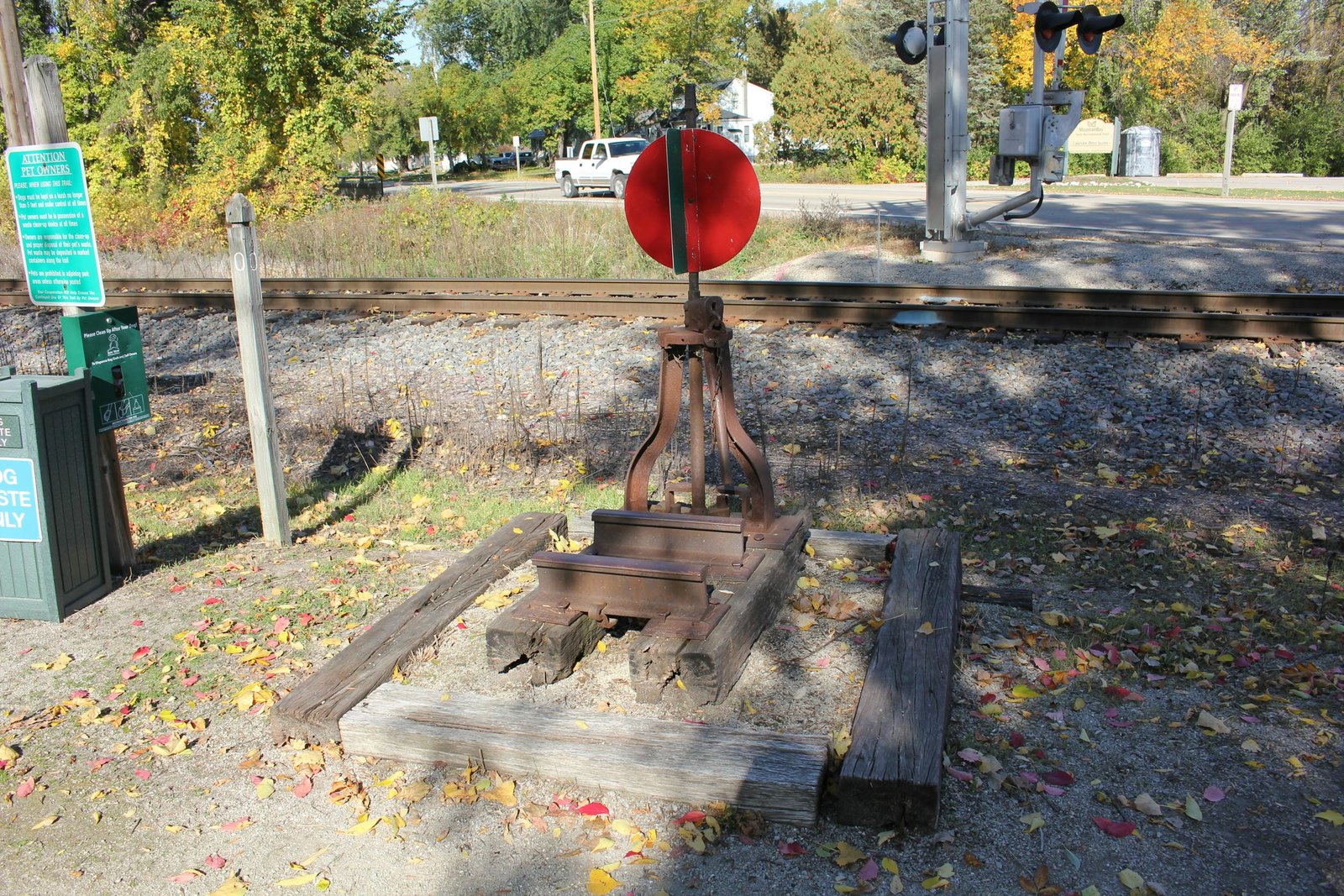
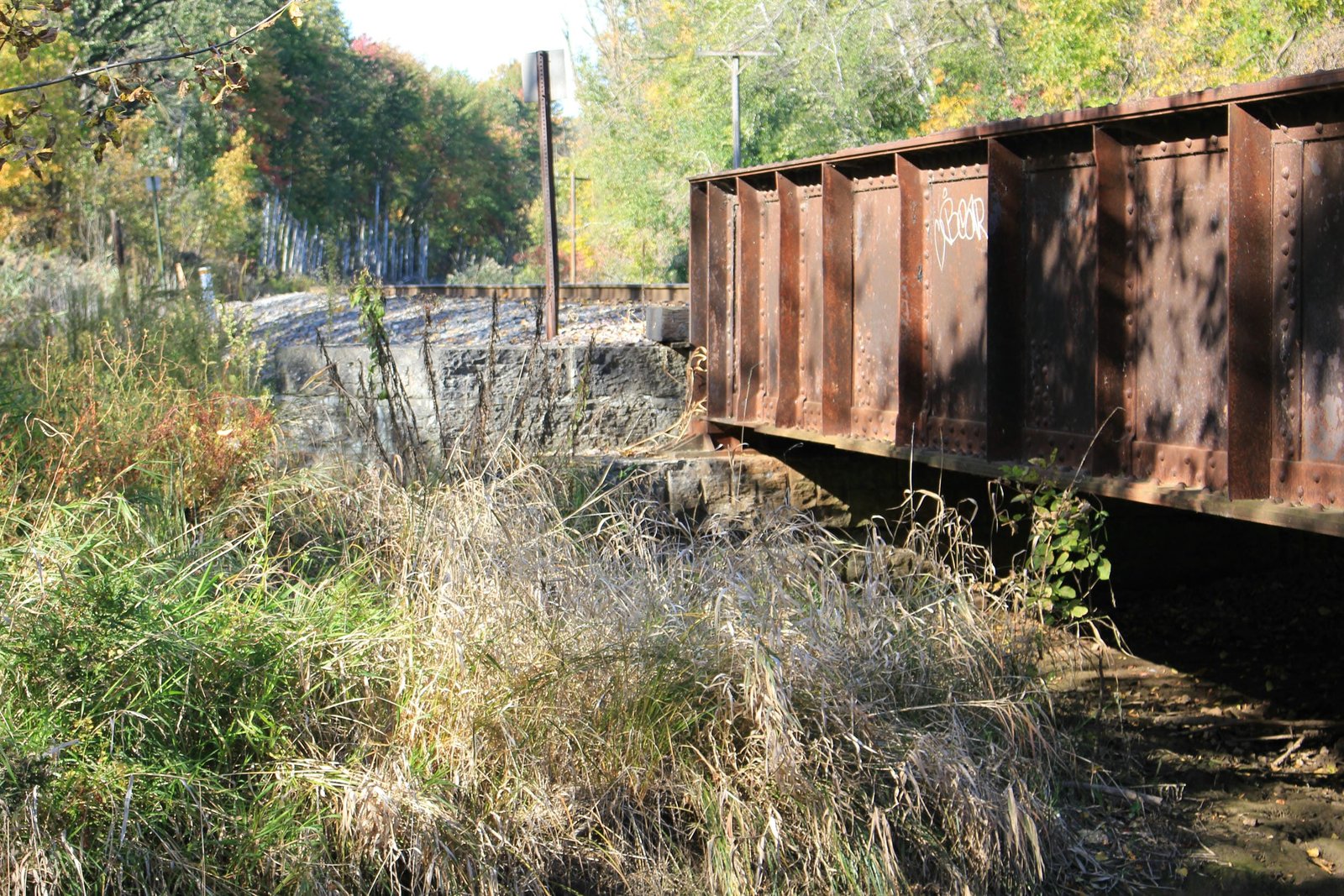
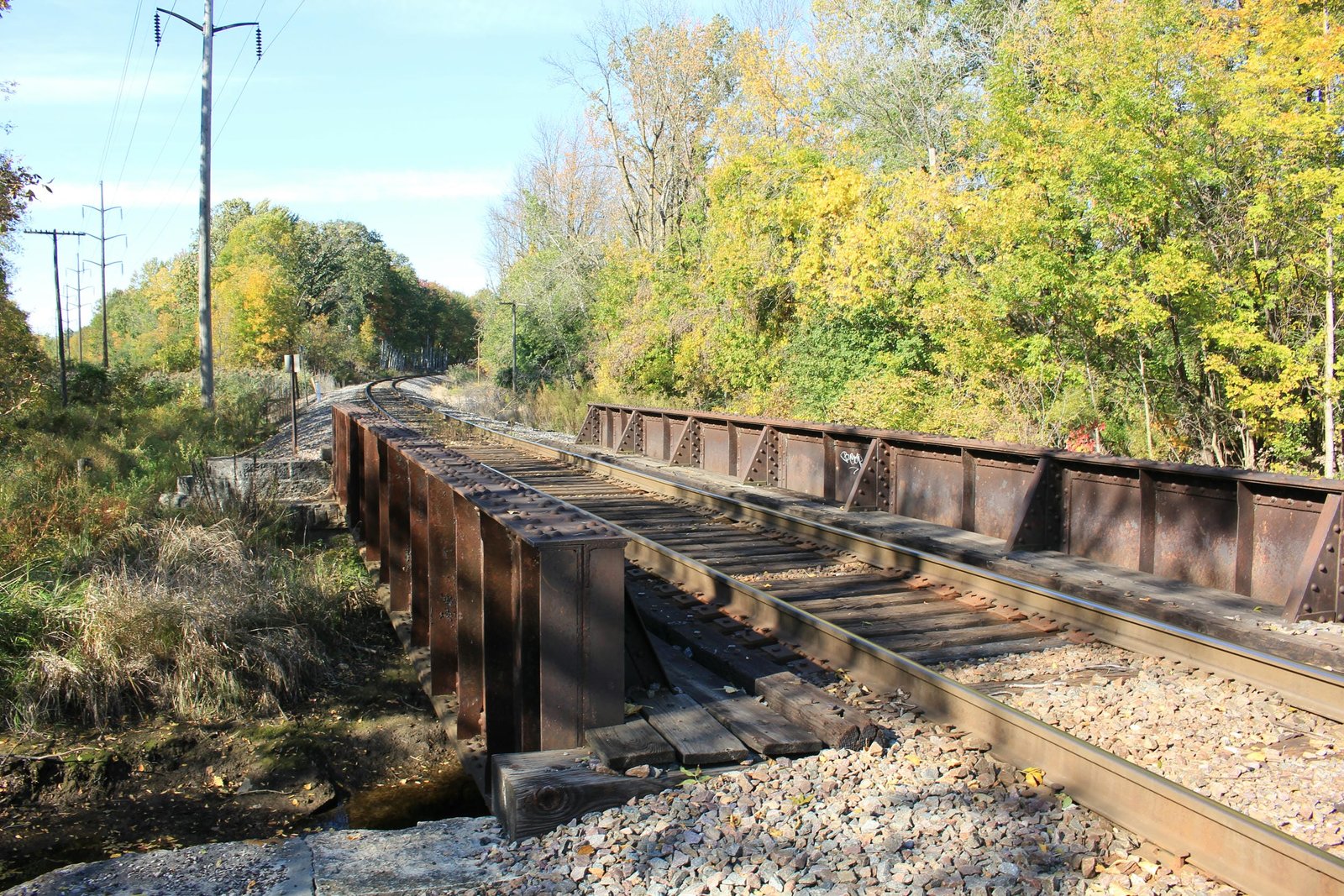
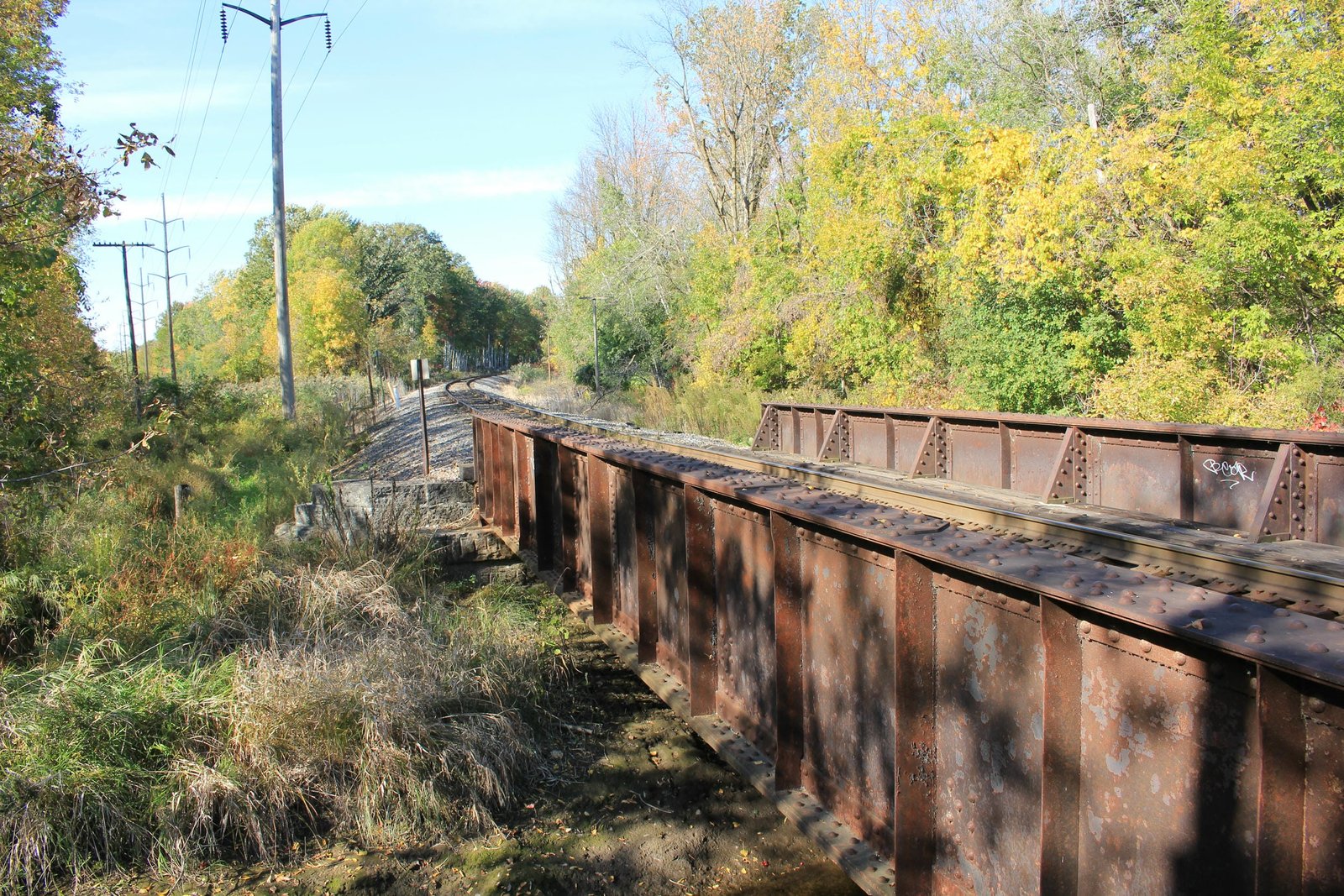
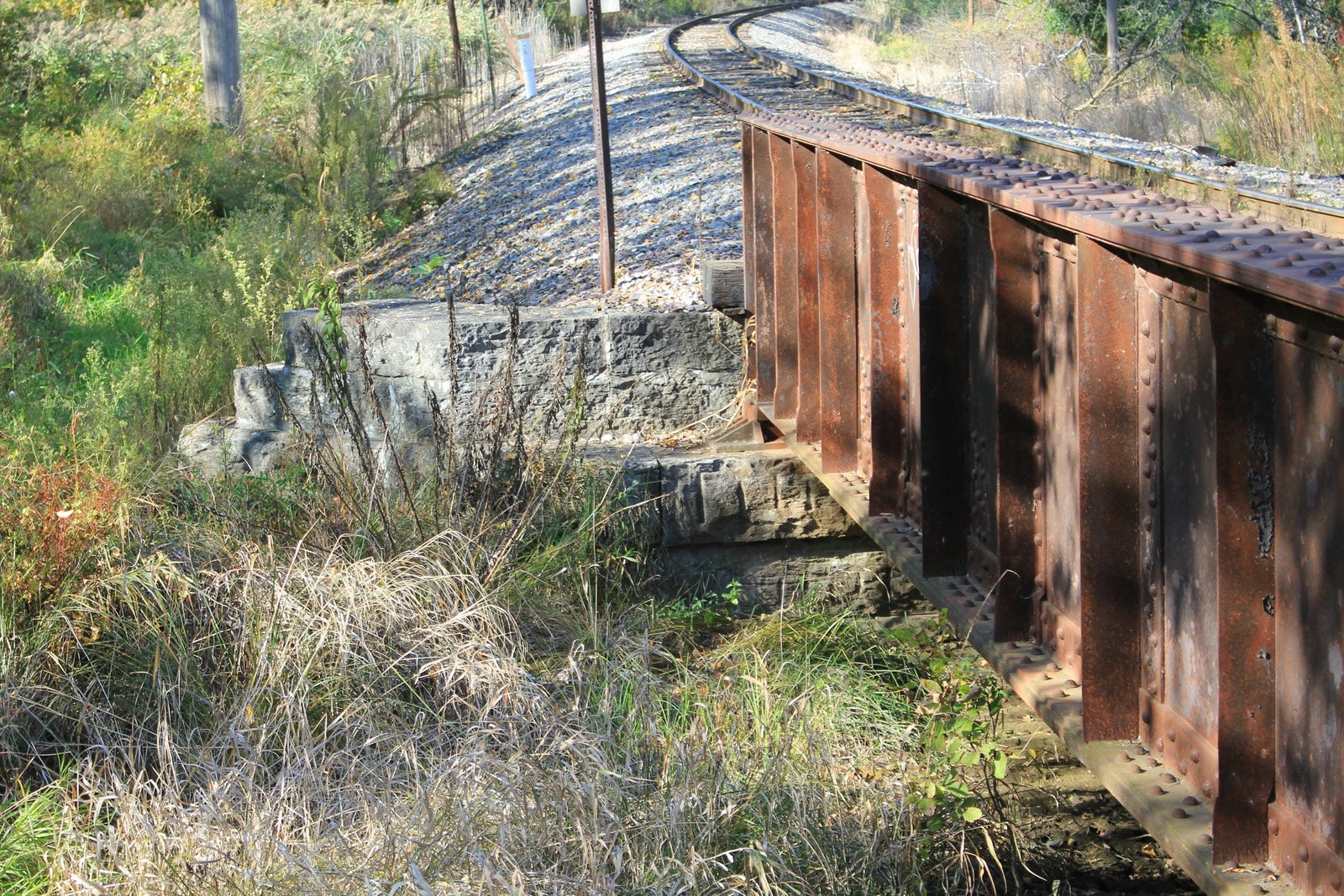
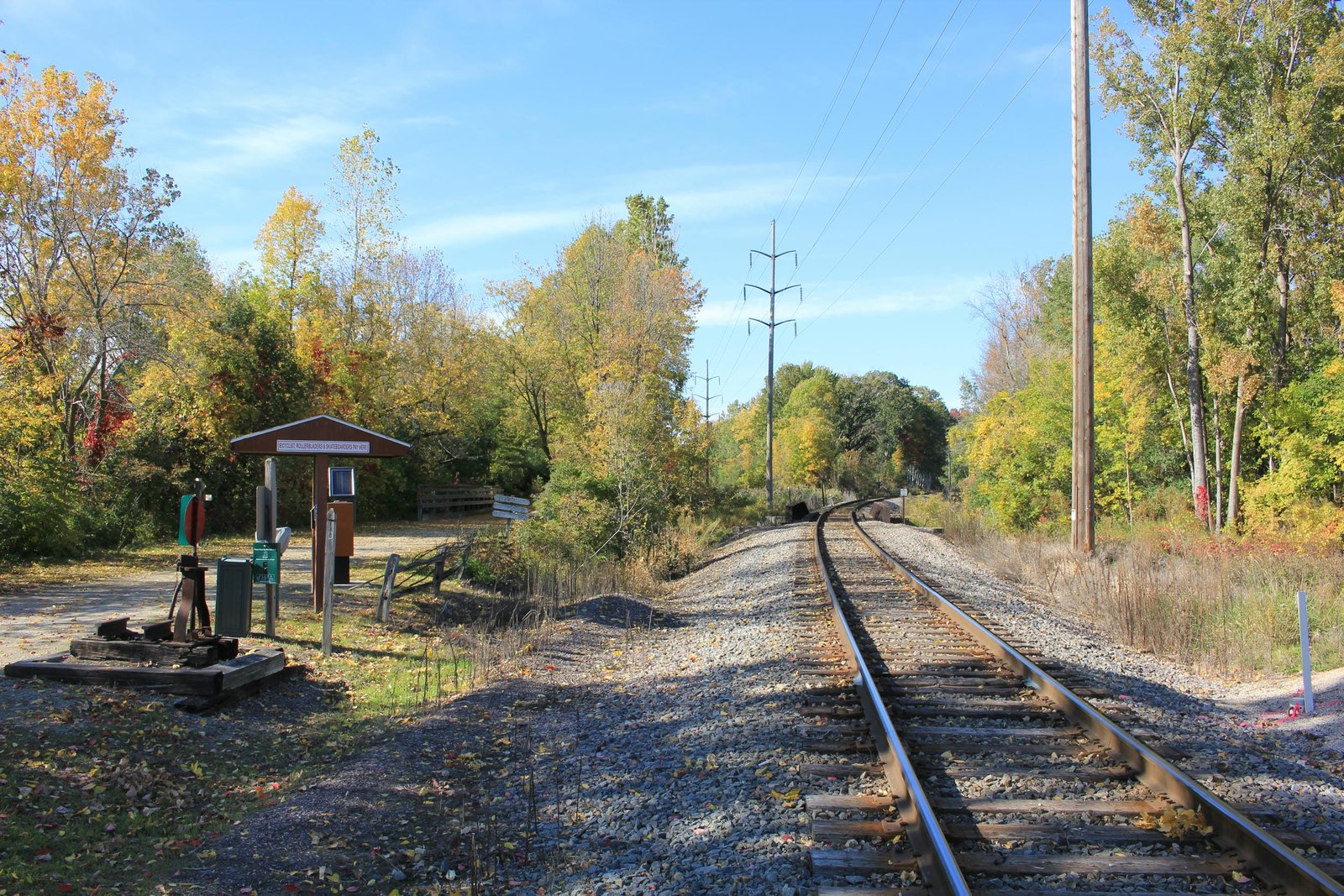
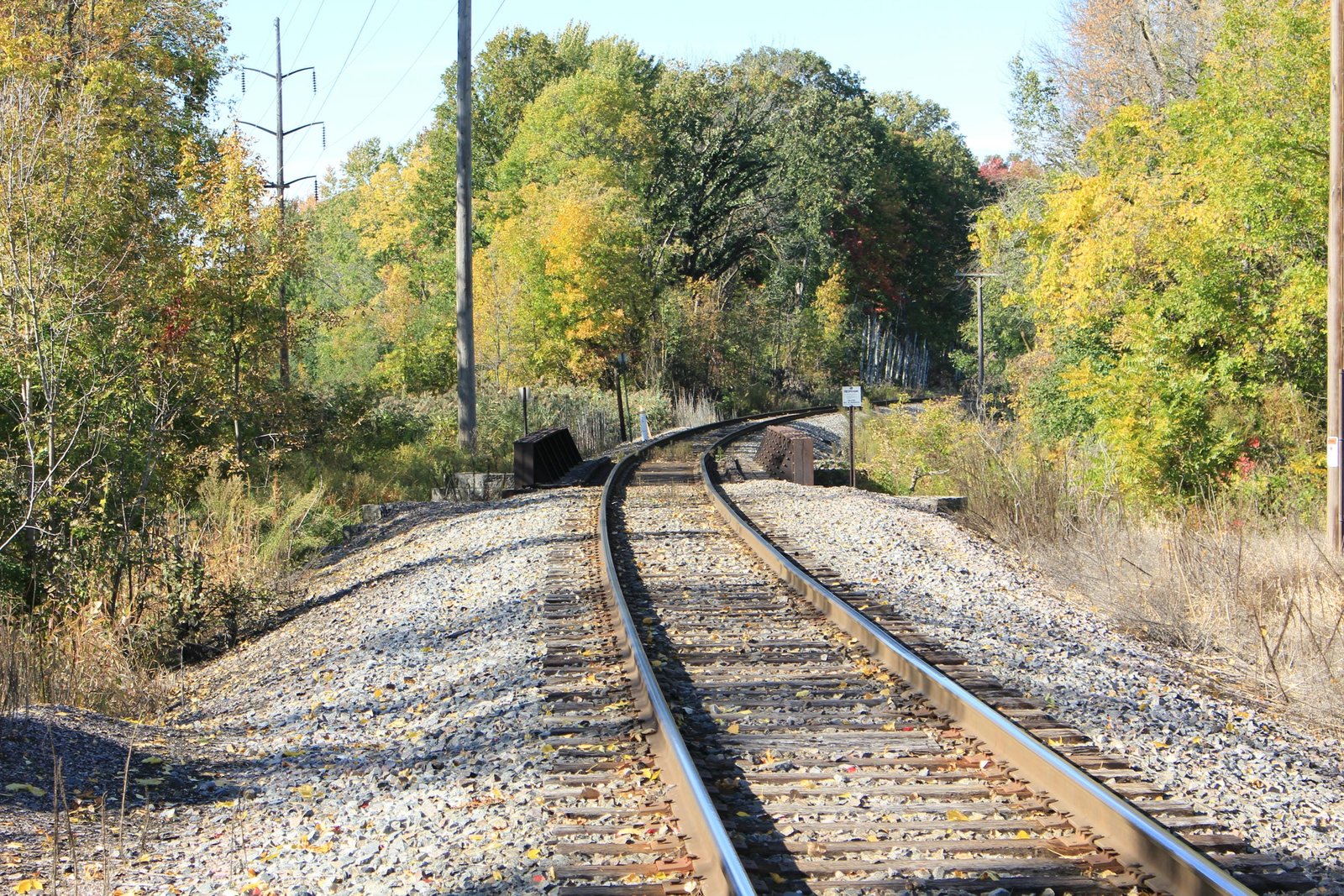
Located near Duck Creek Junction in Howard, this through plate girder bridge carries the former Chicago & North Western Railway mainline over Lancaster Brook. The first bridge at this location likely consisted of a timber pile trestle bridge, constructed when the line was first built. In the first years of the 20th Century, the C&NW invested significant capital into this line, replacing aging timber bridges with stone and steel structures. It is believed that the current bridge was constructed in approximately 1905. Currently, the bridge consists of a 50-foot through plate girder span, set onto stone abutments. The superstructure uses a standard design, with modest sized girders, square girder ends and a traditionally composed floor. The abutments also use a standard design, with stepped wing walls which extend from the bridge at an angle. Stone for the abutments consists of a white limestone, likely quarried at the Duck Creek Quarry immediately south of this bridge. This quarry supplied high quality limestone for bridges and buildings throughout much of the eastern portion of the C&NW system. An unknown contractor fabricated the superstructure, and an additional unknown contractor constructed the abutments. Through plate girder spans were commonly used by railroads, as they were durable and easy to construct. Since the initial construction, the bridge has seen no significant alterations. Immediately southeast of the bridge, a switchstand and pieces of rail remain from Duck Creek Junction, which split the Lake Shore Division and Peninsula Division. Overall, the bridge appears to be in fair to good condition, with no significant deterioration noted. The author has ranked this bridge as being locally significant, due to the common design.
Citations
| Railroad History Citation | ICC Valuation Information, Compiled by Richard S. Steele |