
Click the photo to view the full-size version
| Name | Mountain-Bay State Trail - Cardinal Lane Bridge Chicago & North Western Railway Bridge #1506 |
| Built By | Chicago & North Western Railway |
| Currently Owned By | Wisconsin Department of Natural Resources |
| Superstructure Contractor | Unknown |
| Substructure Contractor | Unknown |
| Length | 74 Feet Total |
| Width | 1 Track |
| Height Above Ground | 15 Feet (Estimated) |
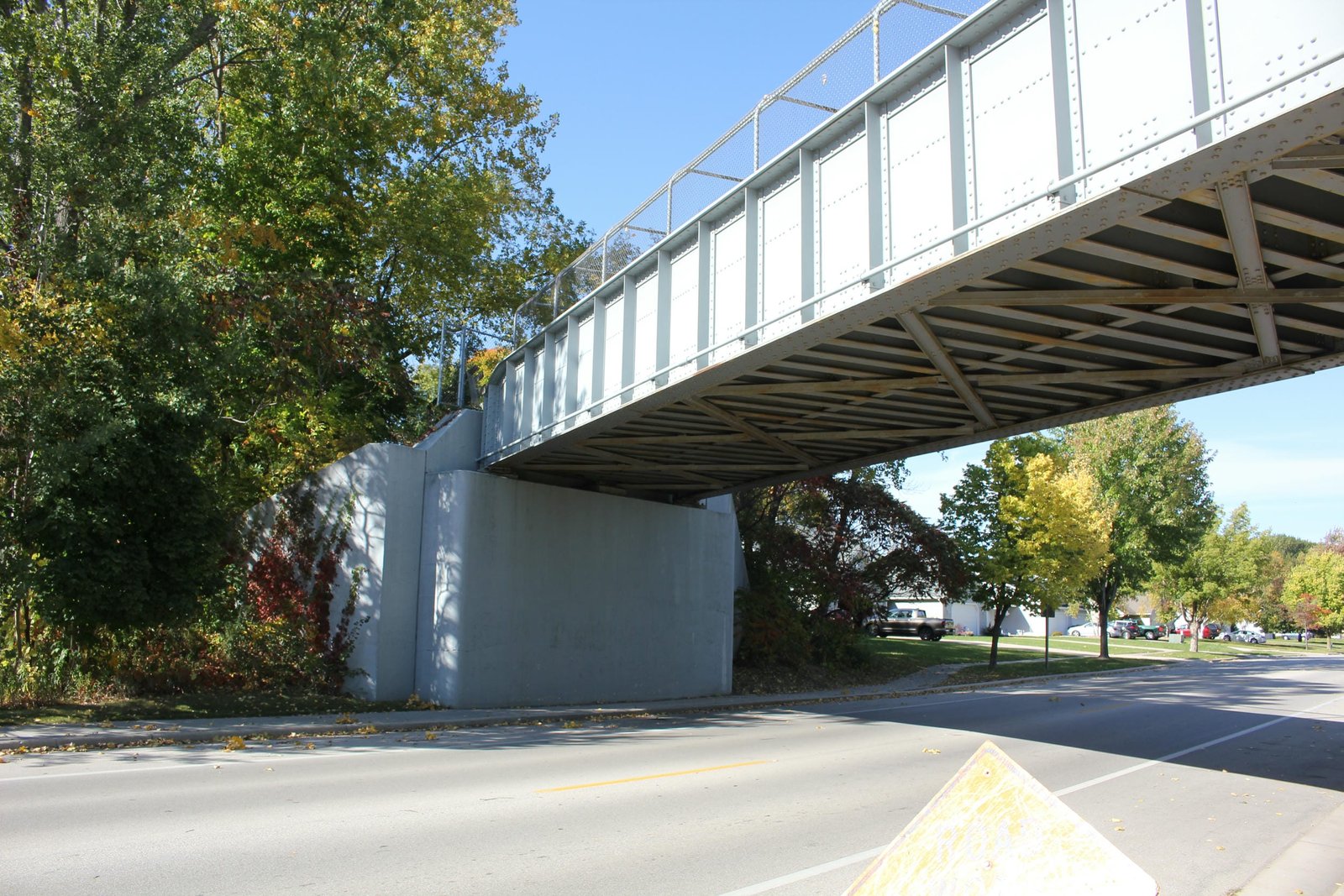
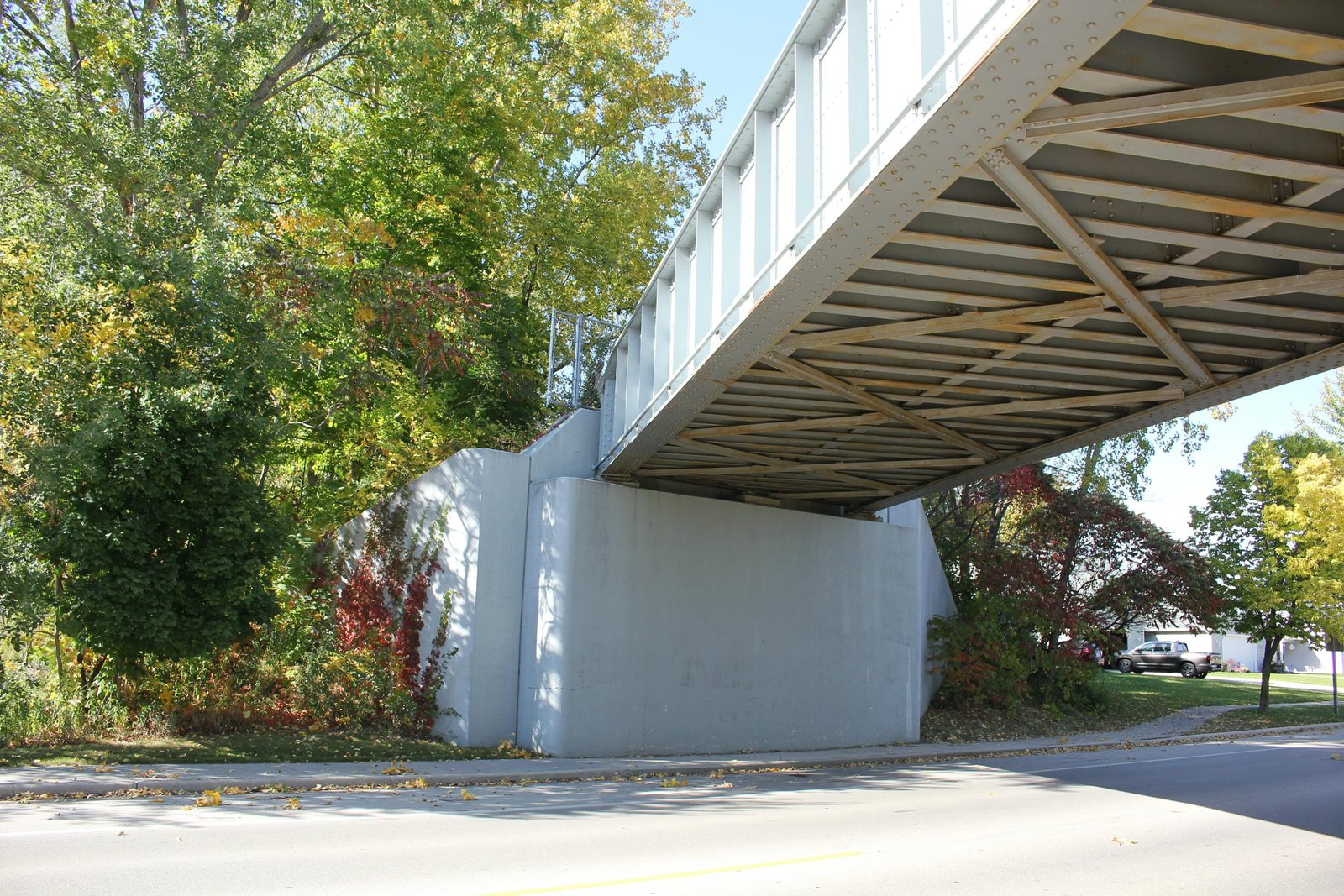
| Superstructure Design | Through Plate Girder |
| Substructure Design | Concrete |
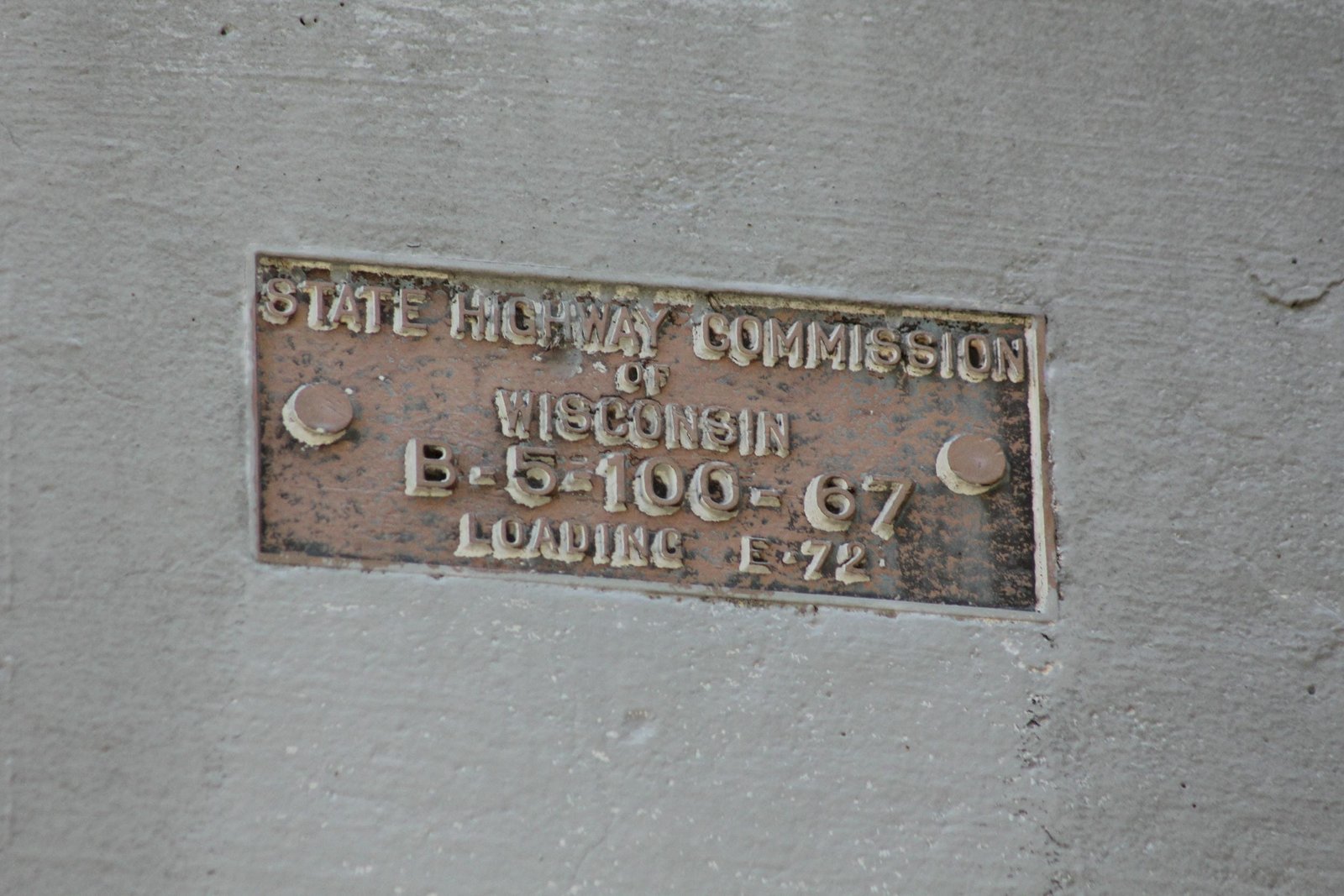
| Date Built | 1967 |
| Traffic Count | 0 Trains/Day (Bridge is Open to Pedestrian Traffic) |
| Current Status | Open to Pedestrian Traffic |
| Chicago & North Western Railway Bridge Number | 1506 |
| Significance | Minimal Significance |
| Documentation Date | 10/8/2022 |
In 1880, the Milwaukee, Lake Shore & Western Railway (MLS&W) constructed a 24 mile branch line from the newly constructed mainline at Eland, Wisconsin to Wausau, Wisconsin. A short spur was extended northwards in Wausau between 1881 and 1883, crossing the Barker-Stewart Island. In 1892, an additional 40 miles would be constructed from Wausau to Marshfield, Wisconsin. This line served as a branch line for the MLS&W, serving industries in the Milwaukee area and connecting to other railroads at Marshfield. The MLS&W had constructed a modest network of railroads through northern and eastern Wisconsin, primarily serving industrial interests. Due to the success of the MLS&W, the railroad was purchased by the Chicago & North Western Railway in 1893 (C&NW). The C&NW had acquired and constructed a vast network of railroad lines throughout the Midwest during the late 19th Century, and the MLS&W system provided more opportunities for expansion.
During the early 20th Century, the C&NW sought to improve operations by constructing new lines and improving existing lines. The C&NW had become one of the premiere Midwest railroads, and sought to stay profitable and competitive. The Manitowoc, Green Bay and North Western Railway (MGB&NW) was incorporated as a subsidiary of the C&NW in 1904, and constructed 61 miles between Duck Creek Junction, Wisconsin and Eland in 1906 and 1907. The MGB&NW was formally merged into the C&NW in 1909. Upon completion of the new line, this line served as a connection between several C&NW lines through eastern and central Wisconsin. Throughout the 20th Century, this line remained a secondary line for the C&NW.
By the late 20th Century, the C&NW sought to consolidate operations and abandon or sell unprofitable lines. In 1981, the line between Wausau and Marshfield was abandoned. In 1994, the segment between Duck Creek and Weston, Wisconsin would be abandoned, and the remainder of the trackage in the Wausau area sold to Wisconsin Central, Ltd. (WC). WC had purchased a large amount of former Soo Line and Milwaukee Road trackage in central and eastern Wisconsin in 1987, primarily to continue serving industries in the area. As part of the 1994 abandonment, the line between Duck Creek and Weston was purchased by the Wisconsin Department of Natural Resources for use as a trail. In 2001, WC was purchased by Canadian National Railway (CN), and became the American subsidiary of the railroad. In 2021, the Wausau area trackage was sold to the Fox Valley & Lake Superior Rail System (FOXY). Today, FOXY operates trackage in Wausau, including a spur through Barker-Stewart Island. The segment between Duck Creek and Weston is now part of the Mountain-Bay State Trail.
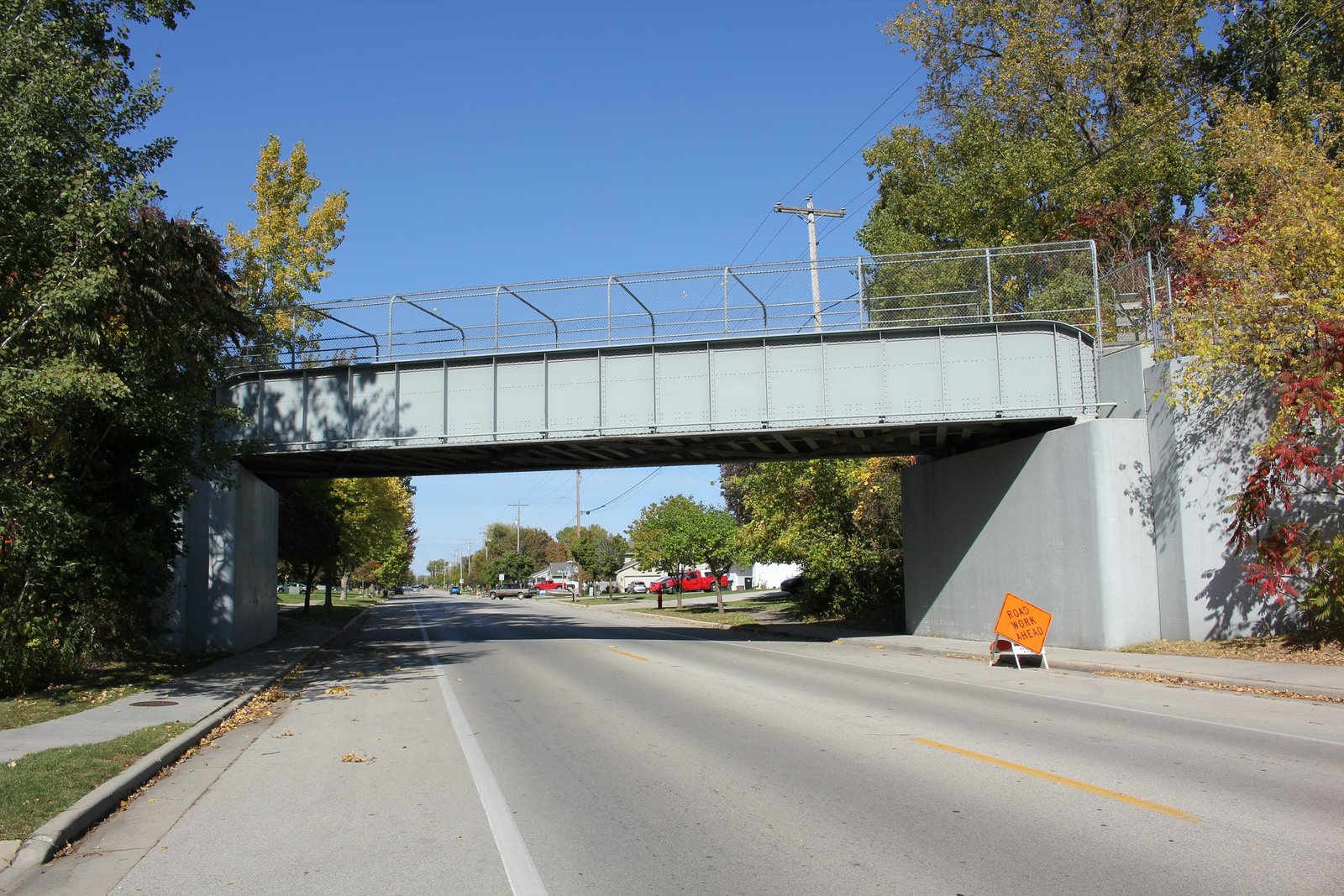
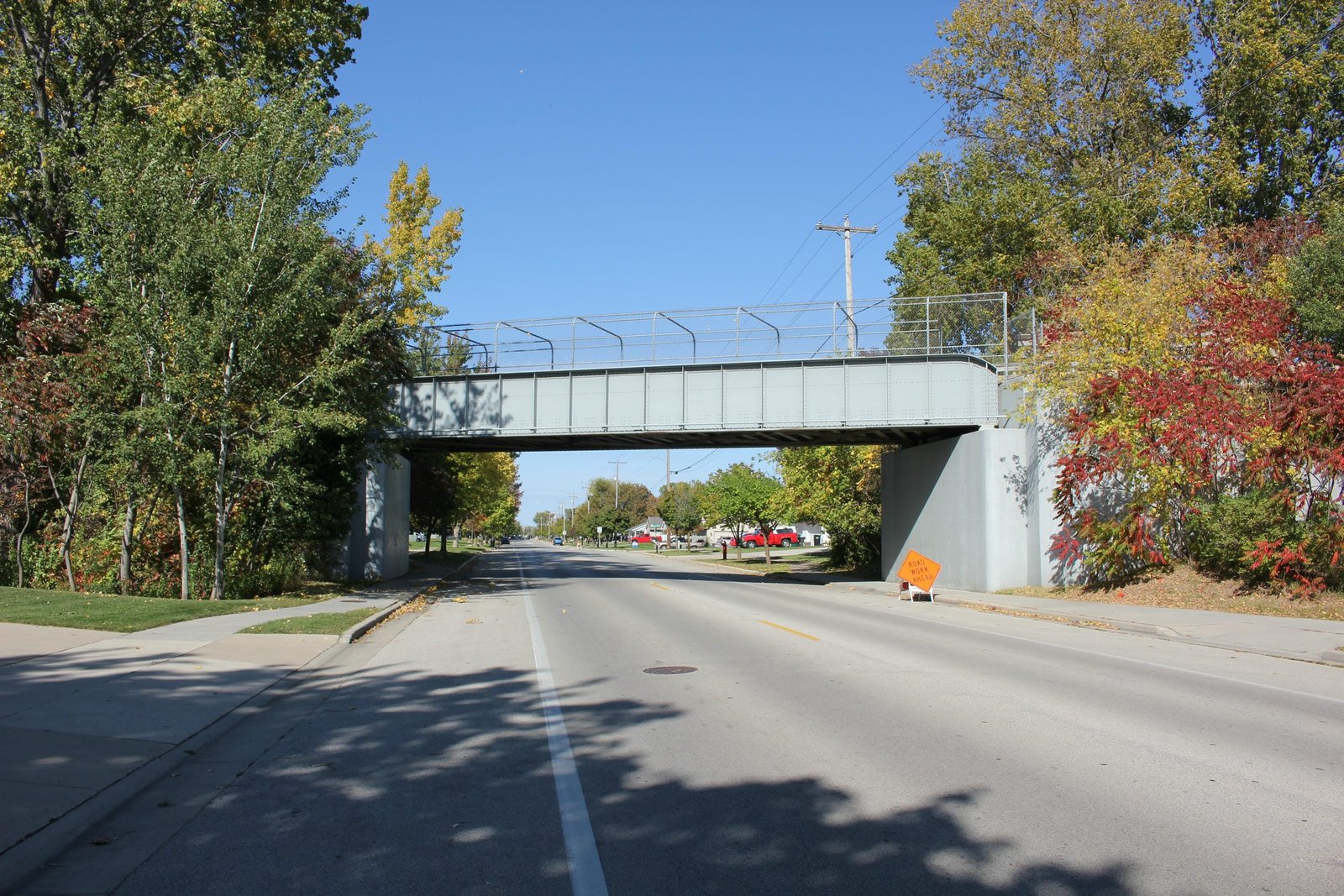
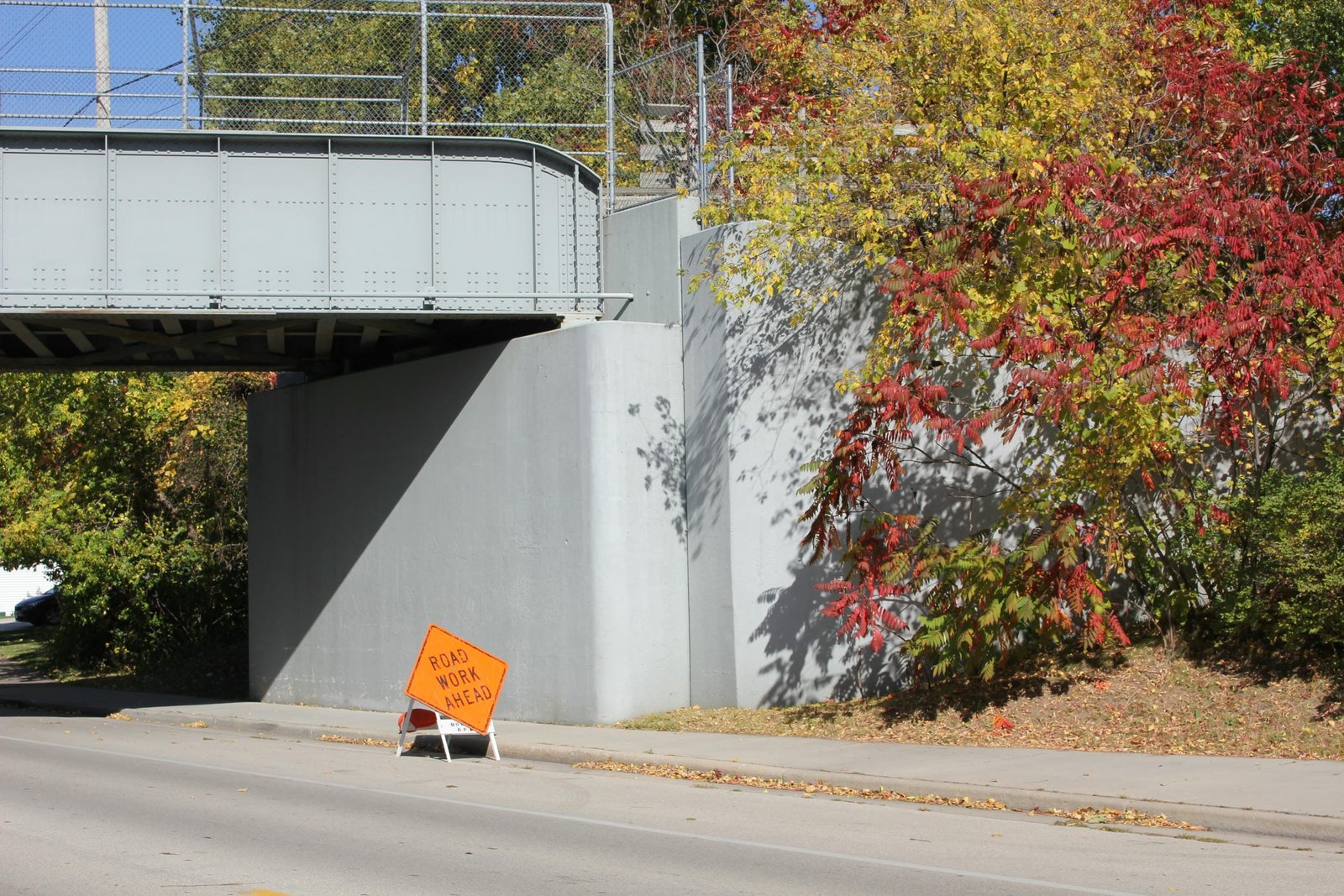
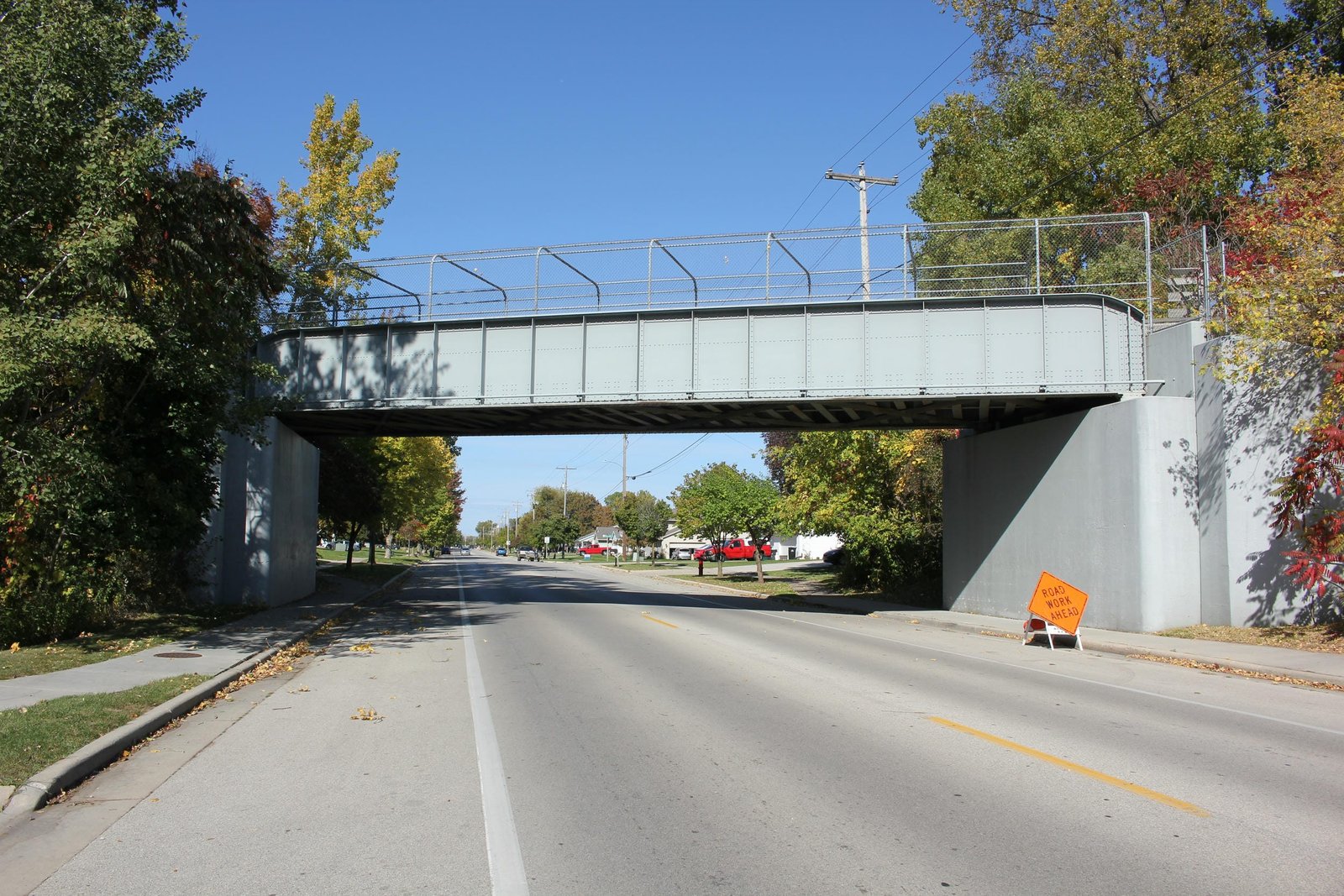
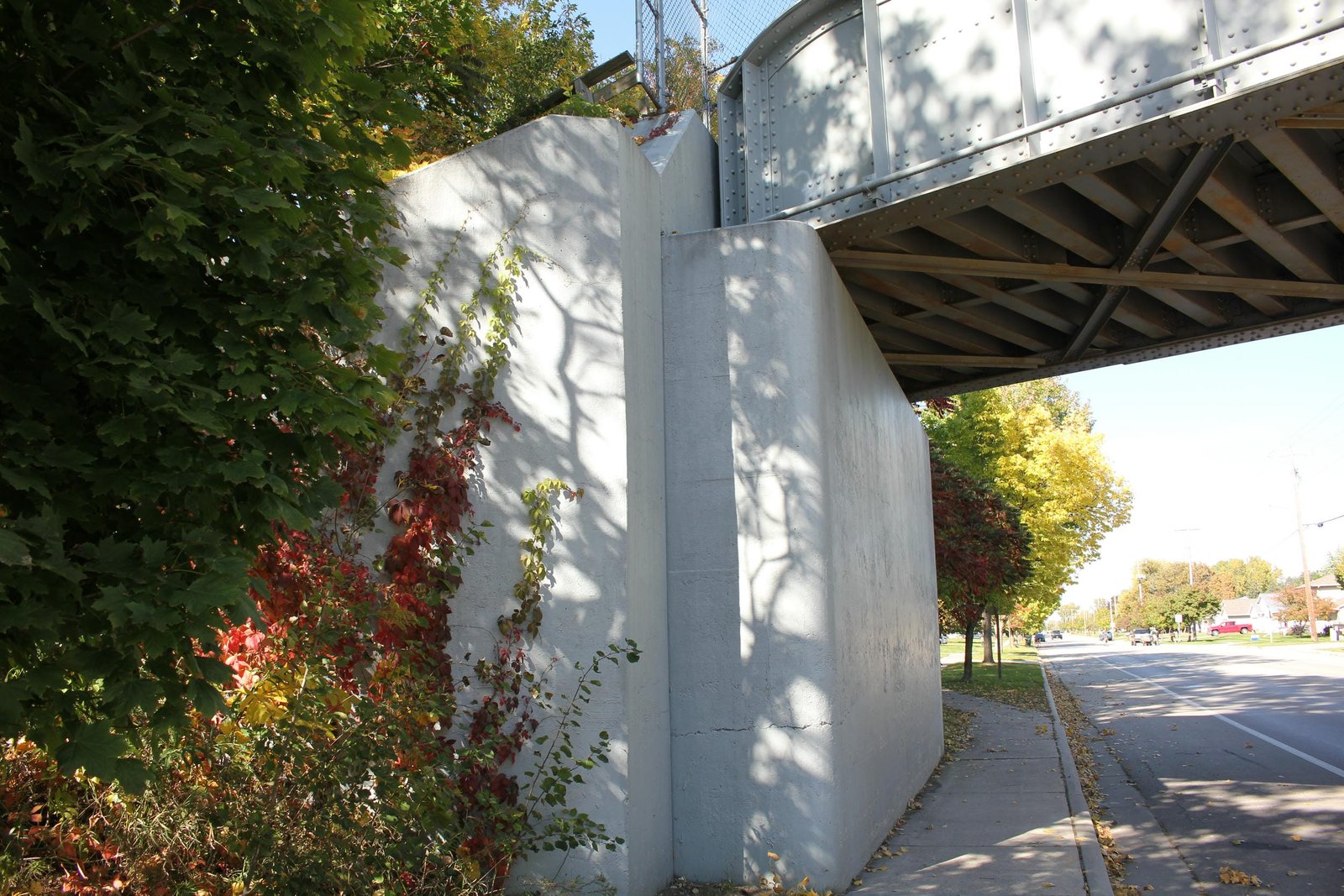
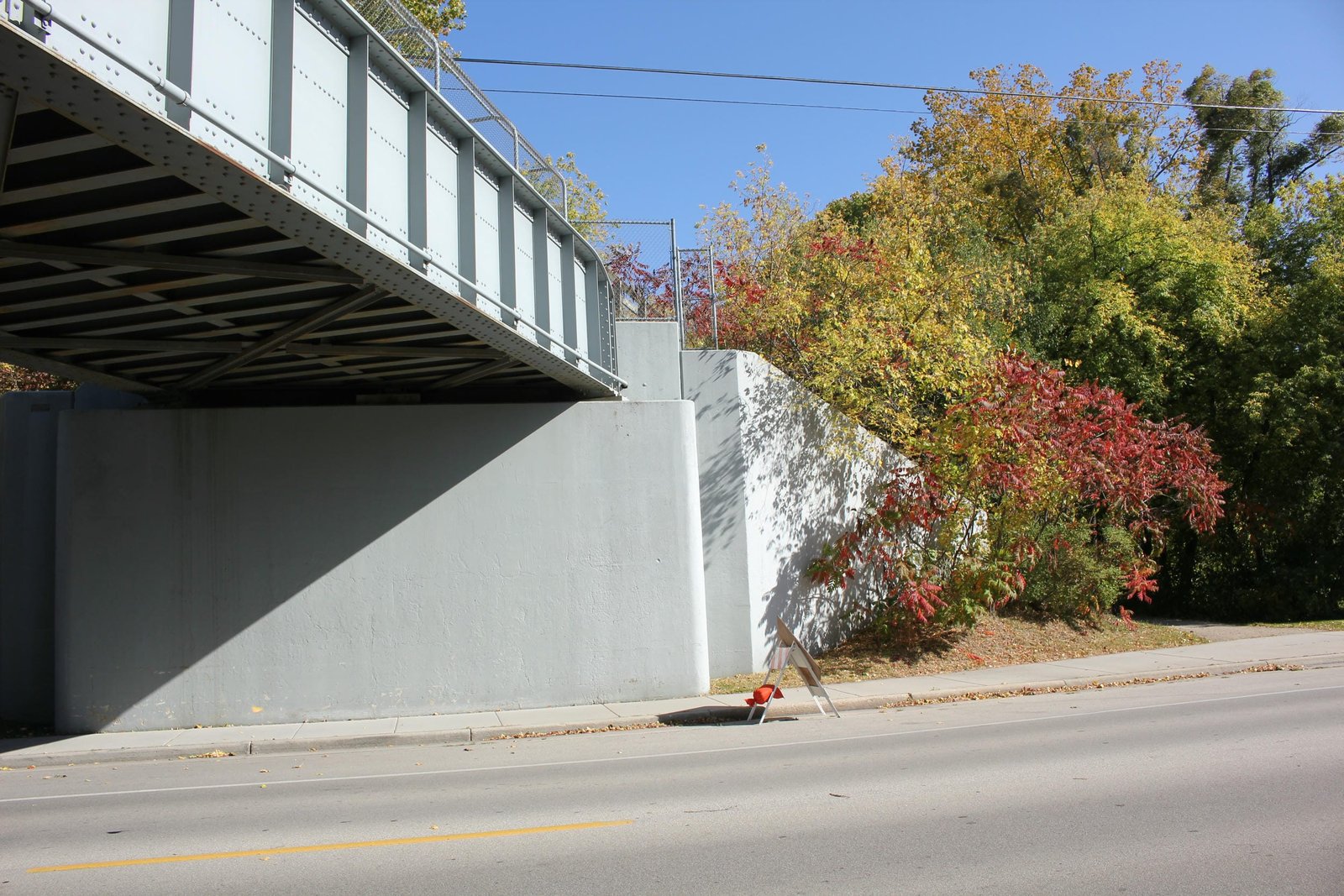
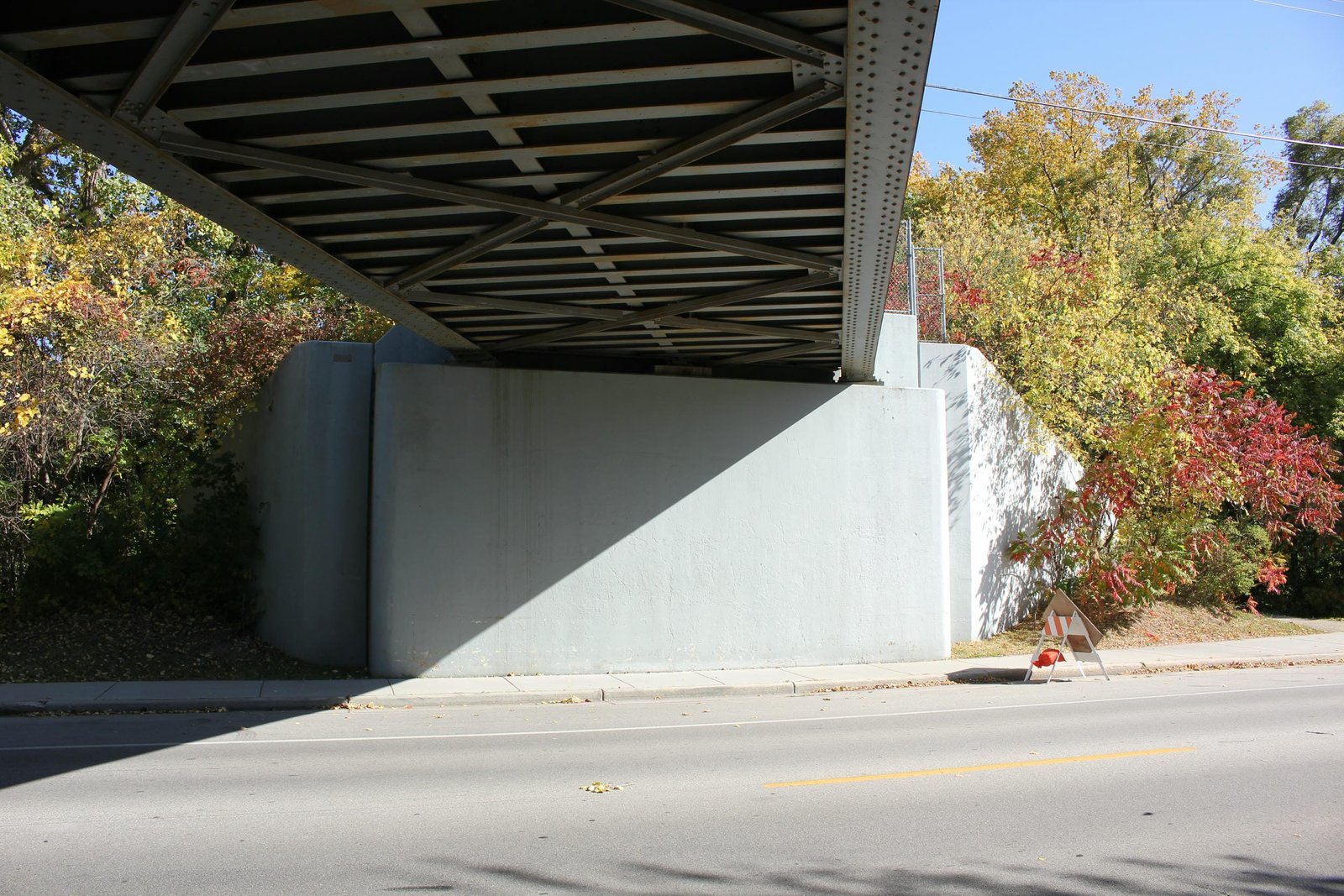
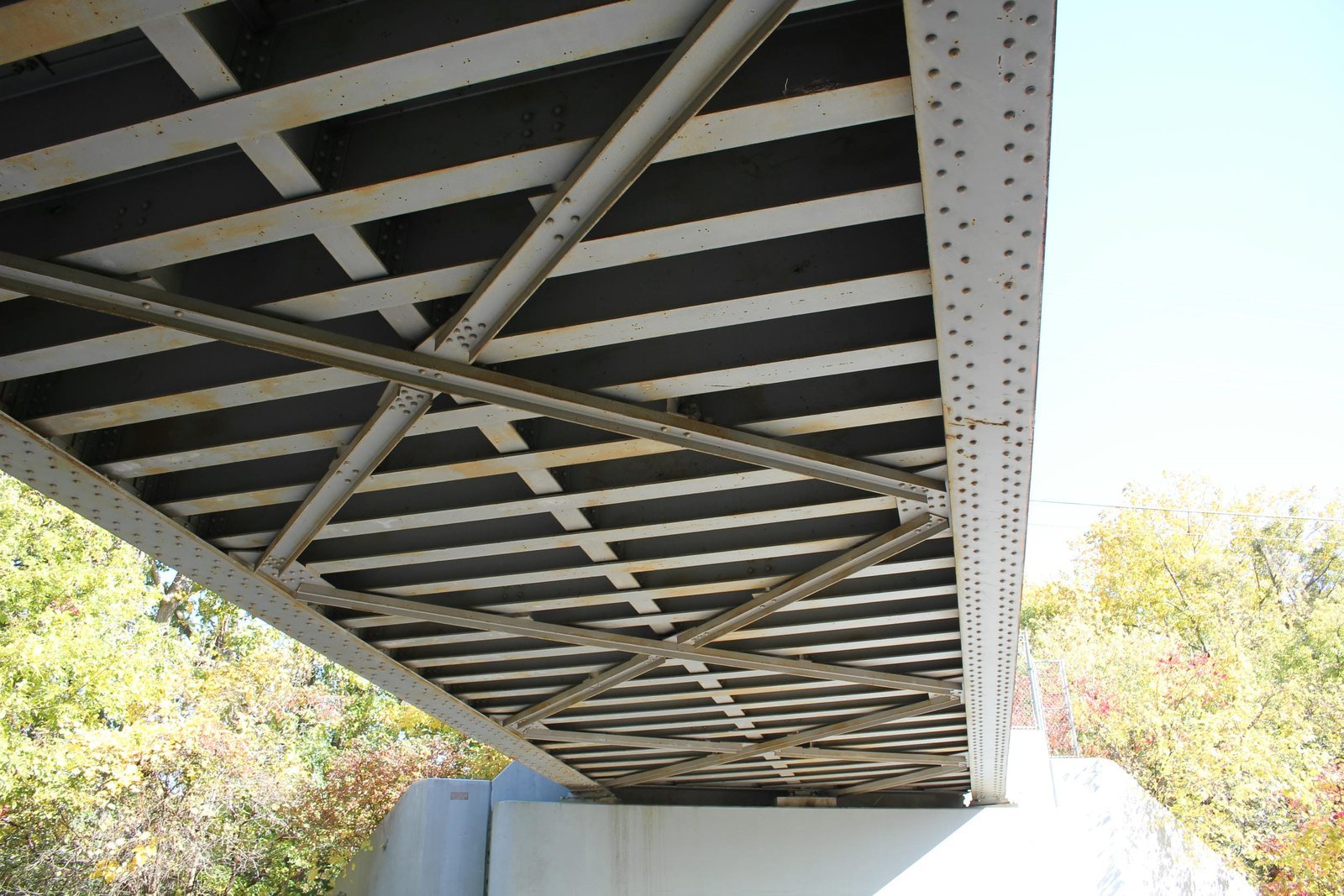
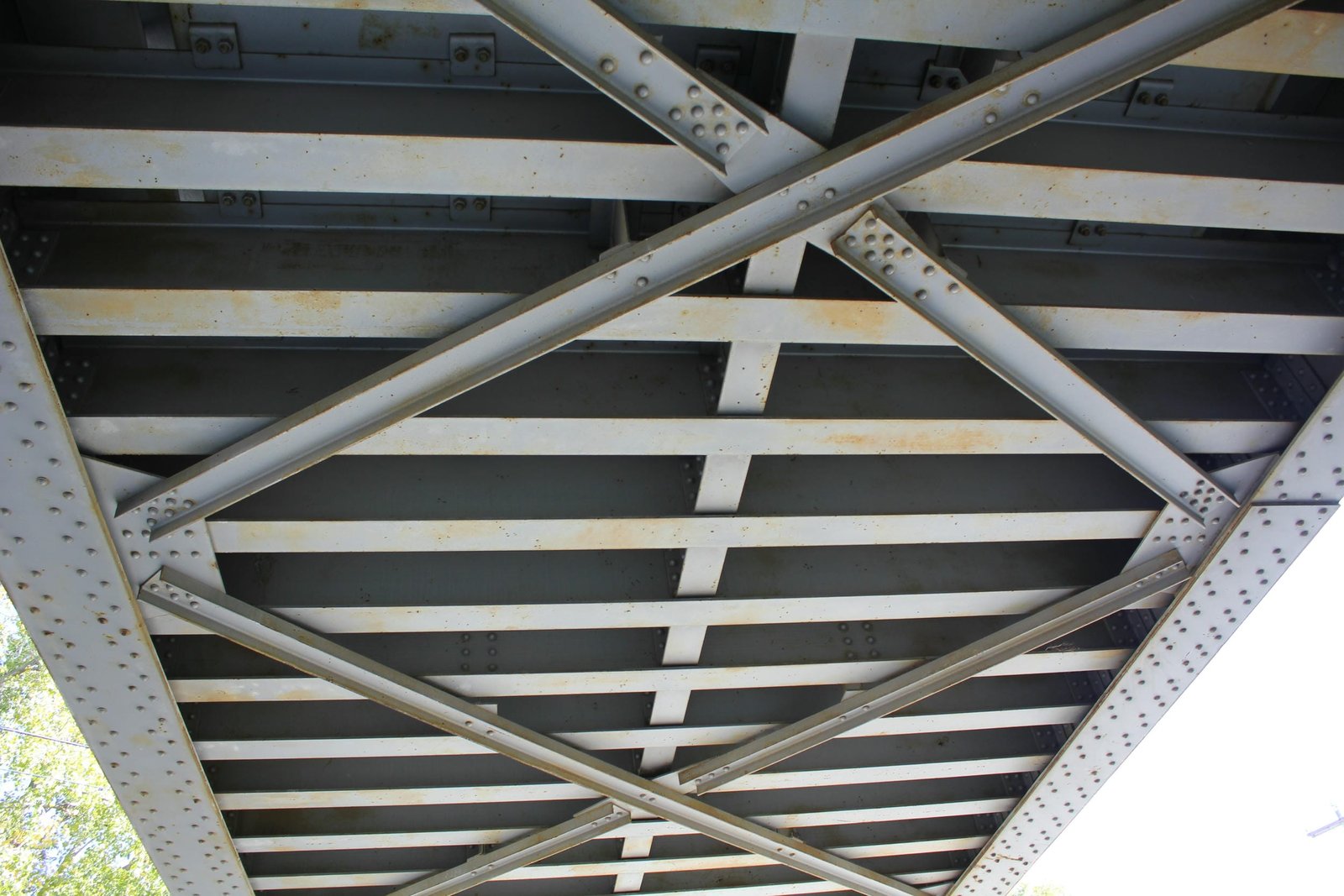
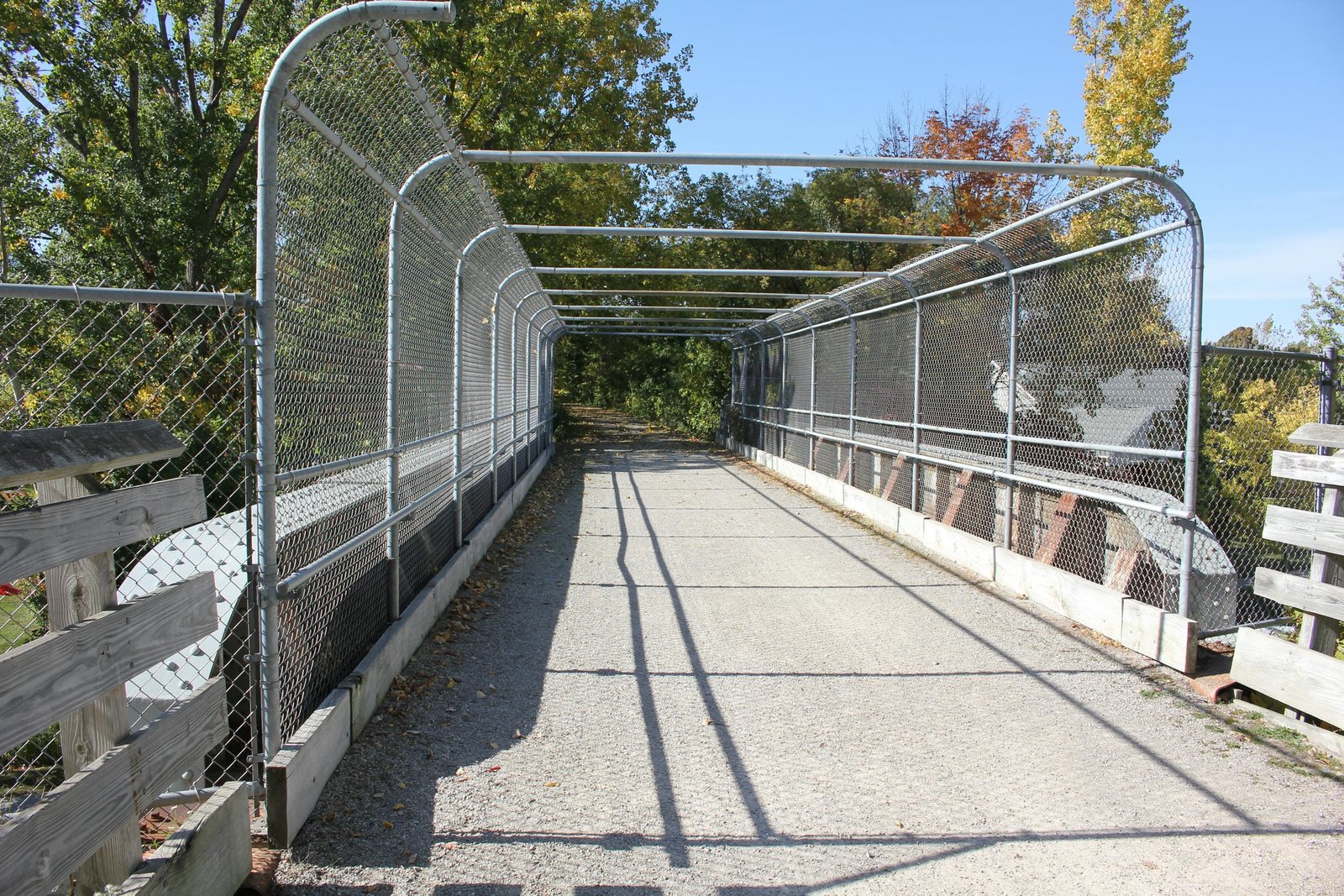
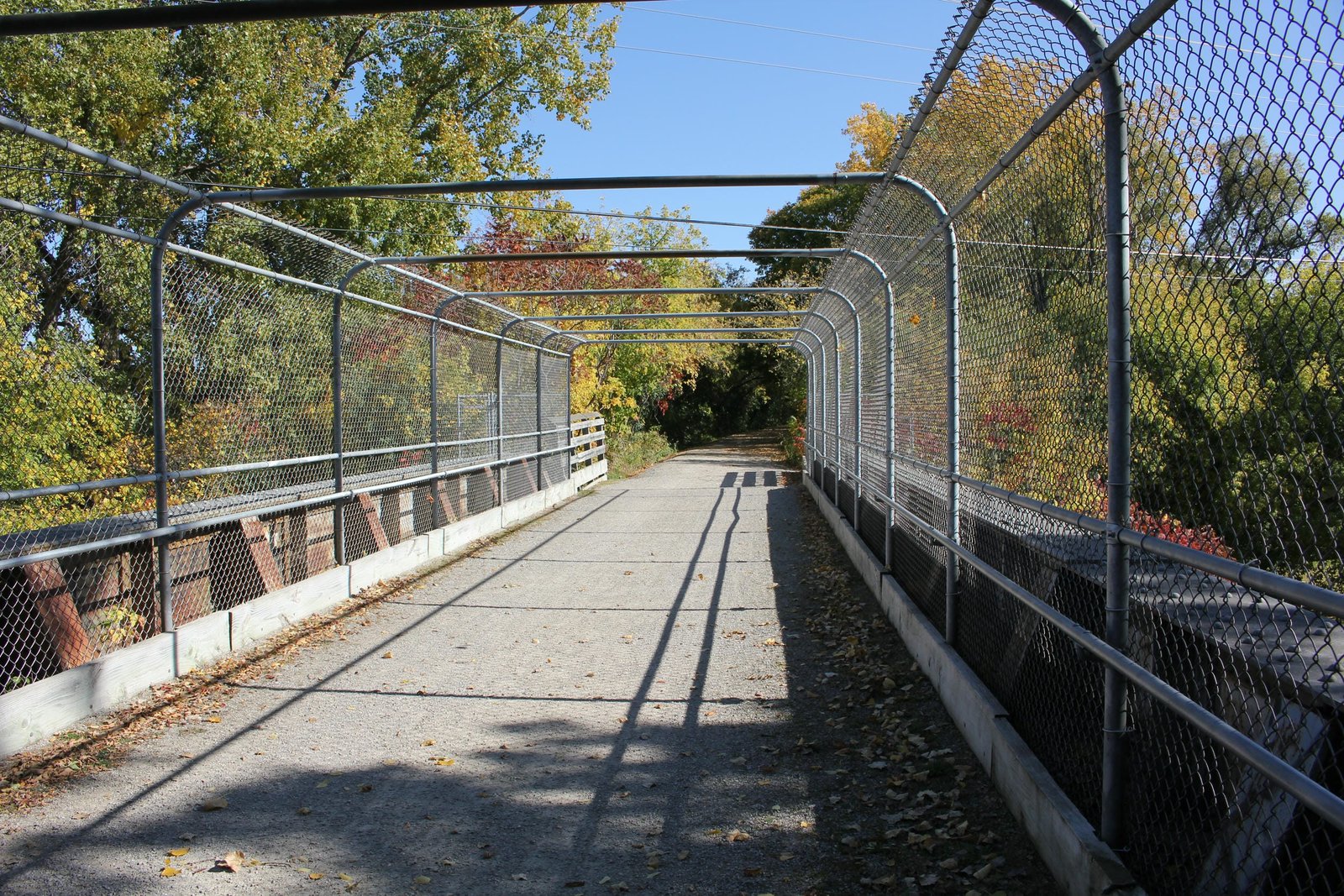
Located in Howard, this through plate girder bridge carries the former Chicago & North Western Railway mainline over an Cardinal Lane. The first bridge at this location consisted of a 35-foot deck plate girder span, fabricated by Milwaukee Bridge Company in 1906. This bridge likely used a standard design and had concrete abutments. By the 1960s, the Village of Howard sought to widen the roadway and construct a new bridge. After a number of court cases, a wider bridge was approved in 1967. Work on the bridge began that year, and it is believed the structure was completed in late 1967. Currently, the bridge consists of a 74-foot skewed single track through plate girder span, set onto concrete abutments. The superstructure uses a standard design for the era, with heavy girders, a ballast deck floor constructed of parallel I-beams and rounded and tapered girder ends. The substructures also use a standard design, with sloped wing walls. An unknown company fabricated the superstructure, and an additional unknown contractor constructed the abutments. Through plate girder spans were commonly used by railroads, as they were durable and easy to construct. Since the initial construction, the bridge has seen no significant alterations. Today, the bridge is used as part of the Mountain-Bay State Trail, and an asphalt deck and chain link fence have been added to the structure. Overall, the bridge appears to be in good condition, with no significant deterioration noted. The author has ranked this bridge as being minimally significant, due to the common design and newer age.
Citations
| Build date | National Bridge Inventory (NBI) |
| Railroad History Citation | ICC Valuation Information, Compiled by Richard S. Steele |