
Click the photo to view the full-size version
| Name | FOXY South Channel Bridge Chicago & North Western Railway Bridge #490 |
| Built By | Chicago & North Western Railway |
| Currently Owned By | Fox Valley & Lake Superior Rail System |
| Superstructure Contractor | American Bridge Company of New York |
| Substructure Contractor | Unknown |
| Length | 225 Feet Total, 25 Foot Spans |
| Width | 1 Track |
| Height Above Ground | 10 Feet (Estimated) |
| Superstructure Design | Steel Stringer |
| Substructure Design | Concrete and Steel Cylinder |
| Date Built | 1907, West End Filled c. 1955 |
| Traffic Count | 3 Trains/Day (Estimated) |
| Current Status | In Use |
| Chicago & North Western Railway Bridge Number | 490 |
| Fox Valley & Lake Superior Rail System Bridge Number | 490 |
| Significance | Local Significance |
| Documentation Date | 10/8/2022 |
In 1876, the Milwaukee, Lake Shore and Western Railway (MLS&W) constructed 20 miles of new railroad, extending from Appleton, Wisconsin to New London, Wisconsin. Work continued in 1878, with an additional 16 miles opening to Clintonville, Wisconsin. 19 additional miles were completed to Tigerton, Wisconsin in 1879, followed by 22 additional miles to Aniwa, Wisconsin in 1880. An additional 26 miles to Summit Lake, Wisconsin opened in 1881, followed by 29 additional miles to Three Lakes, Wisconsin in 1882; 57 additional miles to Gogebic, Michigan in 1883, 41 miles to Hurley, Wisconsin in 1884 and 40 miles to Ashland, Wisconsin in 1885. This line served as the mainline for the MLS&W, connecting Lake Michigan, the Fox River and Lake Superior. Due to the success of the MLS&W, the railroad was purchased by the Chicago & North Western Railway in 1893. The C&NW had acquired and constructed a vast network of railroad lines throughout the Midwest during the late 19th Century, and the MLS&W system provided more opportunities for expansion.
By the early 20th Century, the C&NW had constructed and acquired a large railroad network throughout the Midwest, making it one of the premiere railroads of the area. Throughout the first half of the 20th Century, this line remained critical for the C&NW, as it provided connections to a number of lines throughout central Wisconsin and the Upper Peninsula of Michigan. Throughout the mid-20th Century, pulpwood business and passenger trains provided a bulk of the business over the southern portion of the line, and transporting iron ore from the Gogebic Range to the ore docks at Ashland provided business for the northern part of this line. As industry began to diminish in this area, this line would be abandoned over a three year period. In 1981, segments from Clintonville to Eland and from Marenisco, Michigan to Hurley, Wisconsin would be abandoned. In 1982, the segment from Monico, Wisconsin to Watersmeet, Michigan would be abandoned. In 1983, segments from Watersmeet to Marenisco, Eland to Monico and New London to Clintonville would be abandoned.
In 1988, the C&NW sold the Appleton to New London segment to the Fox River Valley Railroad, which became the Fox Valley and Western Ltd. (FV&W) in 1993. The FV&W was a subsidiary of the successful Wisconsin Central Ltd. (WC), which had acquired a large amount of former Milwaukee Road and Soo Line trackage in Wisconsin. In 2001, WC was purchased by Canadian National Railway (CN), and became the American subsidiary of the railroad. In 2021, the Appleton to New London segment was sold to the Fox Valley & Lake Superior Rail System (FOXY). Today, FOXY operates the remaining line between Appleton and New London. Significant portions of the remaining line have been reused as bicycle and ATV/snowmobile trails.
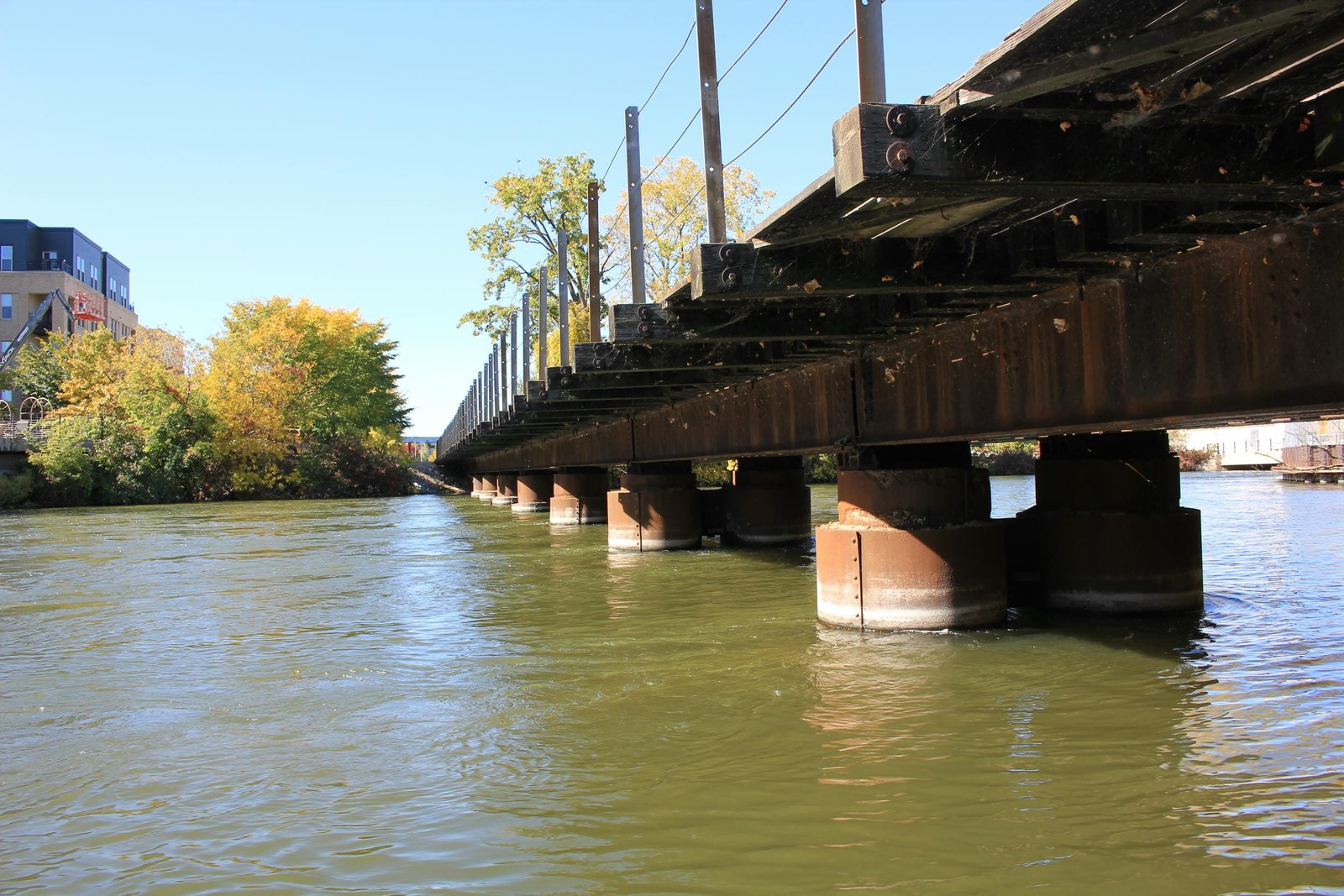
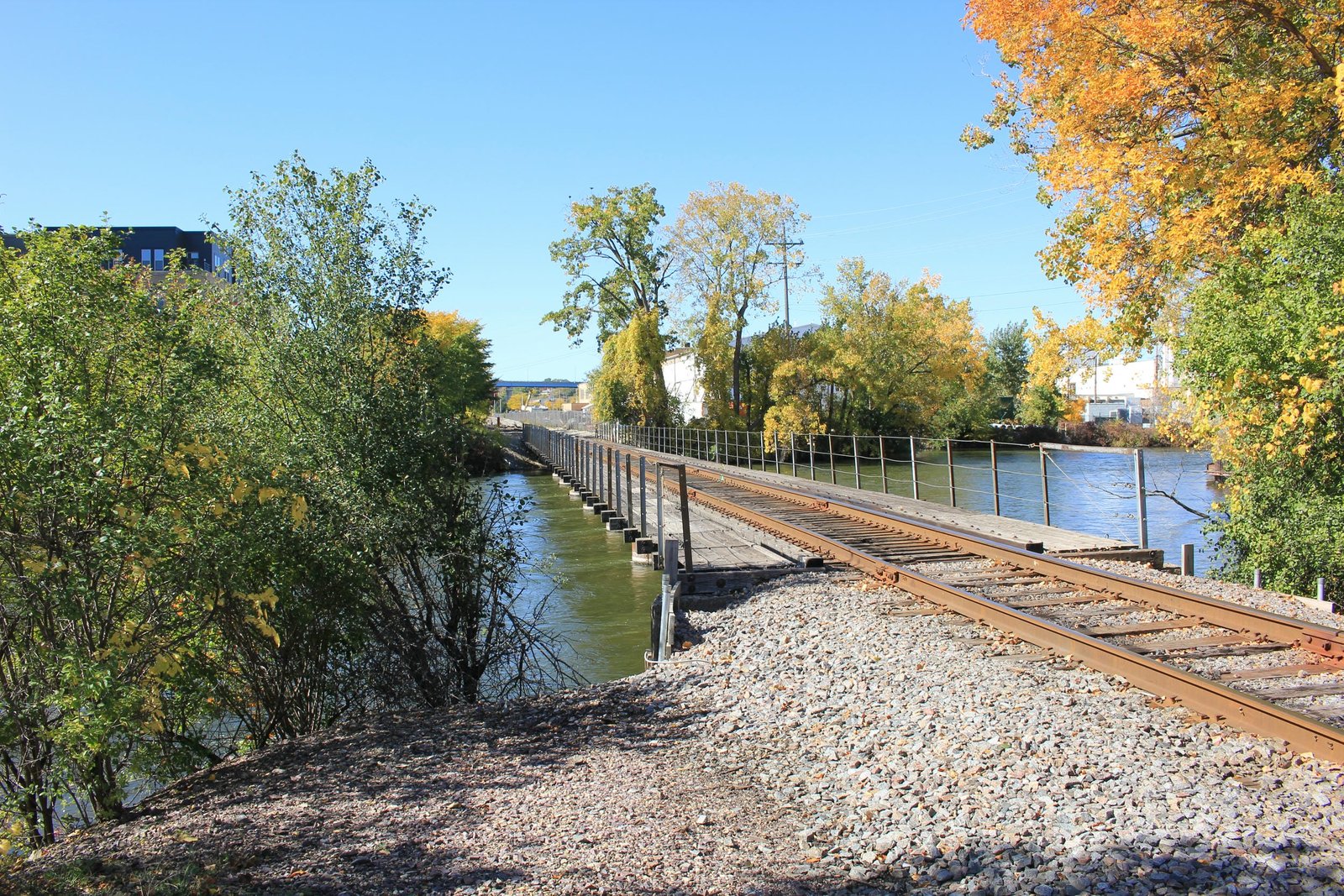
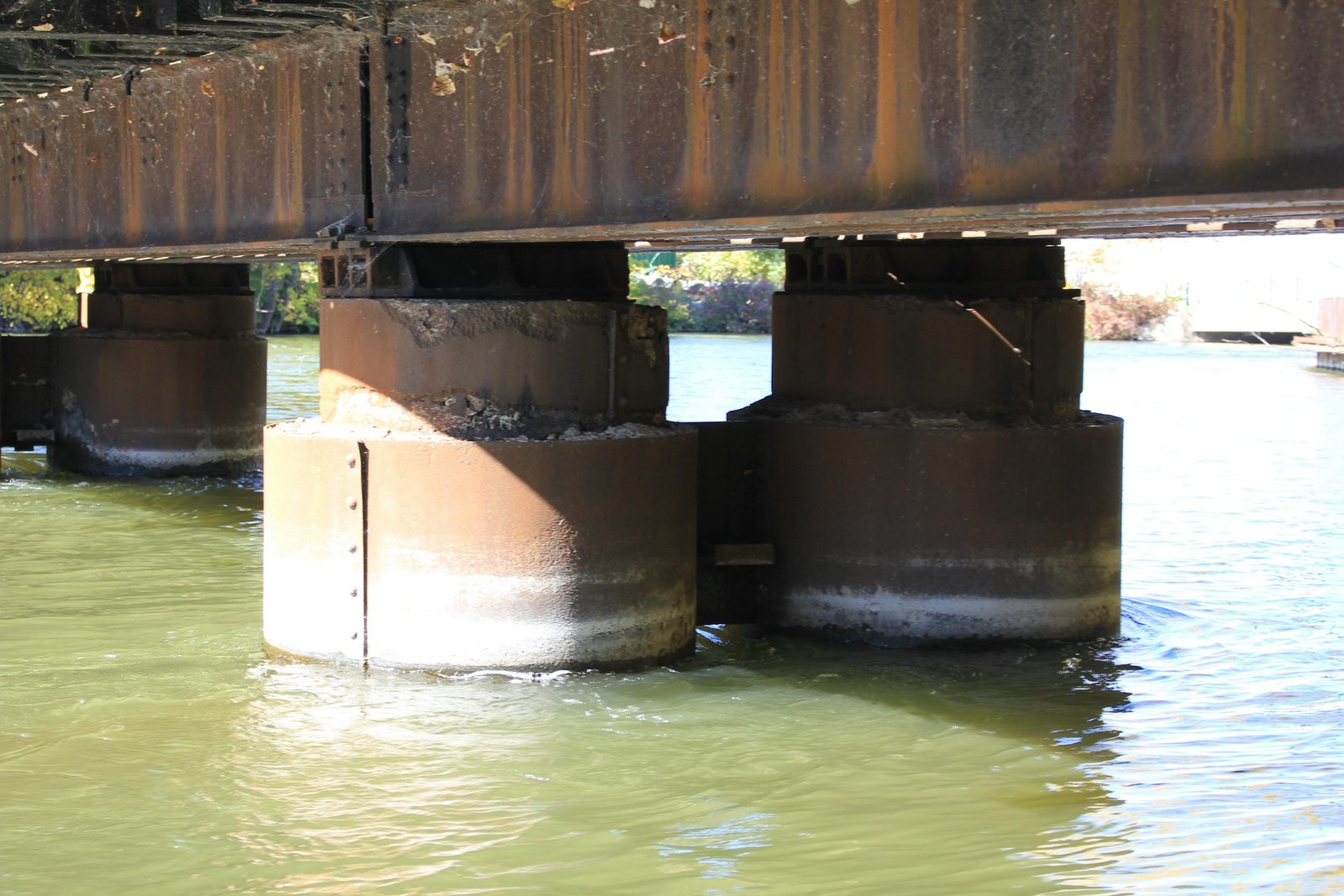
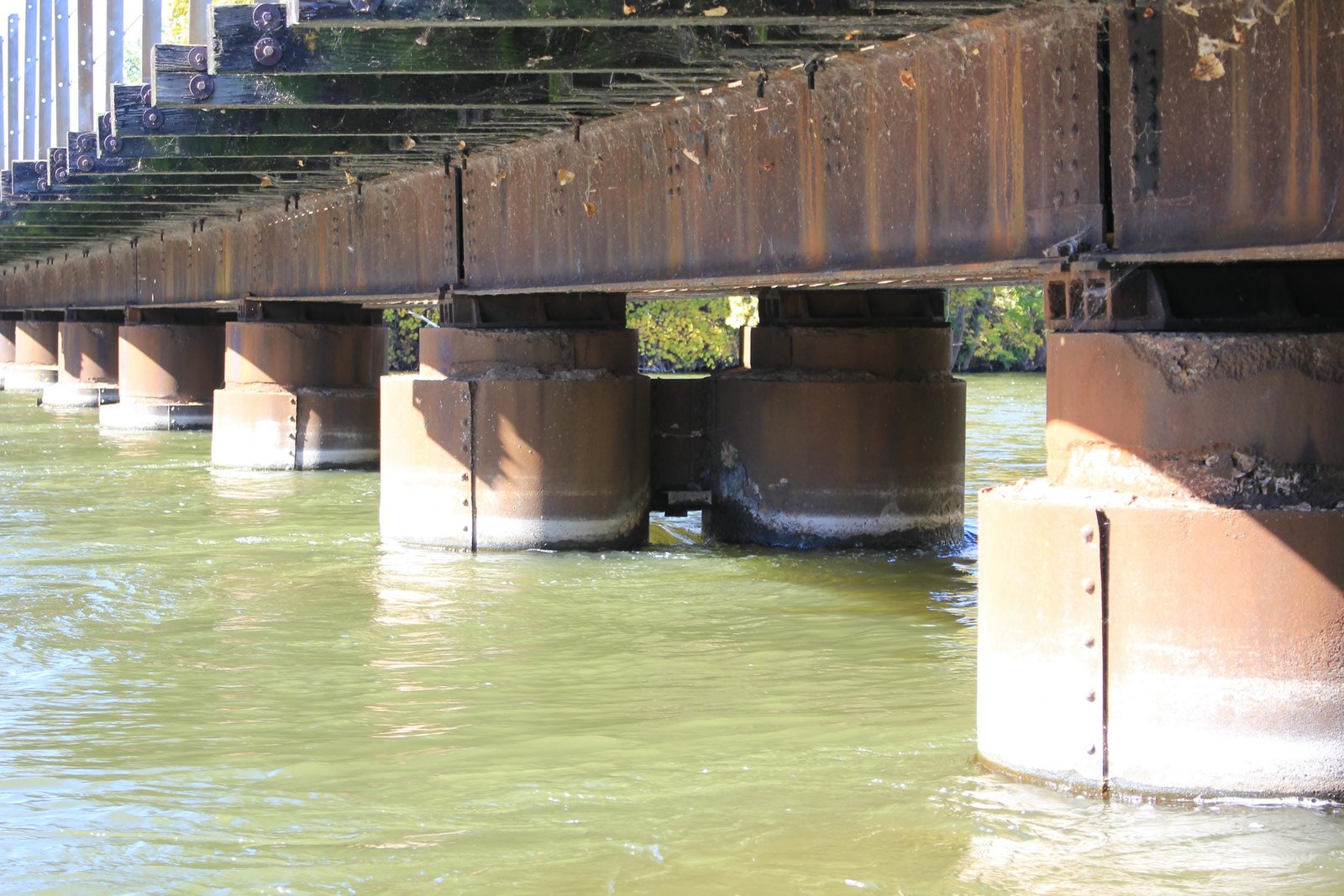
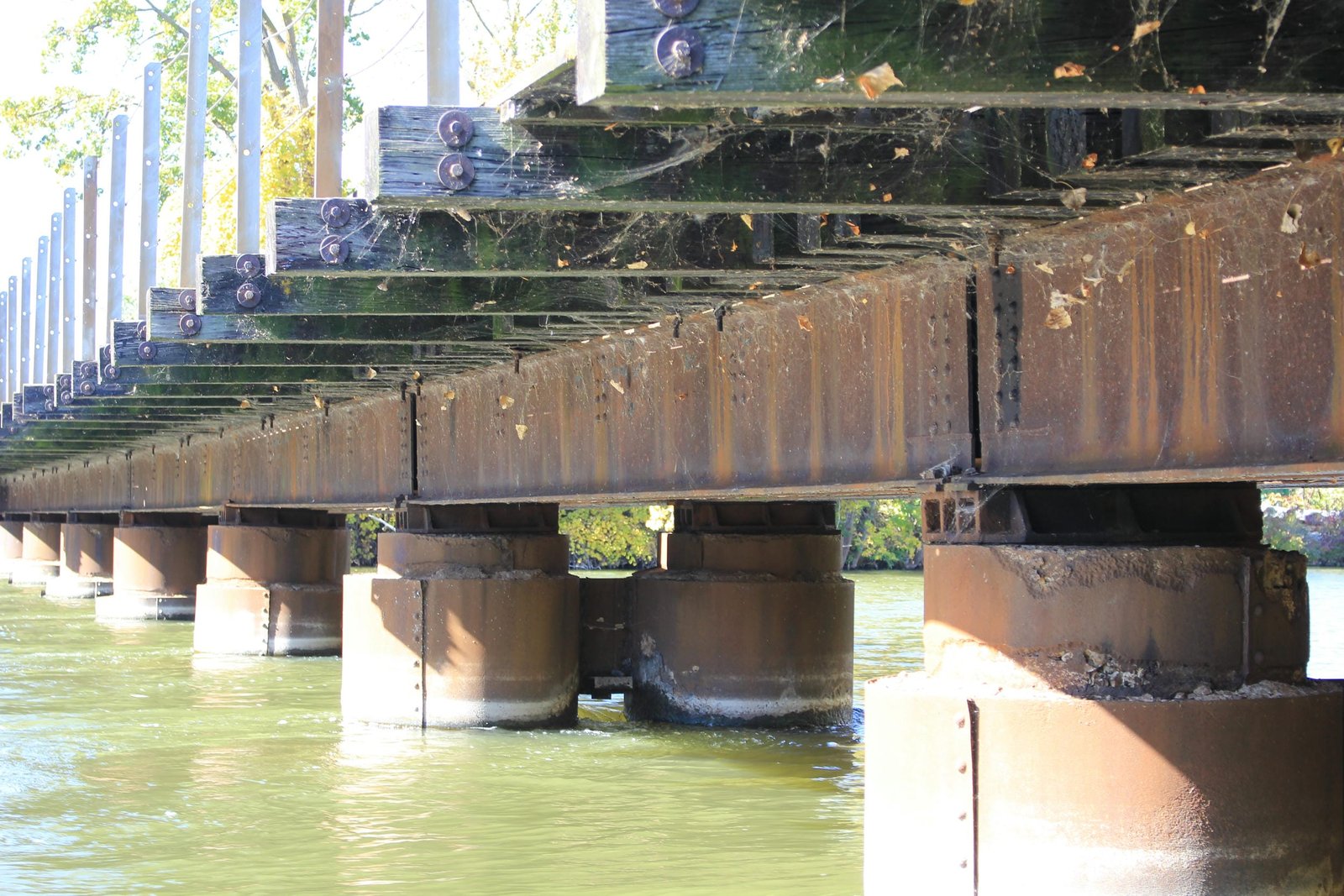
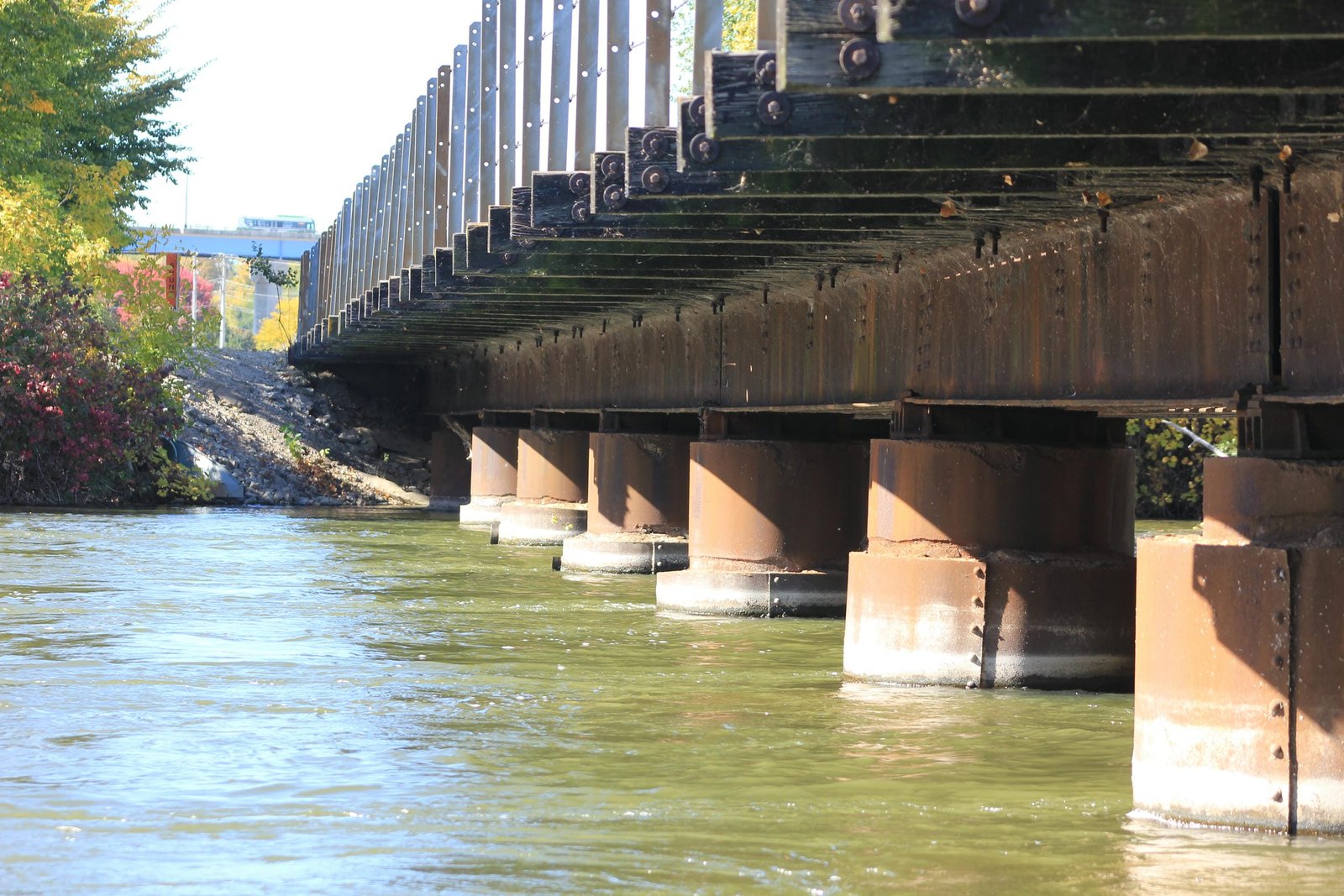
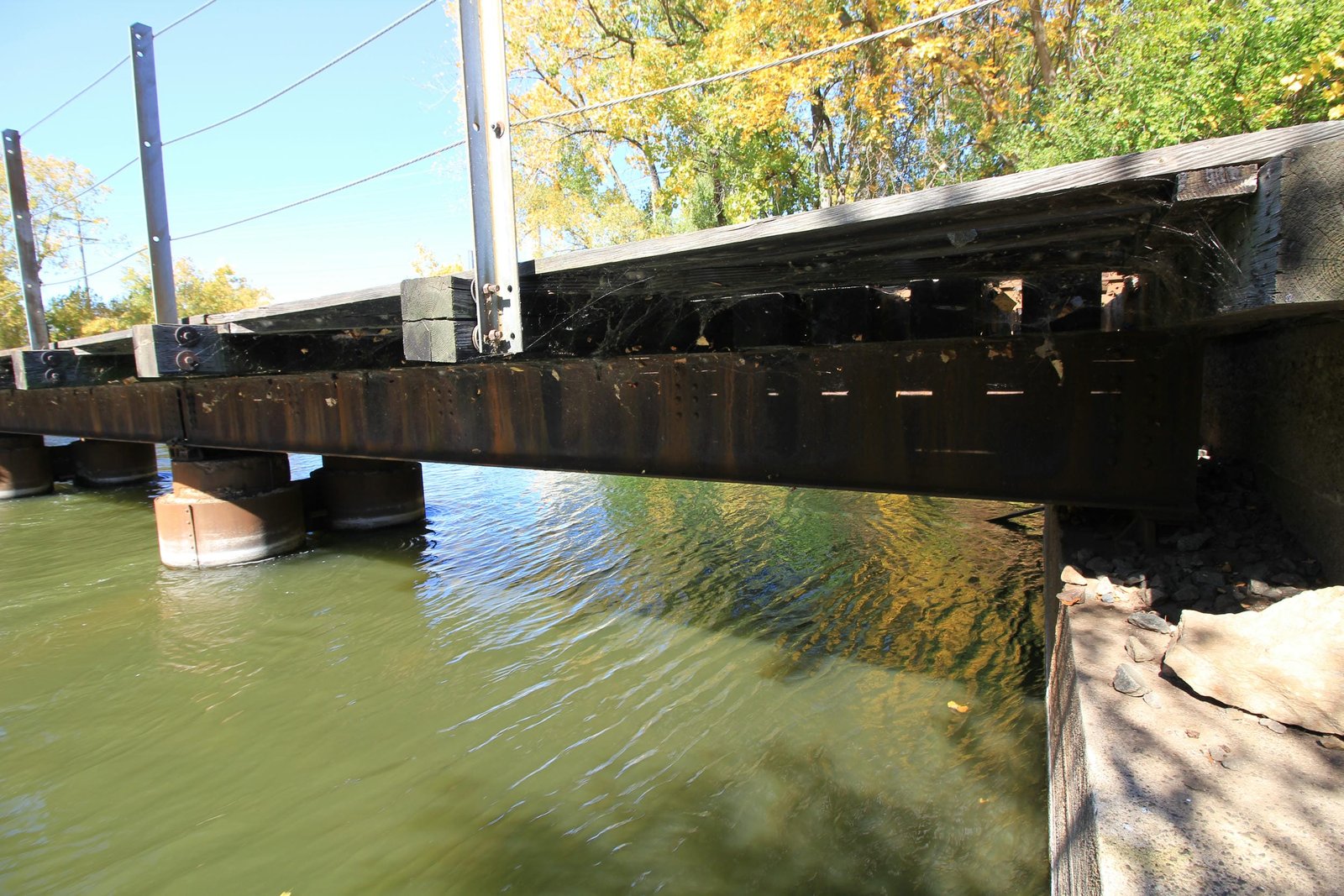
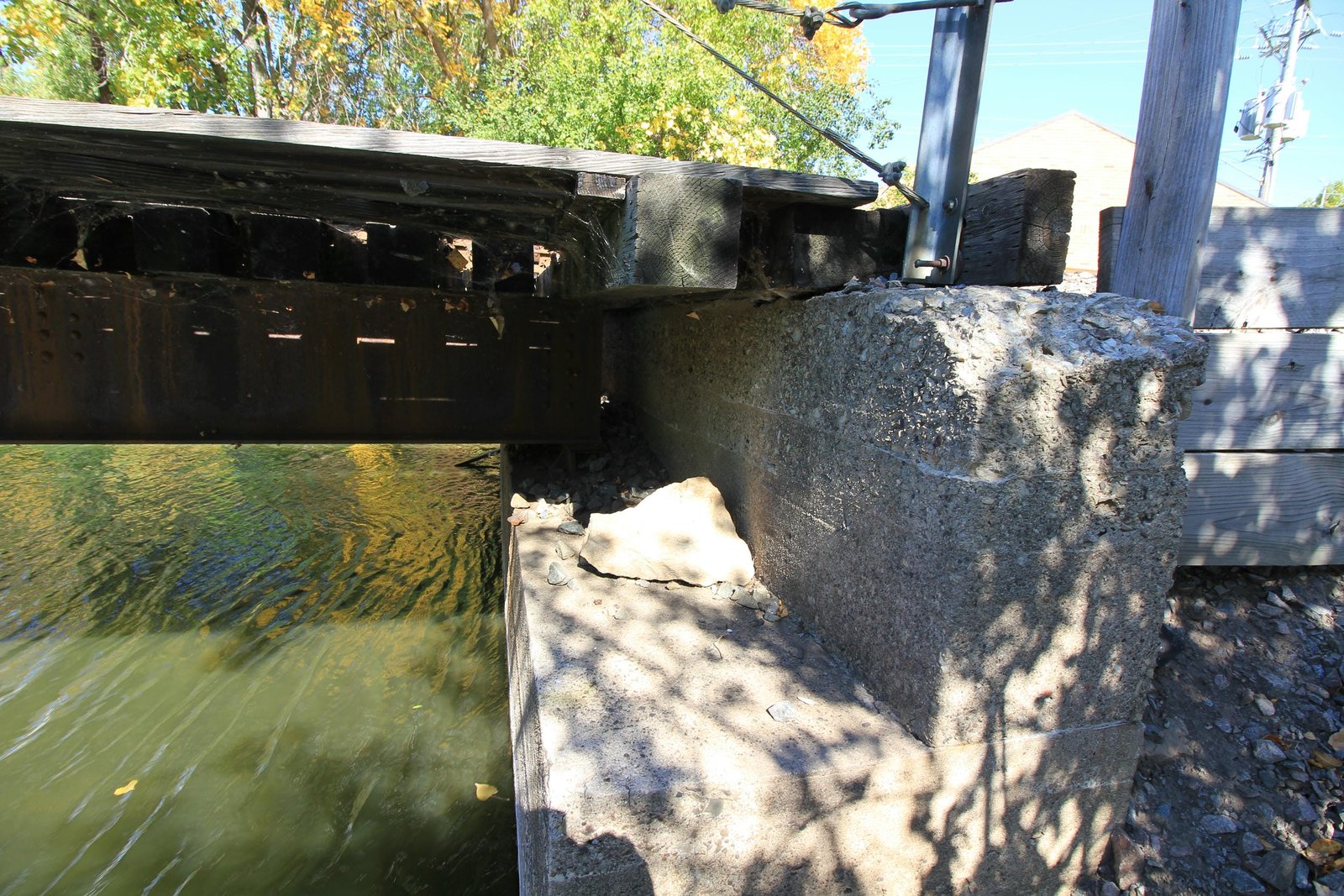
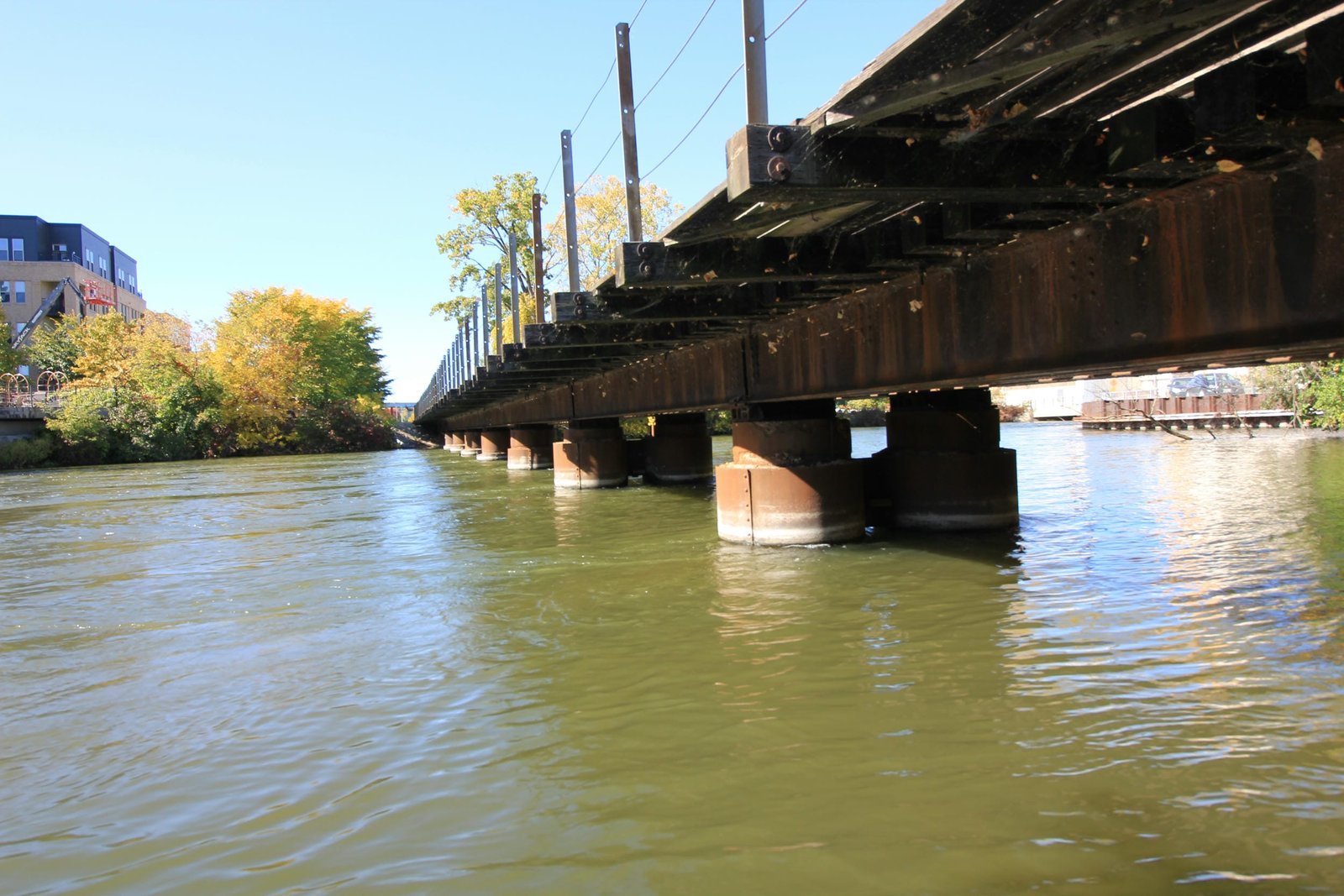
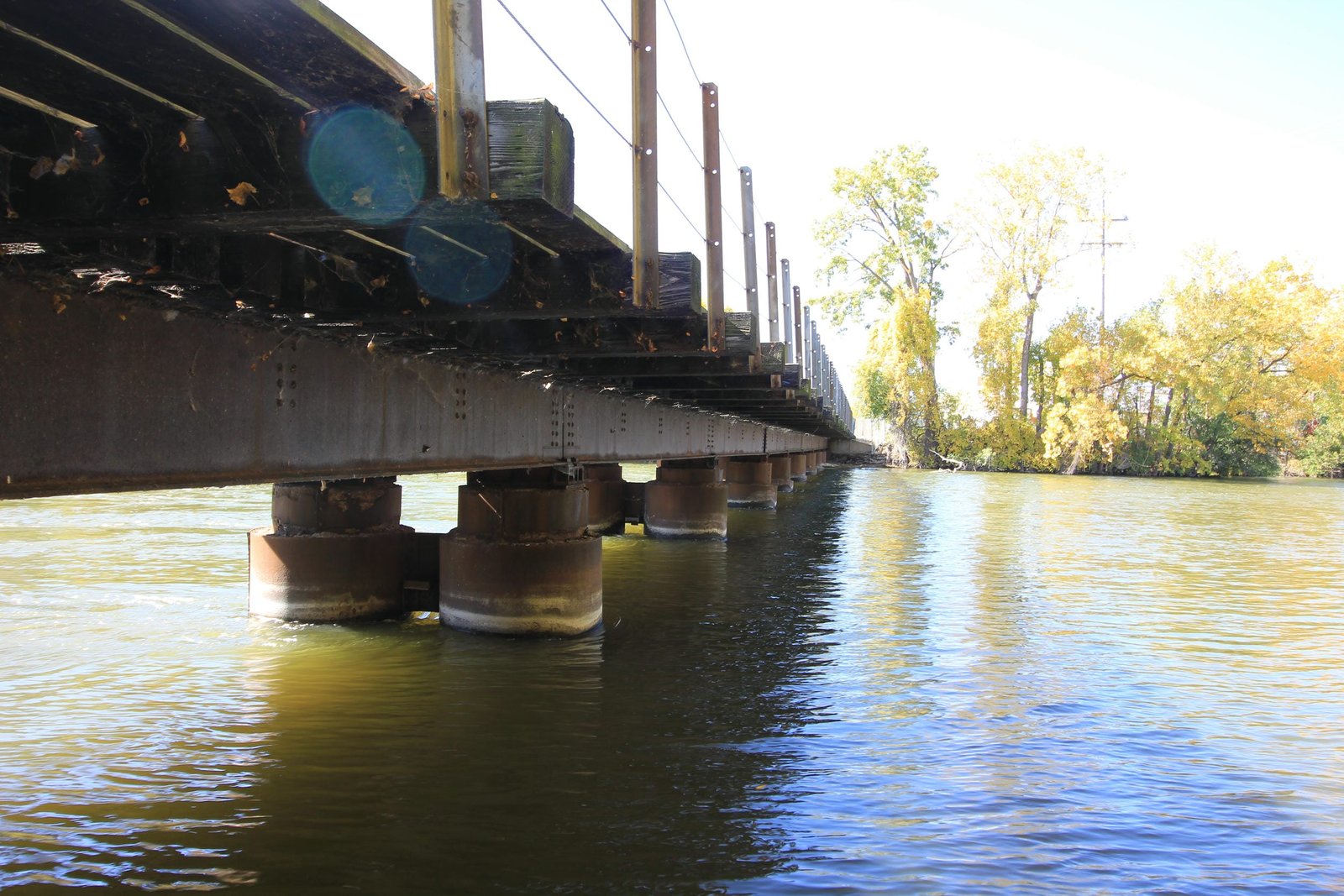
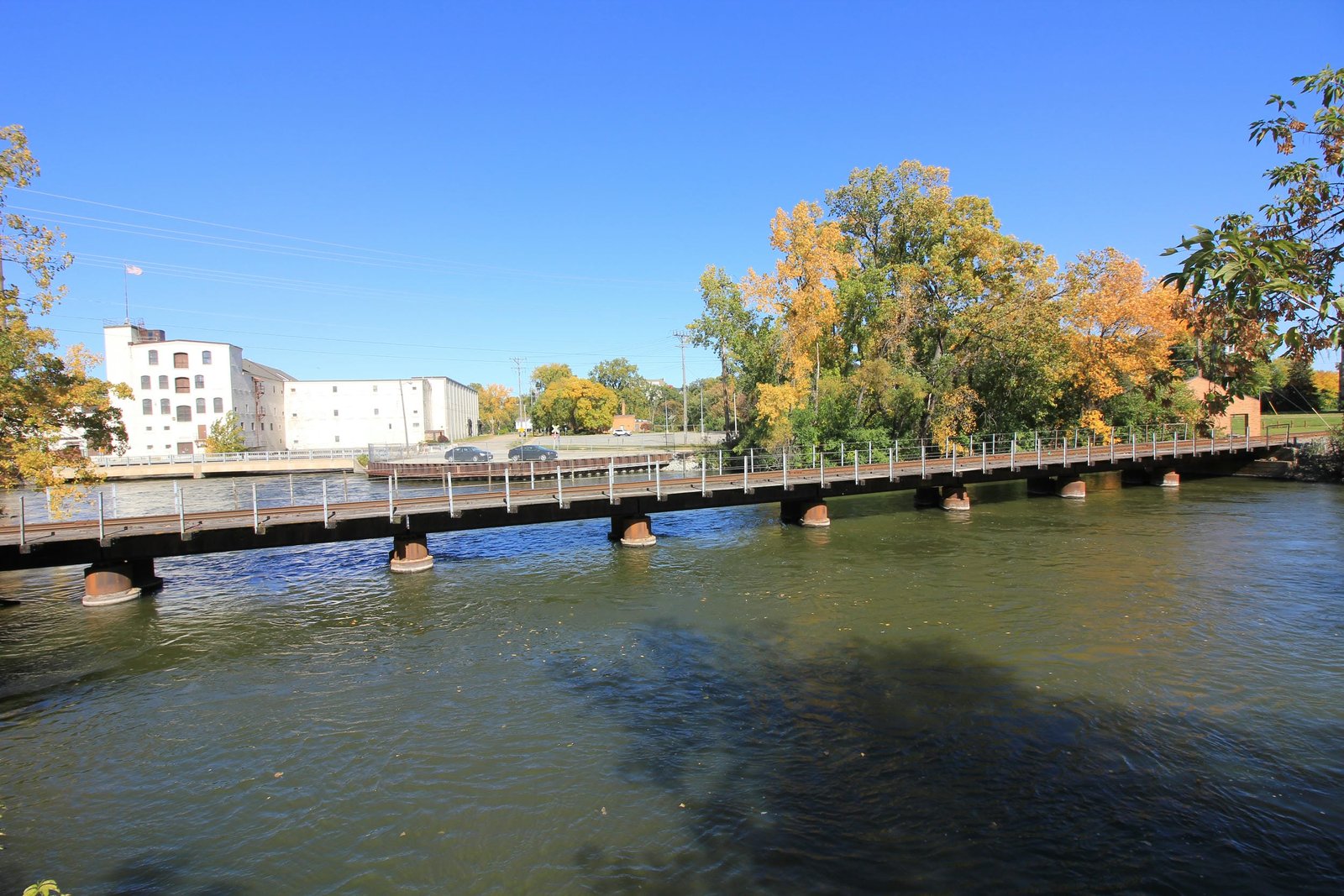
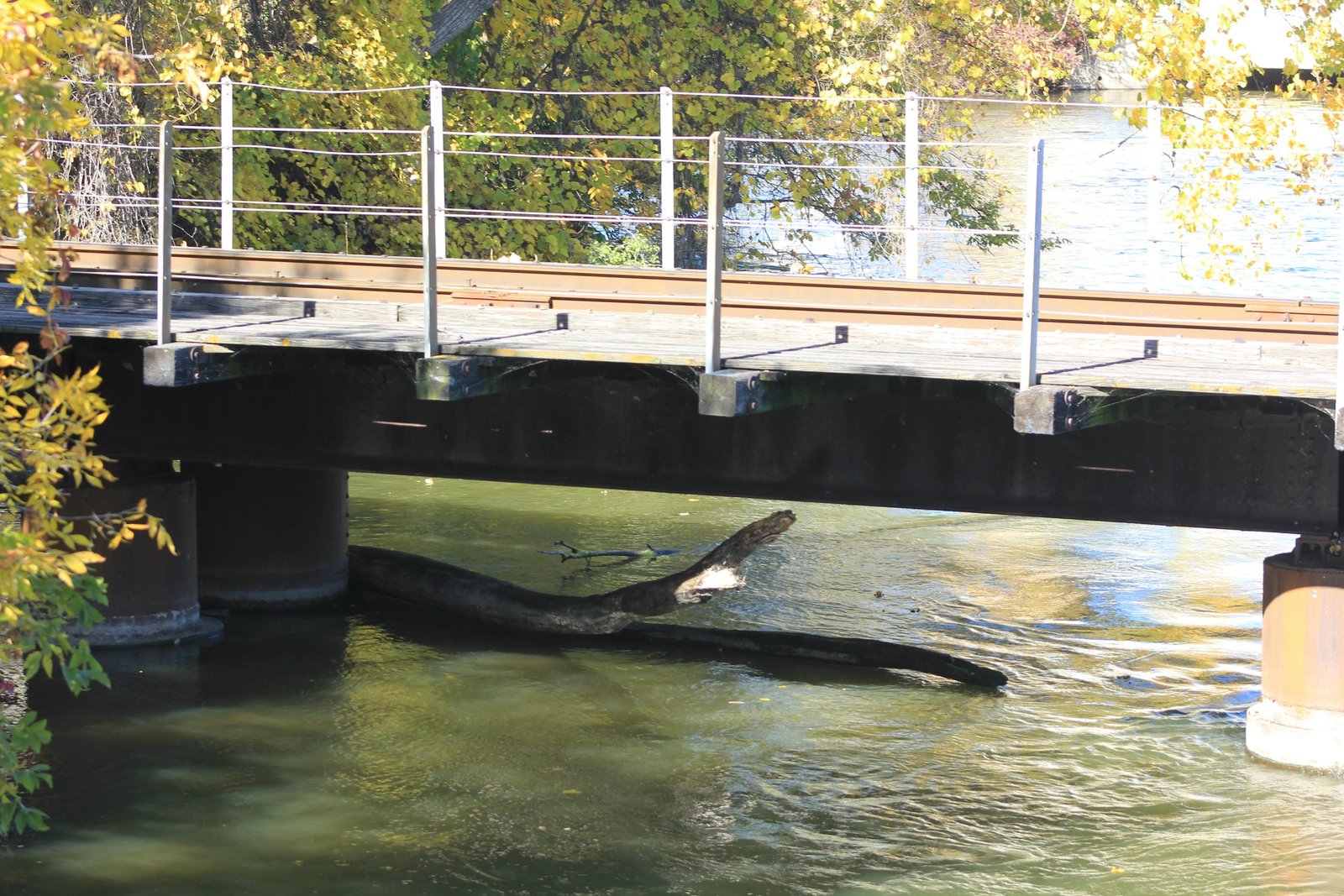
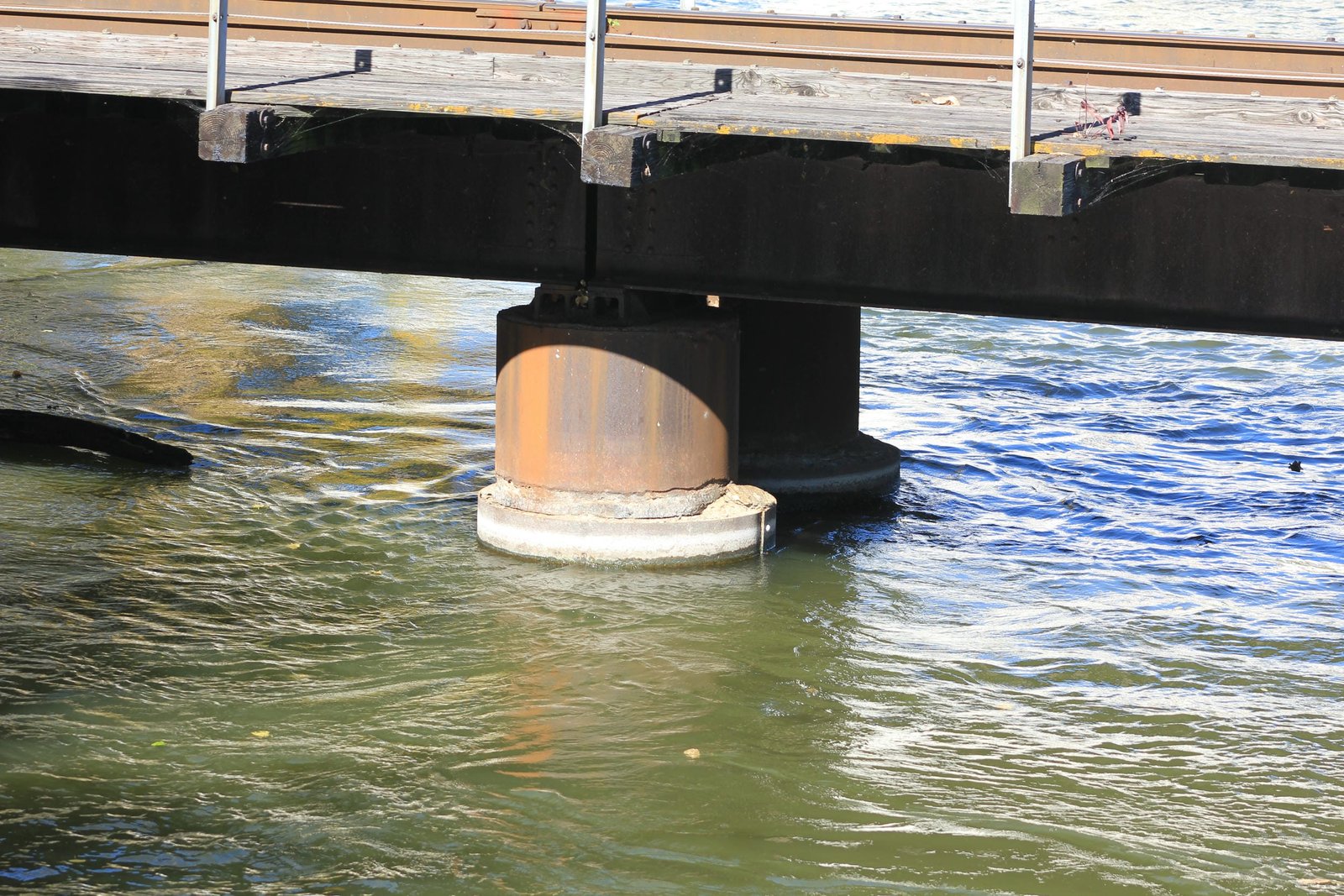
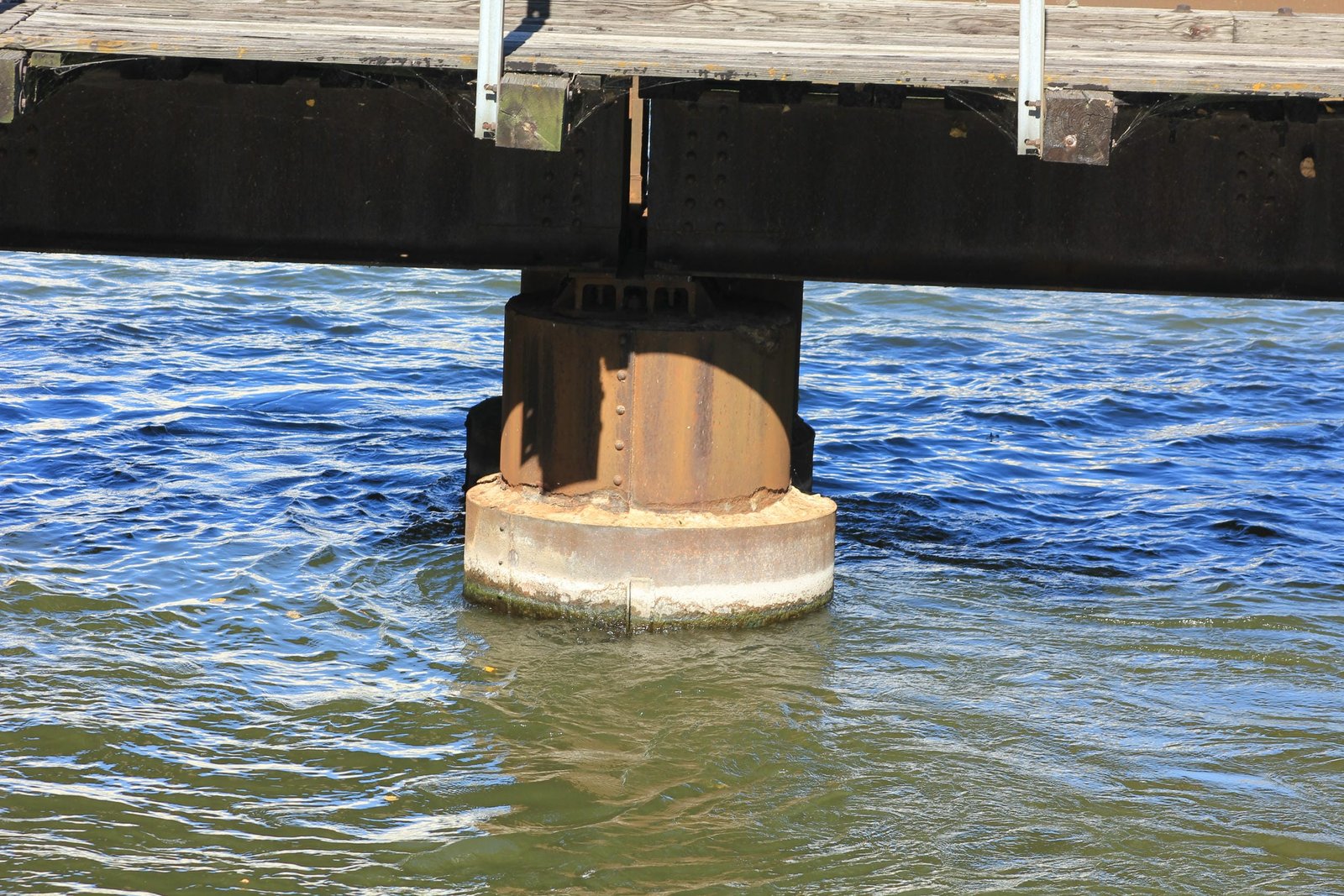
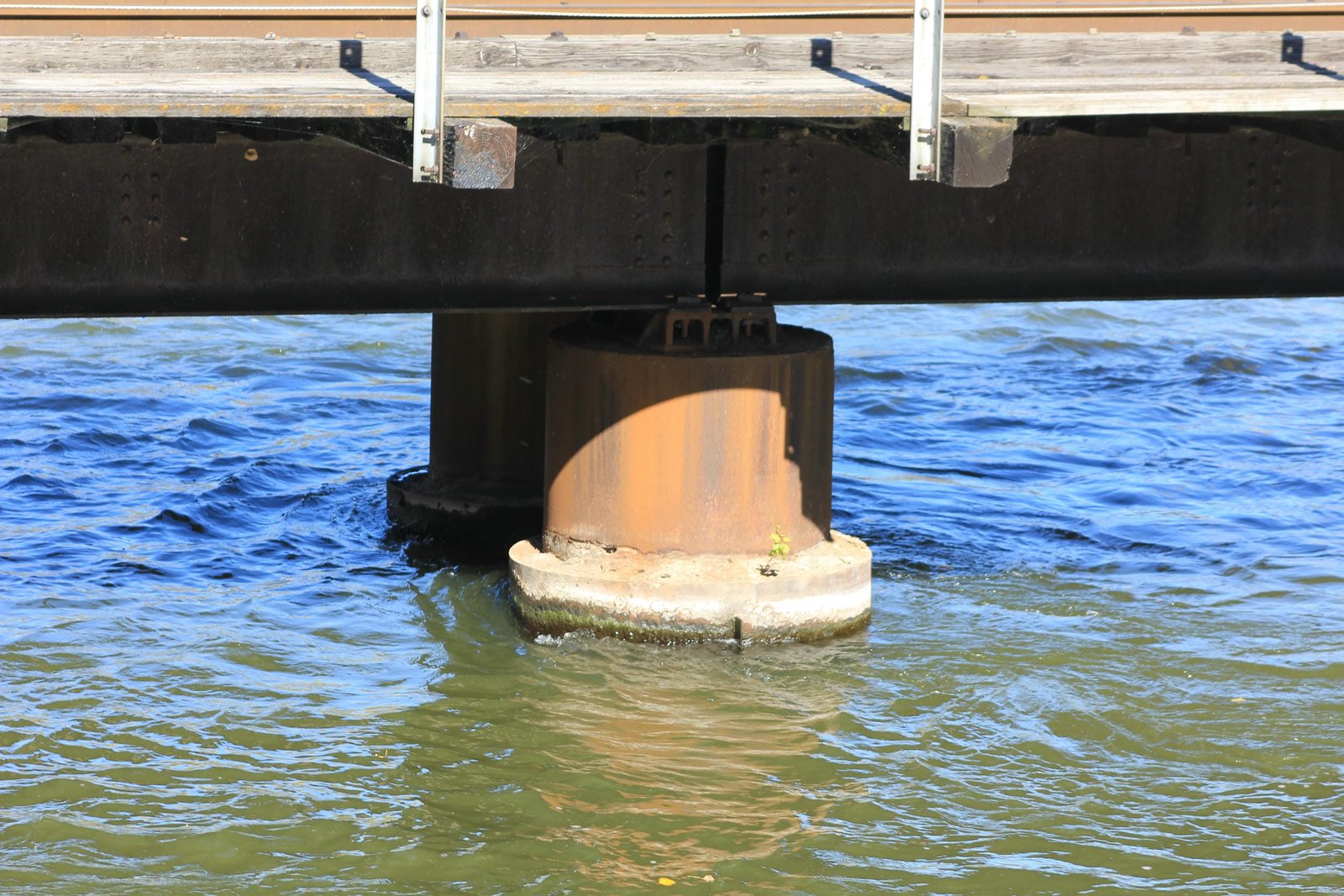
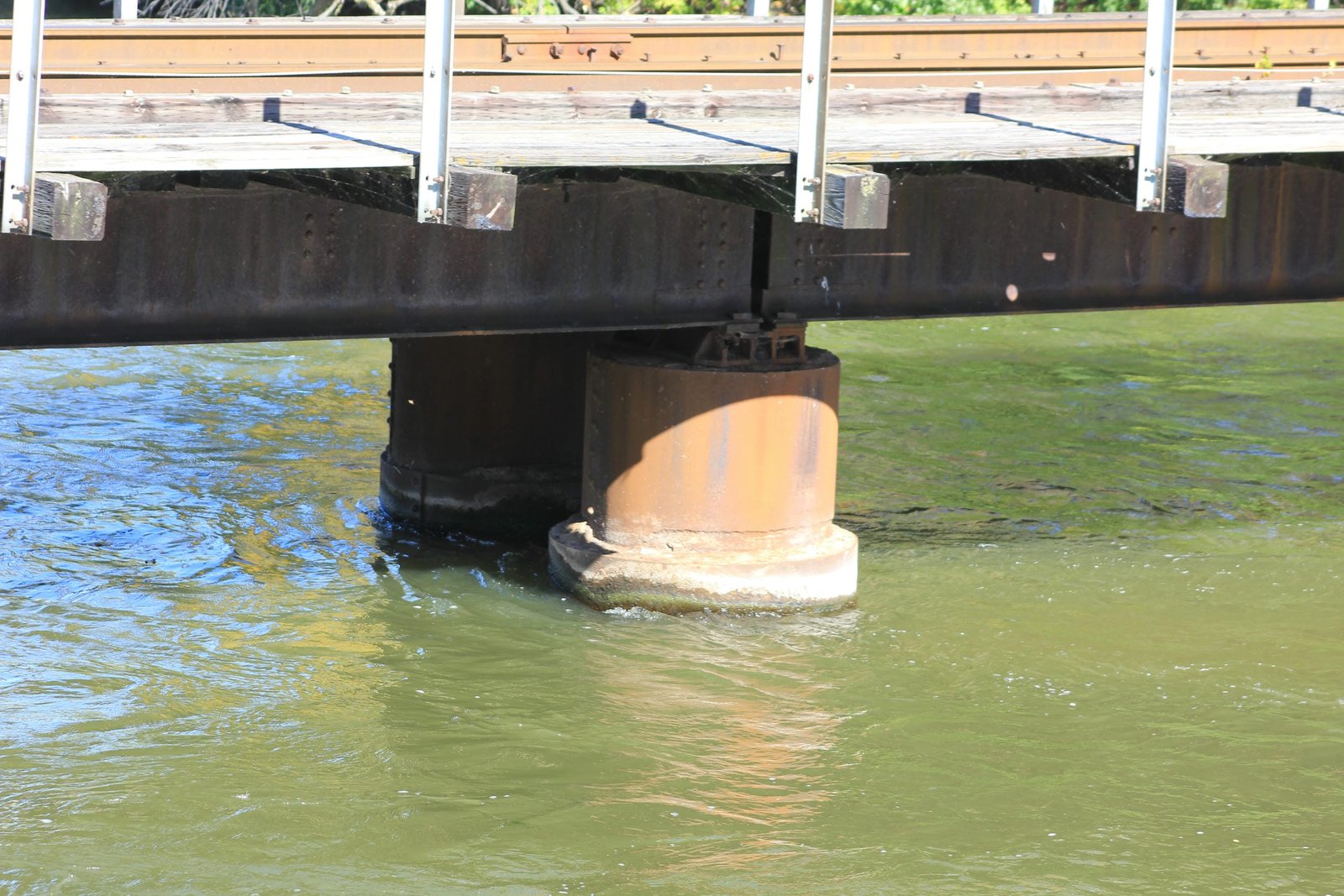
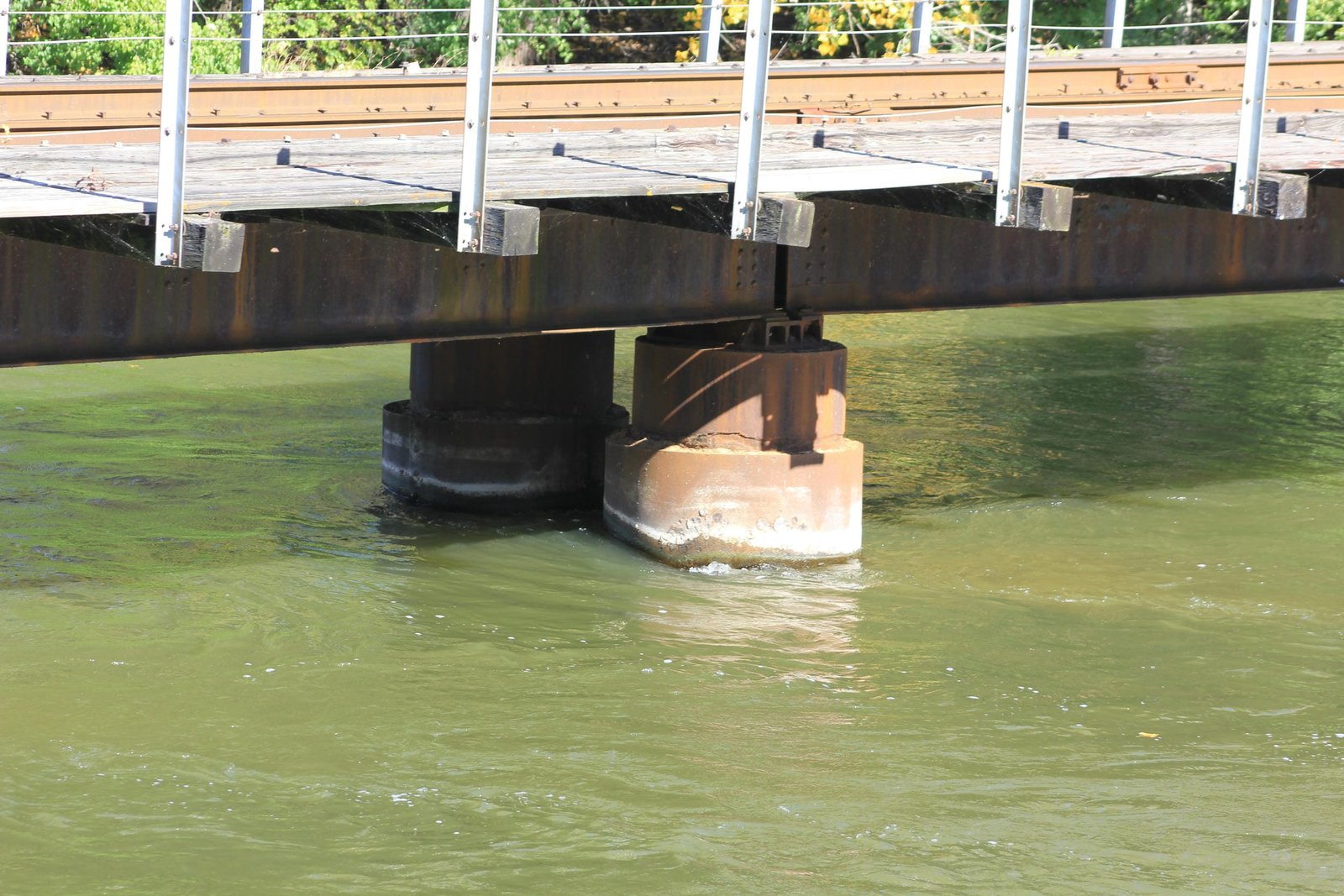
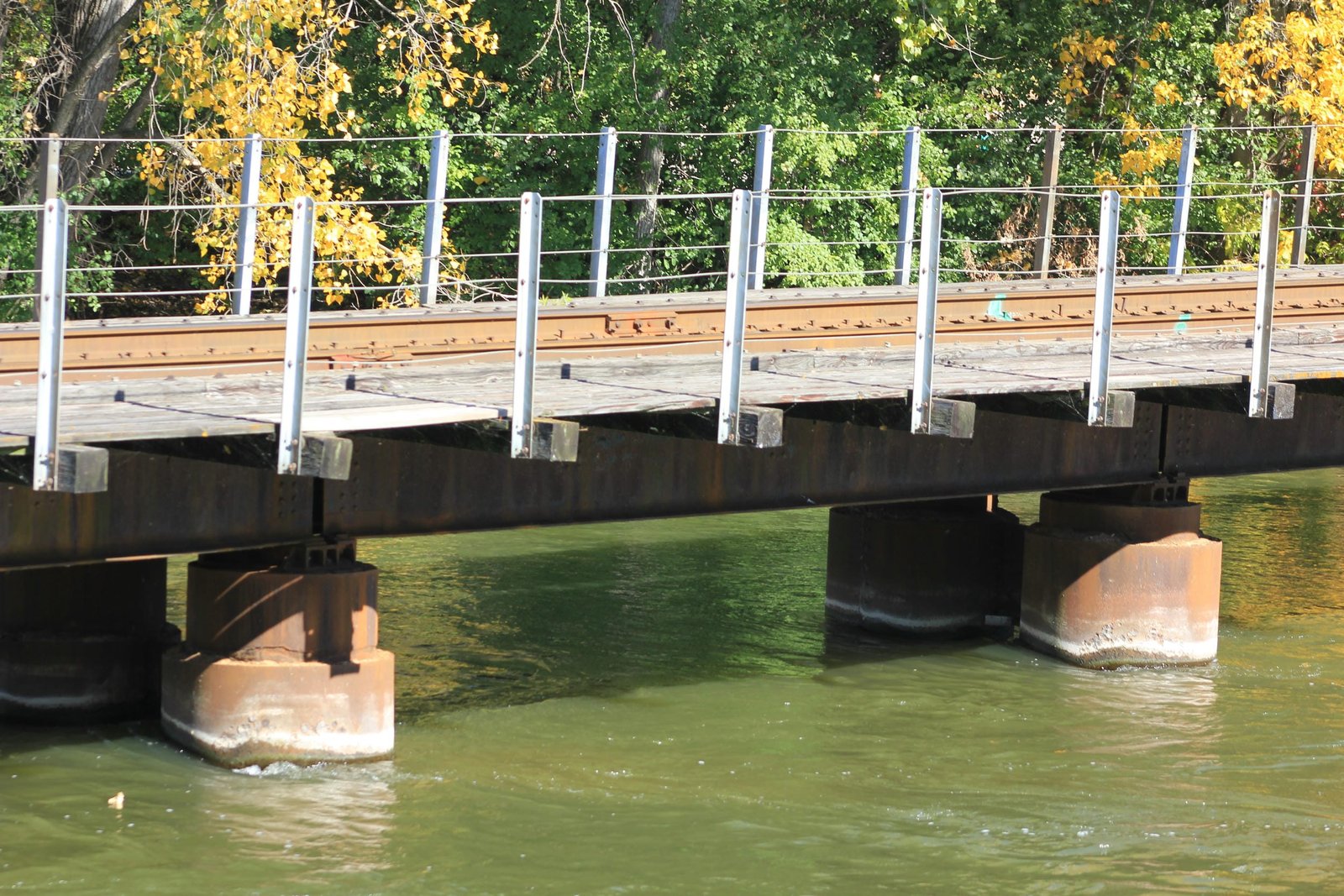
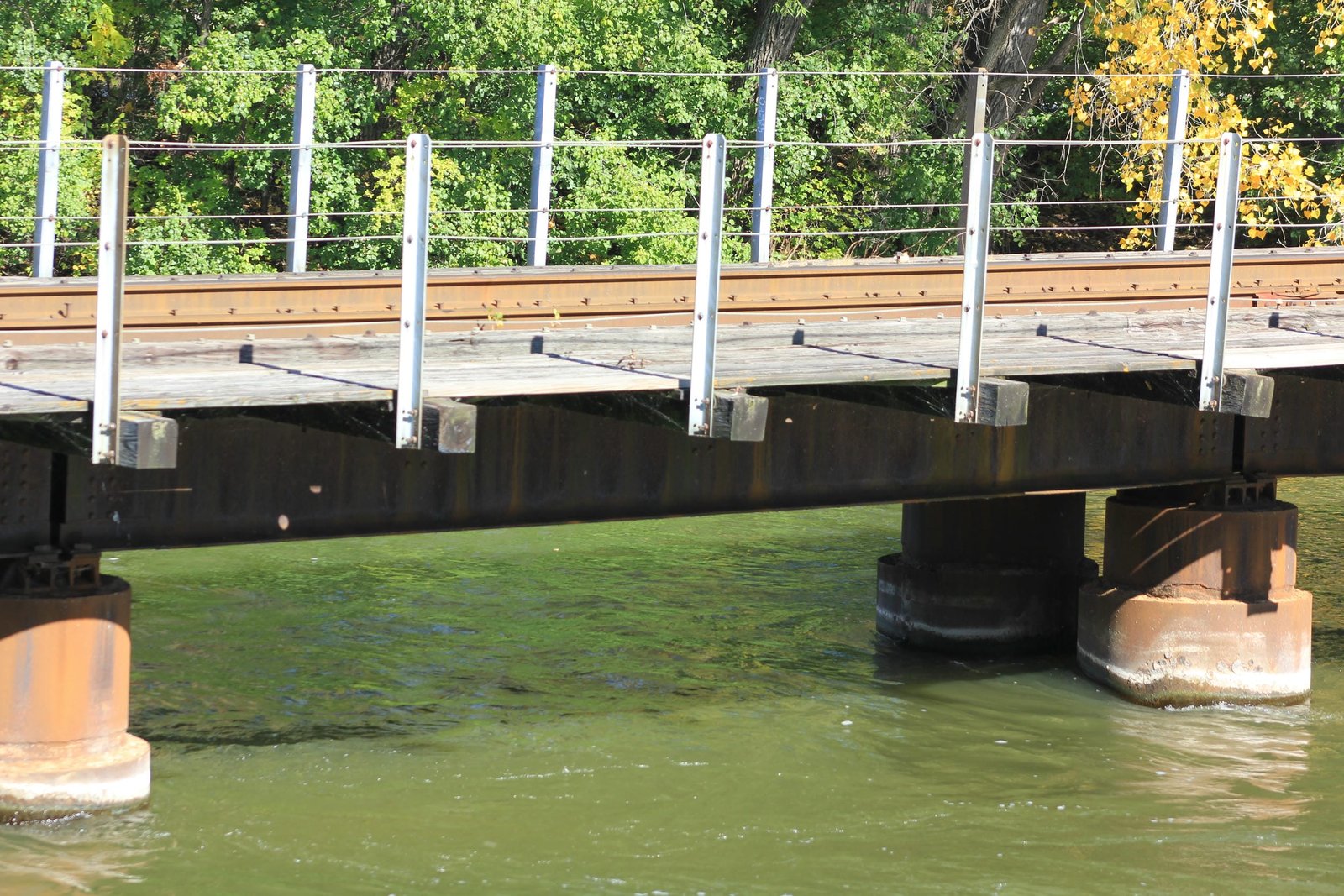
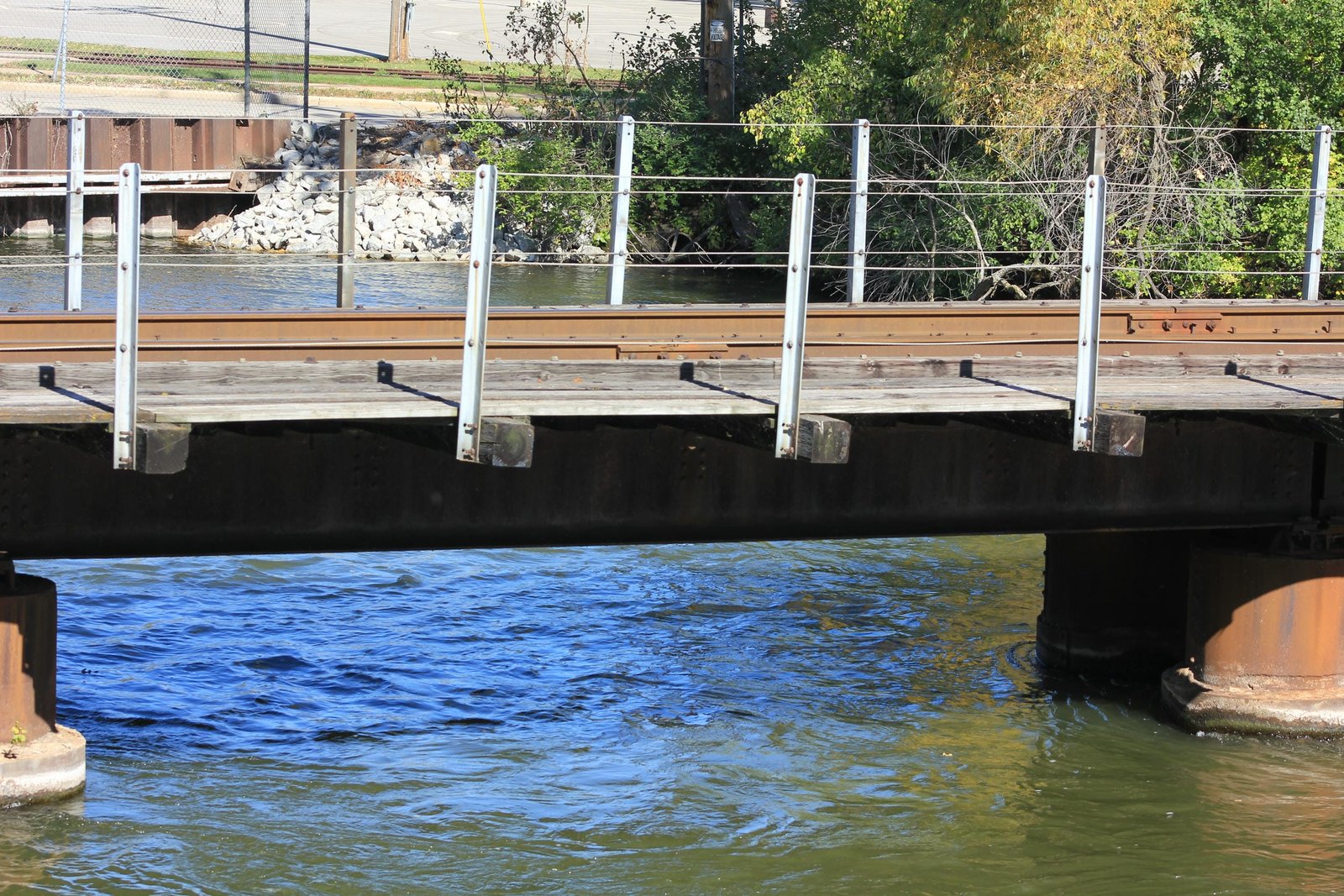
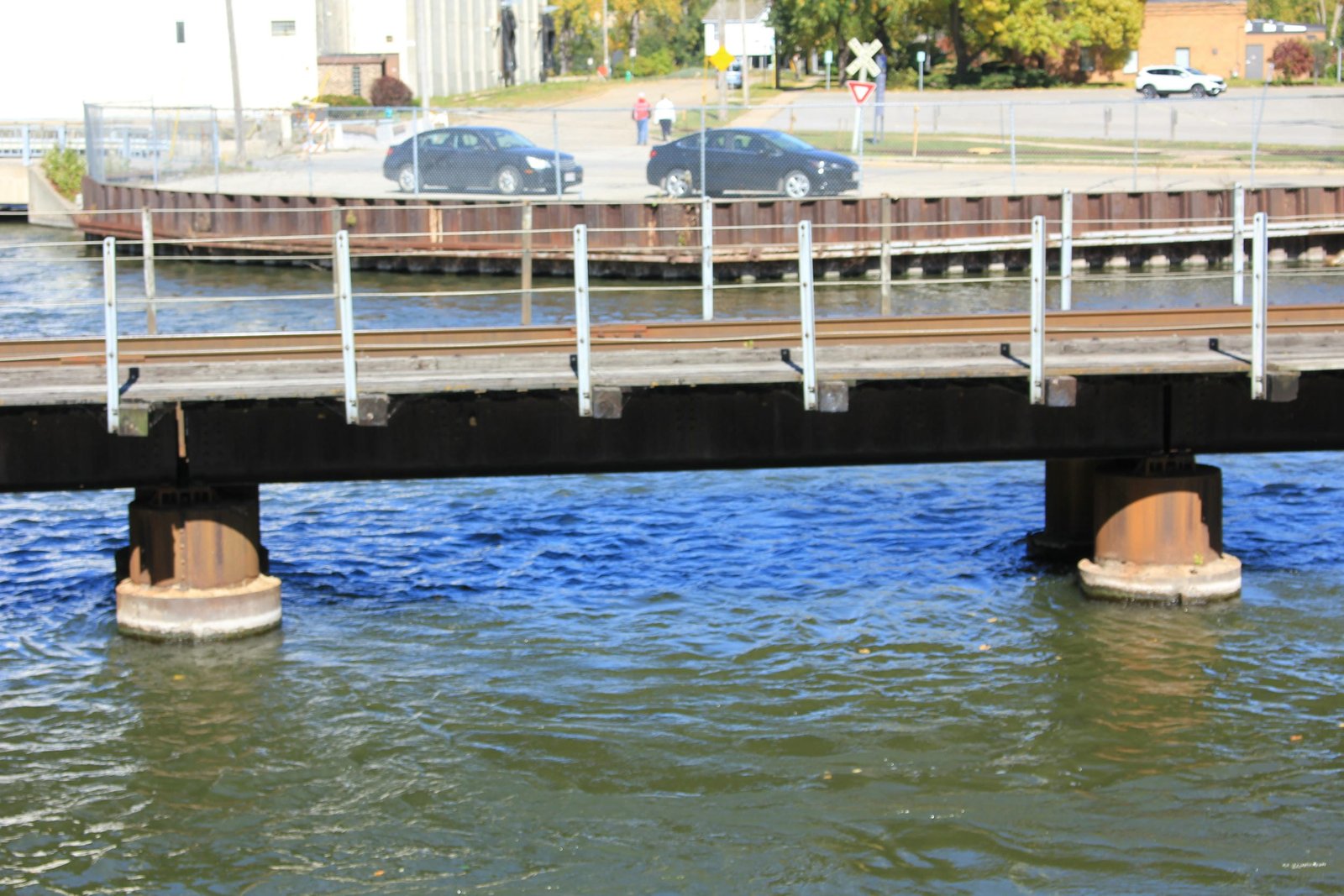
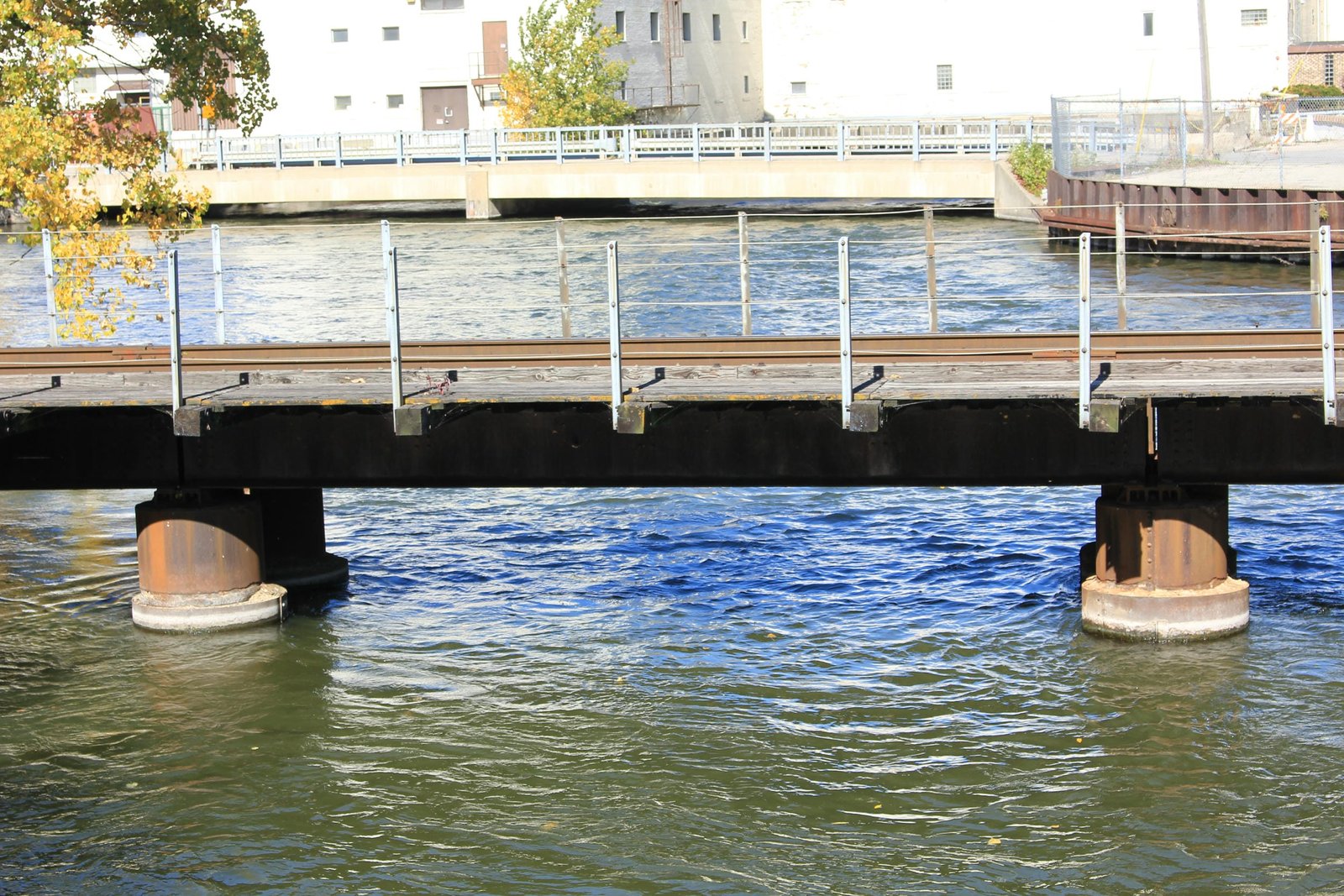
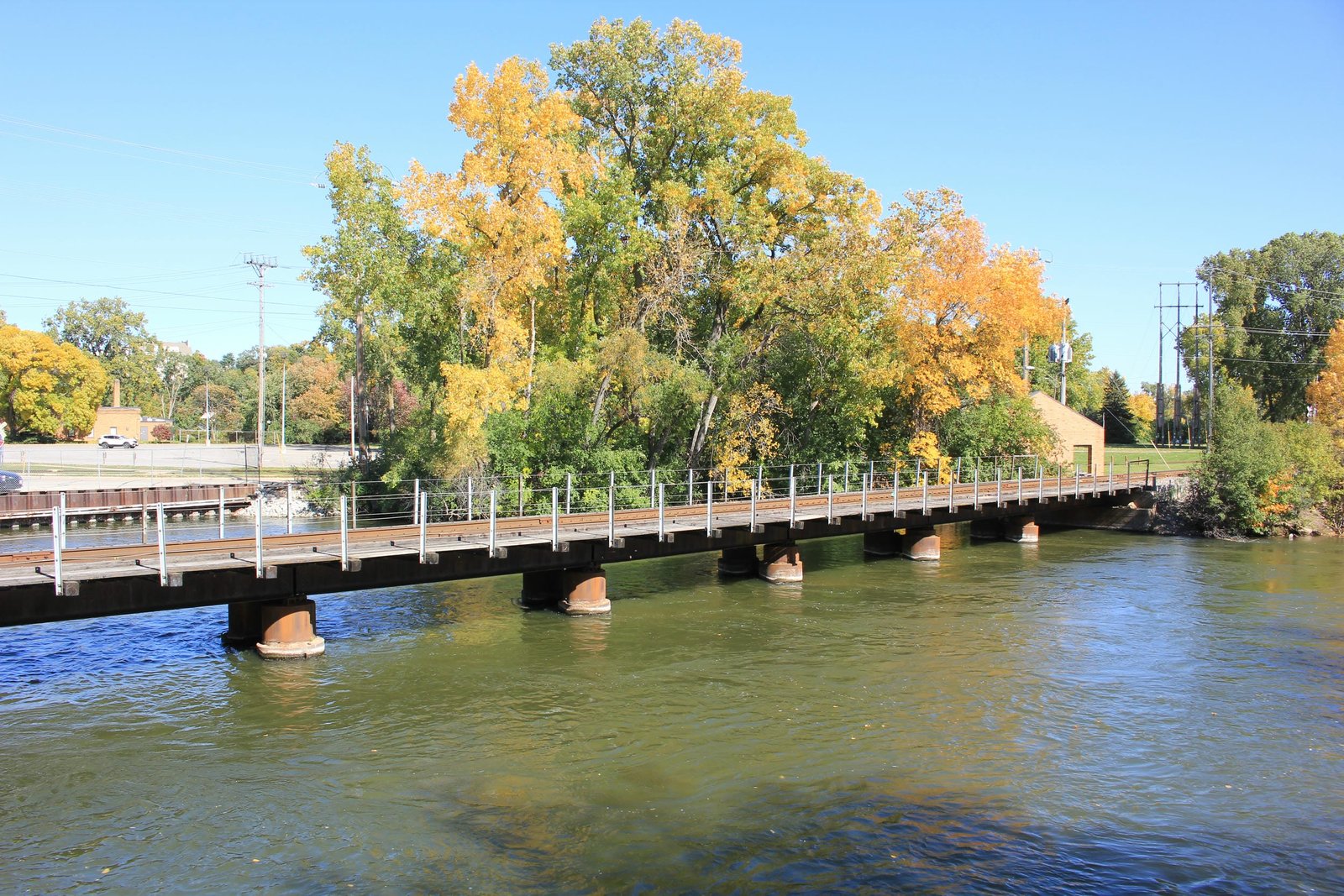
Located near South Island Street in Appleton, this steel stringer bridge carries the former Chicago & North Western Railway mainline over the South Channel of the Fox River. The first bridge at this location was likely a timber pile trestle, which had been continuously renewed since first constructed. In the early 20th Century, the C&NW made significant improvements throughout Appleton, replacing aging timber bridges with steel and concrete structures. A new bridge was reportedly constructed here in 1907, and consisted of twelve steel stringer spans, set onto steel cylinder piers and concrete abutments. The bridge was altered in approximately 1955, when the western three spans were filled, giving the bridge its present configuration. Currently, the bridge consists of nine 25-foot steel stringer spans, set onto steel cylinder piers and concrete abutments. The superstructure uses a standard design for the era, with six shallow beams arranged into two sets of three. The piers use two different designs, consisting of different diameter steel cylinders filled with concrete. The abutments use a standard rectangular design with no wing walls. American Bridge Company fabricated the superstructure, while an unknown contractor constructed the substructures. Steel stringer spans were popular for railroad use, as they were durable and easy to construct. The C&NW used steel cylinder piers at several major structures during the early 20th Century, as this design of pier was particularly adept to be constructed under live traffic without minimal interruption to service, and required no dredging or cofferdams to reach stable ground. Many bridges in the Fox Cities area use a similar design to this bridge, due to the dynamic nature of the Fox River and need for lengthy, permanent structures with no concern for clearance underneath. Since the west spans were filled, the bridge has seen no significant alterations, and remains in regular use. Overall, the bridge appears to be in fair to good condition, with no significant deterioration noted. The author has ranked this bridge as being locally significant, due to the common design.
Citations
| Build date and builder (superstructure) | Chicago & North Western Railway Valuation Notes at the Chicago & North Western Historical Society Archives |
| Railroad History Citation | ICC Valuation Information, Compiled by Richard S. Steele |