
Click the photo to view the full-size version
| Name | C&NW Des Moines River Bridge Chicago Great Western Railway Bridge #K219.79 |
| Built By | Chicago Great Western Railway |
| Currently Owned By | Union Pacific Railroad |
| Superstructure Contractor | American Bridge Company of New York |
| Substructure Contractor | Shepard, Winston & Company of St. Paul, Minnesota |
| Length | 720 Feet Total, 180 Foot Spans |
| Width | 1 Track |
| Height Above Ground | 25 Feet (Estimated) |
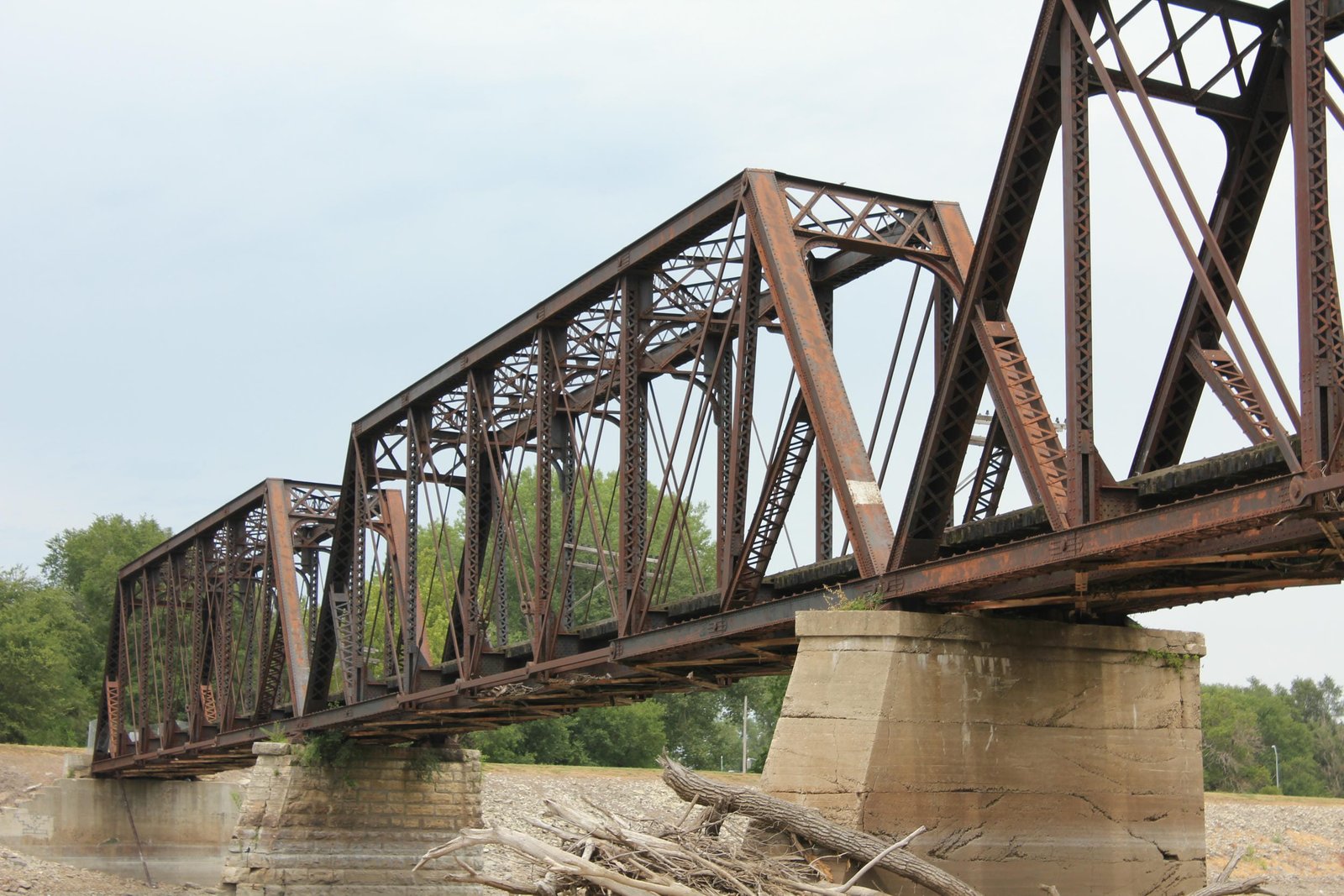
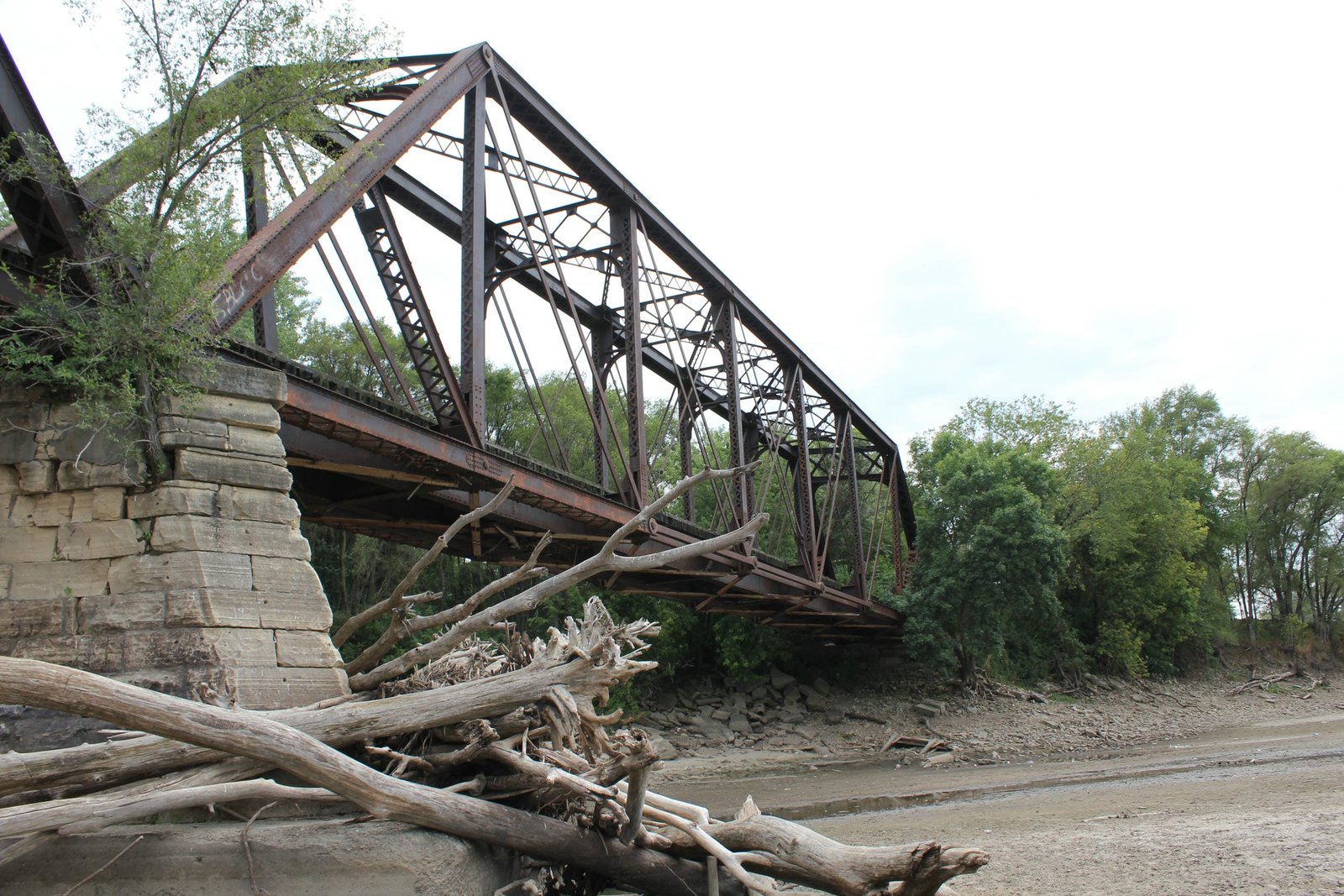
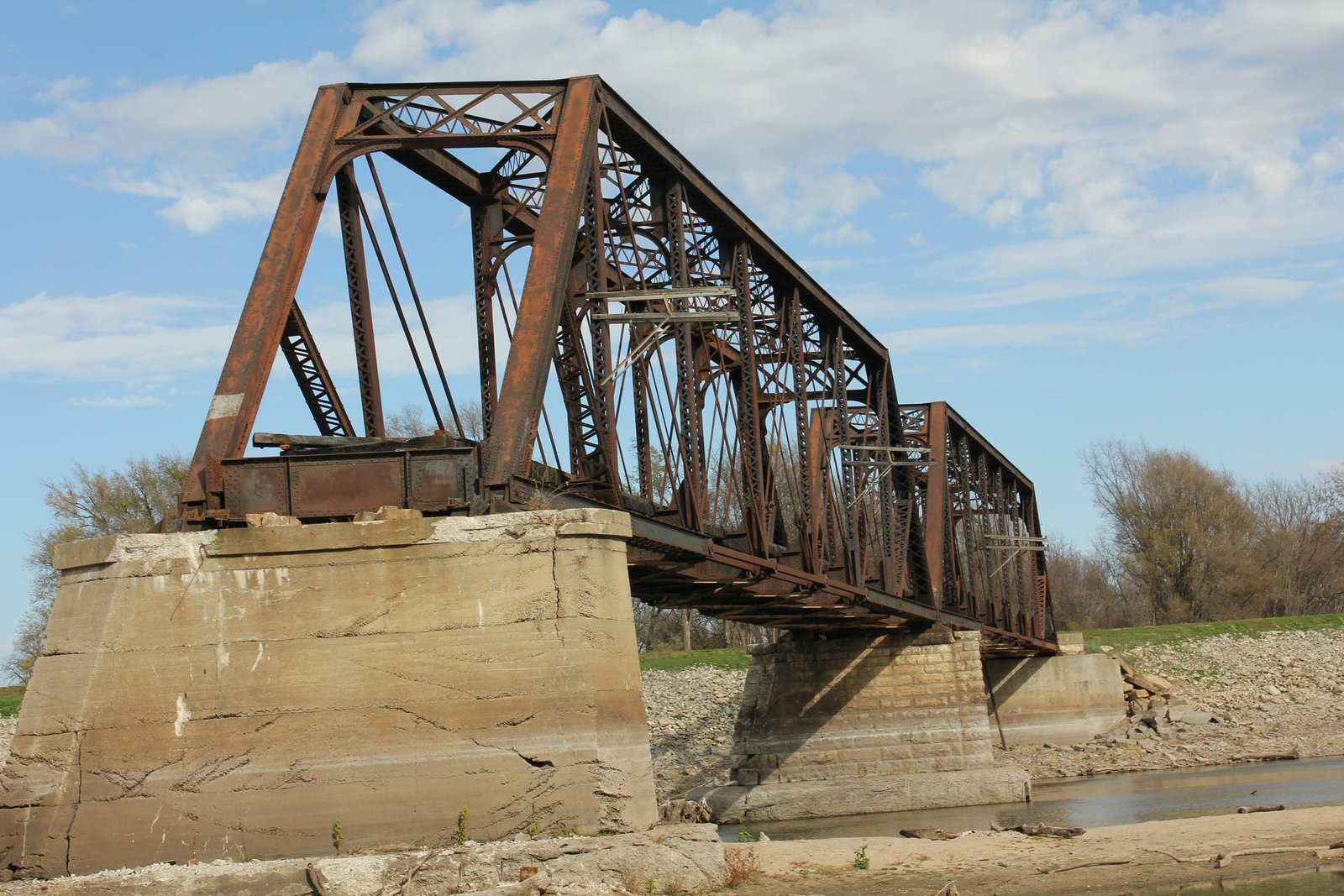
| Superstructure Design | Pratt Through Truss |
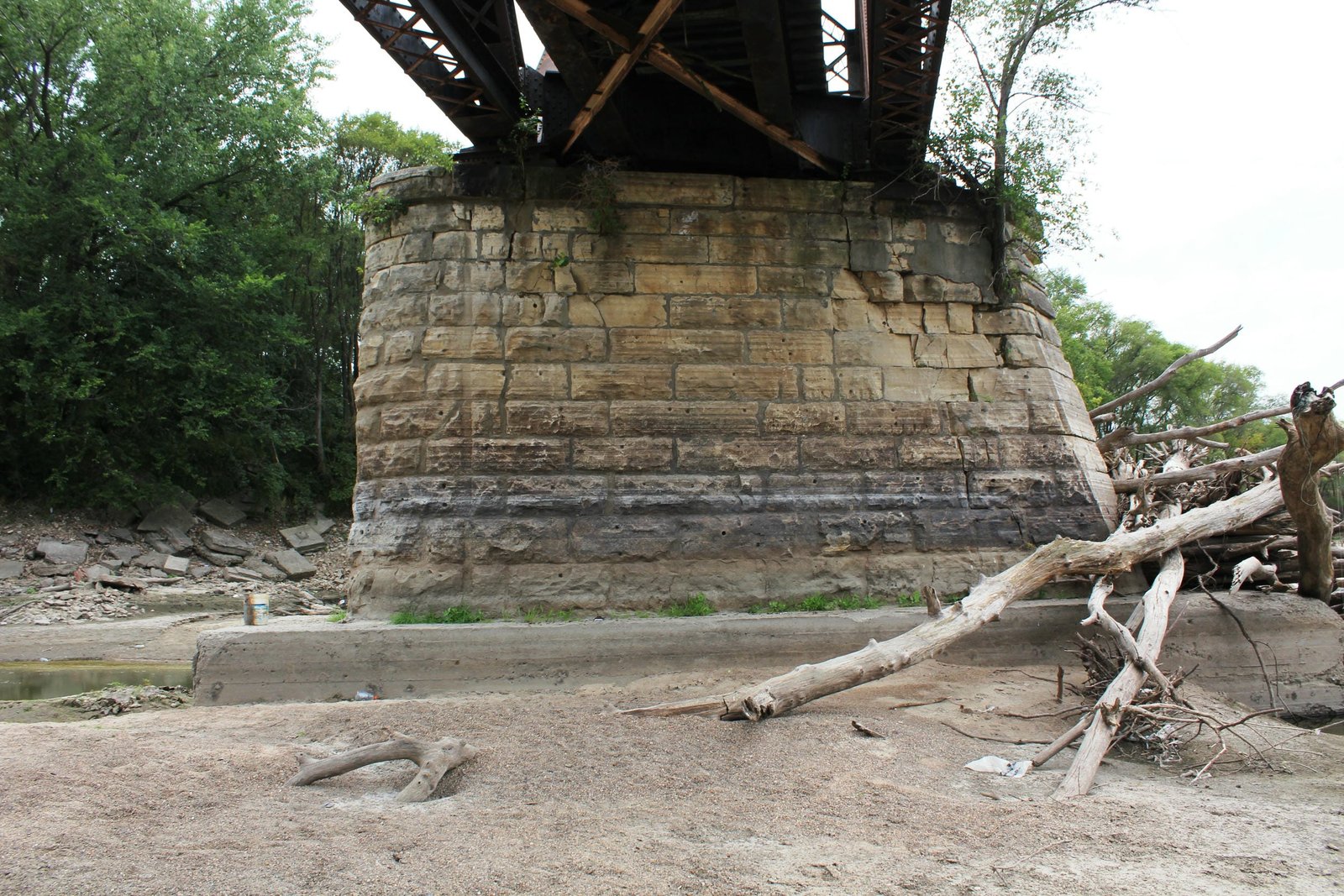
| Substructure Design | Stone Masonry and Concrete |
| Date Built | 1901 |
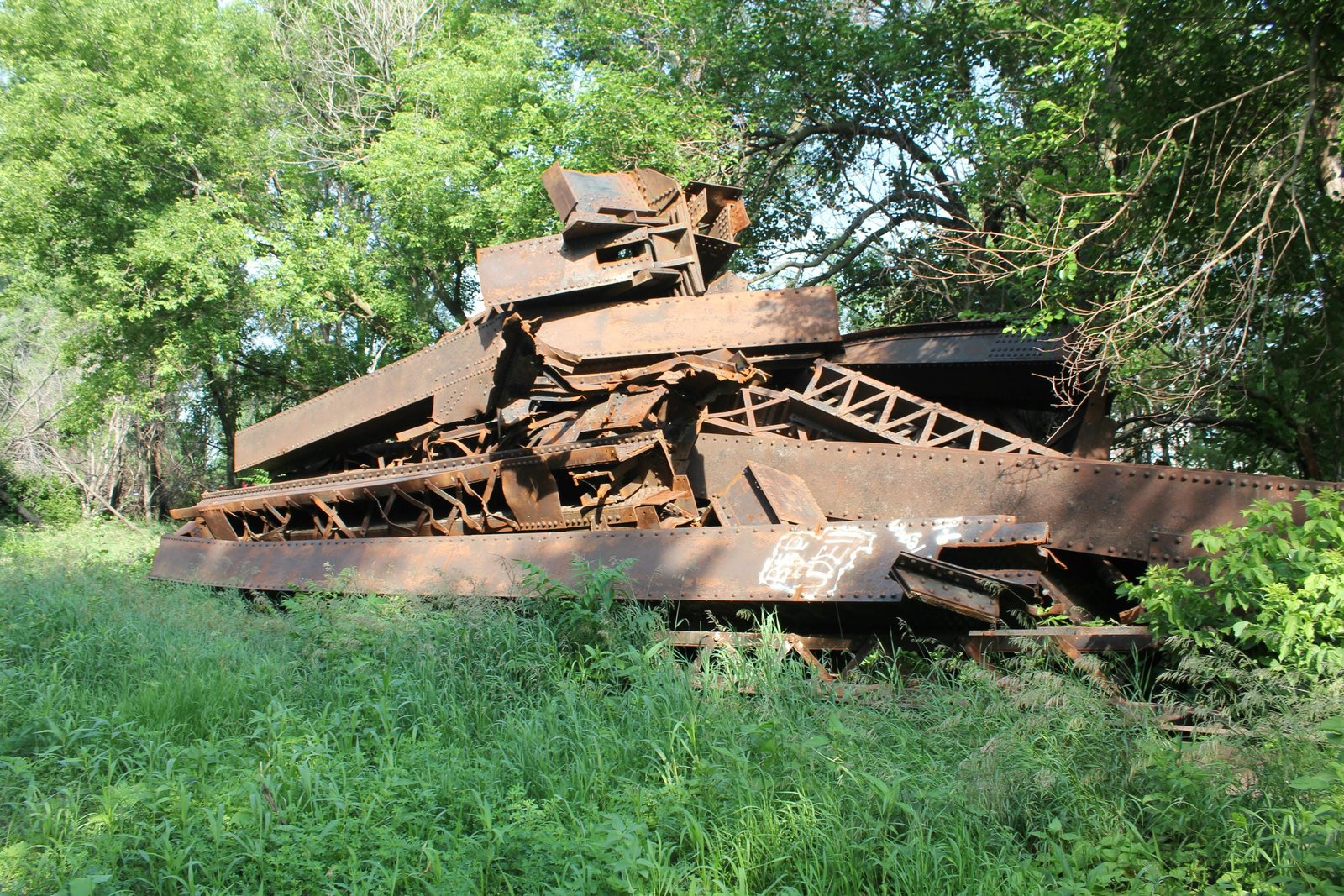
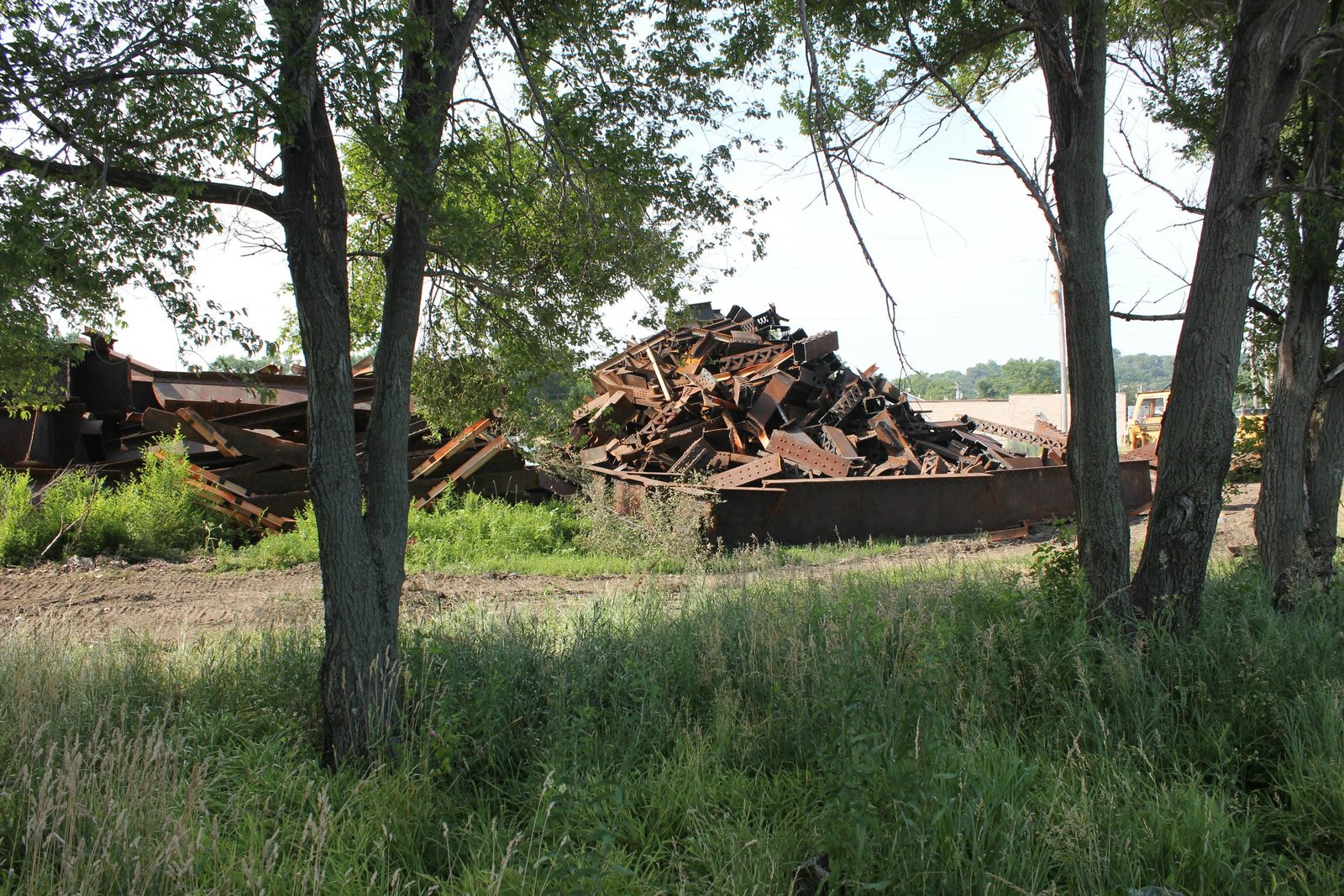
| Date Removed | Fall 2012-Summer 2013 |
| Traffic Count | 0 Trains/Day (Bridge has been Removed) |
| Current Status | Removed but not replaced |
| Chicago Great Western Railway Bridge Number | K219.79 (Old #F267) |
| Union Pacific Railroad Bridge Number | K-219.79 |
| Significance | Regional Significance |
| Documentation Date | 7/21/2012; 11/10/2012; 3/26/2013; 7/1/2013 |
In 1884, the Wisconsin, Iowa & Nebraska Railway (WI&N) constructed 104 miles of new railroad, extending from Waterloo, Iowa to Des Moines, Iowa. In 1886, the WI&N was sold to the Chicago, St. Paul & Kansas City Railway (CStP&KC). In 1887, the CStP&KC constructed 27 miles of additional railroad between Oelwein, Iowa and Waterloo; followed by 159 miles between Des Moines and St. Joseph, Missouri in 1888. In 1891, the Leavenworth & St. Joseph Railway (L&StJ) completed an additional 23 miles between St. Joseph and Beverly, Missouri. In 1892, the L&StJ was sold to the Chicago Great Western Railway (CGW), followed by the CStP&SJ in 1893. The CGW would be reorganized as the Chicago Great Western Railroad in 1909. The CGW had acquired and constructed a modest railroad network throughout Illinois, Iowa, Minnesota and Missouri; connecting major cities in these states. The CGW was one of the smaller railroads in the area, and was late to develop lines. As a result, the railroad never saw the fortunes of other railroads in the area. This line served as a principal mainline for the CGW, proving a connection to Kansas City via a swing bridge at Leavenworth, Kansas and trackage rights over the Missouri Pacific Railway.
In the early 20th Century, the CGW was often surviving on razor-thin profit margins. In 1940, the CGW entered bankruptcy, and was again reorganized as the Chicago Great Western Railway. At this time, the MC&FD was formally merged into the CGW. After the bankruptcy, the CGW became an innovative railroad, pioneering intermodal service and becoming one of the first railroads to completely switch to diesel locomotives. A capital improvement program was launched in 1949, which sought to rebuild and rehabilitate deteriorated infrastructure. In 1968, the CGW was purchased by the Chicago & North Western Railway (C&NW). This route provided the C&NW with access to Kansas City, although deteriorated track conditions limited effective operations. After the C&NW purchased the former Rock Island "Spine Line", the former CGW route became excess. In 1983, the line between Marshalltown and Bondurant, Iowa was abandoned, followed by the entire line between Des Moines and Beverly in 1984. Another segment between Waterloo and Marshalltown was abandoned in 1988.
In 1995, C&NW was purchased by Union Pacific Railroad (UP). UP abandoned a section of the line in Des Moines in 2001. In 2003, UP sold the Oelwein to Waterloo segment to Iowa Northern Railway (IANR). Another section of the line between Bondurant and Des Moines was abandoned in 2011. In 2025, IANR was purchased by Canadian National Railway (CN). Today, CN continues to operate the Oelwein segment as the Oelwein Subdivision. Several sections of this line have been reused as parts of trails, including the Sargent Road Trail between Waterloo and Hudson; the Chichaqua Valley Trail between Baxter and the north side of Des Moines and the Great Western Trail between the south side of Des Moines and Martensdale. The remainder of the railroad has been abandoned and reverted to adjacent property owners. However, much of the original right-of-way is intact.
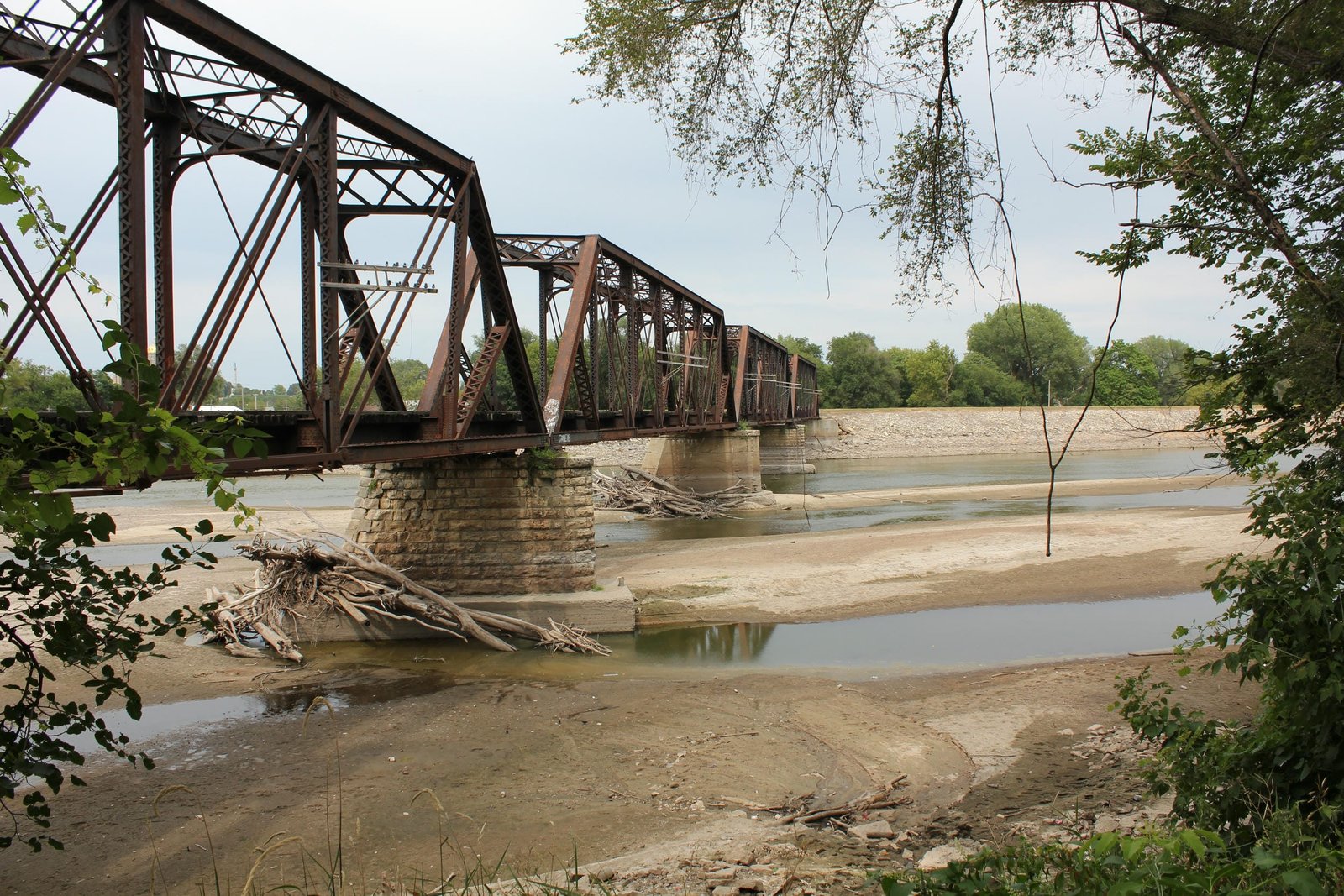
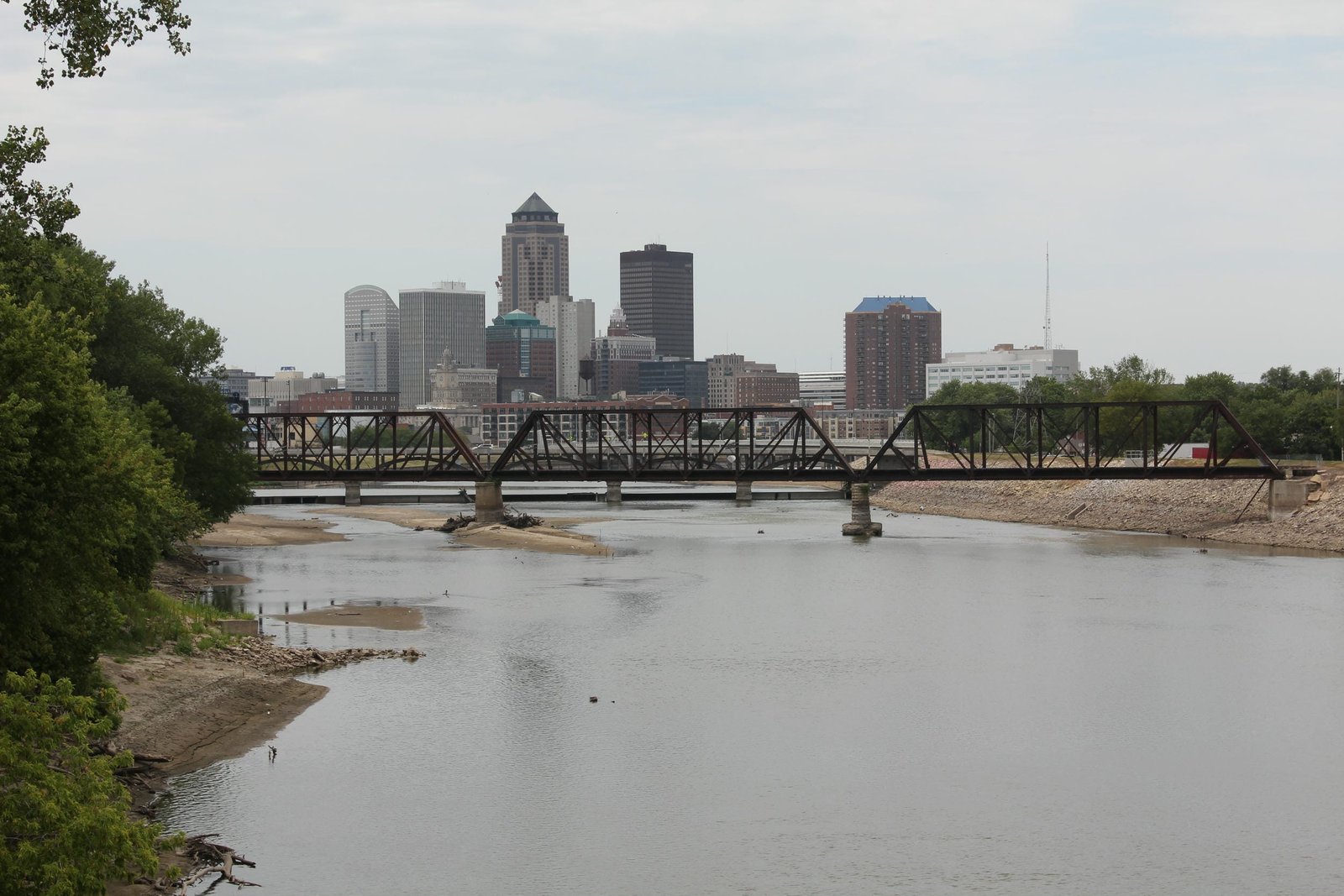
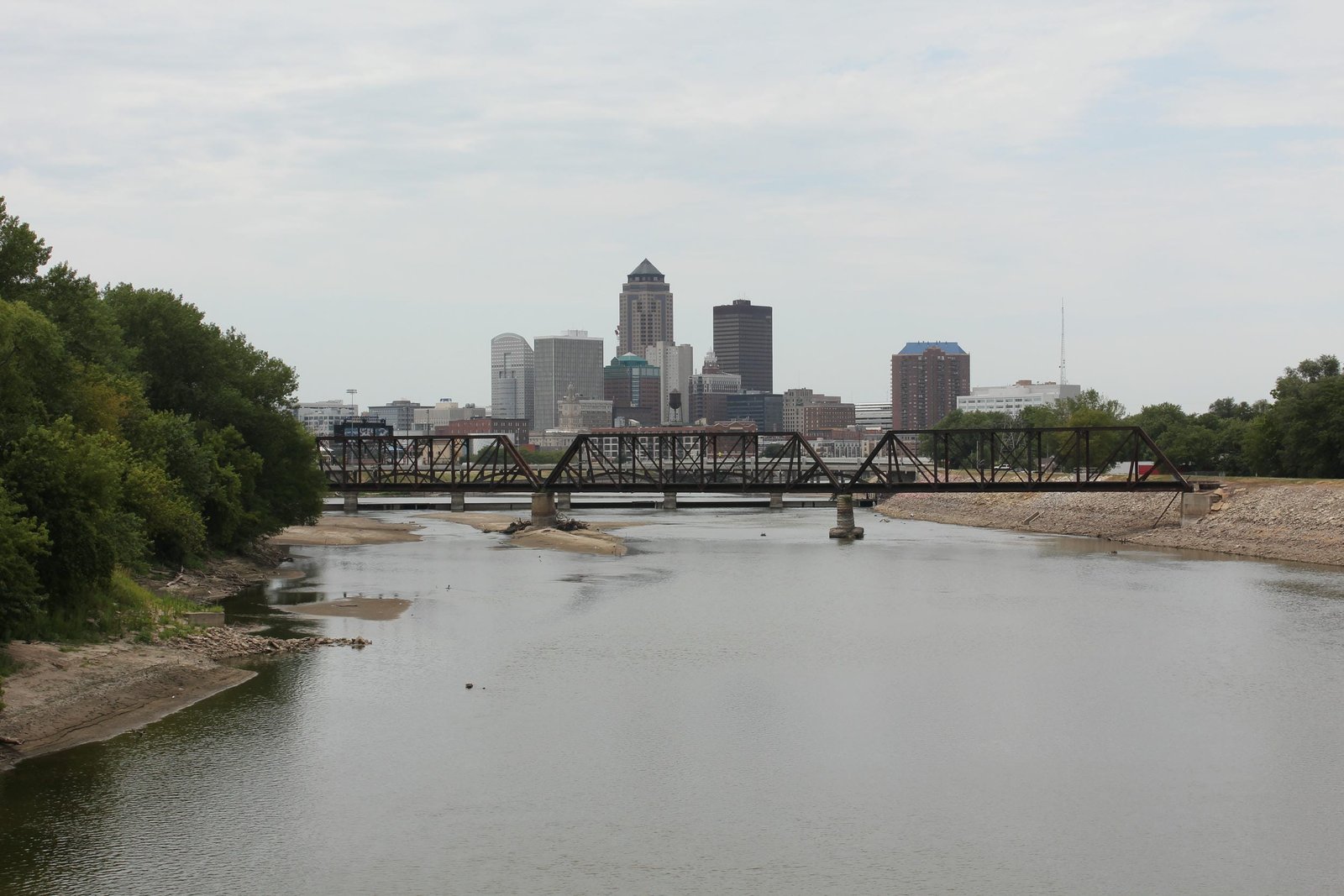
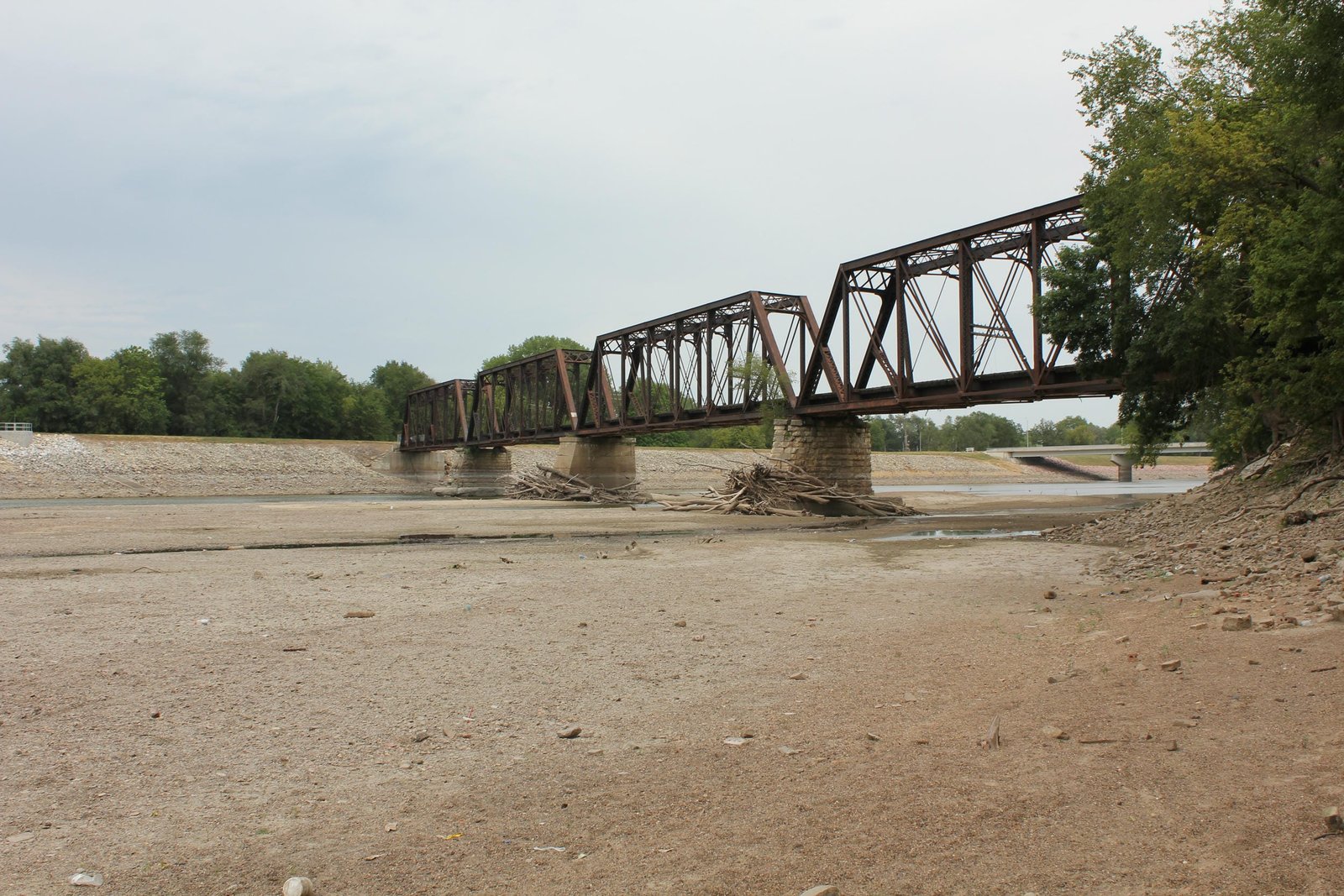
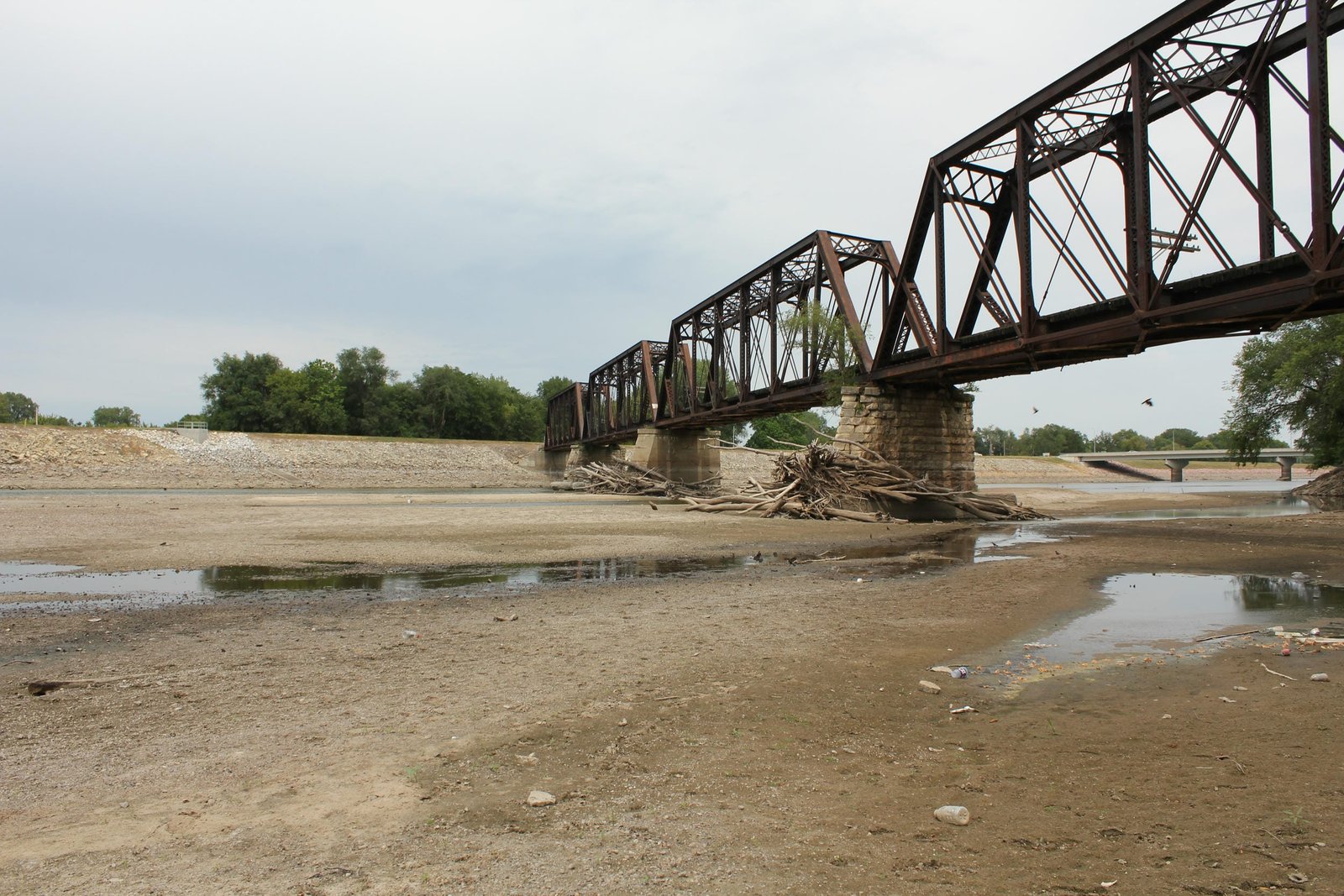
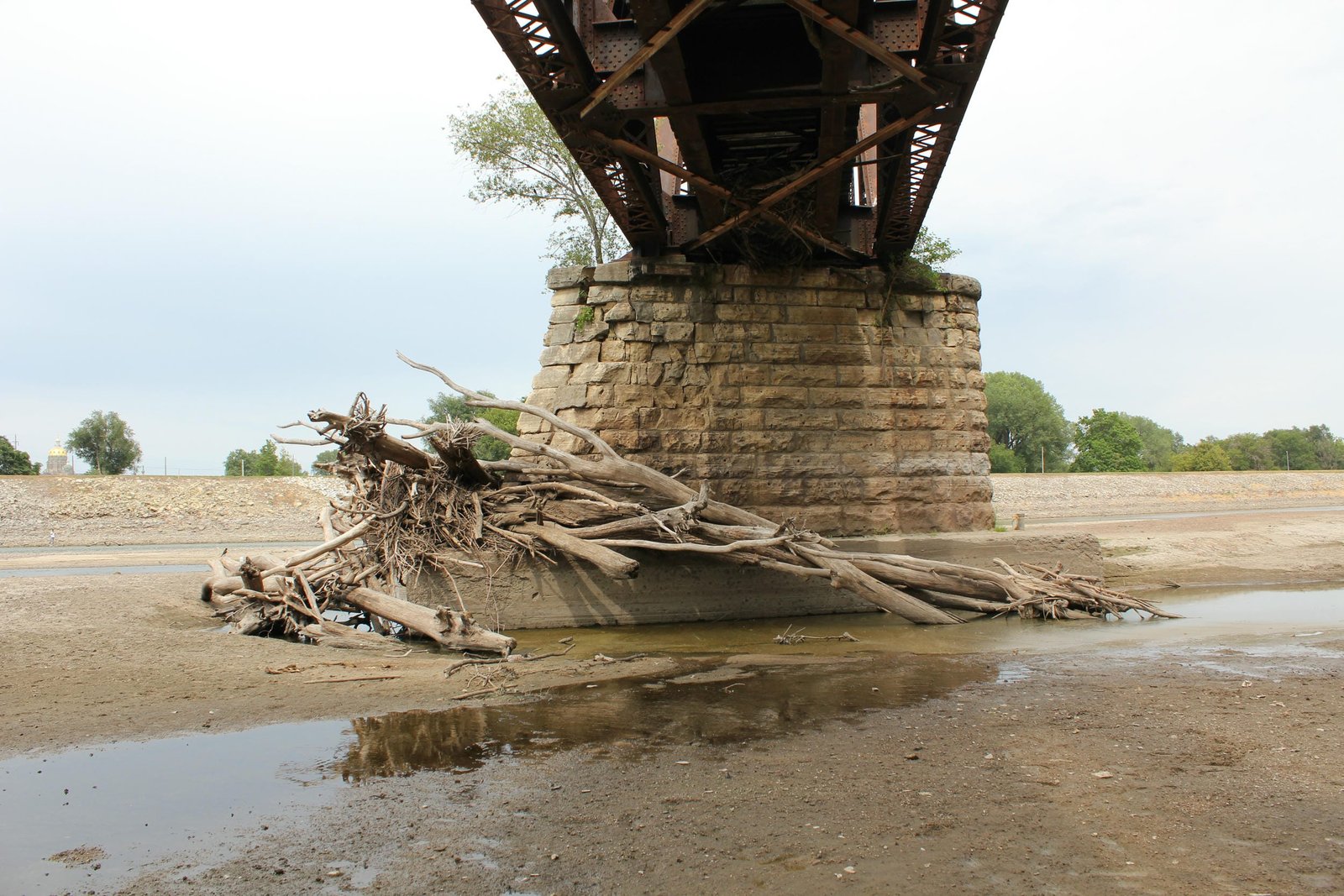
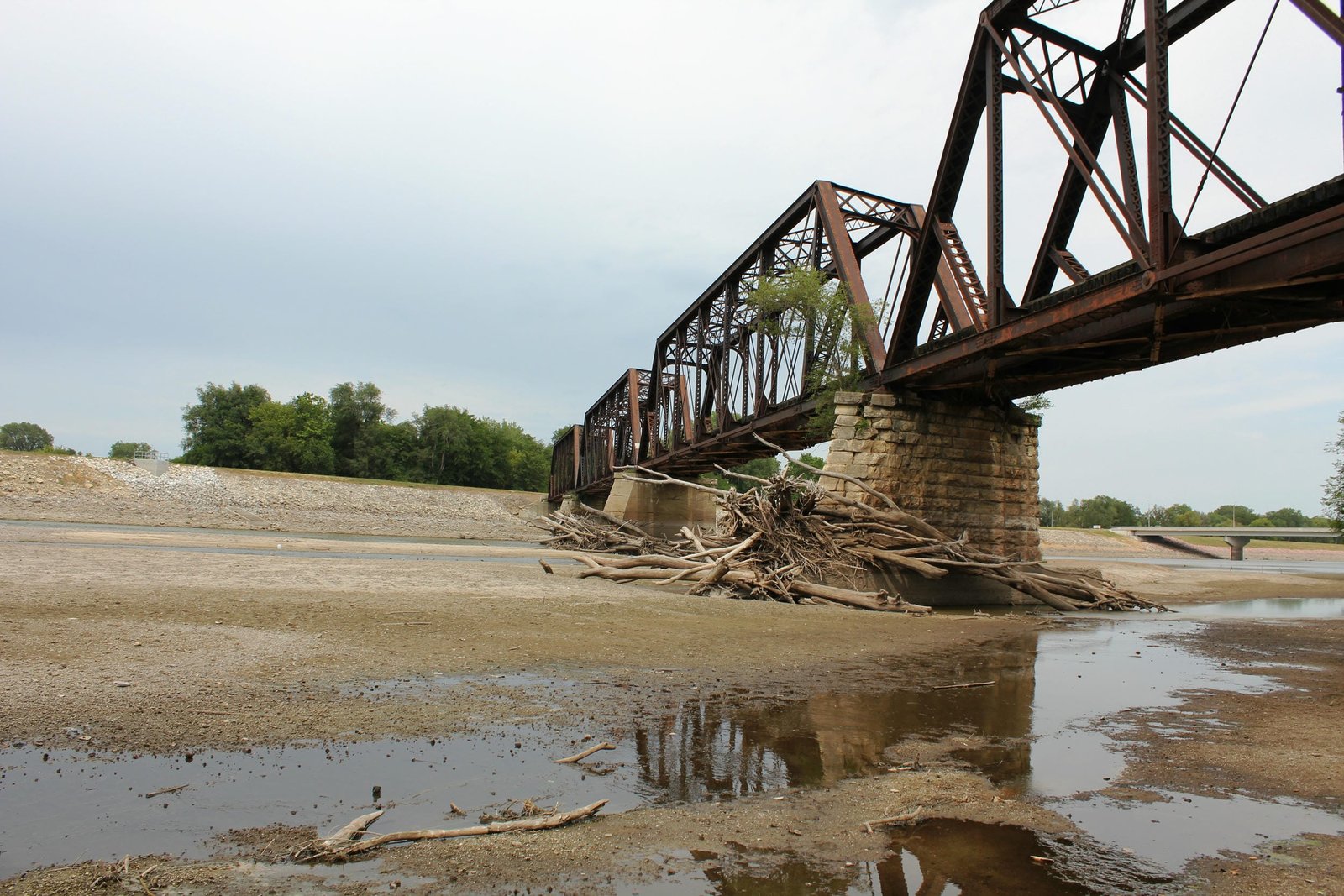
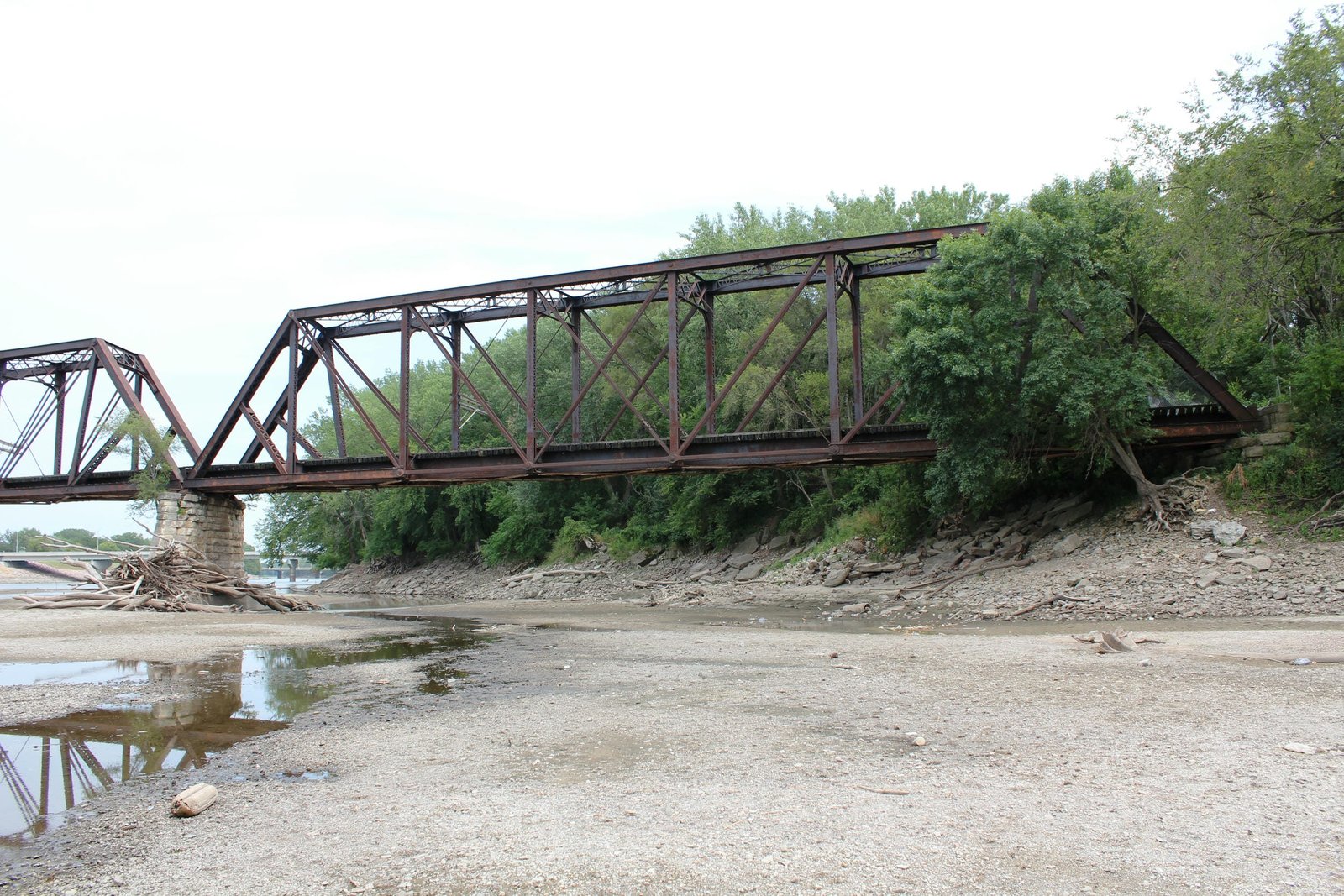
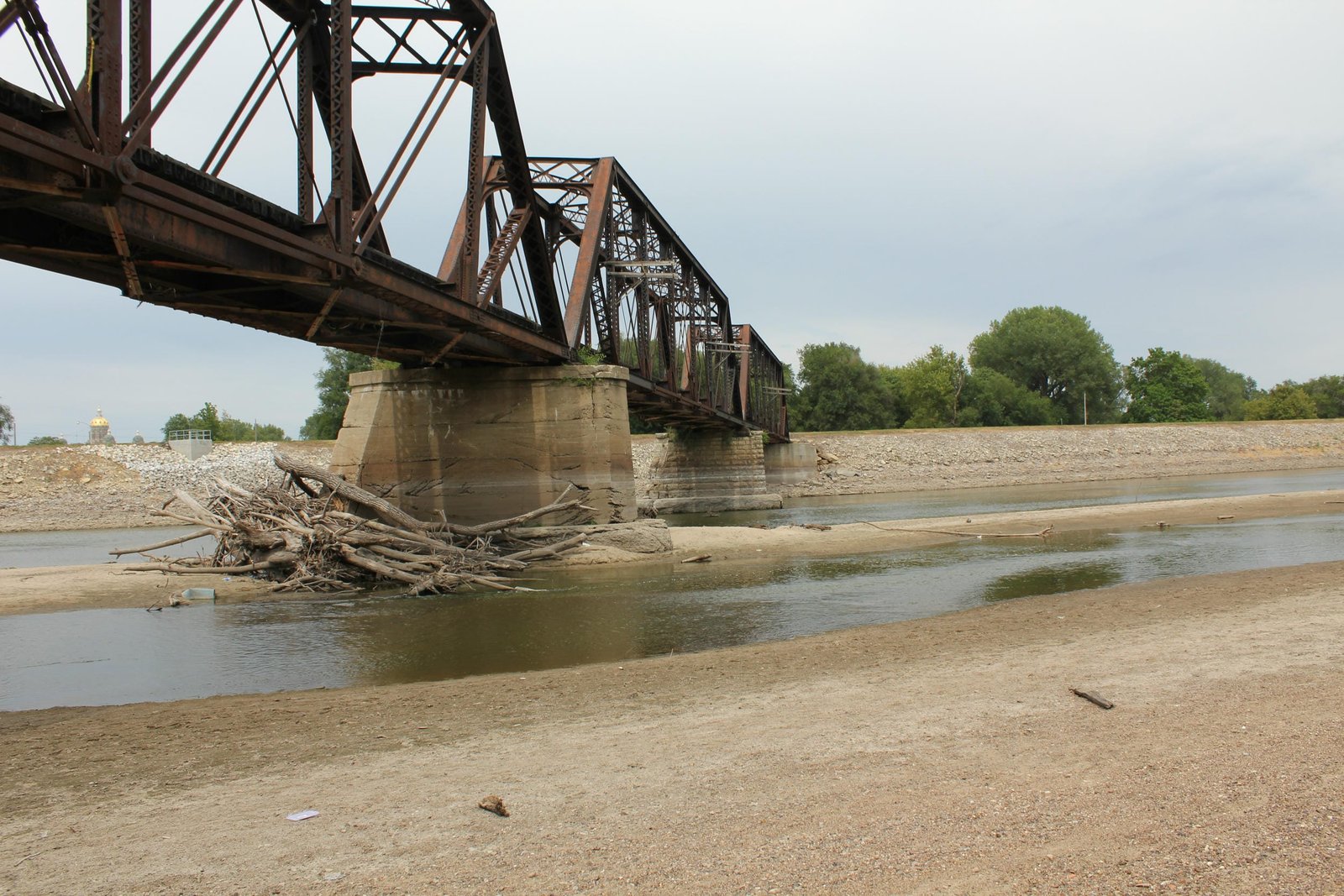
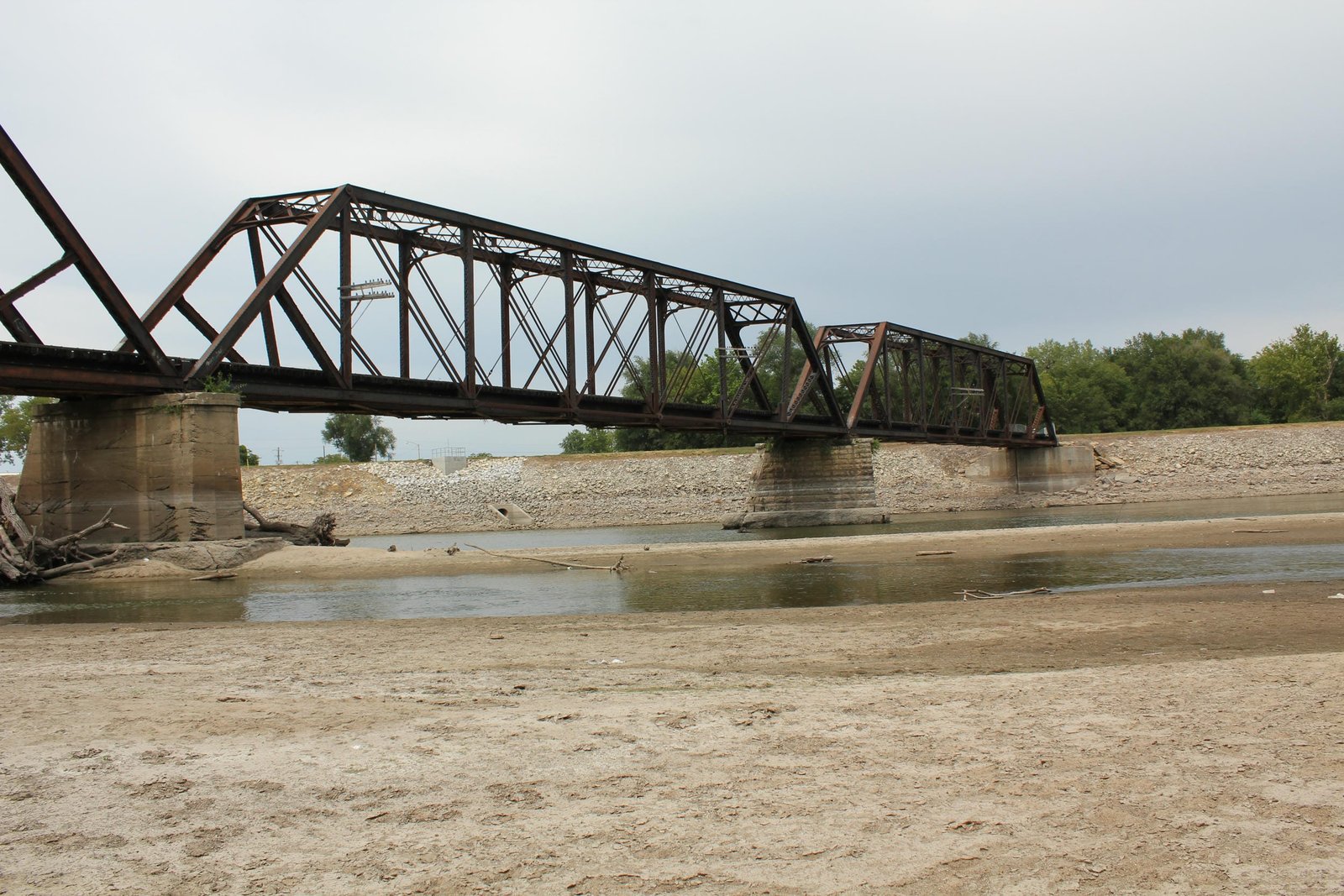
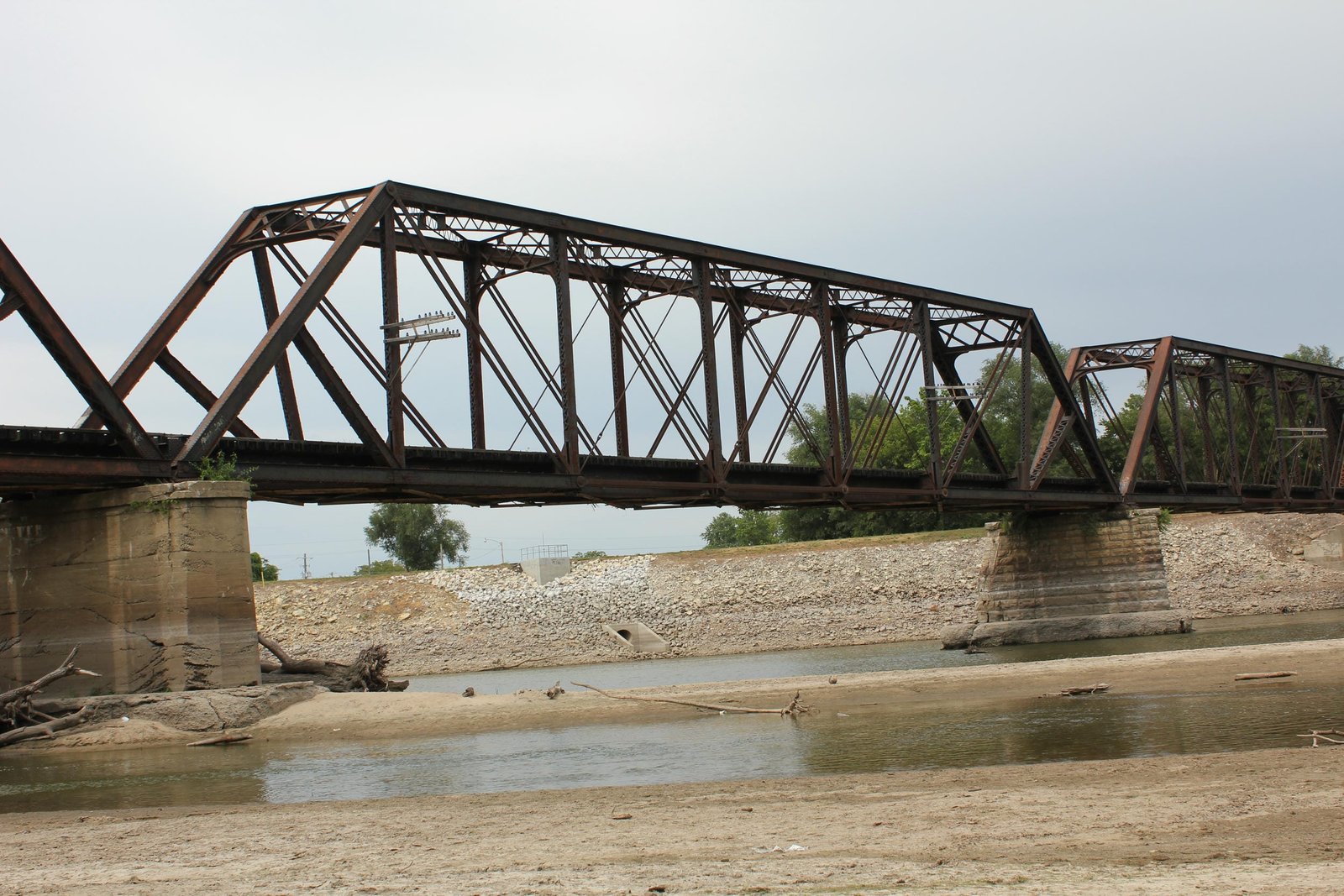
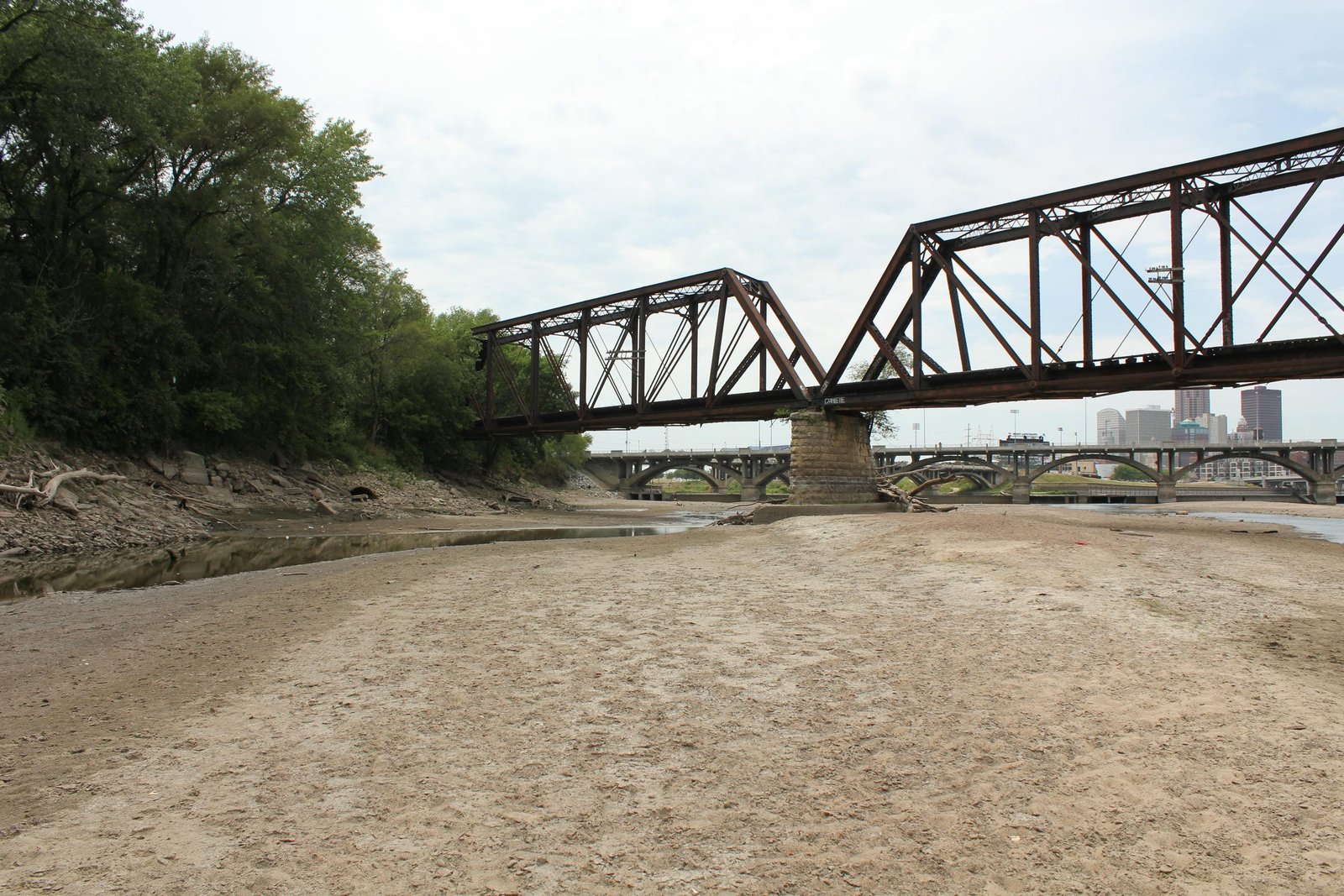
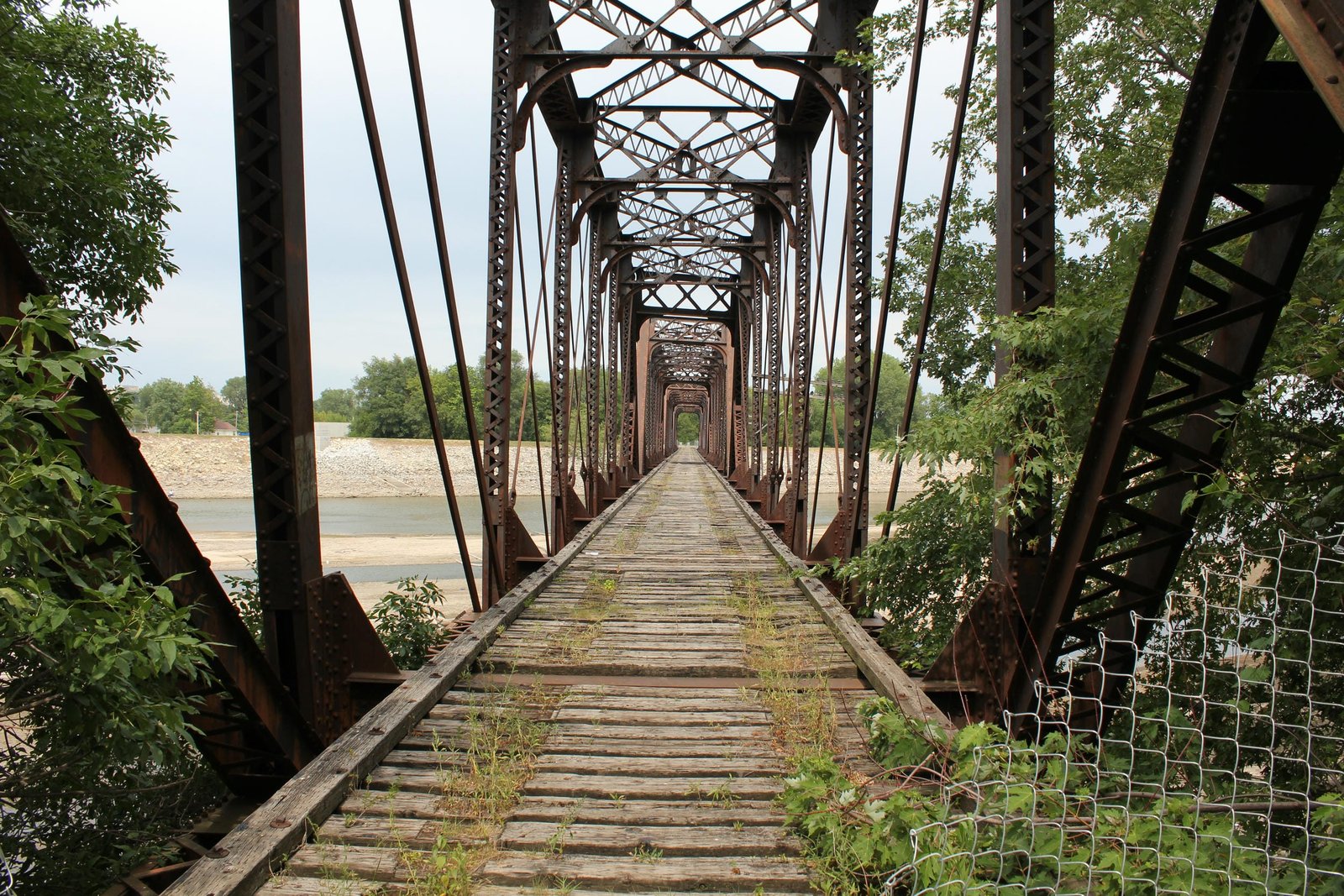
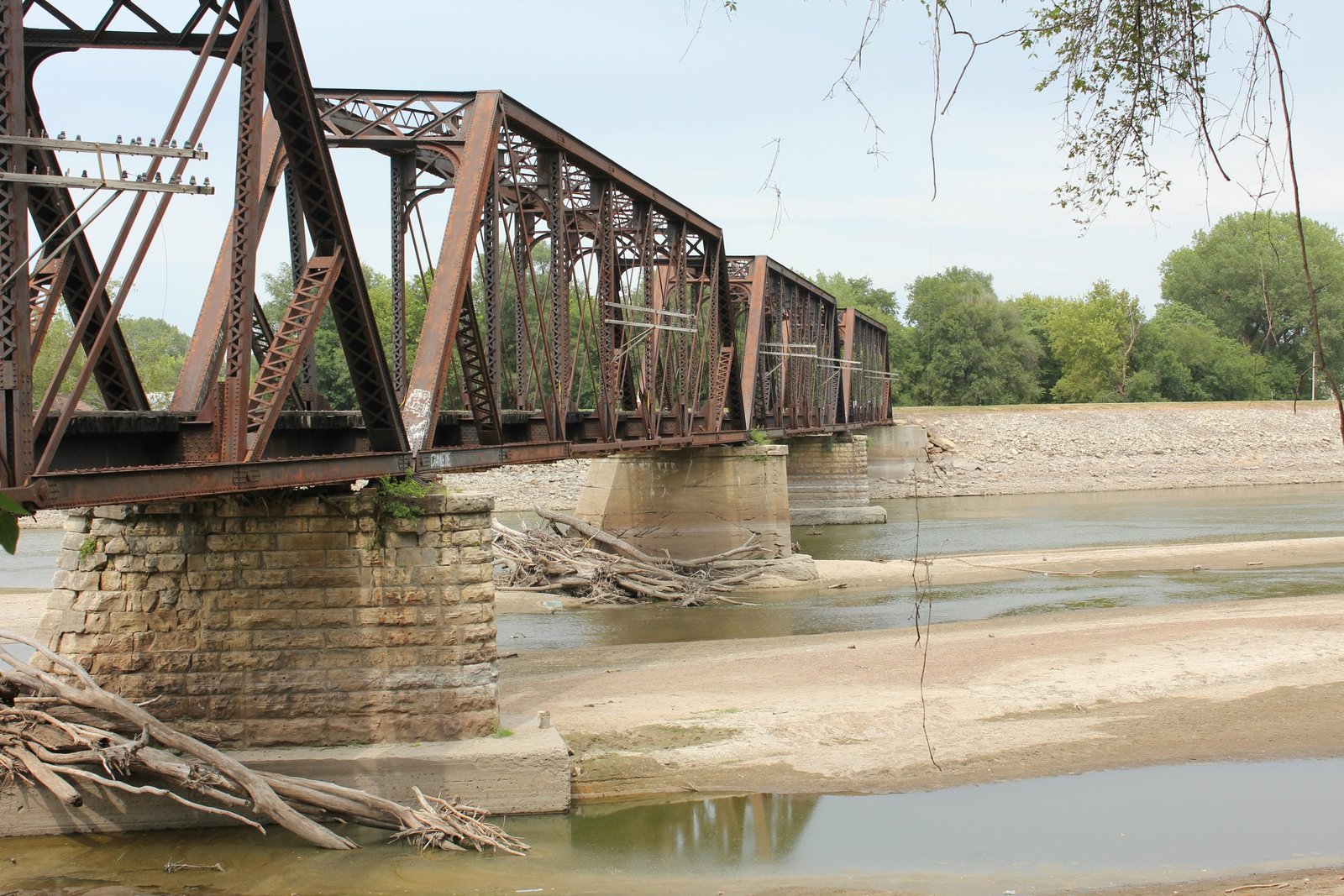
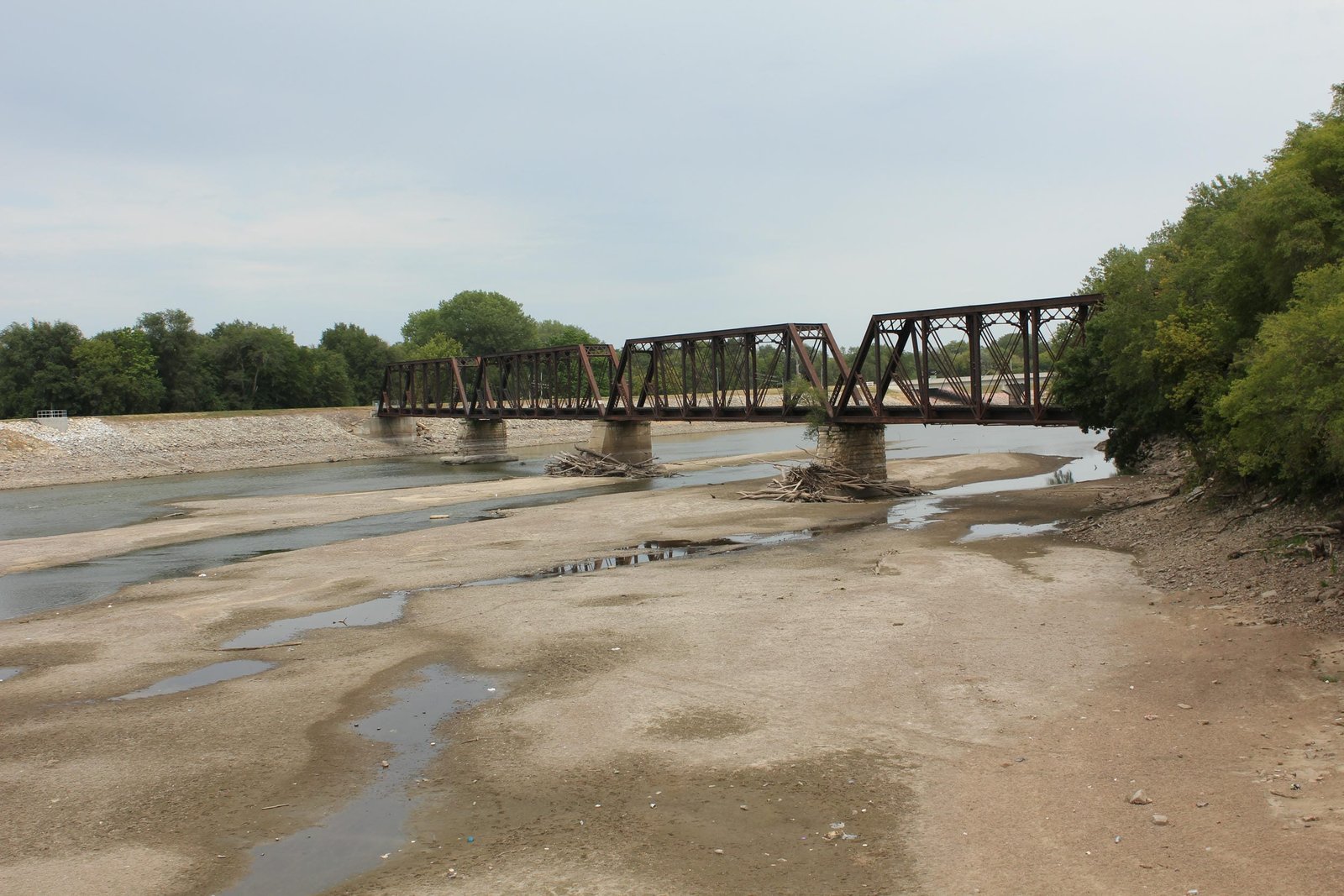
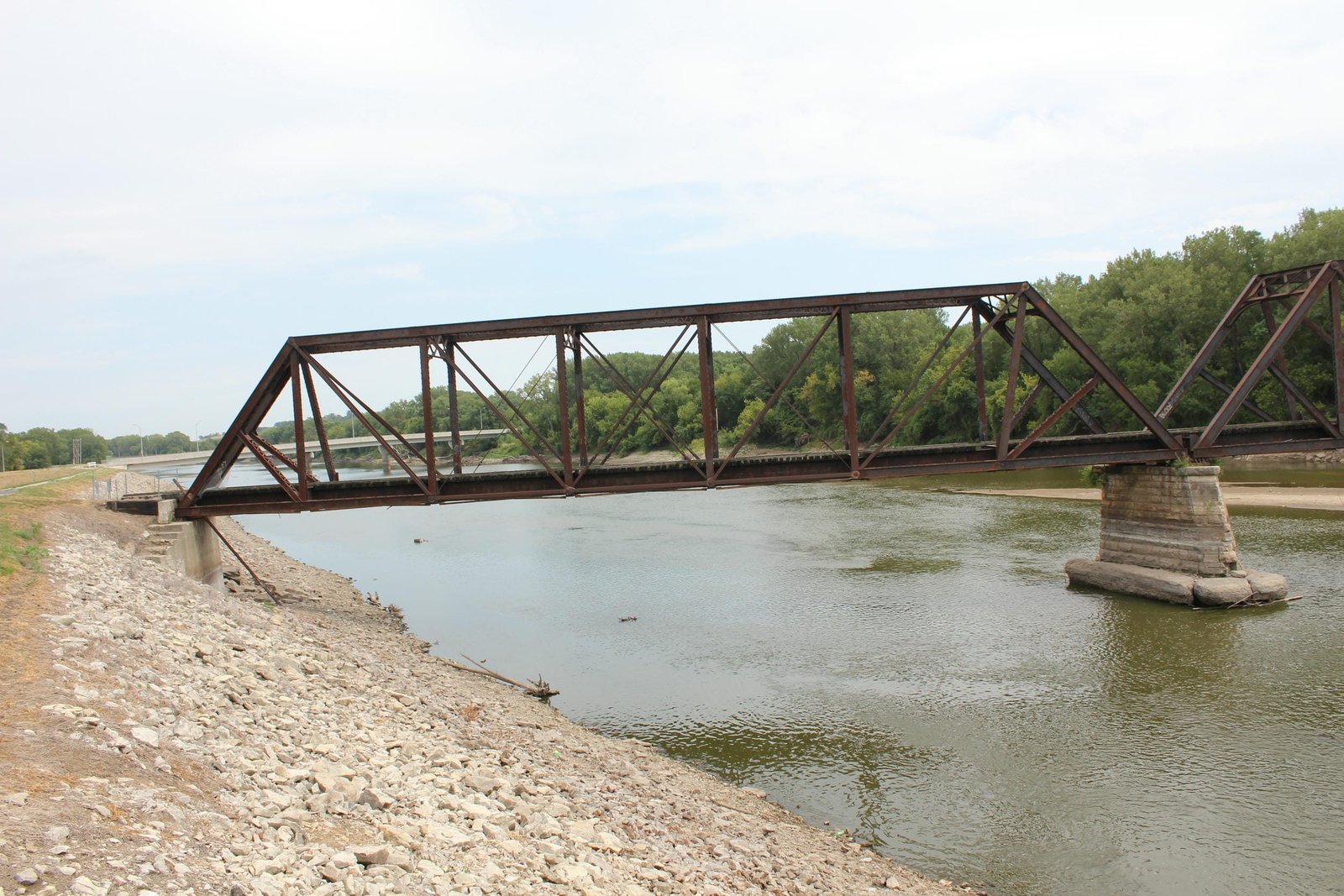
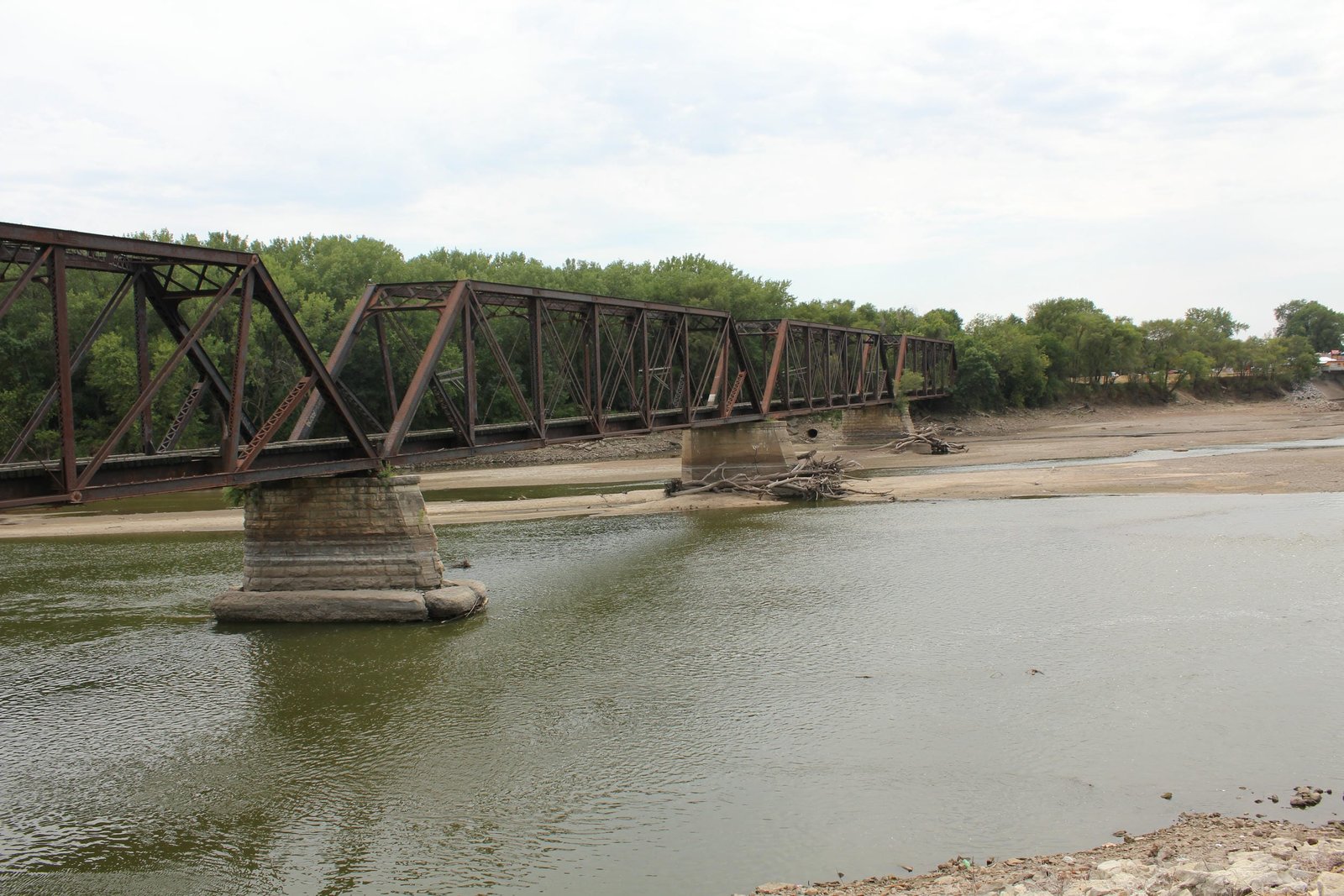
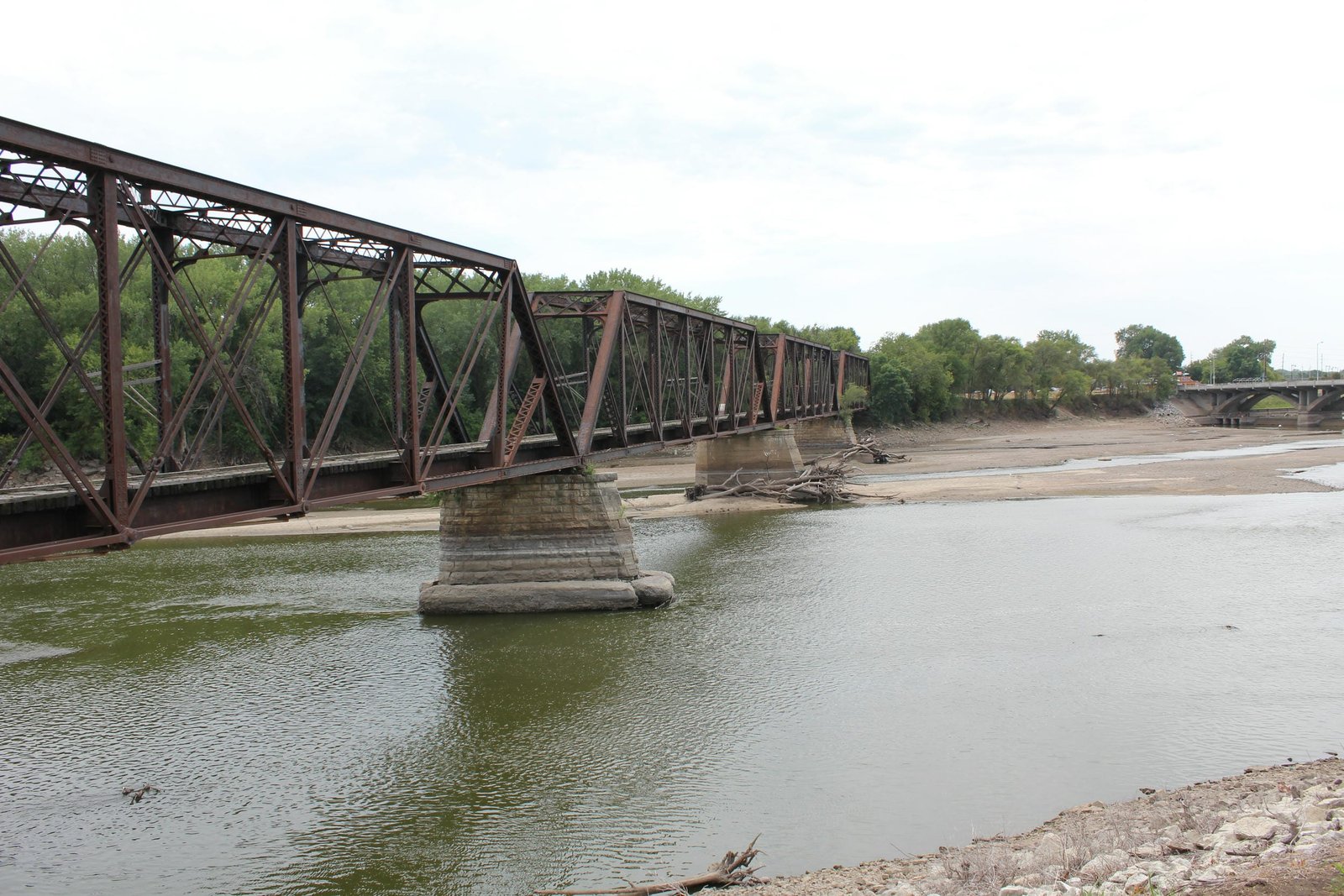
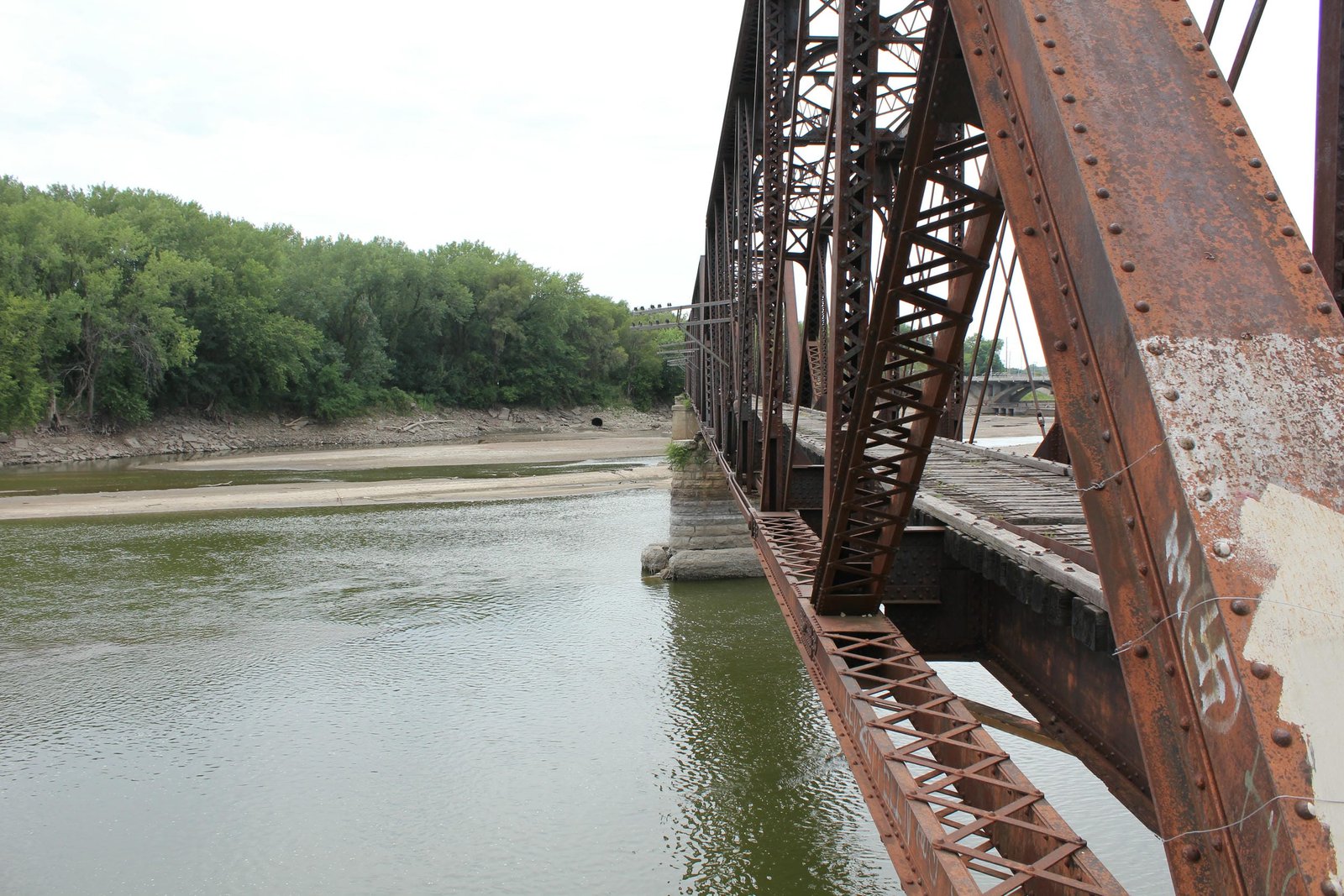
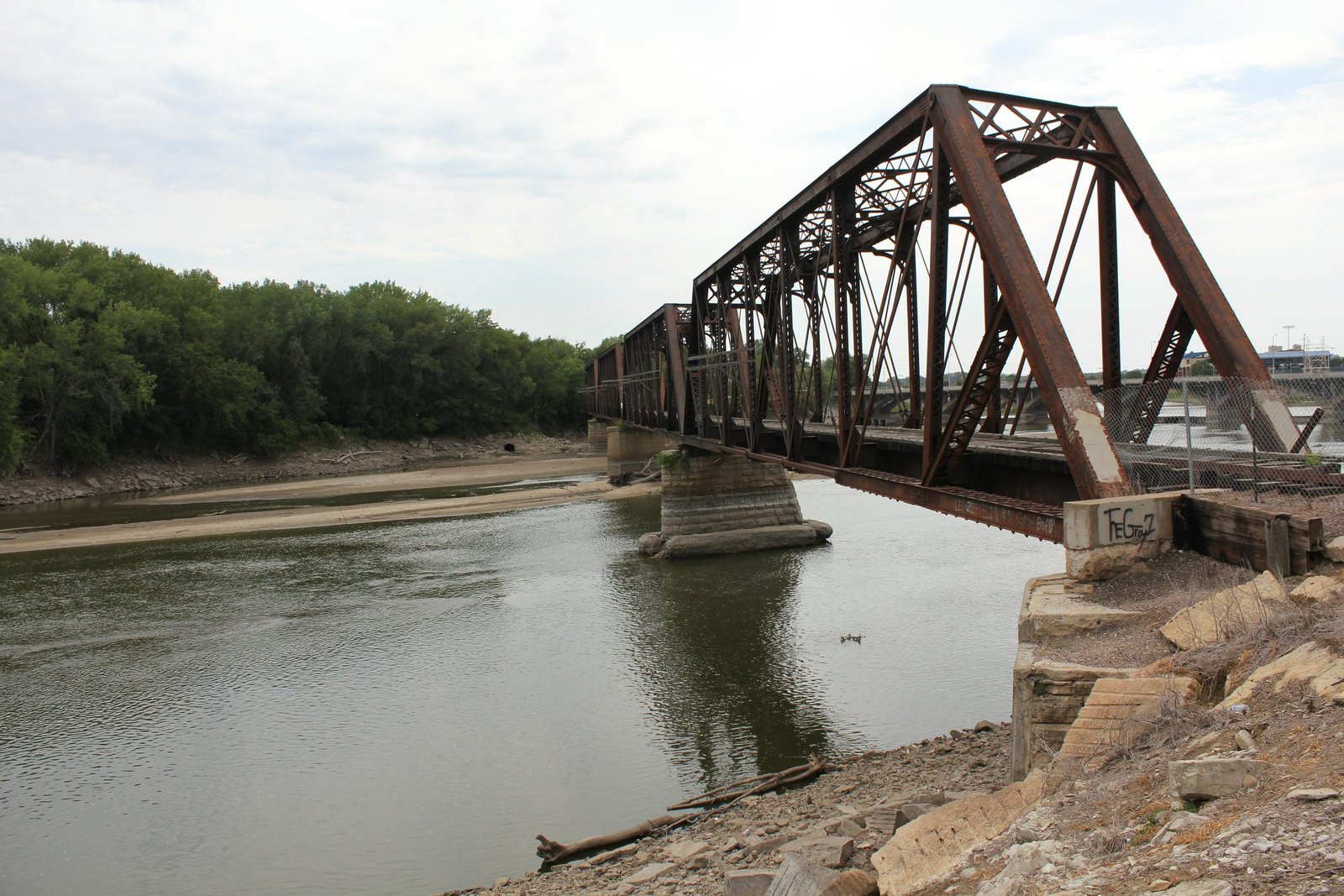
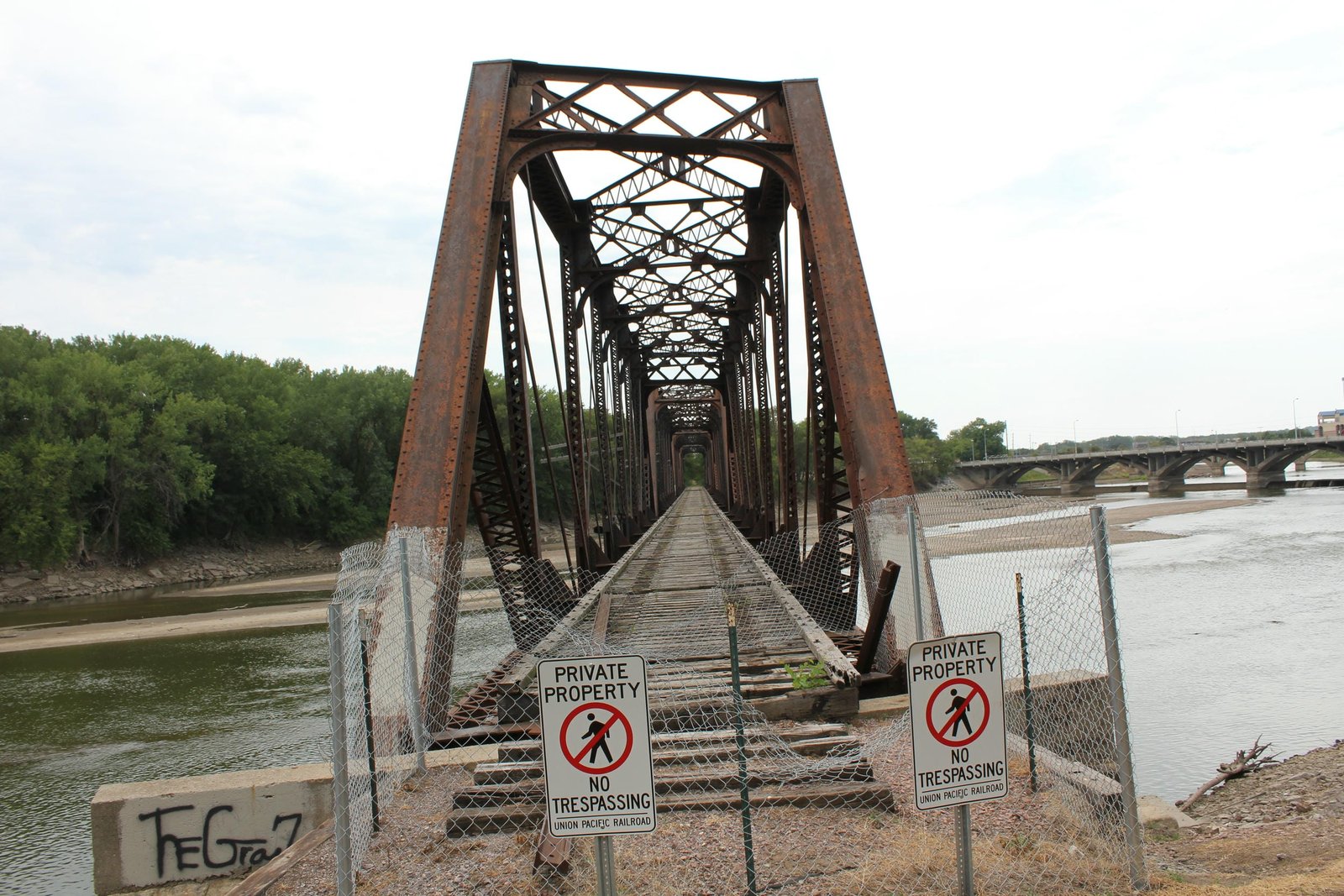
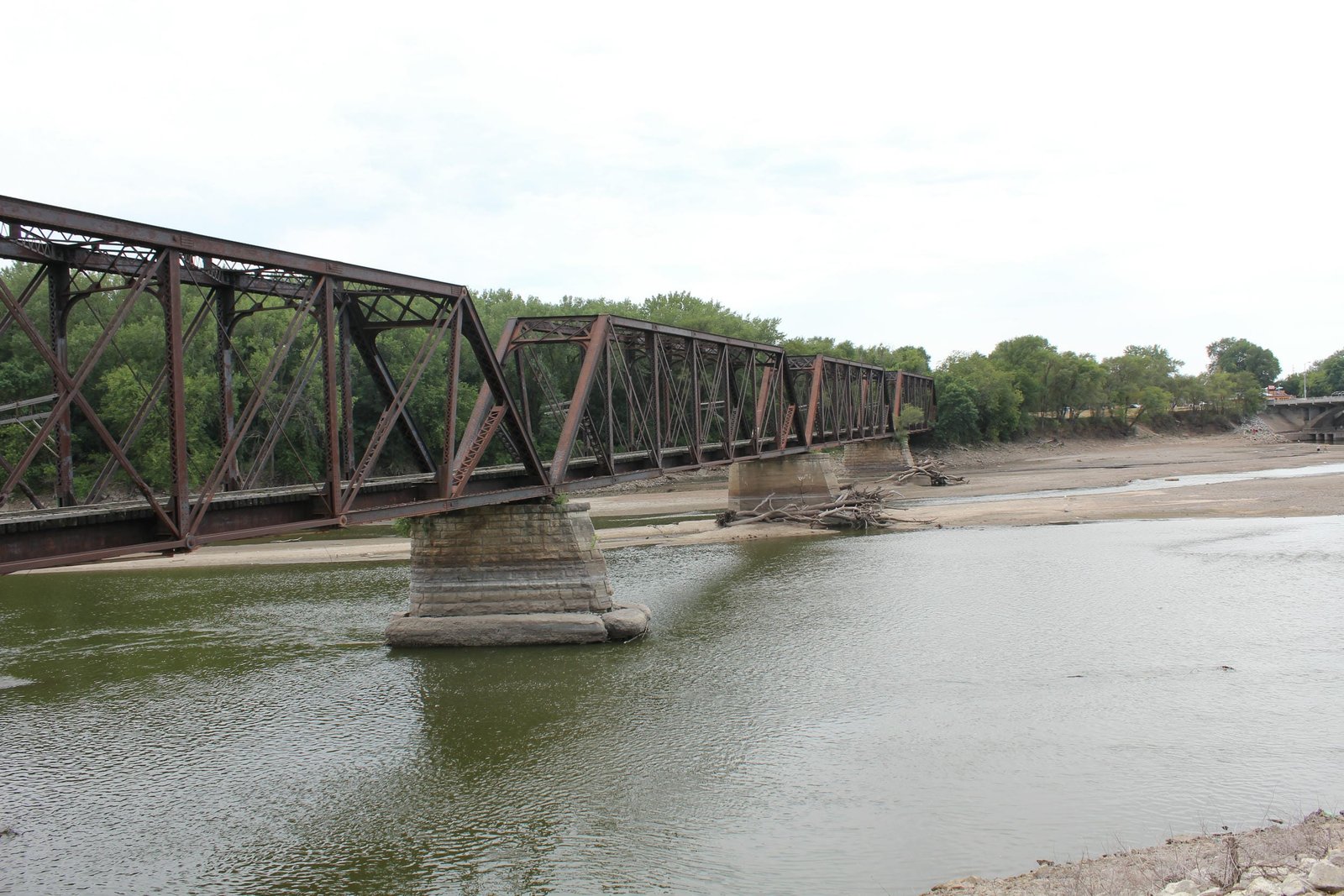
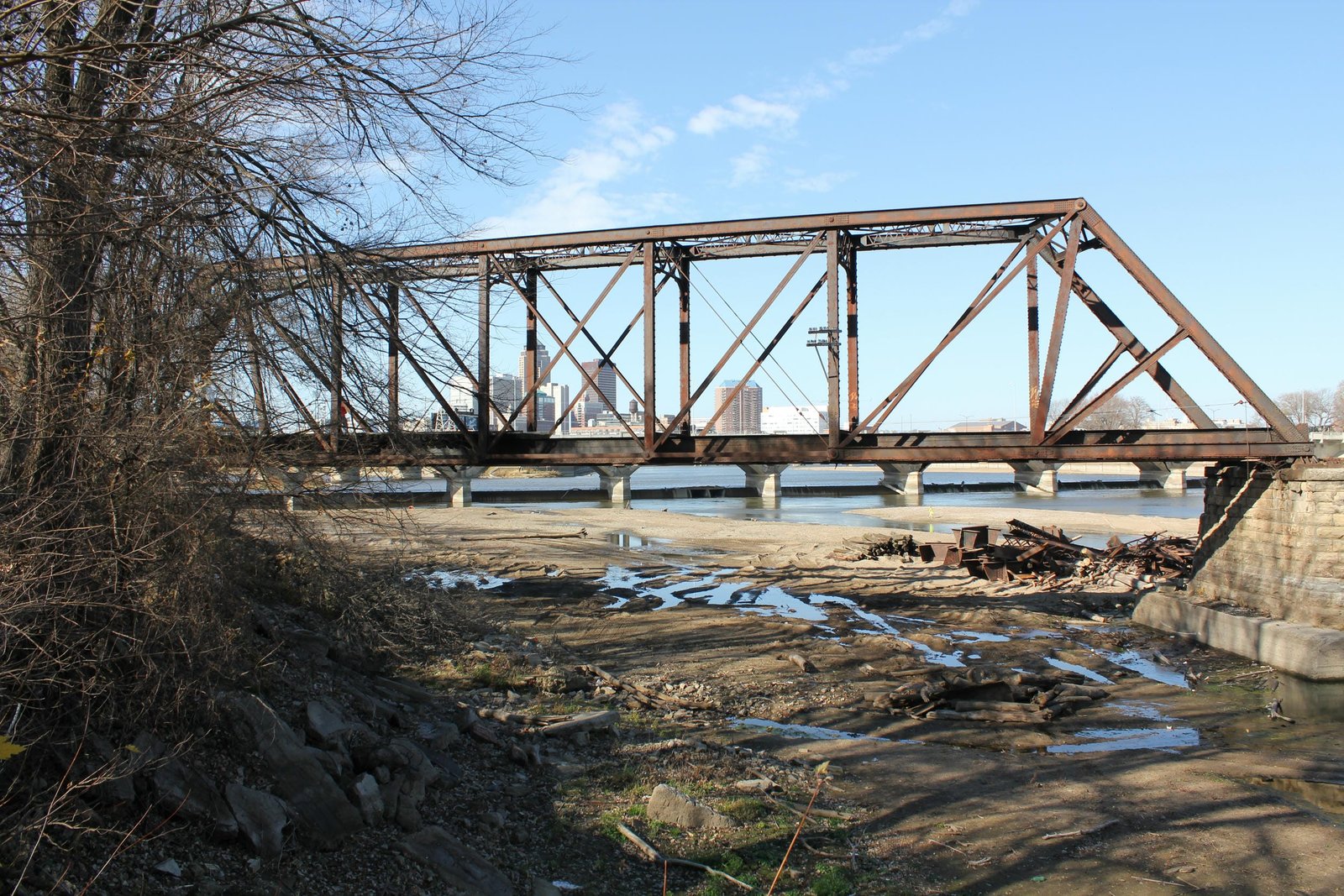
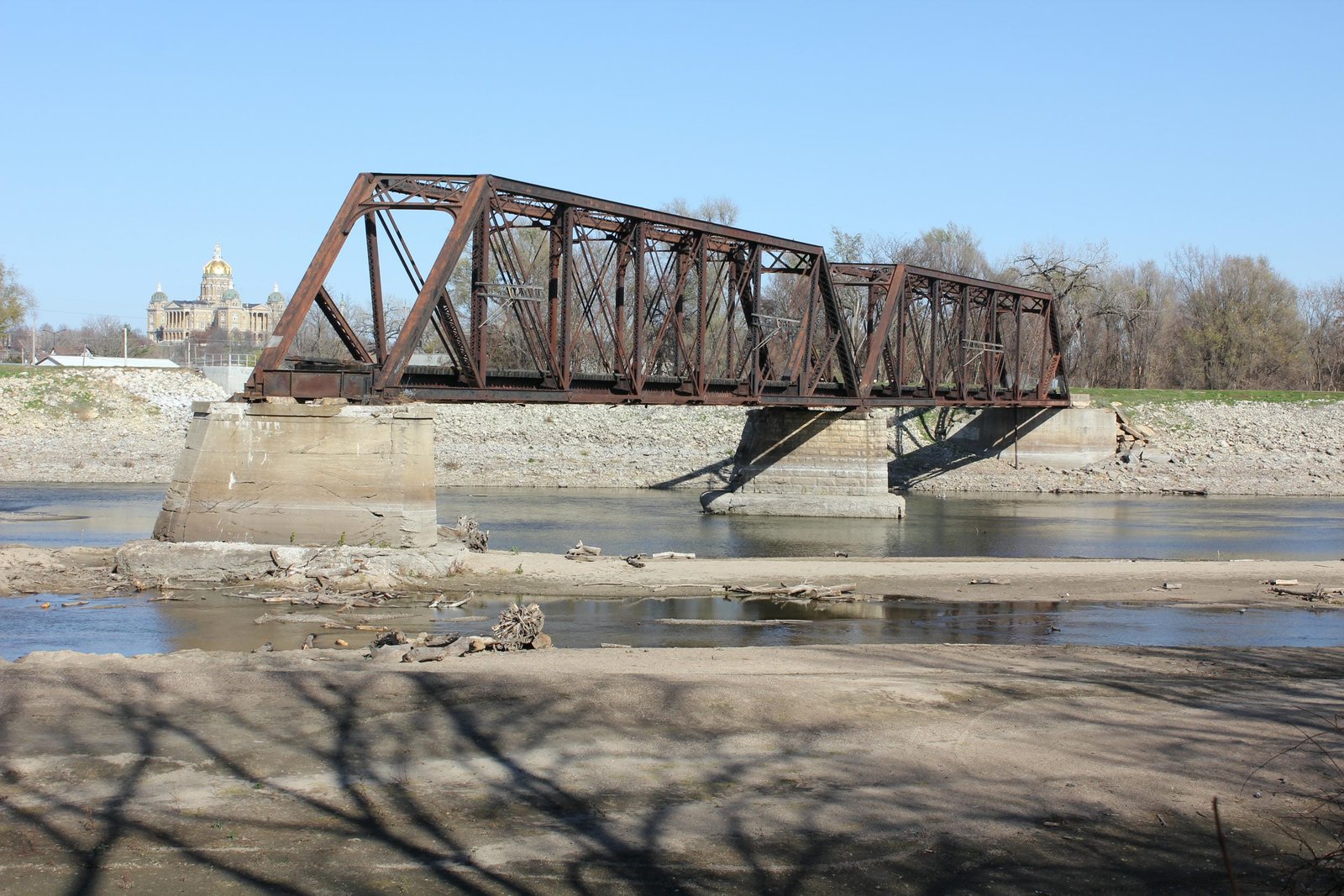
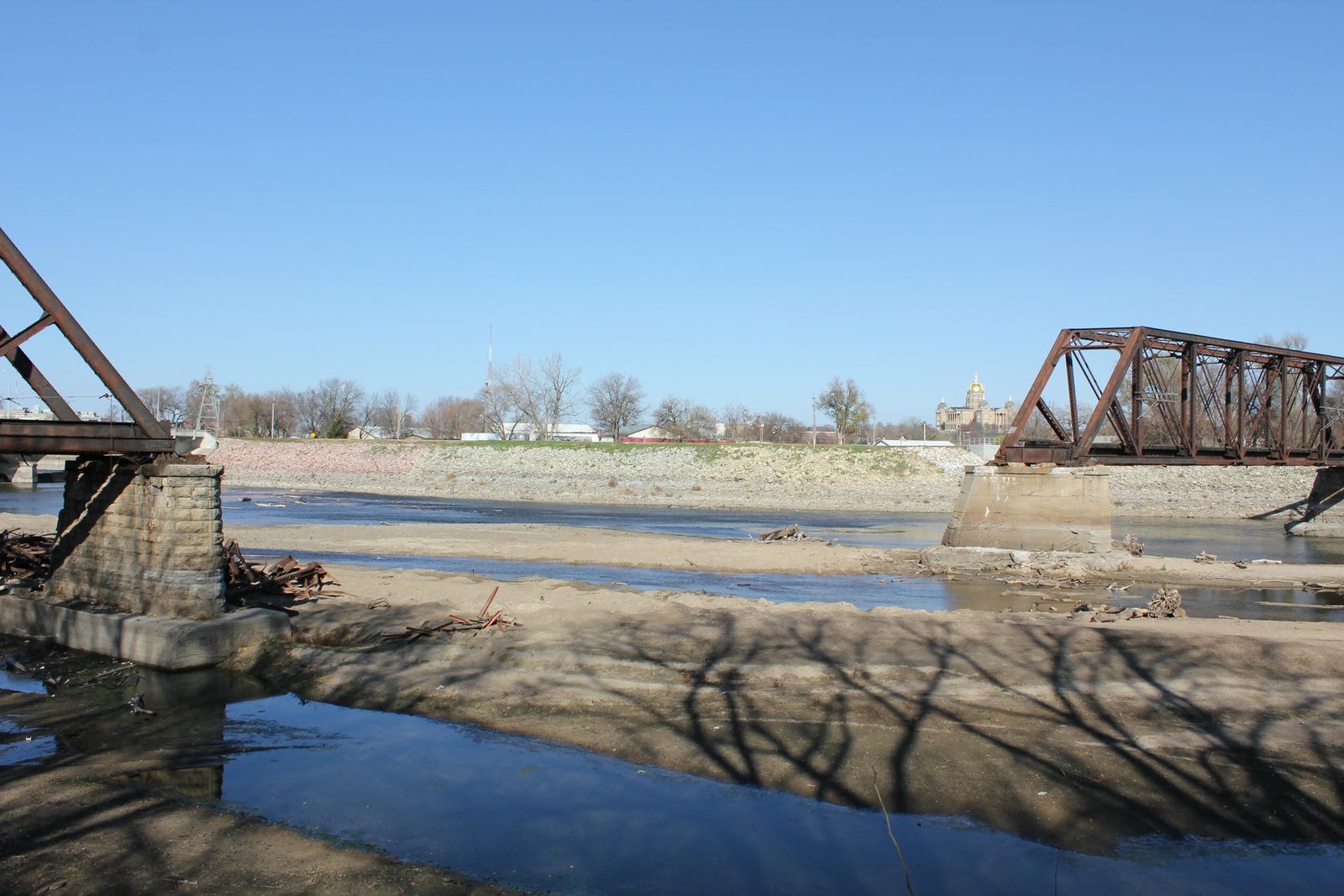
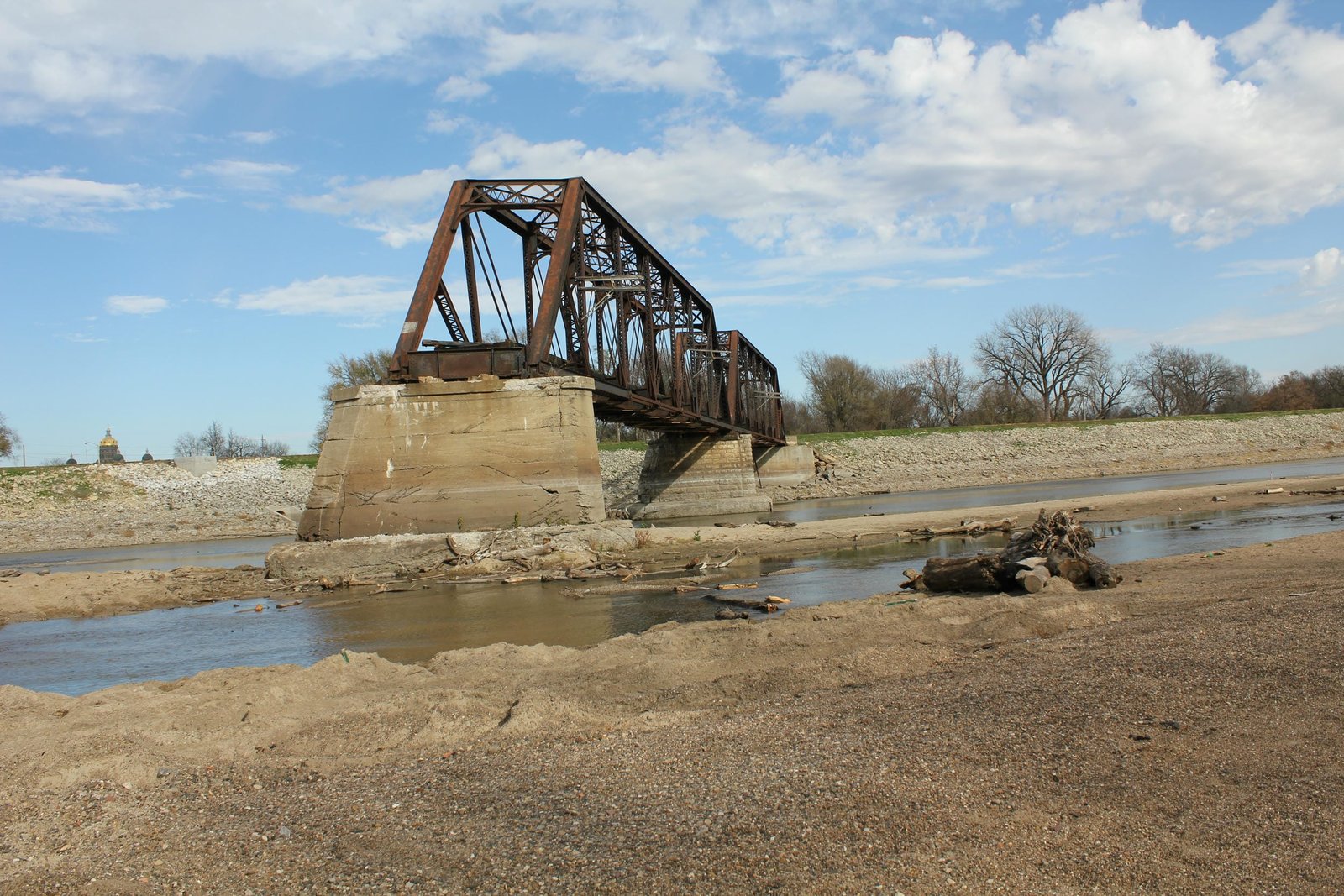
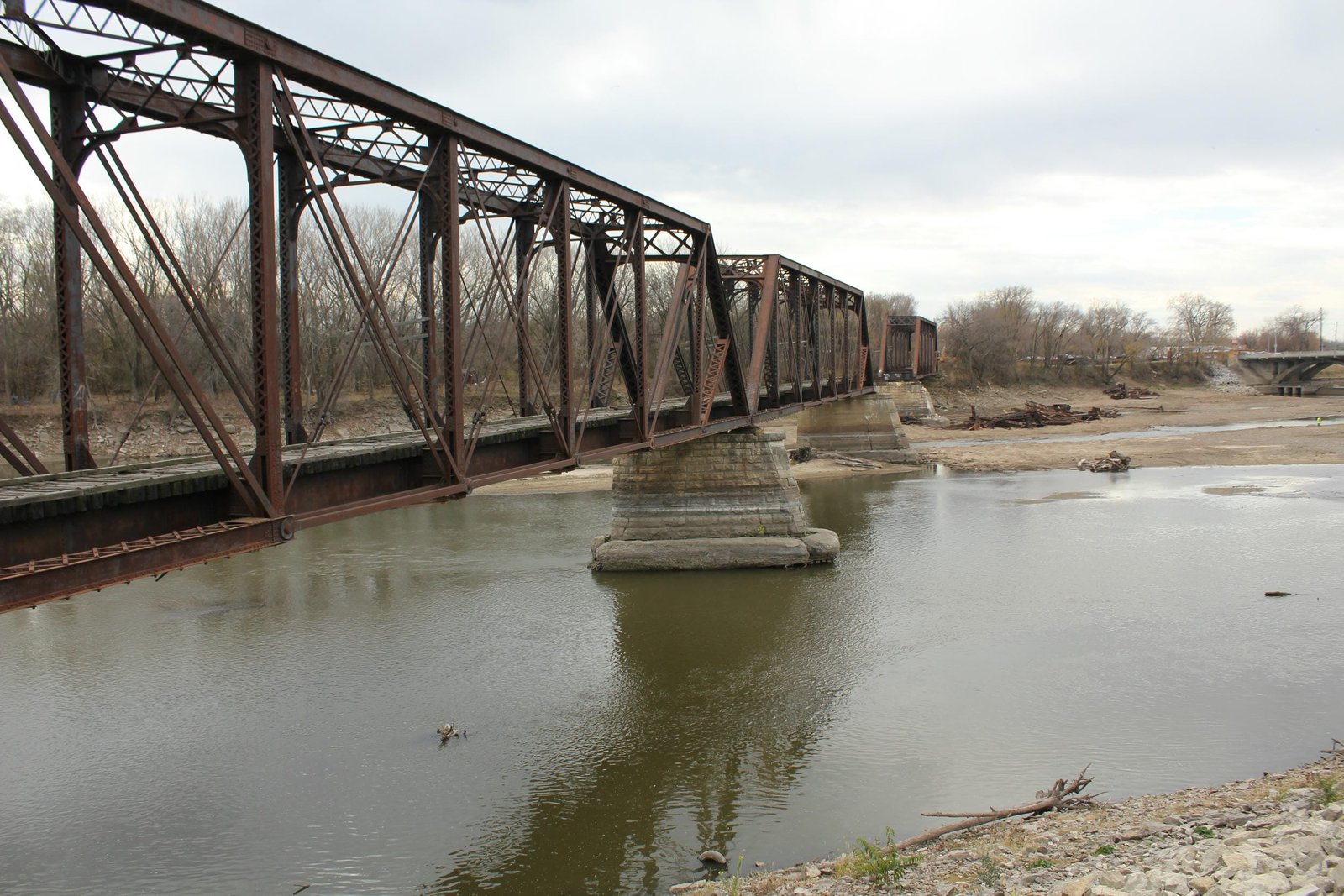
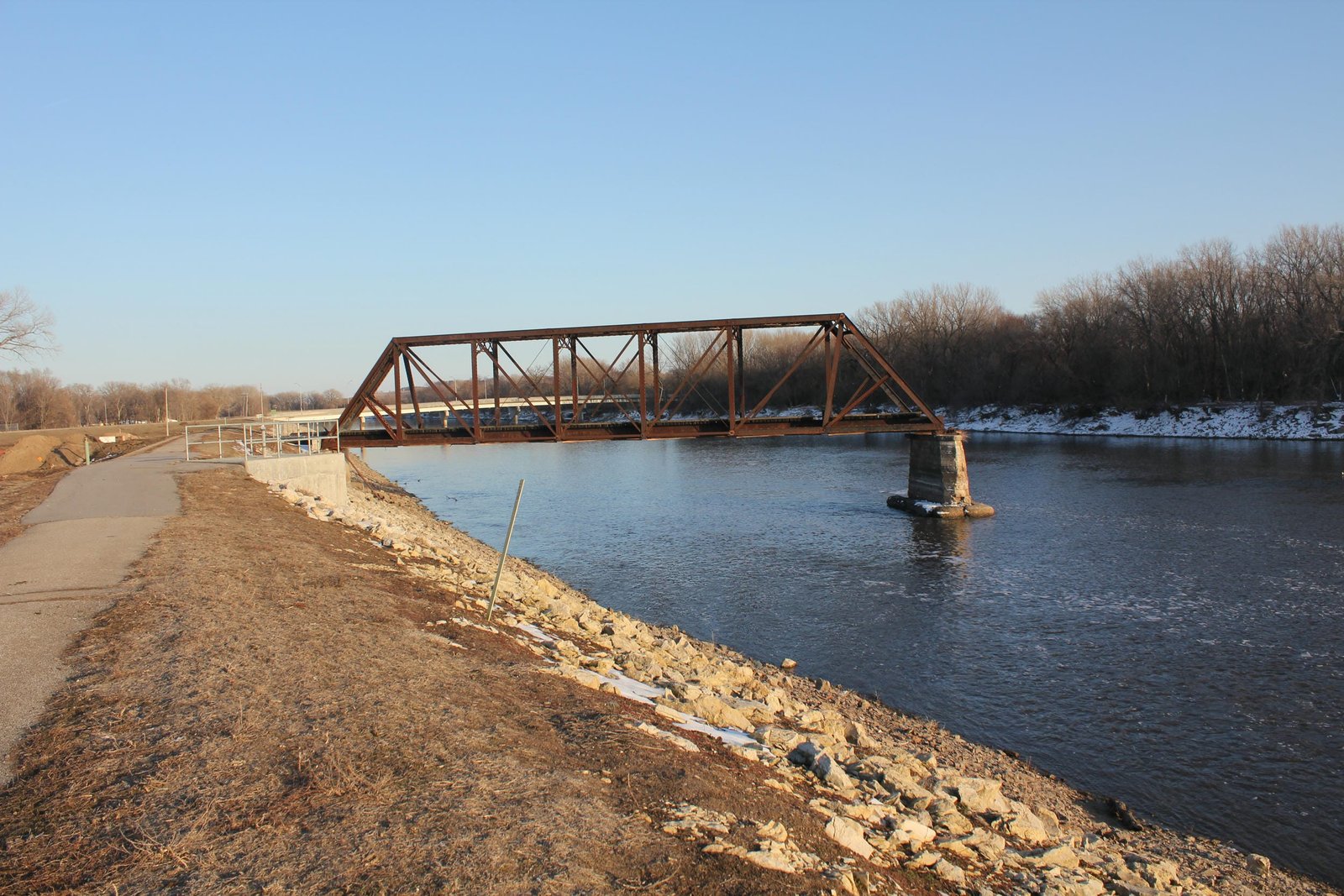
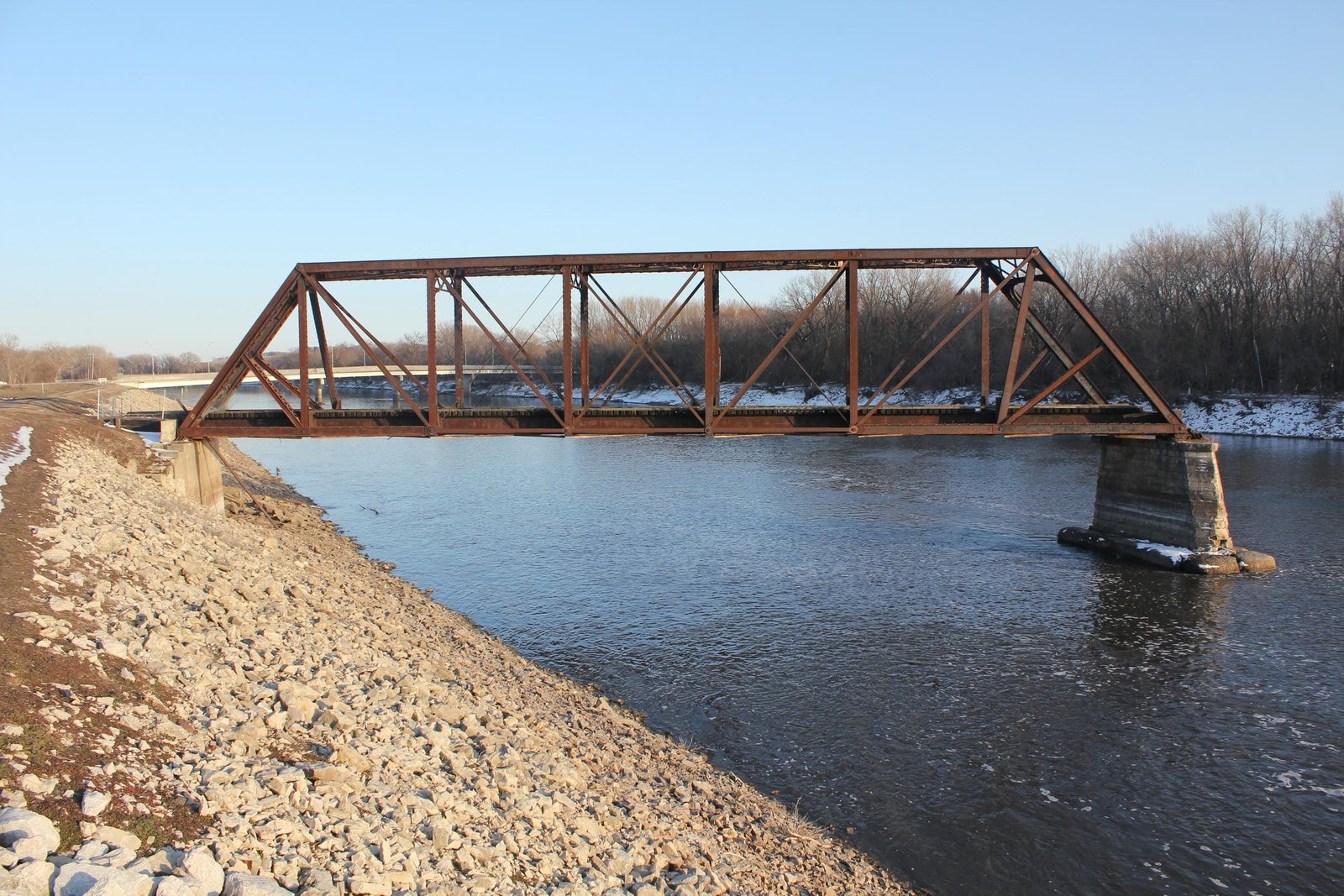
Once located on the south side of Des Moines, this large through truss bridge carried a former Chicago Great Western Railway mainline over the Des Moines River between Southeast 1st and Southeast 6th Streets. When planning on the Chicago, St. Paul & Kansas City Railway began in late 1886, it was decided to cross the Des Moines River at an angle immediately downstream from the mouth of the Raccoon River. Contracts for constructing the Des Moines to Missouri section of the "Diagonal Line" were awarded in February 1887, and work began almost immediately after. Construction on the first bridge began in the spring of 1887, and was completed in mid-1887. This bridge consisted of five heavy skewed 180-foot Pratt through truss spans, set onto stone piers and abutments. Chicago Bolt & Forge Company (operating the plant of American Bridge Works in Chicago) constructed the initial superstructure, which was allegedly damaged in a massive shop fire in 1887. Between 1897 and 1905, the CGW invested significant capital in the system, rebuilding aging bridges and constructing new facilities. In 1901, construction began on a new four span through truss bridge, which would reuse the substructures of the previous bridge. During the construction, a flood knocked down a portion of the bridge, which was recovered by skilled divers and re-erected. The new bridge was completed in early 1902.
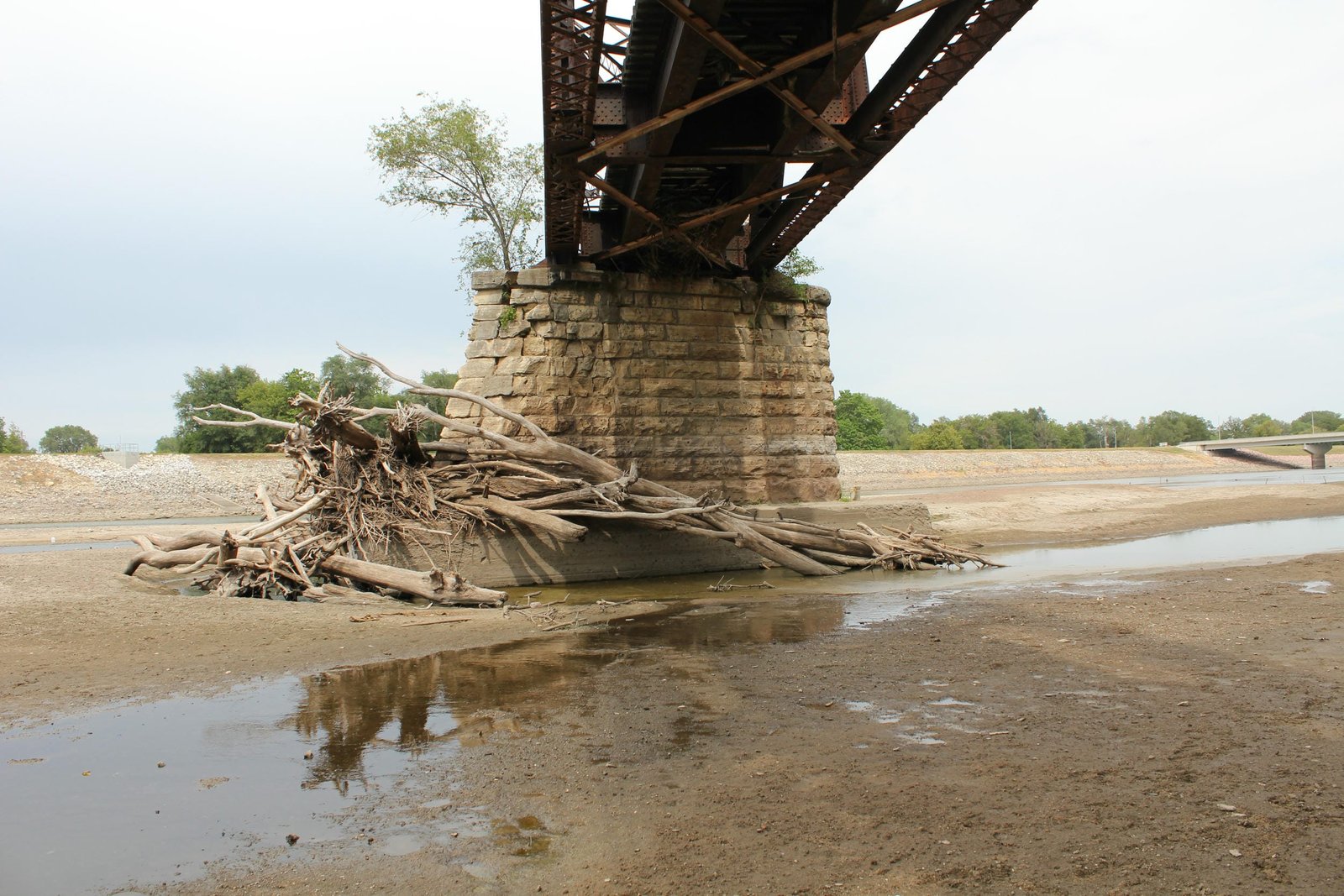
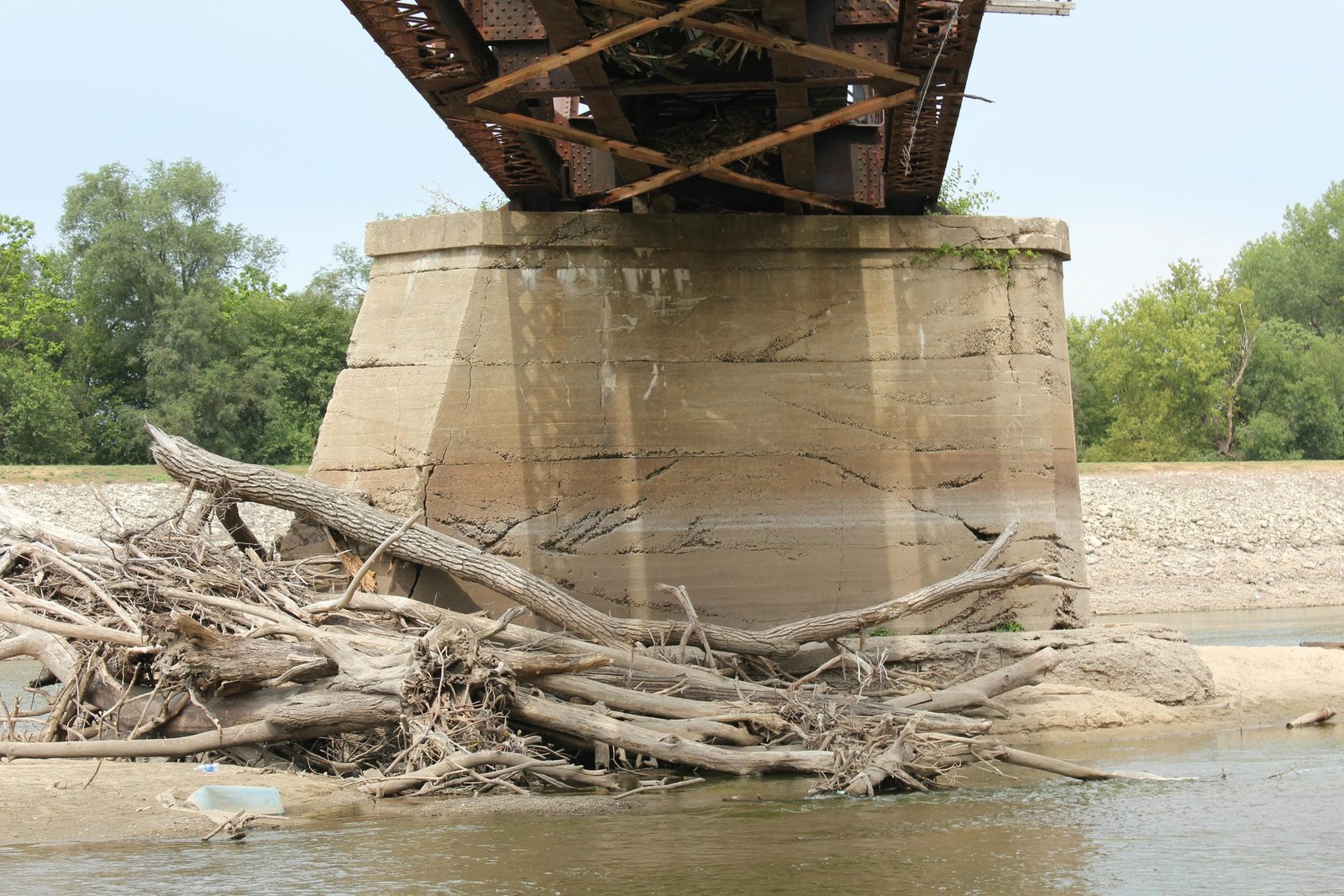
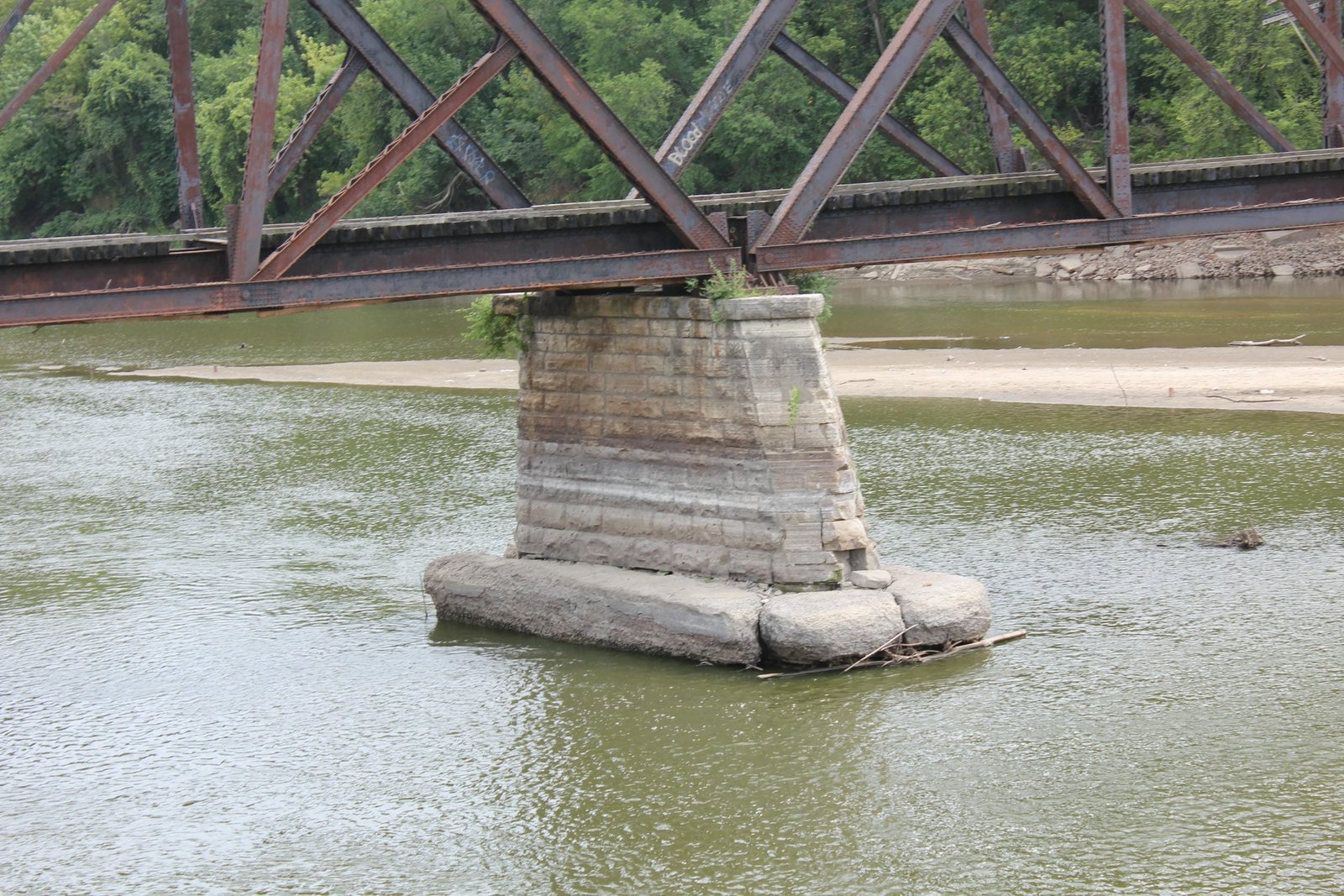
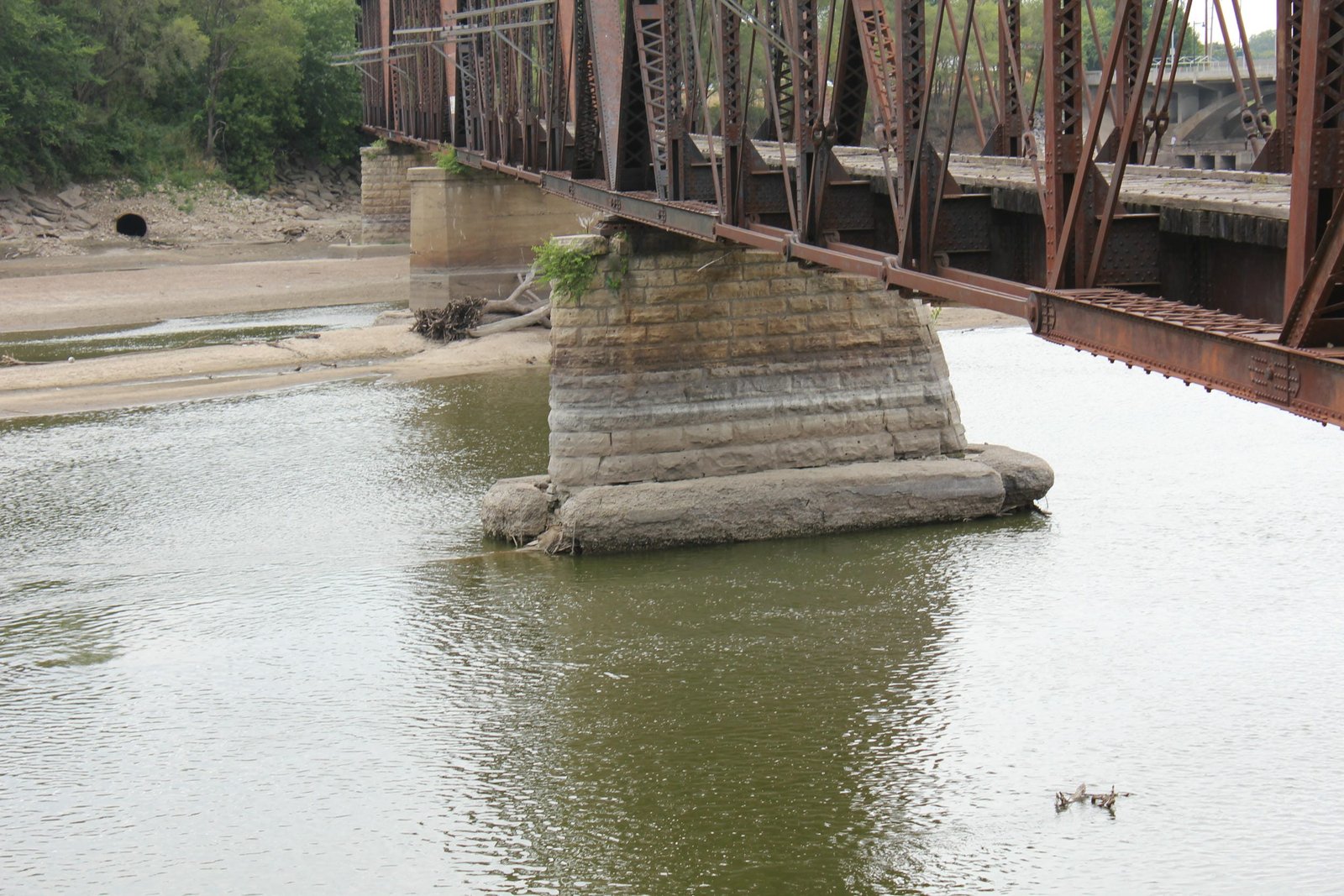
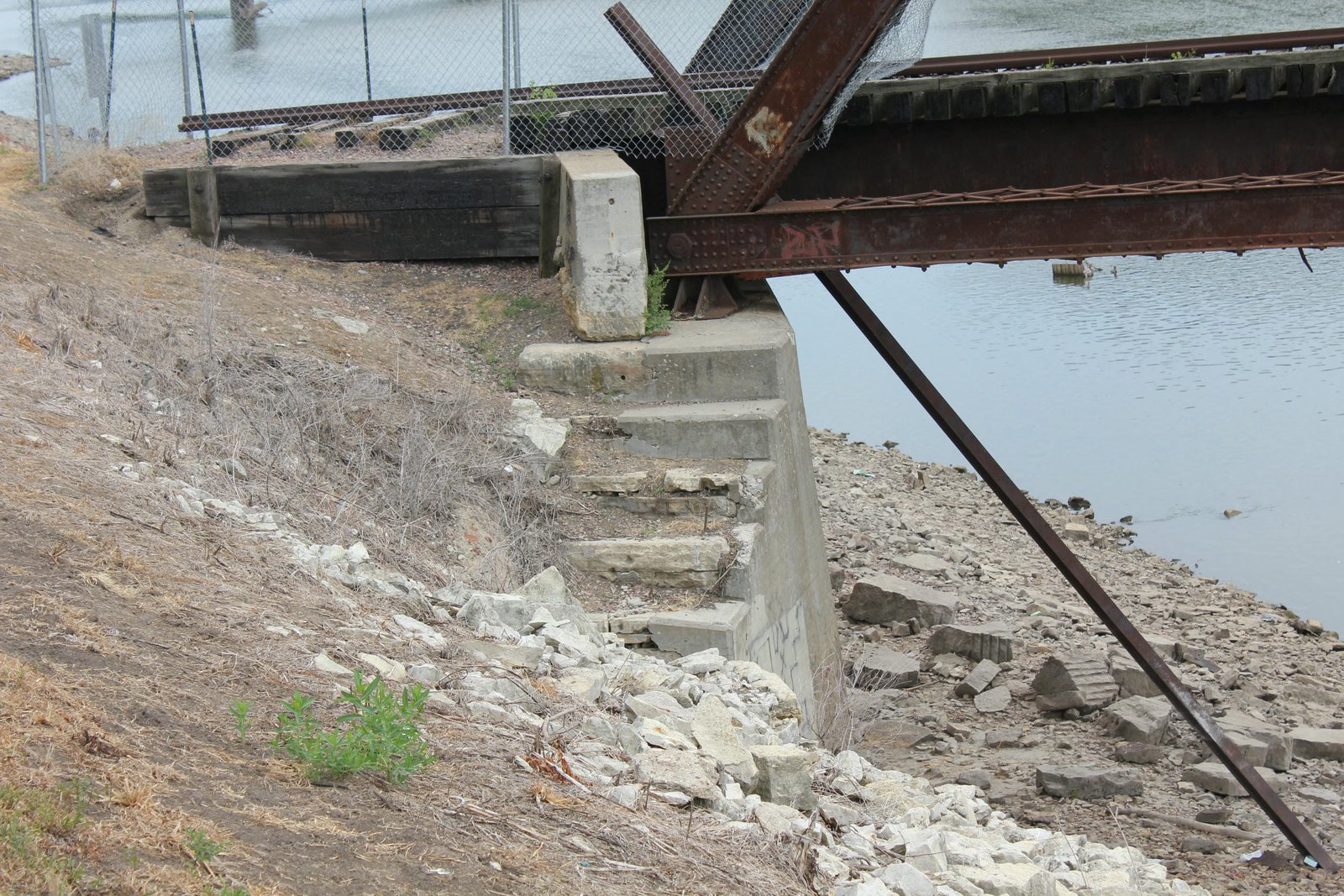
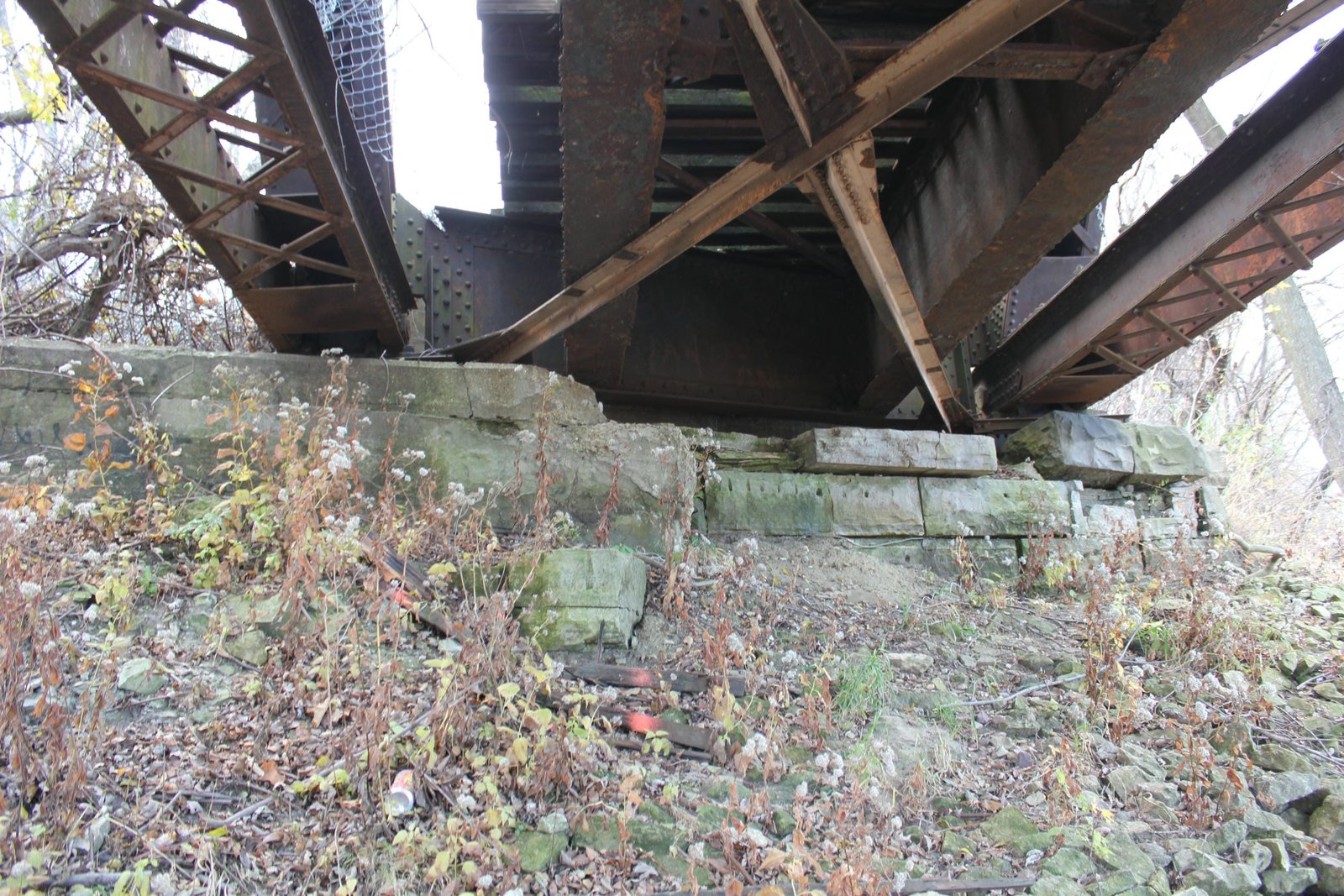
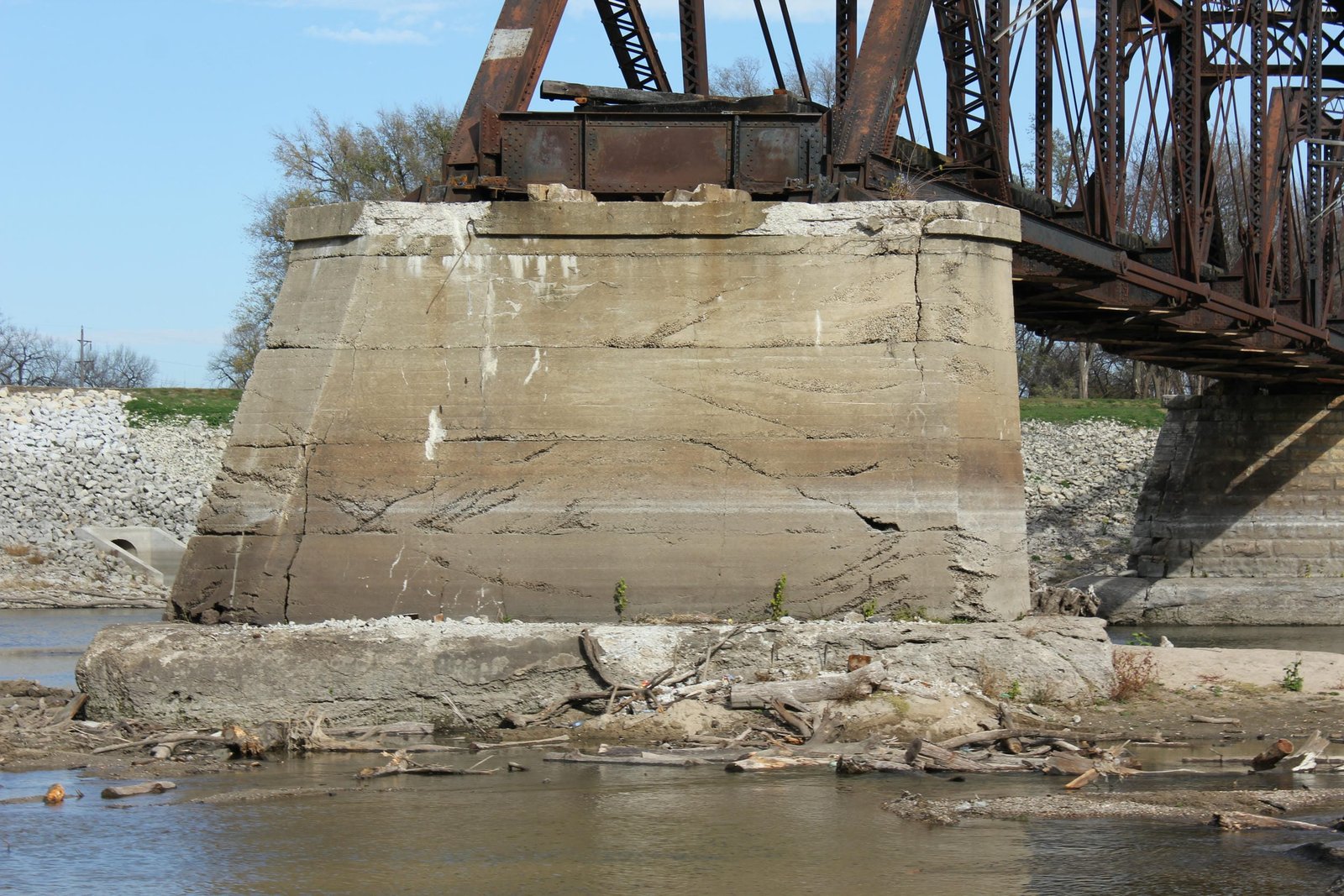
After the new bridge was completed, it is likely that the 1887-era bridge was sold to an interurban railroad for use as an electric railway bridge. The CGW was known for selling truss spans to interurban railroads as a way to maximize the scrap value of old bridges. It is unclear where these spans may have been reused, and if they still exist. During the 20th Century, several other alterations were made to the bridge. In 1925-26, the north abutment, north pier and center pier were rebuilt with concrete bases on account of a lower water level than designed for. In 1930, the floor was reinforced by welding cover plates at the stringers, a revolutionary technique for the time. In 1945, the south pier base was also encased in concrete; and the center pier and north abutment were entirely encased in concrete. Further alterations came in the 1970s, when additional lateral bracing was added between the stringers and the lower lateral bracing was replaced. American Bridge Company fabricated the superstructure, completed the diving and recovery operations and erected the superstructure. It is believed that Shepard, Winston & Company constructed the substructure, although it is unclear if a subcontractor was involved in the work. Two separate unknown contractors completed the 1925 and 1945 concrete alterations. It is believed that railroad company forces completed the 1930 and 1970s strengthening projects.
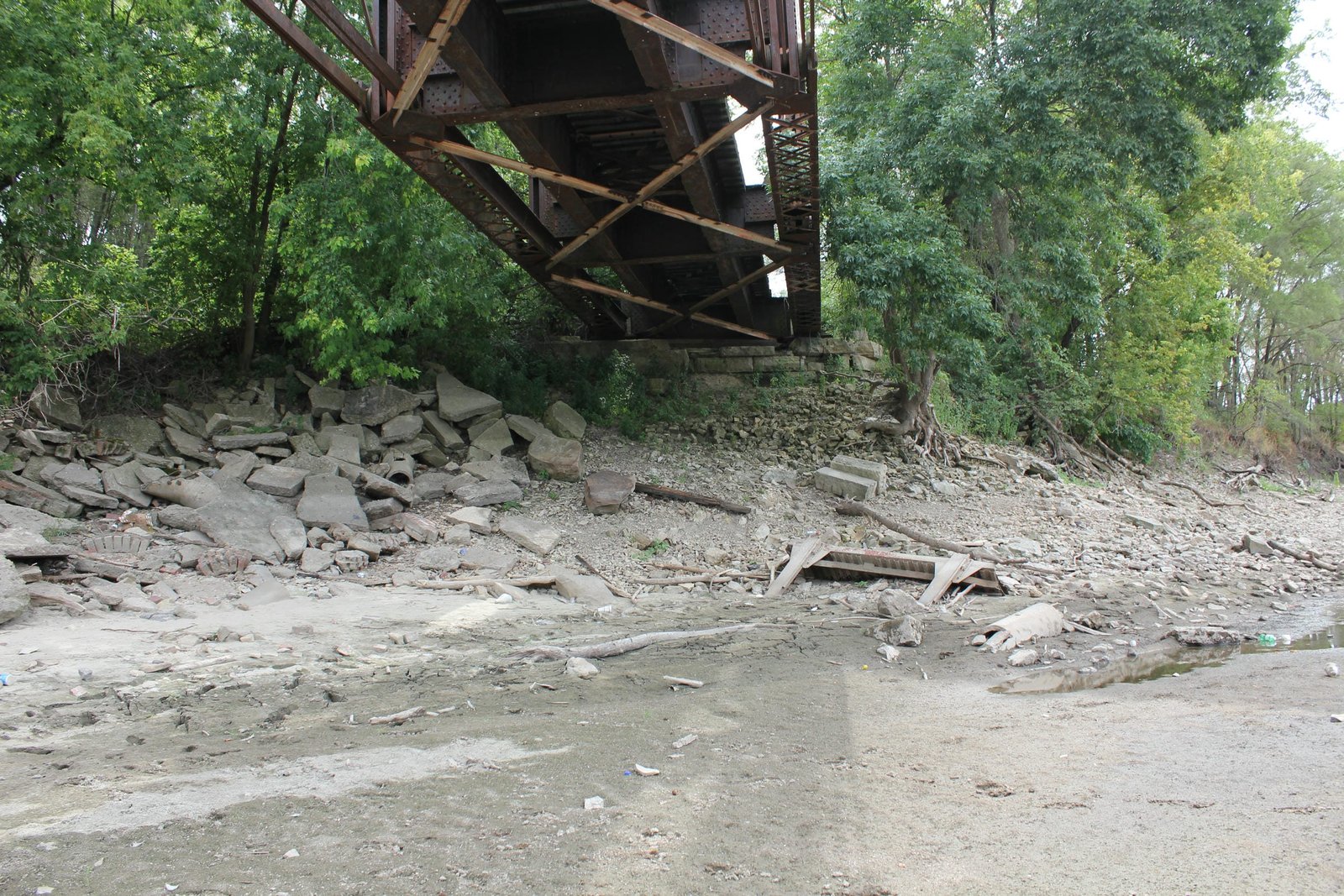
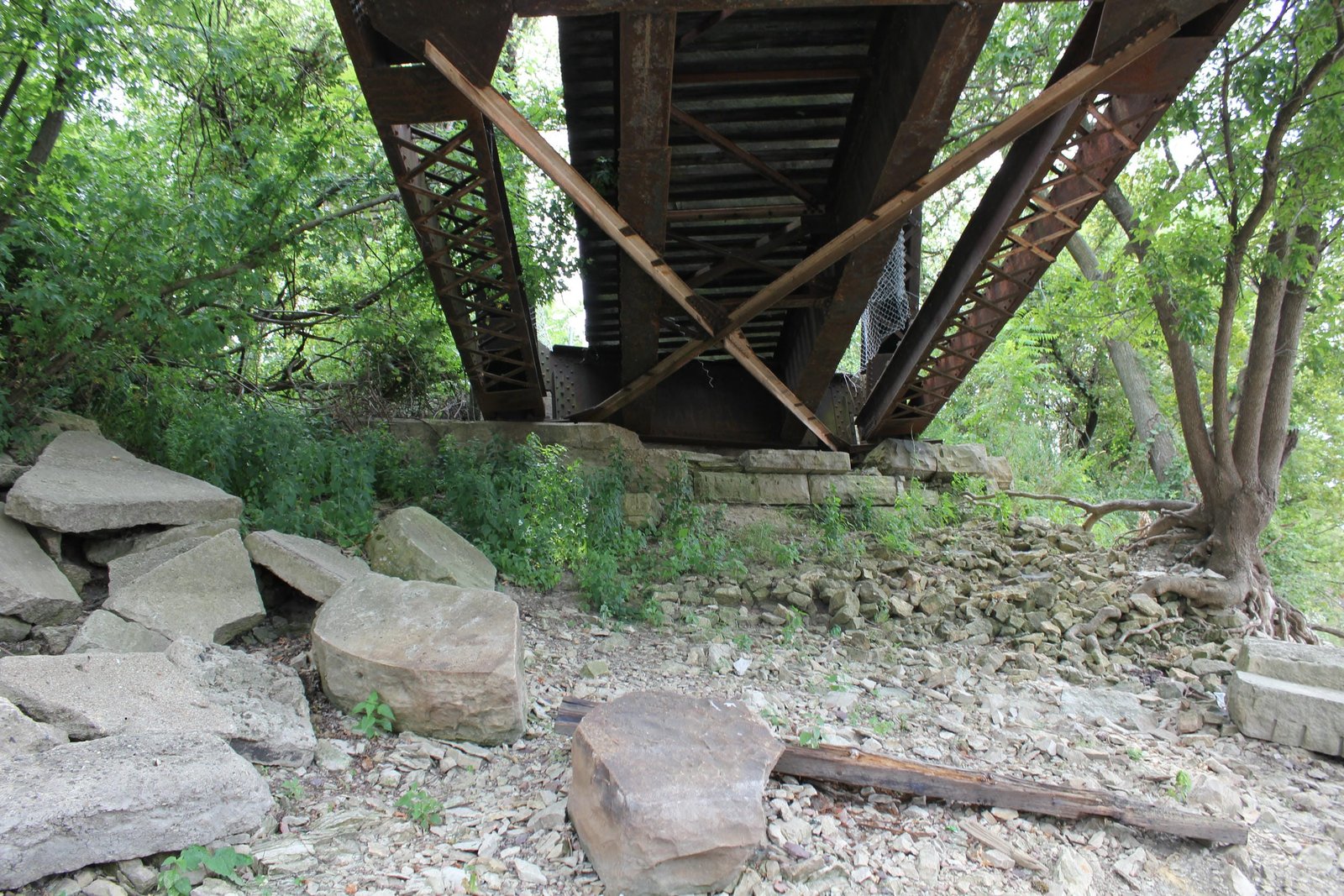
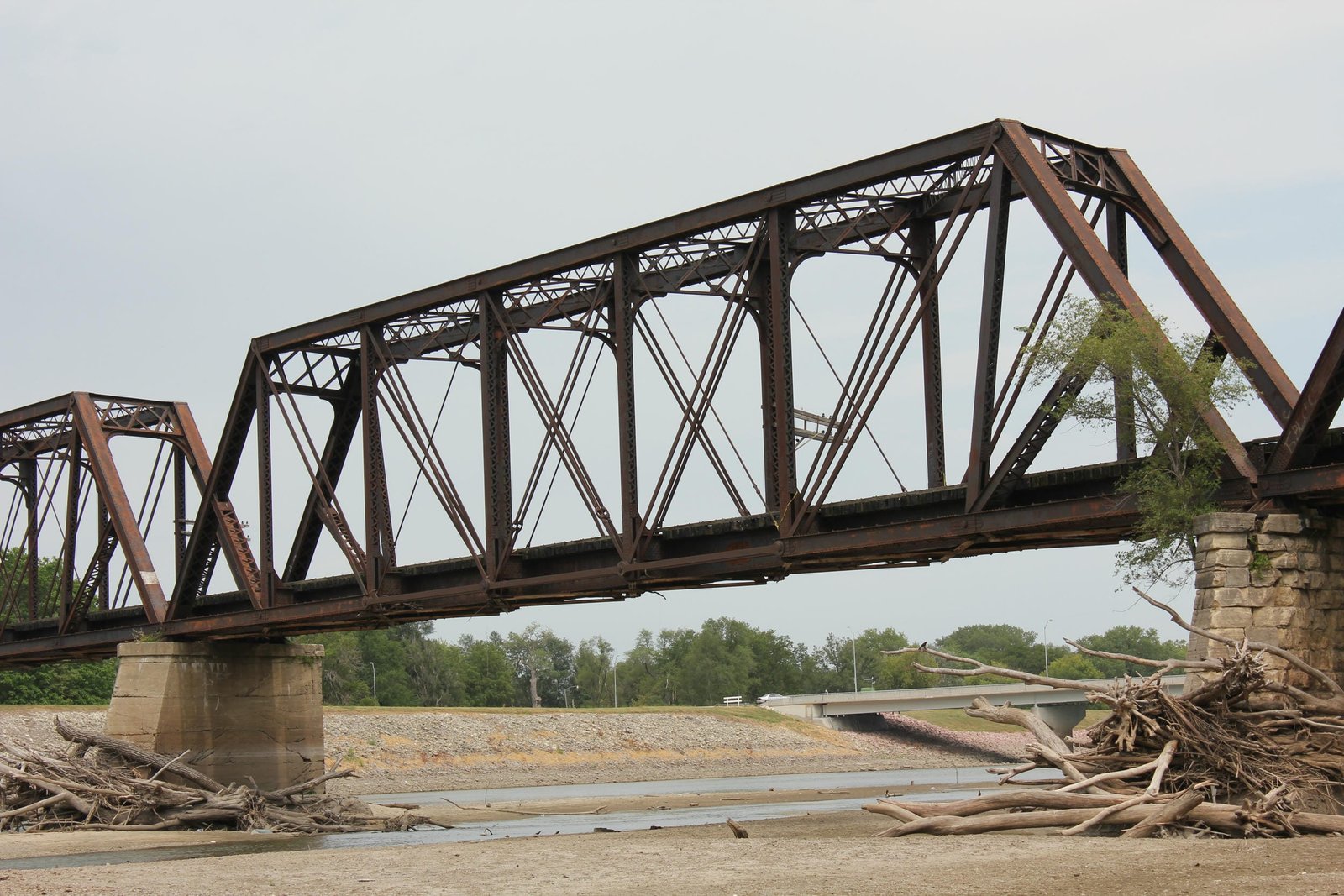
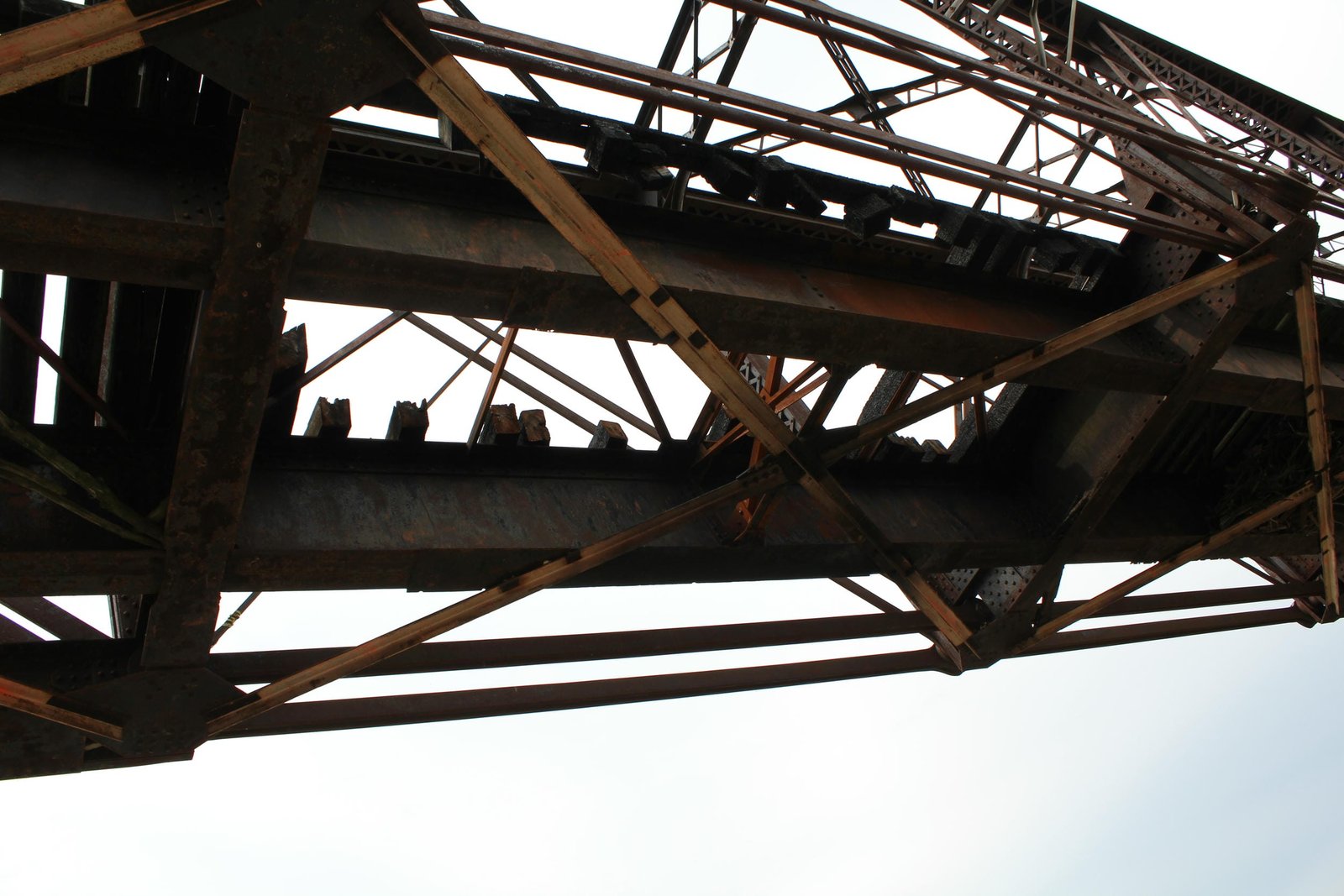
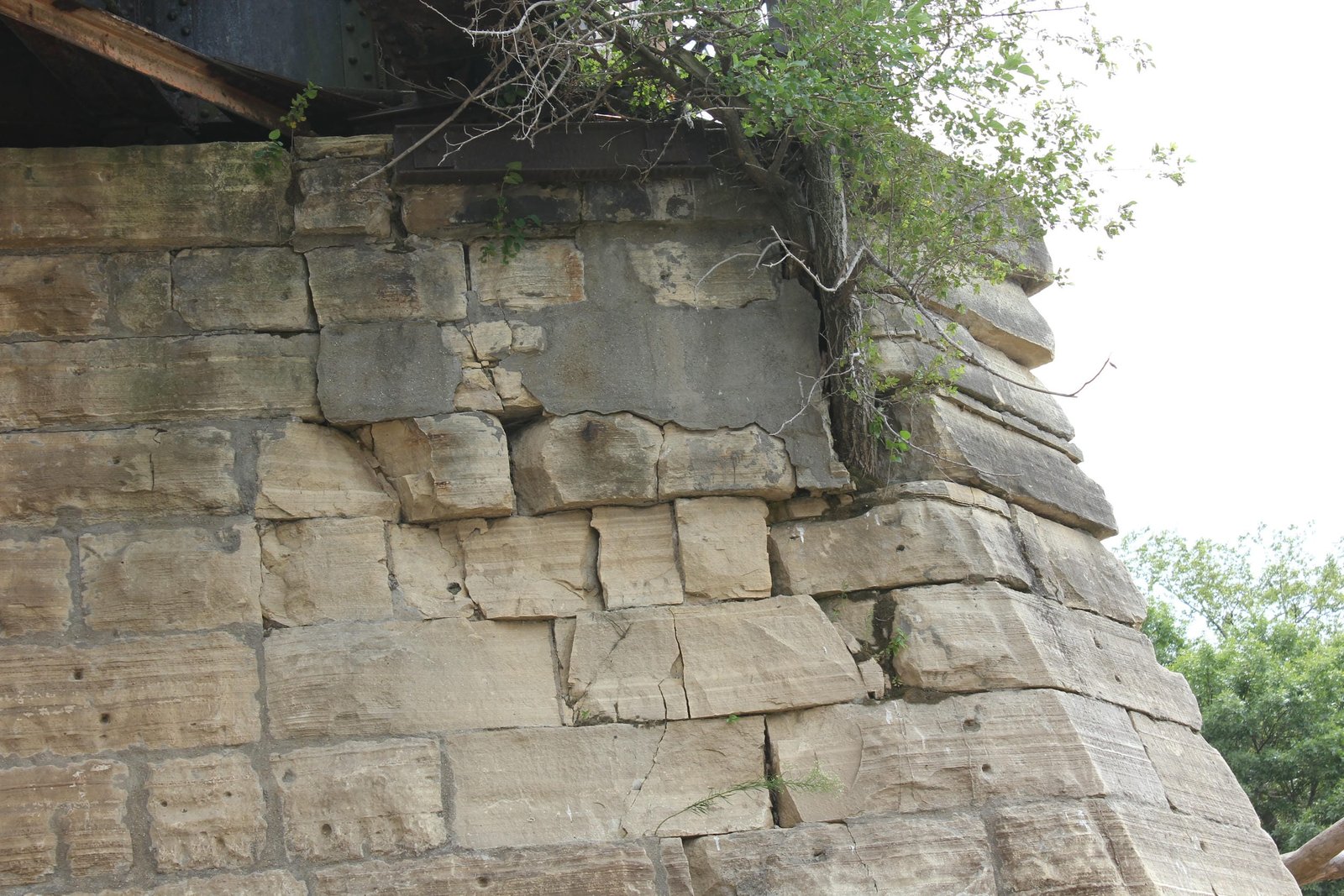
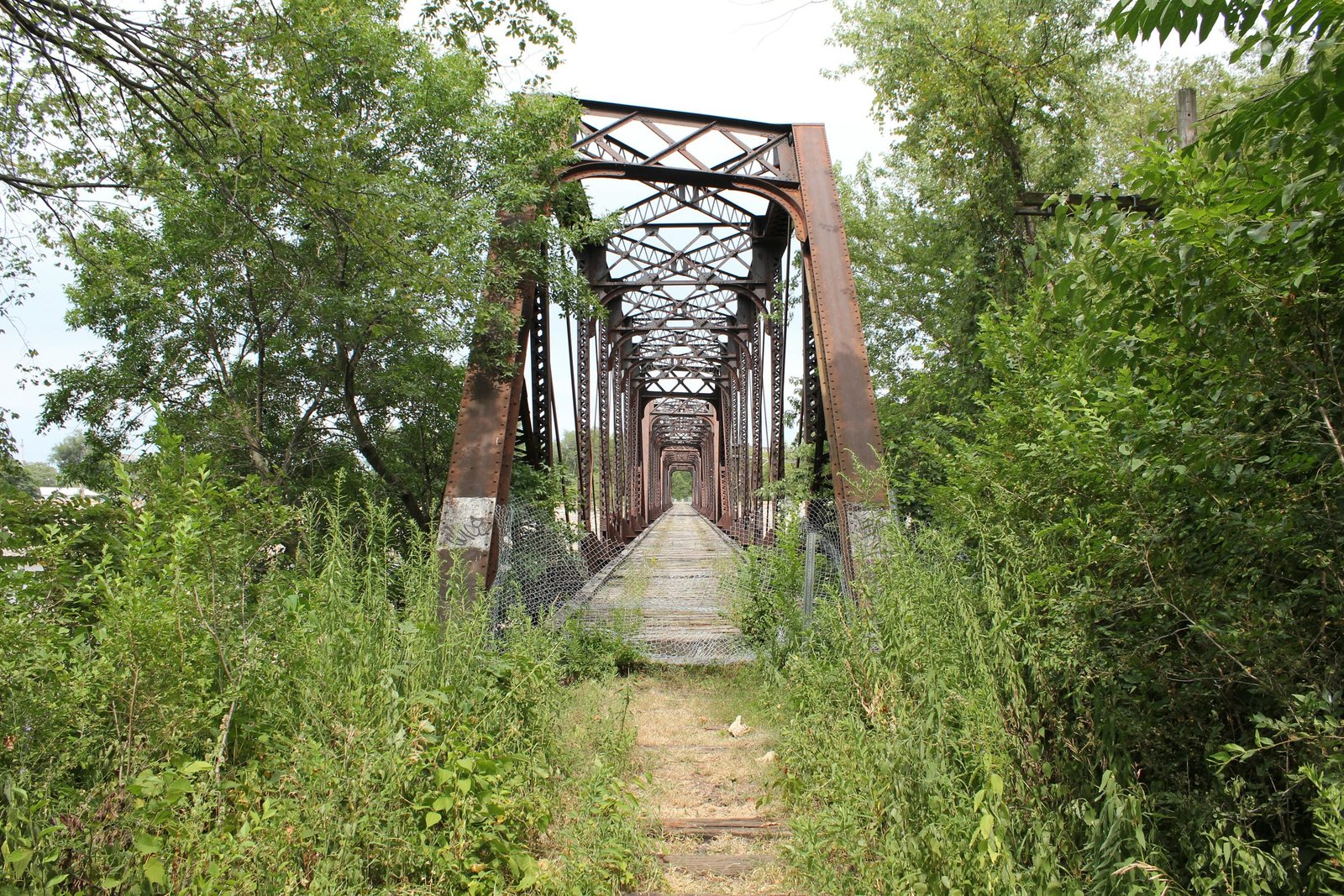
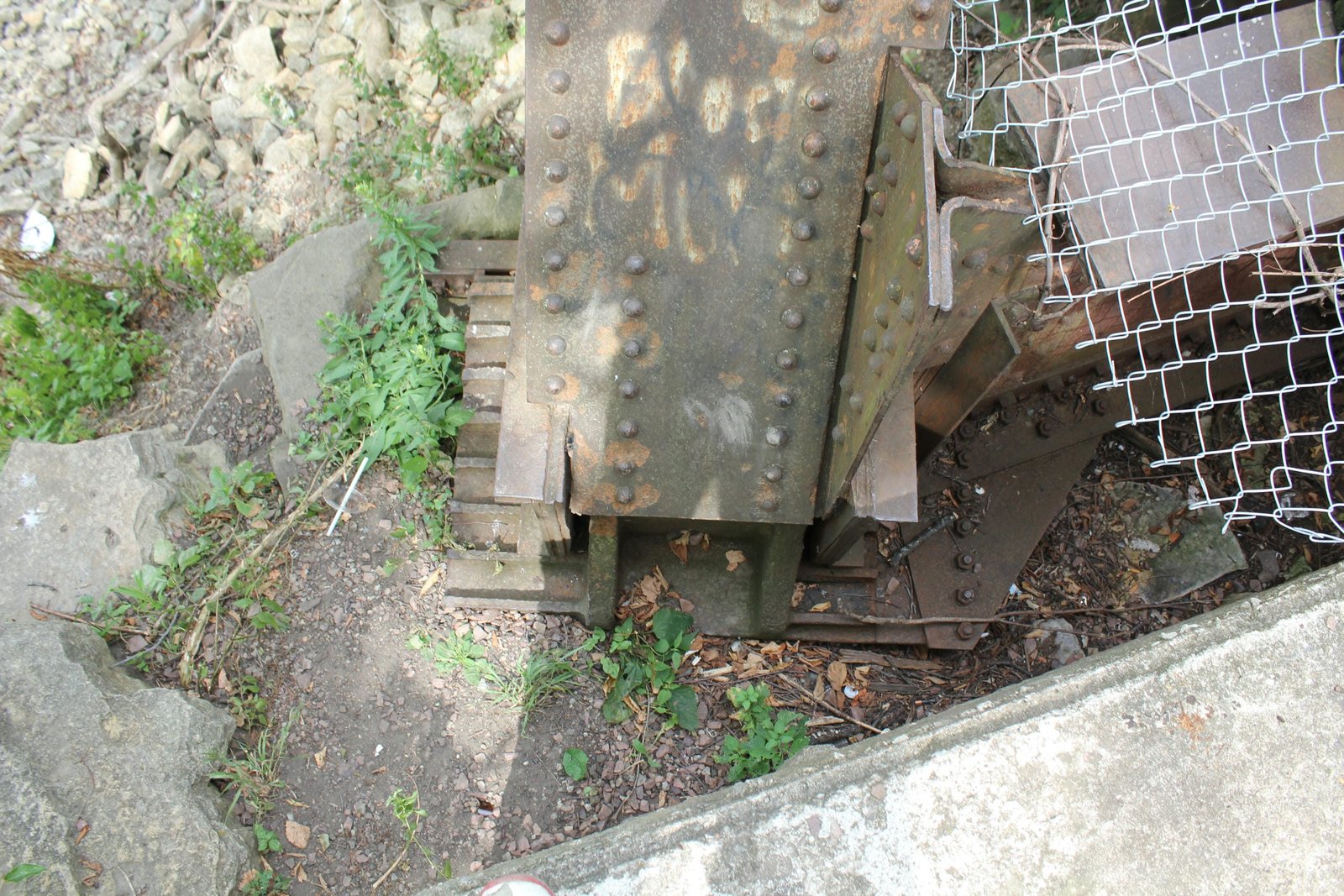
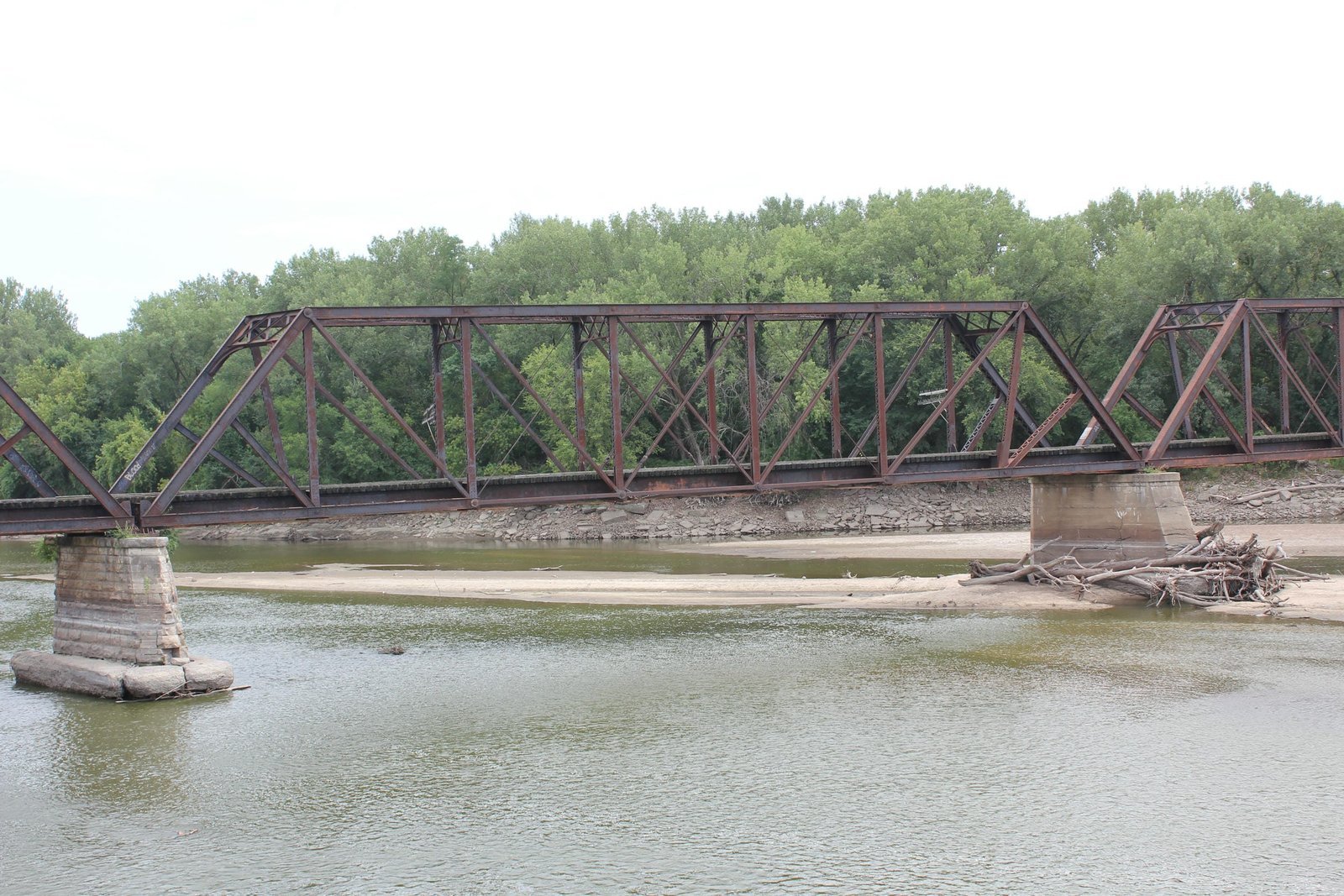
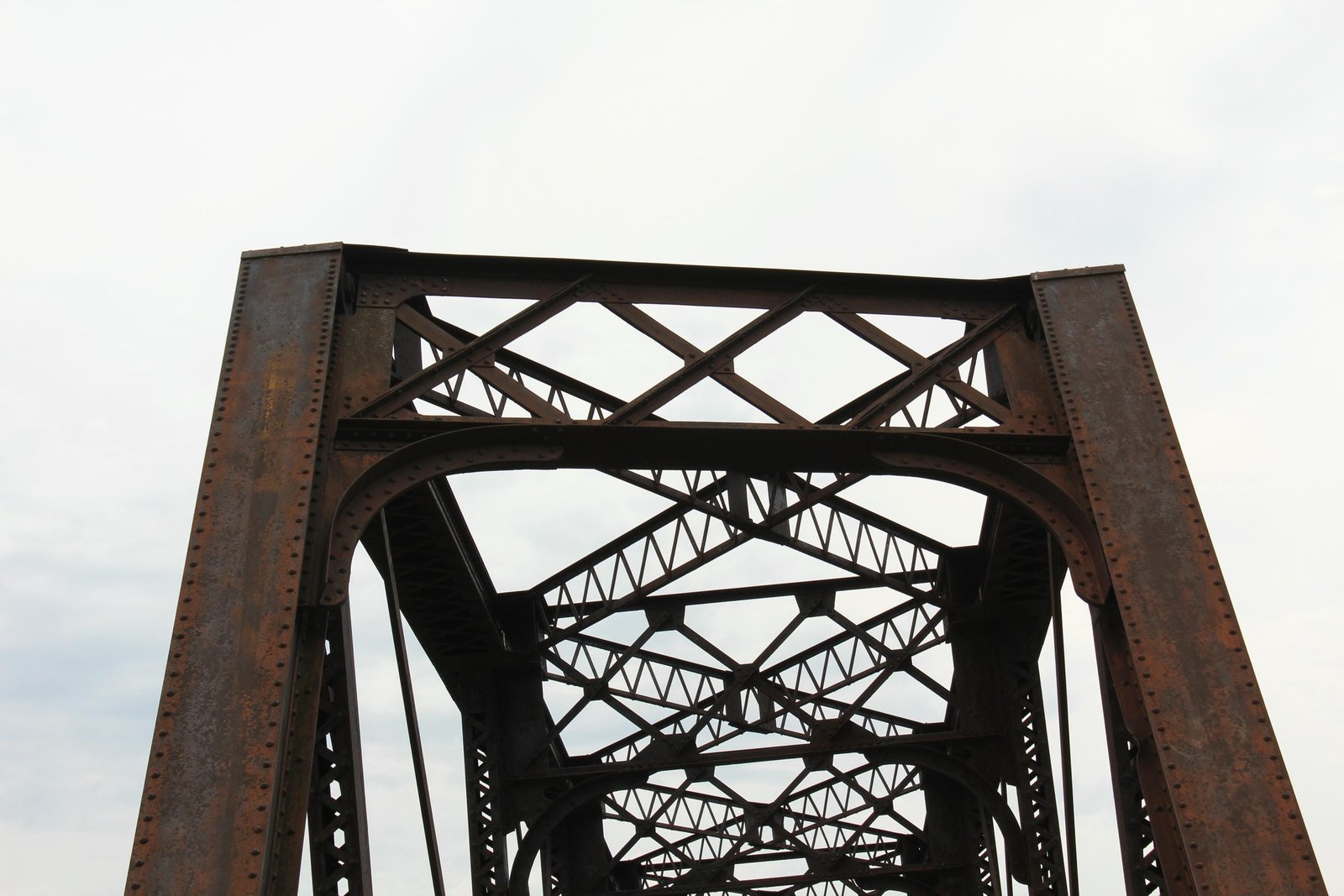
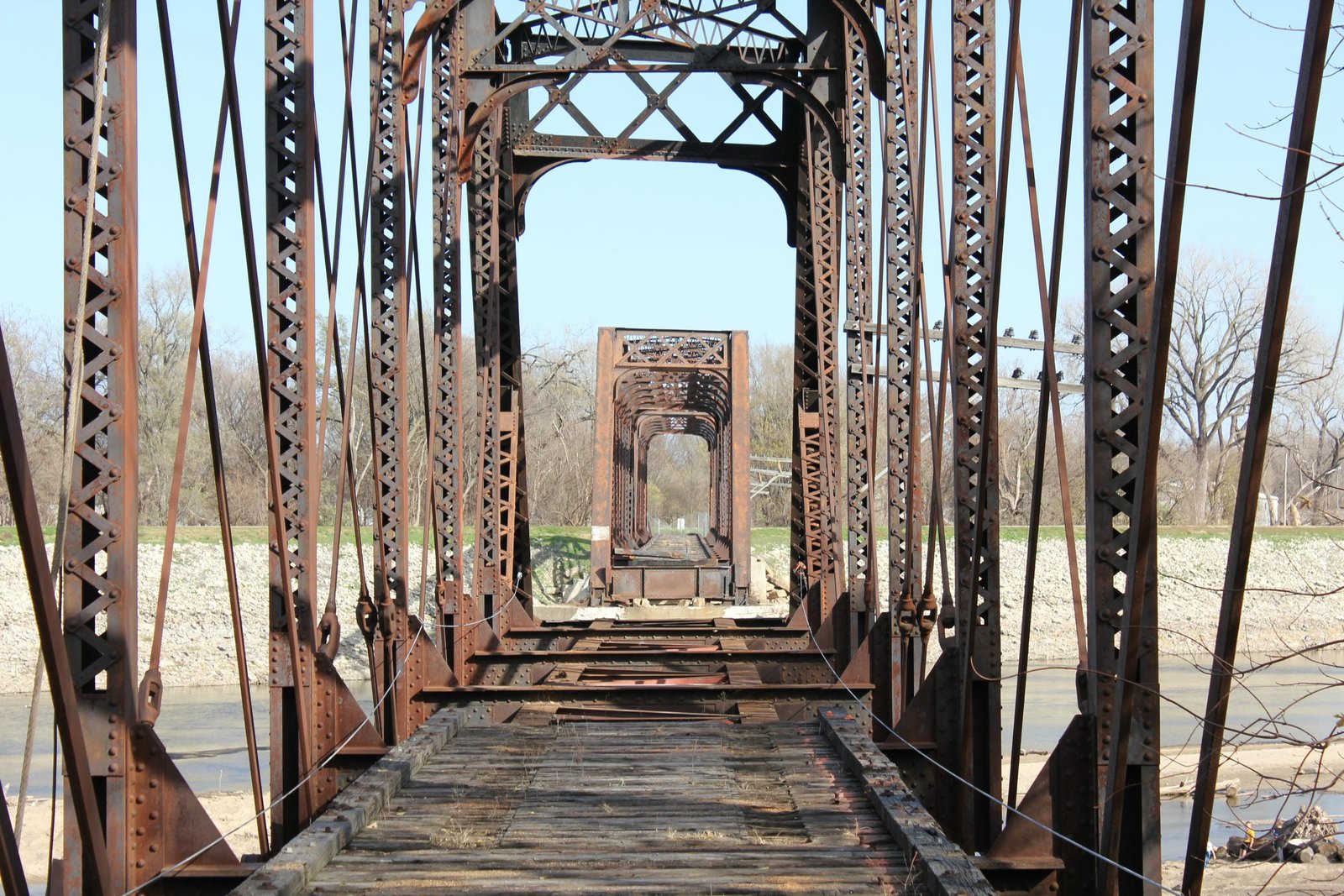
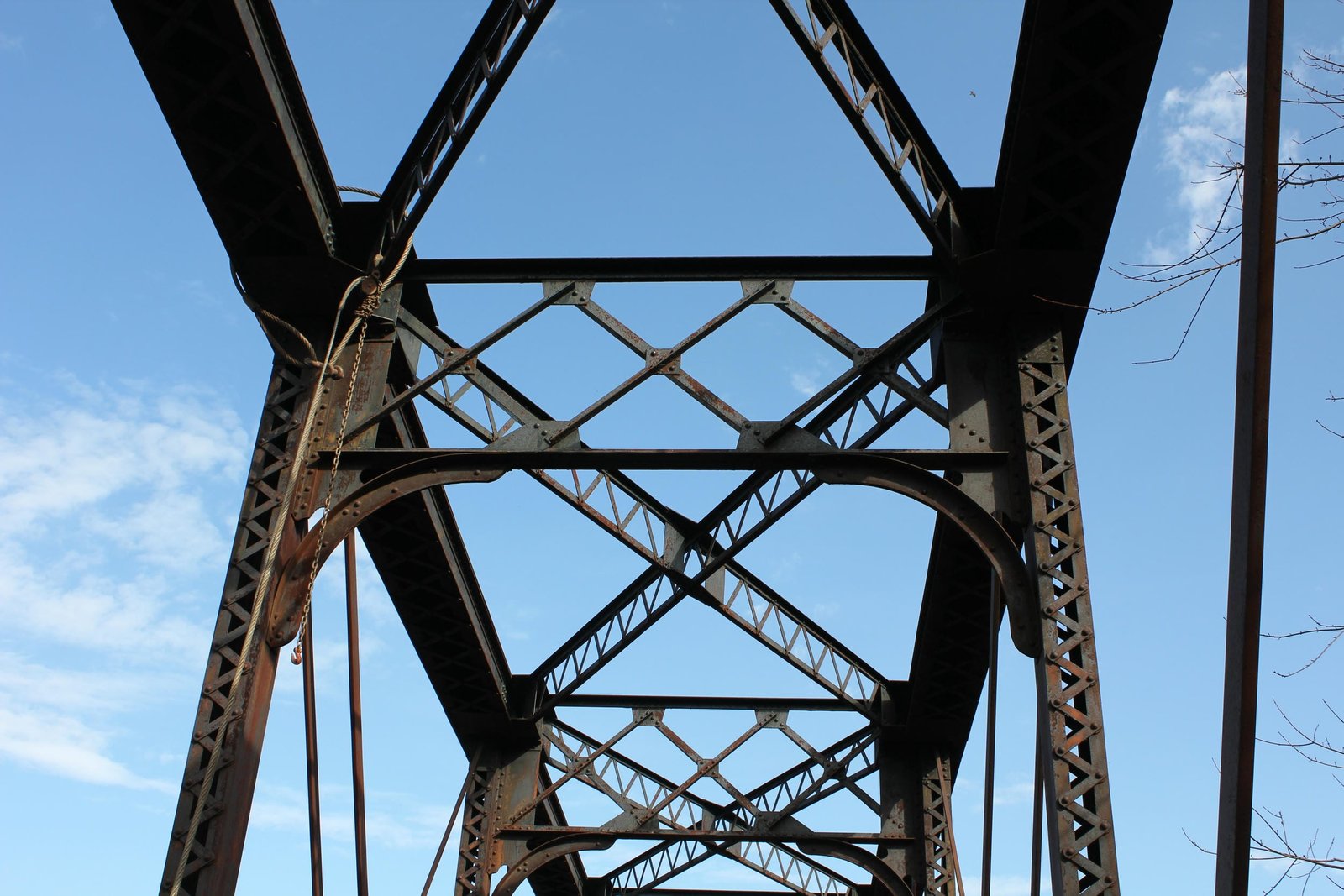
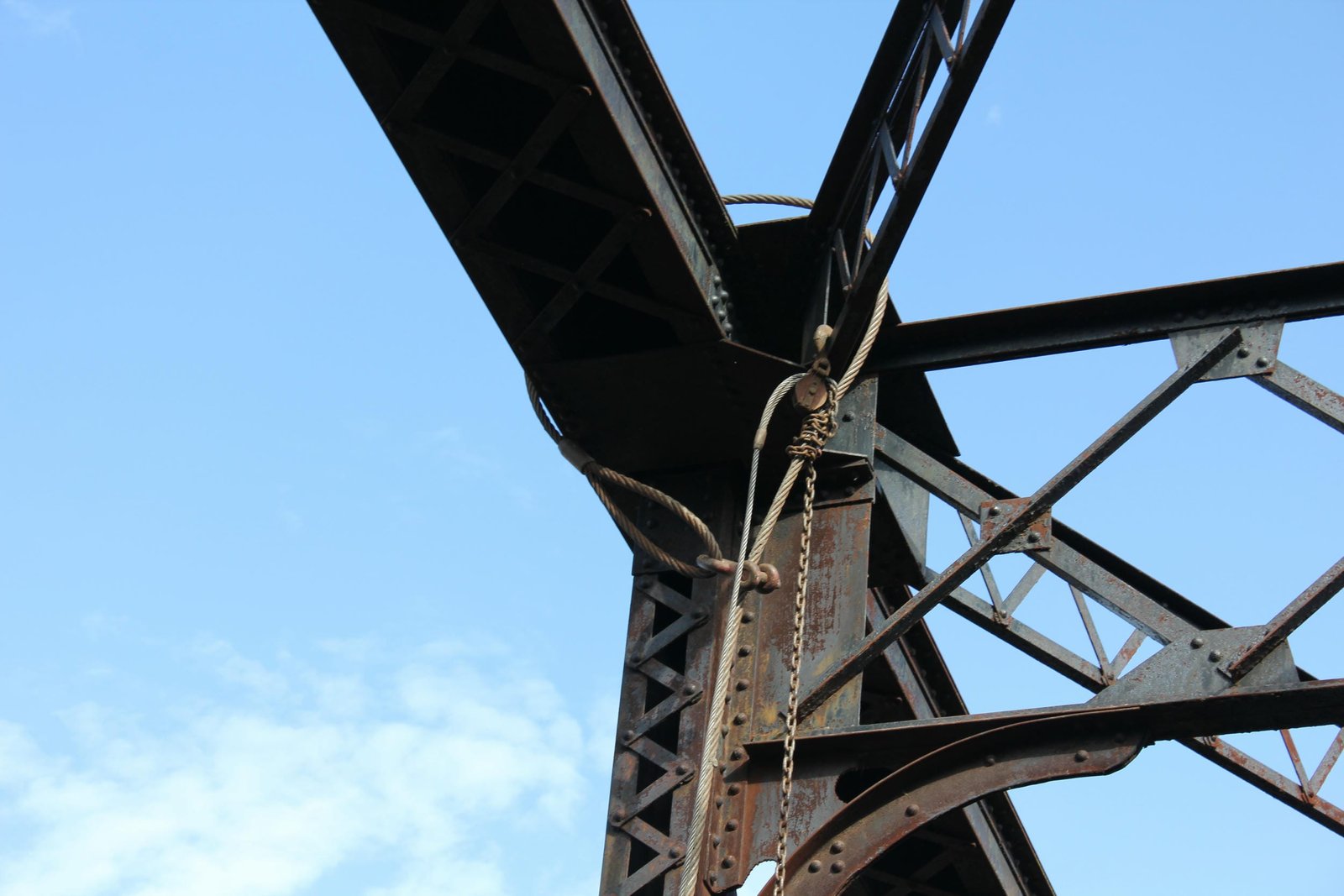
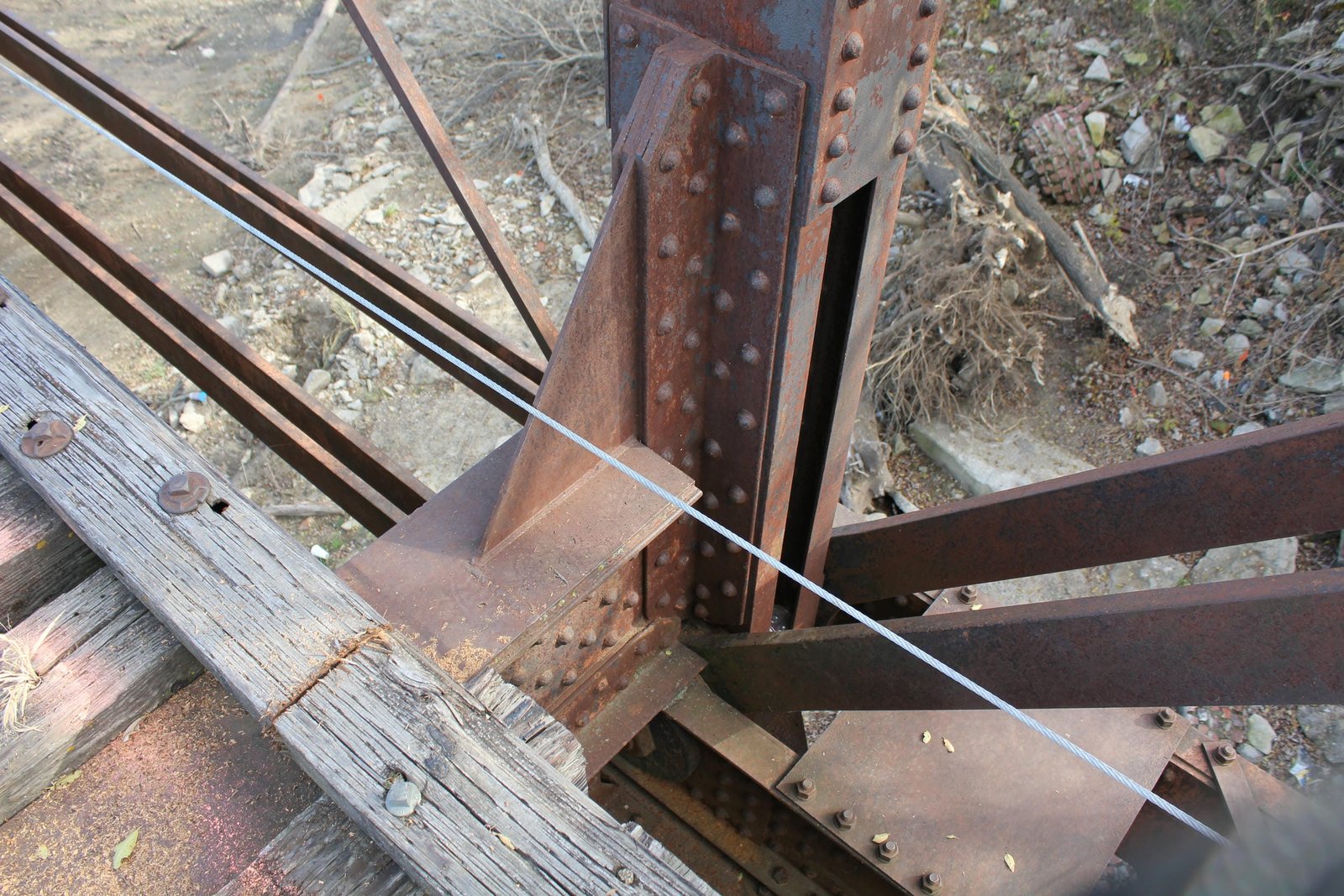
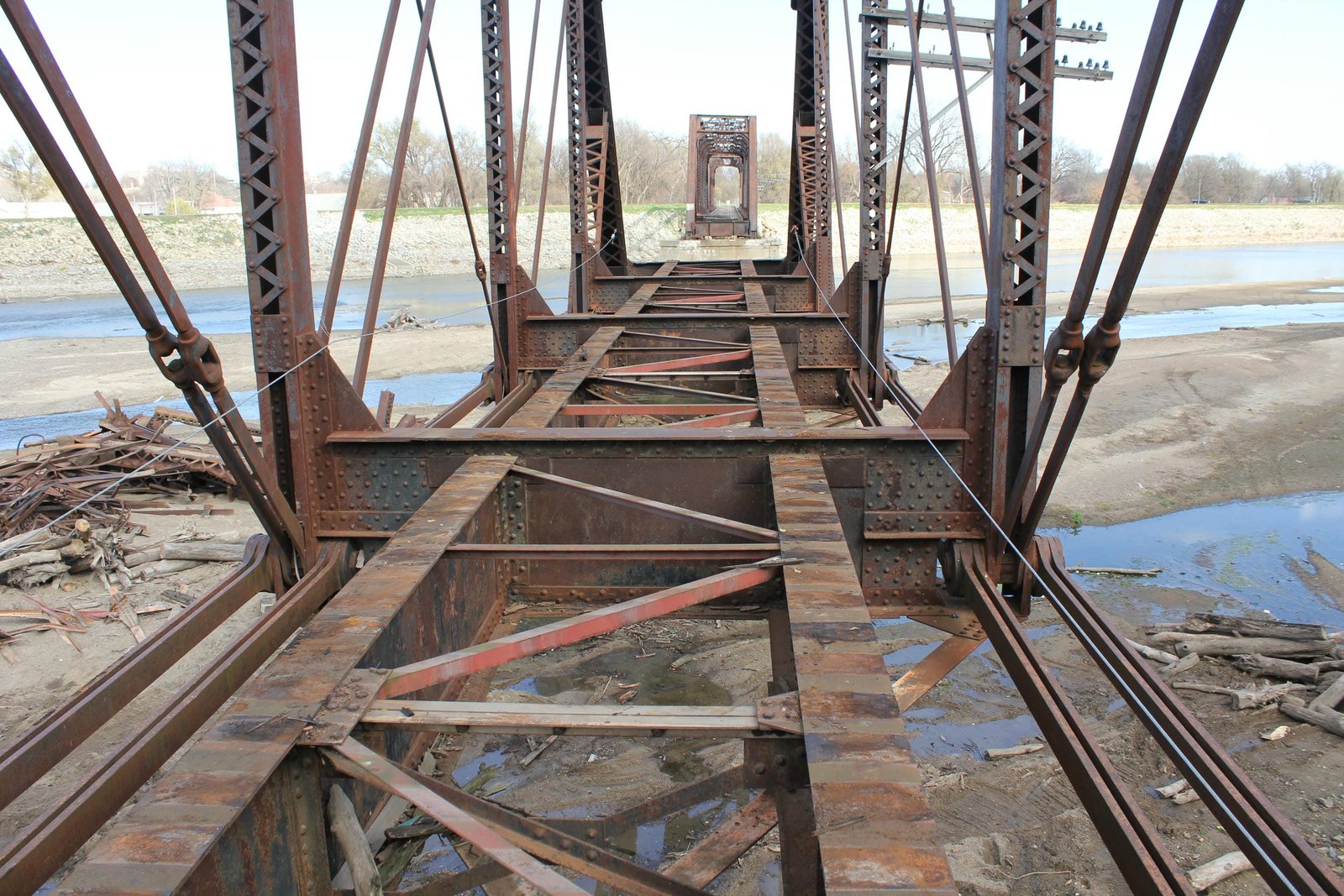
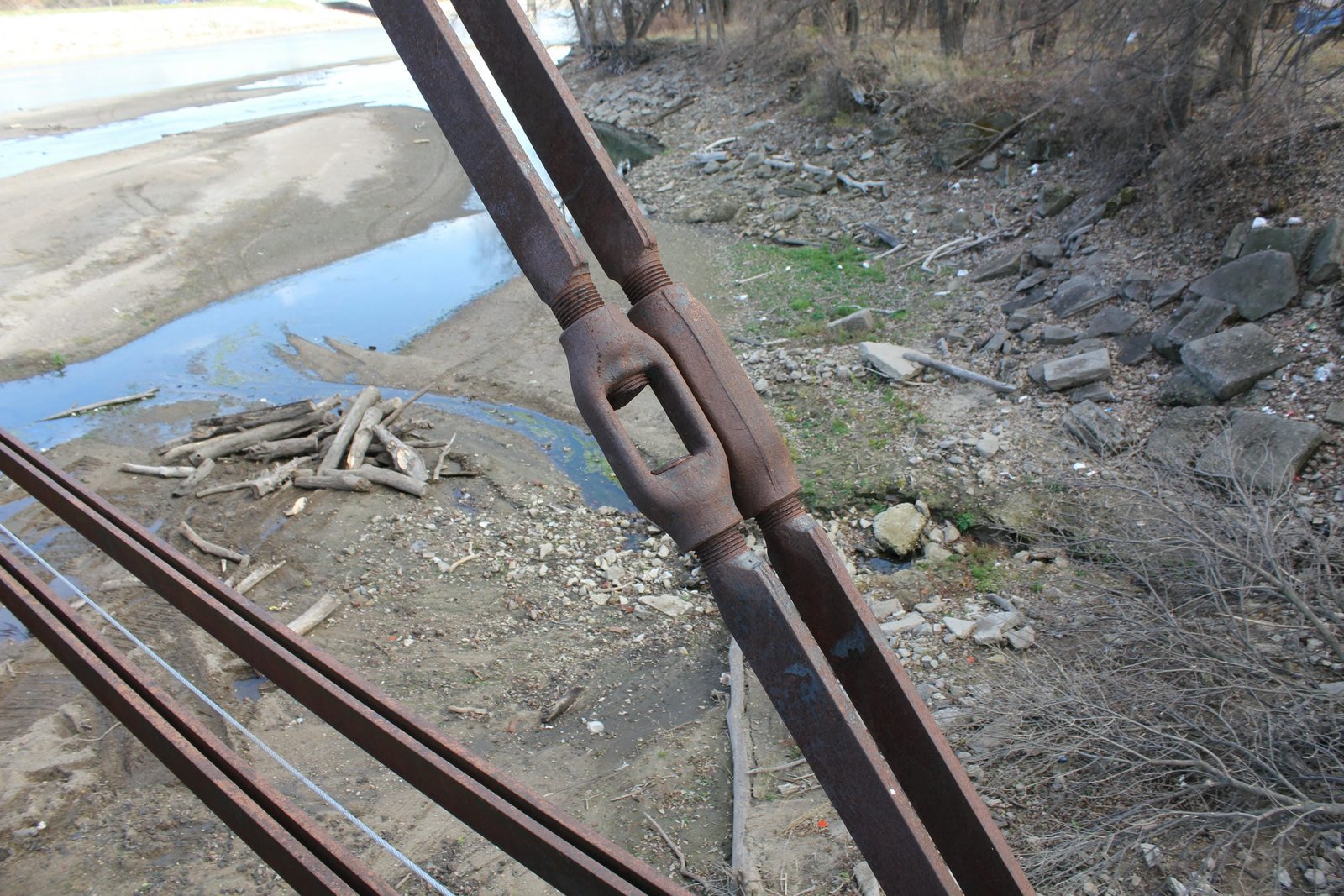
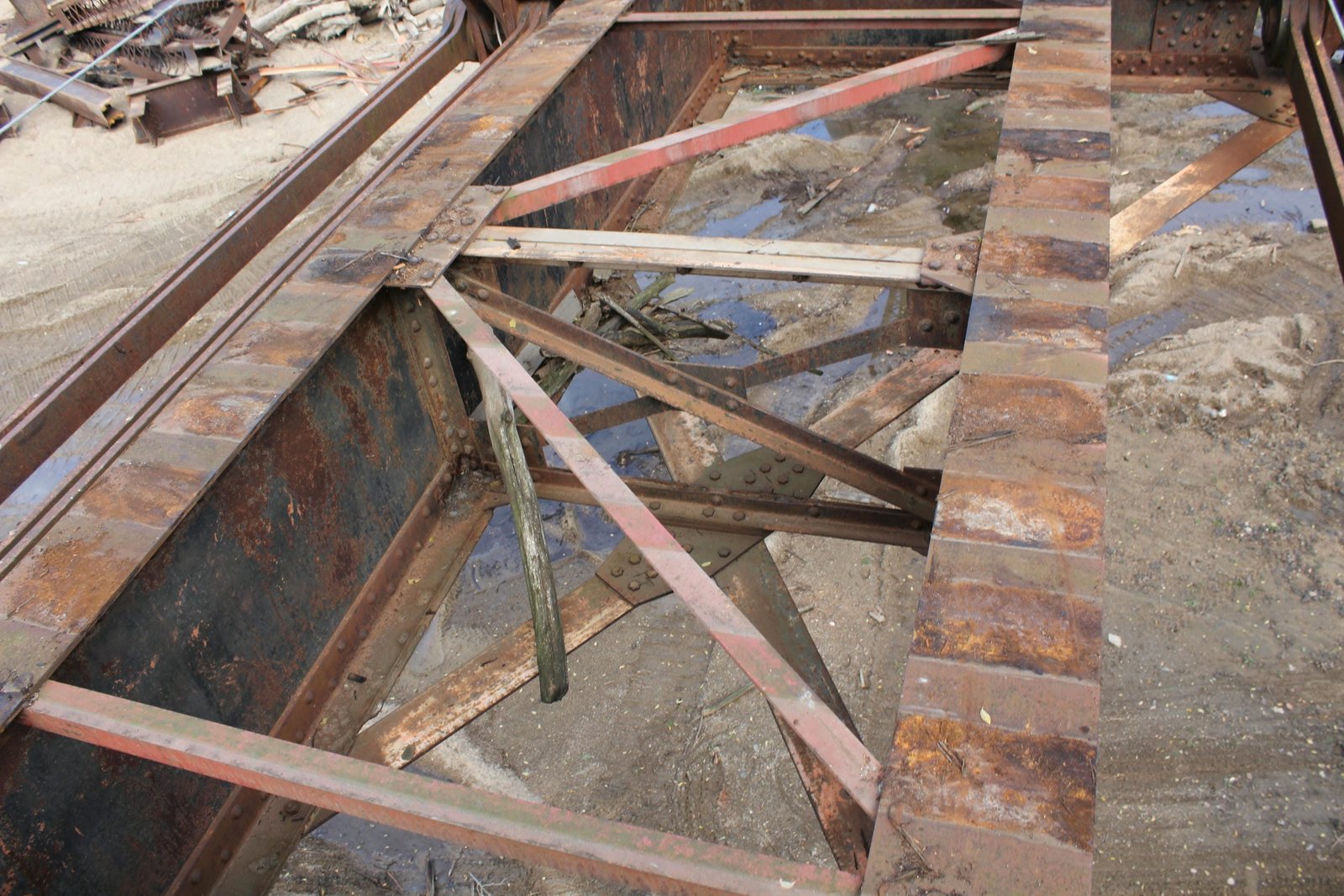
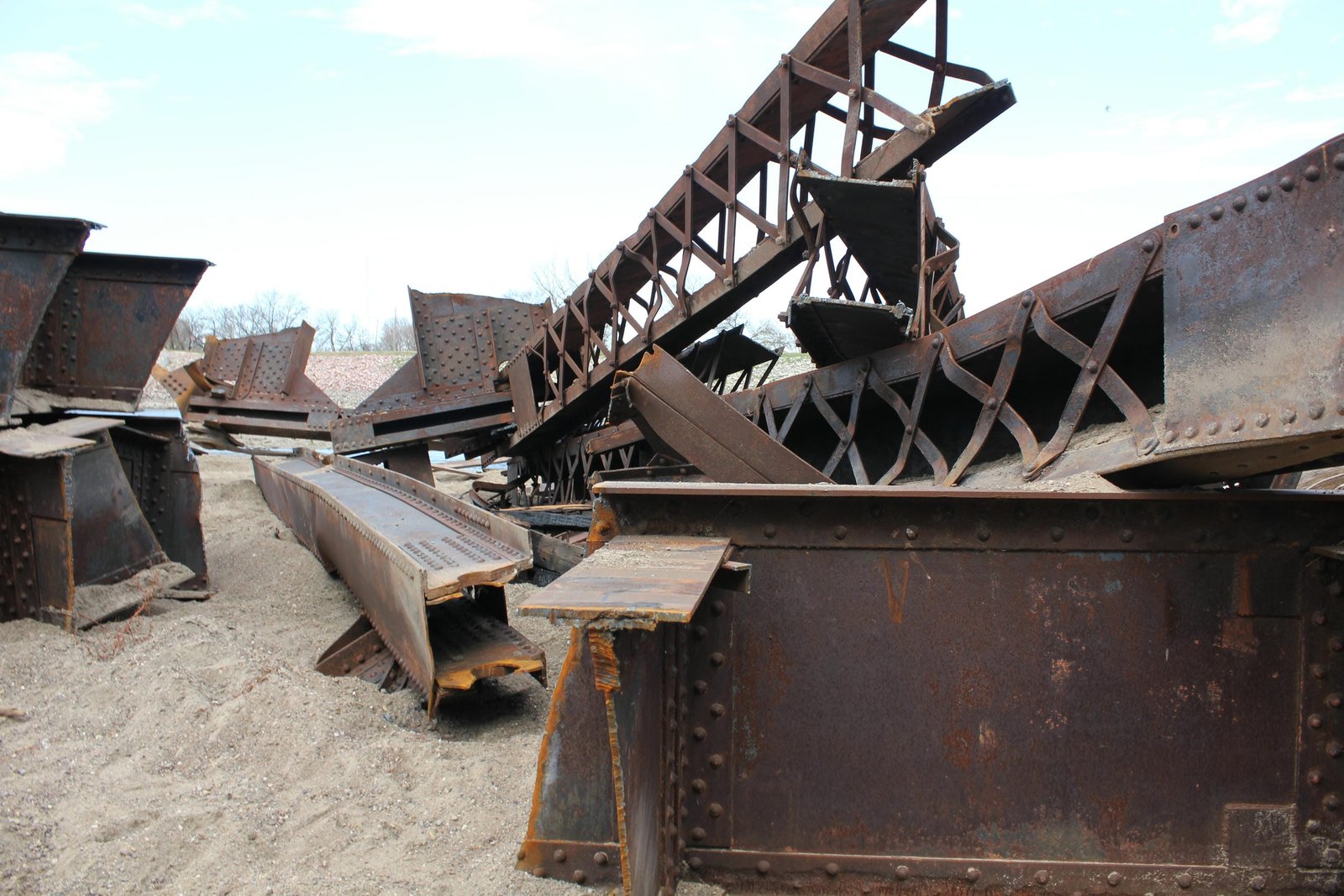
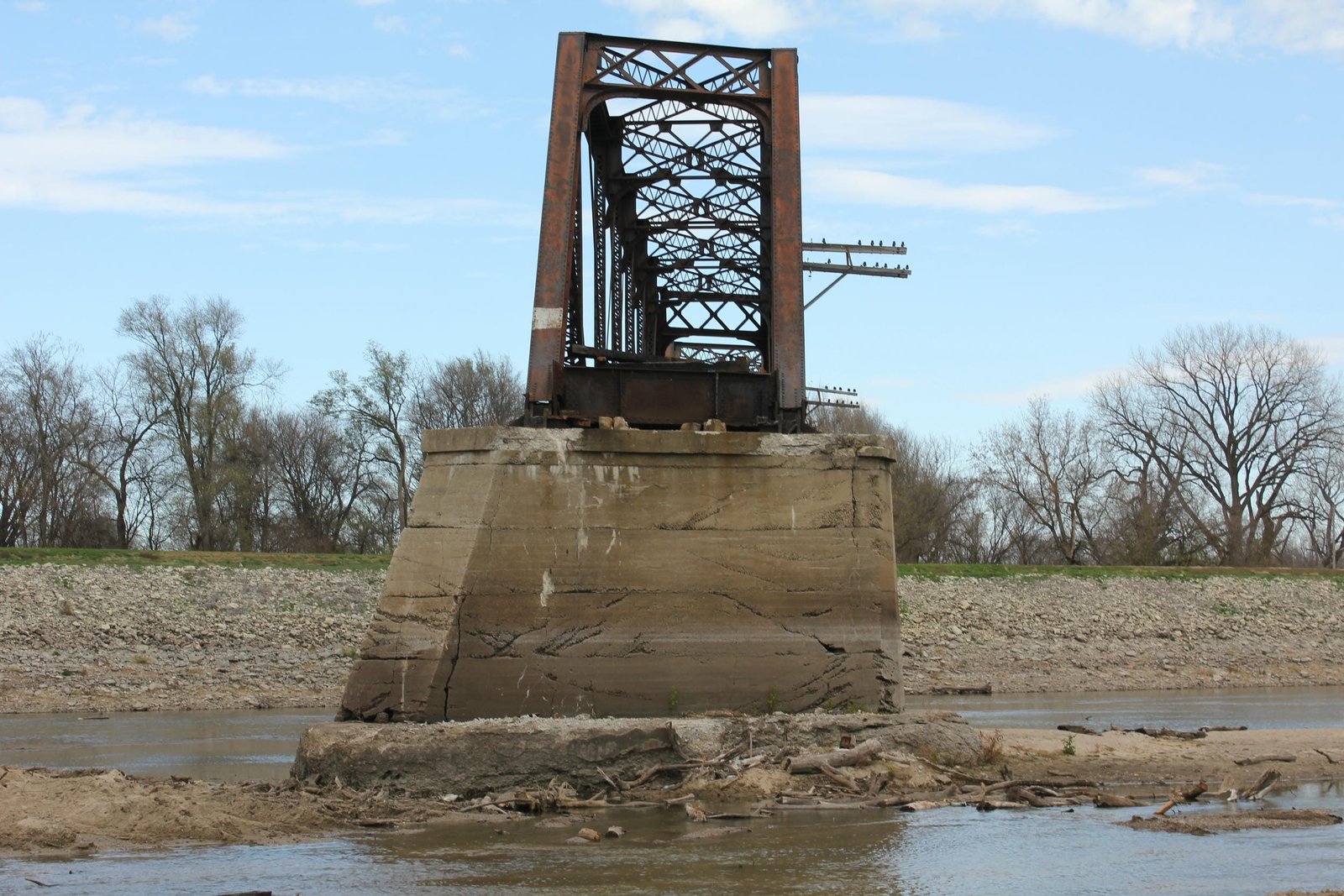
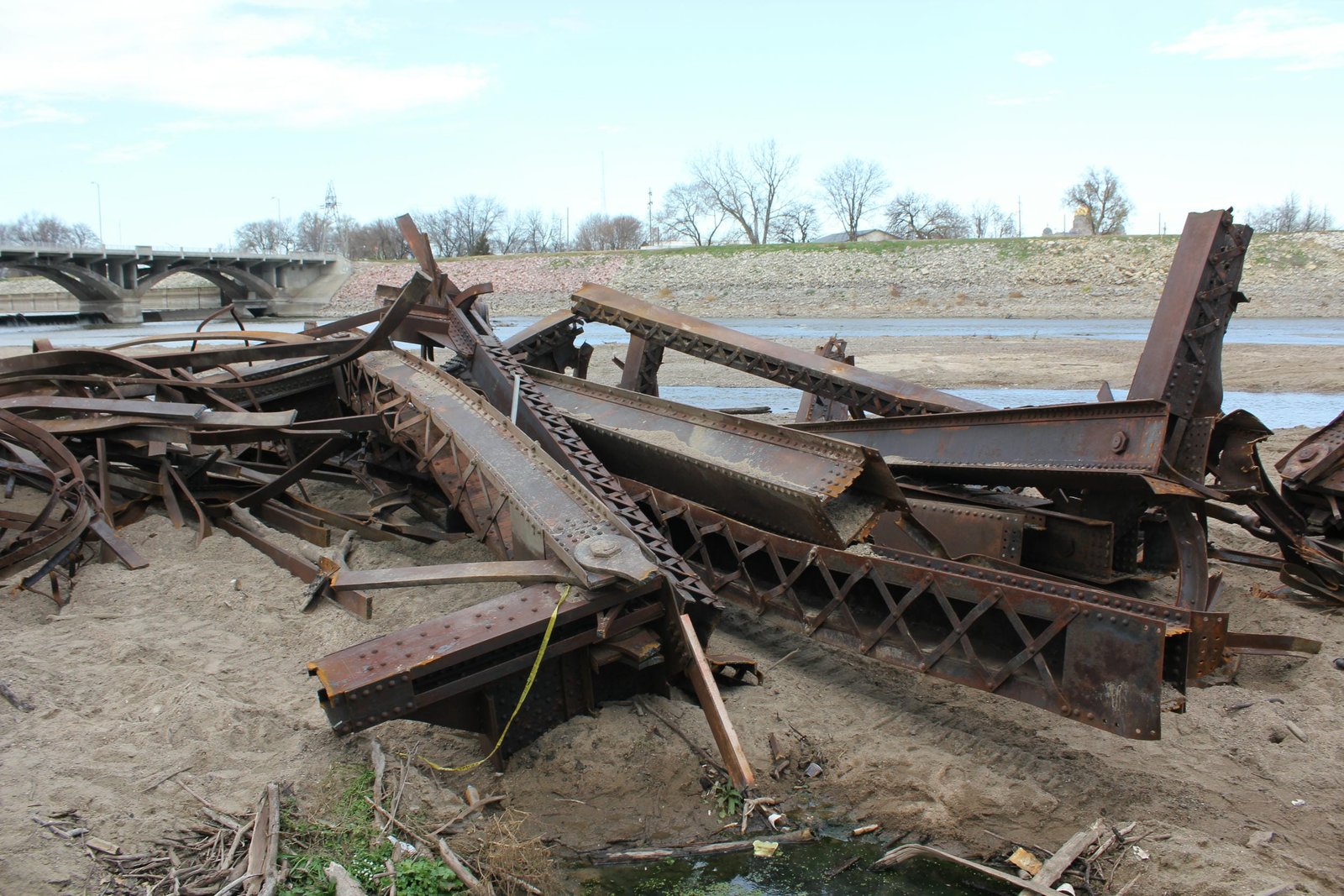
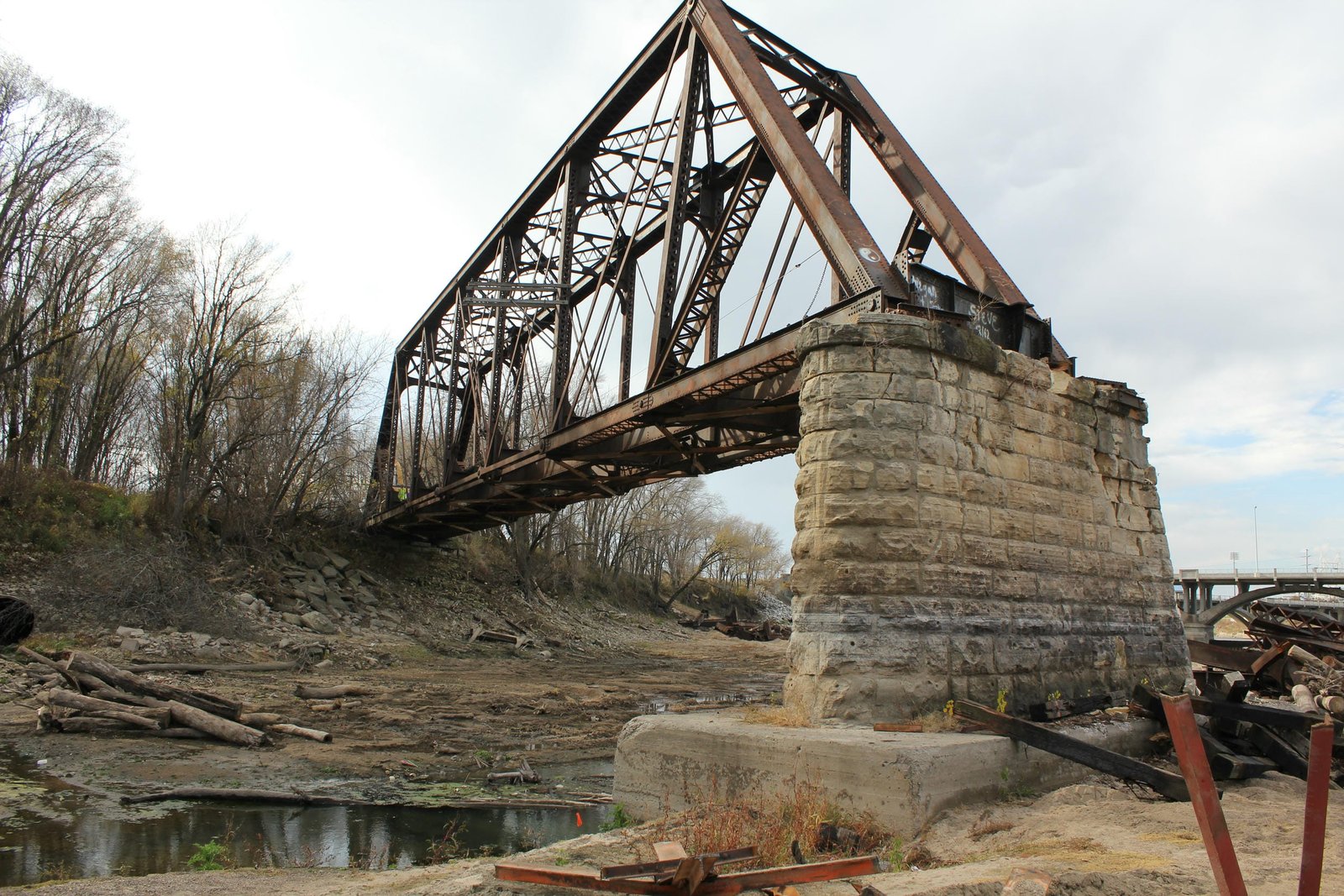
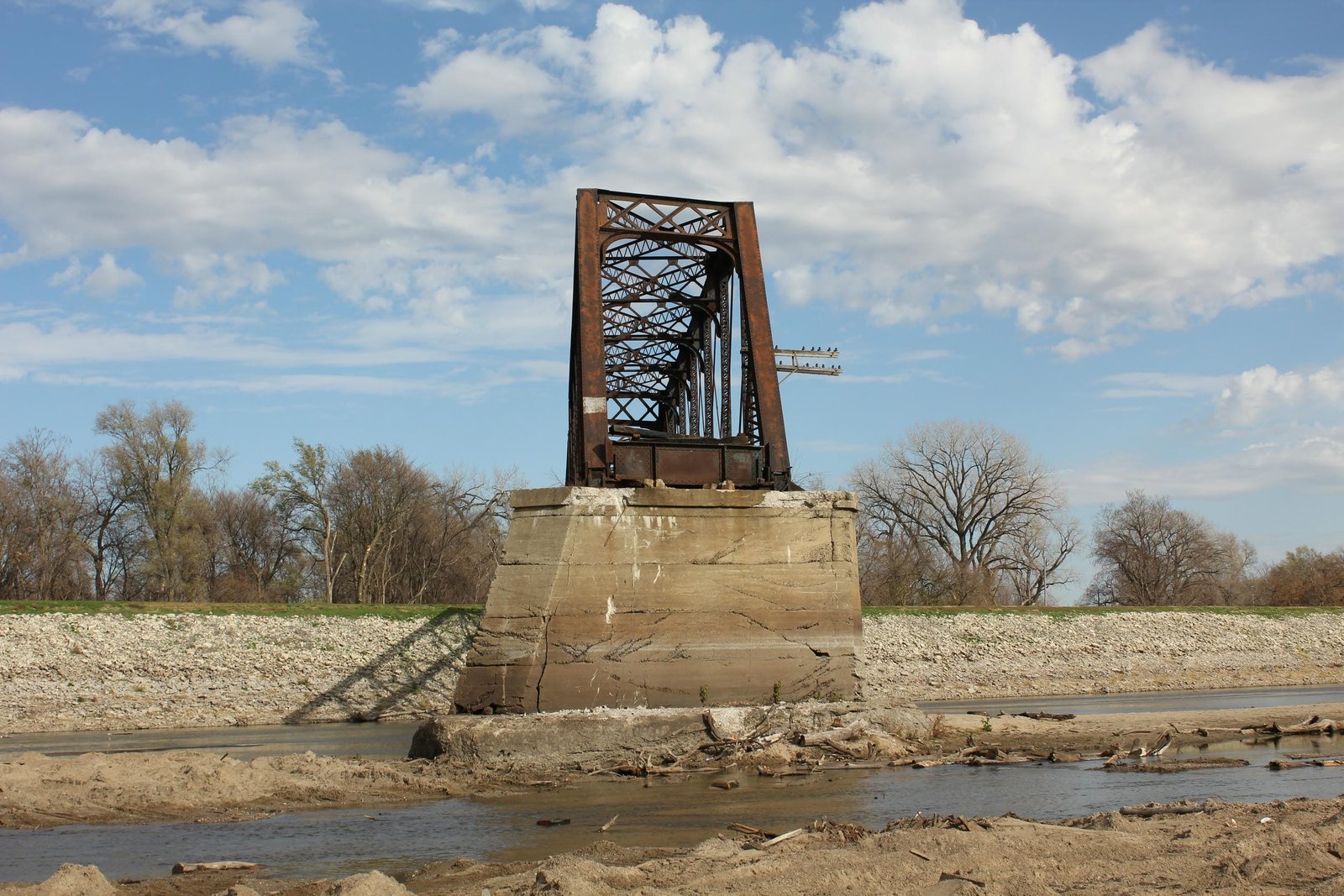
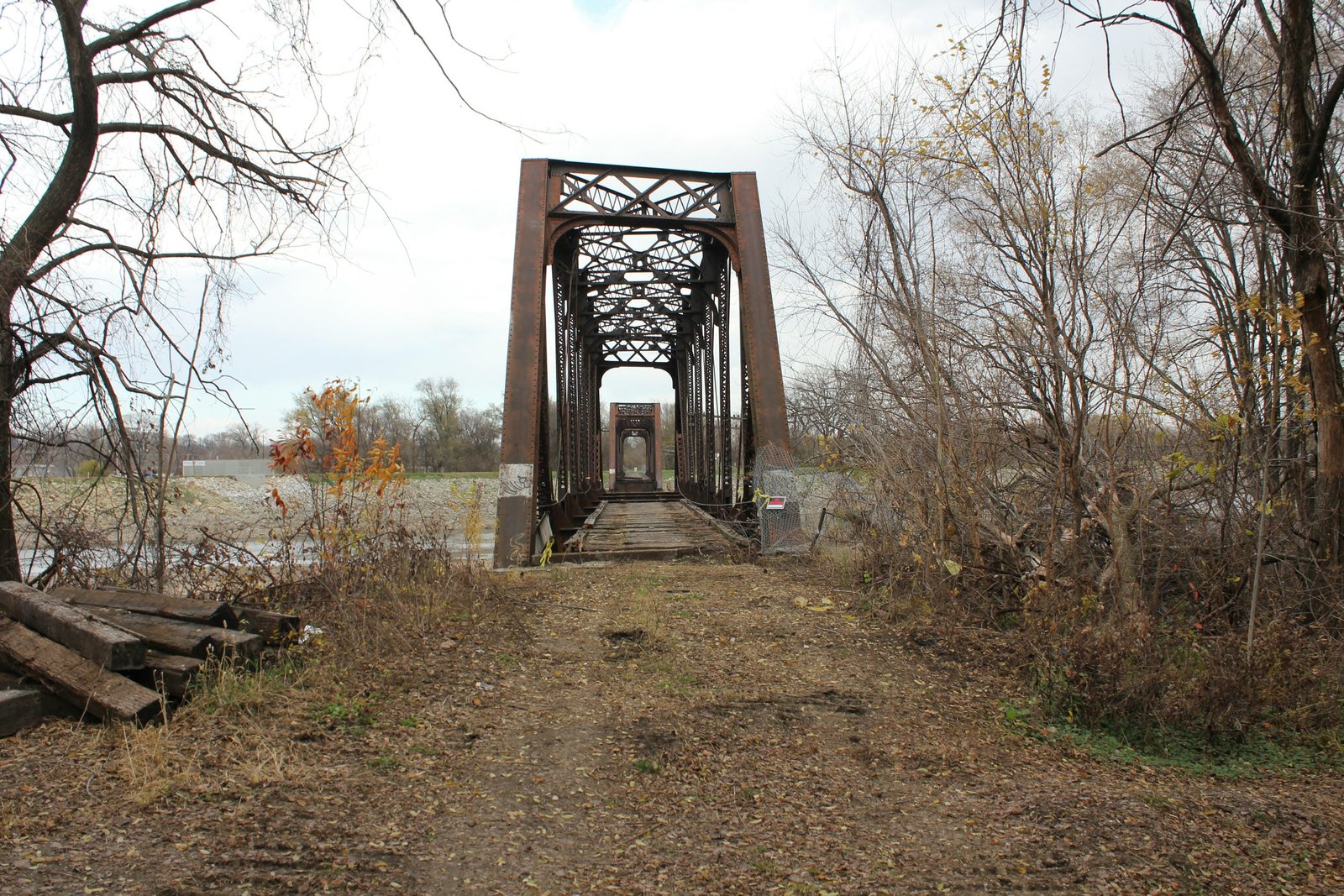
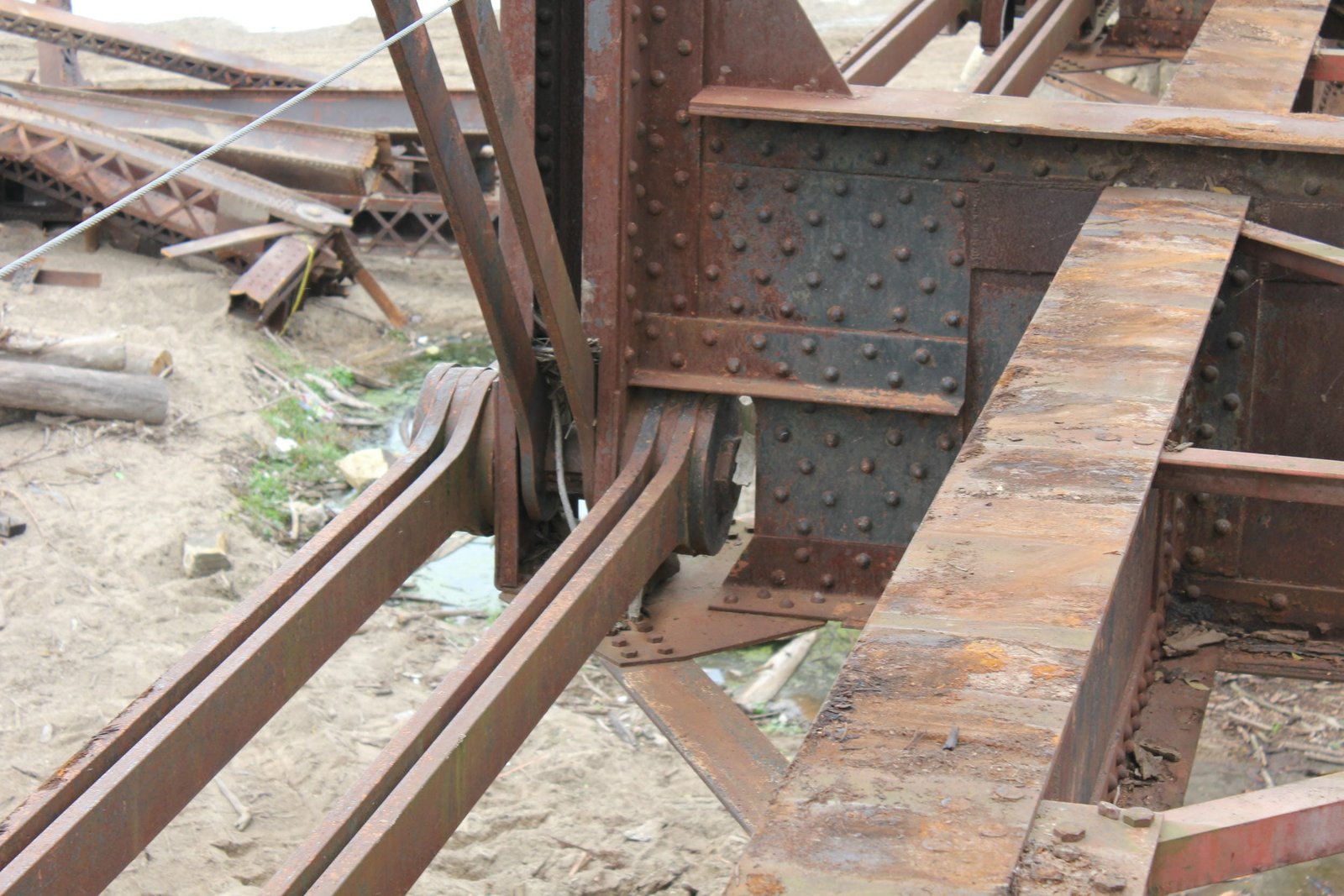
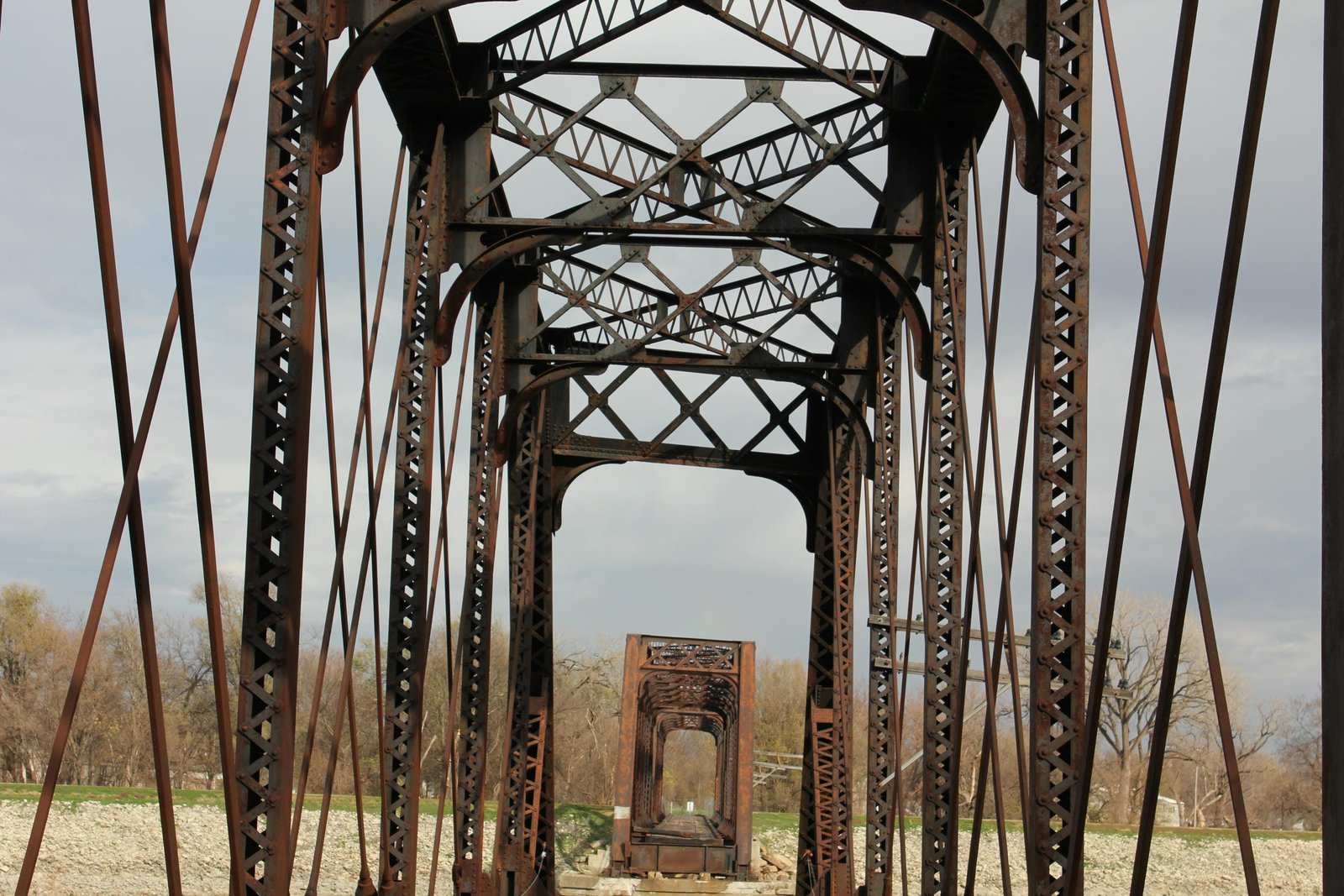
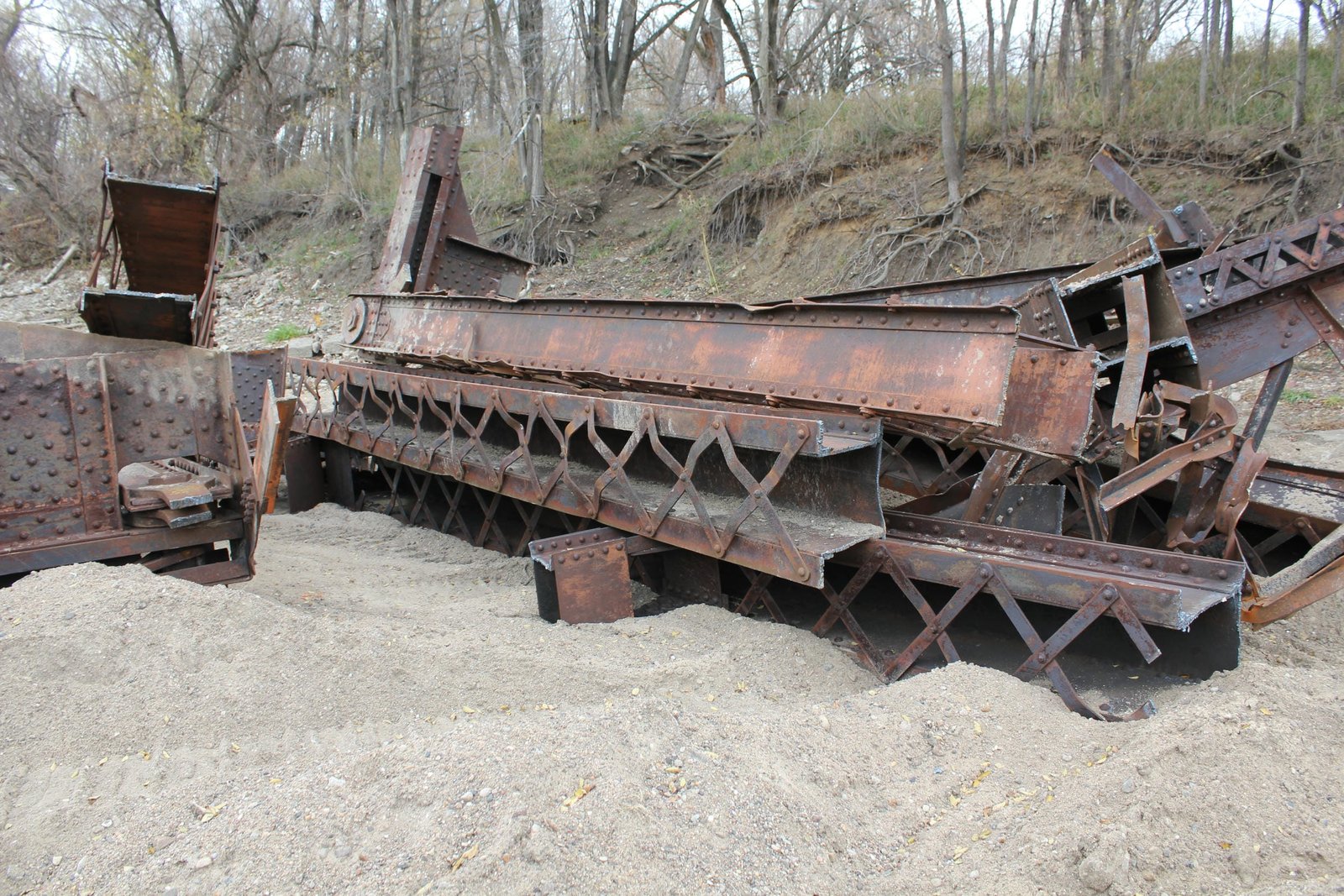
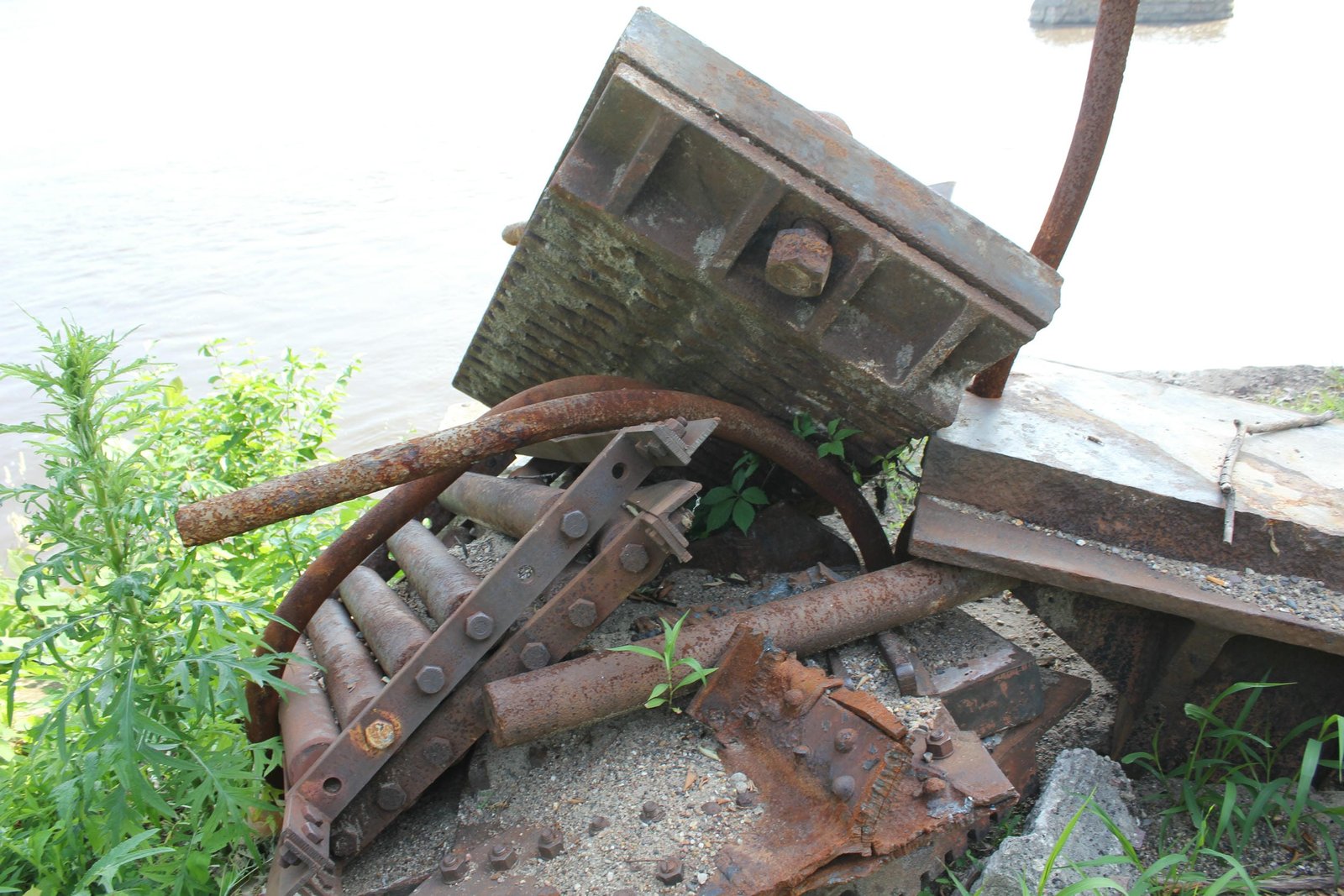
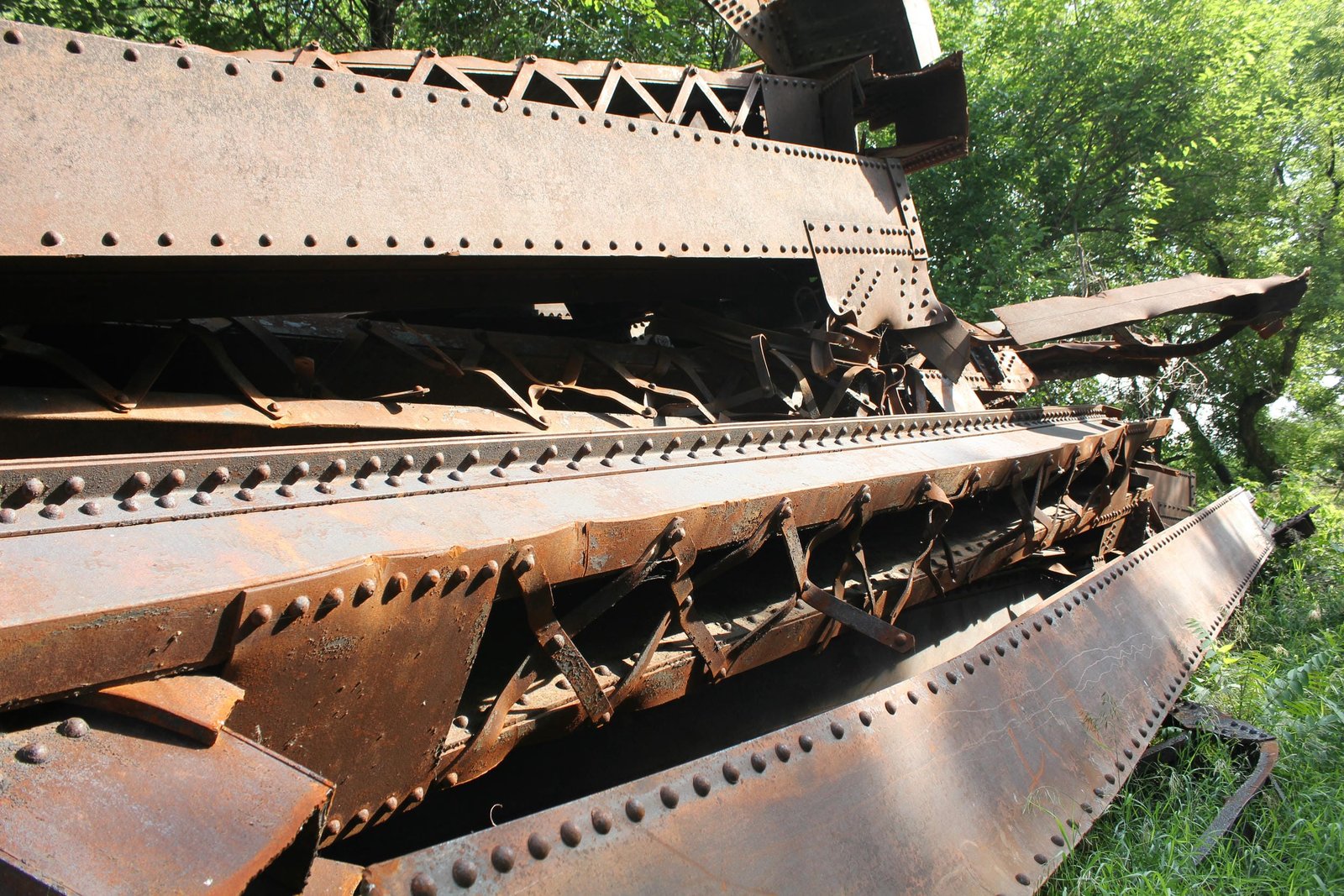
The truss spans followed a standard design for the era, with heavy built-up members, a traditionally composed floor and simple double intersection lattice portal bracing. Both the top chords and endposts consisted of heavily built-up beams, formed from two U-shaped channels joined by a solid plate on the exterior and X-lacing on the interior. The bottom chord was constructed of both eyebars and built up beams. At the outer two panels on each end, the bottom chord was composed of a beam with X-lacing on both sides, while the center panels used two sets of two eyebars. All vertical members consisted of tightly V-laced beams, while a majority of the diagonal members consisted of sets of eyebars. At the outer panels, the endposts were braced by a V-laced crash bar. The counter members were constructed using square bars with turnbuckles. The floor used a standard design, with heavy plate girder floorbeams and two plate girder stringers. The floorbeams used a somewhat unusual design, with a U-shaped cutout at each end which surrounded the lower connection and bottom chord. In addition, the floorbeams were braced to the vertical members by a triangular plate. A series of transverse and lateral bars were present between the stringers, and the lower lateral bracing consisted of L-shaped bars which formed an "X" shape over each panel. The floor was modified with new bracing between the stringers, welded and bolted cover plates and other strengthening to the floorbeams and stringers. Portions of the floor system appeared to be newer material, while much of the floor system was the original 1901-era steel. The portal bracing used a standard design for the era, with three "X" shapes formed from L-shaped bars and curved heel bracings. The sway bracing used a similar design, with decorative cutouts in the curved bracing. The upper lateral bracing consisted of V-laced beams, which were pinned into gusset plates at the top chord. All three piers used a standard diamond shape and were reinforced with a high-slump concrete at the base. south abutment did not use wing walls, while the north abutment had stepped wing walls added during a modification. It is believed all substructures were founded on timber piles. Stone for the substructures consisted of a yellow limestone, quarried at an unknown location.
The Pratt truss pattern was arguably the most popular railroad truss design during the second half of the 19th Century. This design was patented in the 1840s, and quickly became popular due to the simplicity, strength and economy. However, the design was superseded by riveted Warren trusses around the turn of the 20th Century, as this design was stronger while not sacrificing the economy or simplicity. The spans of this bridge were among the last pin-connected Pratt truss spans constructed for railroad use in Iowa. American Bridge Company was a prolific bridge builder during the 20th Century, and was formed from the merger of over two dozen regional firms in 1900. This firm would later construct many notable bridges in the United States, including the Verrazzano–Narrows Bridge in New York and the New River Gorge Bridge in West Virginia. In addition to prominent roadway bridges, the firm was also heavily involved in many railroad bridges and significant buildings. The Chicago Great Western Railway used this firm extensively during the first half of the 20th Century, due to the competitive pricing and quality workmanship. Today, many examples of the partnership between the Chicago Great Western Railway and American Bridge Company remain, although almost all of the notable truss bridges constructed during this partnership have been demolished.
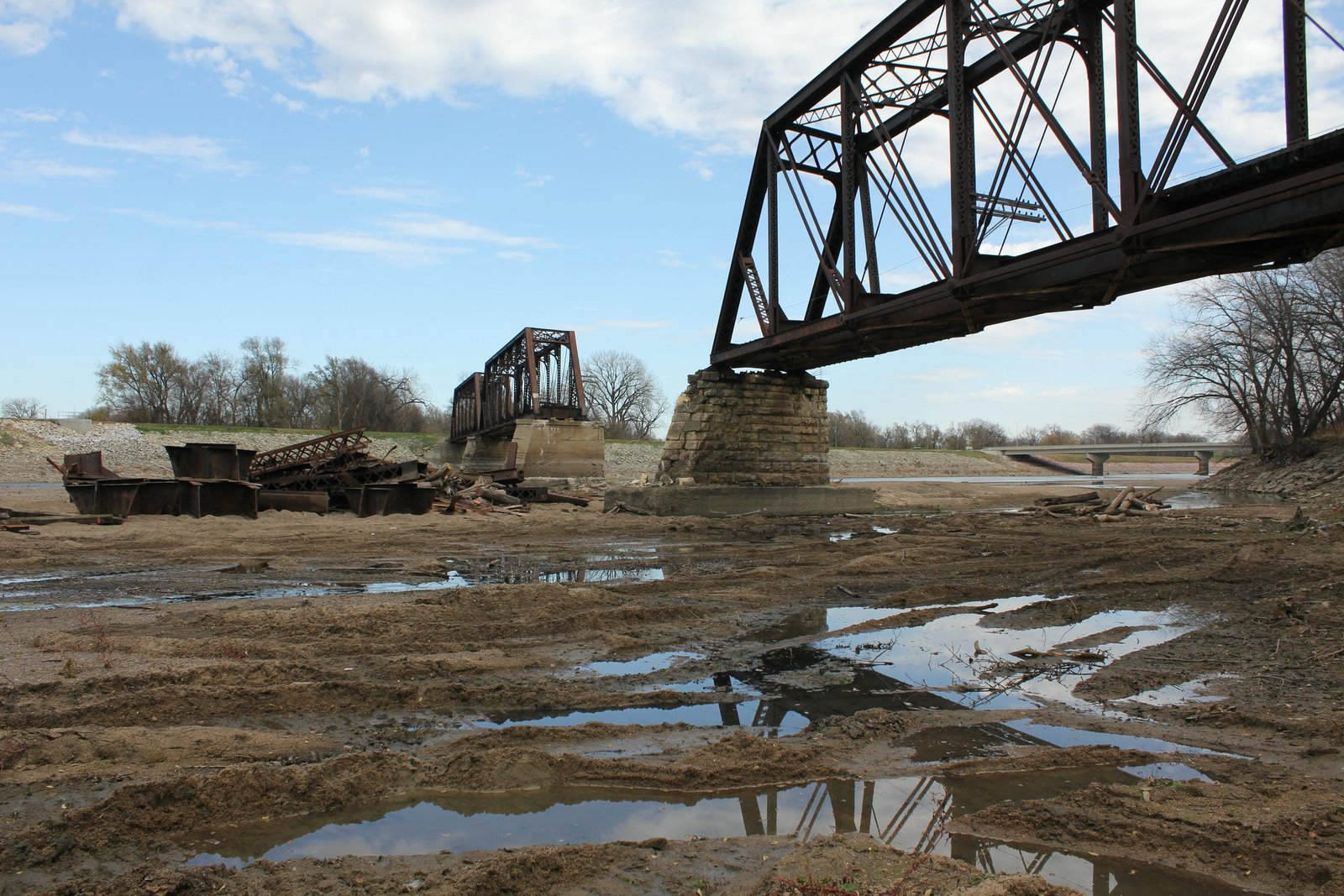
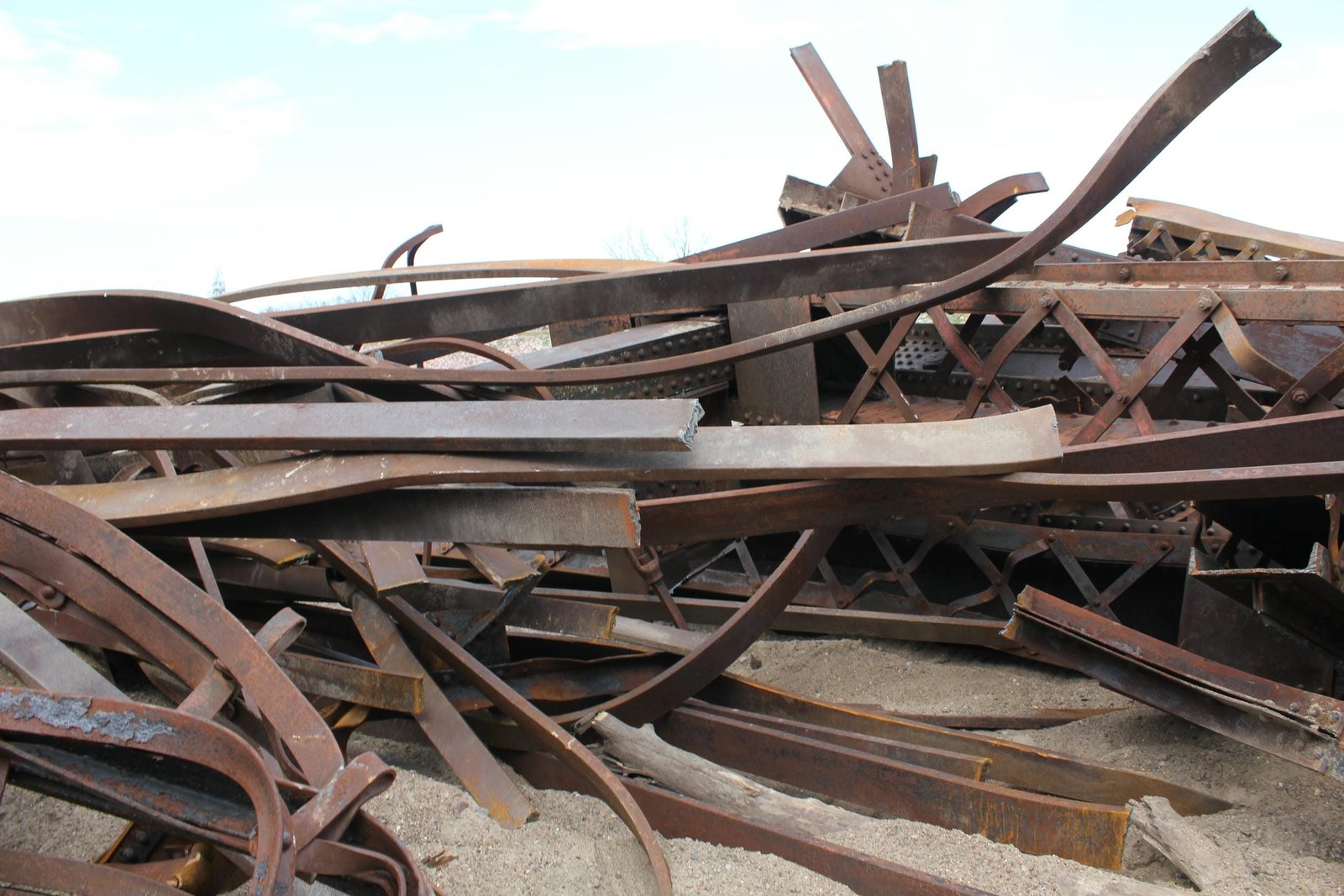
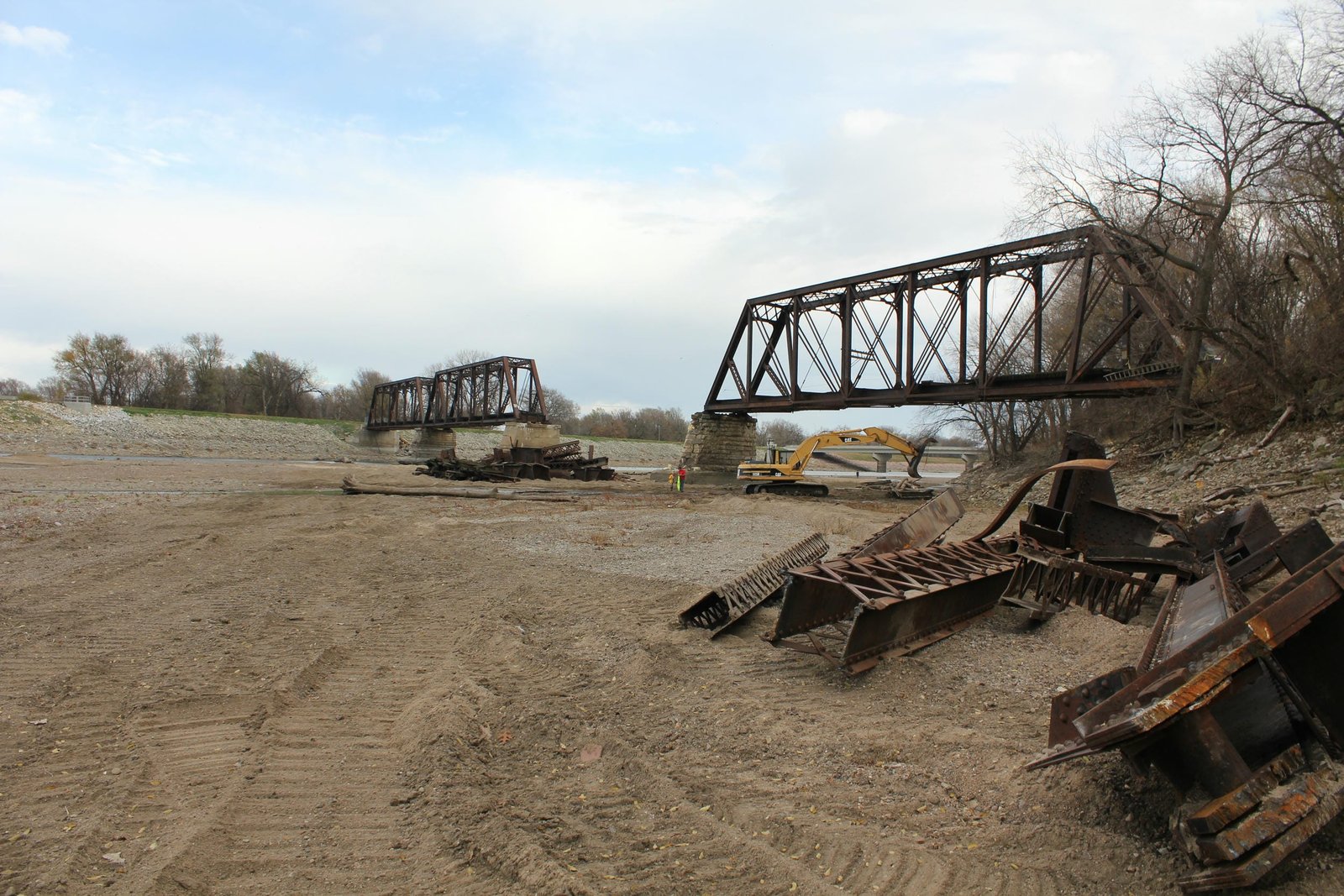
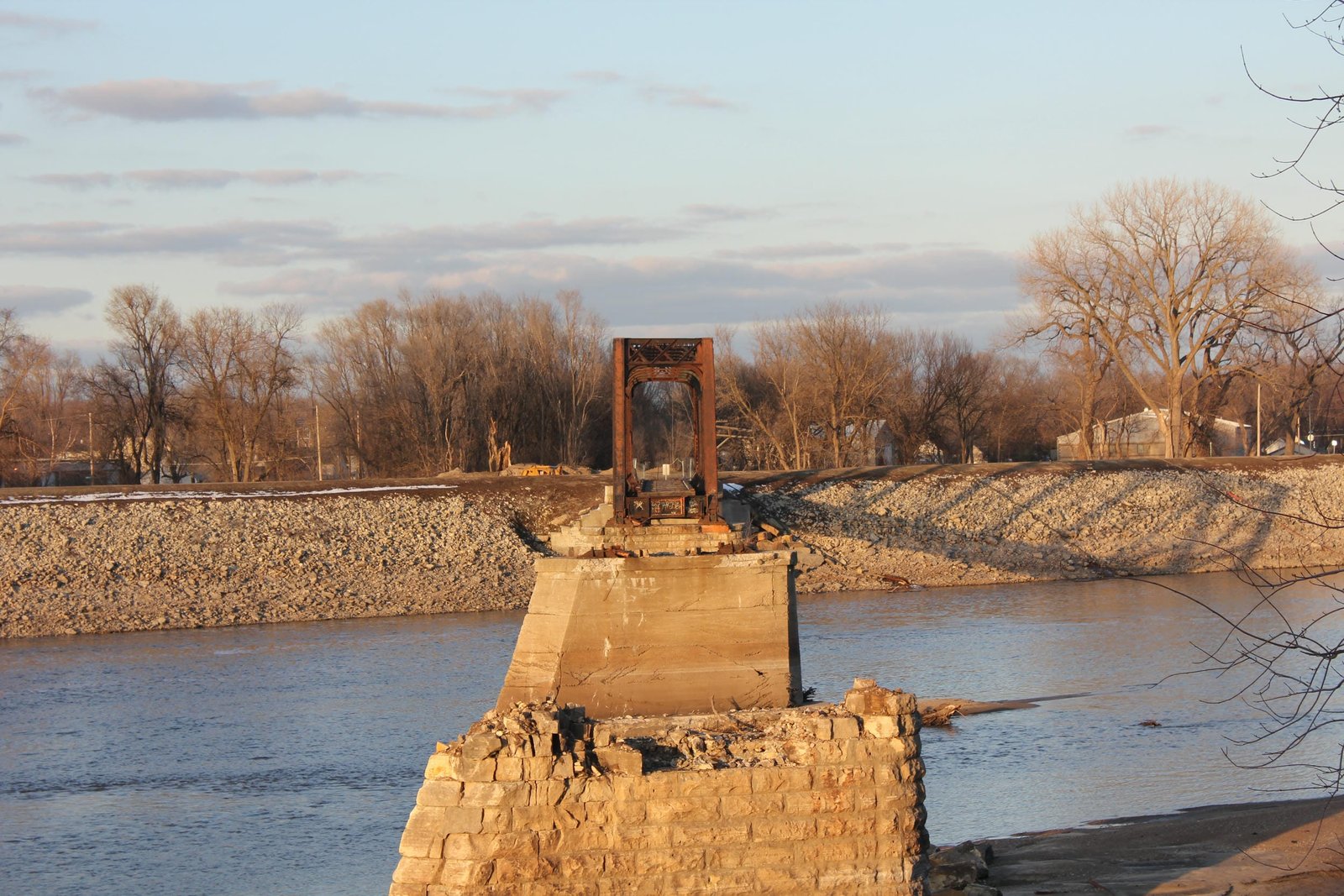
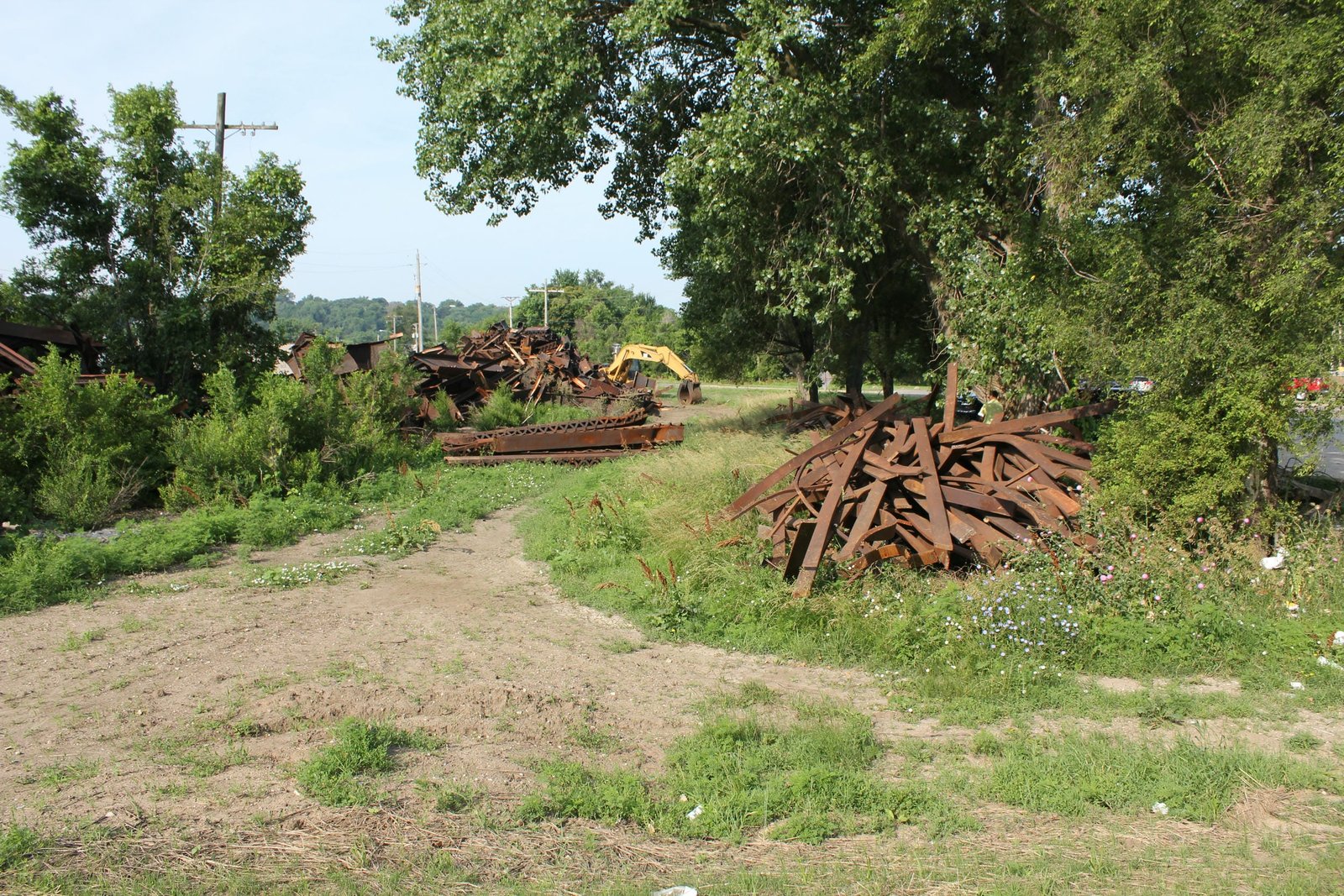
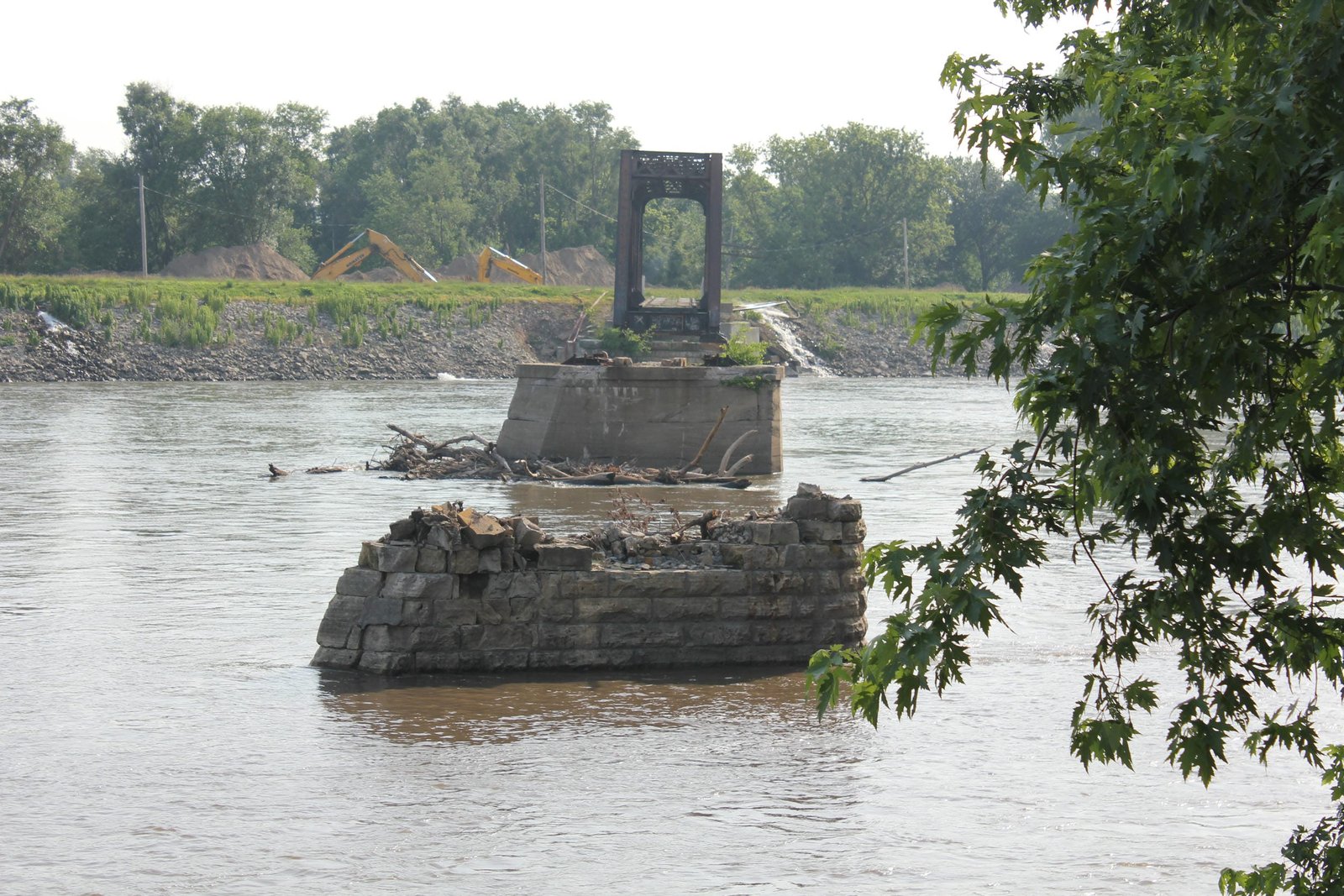
After the CGW was acquired by the Chicago & North Western Railway in 1968, the bridge remained in use as part of the C&NW connection to Kansas City. After the purchase of the parallel Rock Island line and bridge in 1981, the former CGW was quickly downgraded. The bridge remained to serve the Bell Avenue Yard until 2001, when the yard, bridge and industrial lead were abandoned. While the track was initially removed, the bridge remained standing through the 2000s with an uncertain future. At one time, there were proposals to use the bridge as part of a pedestrian trail, although these fell through due to concerns about the structural integrity of the structure. In 2012, Mike's Excavating of Madrid, Iowa was awarded a contract to remove the bridge after a historic report of the structure was completed. The historic report found that the bridge was eligible for listing on the National Register of Historic Places, but used a common design. In November 2012, demolition of the bridge began with span #3 (second from the south end), followed by the south span (span #4), span #2, the north span (span #1) and finally the substructures. Demolition of the bridge was completed during the summer of 2013. Initially, both abutments were left intact, although these were removed in late 2023 or early 2024. As of late 2026, a pedestrian bridge is planned for this location, which will not use any material from the historic bridge. Overall, the bridge was in fair condition at the time of demolition. While the substructures showed significant signs of deterioration, the trusses were in reasonable condition for the age and neglect they had seen. The author has ranked this bridge as being regionally significant, due to the size, age and design.
Citations
| Build date and builder (superstructure) | Iowa Historic Property Study; Iowa Site Inventory 77-11141; Prepared by Summit Envirosolutions, Inc; February 2012 |
| Builder (substructure) | The Waterloo Courier; February 9, 1887 |
| Railroad History Citation | ICC Valuation Information, Compiled by Richard S. Steele |