
Click the photo to view the full-size version
| Name | Des Moines Red Bridge Des Moines Union Railway Bridge |
| Built By | Des Moines Union Railway |
| Currently Owned By | City of Des Moines |
| Superstructure Contractor | Detroit Bridge & Iron Works of Detroit, Michigan (Spans #3 and #4) Des Moines Bridge & Iron Works of Des Moines, Iowa (Span #4) Stupp Brothers Bridge & Iron Company of St. Louis, Missouri (Span #5) Unknown (Spans #1 and #6) |
| Substructure Contractor | H.S. Hopkins & Company of St. Louis, Missouri (Piers #2, #3 and #4) Wickes Engineering & Construction Company of Des Moines, Iowa (West Abutment) Unknown (East Abutment, Piers #1, #5 and 2017 Alterations) |
| Erection Contractor | Bates & Rogers Construction Company of Chicago, Illinois (Span #2) |
| Engineer | Stanley Consultants of Muscatine, Iowa (2016-17 Raising) |
| Length | 527 Feet Total, 152 Foot Main Spans |
| Width | 1 Track |
| Height Above Ground | 20 Feet (Estimated) |
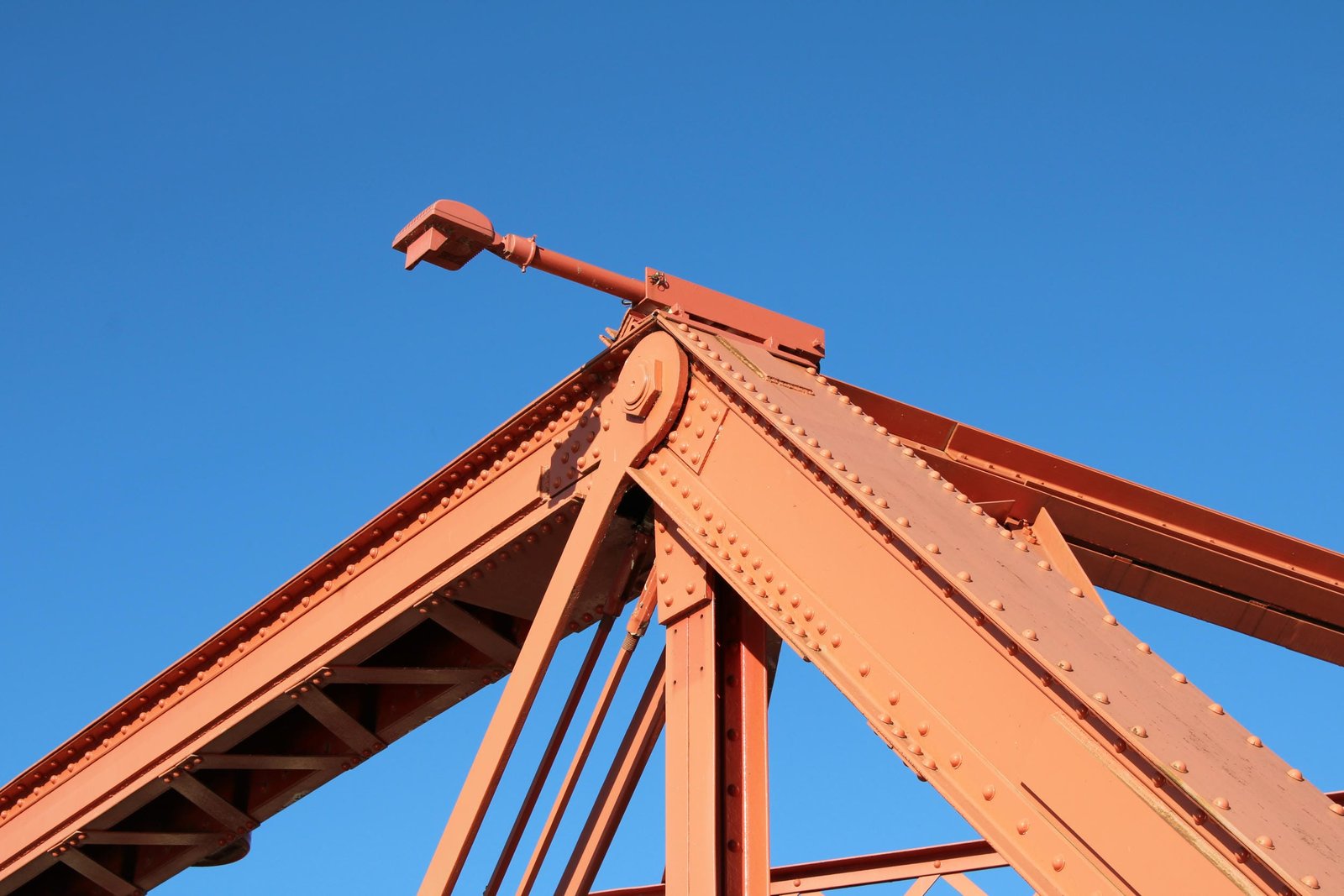
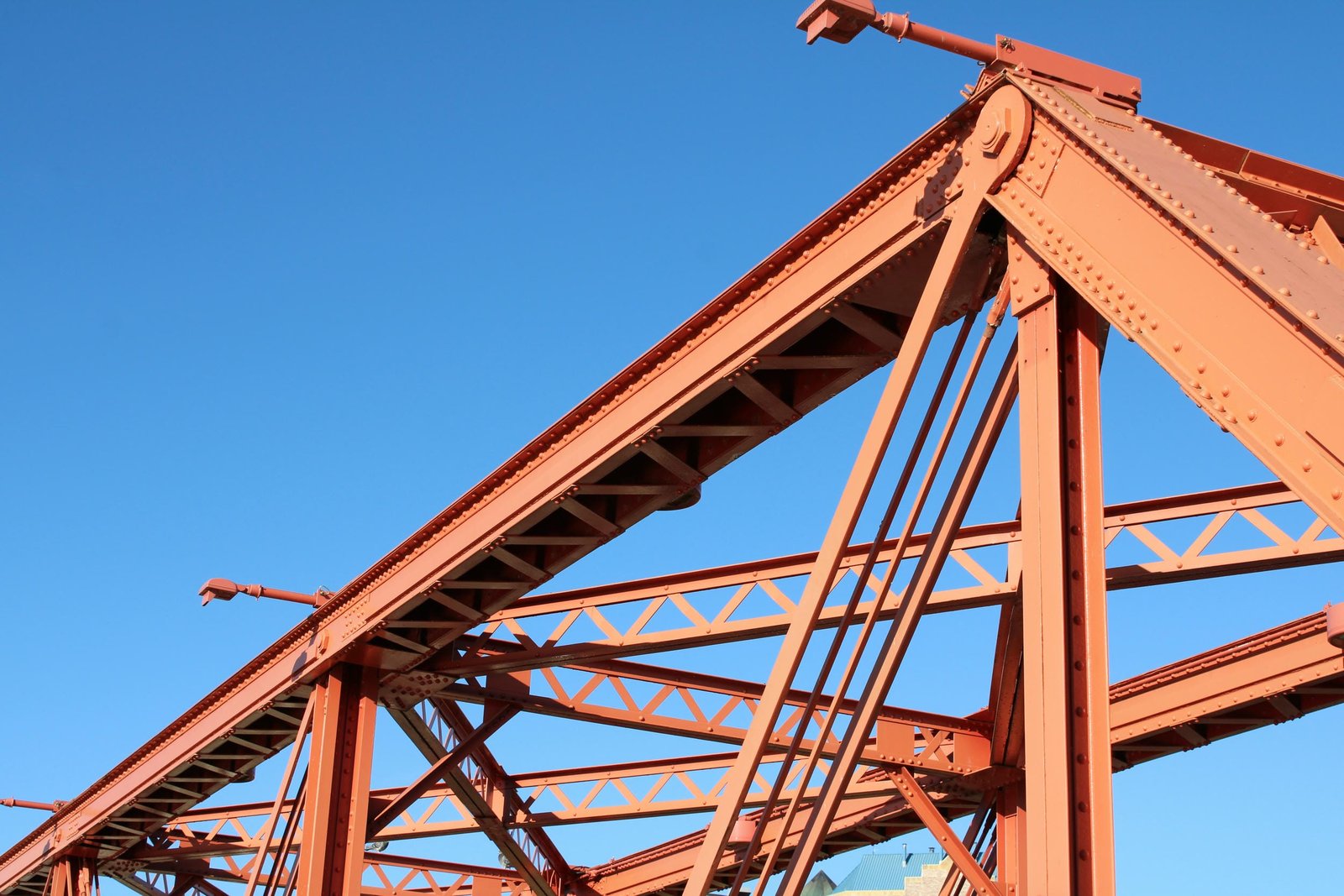
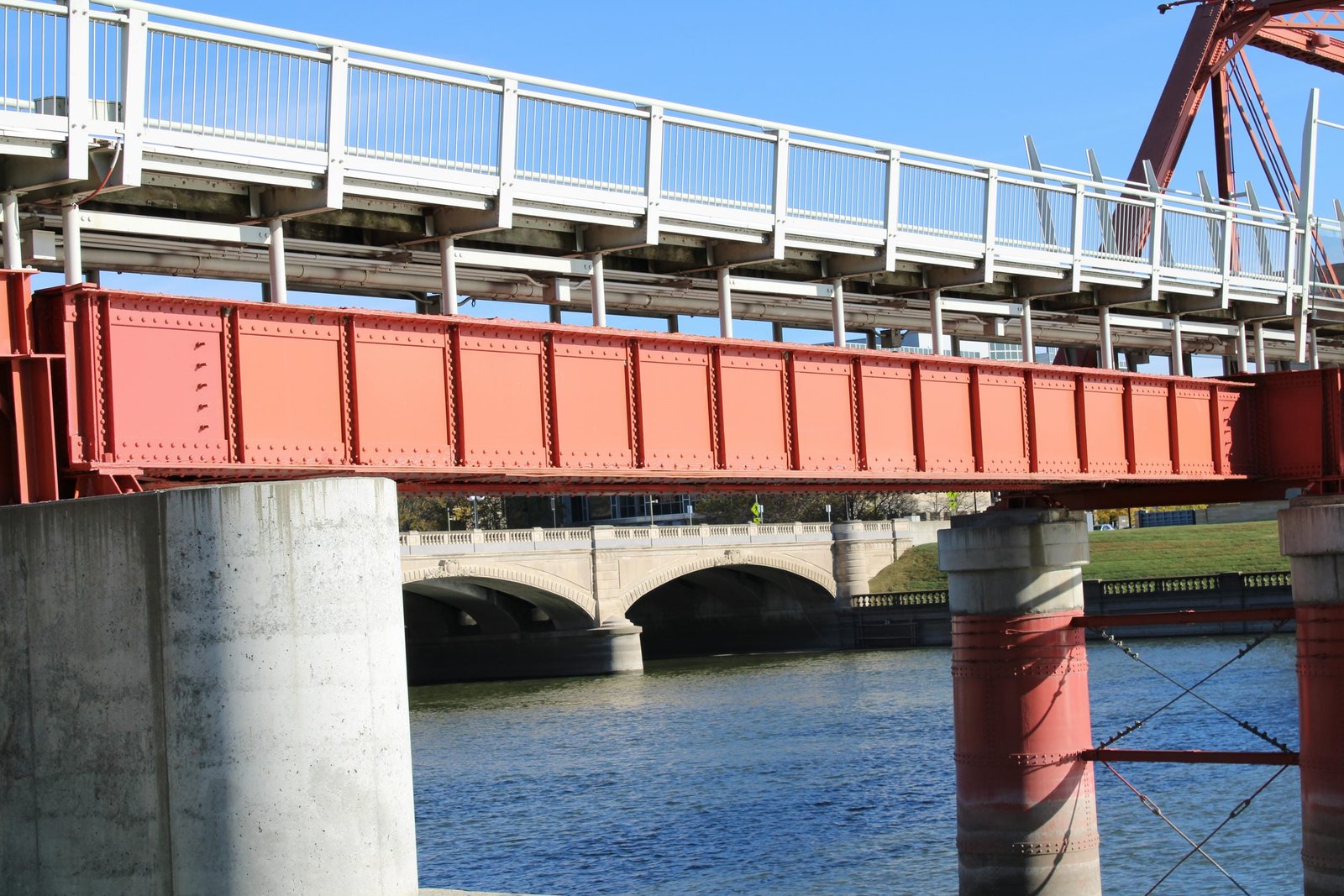
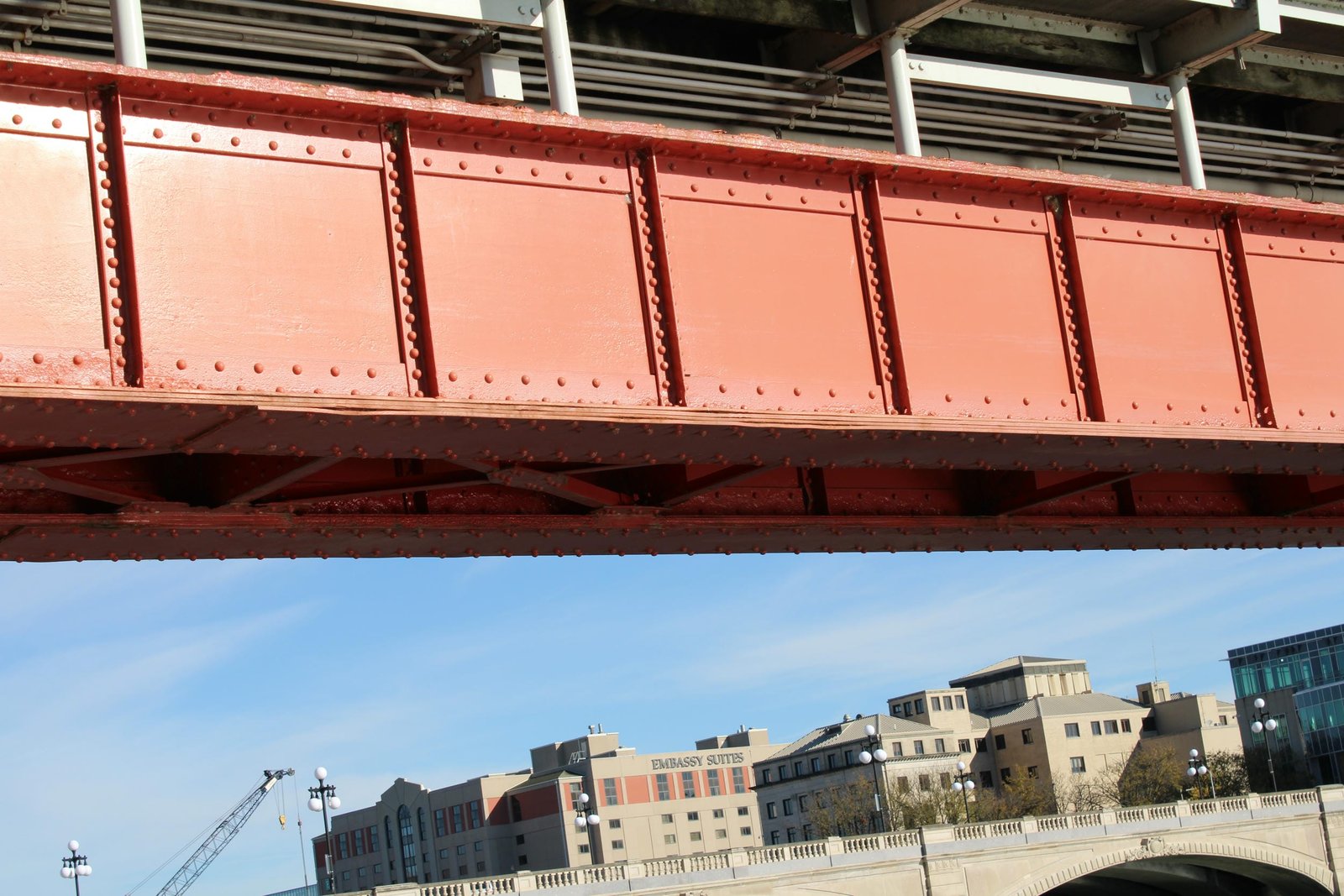
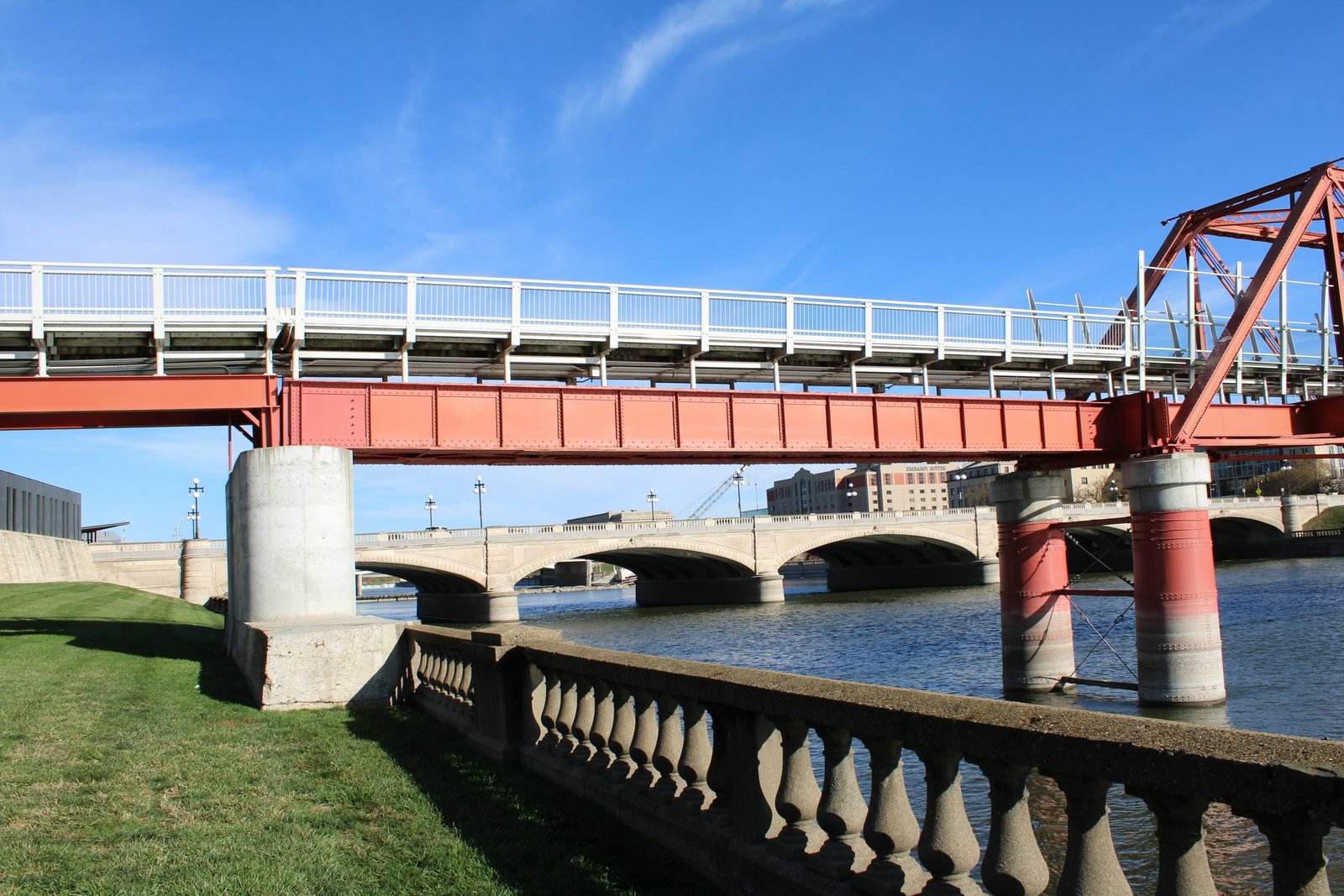
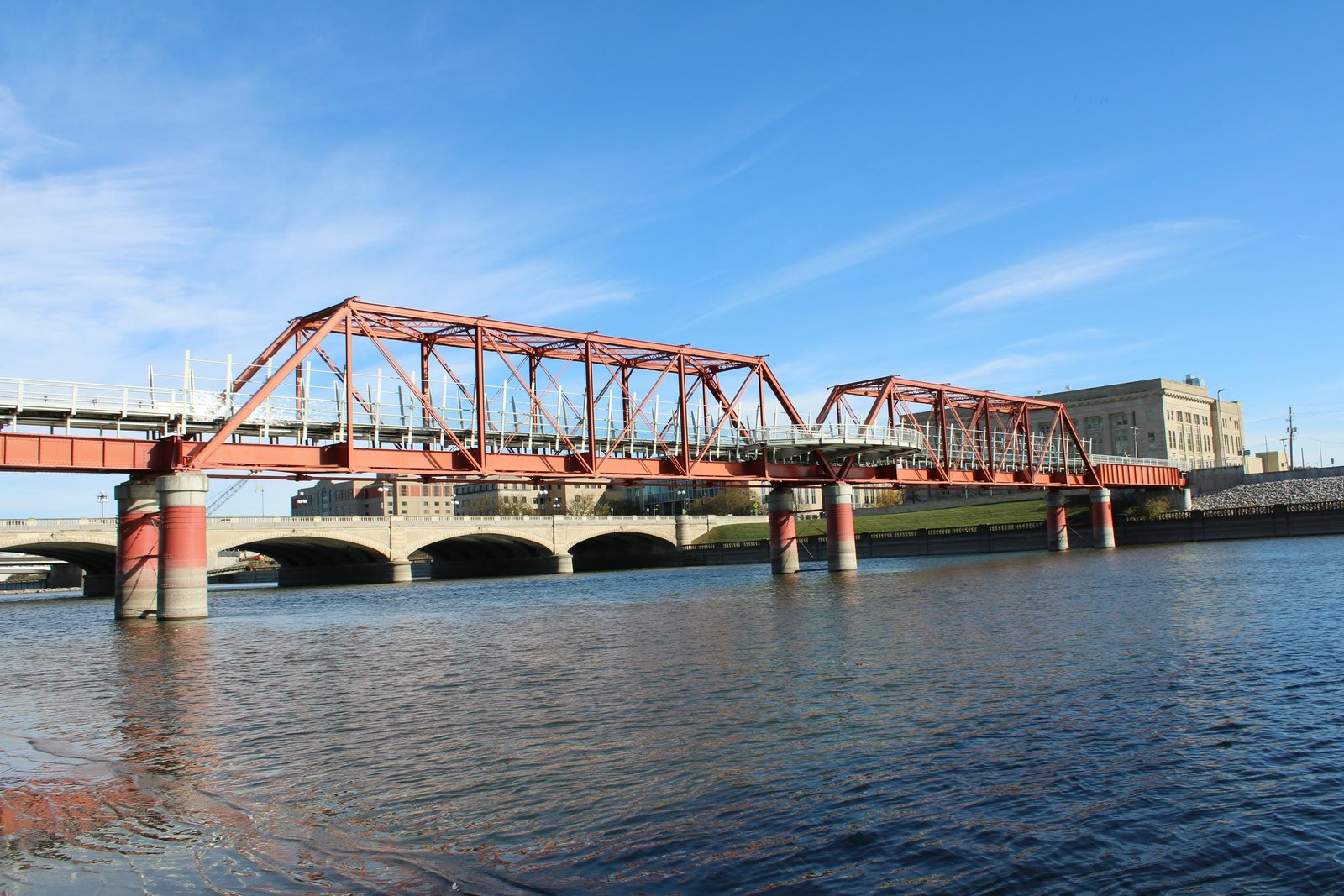
| Superstructure Design | Pratt Through Truss, Through Plate Girder, Deck Plate Girder and Steel Stringer |
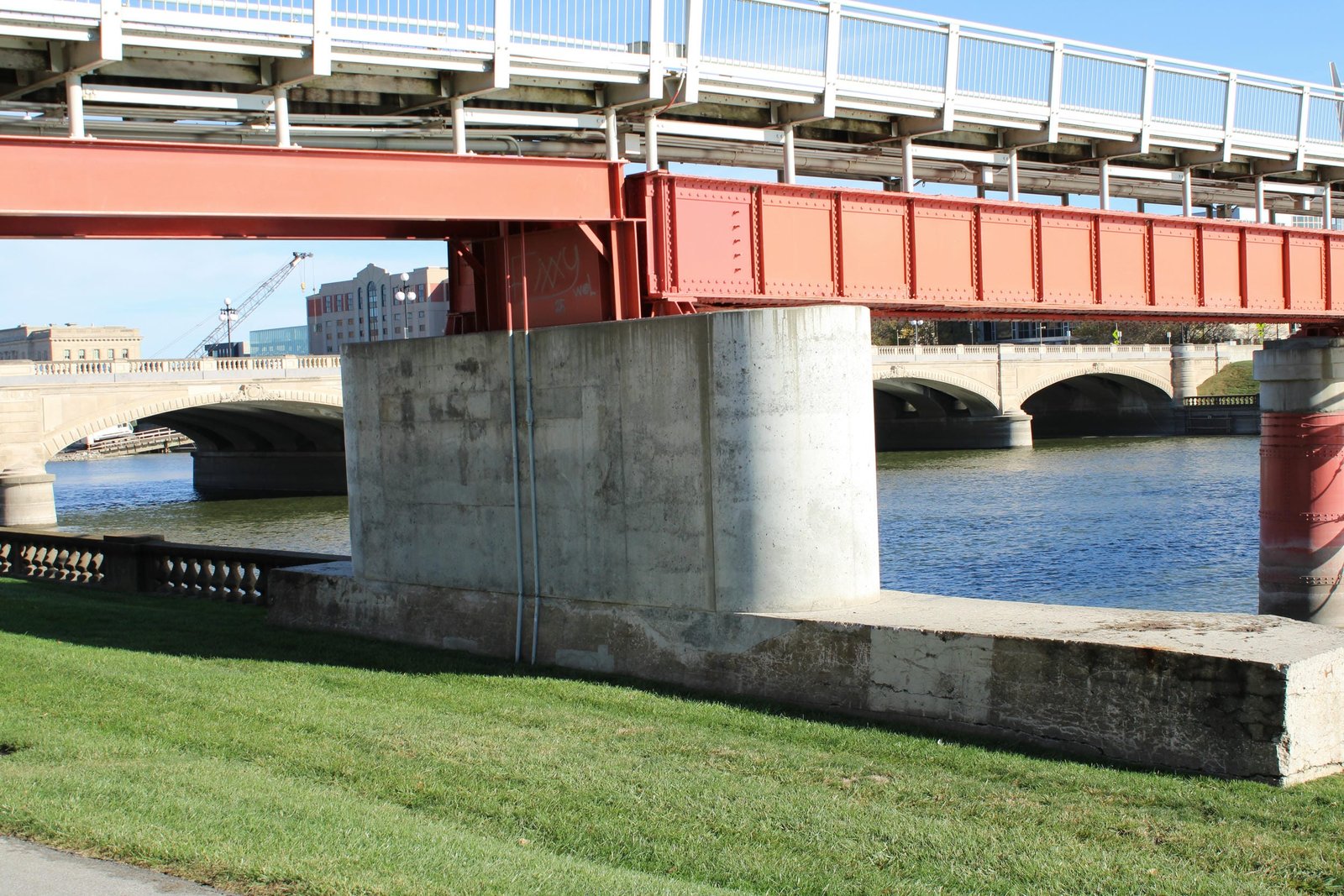
| Substructure Design | Iron Cylinder and Concrete Timber Pile (Previous East Abutment and Pier #1) |
| Date Built | 1891 (Spans #3 and #4) 1905 (Span #5) 1945 (Spans #1 and #2) 1949 and 1959 (Original Span #6) |
| Date Rebuilt | 2006 (Span #6) 2013 (East Abutment, Pier #1 and Pier #5) |
| Date Rehabilitated (Spans #3 and #4) | 1987 |
| Date Raised | 2017-2017 |
| Original Location (Span #1) | Bridge #S-706 1/2; Pillsbury Avenue Underpass; Elko, Minnesota |
| Traffic Count | 0 Trains/Day (Bridge is Open to Pedestrian Traffic) |
| Current Status | Open to Pedestrian Traffic |
| Significance | High Significance |
| Documentation Date | 7/21/2012; 9/29/2017; 11/2/2025 |
In 1881, the St. Louis, Des Moines and Northern Railway (StLDM&N, a predecessor of the Chicago, Milwaukee & St. Paul Railway) began construction of a line extending west from downtown Des Moines, Iowa. In 1882, the Des Moines and St. Louis Railroad (DM&StL, a predecessor of the Wabash Railway) constructed a line extending from the west side of Des Moines towards Albia, Iowa. In 1887, a 0.88-mile segment of the StLDM&N between the Des Moines River and Farnham Street (present-day 16th Street) was sold to the Des Moines Union Railway (DMU). In 1888, a 2.5-mile segment of the DM&StL between the east city limits and Farnham Street was sold to the DMU. The DMU was founded to handle industrial switching operations, and was jointly controlled by the Chicago, Milwaukee St. Paul & Pacific Railroad (Milwaukee Road) and the Wabash Railway. The mainline of the DMU ran between Vine and Cherry Streets. In addition, the DMU operated extensive spurs and terminal facilities in Des Moines.
Throughout much of the 20th Century, the DMU remained important for handling terminal operations for the two owning railroads, and facilitating interchanges between other railroads in the area. The Wabash Railway eventually became part of the Norfolk and Western Railway (N&W) in 1964, and the Wabash share of the DMU transferred to the N&W. In 1980, the Milwaukee Road shut down the Iowa Division and divested from their share of the DMU. In 1982, the N&W was merged with the Southern Railway to form Norfolk Southern Railway (NS). In the 1990s, Des Moines was undergoing a transformation, with many of the industries and railroads that served them leaving the downtown area. The entire DMU east of E 7th Street was abandoned in 1996. Today, much of the right-of-way has been reused as parking lots and buildings, while the bridge across the Des Moines River has become an iconic pedestrian bridge. Some portions east of the Des Moines River have been retained by NS and are currently used as industrial tracks.
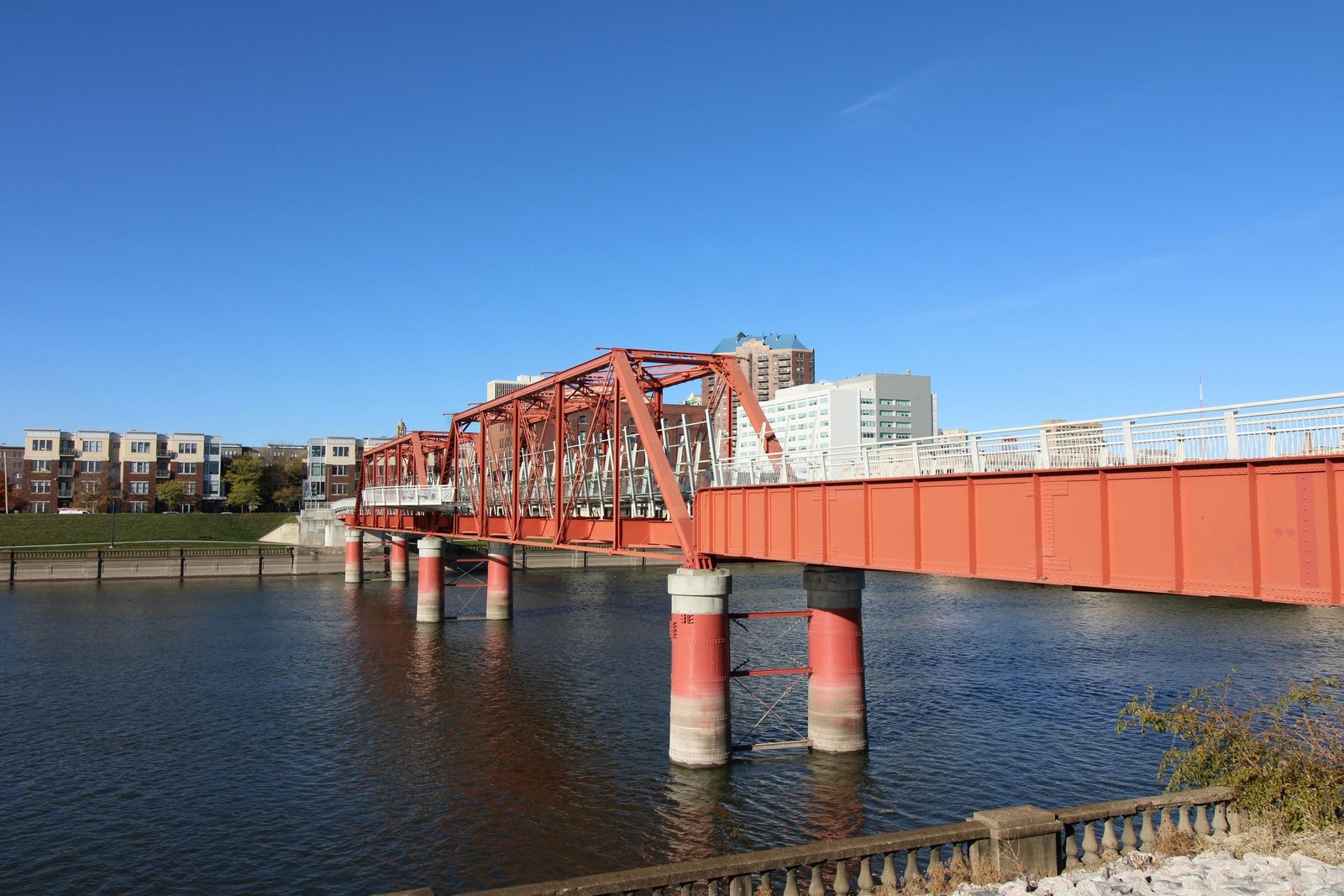
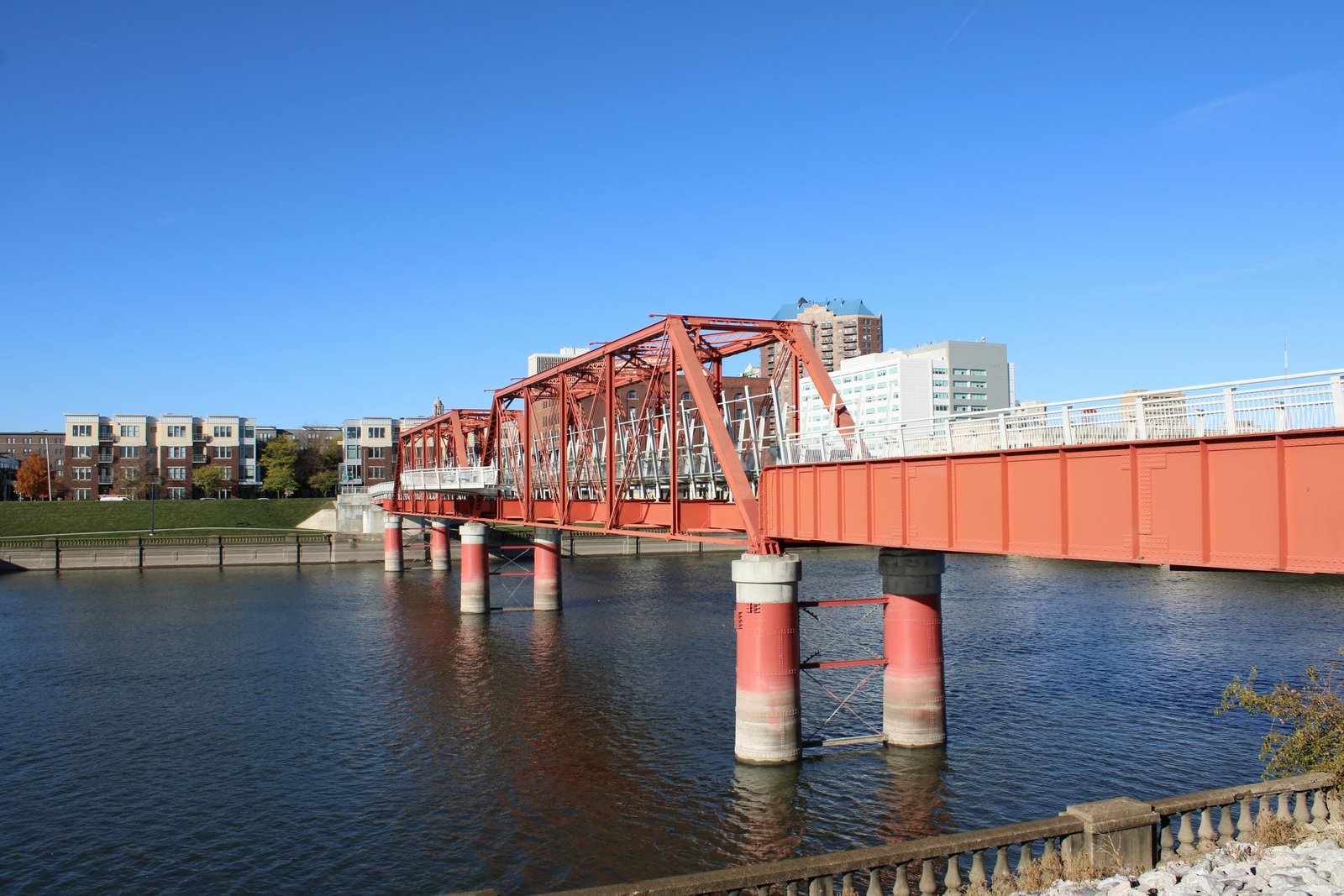
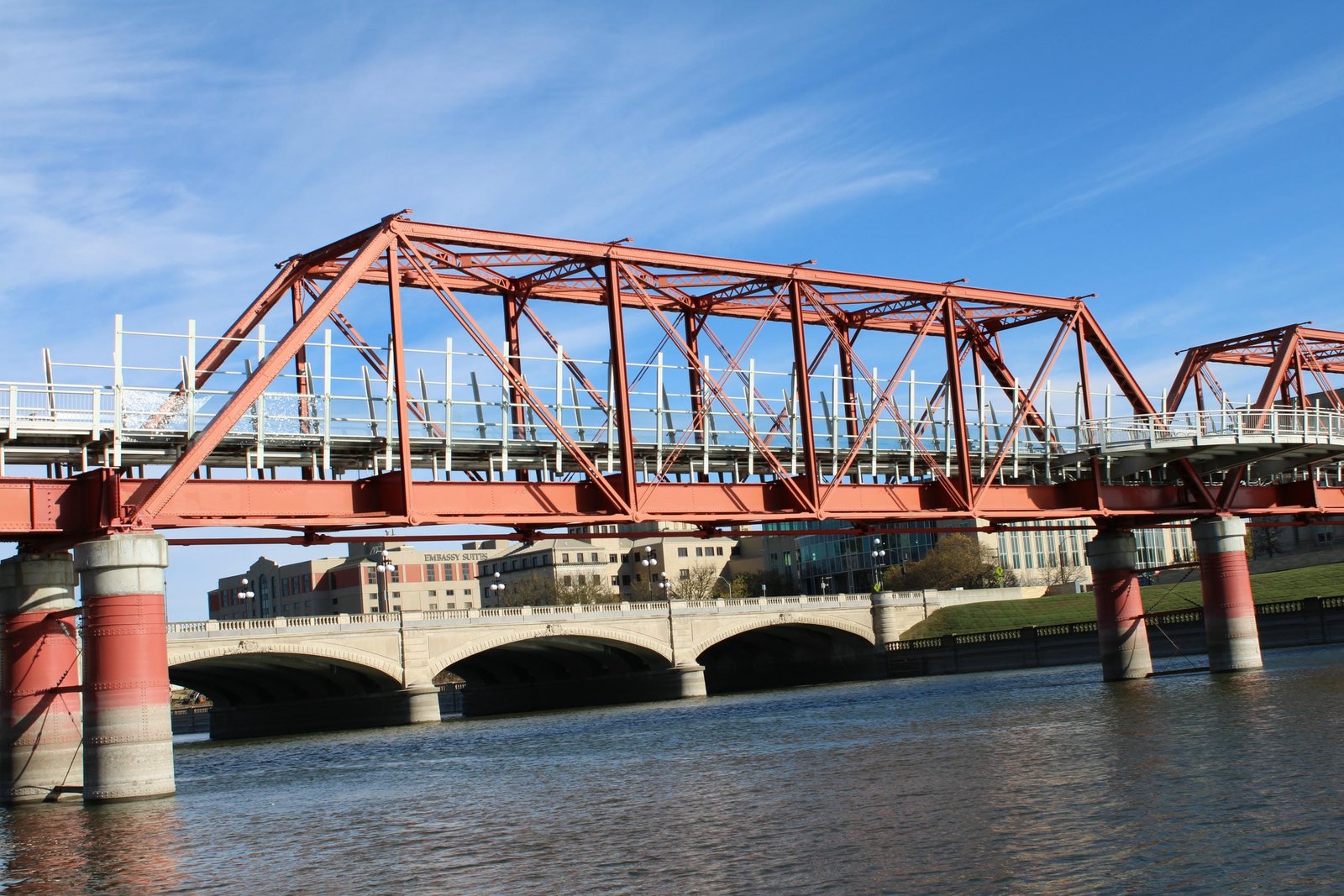
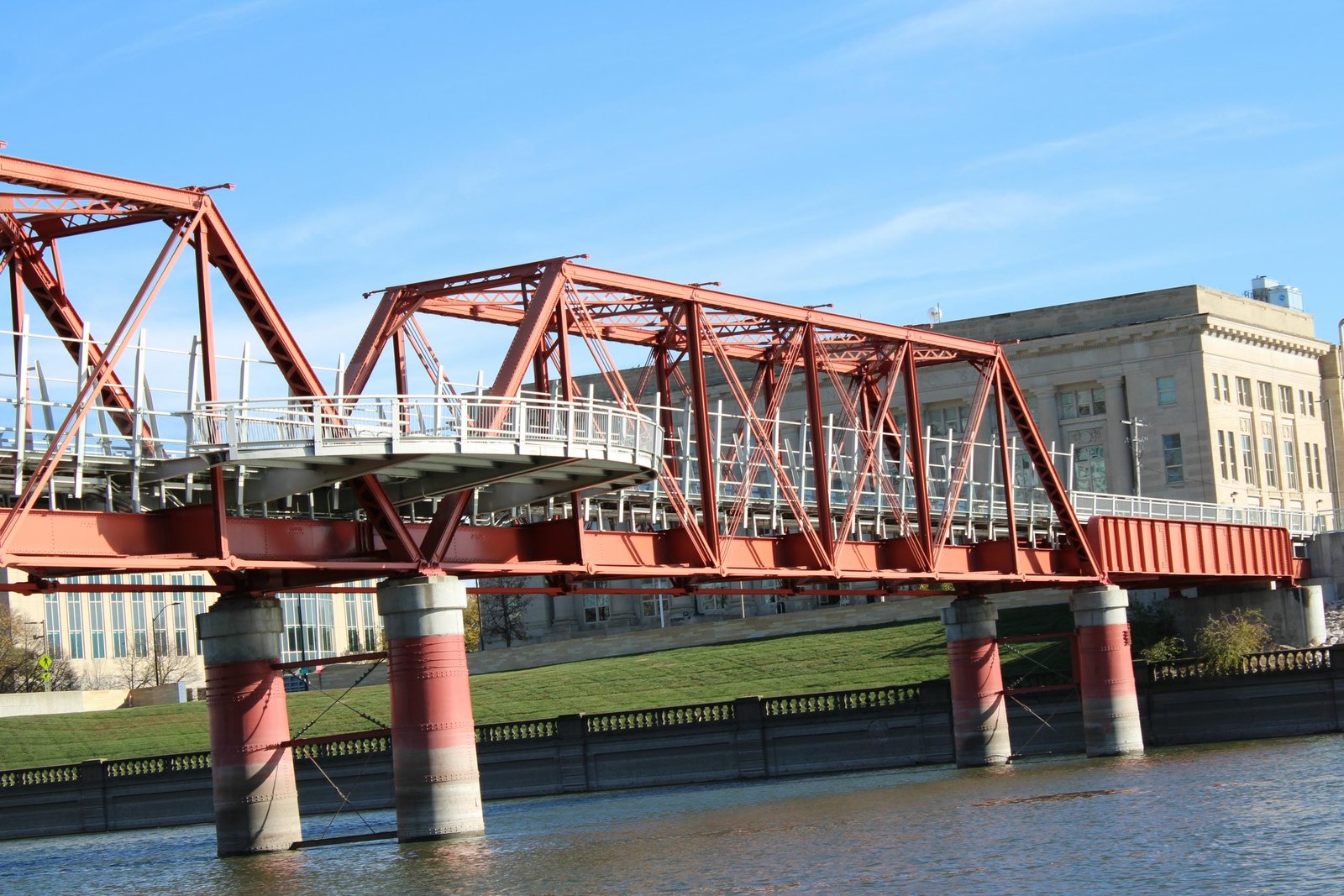
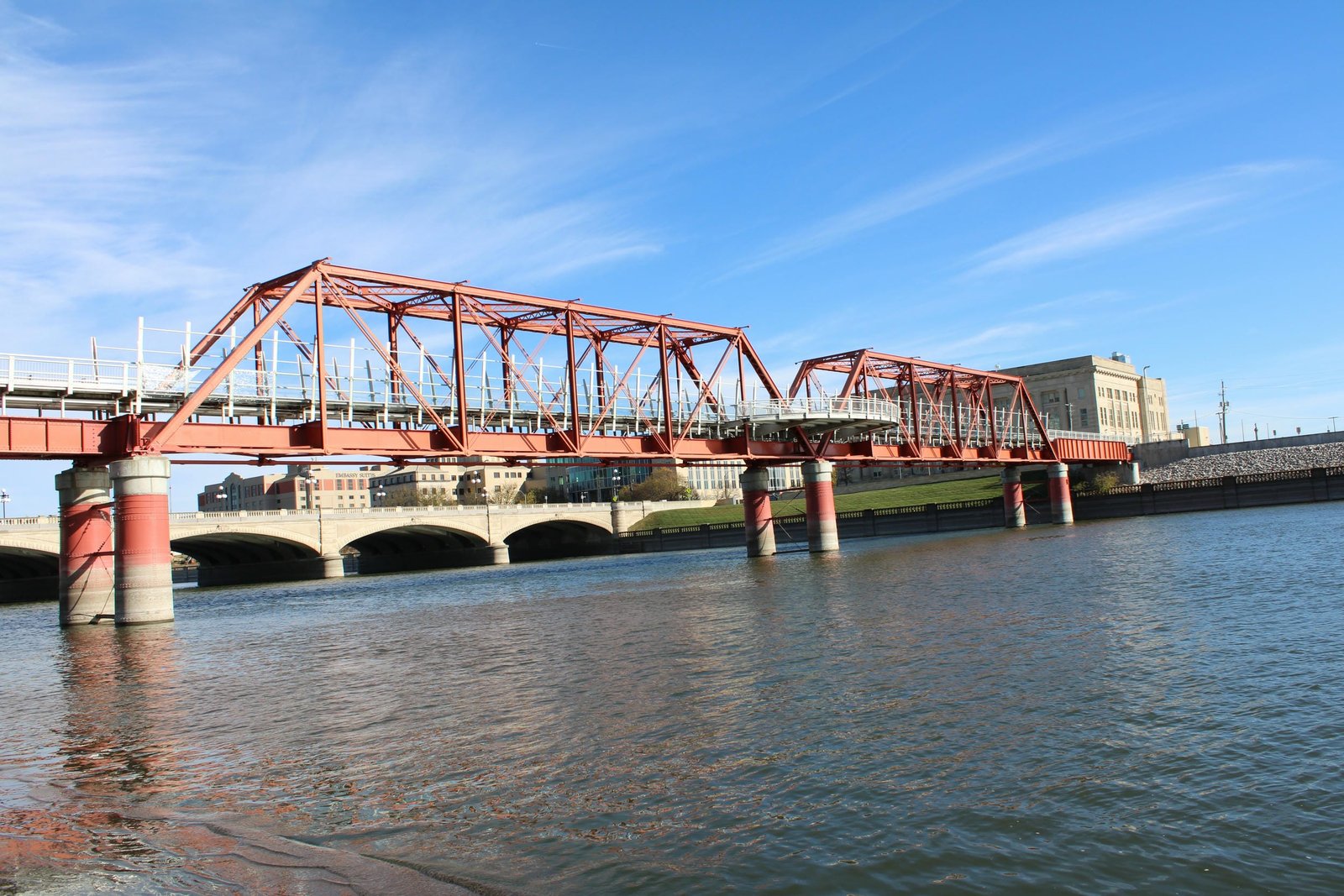
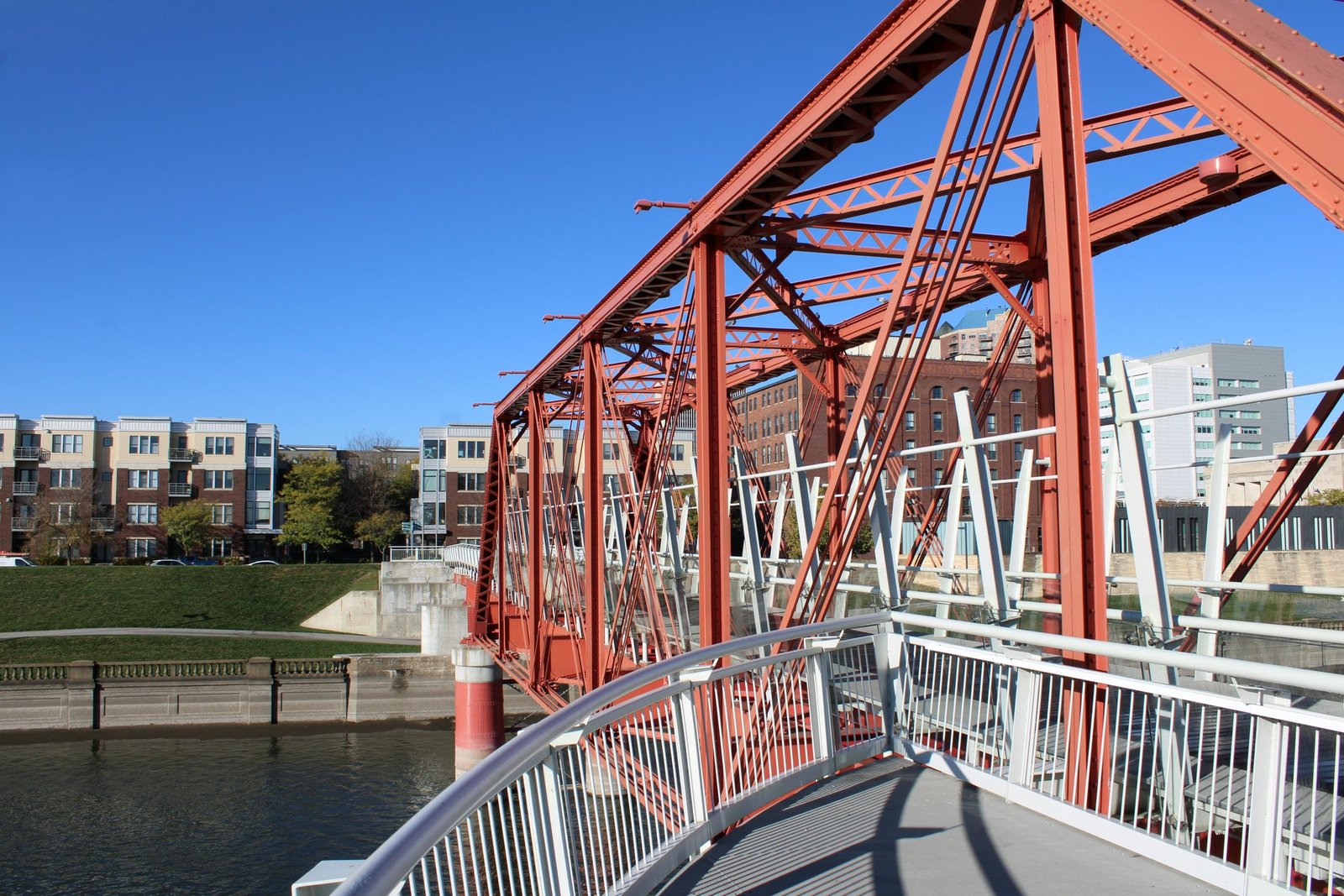
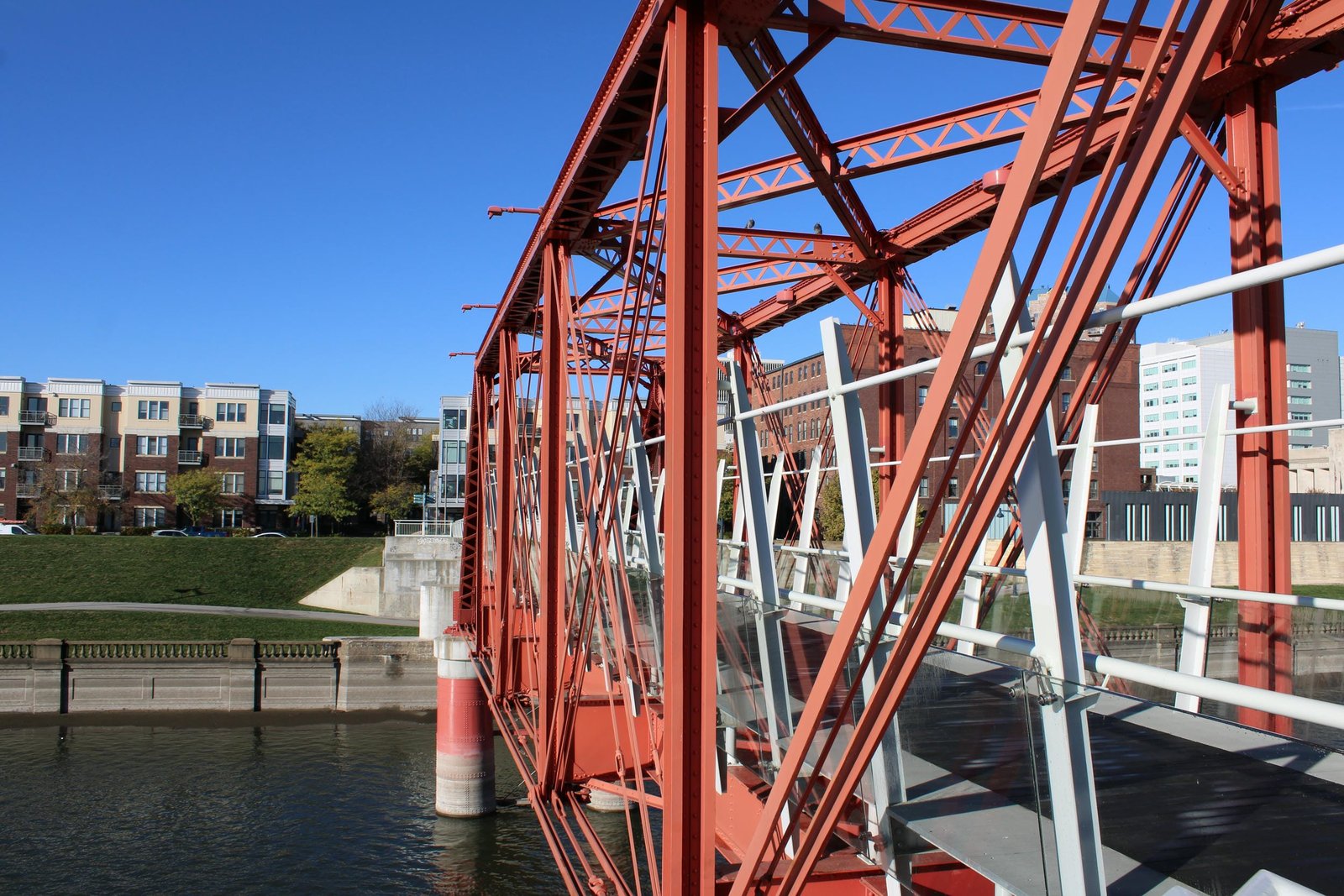
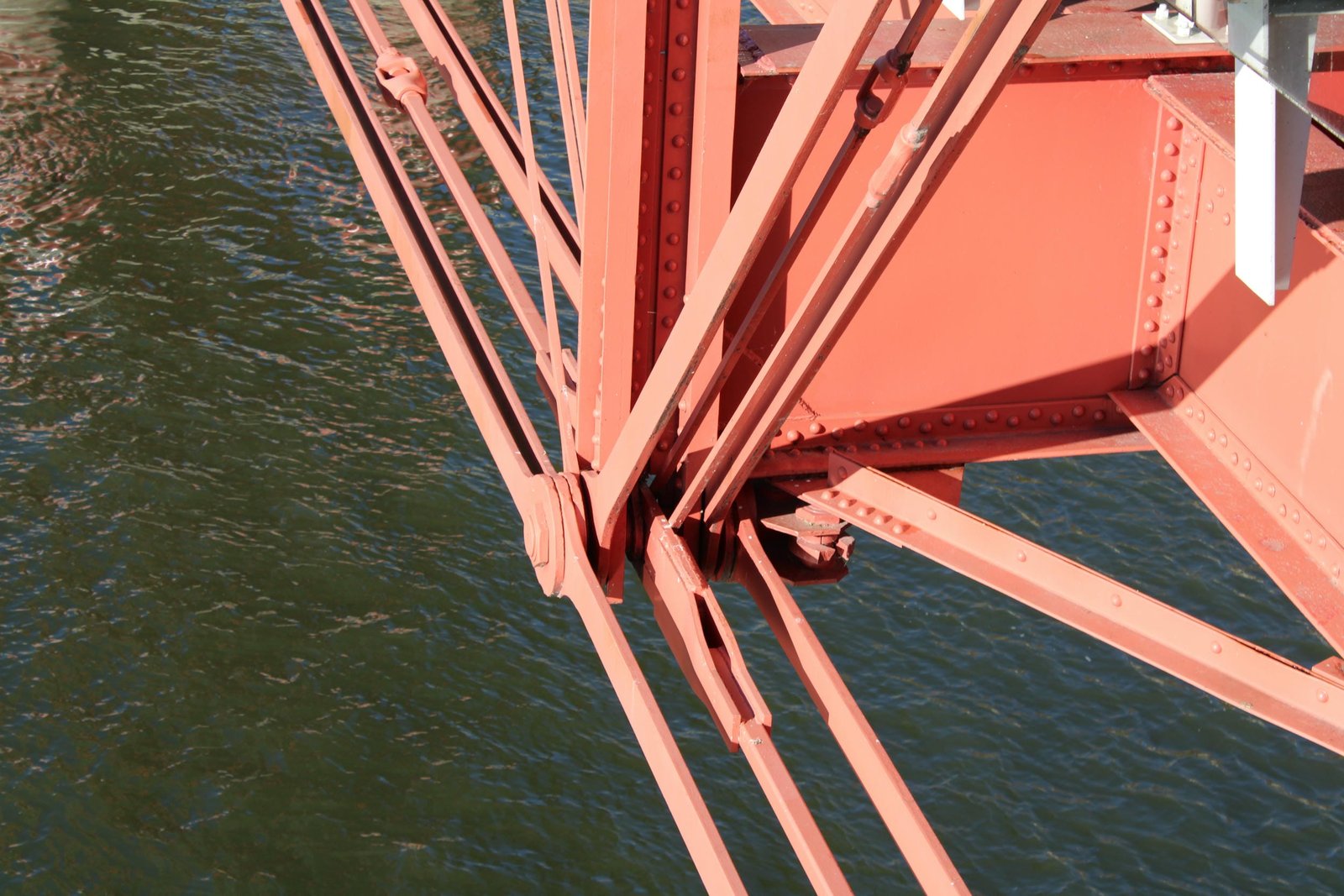
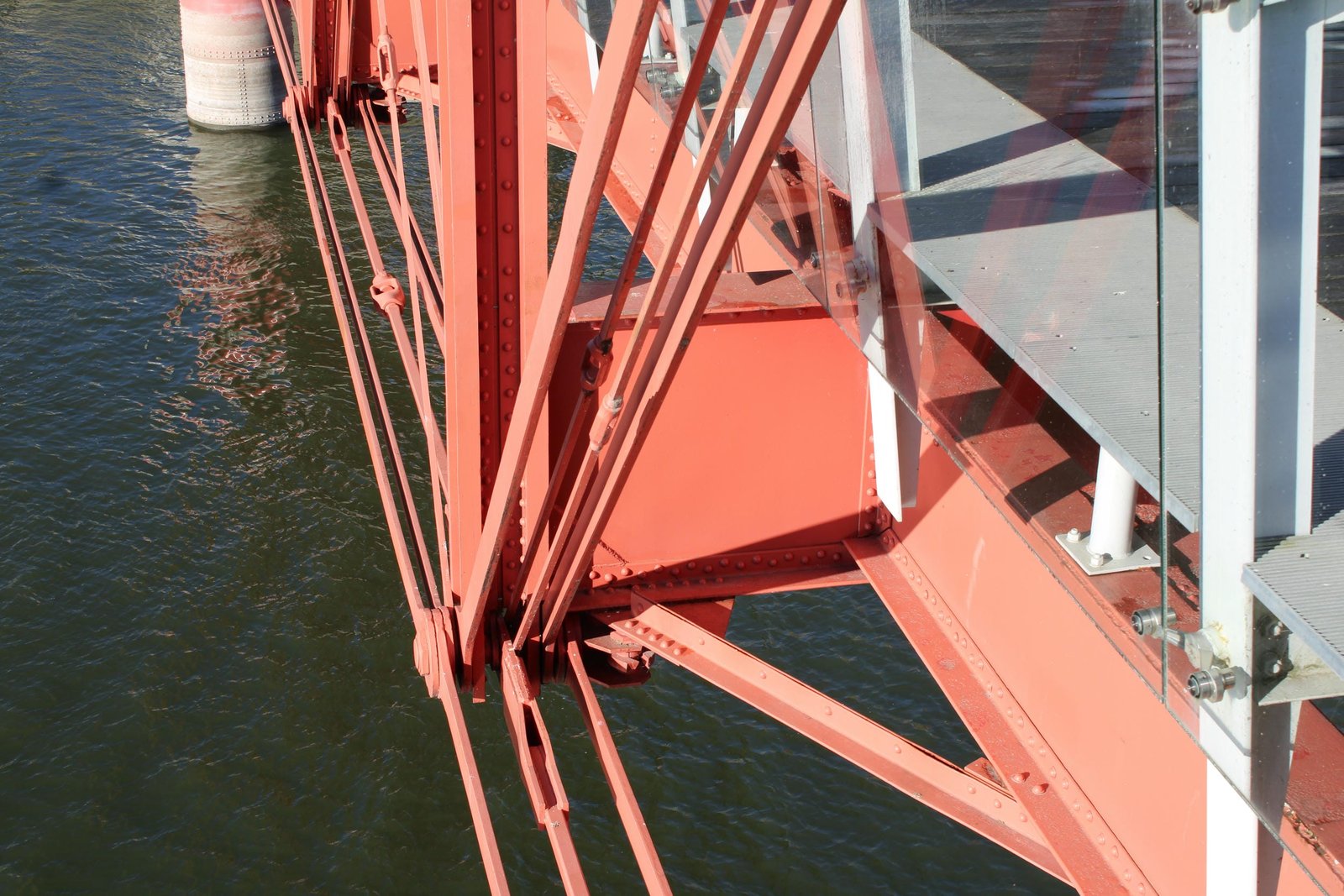
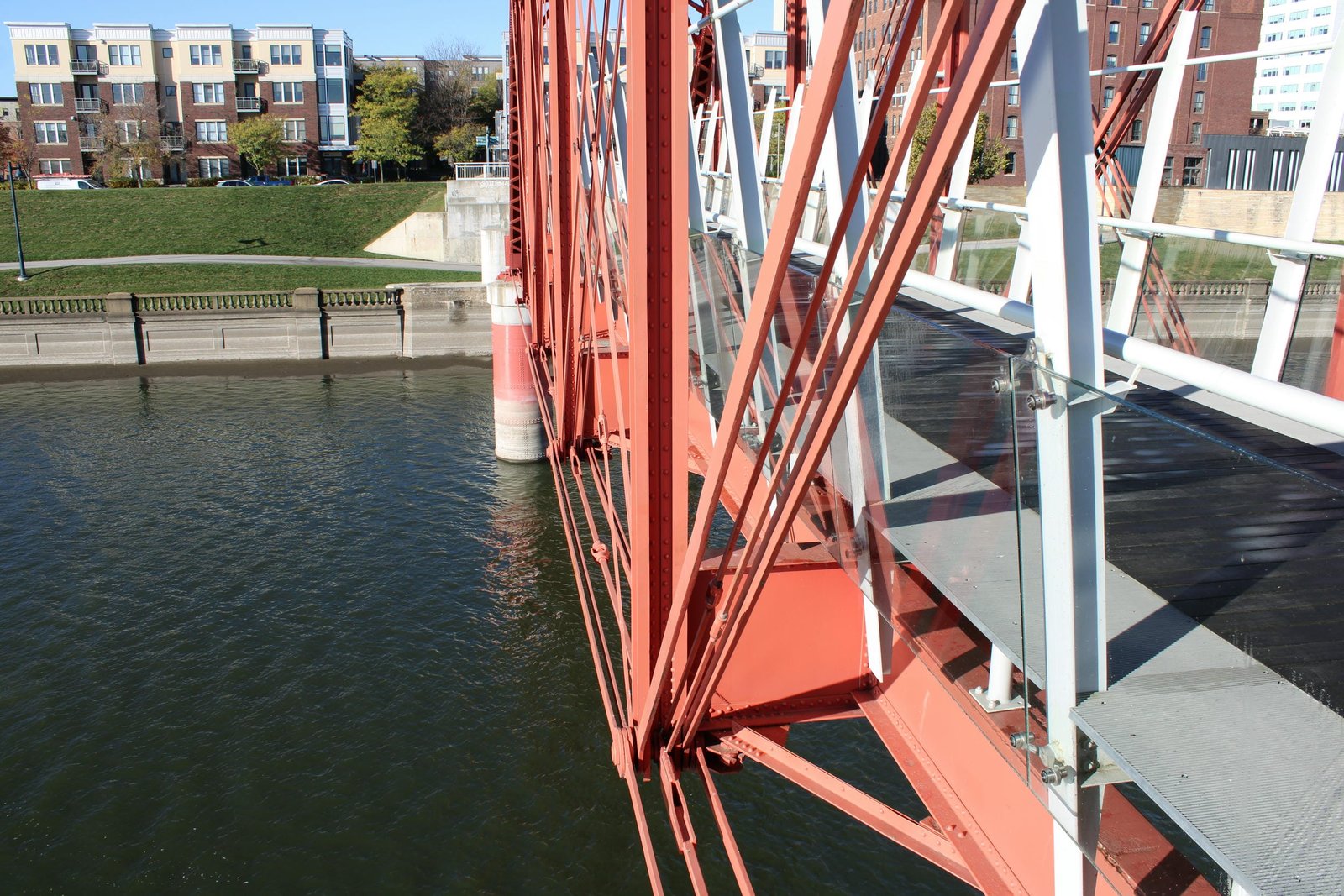
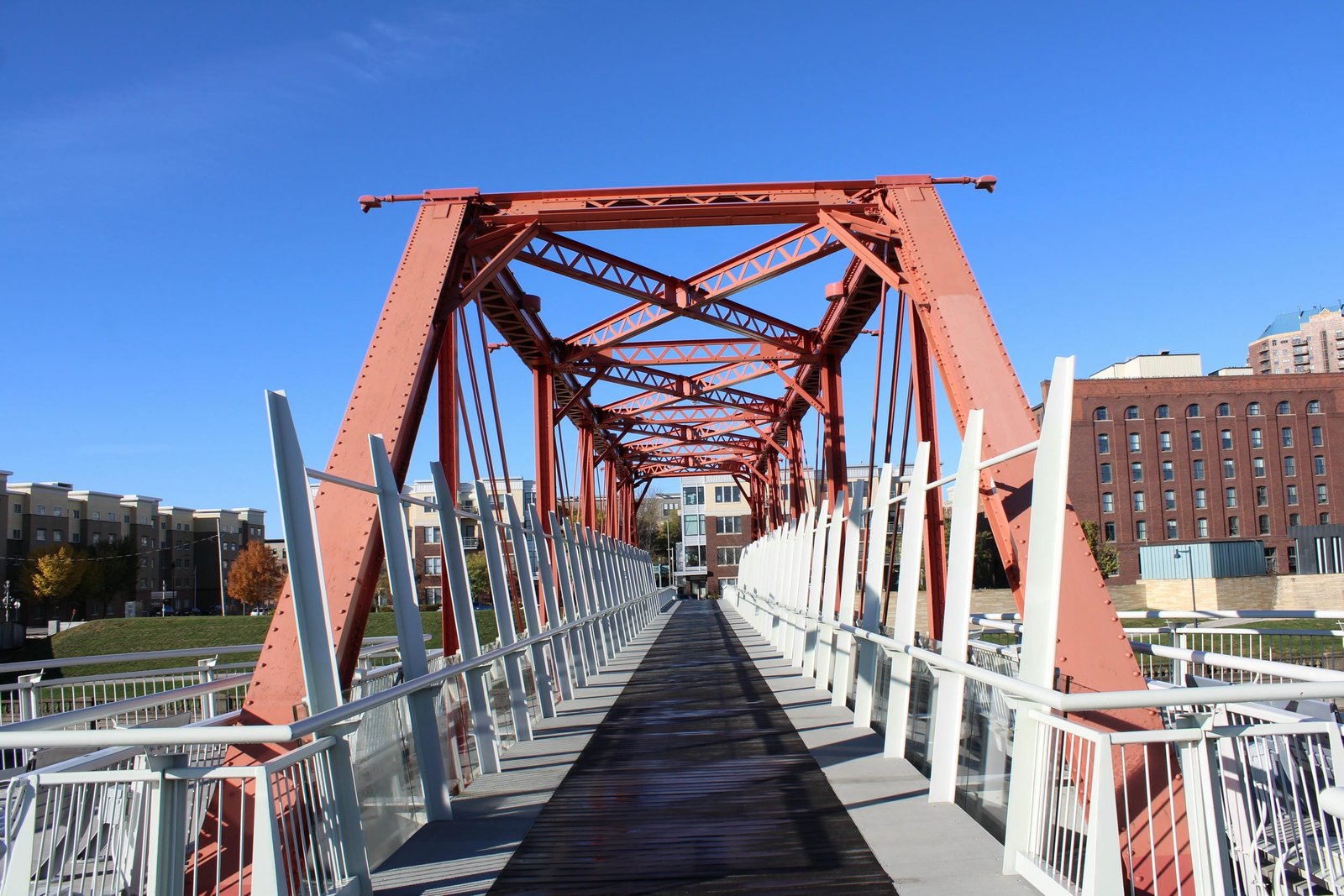
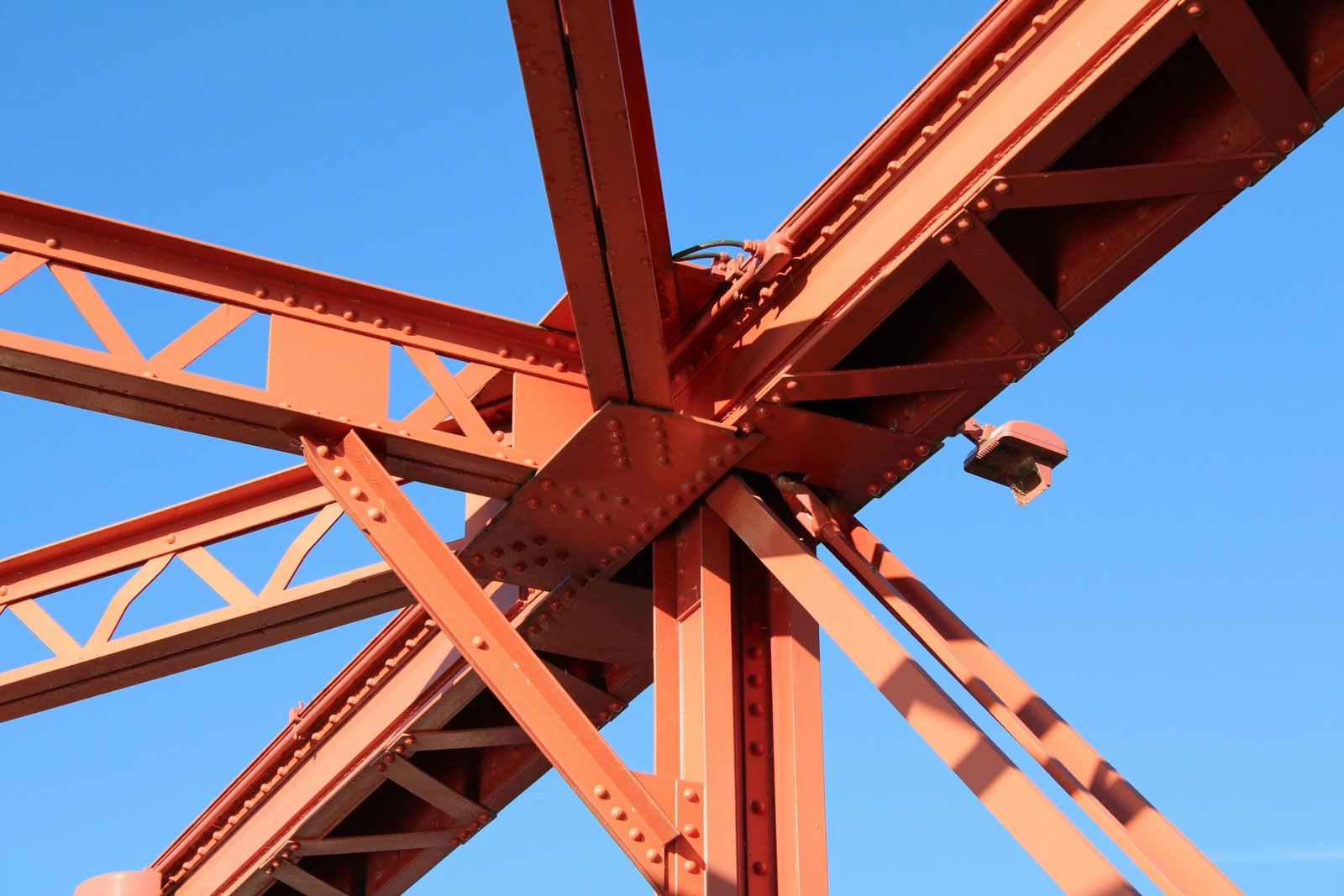
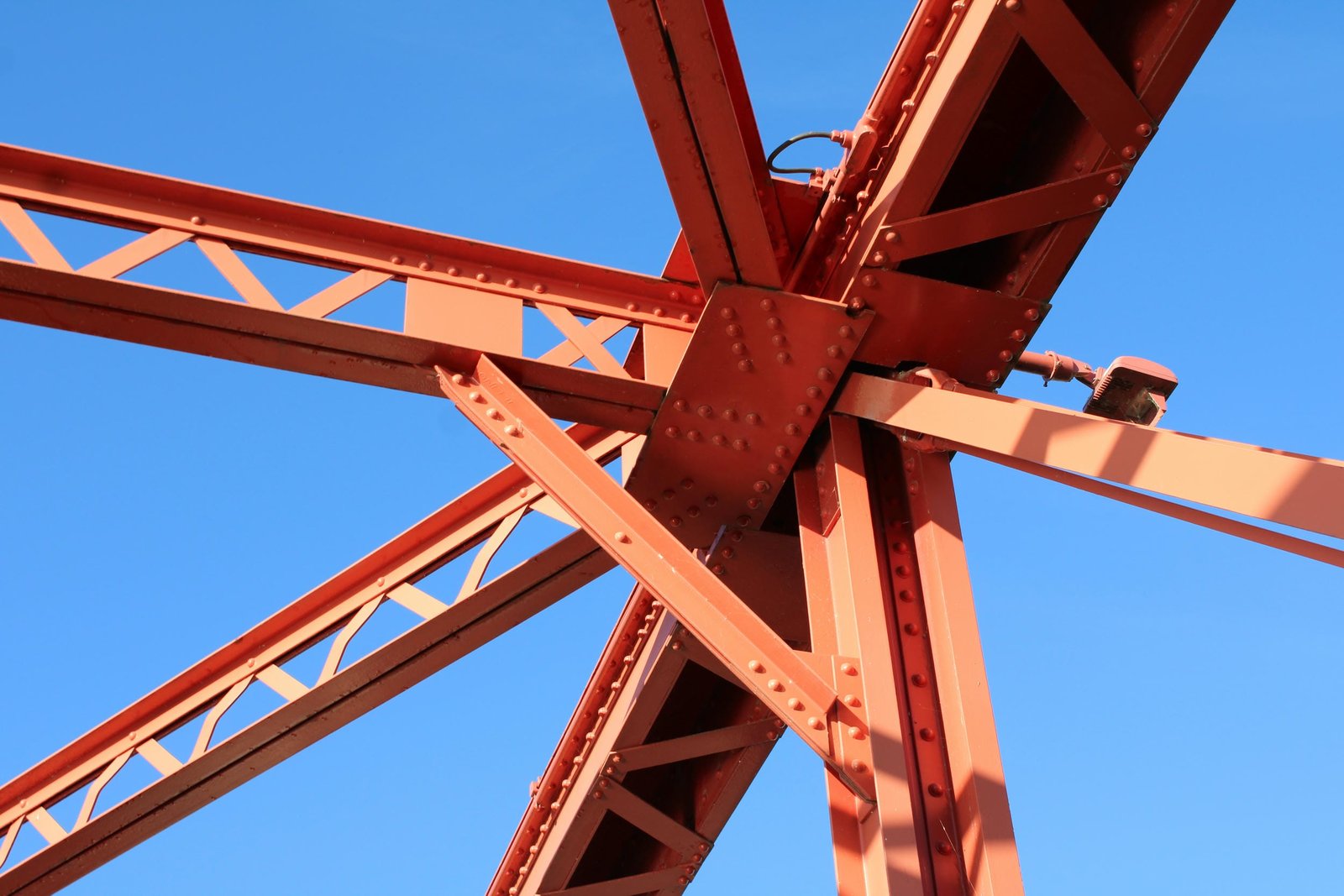
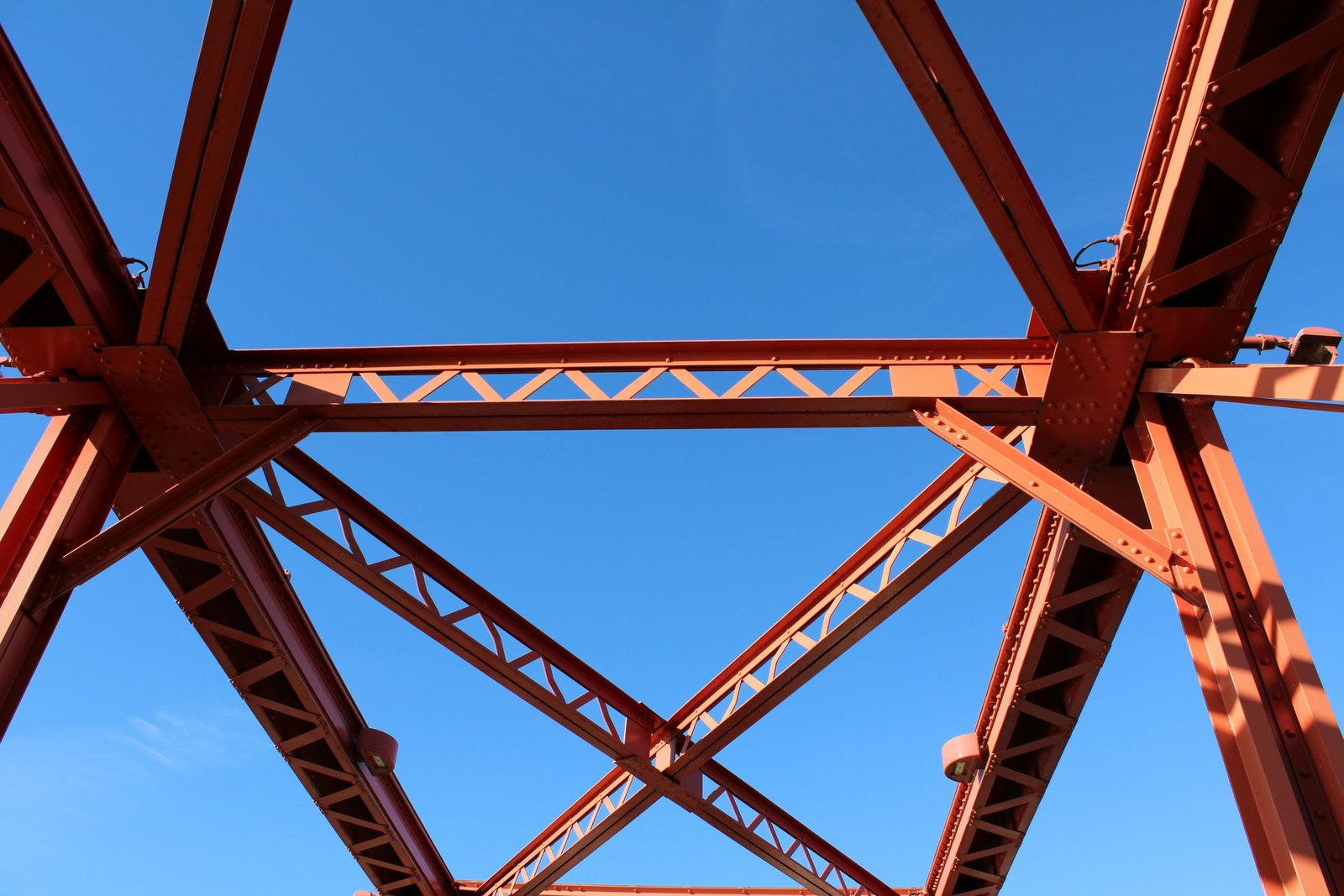
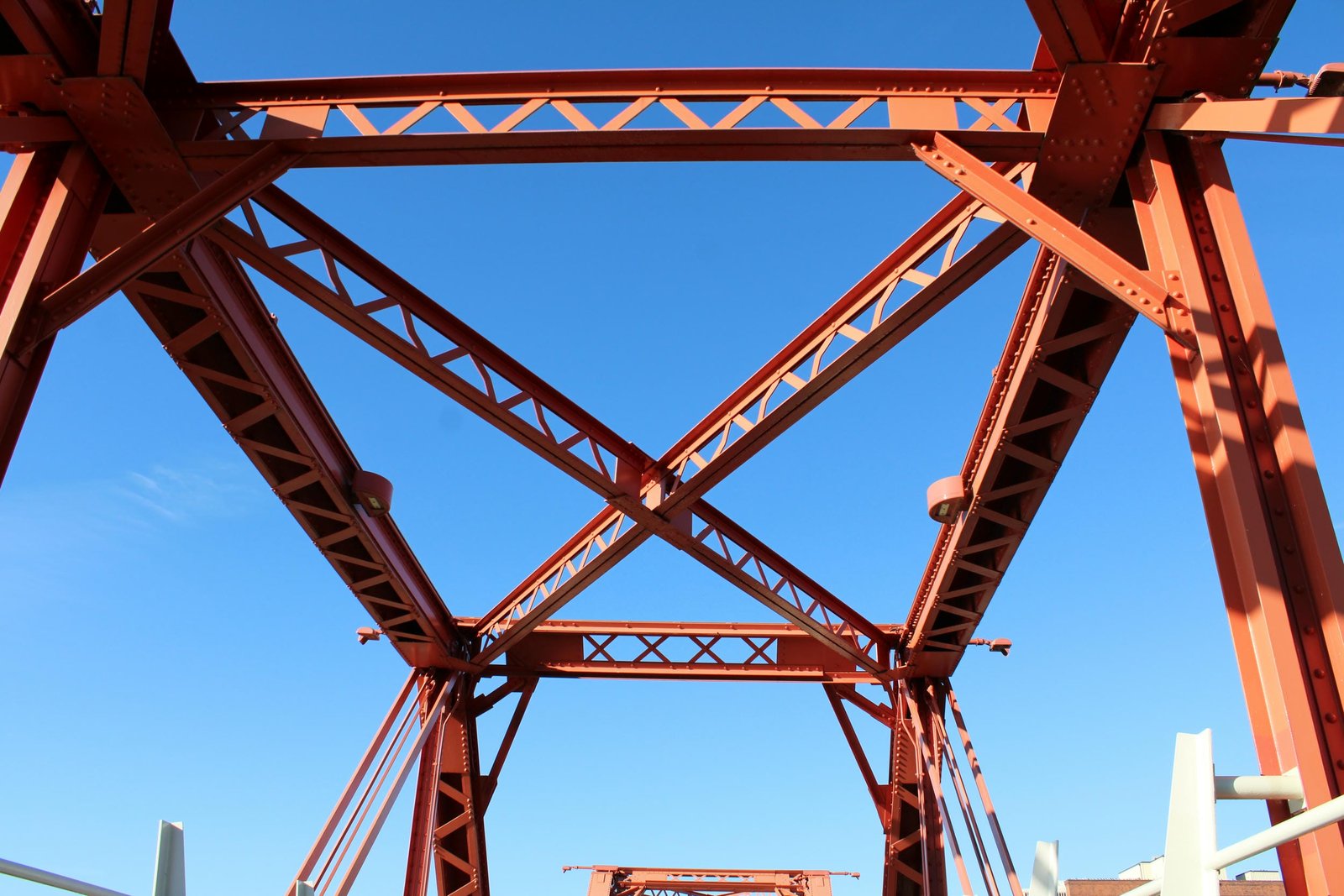
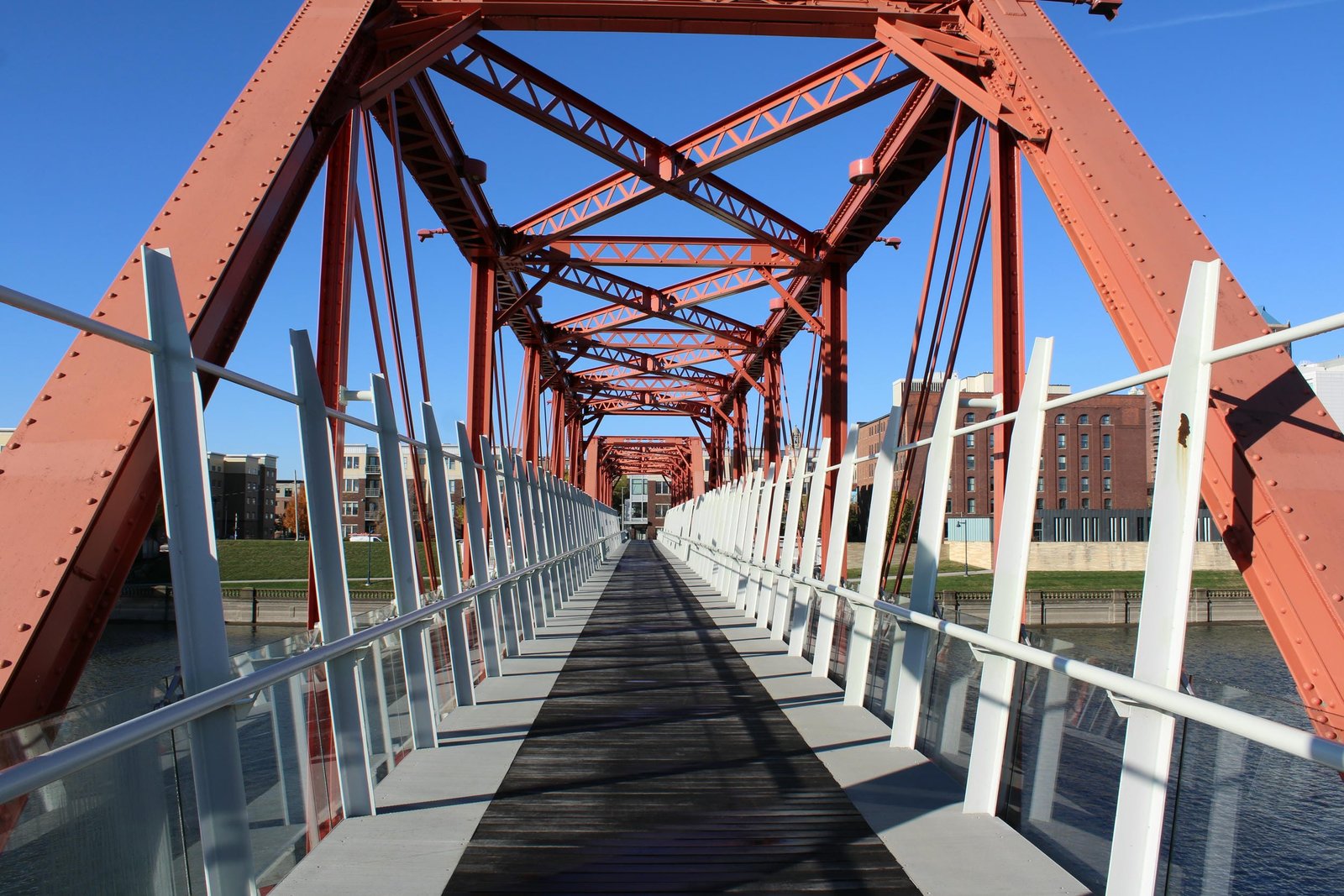
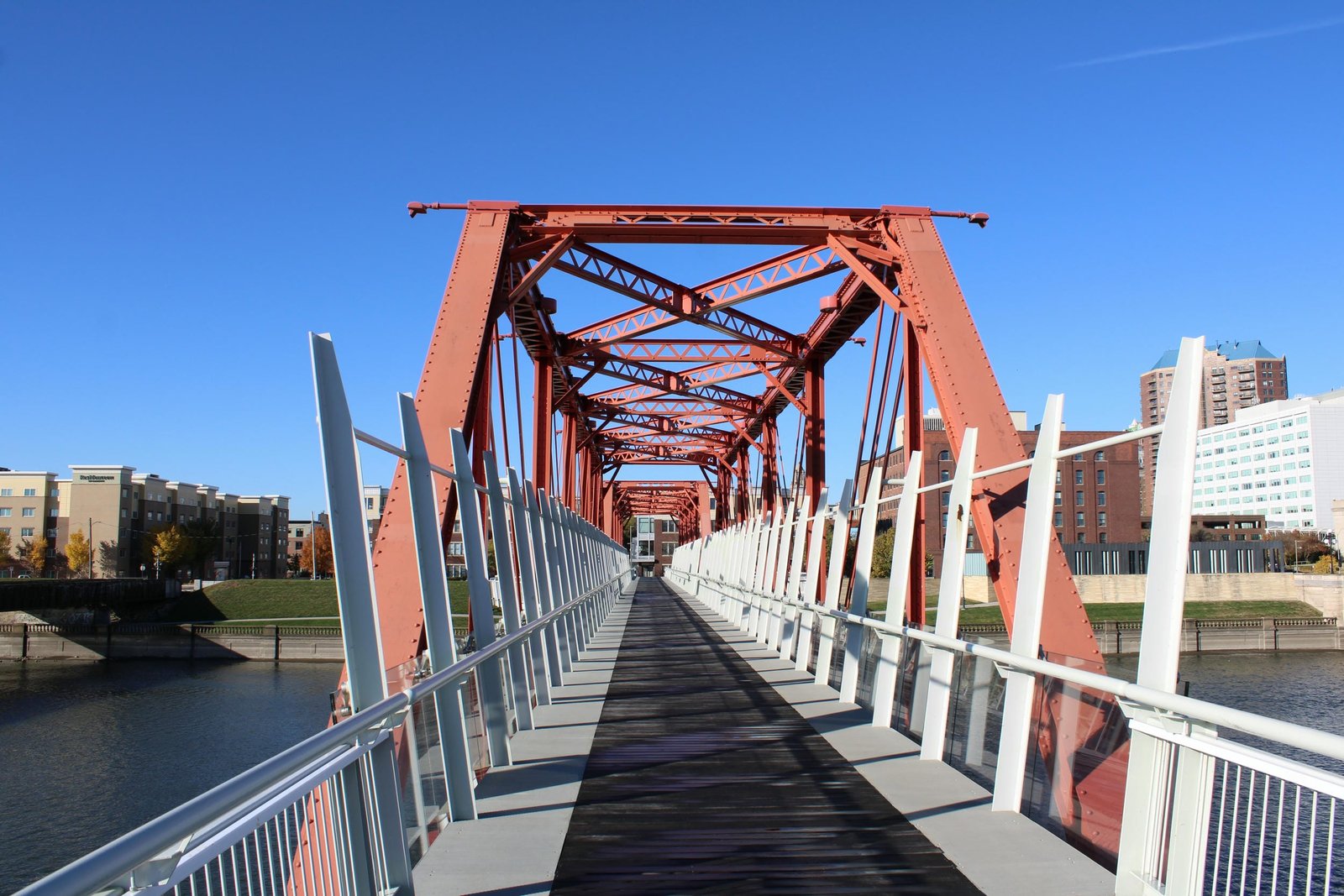
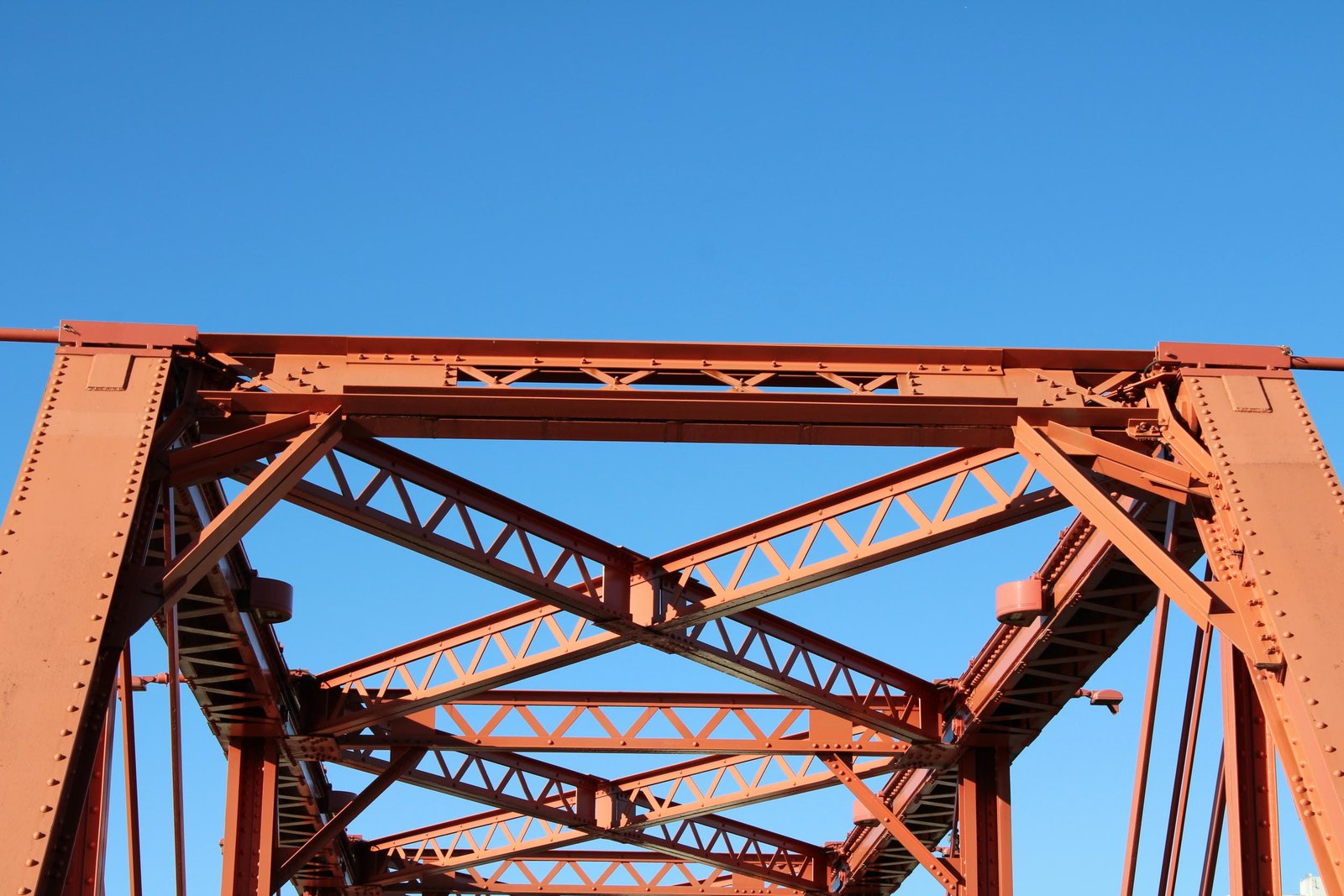
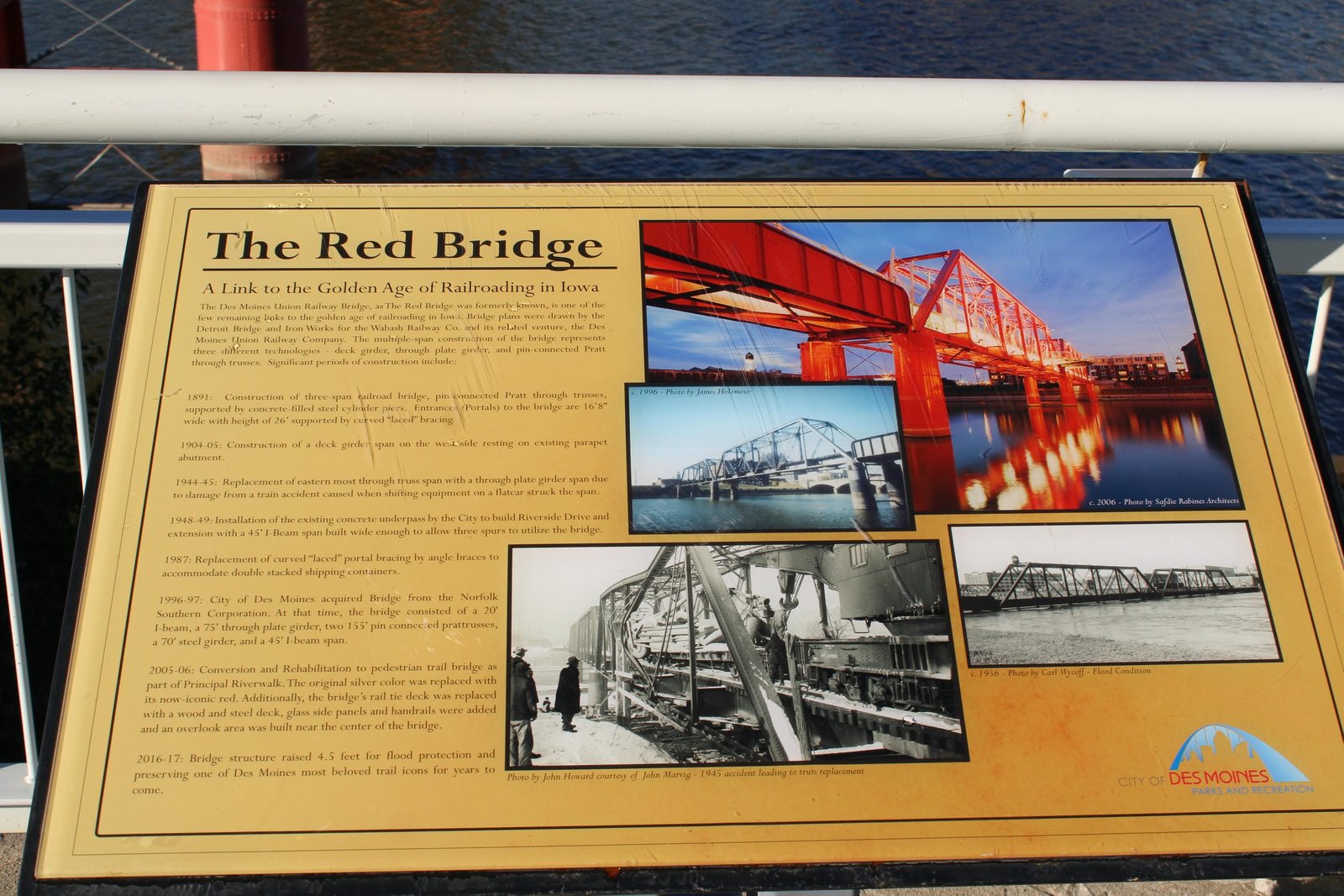
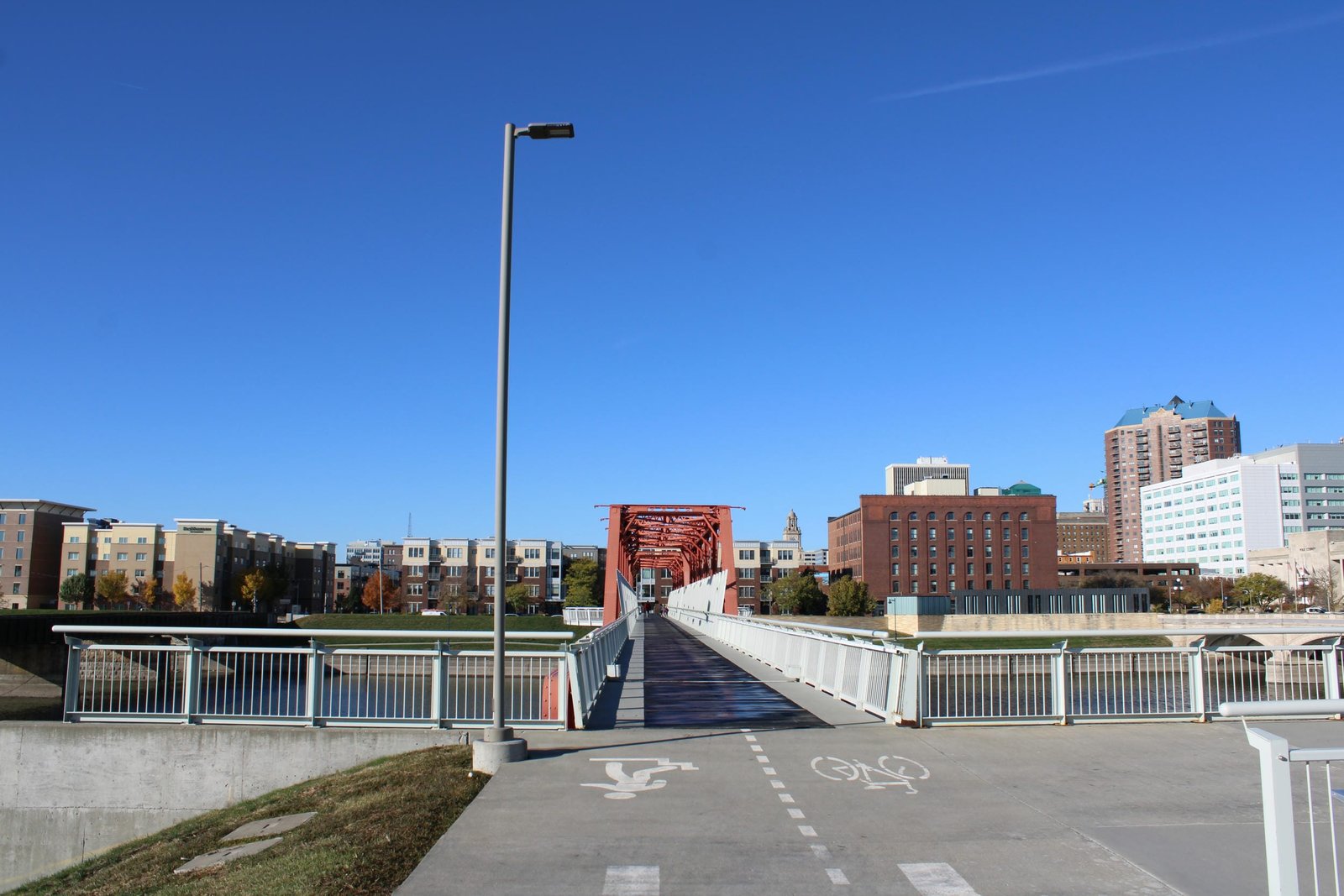
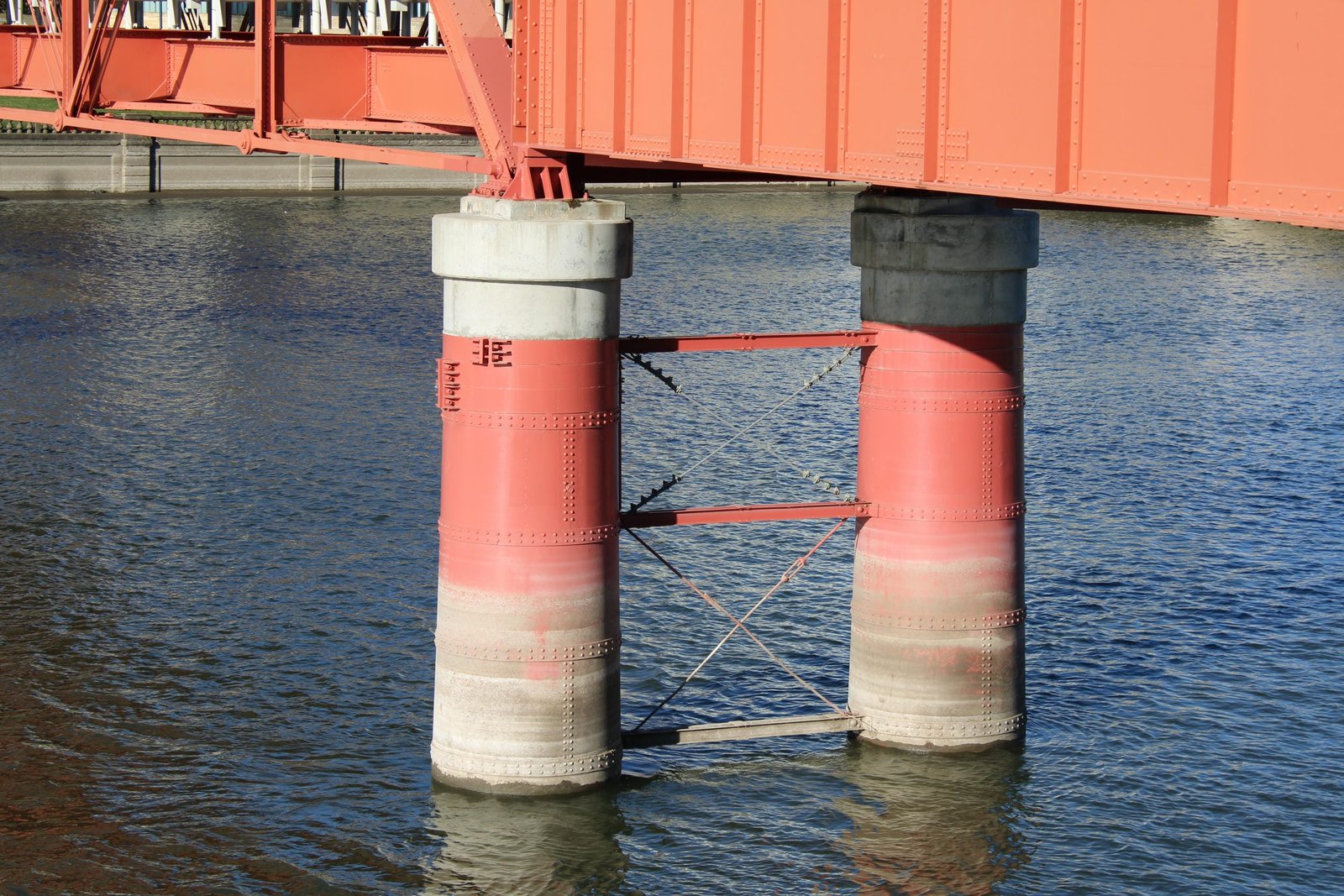
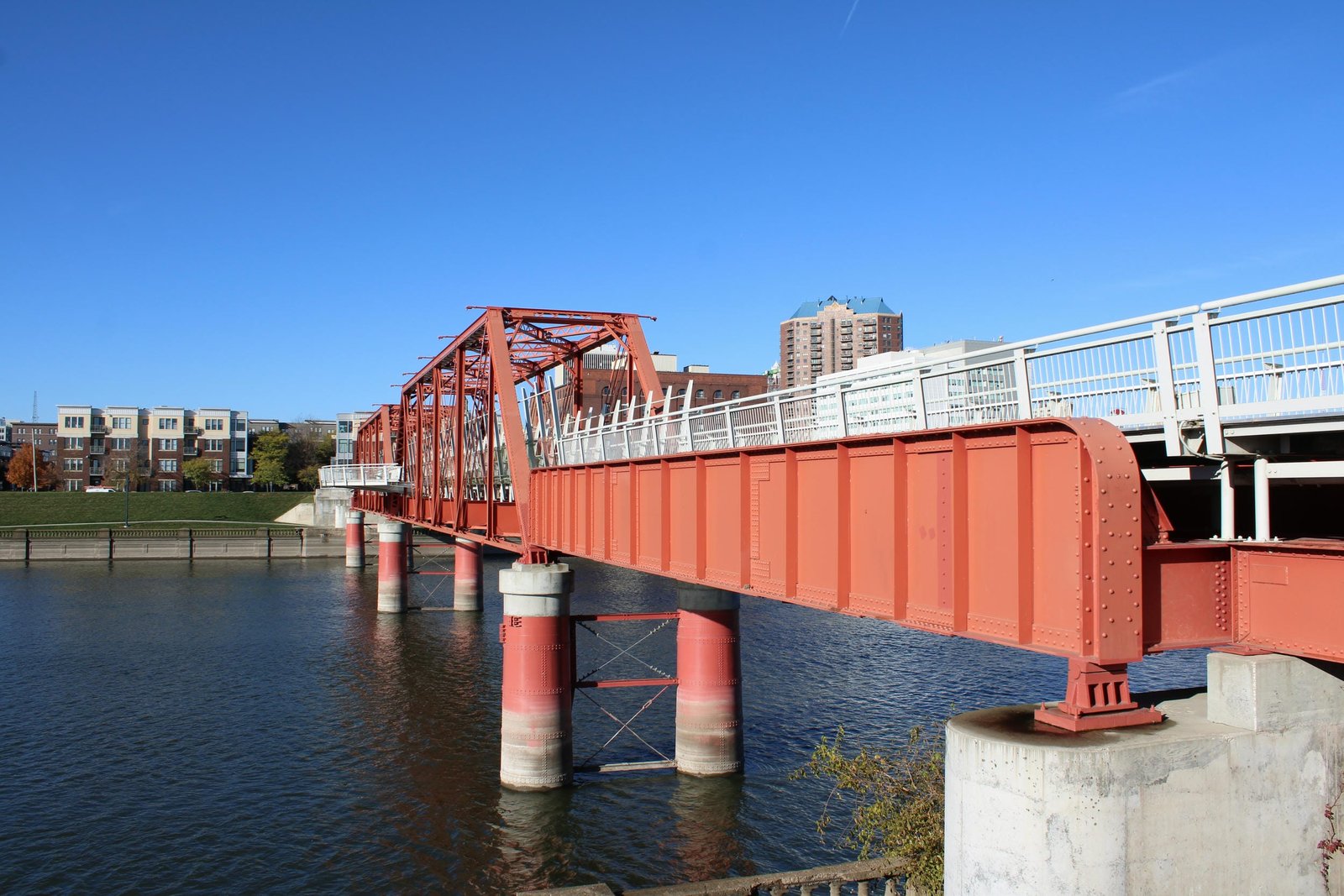
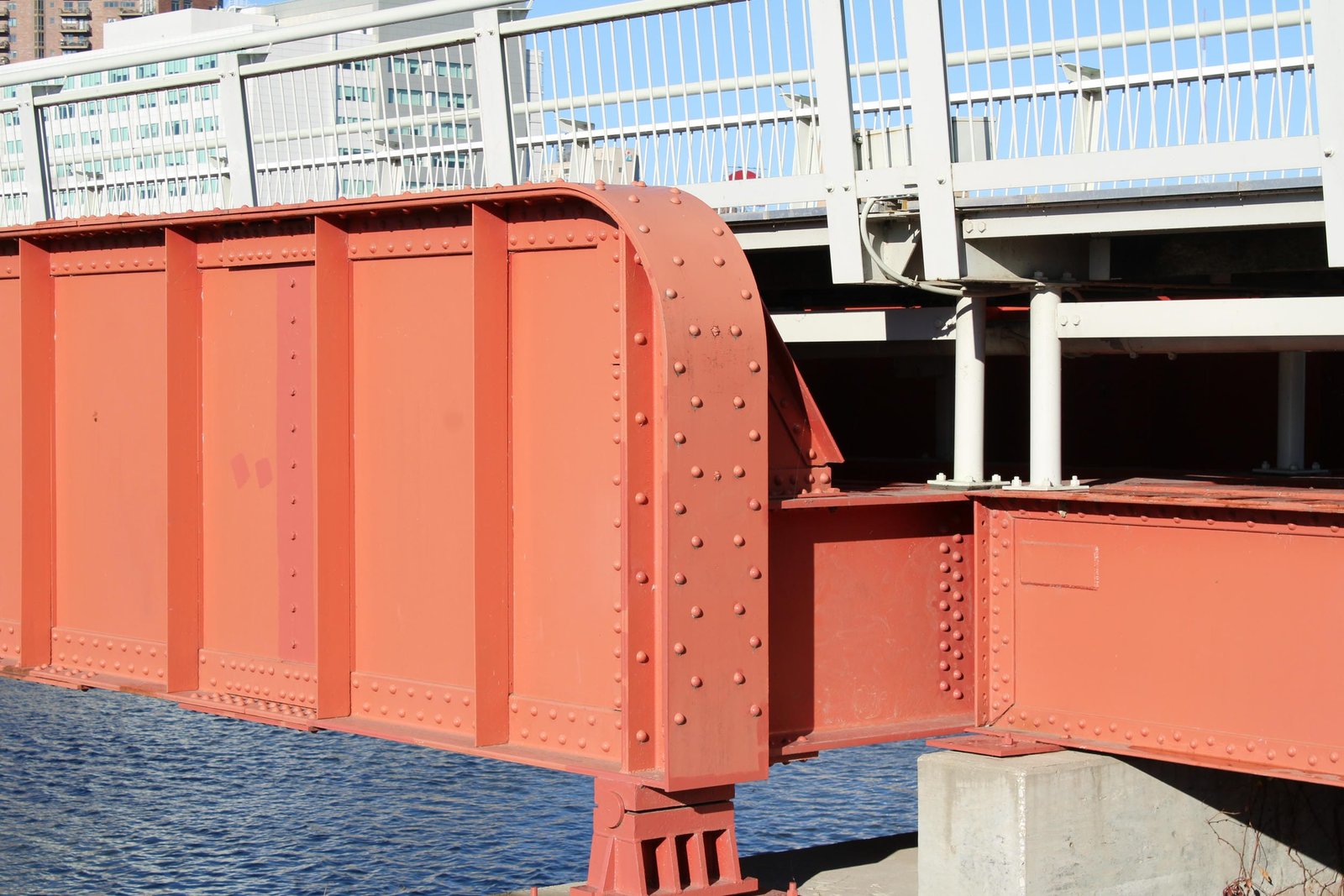
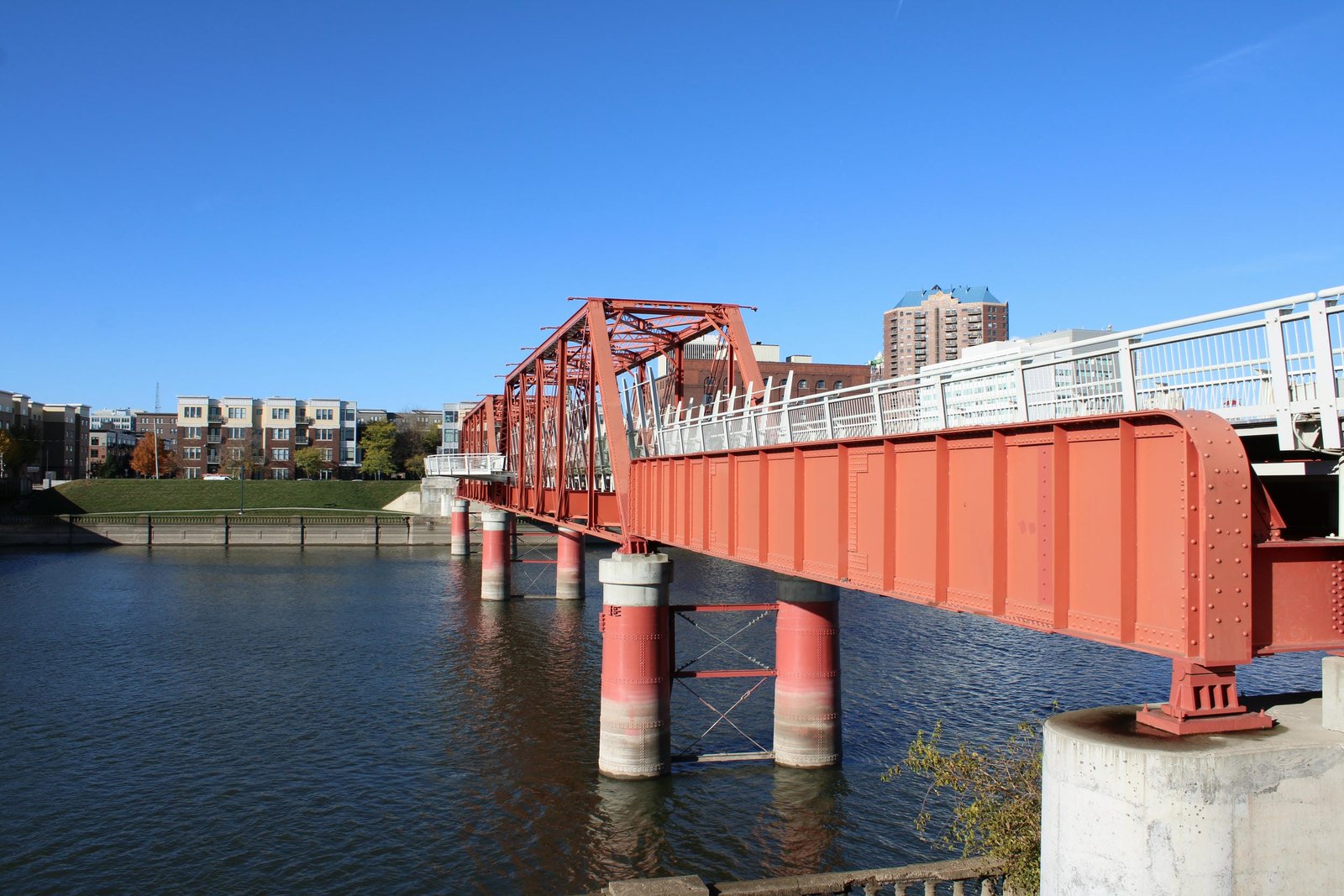
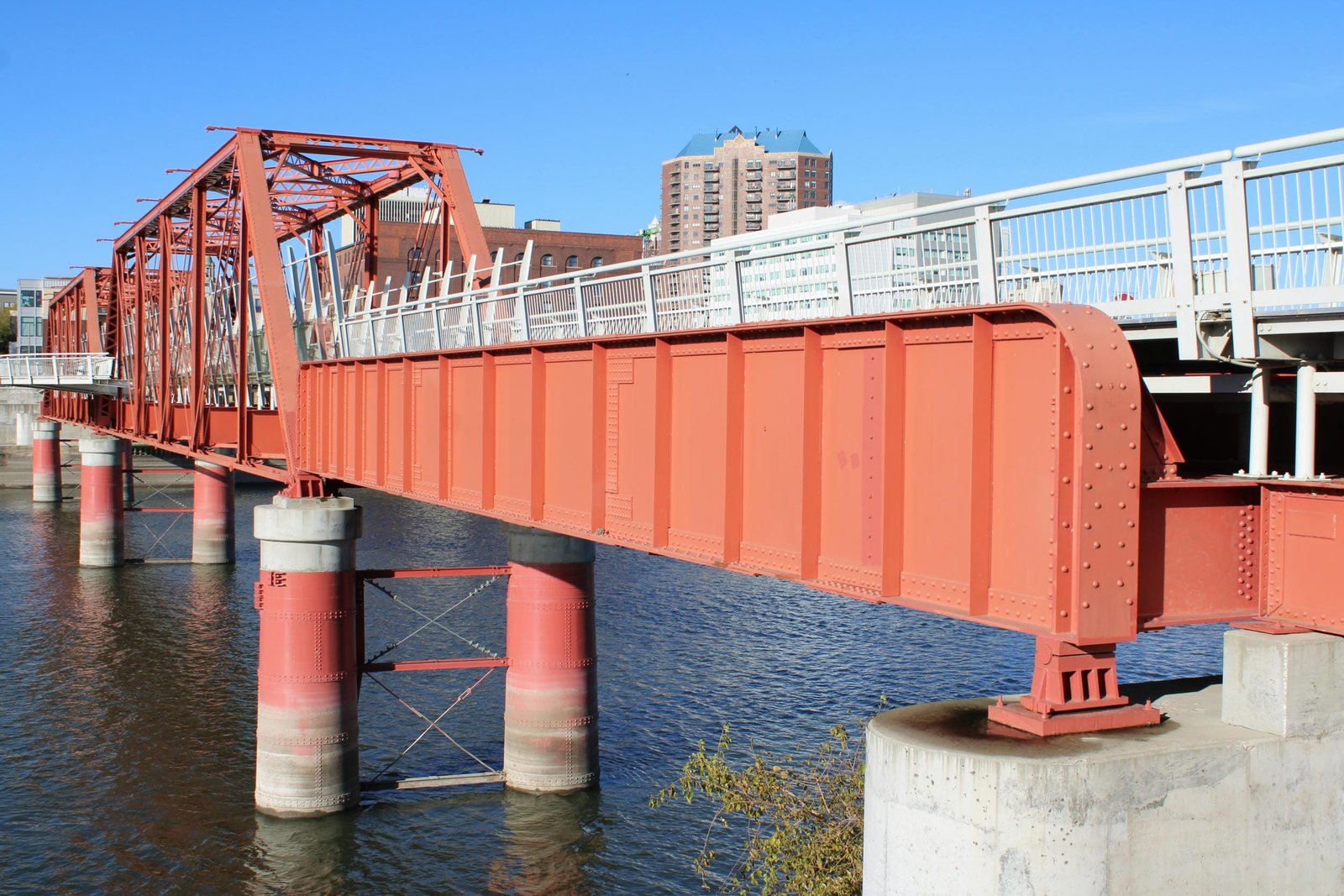
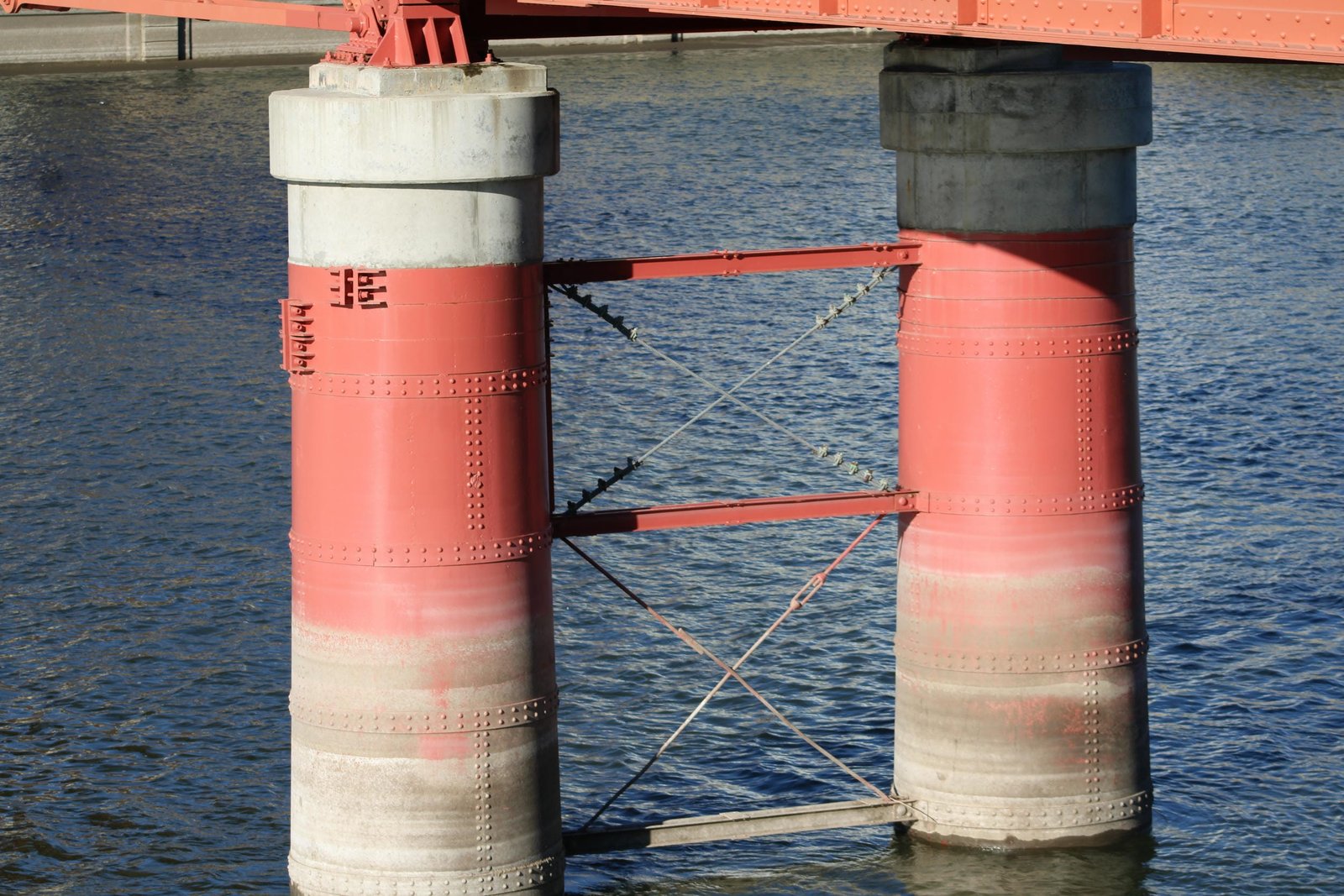
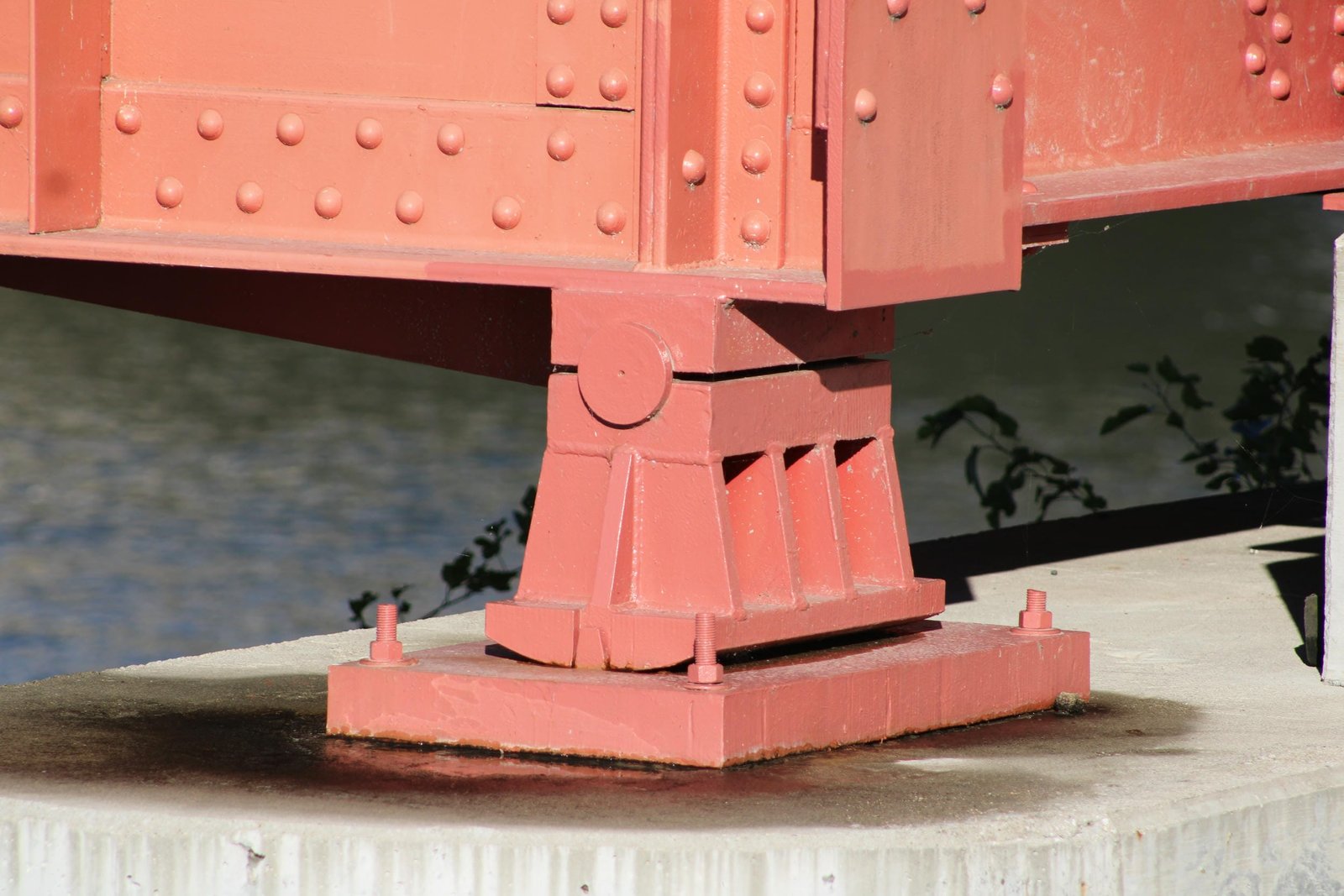
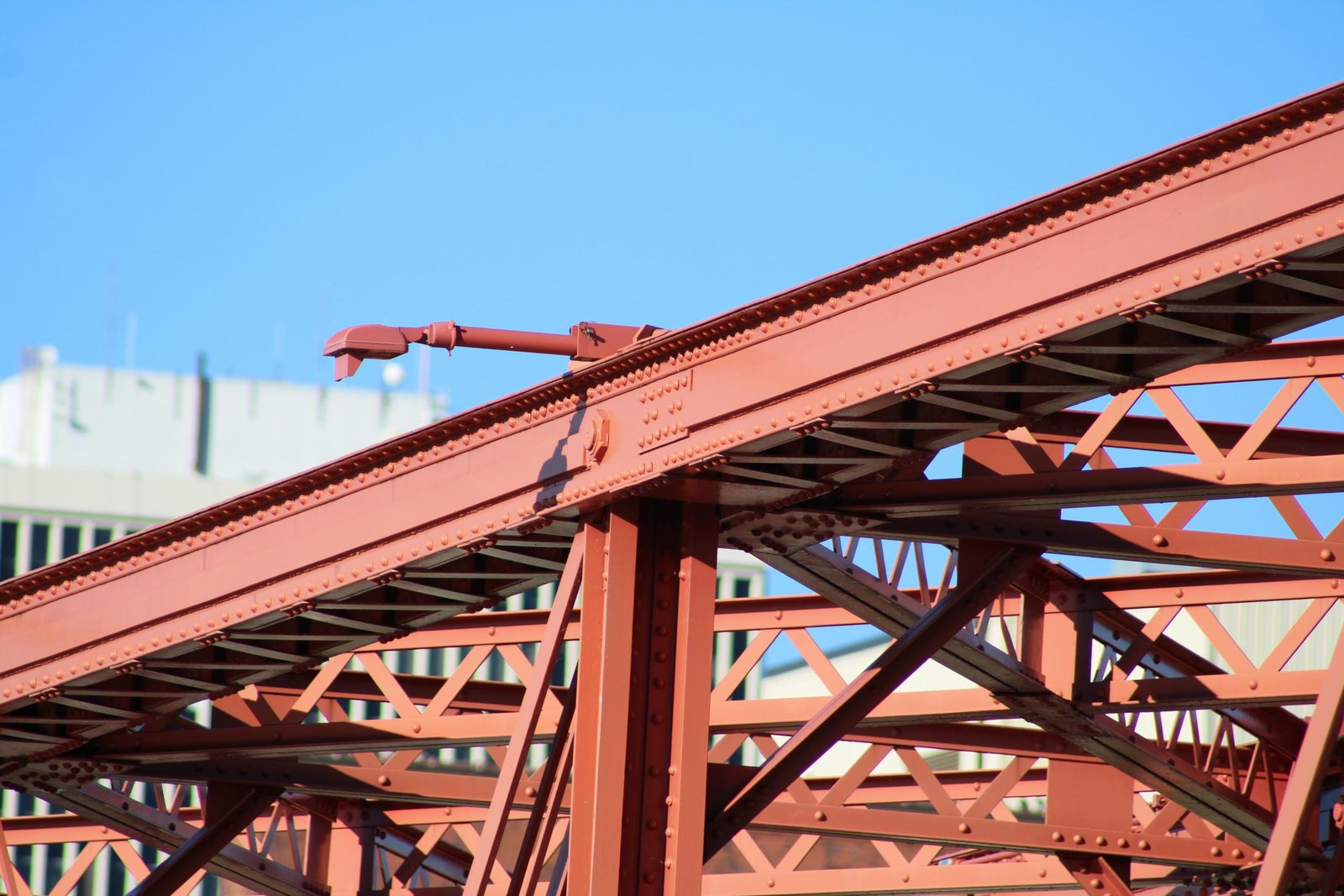
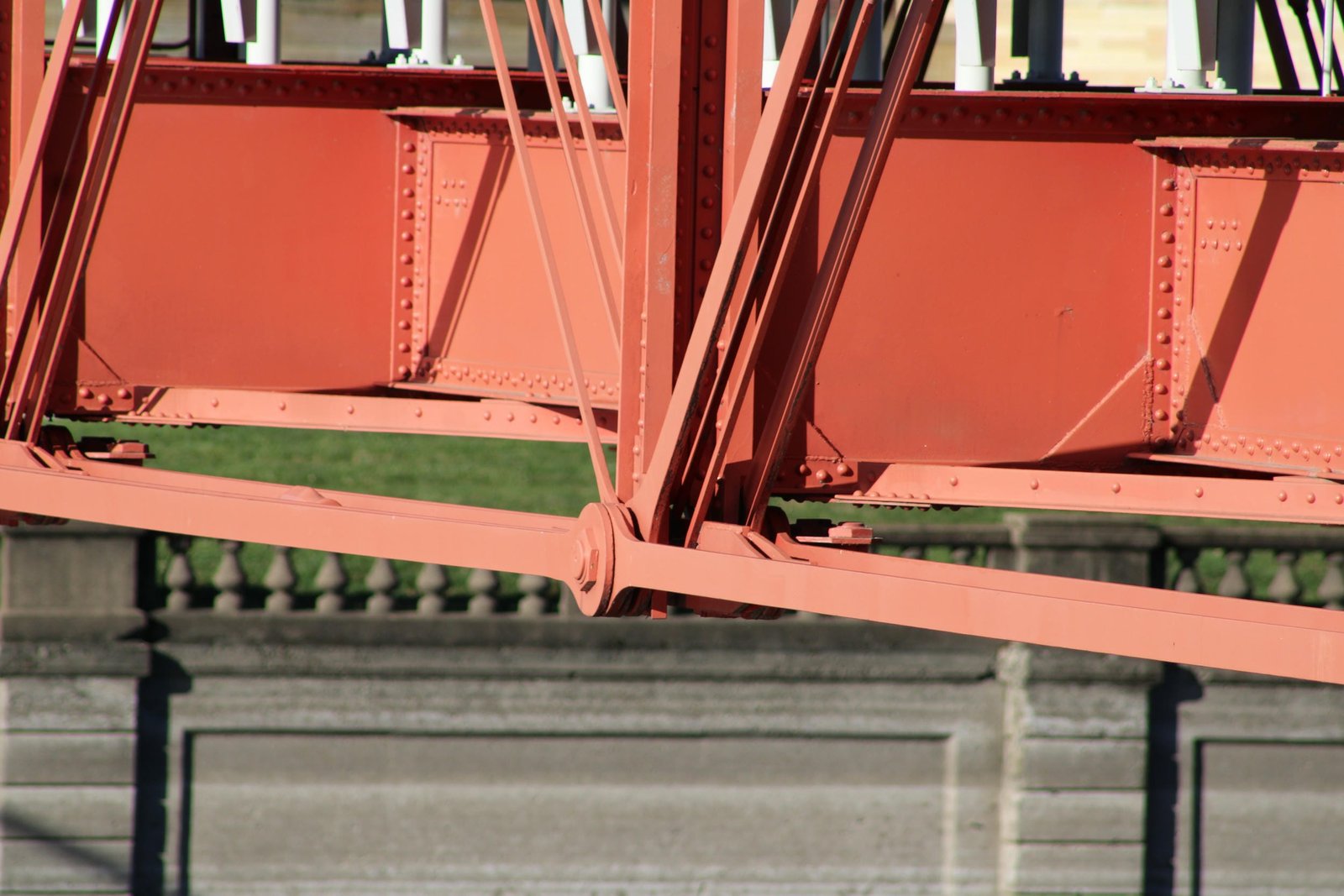
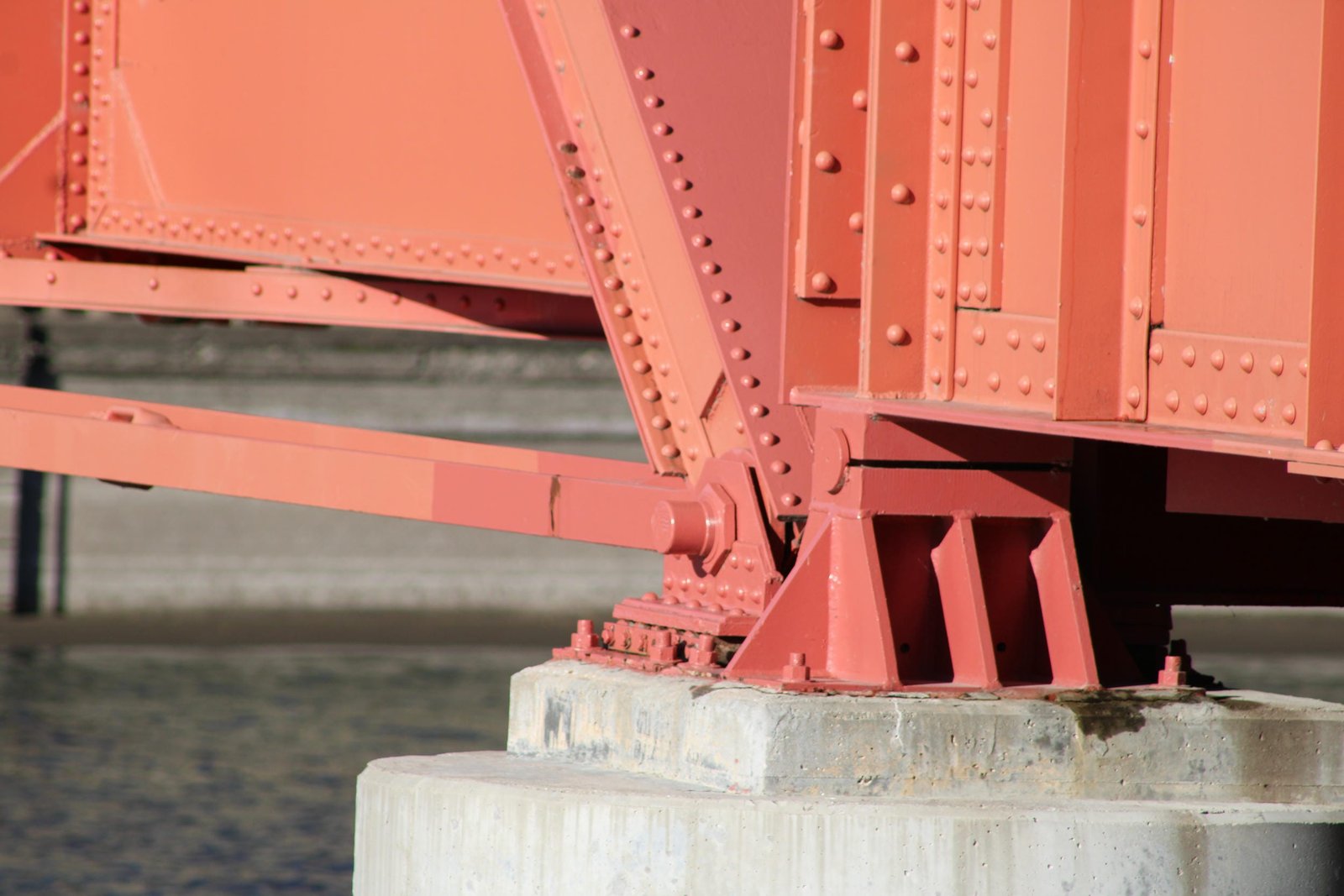
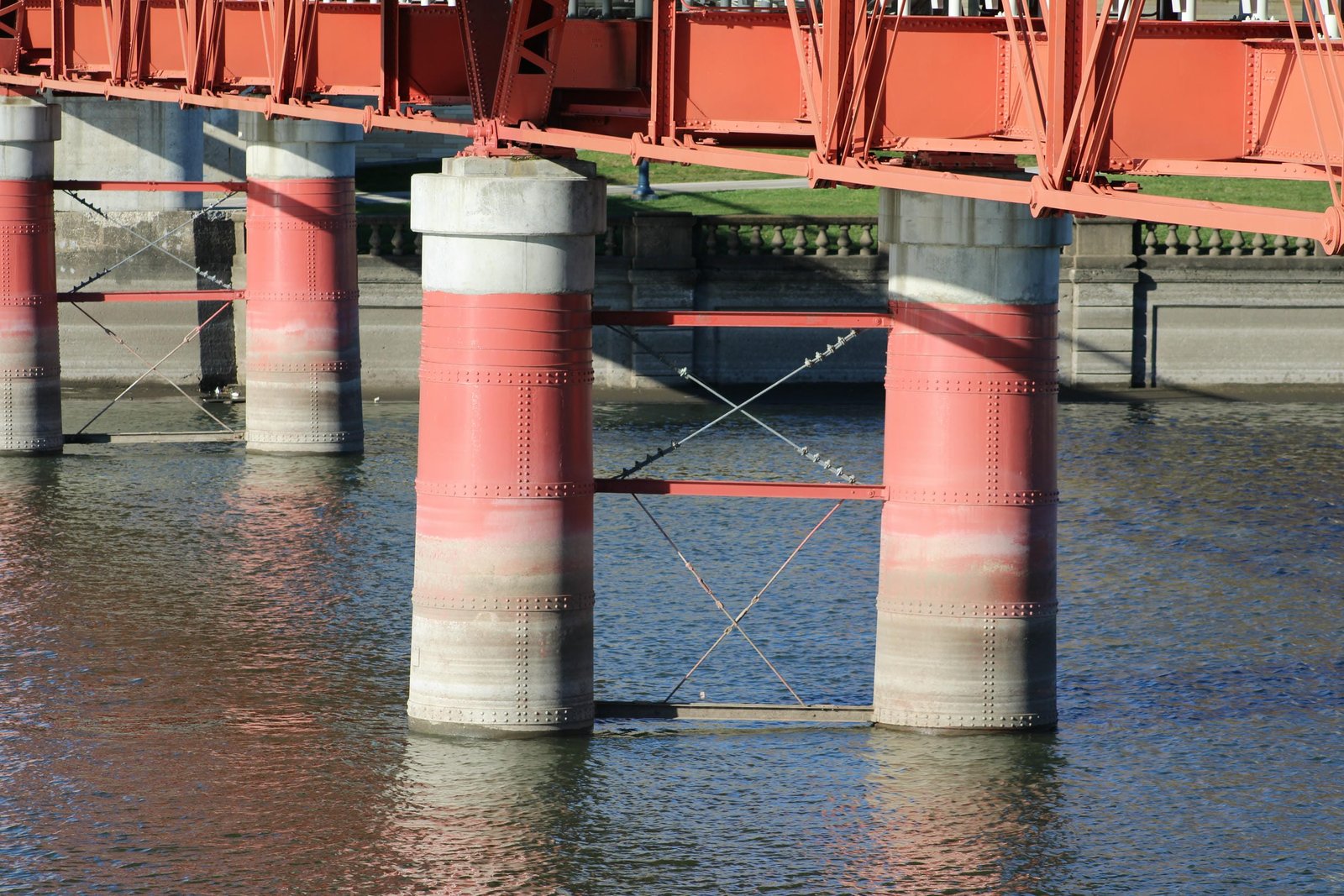
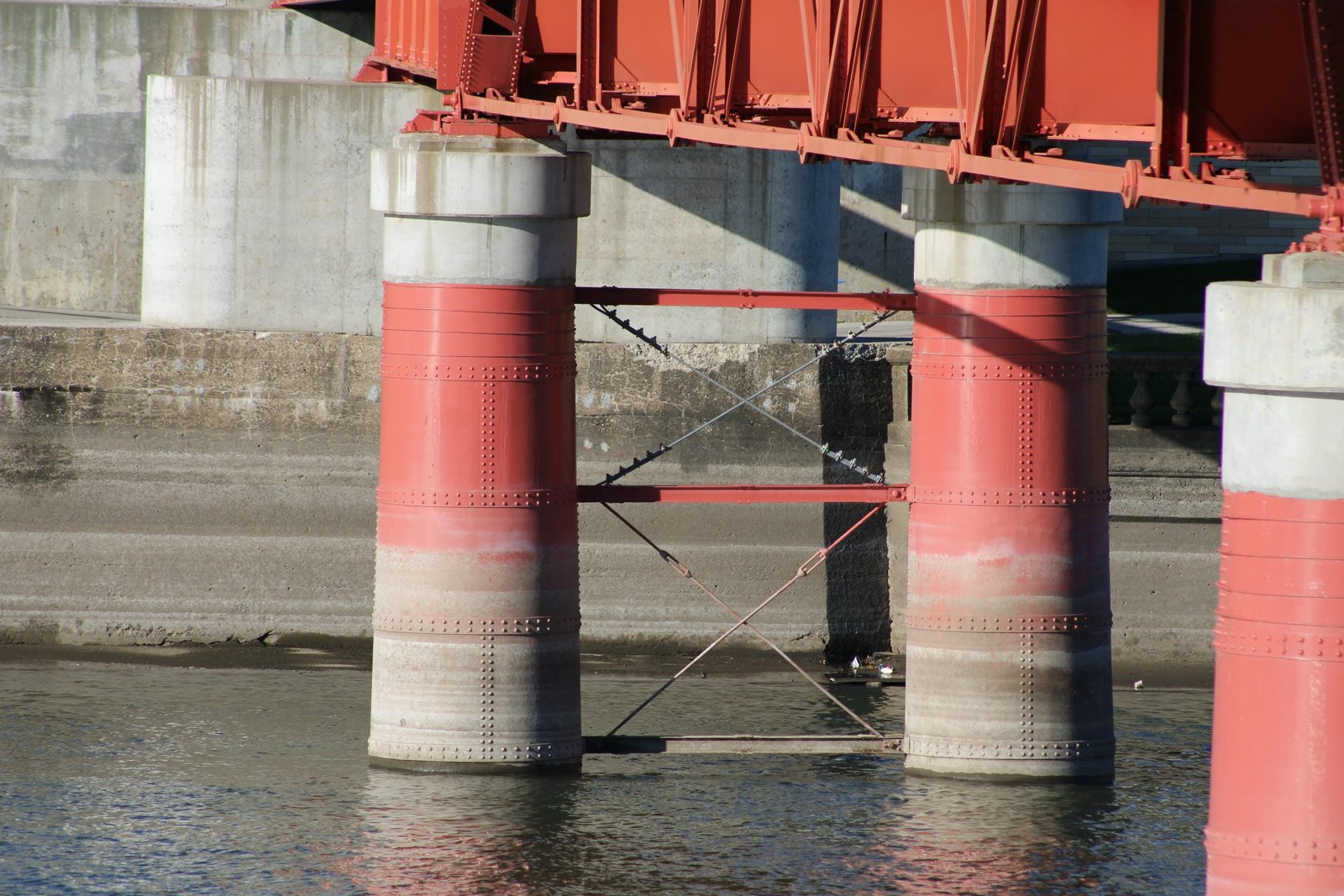
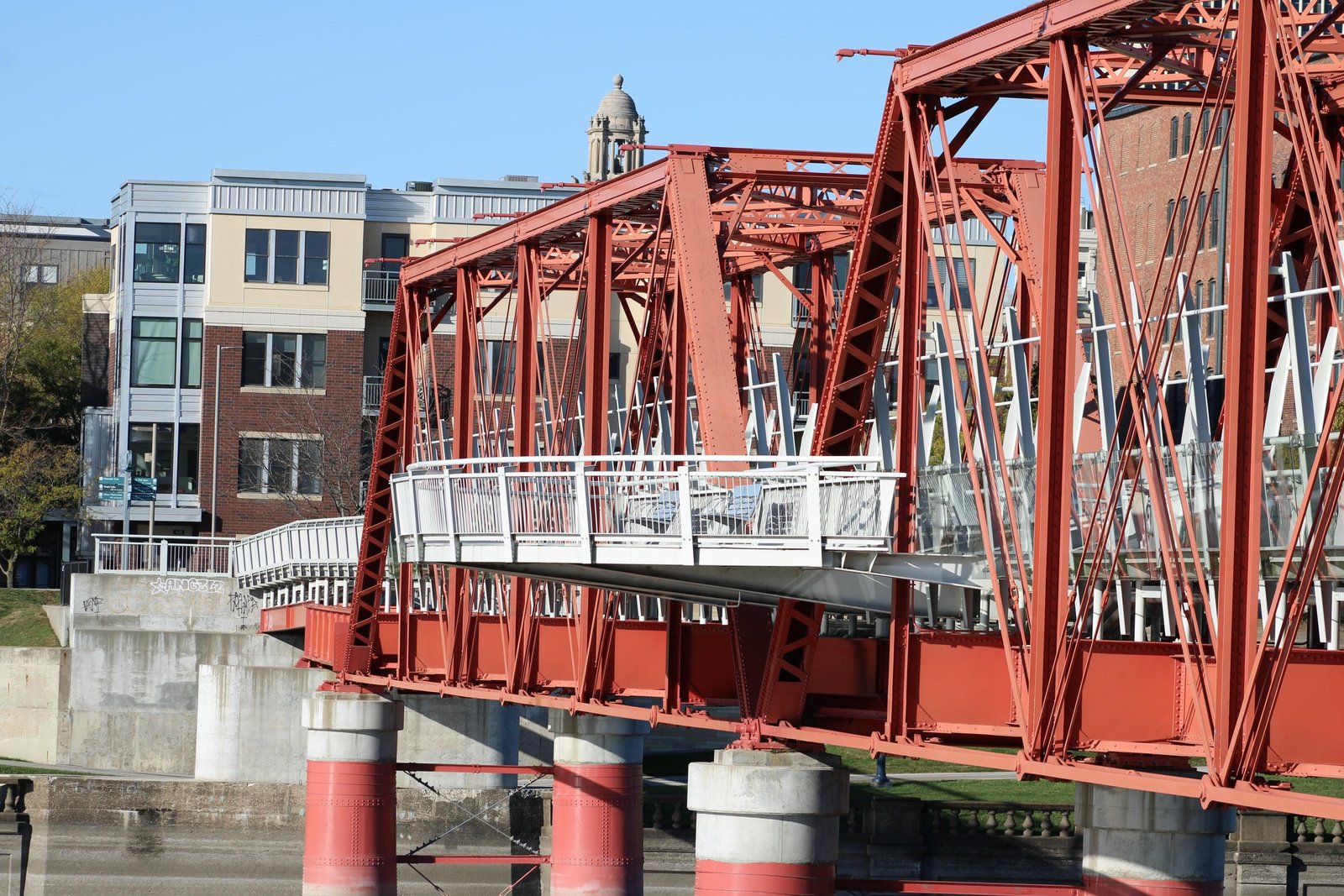
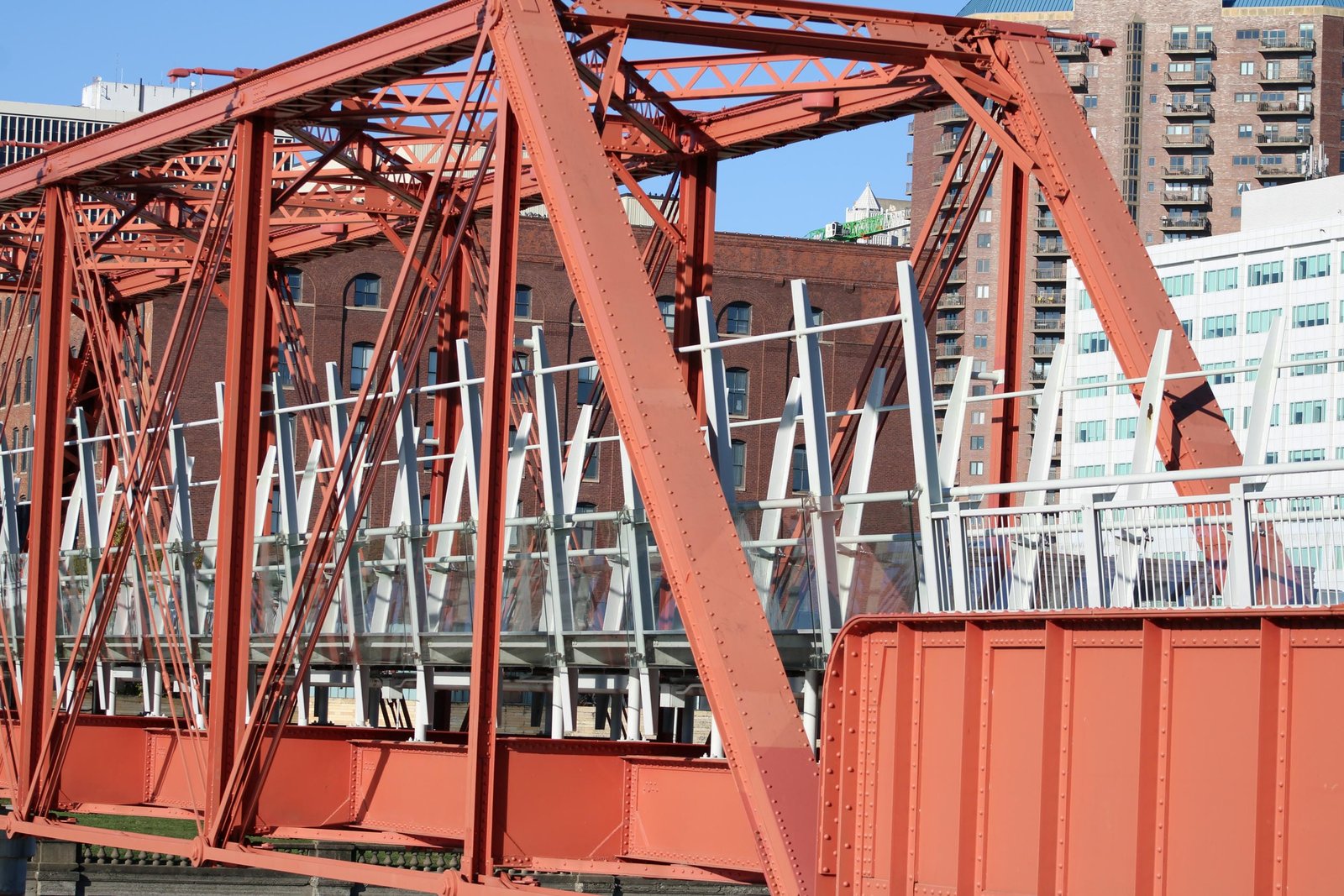
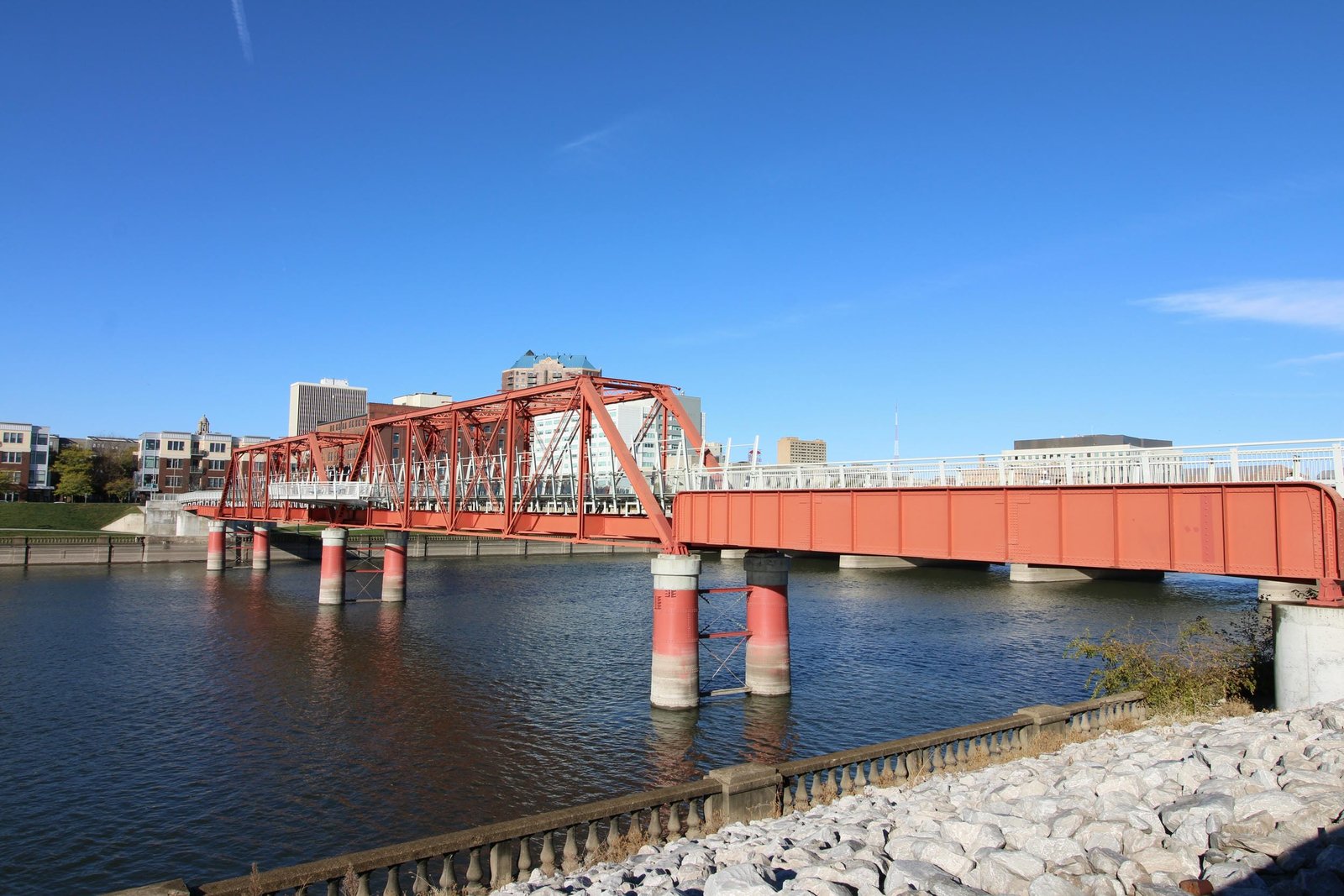
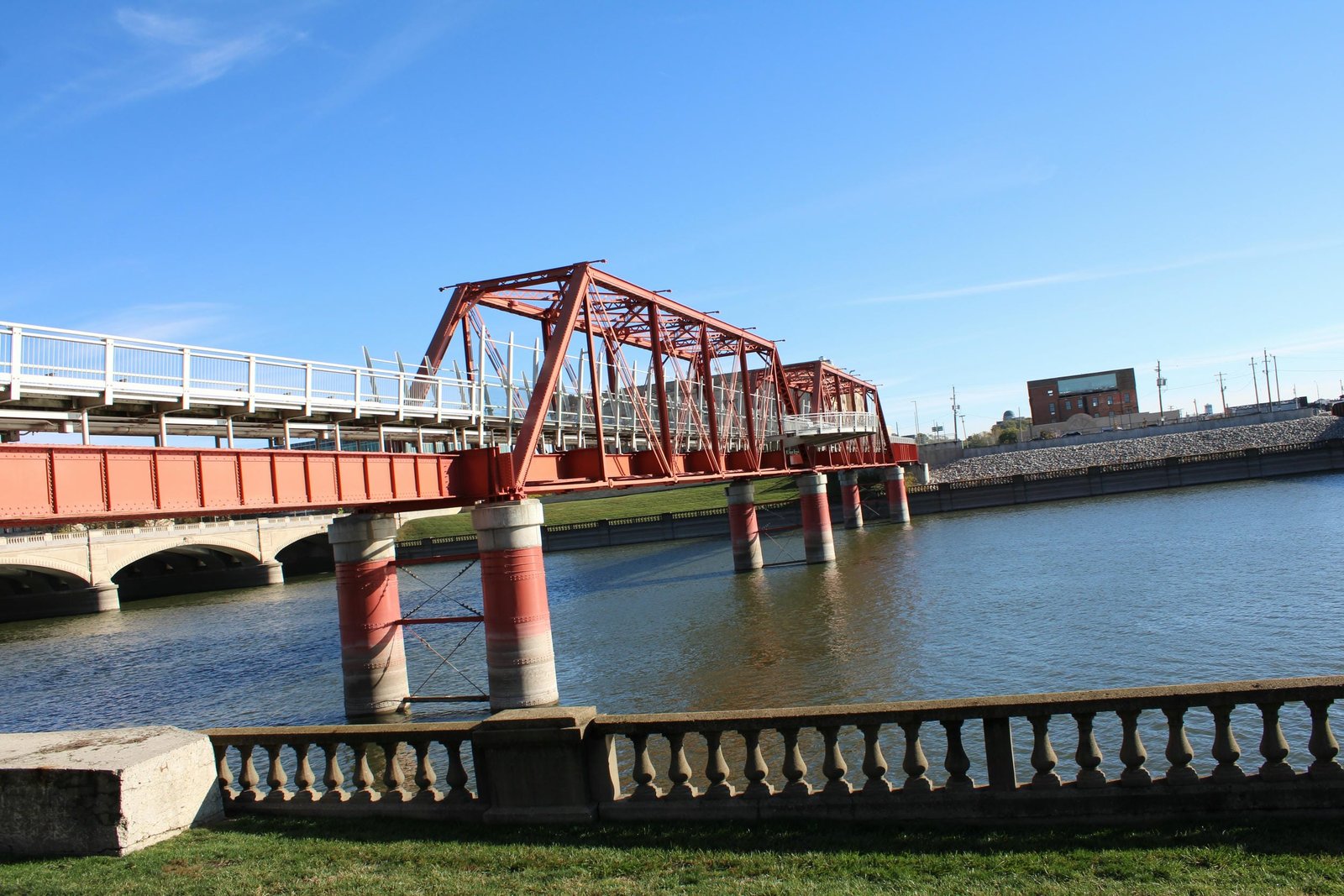
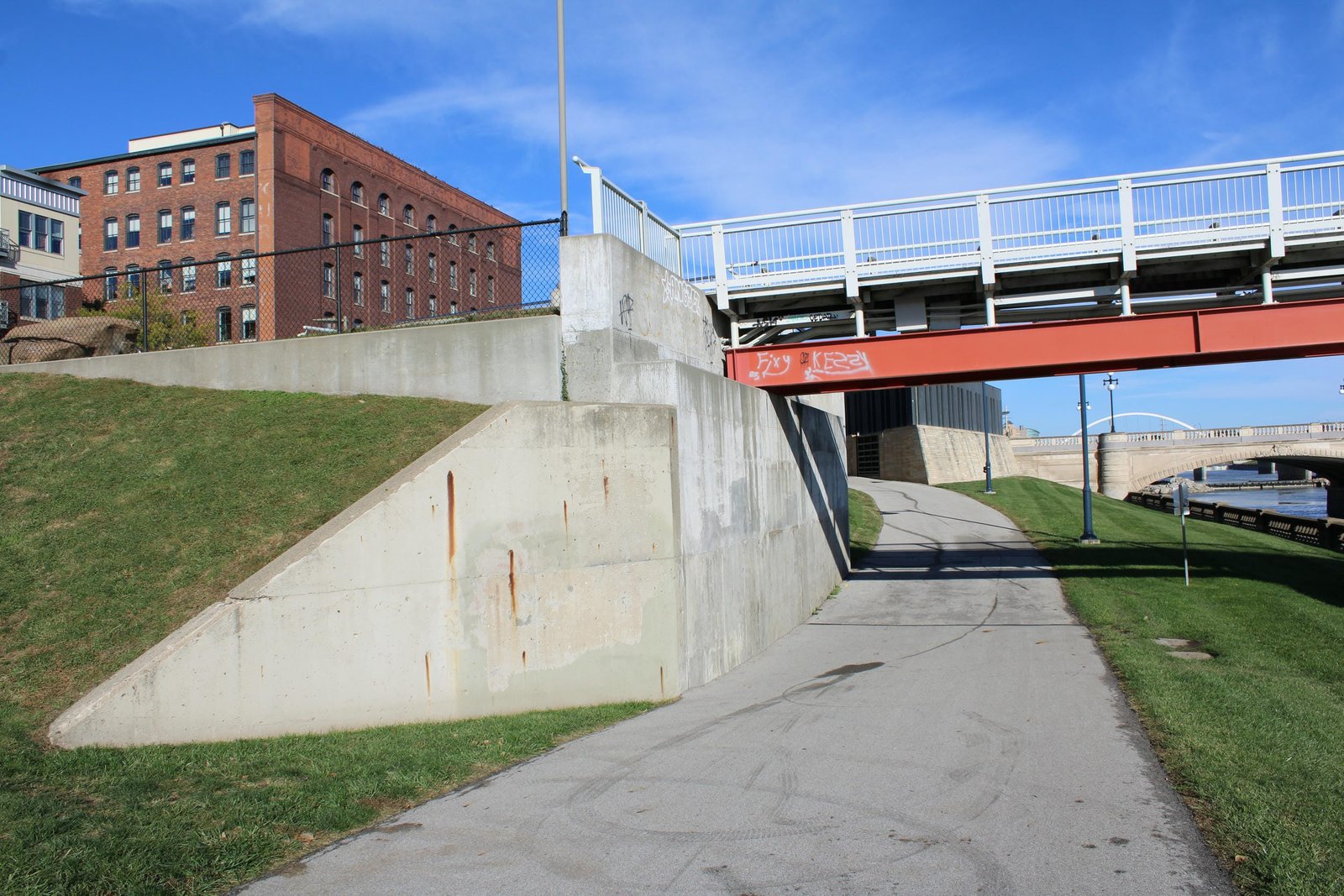
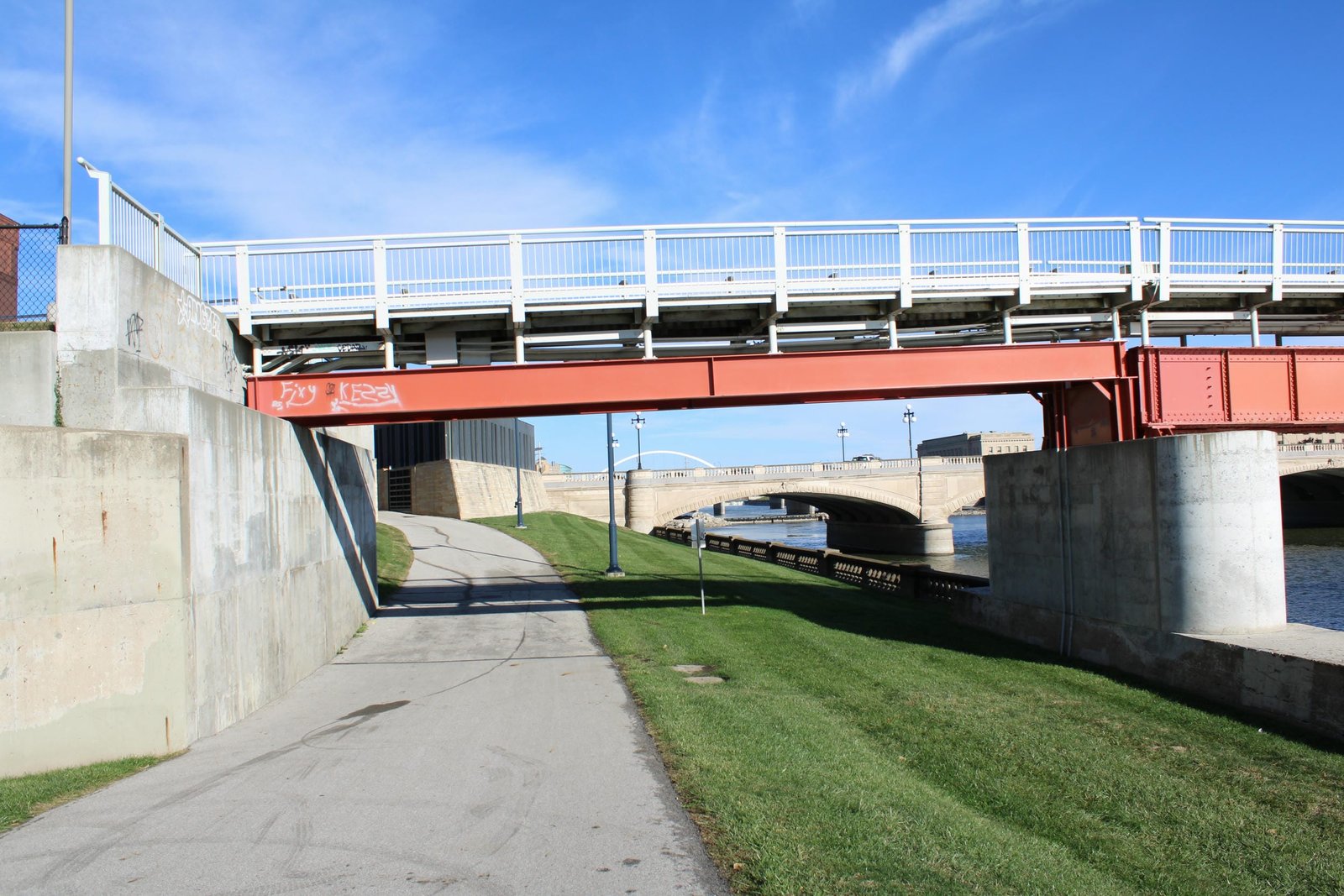
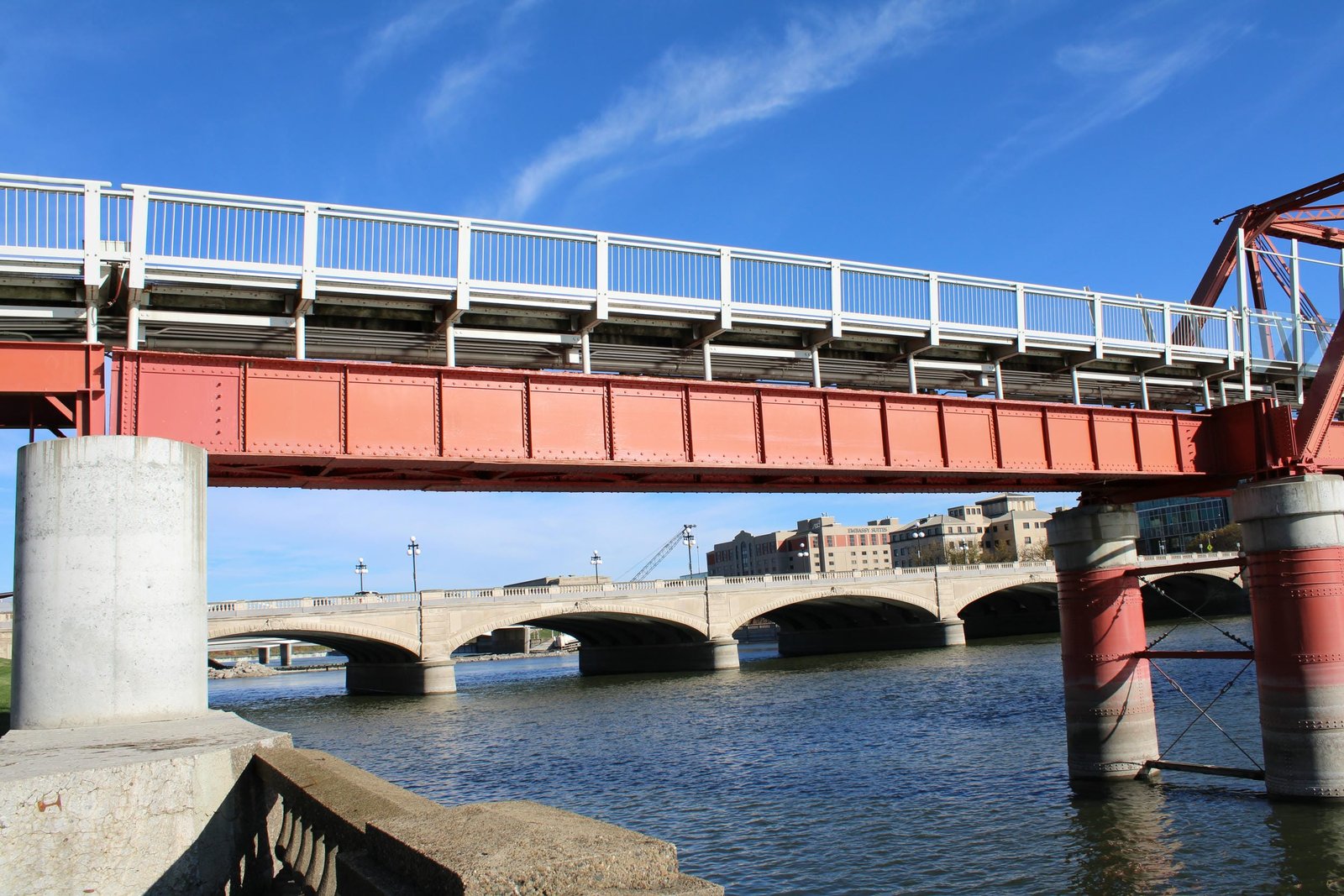
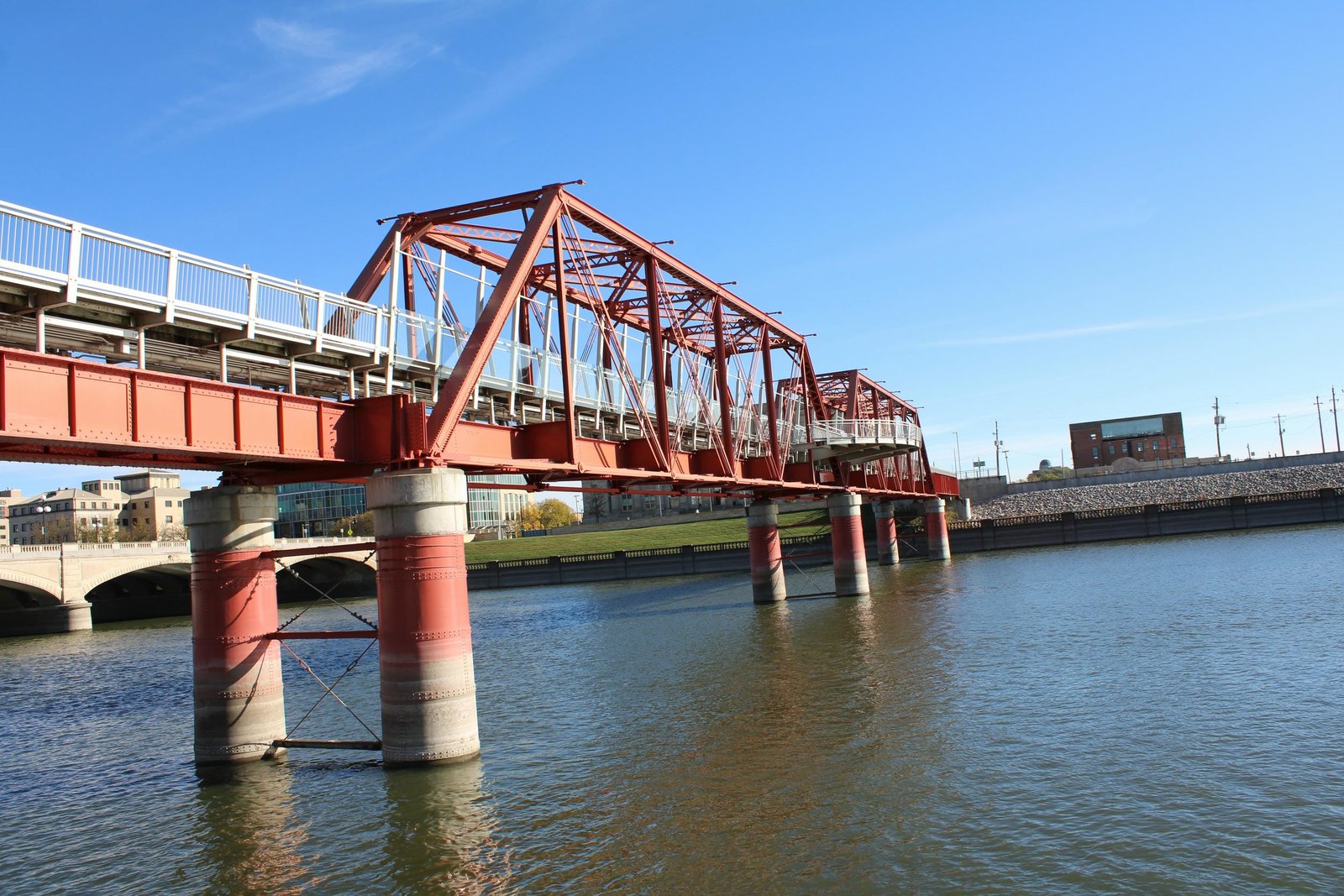
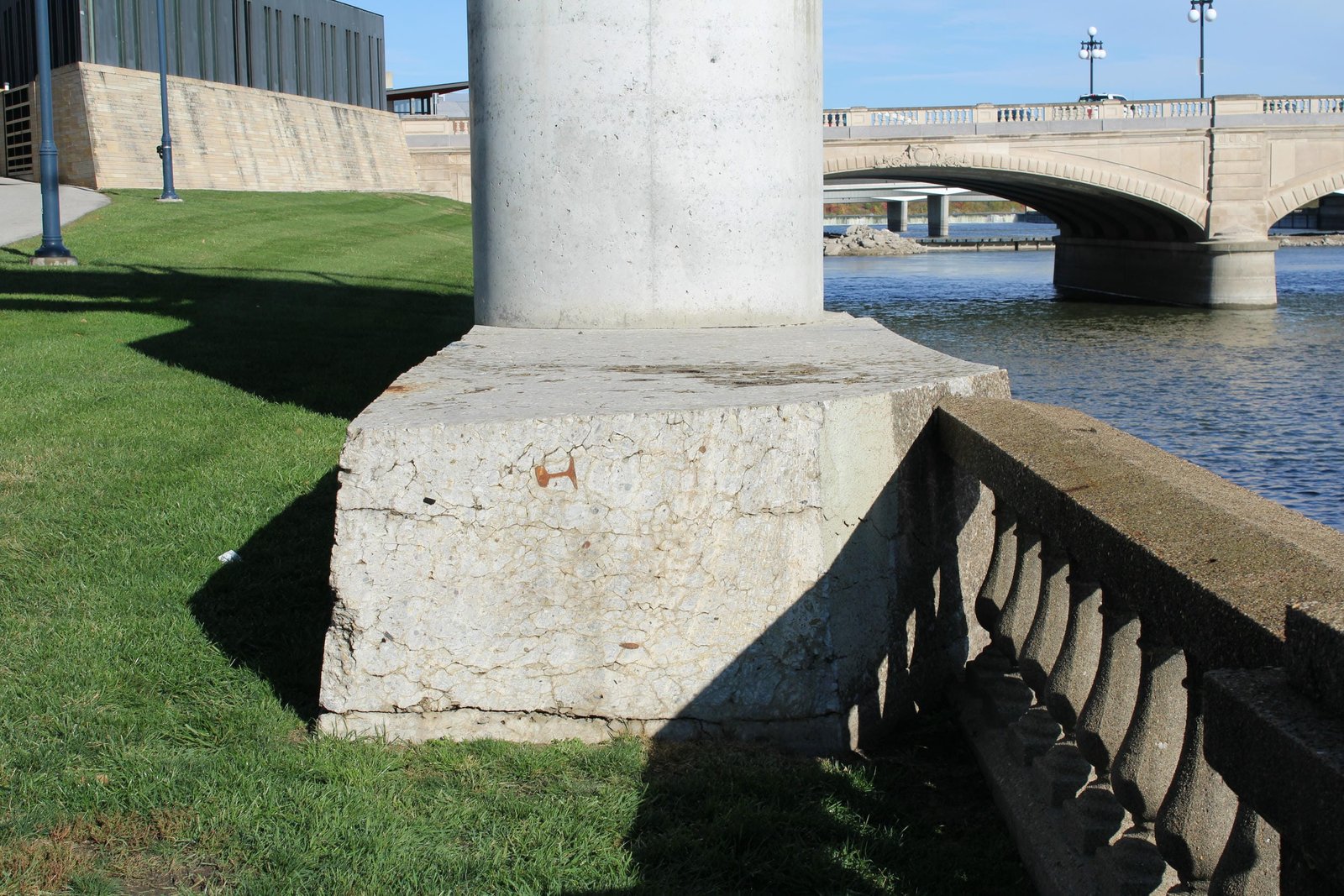
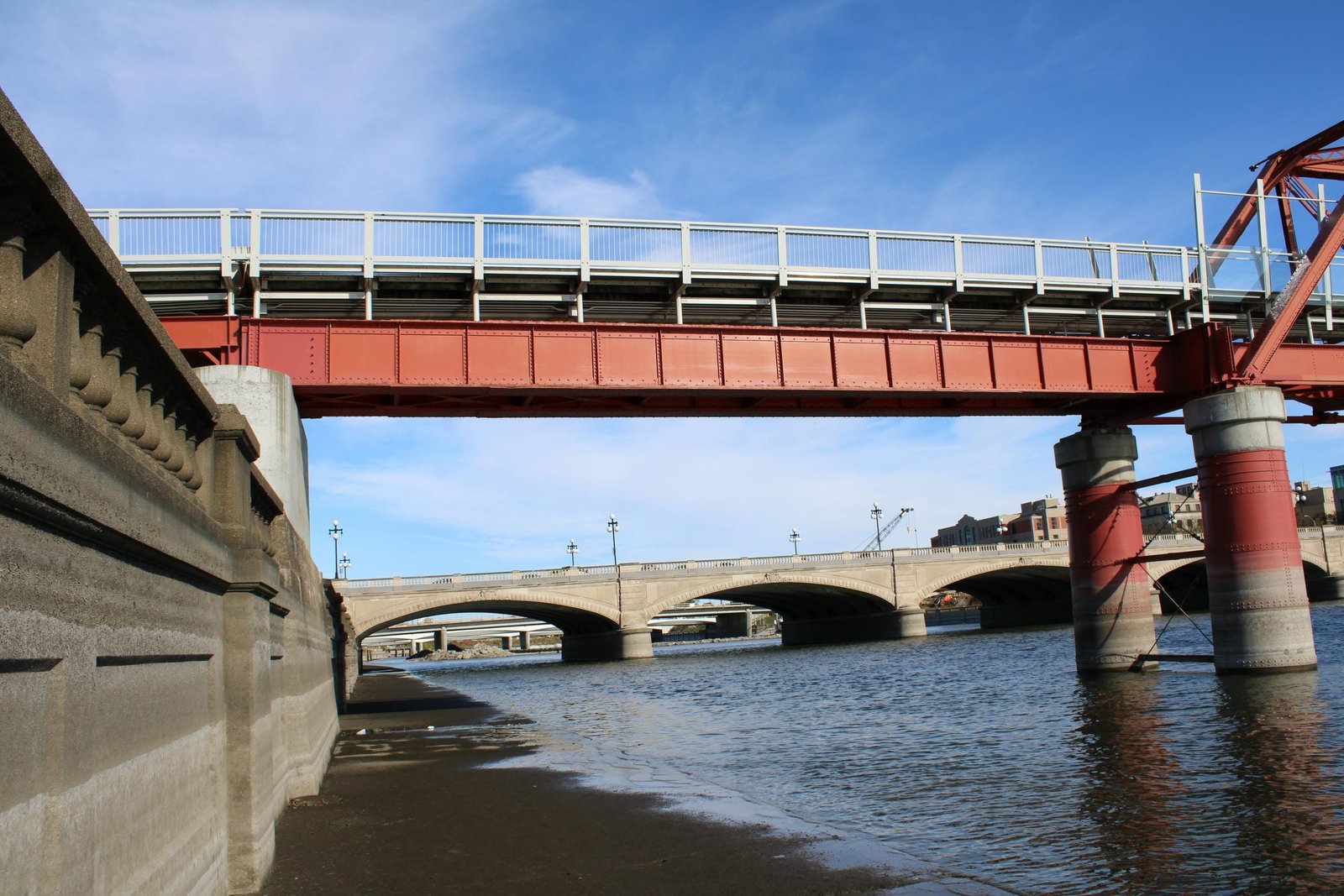
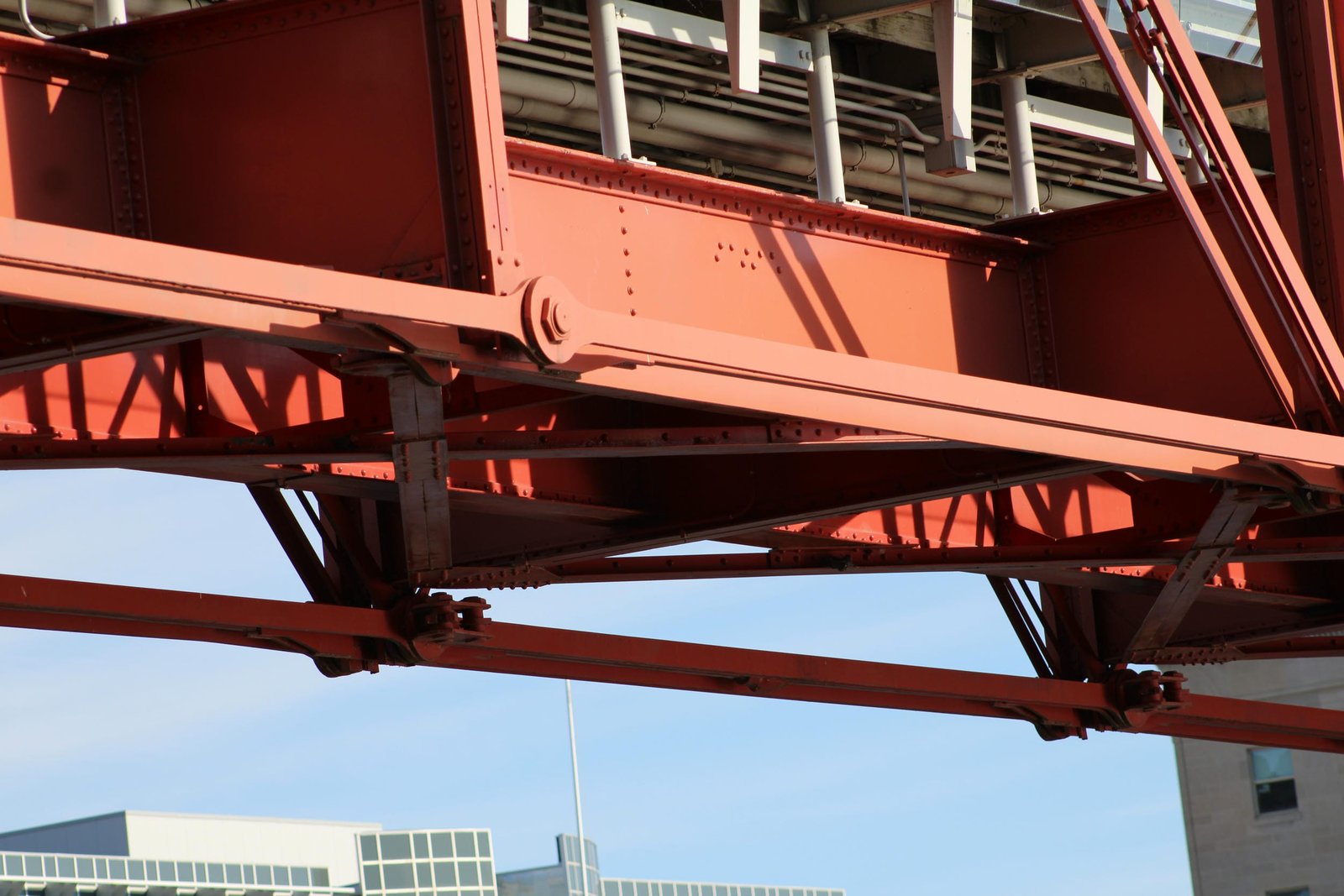
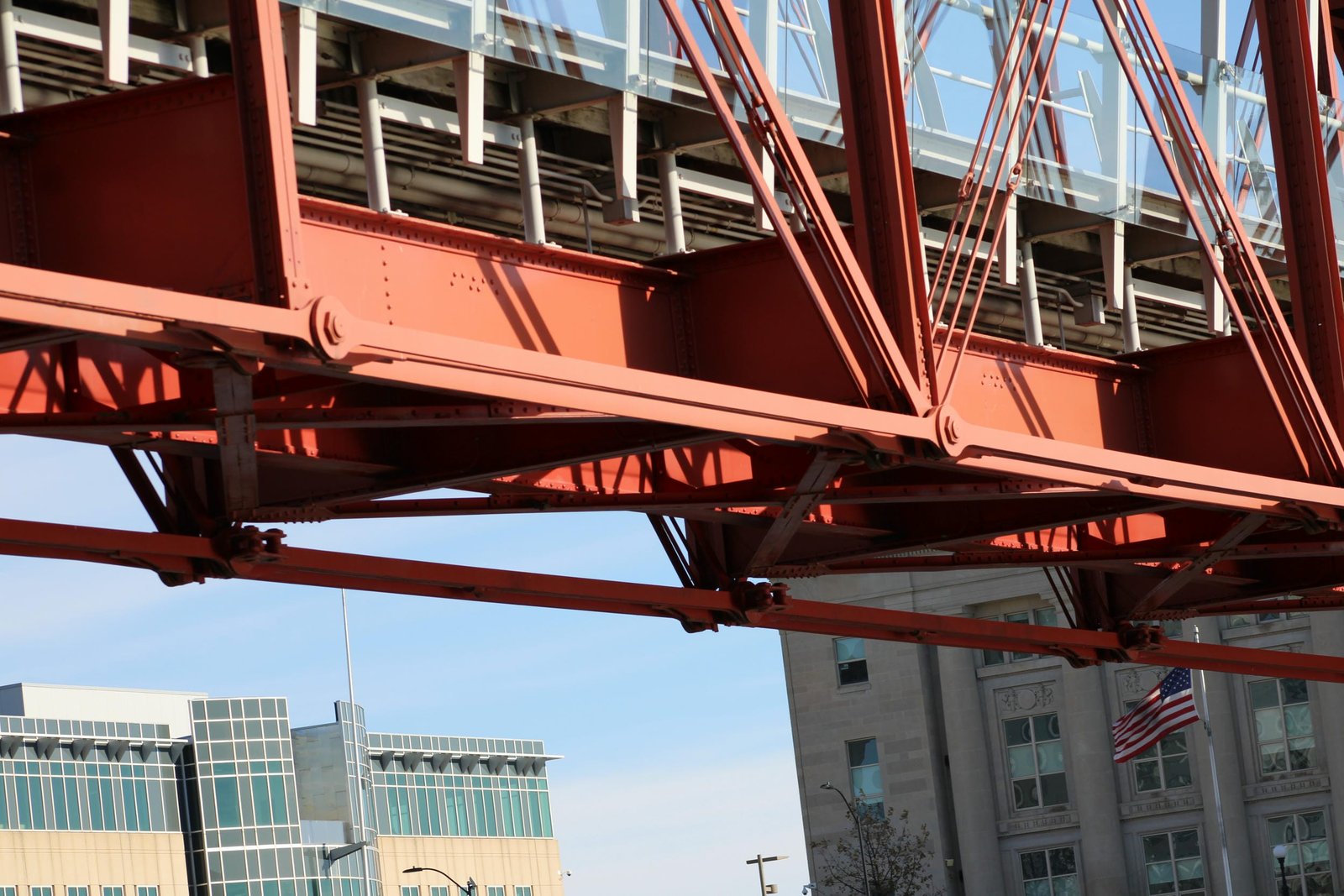
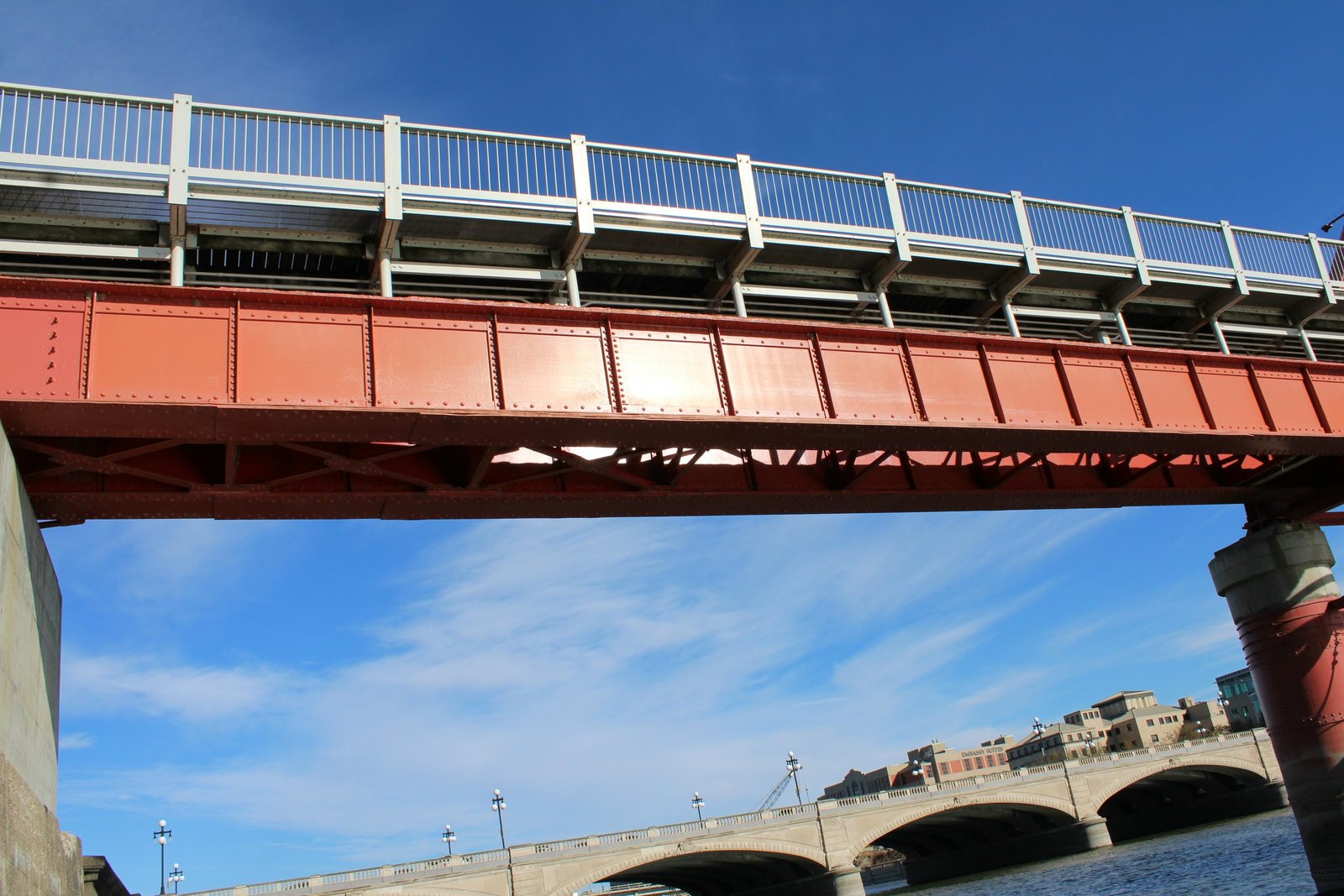
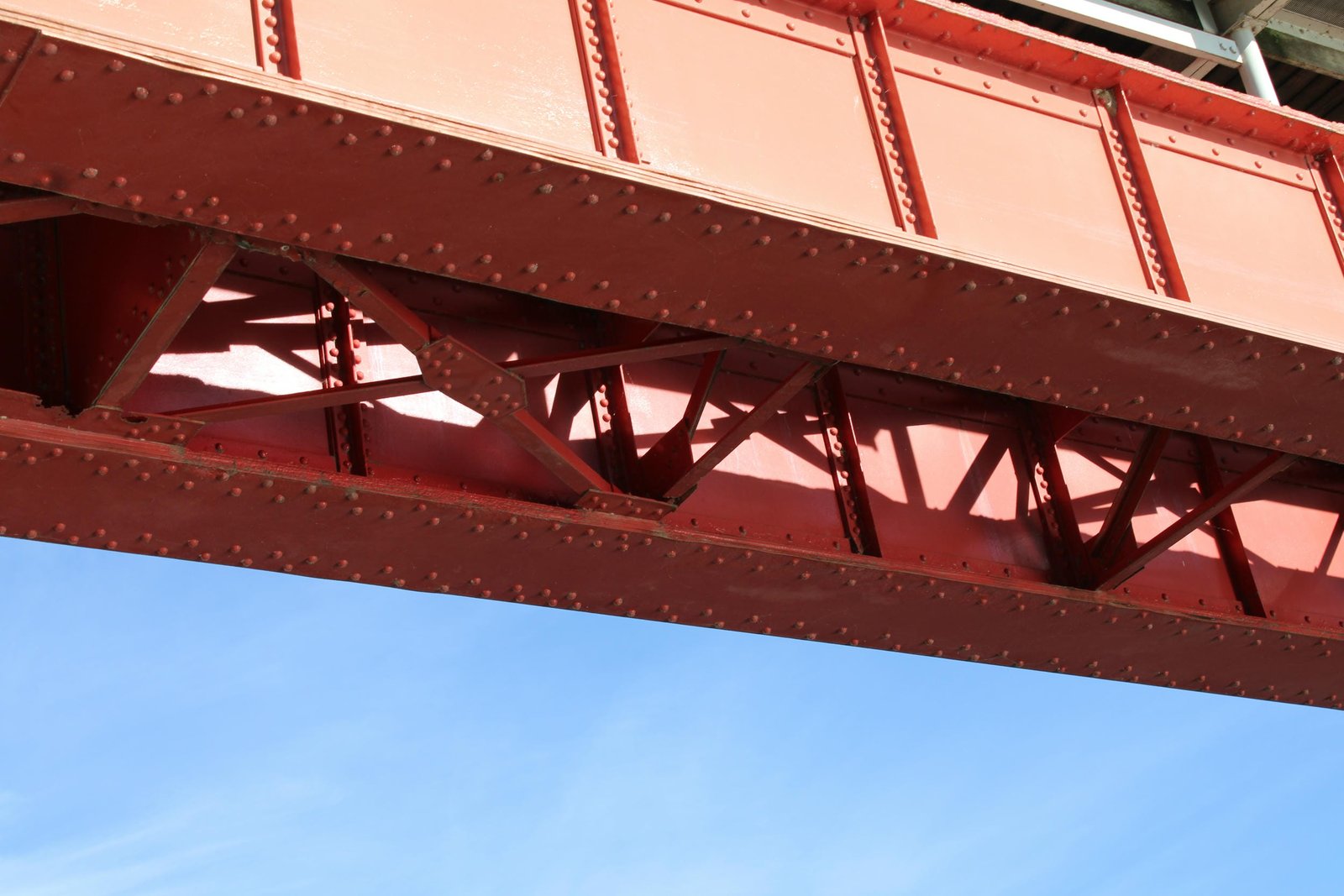
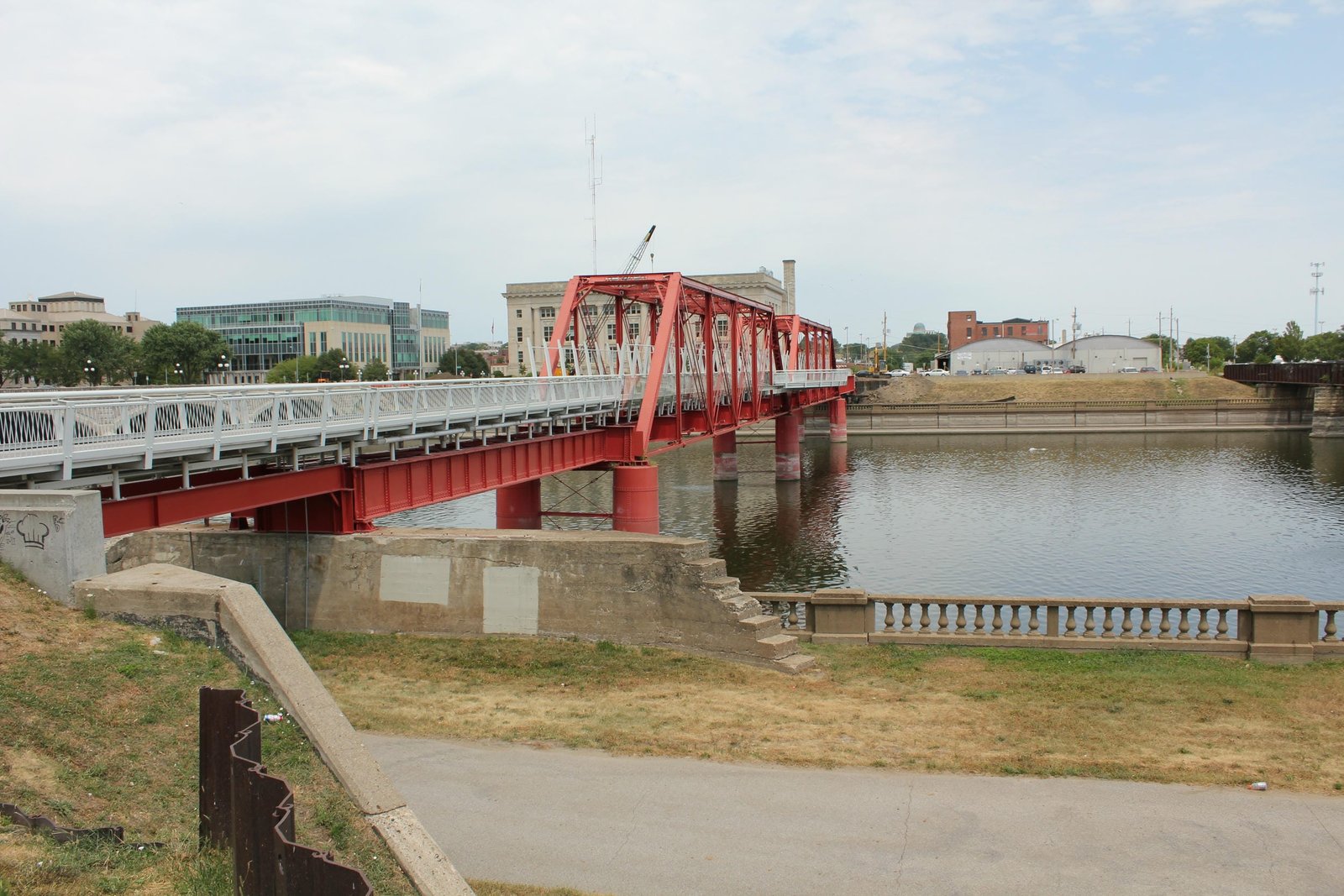
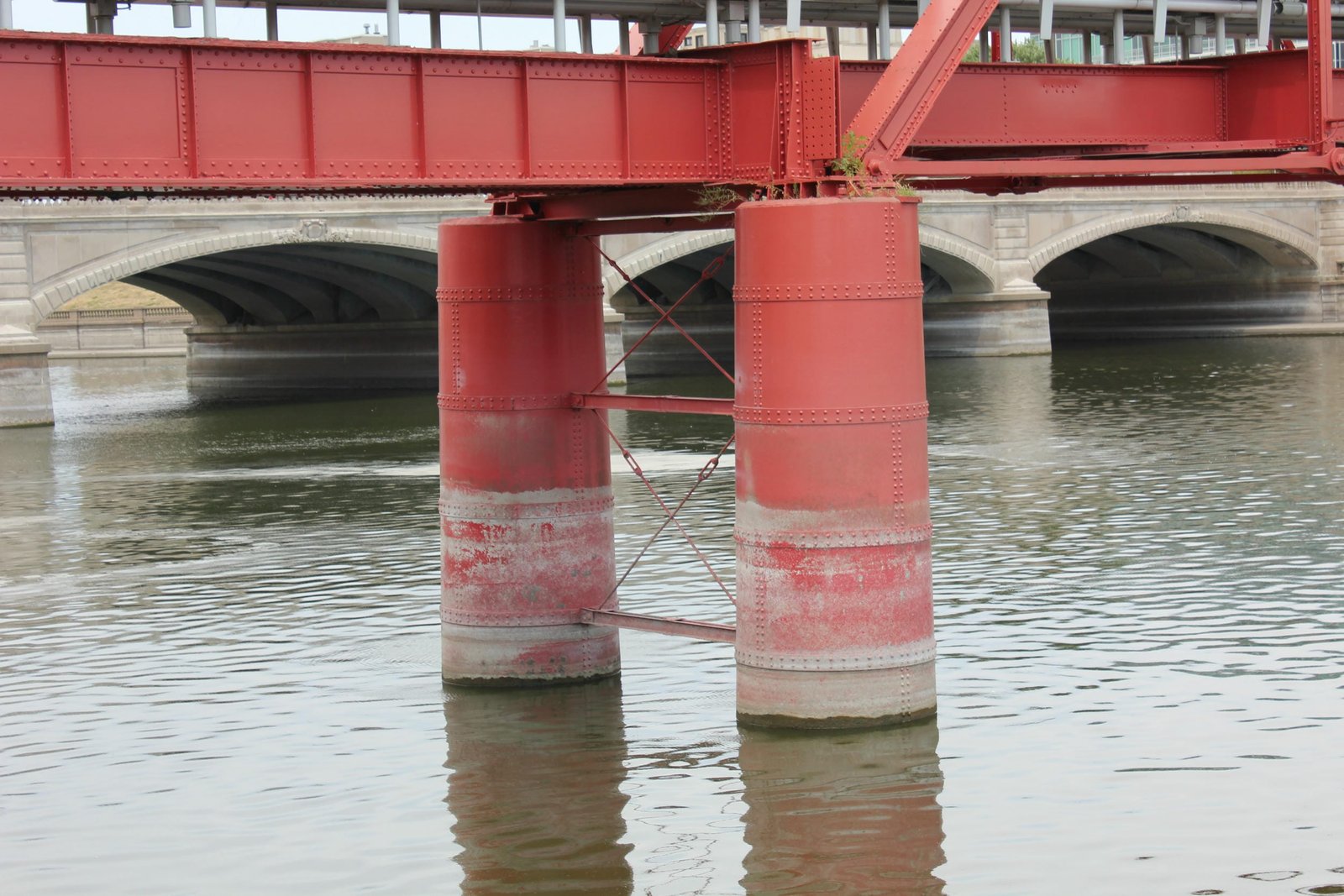
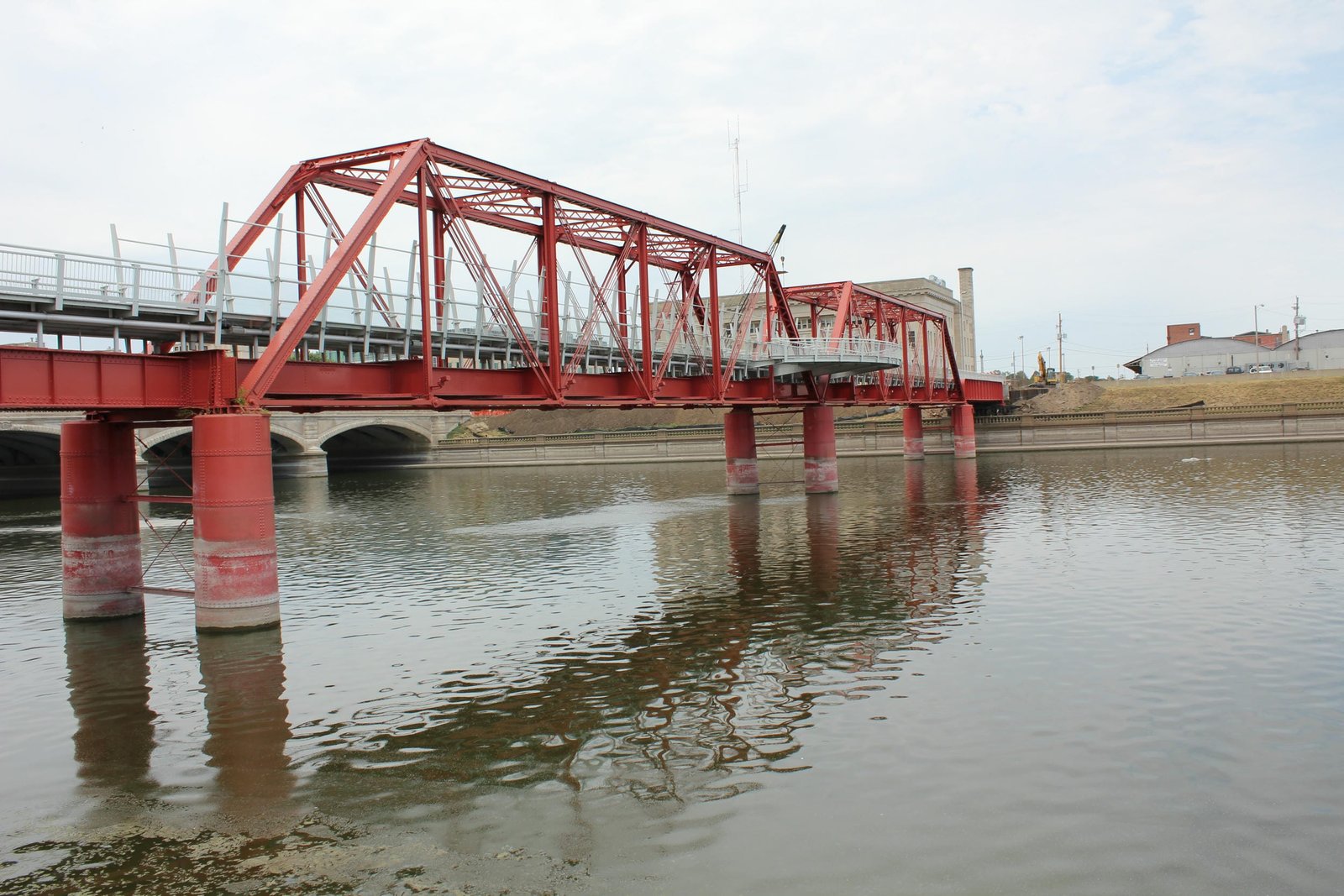
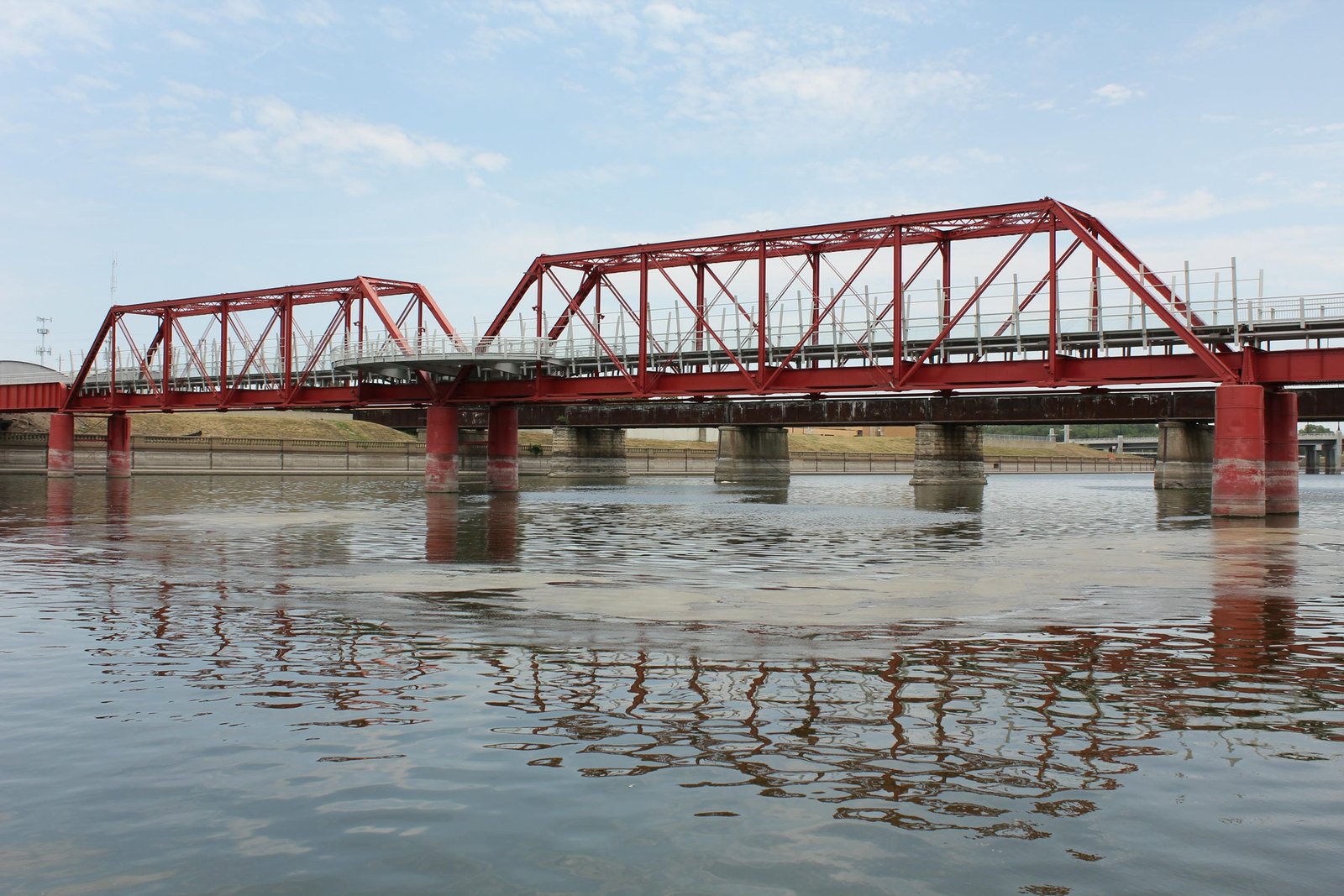
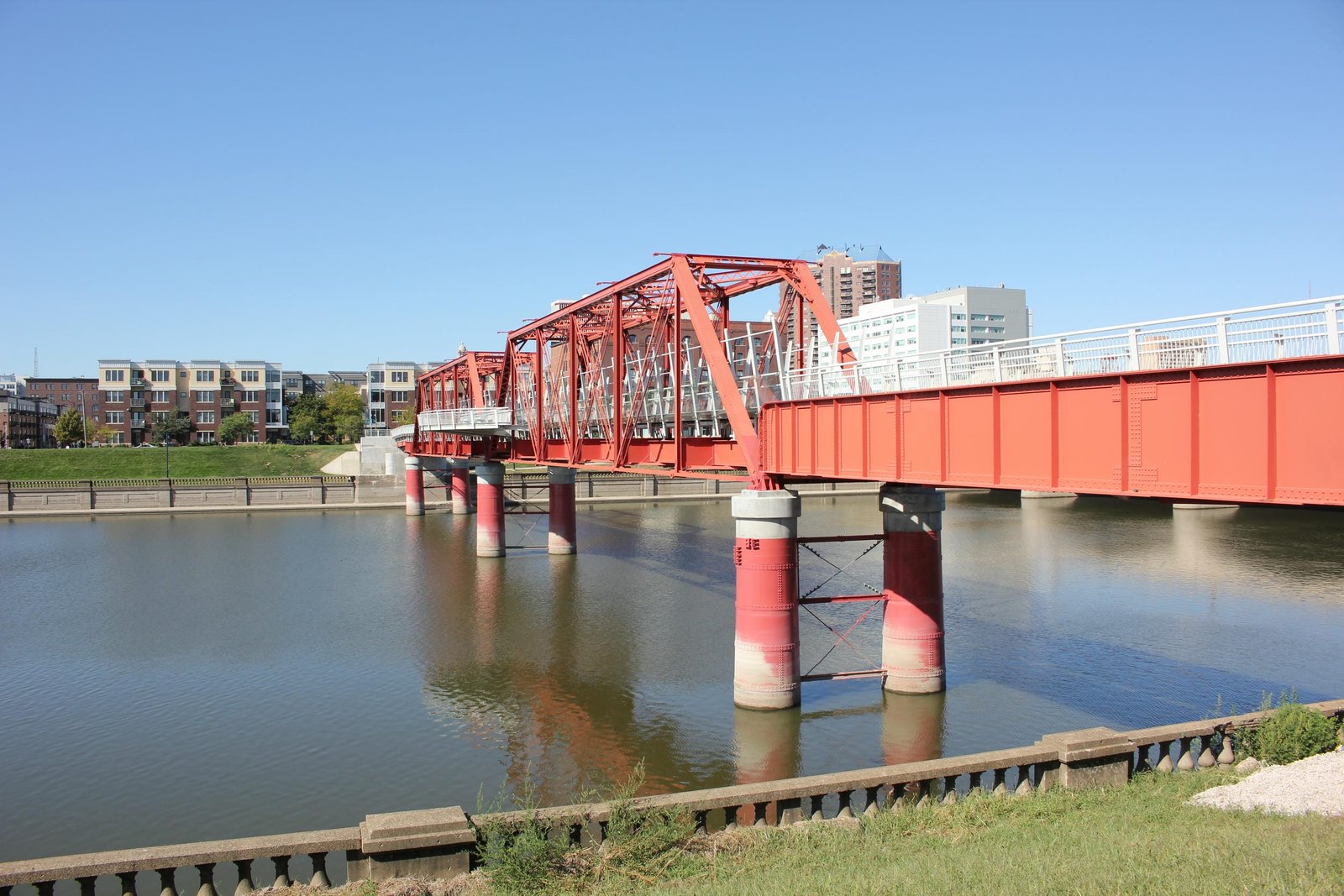
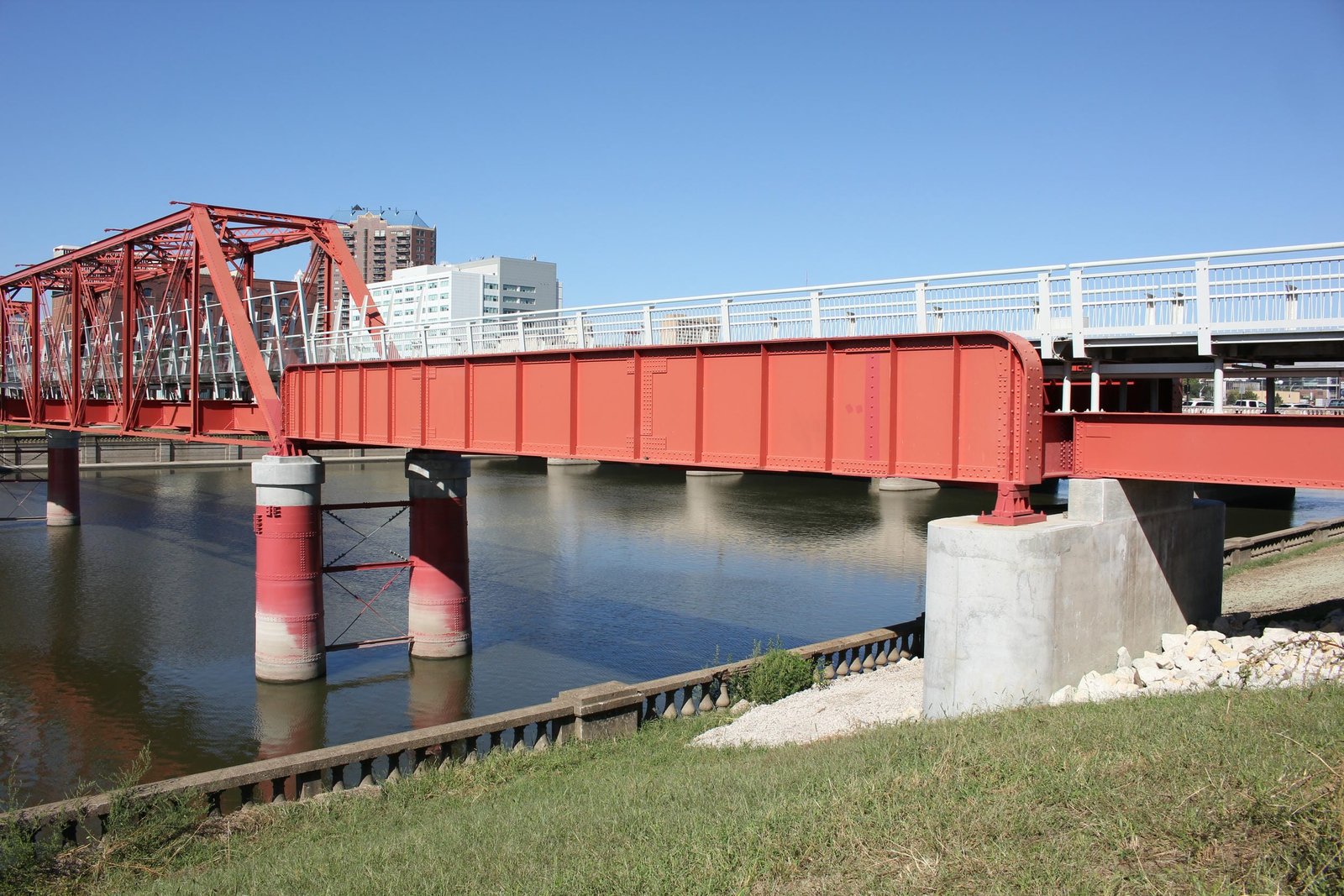
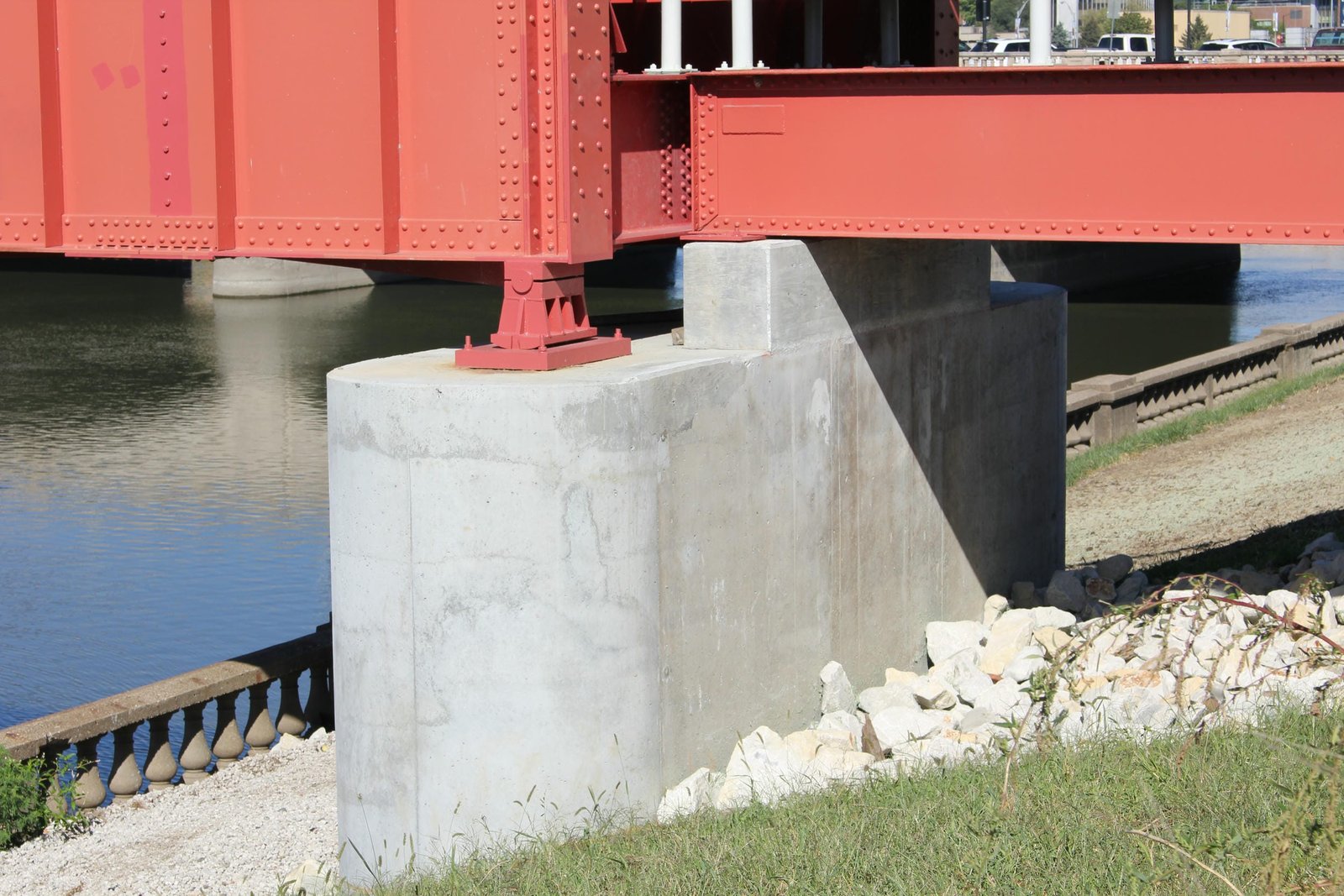
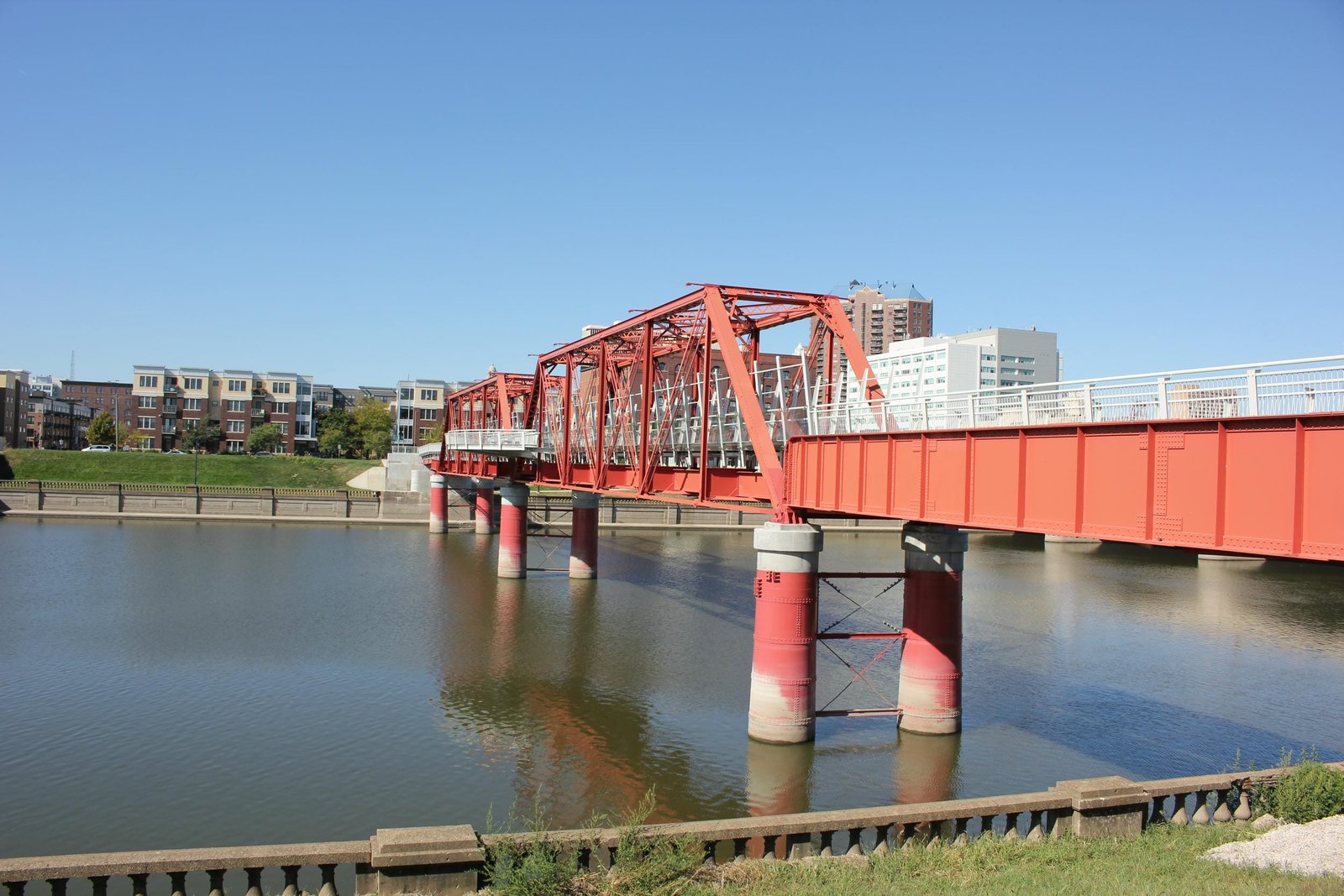
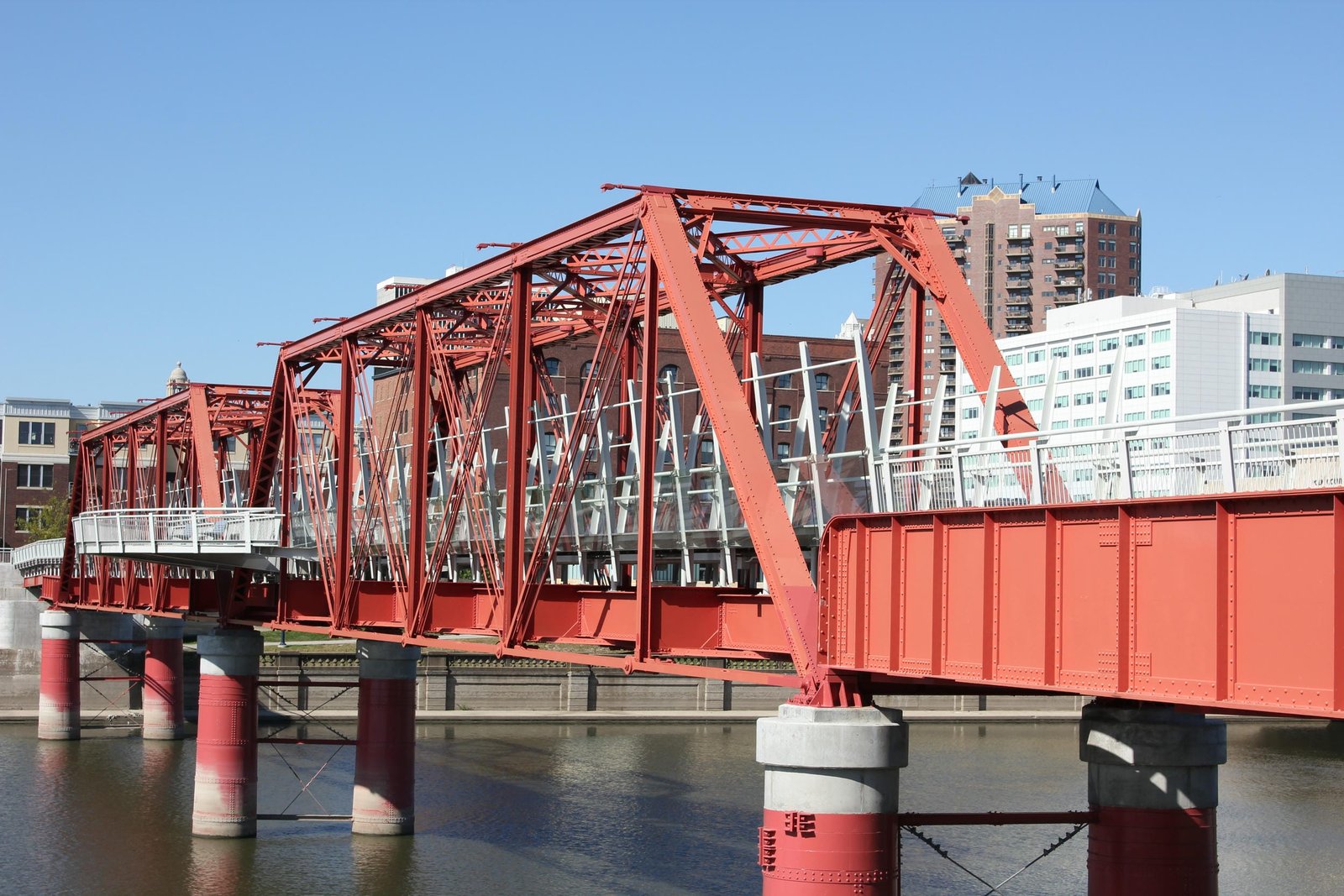
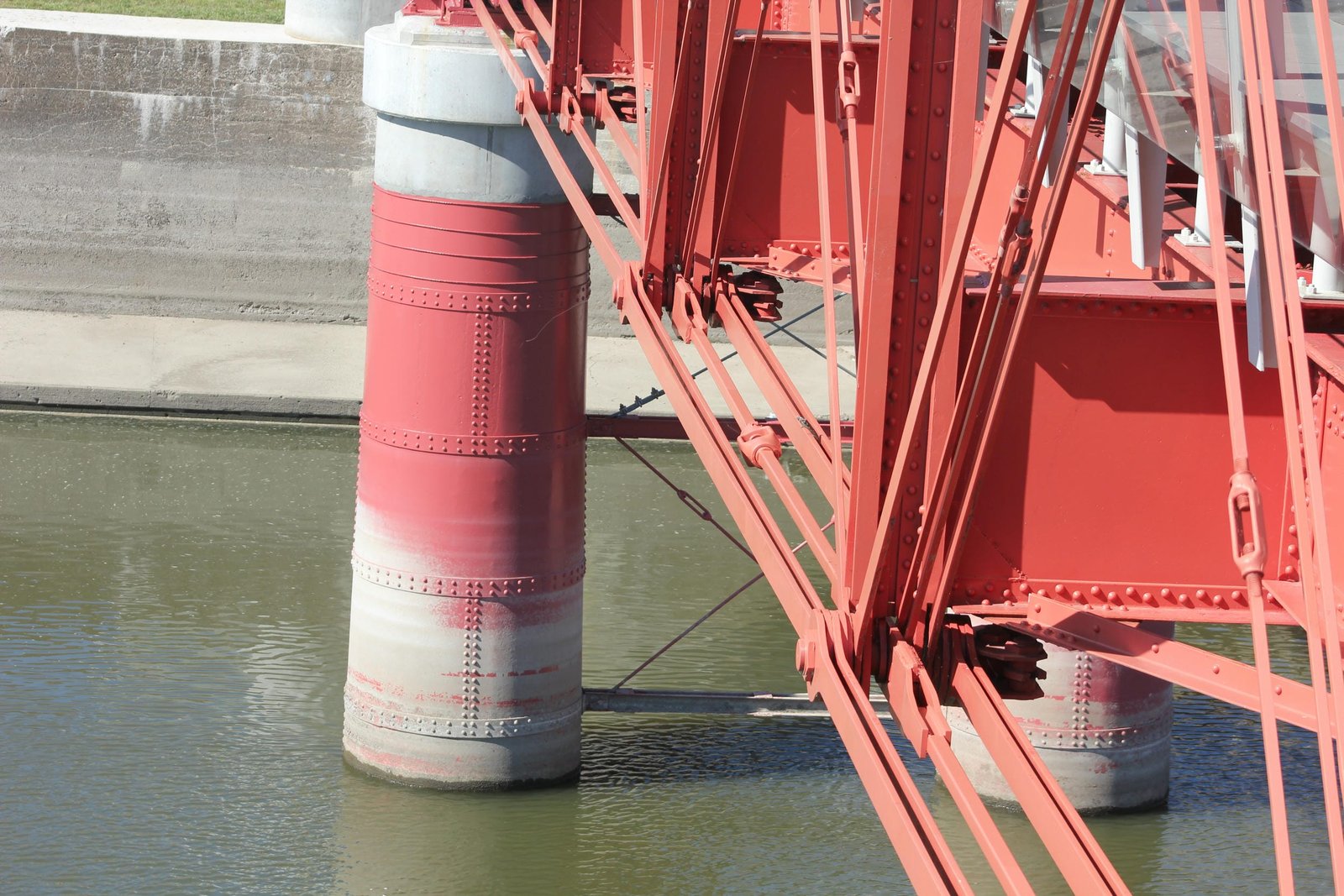
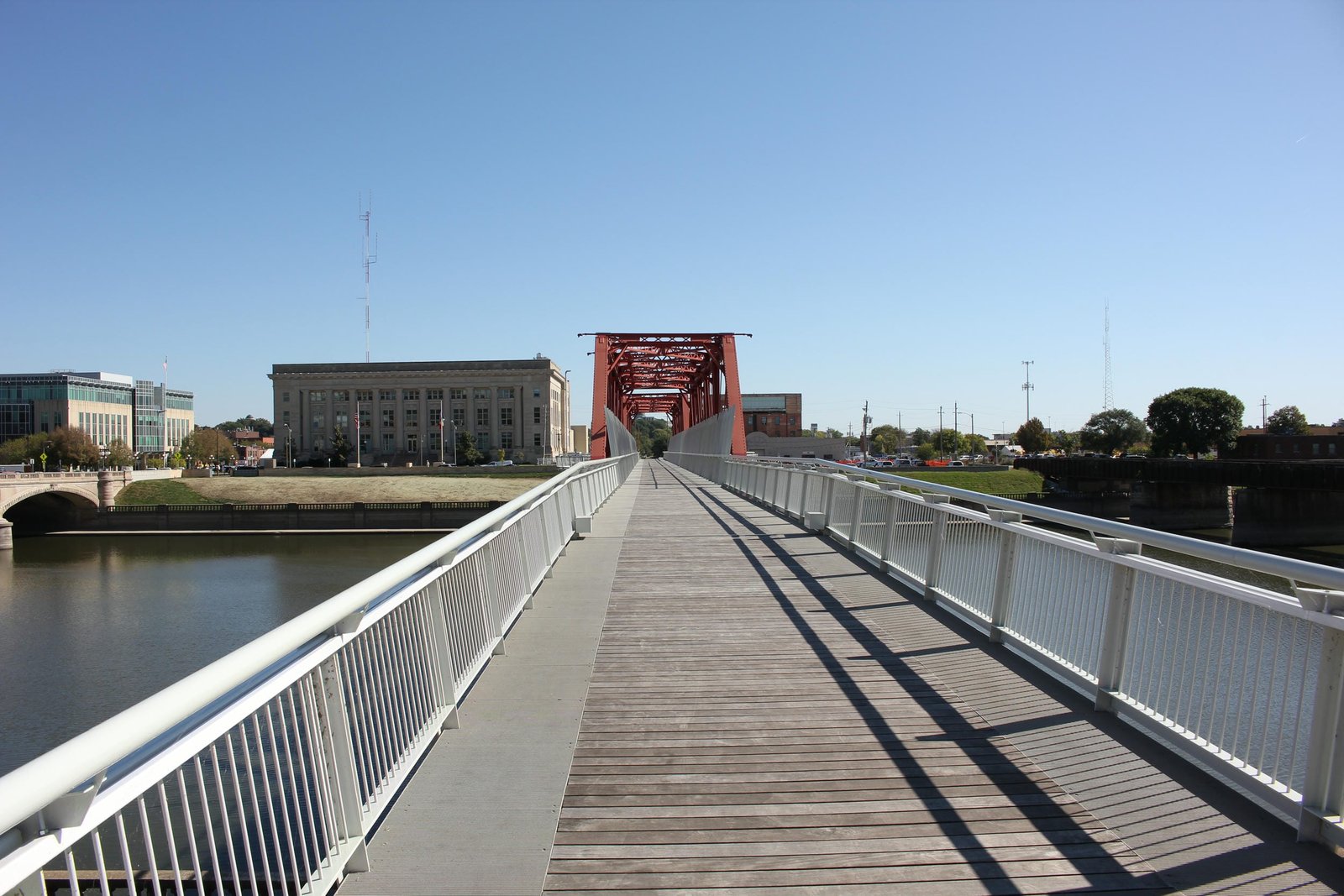
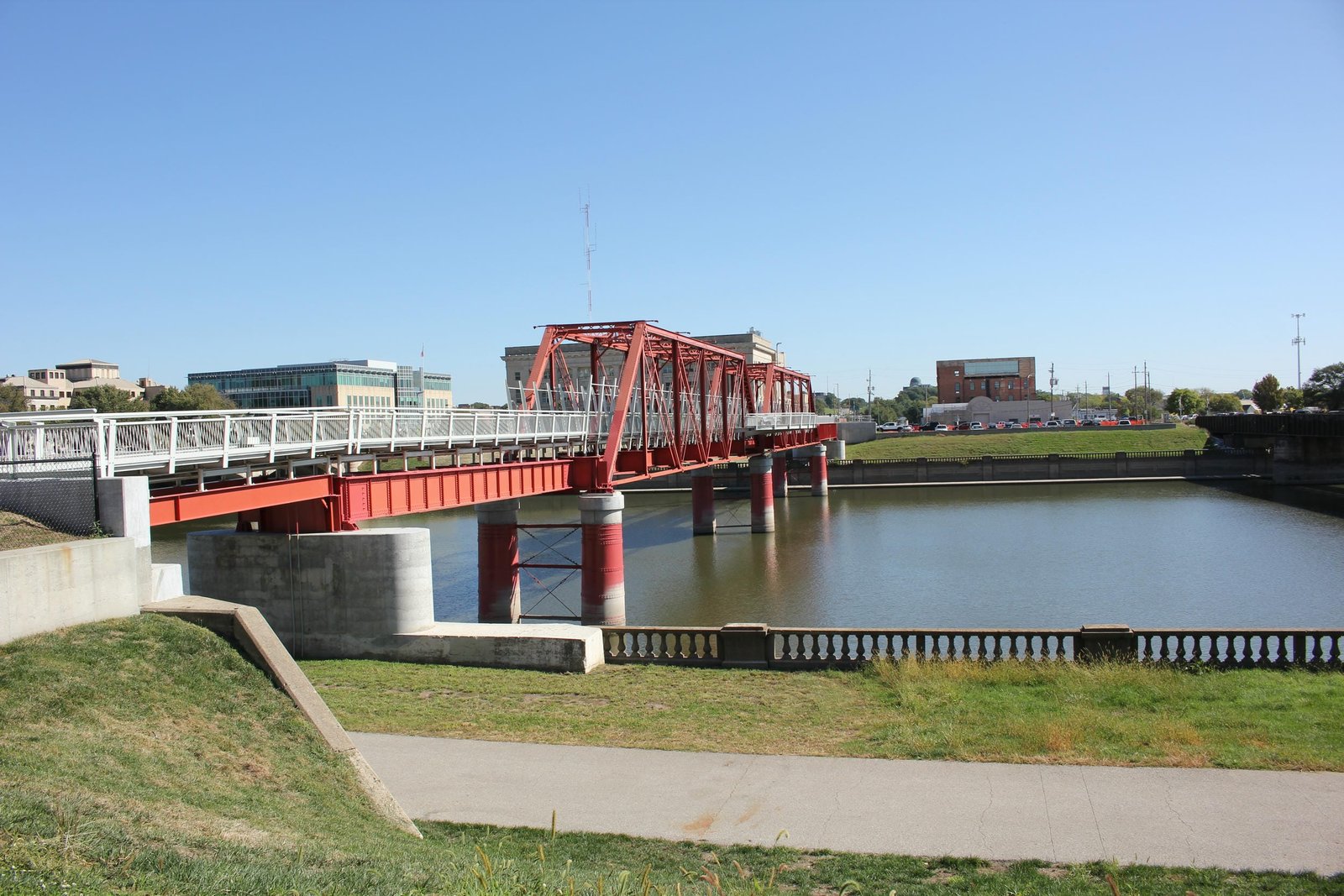
Located between Court Avenue and Vine Street in Des Moines, this iconic through truss bridge once carried the former Des Moines Union Railway across the Des Moines River. Now known as the "Red Bridge", this bridge has had a long history of alterations due to urban renewal, derailment damage, wear-and-tear and Federal rule changes. The first bridge at this location was constructed between late 1881 and early 1882 for the Wabash Railway subsidiary Des Moines & St. Louis Railway as part of the Wabash expansion in Iowa. This bridge was completed in an astonishing 36 calendar days, and was regarded as the fastest bridge constructed in Iowa at the time. This bridge consisted of three 152-foot wooden Howe truss spans, set onto four iron cylinder piers and approached by timber pile trestle spans on either end. The first bridge was constructed by H.S. Hopkins & Company, a notable St. Louis firm which also constructed a bridge across the Des Moines River at Harvey, Iowa as part of the same project. In 1887-88, the line was sold to the Des Moines Union Railway, which was a switching railroad that was jointly owned by the Wabash and the Chicago, Milwaukee & St. Paul Railway (Milwaukee Road). By the early 1890s, the wooden truss was no longer acceptable for railroad use, and would be replaced by a new iron bridge. In 1891, the main portion of the bridge was replaced by three 152-foot iron Pratt through trusses, which reused the cylinder piers and retained the timber pile approaches.
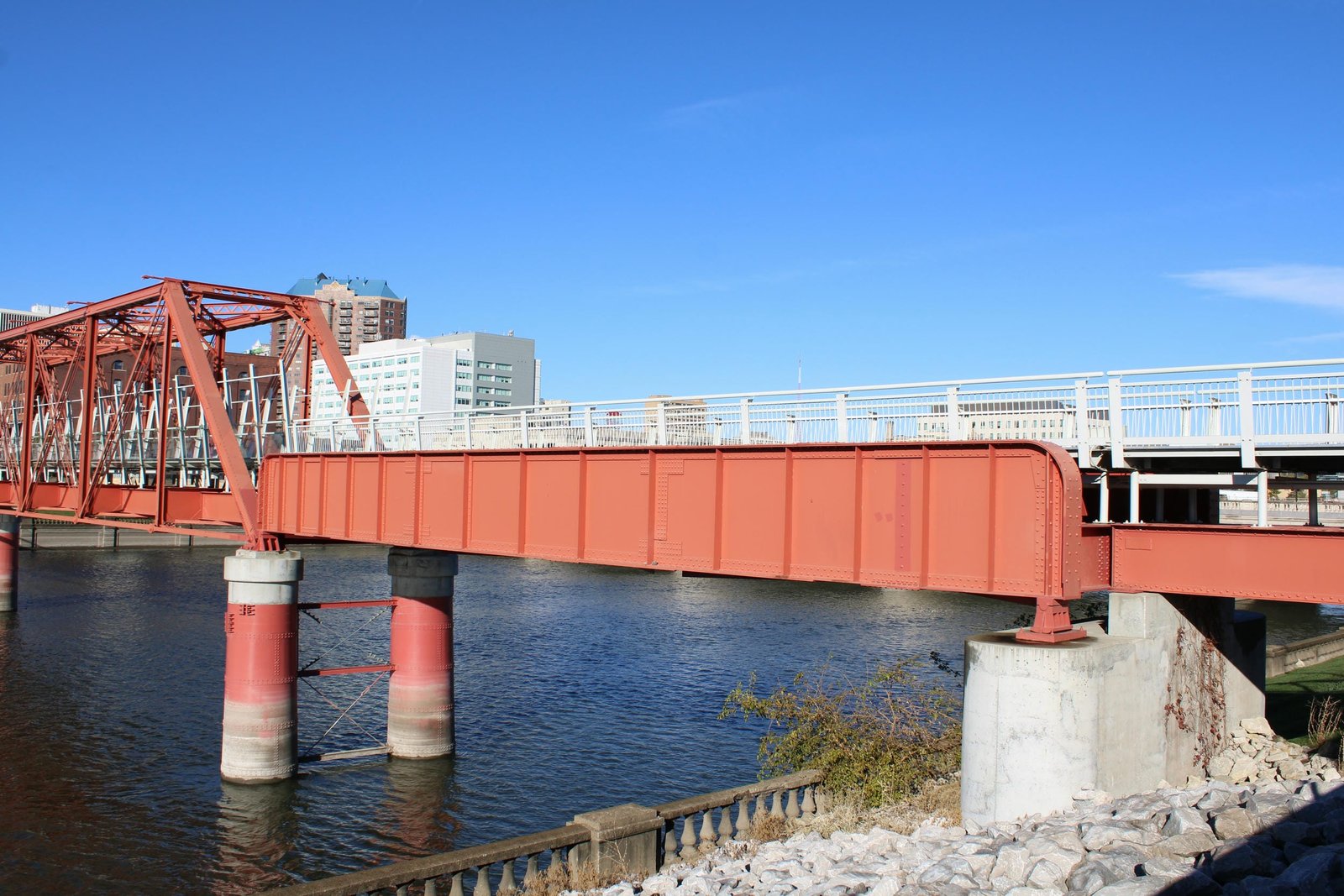
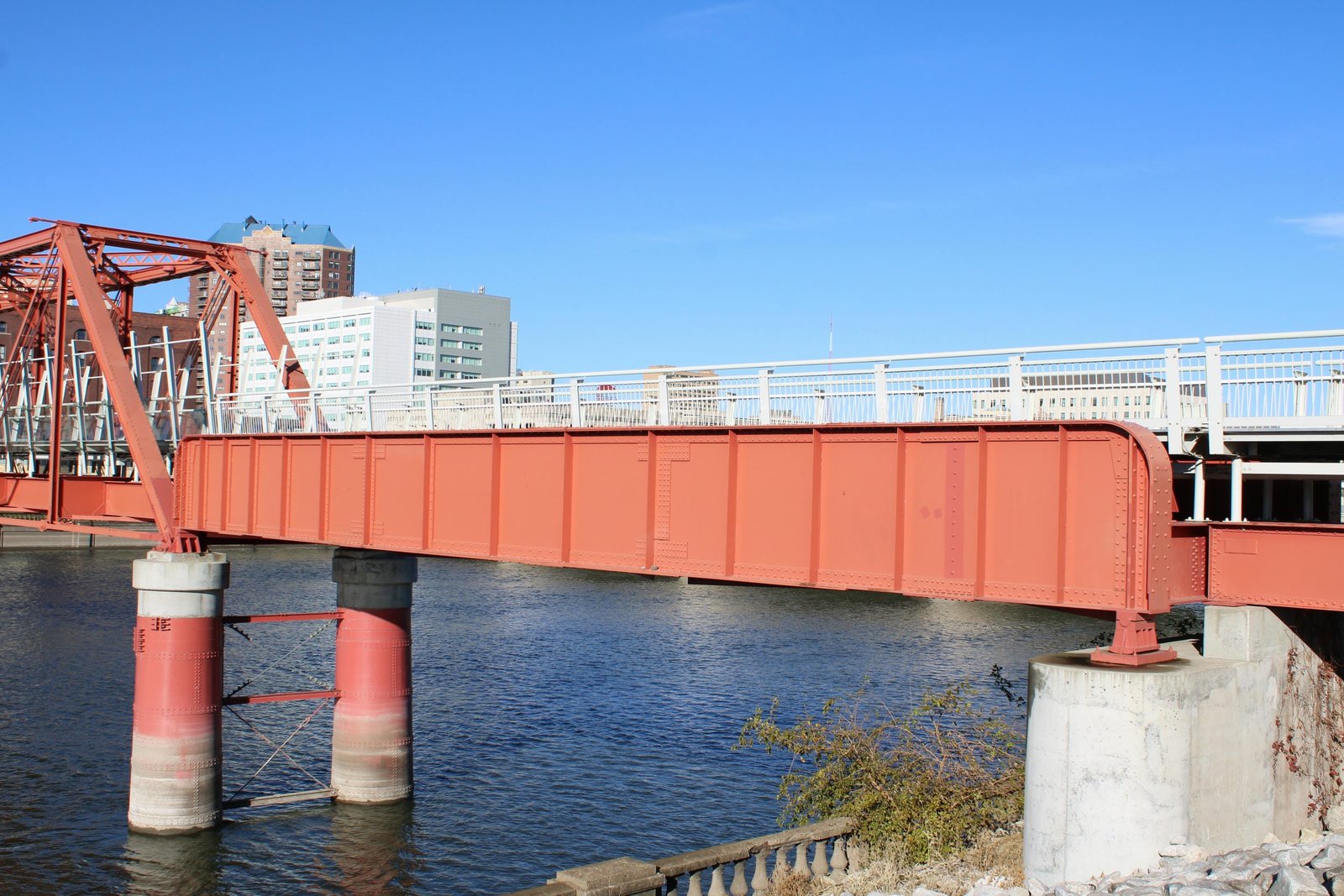
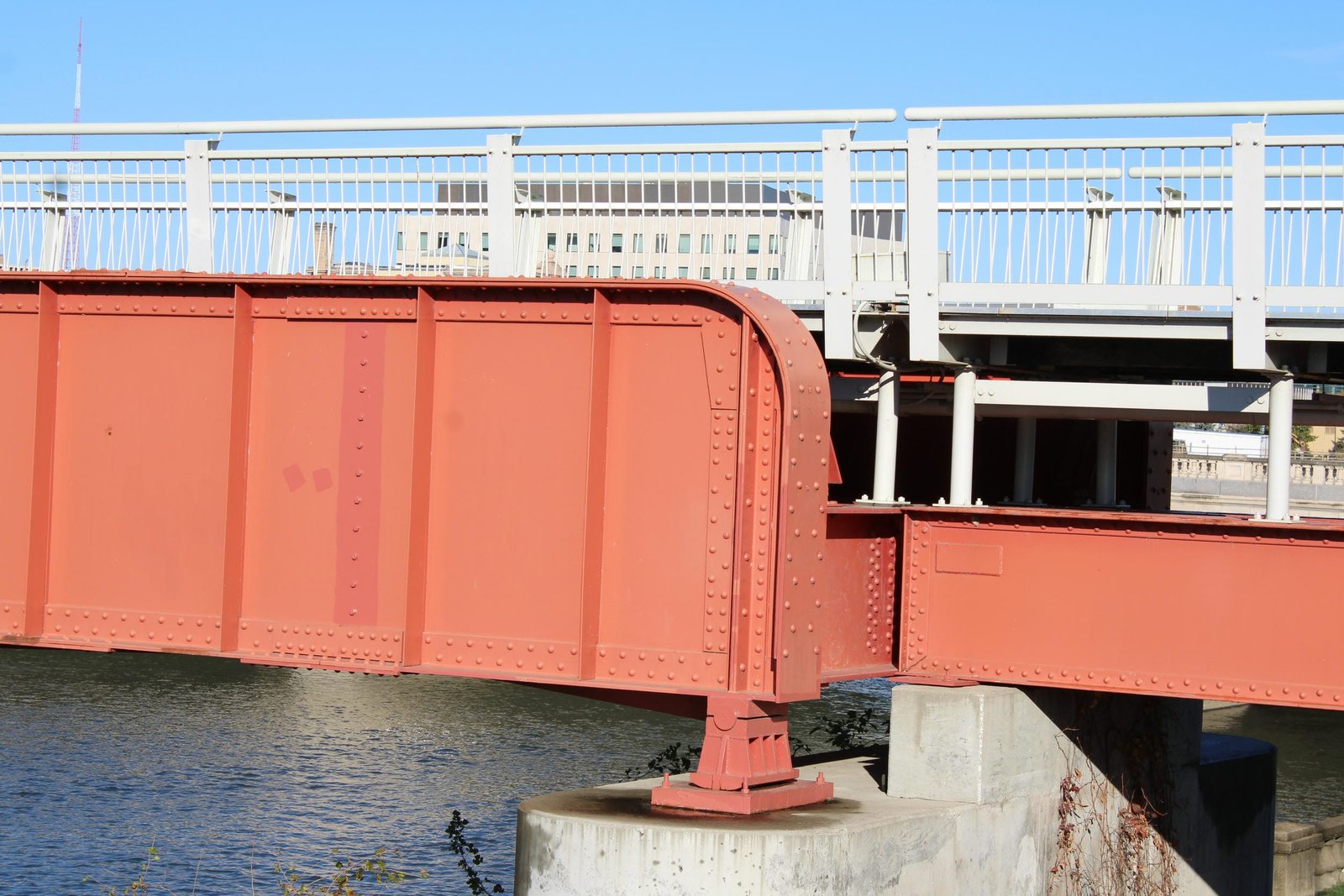
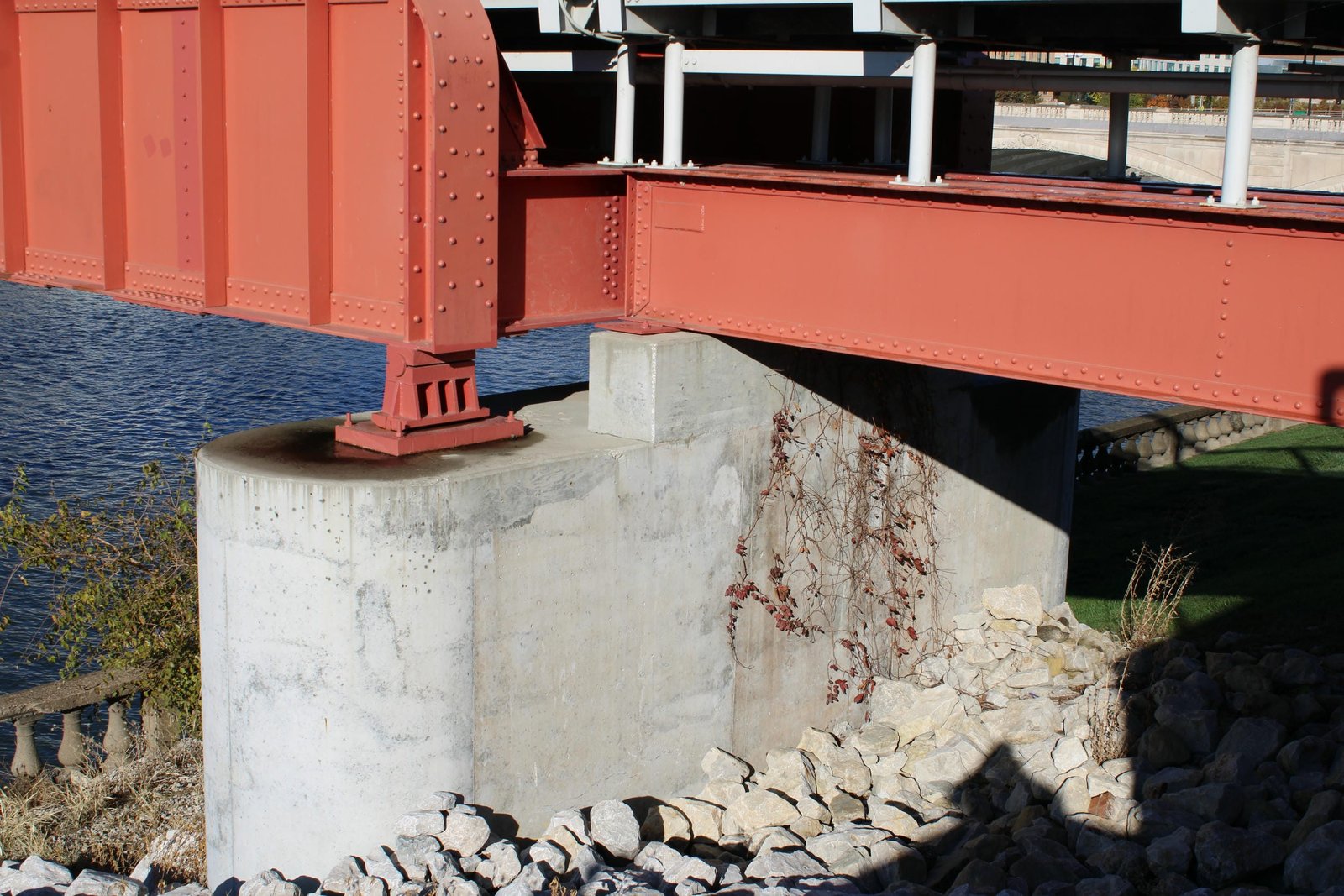
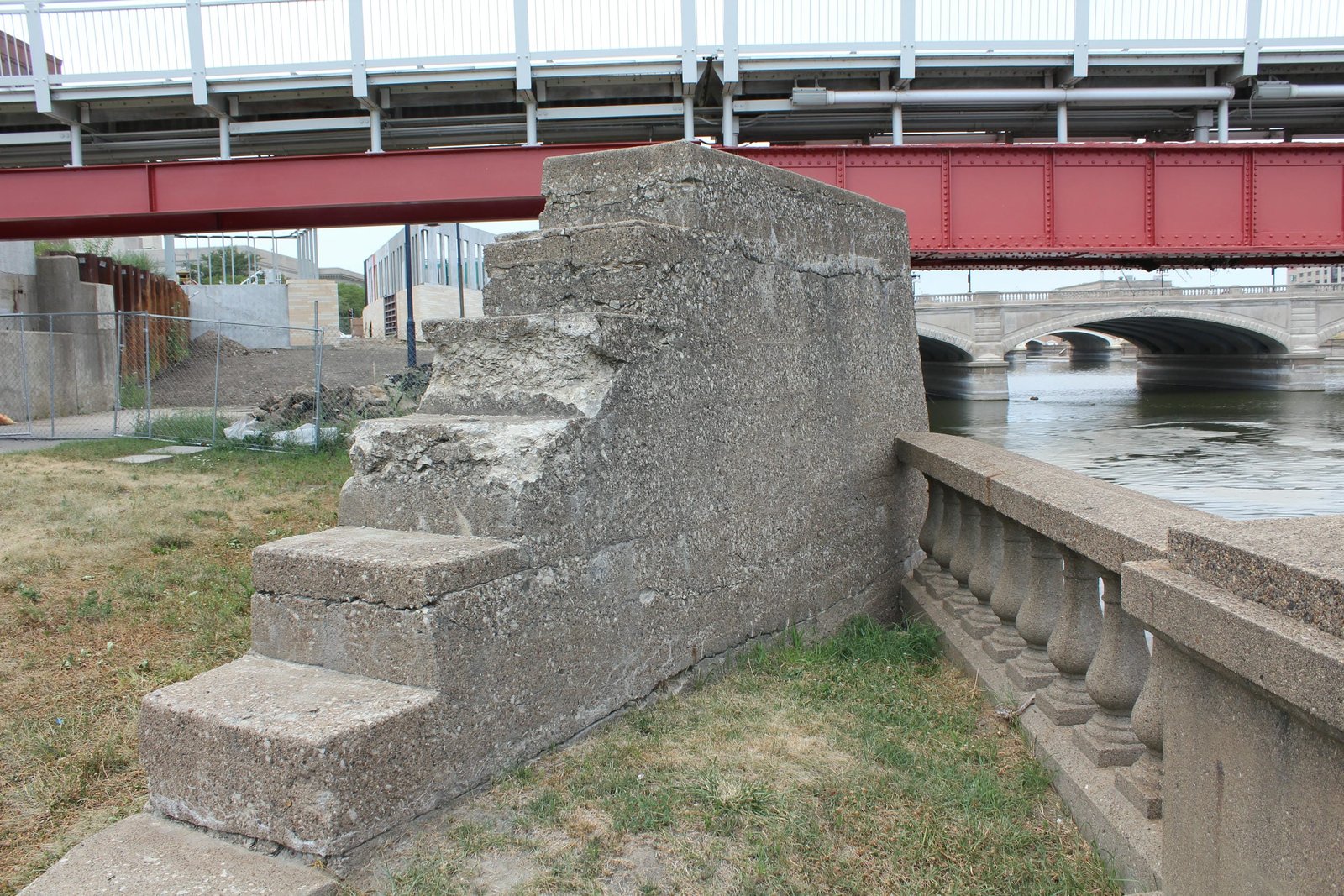
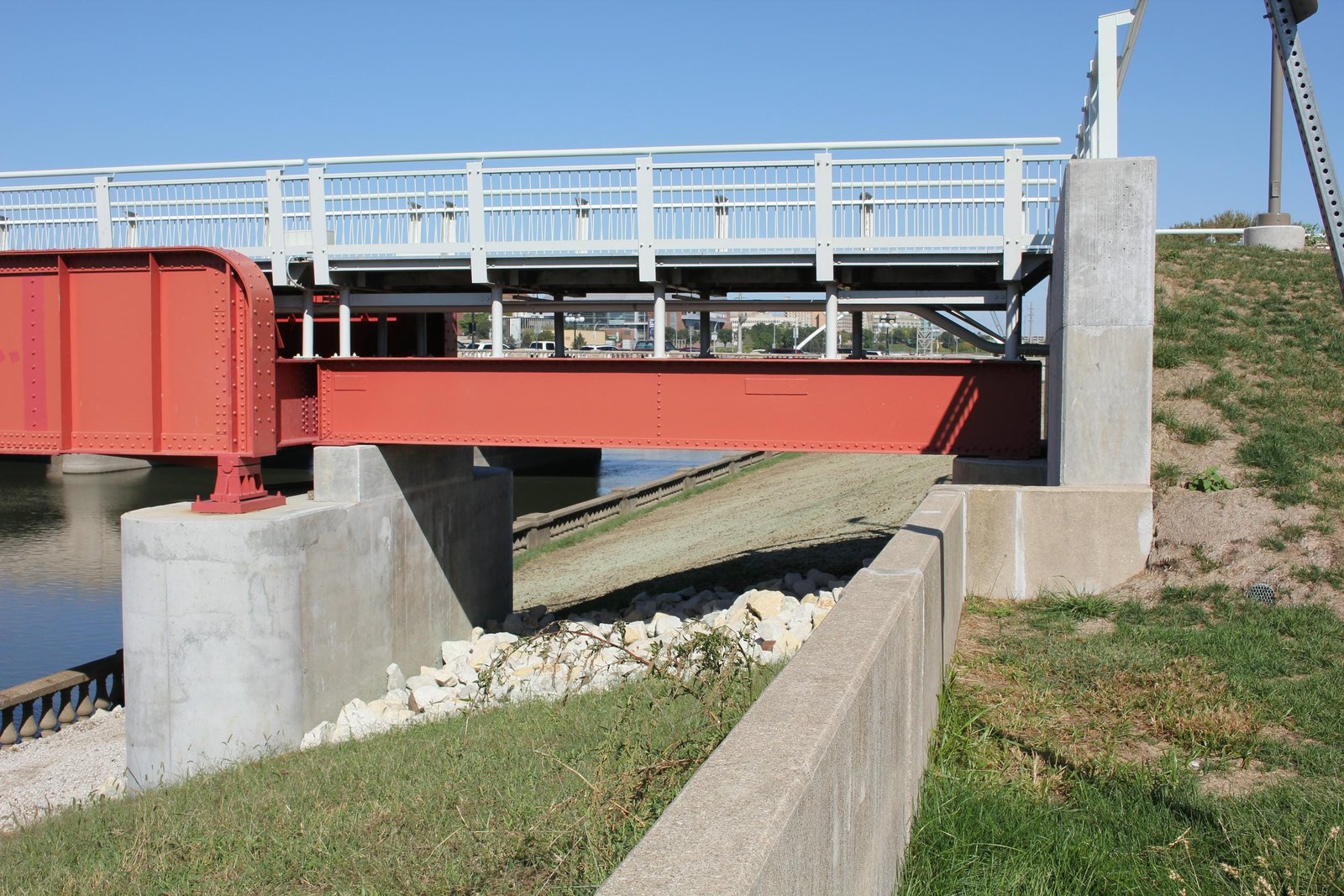
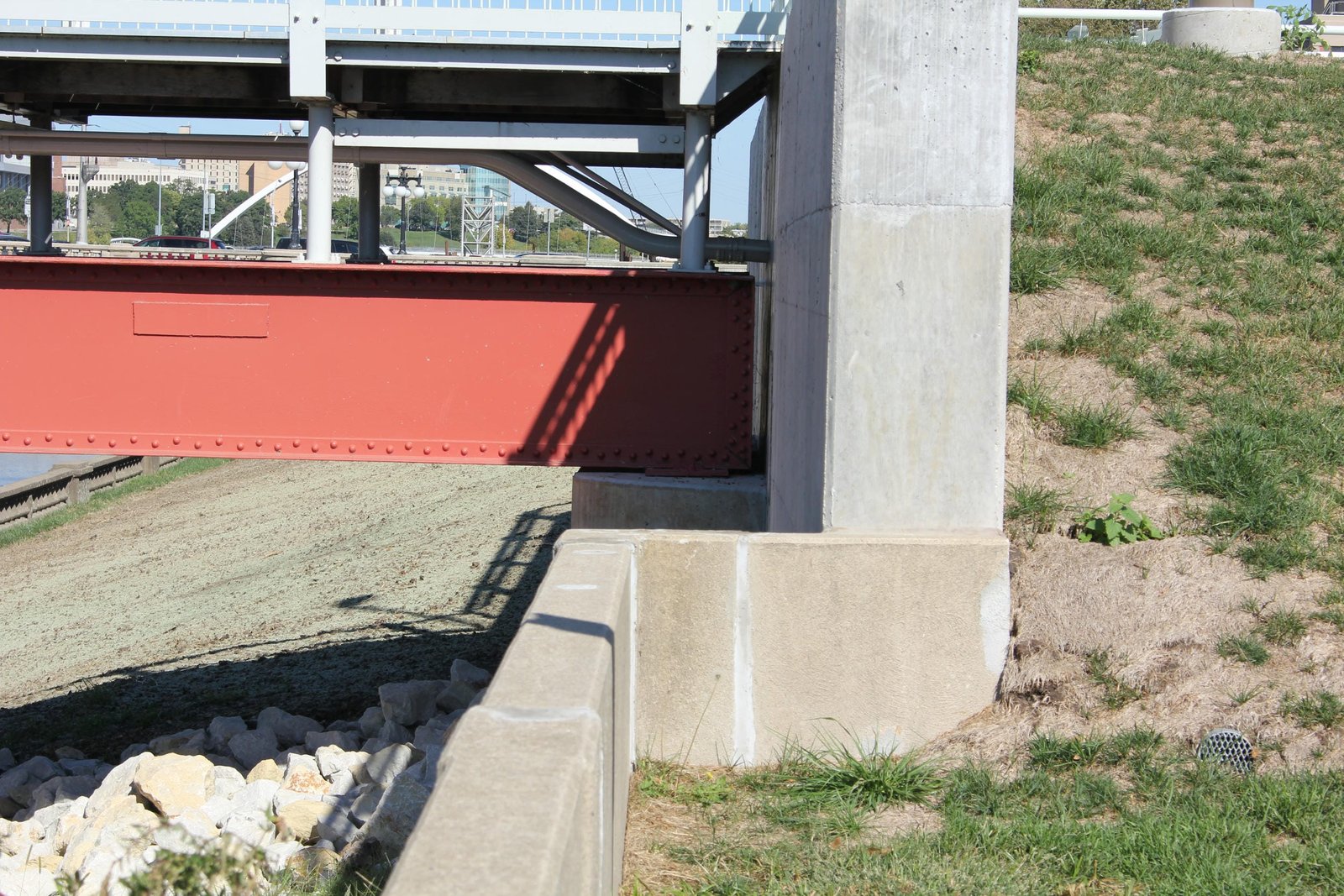
During the 20th Century, the bridge saw numerous alterations. Around the turn of the 20th Century, City of Des Moines Engineer John W. Budd sought to revitalize the riverfront area and construct flood protection. In September 1904, an agreement was reached with the DMU to rebuild the west end of the bridge with a new deck plate girder span, set onto a concrete abutment, and fill the remainder of the west approach. This work was completed sometime in 1905.
Citations
| Build date and builder (spans #2 through #5) Relocation history (span #1) |
Iowa Historic Property Study; Iowa Site Inventory 77-192; Prepared by Jan Olive Nash, Tallgrass Historians L.C. December 2003 |
| Builder (piers #2 through #4) | The Railroad Gazette; January 27, 1882 |
| Builder (west abutment) | The Des Moines Tribune; November 22, 1949 |
| Builder (span #2 erection) | The Des Moines Tribune; February 2, 1945 |
| Railroad History Citation | ICC Valuation Information, Compiled by Richard S. Steele |