
Click the photo to view the full-size version
| Name | DAIR Sixmile Creek Bridge Chicago, Milwaukee, St. Paul & Pacific Railroad Bridge #T-546 |
| Built By | Chicago, Milwaukee, St. Paul & Pacific Railroad |
| Currently Owned By | D&I Railroad |
| Superstructure Contractor | American Bridge Works of Chicago, Illinois |
| Length | 159 Feet Total, 63 Foot Main Span |
| Width | 1 Track |
| Height Above Ground | 10 Feet (Estimated) |
| Superstructure Design | Deck Plate Girder and Timber Pile Trestle |
| Substructure Design | Timber Pile |
| Date Built | 1936, Using a Span Fabricated 1894 |
| Original Location | Bridge #I-792; Chicken Bristle Creek Viaduct; Elmira, Missouri |
| Traffic Count | 2 Trains/Day (Estimated) |
| Current Status | In Use |
| Chicago, Milwaukee, St. Paul & Pacific Railroad Bridge Number | T-546 |
| D&I Railroad Bridge Number | T-546 |
| Significance | Local Significance |
| Documentation Date | 9/25/2021 |
In 1878, the Sioux City and Pembina Railway (SC&P) began construction on a line extending from Elk Point, South Dakota to Sioux Falls, South Dakota. Concurrently, the Southern Minnesota Railway (SM) began construction on a line extending from Egan, South Dakota to Sioux Falls. In 1879, the SC&P merged with the Dakota Southern Railroad to form the Sioux City & Dakota Railroad (SC&D). In 1880, the SM would be conveyed to the Chicago, Milwaukee & St. Paul Railway, and in 1881 the SC&D would be acquired by the same company. Work was quickly completed on the line. Known as the Milwaukee Road, the railroad had constructed a significant network of lines throughout the Midwest, connecting several states with Chicago.
The Milwaukee Road operated this route as a secondary route, connecting
cities and other lines in South Dakota. The
Milwaukee Road was often in financial trouble, especially after the
costly Pacific Extension was completed in 1909. In 1925, the company
declared bankruptcy, and reorganized as the Chicago, Milwaukee, St. Paul
and Pacific Railroad in 1928. As the Milwaukee Road continued to face
financial turmoil, branch lines began to see deteriorated conditions. In
1980, the Milwaukee Road sought to abandon significant trackage in
South Dakota, including this line. The Dell Rapids to Egan segment would be abandoned, while the Elk Point to Dell Rapids segment sold to the State of South Dakota. The D&I Railroad was selected to operate the line. The State of South Dakota sold the line to the D&I in 2021, and today, D&I continues to operate the line.
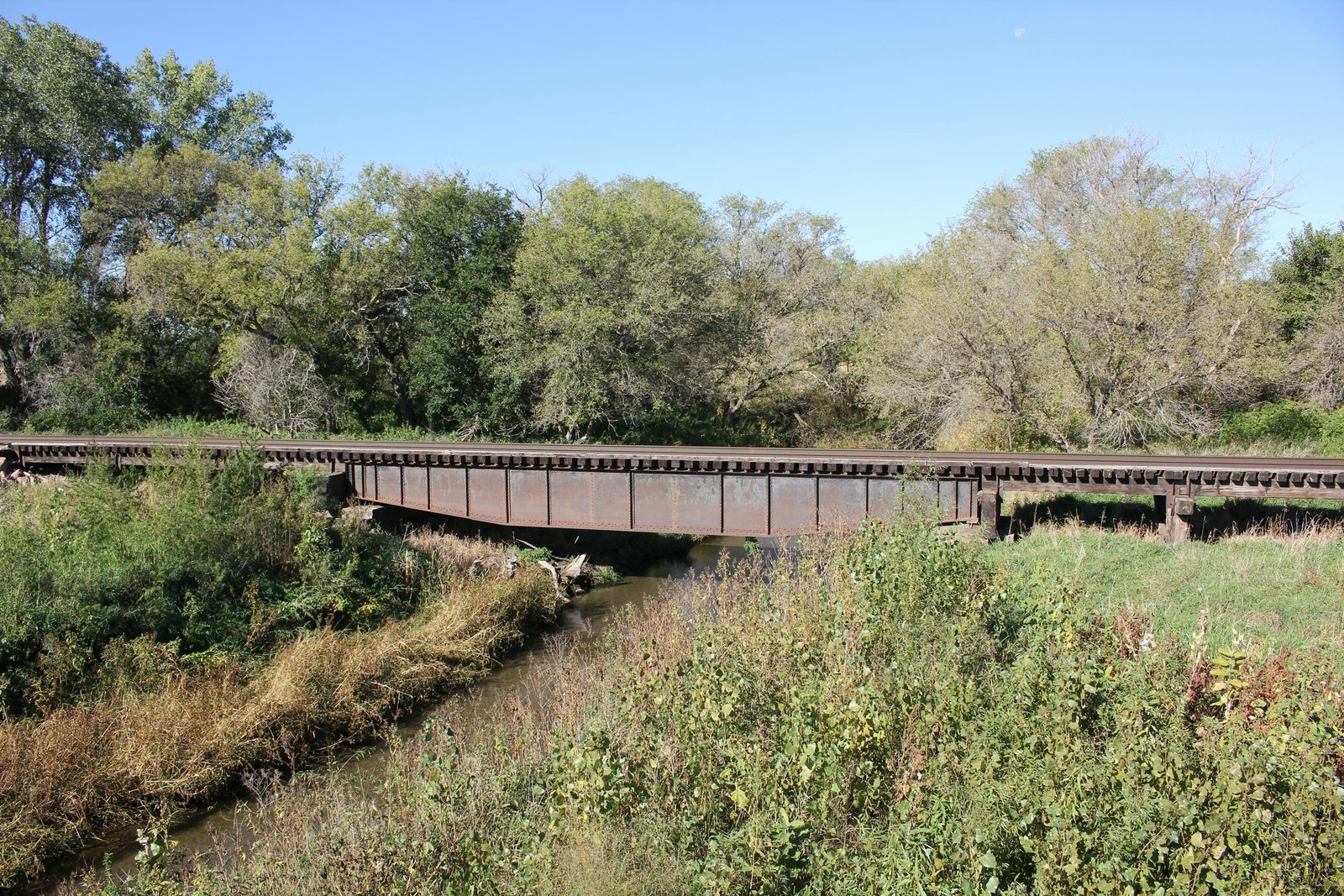
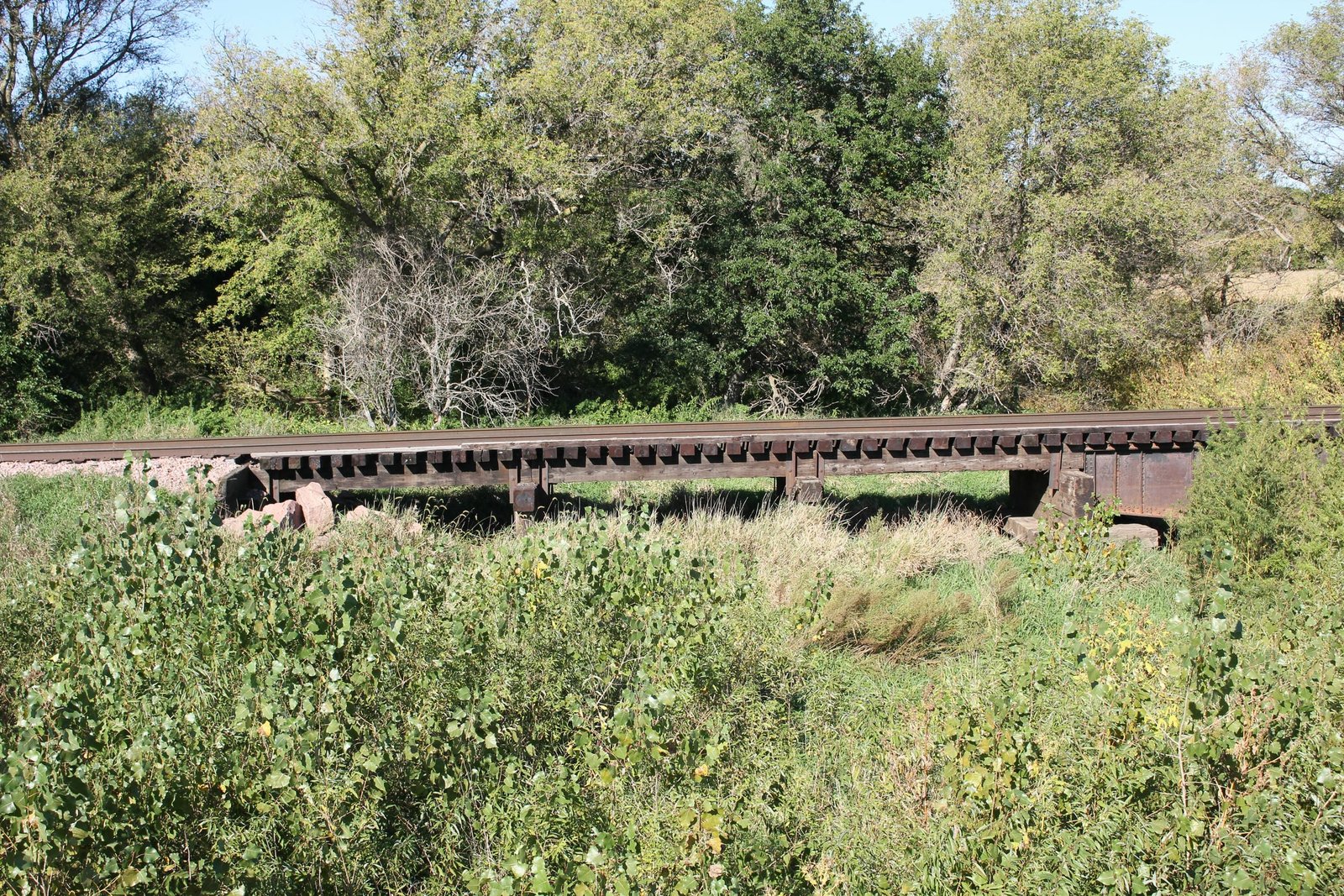
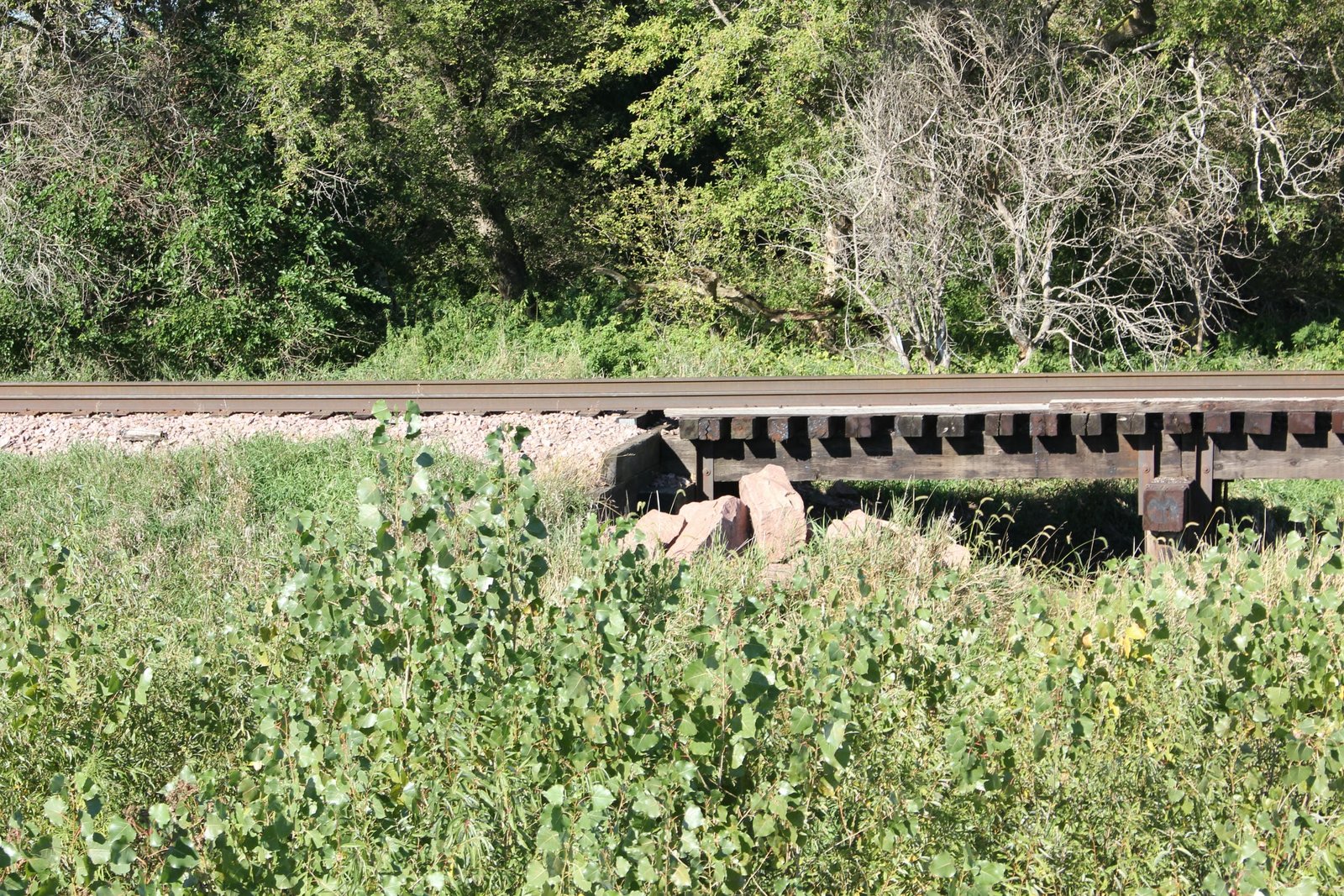
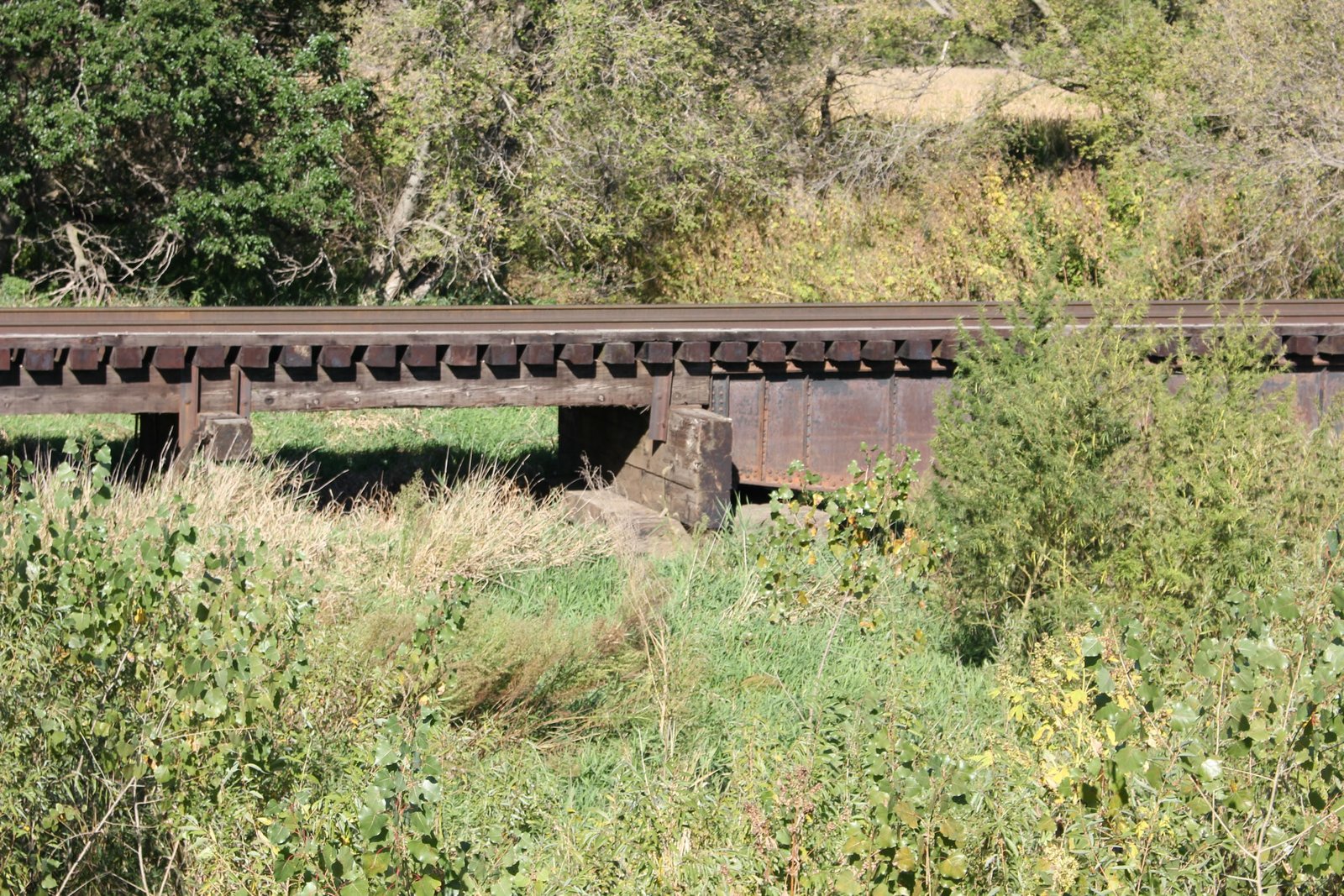
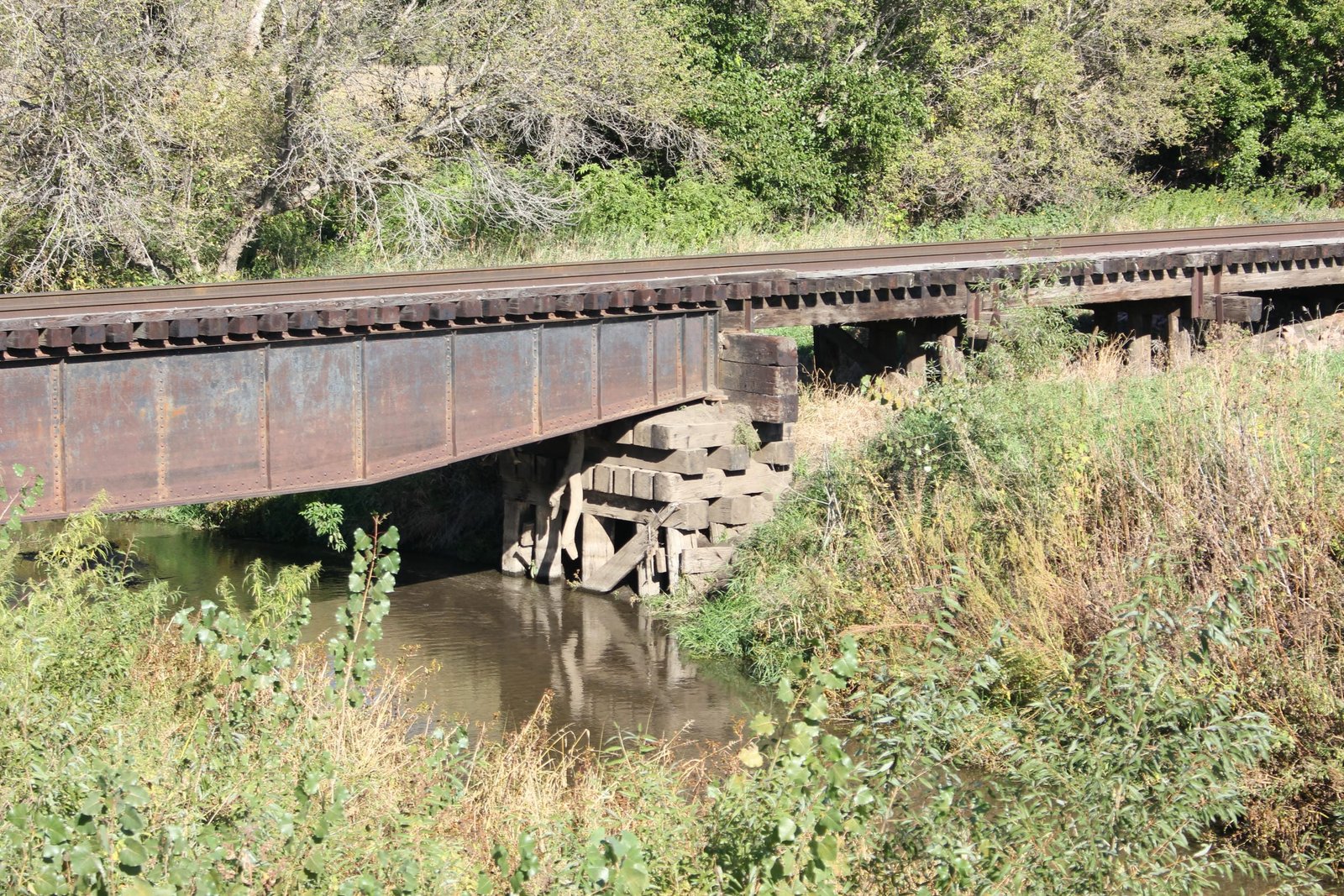
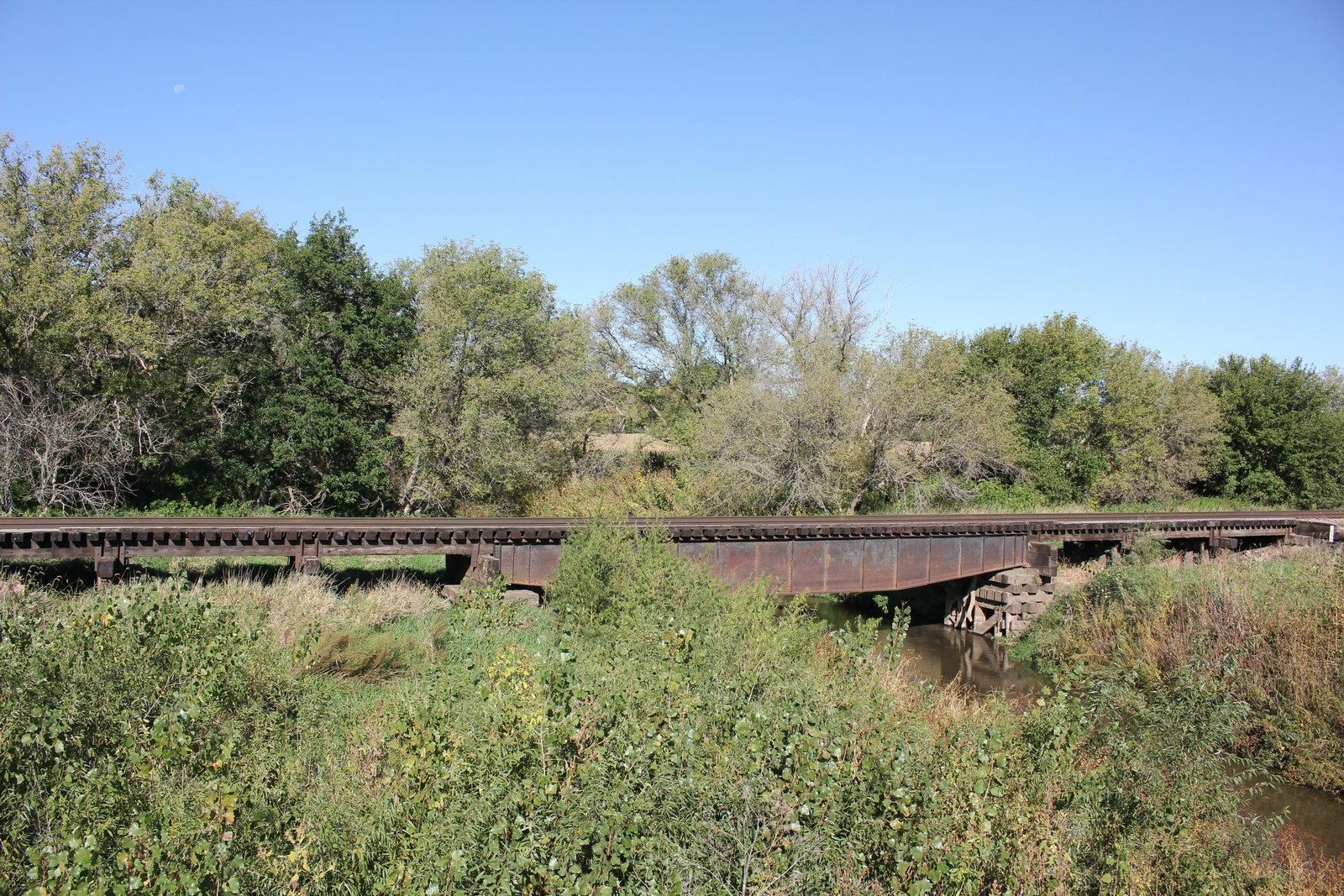
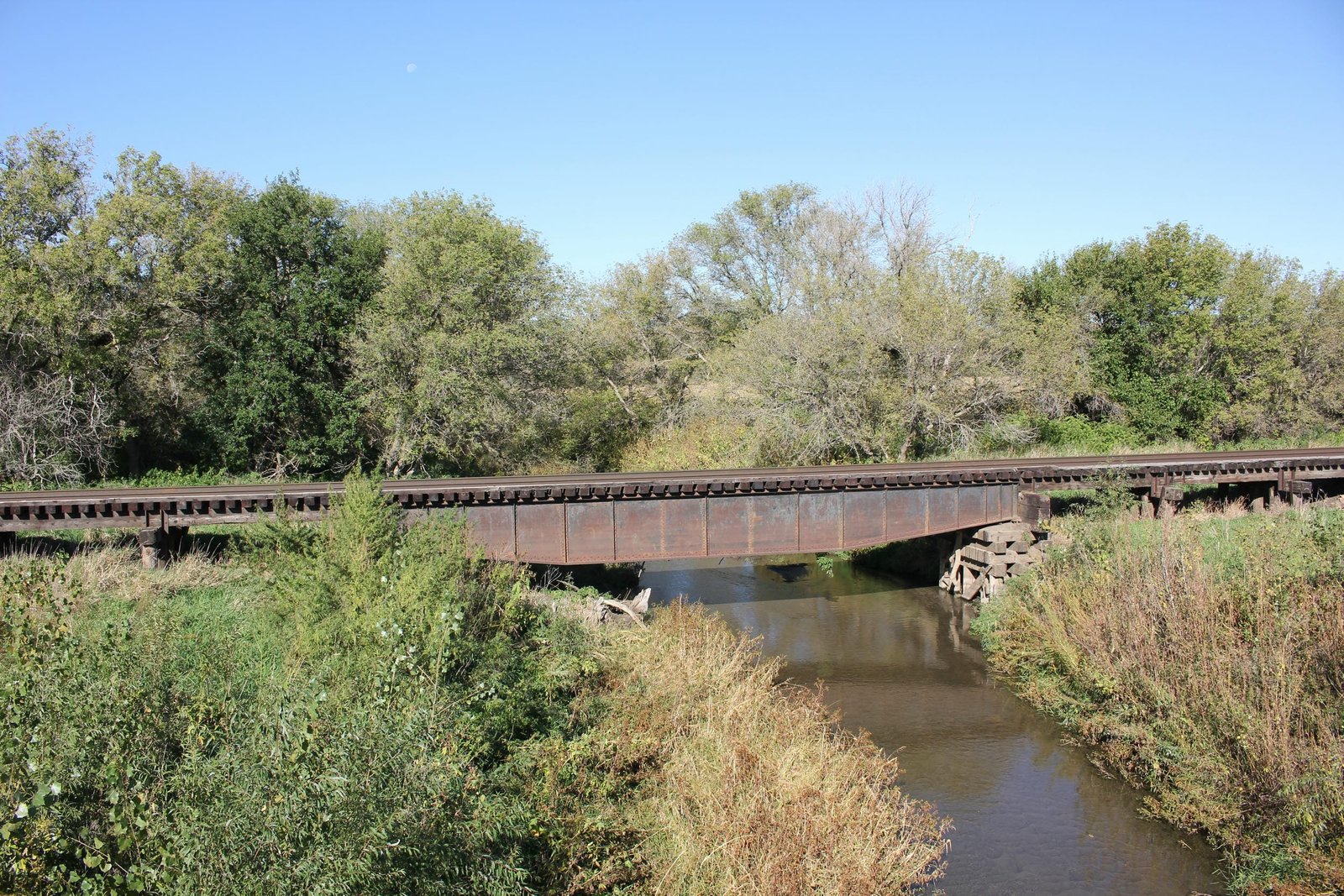
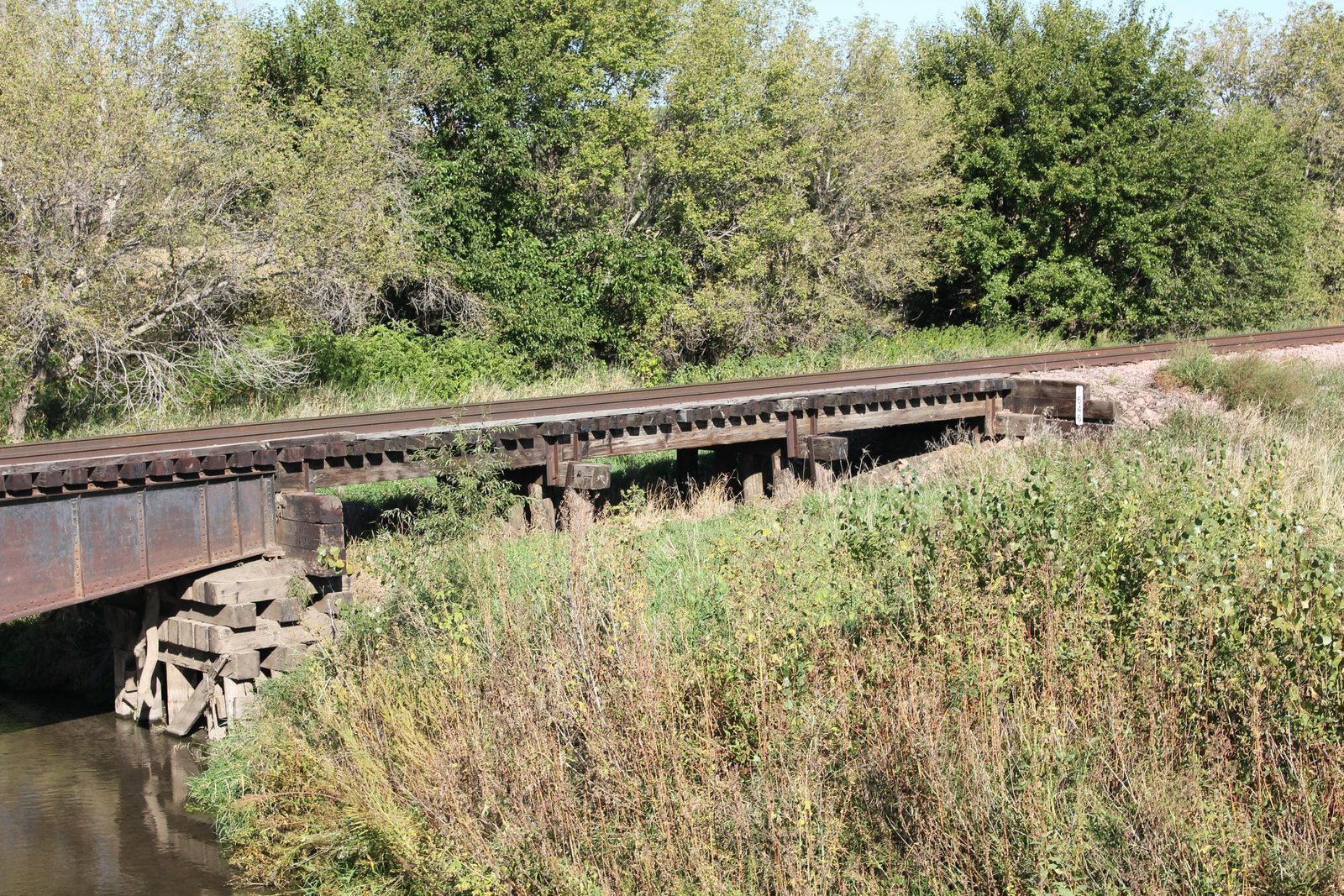
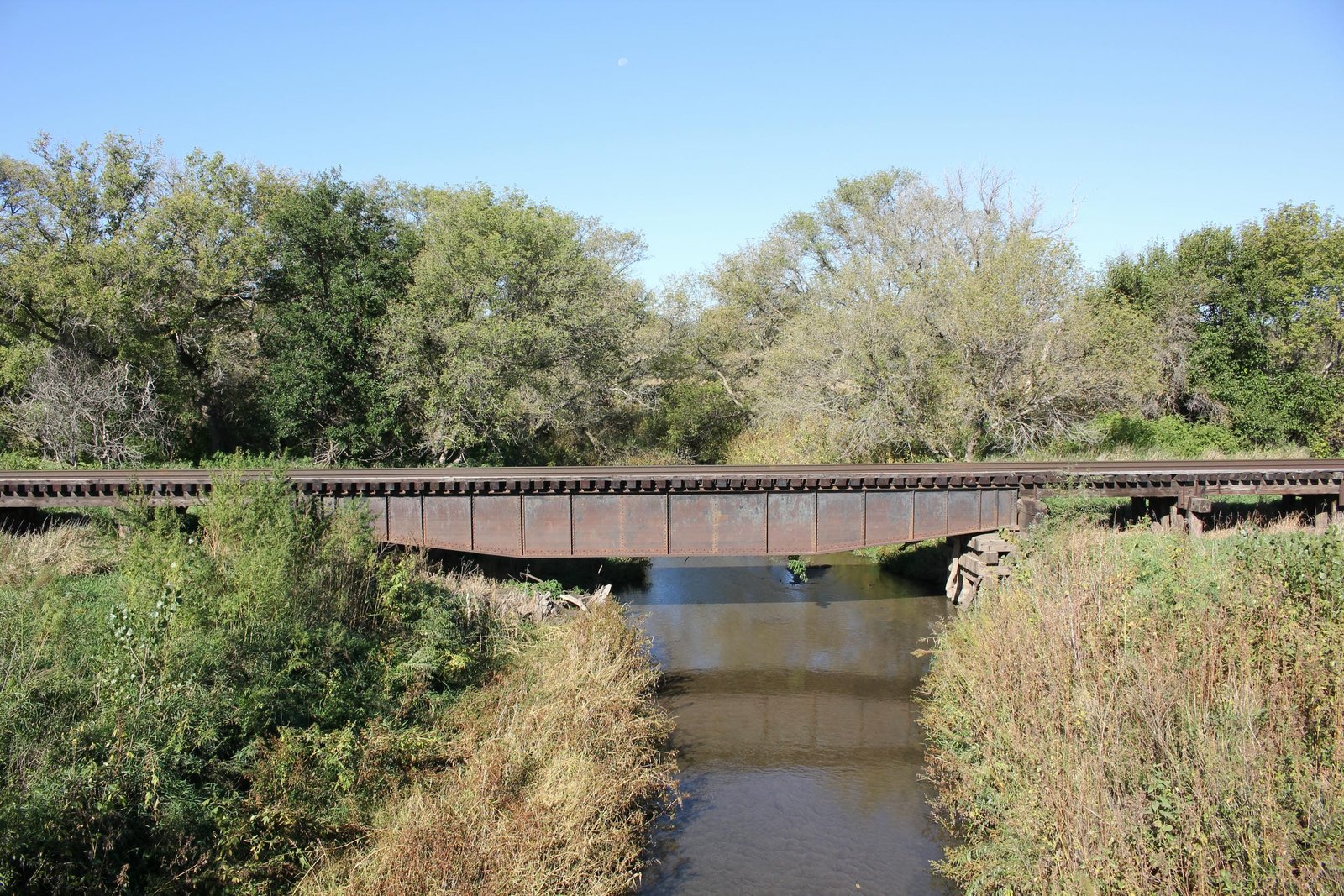
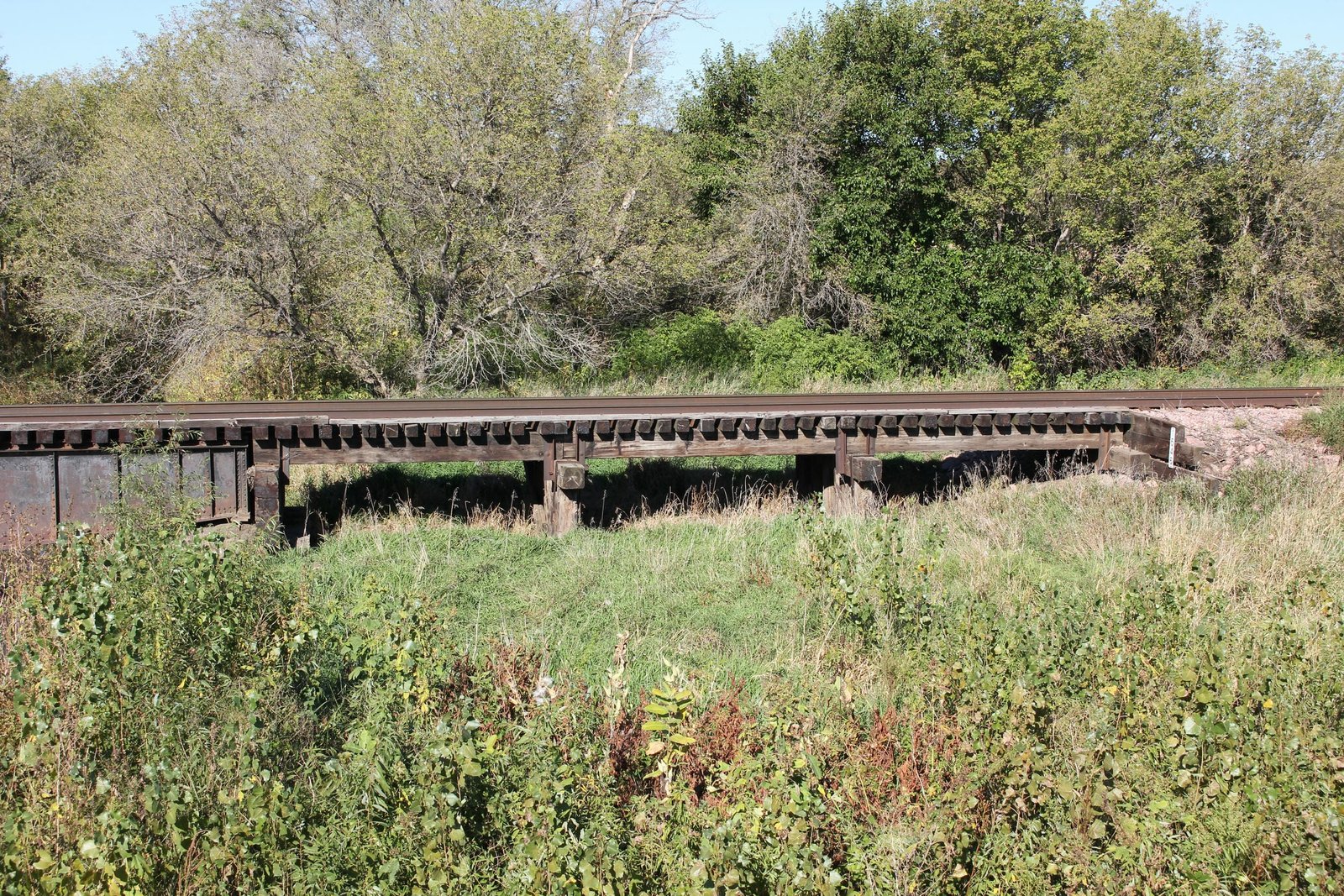
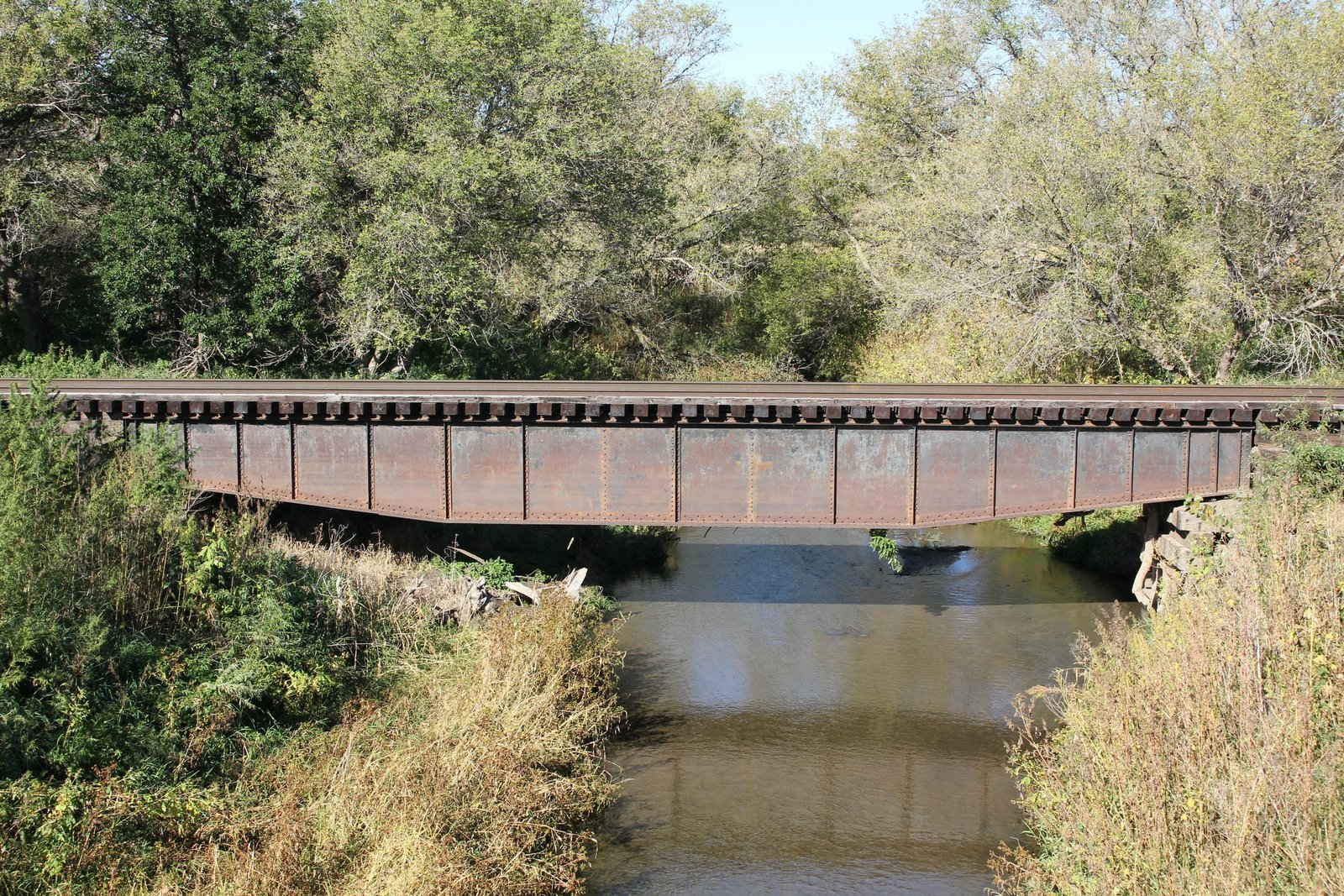
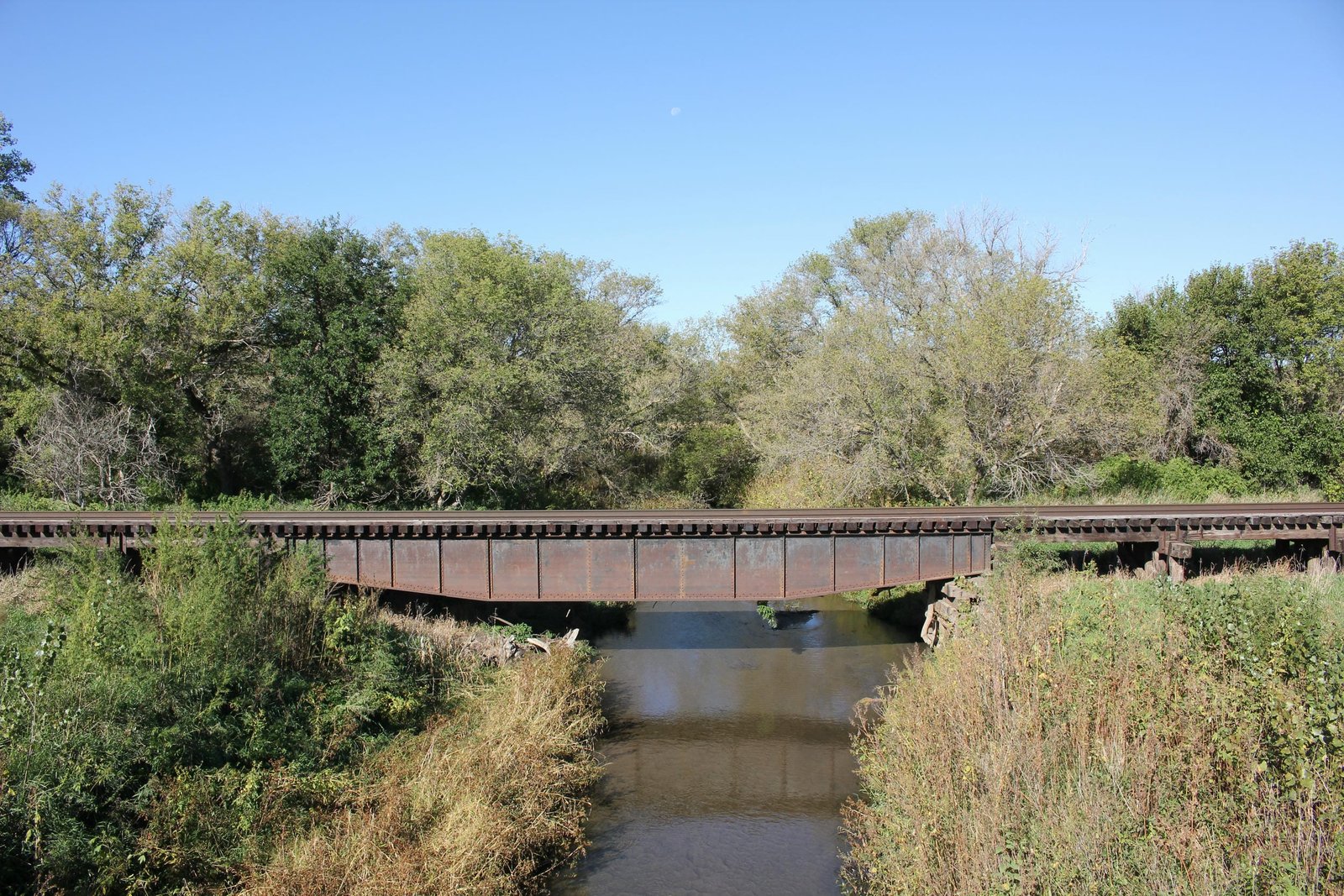
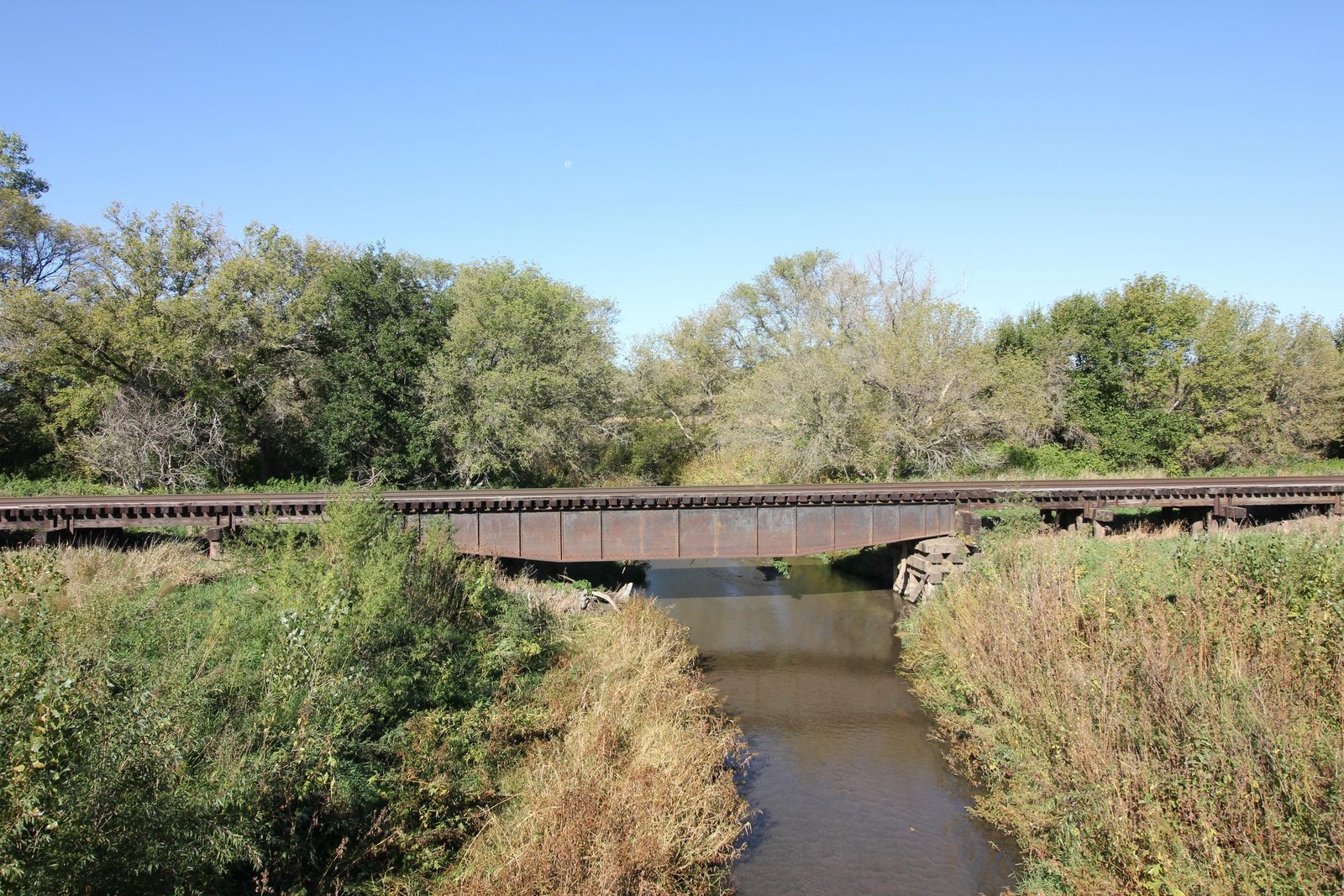
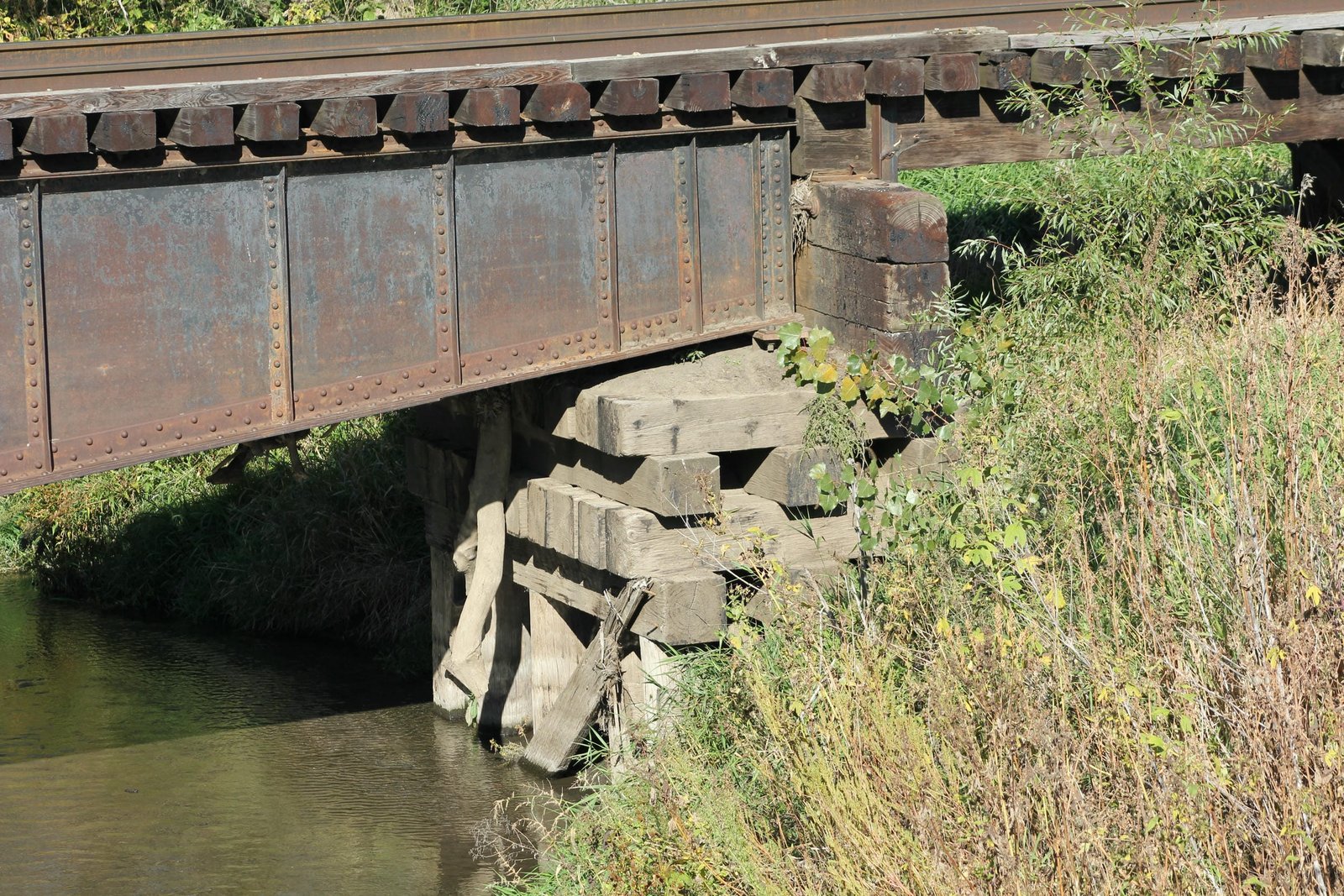
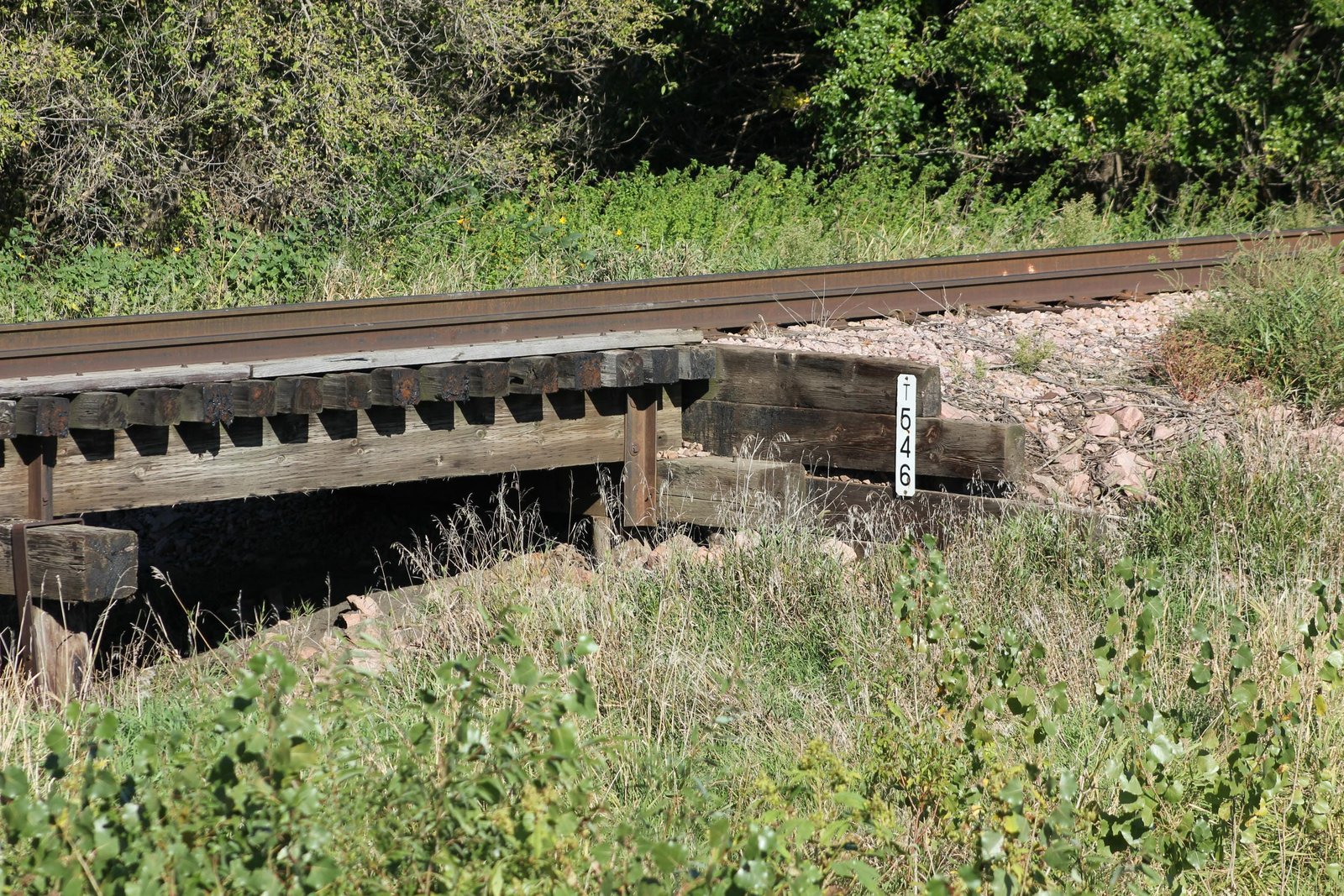
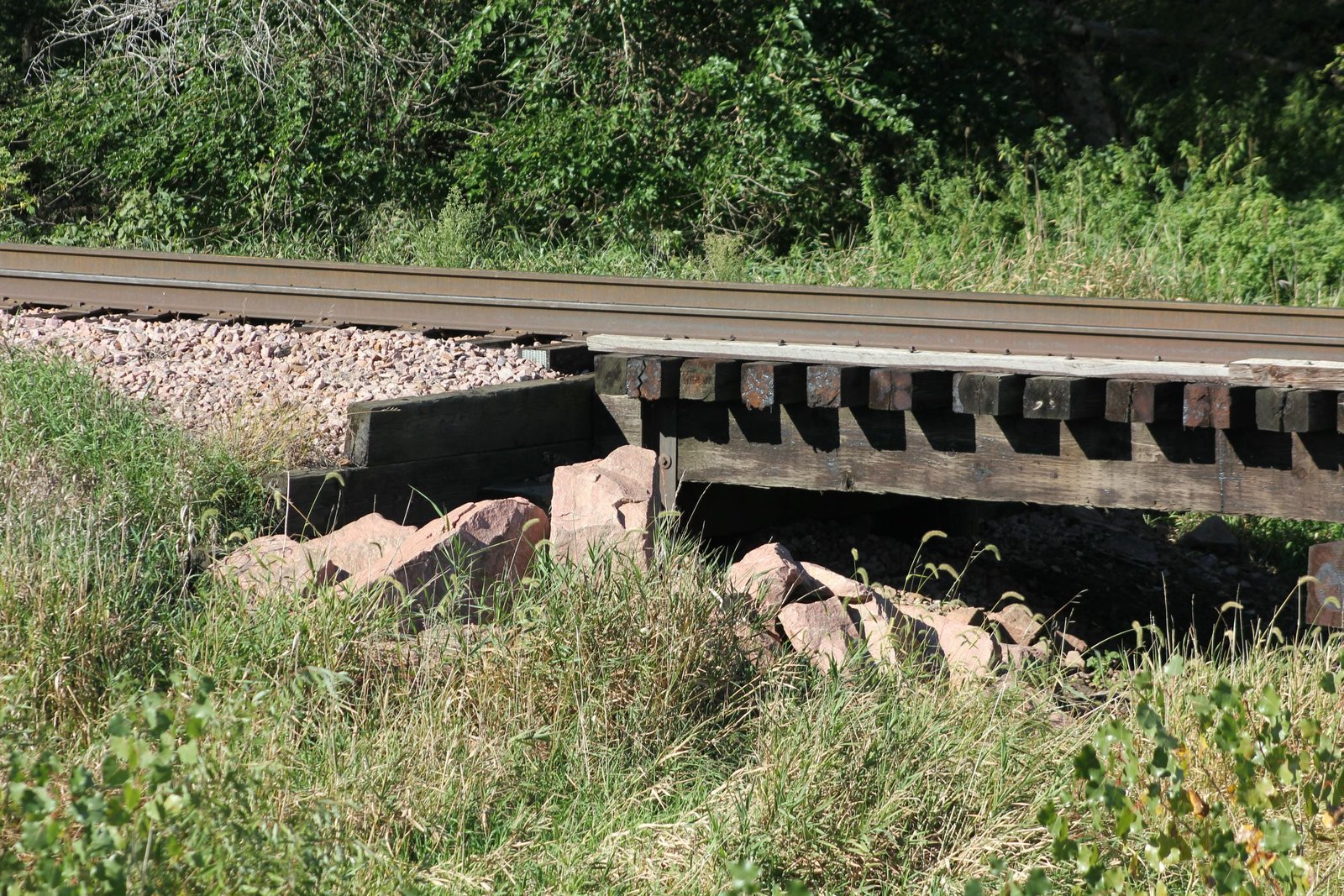
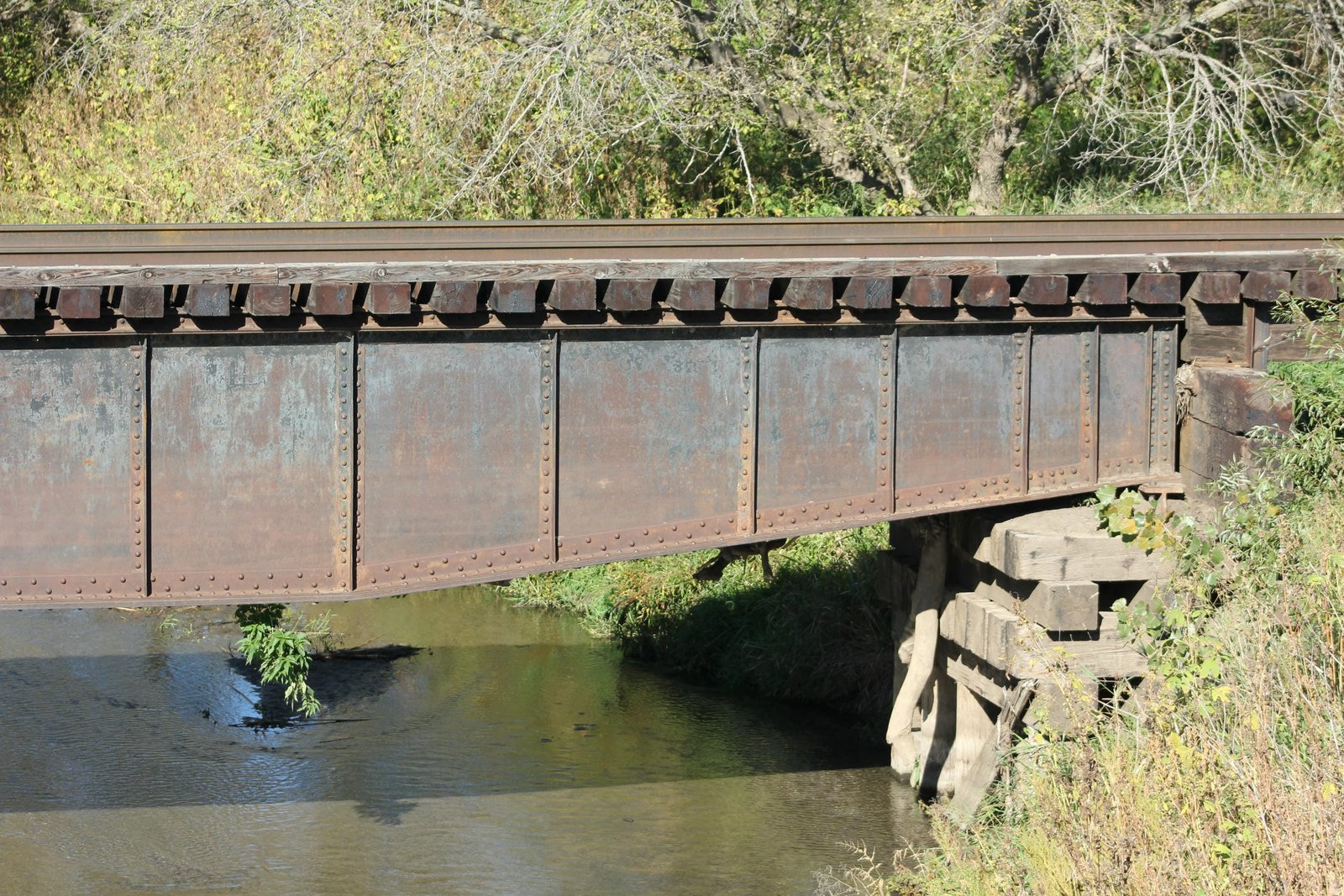
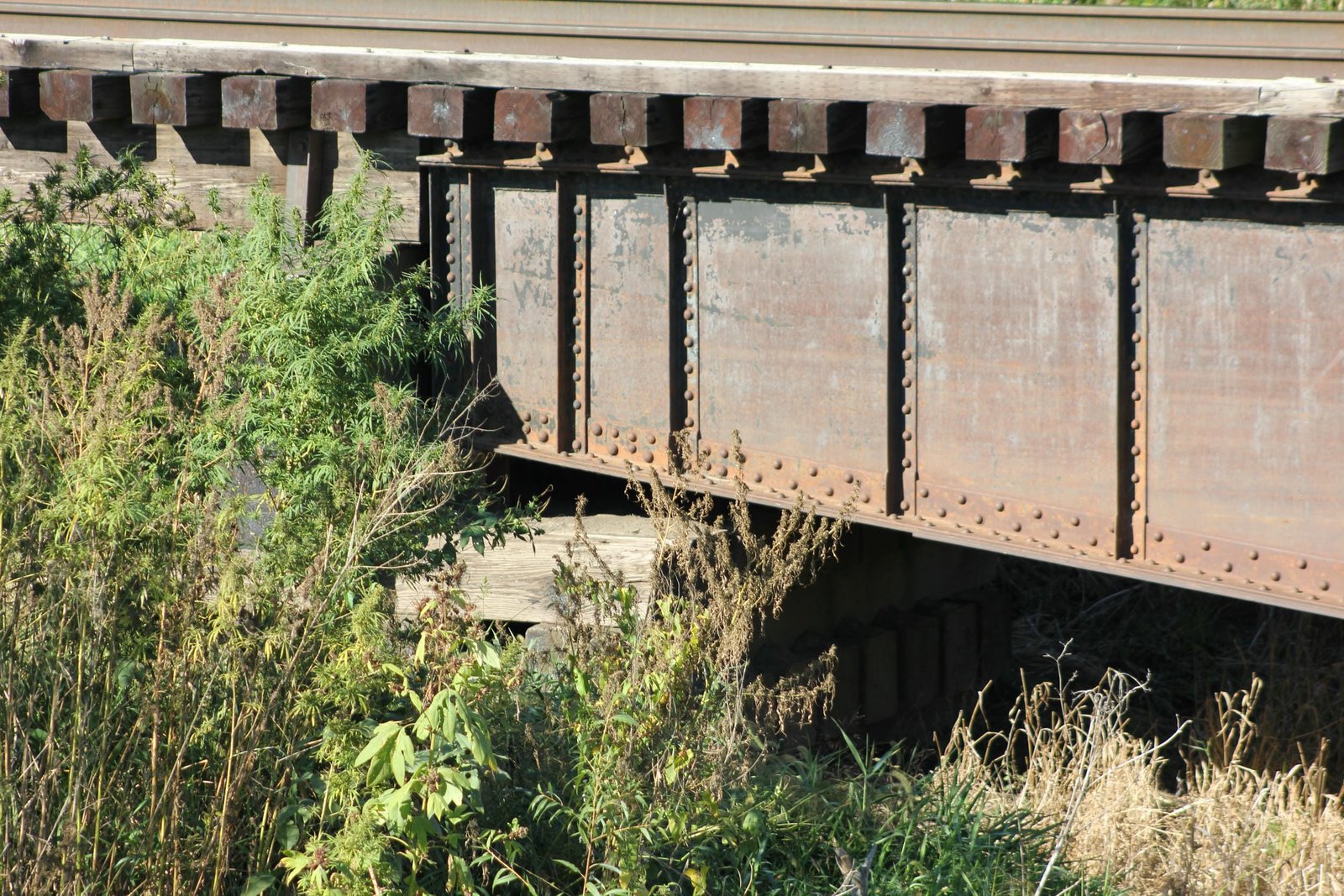
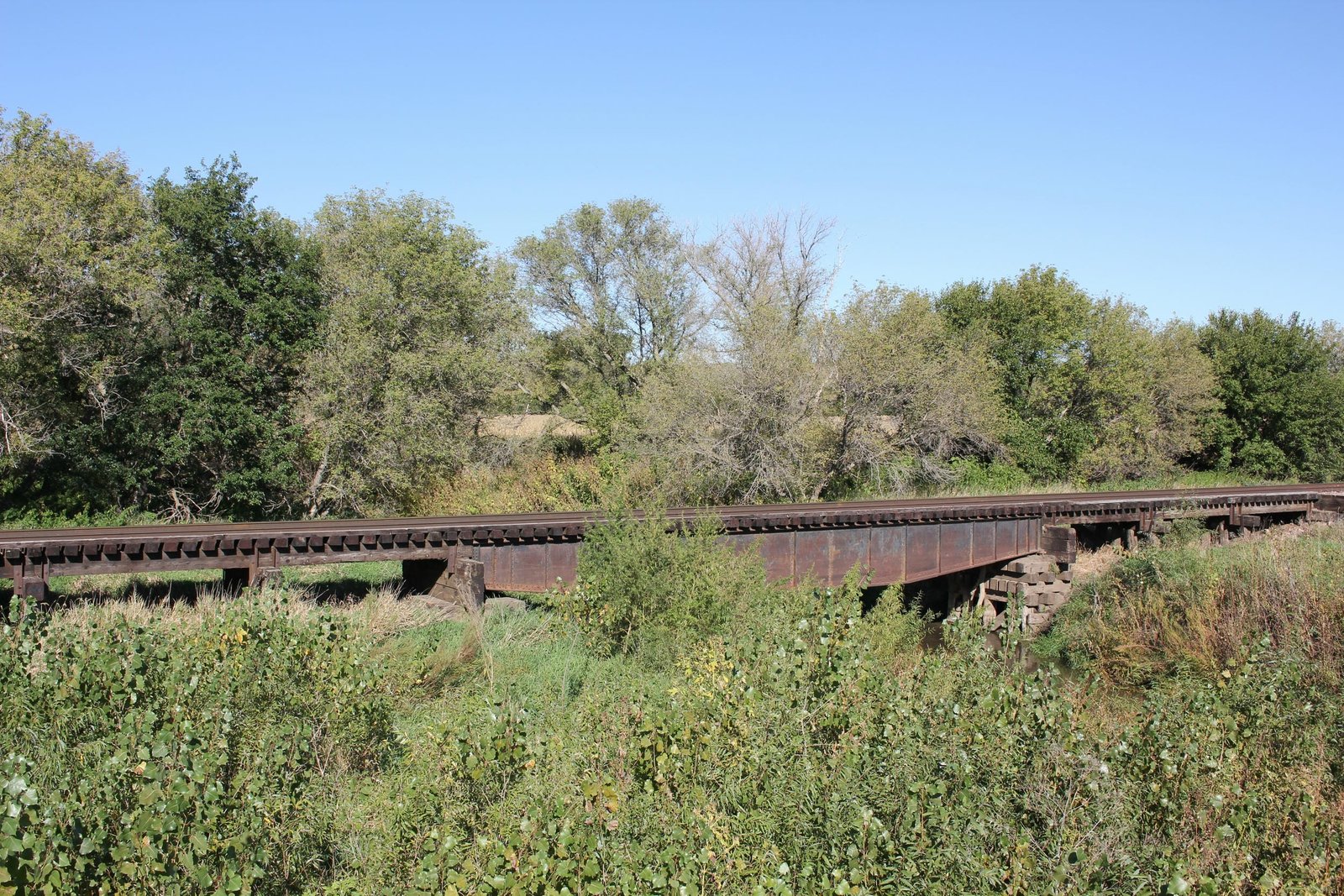
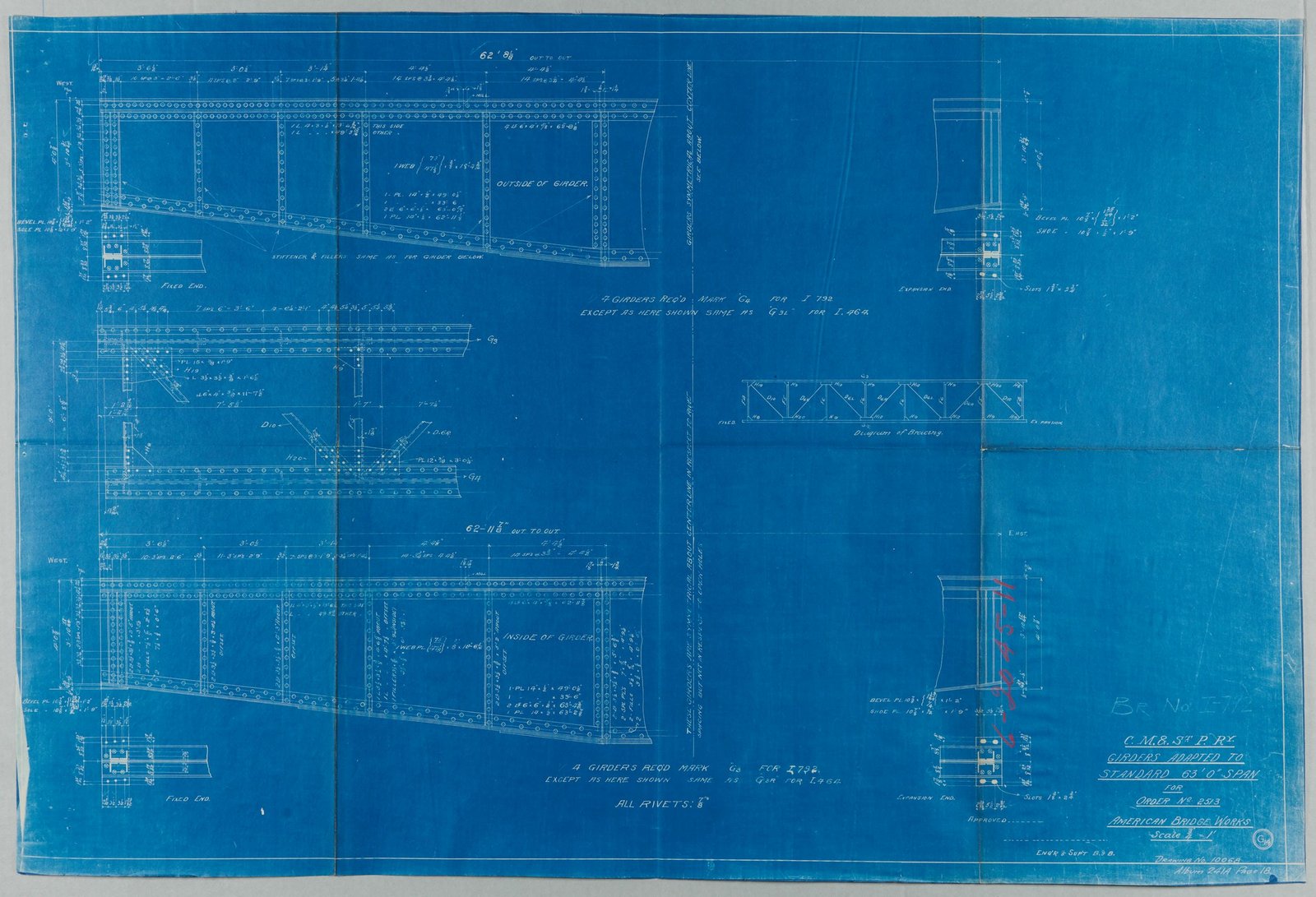
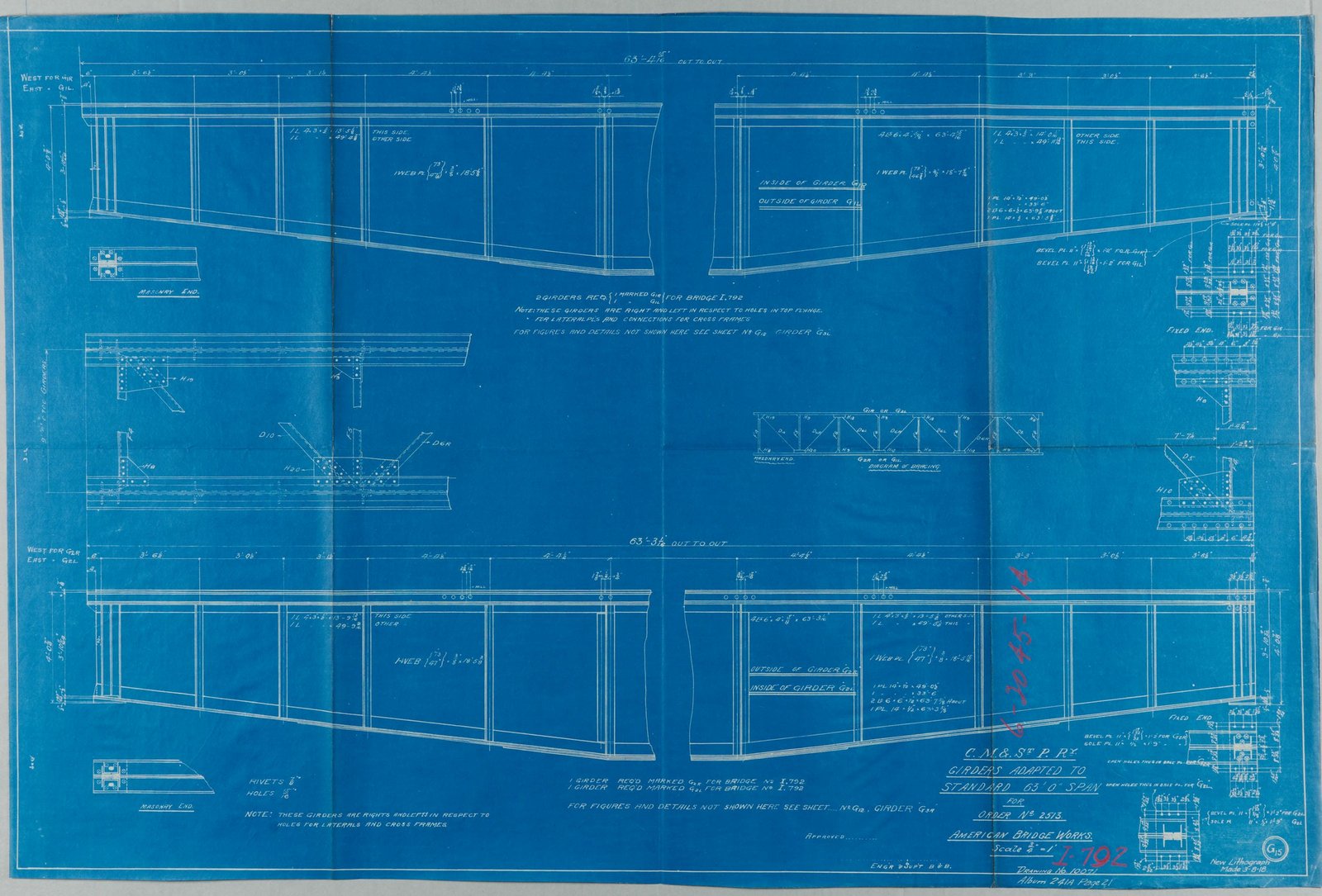
Located alongside Iowa Highway 12 south of Hawarden, this deck plate girder bridge carries a former Chicago, Milwaukee, St. Paul & Pacific Railroad (Milwaukee Road) line over Sixmile Creek. The first bridge at this location was a timber pile trestle bridge, which had been periodically renewed since it was first constructed. In the 1930s and 1940s, the Milwaukee Road made improvements to this line, replacing deteriorated timber bridges with steel spans. A secondhand steel span was installed at this location in 1936. In 1955, the timber approaches were extensively rebuilt and the bridge was raised due to repeated floods. Currently, the bridge consists of a single 63-foot deck plate girder span, approached by three 16-foot timber pile trestle spans on either end. The entire bridge is set onto timber pile substructures. The steel span was originally fabricated in 1894 for use at Bridge #I-792, a large viaduct over Chicken Bristle Creek located near Elmira, Missouri. When a new alignment was constructed between Polo, Missouri and Kansas City in the early 1930s, spans from the original alignment were salvaged for reuse. Two spans from the viaduct were combined into a single double strength span and installed here. The steel span uses a somewhat unusual design for a deck girder, with four girder lines and tapered ends at the bottom of the girder. American Bridge Works fabricated the superstructure, while the timber components were constructed by railroad company forces. Deck plate girder spans were commonly used by railroads, as they were durable and easy to construct. Railroads often reused steel spans, as it provided a cost effective way to upgrade bridges without requiring a large amount of new material. Overall, the bridge appears to be in fair to good condition, with no significant deterioration noted. The author has ranked this bridge as being locally significant, due to the common design.
Citations
| Erection date and relocation history | Milwaukee Road Authority For Expenditure #44964 at the South Dakota State Historical Society |
| Fabrication date and builder (superstructure) | Milwaukee Road Drawing Collection, located at the Milwaukee Road Archives at the Milwaukee Public Library |
| Railroad History Citation | ICC Valuation Information, Compiled by Richard S. Steele |