






Click the photo to view the full-size version
| Name | CPKC Church Street Bridge Chicago, Milwaukee, St. Paul & Pacific Railroad Bridge #C-92 1/2 |
| Built By | Chicago, Milwaukee, St. Paul & Pacific Railroad |
| Currently Owned By | Canadian Pacific Kansas City Limited |
| Superstructure Contractor | Unknown |
| Substructure Contractor | Unknown |
| Length | 150 Feet Total, 70 Foot Largest Span |
| Width | 2 Tracks, 1 In Use |
| Height Above Ground | 15 Feet (Estimated) |
| Superstructure Design | Deck Plate Girder |
| Substructure Design | Concrete |
| Date Built | 1961 |
| Traffic Count | 20 Trains/Day (Estimated) |
| Current Status | In Use |
| Chicago, Milwaukee, St. Paul & Pacific Railroad Bridge Number | C-92 1/2 |
| Significance | Minimal Significance |
| Documentation Date | 12/9/2020 |
In 1850, the Milwaukee & Mississippi Rail Road (M&M) began construction on a new railroad line, with the intention of connecting Lake Michigan at Milwaukee with the Mississippi River. The first 12 miles between Milwaukee and Brookfield opened in 1851, and the line eventually continued west. In Milwaukee, this line followed the south side of the Menomonee River. In 1854, the Milwaukee and Watertown Railroad (M&W) began construction on a new line, leaving the original line at Brookfield, Wisconsin. 32 miles of new railroad were completed to Watertown, Wisconsin by 1855. The M&W was acquired by the La Crosse and Milwaukee Railroad (LC&M) in 1856. This railroad had previously constructed a more northerly route between Milwaukee and Portage, Wisconsin. Between 1857 and 1858, the LC&M constructed 103 miles of new railroad, extending from Portage to the Mississippi River at La Crosse, Wisconsin. The M&M was acquired by the Milwaukee and Prairie du Chien Railway (M&PdC) in 1861. The western division of the LC&M, extending from Portage to La Crosse, was sold to the Milwaukee & St. Paul Railway (M&StP) in 1863. In 1864, the M&StP constructed an additional 47 miles of railroad between Watertown and Portage, connecting the two lines. In addition, a 7-mile "airline" would be constructed between Elm Grove and Milwaukee in 1864, allowing for a more direct route into Milwaukee. In 1867, the M&PdC would be sold to the M&StP. In 1874, the M&StP changed its name to the Chicago, Milwaukee & St. Paul Railway (Milwaukee Road).
The Milwaukee to La Crosse line became a critical backbone for the Milwaukee Road, serving as the middle section of a longer line between Chicago and Minneapolis/St. Paul. This line also allowed for the construction of numerous branch lines, as well as the rapid expansion of the Milwaukee Road in the Midwest. Between 1874 and 1876, a bridge across the Mississippi River was constructed at La Crosse. A second track was constructed between Milwaukee and Brookfield during the early 1880s. In 1902, 90 additional miles of second track would be constructed between Brookfield and Watertown, between Portage and Camp Douglas and between West Salem and La Crosse. An additional 47 miles of double track were constructed between Watertown and Portage in 1906, followed by an additional 44 miles of double track between Camp Douglas and West Salem in 1910. The same year, the "airline" was also double tracked. During the 20th Century, the Milwaukee Road had become a prominent railroad in the United States, operating an extensive network of railroad lines primarily in the Midwest.
The Milwaukee Road was often in financial trouble, especially after the costly Pacific Extension was completed in 1909. In 1925, the company declared bankruptcy, and reorganized as the Chicago, Milwaukee, St. Paul and Pacific Railroad in 1928. Despite the financial troubles of the railroad, this line remained a critical line and was well maintained. Financial hardship continued through the 20th Century for the Milwaukee Road, and the railroad again filed bankruptcy in 1977. By 1985, a suitor for the Milwaukee Road was being sought, and the Soo Line Railroad, controlled by Canadian Pacific Railway (CP) purchased the Milwaukee Road in 1986. Upgrades were made to the route, including the installation of CTC. As a result, sections of the second track were removed, and the remaining sections became sidings. The Elm Grove to Milwaukee airline was abandoned in the 1990s, and has since become the Hank Aaron Trail. CP merged with Kansas City Southern Railway in 2023 to form CPKC. CPKC currently operates the Milwaukee to Portage segment as the Portage Subdivision, and the Watertown to La Crosse segment as the Tomah Subdivision. The route remains well used, and hosts both freight and Amtrak trains.
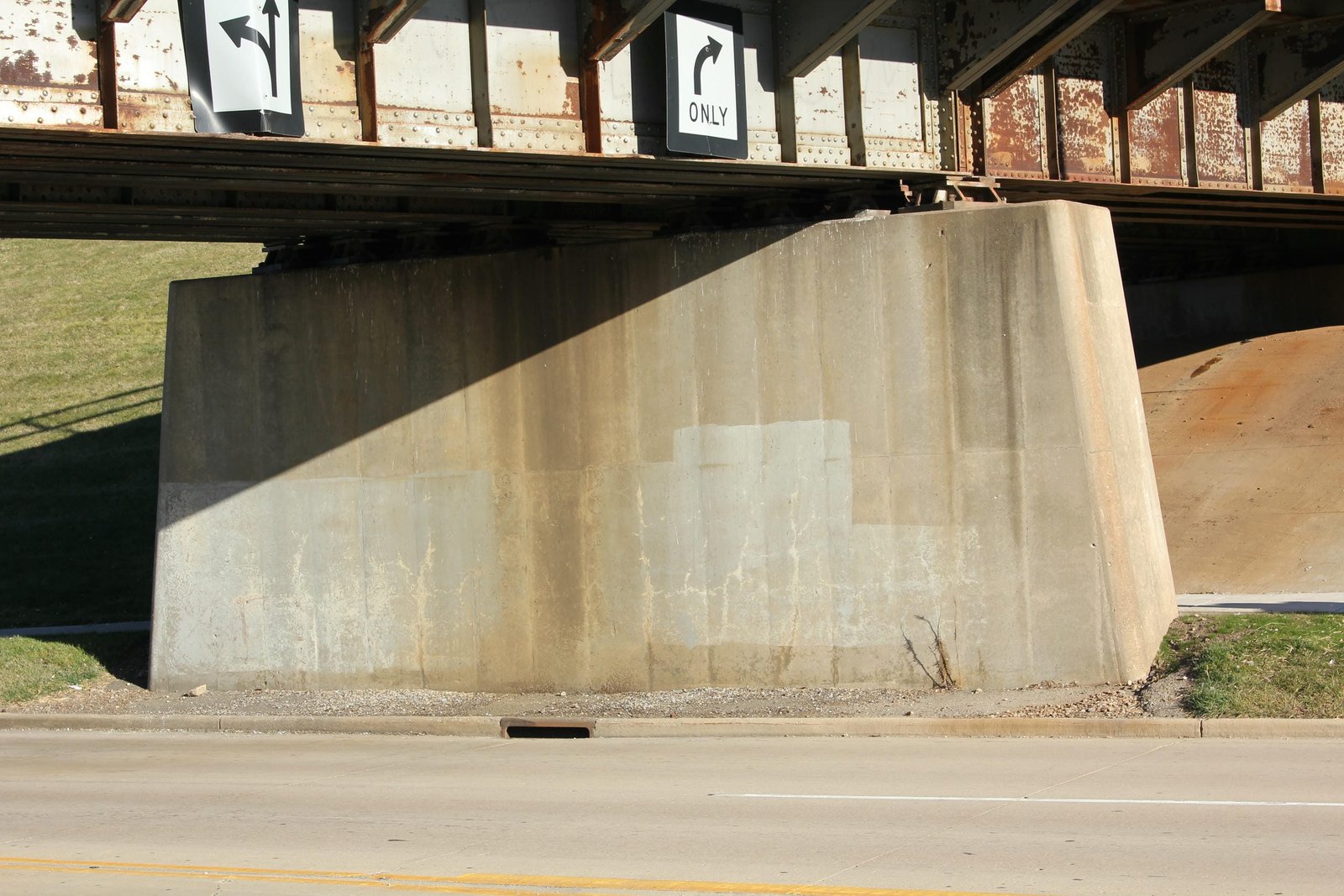
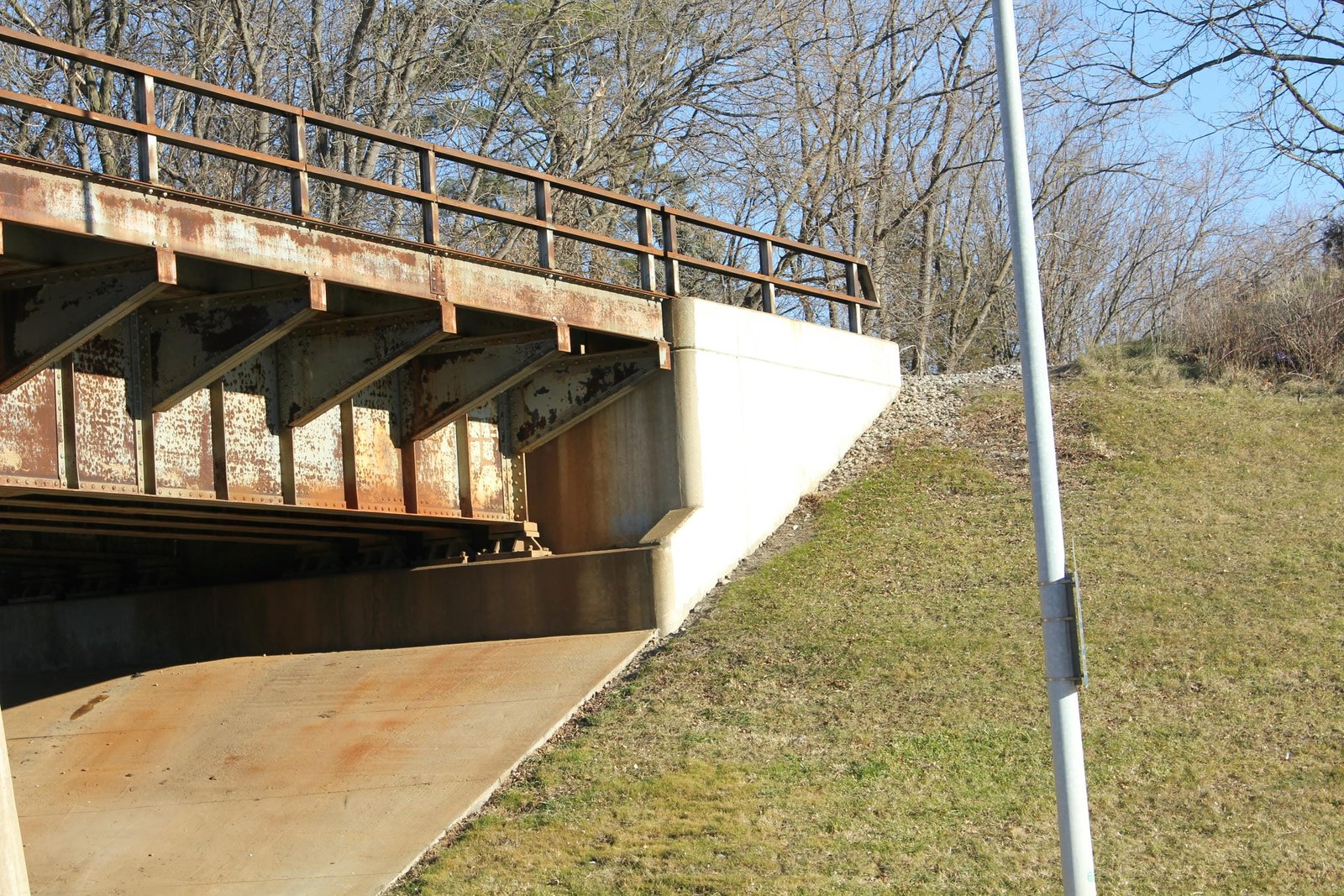
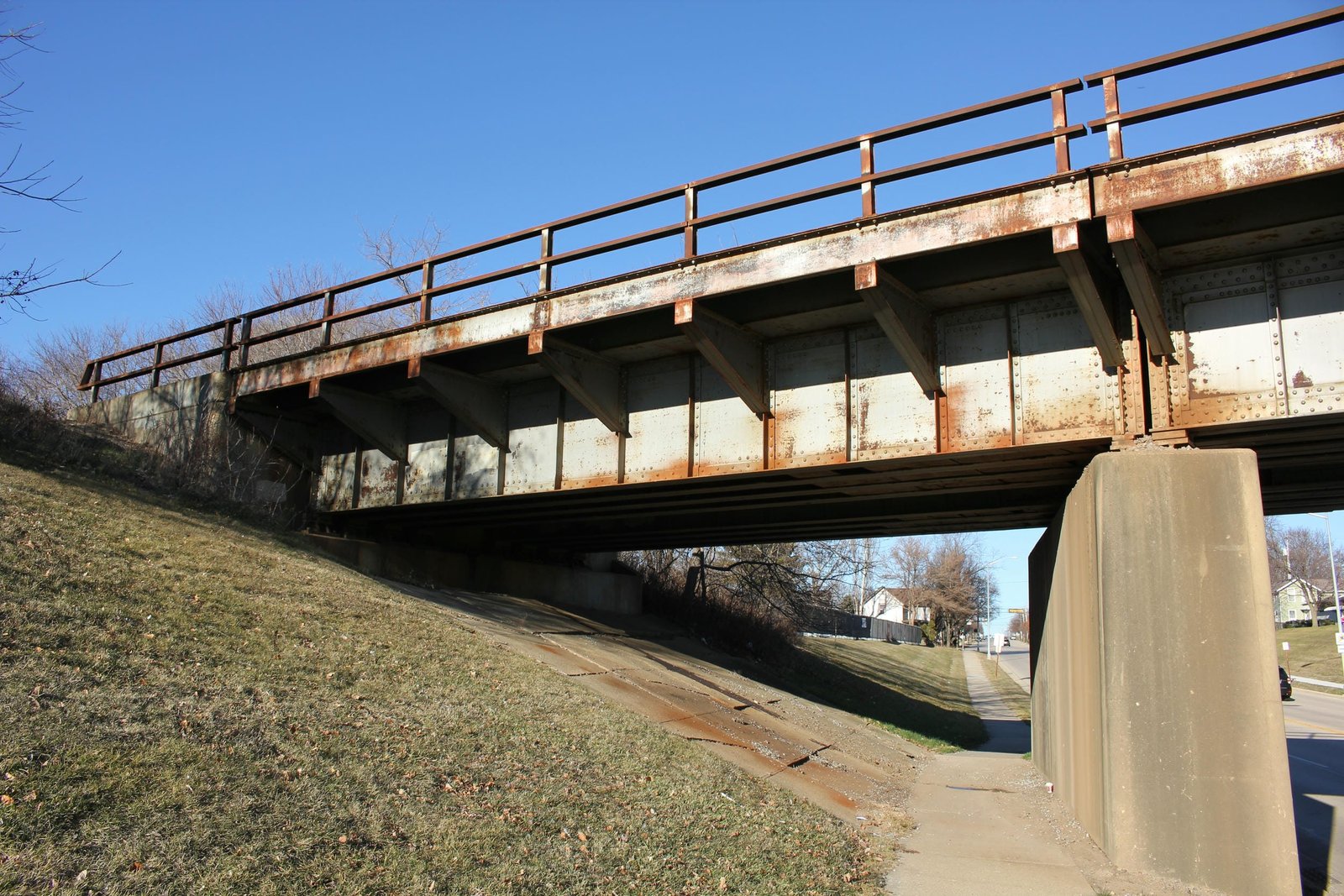
Located in Watertown, this deck plate girder bridge carries the former Chicago, Milwaukee, St. Paul & Pacific Railroad (Milwaukee Road) mainline over Church Street. Prior to the 1960s, Wisconsin Highway 26 took a different route through Watertown, jogging on a number of local streets. In the late 1950s and early 1960s, upgrading this roadway became a priority of the Wisconsin Highway Department, and a new alignment and underpass were authorized at this location in early 1960. Work on the structure began in 1960 or 1961, and was completed by 1961. Currently, the bridge consists of a double track deck plate girder bridge, with spans of 70 feet, 45 feet and 35 feet, set onto concrete substructures. The superstructure uses a typical design for the era, with four heavy girders per span, a ballast deck and basic steel handrails. The substructures also use a standard design, with rectangular piers and a traditional style "U" abutment. An unknown contractor fabricated the superstructure, and an additional unknown contractor constructed the substructures. Deck plate girder spans were commonly used by railroads, as they were durable and easy to construct. Since the initial construction, the bridge has seen few alterations, and today only the south track remains in use. Wisconsin Highway 26 was relocated to a bypass of Watertown in the early 2010s, and the roadway now serves as a business loop of Highway 26. Overall, the bridge appears to be in good condition, with no significant deterioration noted. The author has ranked the bridge as being minimally significant, due to the newer age.
Citations
| Build date | National Bridge Inventory (NBI) |
| Railroad History Citation | ICC Valuation Information, Compiled by Richard S. Steele |