
Click the photo to view the full-size version
| Name | Waverly Interurban Bridge |
| Built By | Waterloo, Cedar Falls & Northern Railway |
| Currently Owned By | Iowa Department of Transportation |
| Contractor | Harrington Brothers of St. Louis, Missouri |
| Length | 75 Feet Total, 25 Foot (Estimated) Main Span |
| Width | 1 Track |
| Height Above Ground | 20 Feet (Estimated) |
| Superstructure Design | Concrete Arch |
| Substructure Design | Concrete |
| Date Built | 1910 |
| Traffic Count | 0 Trains/Day (Bridge is Abandoned) |
| Current Status | Abandoned |
| Significance | Moderate Significance |
| Documentation Date | 2/29/2020 |
In the late 19th Century, electric interurban railways became popular throughout the United States, particularly in suburban and rural areas. In rural areas, the interurban represented a reliable form of transportation, independent of the steam railroads. In 1895, the Waterloo and Cedar Falls Rapid Transit (WCFRT) was organized to construct an 8-mile electrified railroad, extending from Waterloo, Iowa to Cedar Falls, Iowa. A short spur would also be constructed to the northwest side of Waterloo opposite of Sans Souci Island. The line was completed in 1898, and soon the company took over the streetcar line in Waterloo. Between 1901 and 1903, a new line was built to Denver, Iowa; and a short spur constructed to connect to the Chicago Great Western Railway (CGW). The company was renamed as the Waterloo, Cedar Falls & Northern Railway (WCF&N) in 1904. From the beginning, the railroad built to steam railroad standards to optimize potential interchange with larger railroads. In 1910, a short extension was completed between Denver and Waverly, Iowa. In 1912, a new line was constructed south from Waterloo, Iowa to La Porte City, Iowa. The following year, the line was extended further to Urbana, Iowa; and by the end of 1914 the line reached Cedar Rapids, Iowa. The railroad electrified the entire system, and was well regarded for providing both passenger and freight service. A bypass of Waterloo and Cedar Falls allowed the railroad to interchange with several Class-I railroads.
By the mid-20th Century, transportation in America was changing and the automobile took most passenger traffic from the interurbans. Streetcar service in Waterloo was replaced by busses in 1939, followed by Cedar Falls in 1941. The WCF&N fell into receivership and was reorganized in 1944. By the 1950s, much of the passenger traffic had evaporated, but the railroad was still significant for serving freight traffic. In 1956, the Illinois Central Railroad (IC) and the Chicago, Rock Island & Pacific Railroad (Rock Island) jointly purchased the WCF&N and renamed it the Waterloo Railroad (WR). Passenger service to Waverly had ended in 1955, passenger service to Cedar Rapids ended in 1956 and remaining passenger operations were shut down in 1958. A large portion of the northwest Waterloo spur was abandoned in 1958 and the line to Waverly was abandoned in 1959.
In 1968, the Rock Island sold their share of the WR to the IC. In 1972, the IC merged with Gulf, Mobile & Ohio Railroad to form Illinois Central Gulf Railroad (ICG). The segment between Gilbertville, Iowa and Cedar Rapids was abandoned in 1977, followed by the segment between Evansdale, Iowa and Gilbertville in 1981. The remaining portions in Waterloo and Cedar Falls was sold to the Chicago Central & Pacific Railroad (CC) in 1985. In 1996, the railroad was repurchased by IC, which was purchased by Canadian National Railway (CN) in 1998. Today, CN operates a short segment of track around Waterloo and Cedar Falls. The line between Evansdale and Cedar Rapids has been reused as the Cedar Valley Nature Trail, while the Waverly line has been completely abandoned.
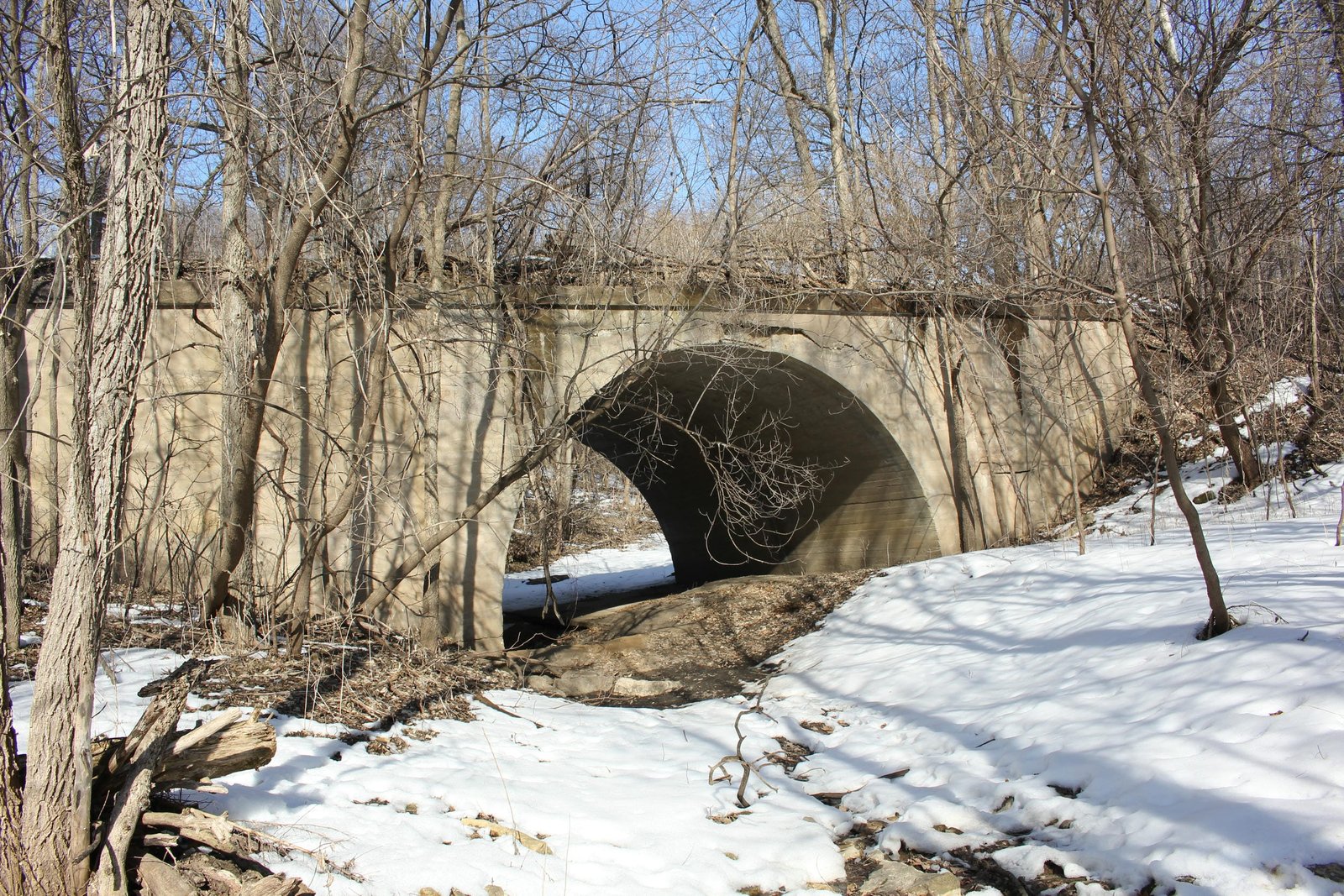
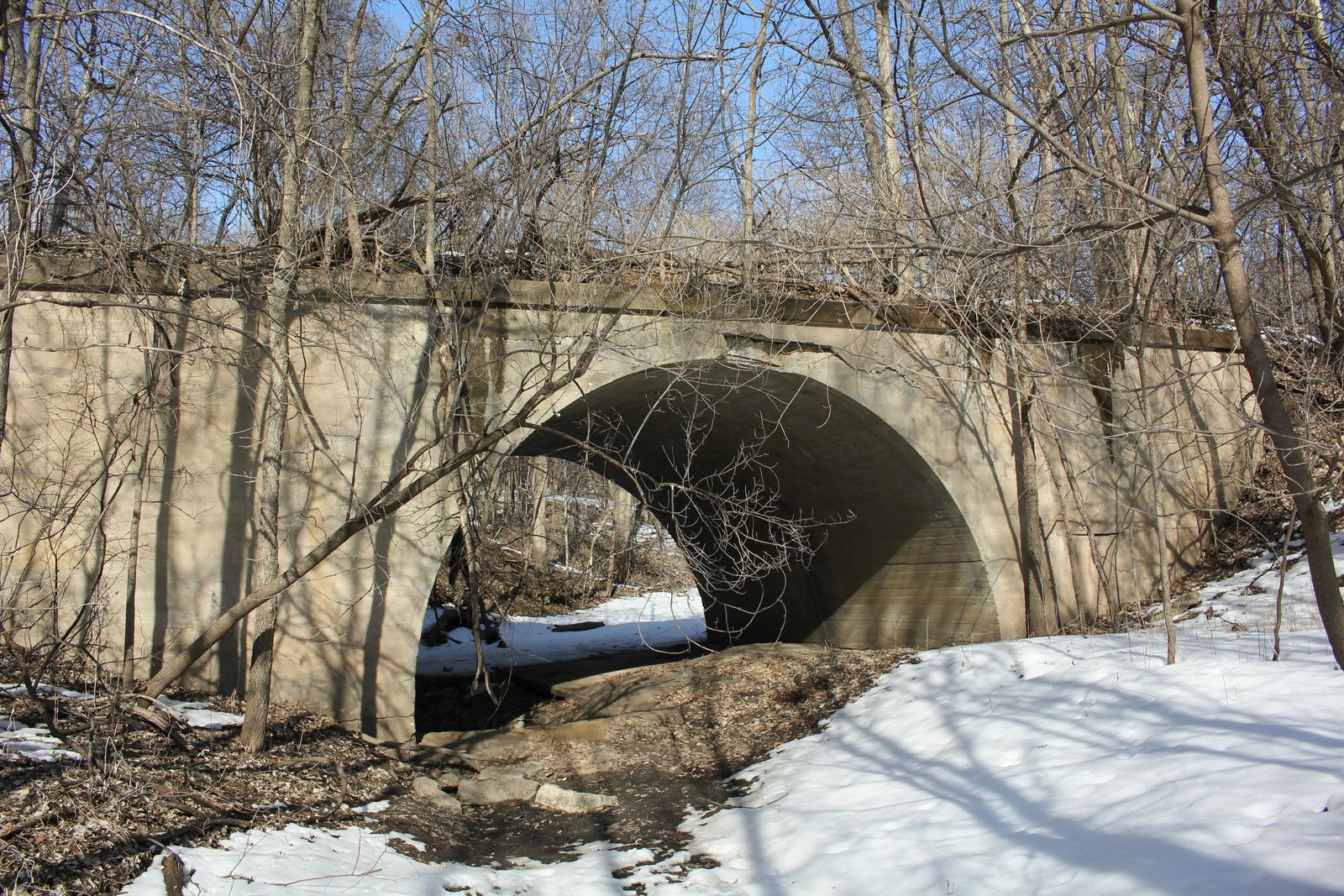
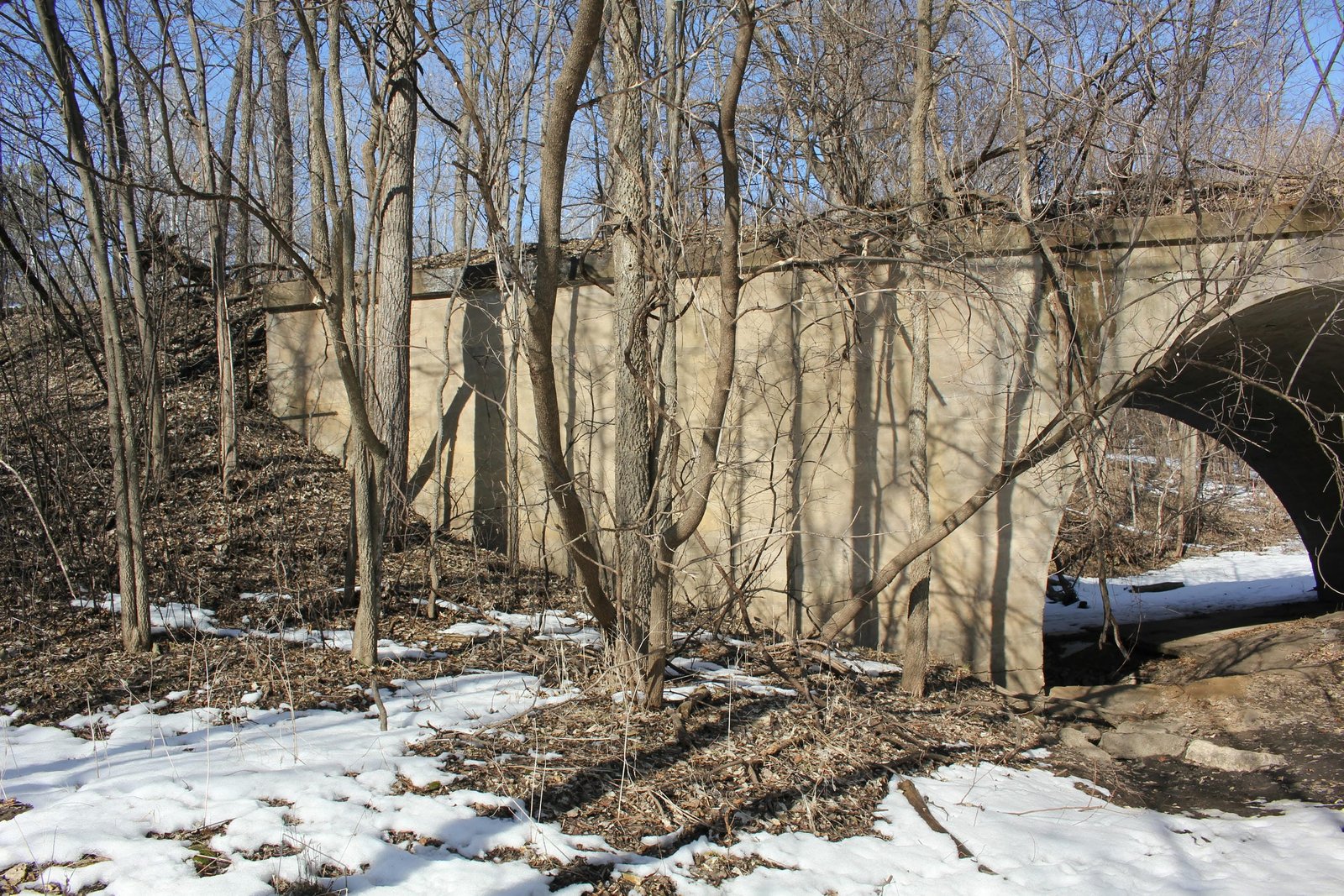
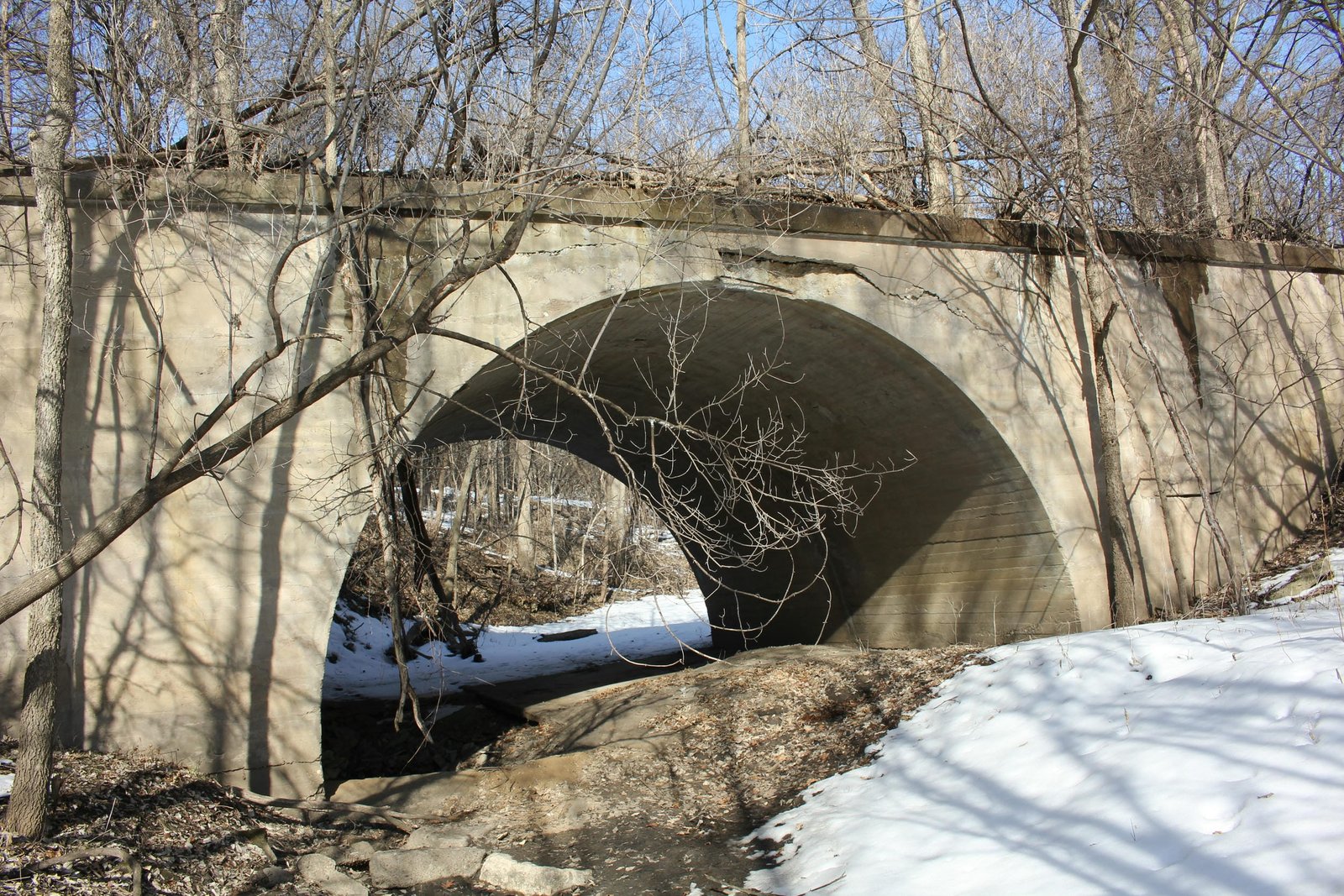
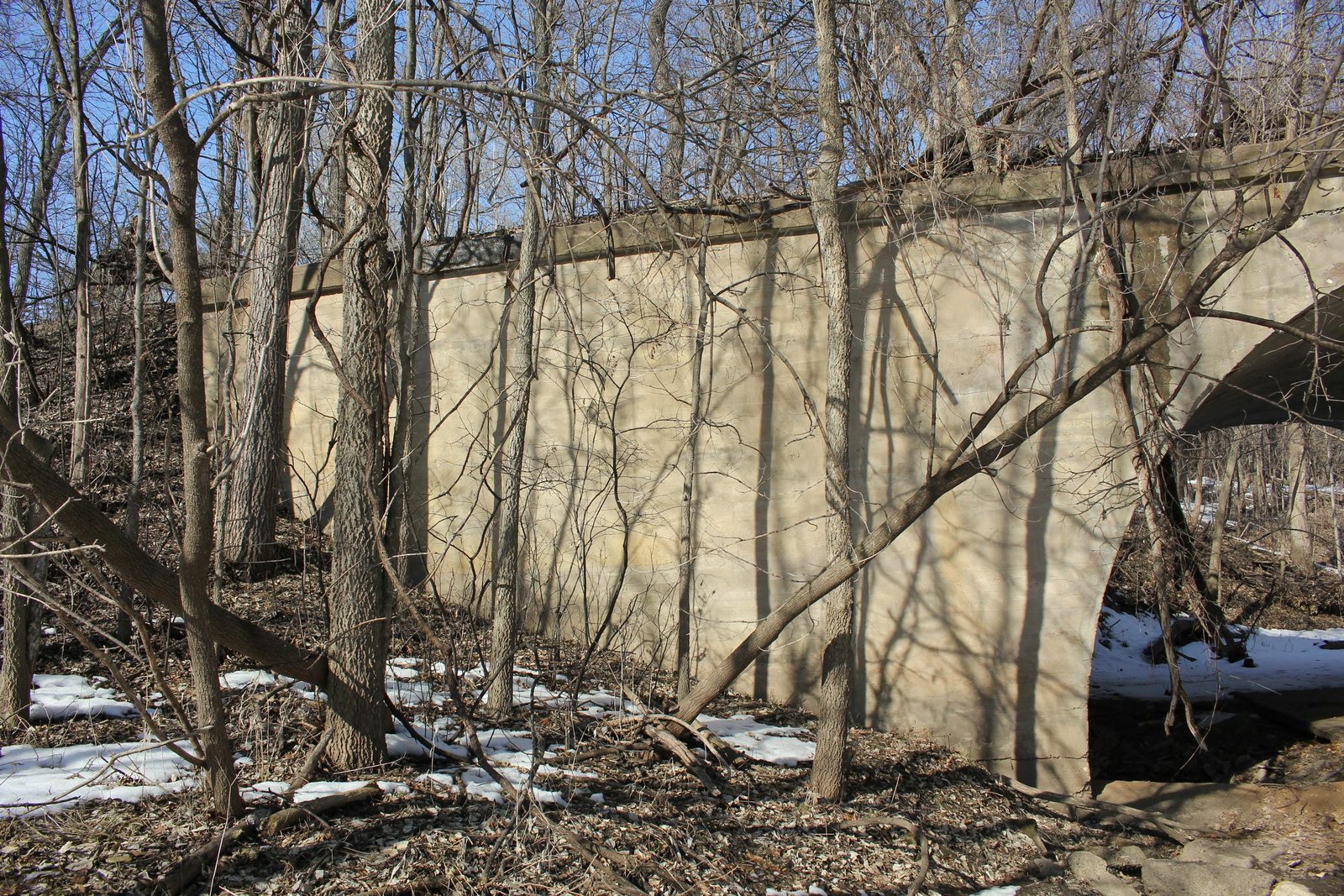
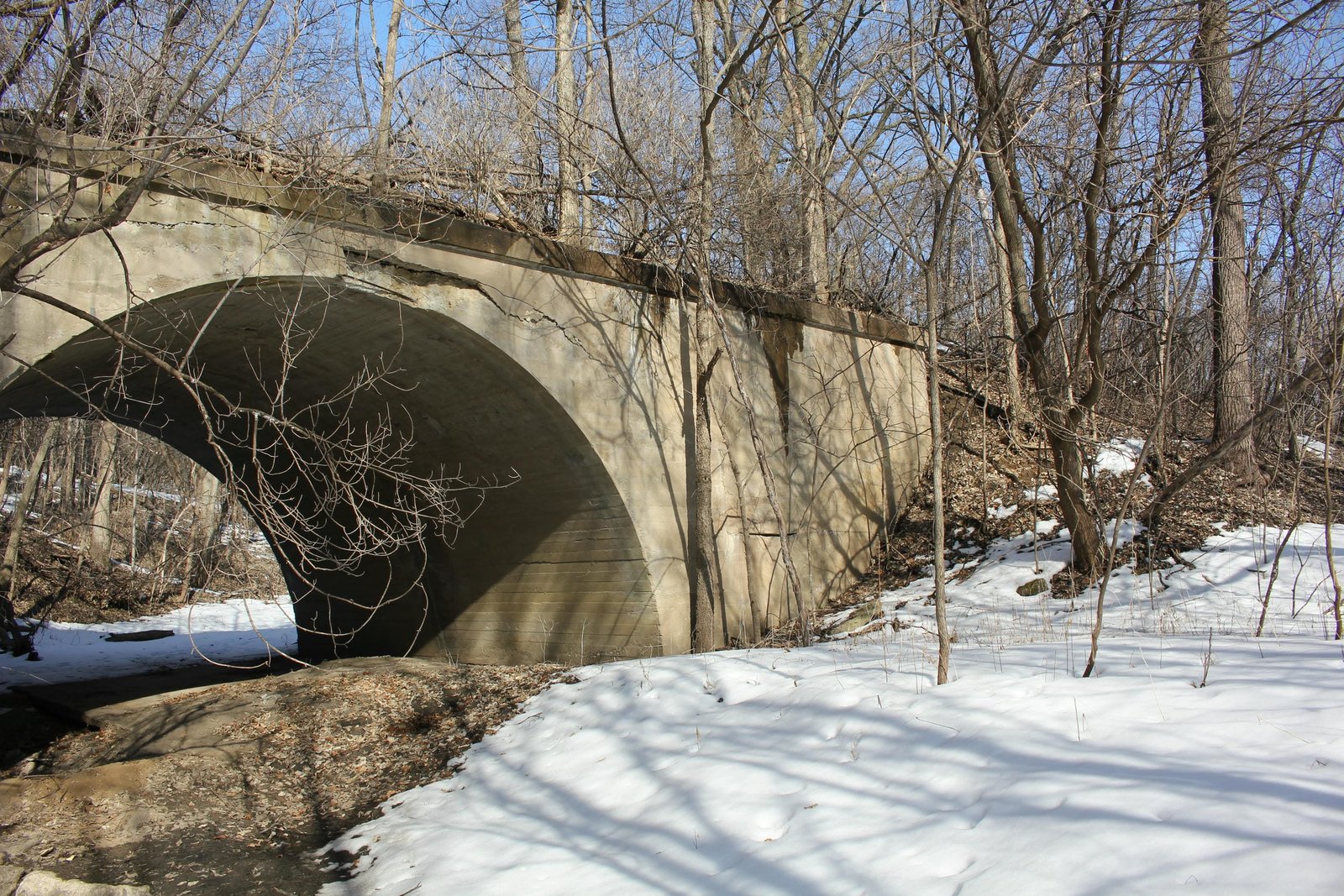
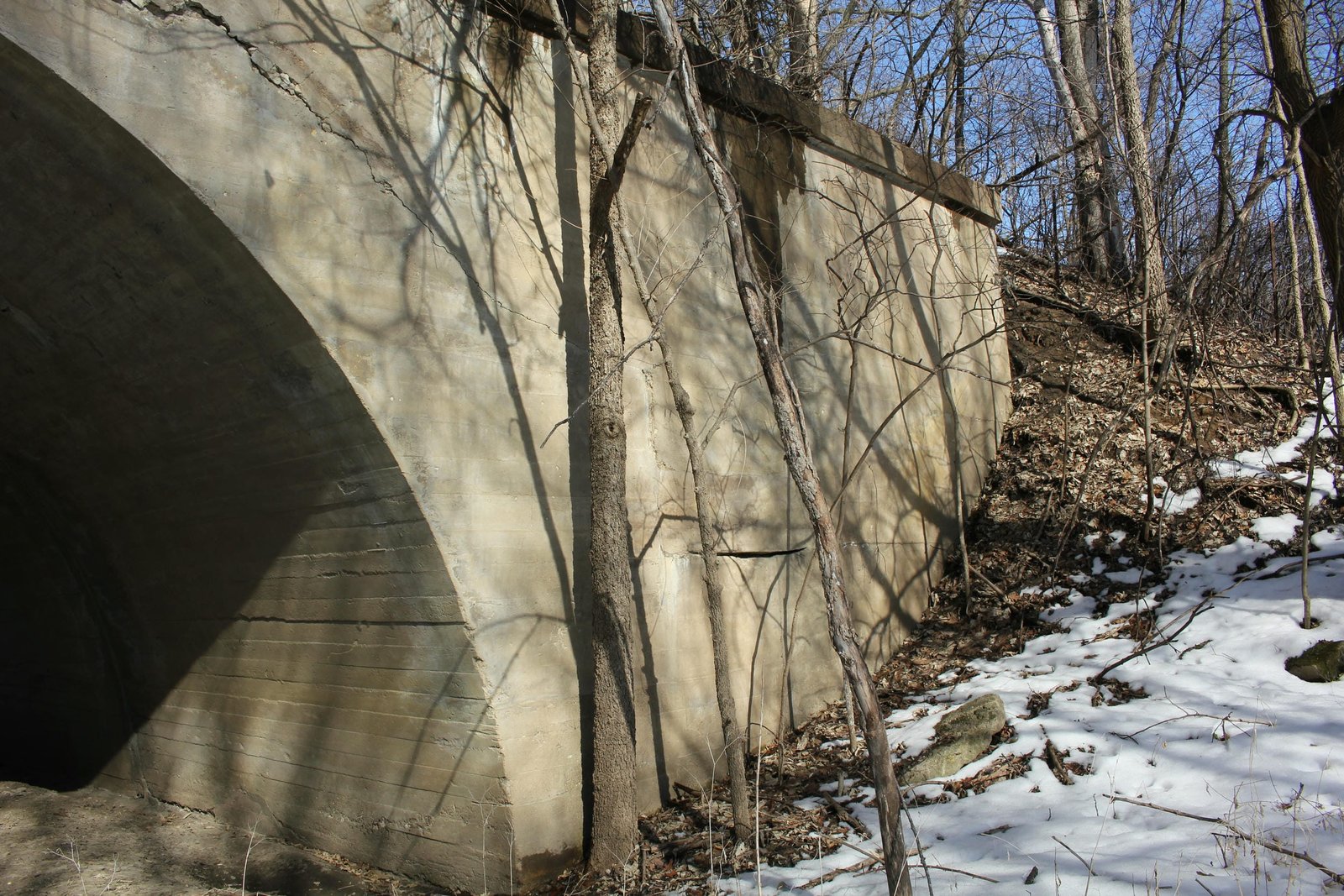
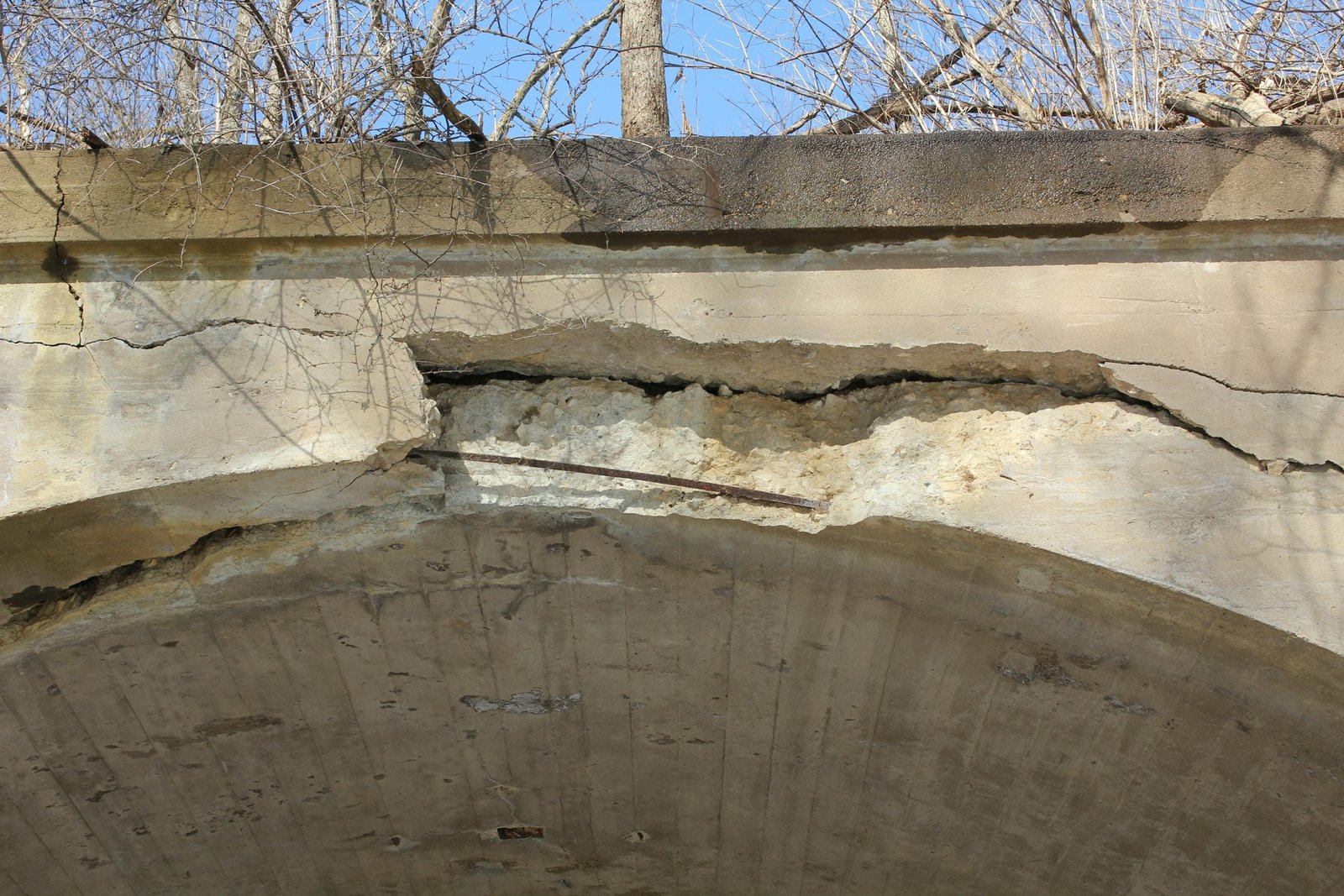
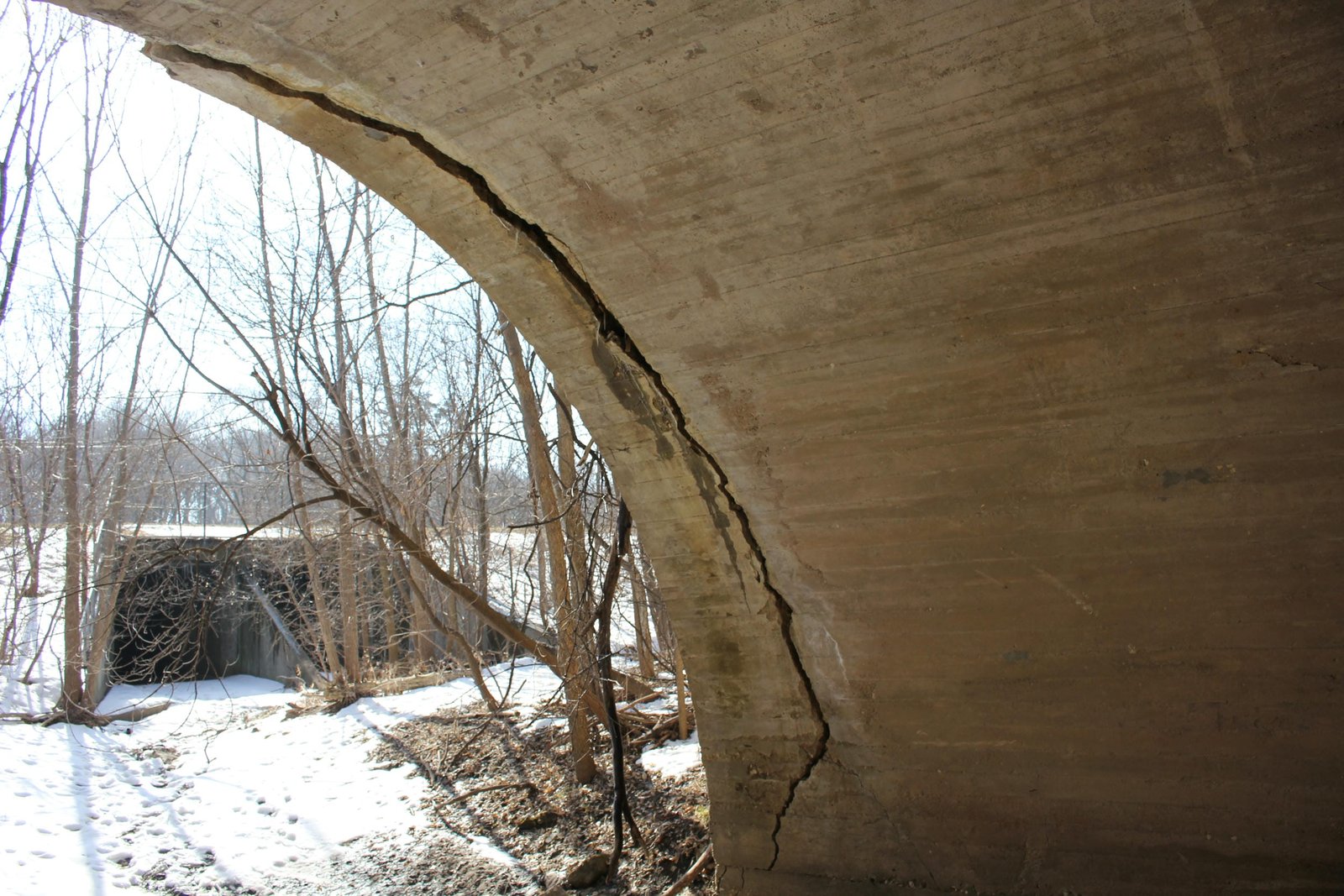
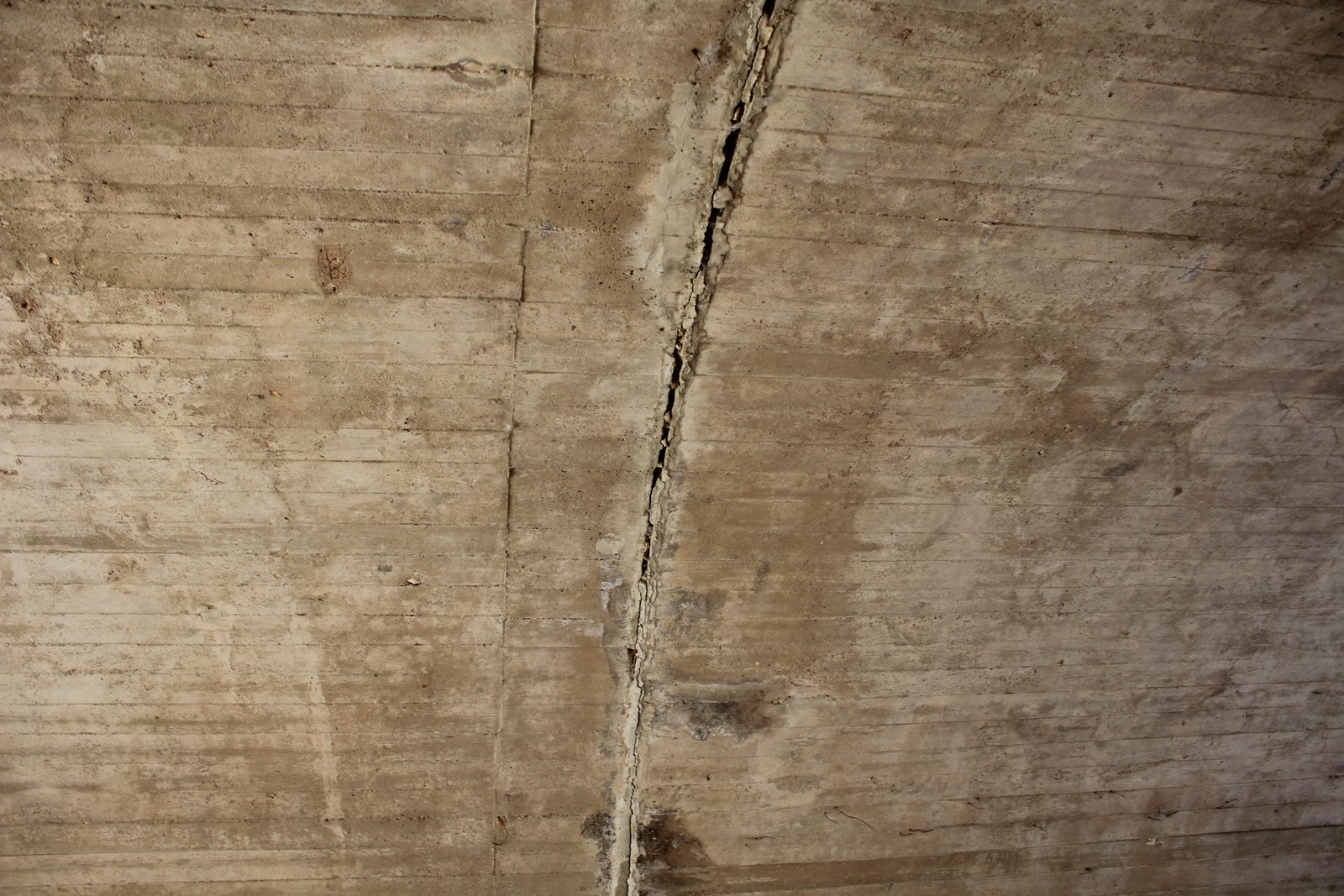
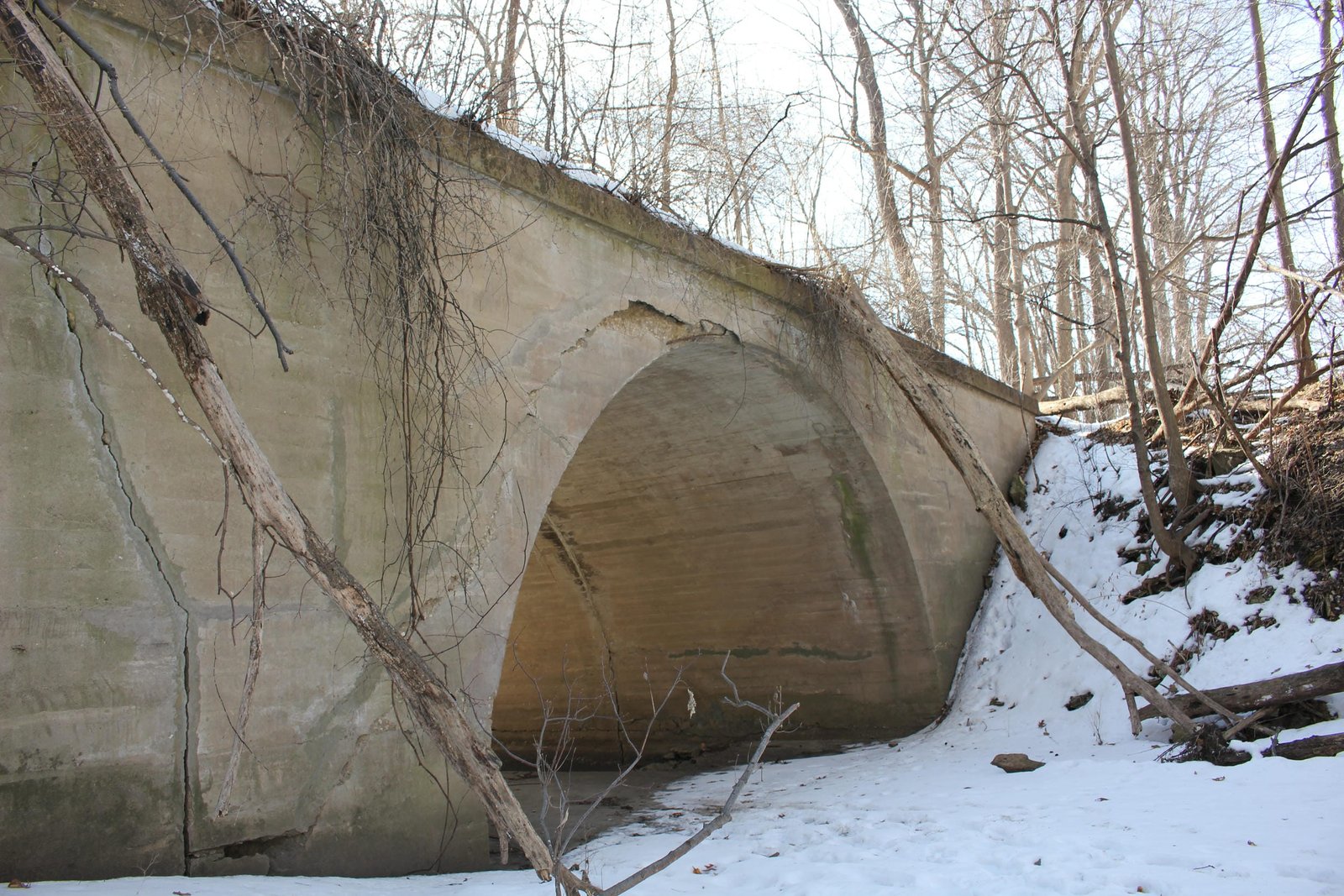
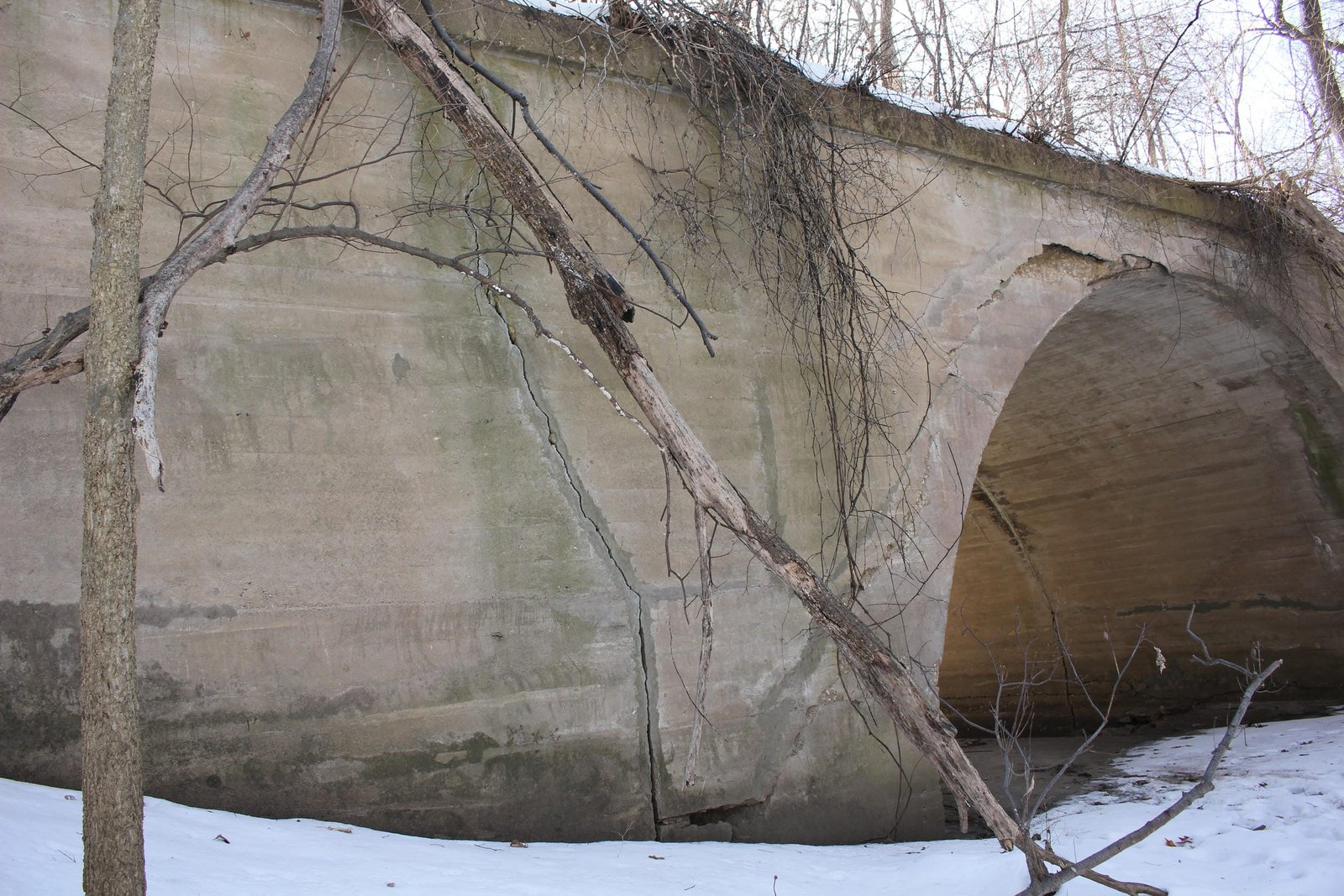
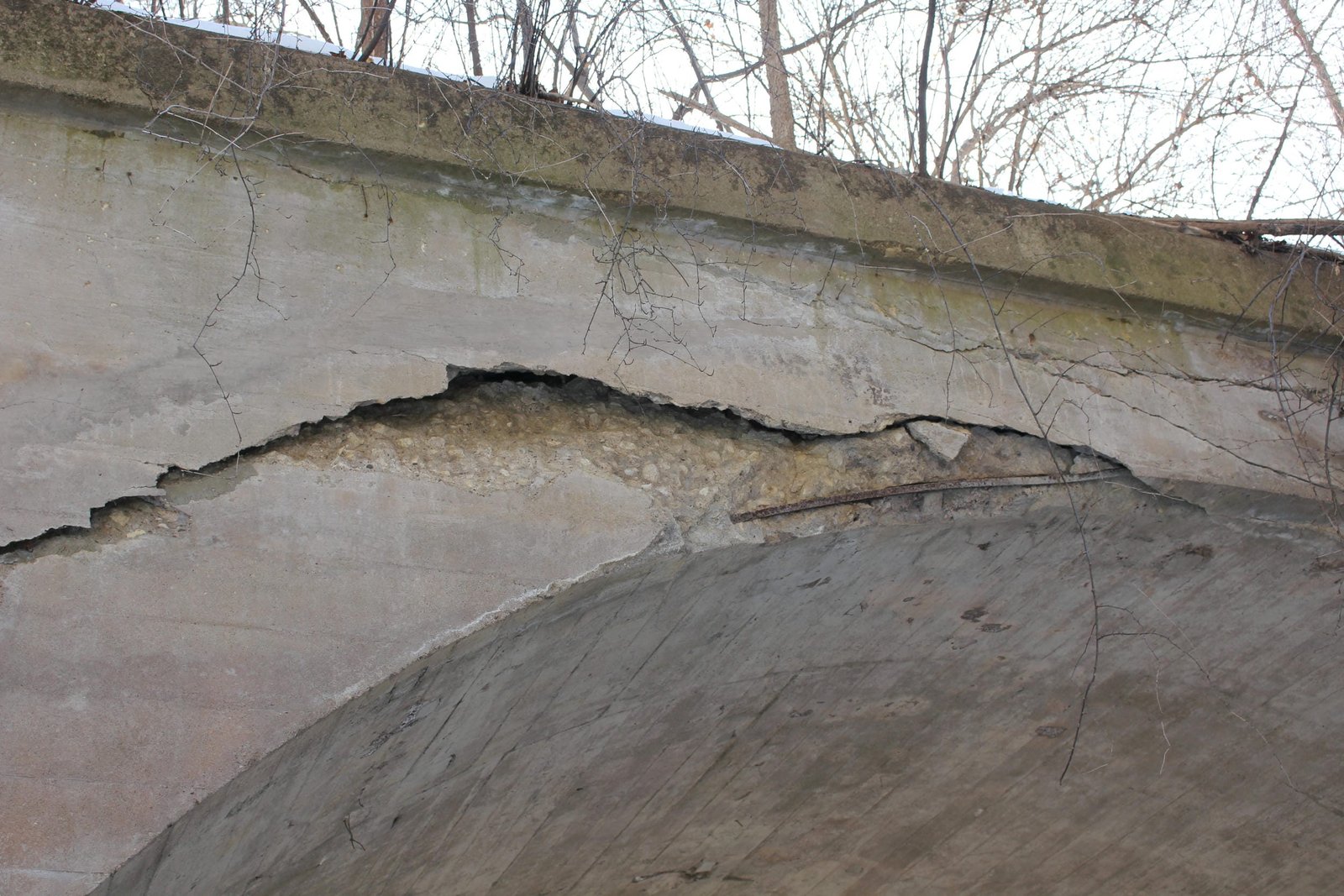
Located along Bremer Avenue on the east side of Waverly, this concrete arch bridge carries a former Waterloo, Cedar Falls & Northern Railway branch over an unnamed creek. In early 1910, contracts were awarded for the construction of an extension between Denver, Iowa and Waverly, Iowa. As part of the work, a large concrete arch bridge would be constructed on the east side of Waverly. Work on the structure began in late spring 1910, and was completed by June of that year. This bridge would be one of many concrete arches constructed throughout the WCF&N system. Currently, the bridge consists a single 25-foot concrete arch span, set onto concrete substructures and constructed for a single track at a width of 30 feet. The superstructure follows a standard design for WCF&N concrete arches, with a semicircular arch and short headwalls. The abutments use an elongated "U" shape to allow for grading of the embankment. The superstructure and substructures appear to have been constructed monolithically, a typical practice for bridges of this design. Unlike other WCF&N bridges, there are no decorative features visible on this bridge. Harrington Brothers was responsible for the construction of the entire bridge. Concrete arches were popular for interurban use, as they were durable and easy to construct. This type of bridge also represented a more modern and visually attractive style of construction to interurbans competing for passengers. Since the initial construction, the bridge has seen no significant alterations. The bridge was abandoned in 1959, and has stood unused since. Overall, the bridge appears to be in fair condition, with some cracking and spalling noted throughout the structure. Some of the cracking around the arch can possibly be attributed to the lack of an expansion joint. The author has ranked this bridge as being moderately significant, due to the design and history.
Citations
| Builder and build date | Waverly Republican; June 23, 1910 |
| Railroad History Citation | ICC Valuation Information, Compiled by Richard S. Steele |