
Click the photo to view the full-size version
| Name | UP IA-9 Bridge Chicago, Rock Island & Pacific Railway Bridge #169 |
| Built By | Chicago, Rock Island & Pacific Railway |
| Currently Owned By | Union Pacific Railroad |
| Superstructure Contractor | Unknown |
| Length | 86 Feet Total, 32 Foot Main Span |
| Width | 1 Track |
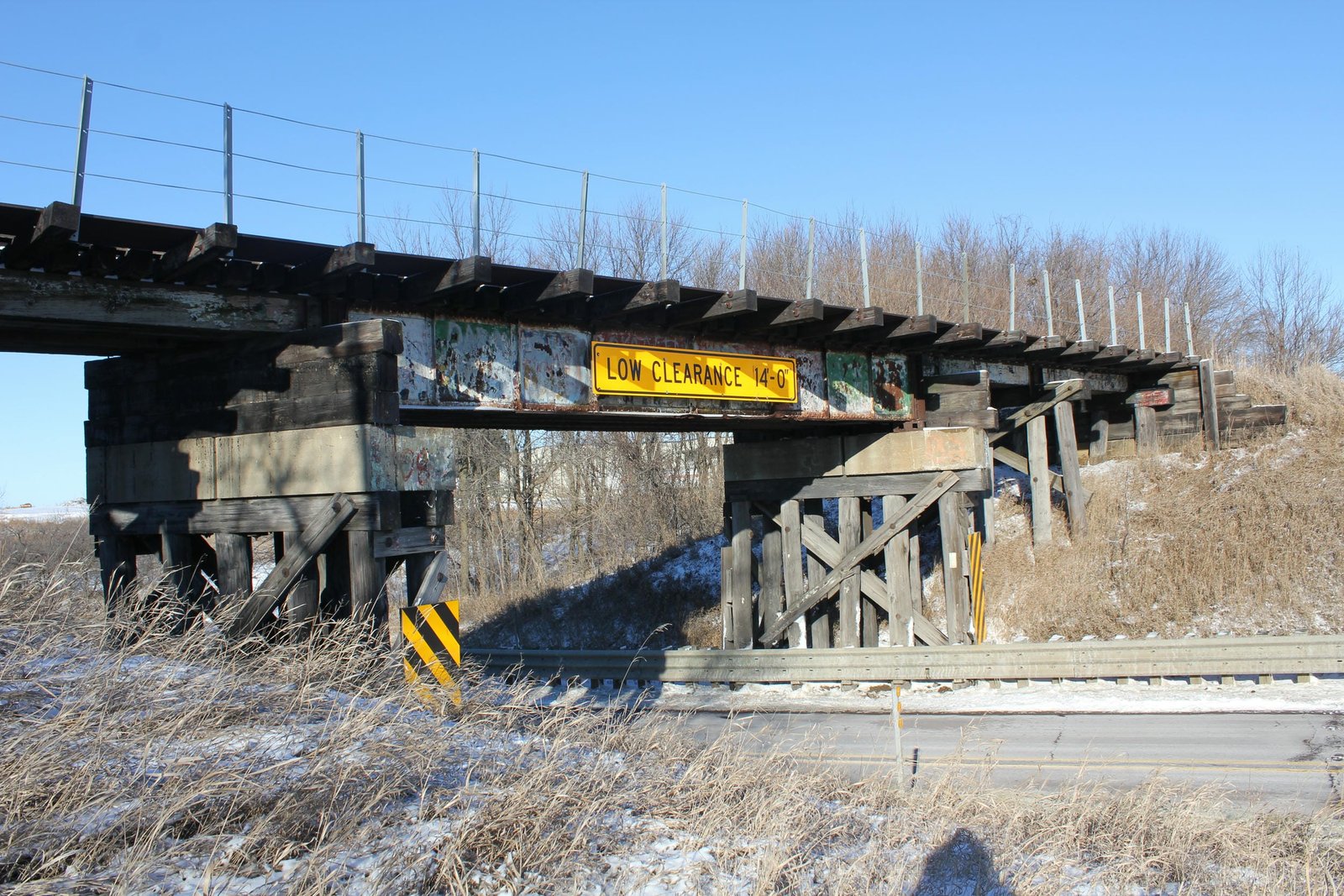
| Height Above Ground | 14 Feet 0 Inches |
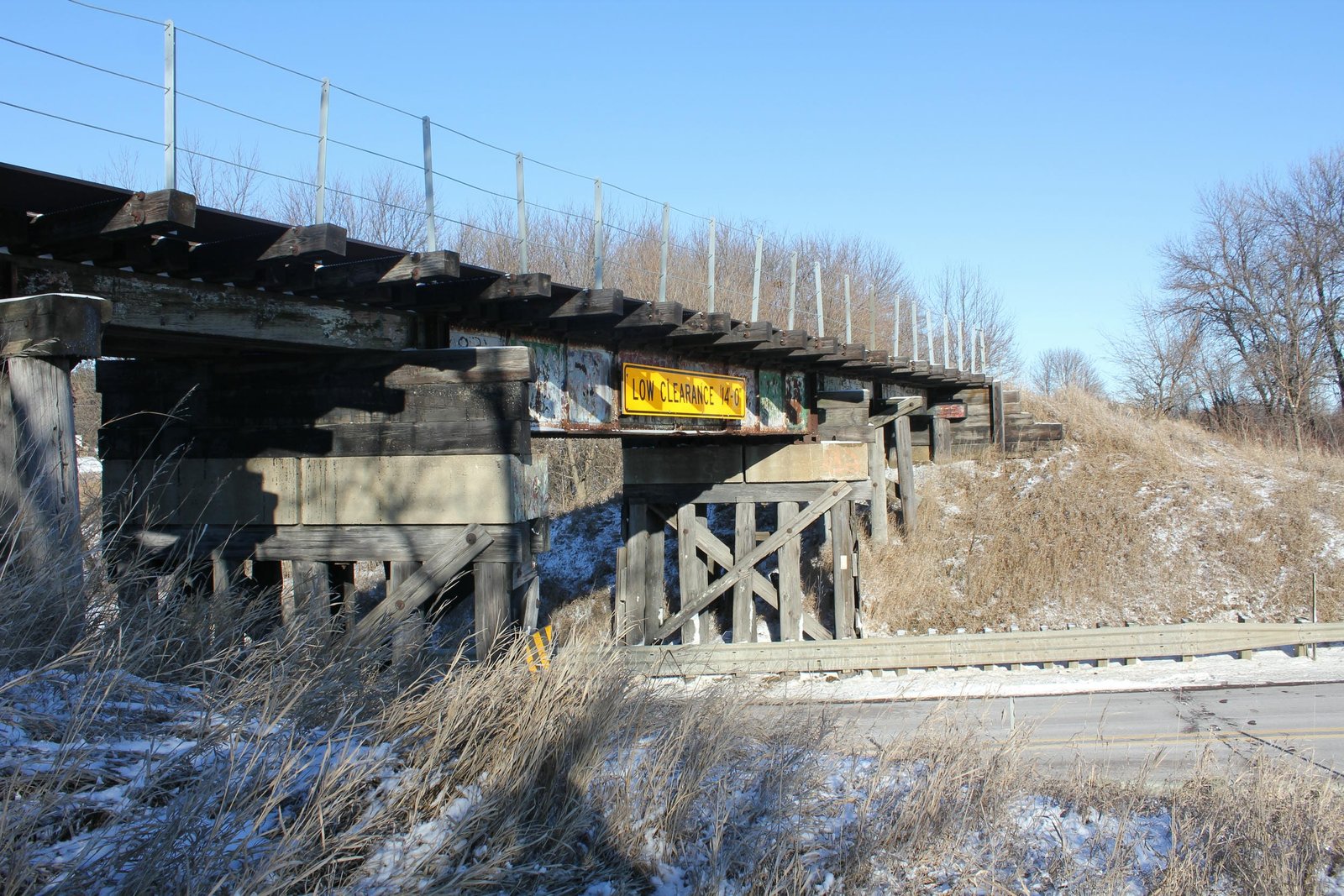
| Superstructure Design | Deck Plate Girder and Timber Pile Trestle |
| Substructure Design | Timber Pile |
| Date Built | 1931, Using a Span Fabricated c. 1900 |
| Original Location | Unknown |
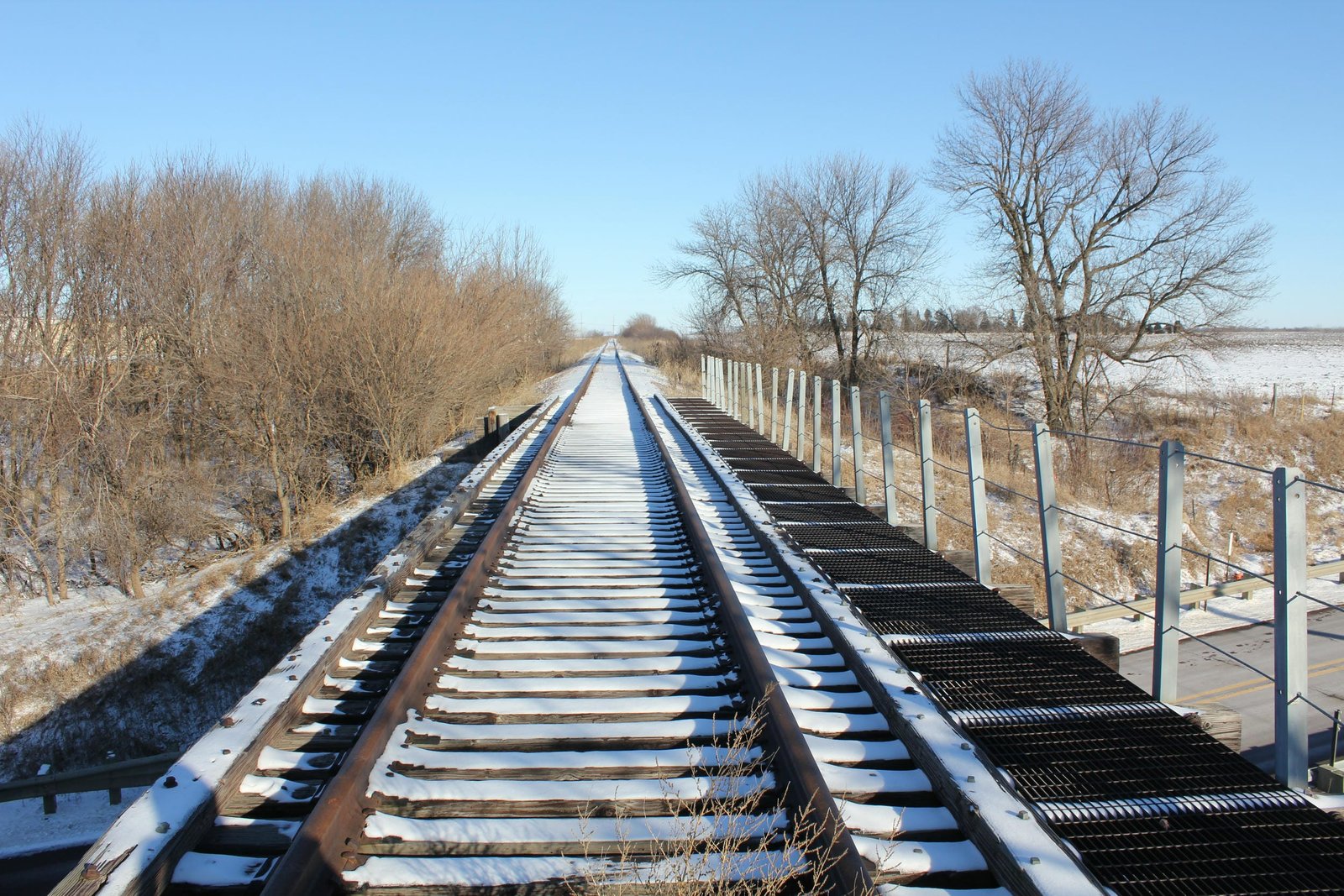
| Traffic Count | 0 Trains/Day (Bridge is Closed To Traffic) |
| Current Status | Closed to all Traffic |
| Chicago, Rock Island & Pacific Railroad Bridge Number | 169 |
| Union Pacific Railroad Bridge Number | 40.77 |
| Significance | Local Significance |
| Documentation Date | 12/27/2014 |
Between 1892 and 1893, the Burlington, Cedar Rapids & Northern Railway completed 47-miles of new railroad, extending from Forest City, Iowa to Armstrong, Iowa. When initially constructed, this line was separated from the remainder of the BCR&N system. A connection to the remaining system was not constructed until 1895, when a leased railroad constructed additional trackage south from Forest City. In 1900, the BCR&N constructed two significant additions to this line, including a 19-mile extension from Armstrong to Estherville, Iowa and a 44-mile line from Lakota, Iowa to Albert Lea, Minnesota. The intention of these extensions was to connect this line to the BCR&N system at multiple points. The BCR&N had constructed and acquired a large amount of track in southeast and northern Iowa during the late 19th Century, and had become a modest railroad in the Midwest. By the turn of the 20th Century, the BCR&N operated over 1,000 route miles, connecting several major terminals in Iowa, Minnesota and South Dakota. In June 1903, the BCR&N was acquired by the Chicago, Rock Island & Pacific Railway (Rock Island), which operated a large railroad network through the central United States.
This line served as a secondary line for the Rock Island, serving mainly agricultural industries and connecting more significant Rock Island routes. The Rock Island struggled financially throughout much of its history, experiencing repeated bankruptcies and chronic instability. After World War II, the Rock Island struggled to survive, proposing mergers and deferring maintenance on their routes. The railroad reorganized as the Chicago, Rock Island & Pacific Railroad in 1948. By the mid-1970s, the railroad was in serious decline. The railroad secured loans to eliminate slow orders, acquired new equipment, and attempted to restore profitability. In 1978, the railroad came close to profit, but creditors were lobbying for a complete shutdown of the Rock Island. During the fall of 1979, a strike crippled the railroad, and by January of 1980, the entire system was ordered to be shut down and liquidated. Many of the lines and equipment were scrapped. Profitable sections of railroad were prepared for sale.
In 1981, the Chicago & North Western Railway (C&NW) purchased the profitable section of this line between Estherville and Bricelyn, Minnesota. The segment between Bricelyn and Albert Lea was abandoned in 1982, and the segment between Lakota and Forest City was abandoned in 1985. Throughout the late 1980s and early 1990s, the C&NW invested capital into this line, replacing deteriorated bridges, ties and rail. In 1995, the C&NW was purchased by the Union Pacific Railroad (UP). Today, UP operates the Rake Subdivision between Estherville and Bricelyn. However, a large segment of the line between Gruver and west of Lakota is currently out of service, and has not seen a train since the early 2000s.
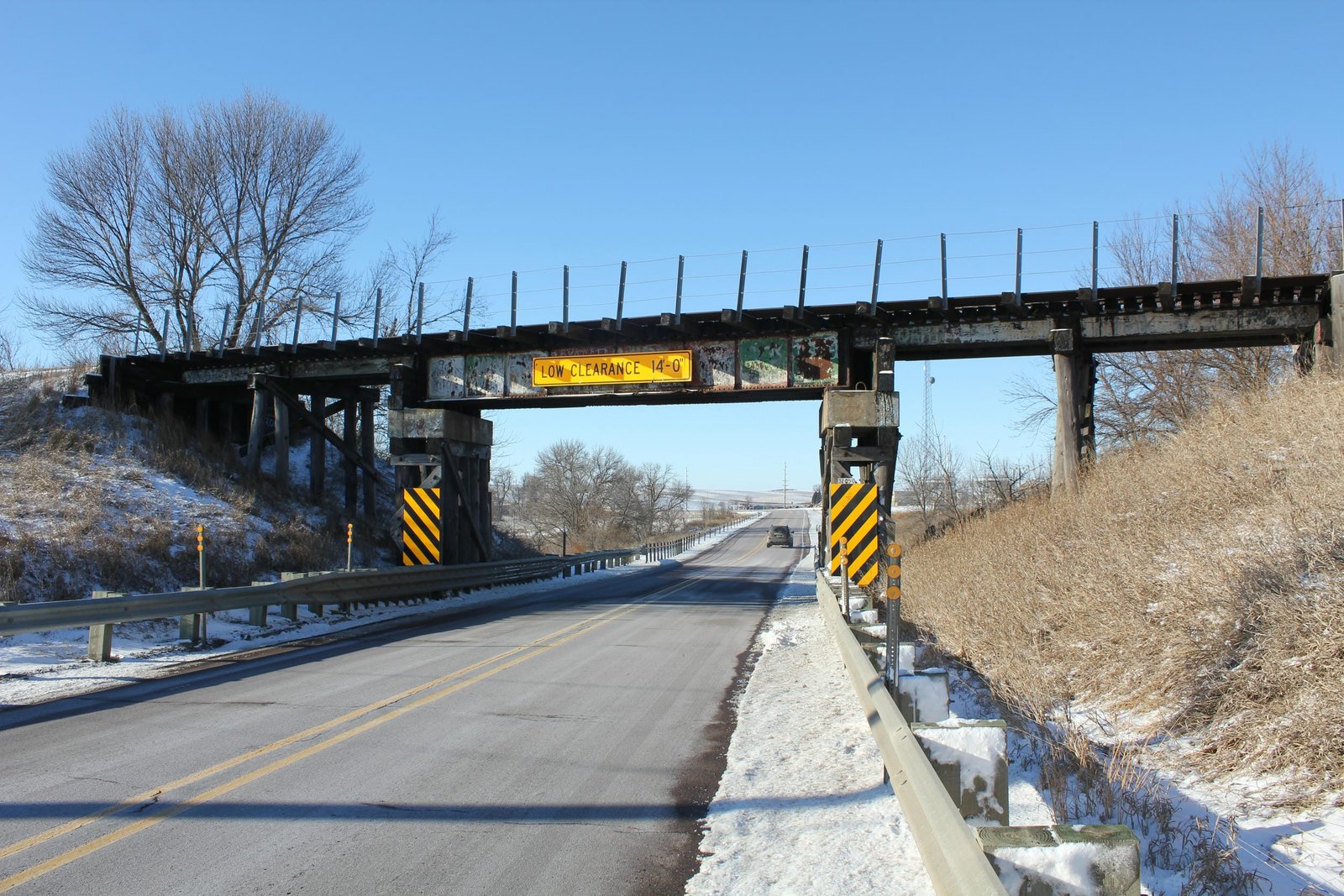
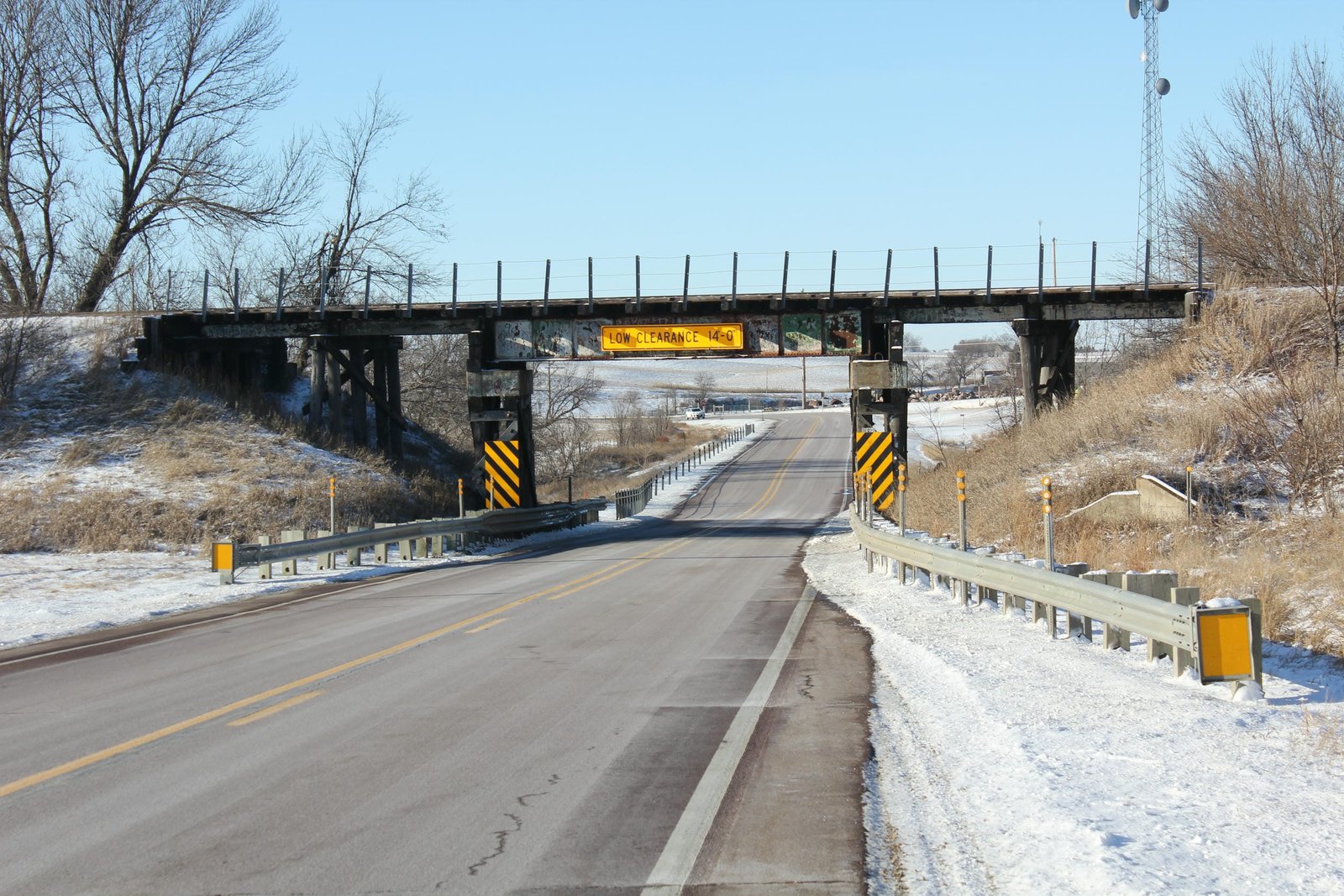
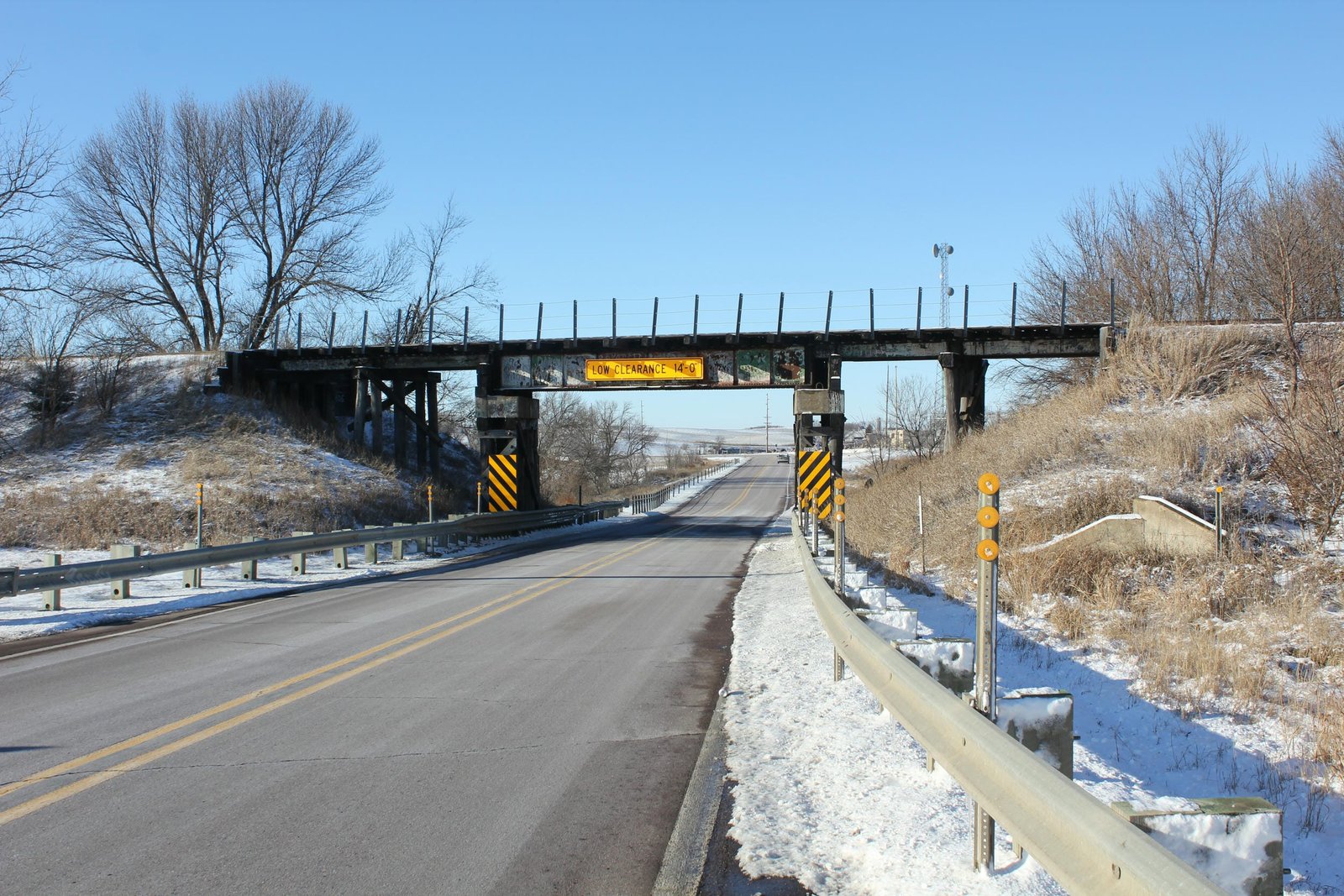
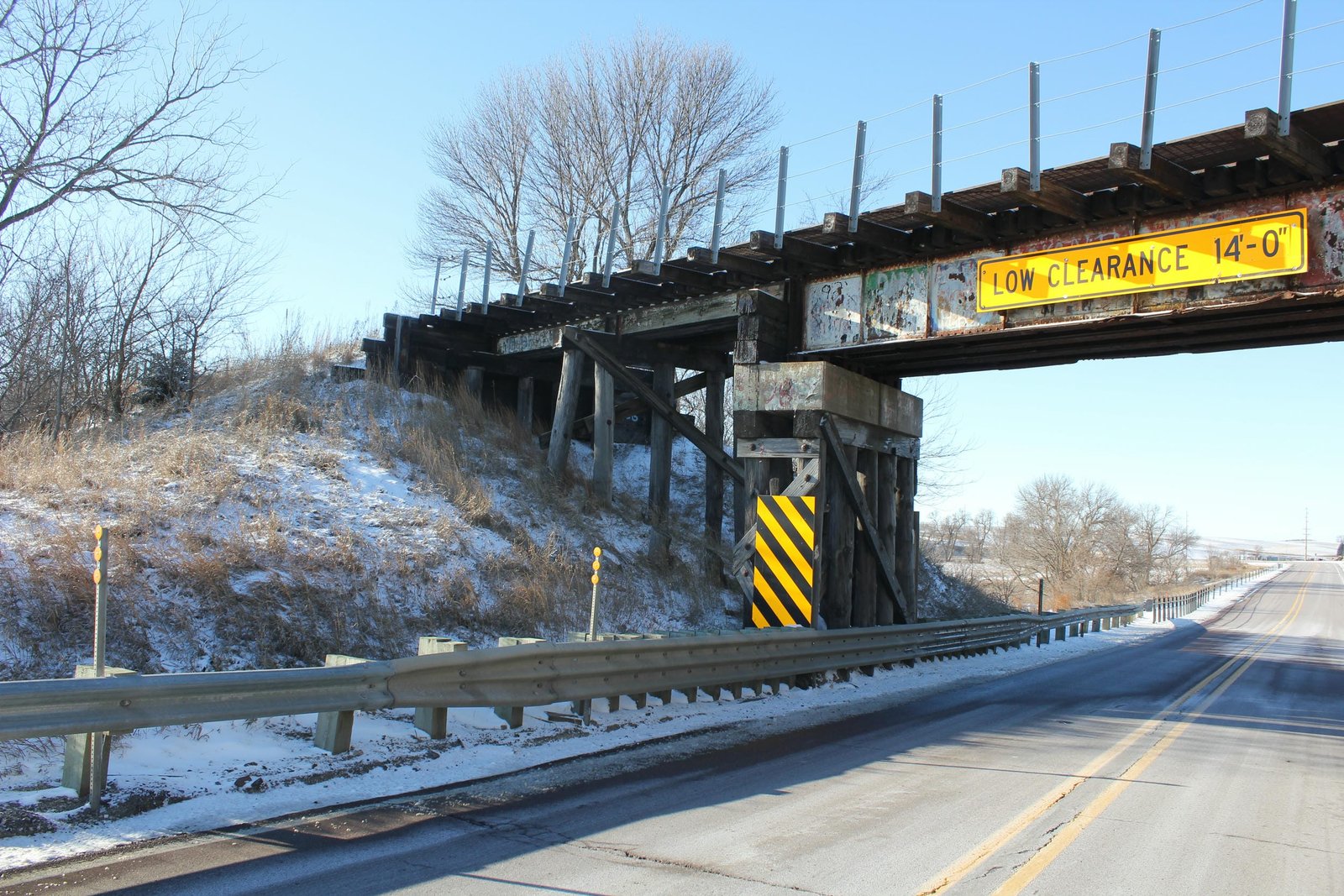
Located west of Armstrong, this steel stringer bridge carries a former Chicago, Rock Island & Pacific Railroad (Rock Island) line across Iowa Highway 9 near the East Fork Des Moines River Bridge. In the 1920s and 1930s, the Iowa Highway Commission worked to improve highways throughout the state. As part of several projects, grade separations were proposed at busy railroad crossings. Working with the railroad companies, the Iowa Highway Commission reached agreements to construct dozens of grade separations throughout the state. In 1931, contracts were awarded to pave Iowa Highway 9 near Armstrong. As part of the work, the Rock Island agreed to construct an underpass. As paving work progressed westwards, the Rock Island stalled on their obligation, claiming a lack of funds to construct the underpass. After reaching a revised agreement where the state would pay 60% of the cost, work on the underpass began in August 1931, and was completed in October of that year.
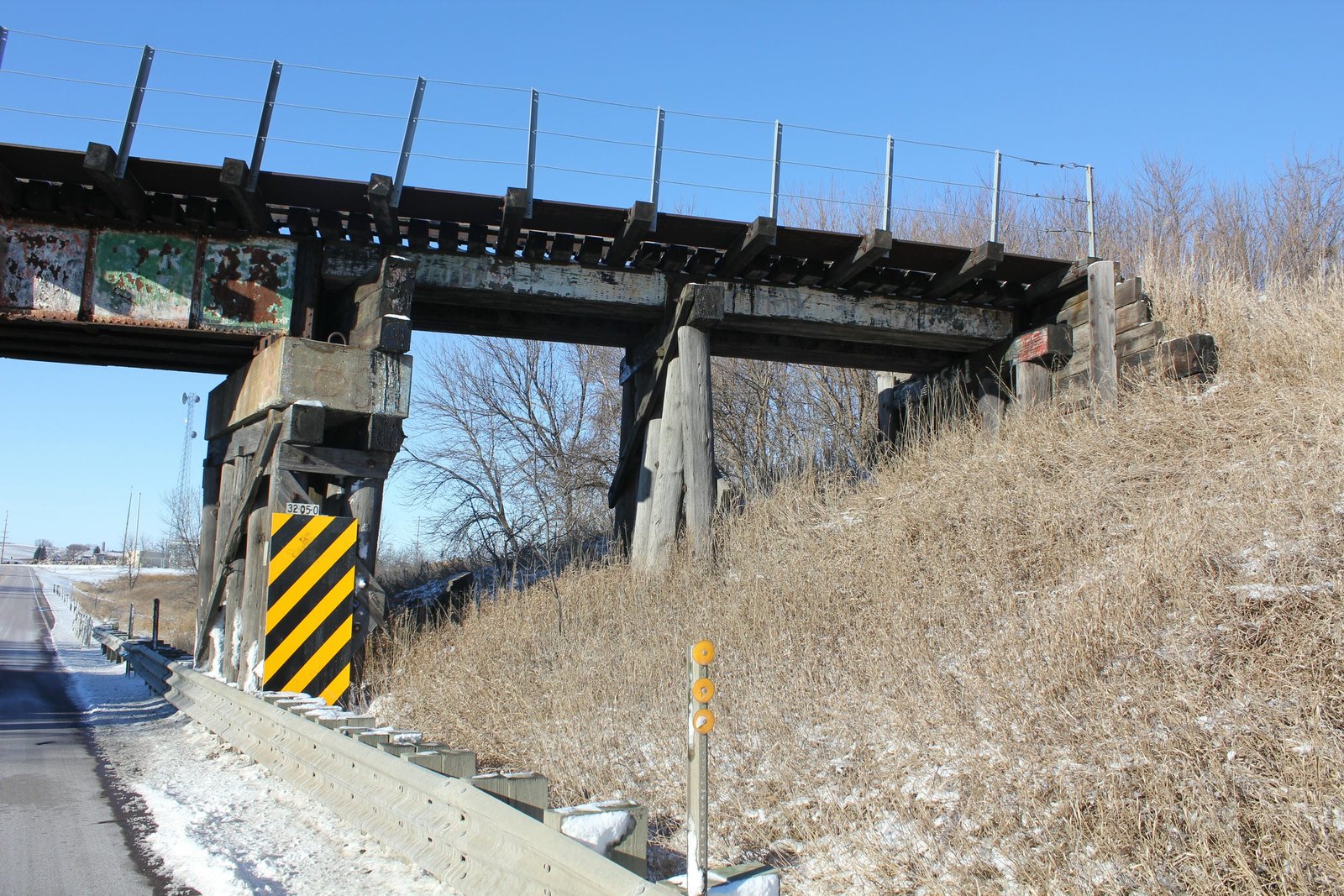
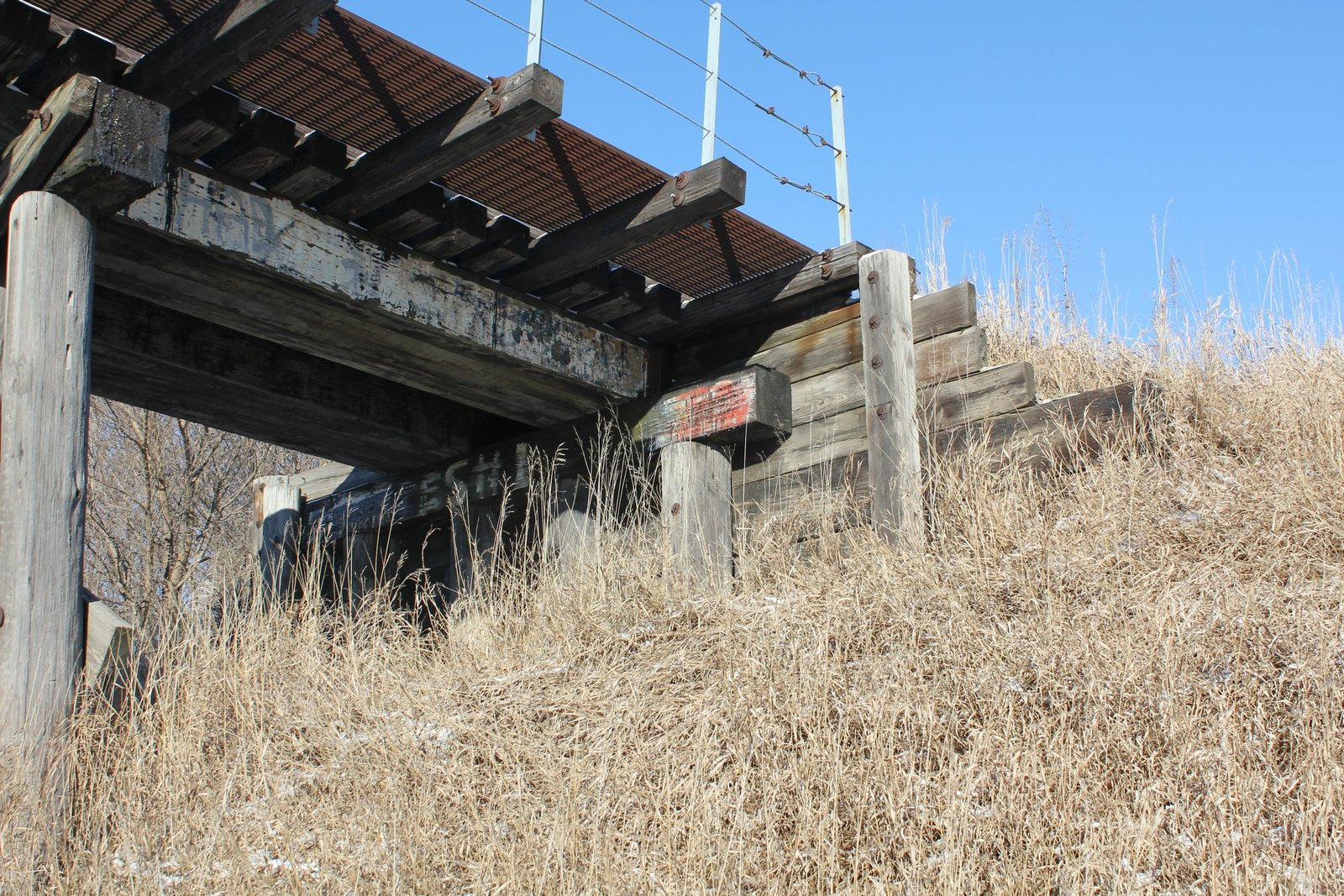
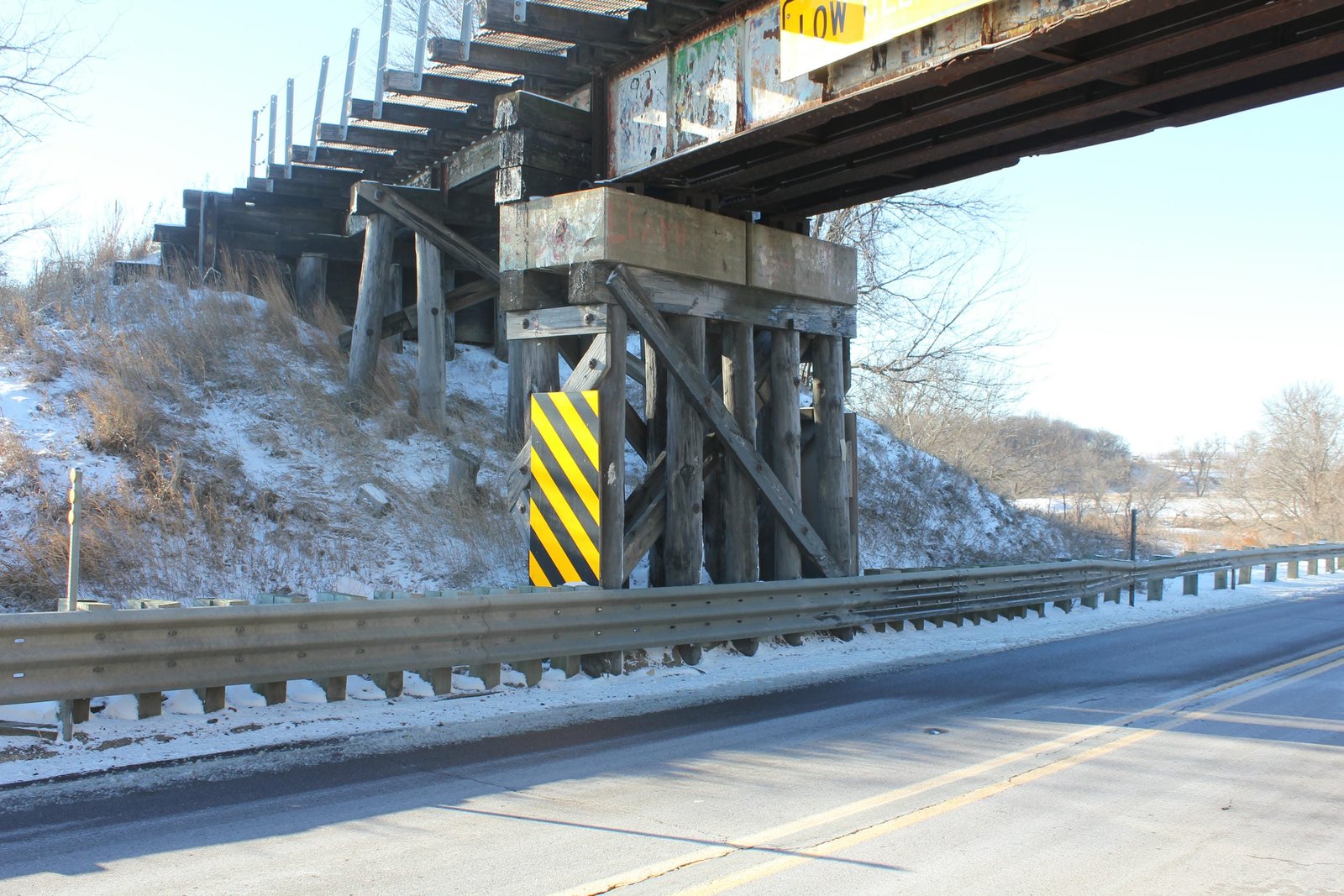
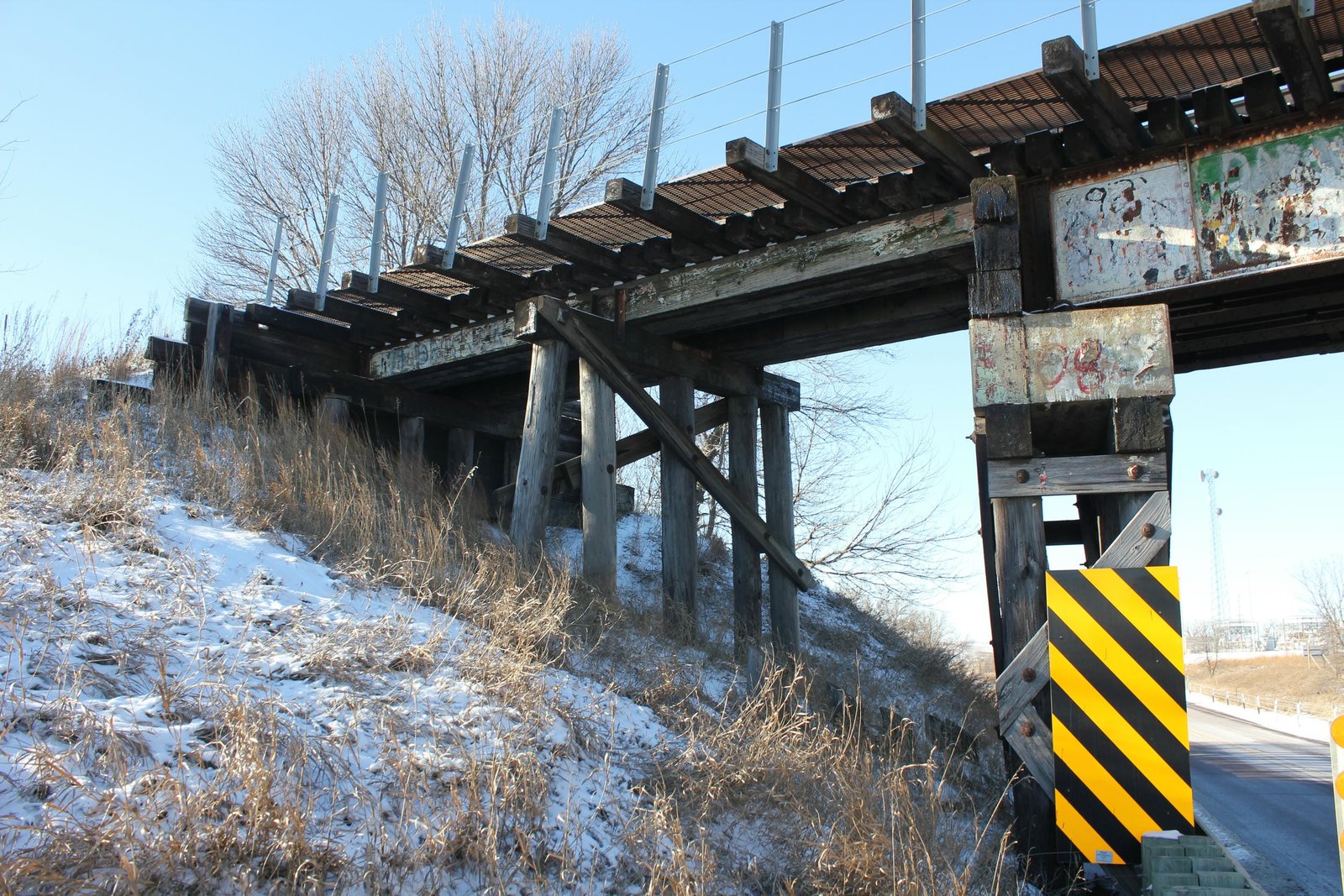
Currently, the bridge consists of a 32-foot deck plate girder span, approached by two timber pile trestle spans on either end. The entire bridge is set onto timber pile substructures, and the main piers have been raised with precast concrete blocks. The superstructure is composed of a secondhand deck plate girder, which was originally fabricated in approximately 1900 at unknown location(s). Upon being moved here, two separate spans were combined to form one "twinned" or double strength span. An unknown contractor fabricated the main span, while the remainder of the bridge was constructed by railroad company forces. Deck plate girder spans were commonly used by railroads, as they were durable and easy to construct. Railroads often reused steel and iron spans from one location to another, as it provided a cost effective way to construct bridges without requiring large amounts of new material. Since the initial construction, it appears that the bridge was raised approximately 1 foot by adding concrete blocks to the main piers and rebuilding the approaches. Overall, the bridge appears to be in fair condition, with truck strikes and other deterioration noted on the main span. Currently, the bridge is out of service, although not abandoned. The author has ranked this bridge as being locally significant, due to the common design.
Citations
| Erection date | Estherville Enterprise; August 5, 1931 |
| Railroad History Citation | ICC Valuation Information, Compiled by Richard S. Steele |