
Click the photo to view the full-size version
| Name | UP Ditch #3 Bridge Chicago, Rock Island & Pacific Railroad Bridge #1180 |
| Built By | Burlington, Cedar Rapids & Northern Railway |
| Currently Owned By | Union Pacific Railroad |
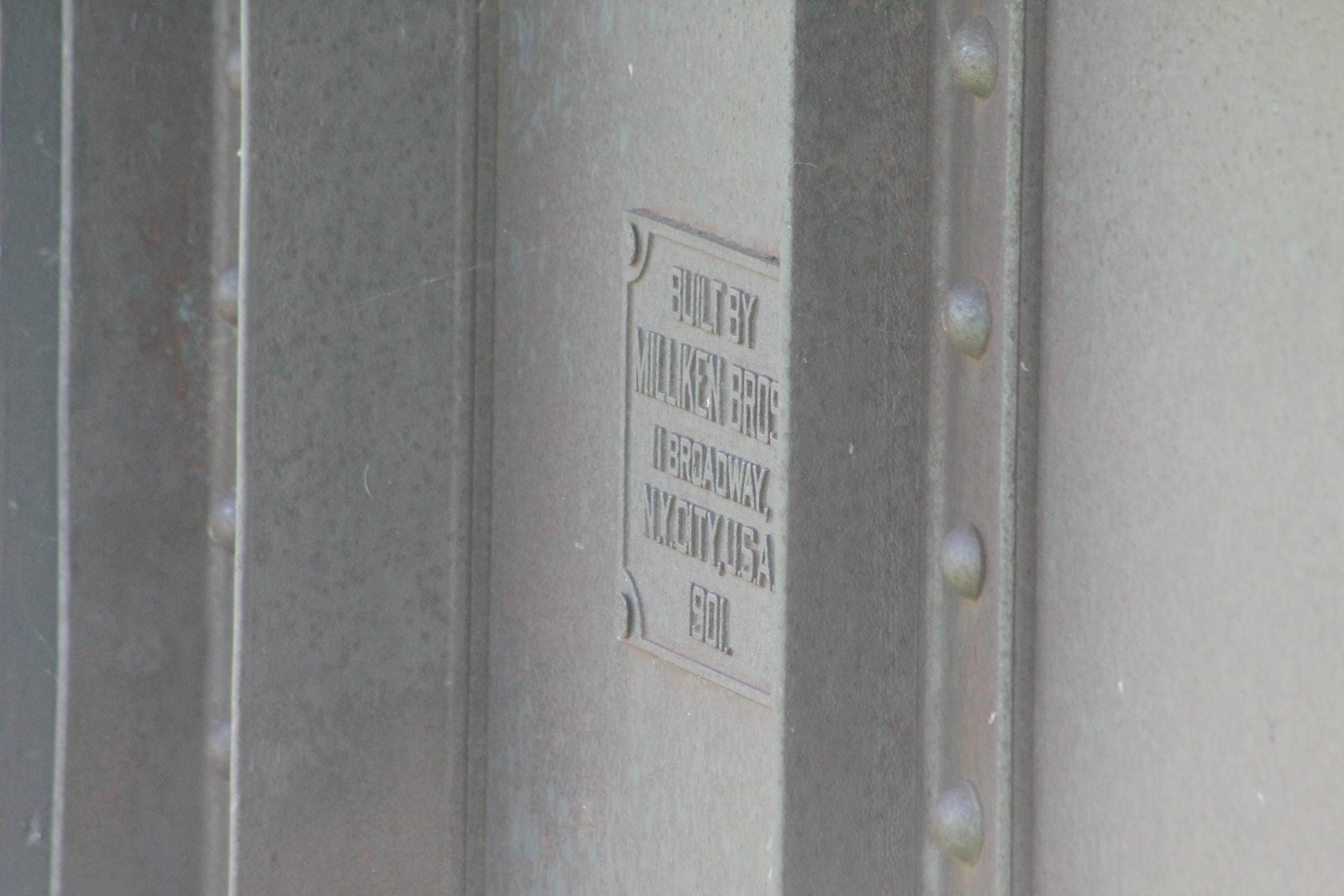
| Superstructure Contractor | Milliken Brothers of New York City, New York |
| Substructure Builder | Burlington, Cedar Rapids & Northern Railway Company Forces |
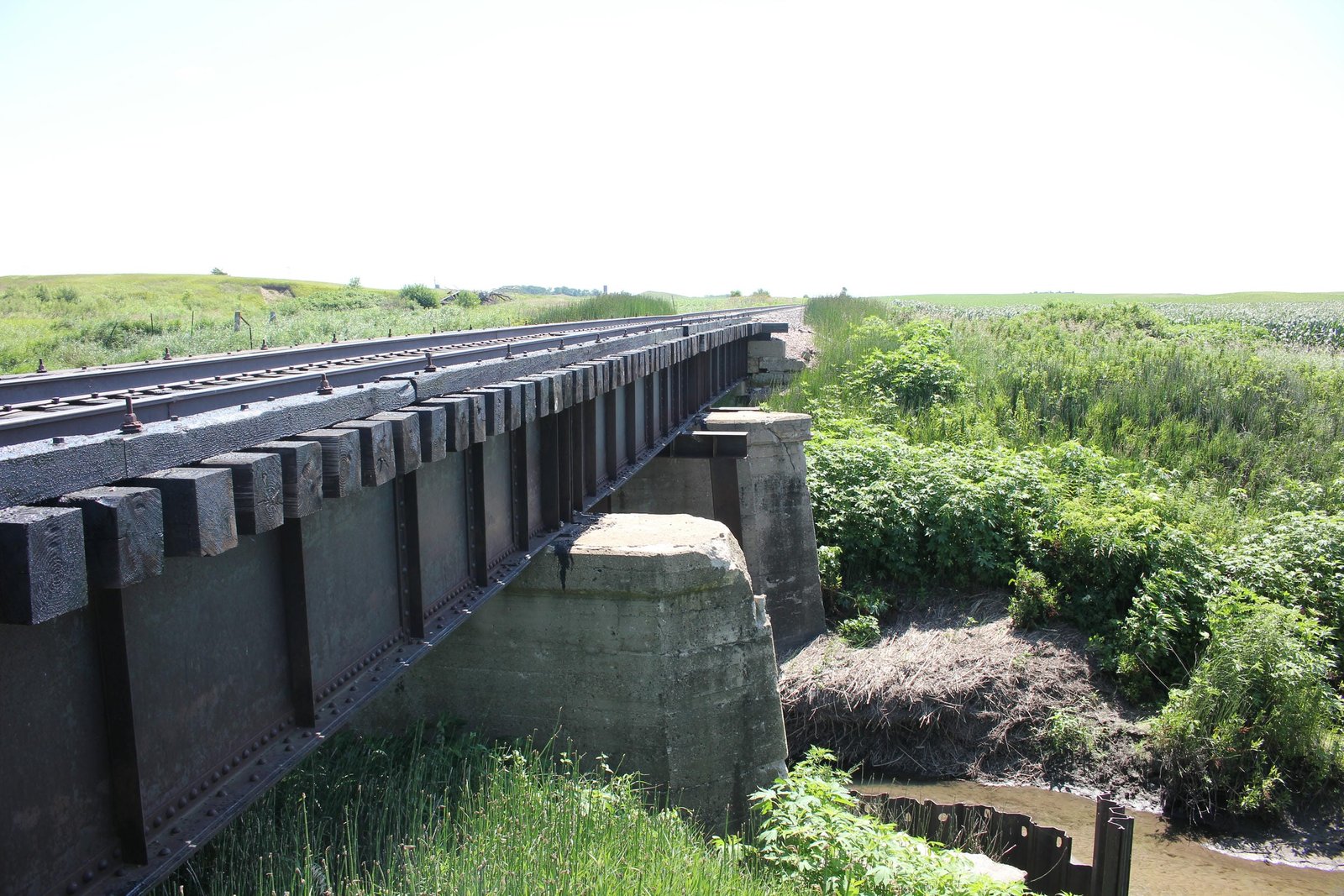
| Length | 90 Feet Total, 30 Foot Spans |
| Width | 1 Track |
| Height Above Ground | 10 Feet (Estimated) |
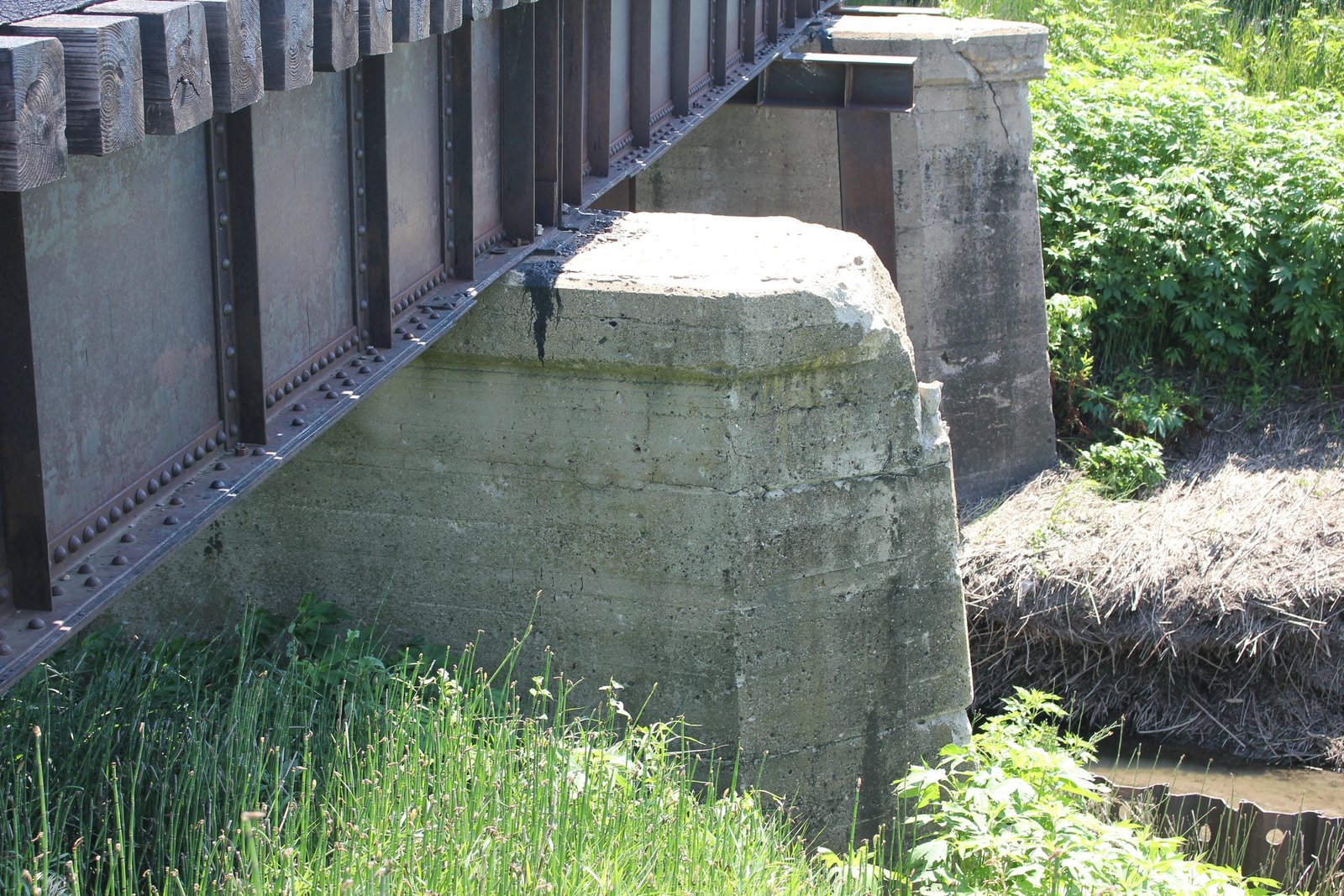
| Superstructure Design | Deck Plate Girder |
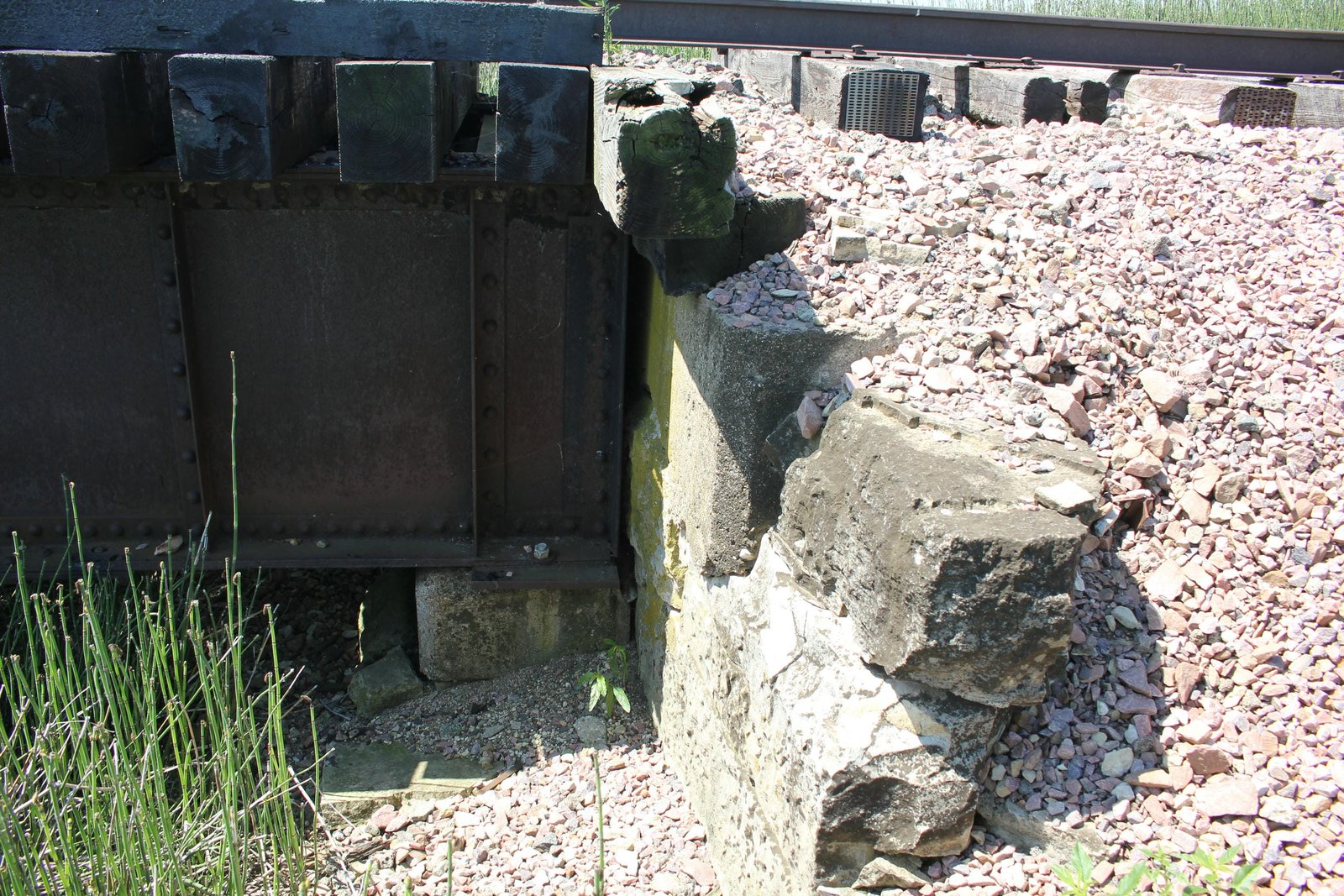
| Substructure Design | Concrete |
| Date Built | 1901 |
| Traffic Count | Less Than 1 Train/Day (Estimated) |
| Current Status | In Use |
| Chicago, Rock Island & Pacific Railroad Bridge Number | 1180 |
| Union Pacific Railroad Bridge Number | 8.96 |
| Significance | Moderate Significance |
| Documentation Date | 7/22/2019 |
In 1873, the Burlington, Cedar Rapids & Minnesota Railway (BCR&M) constructed 24 miles of new railroad, extending from an existing line at Vinton, Iowa to Traer, Iowa. In 1877, the Burlington, Cedar Rapids & Northern Railway constructed an additional 24 miles of new railroad, extending from Traer to Holland. In 1878, the BCR&M was acquired by the BCR&N. In 1880, the Cedar Rapids, Iowa Falls & Northwestern Railway (CRIF&NW) constructed an additional 79 miles of new railroad, extending from Holland to Clarion, Iowa. The following year, an additional 59 miles of railroad were constructed, reaching Emmetsburg, Iowa. In 1882, an additional 70 miles of new railroad were constructed, extending from Emmetsburg, through Estherville and Lake Park, Iowa, to Worthington, Minnesota. In 1884, the line was completed from Lake Park, through Pipestone, Minnesota, to Watertown, South Dakota. The CRIF&NW was leased by the BCR&N in 1884. Throughout the 1880s, the BCR&N became a major railroad in Iowa, connecting towns in the eastern and northern portions of the state. This line served as a secondary mainline for the BCR&N, providing access to agricultural areas in northwest Iowa, southwest Minnesota and east central South Dakota. In 1900, the CRIF&NW constructed an additional 36 miles of new railroad, extending from Worthington to Hardwick, Minnesota, on the existing line. The CRIF&NW was outright purchased by the BCR&N in May 1902. The BCR&N was in turn purchased by the Chicago, Rock Island & Pacific Railway (Rock Island) in June 1903. The Rock Island operated a large railroad network through the central United States, serving diverse industries.
Between Vinton and Estherville, the Rock Island operated this line as a secondary line. The Rock Island operated the lines towards Watertown as branch lines. The Rock Island struggled financially throughout much of its history, experiencing repeated bankruptcies and chronic instability. After World War II, the Rock Island struggled to survive, proposing mergers and deferring maintenance on their routes. The railroad reorganized as the Chicago, Rock Island & Pacific Railroad in 1948. A section between Luverne, Minnesota and Kanaranzi, Minnesota was abandoned in 1962. In 1969, the Rock Island abandoned segments between Lismore, Minnesota and Watertown; between Ellsworth, Minnesota and Karanzi and between Luverne and Hardwick. By the mid-1970s, the railroad was in serious decline. The railroad secured loans to eliminate slow orders, acquired new equipment, and attempted to restore profitability. A short section from Little Rock, Iowa to Ellsworth was abandoned in 1977. In 1978, the railroad came close to profit, but creditors were lobbying for a complete shutdown of the Rock Island. During the fall of 1979, a strike crippled the railroad, and by January of 1980, the entire system was ordered to be shut down and liquidated. Many of the lines and equipment were scrapped. Profitable sections of railroad were prepared for sale. In 1980, several sections of this line were abandoned, including the Traer to Dows section; the Clarion, Iowa to Goldfield, Iowa section; the Lake Park to Lismore section section and the Sibley, Iowa to Little Rock section.
Three separate lines of this line were sold to other railroads. Between Vinton and Dysart, the line was acquired by the Iowa Northern Railway (IANR) for use as a branch line. Between Dows and Clarion, the Chicago & North Western Railway (C&NW) acquired the line as an industrial lead. Between Goldfield and Sibley, the line was also sold to the C&NW for use as a secondary line to serve agricultural industries. A short segment between Allendorf, Iowa and Sibley, Iowa was abandoned by the C&NW in 1981. It is believed that the Superior, Iowa to Allendorf segment was sold to the Iowa Northwestern Railroad (IANW) around the same time. In 1994, IANR abandoned the Vinton to Traer segment of this line. In 1995, the C&NW was acquired by Union Pacific Railroad (UP). IANW abandoned the line between Ocheyedan, Iowa and Allendorf in 2004, followed by the segment between Superior, Iowa and Ocheyedan in 2008. Today, UP operates the Estherville Subdivision between Goldfield and Superior, as well as the Dows Industrial Lead between Dows and Clarion. Three sections of the line have been reused as trails, including the segment between Vinton and Dysart as the Old Creamery Trail, the segment between Reinbeck and Holland as the Pioneer Trail and the segment between Allendorf and Sibley as the Ed Winkel Memorial Trail. An additional trail is currently being developed between Superior and Allendorf, and will be known as the Iowa Great Lakes Trail.
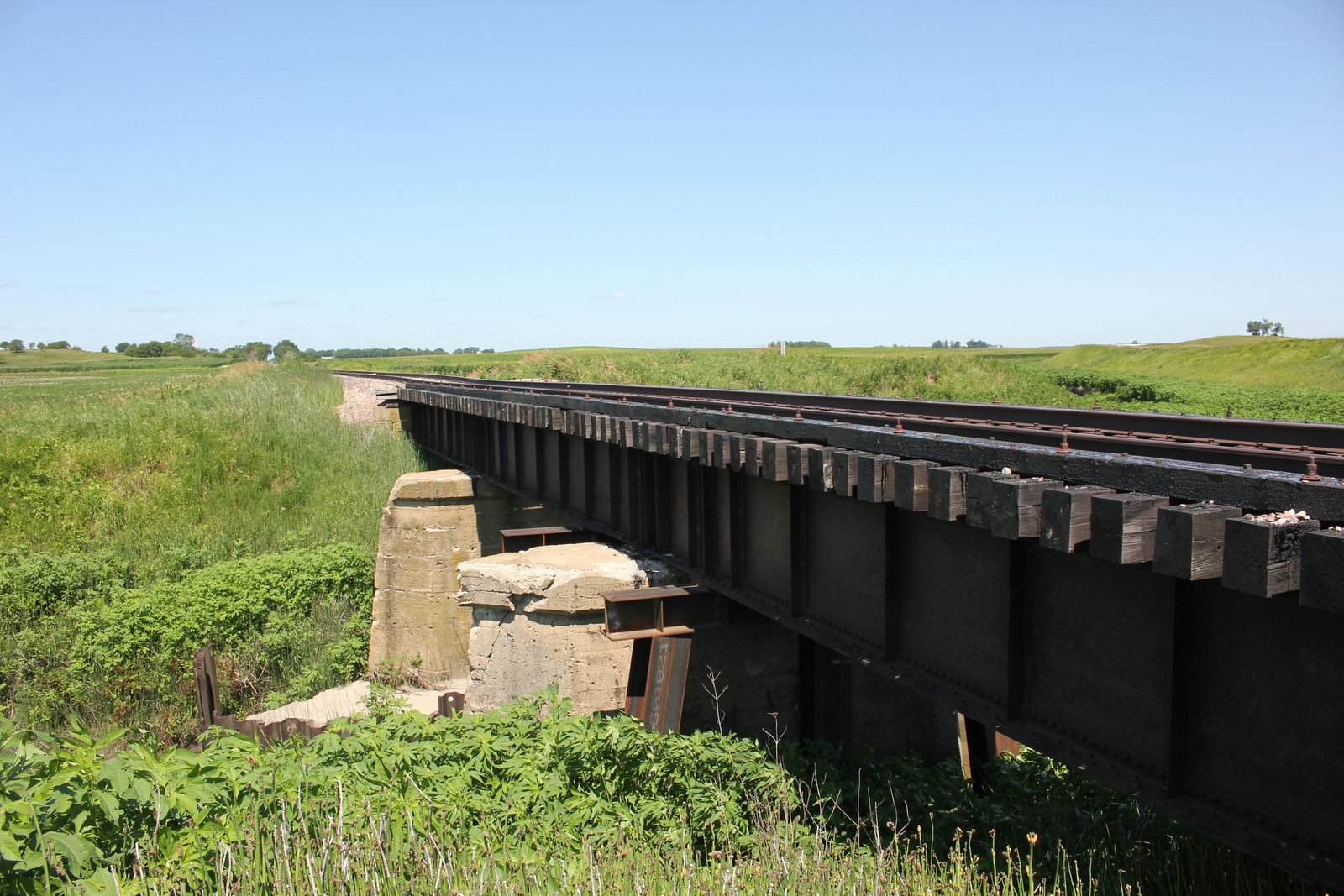
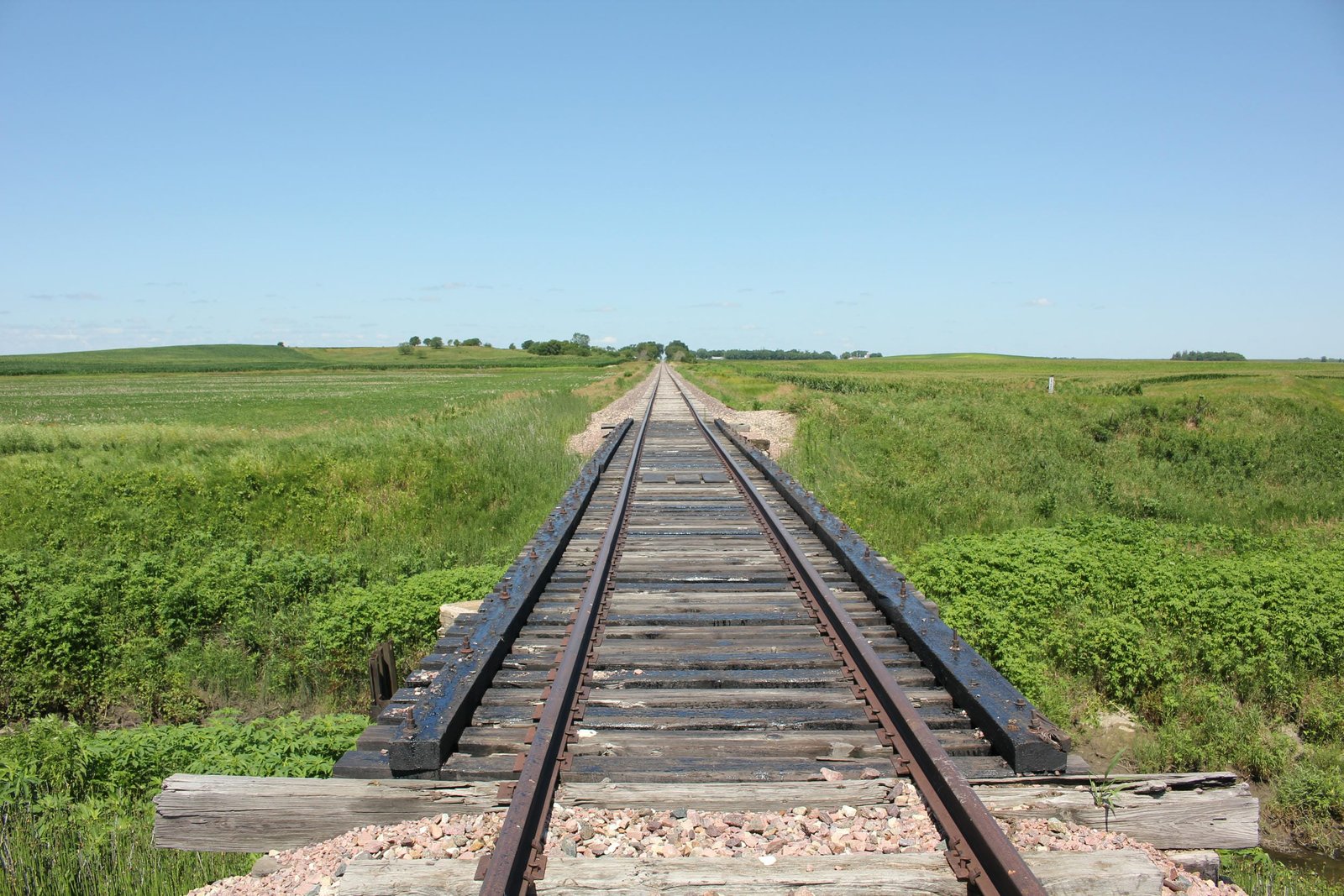
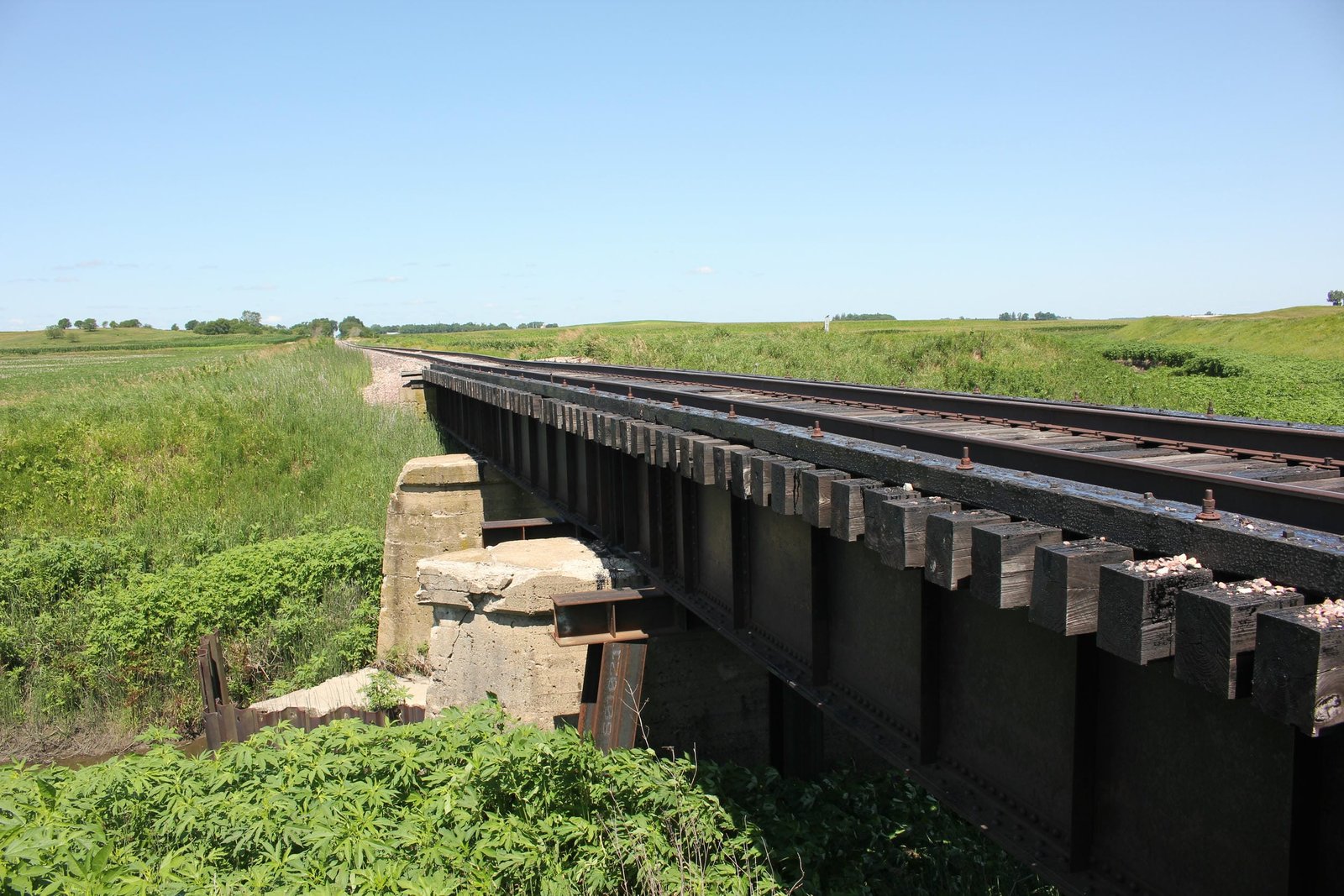
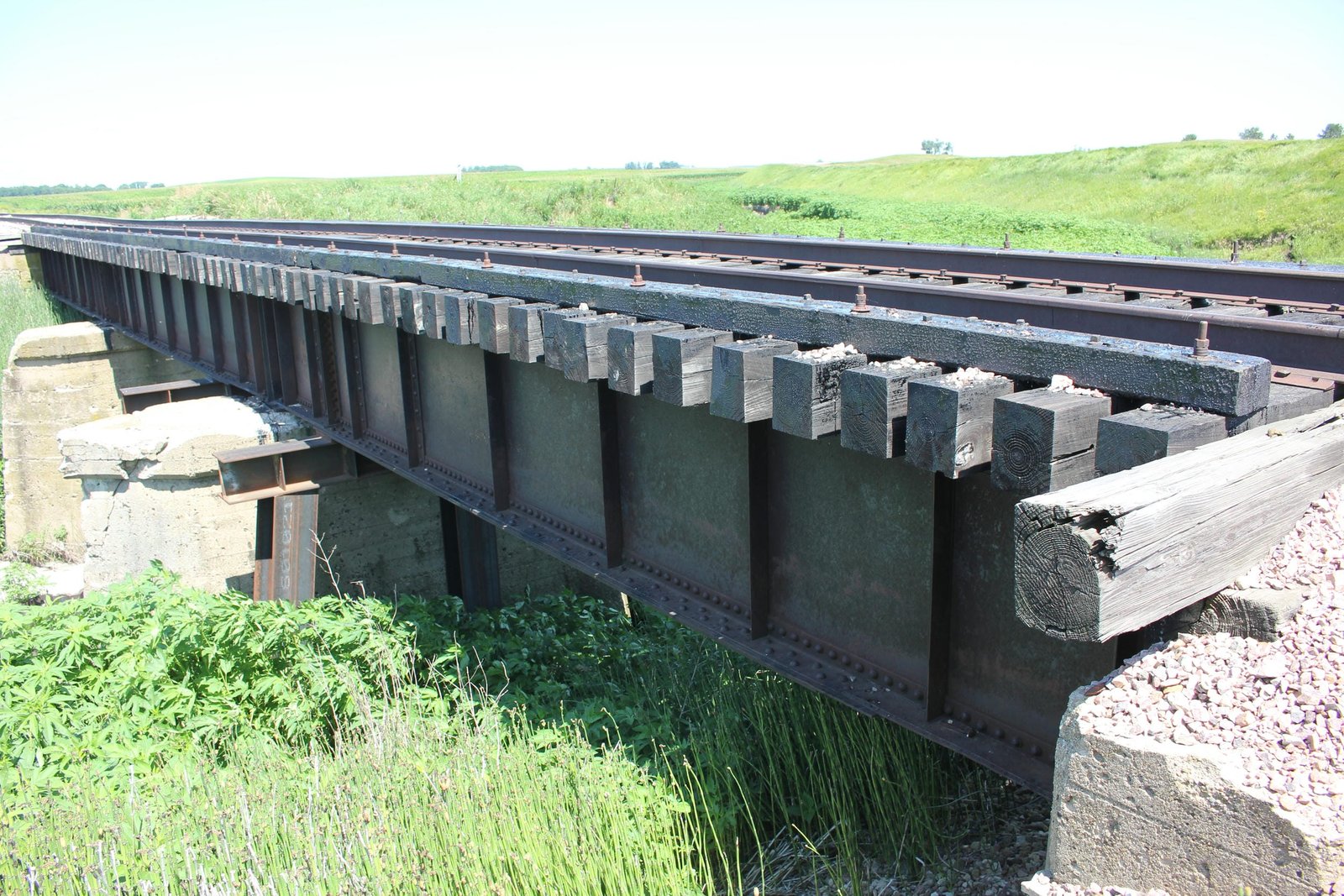
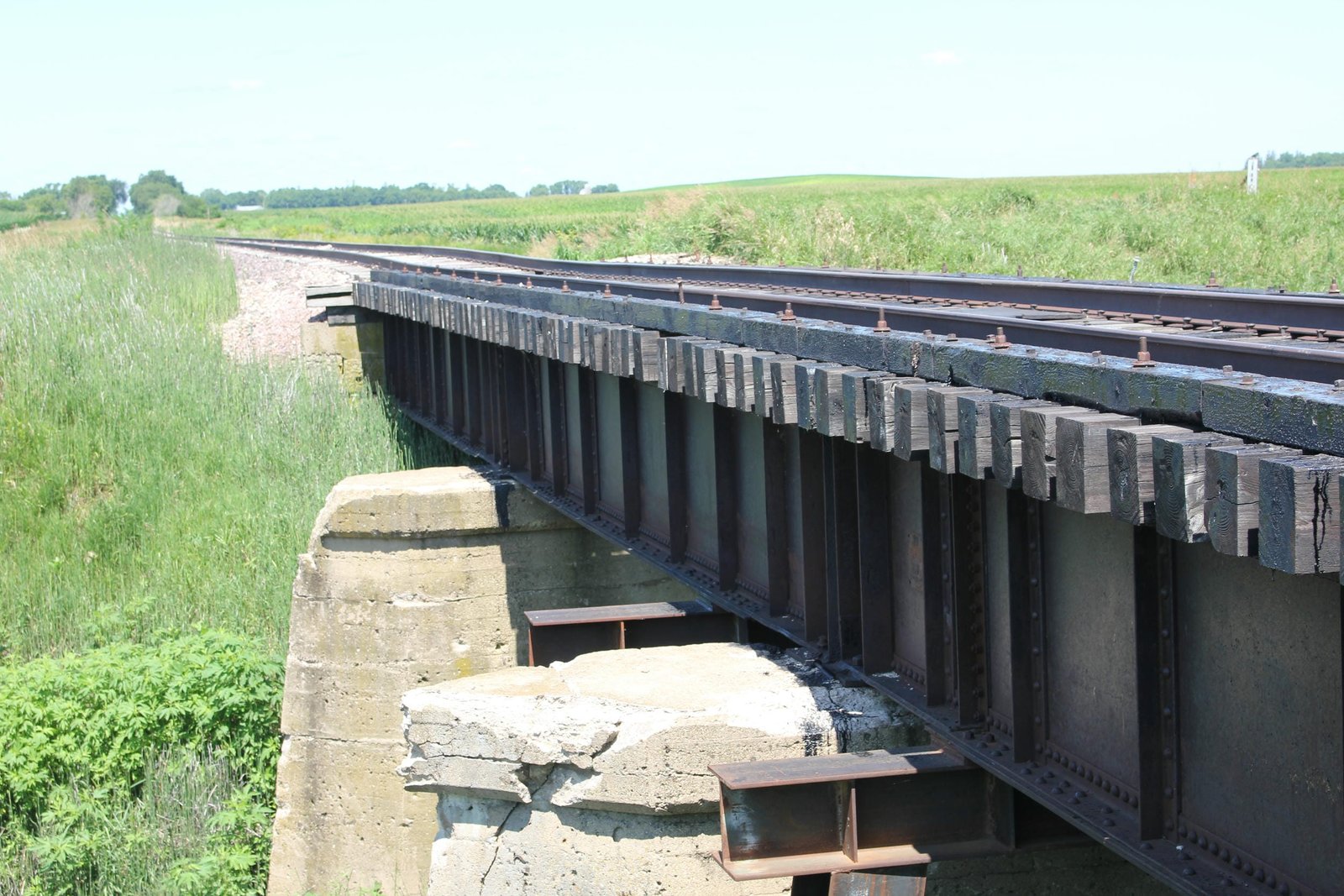
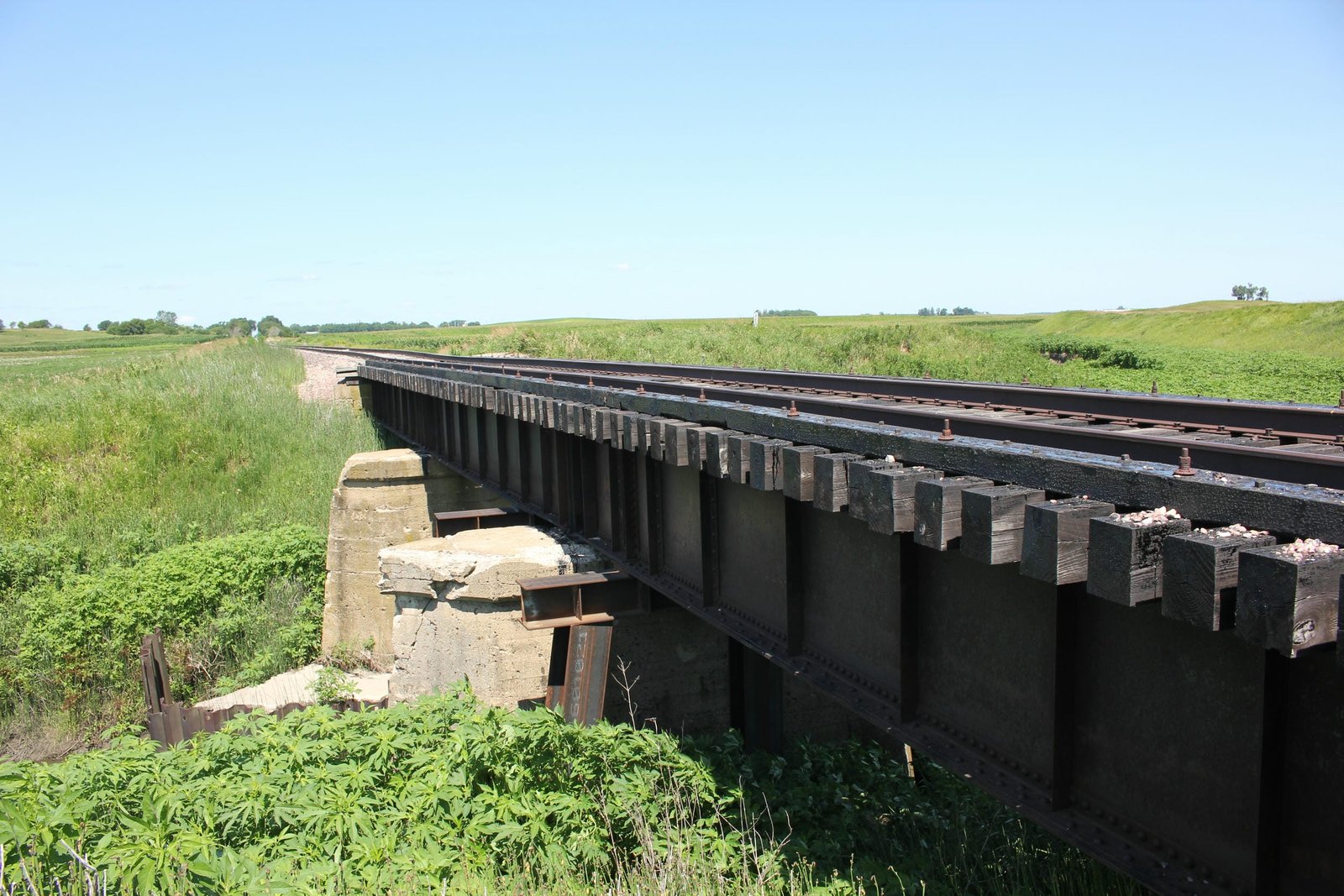
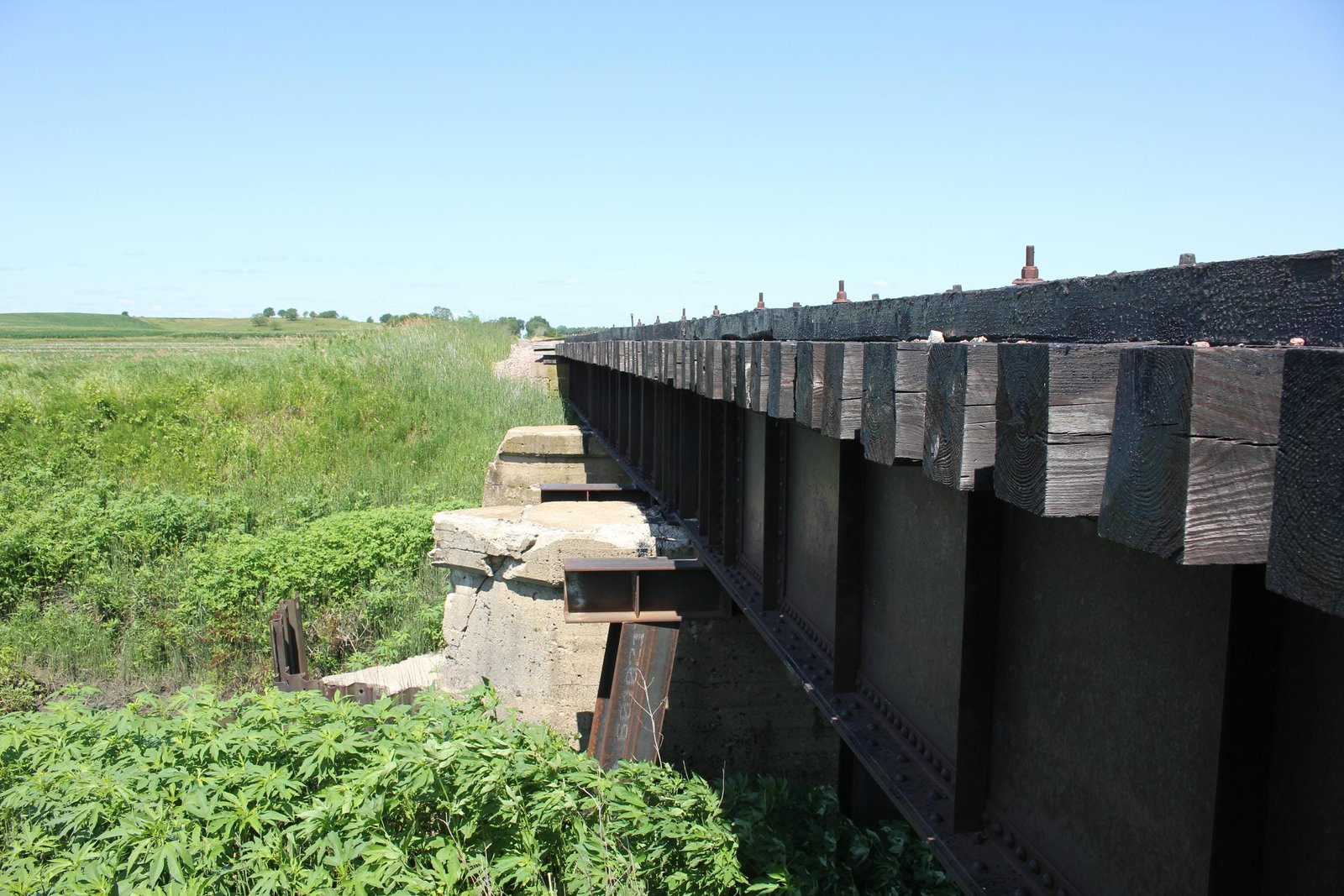
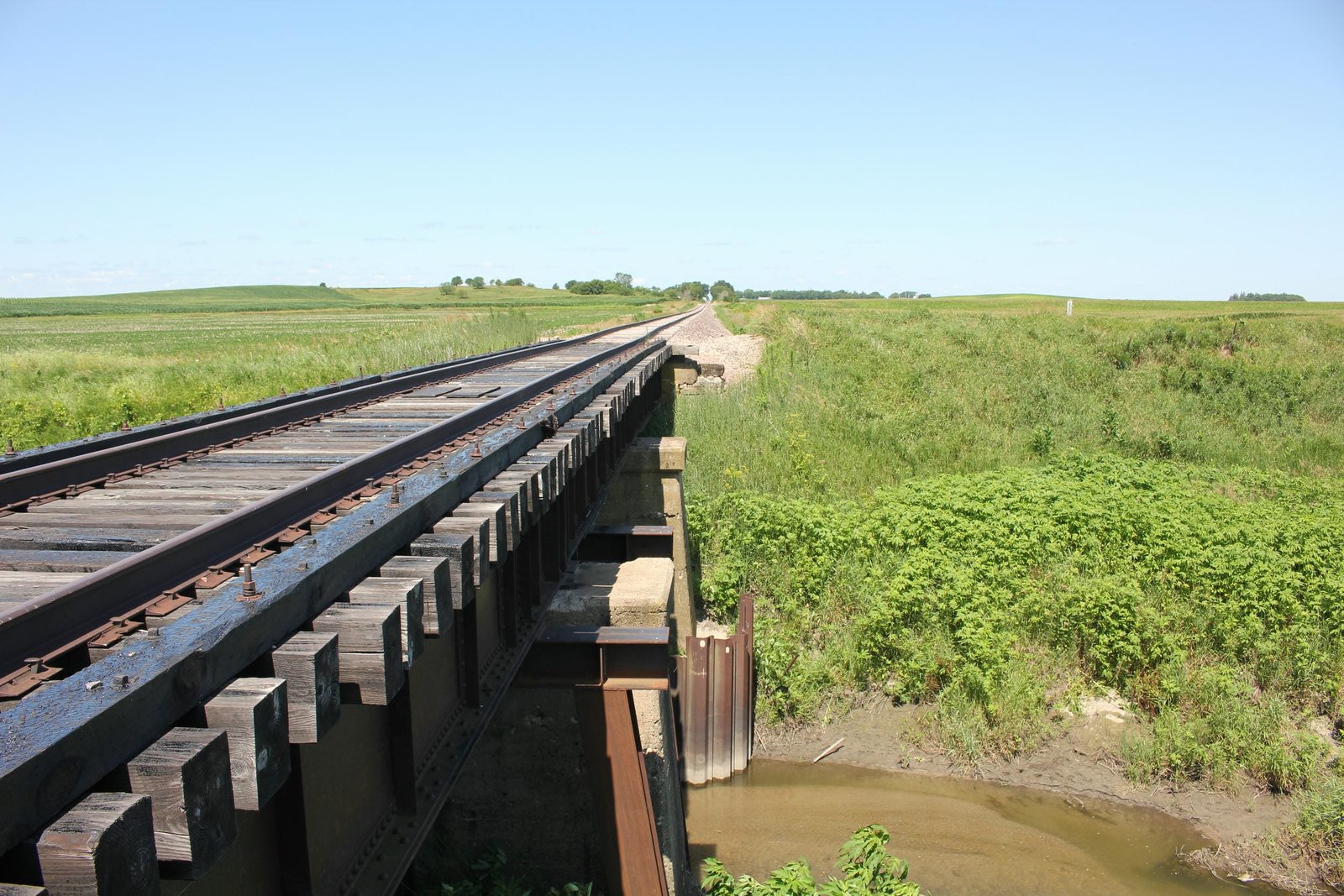
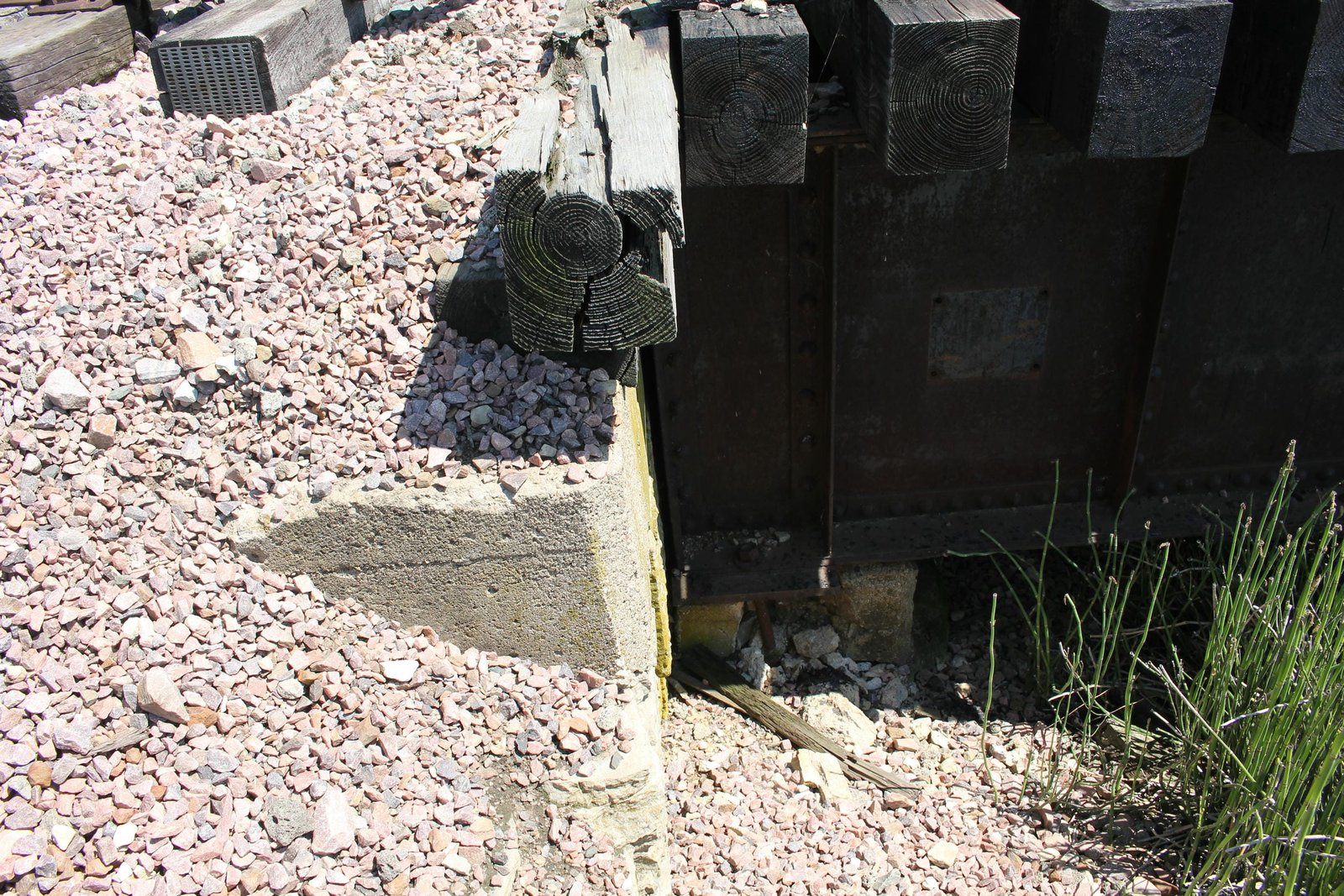
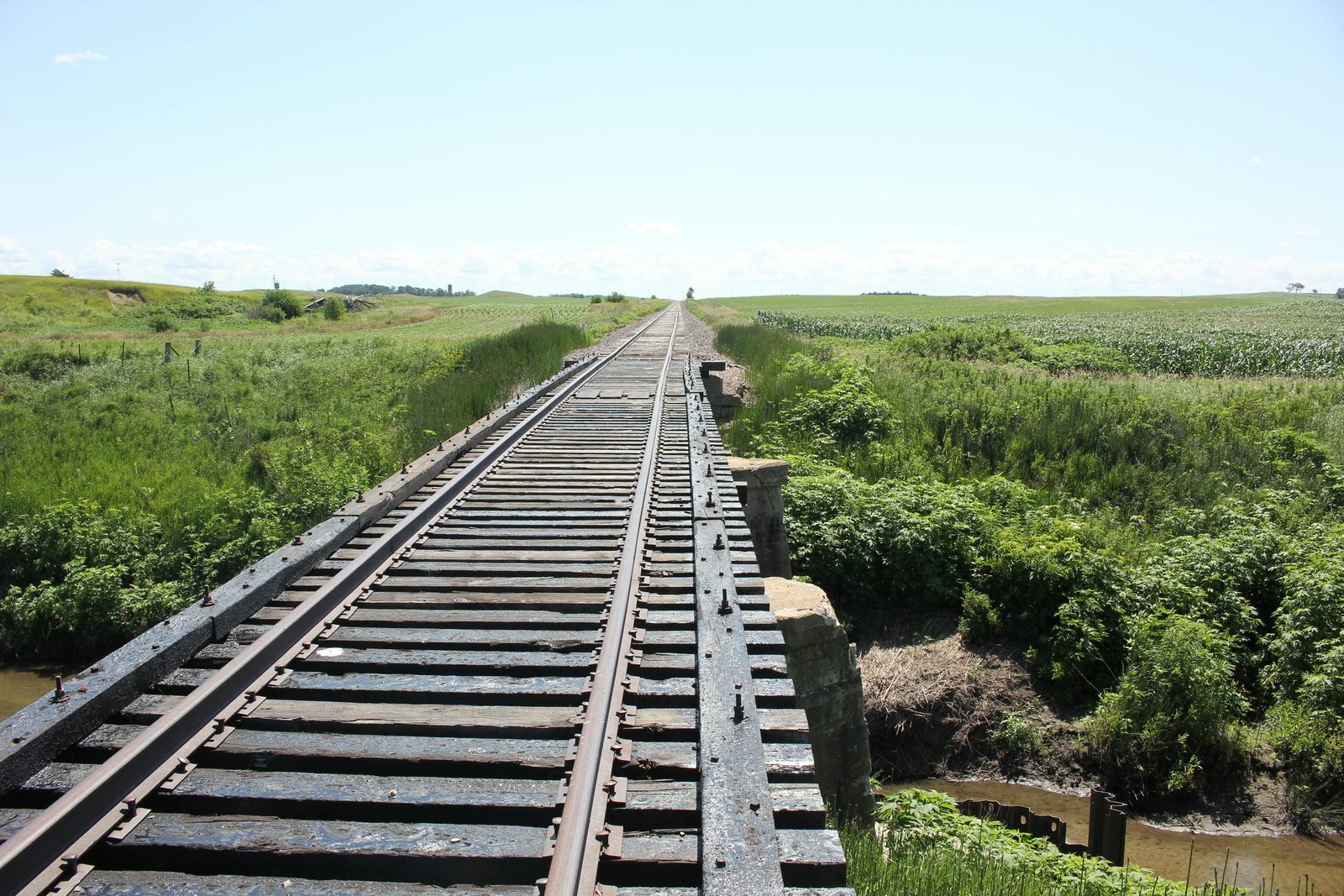
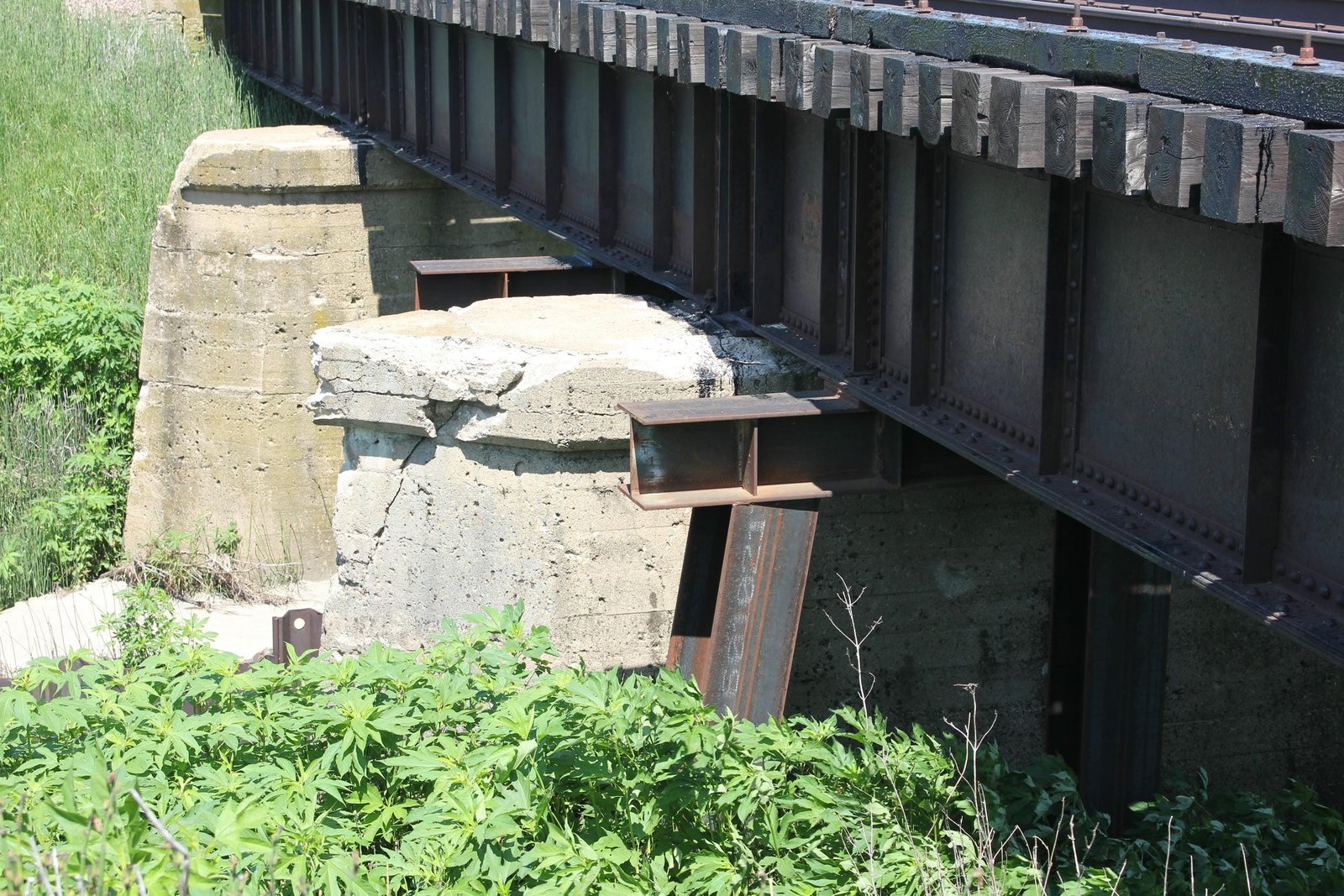
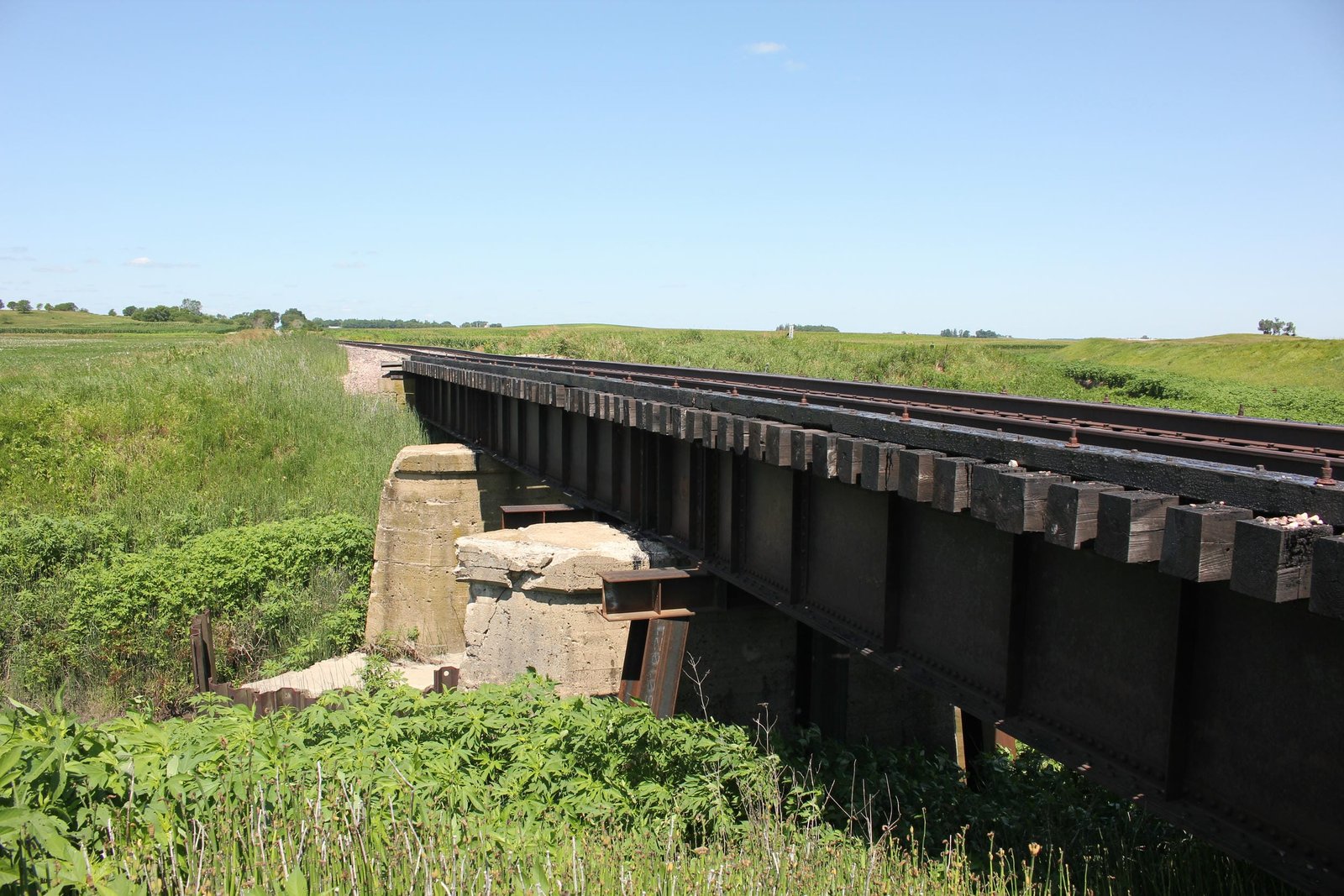
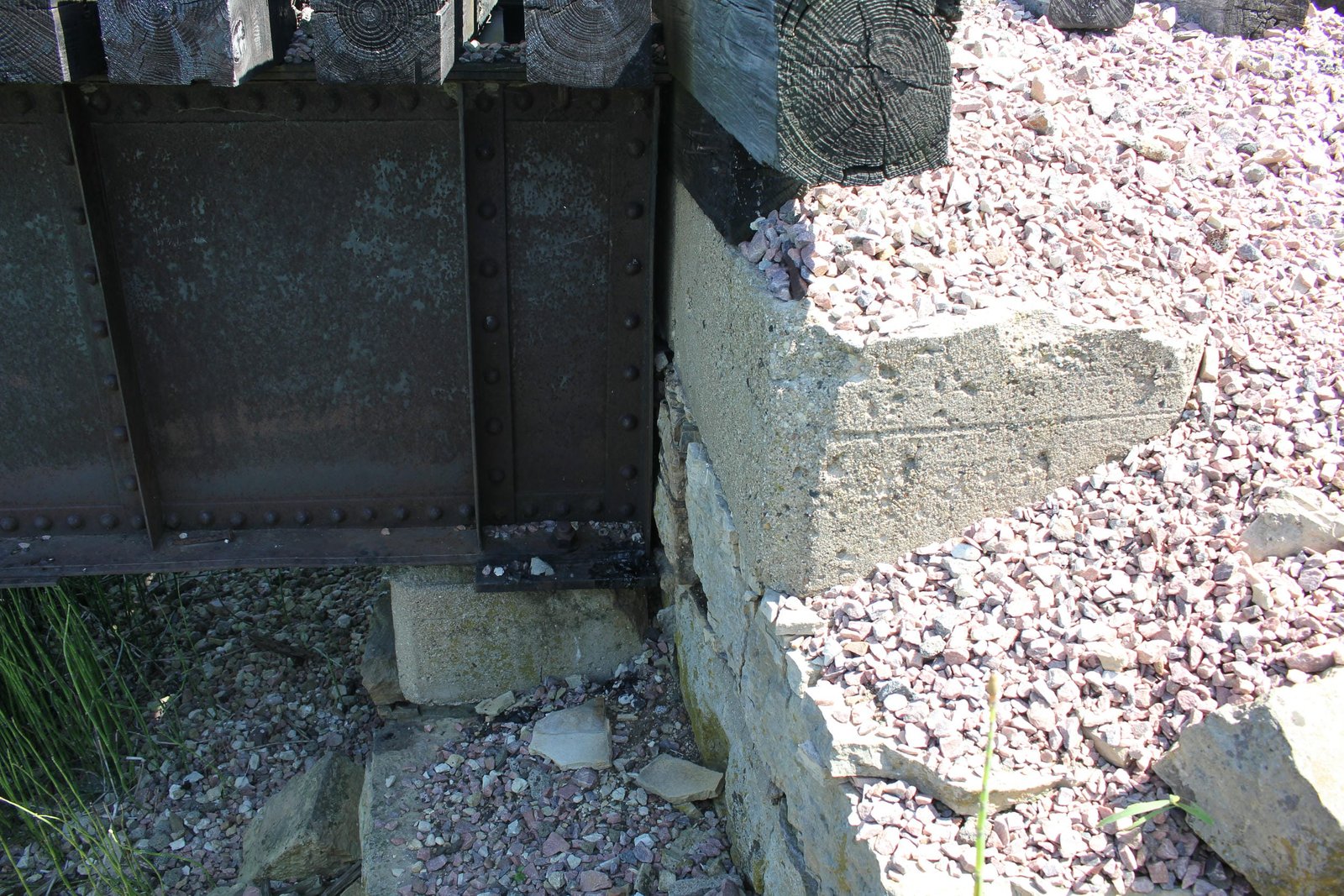
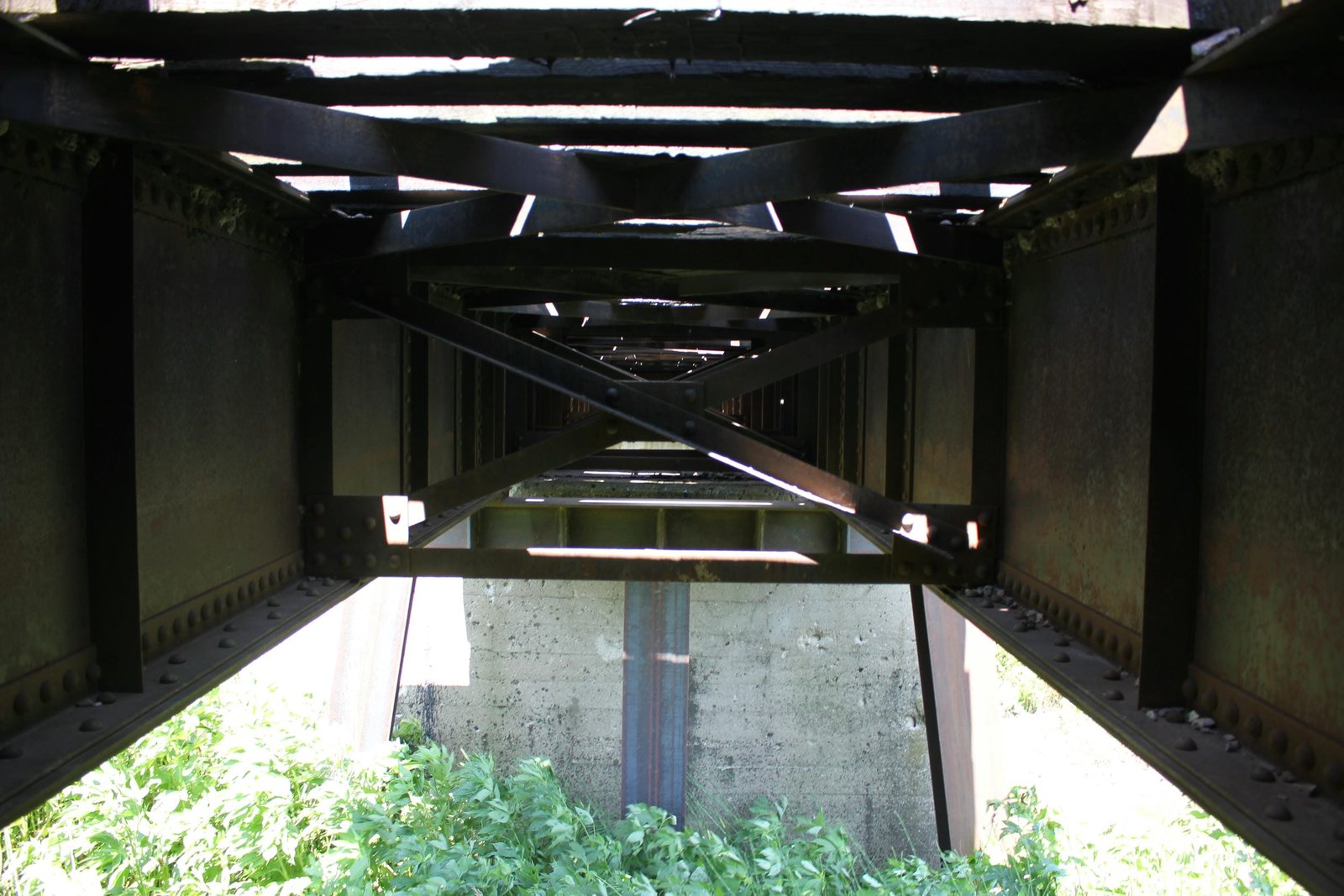
Located southeast of Galt, this deck plate girder bridge carries a former Chicago, Rock Island & Pacific Railroad (Rock Island) line over Wright County Ditch #3. The first bridge at this location was likely a timber pile trestle, constructed when the line was first built. During the late 19th and early 20th Centuries, the BCR&N and Rock Island made significant improvements to this line, replacing timber bridges with steel, stone and concrete structures. The present structure at this location was constructed in 1901. Currently, the bridge consists of three 30-foot deck plate girder spans, set onto concrete substructures. The superstructure follows a standard design, with two modest sized girders and an open deck. The substructures also follow a standard design, with diamond shaped piers and stepped back walls at the abutments. Milliken Brothers fabricated the superstructure, and it is believed that labor employed by the BCR&N constructed the substructures. Milliken Brothers is an obscure builder, and it is unclear how many bridges they fabricated throughout the United States. This bridge is currently the only known structure fabricated by this firm on this website. The BCR&N switched from using stone to concrete in the late 1890s, and it was customary for this company to construct their own concrete structures. Deck plate girder spans were commonly used by railroads, as they were durable and easy to construct. Since the initial construction, the bridge has seen no significant alterations. However, steel pile helper bents have been added under the east and center spans, and the west pier has been reinforced with a sheet pile and concrete reinforcement at the base. While this segment of line was originally retained to access a grain elevator at Dows, the yard tracks at Dows were removed between 2015 and 2019, and this segment of line is now used for car storage. Overall, the bridge appears to be in fair condition, with spalling noted throughout the substructures. The author has ranked this bridge as being moderately significant, due to the unusual builder.
Citations
| Build date and builder (superstructure) | Milliken Brothers plaque |
| Railroad History Citation | ICC Valuation Information, Compiled by Richard S. Steele |