
Click the photo to view the full-size version
| Name | Okoboji Trail Bridge Chicago, Milwaukee & St. Paul Railway Bridge #R-1426 |
| Built By | Chicago, Milwaukee & St. Paul Railway |
| Currently Owned By | Iowa Department of Natural Resources |
| Superstructure Contractor | Lassig Bridge & Iron Works of Chicago, Illinois (Main Span) Unknown (Approach Spans) |
| Length | 478 Feet Total, 83 Foot Main Span |
| Width | 1 Track |
| Height Above Ground | 15 Feet (Estimated) |
| Superstructure Design | Deck Plate Girder, Steel Stringer and Timber Pile Trestle |
| Substructure Design | Timber Pile |
| Date Built | 1890 (Main Span) 1921 and 1934 (Timber Approaches) c. 1965 (Steel Stringer Spans) |
| Traffic Count | 0 Trains/Day (Bridge is Open to Pedestrian Traffic) |
| Current Status | Open to Pedestrian Traffic |
| Chicago, Milwaukee & St. Paul Railway Bridge Number | R-1426 |
| Significance | Regional Significance |
| Documentation Date | 4/22/2018 |
In 1882, the Chicago, Milwaukee & St. Paul Railway (Milwaukee Road) constructed a short 21-mile branch line, extending from the existing mainline at Spencer, Iowa to Spirit Lake, Iowa. The line was developed to serve some industry and connect passengers to a popular vacation destination. By the late 19th Century, the Milwaukee Road had developed a large railroad network throughout the Midwest. This line served exclusively as a short branch line. The Milwaukee Road was often in financial trouble, especially after the costly Pacific Extension was completed in 1909. In 1925, the company declared bankruptcy, and reorganized as the Chicago, Milwaukee, St. Paul and Pacific Railroad in 1928. Despite the financial strain, this line remained an important mainline for the Milwaukee Road. Financial hardship continued through the 20th Century for the Milwaukee Road. A segment between Milford, Iowa and Spirit Lake was abandoned in 1974. The Milwaukee Road railroad again filed for bankruptcy in 1977. In 1978, the remainder of the line was abandoned. Today, the line between Milford and Spirit Lake has been reused as part of the Great Lakes Spine Trail; while the remainder has reverted to adjacent property owners.
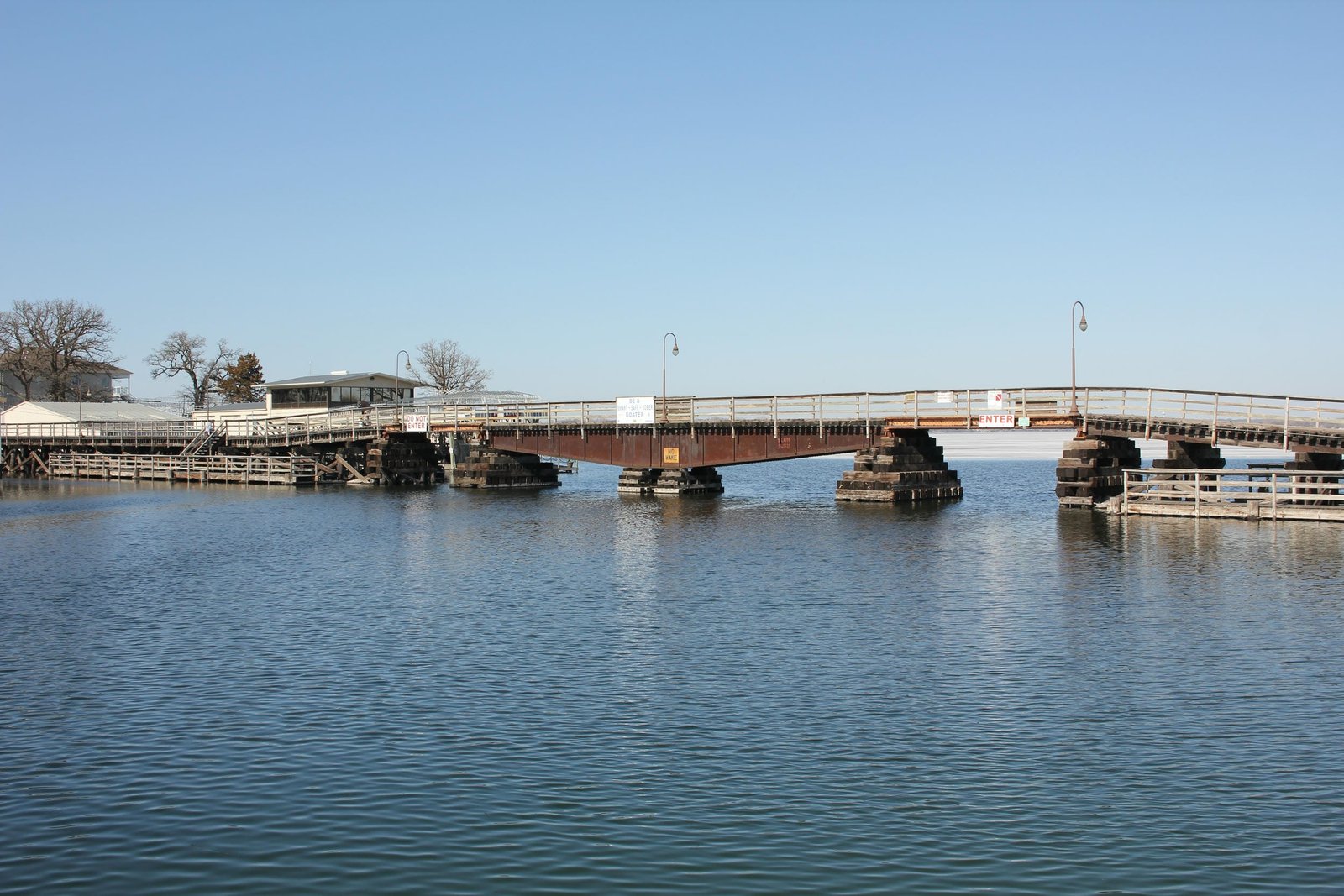
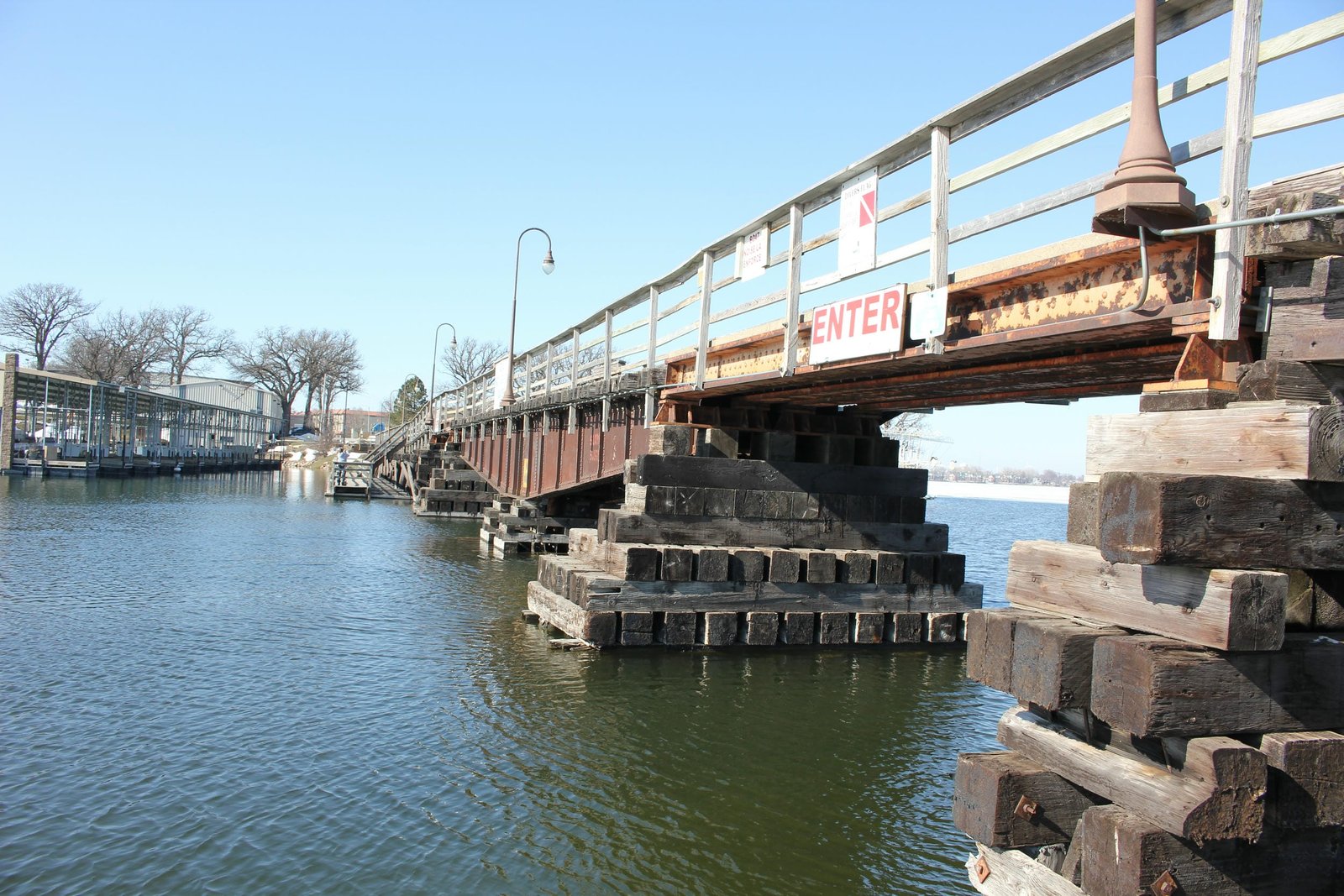
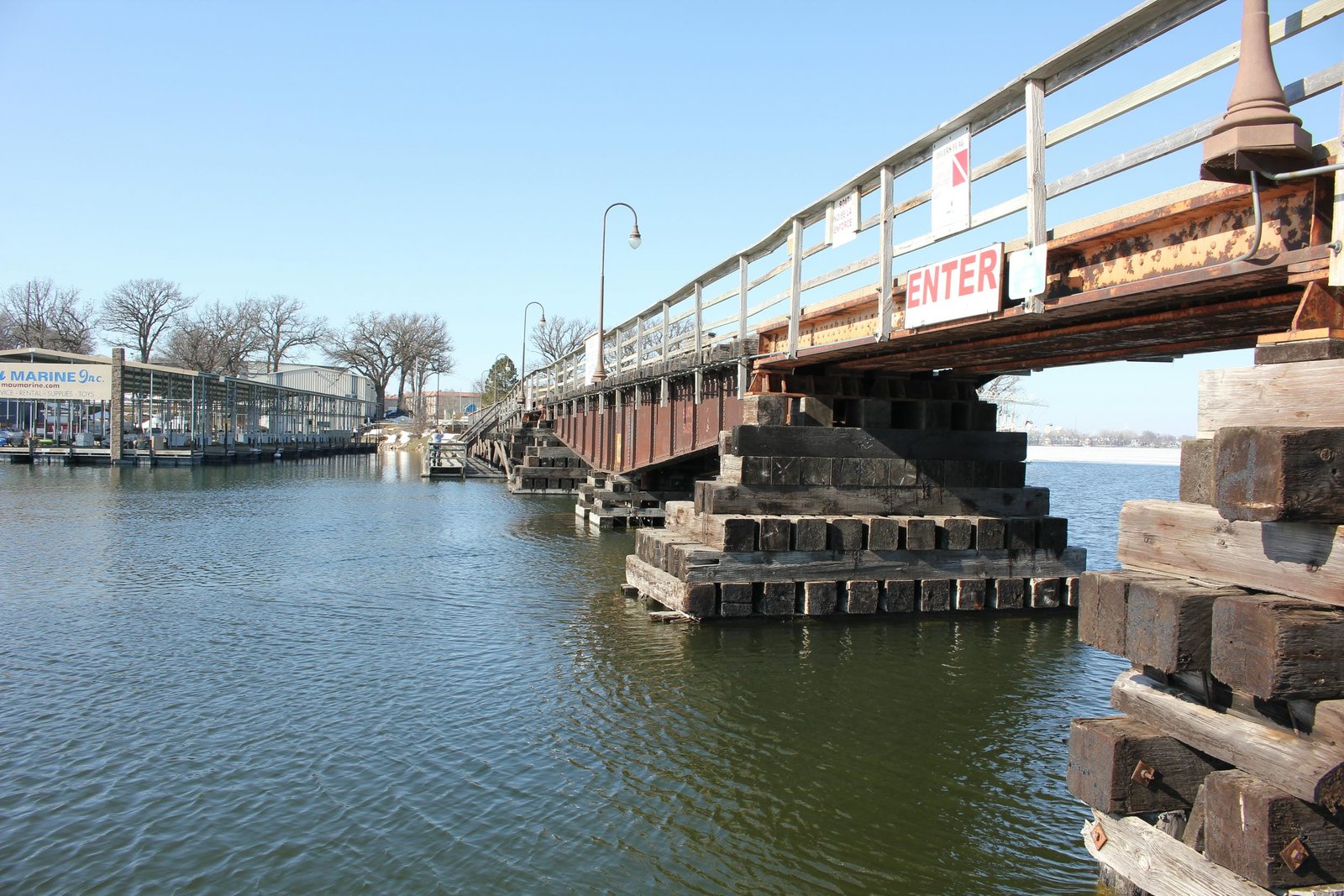
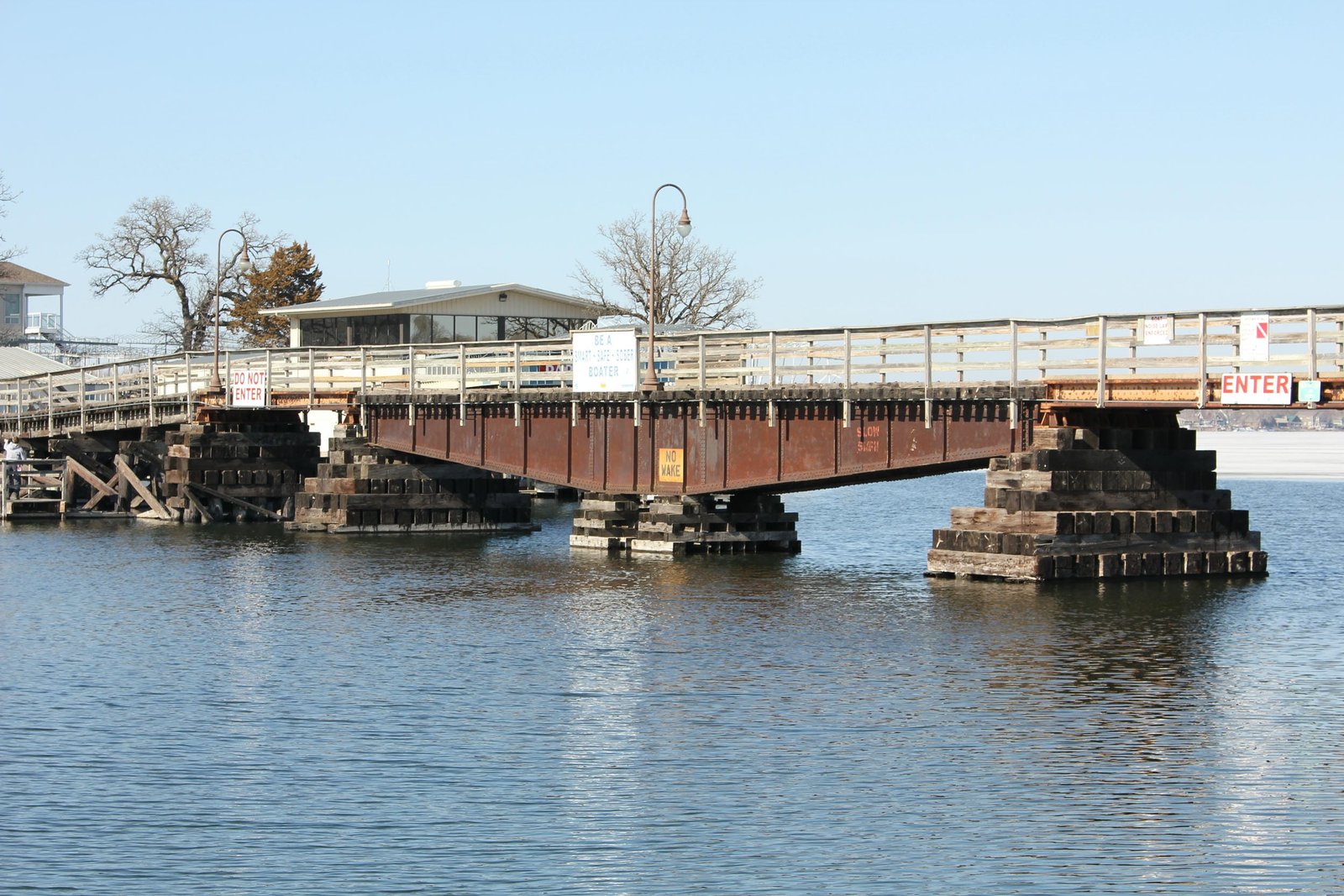
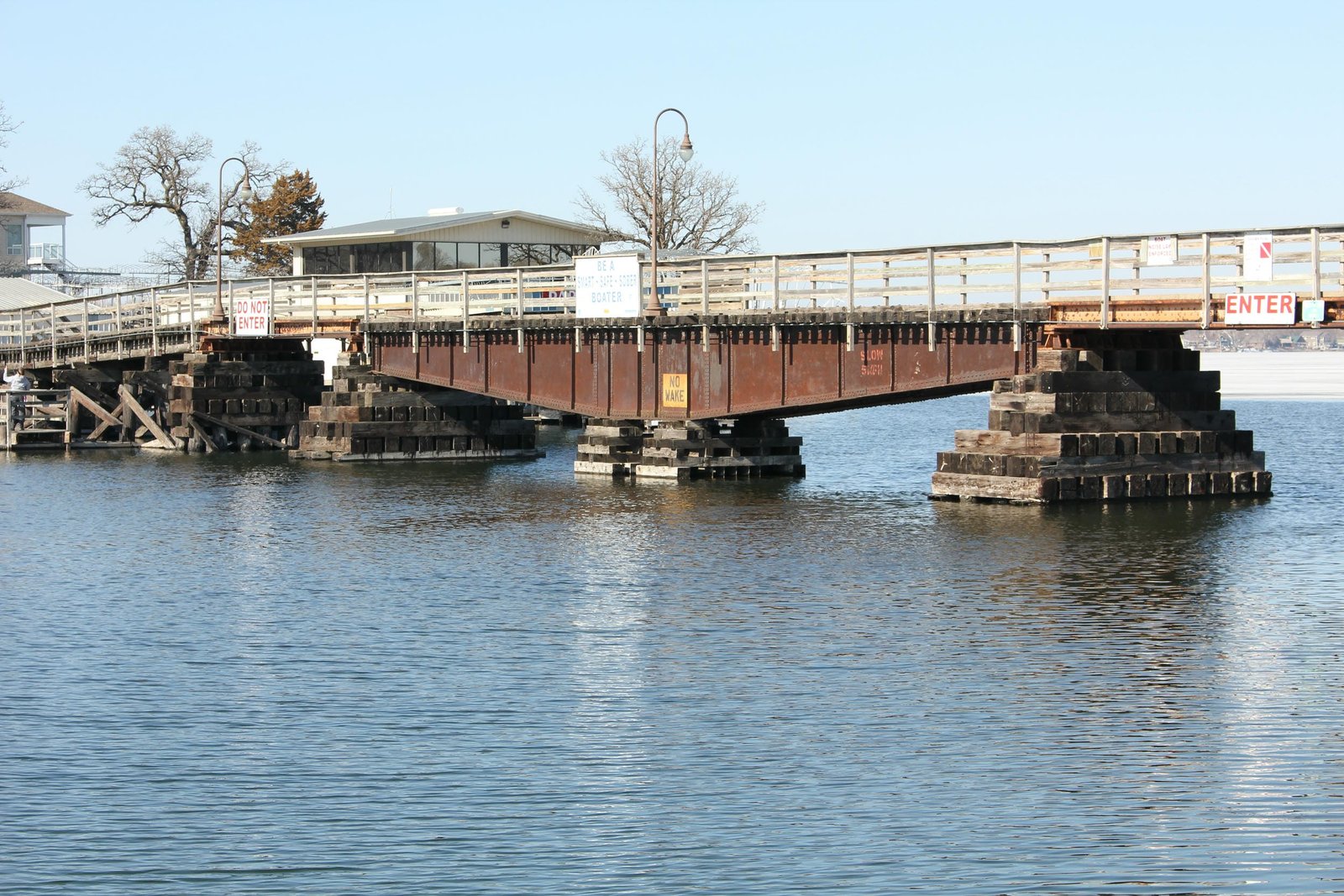
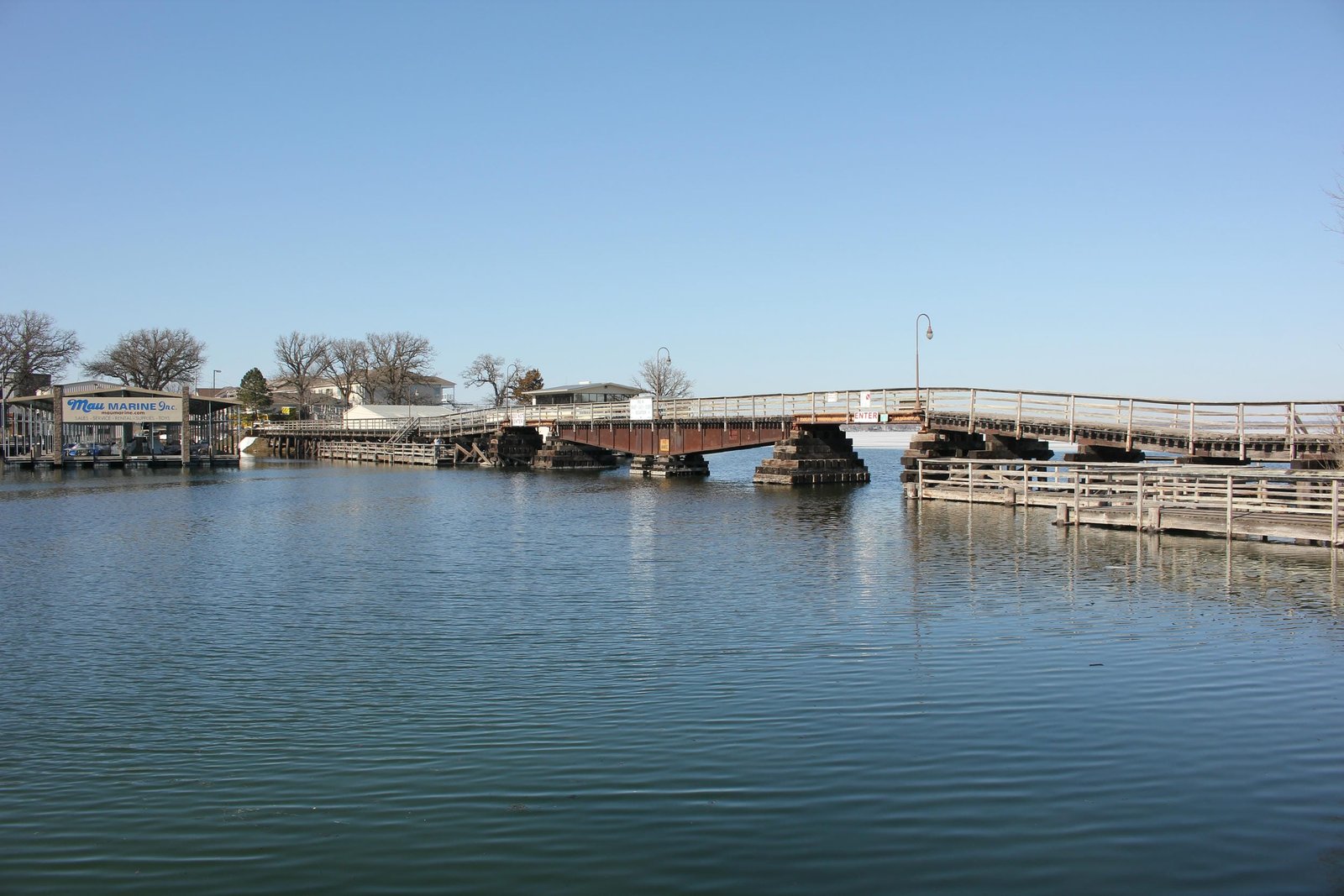
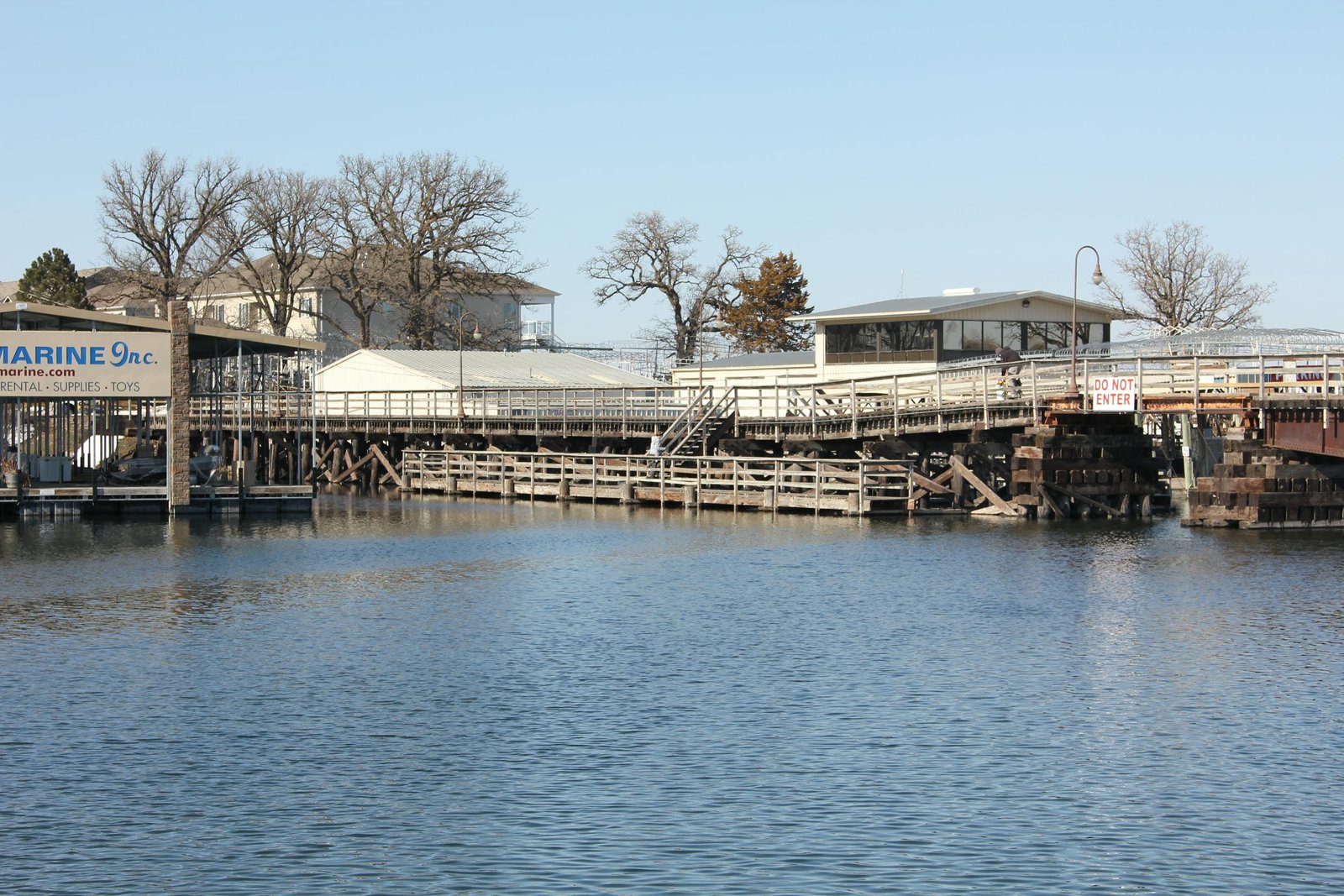
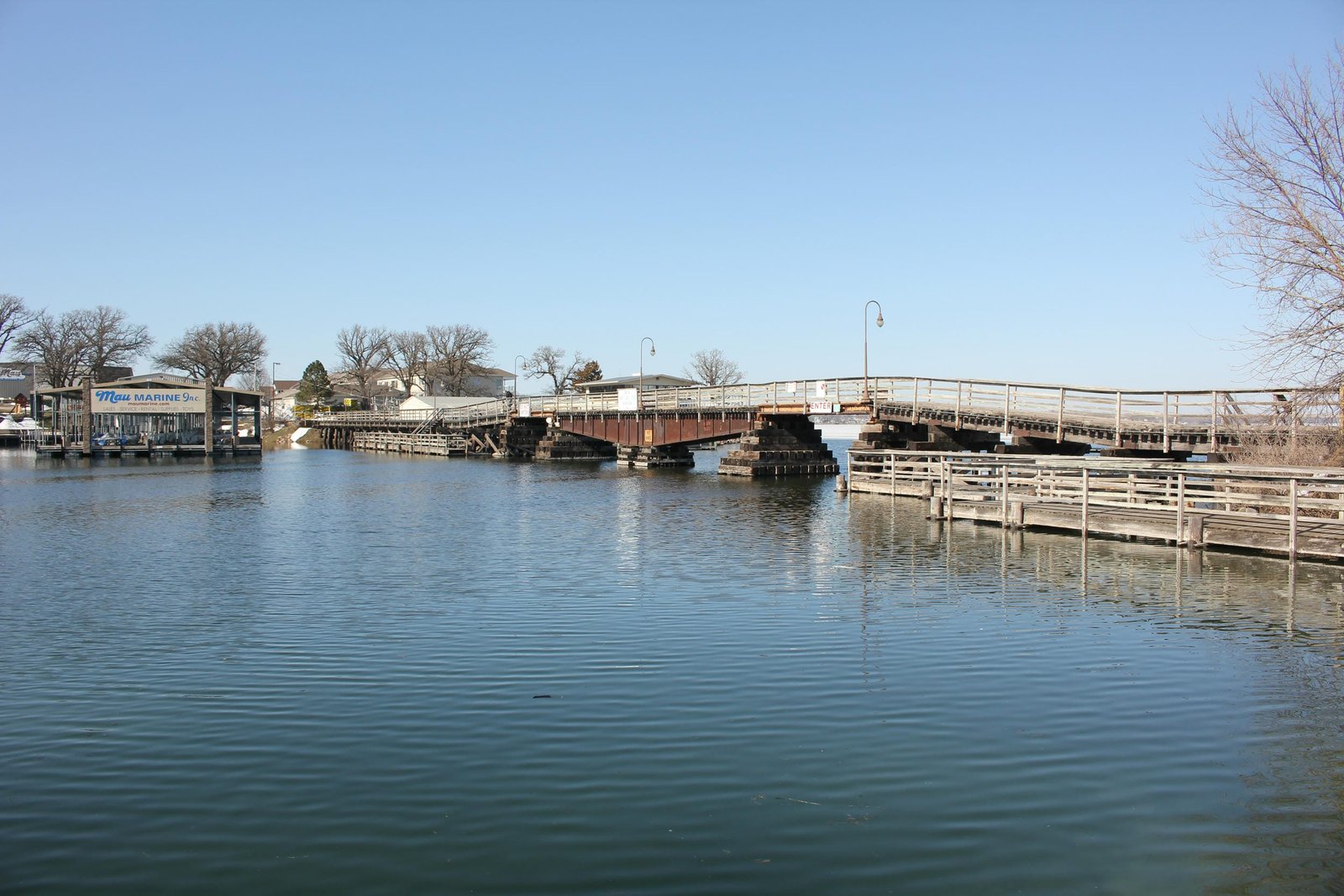
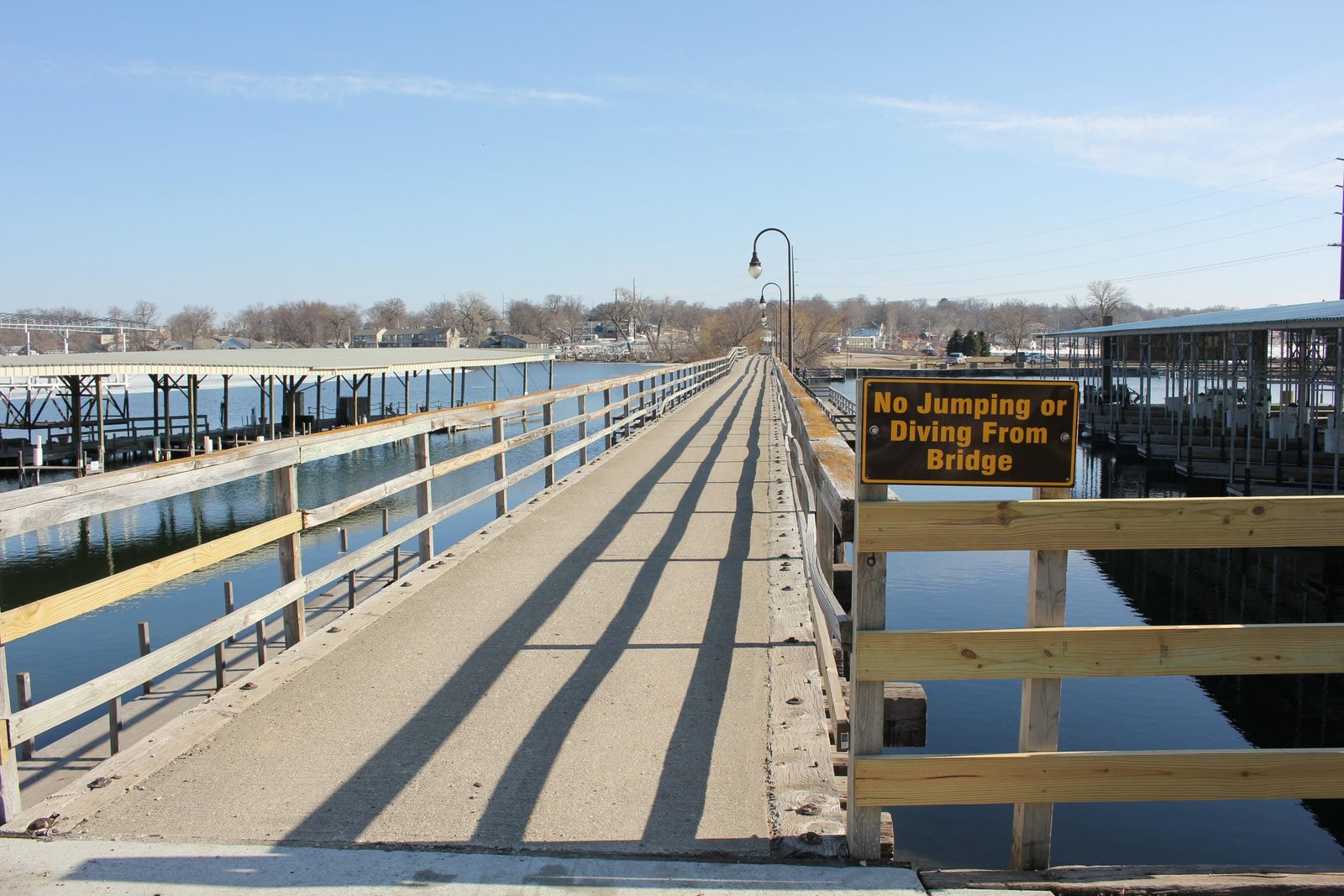
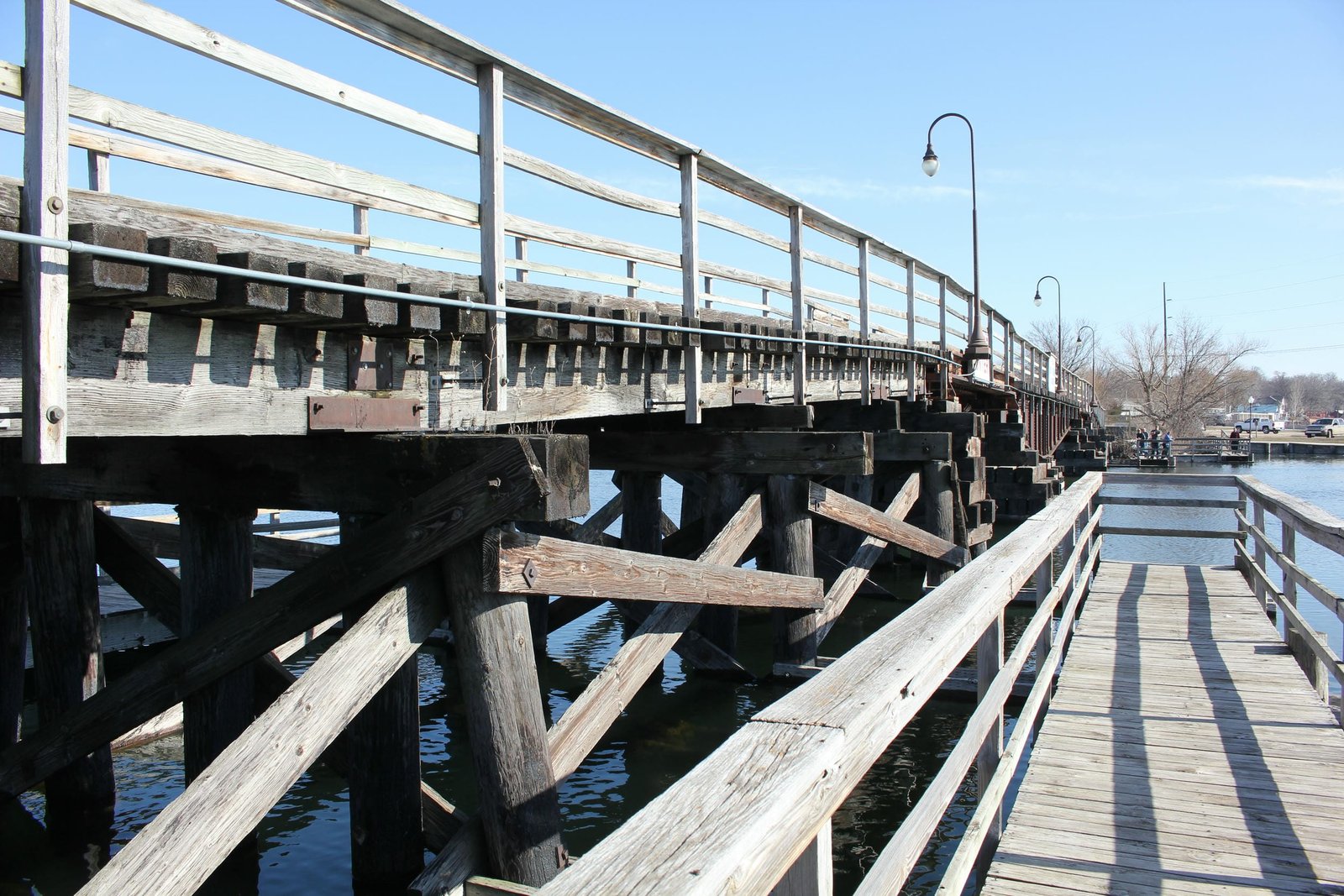
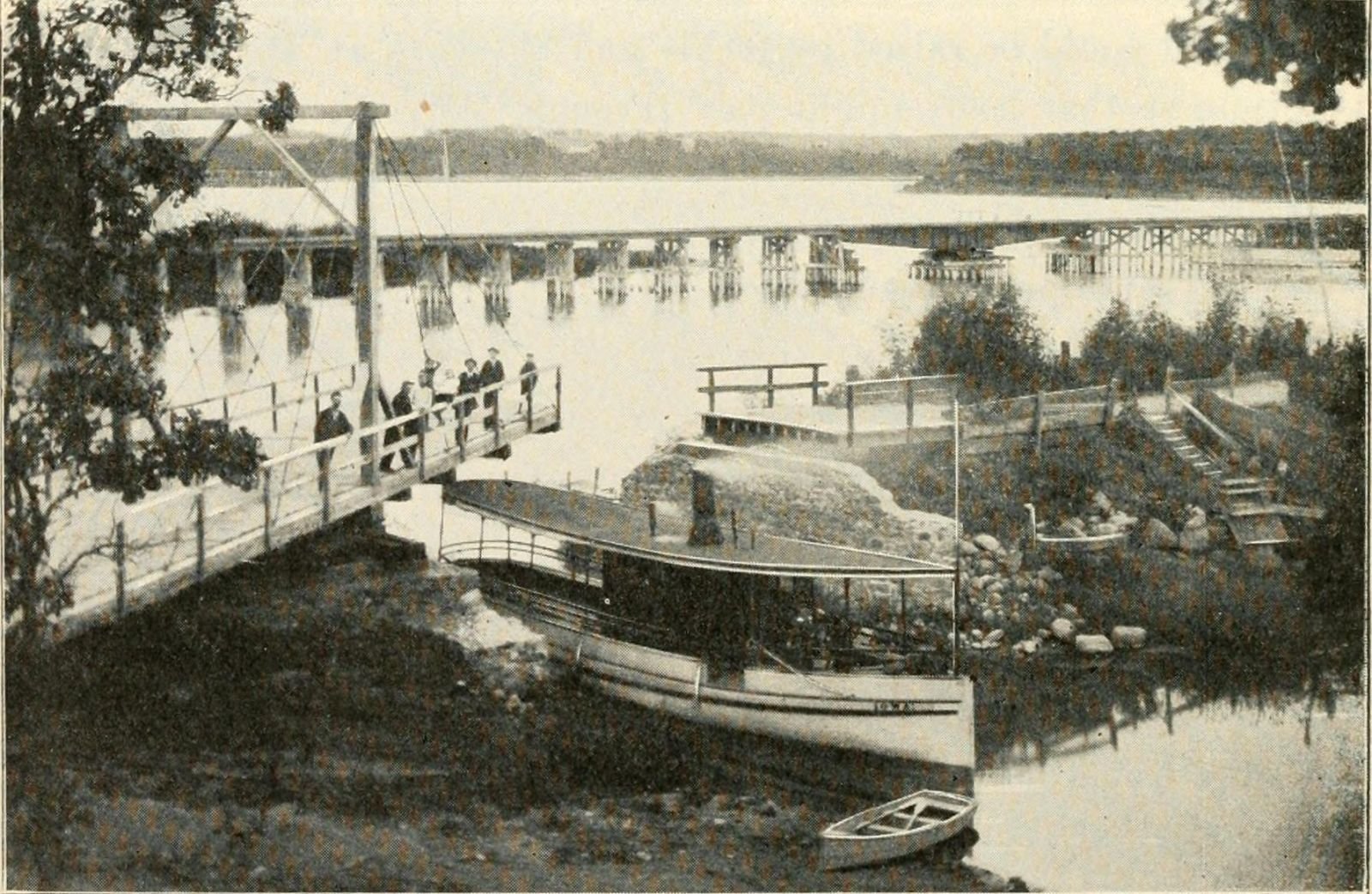
Located alongside US Highway 71, this unique deck plate girder swing bridge once carried the Chicago, Milwaukee, St. Paul & Pacific Railroad (Milwaukee Road) Spirit Lake Branch over a channel between East and West Okoboji Lake. As railroads reached the Okoboji and Spirit Lake area, the high quality lakes became a tourist destination. The first bridge at this location was believed to have been a timber pile trestle with no movable span, completed in 1882. Almost immediately, the bridge became subject to controversy and boats operating on the lake demanded a movable span be installed. In August 1884, a swing span of unknown design was installed to permit the operation of boats and steamers between the two lakes. It is likely that this span was some sort of short wooden pony or deck truss span. By the late 1880s, the bridge required significant upgrades, and was replaced with a new deck girder swing span in 1890. The most recent additions to the bridge came in approximately 1965, when a 30-foot steel stringer span was added on either side of the swing span, giving the bridge its present configuration.
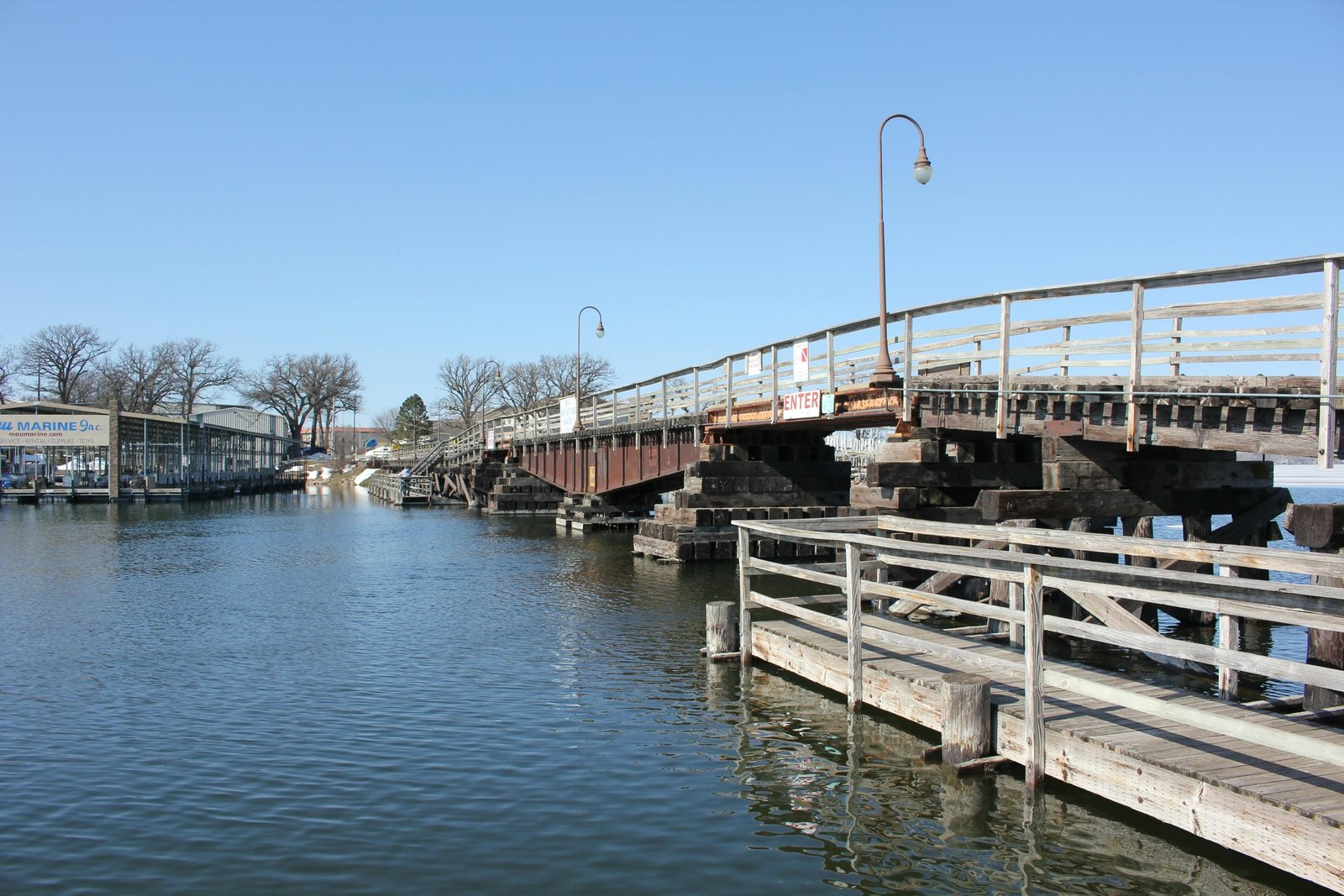
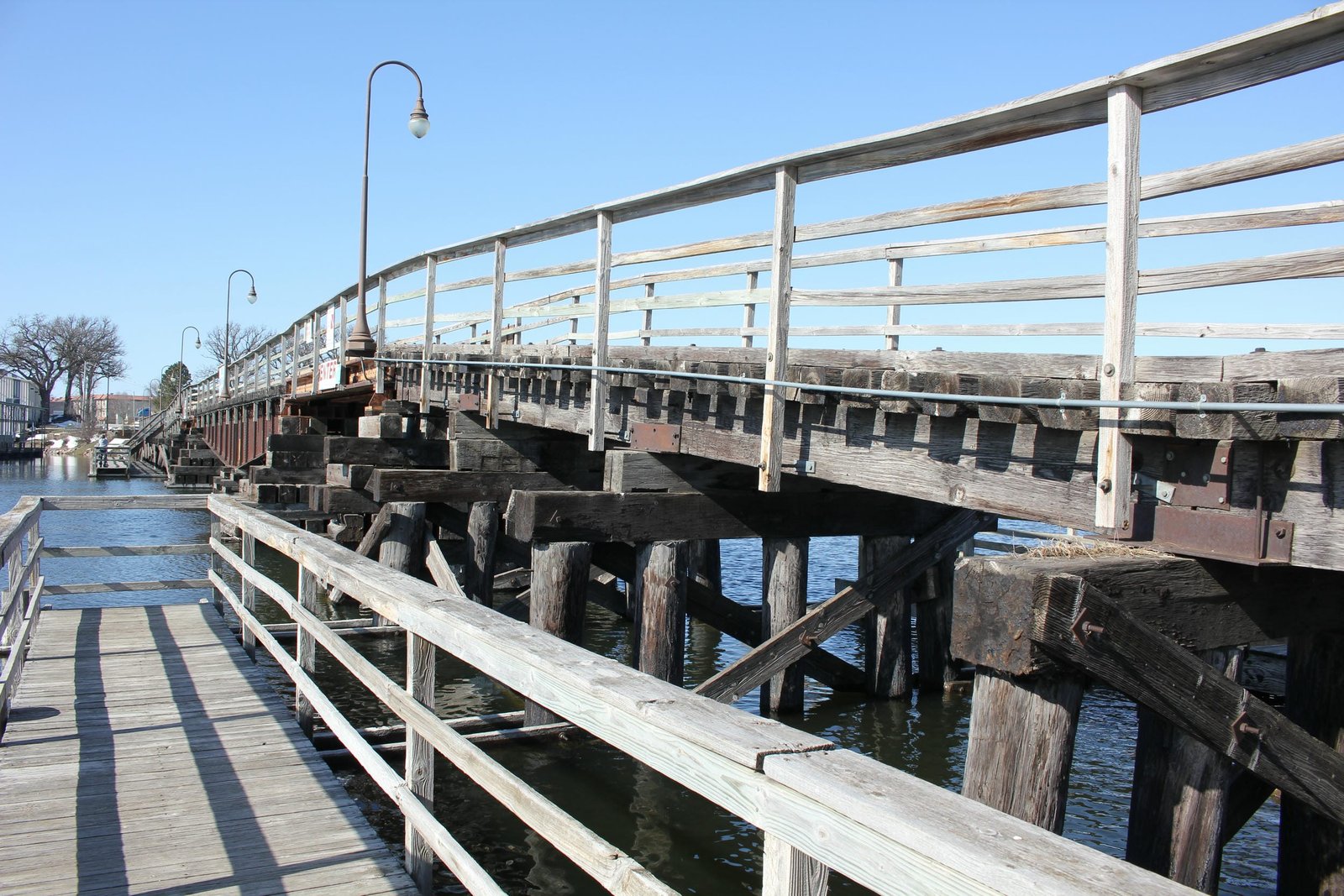
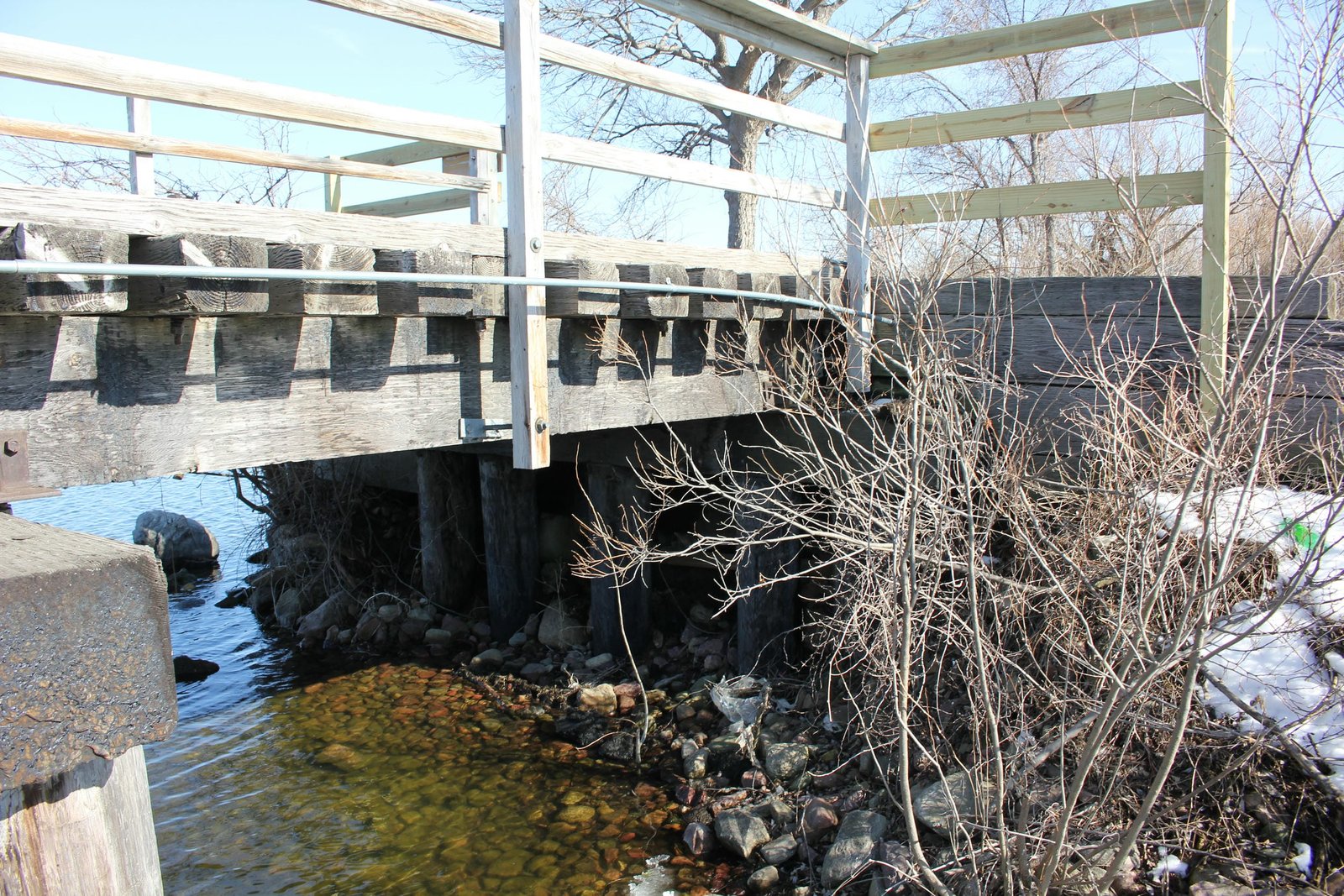
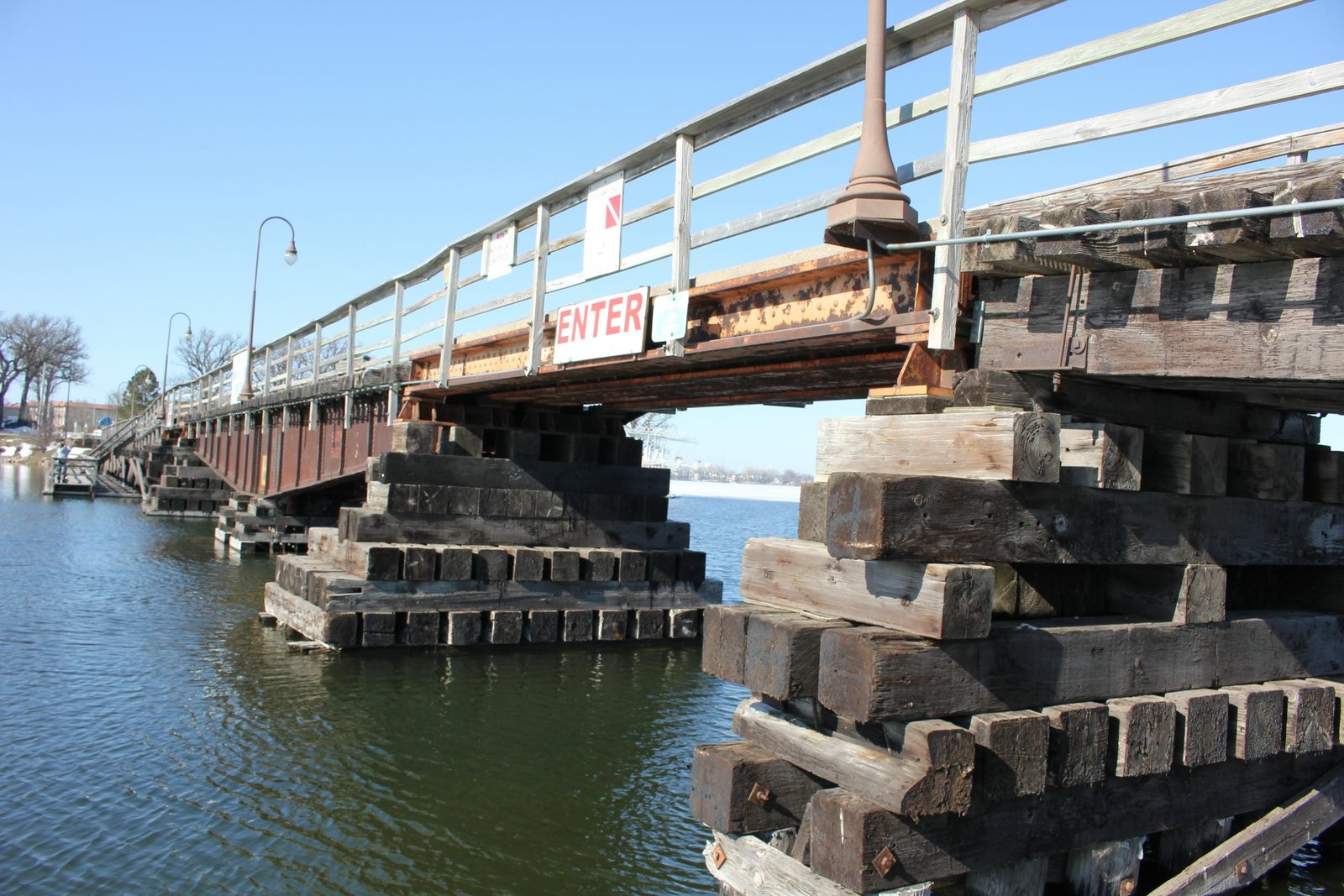
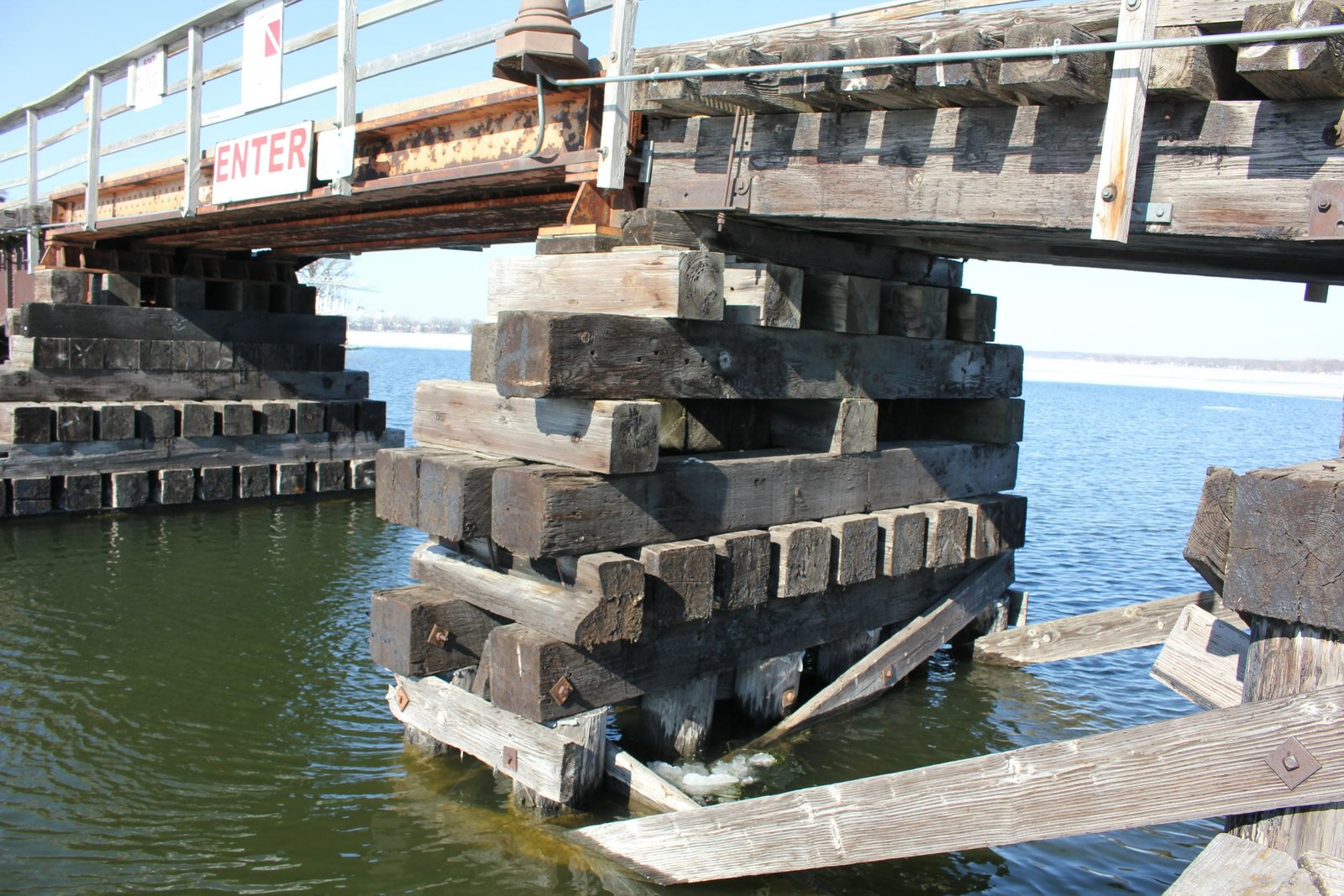
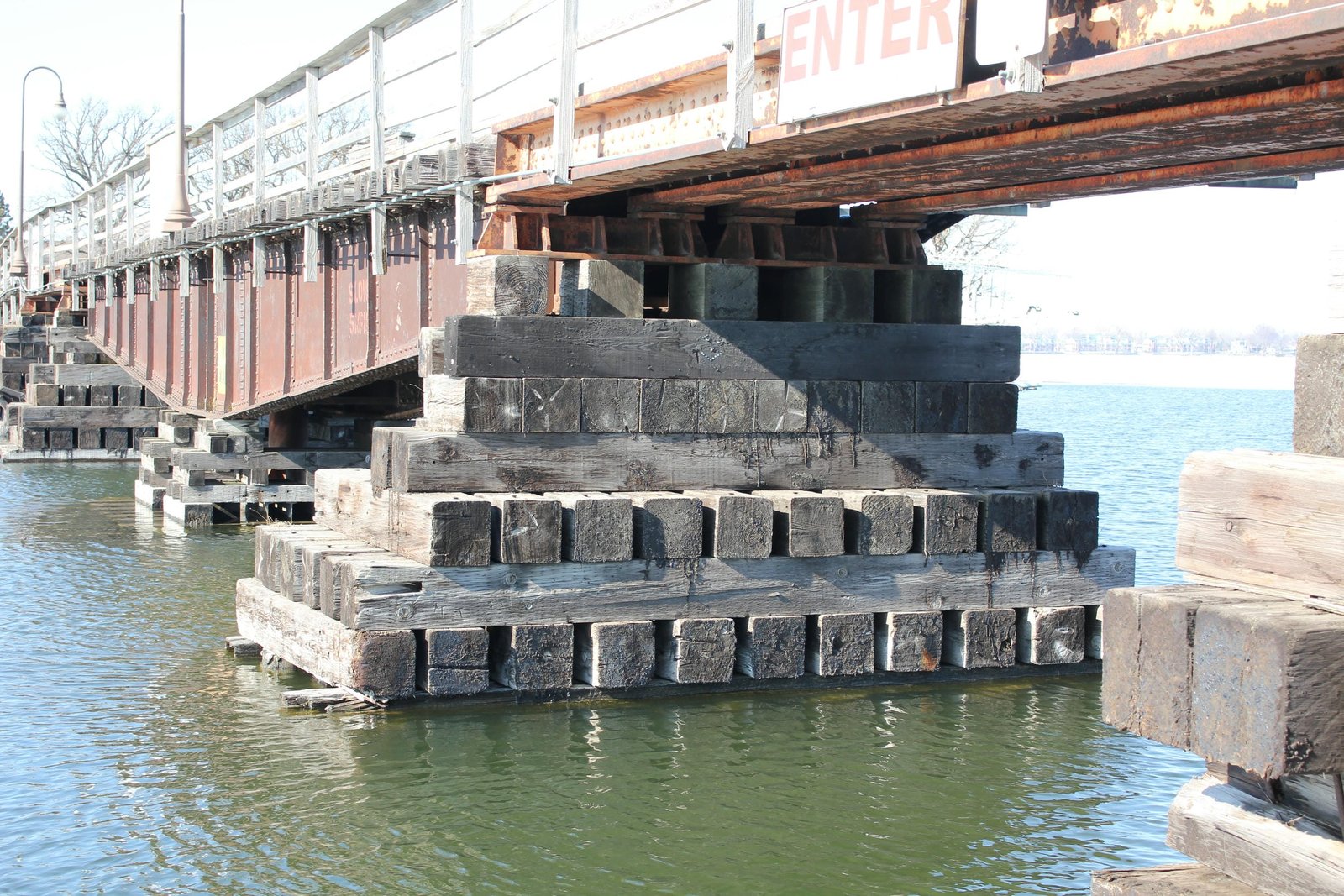
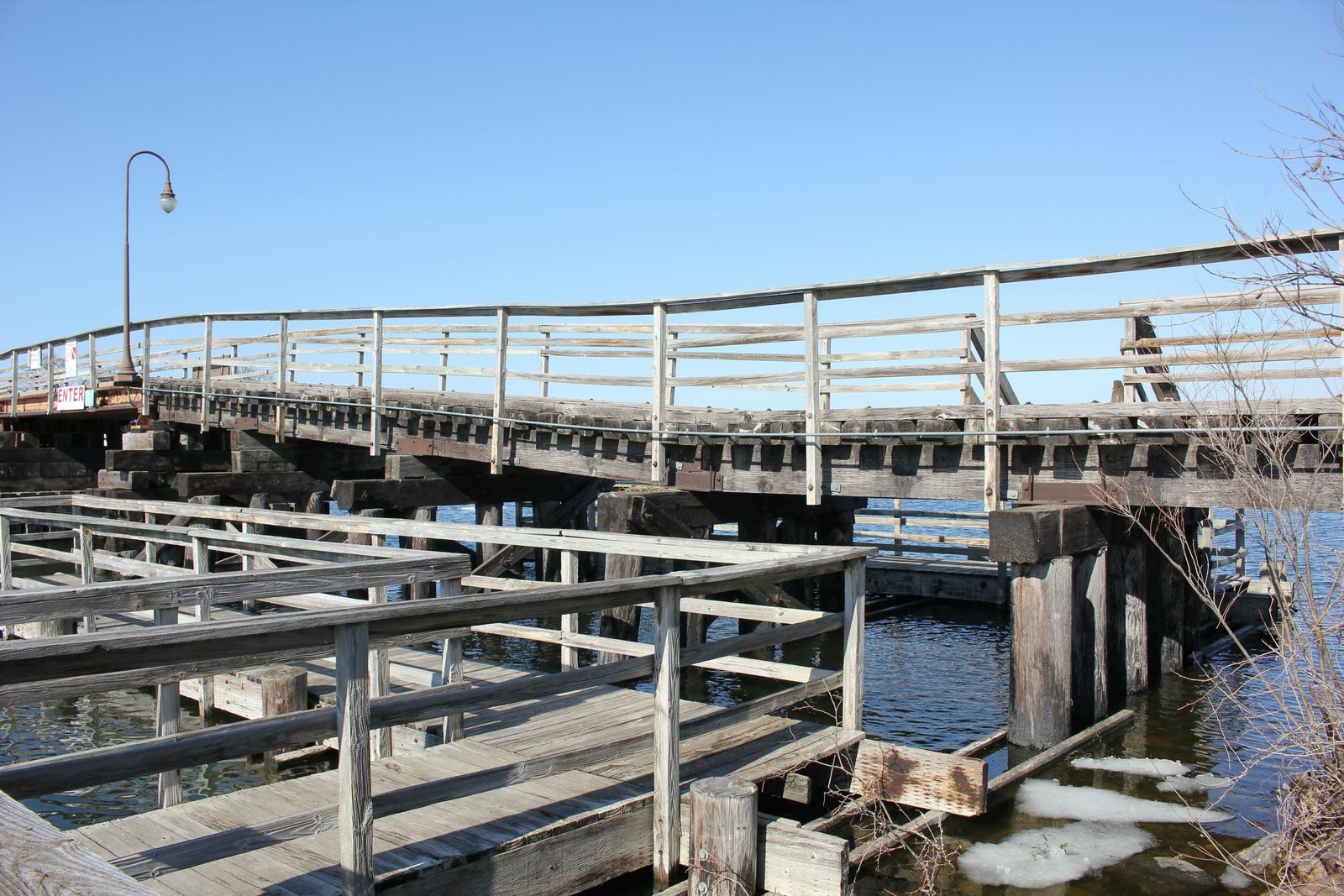
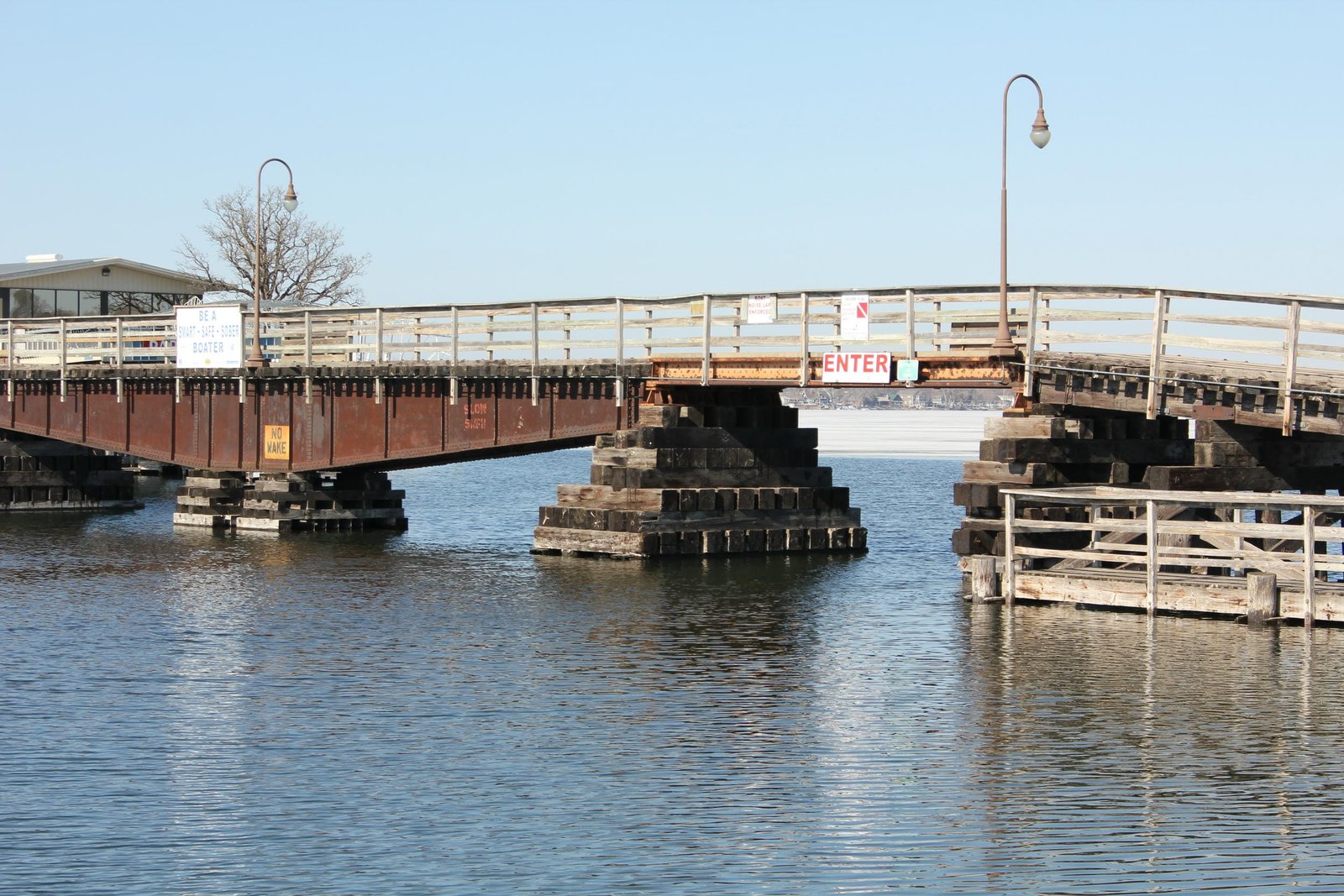
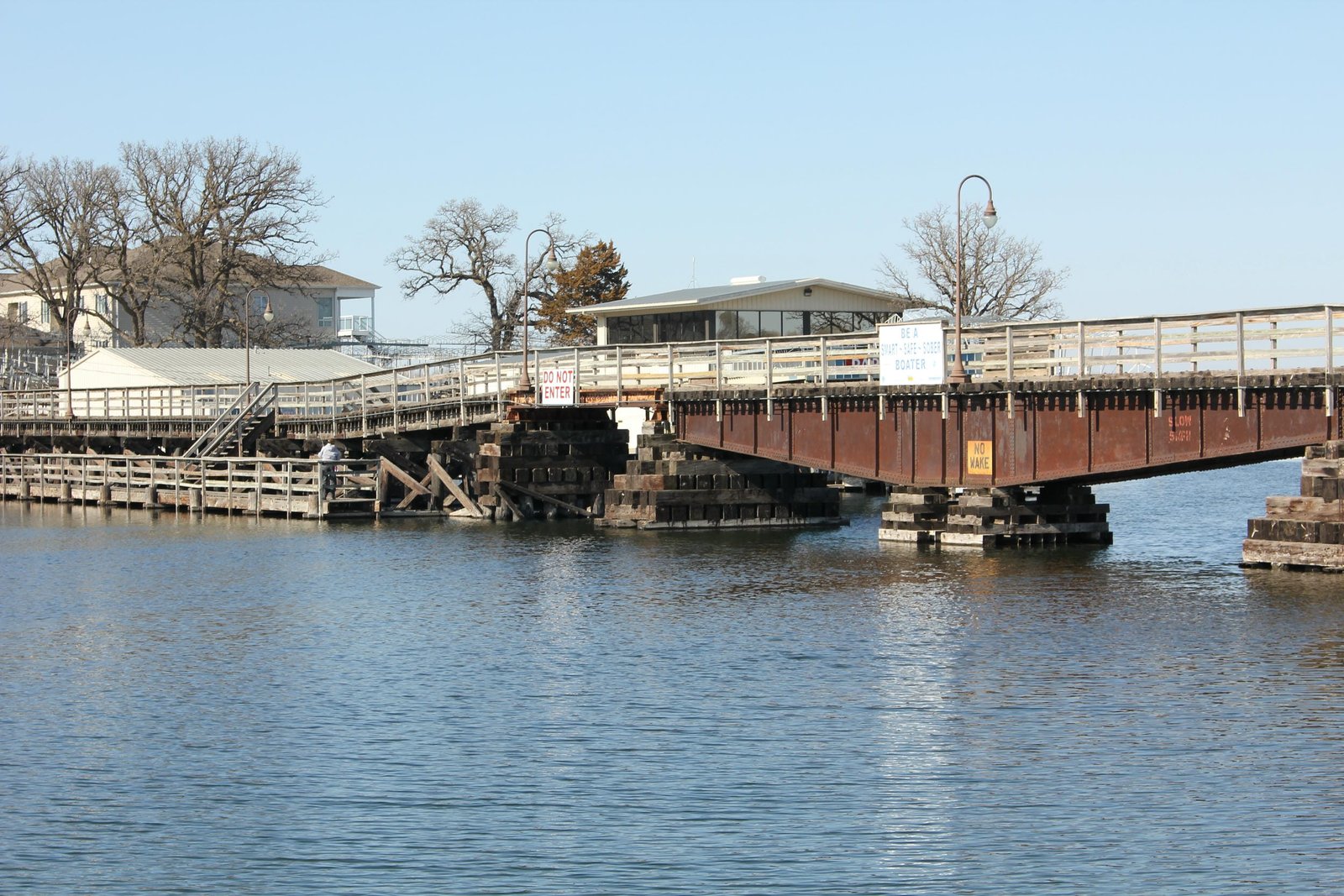
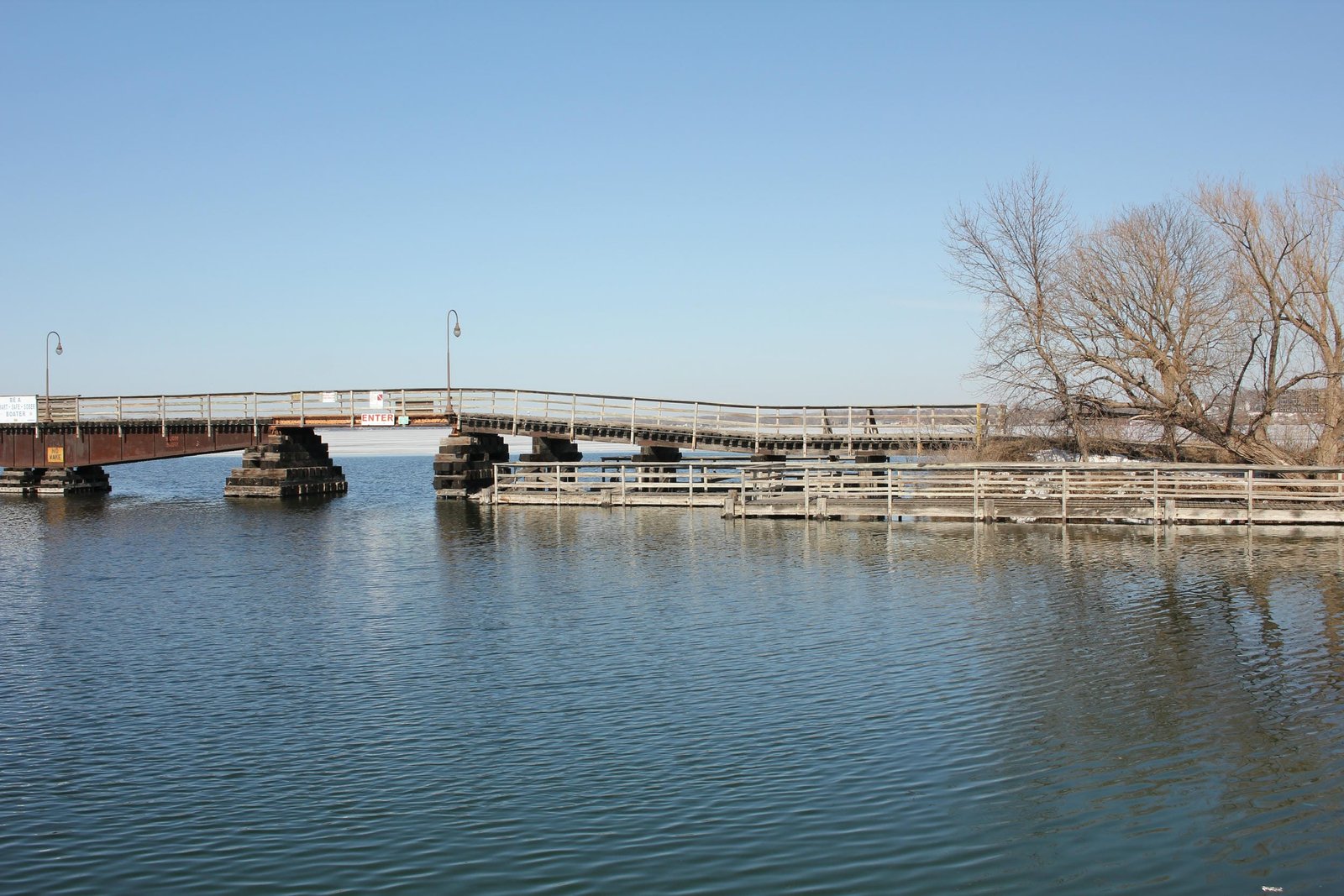
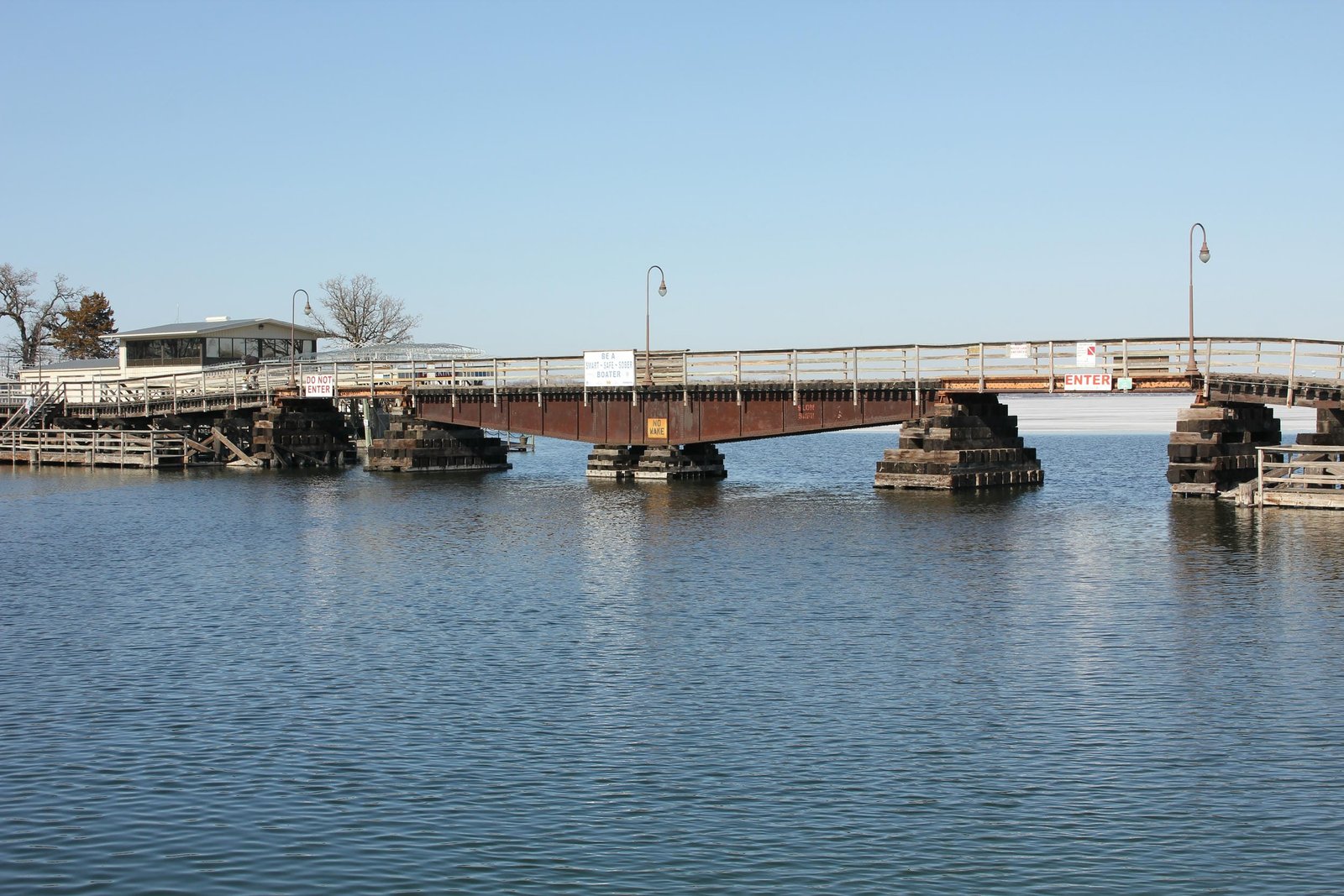
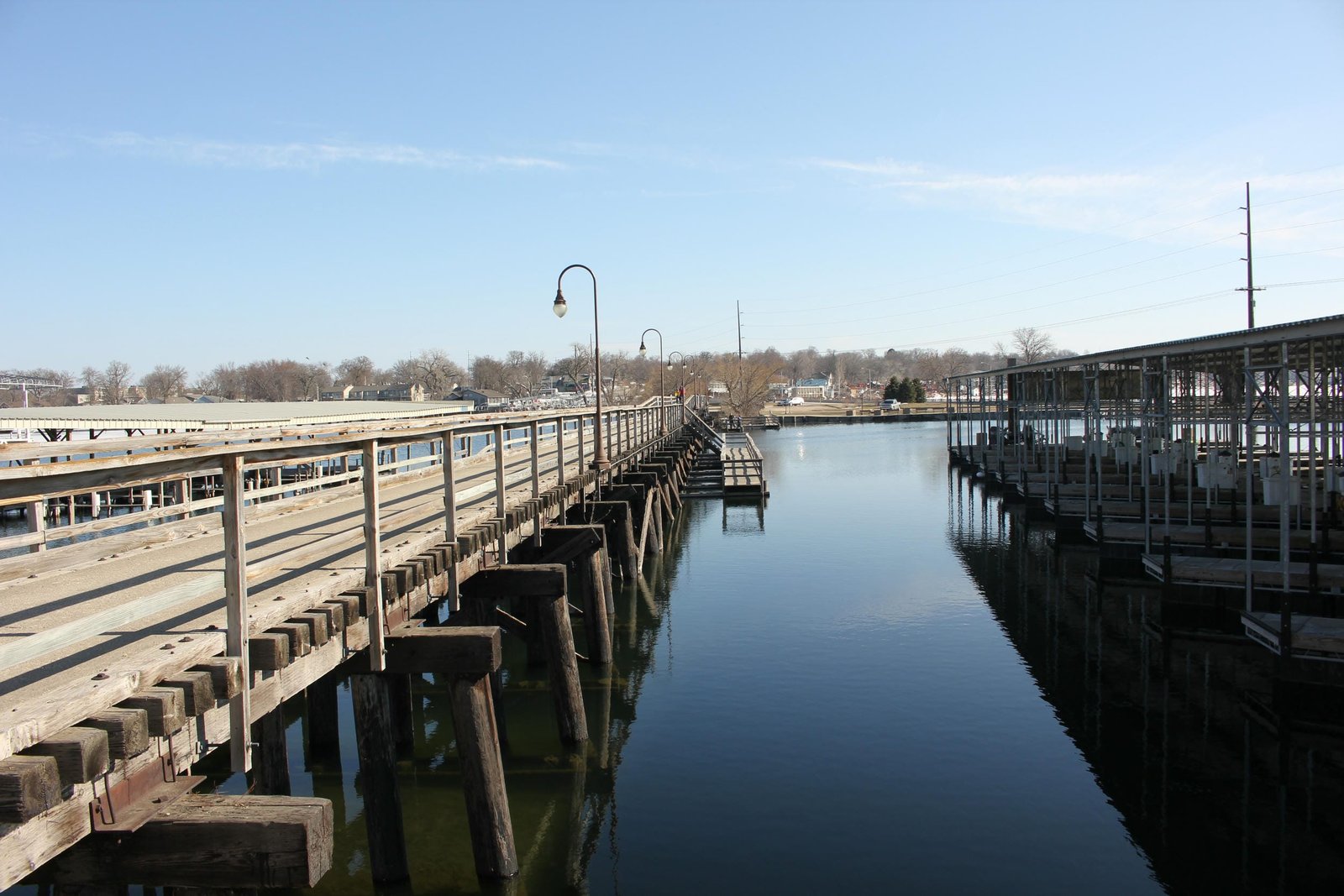
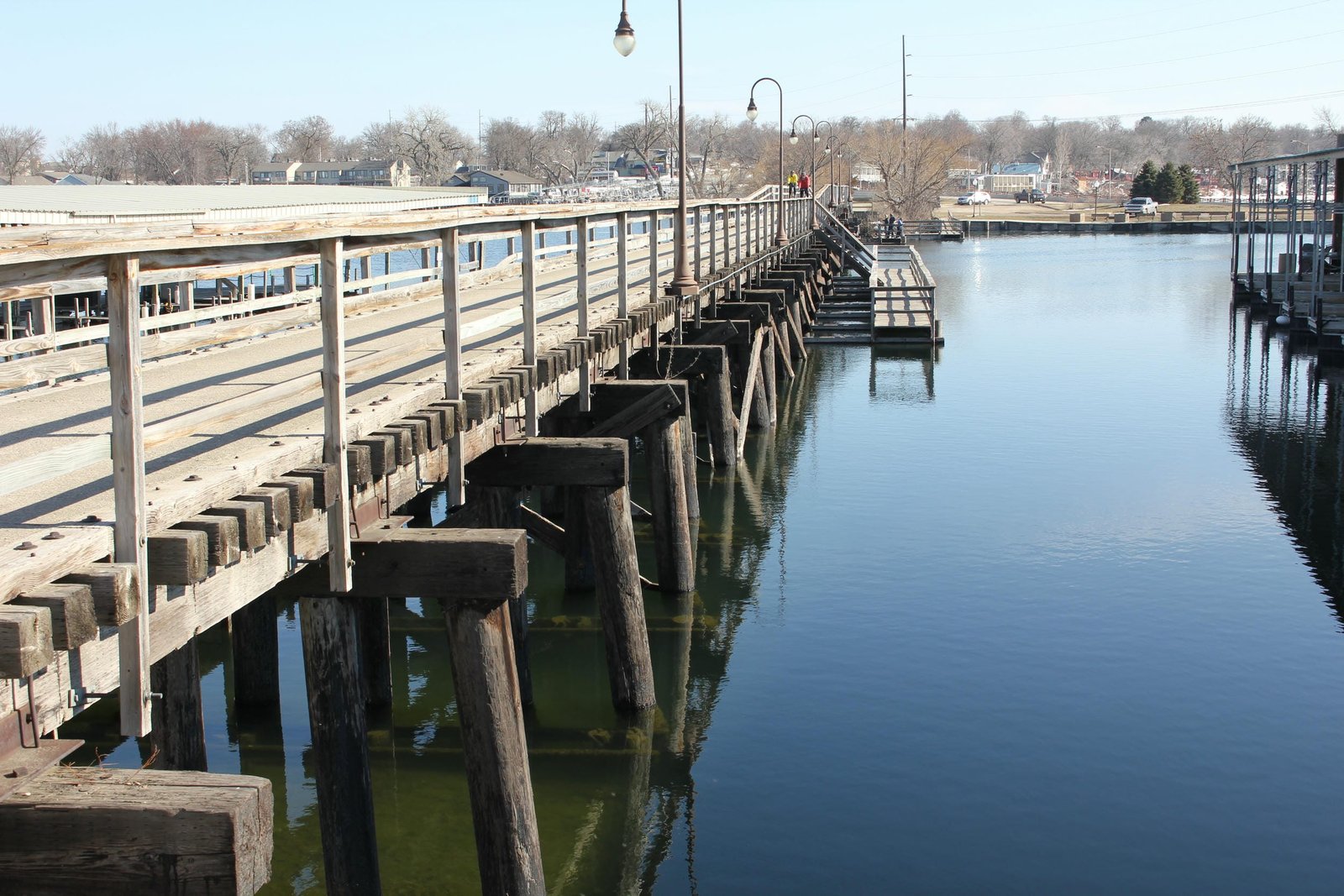
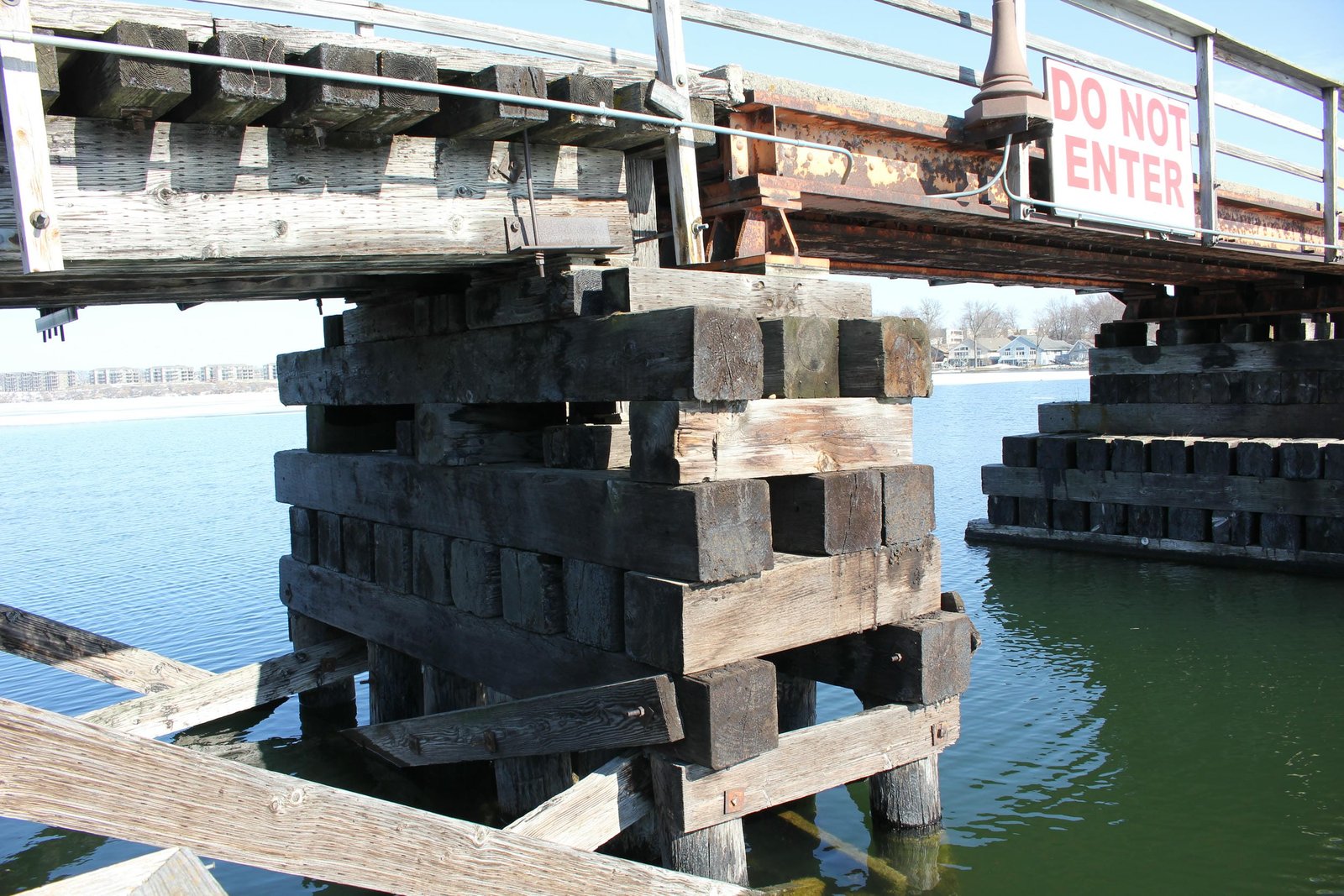
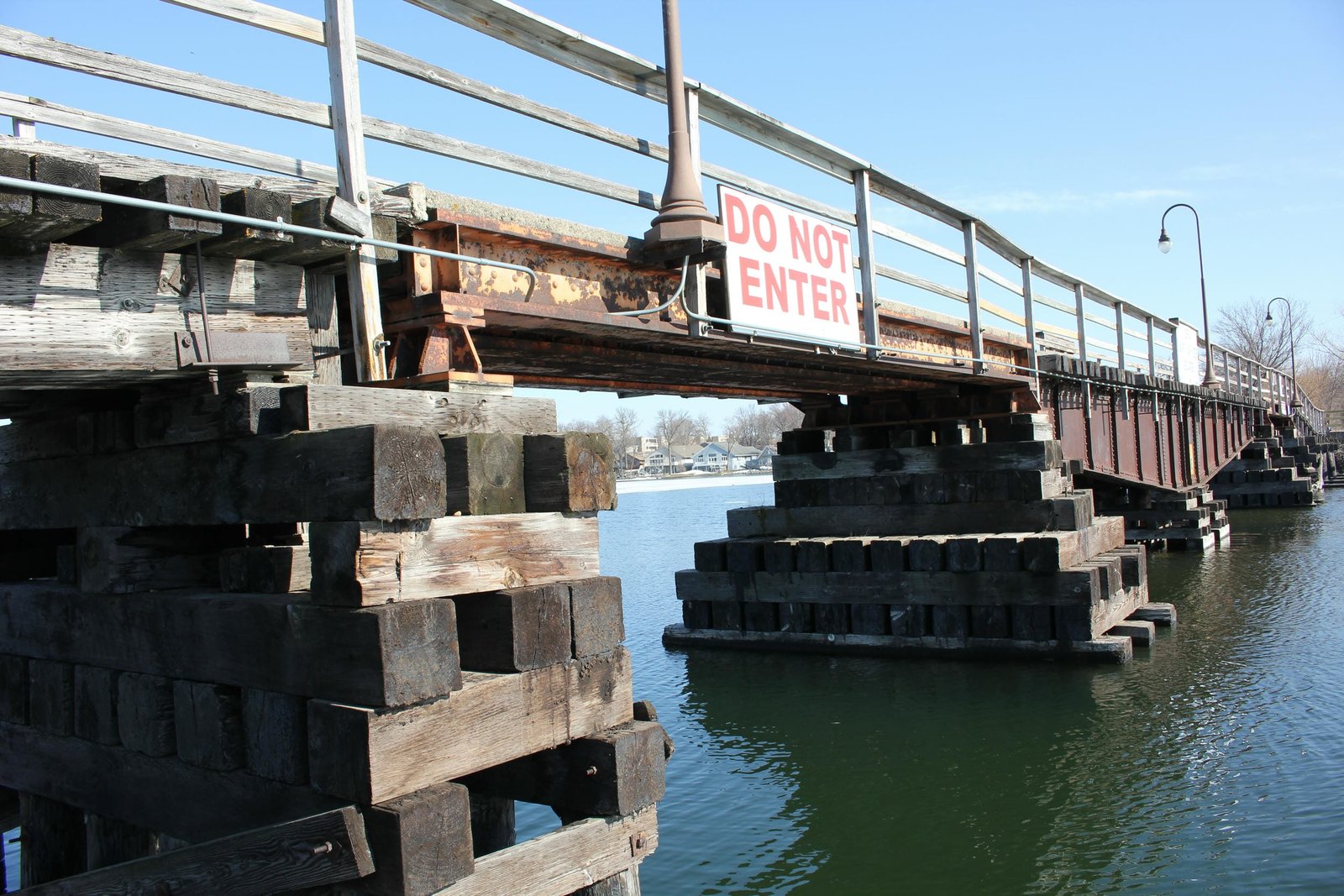
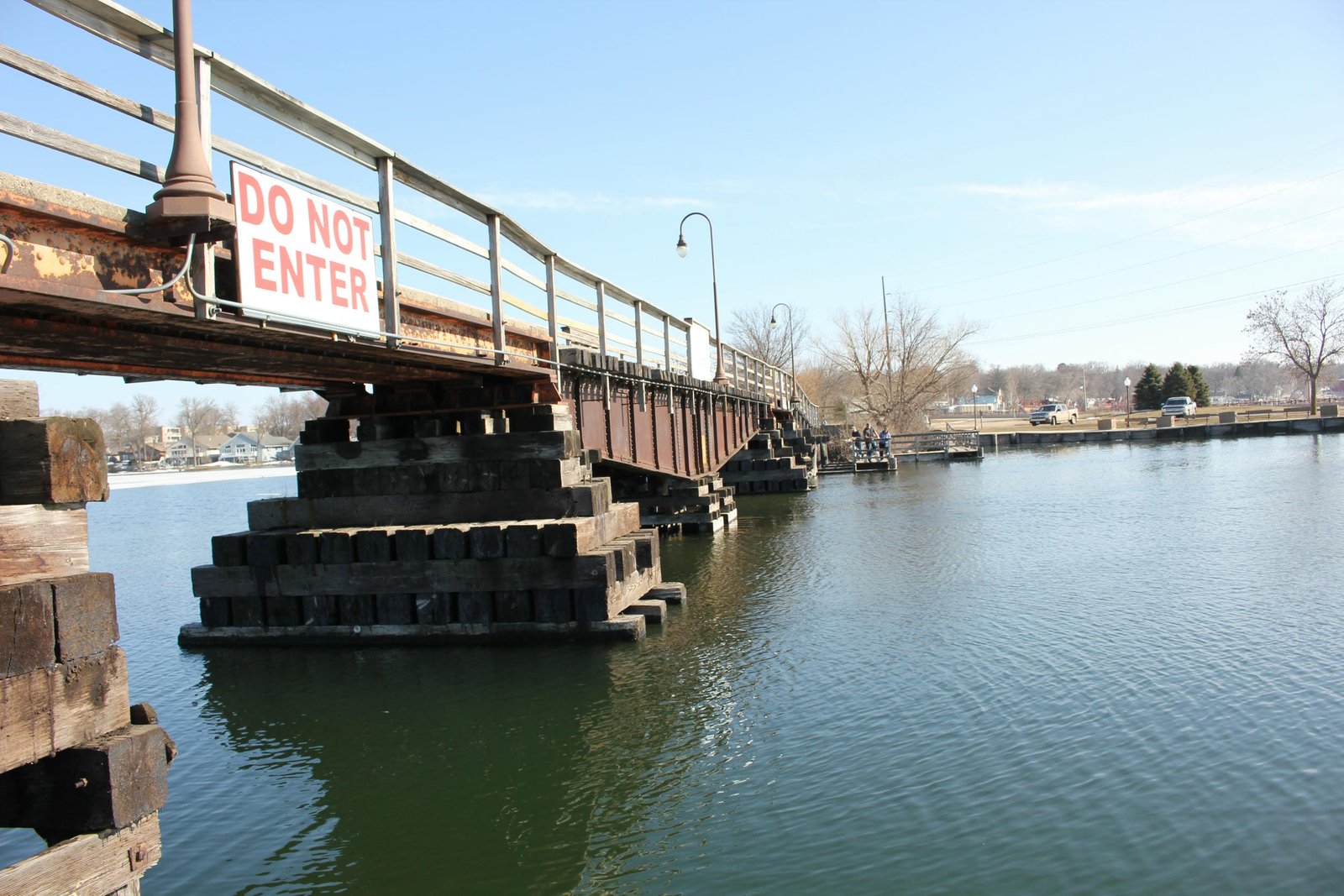
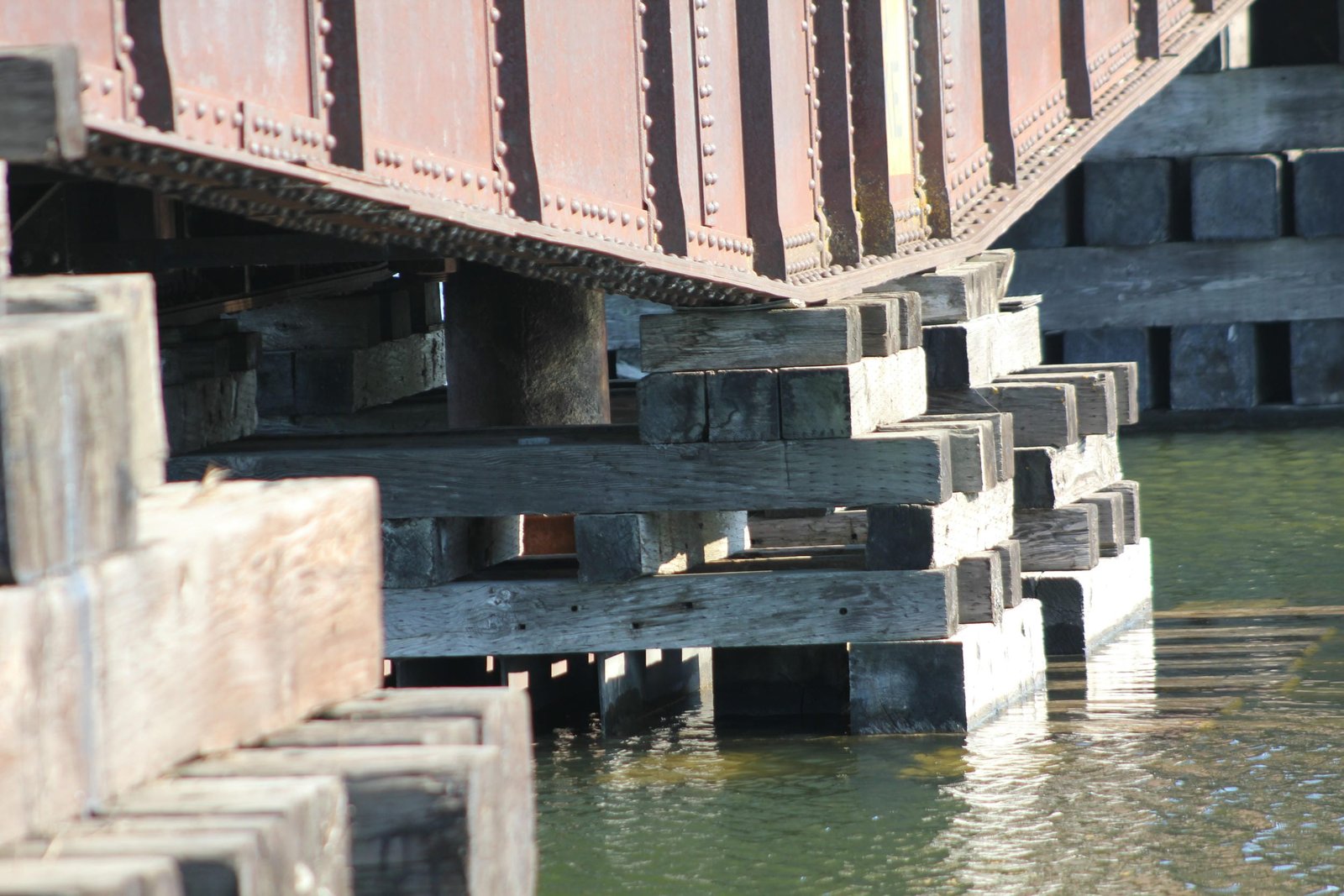
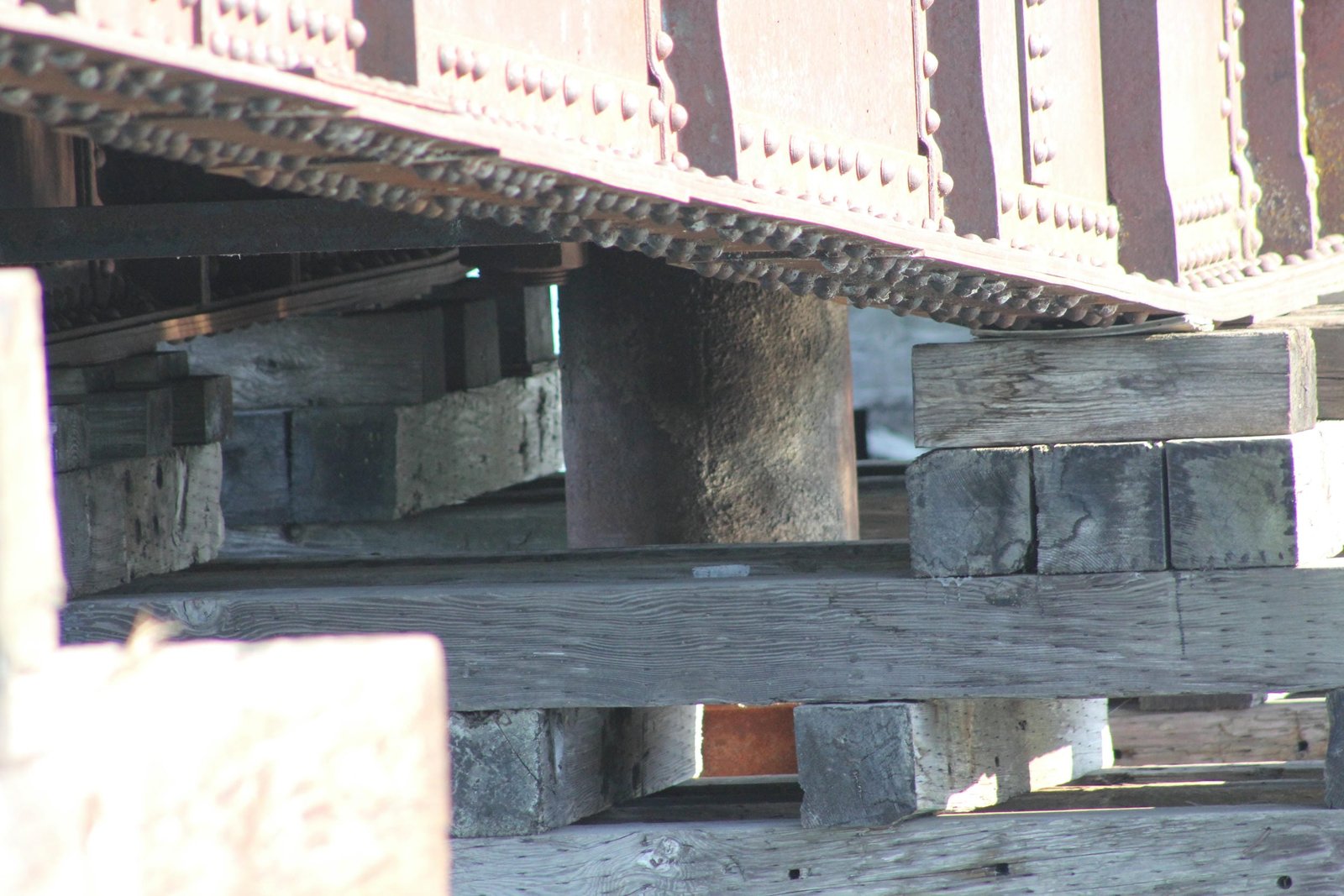
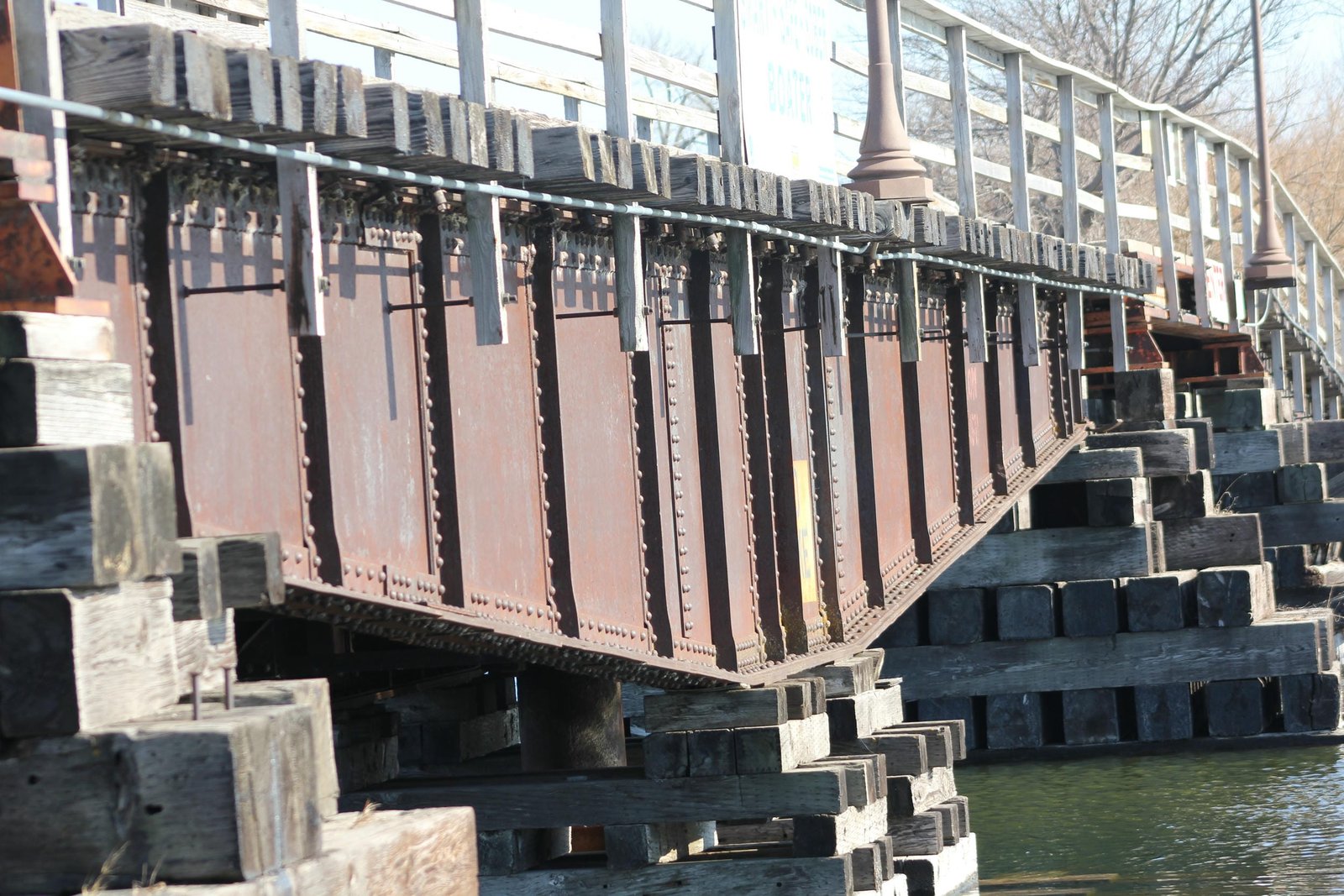
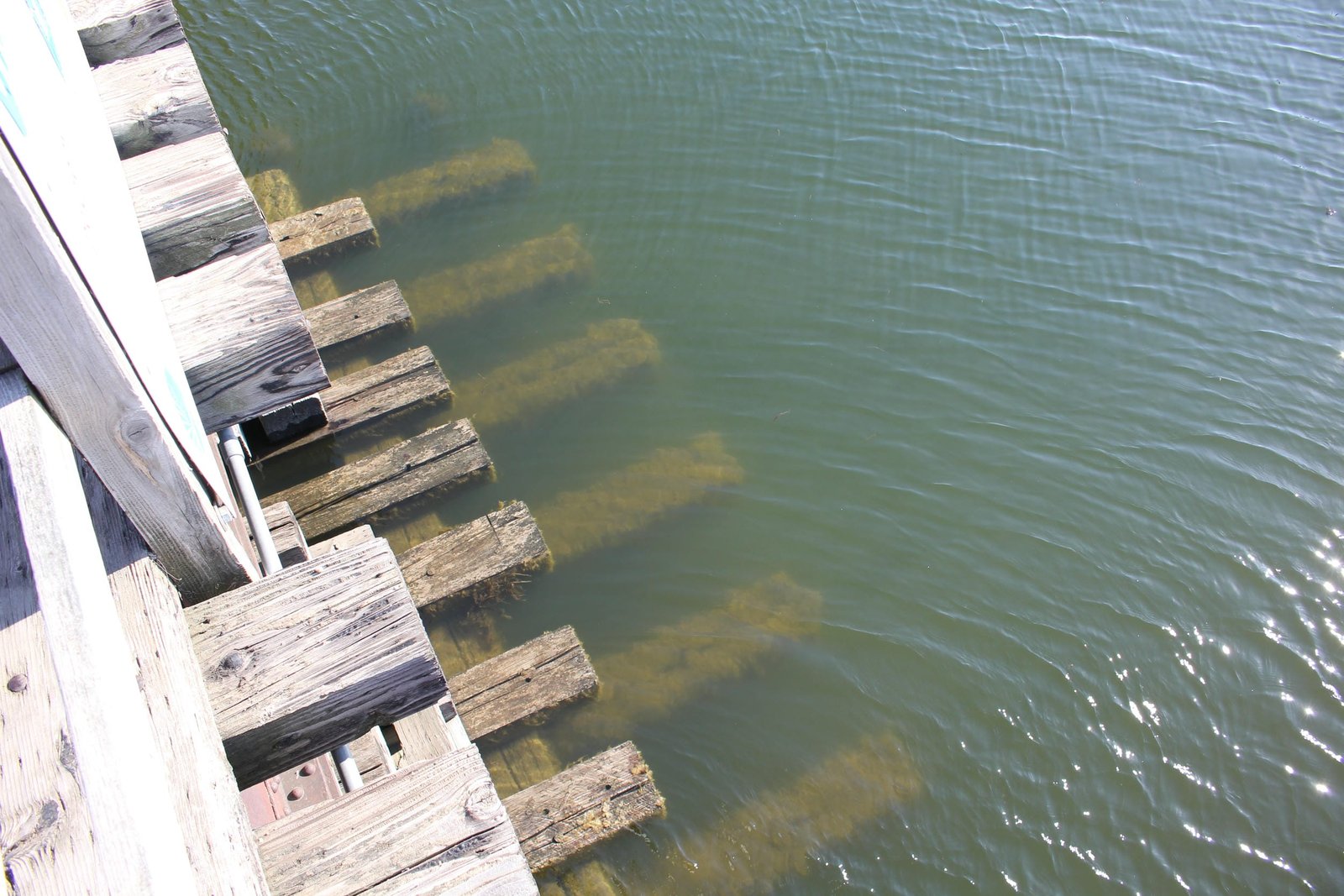
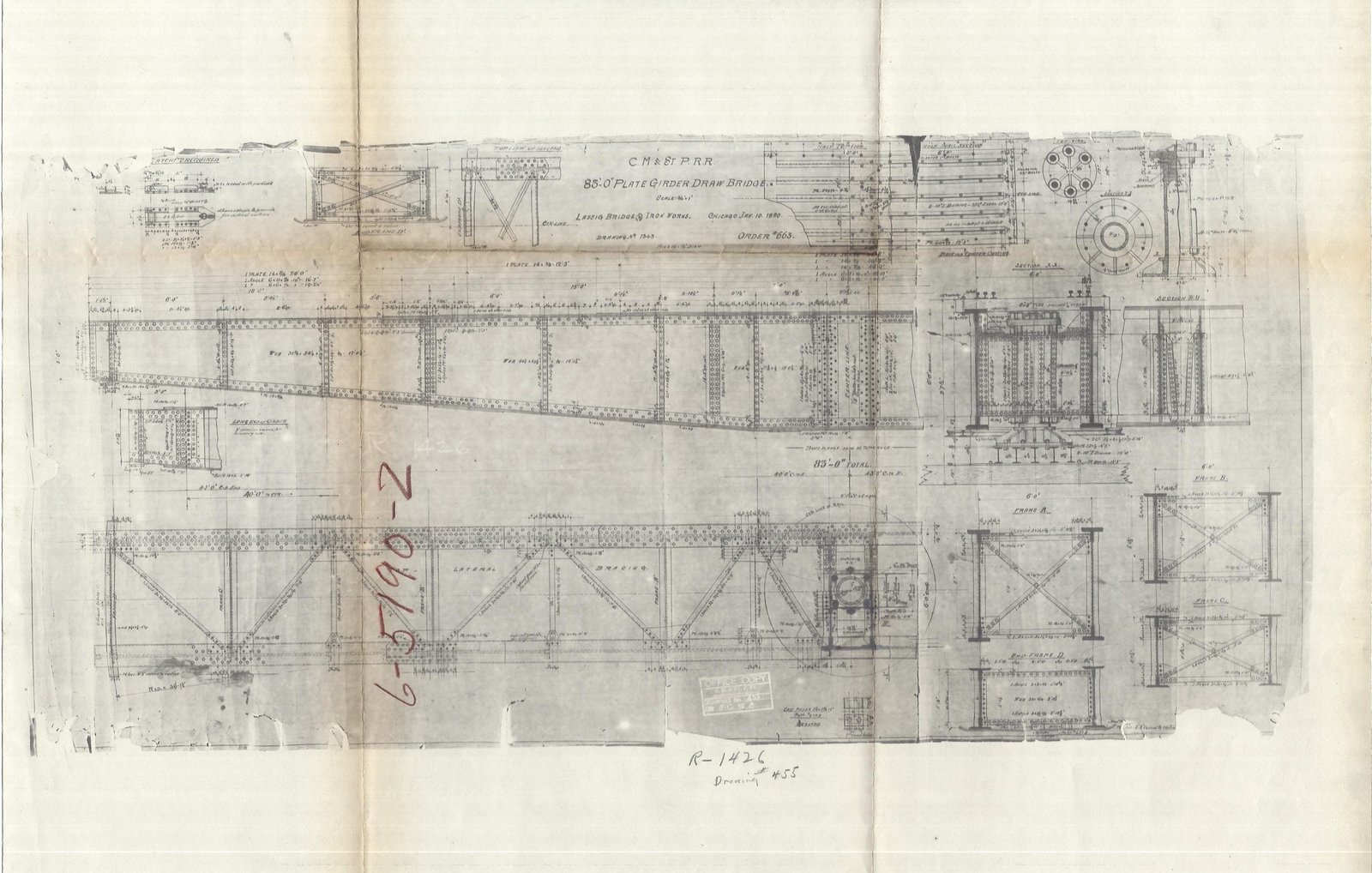
Currently, the bridge consists of an 83-foot deck plate girder swing span, approached by a 30-foot steel stringer span on either side. On the south side, the bridge is approached by five timber pile trestle spans, which were last renewed in 1921. On the north side, the bridge is approached by eighteen timber pile trestle spans, which were last renewed in 1921 and 1934. Lassig Bridge & Iron Works fabricated the main span, while the approach beam spans were fabricated by an unknown contractor. All timber components of the bridge were constructed by railroad company forces. The main span uses an extremely unusual design, consisting of a modified center-bearing turning mechanism and an unusual tapered girder shape. Each girder is fabricated as one piece, with the center 6 feet thick and the ends 3 feet thick. The unusual taper was likely added to minimize weight and maximize clearance underneath. With the exception of the ends and center, all transverse frames consist of a typical X-bracing of varying heights. The center and ends both use a riveted plate for the transverse frames. Also unique to this span, the north half is 40 feet long, while the south half is slightly longer at 43 feet long. The turning mechanism consists of a cylinder, which is held between top and bottom casting. Both castings are connected to the top and bottoms of the center transverse frames, and the bottom casting is riveted to I-beams placed transversely on the timber pier. Additional angle plates appear to connect the center of the span to the cylinder. The top casting contains a square nut, which was used to turn the cylinder and span. The approach beam spans are heavily riveted, and arranged into two sets of two. It is unclear if these spans were installed at this location new, or if they were reused from another location.
Typical center-bearing swing spans had wheels or rollers directly set onto the center of the swing span. Center-bearing swing spans were fairly unusual for railroad use, and largely fell out of favor by the 1890s. Most swing spans used a "rim-bearing" design, where the superstructure is set onto a drum, which turns on a roller nest. Rim-bearing designs required less precision and were easier to maintain. Drawings for this span do not indicate that roller bearings were used at the ends of the span and also do not indicate a roller nest was ever installed at the center of the span. It appears that the cylinder is balanced on the lower casting, and turning the span was accomplished without a significant gear system. In addition, it appears that shims were used on the bottom of the girders instead of rollers. This may indicate that the span was largely balanced around the center cylinder. The use of a rotating cylinder to turn the span appears to be a highly unusual design. It is possible that the span was designed as an experimental design, or it is possible that there were other unknown factors requiring an unusual design. It is also possible that the short span length allowed for a cheaper, easier to maintain design. During the late 1880s and 1890s, Lassig Bridge & Iron Works was an innovator of experimental and unusual bridge designs. From the late 1880s into the 20th Century, the Milwaukee Road designed many of their own bridges in house, often designing unusual and unique spans to meet specific situations. Onward Bates served as the Superintendent of Bridges & Buildings and was in charge of designing several unusual movable bridges.
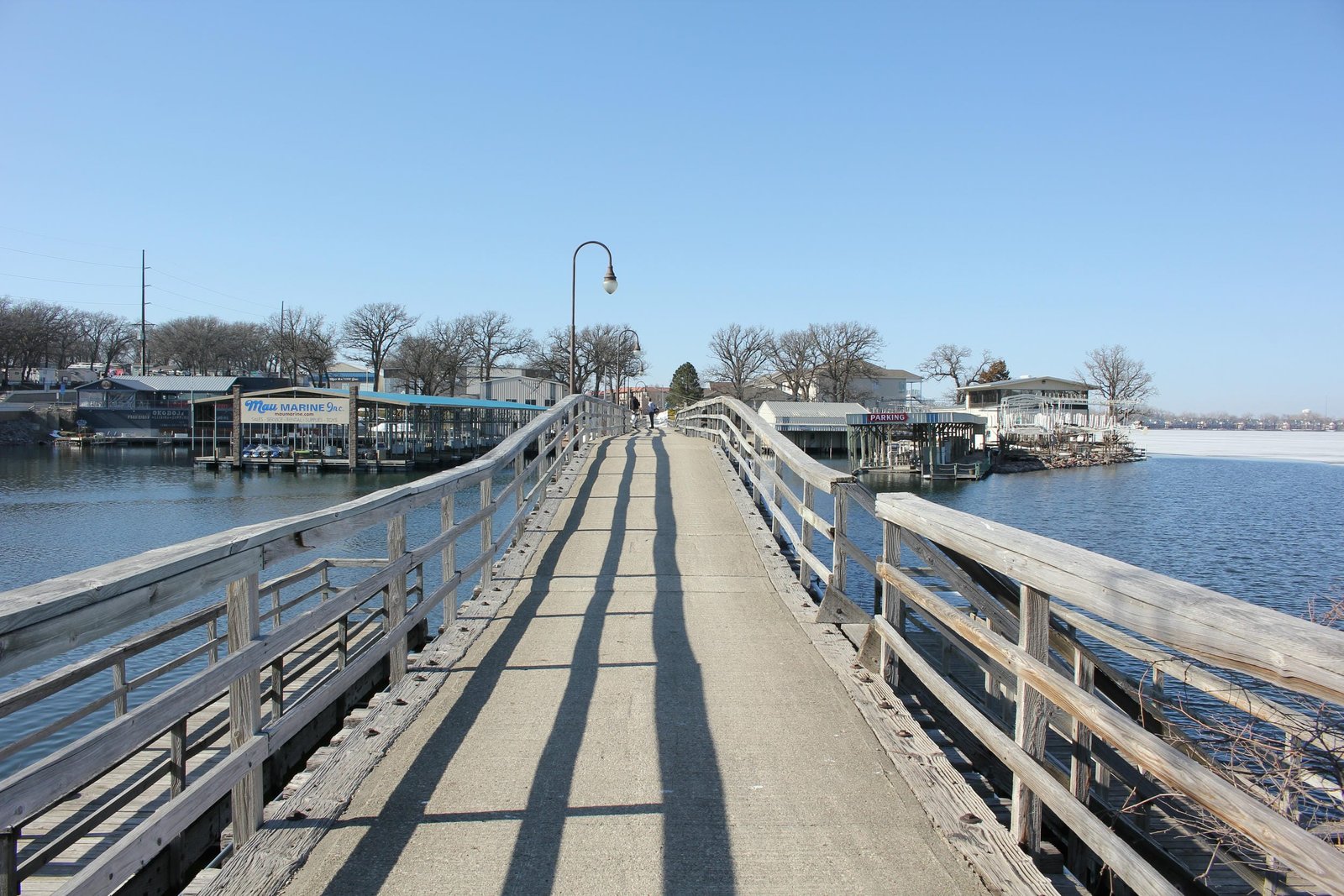
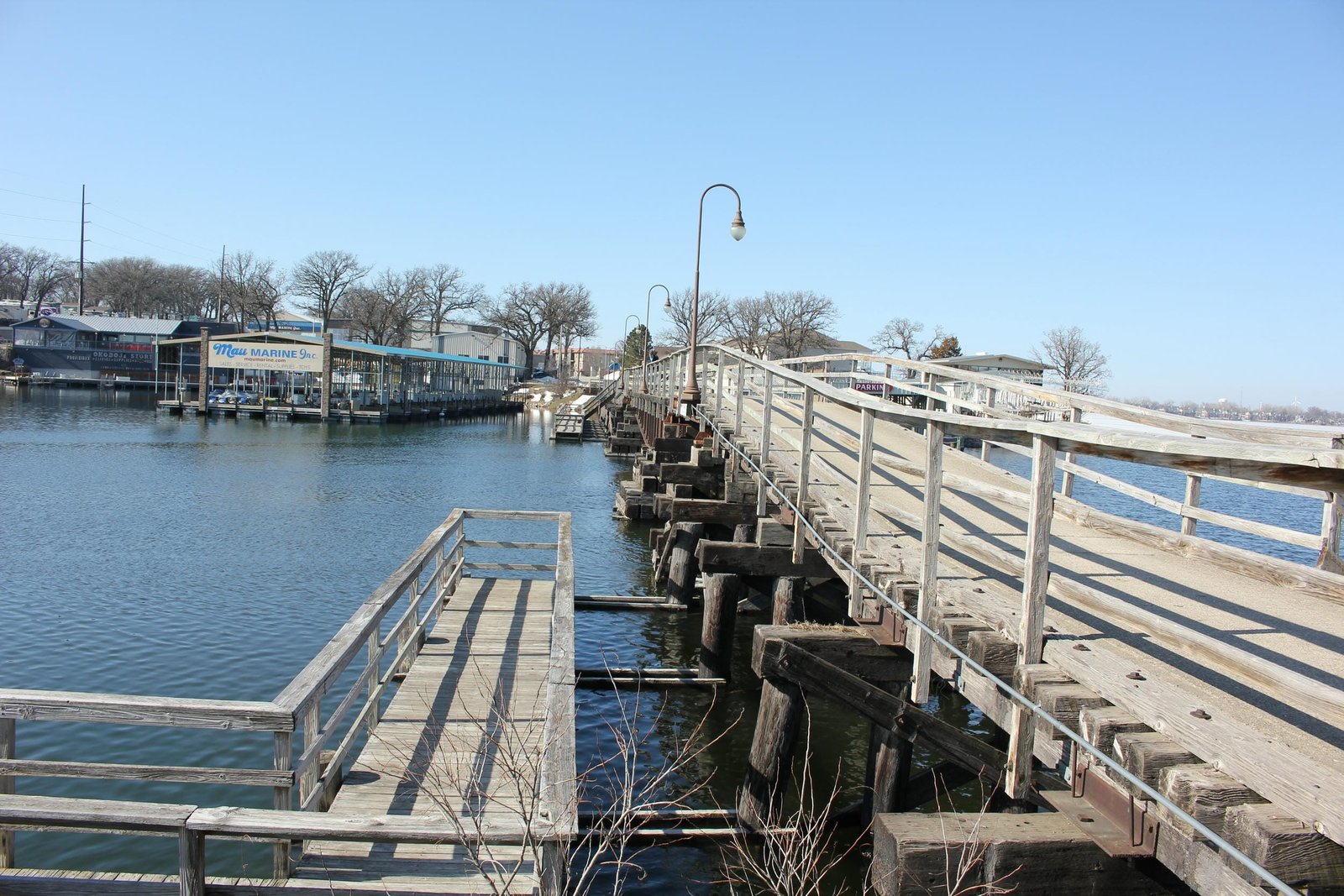
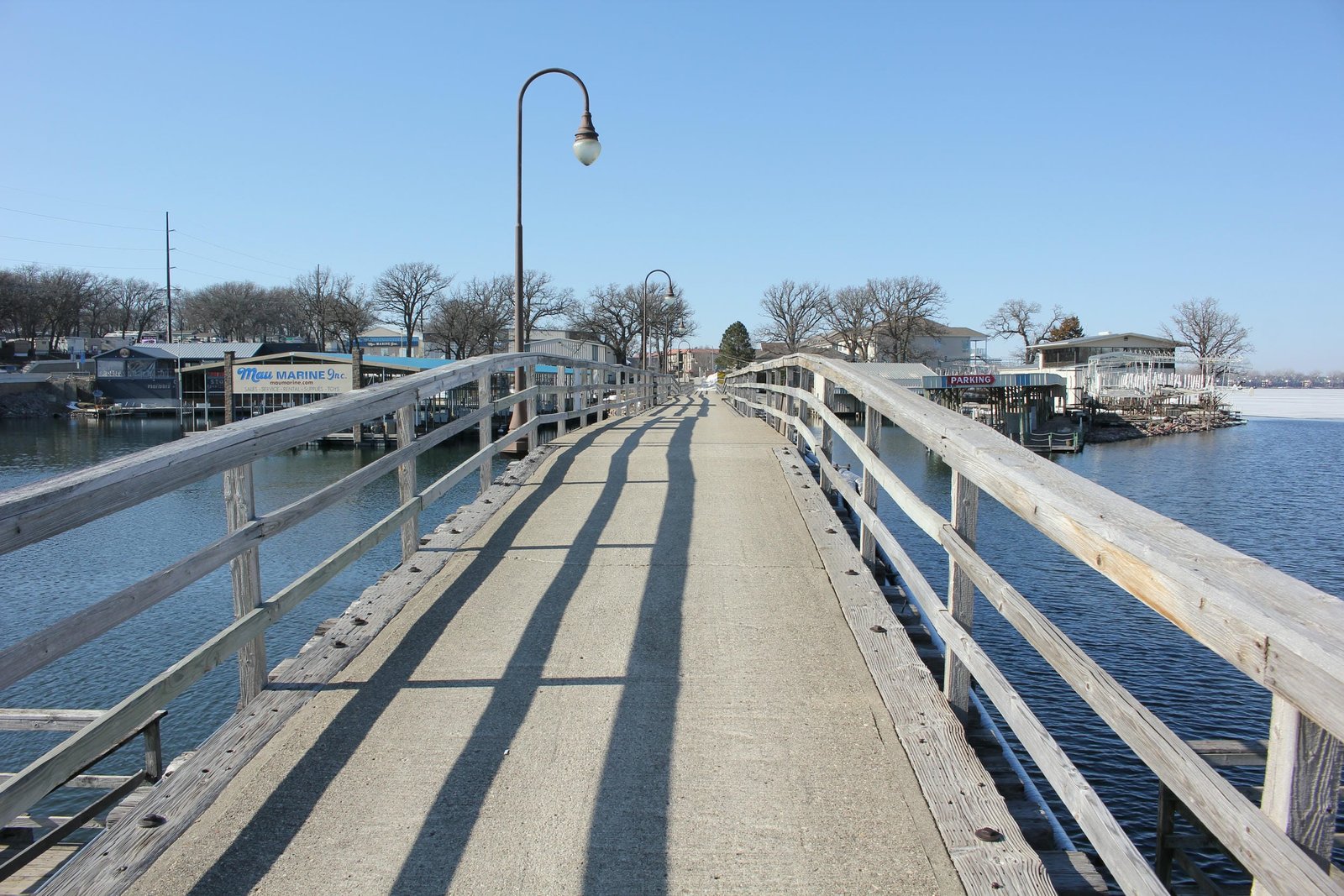
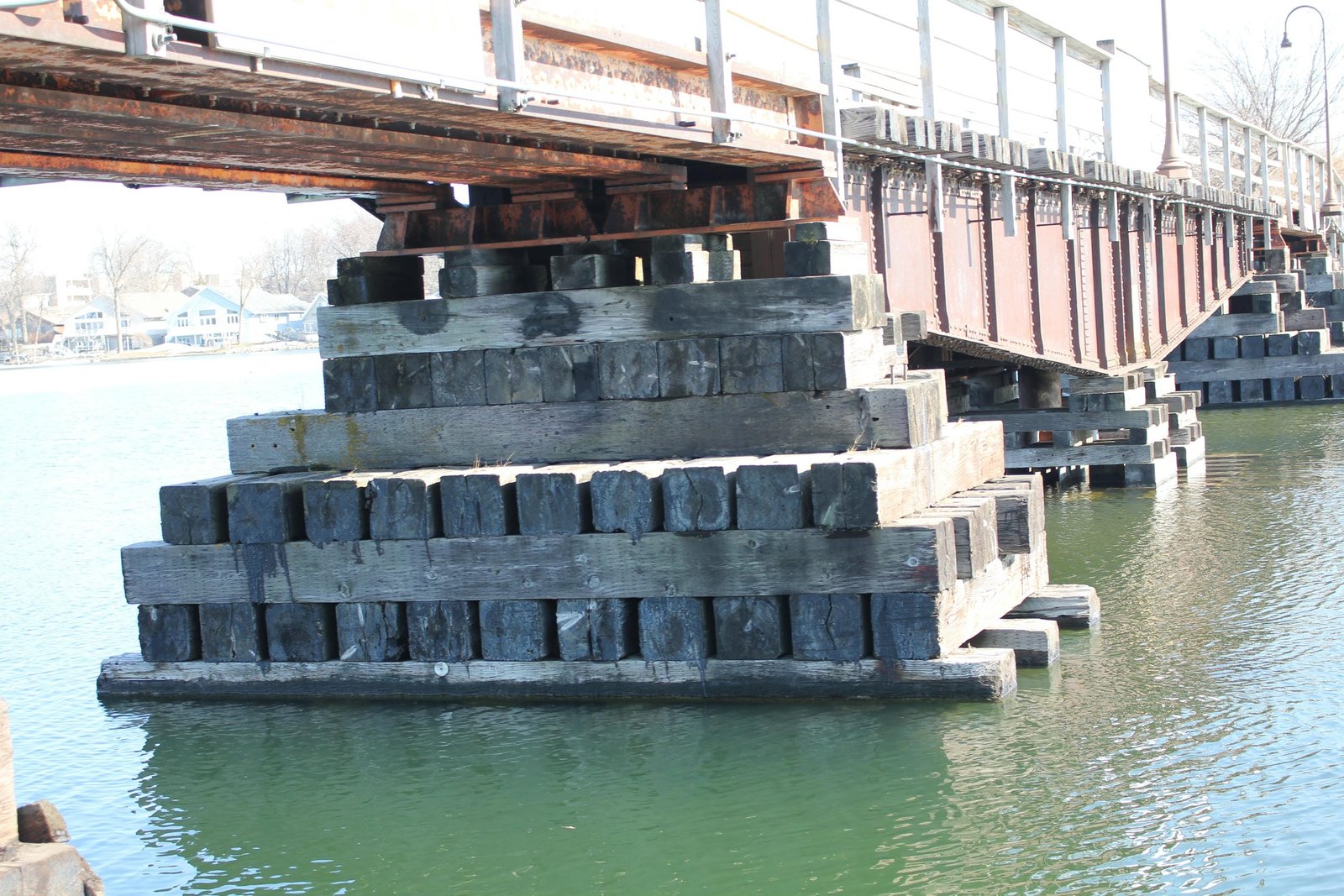
It is believed that the swing span last opened in the mid-20th Century. Despite this, the center cylinder and castings appear to have been retained. After the bridge was abandoned, the center portion of the bridge was raised by adding additional cribbing at the piers and adjacent approach bents. The bridge eventually reopened to pedestrian use in the late 1970s or early 1980s. As part of the conversion to pedestrian use, additional observation platforms were added adjacent to the main span and concrete decking and wooden railings were added to the bridge. Today, the bridge is a popular fishing spot and part of the Great Lakes Spine Trail. Overall, the bridge appears to be in fair to good condition, with no significant deterioration noted. It is possible that the timber components of the bridge will need repairs in the coming years, but the steel spans appear in good shape. The author has ranked this bridge as being regionally significant, due to the unusual design and age.
Citations
| Builder and build date (main span) | Milwaukee Road Drawing Collection, located at the Milwaukee Road Archives at the Milwaukee Public Library |
| Build date (timber approaches) | Milwaukee Road Bridge Index, located at the Milwaukee Road Archives at the Milwaukee Public Library |
| Railroad History Citation | ICC Valuation Information, Compiled by Richard S. Steele |