
Click the photo to view the full-size version
| Name | CPKC Skunk River Bridge Chicago, Milwaukee, St. Paul & Pacific Railroad Bridge #I-1090 |
| Built By | Chicago, Milwaukee & St. Paul Railway |
| Currently Owned By | Canadian Pacific Kansas City Limited |
| Superstructure Contractor | Phoenix Bridge Company of Phoenixville, Pennsylvania (Truss Span) Wisconsin Bridge & Iron Company of North Milwaukee, Wisconsin (Span #1) Unknown (Spans #3 Through #14) |
| Substructure Builder | Chicago, Milwaukee & St. Paul Railway Company Forces (West Abutment and Piers #2 Through #38) Unknown (East Abutment and Pier #1) |
| Length | 1270 Feet Total, 150 Foot Main Span |
| Width | 1 Track |
| Height Above Ground | 20 Feet (Estimated) |
| Superstructure Design | Pratt Through Truss, Deck Plate Girder and Concrete Modular Girder |
| Substructure Design | Concrete and Steel Pile |
| Date Fabricated | 1902 (Truss Span) c. 1905 (Spans #1 and #3 Through #5) 1909 (Spans #6 Through #14) 2014 (Spans #15 Through #39) |
| Date Erected | 1902 (Truss Span) 1910 (Spans #6 Through #14) c. 1930 (Spans #1, #3 and #4) 1975 (Span #5) 2014 (Spans #15 Through #39) |
| Original Location | Unknown (Span #1) Unknown (Span #3) Unknown (Span #4) Unknown (Span #5) |
| Traffic Count | 10 Trains/Day (Estimated) |
| Current Status | In Use |
| Chicago, Milwaukee, St. Paul & Pacific Railroad Bridge Number | I-1090 |
| Significance | Regional Significance |
| Documentation Date | 1/27/2018 |
In 1882, the Chicago, Milwaukee & St. Paul Railway (Milwaukee
Road) began construction on a new railroad line, extending from Cedar
Rapids, Iowa to Ottumwa, Iowa. The 40-mile line would be completed in
1884. By 1885, work was authorized to begin towards Kansas City,
Missouri; a critical railroad hub in the Midwest. The extension opened
in 1887, giving the Milwaukee Road a direct route between Chicago and
Kansas City. The Milwaukee Road acquired and constructed a large amount
of track throughout the Midwest during the 1870s and 1880s. At the
Cedar Rapids suburb of Marion, the route connected to the Milwaukee Road
mainline across Iowa. By the early 1900s, a direct connection to the
Mississippi River town of Davenport was desired, and in 1901, the
Rutledge Cutoff was completed. The cutoff extended from Rutledge, Iowa
to Muscatine, Iowa, and allowed for a quicker way to access the
Milwaukee Road facilities at Davenport, as well as shortened the travel
time and distance from Chicago to Kansas City. Between Davenport and
Muscatine, the railroad jointly owned a line with the Chicago, Rock
Island & Pacific Railroad (Rock Island).
The Milwaukee Road operated this route as a principal mainline, and the line served as a primary connection between the two largest railroad hubs in the United States. The Milwaukee Road was often in financial trouble, especially after the costly Pacific Extension was completed in 1909. In 1925, the company declared bankruptcy, and reorganized as the Chicago, Milwaukee, St. Paul and Pacific Railroad in 1928. Significant upgrades were made to the line in the 1930s and 1940s, although the line remained single tracked. In 1930-1931, the Milwaukee Road and Rock Island reconstructed their lines from Polo, Missouri to Kansas City, abandoning much of the original line. A new bridge into Kansas City was completed in 1945, further improving operations. In 1980, the Rock Island went bankrupt, and the Milwaukee Road purchased the Davenport to Washington, Iowa line; abandoning their own line between Washington and Muscatine. By 1985, a suitor for the Milwaukee Road was being sought, and the Soo Line Railroad, controlled by Canadian Pacific Railway (CP) purchased the Milwaukee Road in 1986. In 1997, CP sold this line to I&M Rail Link, which later sold it to Iowa, Chicago & Eastern Railroad (IC&E), a subsidiary of Dakota, Minnesota & Eastern Railroad (DM&E). In 2008, DM&E and IC&E were purchased by CP. CP merged with Kansas City Southern Railway in 2023 to form CPKC, the current owner of this route. The CPKC operates the Ottumwa Subdivision between Davenport and Ottumwa, the Laredo Subdivision between Ottumwa and Laredo, Missouri; as well as the Kansas City Subdivision between Laredo and Kansas City. The route between Polo and Kansas City is shared with Union Pacific Railroad, which eventually acquired the former Rock Island line. This route now forms the principal mainline of the CPKC system, and traffic is expected to increase significantly over the coming years.
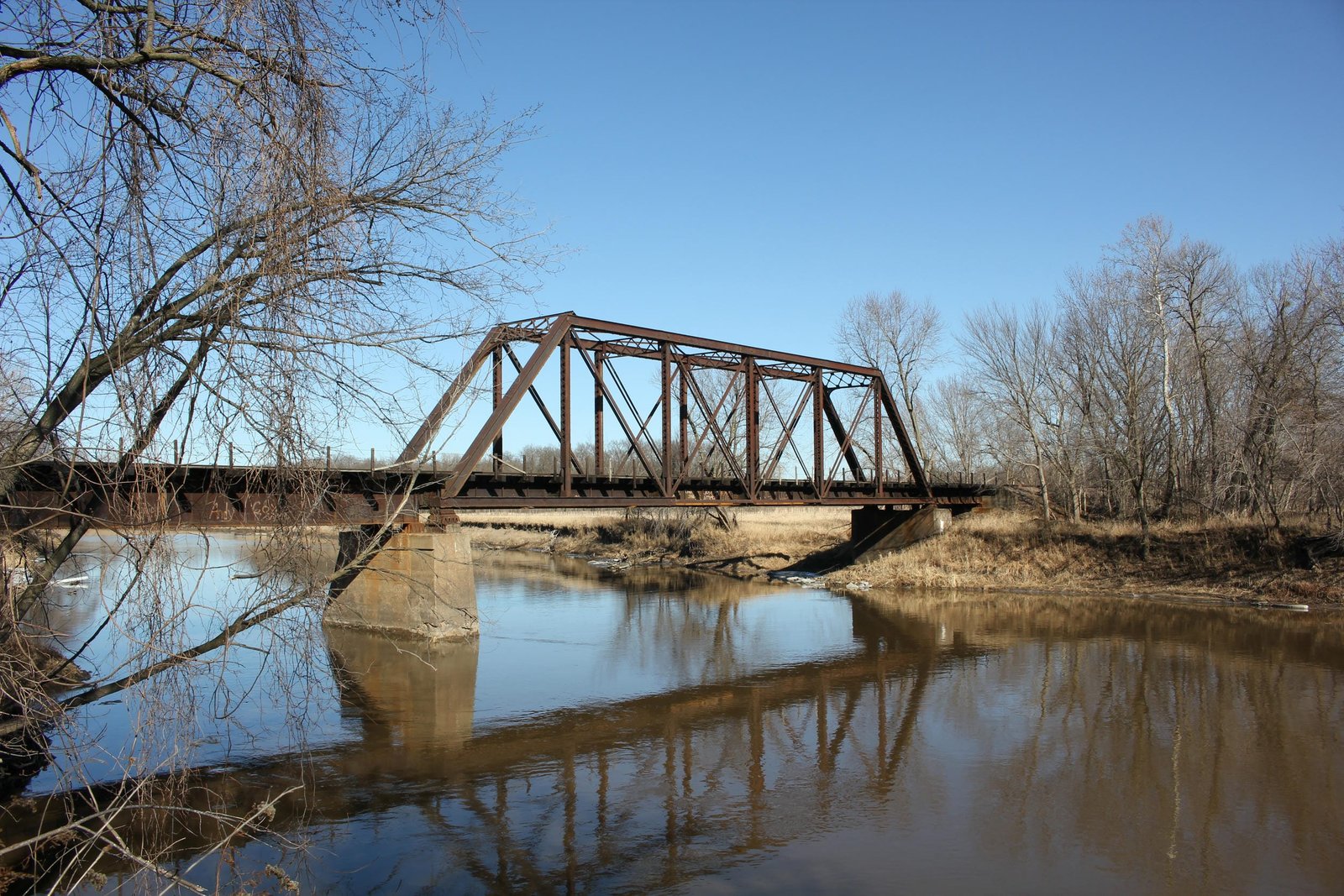
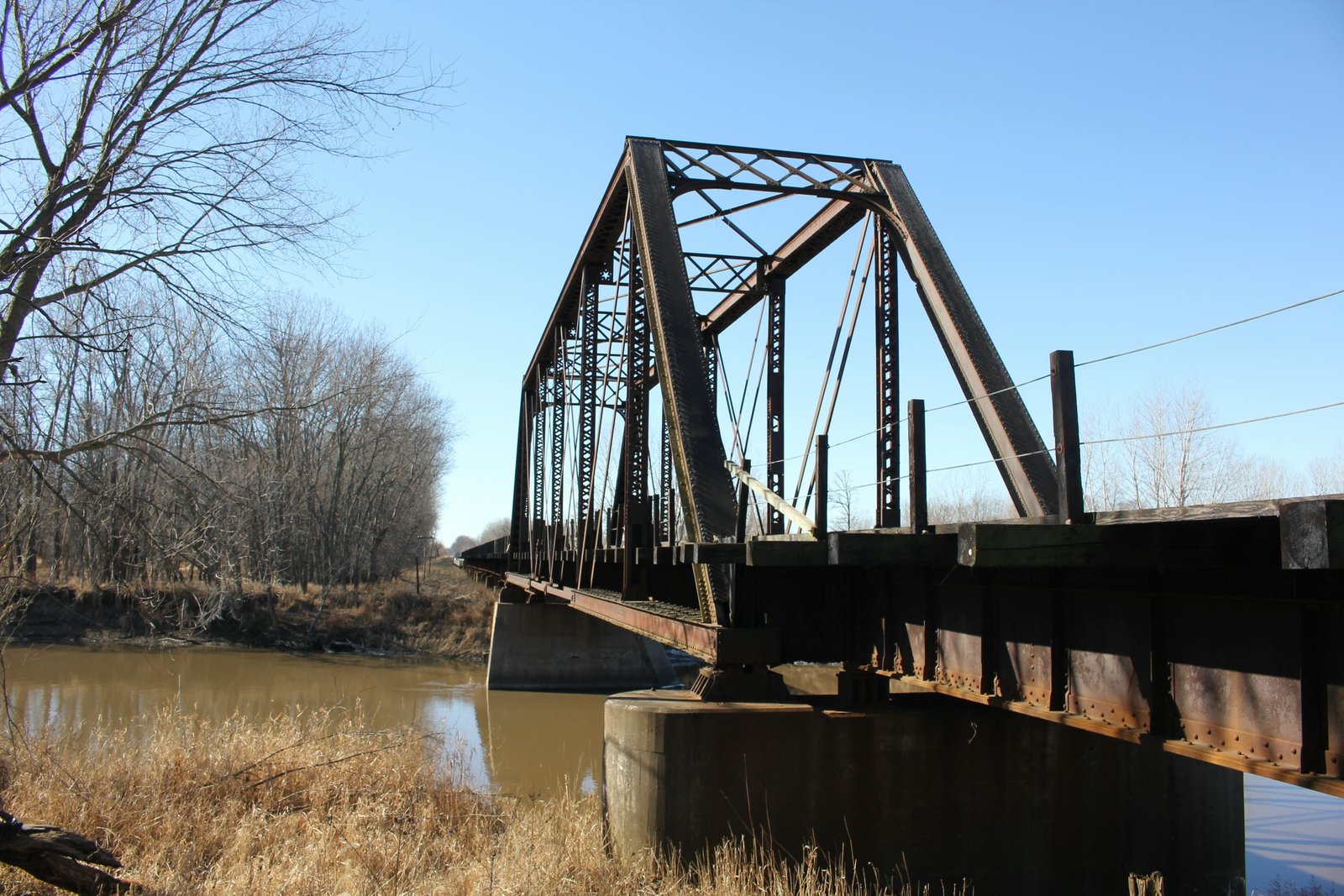
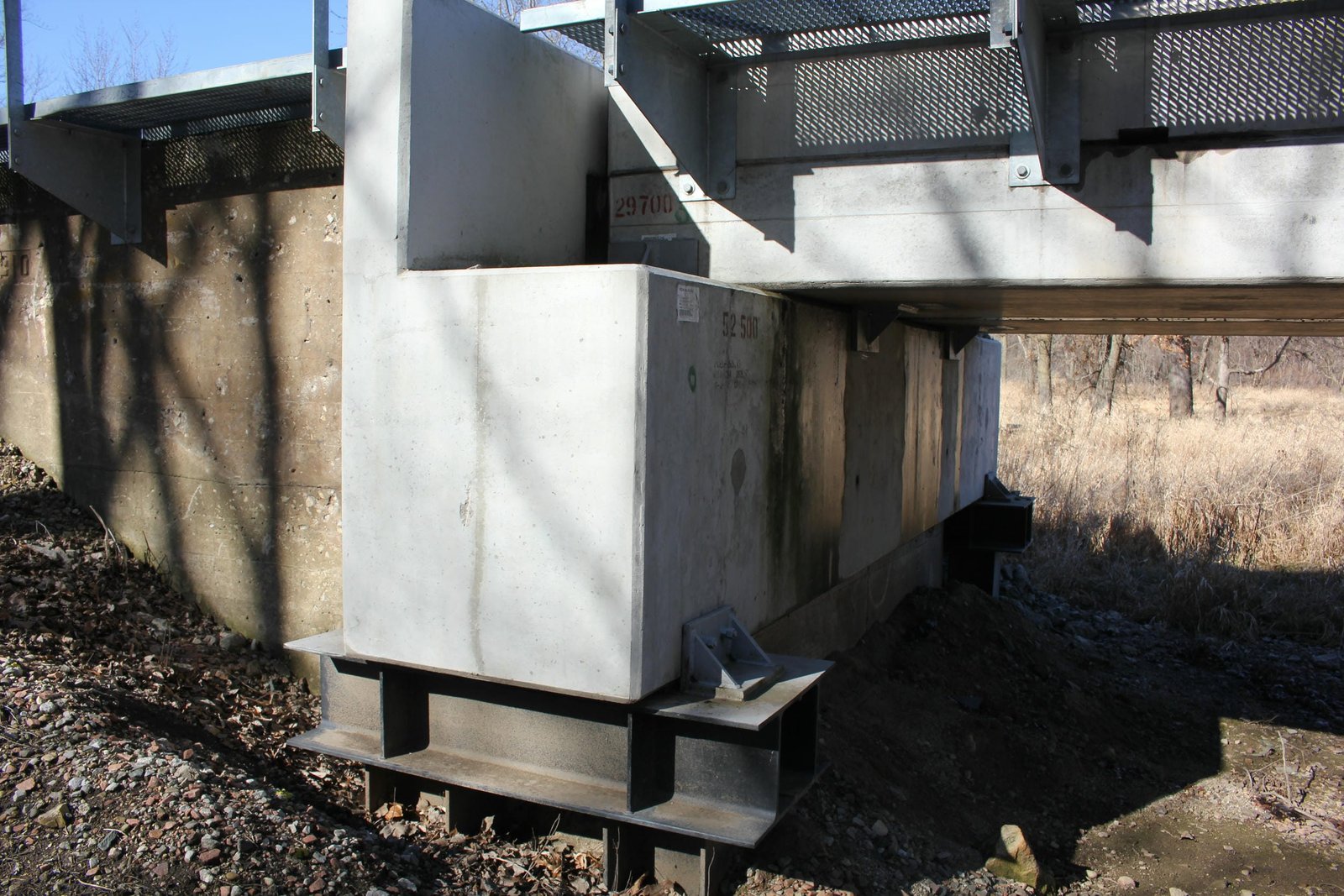
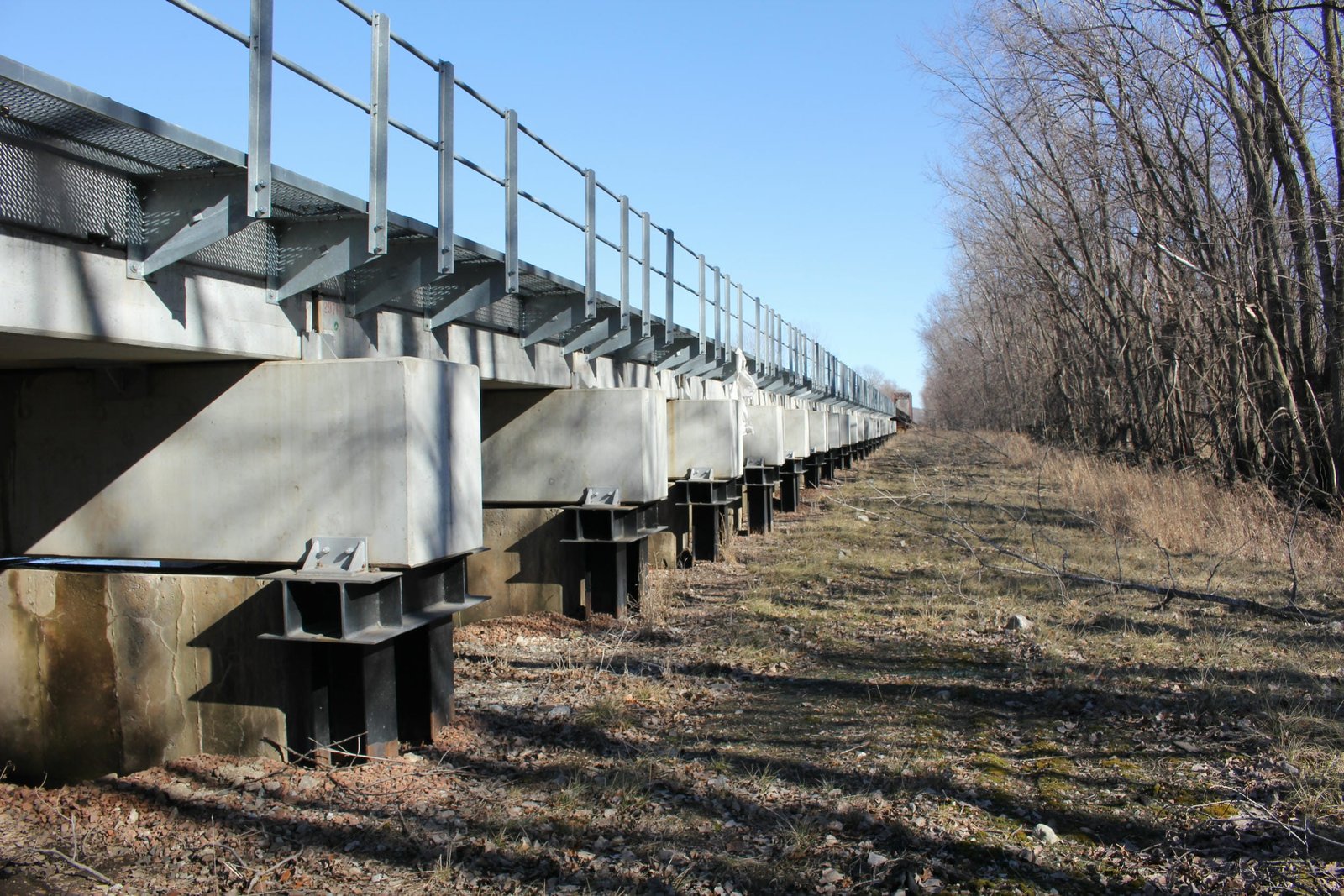
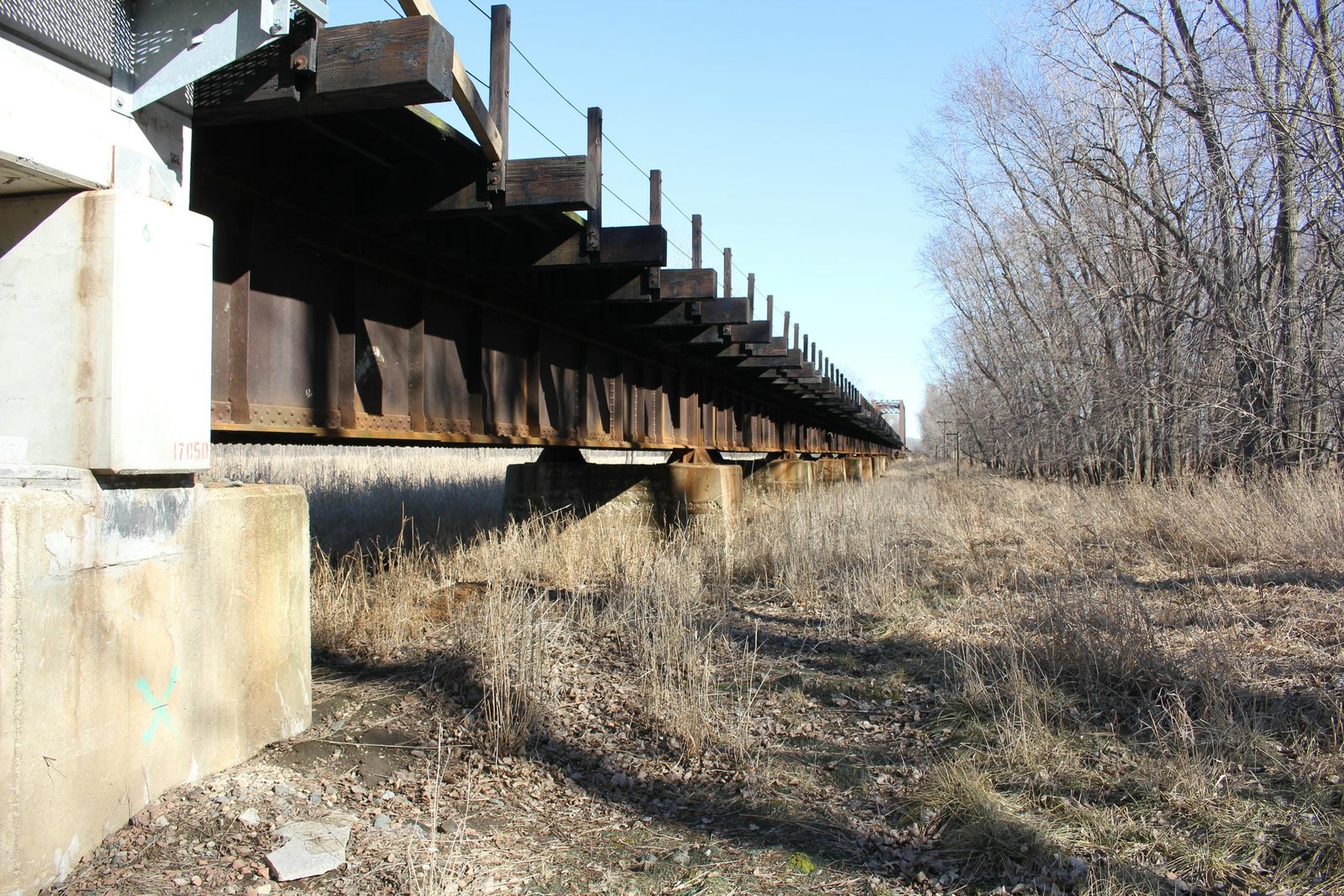
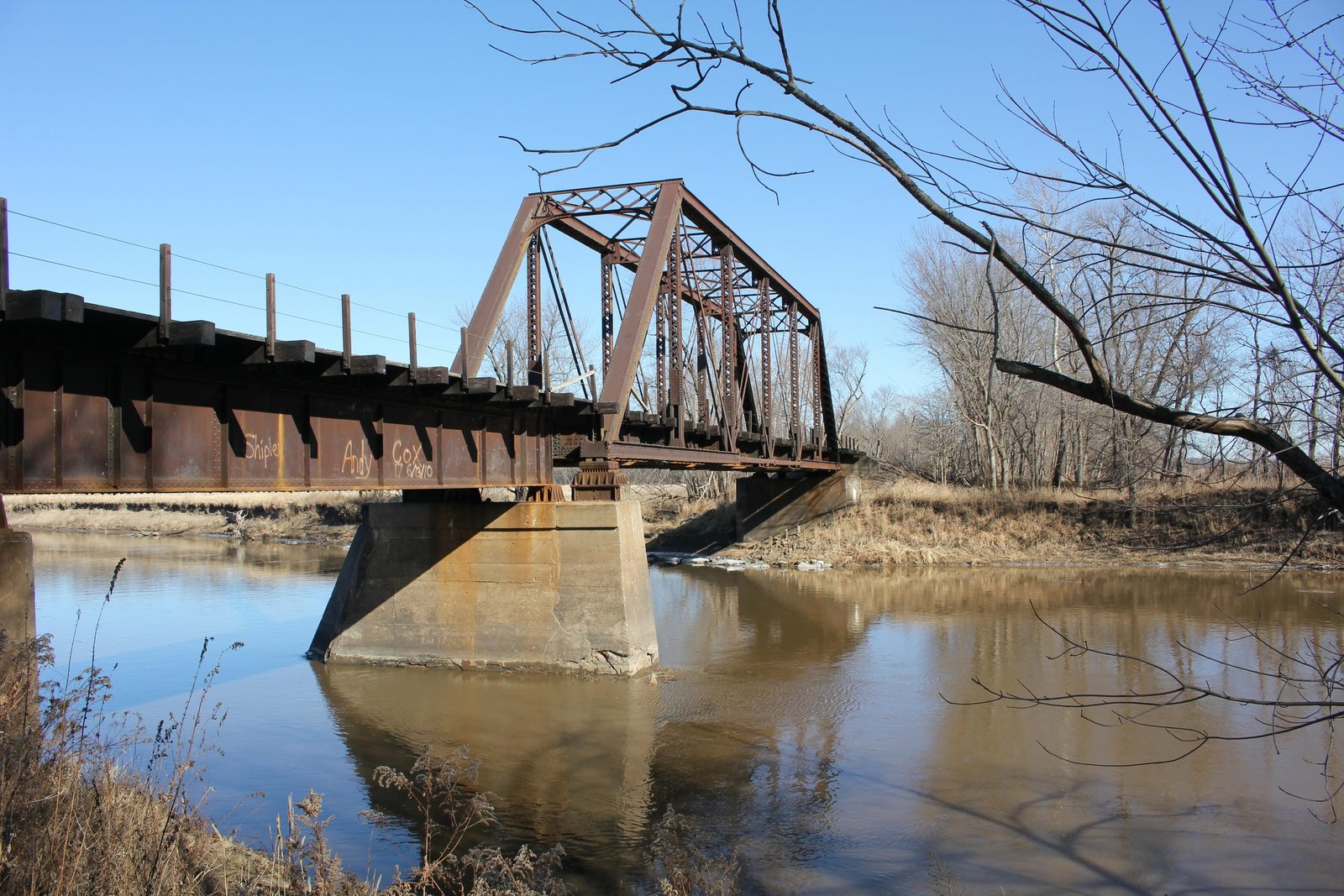
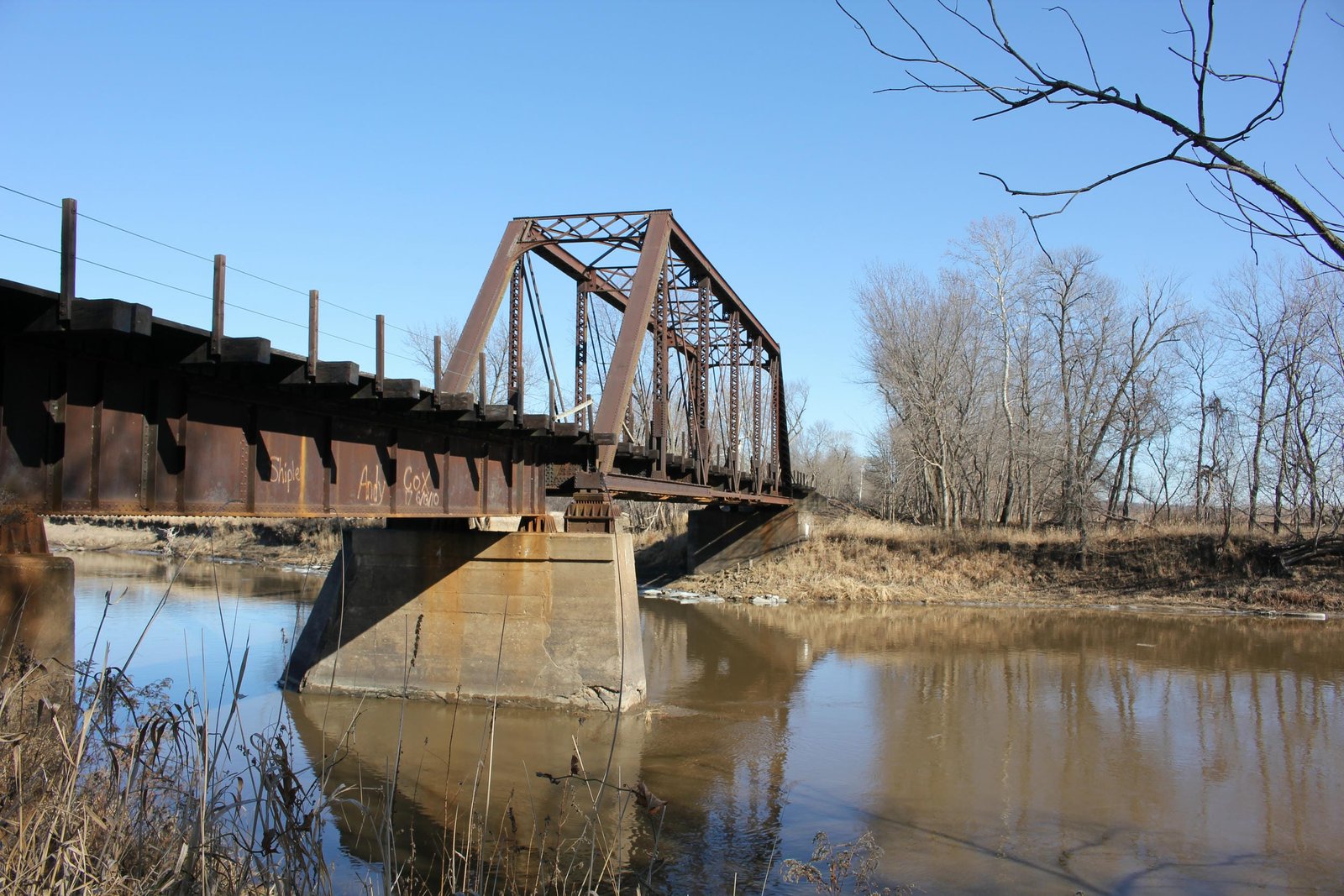
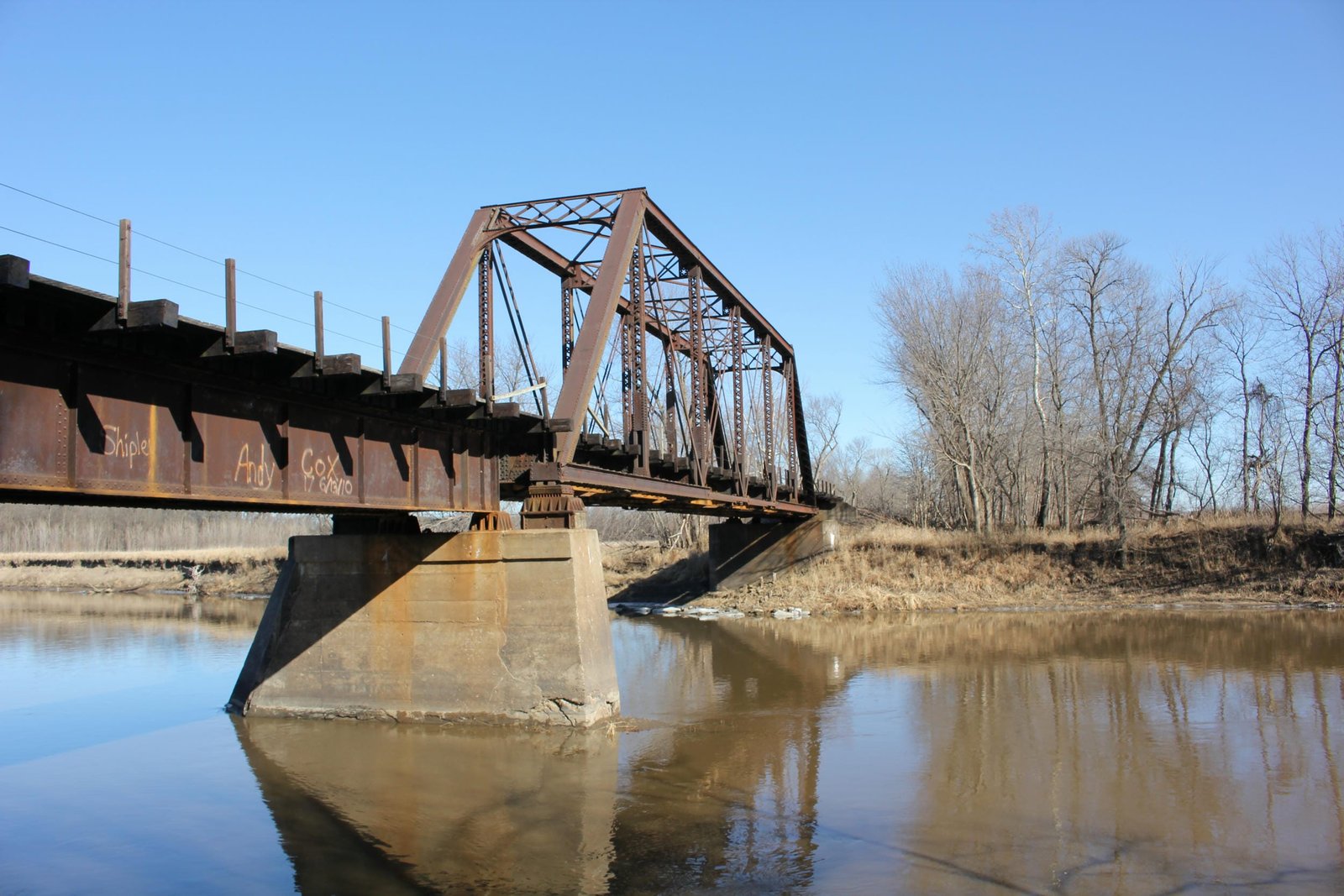
Located northeast of Rubio, this large through truss and girder bridge carries a former Chicago, Milwaukee, St. Paul & Pacific Railroad (Milwaukee Road) mainline over the Skunk River. It is believed that the first bridge at this location was a temporary timber pile trestle, intended to carry materials and labor for the construction of the Rutledge Cutoff. In early 1902, eight total through truss spans and a variety of deck plate girder spans were ordered to replace temporary bridges at the Cedar River (Bridge #I-1044), Iowa River (#I-1050) and Skunk River bridges. In late 1902 or early 1903, the temporary bridge at this location was replaced with a single through truss span, approached by two 60-foot deck plate girder spans on the west end and lengthy timber pile trestle approaches at each end. By the late 1900s and early 1910s, the Milwaukee Road was making significant upgrades to this line, replacing most of the timber bridges and approaches with steel and concrete structures. In 1910, ten additional deck plate girder spans and 25 concrete girder spans were added to the west end of the bridge, replacing the entire west timber approach. Further alterations to the bridge came in approximately 1930, when the east approach was filled and replaced with a deck plate girder span, and the two 60-foot spans were replaced with secondhand spans of the same size. In 1975, a train derailed on the bridge, destroying the eastern deck plate girder span (span #5). In response, a secondhand girder span was installed to repair the bridge. The most recent alteration came in 2014, when the concrete girder spans were replaced with modern concrete modular girder spans, giving the bridge its present configuration.
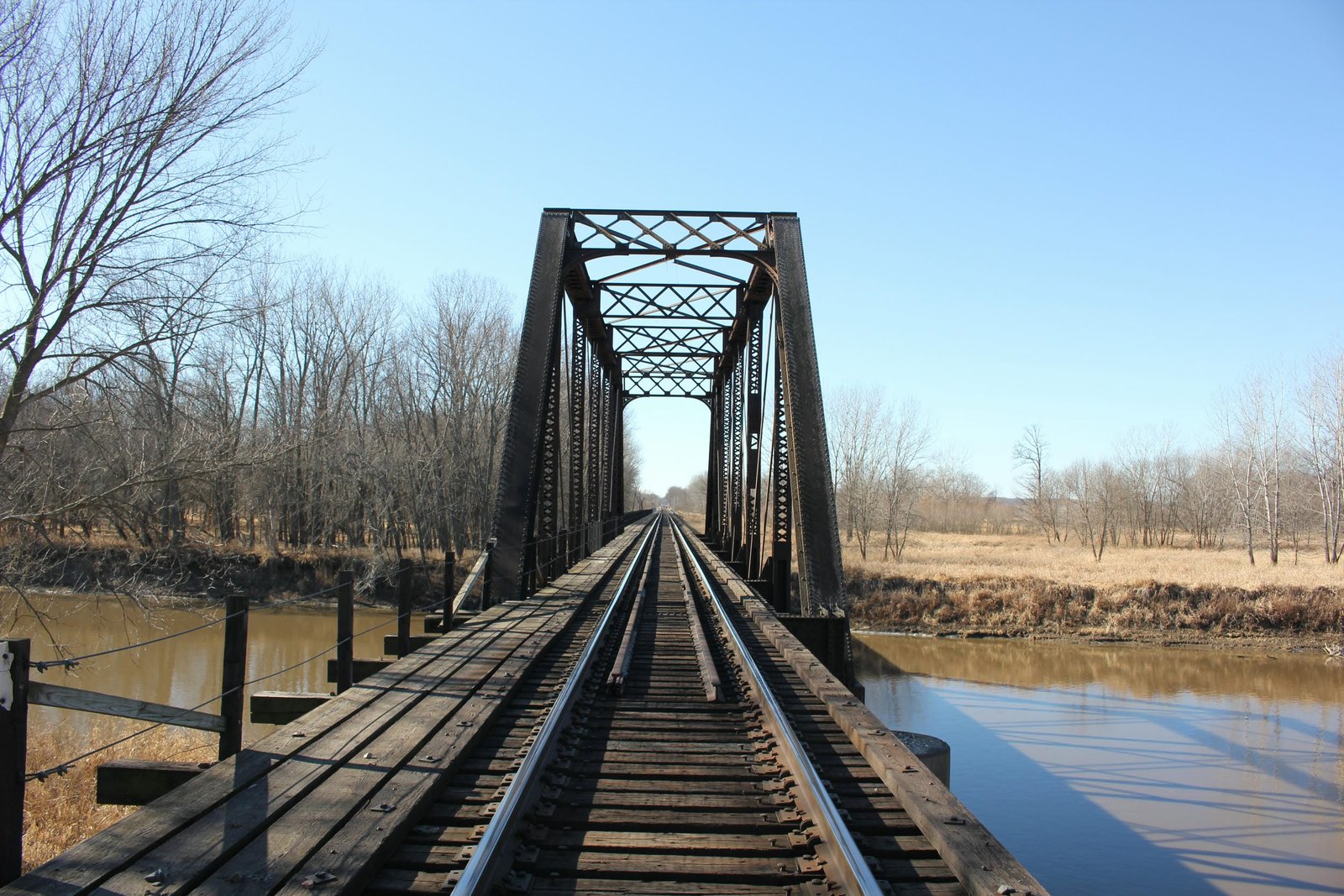
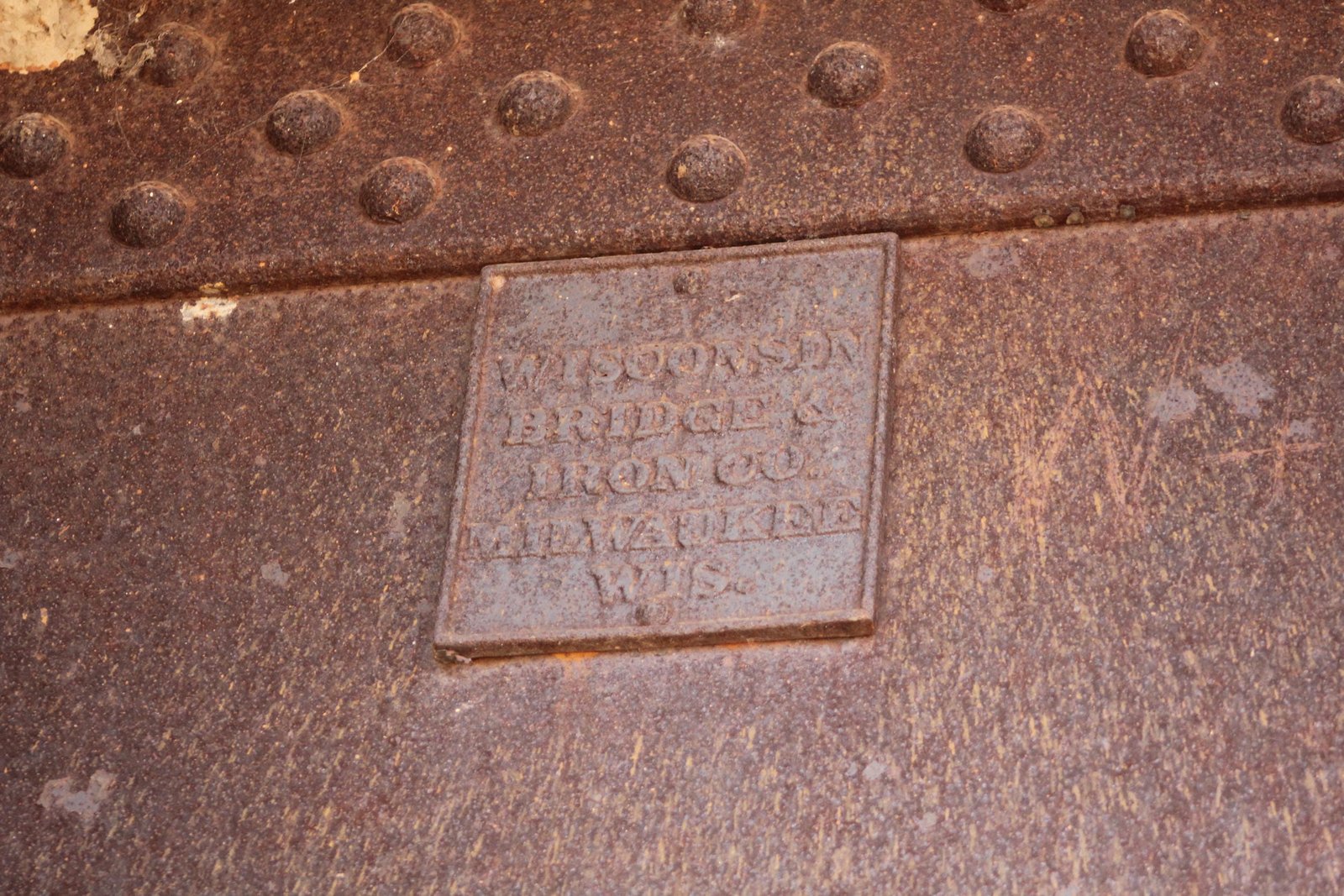
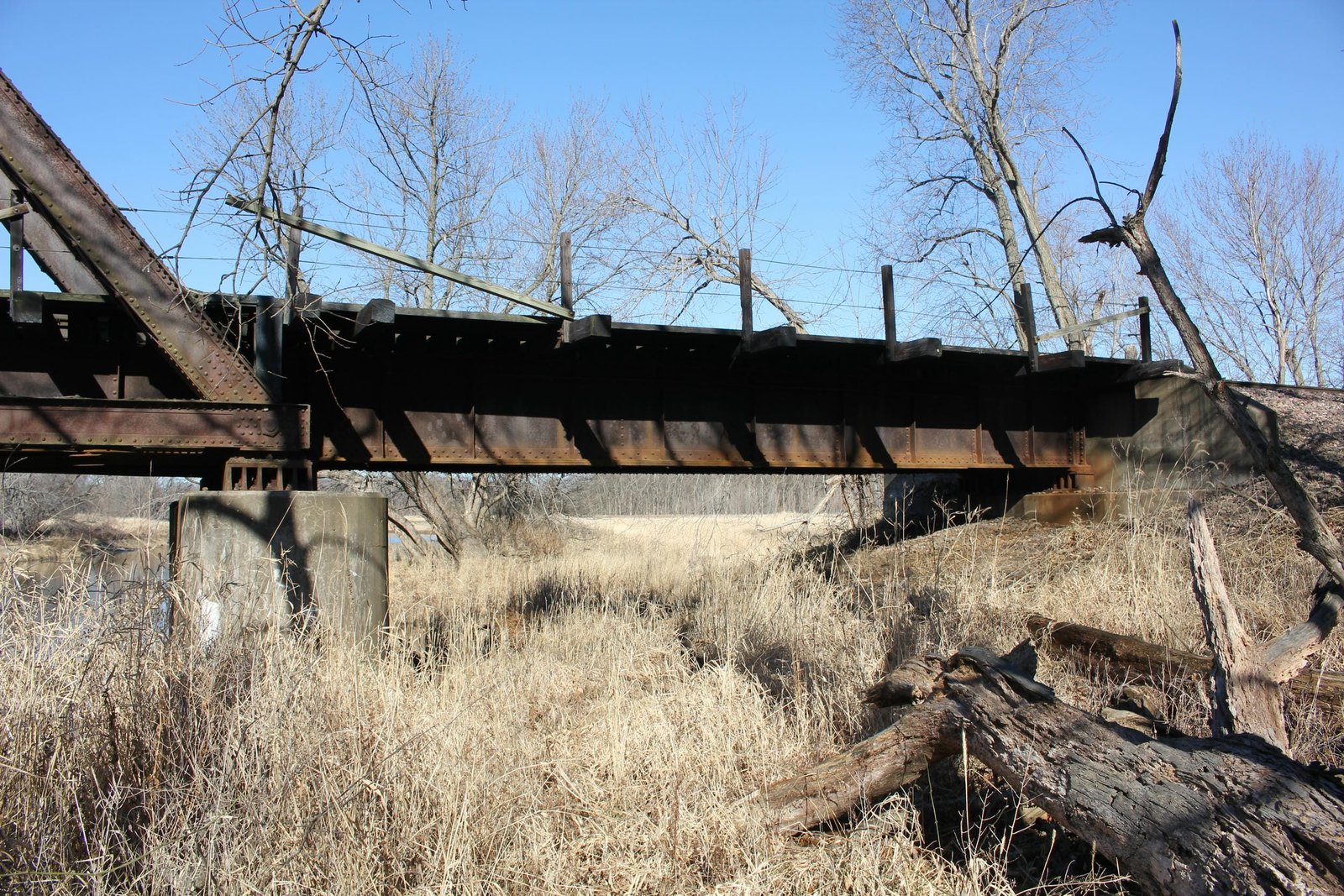
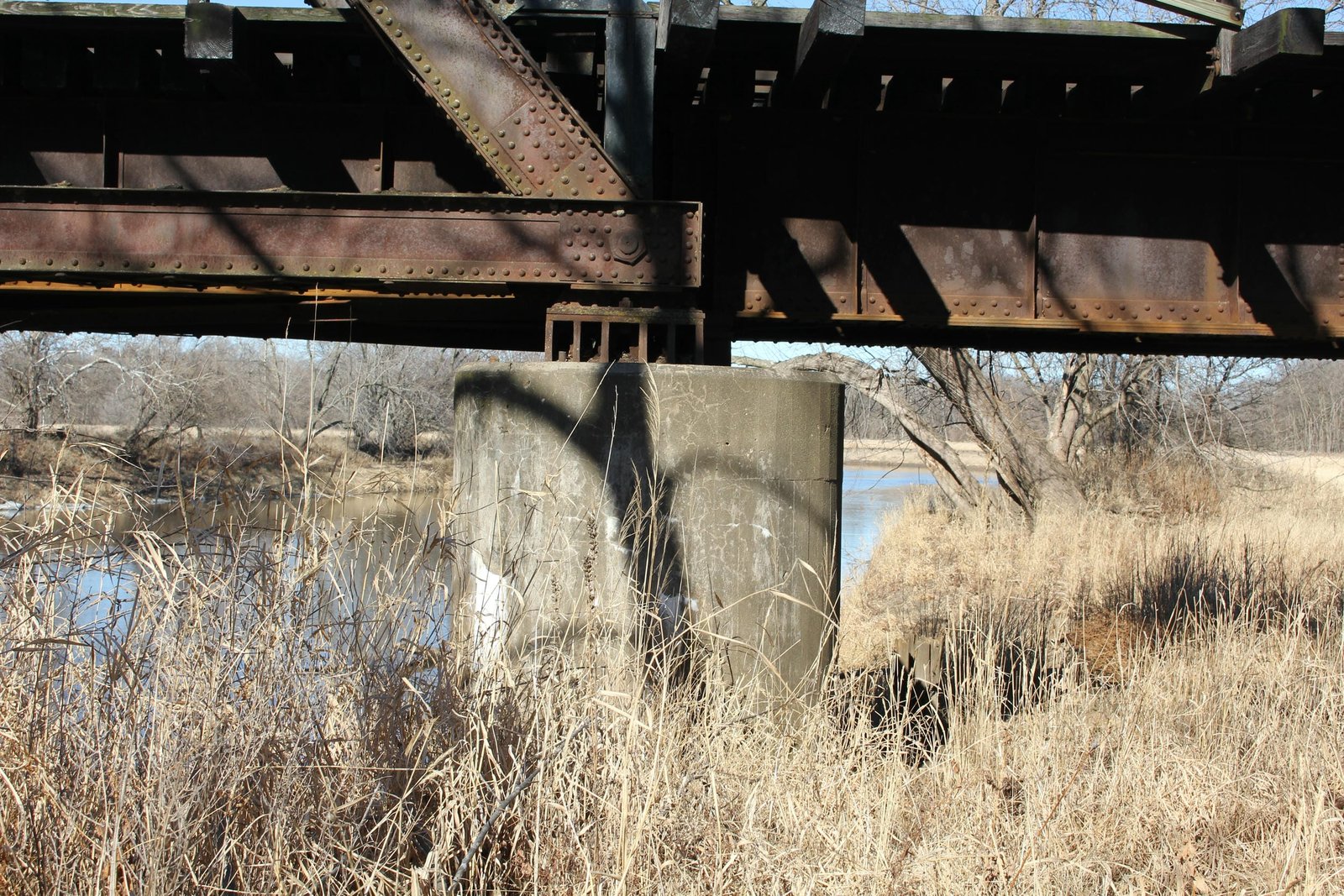
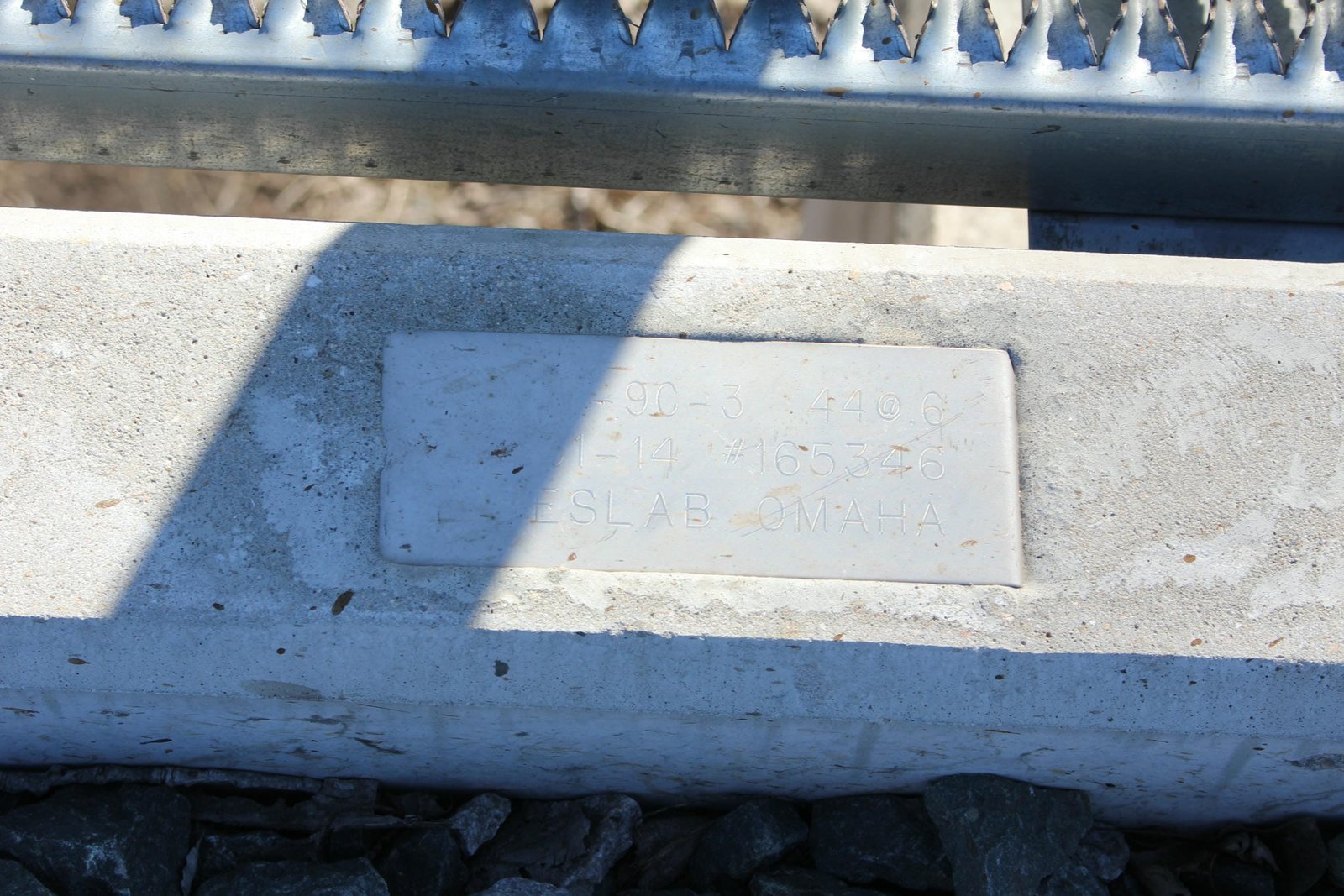
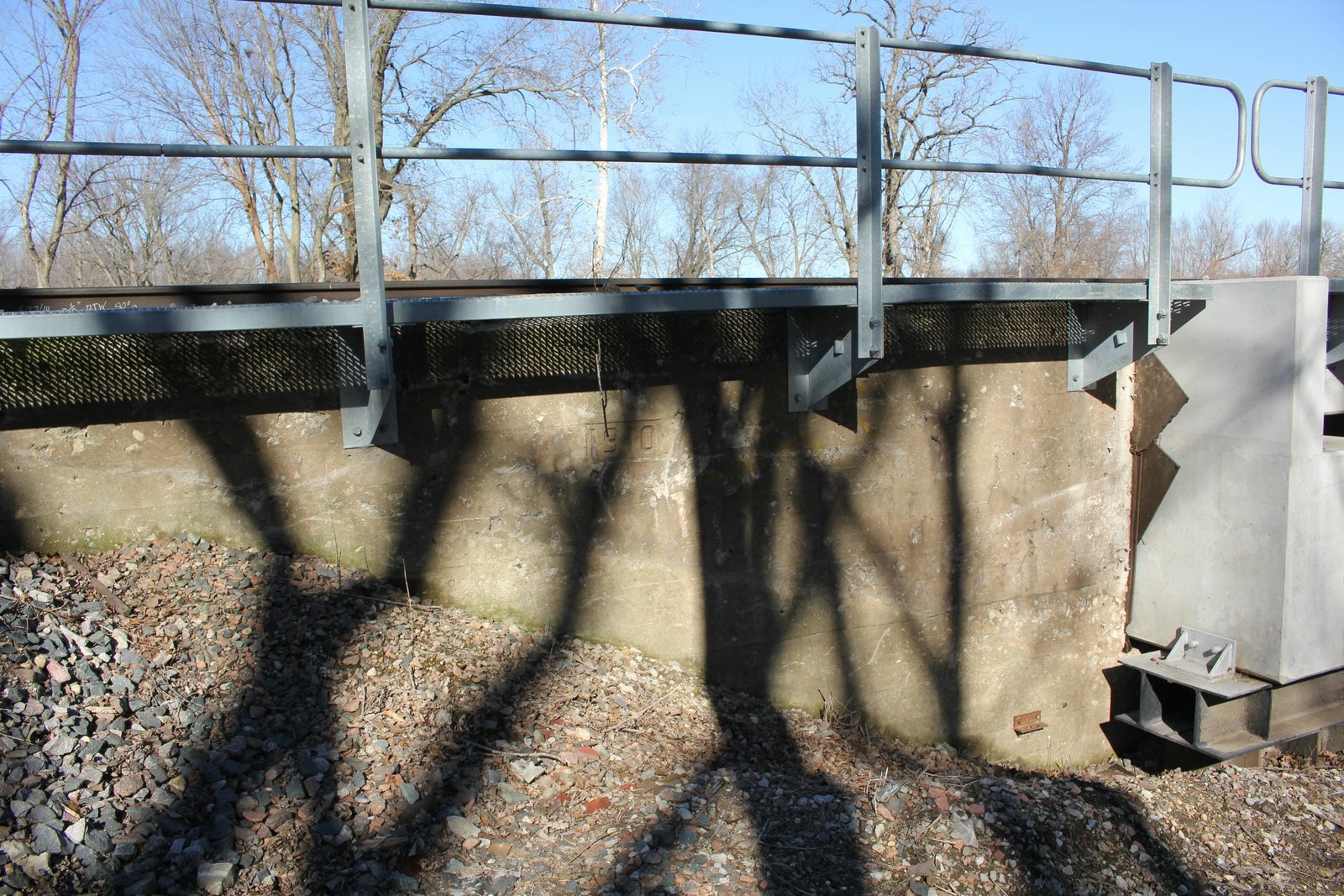
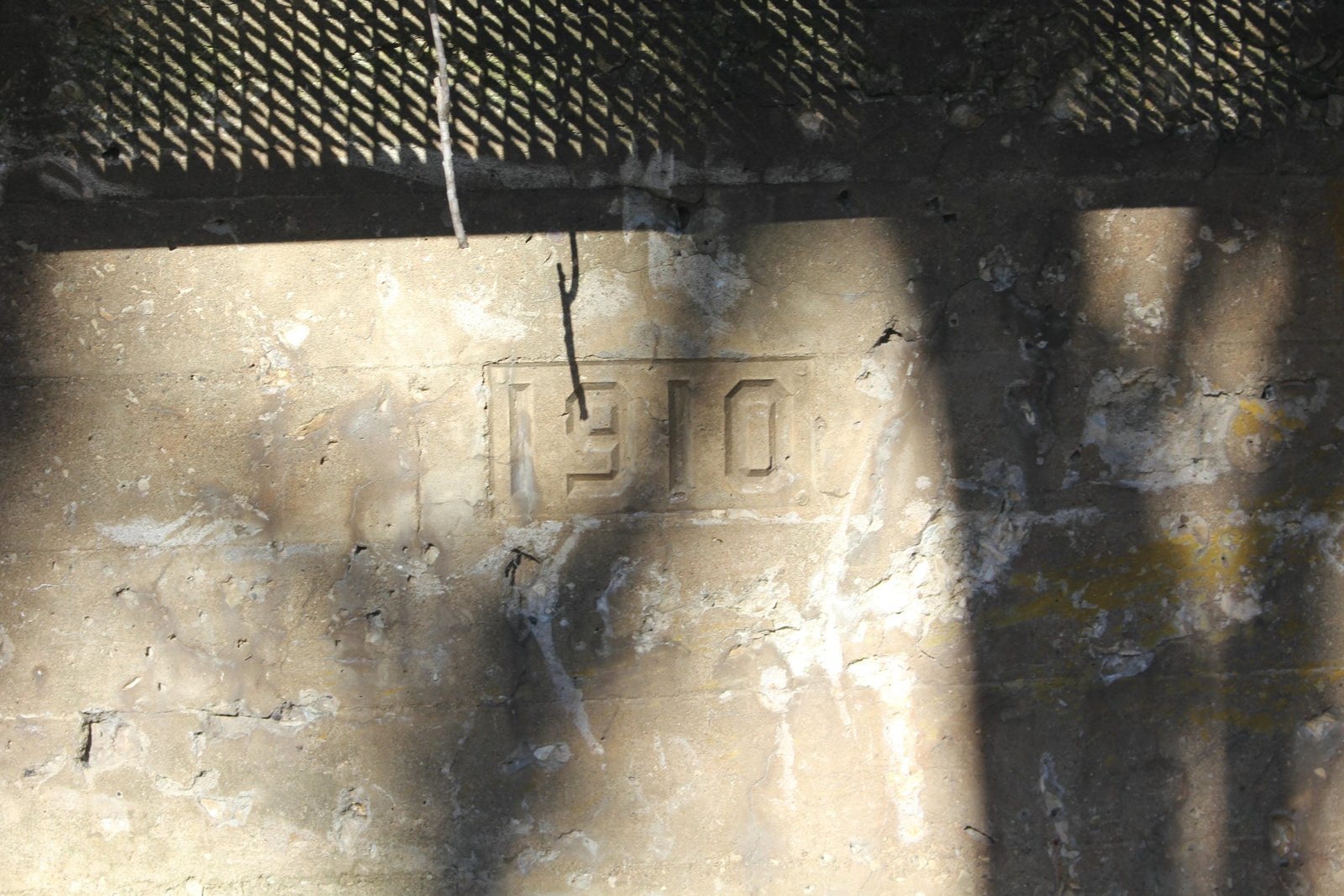
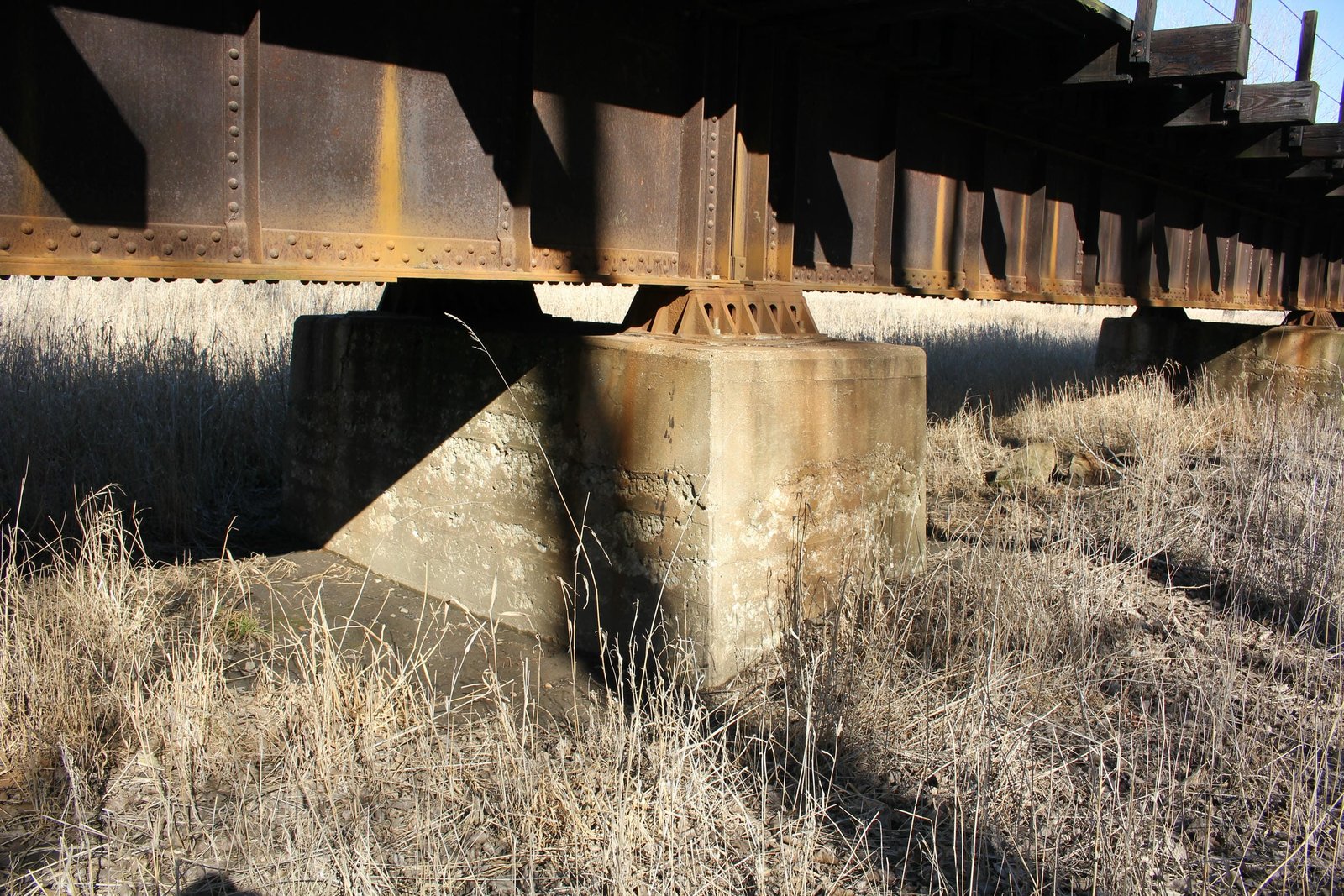
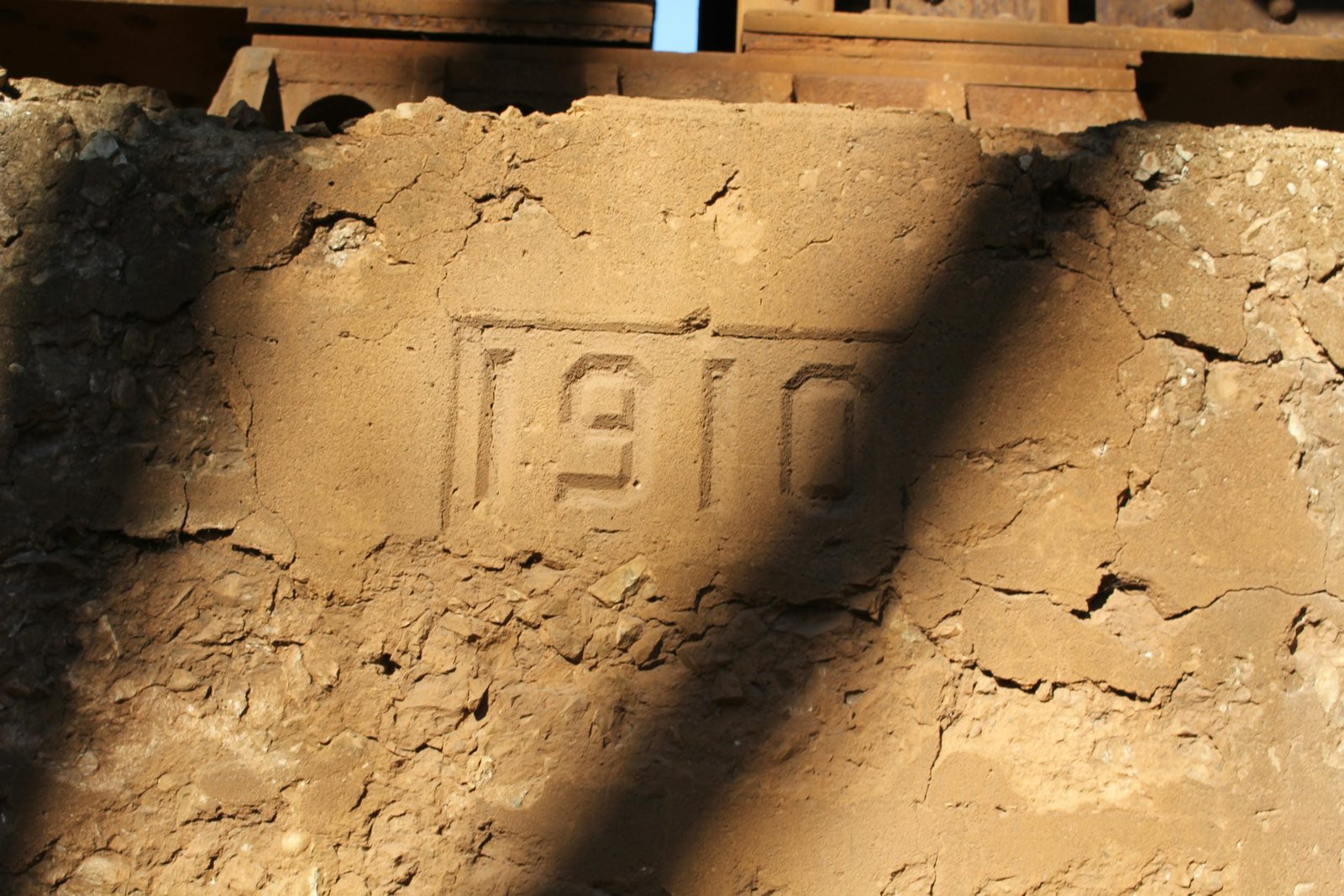
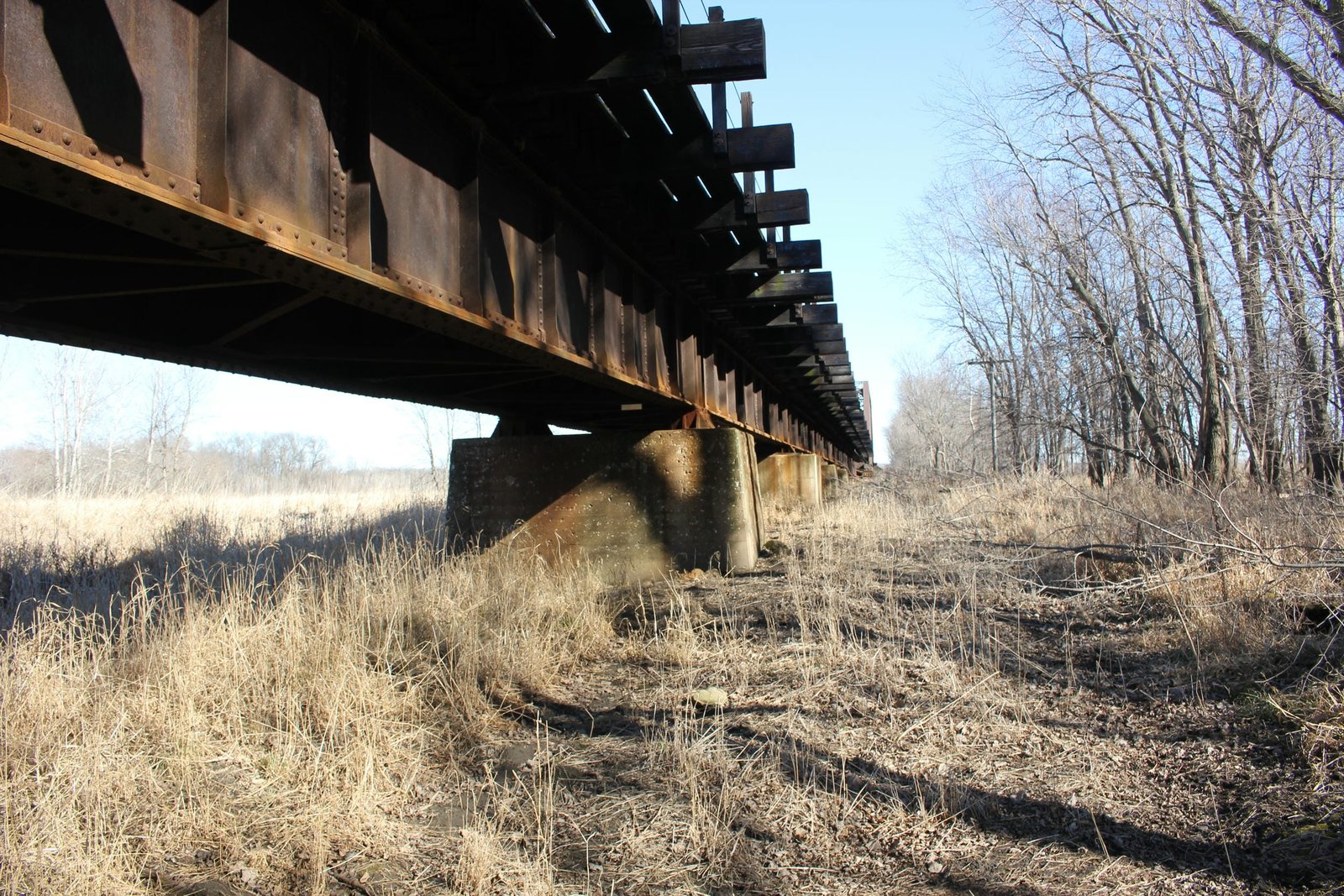
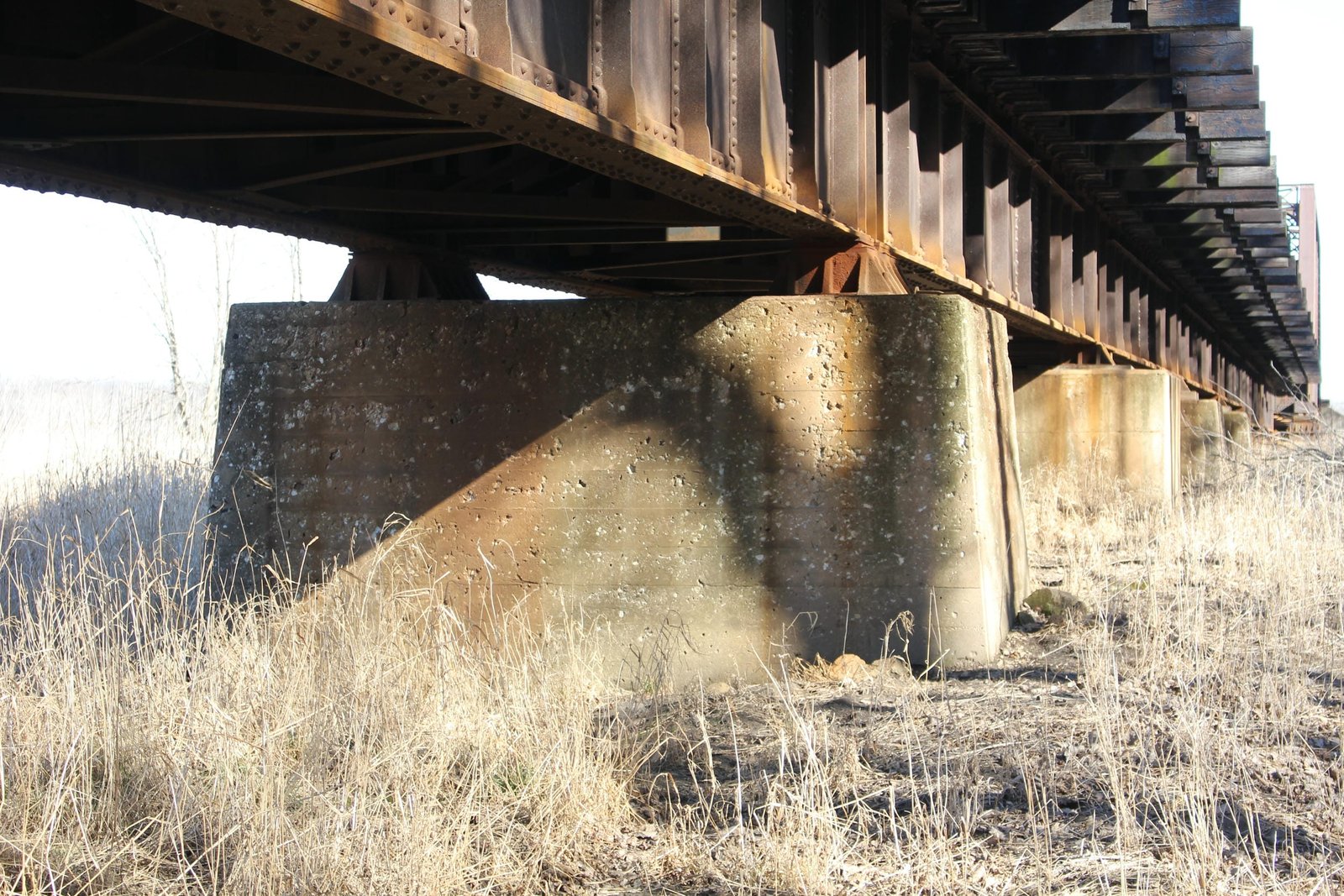
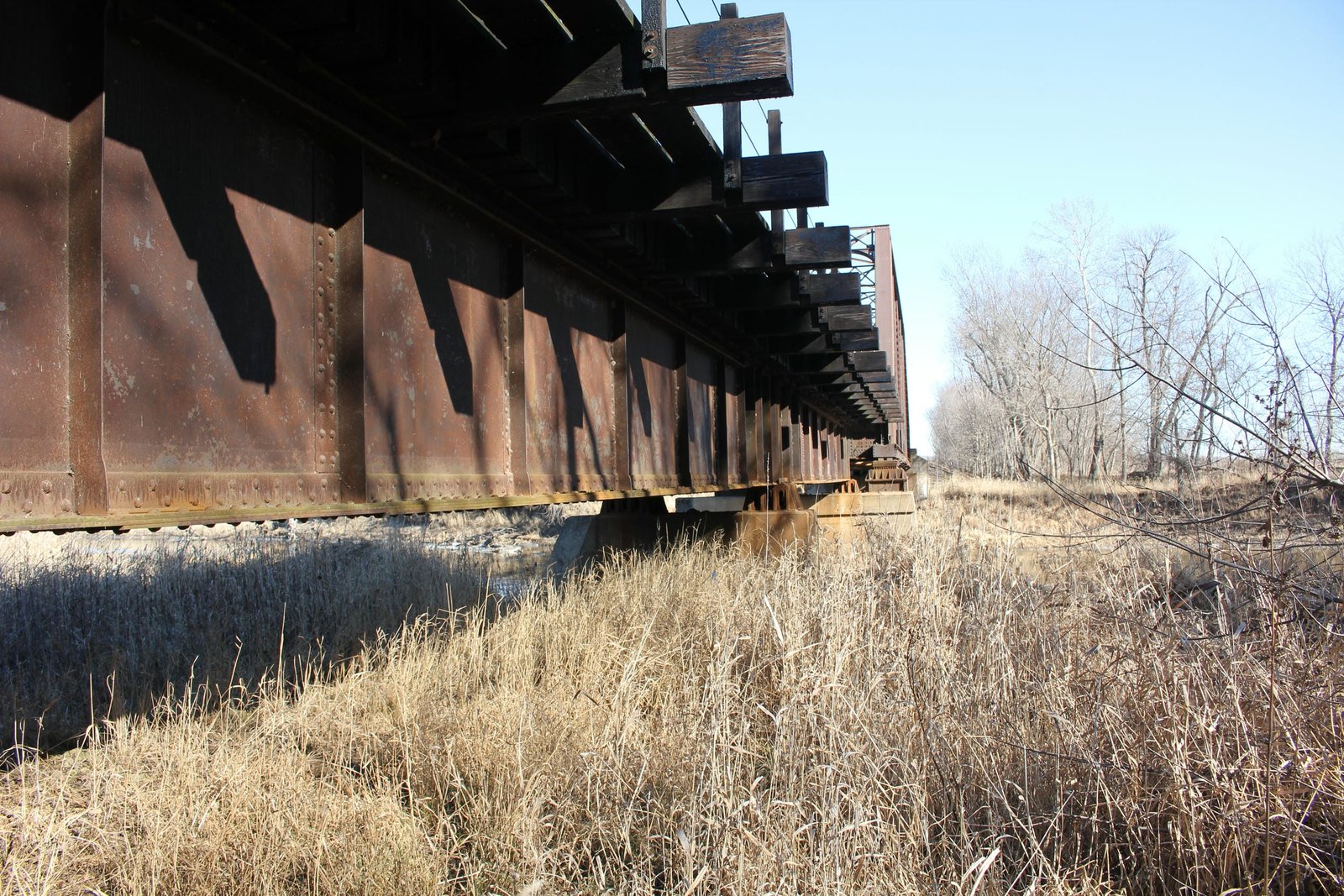
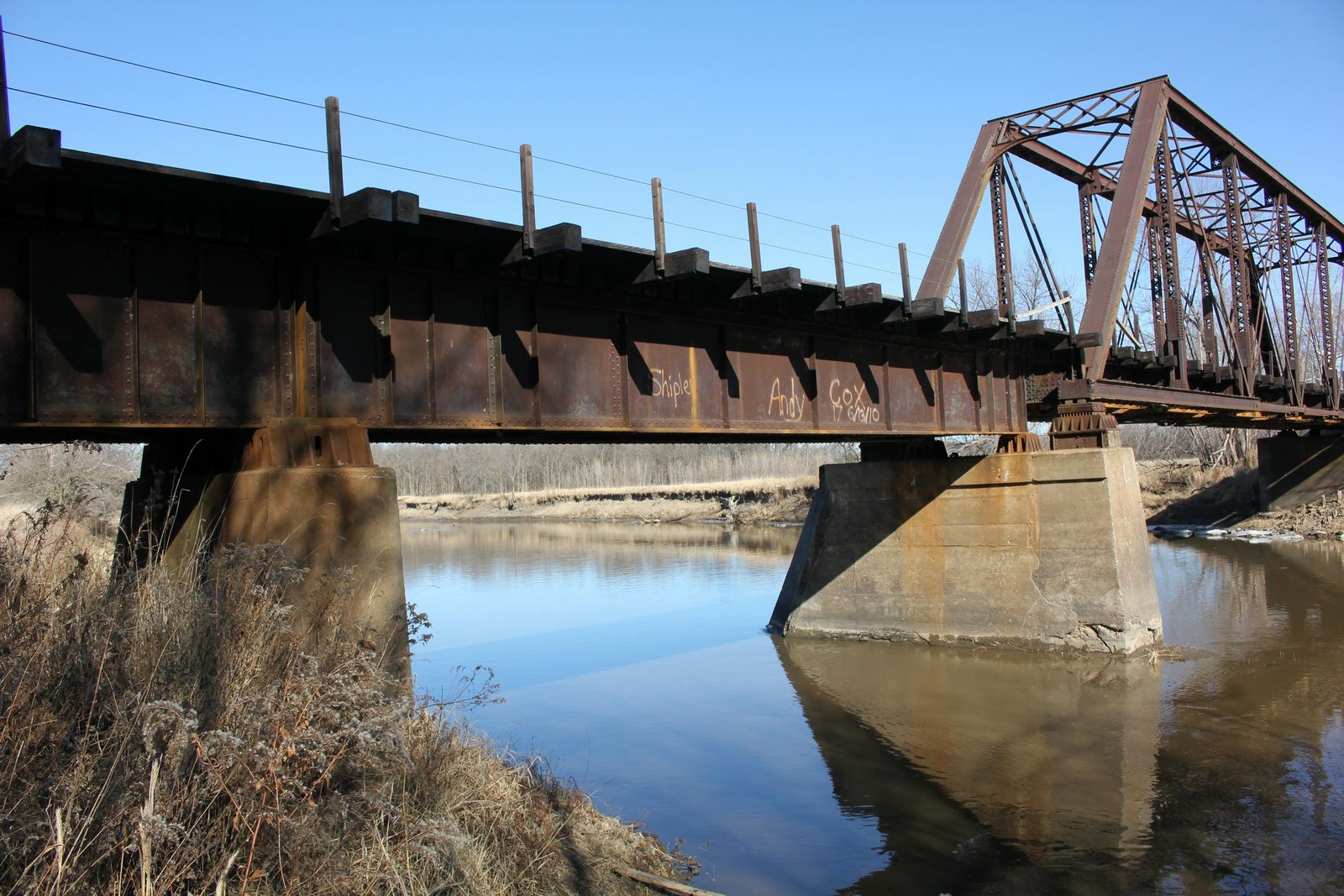
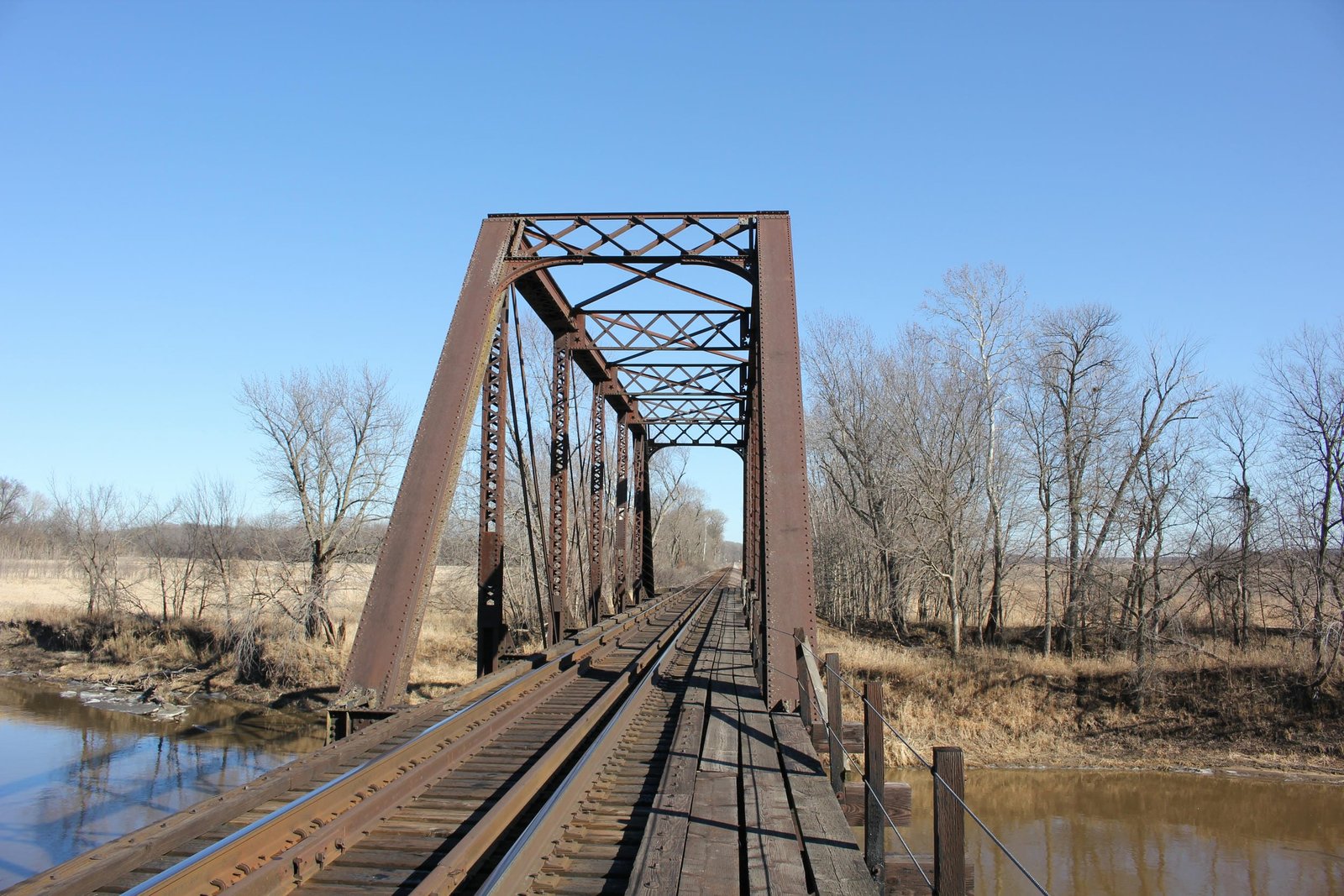
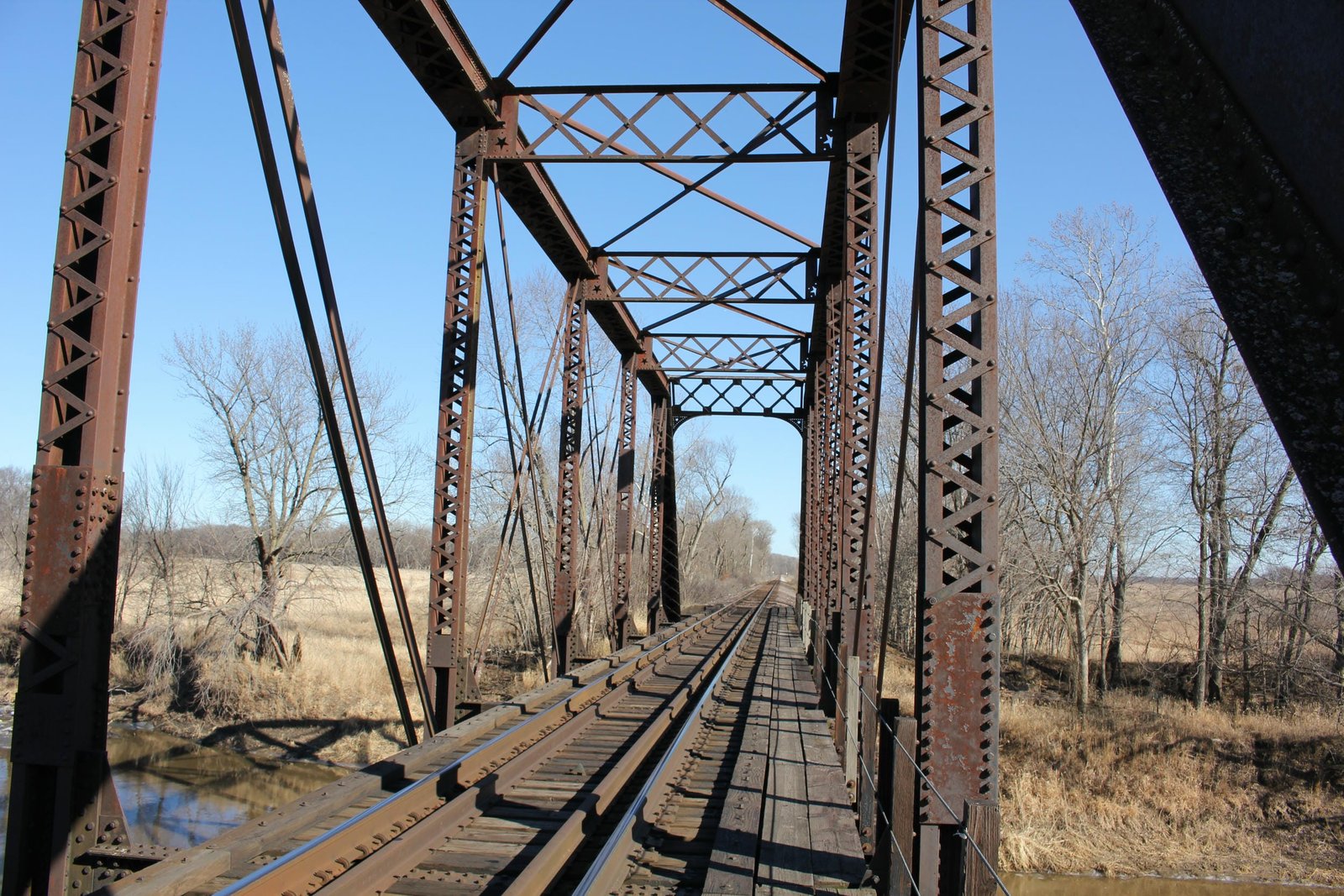
Currently, the bridge consists of, from east to west: one 40-foot deck plate girder span (span #1), a 150-foot, 6-panel, pin-connected Pratt through truss span (span #2), two 60-foot secondhand deck plate girder spans (spans #3 and #4), one 50-foot secondhand deck plate girder span (span #5), nine 50-foot deck plate girder spans (spans #6 through #14) and 25 18-foot concrete modular girder spans (spans #15 through #39). The majority of the bridge is set onto concrete substructures, which were constructed in 1902 (piers #2, #3 and #4), 1910 (west abutment and piers #5 through #14) and c. 1930 (east abutment and pier #1). Piers #15 through #38 were rebuilt in 2014, and consist of steel pile piers capped with concrete. Span #1 was originally fabricated in approximately 1905 for use at an unknown location. A Wisconsin Bridge & Iron Company plaque is present on the span, although the original fabrication date has been ground off. This method was commonly employed by the Milwaukee Road to prevent confusion among inspectors and engineers. The truss span (span #2) was fabricated in 1902 by the Phoenix Bridge Company, who had the contract for many significant bridges along the Milwaukee Road built in that year. Spans #3 and #4 were also fabricated in approximately 1905, but appear to have been used from separate locations and were fabricated by unknown firms. Span #6 also appears to have been fabricated in approximately 1905, for use at an unknown location. It is unclear what firm fabricated this span. Spans #6 through #14 were ordered in June 1909 as part of an order for several 50-foot spans that were placed throughout the Milwaukee Road system. Spans from this order were also used at Bridge #L-66 near Minnesota City, Minnesota; Bridge #Z-1242 near Bagley, Iowa and an unknown Cannon Ball River crossing in North Dakota. The original concrete girder approaches and concrete substructures comprising piers #2 through #38 along with the west abutment were constructed by labor employed by the Milwaukee Road Bridge & Building Department. It is unclear if the east abutment and pier #1 were constructed by railroad company forces or by an unknown contractor. During the early 20th Century, the Milwaukee Road used company labor almost exclusively to construct concrete bridges and culverts, as the company found this arrangement to be more cost effective than constructing masonry by contract.
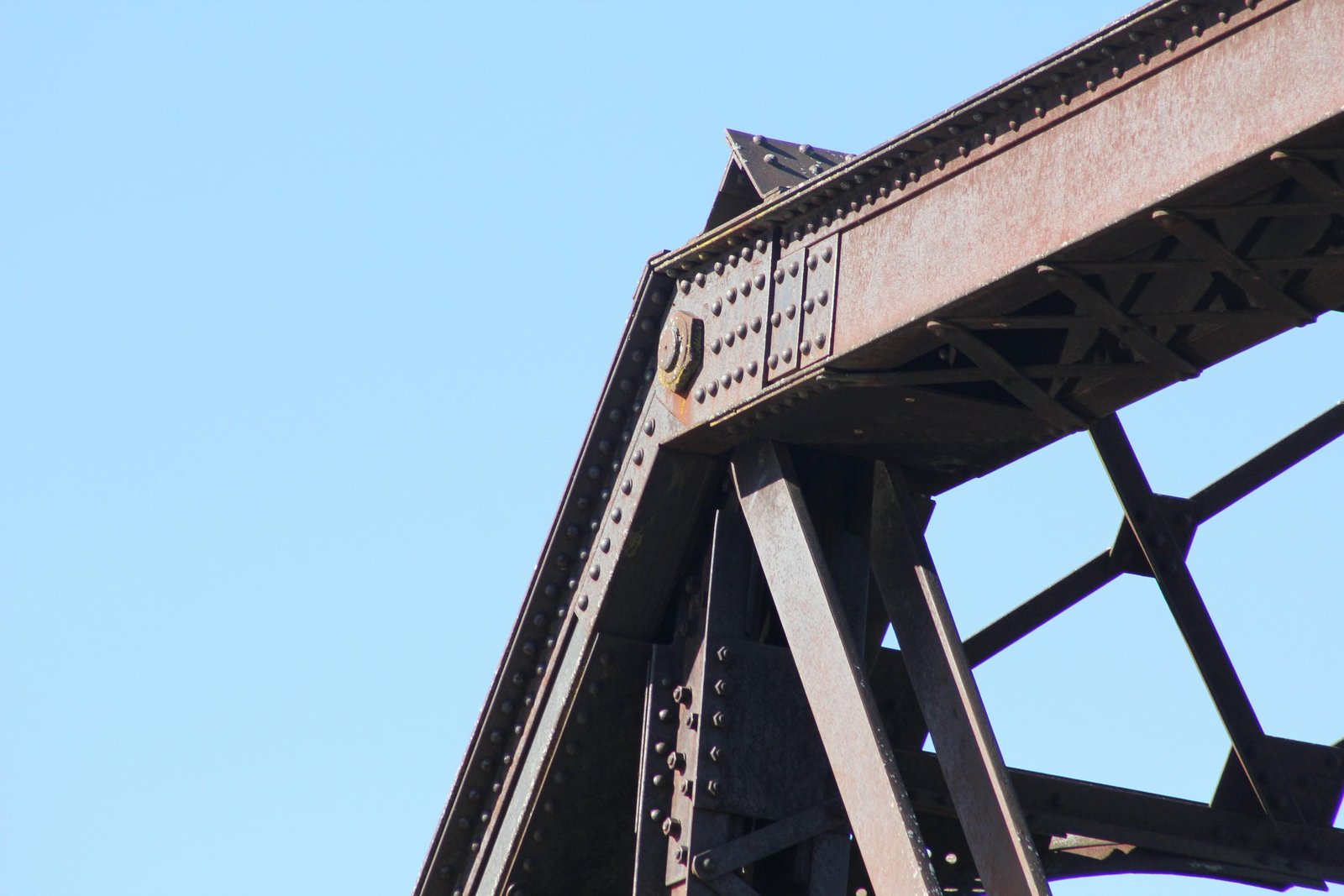
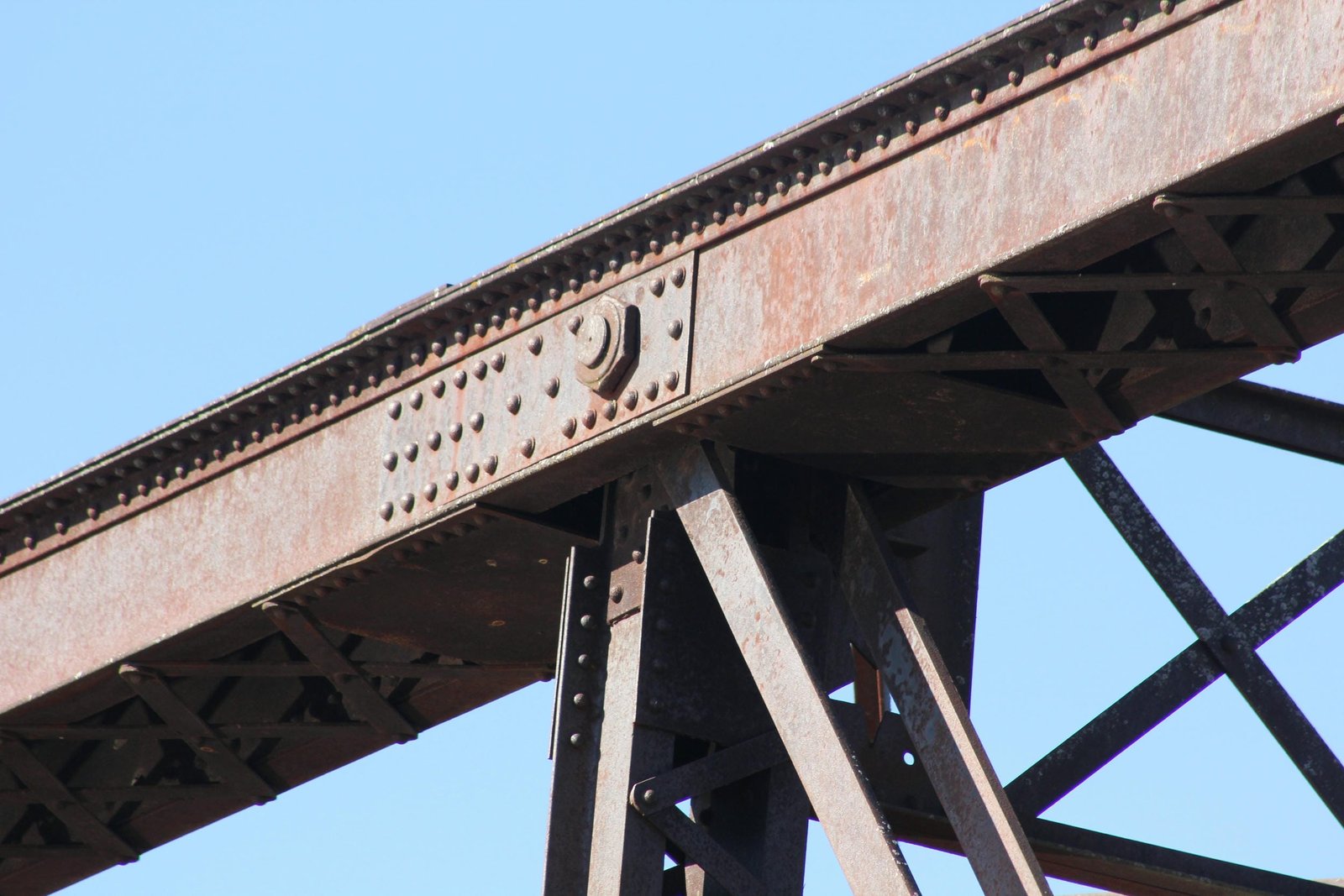
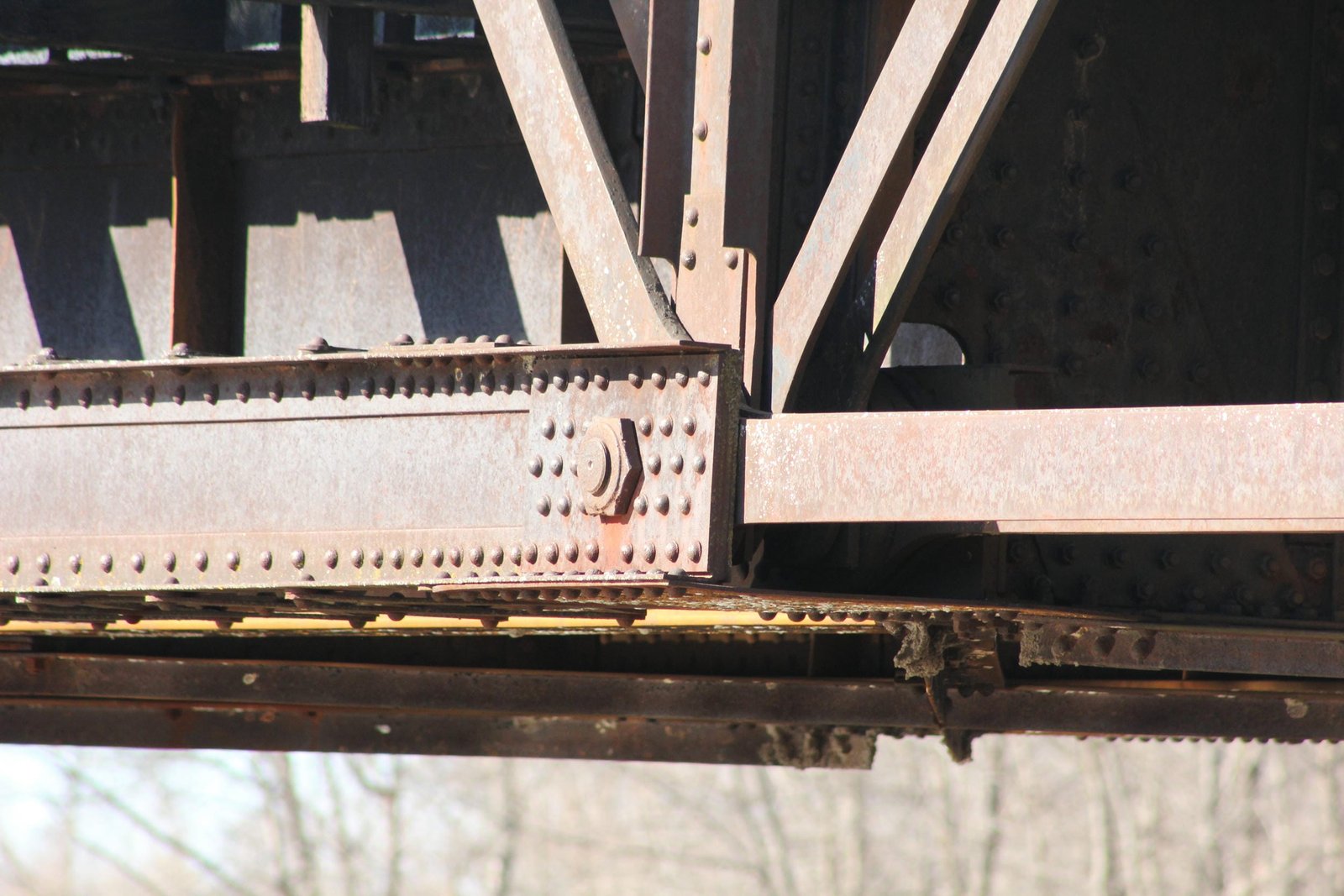
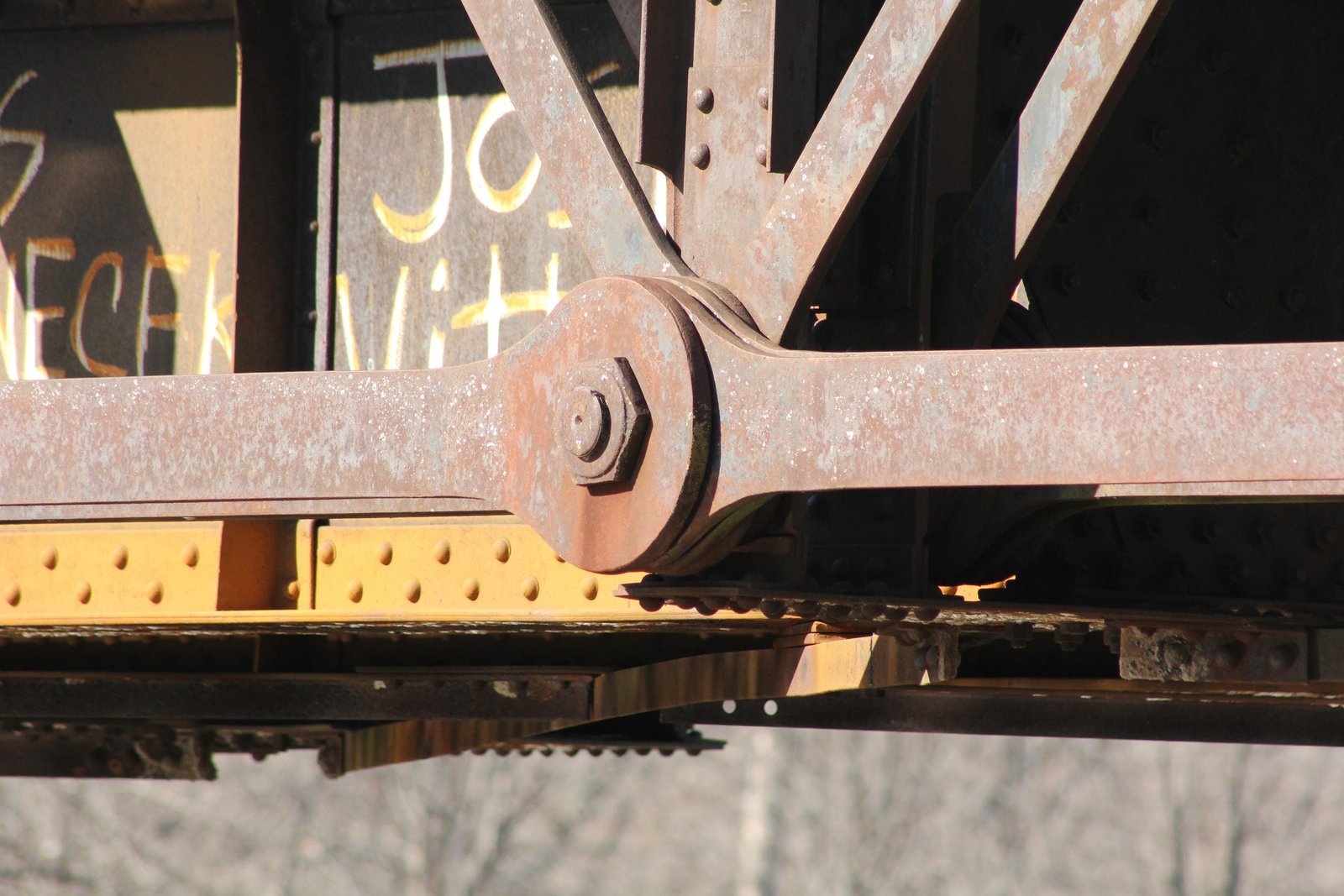
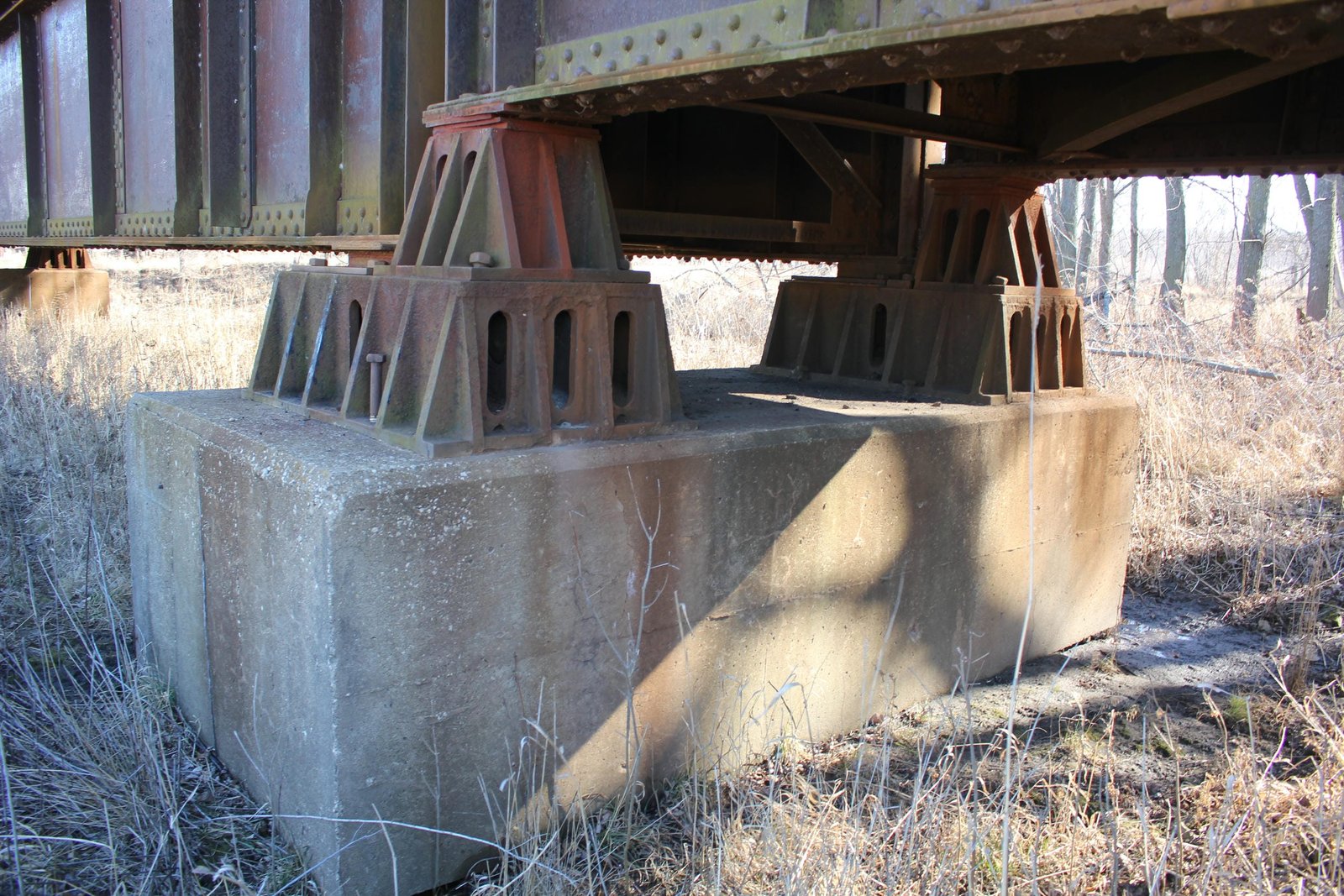
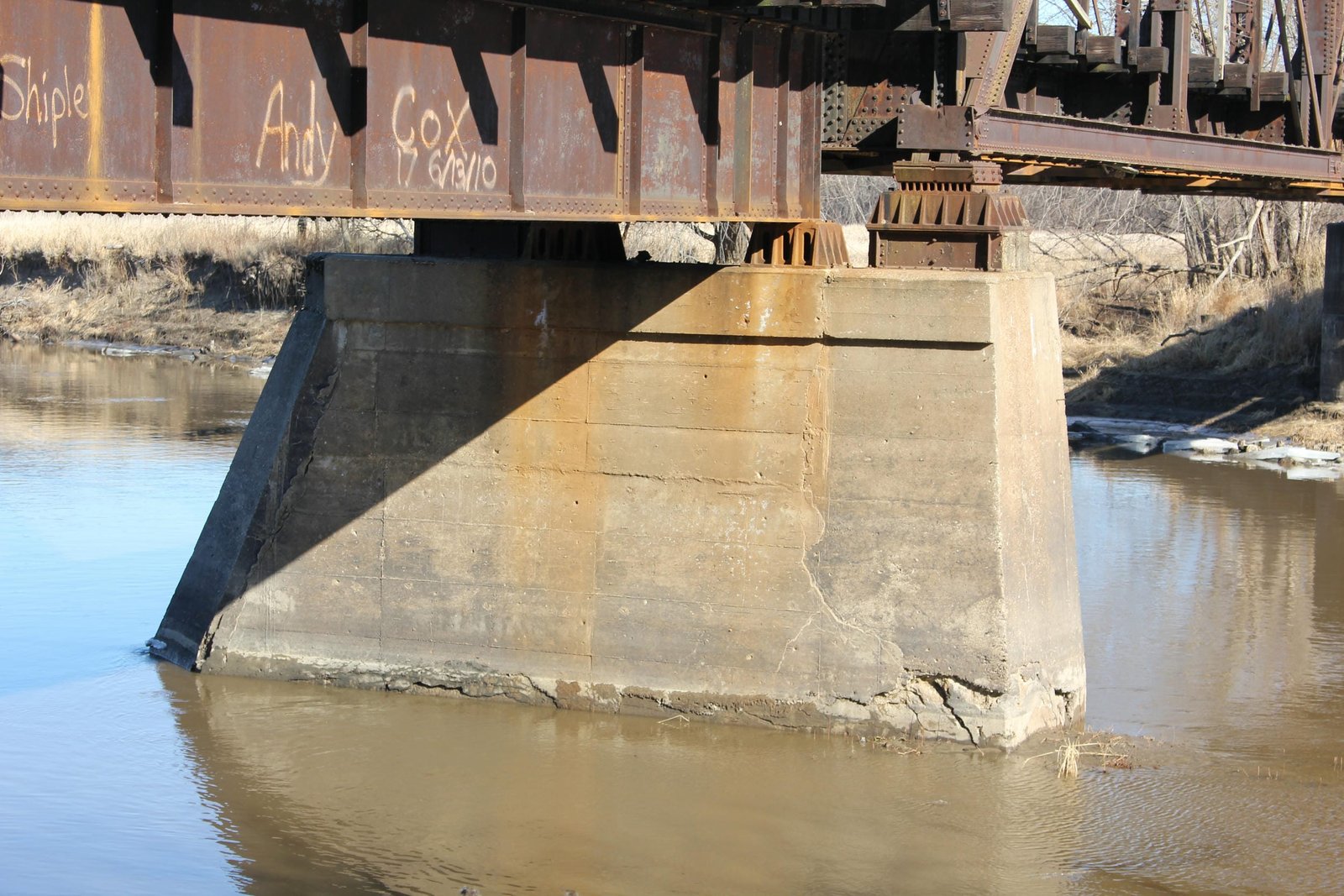
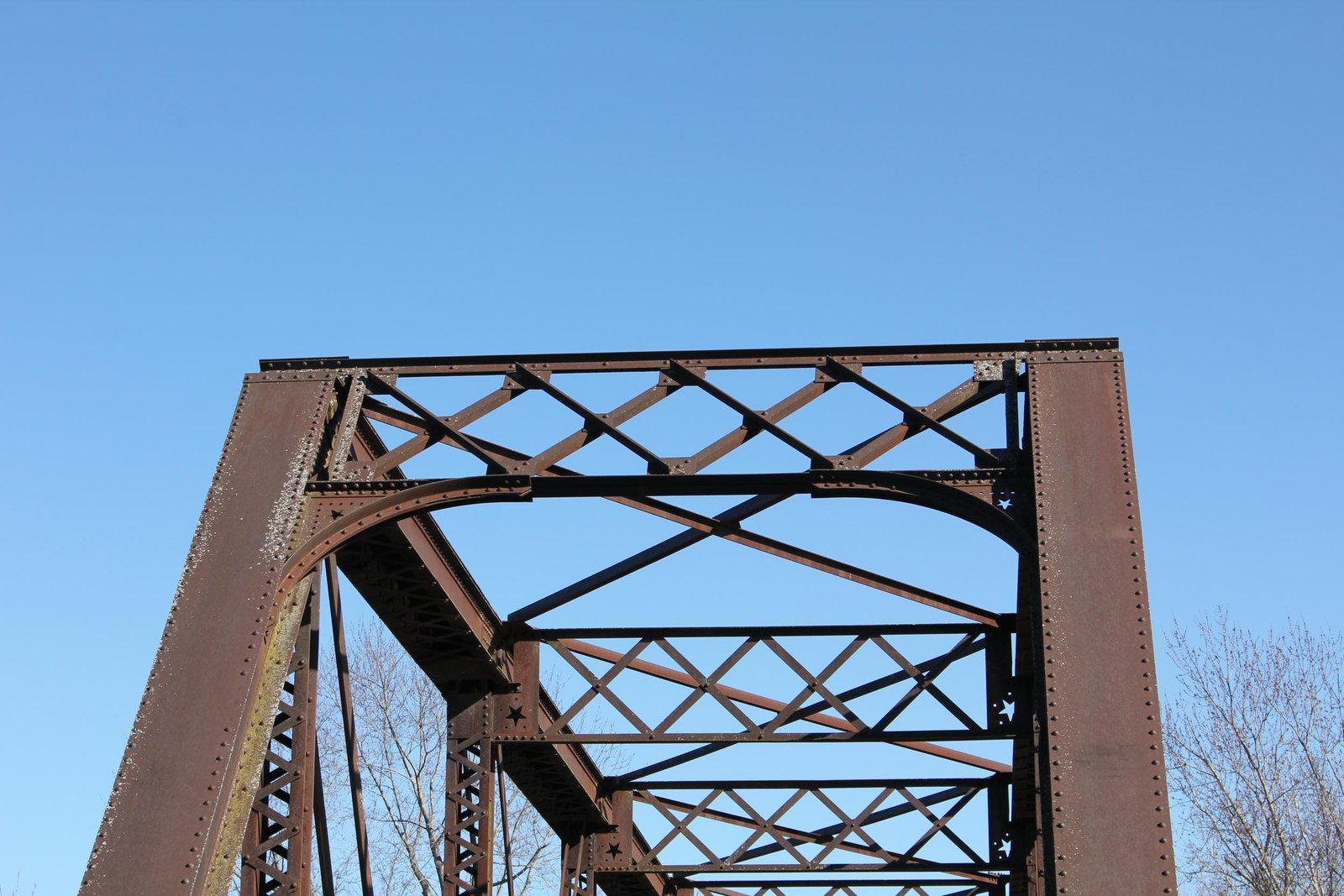
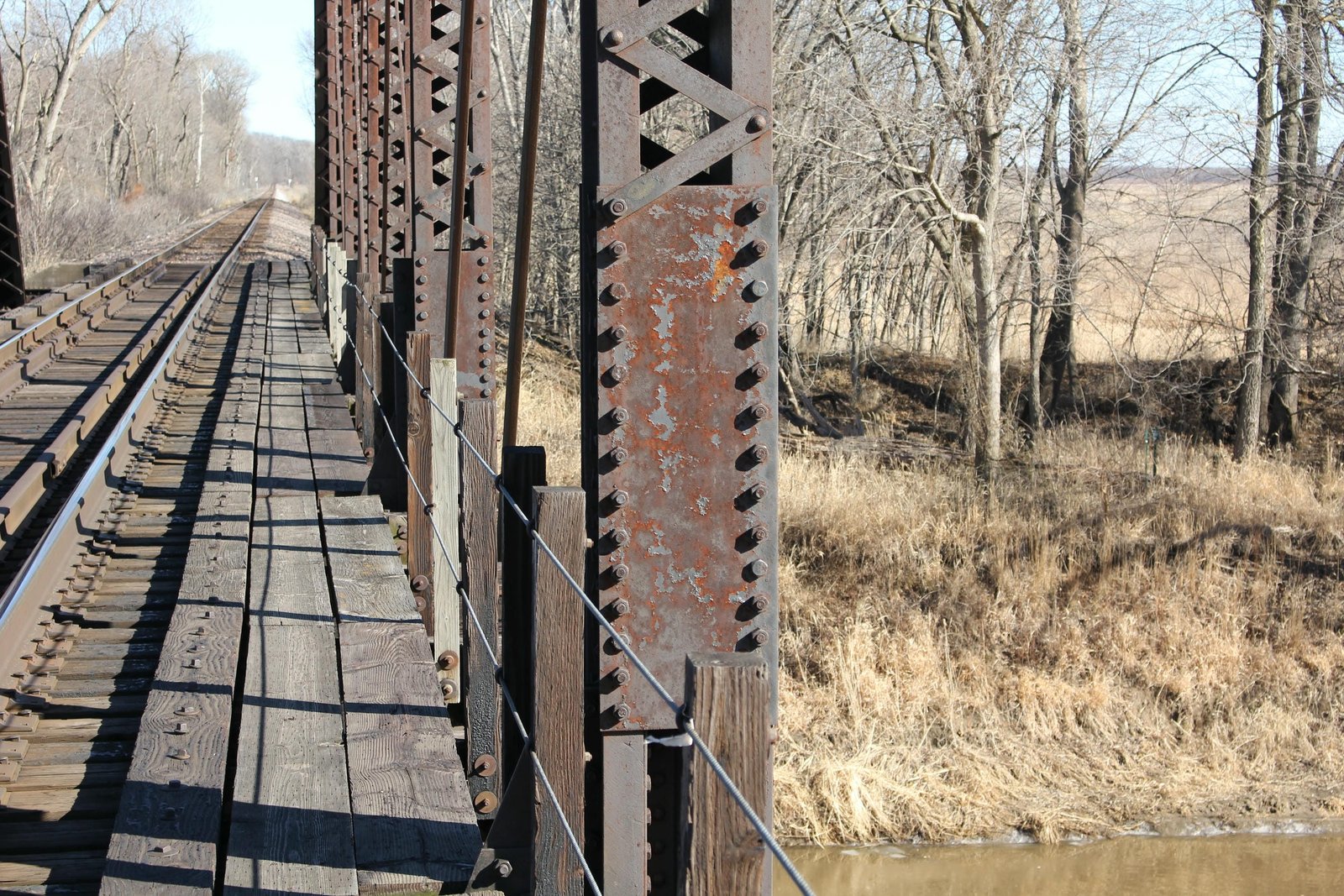
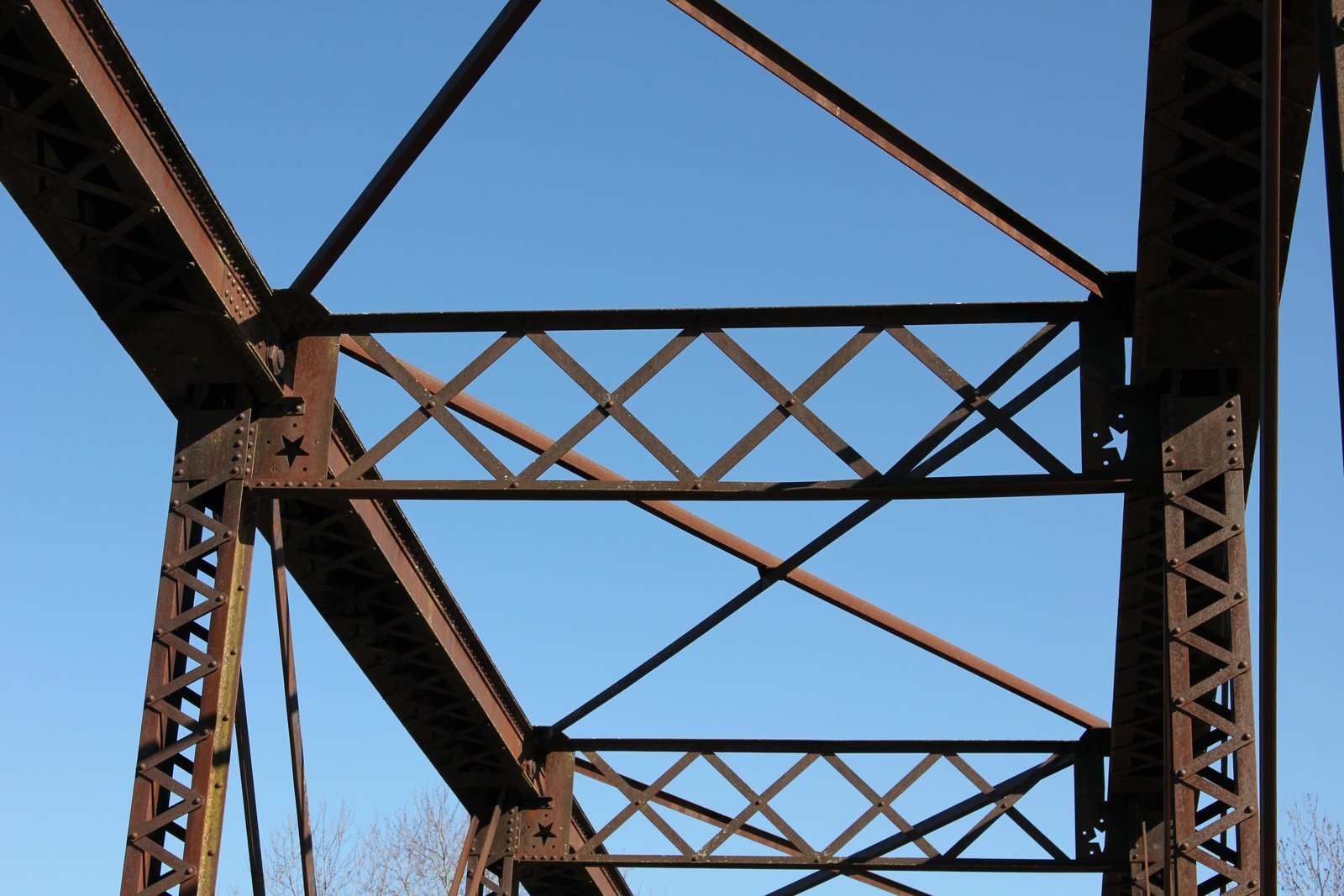
The truss span follows a standard design for the era, with built-up members, a standard floor and standard portal bracing. Both the top chord and endposts consist of built-up beams, composed of two U-shaped channels joined by X-lacing on the bottom and solid plates on top. The bottom chord uses two different designs, with eyebars at the center two panels and built-up beams with X-lacing on both sides at the outer panels. All vertical members are composed of heavy V-laced beams, while the diagonal members are composed of eyebars. At the bottom of the vertical members, the design transitions to a solid I-beam shape to connect to the bottom chord and floorbeams. Some repairs were made to the vertical members on the south side of the bridge, including the addition of plates and high strength bolts, likely to repair damage from the 1975 derailment. The floor system consists of plate girder floorbeams and two plate girder stringers.Both the portals and sway bracing consist of a standard Milwaukee Road design, composed of a double intersection lattice beam. At the portal bracing, a rounded steel plate with a star and circle cutouts connects the beam to the endposts. At the sway bracing, the ends of the beam include a solid plate with star and circle cutouts. Both the upper and lower lateral bracing are composed of simple L-shaped bars. All of the deck plate girder spans use a similar design, consisting of two plate girders and an open deck. Spans #1, #3 and #4 all have been partially rebuilt with additional rivets and brackets, while span #5 is considerably lighter than the other spans. Originally, spans #15 through #39 consisted of concrete deck plate girder spans, similar to the spans that are present on the Dogwood Avenue bridge (#I-1088) nearby. These spans were replaced with a more traditional modern concrete slab span, which uses a thinner design than similar spans. The majority of the piers consist of standard rectangular structures, with pier #2 using an angled upstream nose. Piers #15 through #39 have been rebuilt with concrete capped steel pile piers, located above the original piers. Pier #1 uses a standard rounded shape, typical of 1930s and 1940s construction along this line. The east abutment uses a standard design with short sloped wing walls, while the west abutment uses a standard U-shaped design.
The Pratt truss pattern was arguably the most popular truss bridge design in America during the second half of the 20th Century. This design combined strength, economy and simplicity to provide a preferred design. By the turn of the 20th Century, most railroads were beginning to move towards using riveted Warren truss spans, which were stronger while retaining the simplicity. The Milwaukee Road continued to use pin-connected Pratt designs into the first decade of the 20th Century, before beginning to shift towards riveted spans. Deck plate girder spans were popular for railroad use, as they were durable and easy to construct. In the late 1900s and early 1910s, the Milwaukee Road experimented with a number of different reinforced concrete bridge designs, intended to be cheap and effective. Among the designs tried were reinforced concrete girders, which functioned similar to a steel girder span with internal cross frames. It is believed these spans would have been cast offsite and installed onto the substructures. Not many spans of this design were ever constructed, and relatively few remain today. By 1912, the Milwaukee Road had shifted to using a concrete slab design, which was used as the standard reinforced concrete bridge design for the first half of the 20th Century. From an engineering standpoint, these spans represented an excellent development in reinforced concrete superstructures for railroad use. Since the initial construction, the bridge has seen several significant alterations, which are detailed above. Today, the bridge remains in regular use as part of a CPKC mainline. Overall, the bridge appears to be in fair condition, with some minor deterioration noted throughout the superstructure and substructure. The author has ranked the bridge as being regionally significant, due to the unique designs and unusual history of the bridge.
Citations
| Build date and builder (span #2) | Milwaukee Road Drawing Collection, located at the Milwaukee Road Archives at the Milwaukee Public Library |
| Build date (spans #6 through #14) | Date stamp |
| Build date (spans #15 through #39) | Date tag |
| Builder (span #1) | Wisconsin Bridge & Iron Company plaque |
| Erection date (span #5) | Date of derailment |
| Railroad History Citation | ICC Valuation Information, Compiled by Richard S. Steele |