
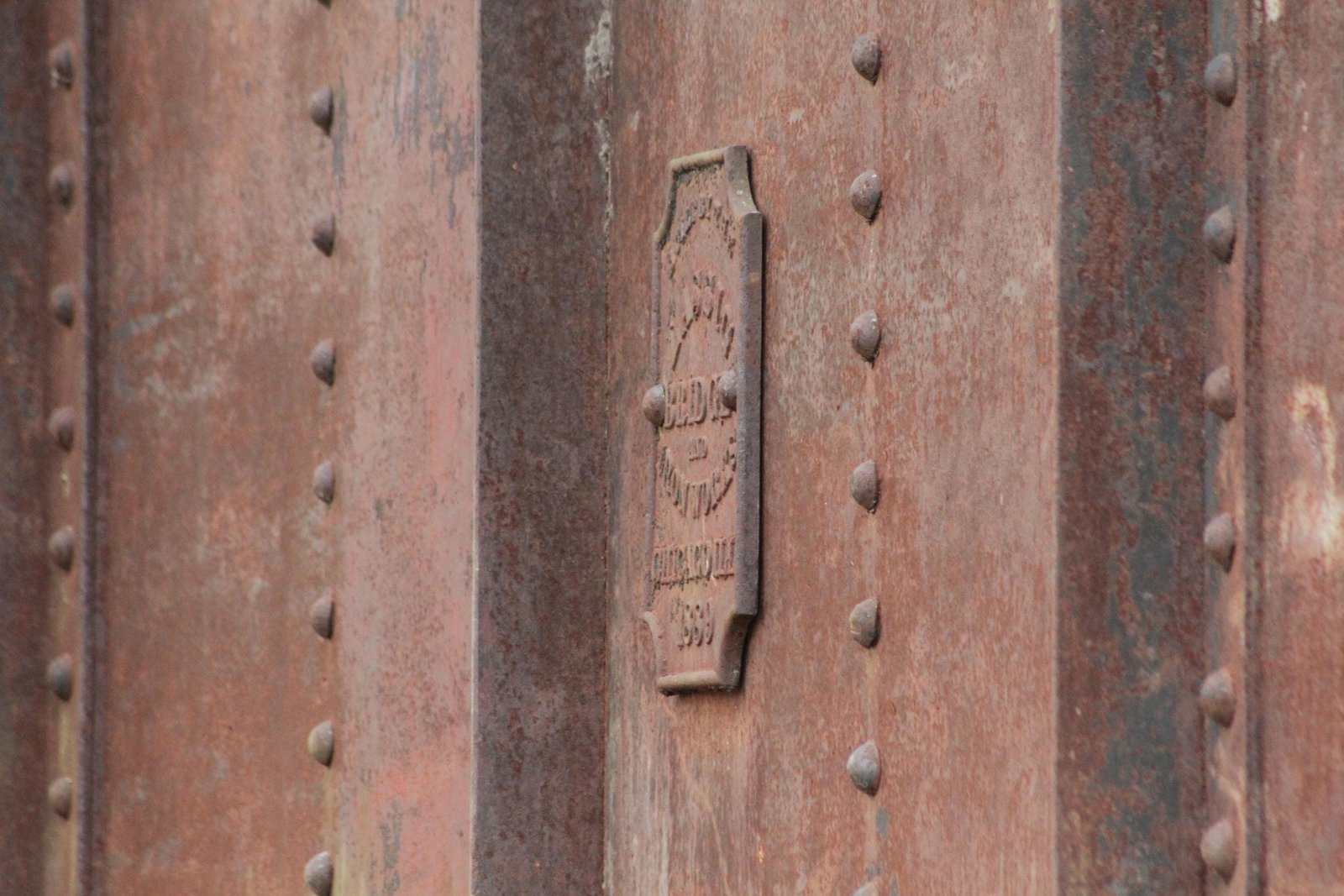
Click the photo to view the full-size version
| Name | Clive Greenbelt Trail - Walnut Creek Bridge Chicago, Milwaukee, St. Paul & Pacific Railroad Bridge #Y-22 |
| Built By | Chicago, Milwaukee & St. Paul Railway |
| Currently Owned By | City of Clive |
| Superstructure Contractor | Lassig Bridge & Iron Works of Chicago, Illinois (Original Fabrication) Unknown (1929 Reconfiguration) |
| Length | 167 Feet Total, 65 Foot Main Span |
| Width | 1 Track |
| Height Above Ground | 10 Feet (Estimated) |
| Superstructure Design | Through Plate Girder and Timber Pile Trestle |
| Substructure Design | Timber Pile |
| Date Fabricated | 1889 |
| Date Erected | 1917. Girder Span Reconfigured 1929; Approaches Replaced 1937 |
| Original Location | Bridge #Z-1334; Old Manning Viaduct; Manning, Iowa |
| Traffic Count | 0 Trains/Day (Bridge is Open to Pedestrian Traffic) |
| Current Status | Open to Pedestrian Traffic |
| Chicago, Milwaukee, St. Paul & Pacific Railroad Bridge Number | Y-22 |
| Significance | Moderate Significance |
| Documentation Date | 12/2/2017 |
In 1878, the Des Moines, Adel and Western Rail Road (DMA&W) constructed a short 8-mile narrow gauge line, extending from Waukee, Iowa to Adel, Iowa. In 1879, the line was extended an additional 21 miles to Panora, Iowa. In 1880, the DMA&W changed its name to the Des Moines and Northwestern Railway (DM&NW). In 1881, the St. Louis, Des Moines and Northern Railway (StLDM&N) constructed an additional 15 miles of railroad, extending from Des Moines, Iowa to the existing line at Waukee. The segment between Clive, Iowa and Waukee; and a one-half interest in the Des Moines to Clive segment were sold to the DM&NW soon after completion. Between 1881 and 1882, the DM&NW an additional 70 miles north to Fonda, Iowa. By 1891, the line would be converted to standard gauge. In 1895, the DM&NW was consolidated into the Des Moines, Northern & Western Railroad (DMN&W). In 1899, the DMN&W was sold to the Chicago, Milwaukee & St. Paul Railway (Milwaukee Road). The Milwaukee Road completed an additional 44 miles of track between Fonda and the existing mainline at Spencer, Iowa. By the late 19th Century, the Milwaukee Road had developed a large railroad network throughout the Midwest. This line served as a secondary line, providing the Milwaukee Road with a connection to Des Moines.
The Milwaukee Road was often in financial trouble, especially after the costly Pacific Extension was completed in 1909. In 1925, the company declared bankruptcy, and reorganized as the Chicago, Milwaukee, St. Paul and Pacific Railroad in 1928. Despite the financial strain, this line remained an important mainline for the Milwaukee Road. Financial hardship continued through the 20th Century for the Milwaukee Road, and the railroad again filed for bankruptcy in 1977. In 1980, the Milwaukee Road abandoned much of the Iowa Division, including the entirety of this line. A segment between Des Moines and Clive was sold to the Norfolk and Western Railway (NW). A segment between Clive and Jefferson, Iowa; as well as a segment between Albert City, Iowa and Marathon, Iowa were sold to the Chicago & North Western Railway (C&NW). In 1982, NW was merged with the Southern Railway to form Norfolk Southern Railway (NS). NS began leasing the Des Moines to Clive segment to Iowa Interstate Railroad (IAIS) to serve some industries on the west side of Des Moines. After plans for a power plant near Panora were abandoned, C&NW abandoned the Clive to Yale, Iowa segment in 1987. In 1990, the C&NW abandoned the Herndon, Iowa to Jefferson segment. In 1995, the C&NW was purchased by Union Pacific Railroad (UP). In 1999, UP abandoned the segment between Yale and Herndon. Today, IAIS still operates the Des Moines to Clive segment as part of the Grimes Industrial Lead. UP operates the Albert City to Marathon segment as part of the Laurens Subdivision. A large segment between Clive and Jefferson has been reused as the Clive Greenbelt Trail and the Raccoon River Valley Trail. The remainder of the line has been abandoned and largely reverted to adjacent landowners.
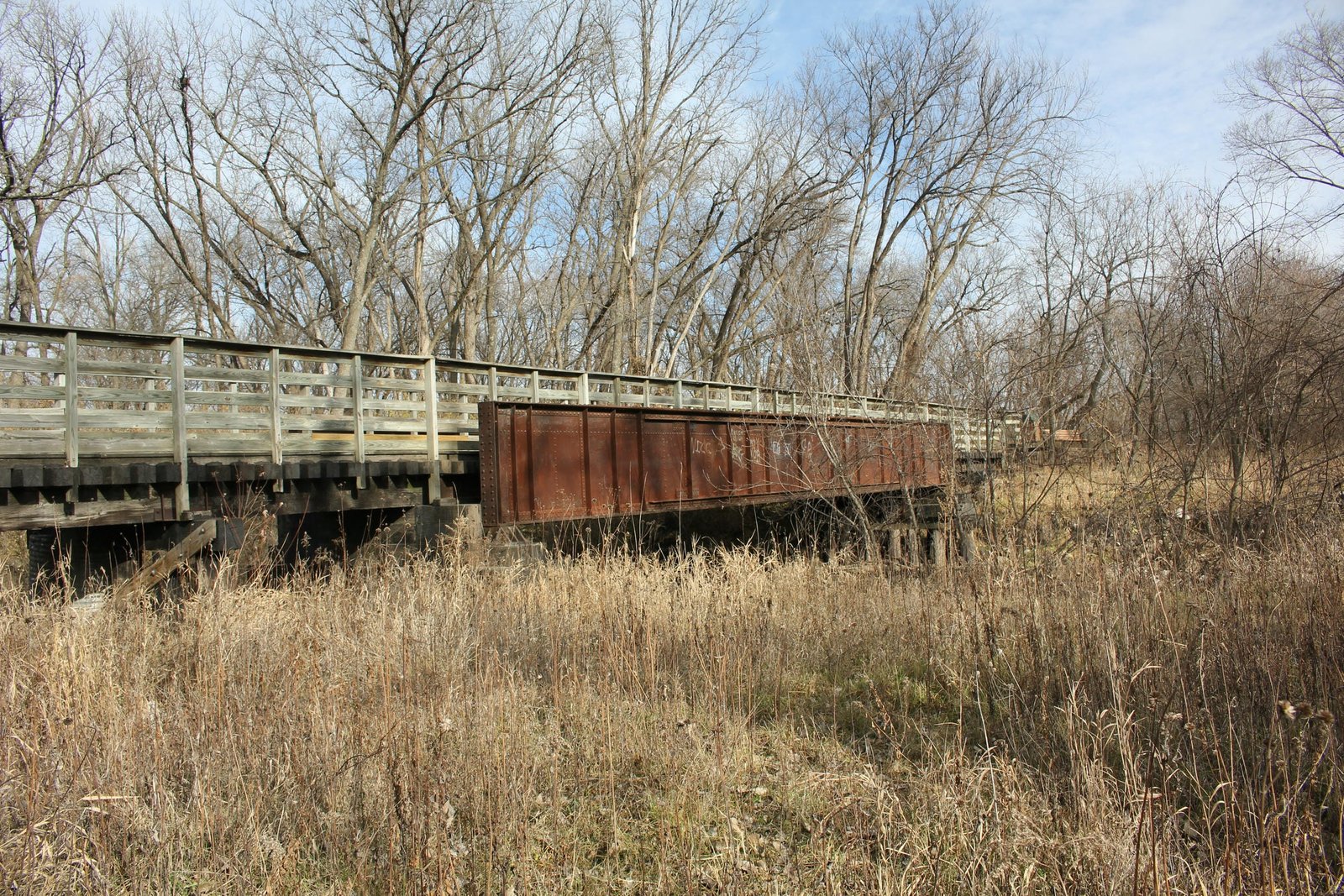
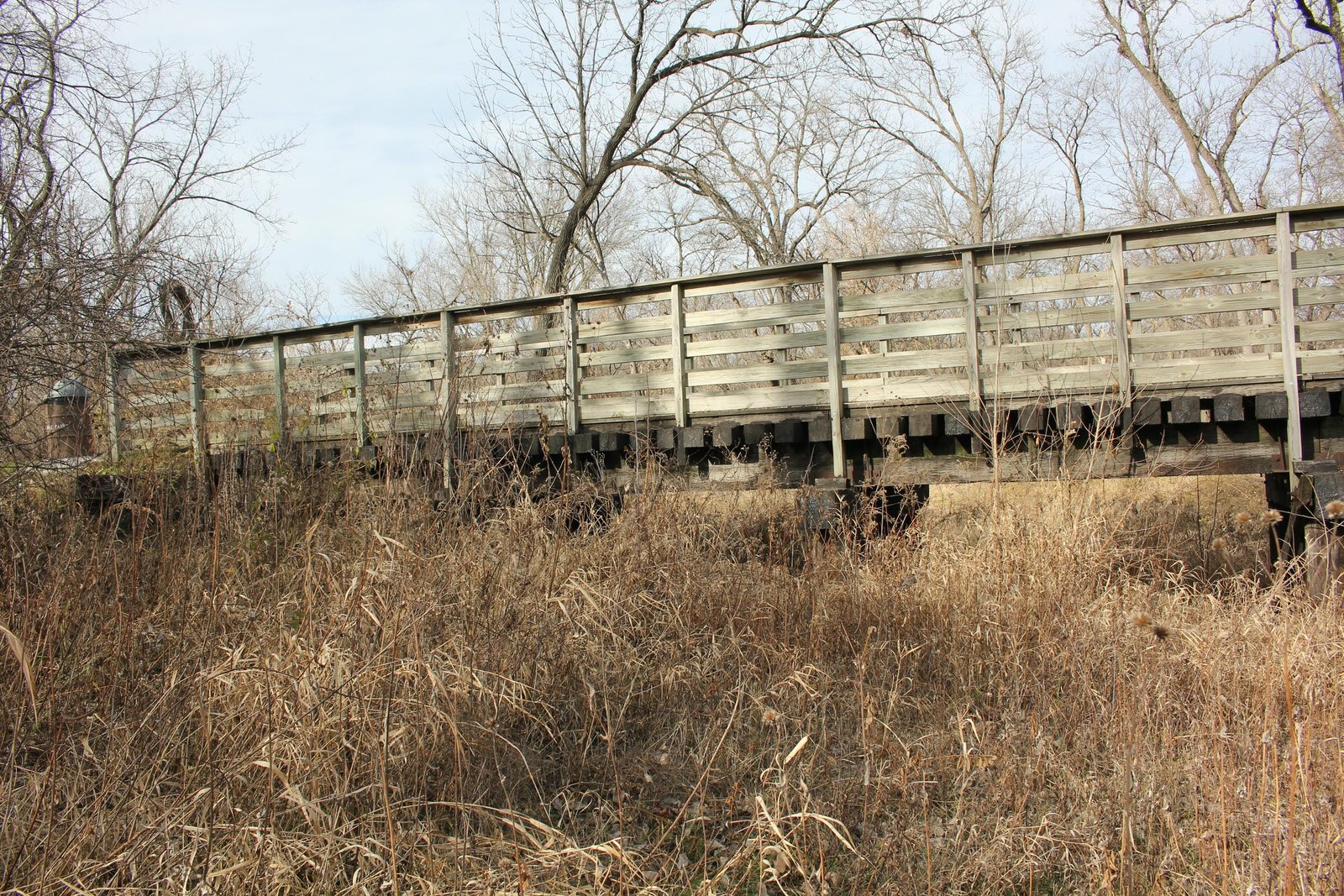
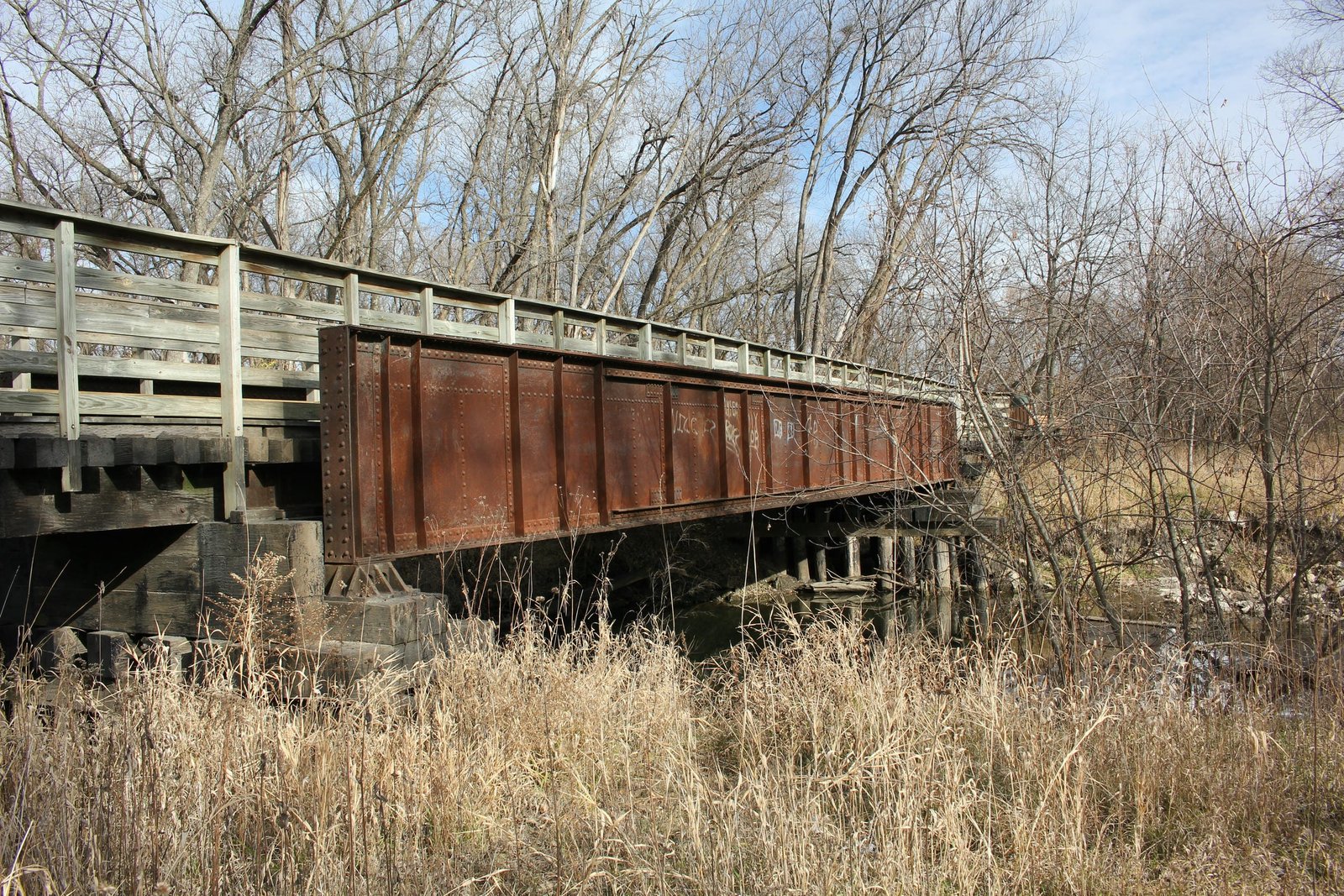
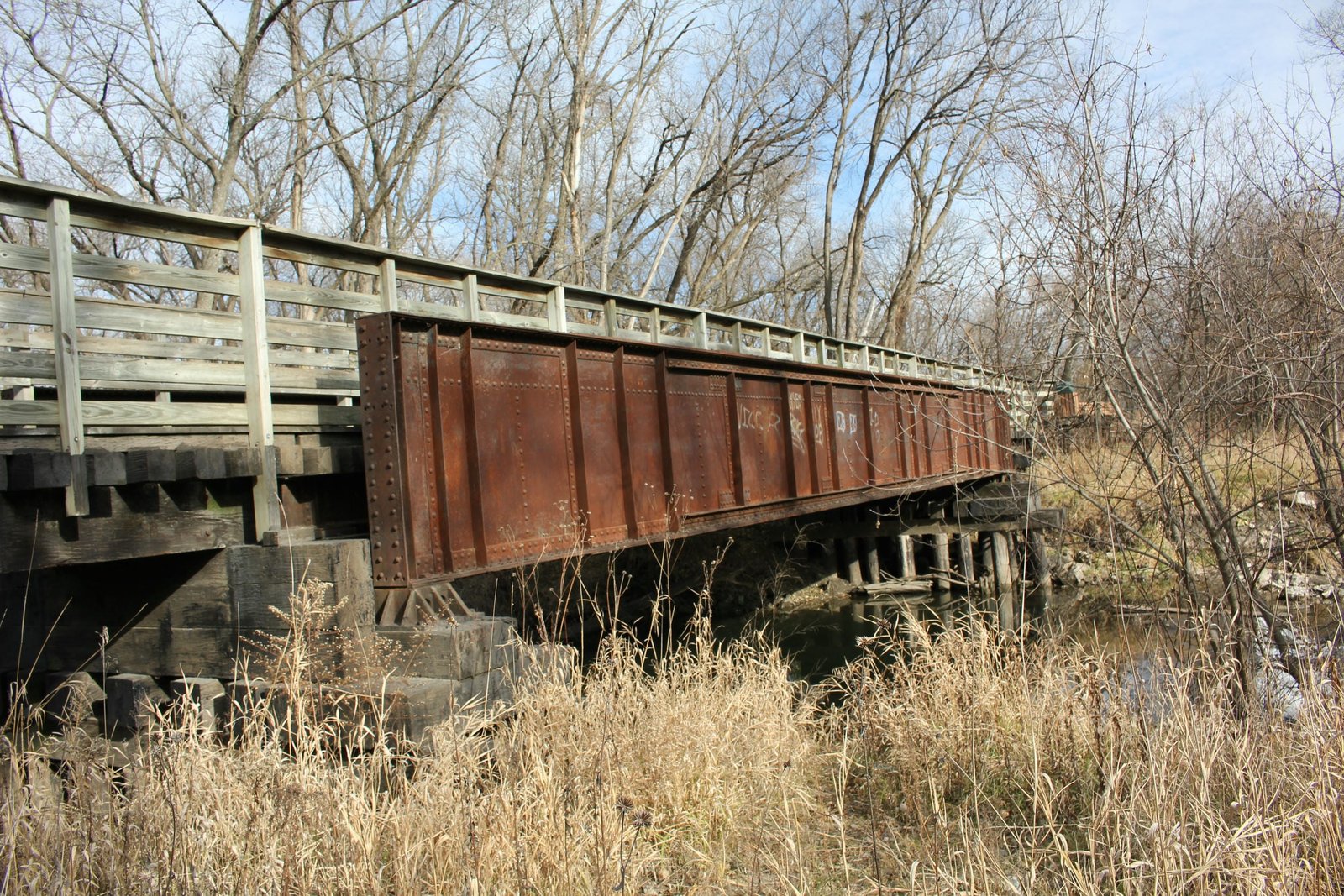
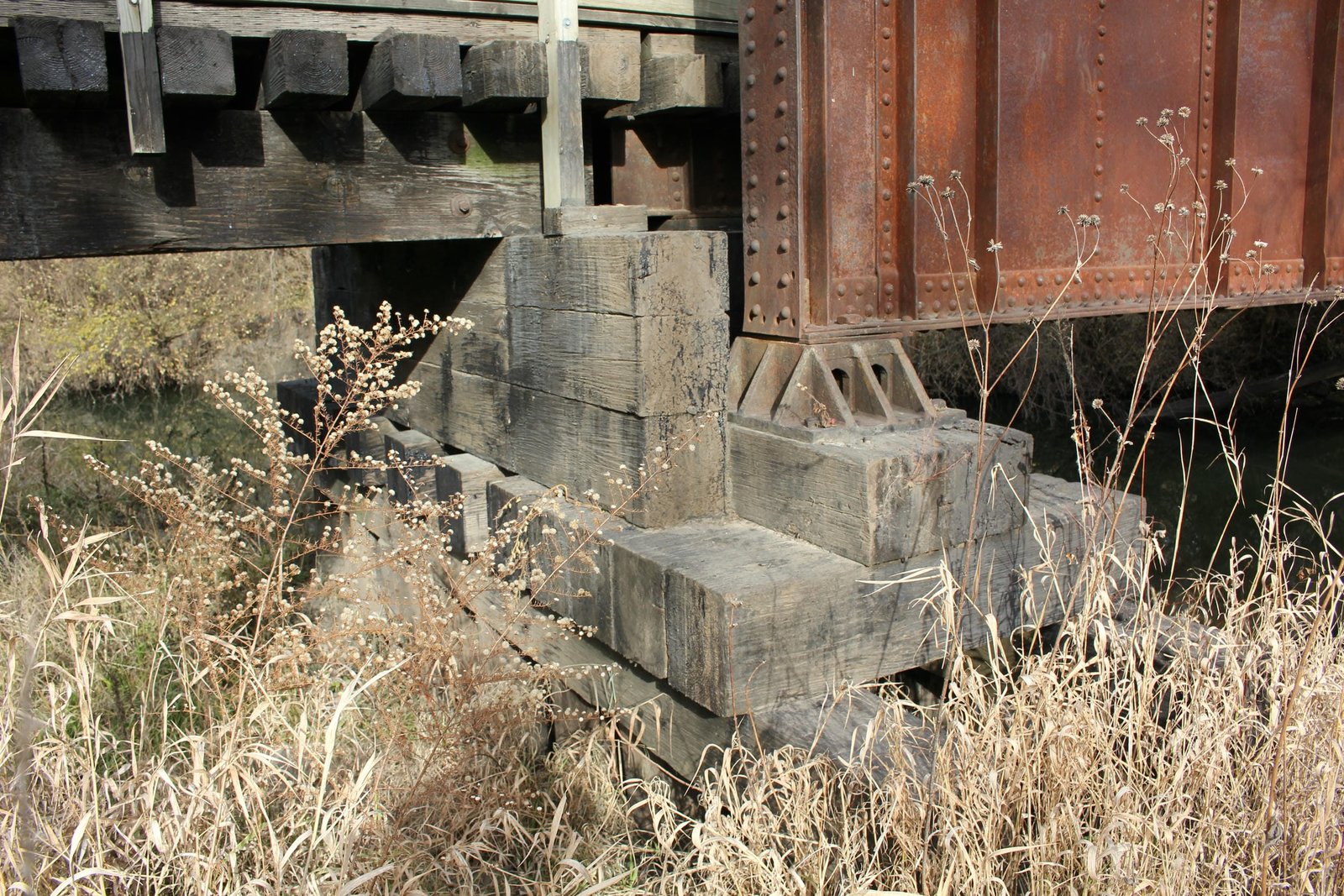
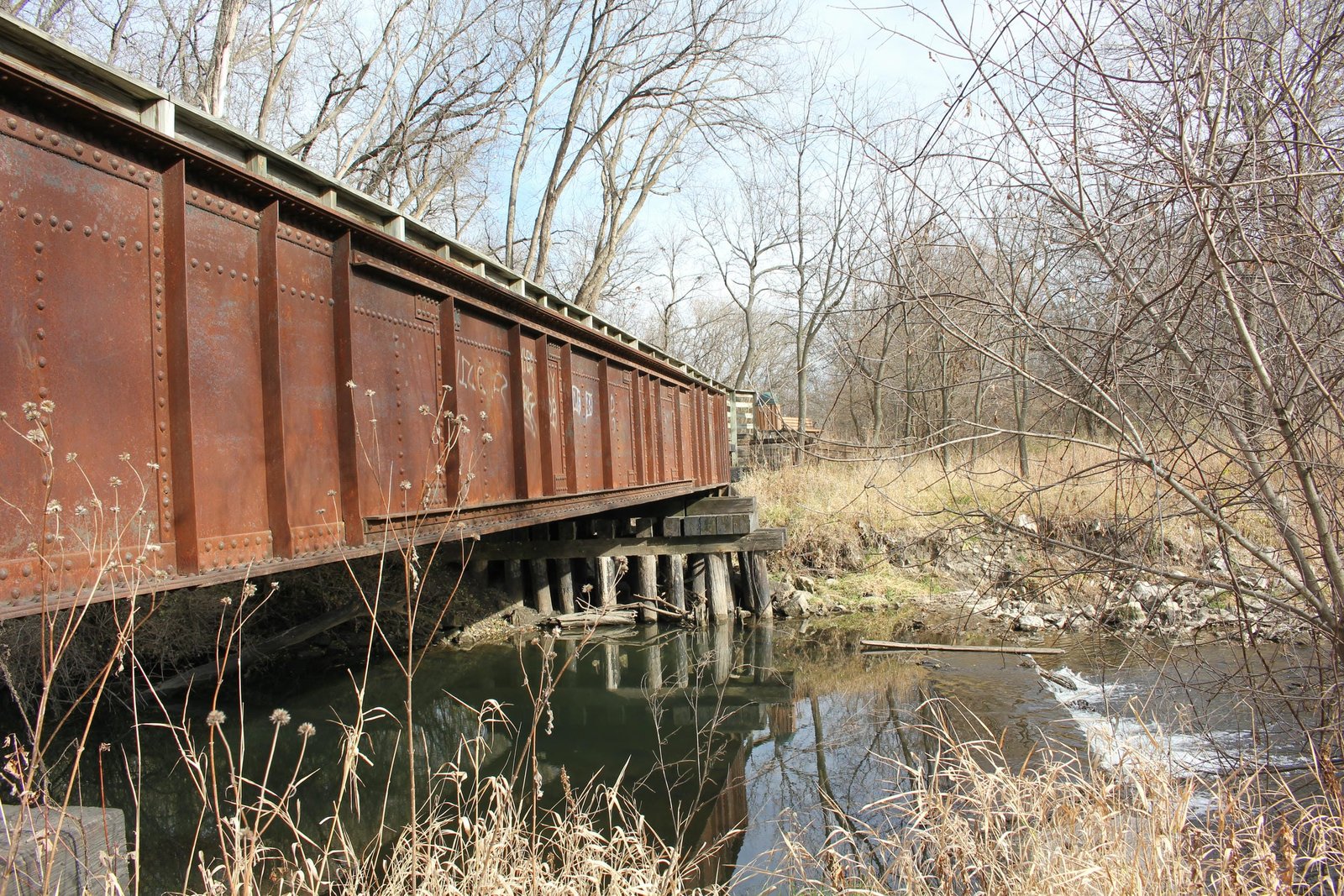
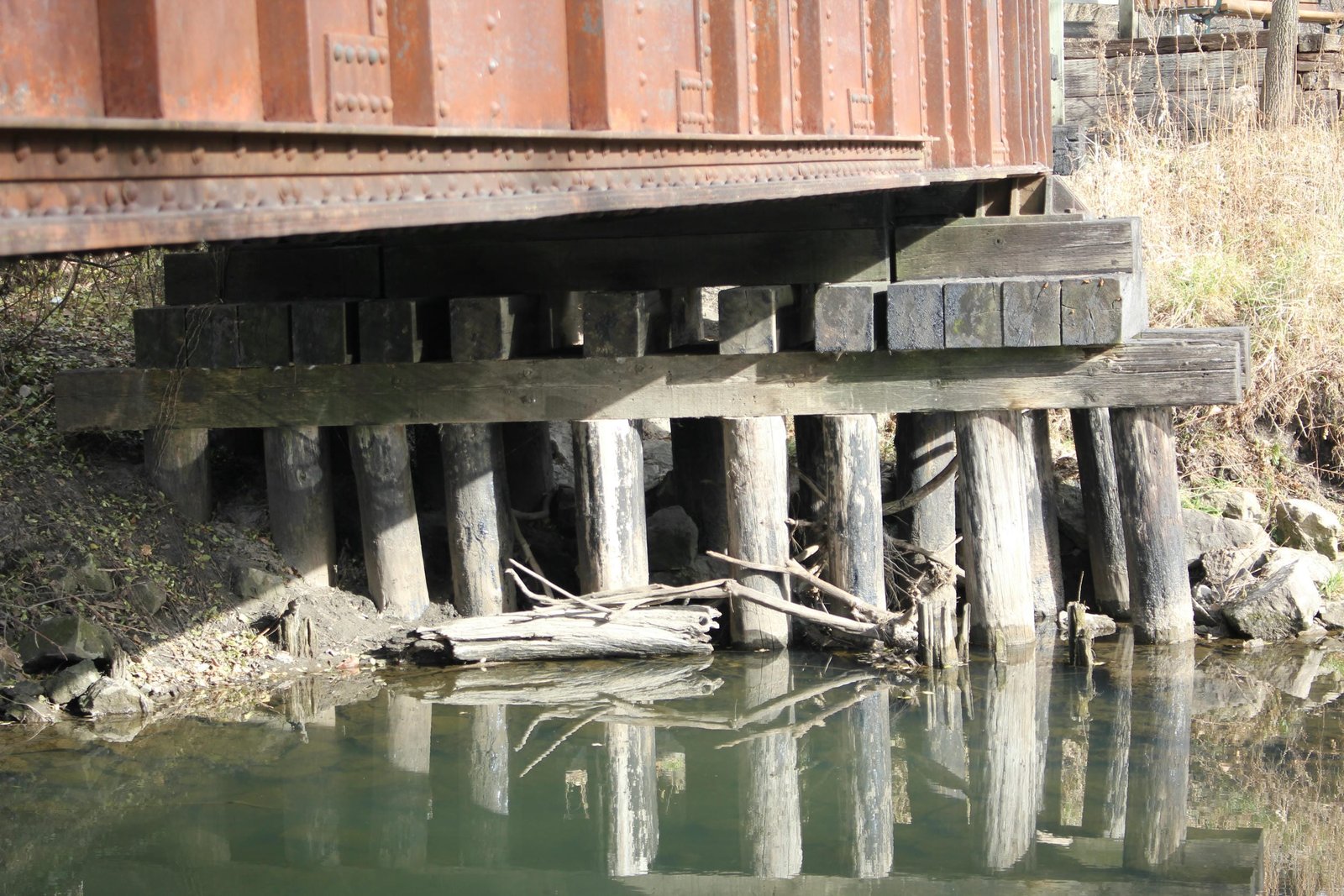
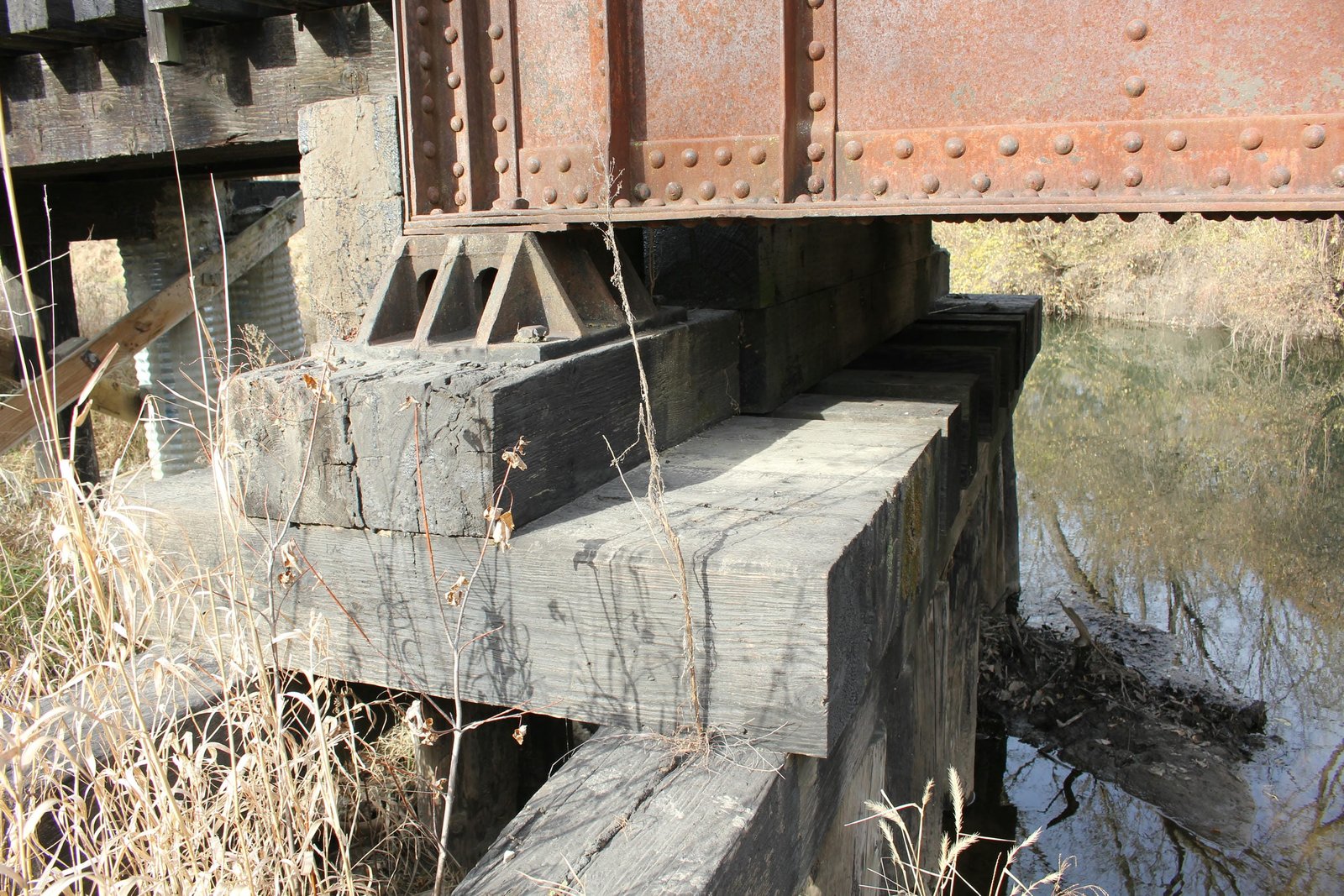
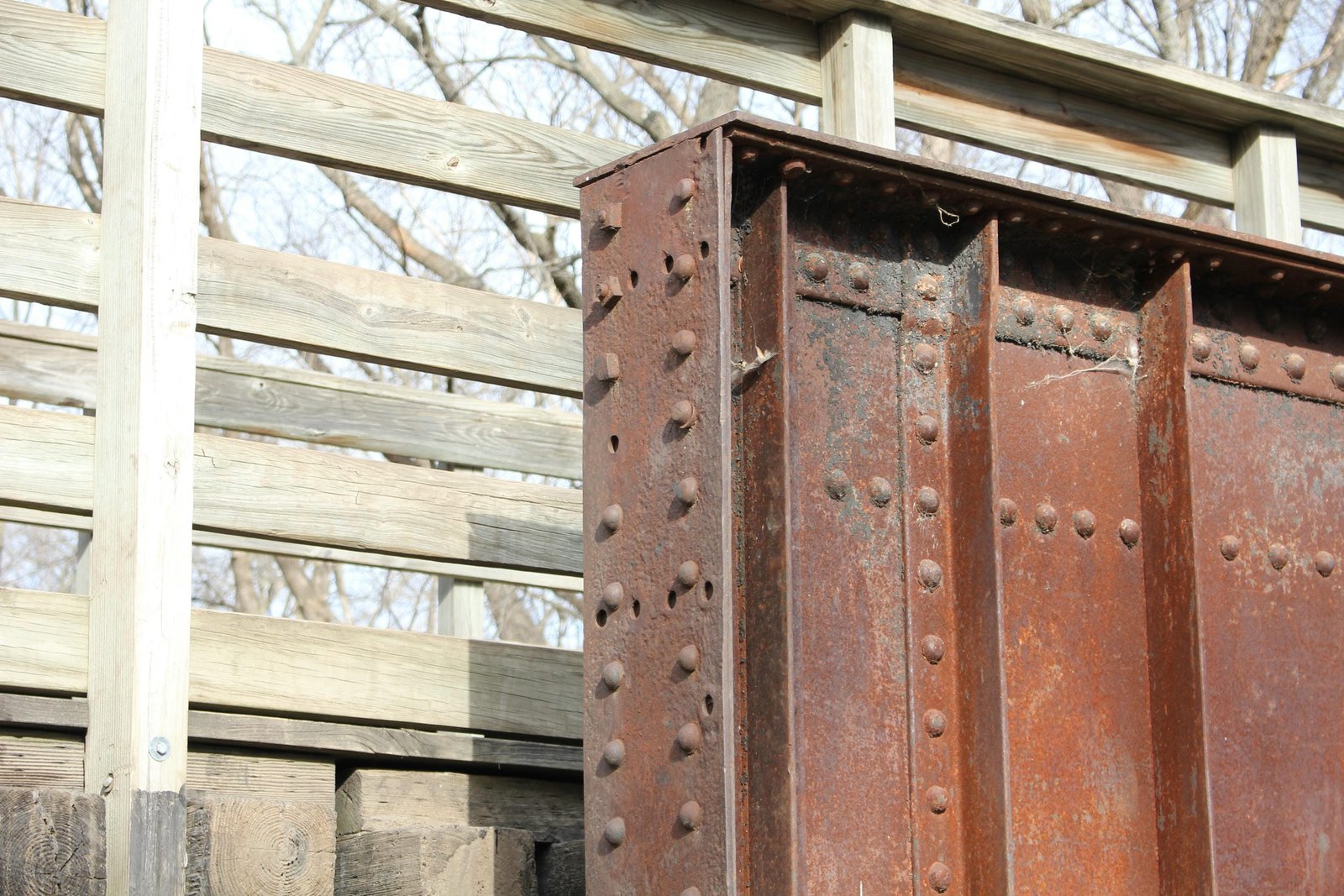
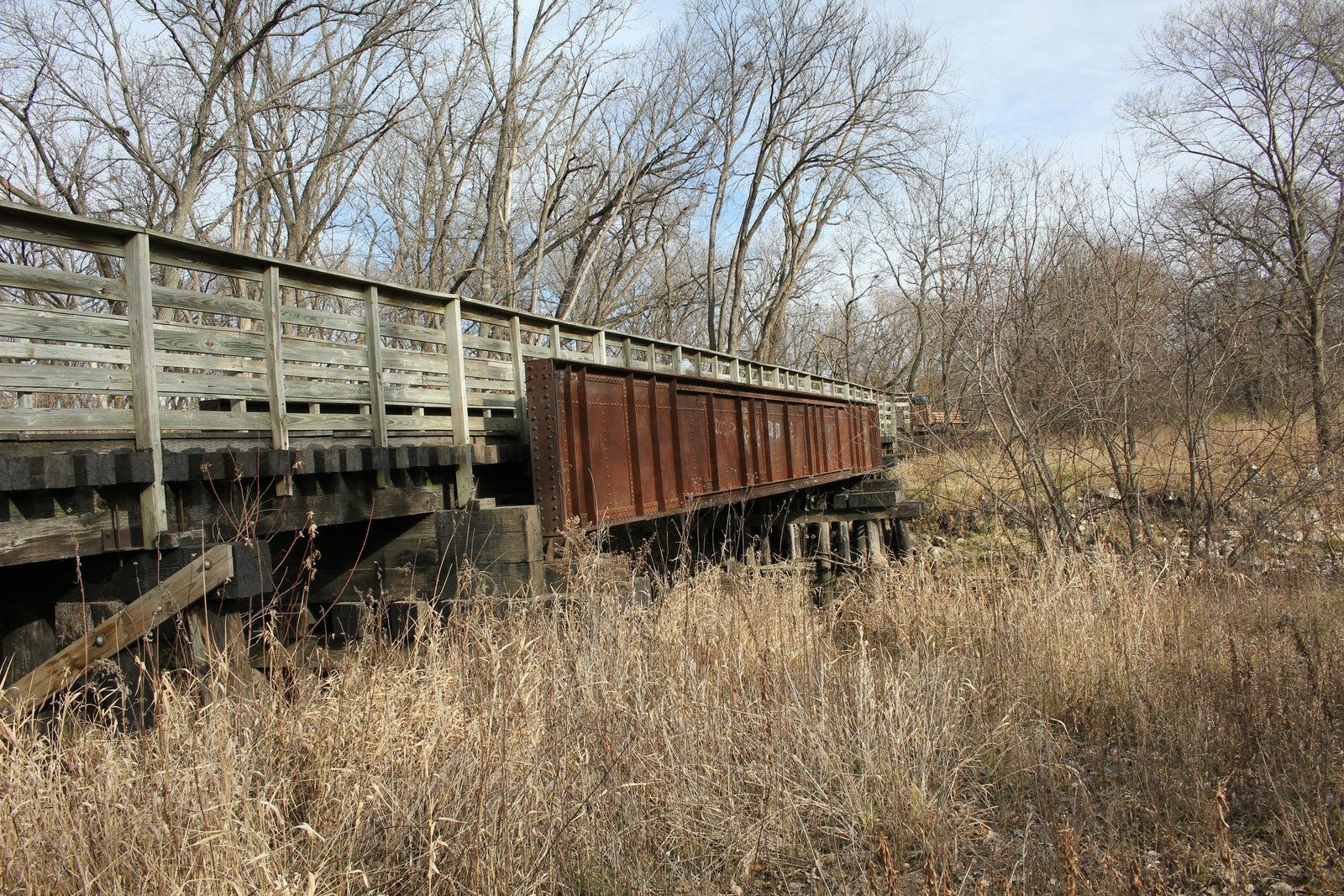
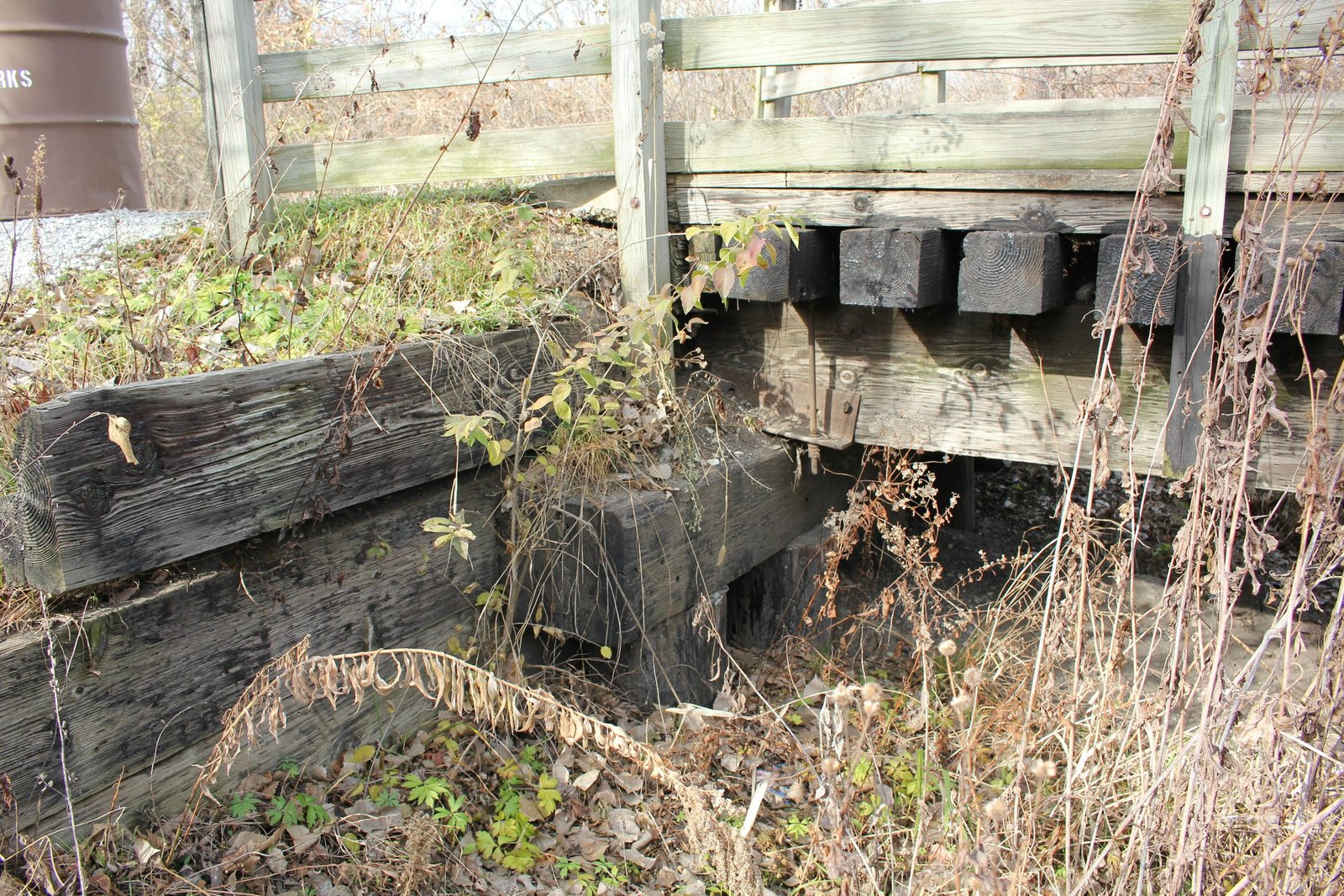
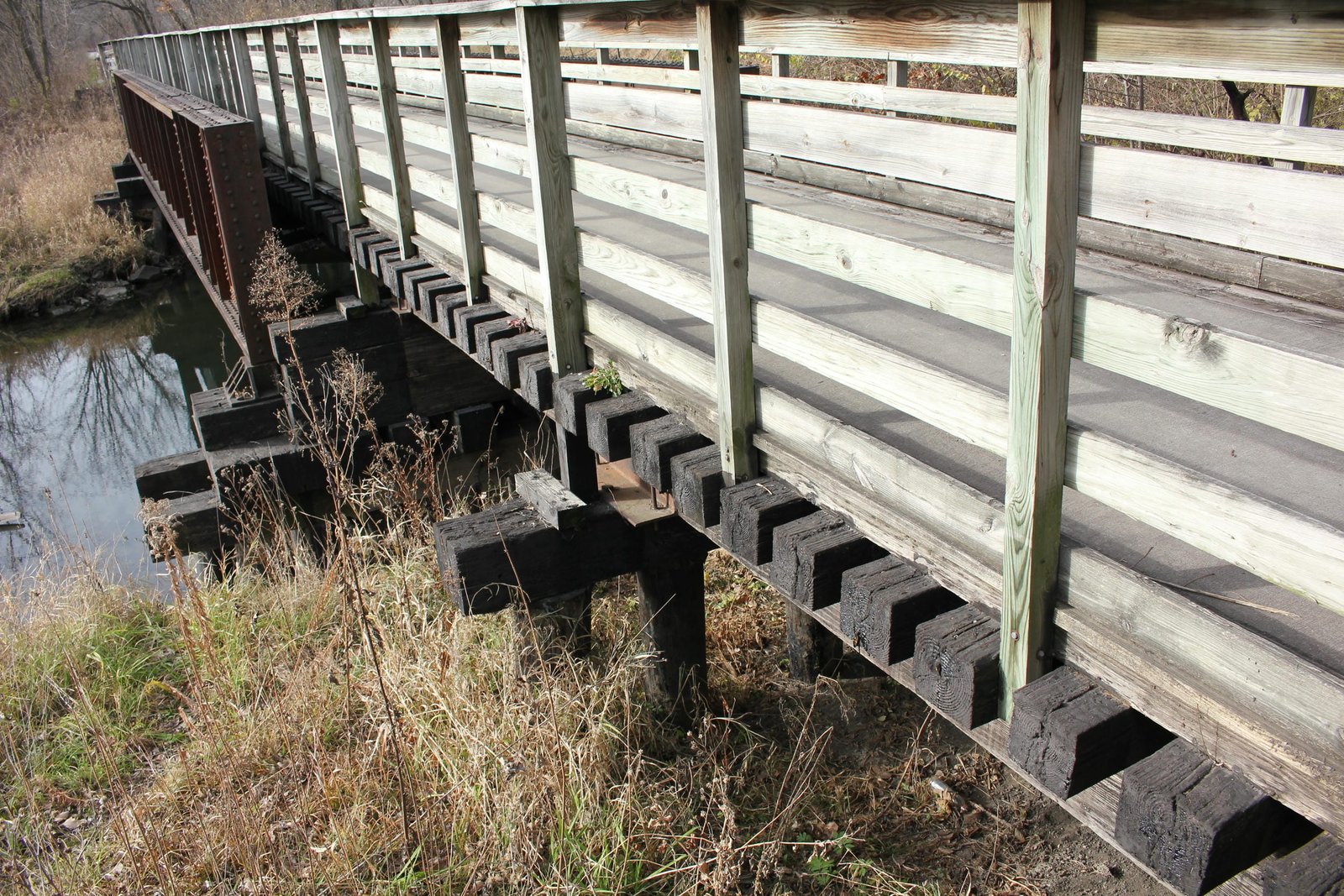
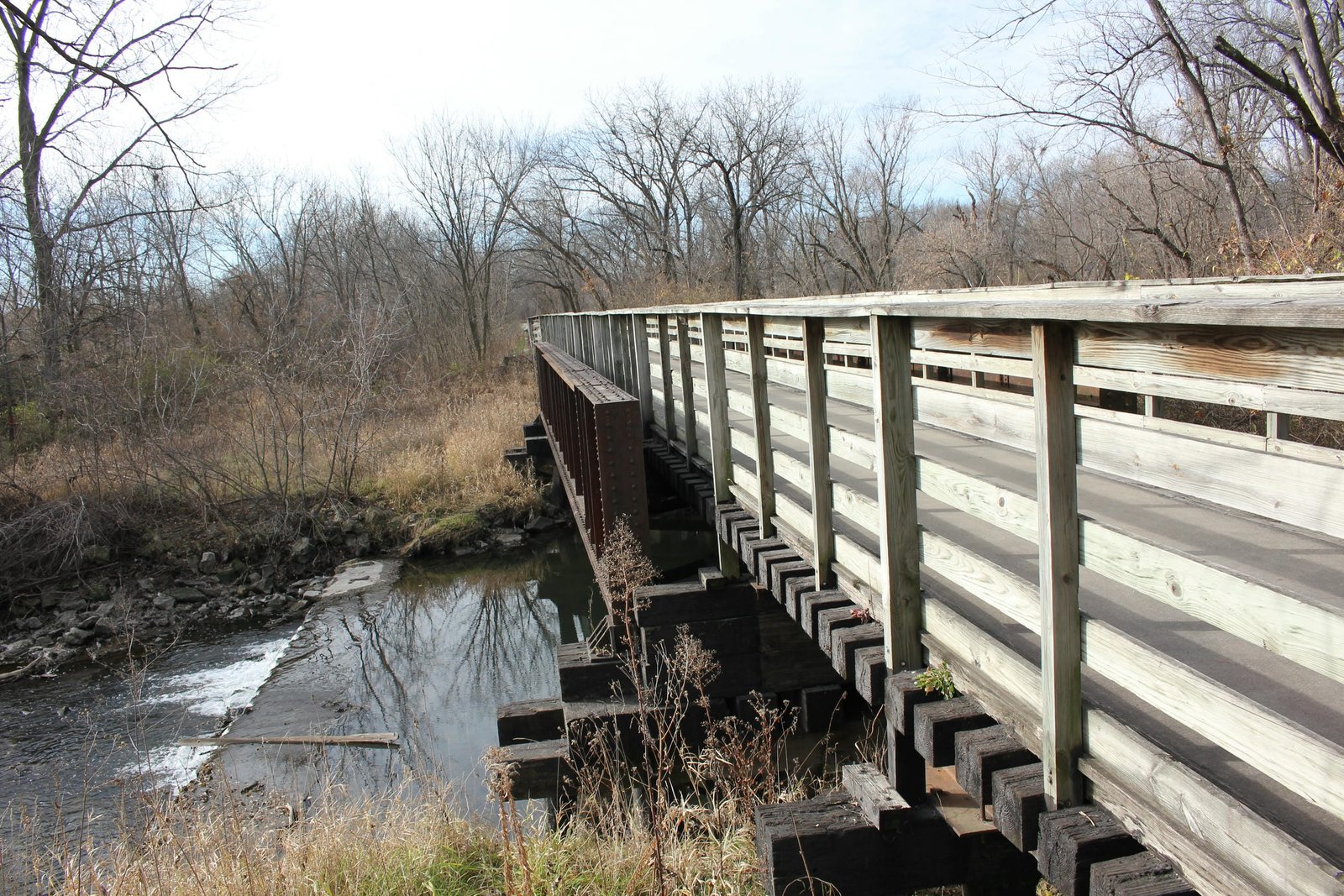
Located at Campbell Park in Grimes, this through plate girder bridge carries a former Chicago, Milwaukee, St. Paul & Pacific Railroad (Milwaukee Road) branch line over Walnut Creek. The first bridge at this location was likely a timber pile trestle, constructed when the line was first built. In the late 1910s, the Milwaukee Road upgraded a couple of bridges along this line, replacing outdated timber structures with secondhand steel and iron structures. In 1917, a secondhand type "B" deck plate girder span was installed, with new timber pile piers and timber pile trestle approaches constructed at either end. In 1929, the main span was reconfigured from a type "B" deck plate girder to a type "C3" through plate girder span to increase clearance underneath and strengthen the span. The most recent alteration to the bridge came in 1937, when the timber pile trestle approaches and timber pile piers were last renewed. Currently, the bridge consists of a 65-foot through plate girder span, approached by six 14-foot timber pile trestle spans on the west end and three 14-foot spans on the east end. The entire bridge is set onto timber pile substructures. Due to the age, it is believed that the girders for the main span are fabricated from wrought iron. Lassig Bridge & Iron Works fabricated the main span, while it is unclear if the 1929 alterations were completed by a contractor or by railroad company forces. It is believed that all timber components were constructed by railroad company forces.
The main span was originally fabricated in 1889 for use as part of a large viaduct at Bridge #Z-1334 in Manning, Iowa. When the present bridge was completed as part of a double tracking and realignment project, the viaduct was disassembled. It is believed this span was one of the two spans which crossed the West Nishnabotna River. It is unclear if other portions of the viaduct were also reused along branch lines. Originally, the girder span was configured as a type "B" deck plate girder. This type of span uses shallow girders with an unusual floor system. The original floor system was composed of plate girder floorbeams, placed halfway up the girders. Unique to the type "B" design, the ties sat directly on flanges riveted to near the top of the girders. When the span was converted to a type "C3" girder, the original floor system was altered by installing stringers, floorbeams and a lateral system at the bottom of the girder. It is unclear if the original floorbeams were reused as part of the new floor, or if the entire floor consisted of new material. Evidence of the original type "B" design is clear throughout the span, with the original flanges still present inside the girders. It also appears that additional strengthening was done to the girders at this time, including the addition of additional angles near the center of the span. In addition, several rivets have been replaced with square bolts, an alteration that is likely nearly 100 years old. Type "C3" spans were a standard Milwaukee Road through plate girder design, which used four lighter stringers instead of the two heavier stringers used by type "C4" through plate girder spans. The timber components of the bridge follow a standard design, with round timber piles, standard caps and standard stringers.
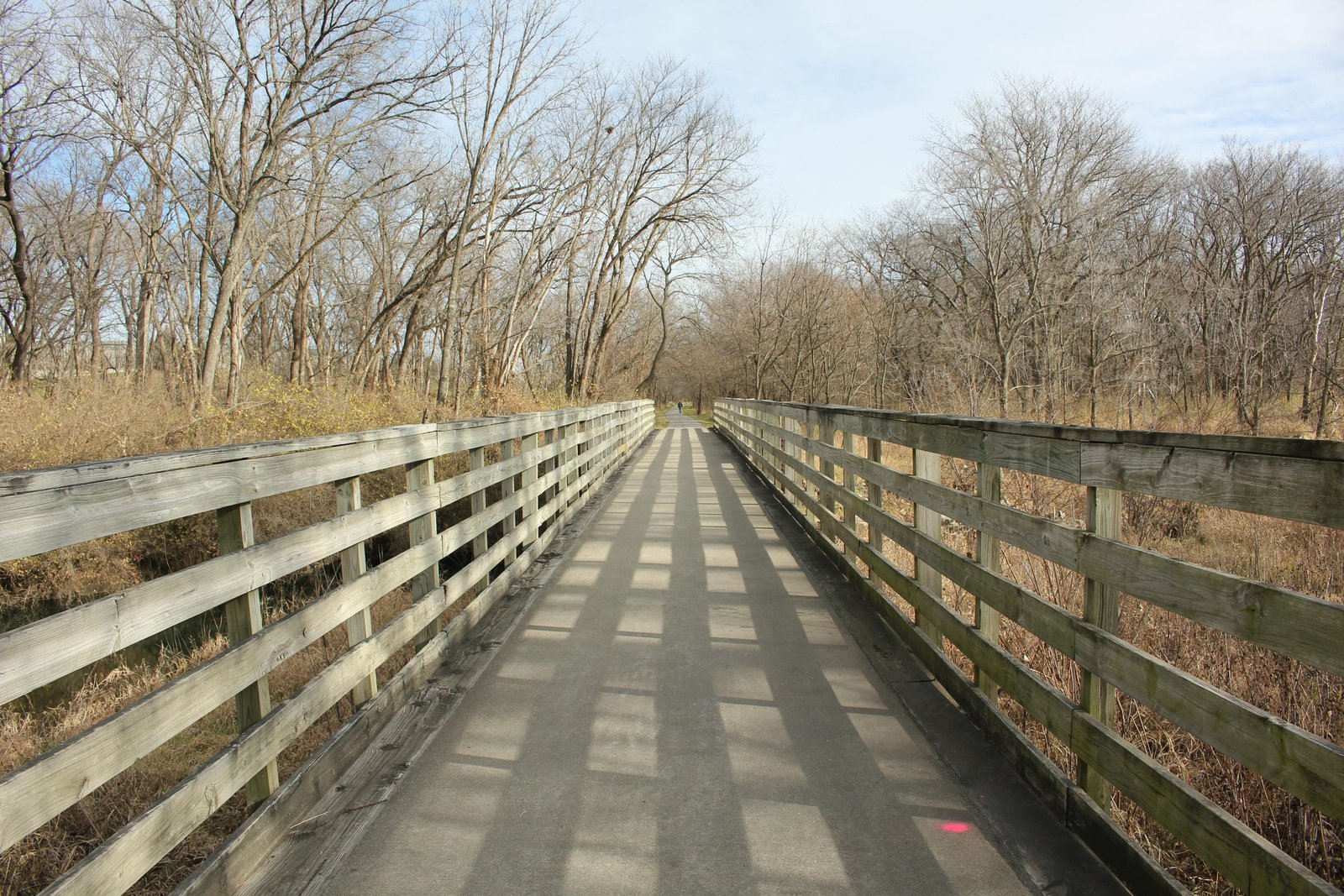
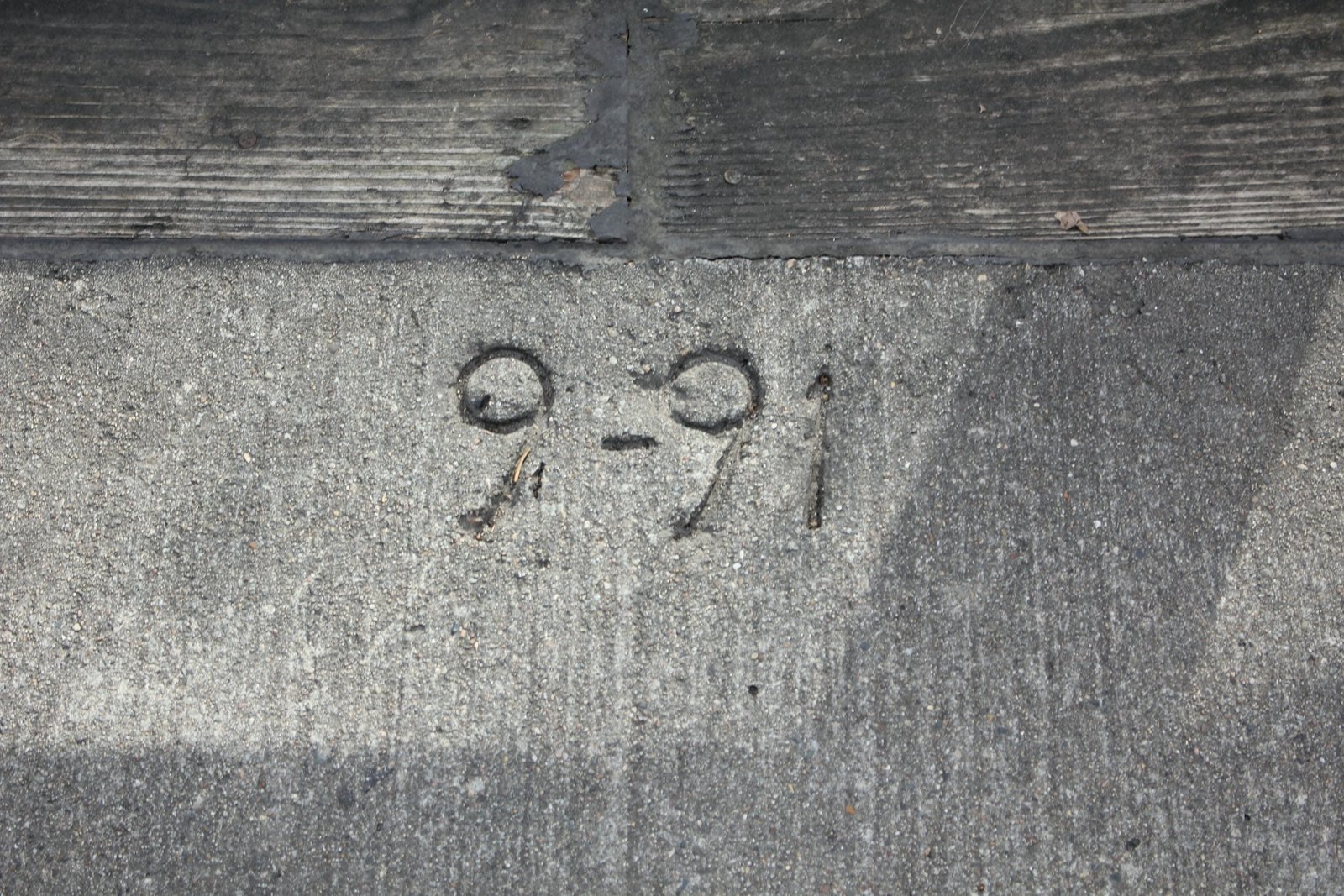
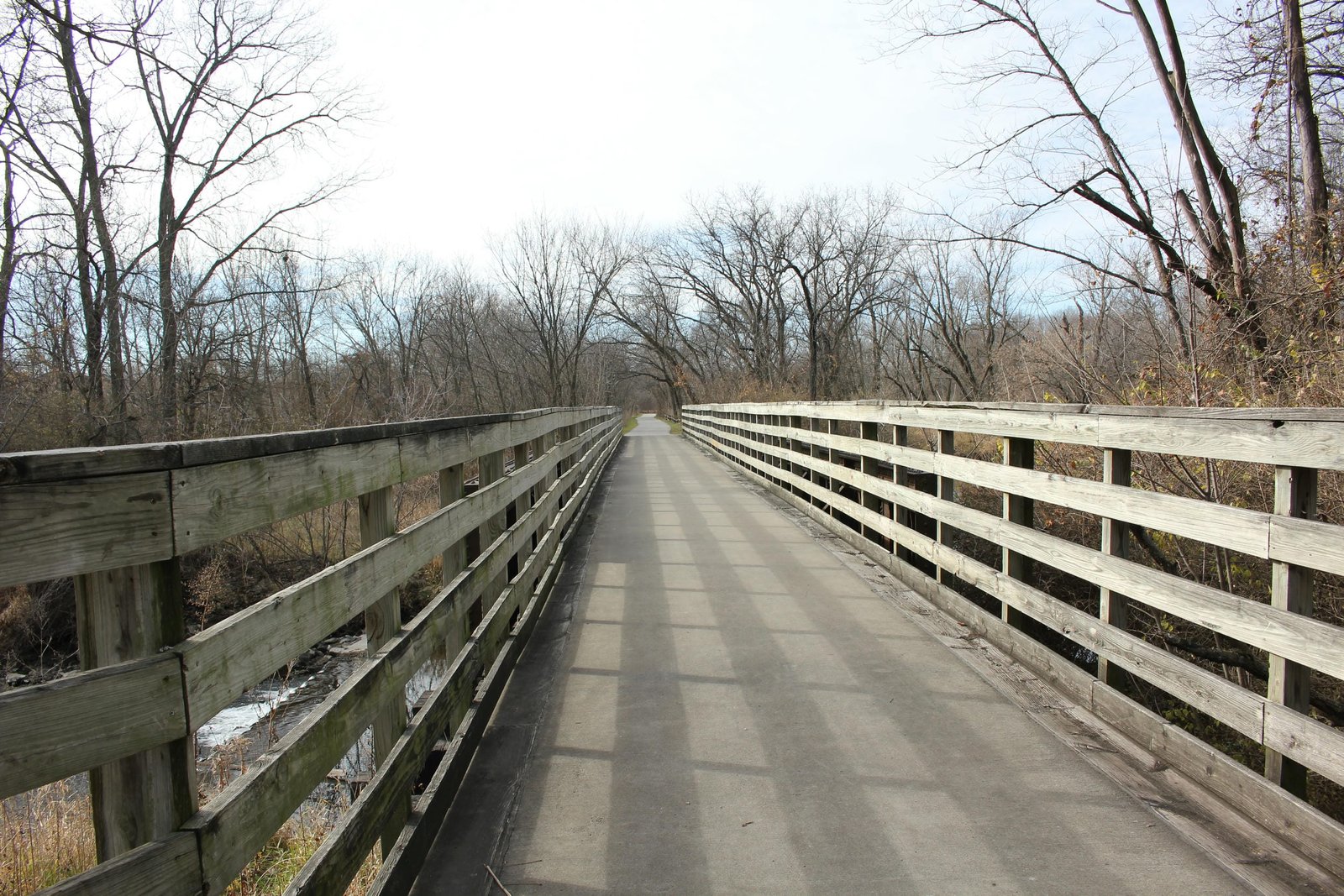
Railroads often reused steel and iron spans, as it provided a cost effective way to rebuild bridges without requiring large amounts of new material. In the early 20th Century, the Milwaukee Road renewed bridges at relatively short intervals, and generally had extra bridge spans on hand. Oftentimes, these "secondhand" spans would be modified prior to reuse. It is somewhat unusual that the main span was modified some 12 years after the original installation here. After the line was abandoned, the bridge was rehabilitated for trail use by installing a concrete deck and railings. Today, it carries the Clive Greenbelt Trail. Overall, the bridge appears to be in fair condition, with minor deterioration noted to the timber components. Unfortunately, the City of Clive is seeking to replace this bridge with a modern pedestrian bridge. This project has been planned since the 2010s, and it is unclear when it may occur. It is hoped that the new pedestrian bridge can incorporate the historic plate girder span or that the plate girder span can be reused at another location. The author has ranked this bridge as being moderately significant, due to the age and design of the structure. This bridge is among the oldest known plate girder spans in Iowa.
Citations
| Fabrication date and builder (main span) | Lassig Bridge & Iron Works plaque |
| Relocation history, erection date and reconfiguration date | Milwaukee Road Bridge Index, located at the Milwaukee Road Archives at the Milwaukee Public Library |
| Railroad History Citation | ICC Valuation Information, Compiled by Richard S. Steele |