
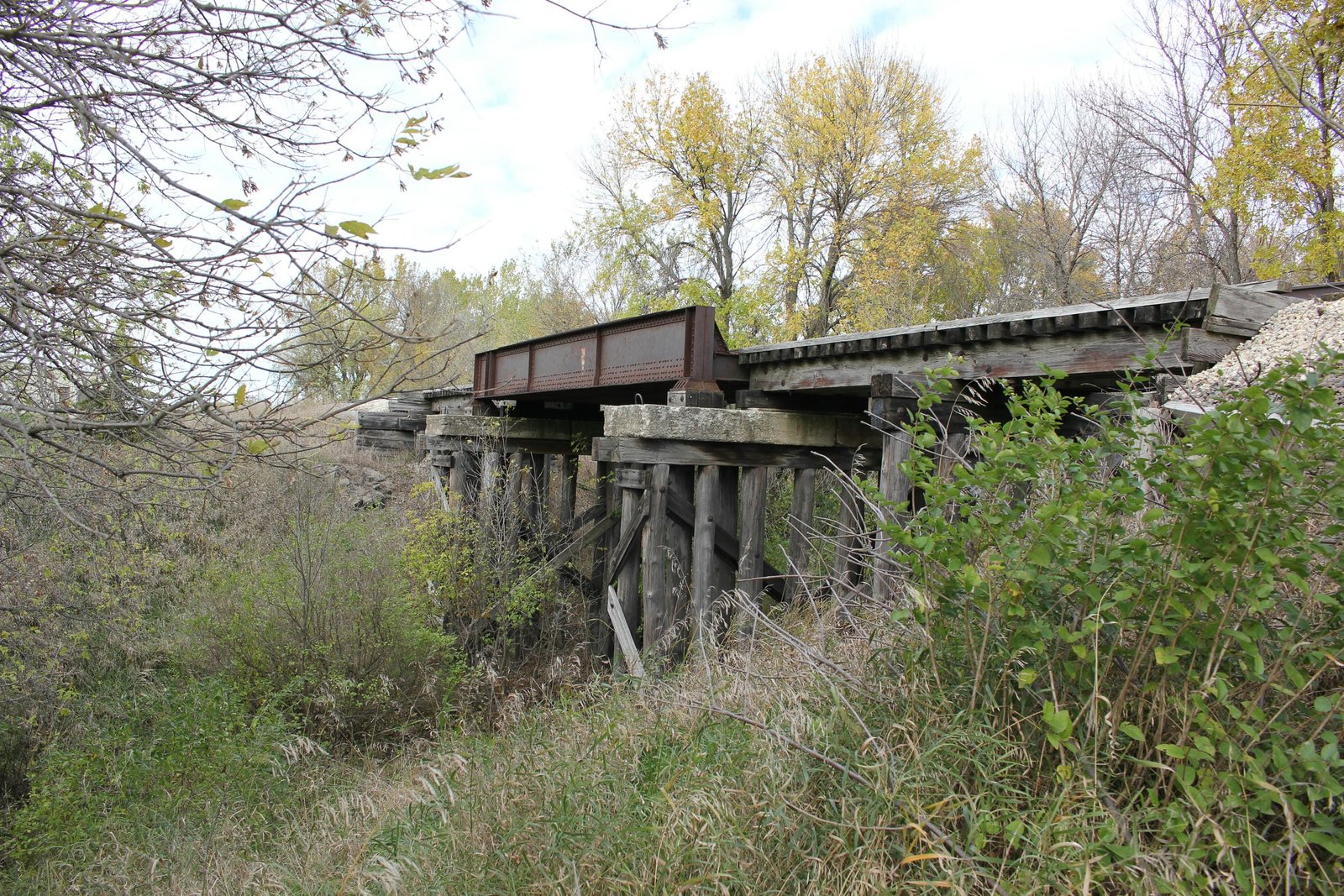
Click the photo to view the full-size version
| Name | Forest City Railroad Crossing Chicago, Rock Island & Pacific Railroad Bridge #1564 |
| Built By | Burlington, Cedar Rapids & Northern Railway |
| Currently Owned By | North Central Iowa Rail Corridor (Operated By Canadian National Railway) |
| Superstructure Contractor | Unknown |
| Length | 93 Feet Total, 37 Foot Main Span |
| Width | 1 Track |
| Height Above Ground | 25 Feet (Estimated) |
| Superstructure Design | Through Plate Girder and Timber Pile Trestle |
| Substructure Design | Timber Pile |
| Date Built | 1903, Approaches Rebuilt 1938 |
| Traffic Count | 1 Train/Day (Estimated) |
| Current Status | In Use |
| Chicago, Rock Island & Pacific Railroad Bridge Number | 1564 |
| Canadian National Railway Bridge Number | 75.25 |
| Significance | Local Significance |
| Documentation Date | 10/15/2017 |
In 1884, the Cedar Rapids, Iowa Falls & Northwestern Railway (CRIF&NW) constructed a 41-mile branch line, extending from Dows, Iowa to Hayfield, Iowa. In the same year, the CRIF&NW was leased by the Burlington, Cedar Rapids & Northern Railway (BCR&N). During the 1880s, the BCR&N constructed and operated an extensive railroad network, connecting towns and cities in southeast and northern Iowa. In 1895, the CRIF&NW constructed an additional 9 miles of railroad, extending from Hayfield Junction to Forest City, Iowa to meet with a separate line the BCR&N had constructed in 1893. In 1900, the Cedar Rapids, Garner & Northwestern Railway (CRG&NW) constructed an additional 19 miles, extending from Hayfield to Titonka, Iowa. Shortly after completion, the CRG&NW was acquired by the BCR&N. By the turn of the 20th Century, the BCR&N operated over 1,000 miles of track throughout Iowa, connecting both small towns and large cities. The CRIF&NW was outright purchased by the BCR&N in May 1902. In June 1903, the BCR&N was acquired by the Chicago, Rock Island & Pacific Railway (Rock Island), which operated a large railroad network through the central United States.
This line served as a secondary line for the Rock Island, creating a second connection in northern Iowa. In addition, the line to Titonka served as a branch line. The Rock Island struggled financially throughout much of its history, experiencing repeated bankruptcies and chronic instability. After World War II, the Rock Island struggled to survive, proposing mergers and deferring maintenance on their routes. The railroad reorganized as the Chicago, Rock Island & Pacific Railroad in 1948. By the mid-1970s, the railroad was in serious decline. The railroad secured loans to eliminate slow orders, acquired new equipment, and attempted to restore profitability. In 1978, the railroad came close to profit, but creditors were lobbying for a complete shutdown of the Rock Island. During the fall of 1979, a strike crippled the railroad, and by January of 1980, the entire system was ordered to be shut down and liquidated. Many of the lines and equipment were scrapped. Profitable sections of railroad were prepared for sale. The segment between Woden, Iowa and Titonka was abandoned due to lack of business.
In 1981, the Chicago & North Western Railway (C&NW) the line between Belmond, Iowa and Forest City. After remaining in limbo, the line between Hayfield Junction and Woden; and the line between Dows and Belmond were abandoned in 1985. The C&NW was purchased by Union Pacific Railroad (UP) in 1995. UP operated the Belmond to Forest City segment as part of the Fort Dodge Subdivision until 2009, when an intent to abandon the line was filed. Instead of abandoning the line, the line was sold to the North Central Iowa Rail Corridor (NCIRC), which leased the line to Iowa Northern Railway (IANR) in 2011. In 2025, IANR was purchased by Canadian National Railway (CN), which acquired the lease rights to this line. Today, CN operates the line between Belmond and Forest City as the Garner Subdivision, while the remainder of the line has been abandoned.
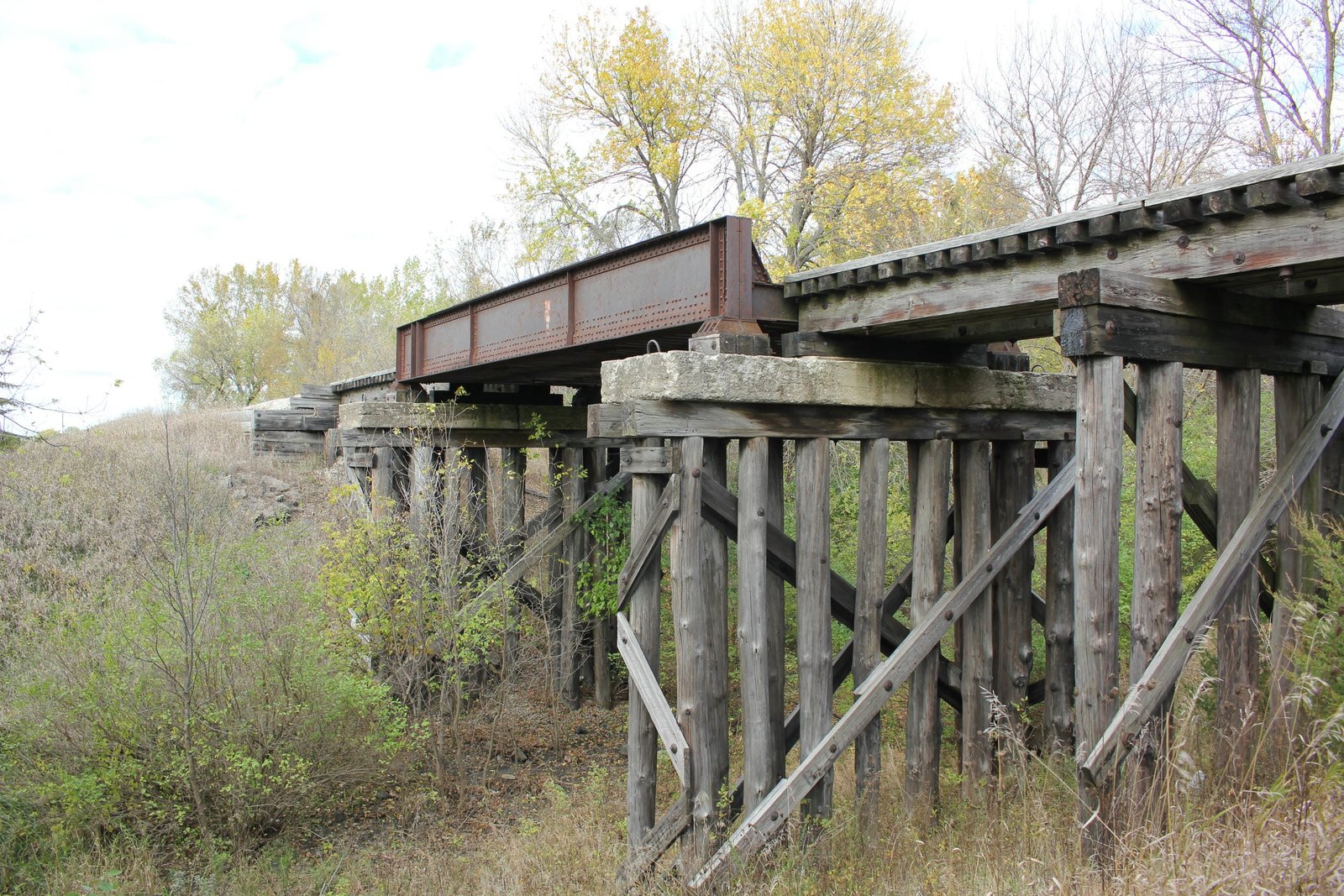
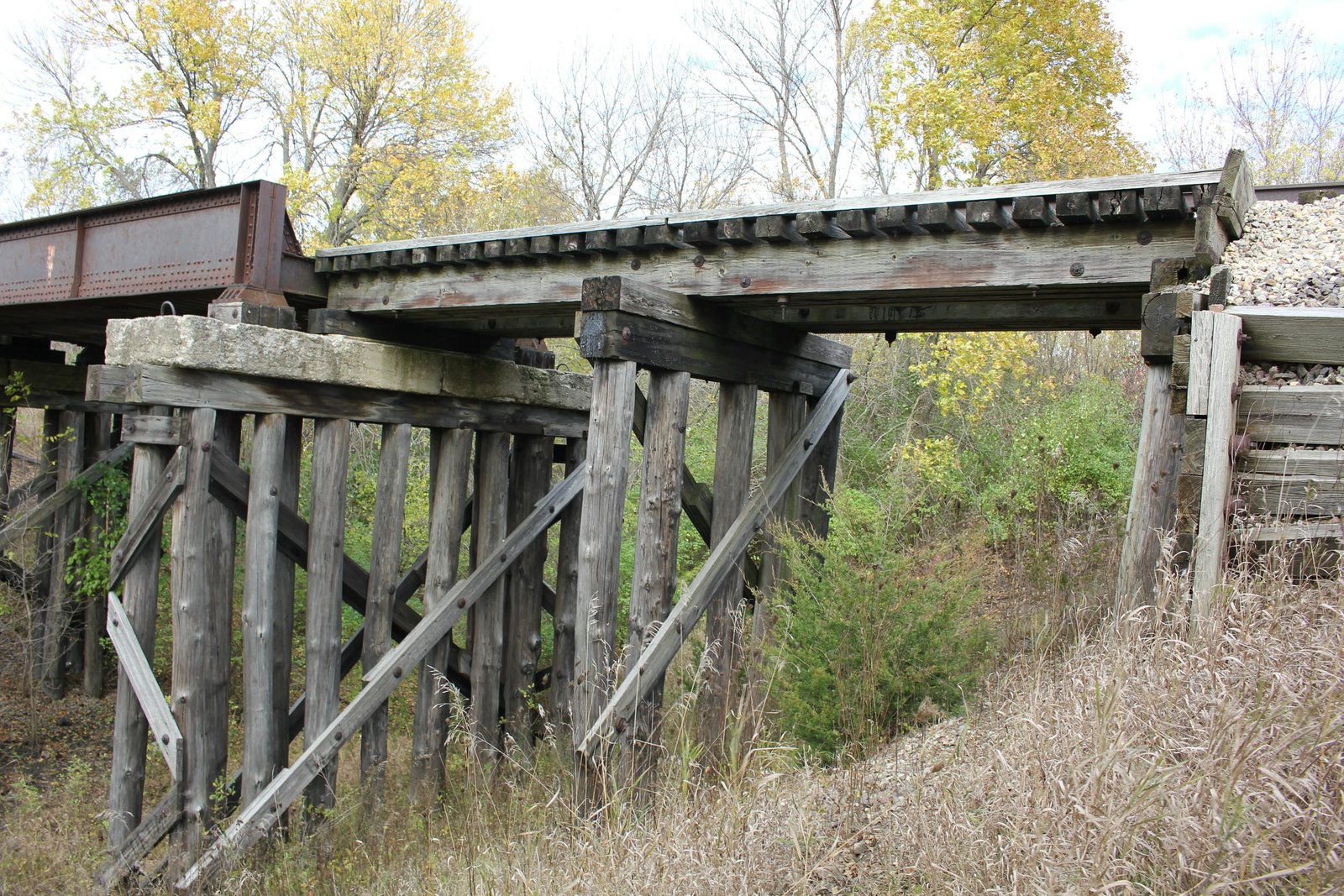
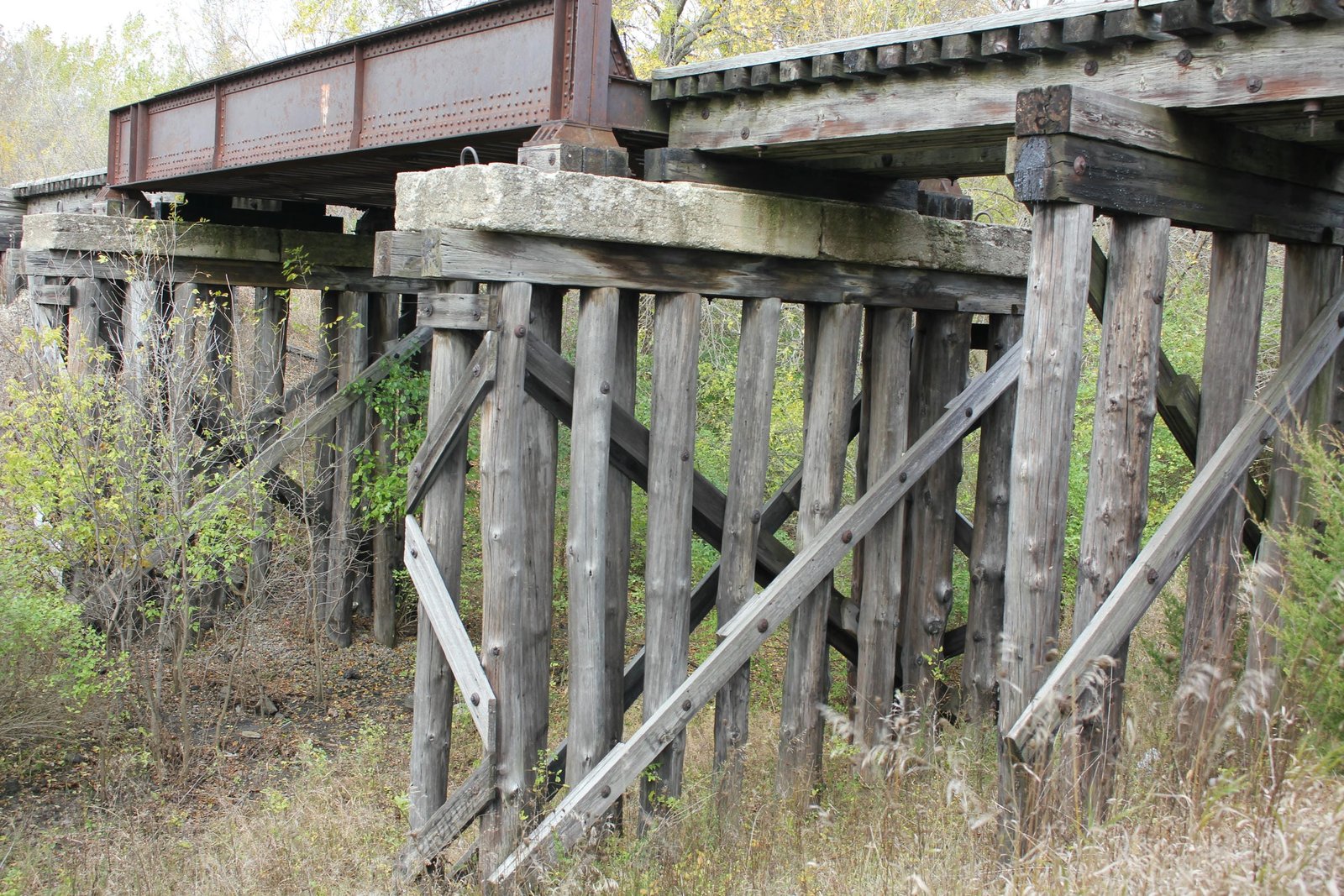
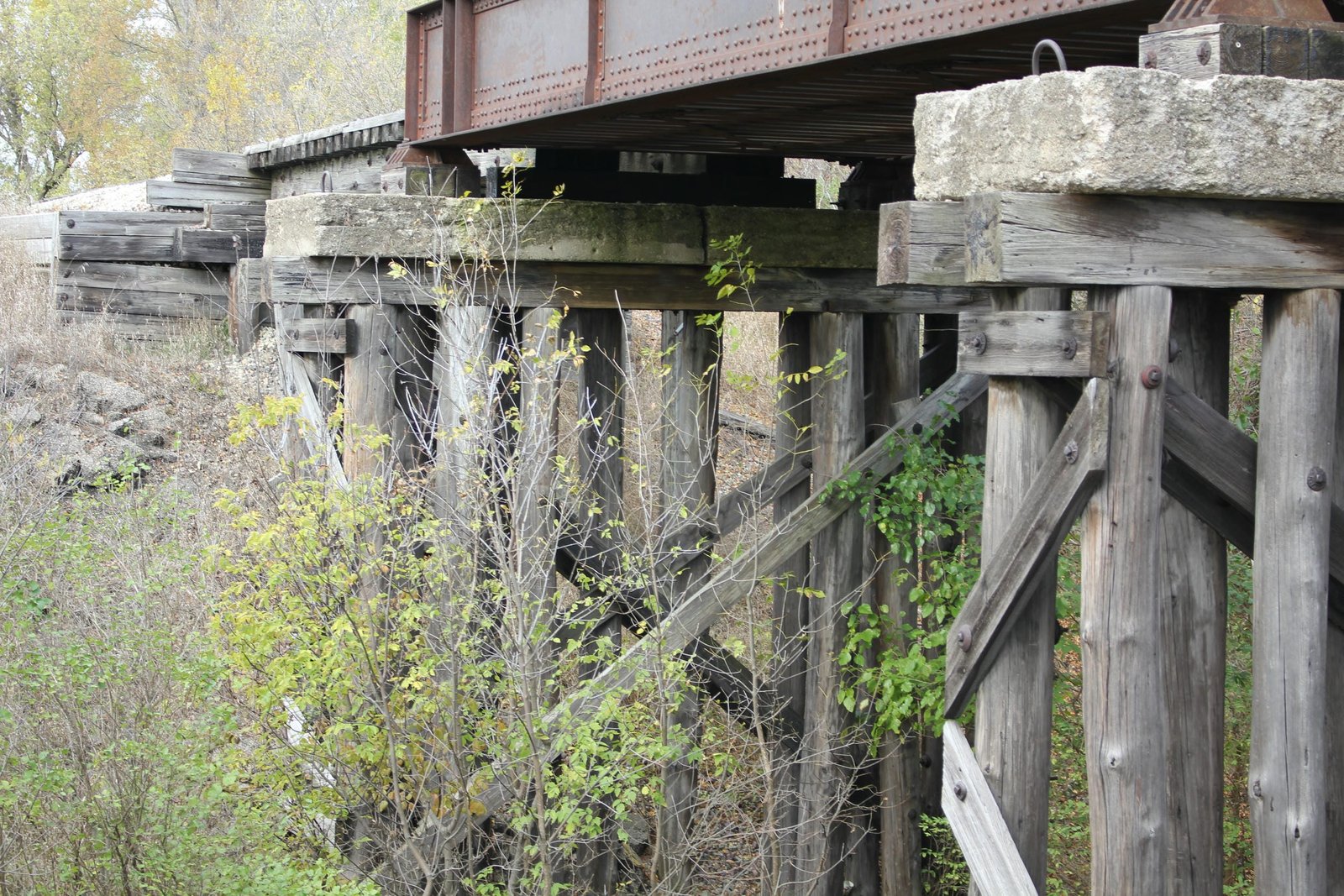
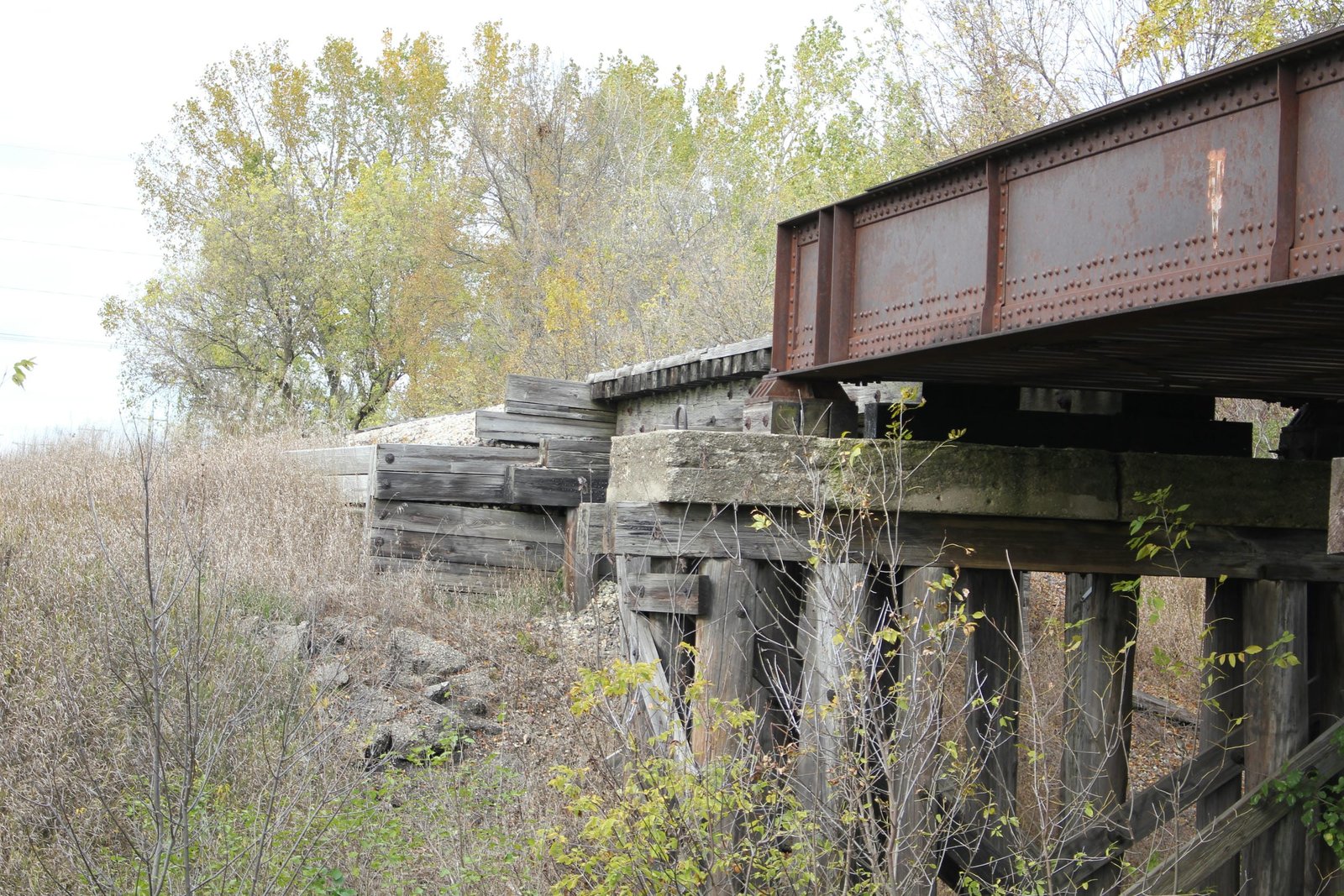
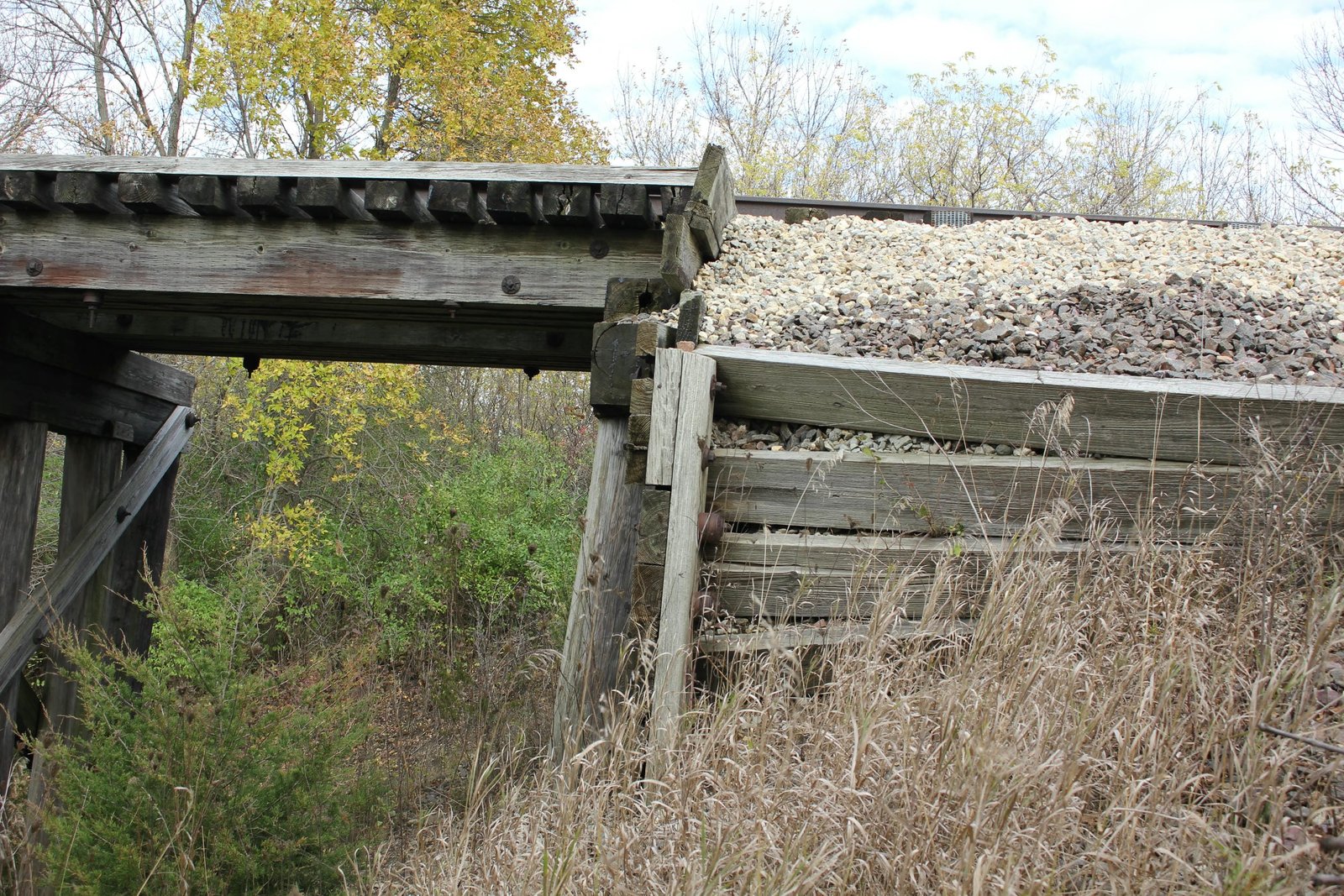
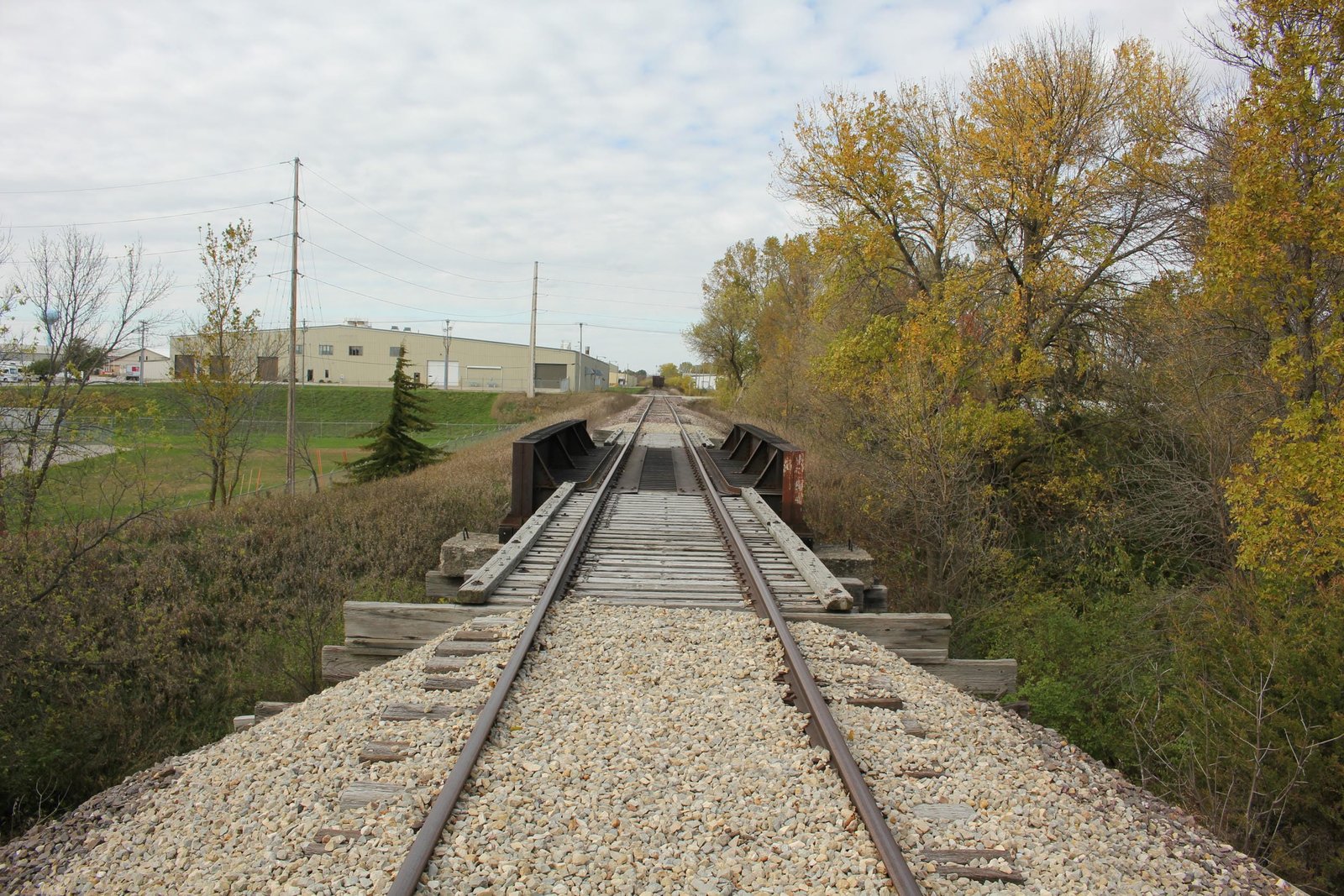
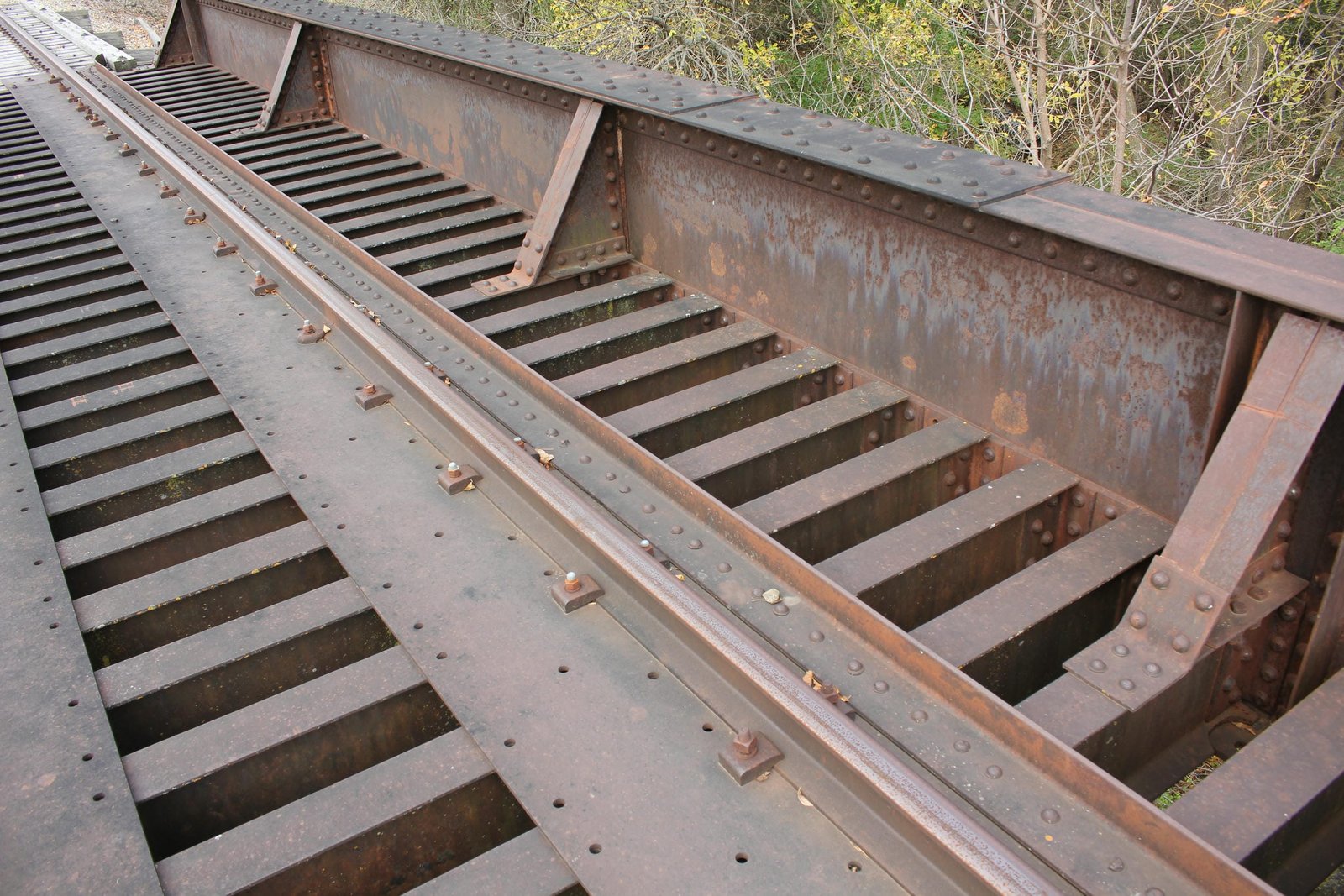
Located in Forest City, this small through plate girder bridge carries a former Chicago, Rock Island & Pacific Railroad (Rock Island) line over an abandoned Chicago & North Western Railway (former Minneapolis & St. Louis Railway) line. When the BCR&N first constructed to Forest City, a bridge over the existing M&StL tracks was required. The first bridge at this location likely consisted of a temporary timber pile trestle bridge. Initially using temporary timber bridges was a common technique for many railroads, as it allowed approach embankments to settle without damaging a more expensive steel span. In 1903, the bridge was rebuilt with a through girder center span, retaining timber trestle approaches. The most recent alteration to the bridge came in 1938, when the timber components were renewed and concrete blocks were added to the piers to raise the bridge. Currently, the bridge consists of a 37-foot through plate girder span, set onto timber pile piers and approached by two timber pile trestle spans on either end. The through girder span uses an unusual design, consisting of shallow girders and a floor consisting of several parallel I-beams. This type of floor became popular for grade separations in the early 20th Century, although these floors were most commonly constructed with a ballast deck. Unique to this bridge, the rails are clamped directly onto plates, which are set directly onto the floorbeams. The approach spans use a standard design with a ballast deck. An unknown contractor fabricated the superstructure, while the timber components were constructed by railroad company forces. Through plate girder spans were commonly used by railroads, as they were durable and easy to construct. This specific through girder design is unusual, and was likely used to maximize clearance underneath. Overall, the bridge appears to be in fair to good condition, with no significant deterioration noted. The bridge remains in occasional use to serve an industry north of the structure. The author has ranked the bridge as being locally significant, due to the common design and unknown history.
Citations
| Build date | Historic Report - Docket AB-33 (276X); prepared by Union Pacific Railroad; November 2009 |
| Railroad History Citation | ICC Valuation Information, Compiled by Richard S. Steele |