
Click the photo to view the full-size version
| Name | ISRY 243rd Avenue Bridge Wabash Railroad Bridge #2785P |
| Built By | Wabash Railroad |
| Currently Owned By | Iowa Southern Railway |
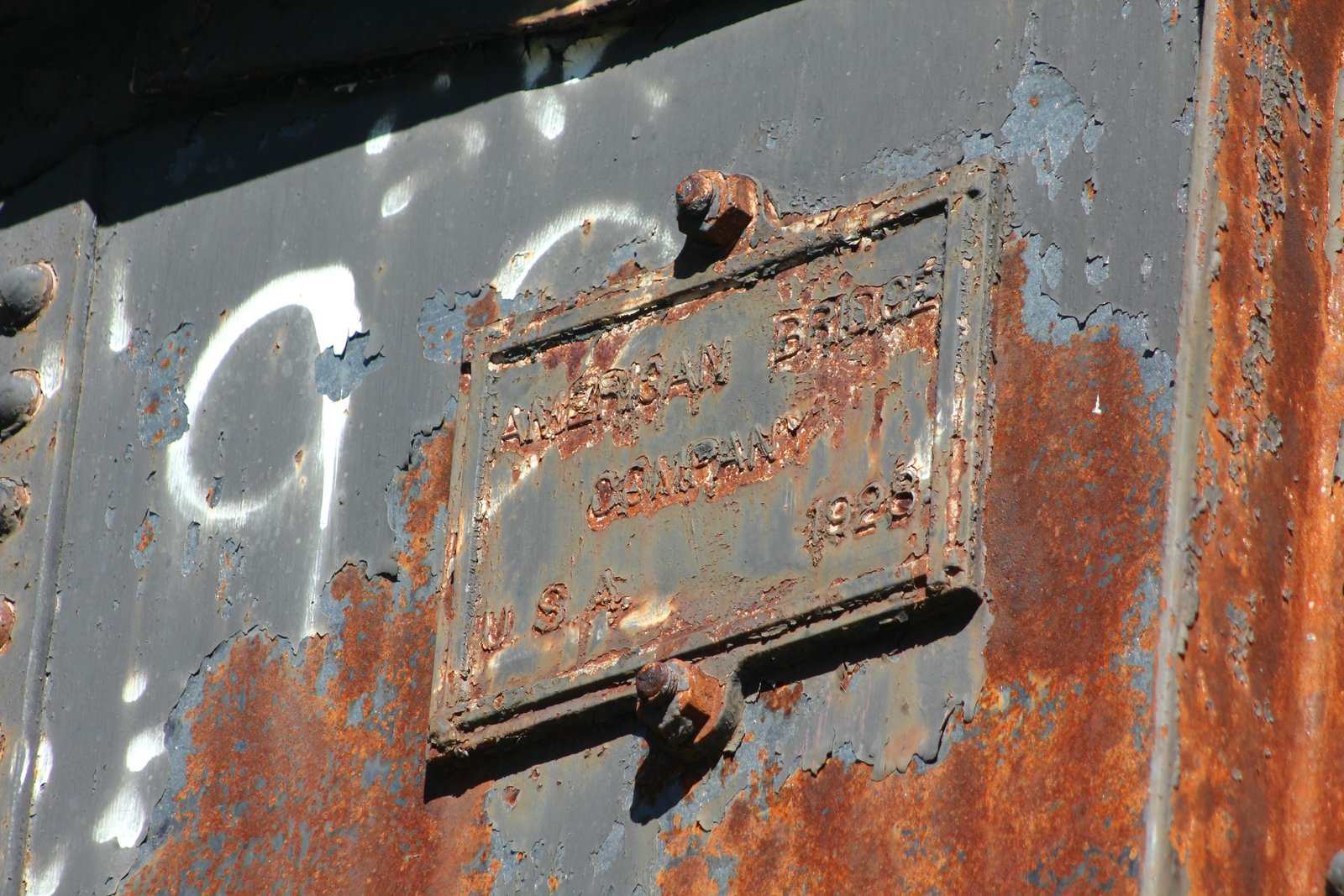
| Superstructure Contractor | American Bridge Company of New York |
| Length | 94 Feet Total, 39 Foot Main Span |
| Width | 1 Track |
| Height Above Ground | 12 Feet 5 Inches |
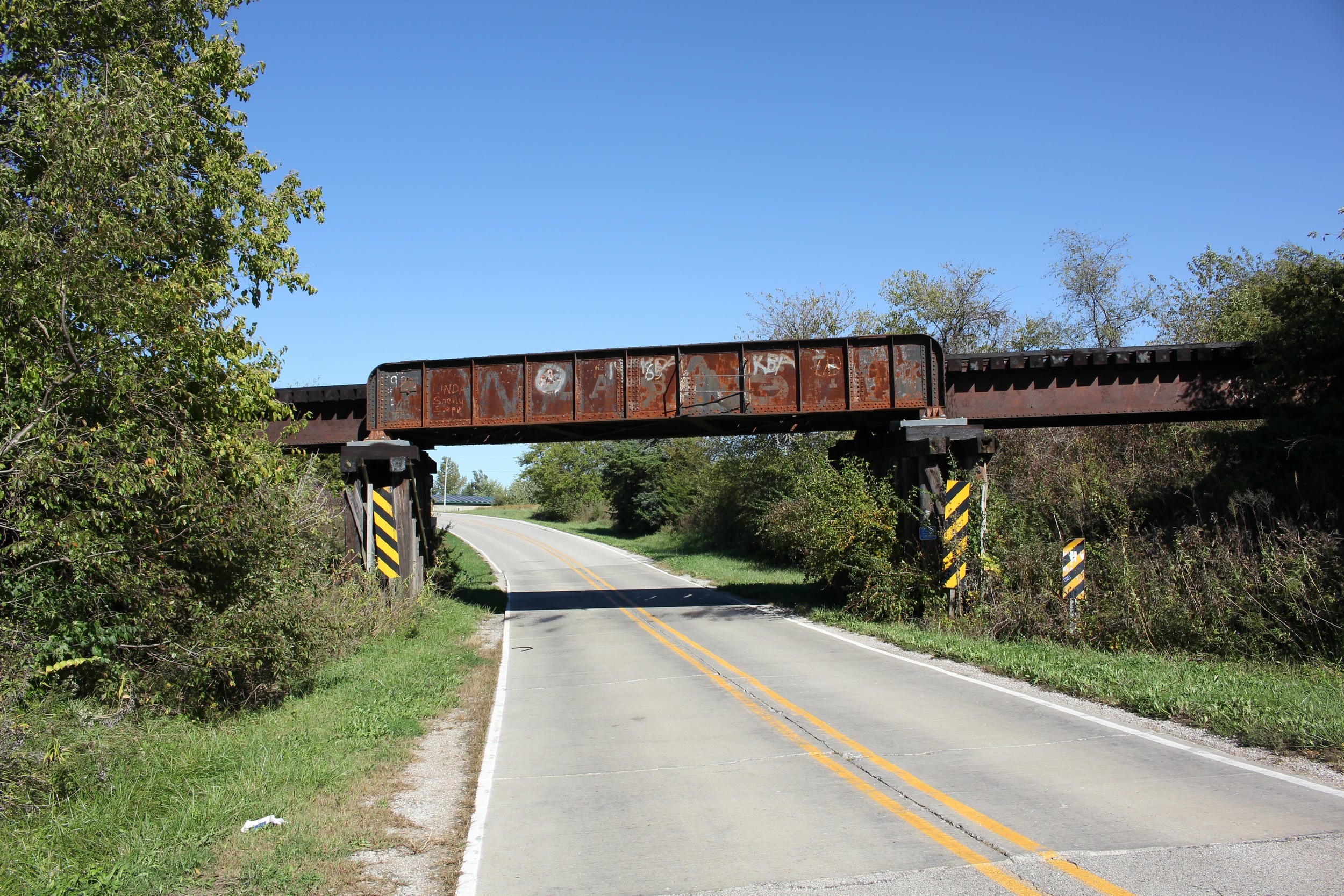
| Superstructure Design | Through Plate Girder and Steel Stringer |
| Substructure Design | Timber Pile |
| Date Built | 1928 |
| Traffic Count | 1 Train/Day (Estimated) |
| Current Status | In Use |
| Wabash Railroad Bridge Number | 2785P |
| Iowa Southern Railway Bridge Number | 258.55 |
| Significance | Local Significance |
| Documentation Date | 10/8/2017 |
In 1882, the Des Moines and St. Louis Railroad (DM&StL) constructed 68 miles of new railroad, extending from Albia, Iowa to Des Moines, Iowa. In 1888, about 2.5 miles within the city limits of Des Moines were sold to the Des Moines Union Railway, a switching railroad operating within Des Moines. In 1899, the Moulton, Albia and Des Moines Railroad (MA&DM) constructed an additional 29 miles of track, connecting an existing line at Moulton, Iowa to the end of the DM&StL at Albia. Both railroads were consolidated into the Wabash Railroad in 1899. The Wabash was reorganized as the Wabash Railway in 1915. The Wabash would become a respected railroad network in the Midwest, with a principal mainline connecting Detroit with Kansas City. While the Wabash was a smaller railroad, it also operated a number of branch lines to serve other railroad hubs in the Midwest. Between Albia and Harvey, Iowa; the Wabash line paralleled a Chicago, Burlington & Quincy Railroad (CB&Q) line that served the same endpoints. In 1934, the Wabash and CB&Q agreed to share trackage between Albia and Tracy, Iowa. The original Wabash was removed between Albia and Hamilton, Iowa in 1935; and the Wabash and CB&Q shared the Wabash tracks between Hamilton and Tracy. The Wabash was controlled by the Pennsylvania from 1931 through the early 1960s.
During the early 1960s, Iowa began work on Lake Red Rock, a large dam and lake to improve flooding concerns on the Des Moines River. As part of the work, the Wabash was forced to consolidate operations and relocate between Harvey and Runnells, on the southeast side of Des Moines. The Wabash and CB&Q agreed to jointly use the CB&Q tracks between Harvey and Swan, Iowa; and Wabash tracks between Runnells and Des Moines. In 1964, a new connection and bridge across the Des Moines River was completed between Swan and Runnells. In 1964, the railroad was acquired by the Norfolk and Western Railway (N&W), which operated a sizable network of railroads in the eastern United States. In 1982, the N&W was merged with the Southern Railway to form Norfolk Southern Railway (NS). The segment between Moulton Junction, Iowa and Albia was abandoned in 1993 and sold to the Appanoose County Community Railroad (APNC). In 2016, the APNC was purchased by the Iowa Southern Railway (ISRY), which is operated by Progressive Rail. Today, NS continues to operate the Albia to Des Moines line jointly with CB&Q successor BNSF Railway. ISRY operates the segment between Moulton Junction and Albia. The remainder of the line has been abandoned, with much of the original route between Harvey and Runnells under Lake Red Rock.
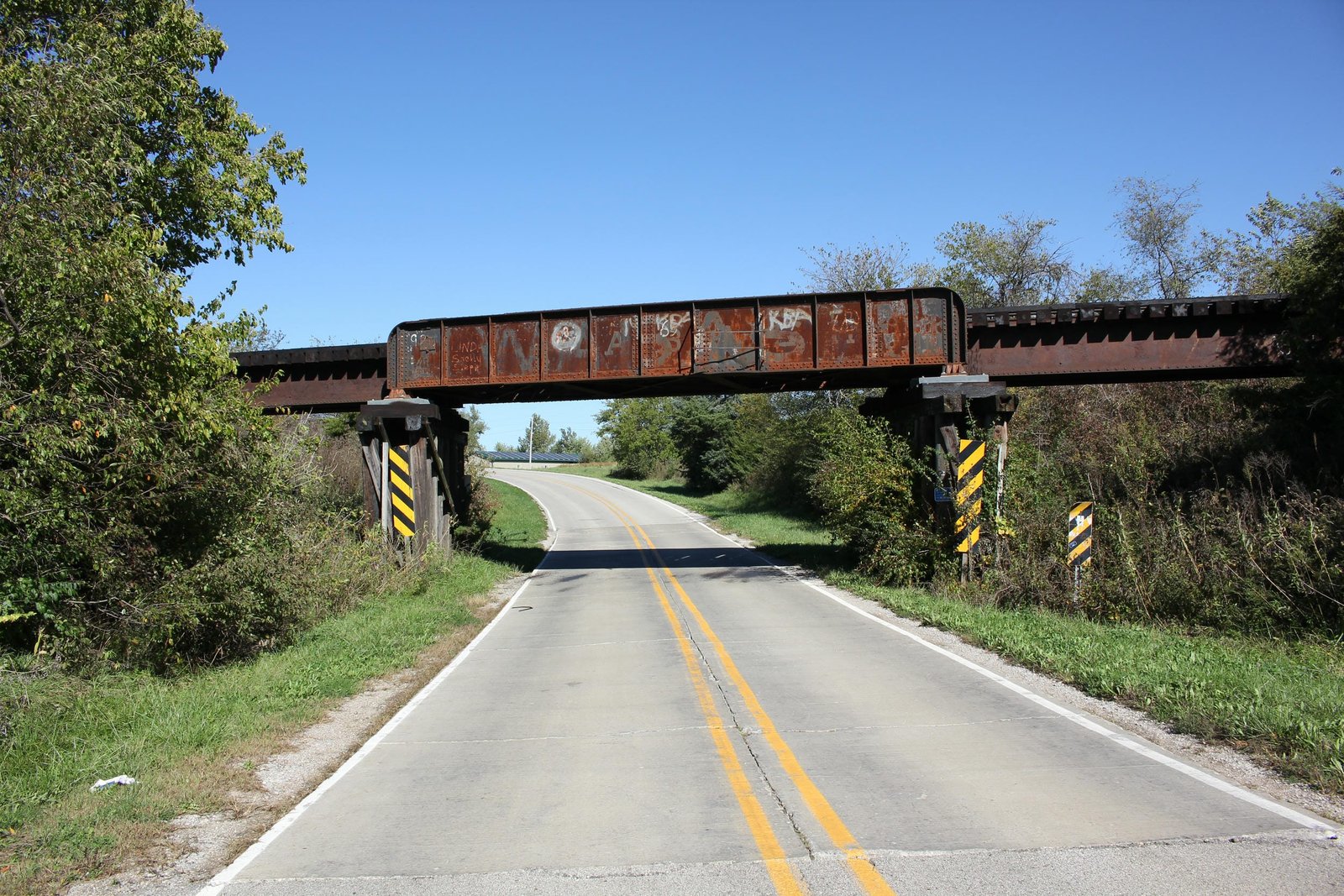
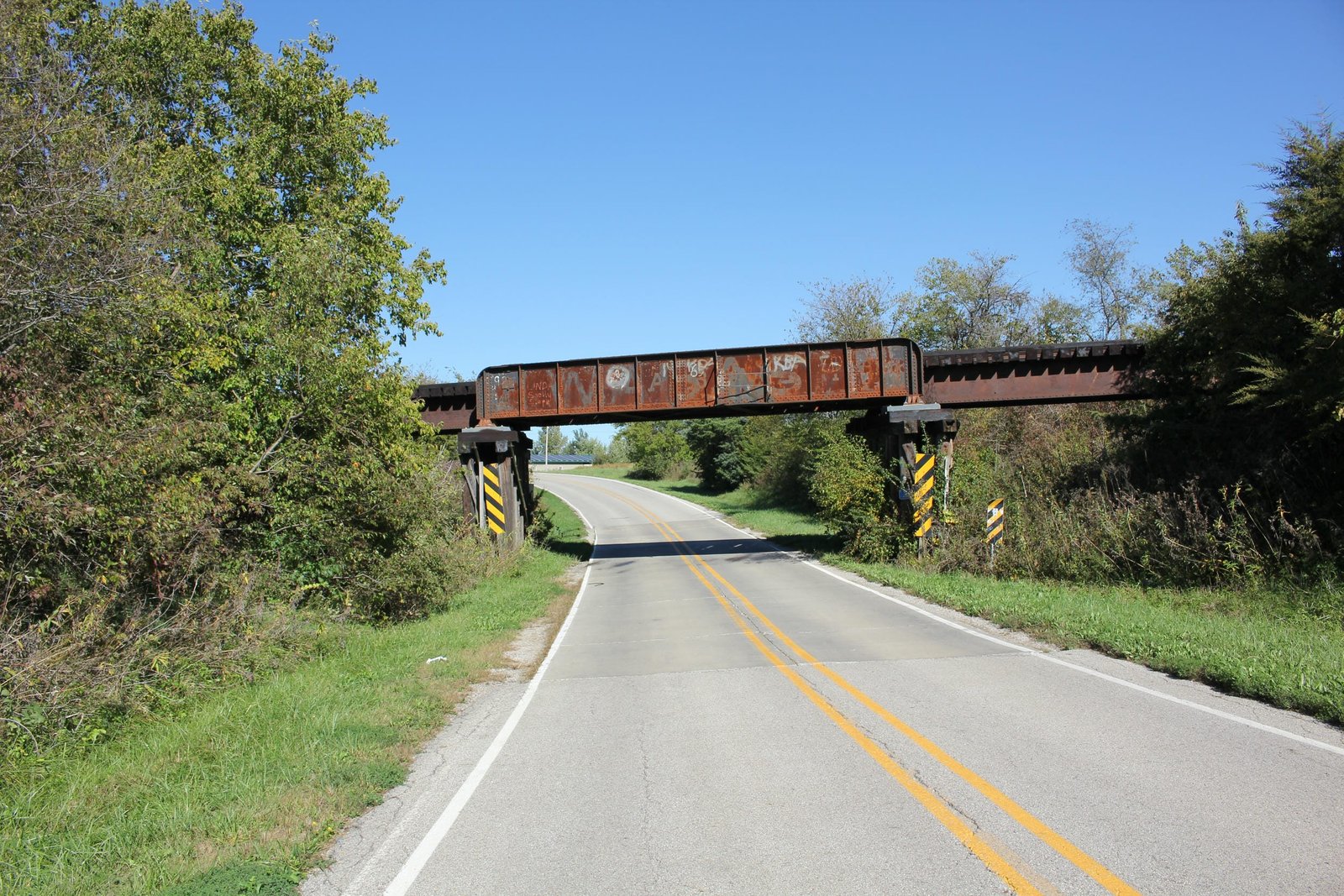
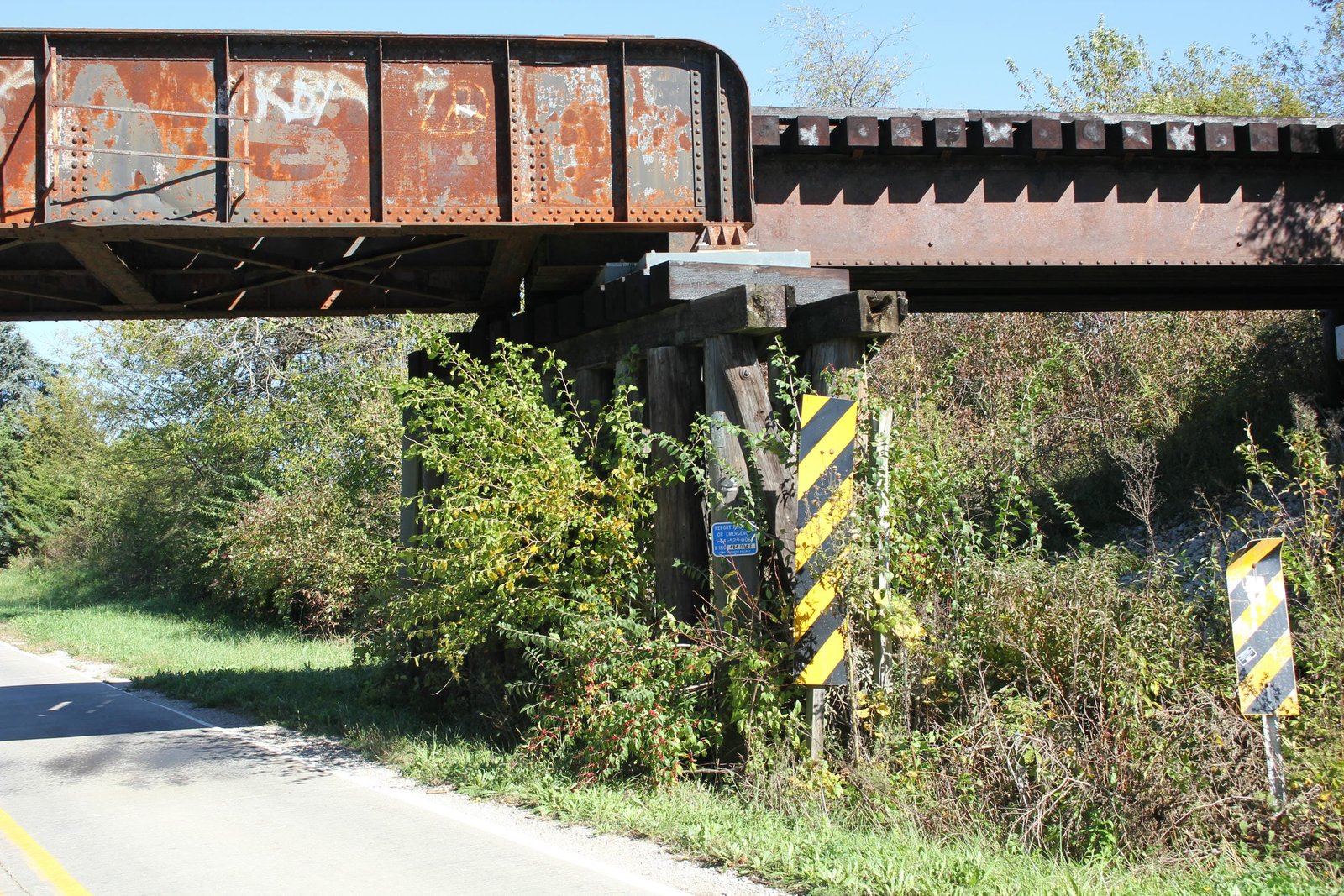
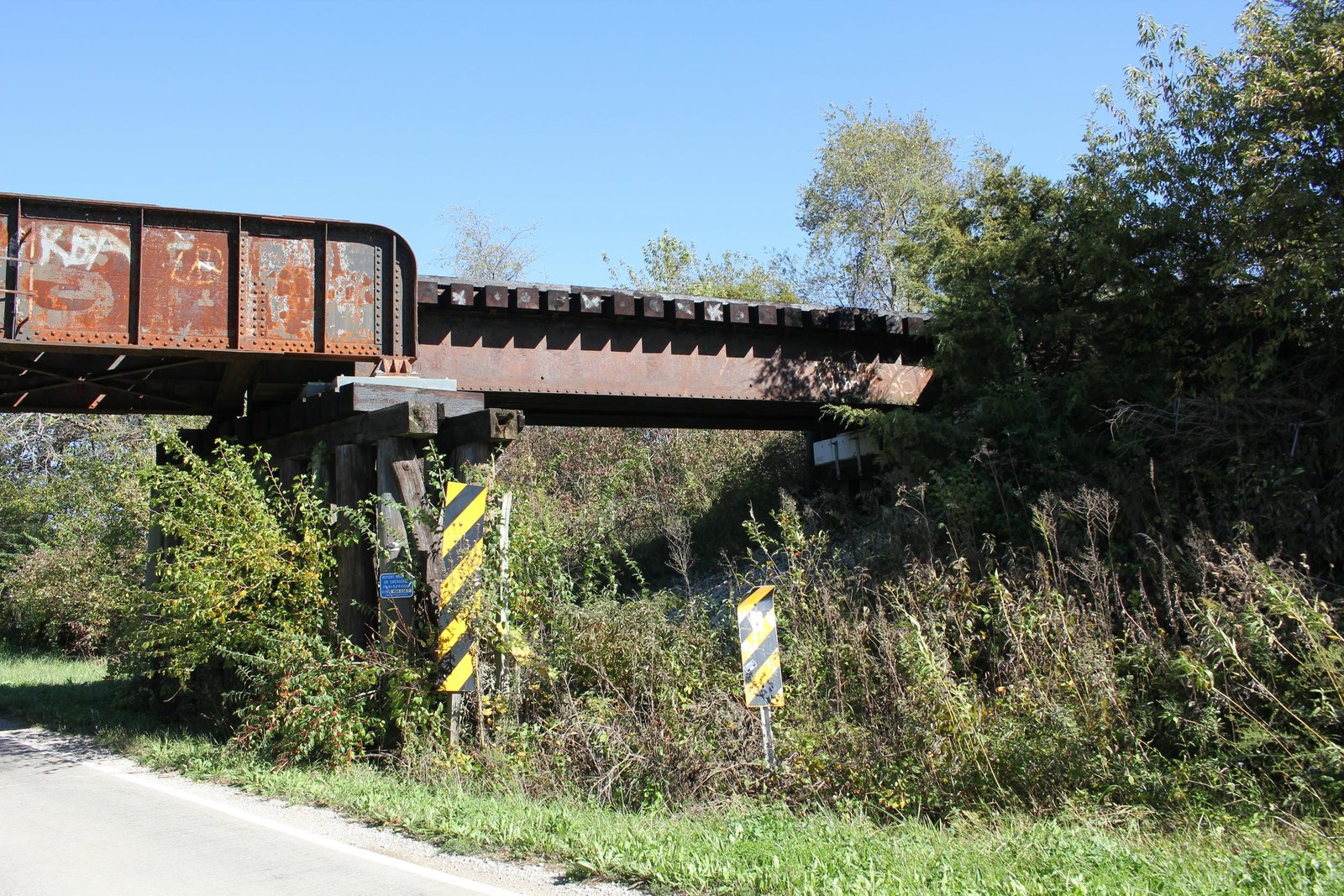
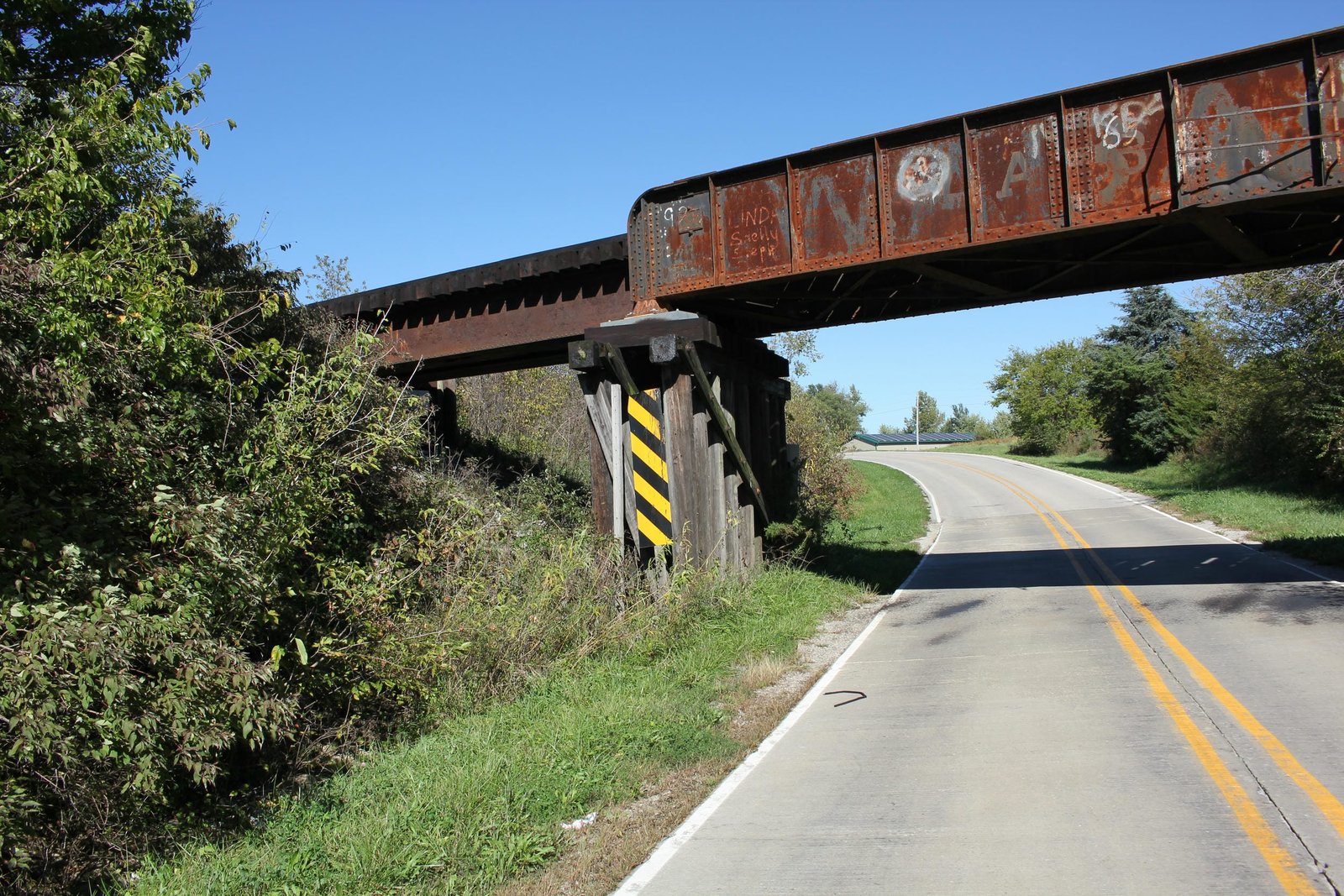
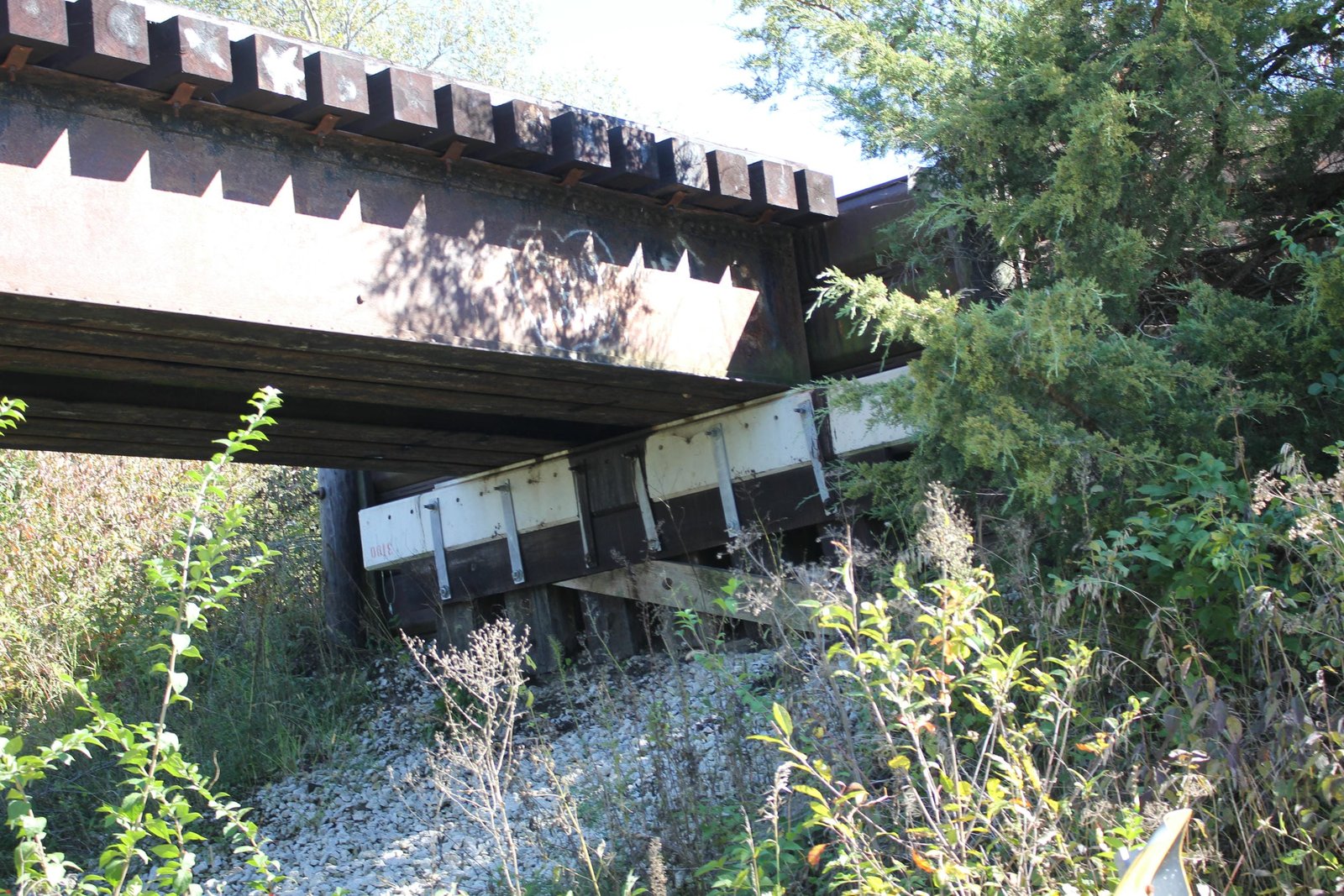
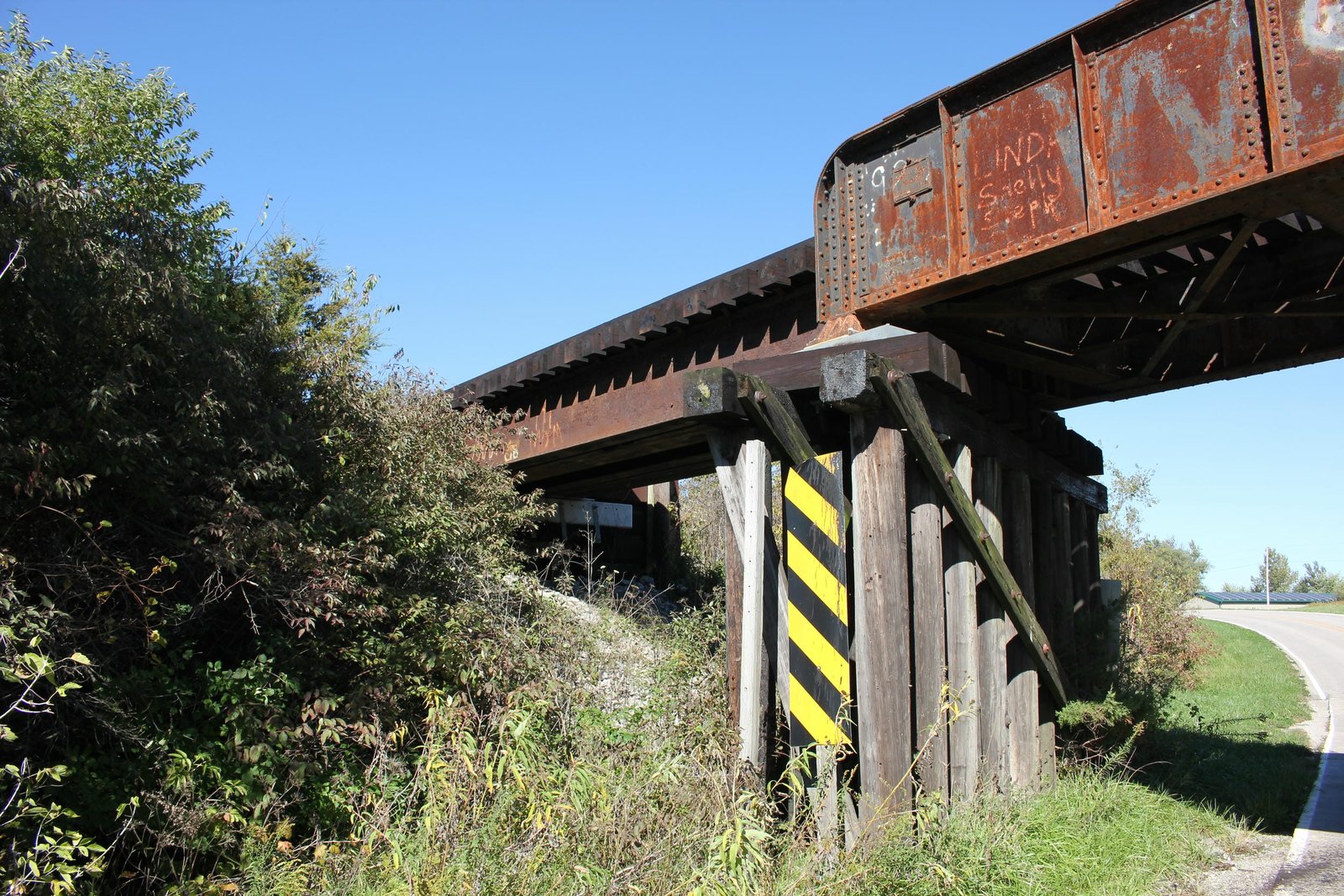
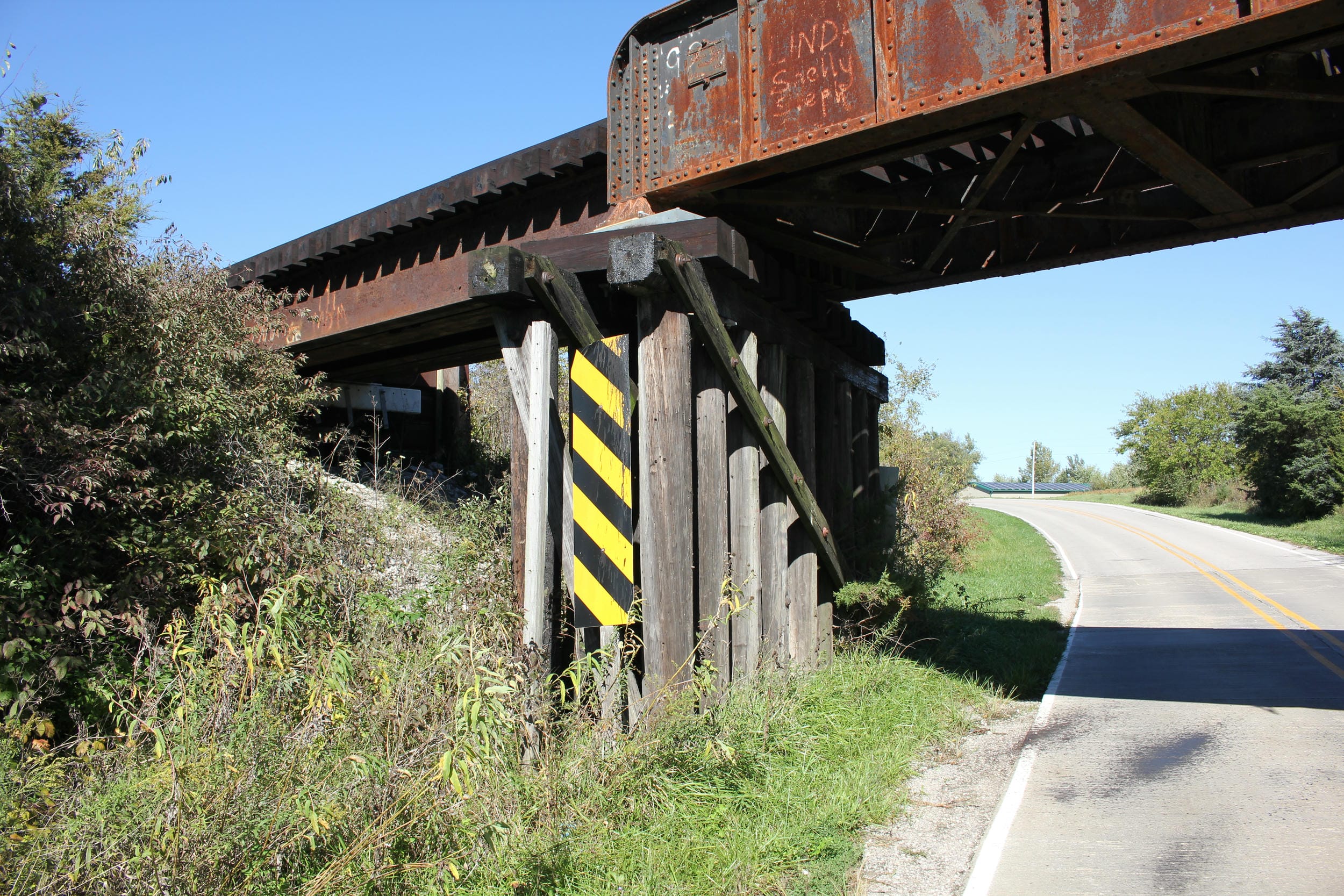
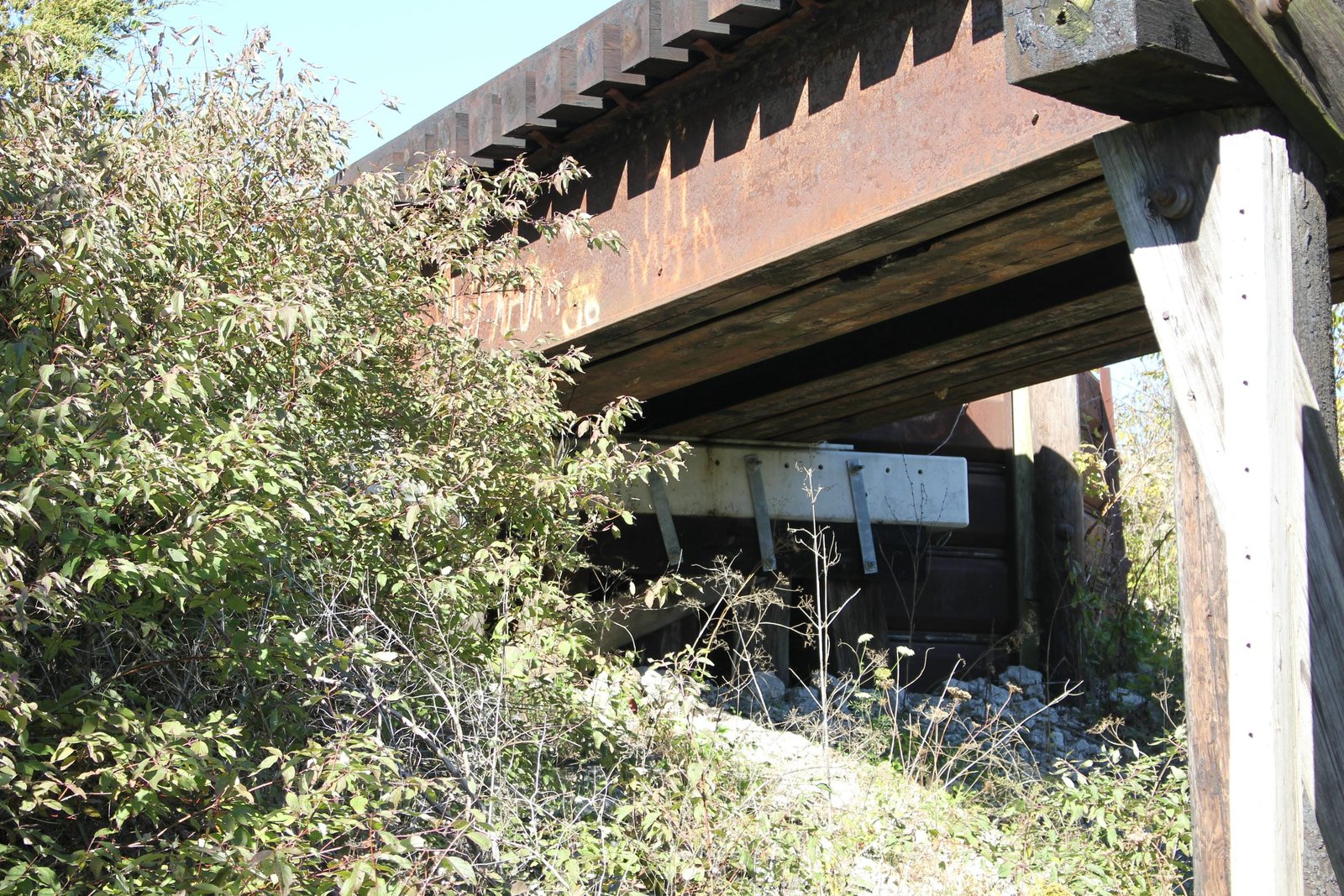
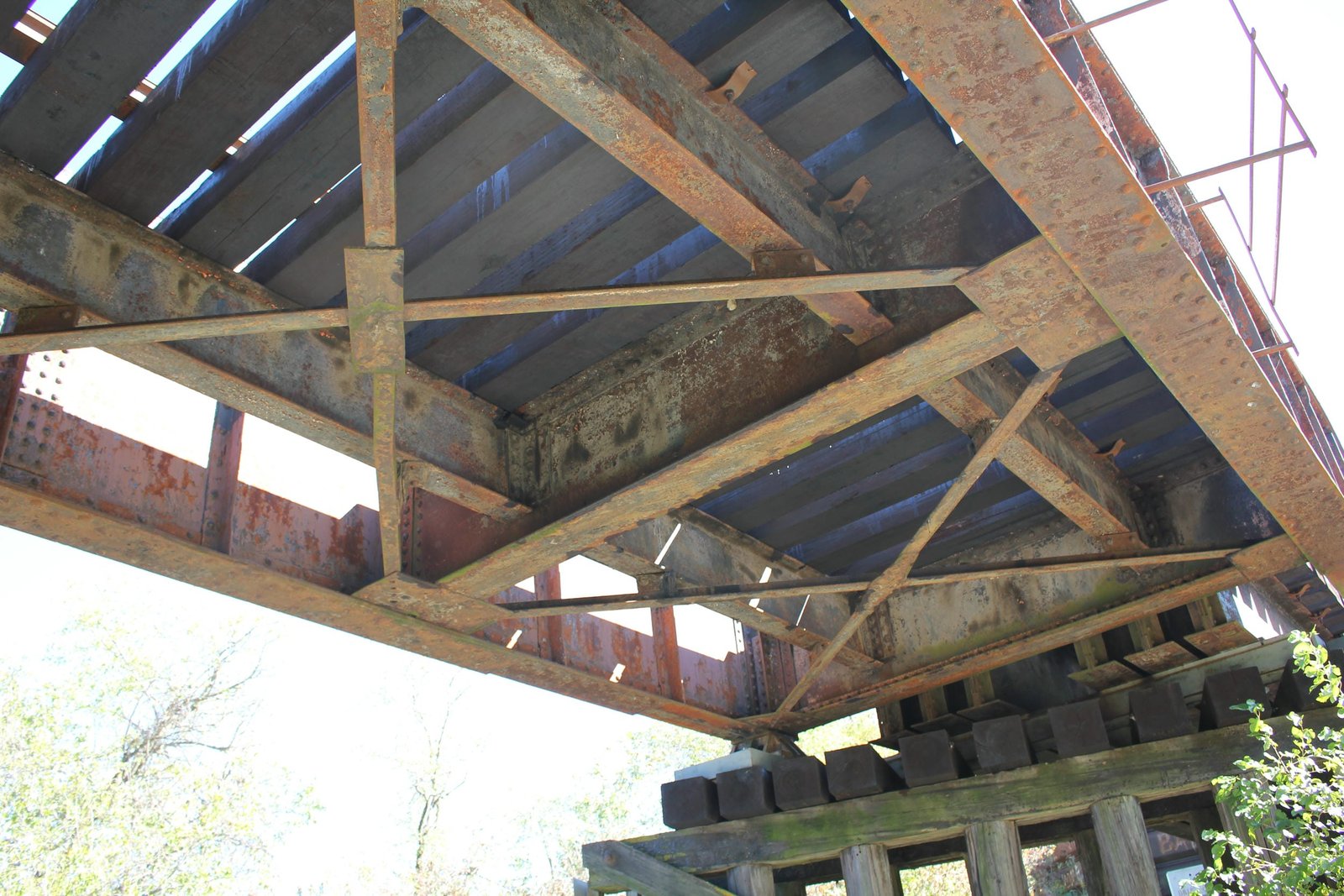
Located south of Moravia, this through plate girder bridge carries a former Wabash Railroad branch line over 243rd Avenue (former Iowa Highway 5). In the 1920s and 1930s, the Iowa State Highway Commission (ISHC) worked with railroads throughout the state to construct grade separations at dangerous grade crossings. In the late 1920s, a grade separation was ordered at Iowa Primary Route 60 (renumbered to Iowa Highway 5 in 1969). Construction on the underpass began in 1928, and was completed in early 1929. Currently, the bridge consists of a 39-foot through plate girder span, approached by a 30-foot steel stringer span on either end. The entire bridge is set onto timber pile substructures, and runs at a significant skew. The main span follows a standard design for the era, with two heavy girders, rounded girder ends and a standard floor system. The approach spans use an unusual design for the Wabash, with six heavy beams arranged into two sets of three. It is unclear if the approaches are original to this location, or if they were reused from another location. Spans of a similar design, size and age constructed for the Wabash used two heavy beams with a diagonal rivet pattern. These spans are heavily riveted, with significantly more beams. American Bridge Company fabricated the main span, and it is unclear if the approaches were fabricated by the same firm. The timber components were likely constructed by railroad company forces. Through plate girder spans were popular for railroad use, as they were durable and easy to construct. Since the initial construction, the bridge has seen minor alterations, including the replacement of some bent caps with concrete. Today, the bridge remains in light use by the Iowa Southern Railway. Overall, the bridge appears to be in fair to good condition, with minor deterioration in the substructures. The author has ranked this bridge as being locally significant, due to the common design and unclear history.
Citations
| Build date and builder (superstructure) | American Bridge Company plaque |
| Railroad History Citation | ICC Valuation Information, Compiled by Richard S. Steele |