
Click the photo to view the full-size version
| Name | CPKC E. Fork Des Moines River Bridge Chicago, Milwaukee & St. Paul Railway Bridge #R-582 |
| Built By | Chicago, Milwaukee & St. Paul Railway |
| Currently Owned By | Canadian Pacific Kansas City Limited |
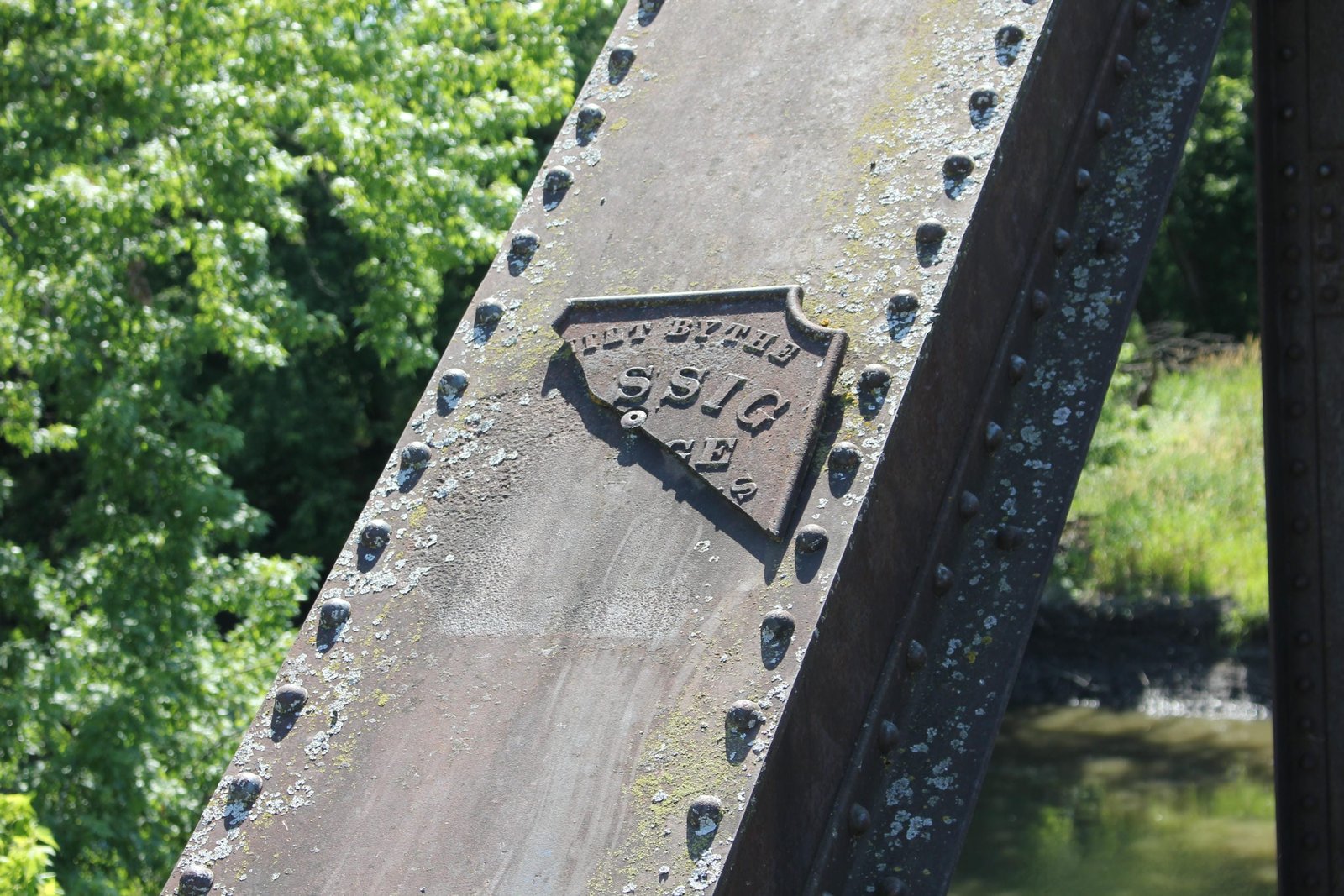
| Superstructure Contractor | Lassig Bridge & Iron Works of Chicago, Illinois |
| Substructure Builder | Chicago, Milwaukee & St. Paul Railway Bridge & Building Department |
| Length | 395 Feet Total, 128 Foot Main Span |
| Width | 1 Track |
| Height Above Ground | 20 Feet (Estimated) |
| Superstructure Design | Pratt Pony Truss and Concrete Modular Girder |
| Substructure Design | Concrete and Steel Pile |
| Date Built | 1898, Approaches Reconstructed 2013 |
| Traffic Count | 2 Trains/Day (Estimated) |
| Current Status | In Use |
| Chicago, Milwaukee & St. Paul Railway Bridge Number | R-582 |
| Significance | Moderate Significance |
| Documentation Date | 7/7/2017 |
In 1864, the McGregor Western Railway (MW) charted a new line, which would extend across the northern portion of Iowa. The first 28 miles were completed between Marquette, Iowa and Castalia, Iowa in 1864. In 1865, an additional 15 miles were completed to Calmar, Iowa; where the line would continue north into Minnesota. In 1867, the MW was conveyed to the Milwaukee & St. Paul Railway (M&StP). In 1869, the McGregor and Sioux City Railway (M&SC) completed an additional 64 miles to Nora Springs, Iowa. At the end of 1869, the M&SC changed its name to the McGregor and Missouri River Railway (M&MR). After completion, the line between Calmar and Nora Springs was conveyed to the M&StP. In 1870, an additional 62 miles were constructed from Nora Springs to Algona, Iowa; and the line was conveyed to the M&StP at the end of the year. In 1874, the M&StP was reorganized as the Chicago, Milwaukee & St. Paul Railway (Milwaukee Road). In 1878, the Milwaukee Road completed another 98 miles between Algona and Hull, Iowa. In 1879, an additional 28 miles were completed to Canton, South Dakota; completing the line across Iowa. A short 9-mile connection was made between Rock Valley, Iowa and Hudson, South Dakota in 1880. After completion of the line, the remaining assets of the M&MR were sold to the Milwaukee Road. By the late 19th Century, the Milwaukee Road had developed a large railroad network throughout the Midwest. This line served as a mainline, connecting the railroad network in Wisconsin to towns in Iowa, and serving as a basis for further westward expansion into South Dakota.
The short Rock Valley to Hudson branch was abandoned in 1918, as it was considered excess. The Milwaukee Road was often in financial trouble, especially after the costly Pacific Extension was completed in 1909. In 1925, the company declared bankruptcy, and reorganized as the Chicago, Milwaukee, St. Paul and Pacific Railroad in 1928. Despite the financial strain, this line remained an important mainline for the Milwaukee Road. Financial hardship continued through the 20th Century for the Milwaukee Road, and the railroad again filed for bankruptcy in 1977. In 1980, the line west of Sheldon, Iowa was abandoned. By 1985, a suitor for the Milwaukee Road was being sought, and the Soo Line Railroad, controlled by Canadian Pacific Railway (CP) purchased the Milwaukee Road in 1986. In 1997, CP would sell this line to I&M Rail Link, which was purchased by the Dakota, Minnesota & Eastern Railroad (DM&E) subsidiary Iowa, Chicago & Eastern Railroad (IC&E) in 2002. The DM&E/IC&E were purchased by Canadian Pacific in 2008. CP merged with Kansas City Southern Railway in 2023 to form CPKC, the current owner of the line. Today, CPKC operates the Mason City Subdivision between Marquette and Mason City and the Sheldon Subdivision between Mason City and Sheldon. West of Sheldon, the line has been abandoned and largely has reverted to adjacent landowners.
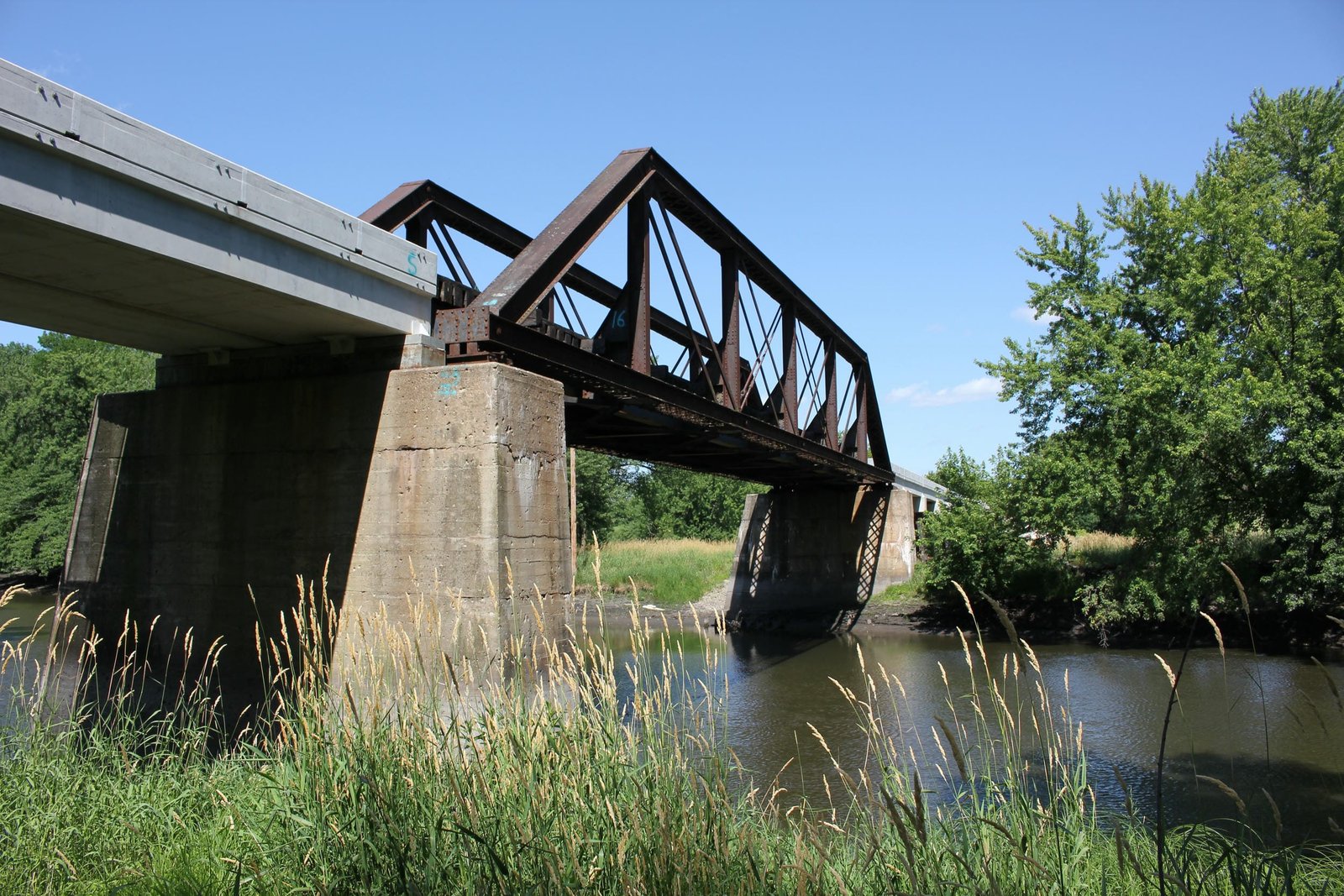
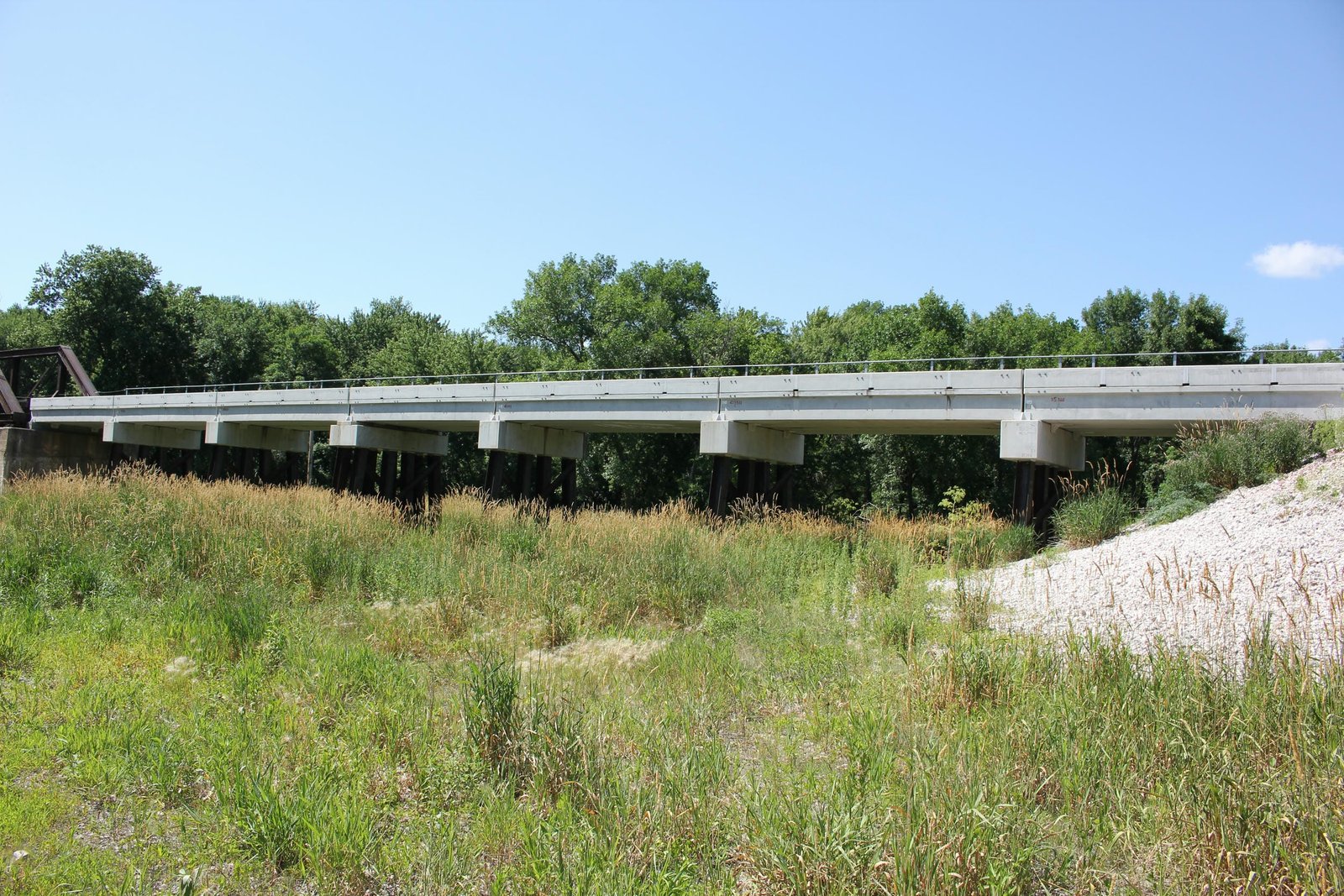
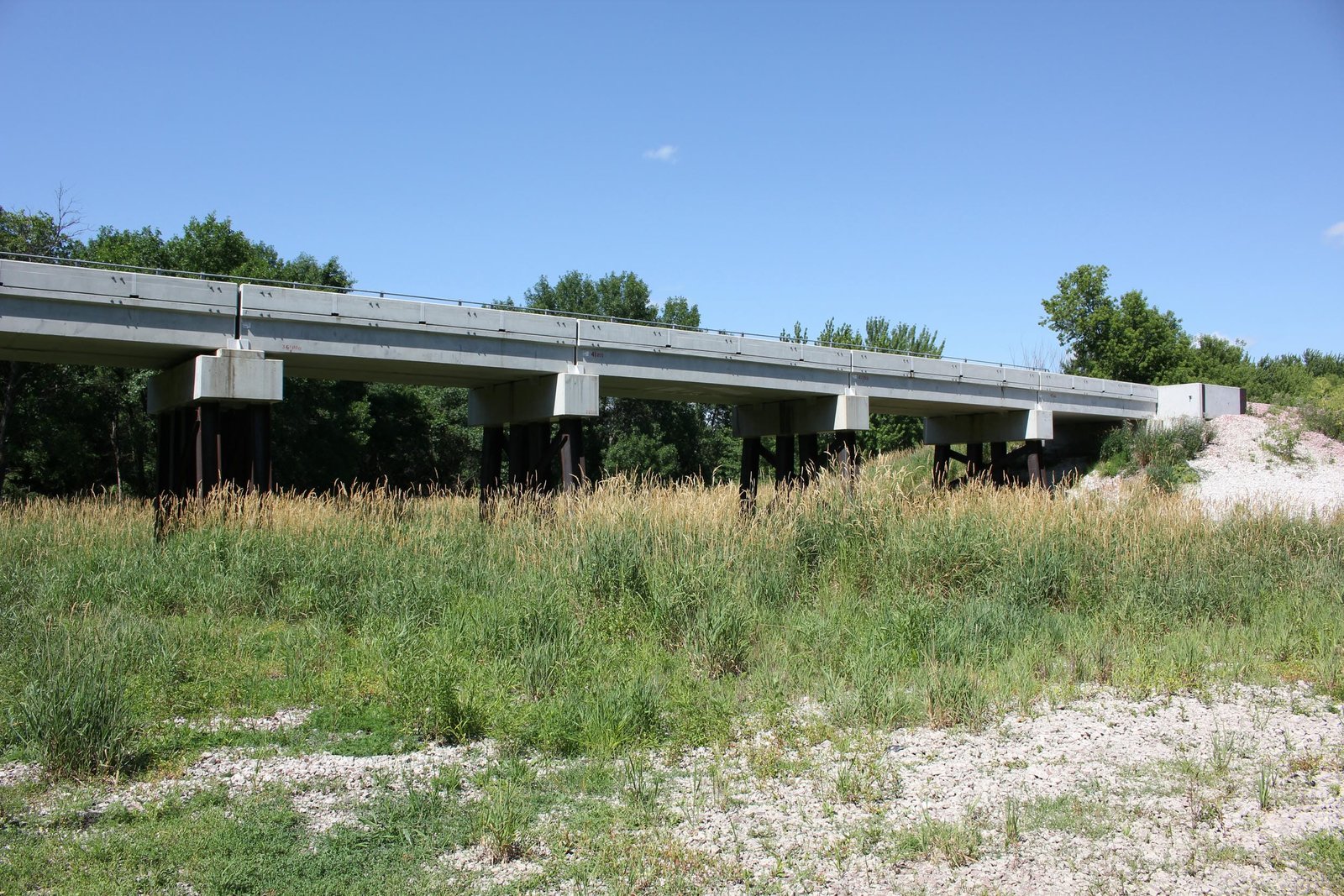
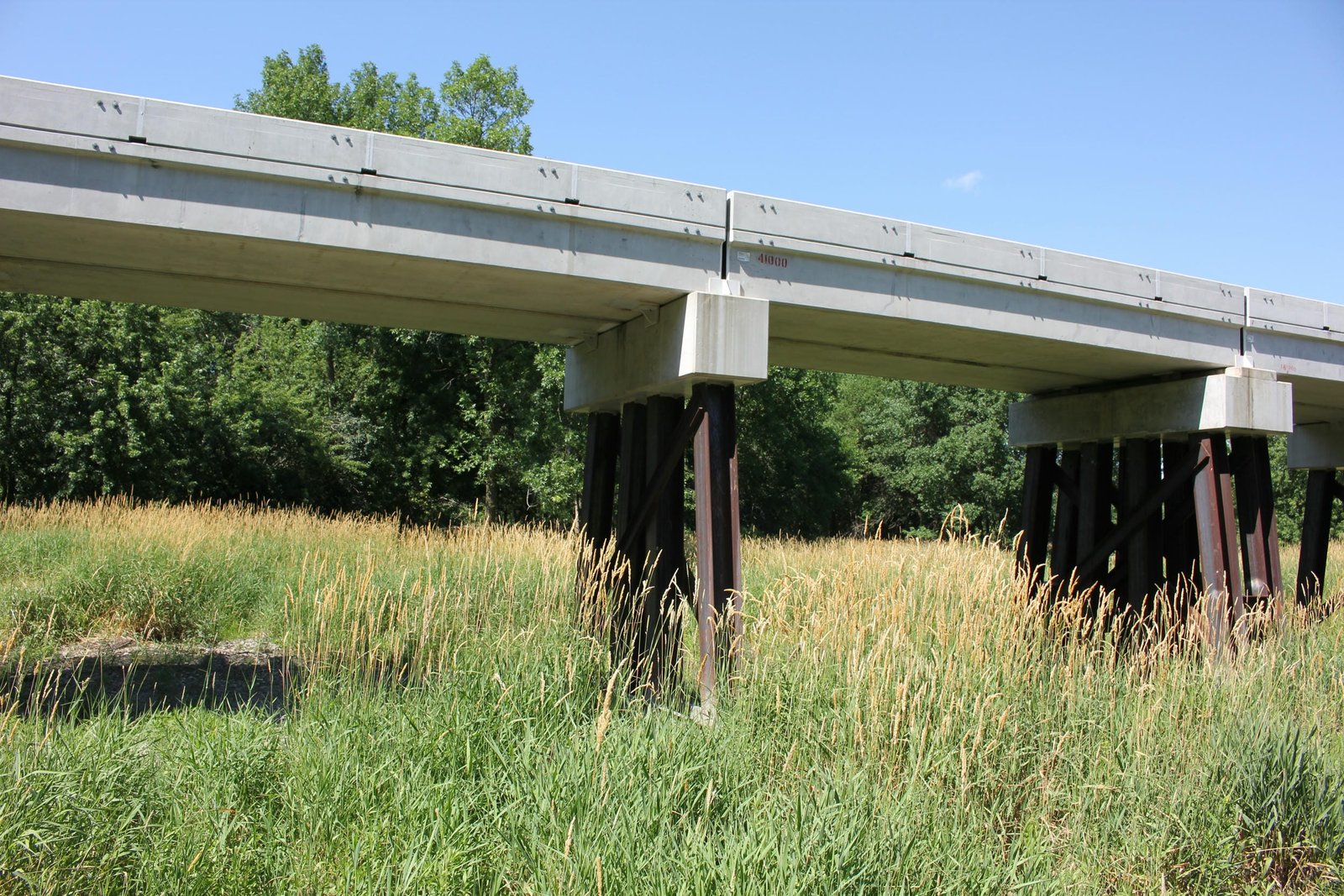
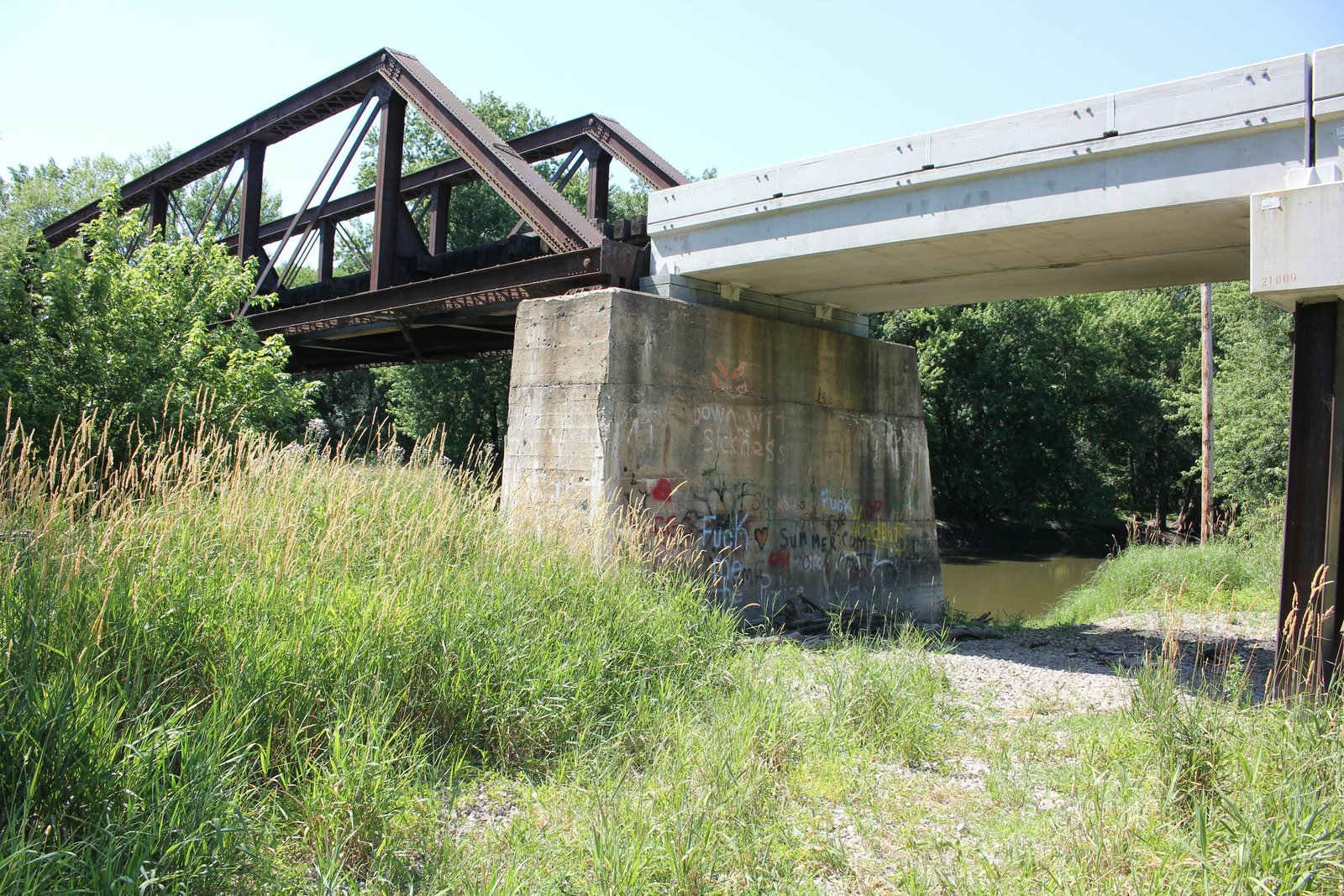
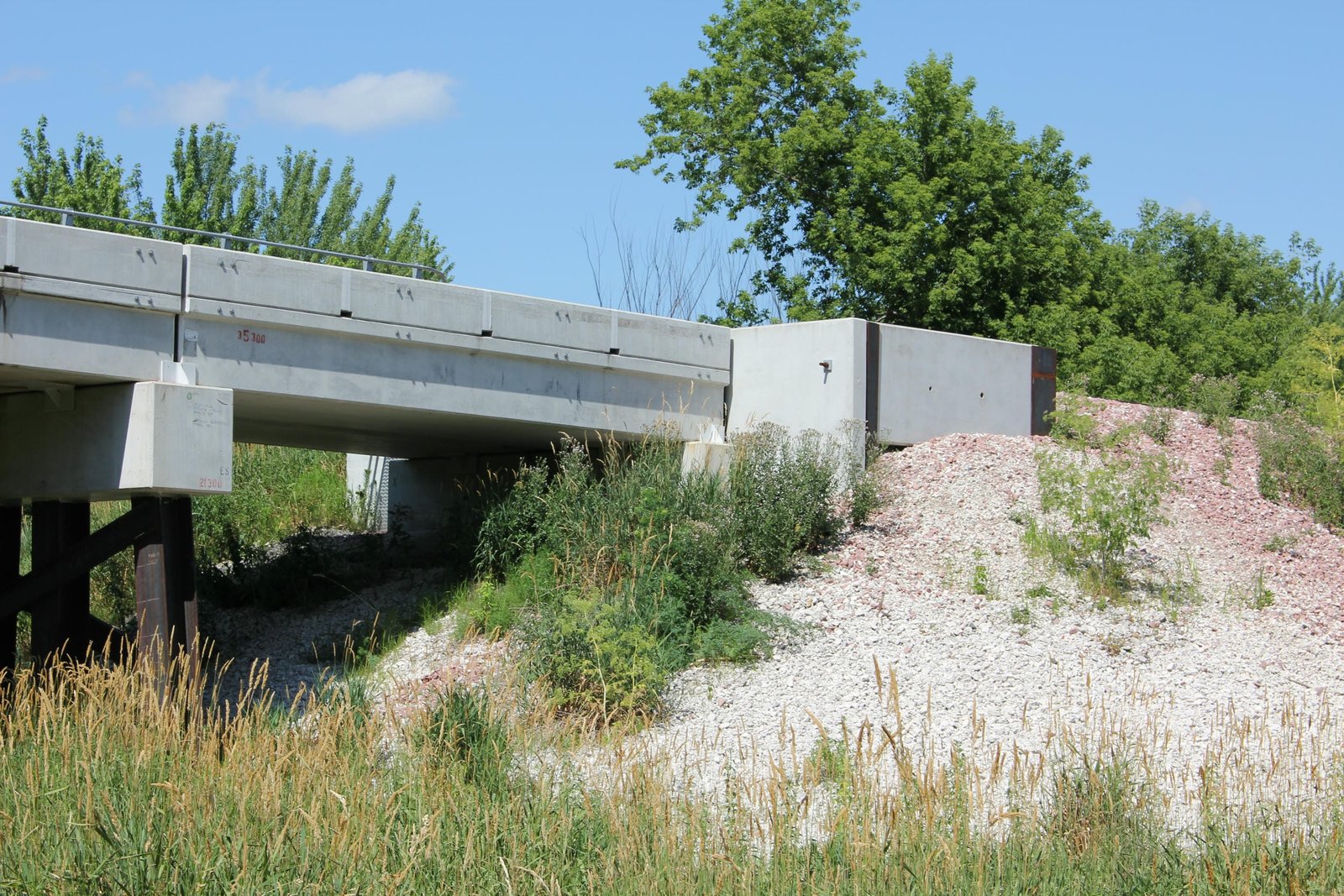
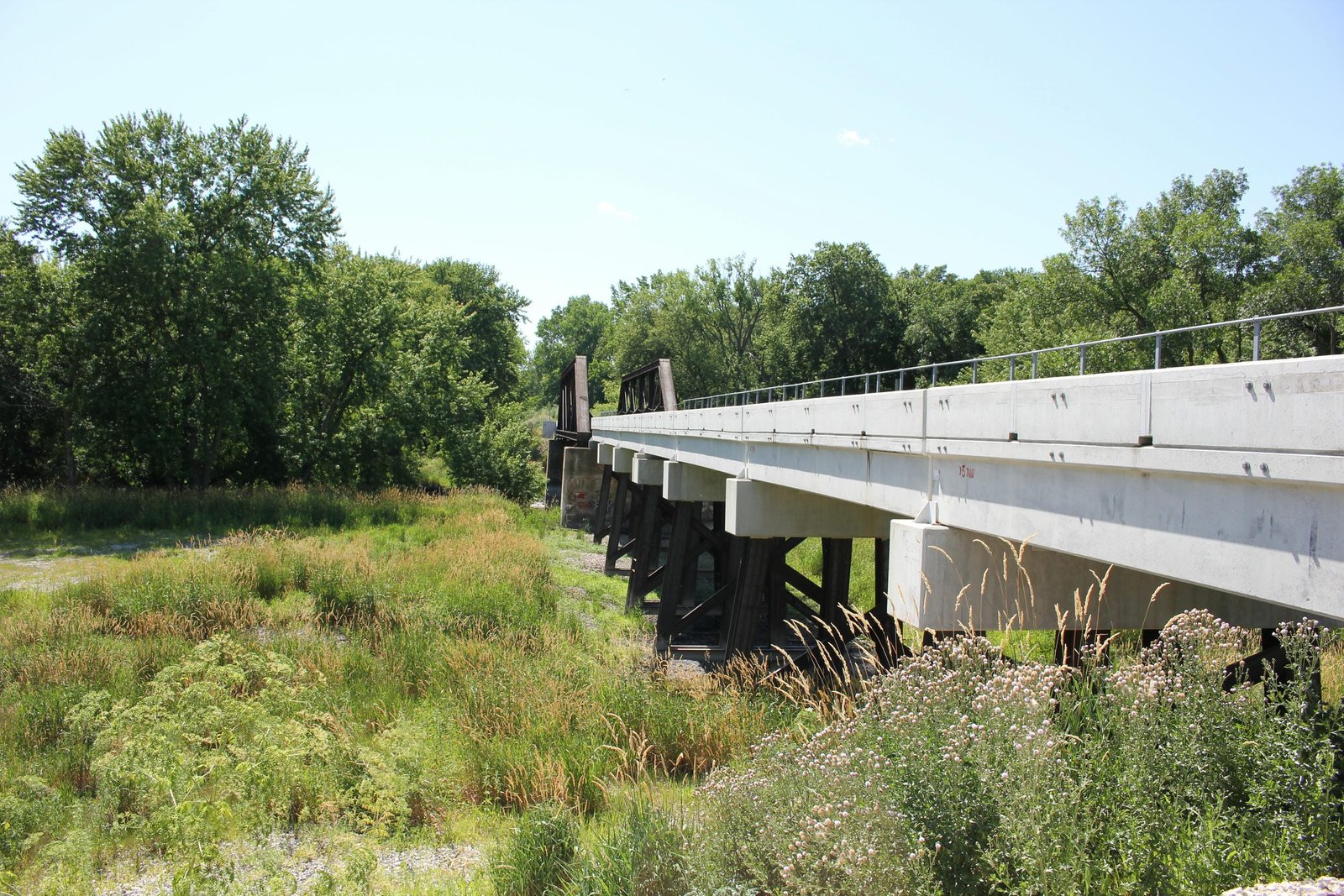
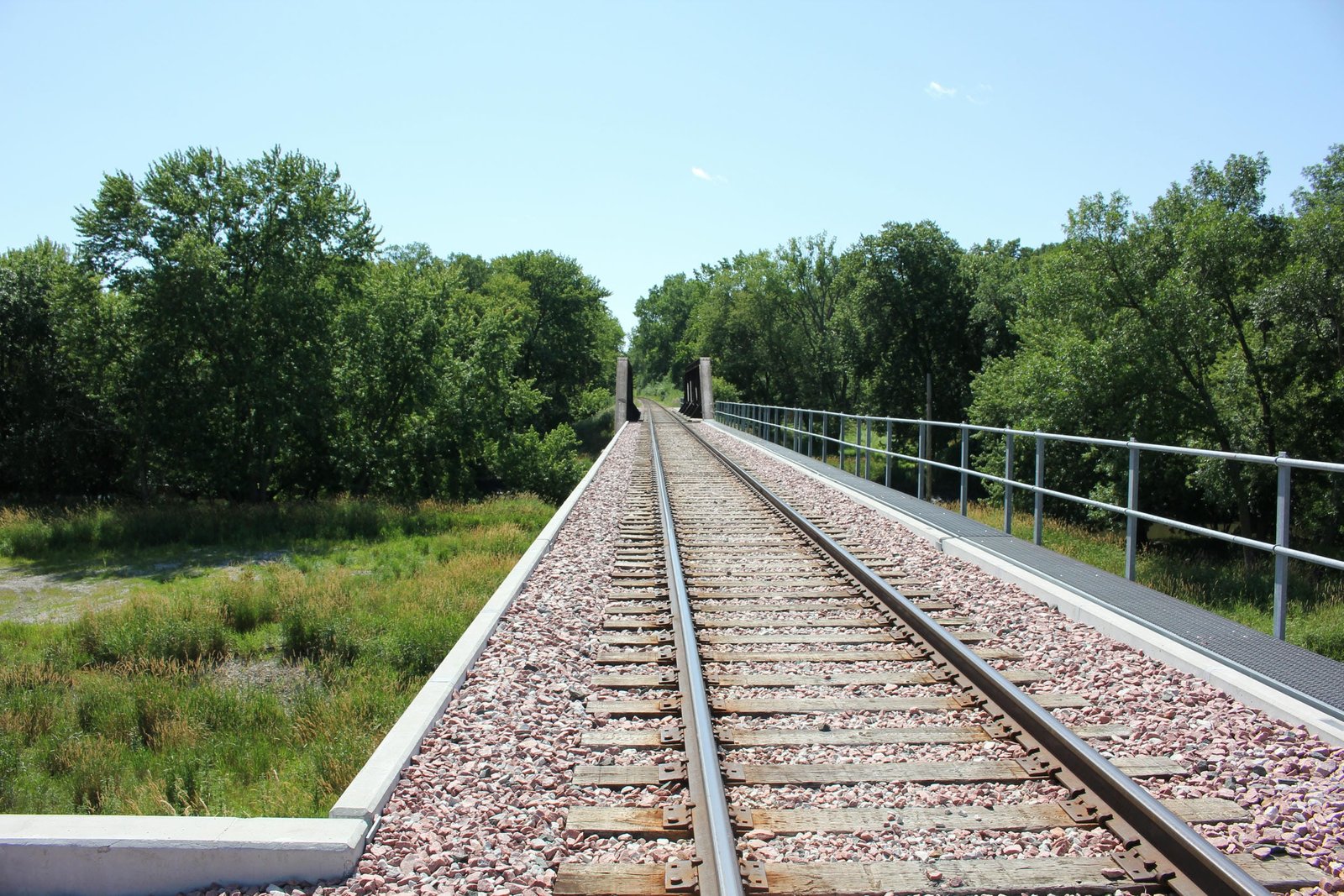
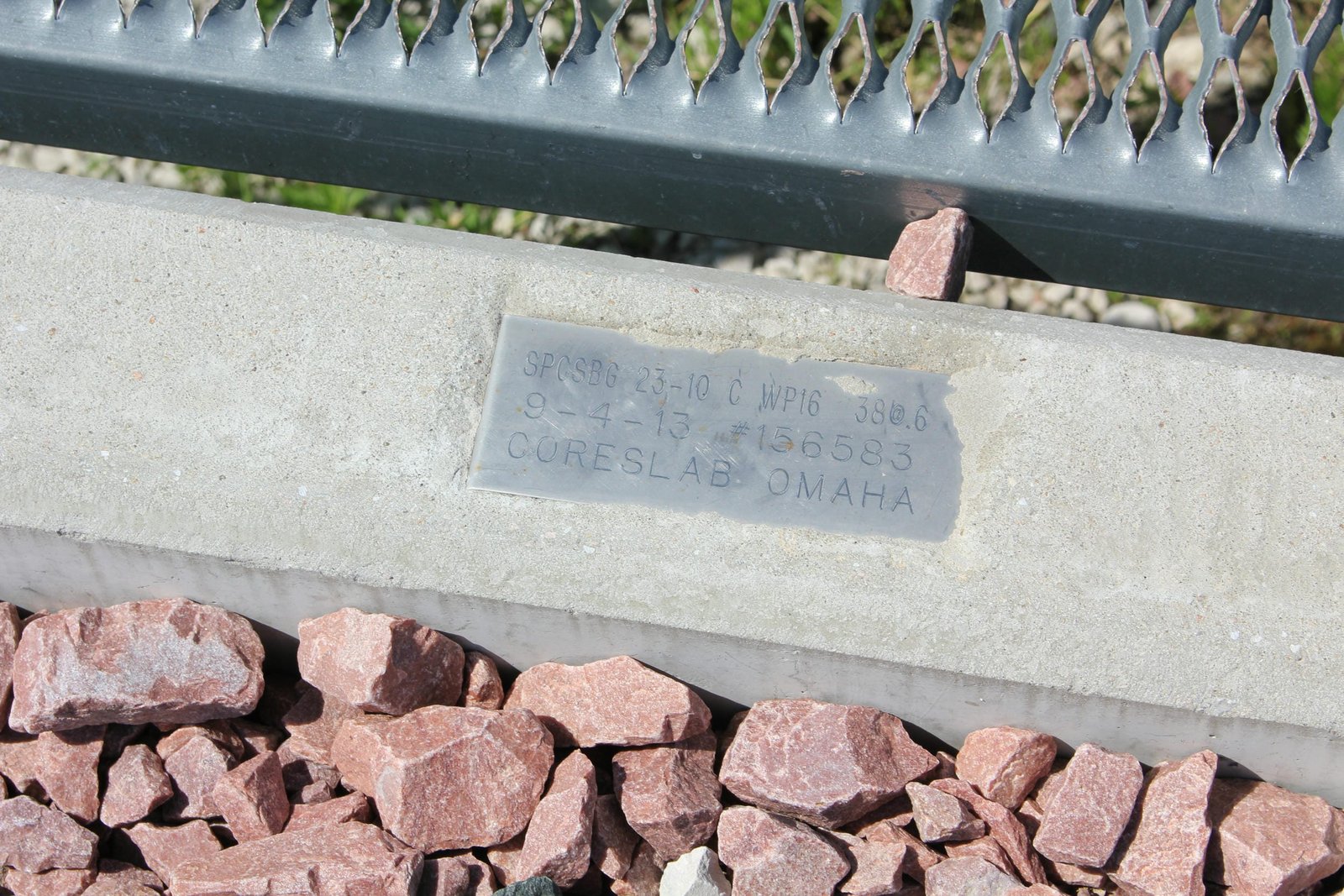
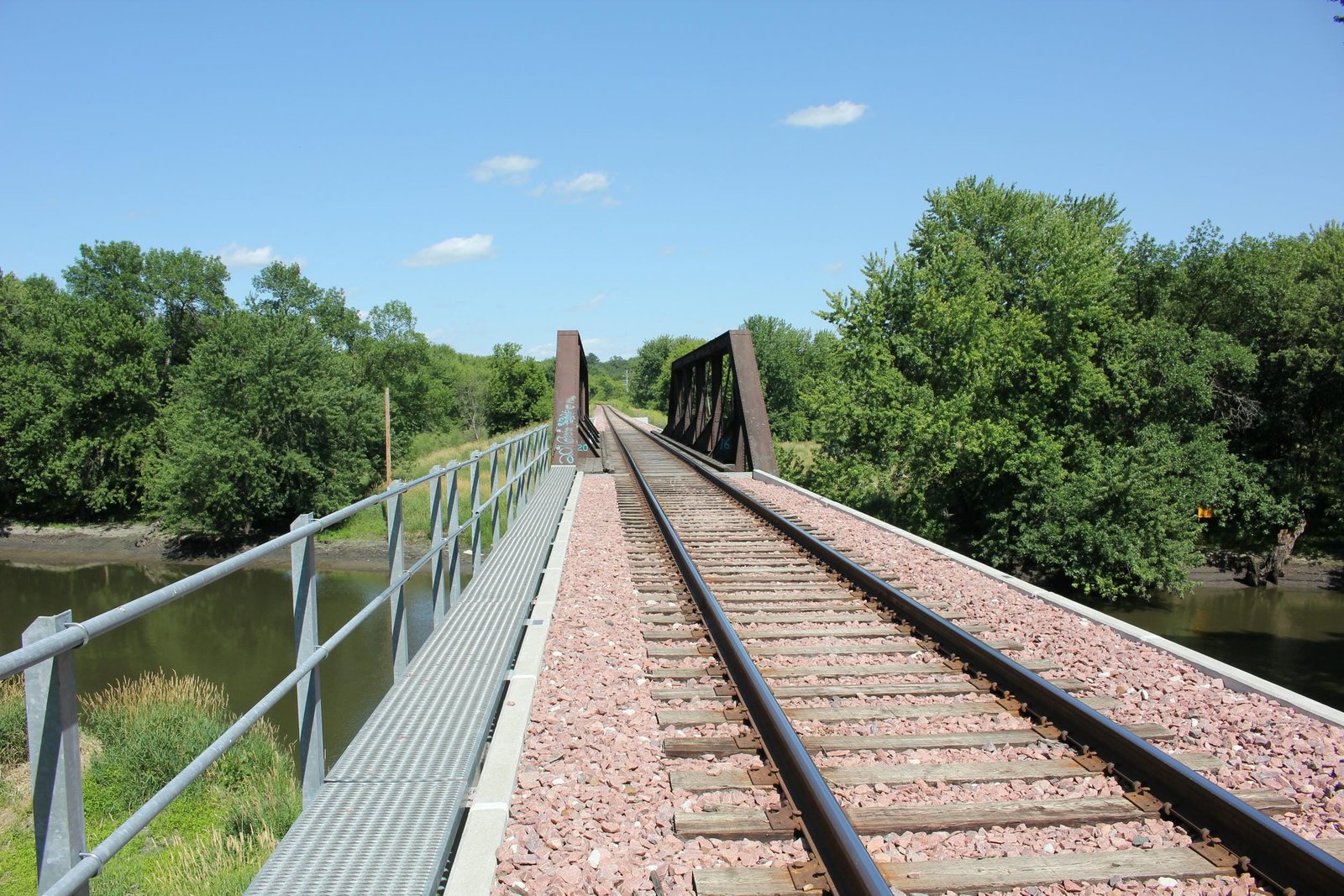
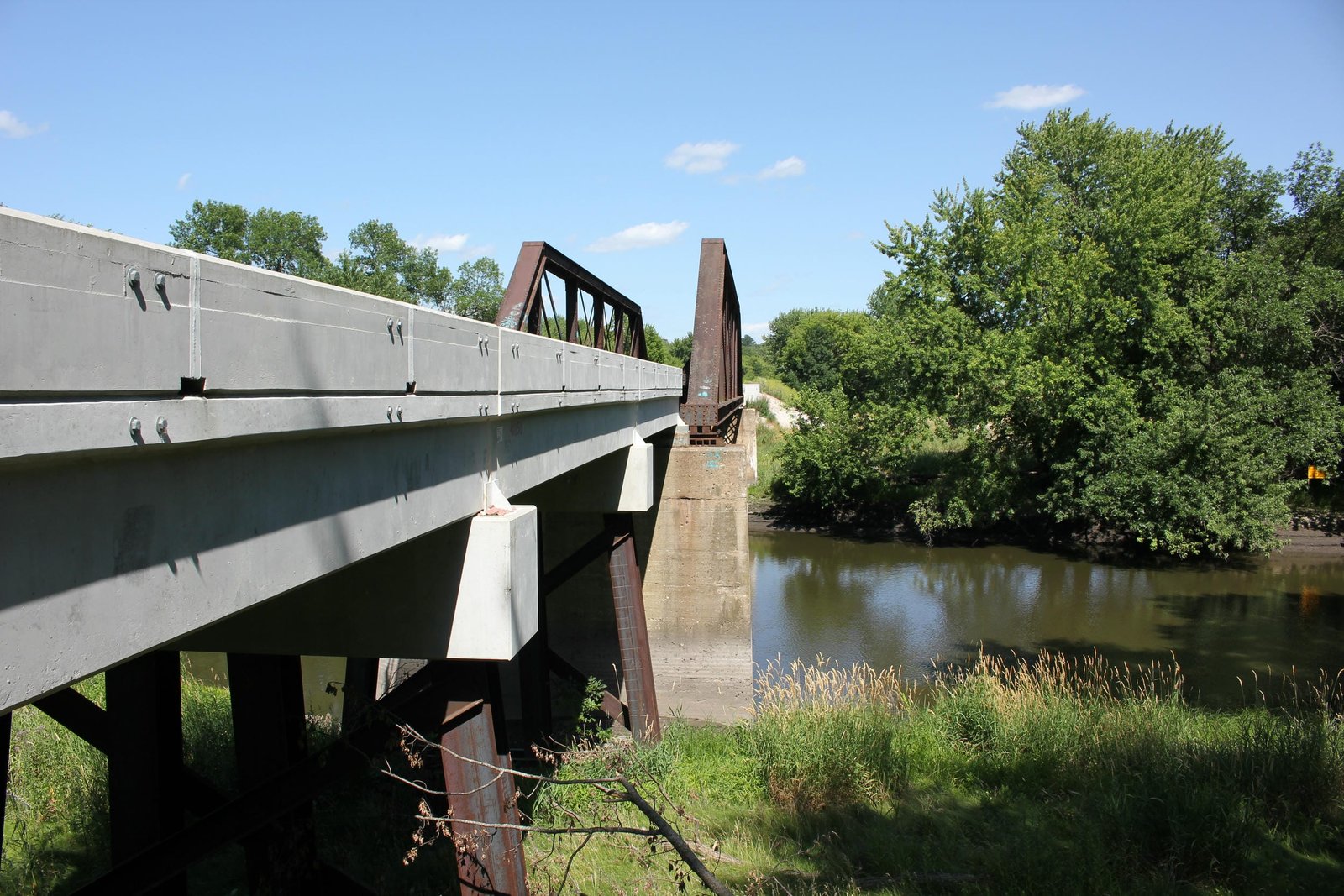
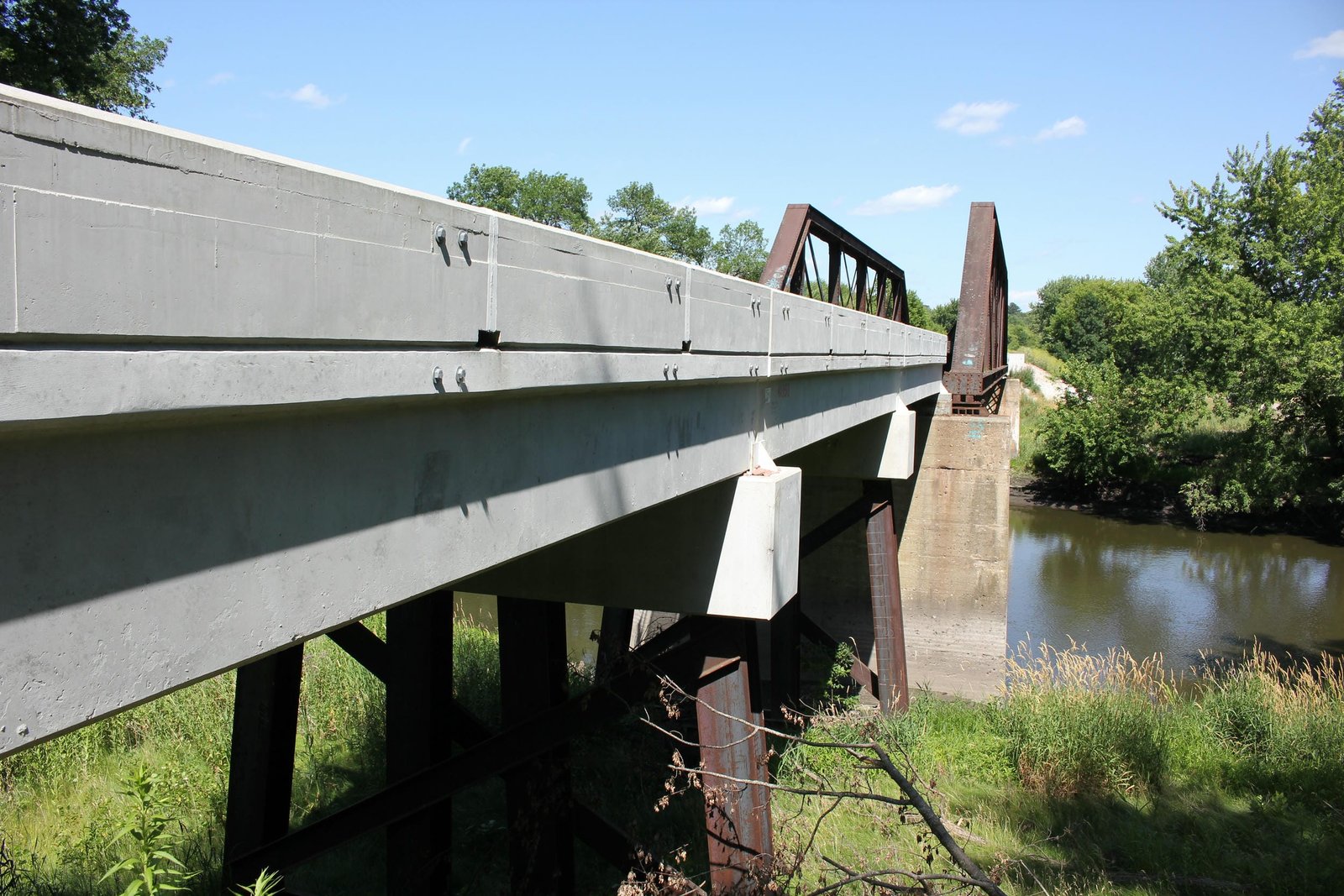
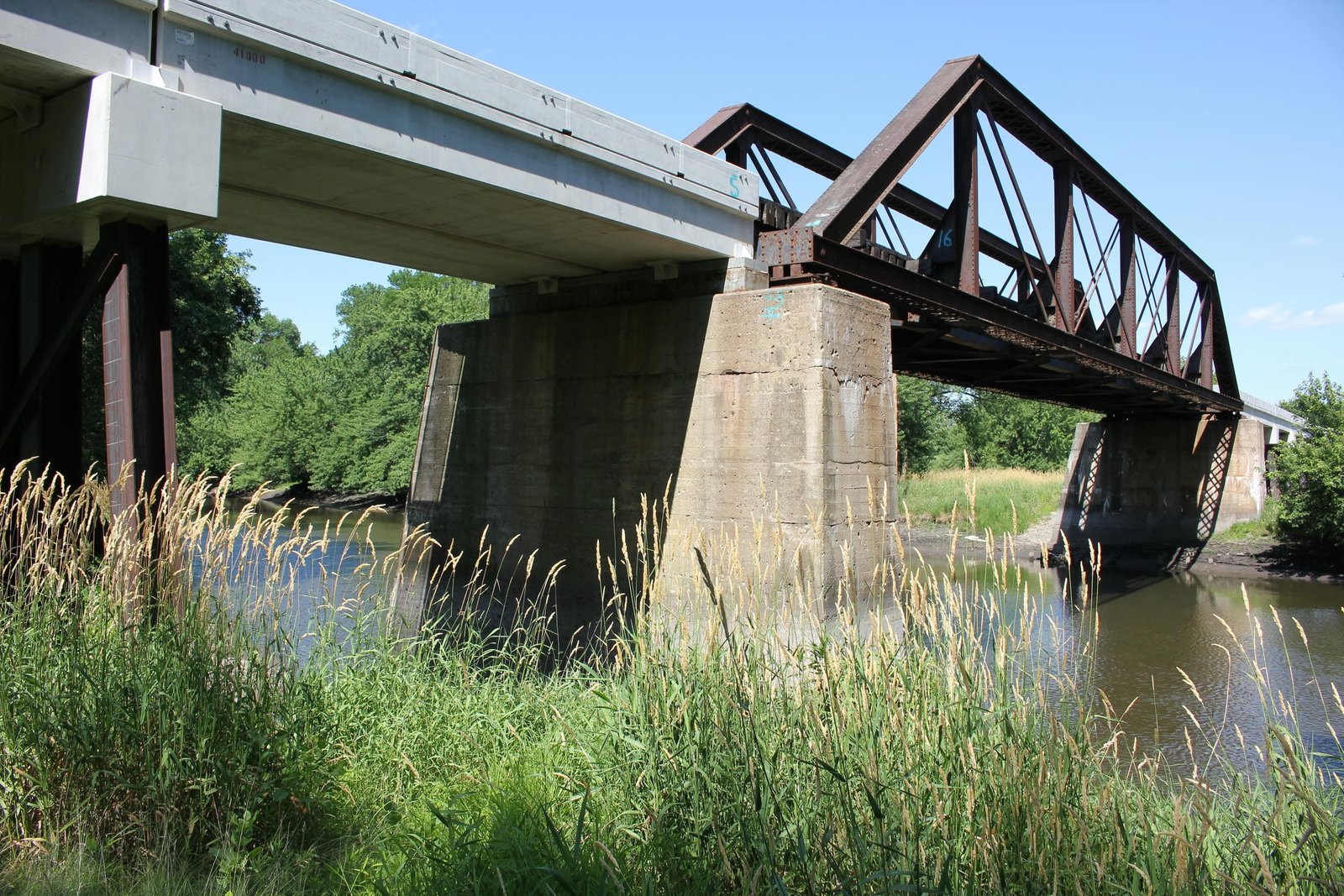
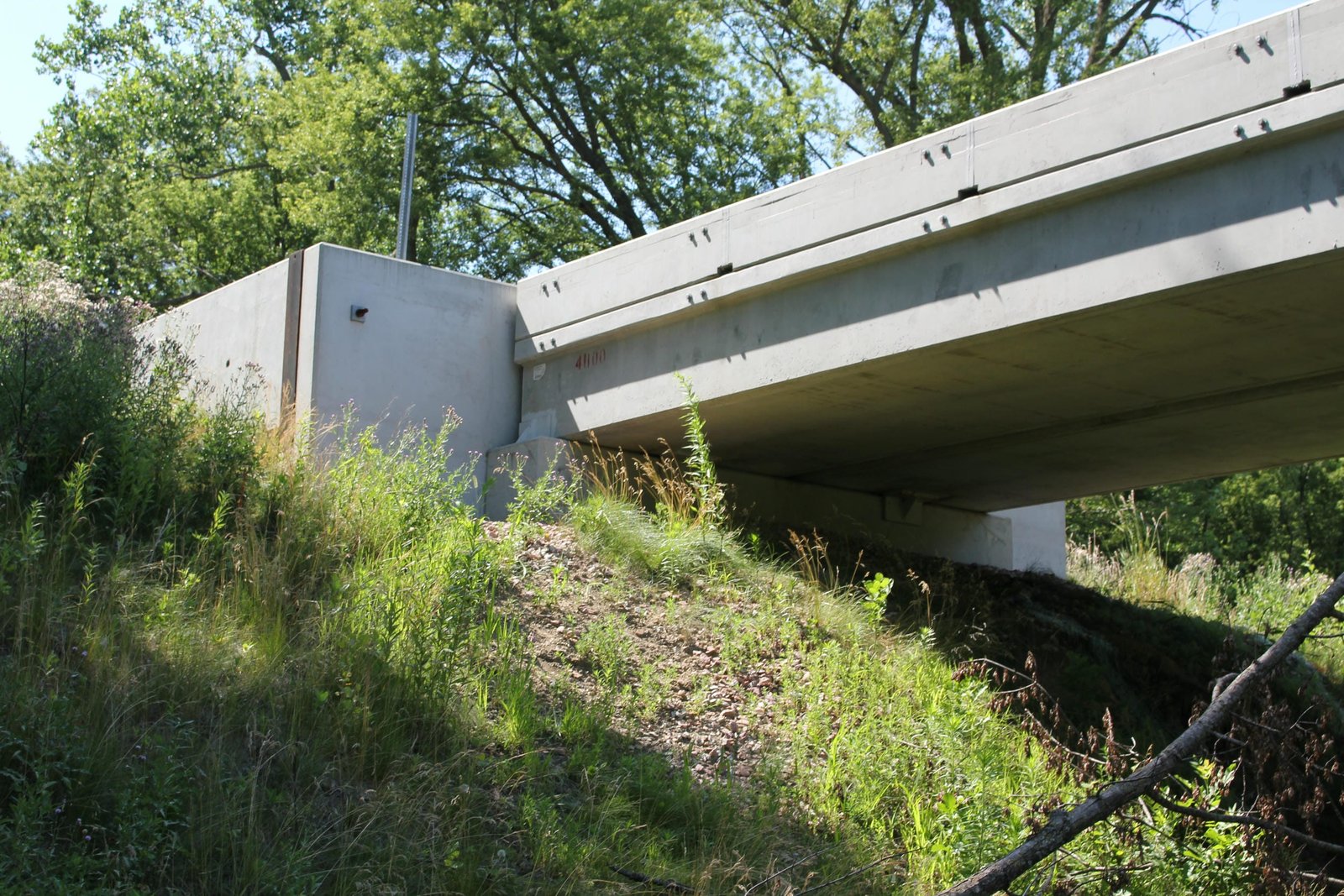
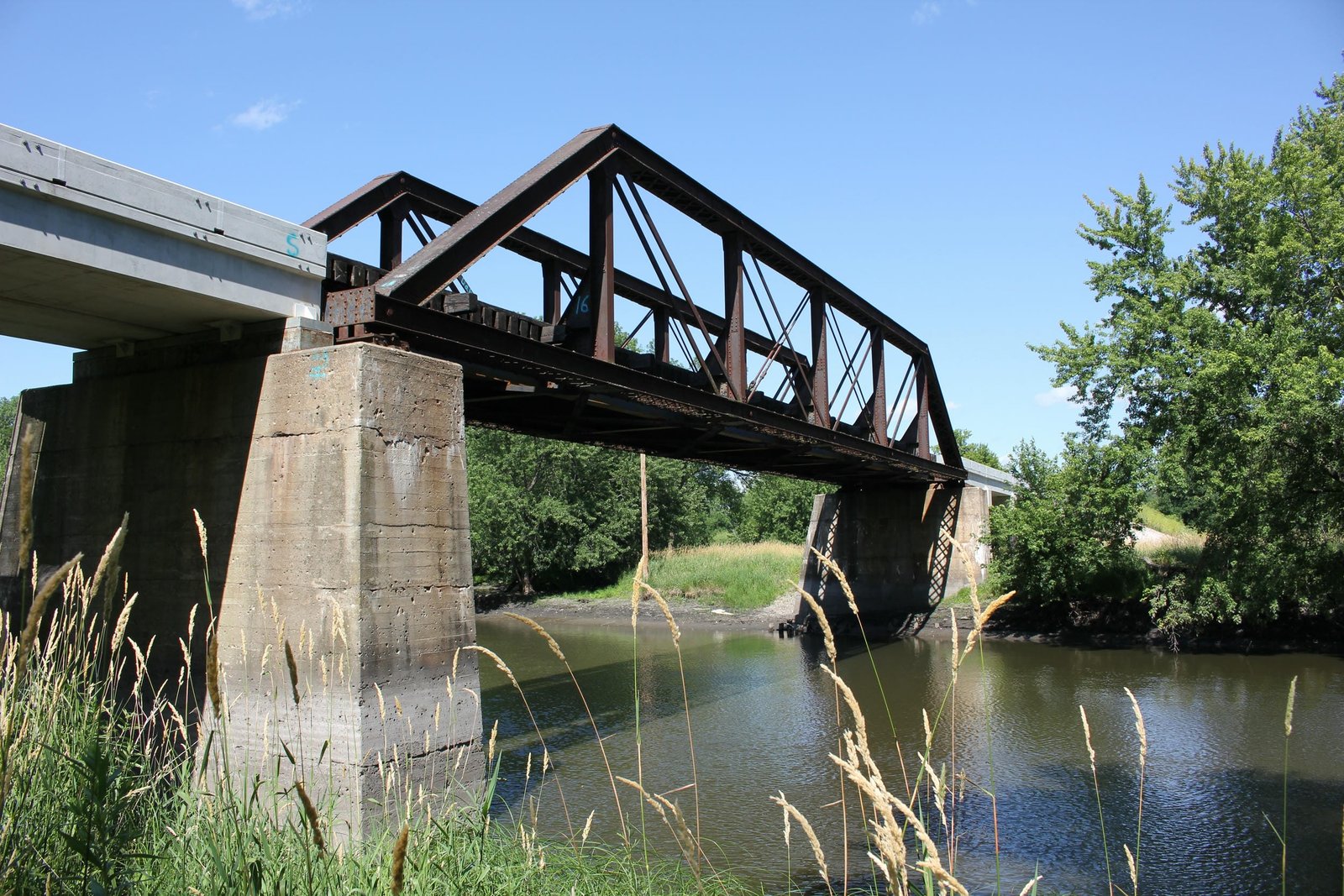
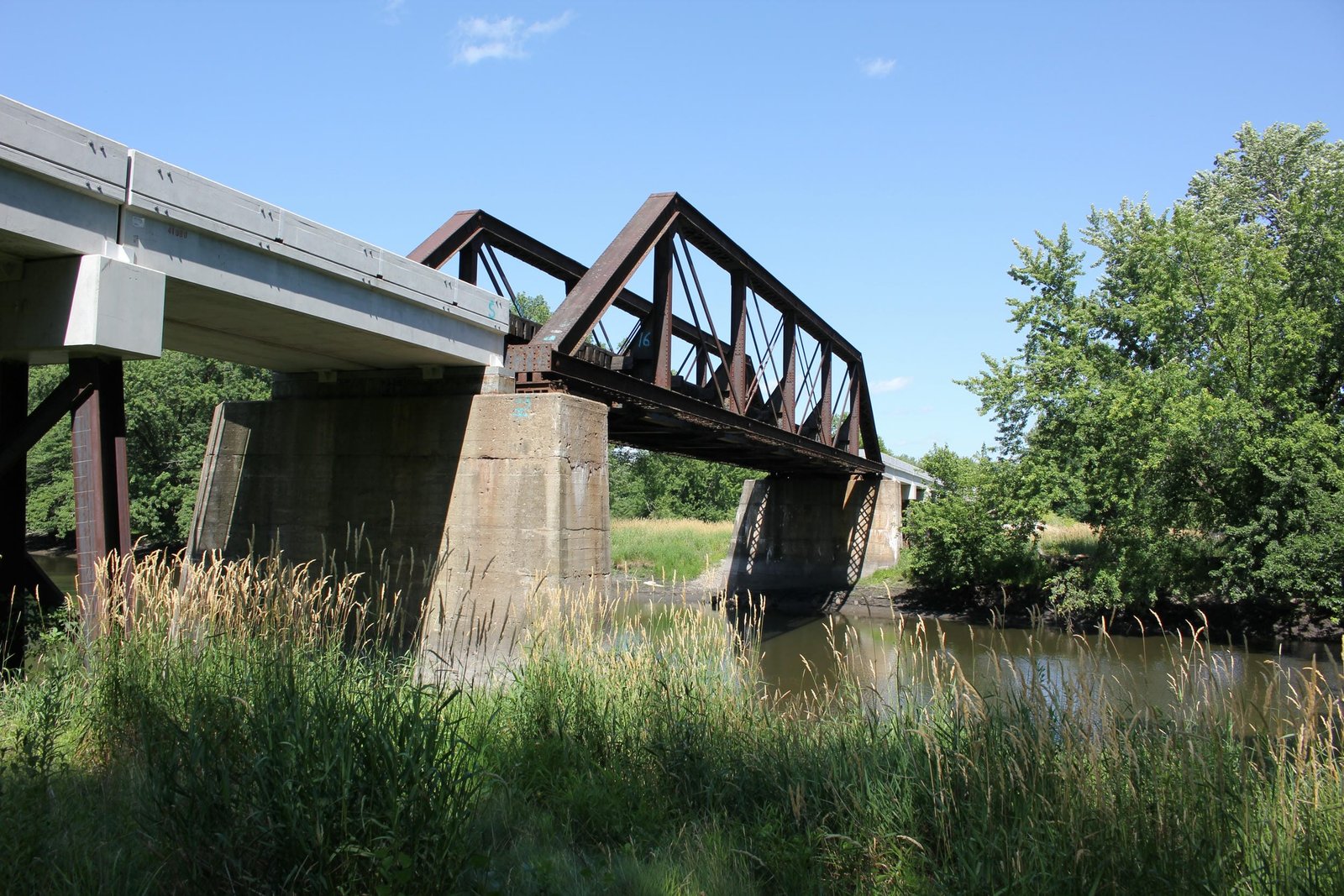
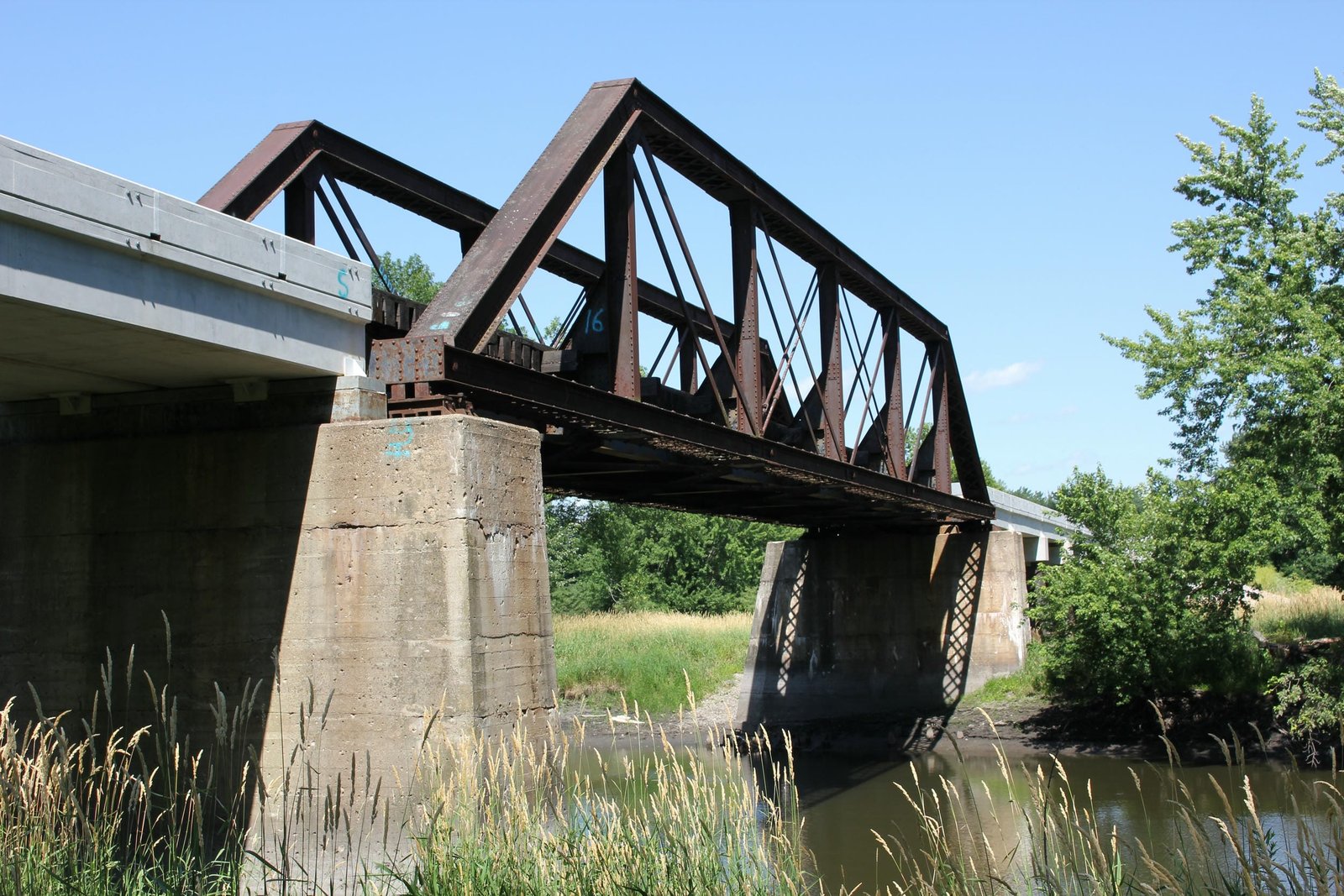
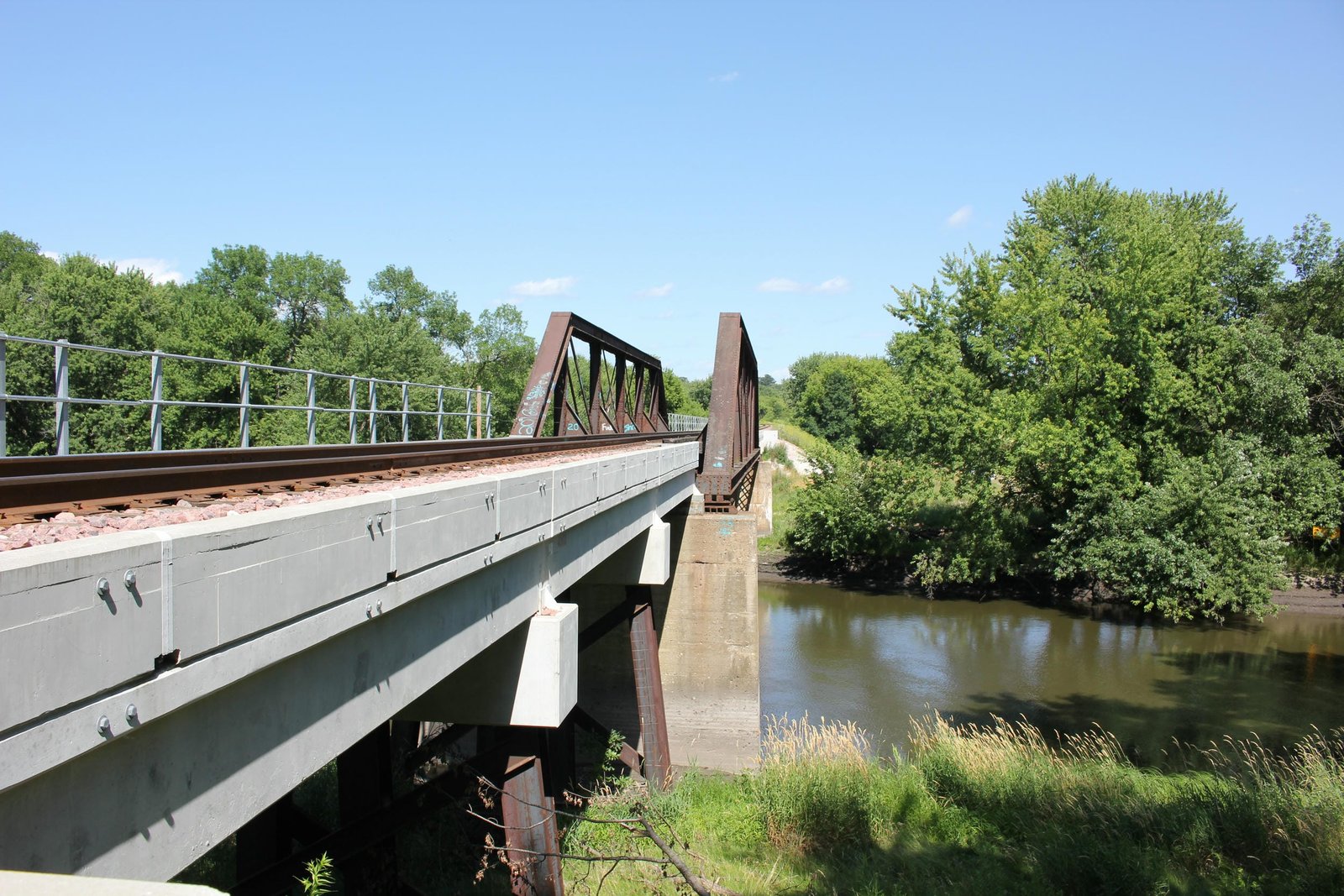
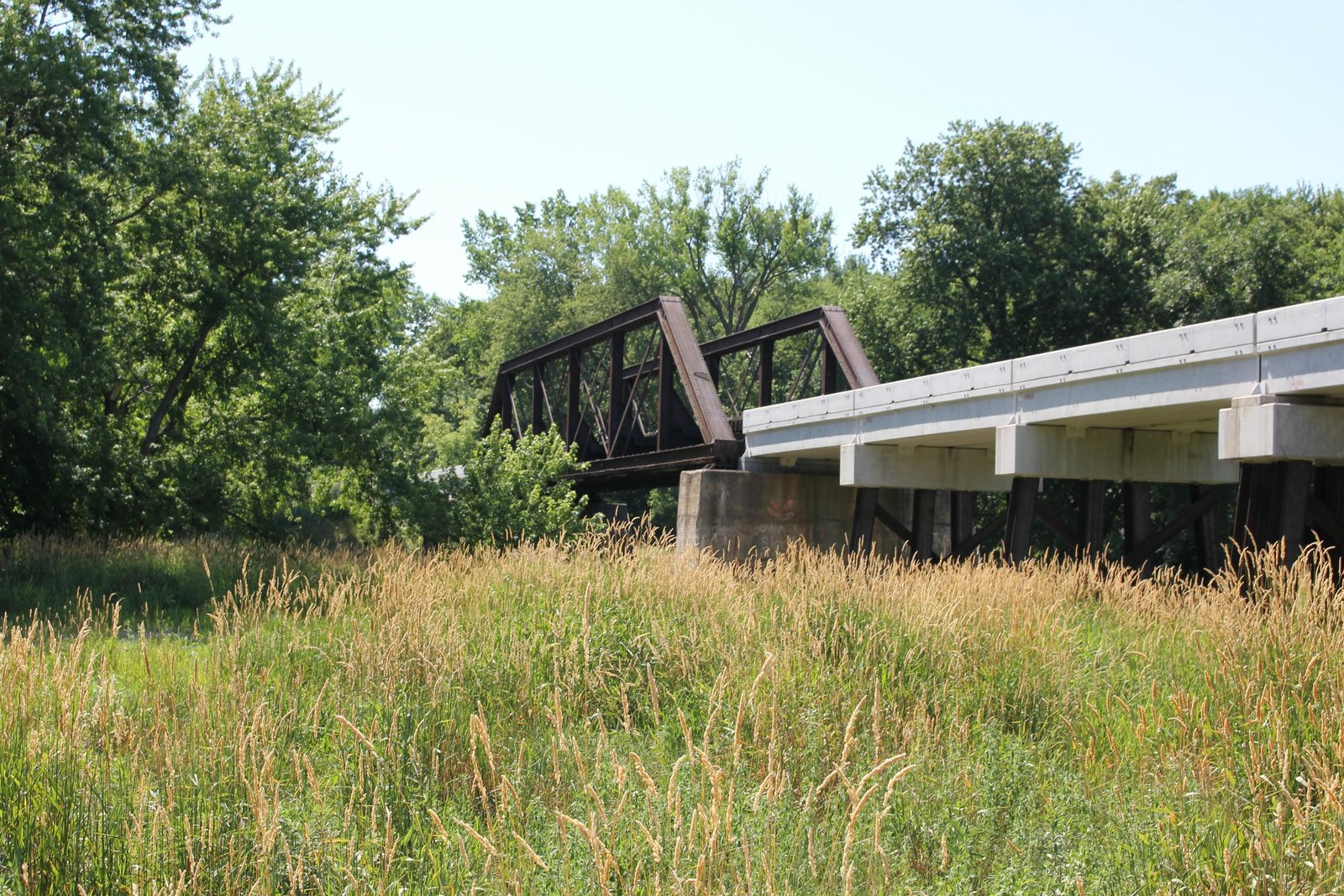
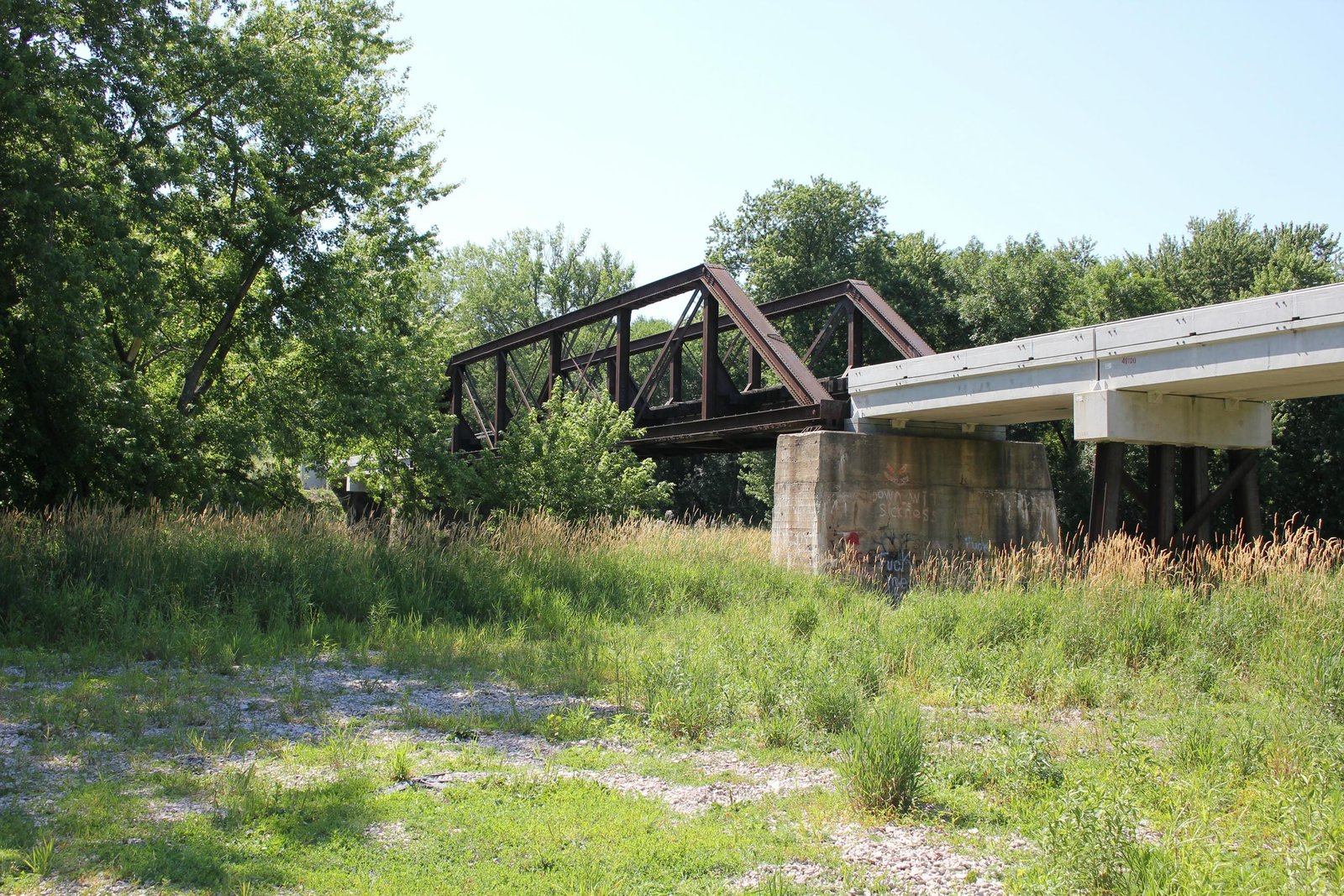
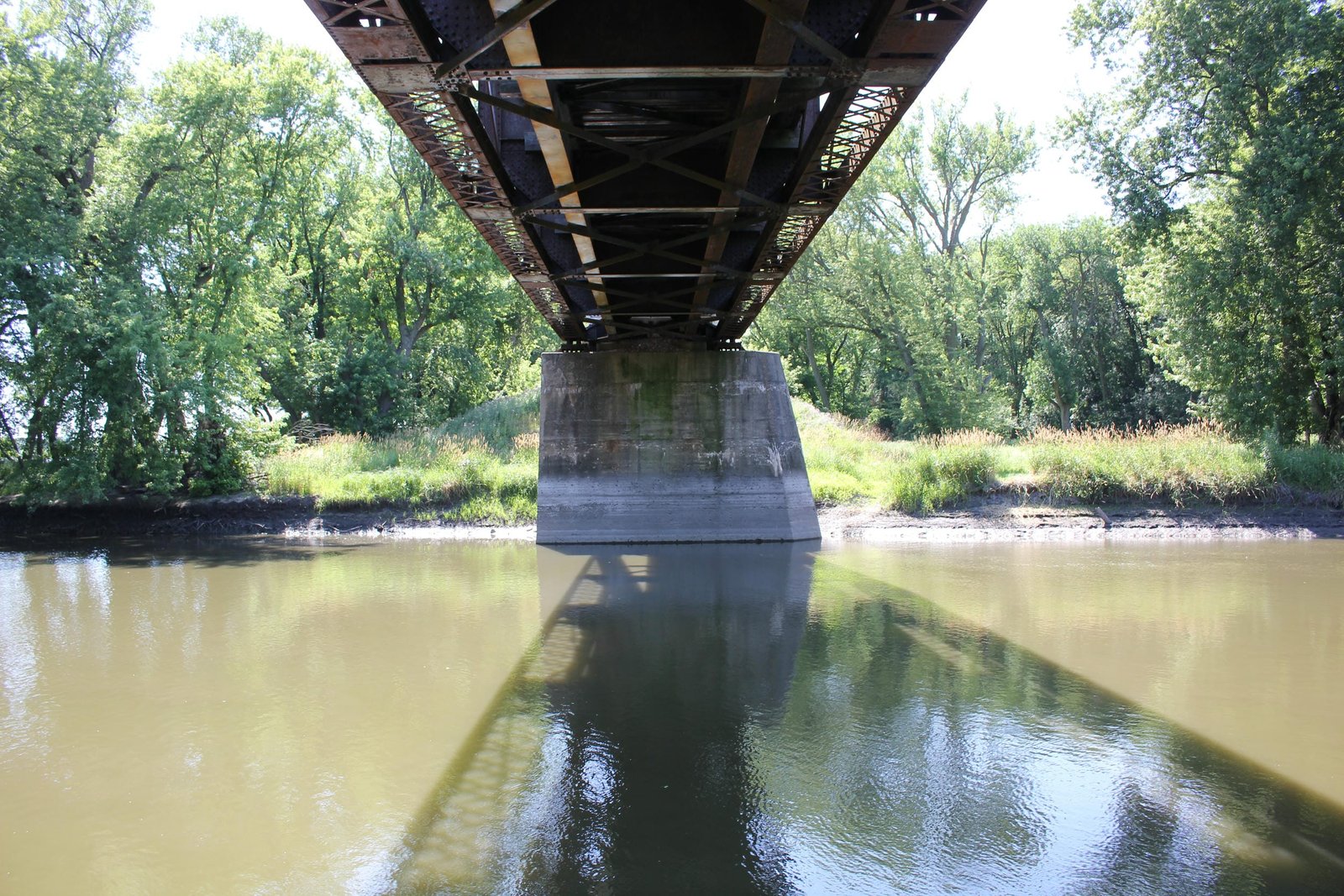
Located on the west side of Algona, this pony truss bridge carries a former Chicago, Milwaukee, St. Paul & Pacific Railroad (Milwaukee Road) line over the East Fork Des Moines River. The previous bridge at this location was likely either a timber pile trestle or a wooden truss bridge, which had been periodically renewed since it was first constructed. In the late 1890s and early 1900s, the Milwaukee Road invested significant capital into this line, replacing timber bridges with steel and concrete structures. The present structure was constructed in 1898-99. The most recent alterations to the bridge came in 2013, when the original timber pile trestle approaches were replaced with precast concrete modular girder spans. Currently, the bridge consists of a 128-foot, 6-panel, pin-connected Pratt pony truss span, approached concrete modular girder spans on either end. The truss span is set onto concrete piers, while the approaches are set onto steel pile bents with concrete caps. Lassig Bridge & Iron Works fabricated the truss span, while the concrete piers were constructed by labor employed by the Milwaukee Road Bridge & Building Department, as was typical for concrete bridges constructed by this railroad.
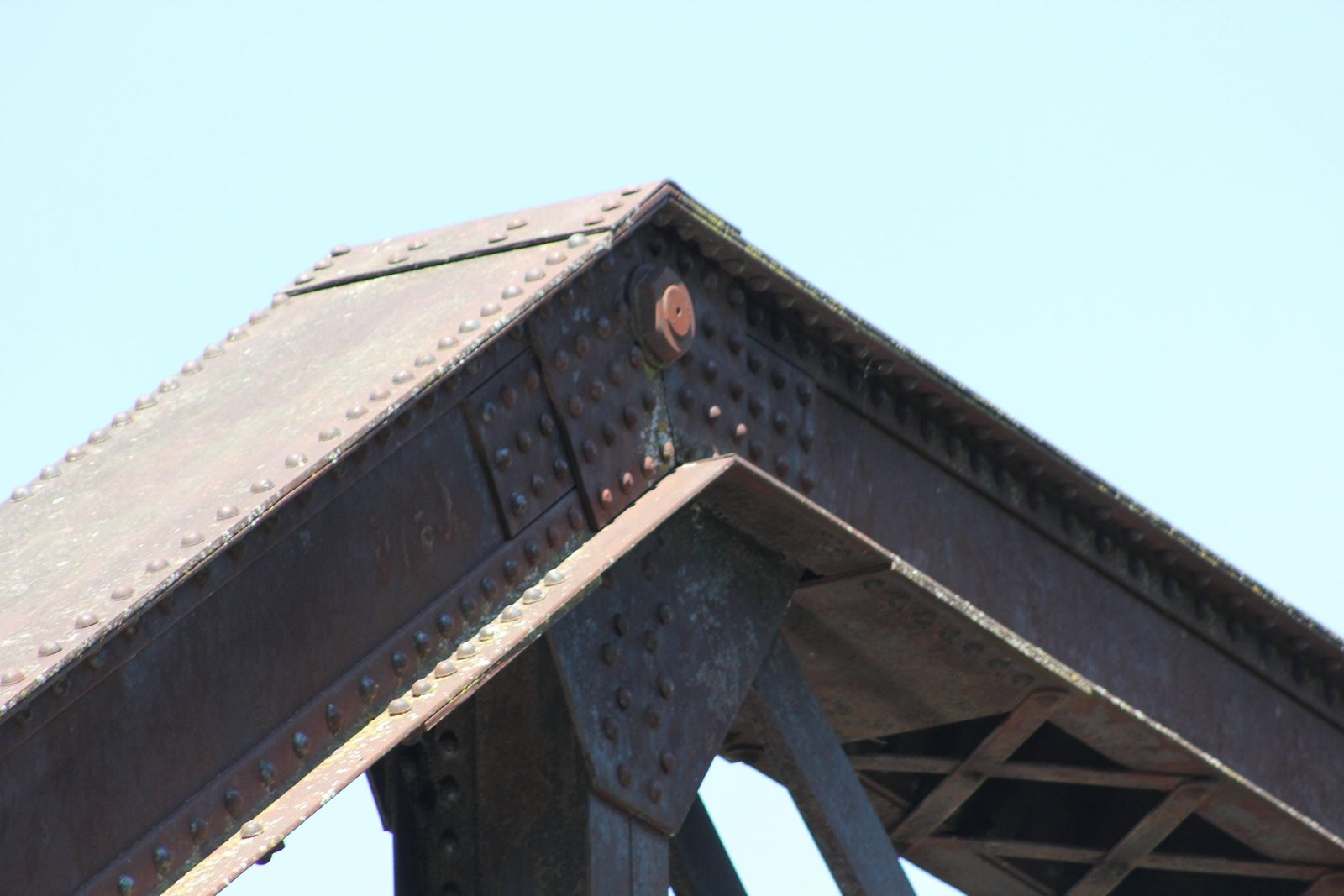
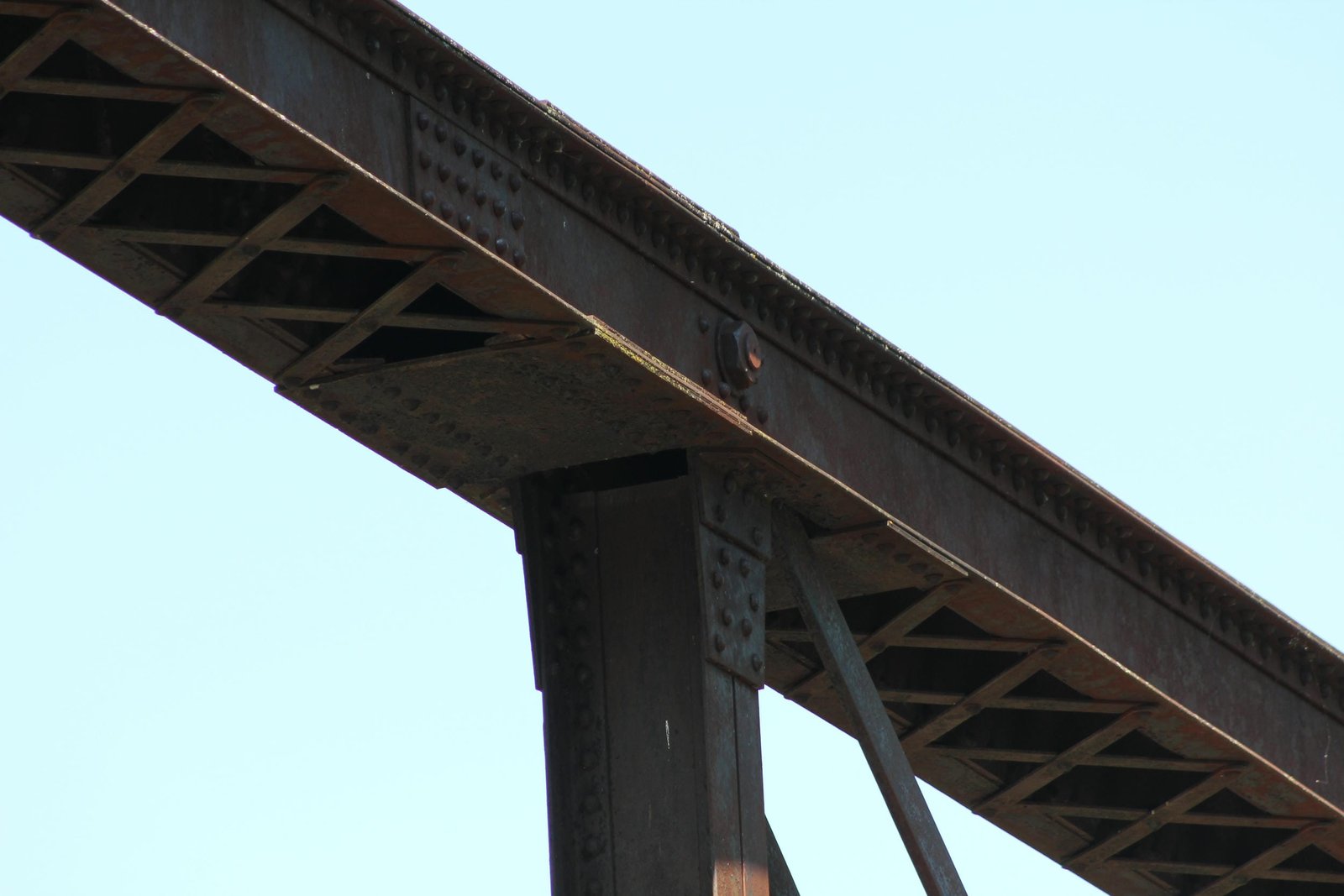
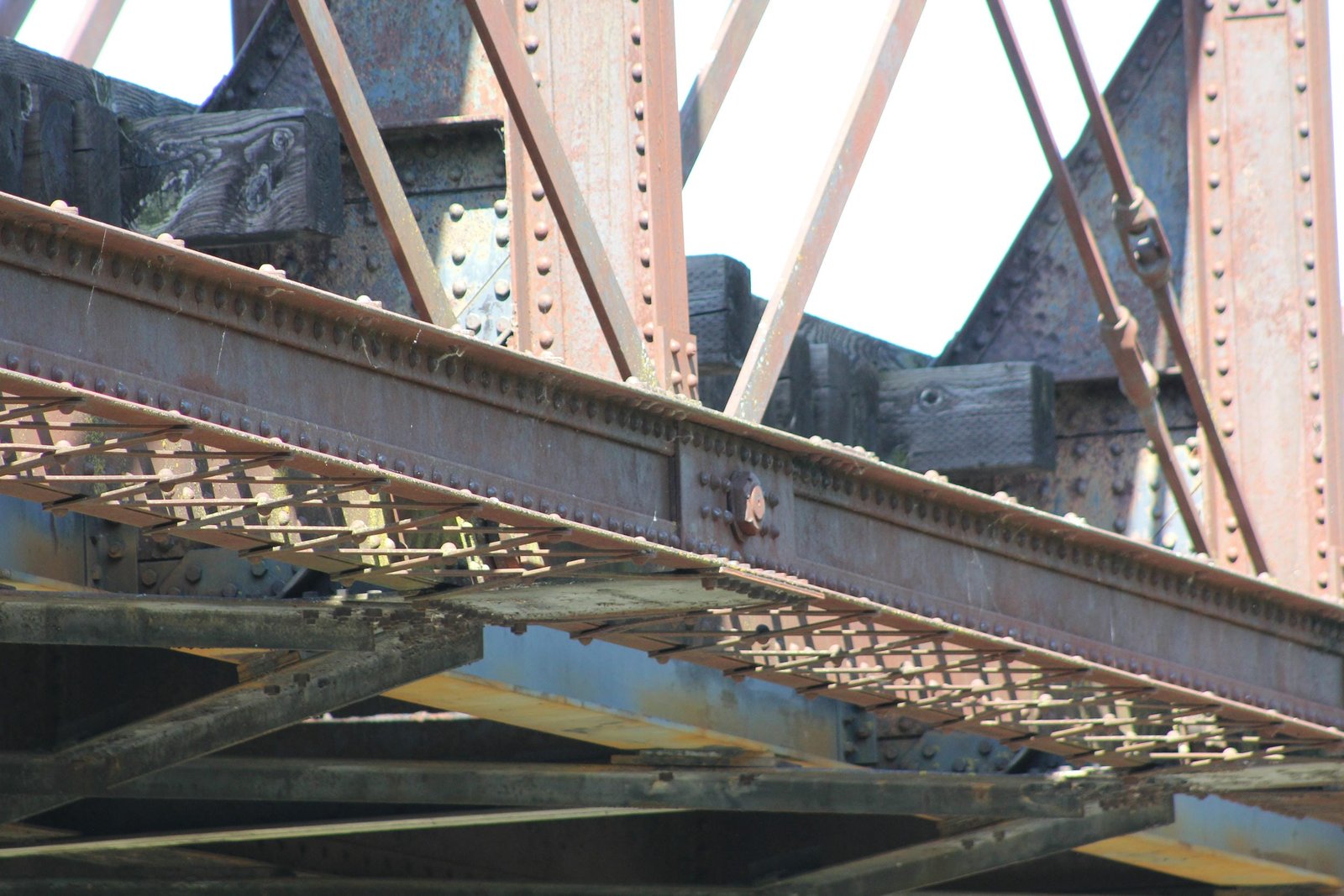
The truss span was constructed using a standard Milwaukee Road design, although the length appears to be a slight deviation from more common sizes. Typical of spans of this design, the endposts and top chord consist of built-up beams, which use a plate on the top side and X-lacing on the back side. The bottom chord is composed of built-up beams with X-lacing on both sides. The vertical members of the truss are composed of solid beams, which are connected to the floorbeams by large triangular plates. The diagonal members consist of eyebars, and the counters are composed of round rods with turnbuckles. The floor is composed of two steel stringers and plate girder floorbeams, and the stringers appear to have been replaced in the 2010s. The substructures also follow a standard design, with rectangular piers founded on timber piles.
The Pratt truss design was arguably the most common truss type used for railroad bridges during the second half of the 19th Century. The design provided an economical, simple and durable design. The Milwaukee Road standardized the Pratt design for pony trusses in the mid-1890s, with the standard design largely developed by Alan Riechmann and Onward Bates. The design was refined over a short period, eventually using a heavy built-up bottom chord by the 20th Century. Many examples of this design are still present on former Milwaukee Road lines. By 1905, the Milwaukee Road had largely switched to using riveted Warren pony truss spans. Through plate girder spans were also popular for railroad use, as they were durable and easy to construct. Since the initial construction, the original stringers and approaches have been replaced. Overall, the bridge appears to be in fair to good condition, with no significant deterioration noted. The author has ranked this bridge as being moderately significant, due to the common design.
Citations
| Build date | Milwaukee Road Drawing Collection, located at the Milwaukee Road Archives at the Milwaukee Public Library |
| Builder (superstructure) | Lassig Bridge & Iron Works plaque |
| Railroad History Citation | ICC Valuation Information, Compiled by Richard S. Steele |