
Click the photo to view the full-size version
| Name | CN Des Moines River Bridge Illinois Central Railroad Bridge #W376.0 |
| Built By | Illinois Central Railroad |
| Currently Owned By | Canadian National Railway |
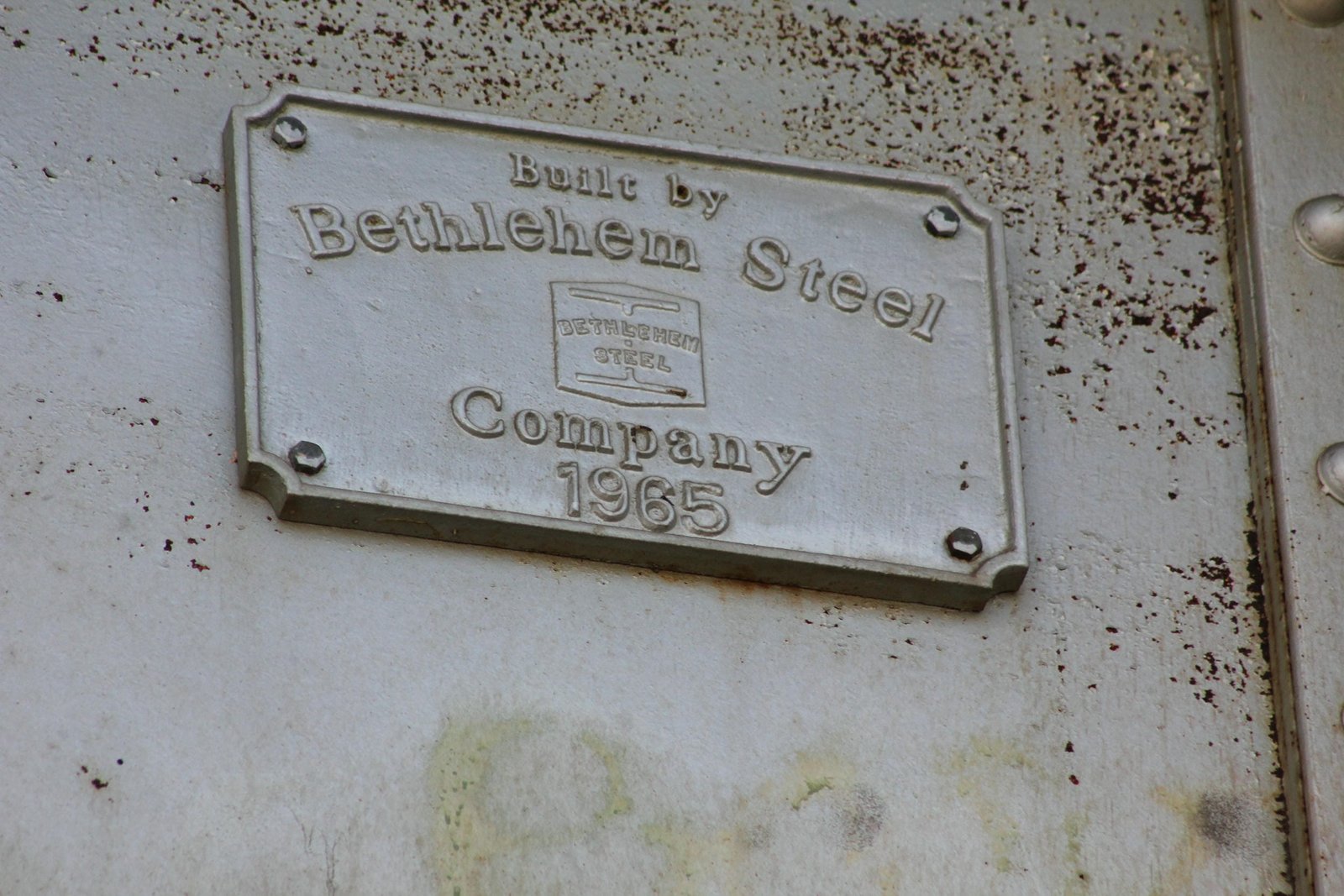
| Superstructure Contractor | Bethlehem Steel Company of Bethlehem, Pennsylvania (West Spans) Unknown (East Spans) |
| Substructure Contractor | Unknown (Abutments and Center Pier) Unknown (East Pier) Unknown (West Pier) |
| Length | 396 Feet Total, 99 Foot Spans |
| Width | 1 Track |
| Height Above Ground | 25 Feet (Estimated) |
| Superstructure Design | Deck Plate Girder |
| Substructure Design | Stone Masonry and Concrete |
| Date Built | 1965 (West Spans), 1999 (East Spans) |
| Traffic Count | 3 Trains/Day (Estimated) |
| Current Status | In Use |
| Illinois Central Railroad Bridge Number | W376.0 |
| Canadian National Railway Bridge Number | 376.0 |
| Significance | Minimal Significance |
| Documentation Date | 4/17/2017 |
In 1857, the Dubuque and Pacific Railroad (D&P) began construction of a new mainline across central Iowa, which sought to link to the existing Illinois Central Railroad (IC) at Dubuque, Iowa. In May 1857, the first 29 miles were completed between Dubuque and Dyersville, Iowa. In March 1860, the line was completed an additional 49 miles from Dyersville to Jesup, Iowa. In 1860, the D&P was sold to the Dubuque and Sioux City Railroad (D&SC). The D&SC completed an additional 22 miles to Cedar Falls, Iowa in 1861; followed by an additional 43 miles to Iowa Falls, Iowa in 1866. By 1867, the IC had garnered interest in this line, and leased the D&SC. The following year, a bridge across the Mississippi River at Dubuque was completed to link this line and the IC line towards Freeport, Illinois. In August 1869, the Iowa Falls and Sioux City Railroad (IF&SC) completed an additional 49 miles from Iowa Falls to Fort Dodge, Iowa. In October 1870, an additional 135 miles were completed west to the Missouri River at Sioux City, Iowa. The IF&SC was also affiliated with the D&SC and IC; and was fully merged into the D&SC in 1888.
By the late 19th Century, the IC had developed and operated a sprawling railroad network in the central United States. This line served as a principal mainline for the company, connecting Chicago to the Missouri River at Sioux City. In the 20th Century, the IC had become a respected railroad, connecting several major cities in the central United States. The D&SC was fully merged into the IC in 1946. In 1972, the IC merged with the Gulf, Mobile & Ohio Railroad (GM&O) to form the Illinois Central Gulf (ICG). The entire IC system in Iowa, as well as the line between Dubuque and Chicago, were sold to the Chicago Central & Pacific Railroad (CC&P) in 1995. In 1988, the ICG was reorganized as the Illinois Central Railroad (IC). In 1996, the CC&P was repurchased by IC and in 1998, IC was purchased by the Canadian National Railway (CN). Today, CN operates the Dubuque Subdivision between Dubuque and Waterloo, Iowa; the Waterloo Subdivision between Waterloo and Fort Dodge, and the Cherokee Subdivision between Fort Dodge and Sioux City.
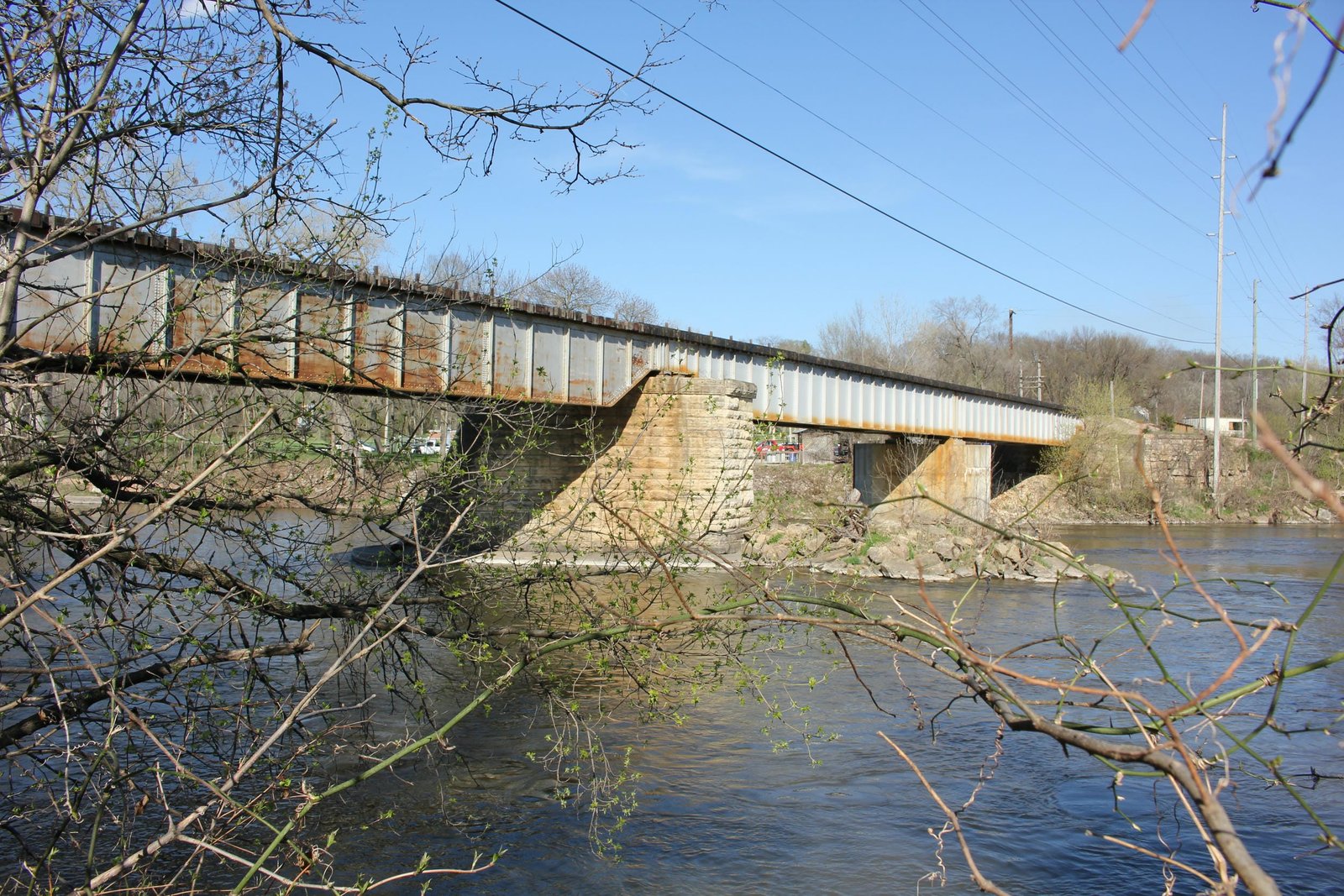
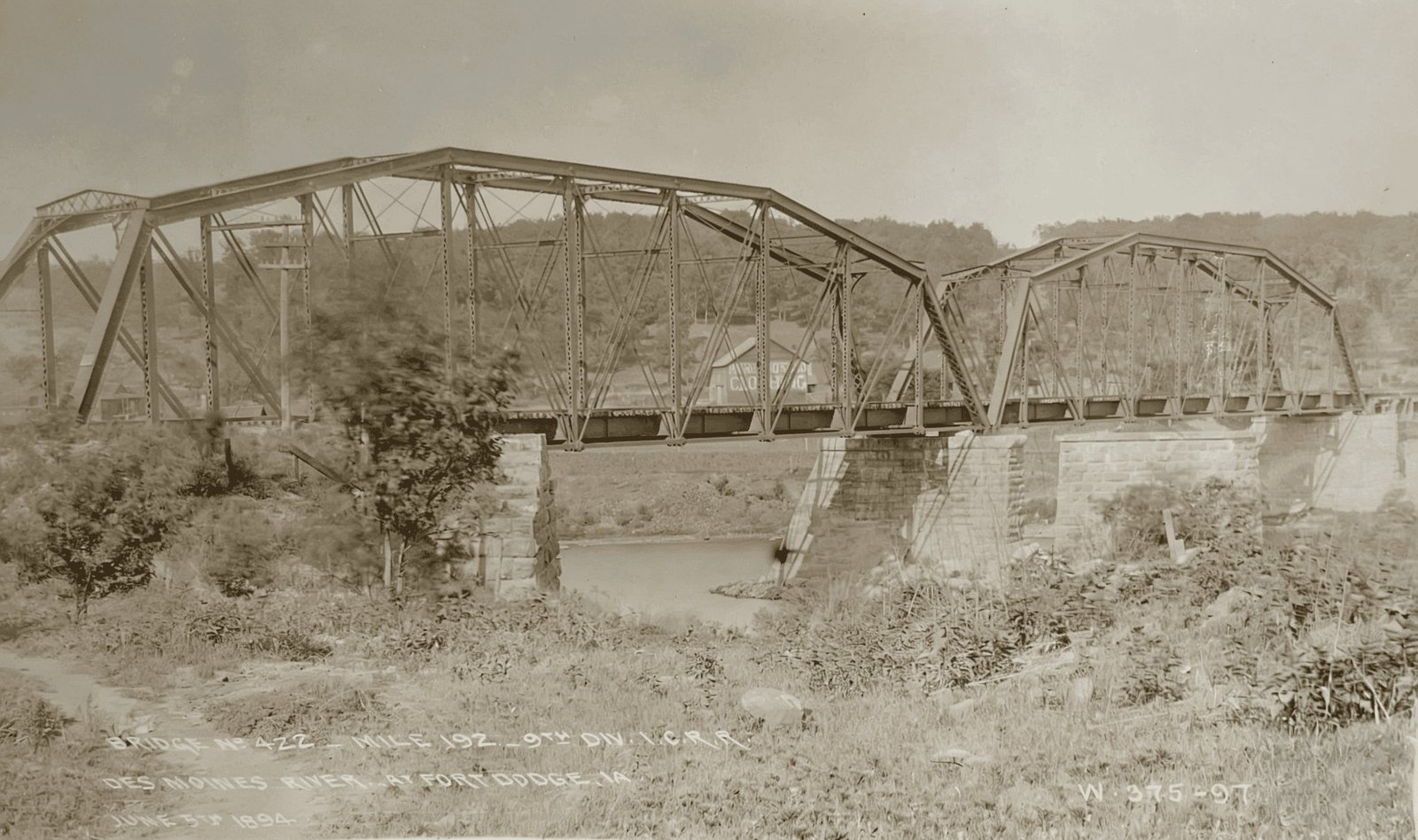
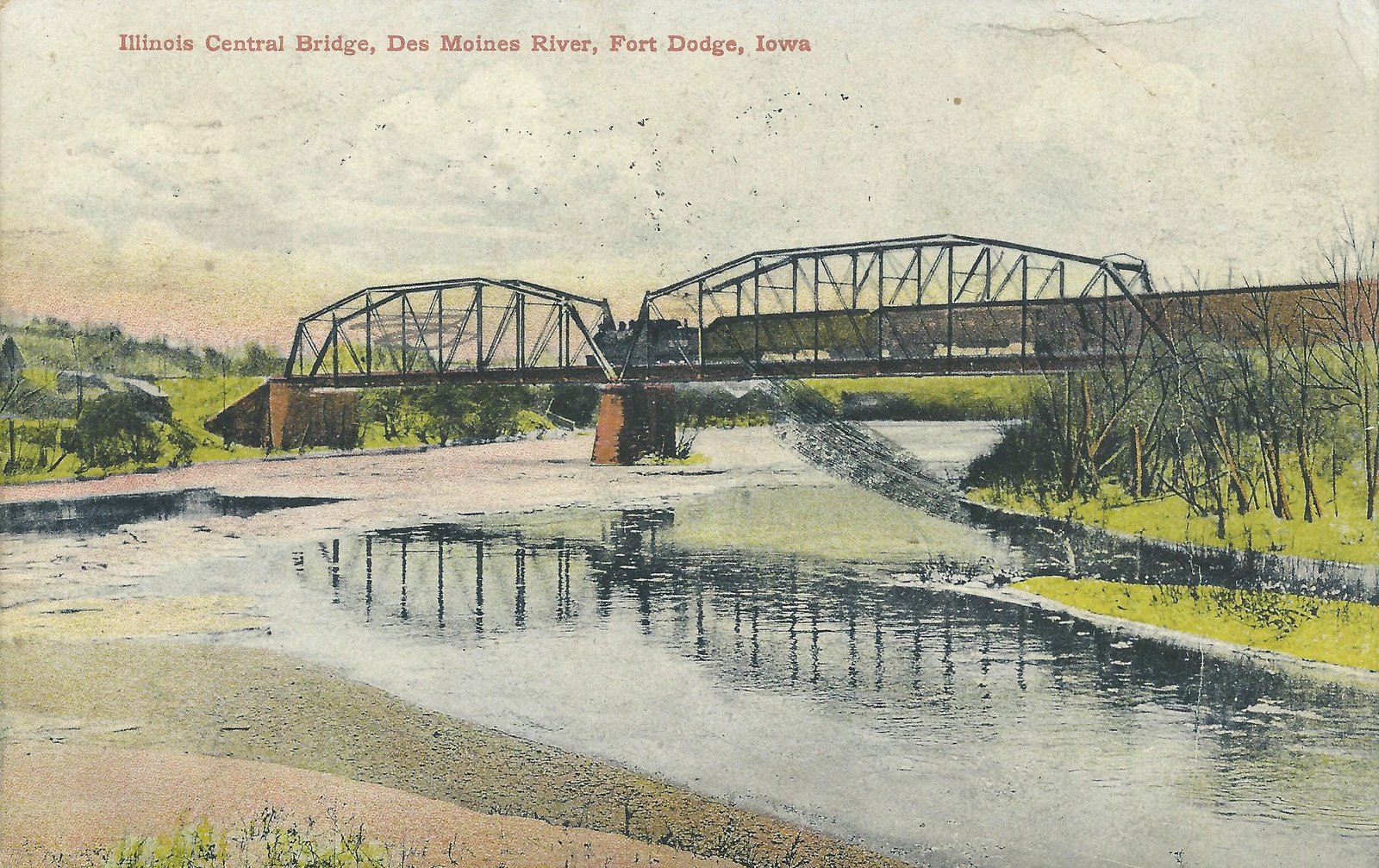
Located on the north side of Fort Dodge, this deck plate girder bridge carries a former Illinois Central Railroad mainline over the Des Moines River. The first bridge at this location was constructed in 1870, and consisted of two 197-foot combination Howe through truss spans, set onto stone substructures and approached by timber pile trestle spans on the east end. Stone for the substructures was quarried at Farley, Iowa. At the same time, the Des Moines Valley Railroad constructed a parallel span downstream. It is likely that the combination truss was periodically renewed in the 1870s and 1880s; while the parallel bridge was removed in 1878 in favor of trackage rights over the IC. In 1891, the combination bridge was replaced by two 197-foot, 9-panel, pin-connected Parker through truss spans, set onto the original stone substructures. These spans were fabricated by the Pencoyd Bridge & Construction Company, and used light built-up members and an attractive crested lattice portal bracing. The east pier was converted to an abutment in 1900 when the approach trestle was filled and an adjacent roadway crossing was separated from the main bridge. The bridge remained in this configuration for much of the 20th Century.
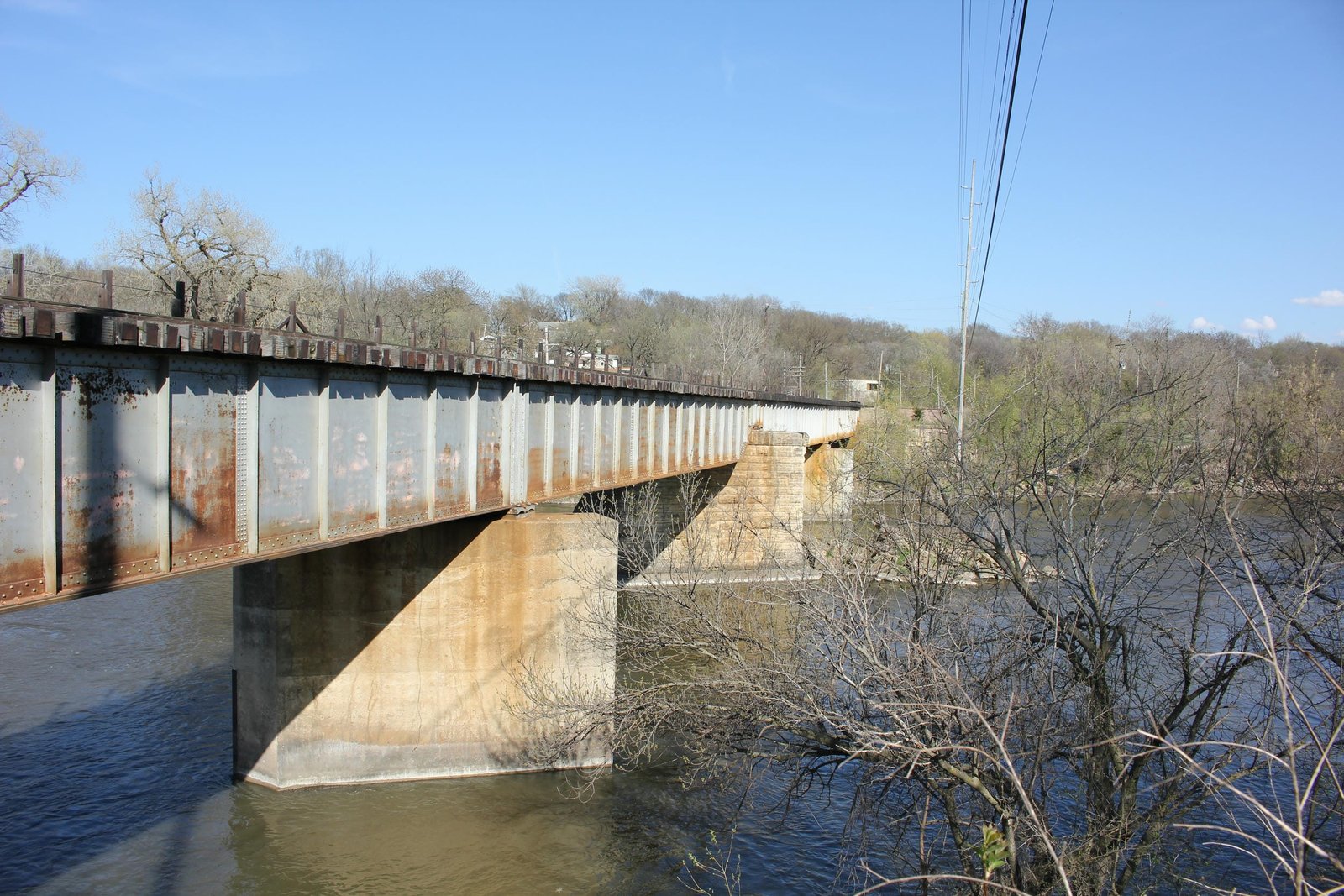
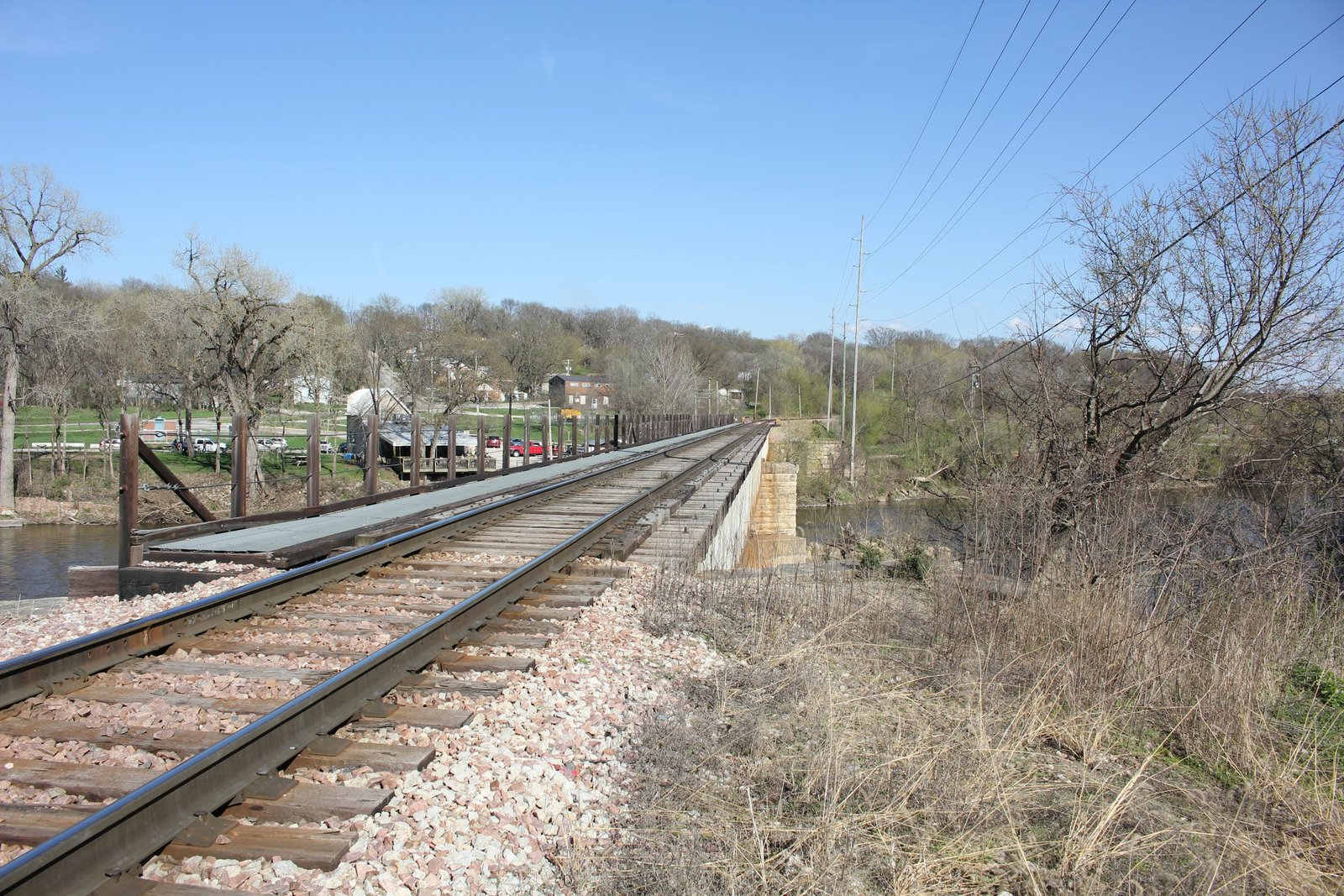
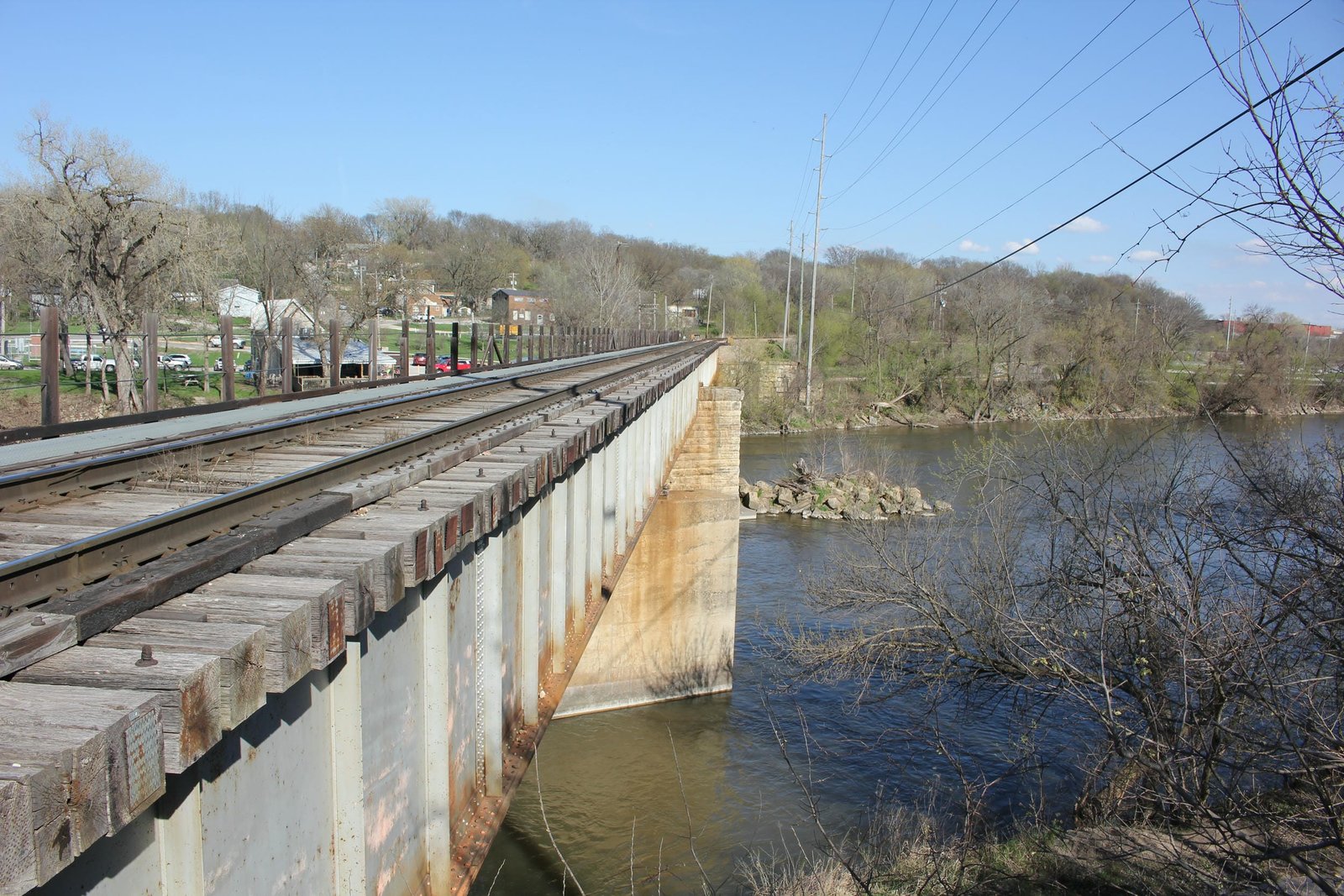
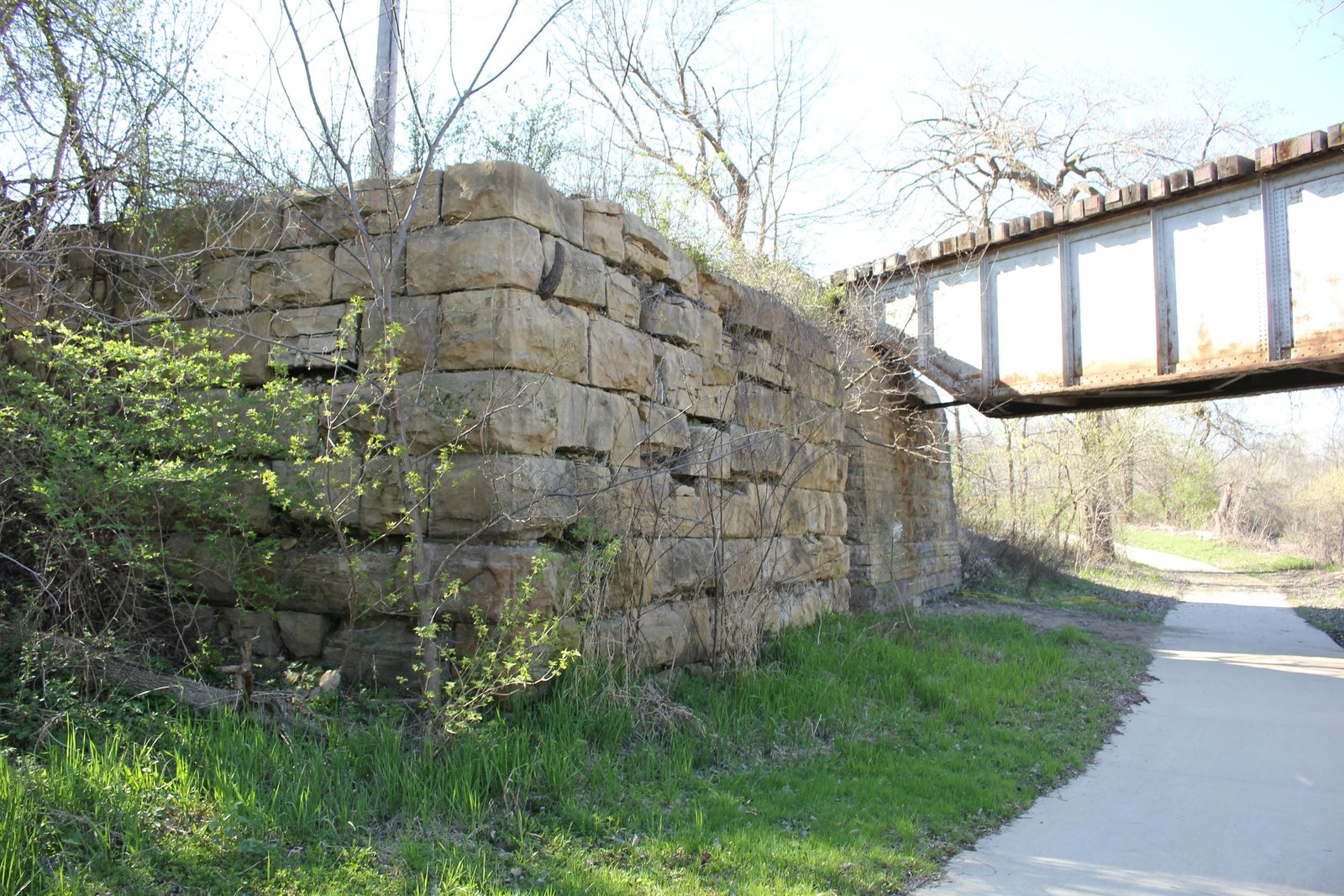
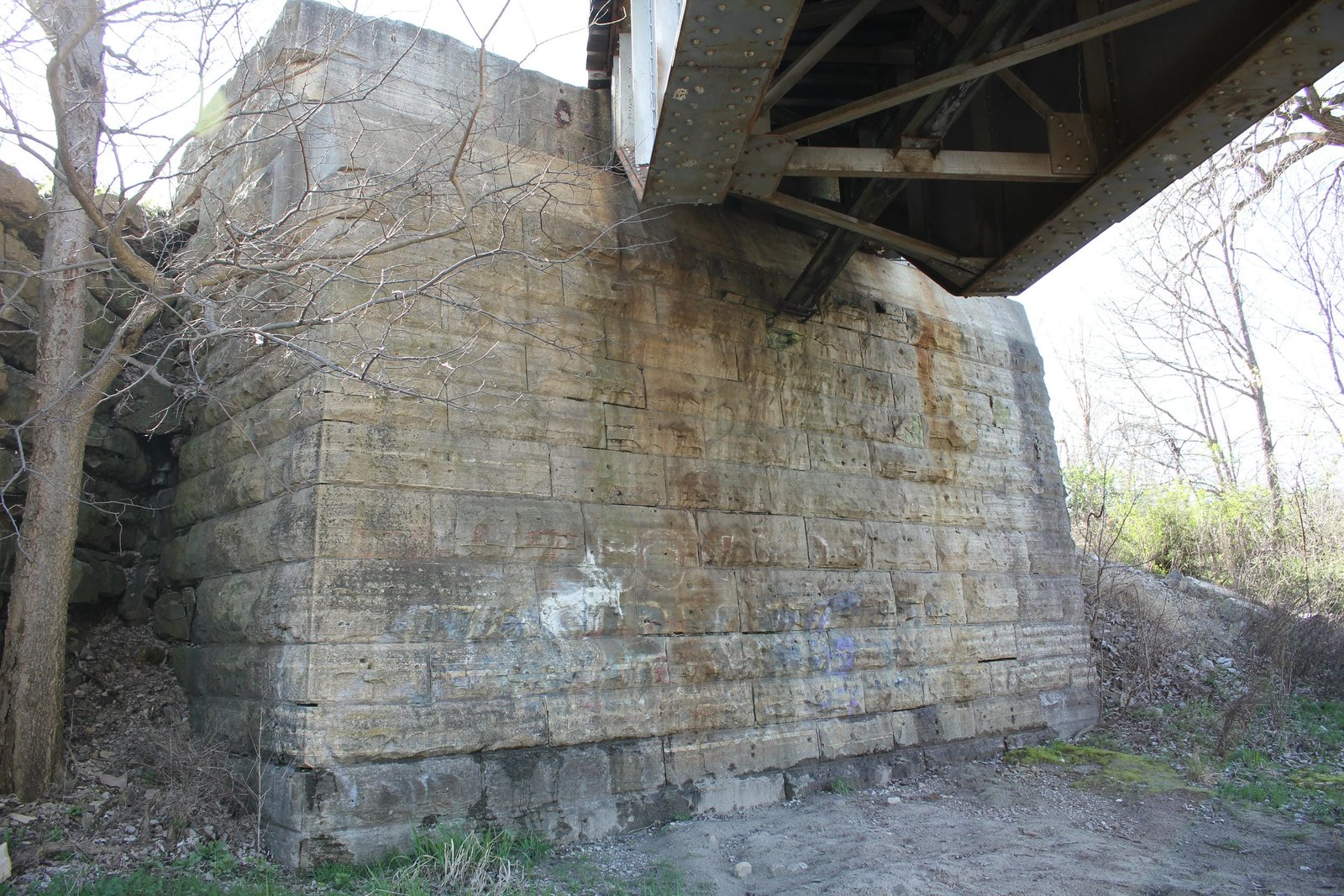
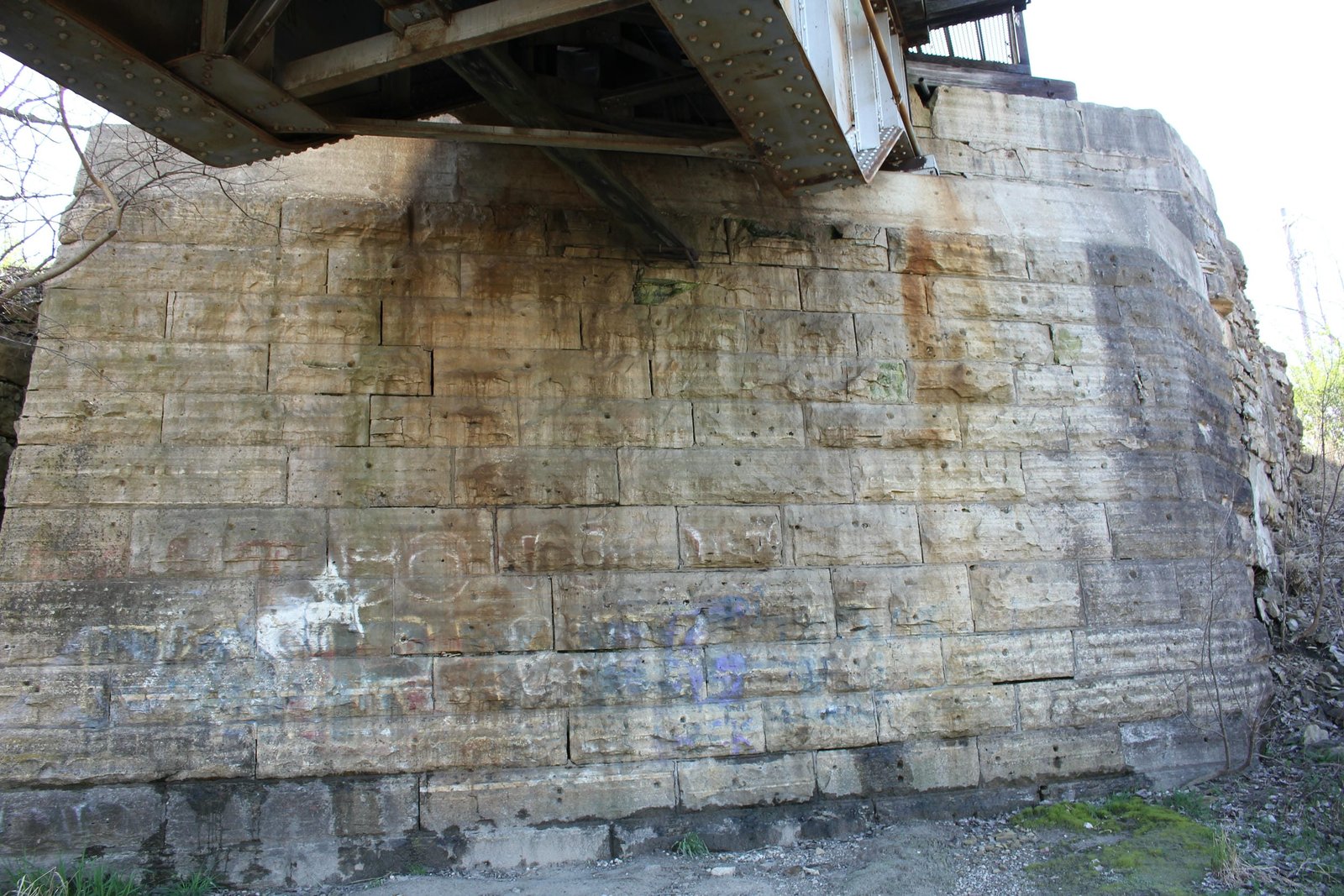
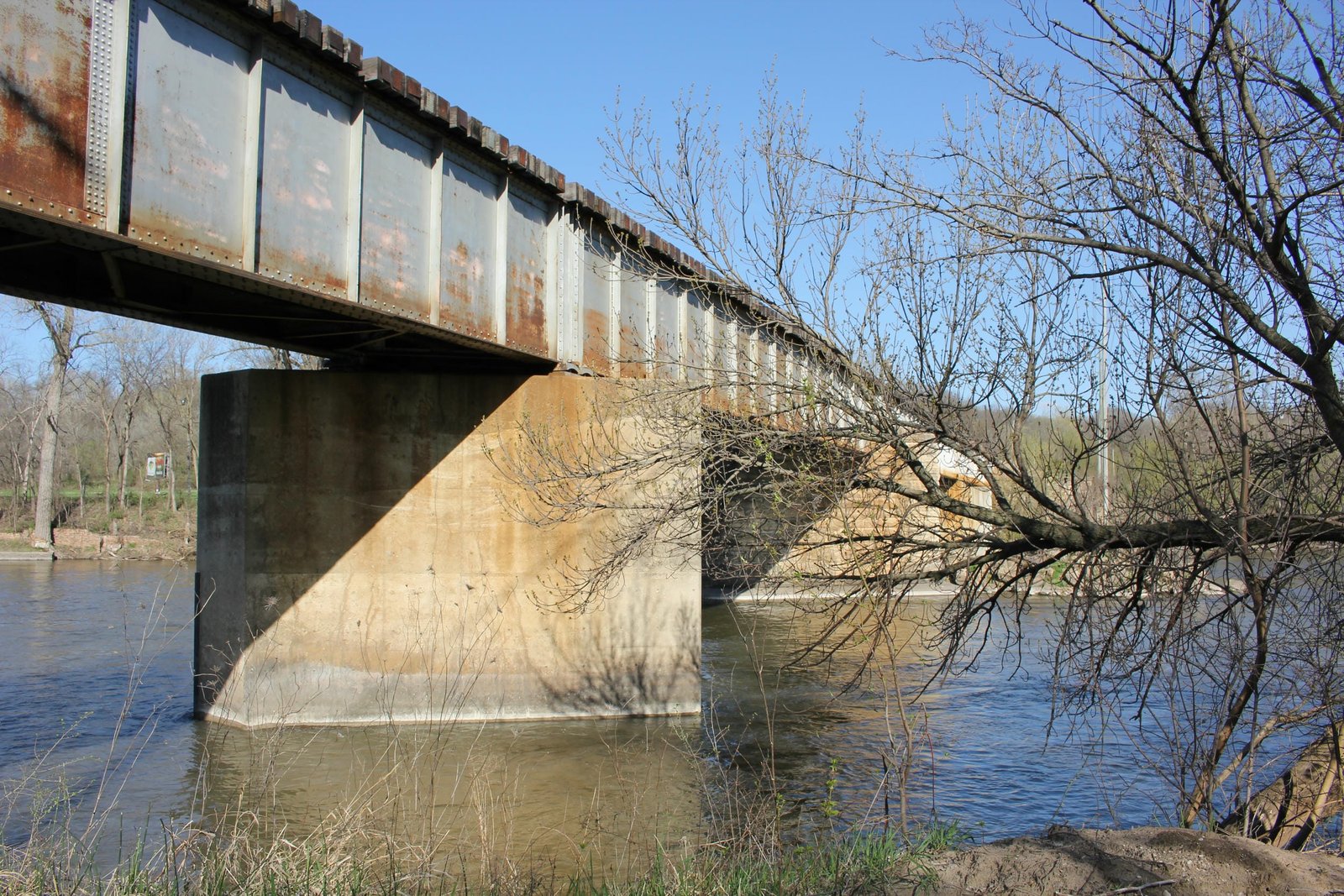
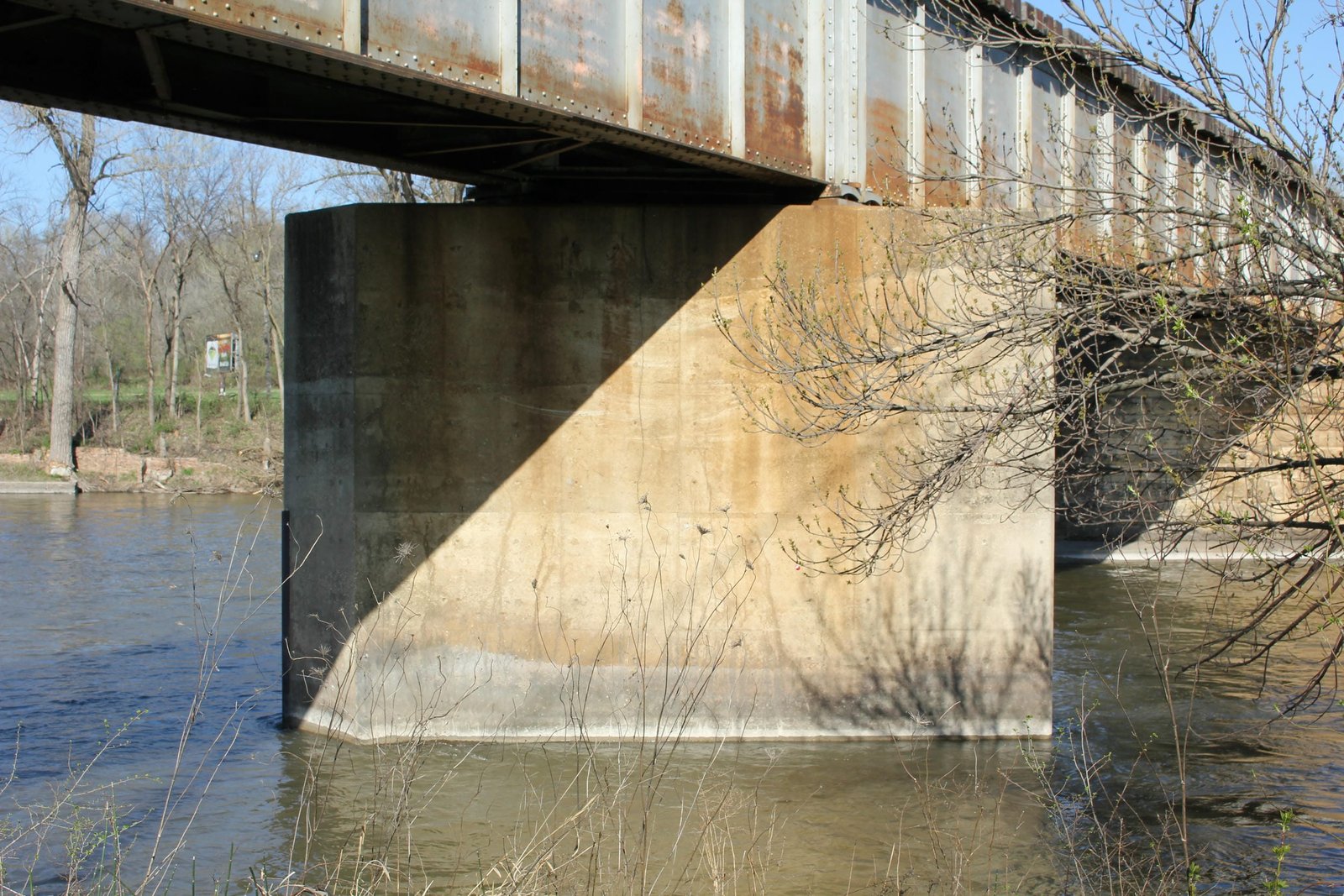
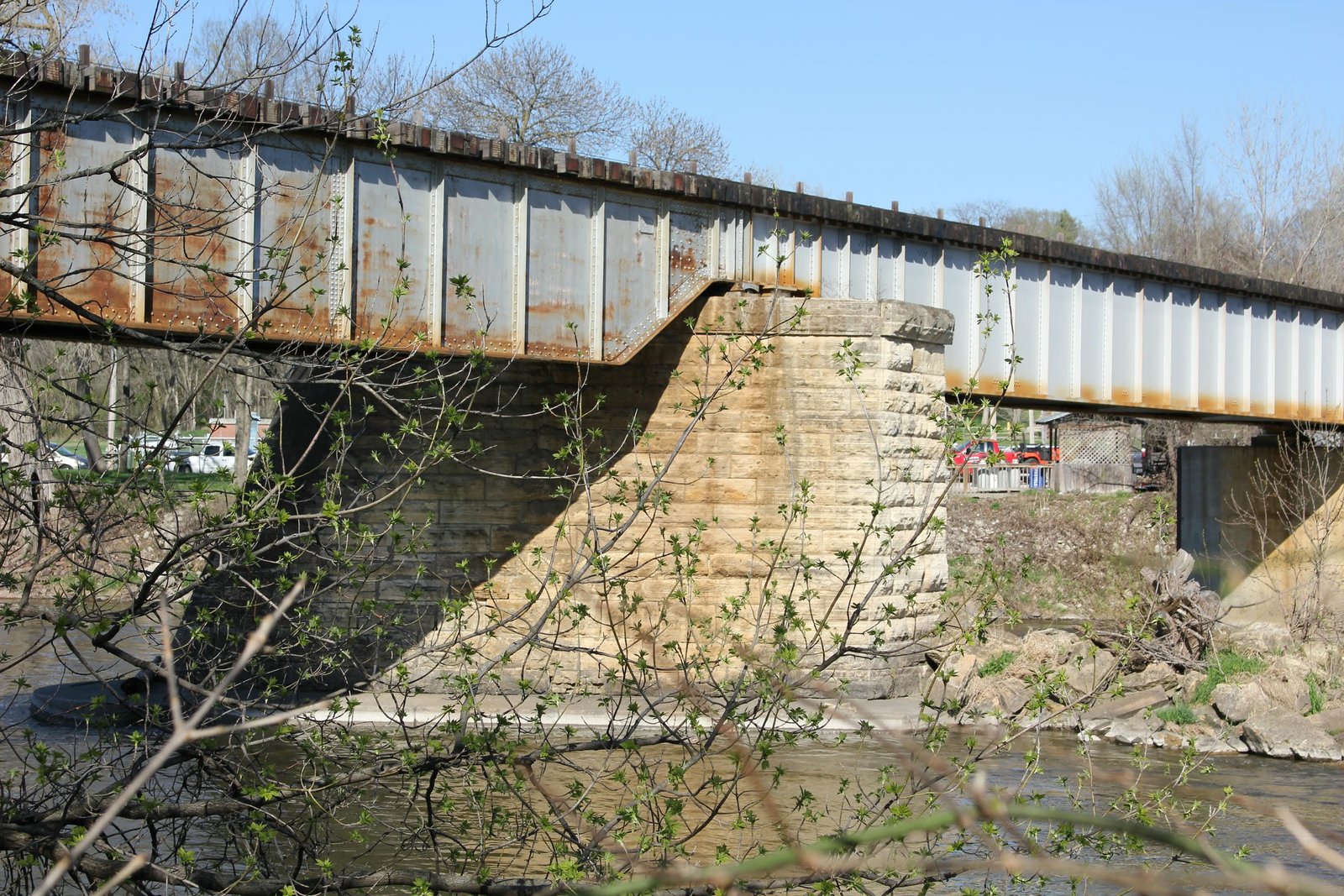
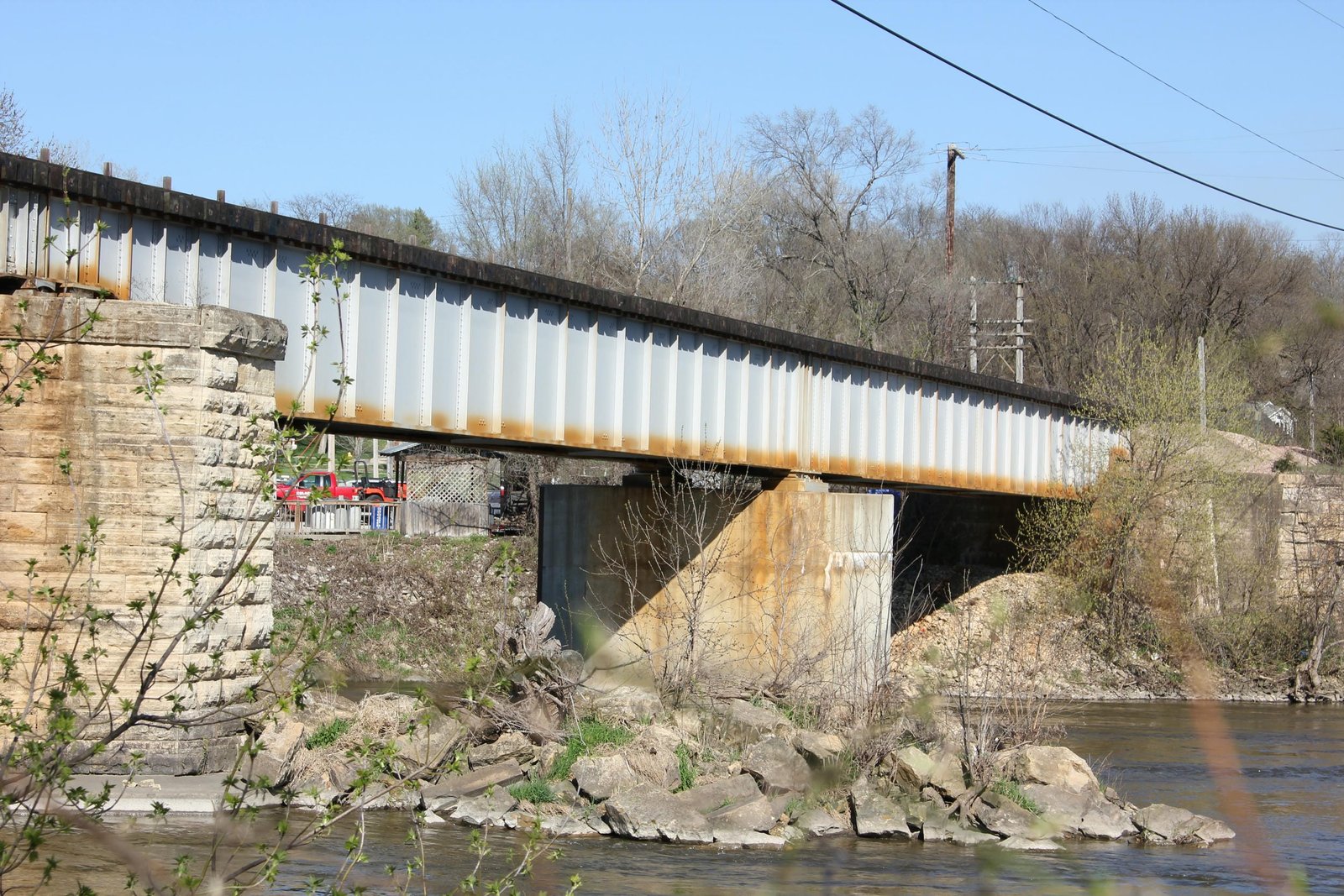
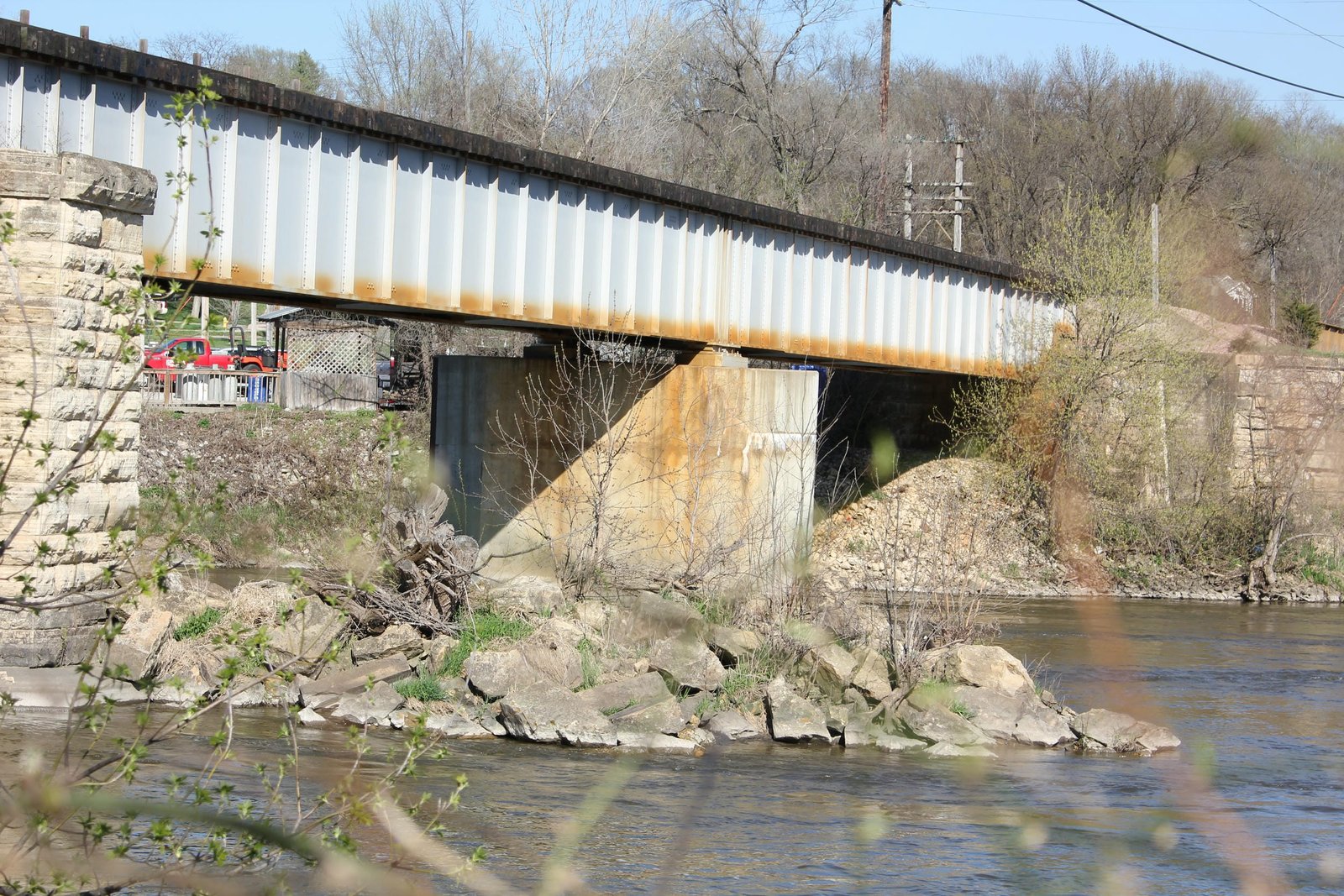
In 1965, the western truss span was replaced by a pair of deck plate girder spans. It is unclear if this was a scheduled project or if this was in response to flooding or other damage to the bridge. The remaining truss span was replaced by modern deck girder spans in 1999, giving the bridge its present configuration. Currently, the bridge consists of four 99-foot deck plate girder spans, set onto stone abutments, a stone center pier and concrete intermediate piers. In addition, the entire bridge is set at a heavy skew. The superstructure follows a standard design for the era, with two heavy girders and an open deck. The bottom of the girders are curved at the abutments and center pier, due to the girders being deeper than the original truss spans. In addition, the two sets of girders are distinctly different, with the west spans using rivets and the east spans using welded connections. The west abutment uses a standard U-shaped design, while the east abutment uses a diamond shape with a concrete back wall. The center pier uses a rectangular shape with an angled upstream nose, while the west intermediate pier uses a similar shape and the east intermediate pier follows a rounded rectangular shape. Bethlehem Steel Company fabricated the west girder spans, while an unknown firm fabricated the east girder spans. An unknown contractor constructed the original stone substructures, while unknown contractors constructed the intermediate piers. The concrete back wall at the east abutment was likely constructed by G.H. Scribner, who also built the abutments of the adjacent bridge. Deck plate girder spans were commonly used by railroads, as they were durable and easy to construct. Since the 1999 reconstruction, the bridge has seen no significant alterations, and remains in use. Overall, the bridge appears to be in good condition, with no significant deterioration noted. The center pier from the adjacent bridge was removed in the 1970s or 1980s, but both abutments from the adjacent bridge are still intact. The author has ranked the bridge as being minimally significant, due to the common design and newer age.
Citations
| Build date and builder (west spans superstructure) | Bethlehem Steel Company plaque |
| Build date (east spans) | 1999 Aerial Imagery |
| Railroad History Citation | ICC Valuation Information, Compiled by Richard S. Steele |