
Click the photo to view the full-size version
| Name | C&NW Indian Creek Bridge (Council Bluffs) Chicago & North Western Railway Bridge #1095 |
| Built By | Chicago & North Western Railway |
| Currently Owned By | Union Pacific Railroad |
| Superstructure Contractor | American Bridge Company of New York |
| Substructure Contractor | Koss Construction Company of Des Moines, Iowa |
| Length | 65 Feet Total |
| Width | 1 Track |
| Height Above Ground | 20 Feet (Estimated) |
| Superstructure Design | Through Plate Girder |
| Substructure Design | Concrete |
| Date Built | 1912 |
| Traffic Count | 0 Trains/Day (Bridge is Abandoned) |
| Current Status | Abandoned |
| Chicago & North Western Railway Bridge Number | 1095 |
| Significance | Local Significance |
| Documentation Date | 2/5/2017 |
In 1867, the Cedar Rapids & Missouri River Railroad (CR&MR) continued constructing a mainline westward from Boone, Iowa. In the late 1850s and early 1860s, the CR&MR had participated in constructing a line from Clinton, Iowa to Boone. The CR&MR was leased by the Chicago & North Western Railway (C&NW), which was seeking a route connecting Chicago to the Missouri River. In 1867, an impressive 150 miles were constructed between Boone, Iowa and Council Bluffs, Iowa, completing a connection between Chicago and the Missouri River. The line also allowed for a short spur from Missouri Valley, Iowa to the Missouri River opposite of Blair, Nebraska. This spur would eventually be extended across the Missouri River and into Nebraska. Between 1869 and 1872, Union Pacific Railroad (UP) constructed a bridge across the Missouri River between Council Bluffs and Omaha, Nebraska; and the C&NW obtained trackage rights over the bridge to reach Omaha. During the second half of the 19th Century, the C&NW had constructed and acquired a large amount of trackage throughout the Midwest. In 1884, the CR&MR was formally purchased by the C&NW; and this line quickly became a core asset of the C&NW system.
By the late 19th Century, traffic over this line had increased to the point significant upgrades were required. In 1893, a 5-mile section of railroad was relocated west of Jefferson, Iowa to improve grades and eliminate curves. One of the most significant barriers to efficient operation over this line was the Des Moines River Valley between Boone and Ogden, Iowa. The original route crossed the Des Moines River at Moingona, which was approached by winding and steep approaches on each bank. In 1899, C&NW subsidiary Boone County Railway (BCR) began construction on a more direct route between Boone and Ogden, Iowa; including a massive viaduct across the Des Moines River. The BCR was consolidated into the C&NW in 1900, and the new cutoff was completed in May 1901. The new alignment shortened the route by 3 miles, cut grades in half and only required two small curves. The original mainline through Moingona was maintained as an emergency backup and to serve industries in the area. Between 1901 and 1902, a second track was also constructed between Ogden and Council Bluffs, including a 5-mile realignment near Arcadia, Iowa. The double tracking of this line provided the C&NW with a well constructed double track mainline between Chicago and Council Bluffs.
By the 20th Century, the C&NW was operating an extensive railroad network, which radiated north and west from Chicago. The original mainline into Moingona was abandoned in 1930. This line served as the backbone of the C&NW, connecting transcontinental freight and passengers at Omaha to Chicago. Known as the Overland Route, this line became one of the most significant railroad routes in the United States. This route saw continuous upgrades during the 20th Century, including significant bridge, rail, tie and signal upgrades. In 1995, the C&NW was purchased by UP, which provided UP with a mainline into the railroad hub of Chicago. Into the 21st Century, the line has seen continuous upgrades, and remains one of the most significant railroad lines in the United States. Today, UP operates this line as the Boone Subdivision between Boone and Missouri Valley; and the Omaha Subdivision between Missouri Valley and Council Bluffs.
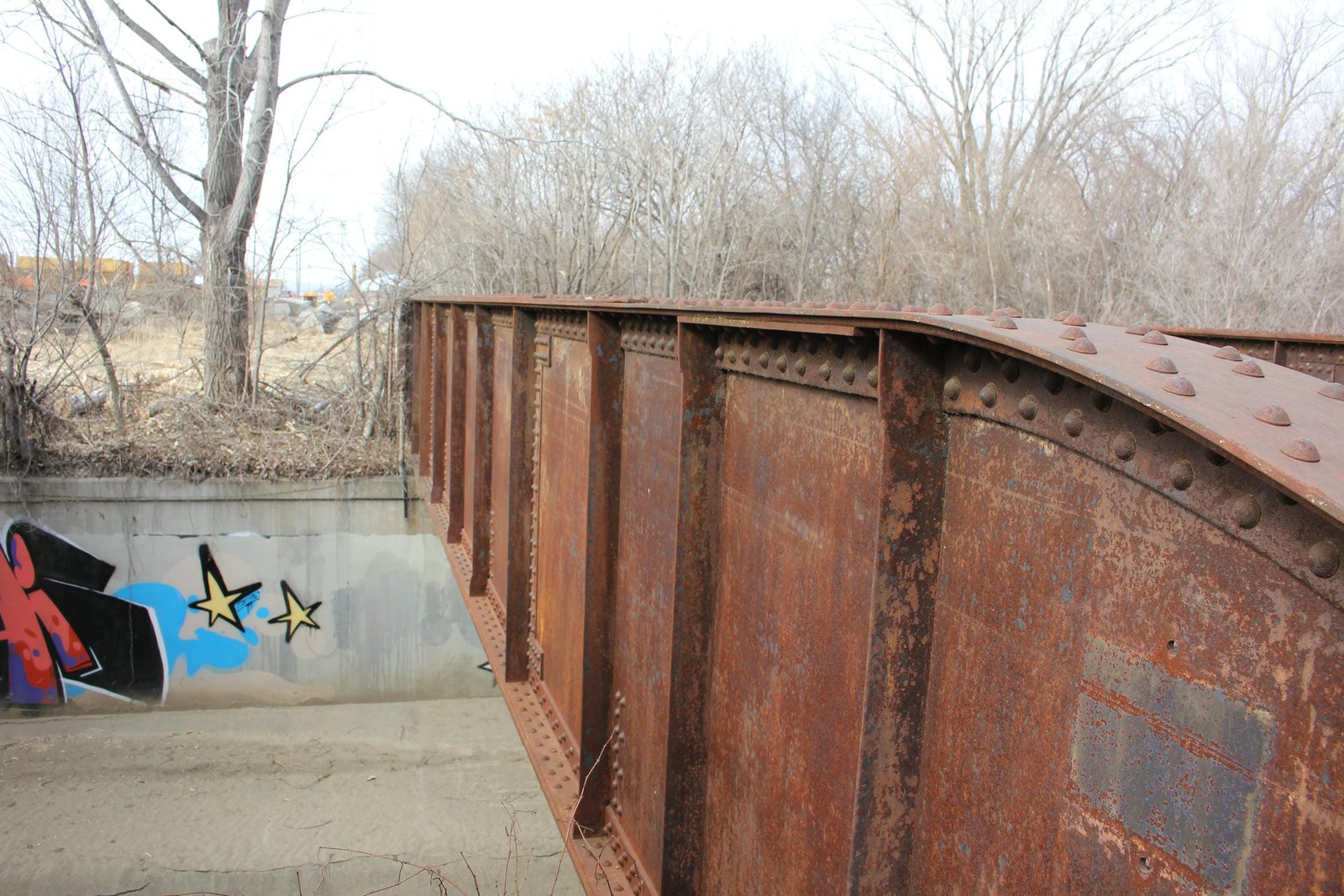
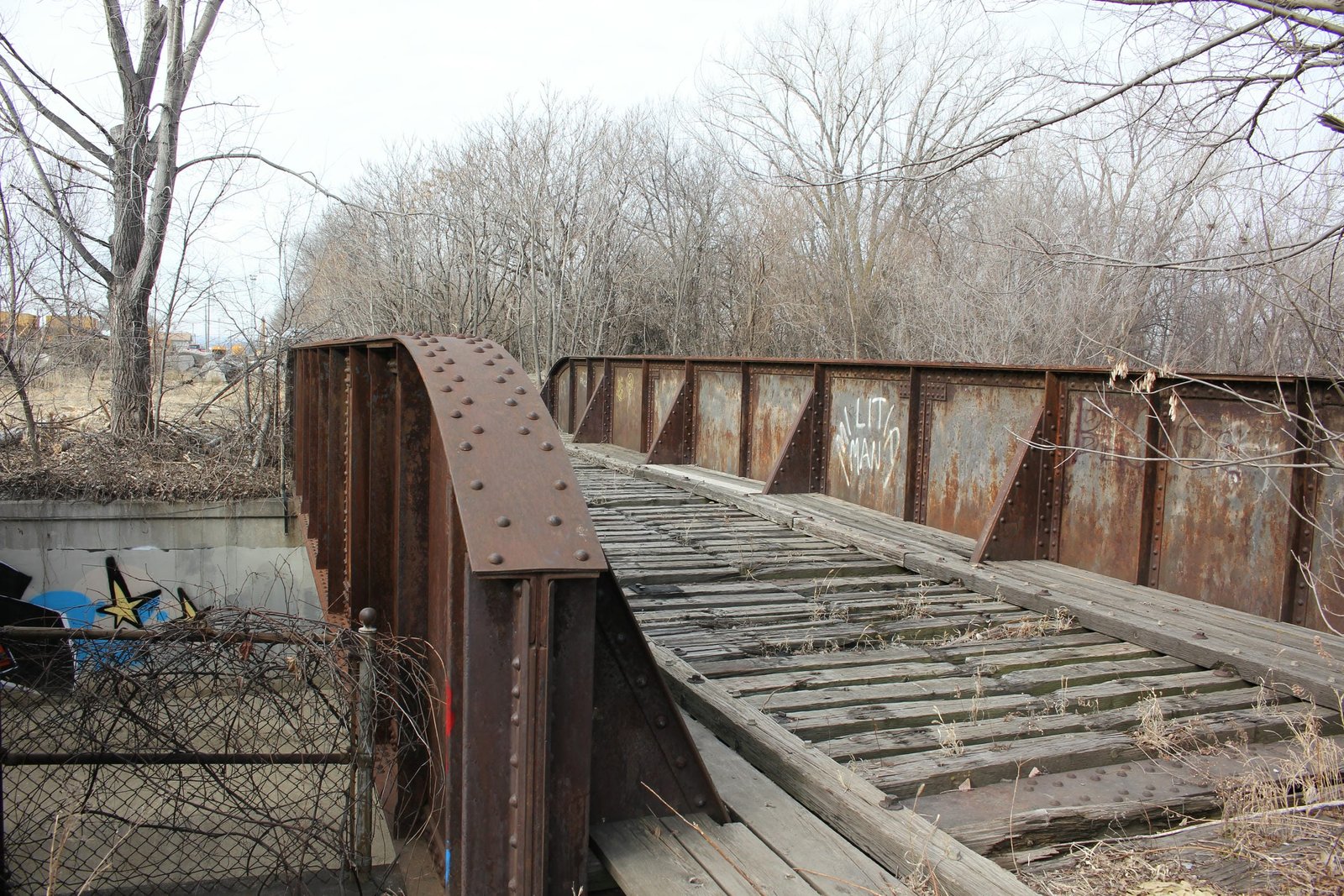
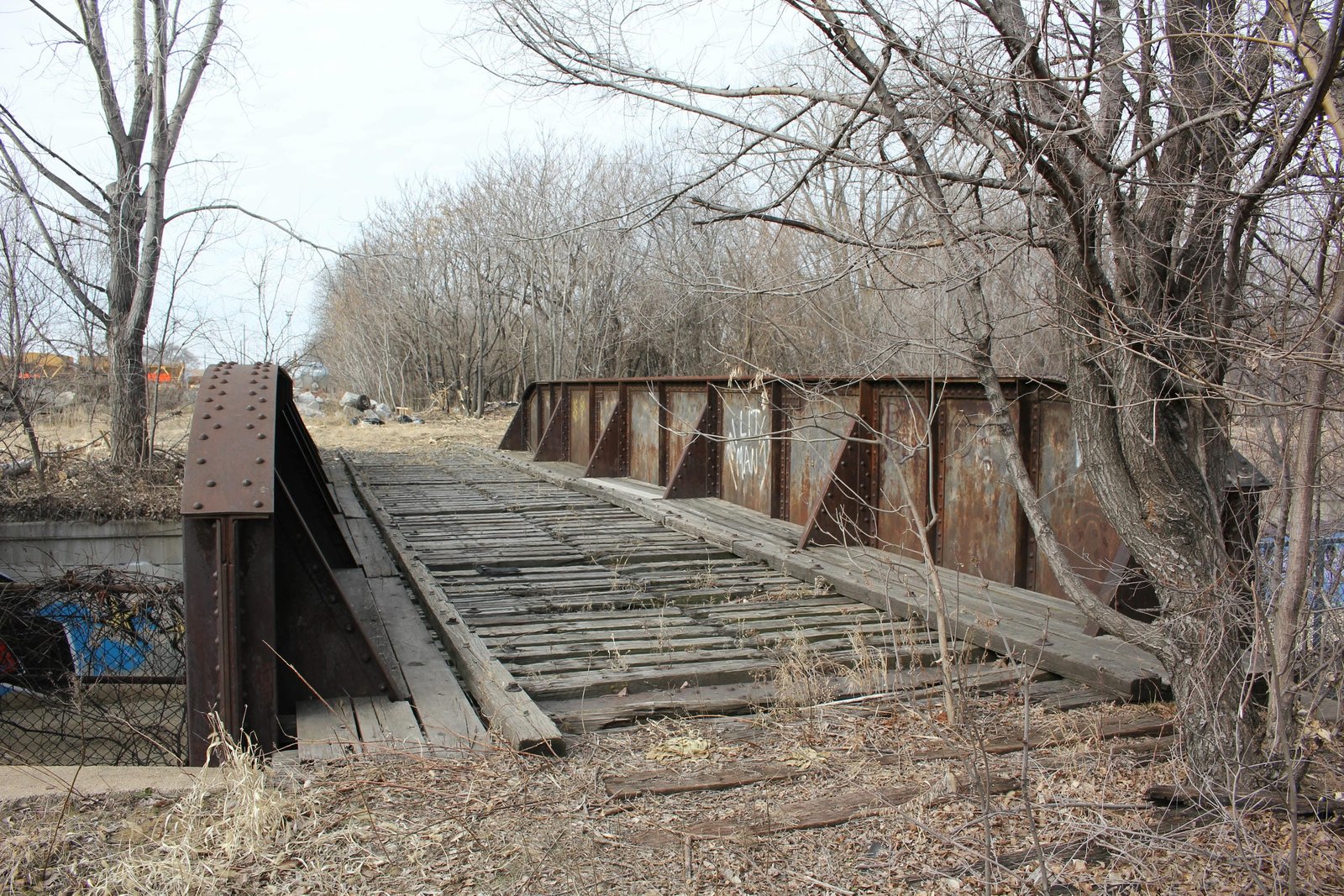
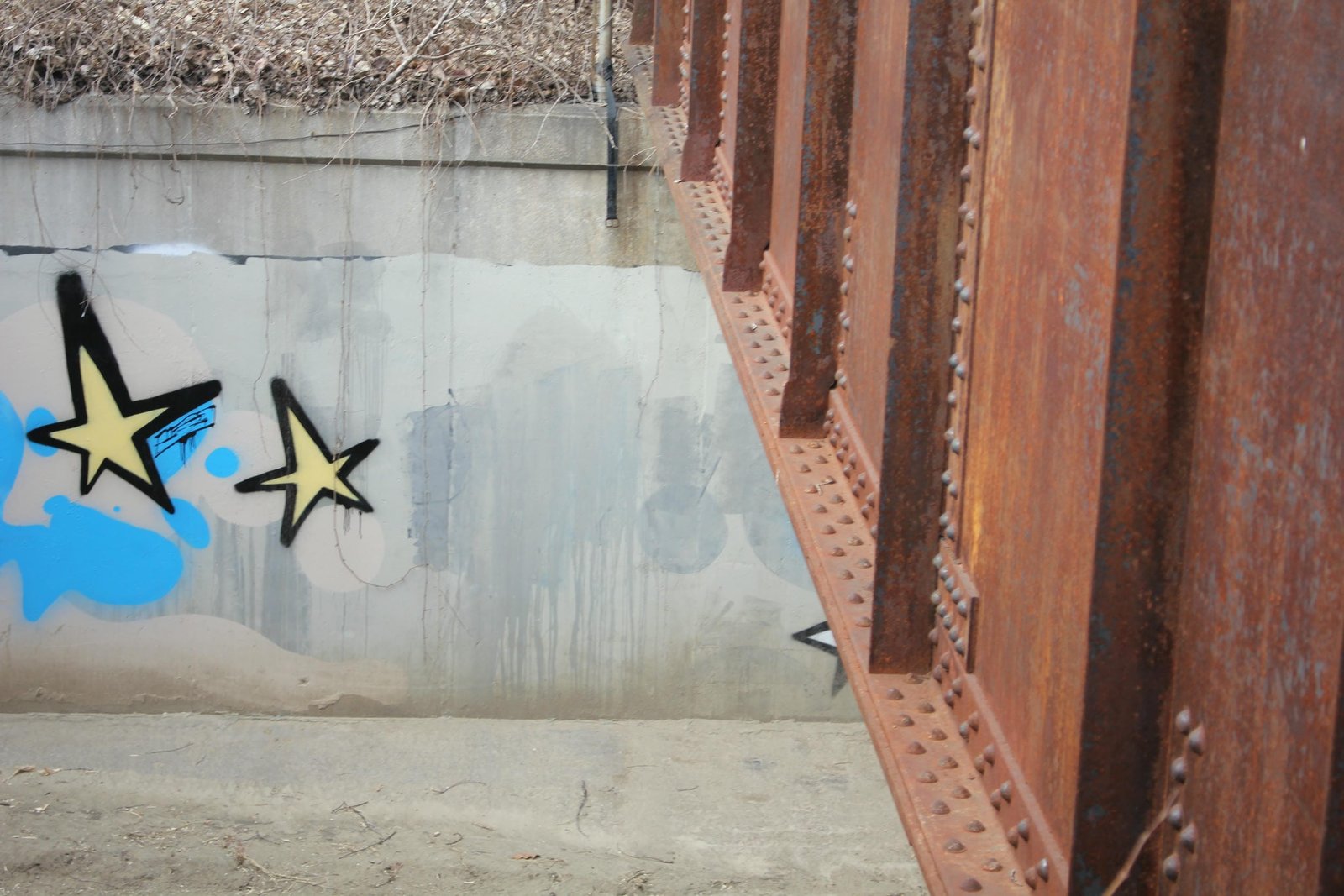
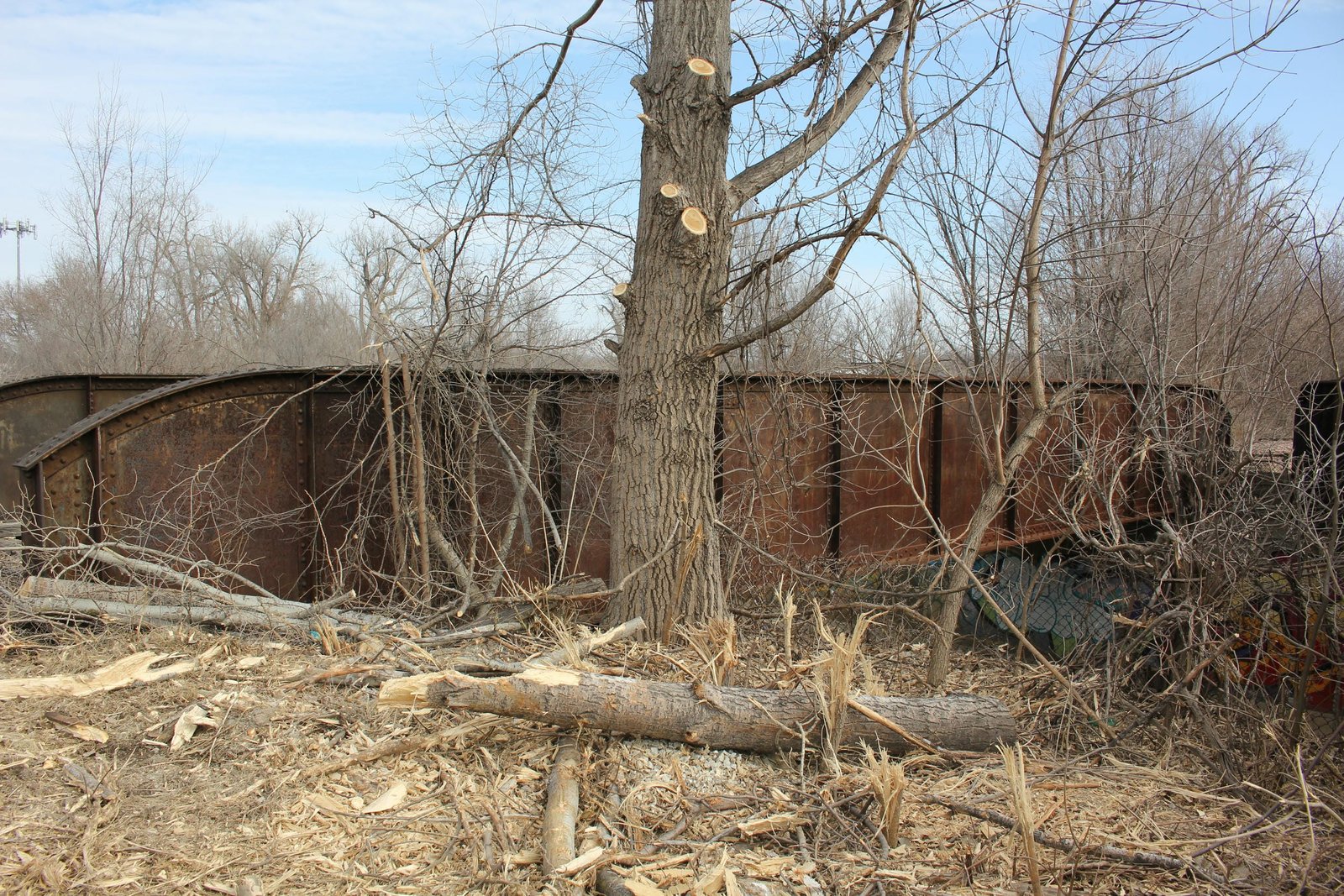
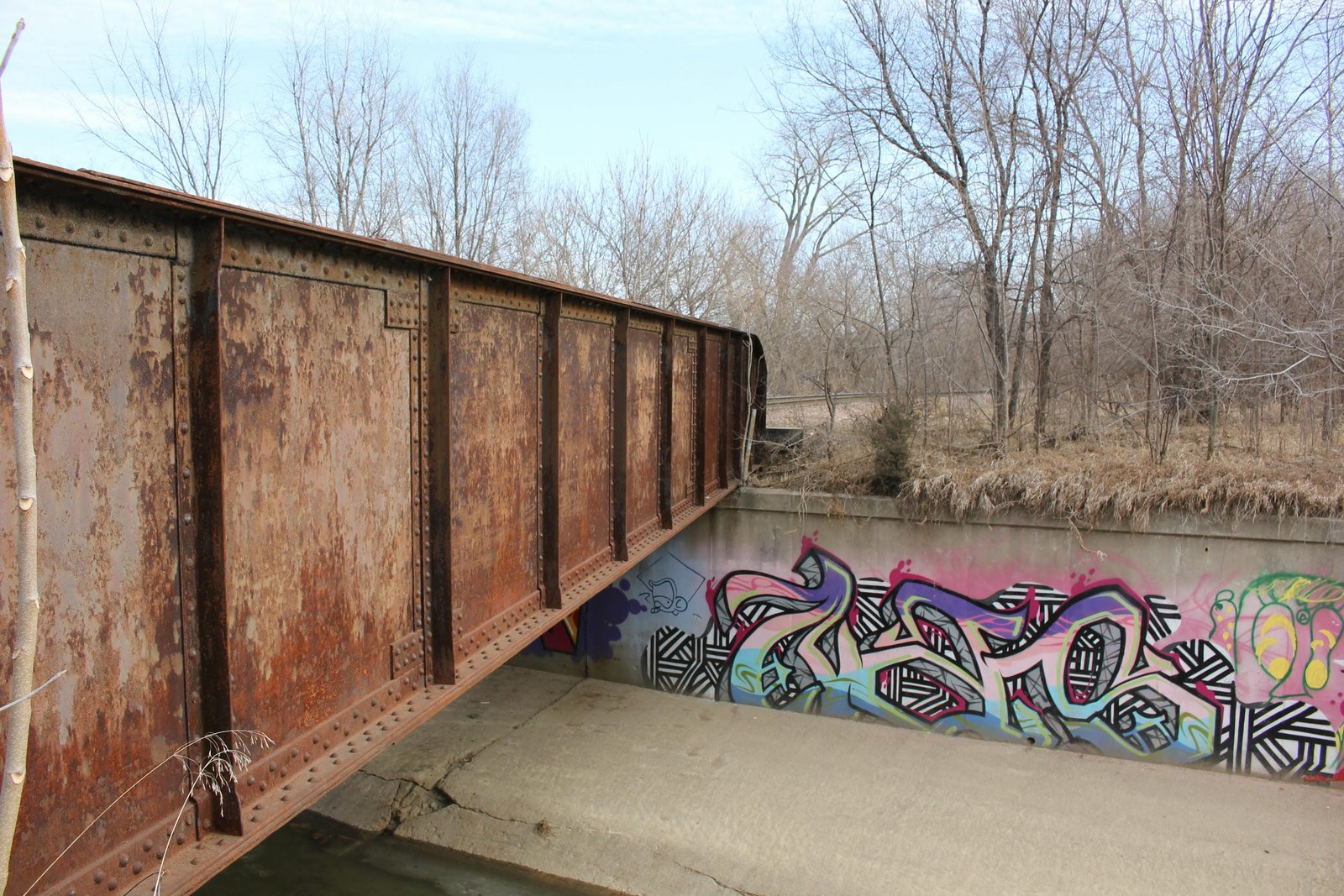
Located at the former alignment of 12th Avenue in Council Bluffs, this through plate girder bridge is the northern of two parallel structures carrying a former Chicago & North Western Railway spur Indian Creek. The C&NW first constructed a spur to reach the stock yards in Council Bluffs in the late 19th Century. Since Council Bluffs was first settled, Indian Creek had been known for disastrous floods due to its narrow valley and small tributary area. The first bridge at this location was likely a timber pile trestle bridge, constructed when the line was first built. In 1898, the City of Council Bluffs ordered a number of railroads to raise and remodel their bridges across Indian Creek, giving sufficient clearance and a channel width of 42 feet. It is believed the C&NW constructed a new bridge shortly after. In 1912, the 1899-era bridge was replaced by the current structure. Currently, the bridge consists of a 65-foot through plate girder span, set onto concrete abutments. The superstructure follows a standard design, with two heavy plate girders, rounded and tapered girder ends and a standard floor. The abutments use a standard design, with a rectangular structure that is set behind the current creek channel walls. In addition, the bridge shares the east abutment with the southern bridge. American Bridge Company fabricated the superstructure, while Koss Construction Company built the abutments. Through plate girder spans were popular for railroad use, as they were durable and easy to construct. Since the initial construction, the bridge has seen no significant alterations. Starting in 1936, Indian Creek was channelized, and large concrete walls were constructed to contain the creek. The space between the original abutments and channel walls was then filled. The bridge was abandoned in the 1990s, and remains abandoned today. It is doubtful that the bridge will ever be used again. Overall, the bridge appears to be in fair condition, with no significant deterioration noted. The author has ranked the bridge as being locally significant, due to the common design.
Citations
| Build date and builders | Chicago & North Western Railway Drawing Collection at the Chicago & North Western Historical Society Archives |
| Railroad History Citation | ICC Valuation Information, Compiled by Richard S. Steele |