

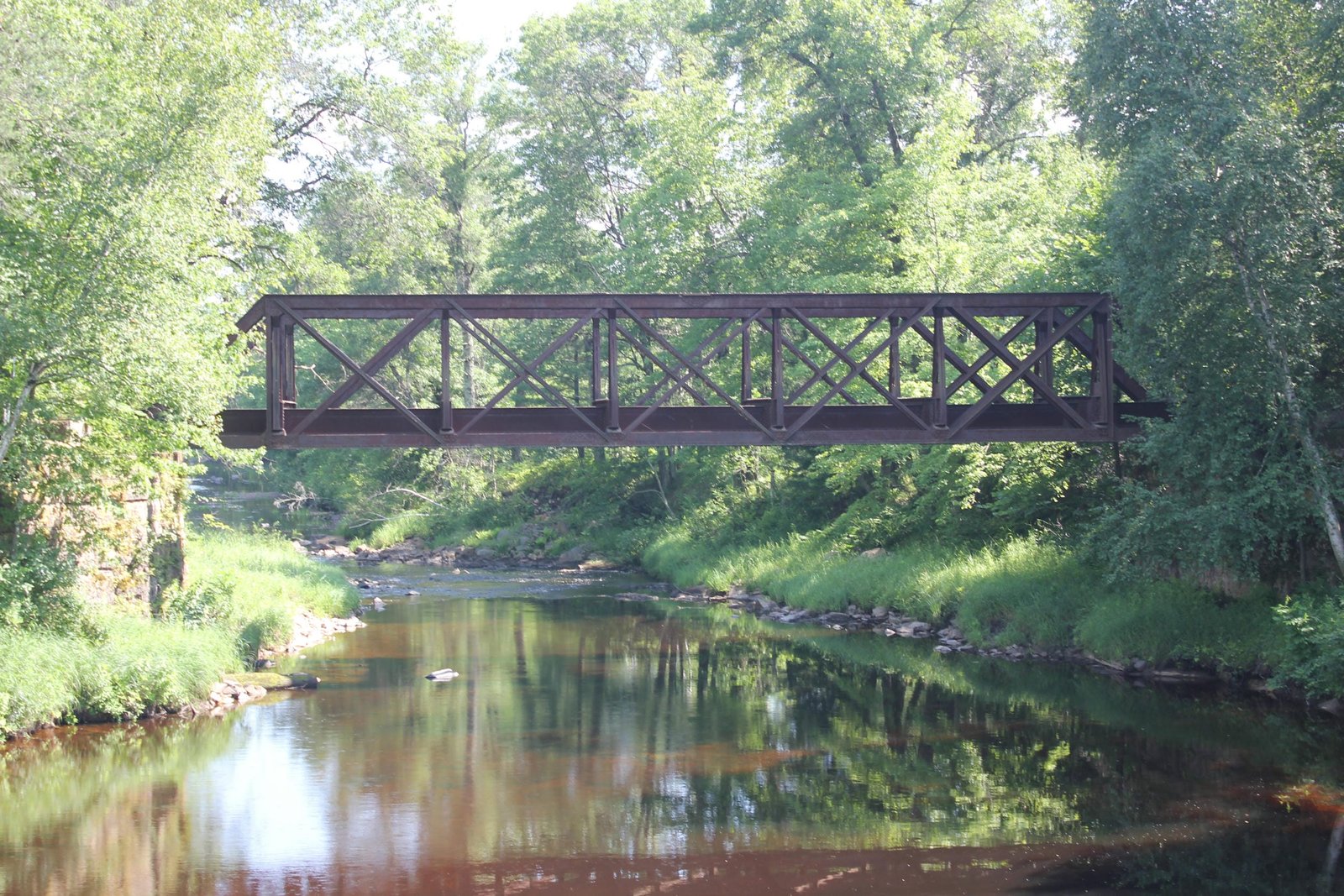
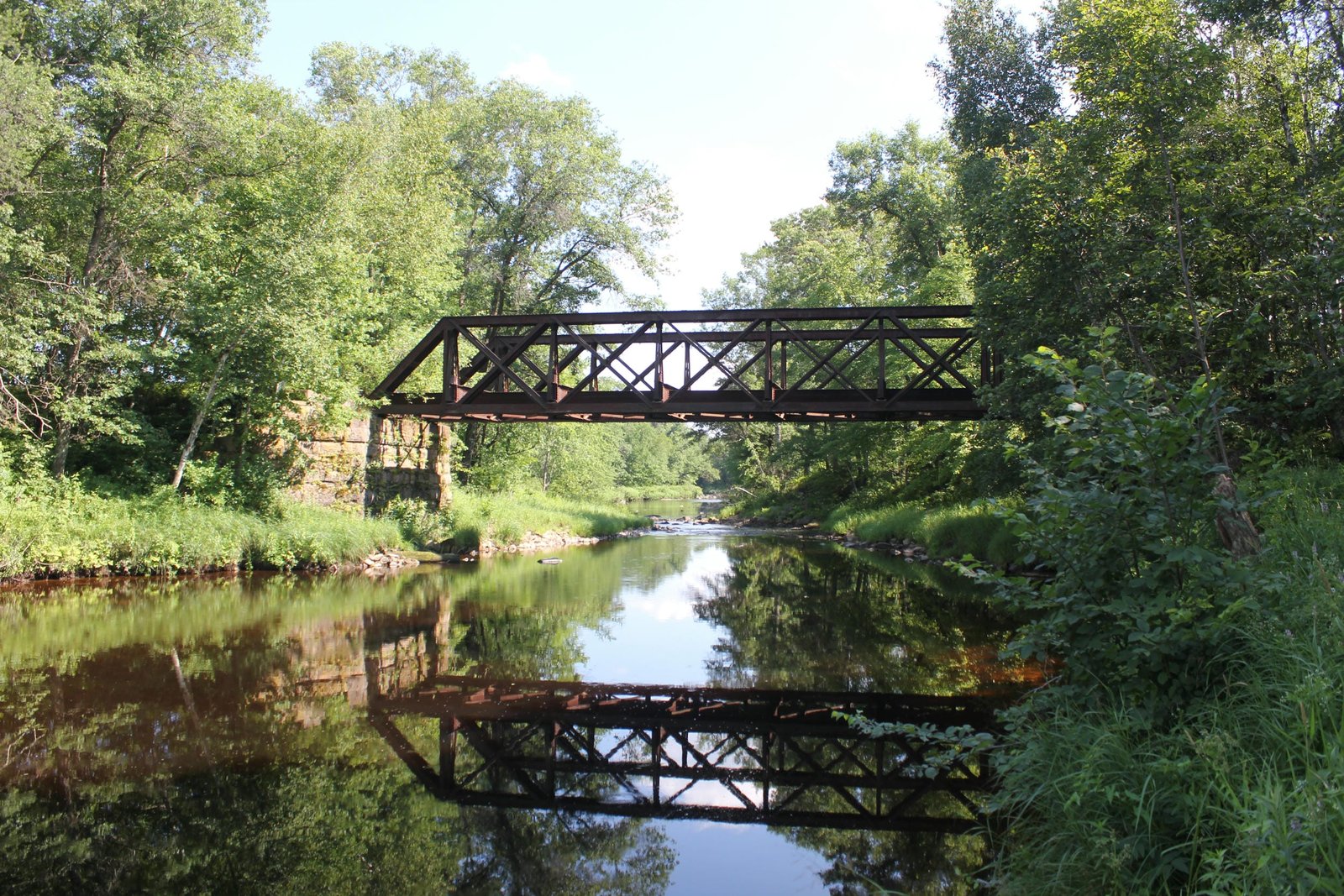
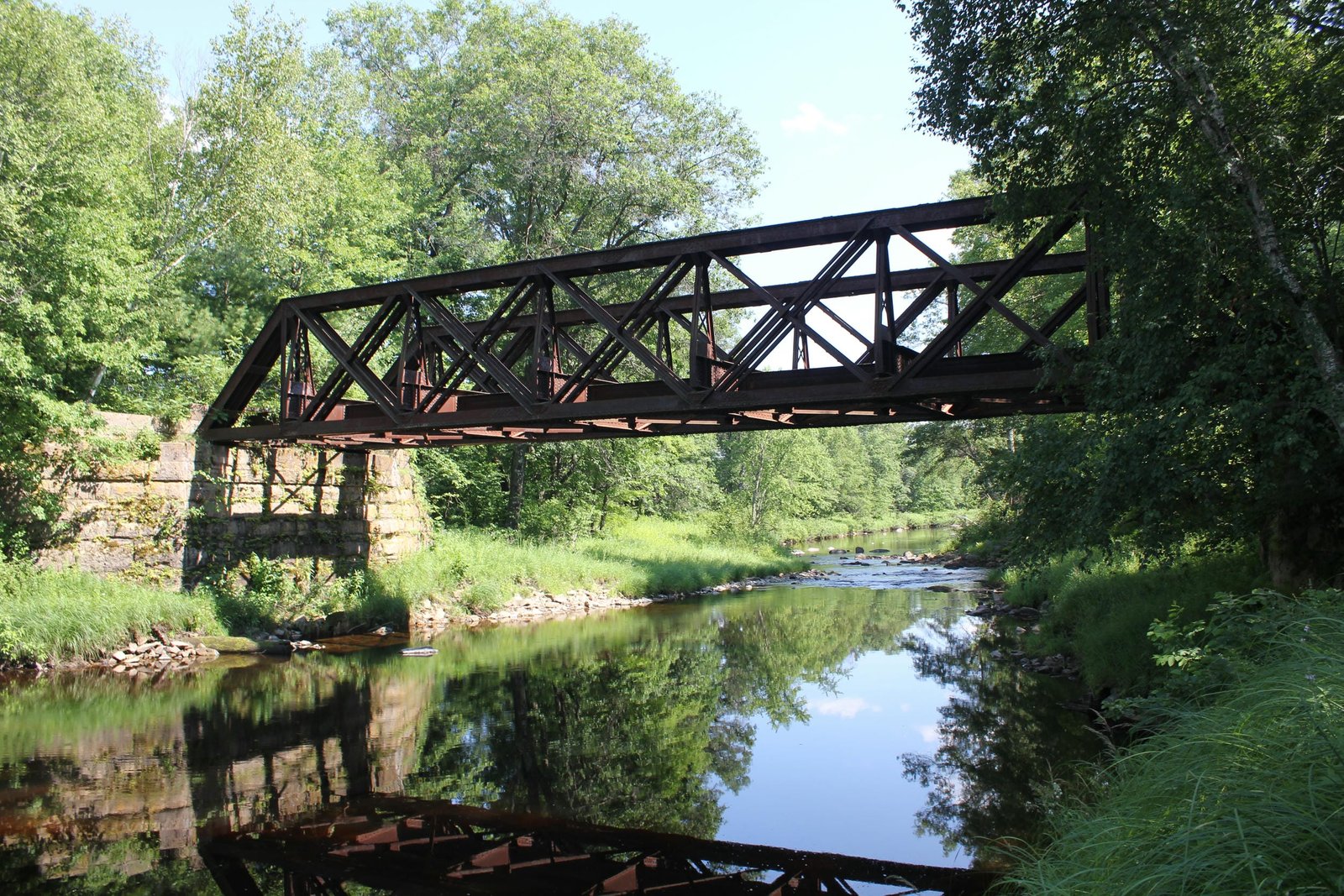
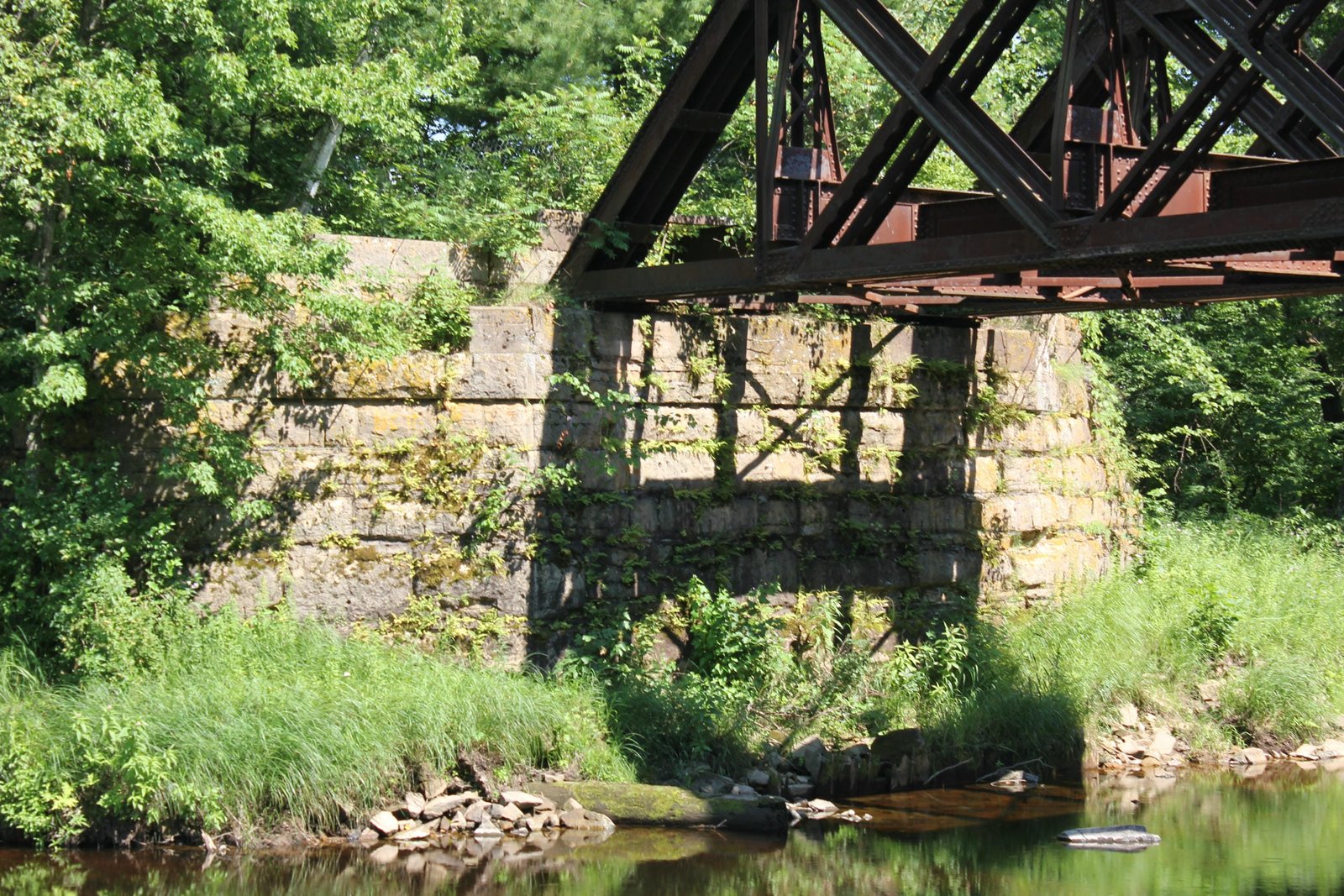

Click the photo to view the full-size version
| Name | C&NW Wedges Creek Bridge Chicago & North Western Railway Bridge #B-25 |
| Built By | Chicago, St. Paul, Minneapolis & Omaha Railway |
| Currently Owned By | Private Owner |
| Superstructure Contractor | Leighton Bridge and Iron Works of Rochester, New York (Initial Fabrication) American Bridge Company of New York (1902 Reconstruction) |
| Substructure Contractor | James McClure of St. Paul, Minnesota |
| Length | 84 Feet Total |
| Width | 1 Track |
| Height Above Ground | 15 Feet (Estimated) |
| Superstructure Design | Double Intersection Warren Pony Truss |
| Substructure Design | Stone Masonry |
| Date Built | 1902, Using a Span Fabricated 1899 |
| Original Location | Bridge #414; St. Croix River Bridge; Hudson, Wisconsin |
| Traffic Count | 0 Trains/Day (Bridge is Abandoned) |
| Current Status | Abandoned |
| Chicago & North Western Railway Bridge Number | B-25 |
| Significance | High Significance |
| Documentation Date | 7/18/2016 |
In 1881, the Chicago, St. Paul, Minneapolis & Omaha Railway (Omaha Road) constructed 14 miles of new railroad, extending from the existing mainline at Merrillan, Wisconsin to Neillsville, Wisconsin. The line was extend an additional one mile east in 1887, followed by an additional 24 miles to Marshfield, Wisconsin in 1891. At Marshfield, the line met with an existing Milwaukee, Lake Shore & Western Railroad, later Chicago & North Western Railway (C&NW) line. The Omaha Road had been controlled by the C&NW since 1882. The C&NW constructed and acquired a large amount of trackage through the Midwest, and the Omaha Road provided additional lines in western Wisconsin, southern Minnesota and parts of Iowa, Nebraska and South Dakota. This line served mainly as a short connecting line between the C&NW at Marshfield and the Omaha Road mainline. By the early 20th Century, the Omaha Road operated a respectable network of railroad lines, serving in conjunction with the C&NW lines. The Omaha Road would formally be merged into the C&NW in 1959. By the late 20th Century, the C&NW sought to sell or abandon unprofitable and excess lines. This line was abandoned in 1981, and most of the infrastructure removed. Today, little remains of this line except for the former grade.
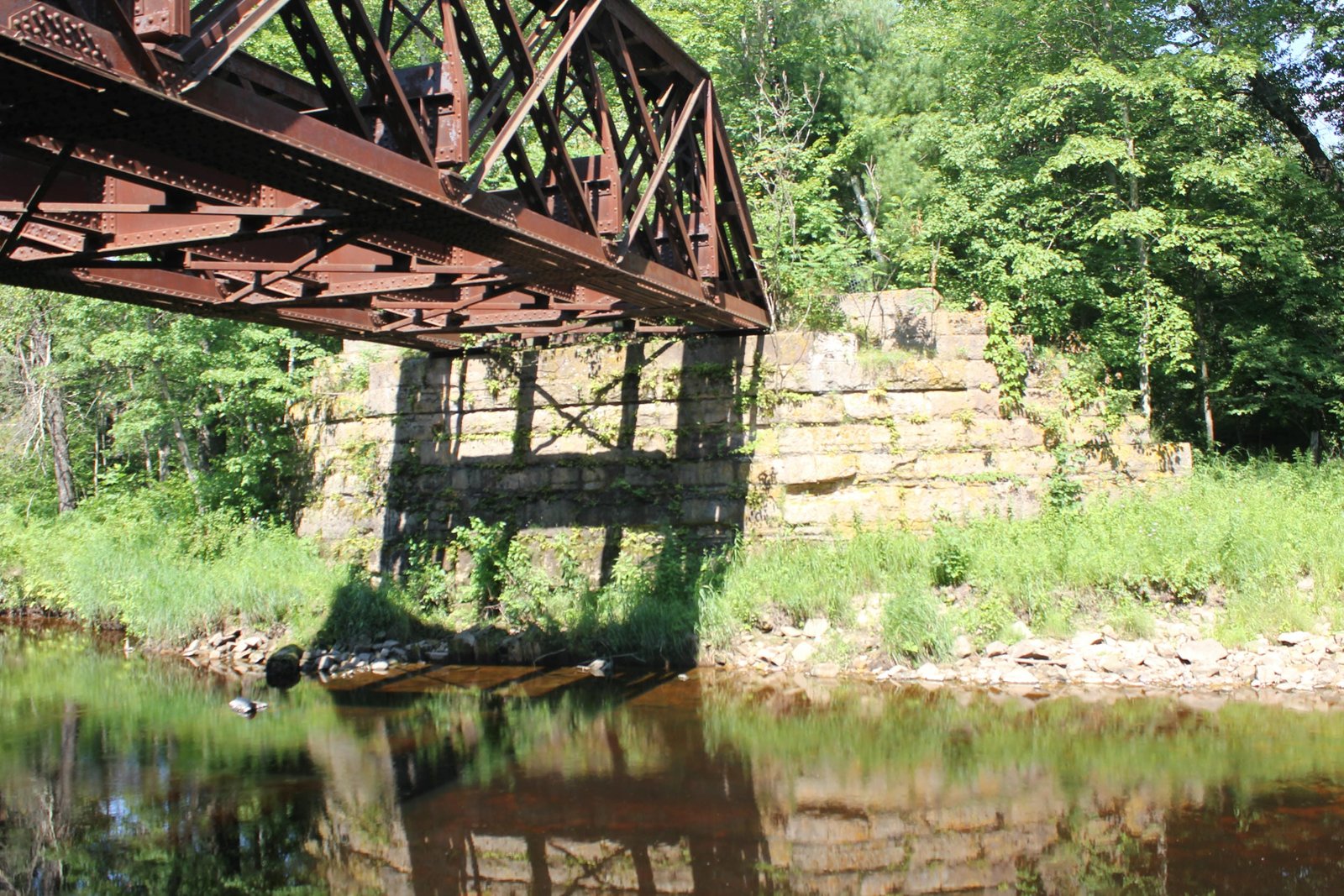
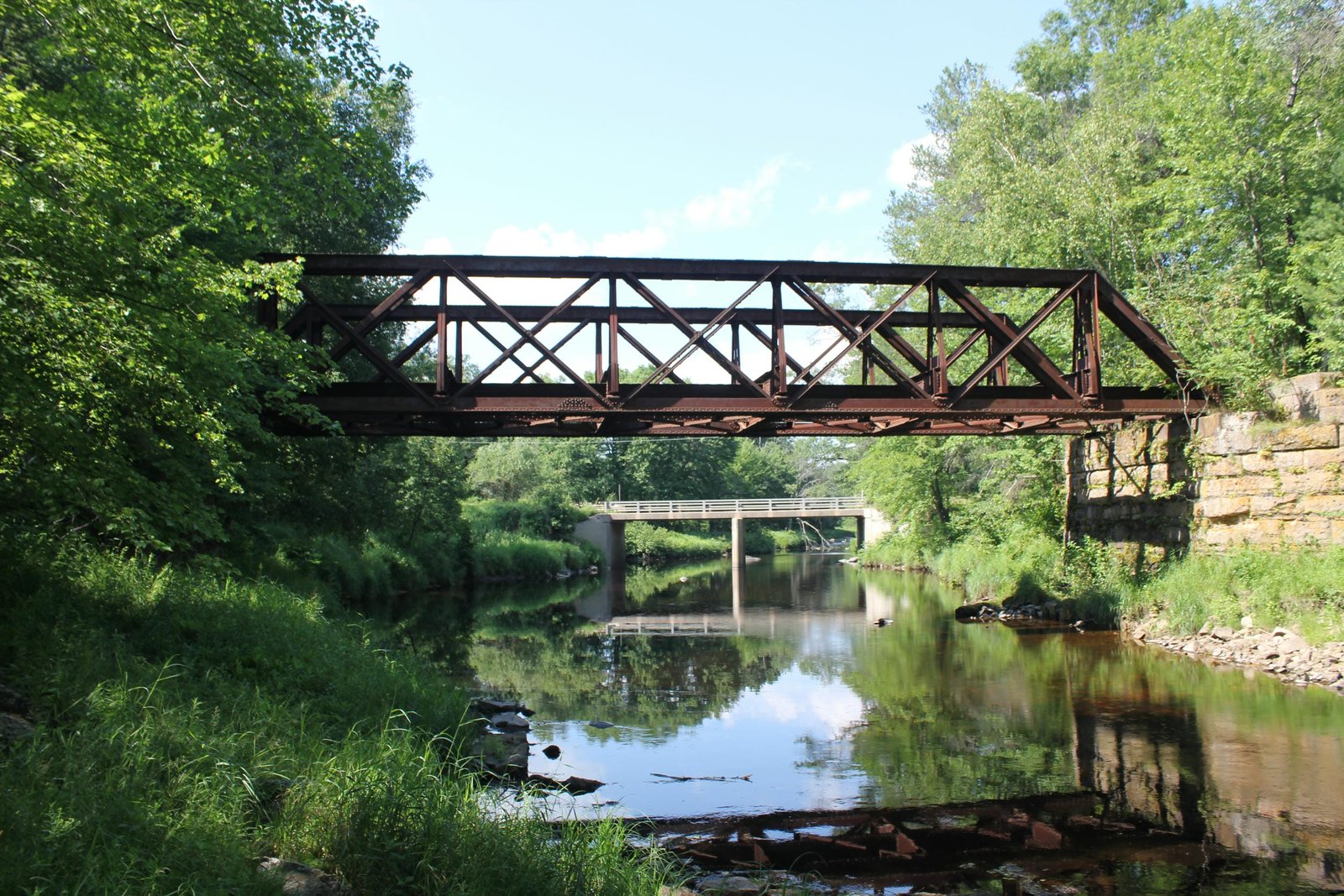
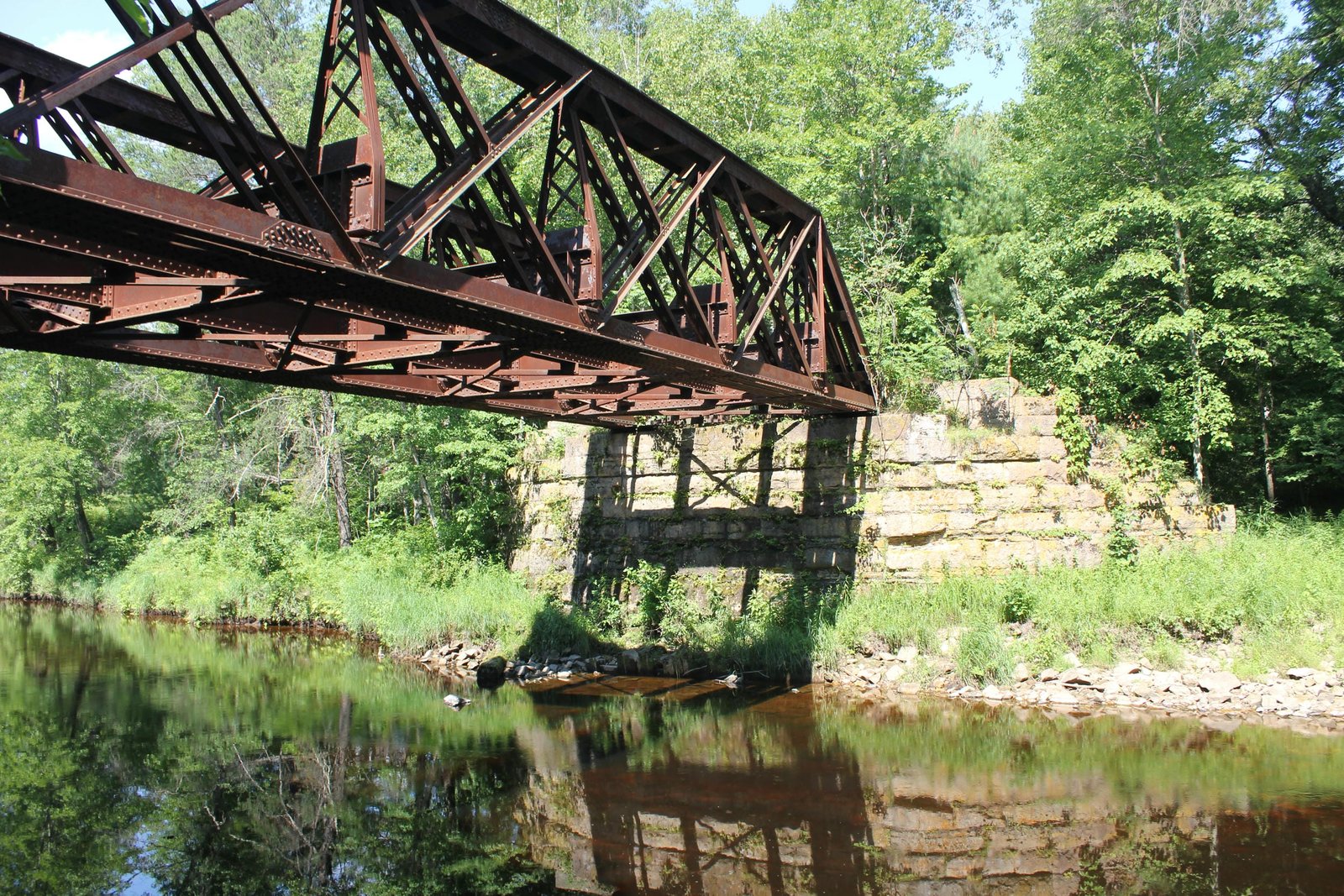
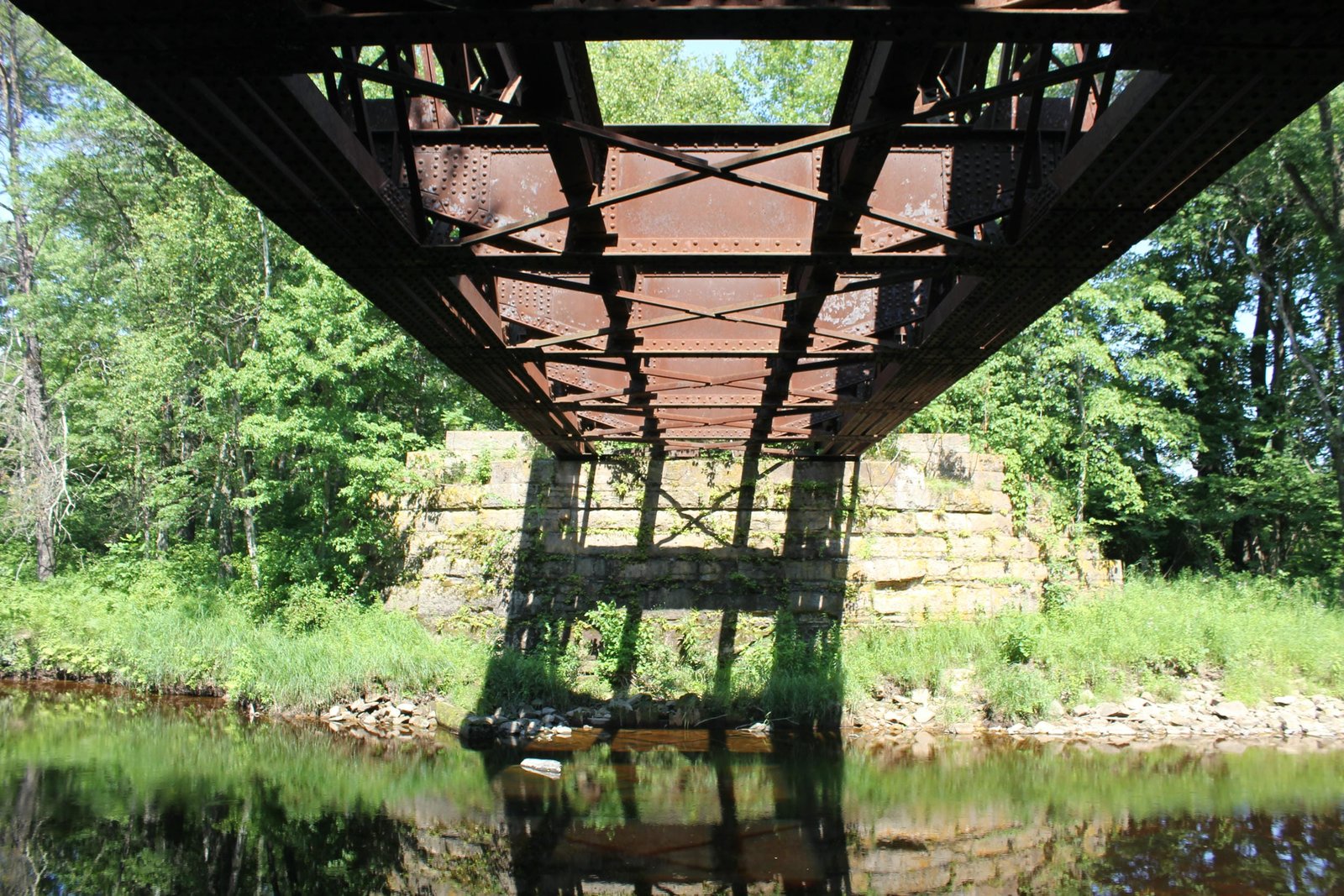
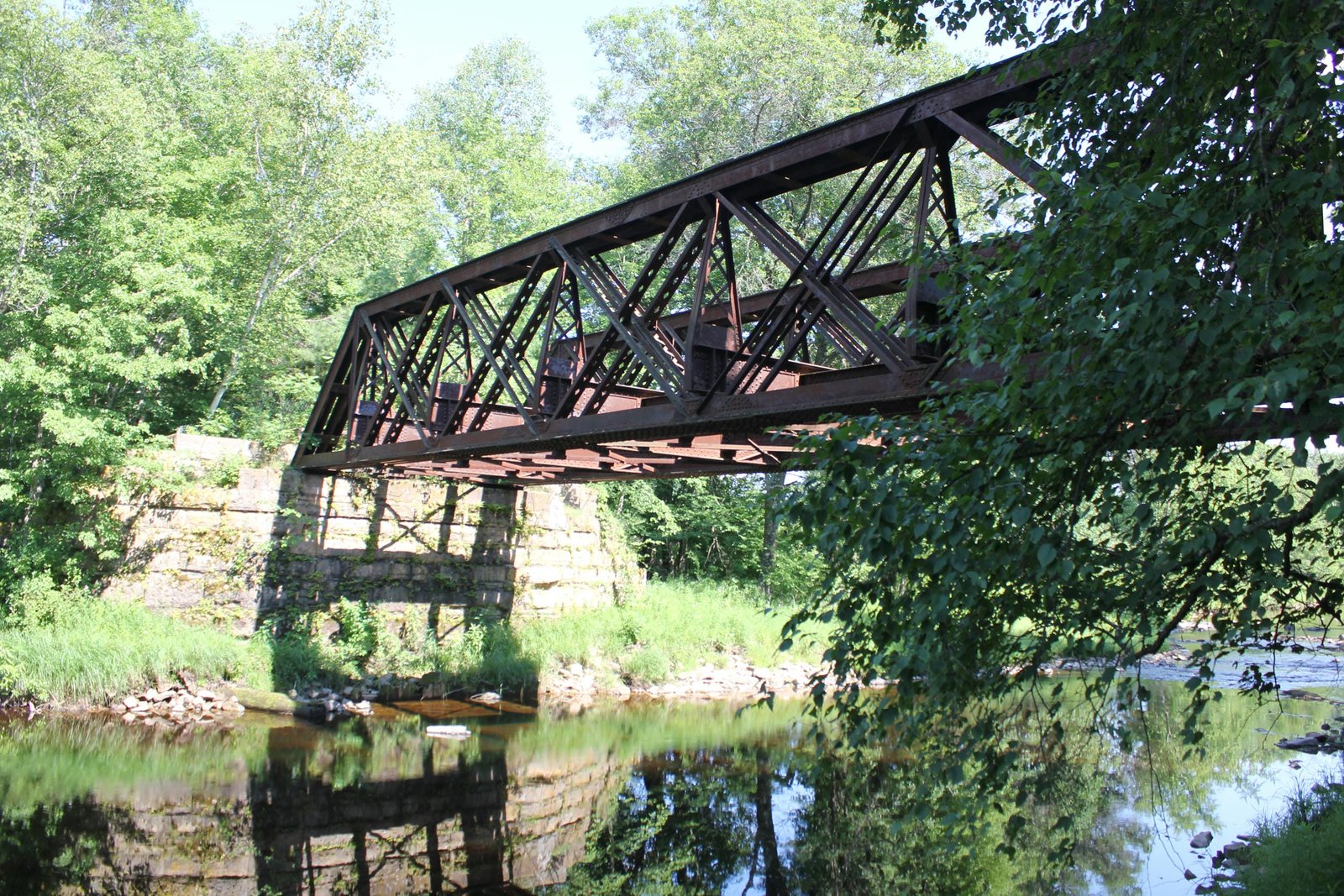
Located west of Neillsville near the former station of Columbia, this unique pony truss bridge carries the former Chicago, St. Paul, Minneapolis & Omaha Railway branch line to Marshfield over Wedges Creek. The first bridge at this location consisted of a 60-foot wooden strain beam bridge, approached by timber pile trestle spans. During the late 19th and early 20th Centuries, the Omaha Road began upgrading branch lines, replacing wooden bridges with metal and stone structures. The present structure was constructed in 1902, using pieces of an older iron truss bridge. Currently, the bridge consists of an 84-foot, 7-panel, riveted double intersection Warren pony truss span, set onto stone abutments. The trusses for this bridge were originally fabricated in 1881 as part of a 10 span approach for the St. Croix River bridge at Hudson, Wisconsin. After that bridge was replaced, the ten spans were combined into five double-barreled spans, reusing two truss spans per reconstructed span. One of the five spans was reused at this location. The remaining four spans were reused at Le Sueur, Minnesota, where two continue to exist today. The trusses were originally fabricated by the Leighton Bridge & Iron Works; while American Bridge Company reconstructed the span. James McClure constructed the abutments using limestone quarried at Mankato, Minnesota.
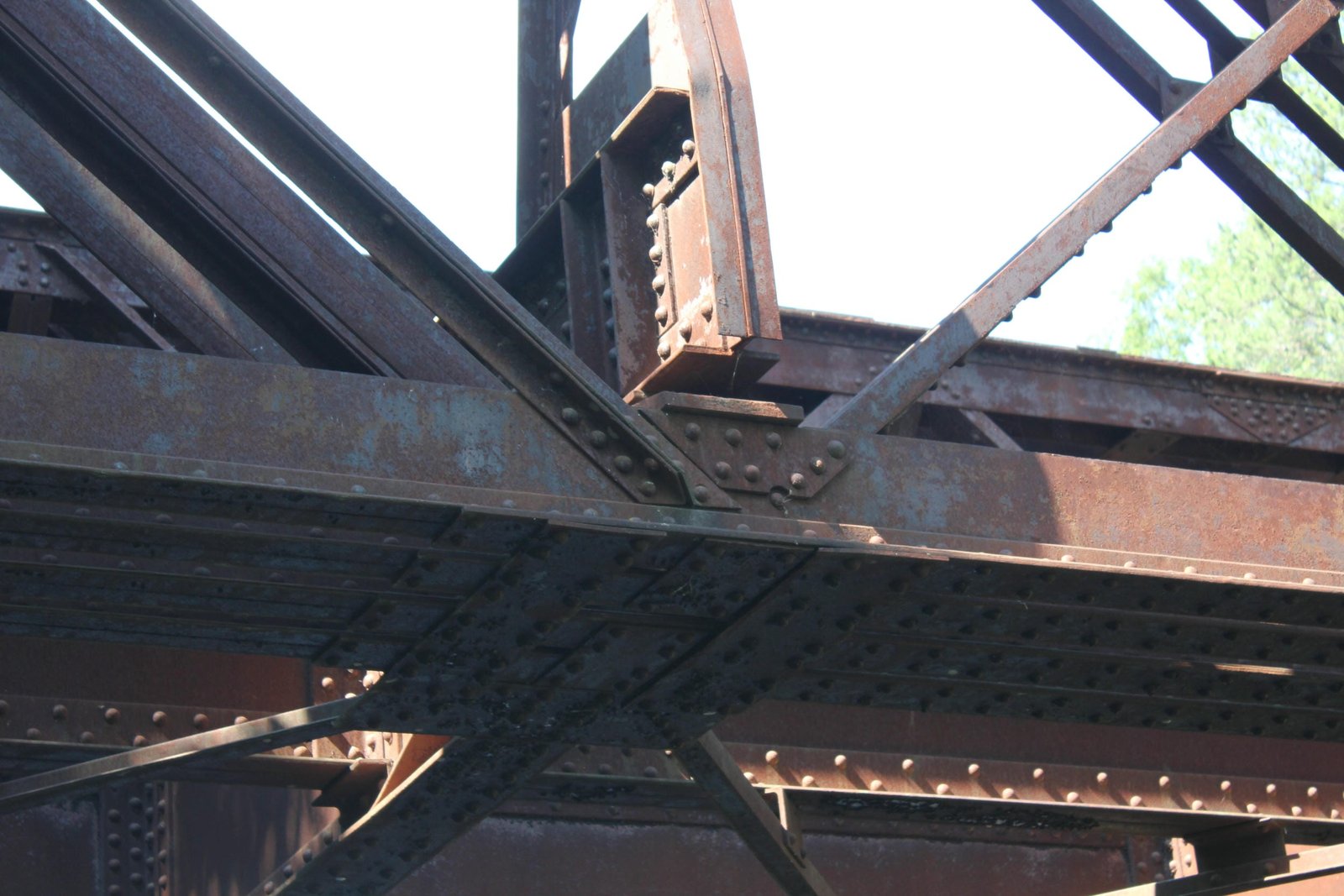
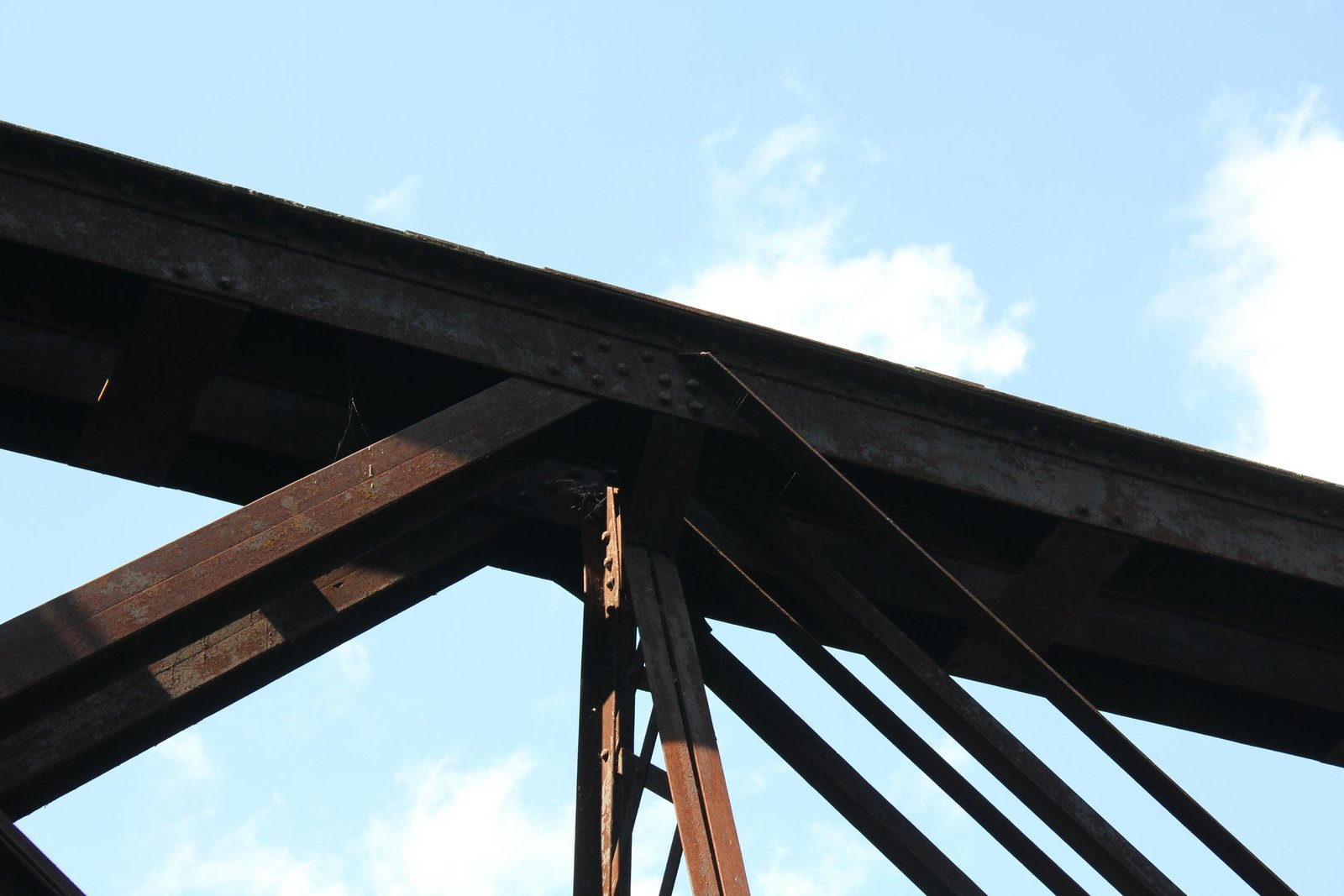
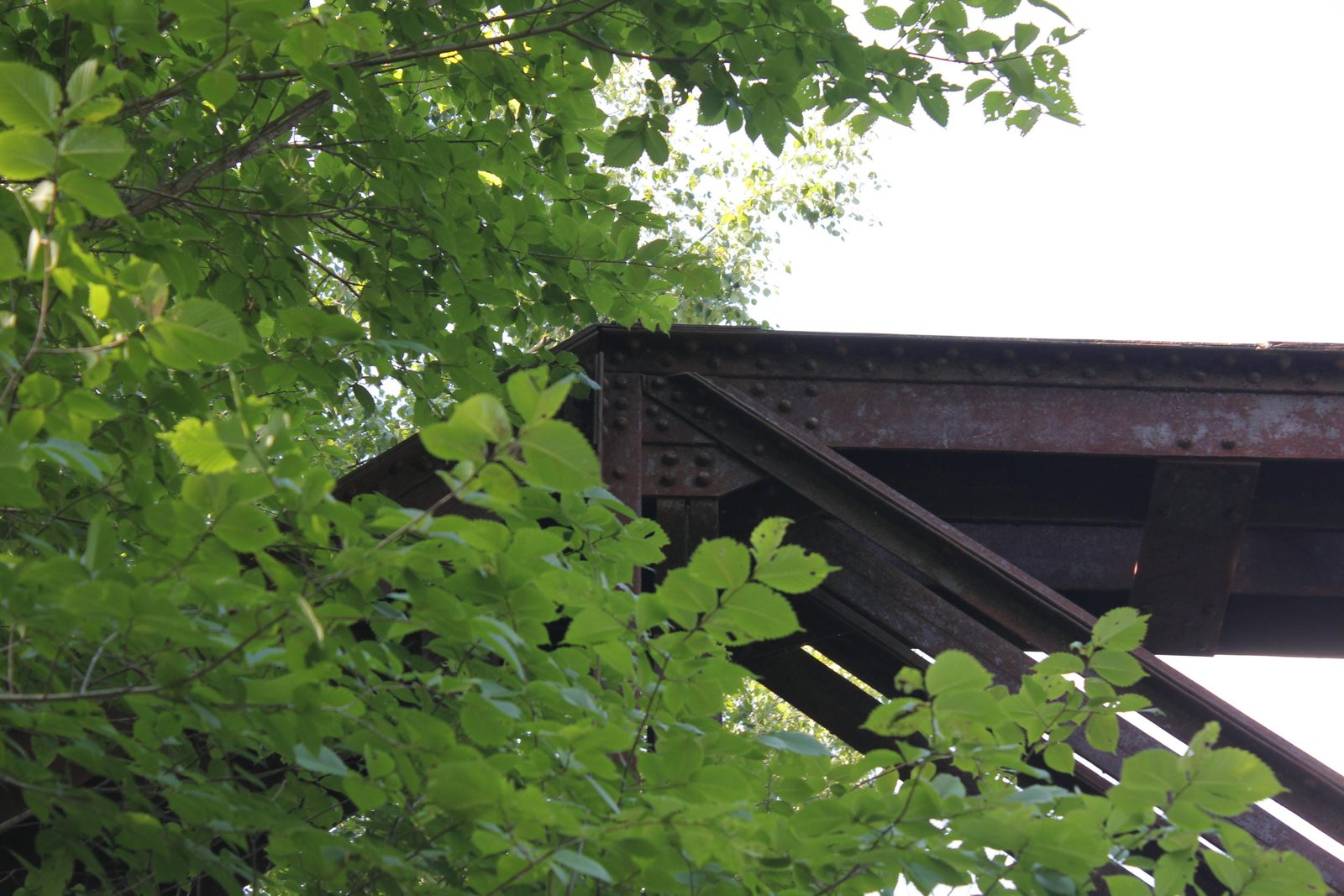
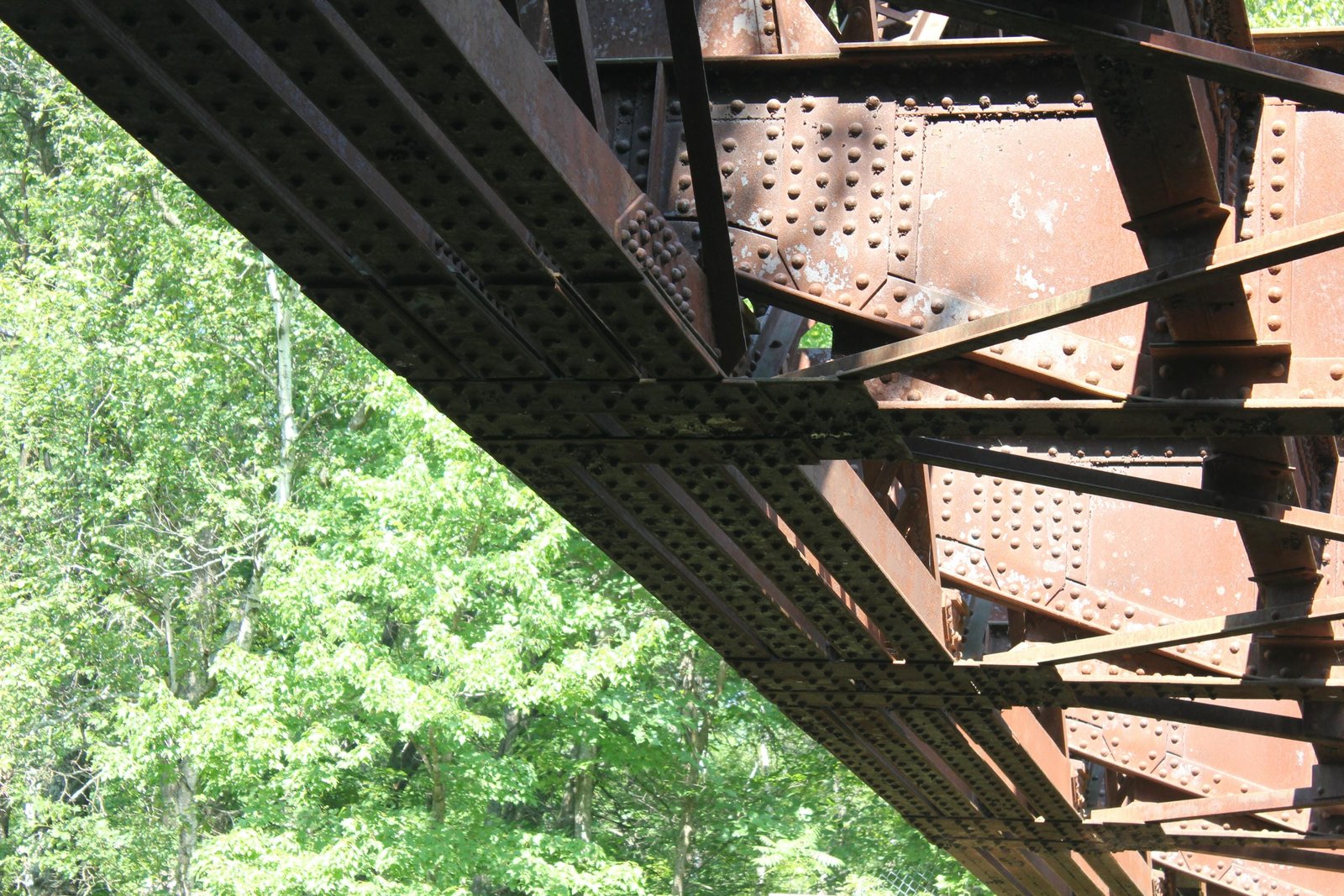
Except for the floor and vertical members, all material of the span appears to be original to the 1881 spans. The upper chord and endposts consist of iron channels, connected by thin plates. The bottom chord is composed of parallel iron channels, which are riveted together on the bottoms. Typical of early spans of this design, some diagonal members use a built-up design, with a tight X-lacing. The remaining diagonal members consist of iron L-bars. Because the span is double-barrelled, the top chord, bottom chord, endposts and diagonals are constructed of two parallel and identical sets of members. The floorbeams of the bridge consist of a tapered girder, while the stringers use a stringer design. Lower lateral bracing is composed of iron bars, which also appears to have been reconstructed in 1902. In addition, the vertical members appear to have been constructed of new material in 1902, replacing the original iron bar vertical members. It is likely that the floor and vertical members are constructed of steel, while the remainder of the trusses use wrought iron.
This style of truss was commonly used by the Omaha Road, the Chicago & North Western Railway (C&NW) and a handful of other railroads throughout the United States. This design was developed in the 1870s, and provided a strong design without requiring large amounts of new material. In addition, the design was among the first pony truss to use riveted connections. These spans were optimal for spans in the 60-foot to 100-foot range. Many railroads moved away from this design by the late 1880s, as technology allowed for heavier trusses and longer plate girders. Leighton Bridge & Iron Works, the fabricator of the Hudson bridge, was an early pioneer in developing this design. This company constructed numerous lattice trusses of various designs for the Omaha Road and the C&NW in the late 1870s and early 1880s. Many spans of this design became too light for traffic by the turn of the 20th Century, and would be reused on branch lines or for overpasses. This particular span represents an early example of this design.
Most United States railroads reused steel and iron spans, as it was a way to save money on bridge replacements. Often, when a span became unsuitable for mainline use, it was feasible to reuse on a branch line, where lower loading requirements were required. Many of these spans were either strengthened or rebuilt, as was the case with this bridge. Doubling truss spans was a technique occasionally used by railroads to increase loading of old truss spans. Often, when spans were doubled, a new floor system was required. This work was typically done by a contractor in a bridge shop. Since the initial construction, the bridge has remained largely unchanged. Today, it is abandoned and the ends are privately owned. The ties have been removed from the bridge, exposing the floor system. Overall, the bridge appears to be in fair to good condition, with some deterioration noted to the substructures. The author has ranked this bridge as being highly significant, due to the design, age and builder of the span. The trusses on this bridge are among the oldest remaining spans of this design in the Midwest.
Citations
| Builders and build dates and relocation history | Chicago, St. Paul, Minneapolis & Omaha Railway Valuation Engineering Field Notes at the National Archives |
| Builder (initial fabrication) | The Dunn County News; February 12, 1882 |
| Railroad History Citation | ICC Valuation Information, Compiled by Richard S. Steele |