
Click the photo to view the full-size version
| Name | BNSF Fork Creek Bridge Chicago, Burlington and Quincy Railroad Bridge #202.74 |
| Built By | Chicago, Burlington & Quincy Railroad |
| Currently Owned By | BNSF Railway |
| Superstructure Contractor | Unknown |
| Substructure Contractor | Unknown |
| Length | 113 Feet Total, 43 Foot Main Span |
| Width | 1 Track |
| Height Above Ground | 5 Feet (Estimated) |
| Superstructure Design | Through Plate Girder and Concrete Slab |
| Substructure Design | Concrete |
| Date Built | 1913 |
| Traffic Count | 10 Trains/Day (Estimated) |
| Current Status | In Use |
| Chicago, Burlington & Quincy Railroad Bridge Number | 202.74 |
| BNSF Railway Bridge Number | 202.74 |
| Significance | Local Significance |
| Documentation Date | 6/19/2016 |
In 1856, the Keokuk, Mount Pleasant and Muscatine Railroad (KMP&M) began construction on 16 miles of new railroad, extending from Keokuk, Iowa to Viele, Iowa. The railroad would be complete in 1858. The same year, the Iowa Southern Railroad (IS) completed an additional 8 miles from Viele to Fort Madison, Iowa. In 1867, the two railroads were merged into the Keokuk & St. Paul Railway (K&StP). In 1868, the K&StP began construction on an additional 18 miles from Fort Madison to Burlington, Iowa. At the same time, the Mississippi Valley and Western Railway (MV&W) began construction on a 34 mile line, extending from West Quincy, Missouri to Buena Vista, Missouri. Work was completed in 1872, and an additional 13 miles to Hannibal, Missouri were constructed at that time. Work continued south from Hannibal, and the St. Louis, Keokuk & Northwestern Railroad (StLK&NW) completed the line to Louisiana, Missouri in 1875. An additional 54 miles from Louisiana to St. Peters, Missouri were completed in 1879. A bridge across the Des Moines River into Keokuk was completed in 1882. An additional 48 miles from St. Louis to Cuivre Junction were completed in 1894 by the StLK&NW.
Both the K&StP and StLK&NW were affiliated with the Chicago, Burlington & Quincy Railroad (CB&Q). The two railroads were formally merged into the CB&Q in 1901, as the CB&Q consolidated numerous subsidiary companies. The CB&Q had acquired and constructed a large railroad network
throughout the Midwest. This route served as a principal north-south mainline for the CB&Q, connecting the mainlines at Burlington and West Quincy with St. Louis CB&Q merged
with Northern
Pacific Railway and
Great Northern Railway to form Burlington Northern Railroad (BN) in
1970. In 1996, BN merged with Atchison, Topeka & Santa Fe Railway
to form BNSF Railway, the current owner of this line. Today, the line is operated as the Hannibal Subdivision.
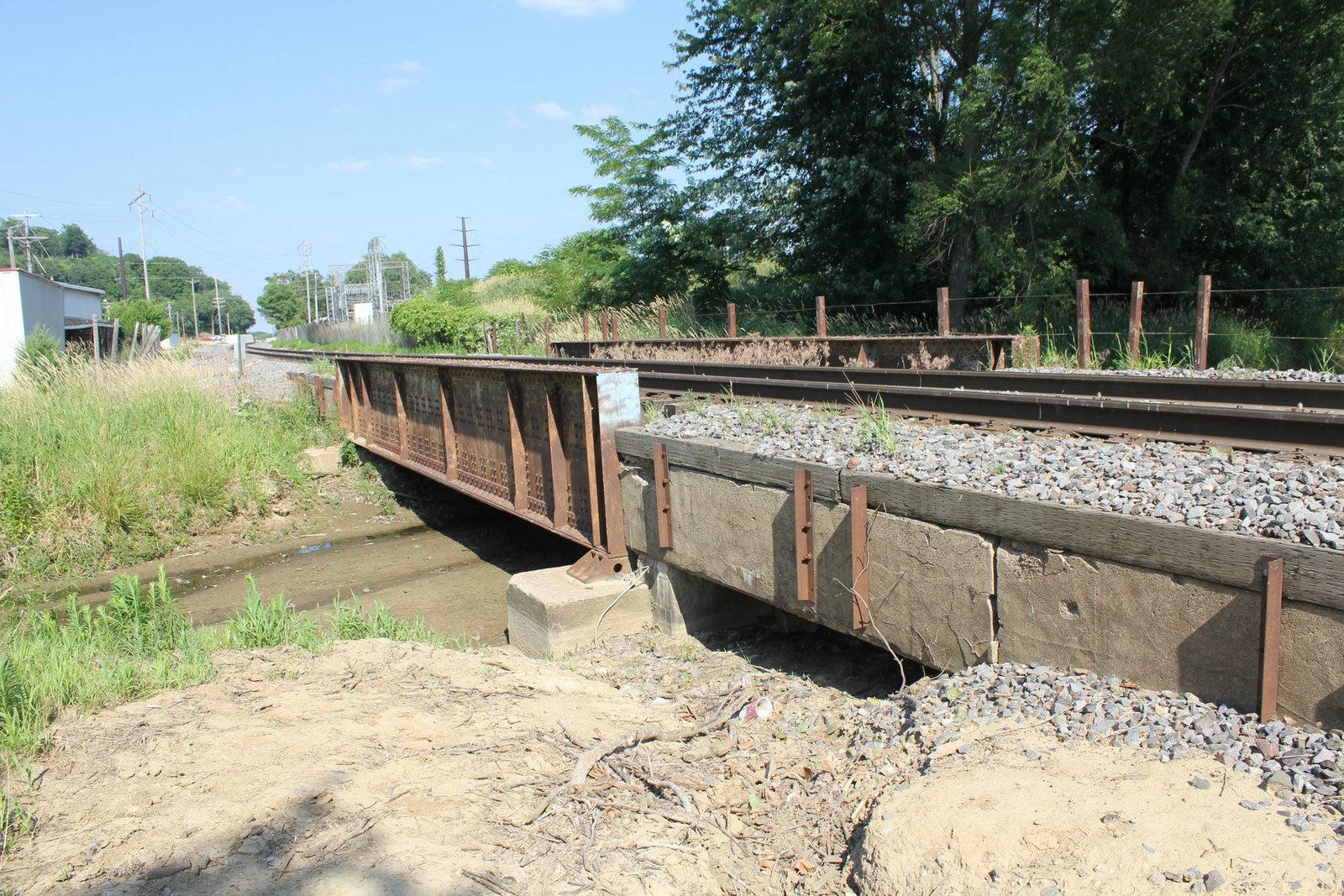
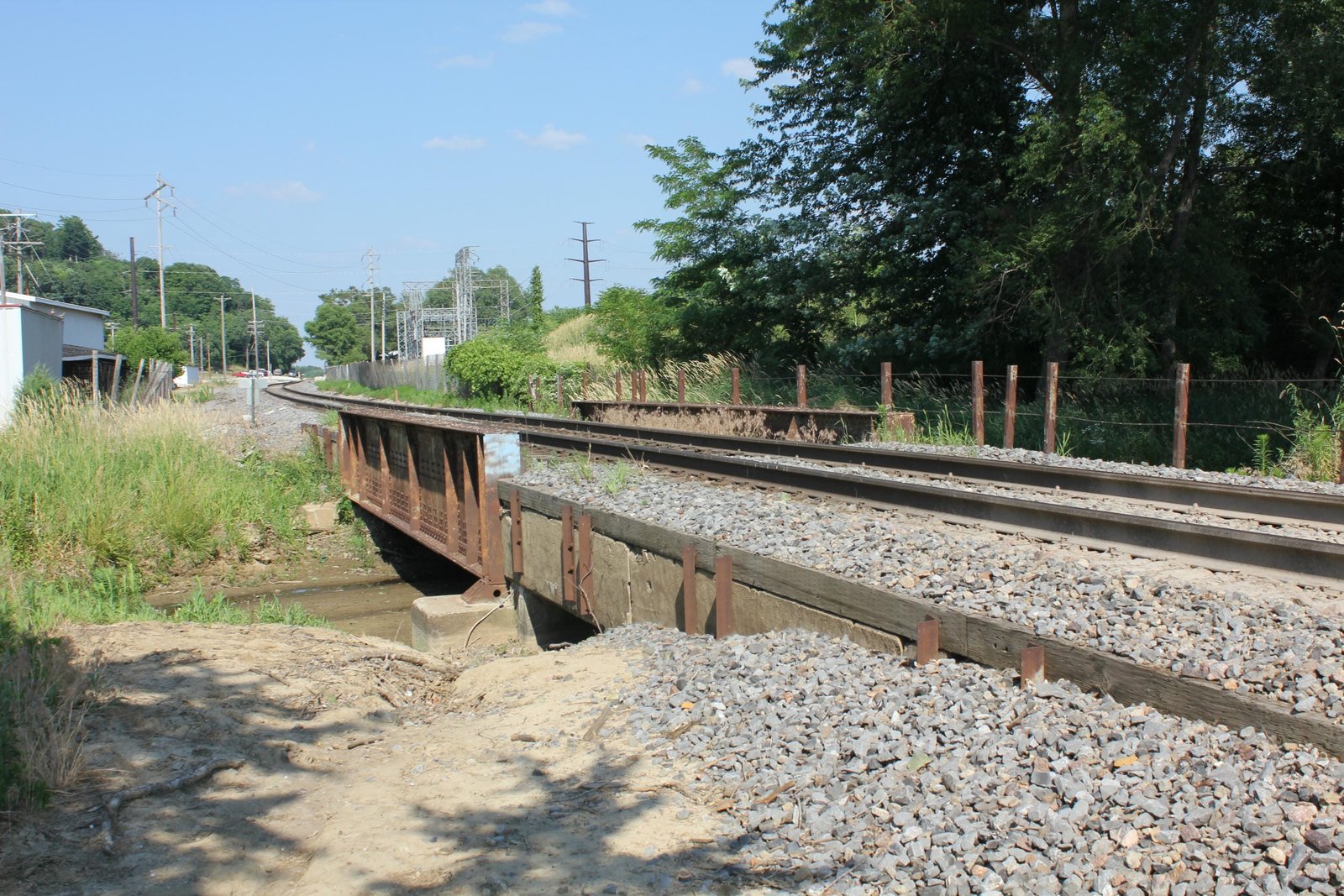
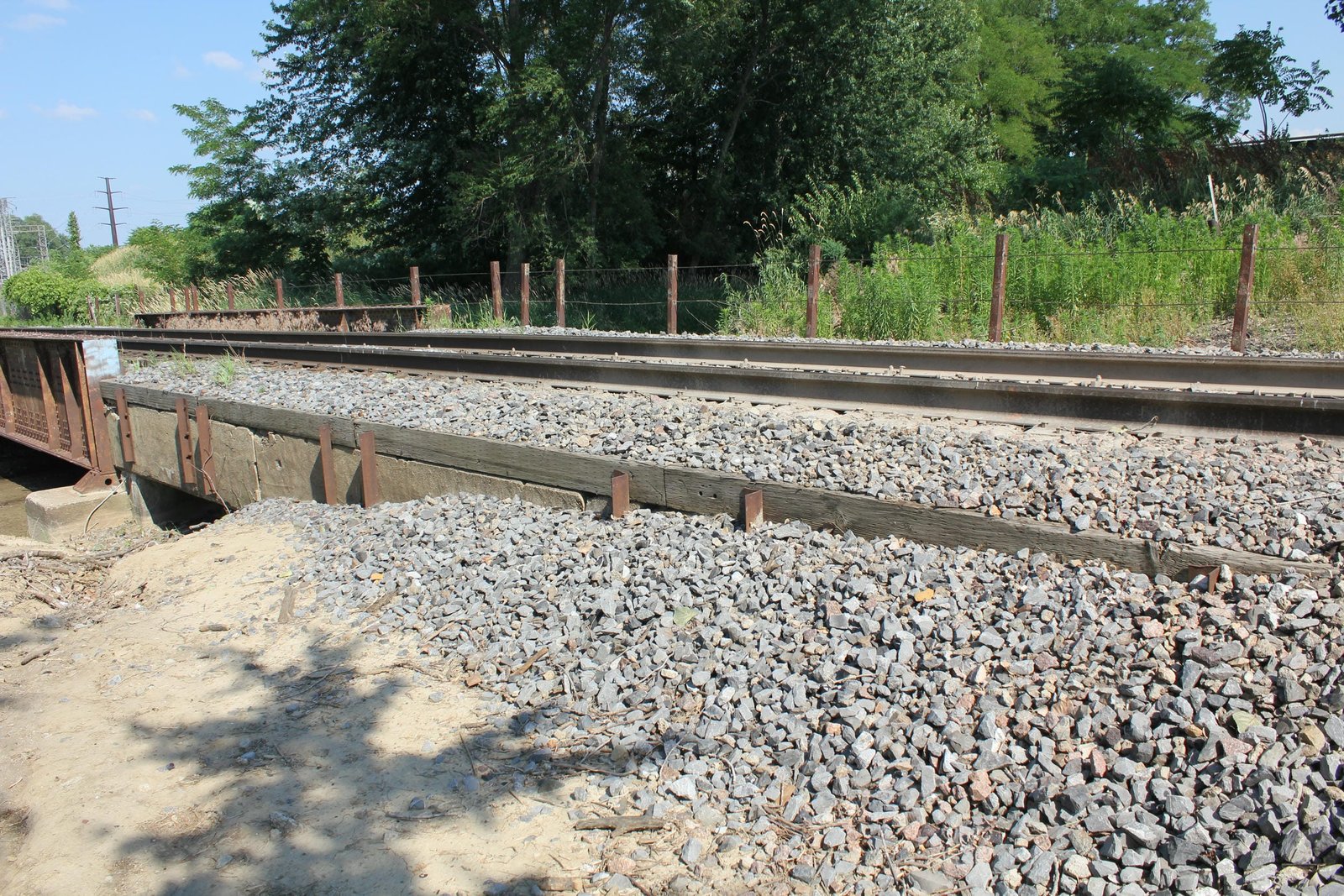
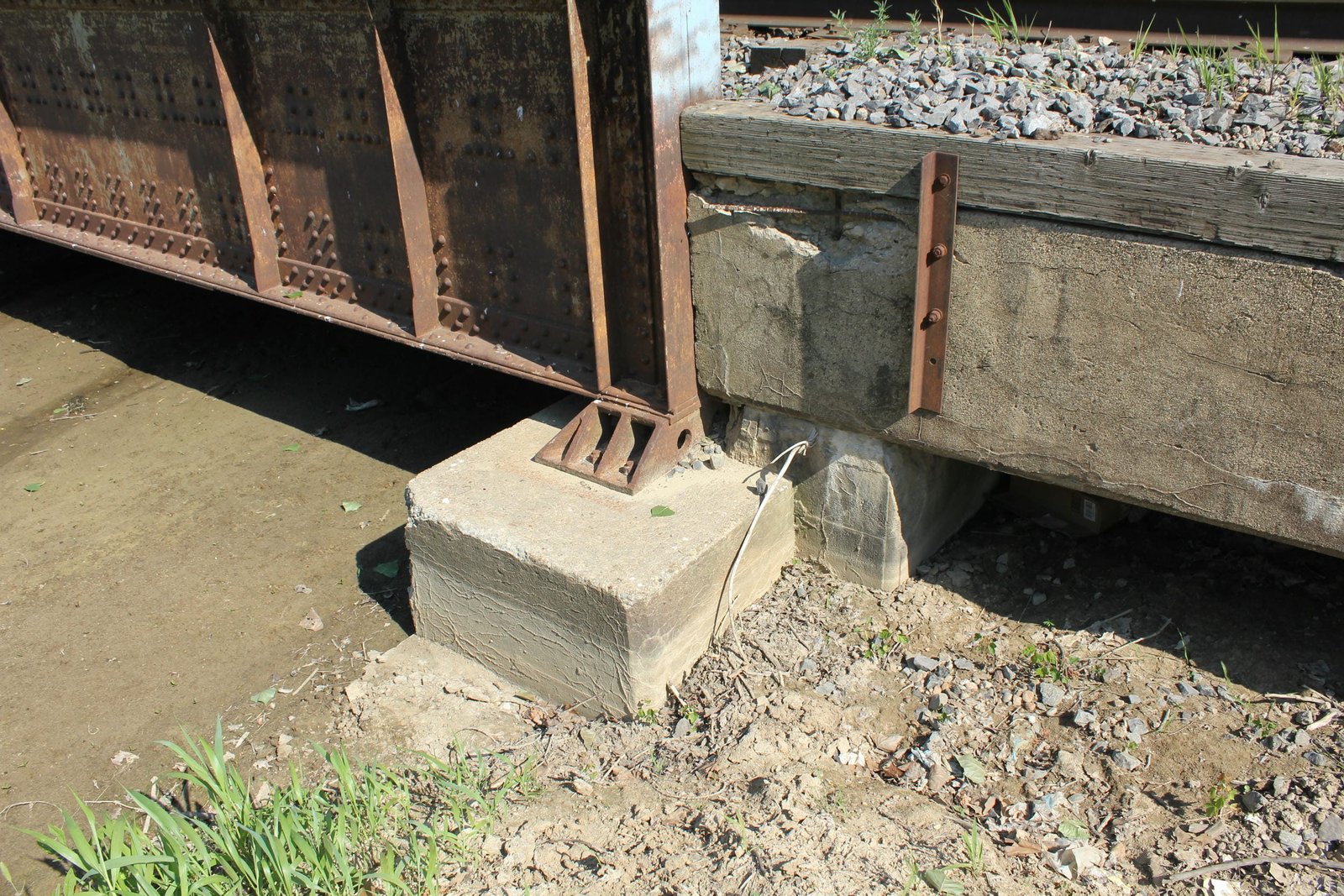
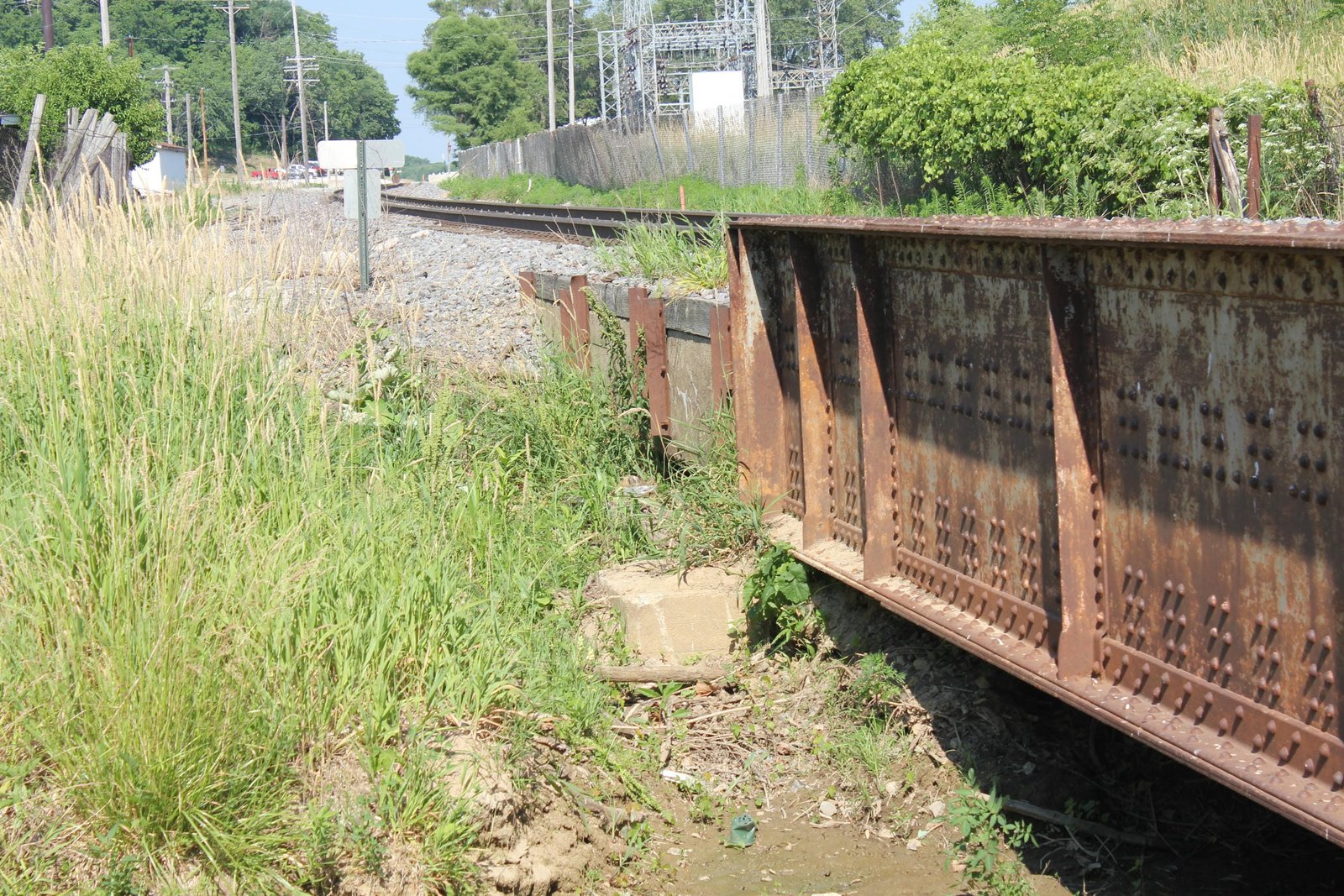
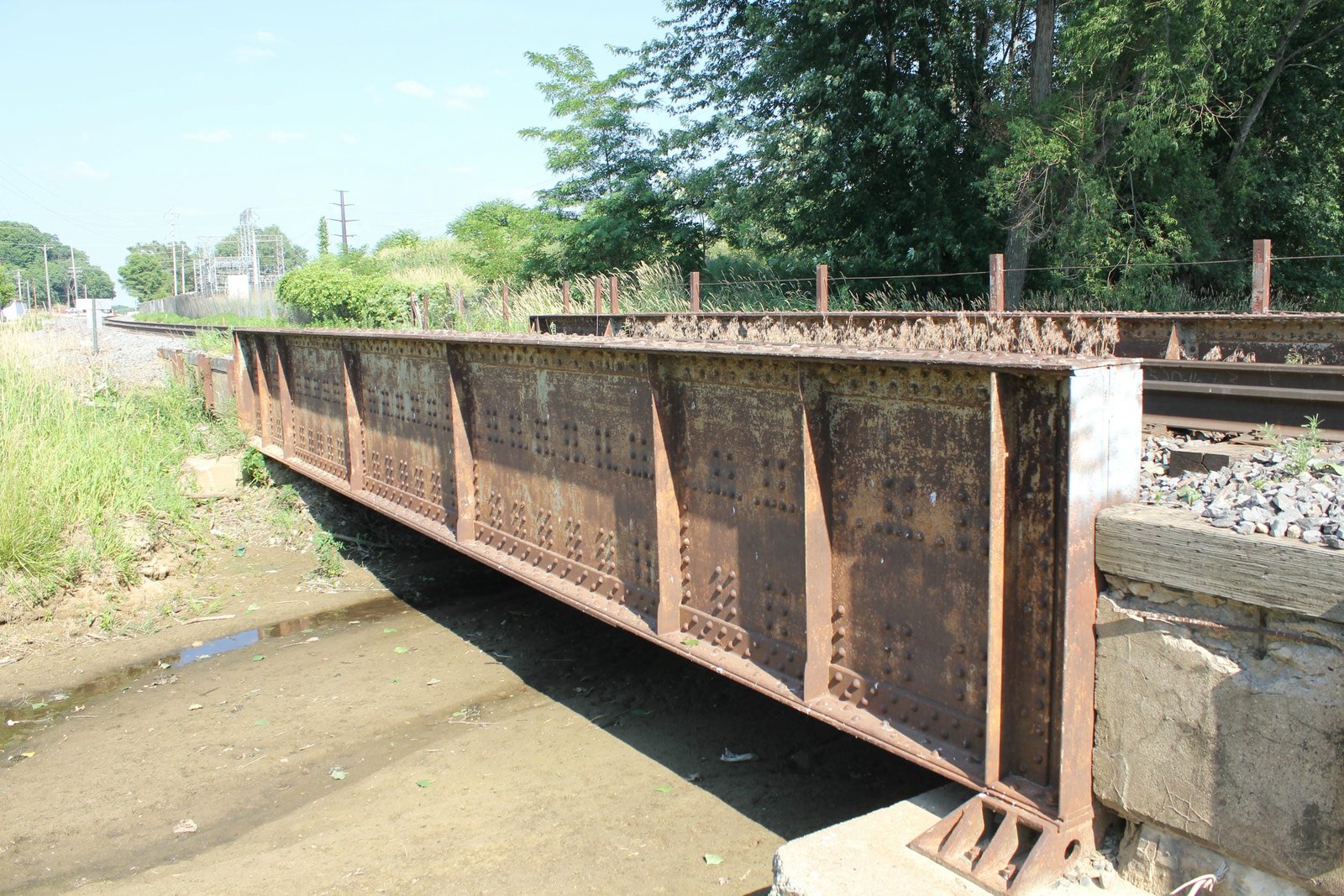
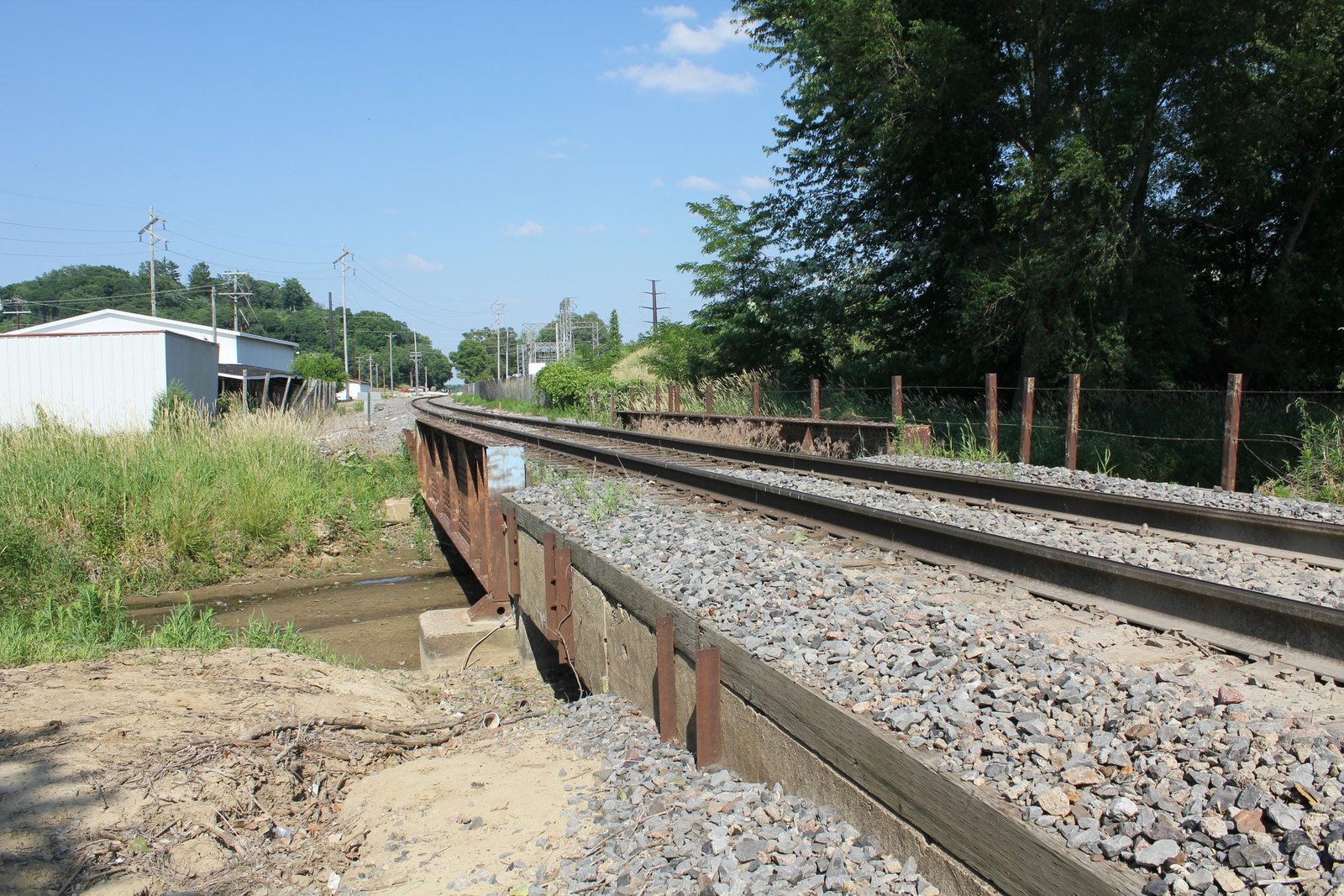
Located at the west end of the Fort Madison Bridge in Fort Madison, this through plate girder and concrete slab bridge carries a former Chicago, Burlington & Quincy Railroad mainline over Fork Creek. The first bridge at this location was likely a timber pile trestle, which was periodically renewed in the 19th and early 20th Centuries. In 1913, the bridge was rebuilt with the present structure. Currently, the bridge consists of a 43-foot through plate girder span, approached by three 14-foot concrete slab spans on the south end and two 14-foot concrete slab spans on the north end. The entire bridge is set onto concrete substructures. The main span follows a standard CB&Q design, with two modest sized plate girders, a ballast deck and square girder ends. The approach spans also follow a standard CB&Q design, with heavy slabs set onto rectangular concrete piers. The southernmost span is mainly buried in silt and ballast. An unknown contractor fabricated the main span, and it is unclear if the approaches and substructures were constructed by railroad company forces or by an unknown contractor. Through plate girder spans were popular for railroad use, as they were durable and easy to construct. Reinforced concrete slab spans became popular in the early 20th Century, as they were durable, easy to construct and could be installed with little interruption to traffic. In addition, the CB&Q had several facilities where the slabs were constructed and shipped for installation. Since the initial construction, the bridge has seen no significant alterations, and remains in regular use. Overall, the bridge appears to be in fair to good condition, with no significant deterioration noted. The author has ranked this bridge as being locally significant, due to the common design.
Citations
| Build date | Chicago, Burlington & Quincy Railroad Valuation Summary at the Newberry Library |
| Railroad History Citation | ICC Valuation Information, Compiled by Richard S. Steele |